AB 1710: Vehicular air pollution: zero-emission and near-zero-emission vehicles.
- Session Year: 2015-2016
- House: Assembly
- Latest Version Date: 2016-04-05
Existing
(1)Existing law establishes the Air Quality Improvement Program that is administered by the State Air Resources Board for the purposes of funding projects related to, among other things, reduction of criteria air pollutants and improvement of air quality. Pursuant to the Air Quality Improvement Program, the state board has established the Clean Vehicle Rebate Project to promote the production and use of zero-emission vehicles and the Hybrid and Zero-Emission Truck and Bus Voucher Incentive Project to provide vouchers to help California fleets to purchase hybrid and zero-emission trucks and buses. vehicles.
The Charge Ahead California Initiative, administered by the state board, includes goals of, among other things, placing in service at least 1,000,000 zero-emission and near-zero-emission vehicles by January 1, 2023, and increasing access for disadvantaged, low-income, and moderate-income communities and consumers to zero-emission and near-zero-emission vehicles.
This bill would require, on or before January 1, 2019, the state board, in coordination with the State Energy Resources Conservation and Development Commission and the Department of Transportation, board to develop and implement a comprehensive program comprised of a portfolio of incentives to promote advanced-technology light-duty zero-emission and near-zero-emission vehicle deployment in the state to drastically increase the use of those vehicles and to meet specified goals established by the Governor and the Legislature.
(2)The Sales and Use Tax Law imposes a tax on retailers measured by the gross receipts from the sale of tangible personal property sold at retail in this state, or on the storage, use, or other consumption of tangible personal property purchased from a retailer for the storage, use, or other consumption in this state measured by sales price. That law defines the terms gross receipts and sales price.
This bill, on and after January 1, 2017, would exclude from gross receipts and sales price that portion of the cost of a new or used near-zero or zero-emission vehicle purchased by a low-income purchaser, as defined, that does not exceed $40,000.
The Bradley-Burns Uniform Local Sales and Use Tax Law authorizes counties and cities to impose local sales and use taxes in conformity with the Sales and Use Tax Law, and existing law authorizes districts, as specified, to impose transactions and use taxes generally in accordance with the Transactions and Use Tax Law, which generally conforms to the Sales and Use Tax Law. Amendments to the Sales and Use Tax Law are automatically incorporated into the local tax laws.
This bill would specify that this exemption does not apply to local sales and use taxes or transactions and use taxes.
(3)The Personal Income Tax Law allows various credits against the taxes imposed by that law.
This bill would, for taxable years beginning on or after January 1, 2017, and before January 1, 2026, allow a credit under the Personal Income Tax Law in an amount equal to $2,500 to a qualified taxpayer, as defined, who purchased a near-zero or zero-emission vehicle during the taxable year. This bill would state the intent of the Legislature to enact legislation to provide that the credit amount in excess of tax liability would be refundable in those years in which an appropriation for that purpose is made by the Legislature.
The Personal Income Tax Law, in modified conformity with federal income tax laws, allows various deductions from gross income in computing adjusted gross income under that law, including deductions for payments to individual retirement accounts, alimony payments, and interest on educational loans.
This bill, for taxable years beginning on or after January 1, 2017, and before January 1, 2026, would allow a deduction of $2,500 in computing adjusted gross income to a qualified taxpayer, as defined, who purchased a near-zero or zero-emission vehicle during the taxable year, as provided.
This bill would require a qualified taxpayer to make an irrevocable election to either claim the above-described deduction or credit for the taxable year.
(4)This bill would require the Franchise Tax Board to make an annual report to the Legislature regarding the tax provisions allowed by the bill.
Existing law establishes the Air Quality Improvement Program that is administered by the State Air Resources Board for the purposes of funding projects related to, among other things, reduction of criteria air pollutants and improvement of air quality. Pursuant to the Air Quality Improvement Program, the state board has established the Clean Vehicle Rebate Project to promote the production and use of zero-emission vehicles and the Hybrid and Zero-Emission Truck and Bus Voucher Incentive Project to provide vouchers to help California fleets to purchase hybrid and zero-emission trucks and buses.
The Charge Ahead California Initiative, administered by the state board, includes goals of, among other things, placing in service at least 1,000,000 zero-emission and near-zero-emission vehicles by January 1, 2023, and increasing access for disadvantaged, low-income, and moderate-income communities and consumers to zero-emission and near-zero-emission vehicles.
This bill would require, on or before January 1, 2019, the state board, in coordination with the State Energy Resources Conservation and Development Commission and the Department of Transportation, to develop and implement a comprehensive program to promote advanced-technology light-duty vehicle deployment in the state to drastically increase the use of those vehicles and to meet specified goals established by the Governor and the Legislature.
(a)On or before January 1, 2019, the state board shall develop and implement a comprehensive program to promote zero-emission and near-zero-emission vehicle deployment in the state to drastically increase the use of those vehicles and to meet the goals established by the Governor and the Legislature, including, but not limited to, the ZEV Action Plan by the Governors Interagency Working Group on Zero-Emission Vehicles and the Charge Ahead California Initiative.
(b)(1)The program shall consist of a portfolio of incentives, including, but not limited to, the following:
(A)An employer incentive program, including, but not limited to, incentives targeted at companies located outside population centers or companies whose employees commute from a 50-mile radius.
(B)An incentive program targeted at low-income individuals for the purchase or leasing of zero-emission or near-zero-emission vehicles.
(C)Onroad incentives.
(2)Incentives may include grants, loans, revolving loans, or other appropriate measures.
(3)In implementing the program, the state board shall consult with the State Energy Resources Conservation and Development Commission to identify opportunities for coordination with investment in zero-emission and near-zero-emission vehicle infrastructure pursuant to Section 44272.
(c)Moneys in the Greenhouse Gas Reduction Fund, the Air Quality Improvement Fund, or the Alternative and Renewable Fuel and Vehicle Technology Fund shall be made available, upon appropriation by the Legislature, for the program.
(d)The state board, in accordance with Section 9795 of the Government Code, shall submit an annual report to the Legislature regarding the efficacy of the program.
SEC. 2.Section 6012.4 is added to the Revenue and Taxation Code, to read:6012.4.(a)On or after January 1, 2017, for purposes of this part, gross receipts and sales price do not include that portion of the cost of a new or used near-zero or zero-emission vehicle purchased by a low-income purchaser that does not exceed forty thousand dollars ($40,000).
(b)For purposes of this section:
(1)Low-income purchaser means an individual or individuals whose household income does not exceed 80% of the median income of the county in which they reside as determined by the United States Department of Housing and Urban Development.
(2)Near-zero-emission vehicle means a vehicle that utilizes zero-emission technologies, enables technologies that provide a pathway to zero-emissions operations, or incorporates other technologies that significantly reduce criteria pollutants, toxic air contaminants, and greenhouse gas emissions, as defined by the State Air Resources Board in consultation with the State Energy Resources Conservation and Development Commission consistent with meeting the states mid- and long-term air quality standards and climate goals.
(3)Zero-emission vehicle means a vehicle that produces no emissions of criteria pollutants, toxic air contaminants, and greenhouse gases when stationary or operating, as determined by the State Air Resources Board.
(c)Notwithstanding any provision of the Bradley-Burns Uniform Local Sales and Use Tax Law (Part 1.5 (commencing with Section 7200)) or the Transactions and Use Tax Law (Part 1.6 (commencing with Section 7251)), the exemption established by this section shall not apply with respect to any tax levied by a county, city, or district pursuant to, or in accordance with, either of those laws.
SEC. 3.Section 17060.3 is added to the Revenue and Taxation Code, to read:17060.3.(a)For each taxable year beginning on or after January 1, 2017, and before January 1, 2026, there shall be allowed to a qualified taxpayer a credit against the net tax, as defined in Section 17039, in an amount equal to two thousand five hundred dollars ($2,500).
(b)For the purposes of this section:
(1)Qualified taxpayer means an individual or individuals who meet the income eligibility requirements specified by the State Air Resources Board pursuant to subparagraph (B) of paragraph (3) of subdivision (c) of Section 44258.4 of the Health and Safety Code and who purchased a near-zero or zero-emission vehicle during the taxable year.
(2)Near-zero-emission vehicle means a vehicle that utilizes zero-emission technologies, enables technologies that provide a pathway to zero-emissions operations, or incorporates other technologies that significantly reduce criteria pollutants, toxic air contaminants, and greenhouse gas emissions, as defined by the State Air Resources Board in consultation with the State Energy Resources Conservation and Development Commission consistent with meeting the states mid- and long-term air quality standards and climate goals.
(3)Zero-emission vehicle means a vehicle that produces no emissions of criteria pollutants, toxic air contaminants, and greenhouse gases when stationary or operating, as determined by the State Air Resources Board.
(c)(1)Subject to paragraph (2), in the case where the credit allowed by this section exceeds the net tax the excess may be carried over to reduce the net tax, in the following year, and succeeding six years if necessary, until the credit is exhausted.
(2)It is the intent of the Legislature to enact legislation to provide that in the case where the credit allowed by this section exceeds the net tax, the excess, in lieu of the carry forward pursuant to paragraph (1), may be refunded to taxpayers, upon appropriation by the Legislature.
(d)A qualified taxpayer shall make an irrevocable election to claim the credit allowed by this section in lieu of the deduction allowed by Section 17206.3.
(e)This section shall remain in effect only until December 1, 2026, and as of that date is repealed.
SEC. 4.Section 17072 of the Revenue and Taxation Code is amended to read:17072.(a)Section 62 of the Internal Revenue Code, relating to adjusted gross income defined, shall apply, except as otherwise provided.
(b)Section 62(a)(2)(D) of the Internal Revenue Code, relating to certain expenses of elementary and secondary school teachers, shall not apply.
(c)Section 62(a)(21) of the Internal Revenue Code, relating to attorneys fees relating to awards to whistleblowers, shall not apply.
(d)For taxable years beginning on or after January 1, 2017, and before January 1, 2026, Section 62(a) of the Internal Revenue Code is modified to provide that the deduction under Section 17206.3 shall be allowed in determining adjusted gross income.
SEC. 5.Section 17206.3 is added to the Revenue and Taxation Code, to read:17206.3.(a)For taxable years beginning on or after January 1, 2017, and before January 1, 2026, there shall be allowed as a deduction of two thousand five hundred dollars ($2,500) to a qualified taxpayer who, during the taxable year, purchased a near-zero or zero-emission vehicle.
(b)For the purposes of this section:
(1)Qualified taxpayer means an individual or individuals who meet the income eligibility requirements specified by the State Air Resources Board pursuant to subparagraph (B) of paragraph (3) of subdivision (c) of Section 44258.4 of the Health and Safety Code.
(2)Near-zero-emission vehicle means a vehicle that utilizes zero-emission technologies, enables technologies that provide a pathway to zero-emissions operations, or incorporates other technologies that significantly reduce criteria pollutants, toxic air contaminants, and greenhouse gas emissions, as defined by the State Air Resources Board in consultation with the State Energy Resources Conservation and Development Commission consistent with meeting the states mid- and long-term air quality standards and climate goals.
(3)Zero-emission vehicle means a vehicle that produces no emissions of criteria pollutants, toxic air contaminants, and greenhouse gases when stationary or operating, as determined by the State Air Resources Board.
(c)A qualified taxpayer shall make an irrevocable election to claim the deduction allowed by this section in lieu of the credit allowed by Section 17060.3.
(d)This section shall remain in effect only until December 1, 2026, and as of that date is repealed.
SEC. 6.(a)In accordance with Section 41 of the Revenue and Taxation Code, on or before January 1, 2018, and each January 1 thereafter until January 1, 2027, the Franchise Tax Board, in consultation with the State Board of Equalization, shall annually prepare a written report to the Legislature regarding the efficacy of Sections 6012.4, 17060.3, and 17206.3 of the Revenue and Taxation Code, as added by Sections 2, 3, and 5 of this act.
(b)A report submitted pursuant to subdivision (a) shall be submitted in compliance with Section 9795 of the Government Code.
SECTION 1.The Legislature finds and declares all of the following:
(a)Advanced-technology light-duty vehicles are currently more expensive than equivalent conventional models. Despite a federal tax credit and the states vehicle incentive, the higher initial costs for zero-emission vehicles remain a barrier for many of the states consumers.
(b)Some advanced-technology light-duty vehicles require new infrastructure to enable convenient and cost-effective fueling, which can be a barrier to vehicle sales. This can include fueling infrastructure in homes, workplaces, and public spaces.
(c)Market penetration is slowed due to a lack of information for consumers on the benefits and availability of vehicles and the incentives available when they are ready to purchase or lease a vehicle.
(d)While the state has taken a leadership role to develop programs to assist the deployment of plug-in electric vehicles and fuel-cell electric vehicles in disadvantaged communities, any long-term plan designed by the state needs to address new and used car sales in disadvantaged communities.
SEC. 2.Chapter 8.8 (commencing with Section 44269) is added to Part 5 of Division 26 of the Health and Safety Code, to read:8.8.Advanced-Technology Light-Duty Vehicles44269.(a)On or before January 1, 2019, the state board, in coordination with the State Energy Resources Conservation and Development Commission and the Department of Transportation, shall develop and implement a comprehensive program to promote advanced-technology light-duty vehicle deployment in the state to drastically increase the use of those vehicles and to meet the goals established by the Governor and the Legislature, including, but not limited to, the ZEV Action Plan by the Governors Interagency Working Group on Zero-Emission Vehicles and the Charge Ahead California Initiative (Chapter 8.5 (commencing with Section 44258)).
(b)The program established pursuant to this chapter shall include all of the following:
(1)Long-term market signals.
(2)Sustainable funding mechanisms.
(3)A portfolio of approaches.
(4)Support for low-income deployment in disadvantaged communities, as identified in Section 39711.
(c)The program established pursuant to this chapter may include, but need not be limited to, any of the following:
(1)On-road incentives.
(2)Point-of-sale incentives.
(3)Consumer tax incentives.
(4)In-home and parking infrastructure incentives.
The Legislature finds and declares all of the following:
(a)Advanced-technology light-duty vehicles are currently more expensive than equivalent conventional models. Despite a federal tax credit and the states vehicle incentive, the higher initial costs for zero-emission vehicles remain a barrier for many of the states consumers.
(b)Some advanced-technology light-duty vehicles require new infrastructure to enable convenient and cost-effective fueling, which can be a barrier to vehicle sales. This can include fueling infrastructure in homes, workplaces, and public spaces.
(c)Market penetration is slowed due to a lack of information for consumers on the benefits and availability of vehicles and the incentives available when they are ready to purchase or lease a vehicle.
(d)While the state has taken a leadership role to develop programs to assist the deployment of plug-in electric vehicles and fuel-cell electric vehicles in disadvantaged communities, any long-term plan designed by the state needs to address new and used car sales in disadvantaged communities.
SEC. 2.Chapter 8.8 (commencing with Section 44269) is added to Part 5 of Division 26 of the Health and Safety Code, to read:8.8.Advanced-Technology Light-Duty Vehicles44269.(a)On or before January 1, 2019, the state board, in coordination with the State Energy Resources Conservation and Development Commission and the Department of Transportation, shall develop and implement a comprehensive program to promote advanced-technology light-duty vehicle deployment in the state to drastically increase the use of those vehicles and to meet the goals established by the Governor and the Legislature, including, but not limited to, the ZEV Action Plan by the Governors Interagency Working Group on Zero-Emission Vehicles and the Charge Ahead California Initiative (Chapter 8.5 (commencing with Section 44258)).
(b)The program established pursuant to this chapter shall include all of the following:
(1)Long-term market signals.
(2)Sustainable funding mechanisms.
(3)A portfolio of approaches.
(4)Support for low-income deployment in disadvantaged communities, as identified in Section 39711.
(c)The program established pursuant to this chapter may include, but need not be limited to, any of the following:
(1)On-road incentives.
(2)Point-of-sale incentives.
(3)Consumer tax incentives.
(4)In-home and parking infrastructure incentives.
|
Date
|
Status
|
|---|---|
| Jan 26, 2016 | Read first time. To print. |
| Jan 27, 2016 | From printer. May be heard in committee February 26. |
| Feb 18, 2016 | Referred to Com. on TRANS. |
| Mar 29, 2016 | In committee: Hearing postponed by committee. |
| Apr 5, 2016 | From committee chair, with author's amendments: Amend, and re-refer to Com. on TRANS. Read second time and amended. |
| Apr 6, 2016 | Re-referred to Com. on TRANS. |
| Apr 12, 2016 | From committee: Do pass and re-refer to Com. on REV. & TAX. (Ayes 11. Noes 4.) (April 11). Re-referred to Com. on REV. & TAX. |
| Apr 18, 2016 | In committee: Set, first hearing. Referred to REV. & TAX. suspense file. |
| Apr 19, 2016 | From committee: Do pass and re-refer to Com. on APPR. (Ayes 6. Noes 3.) (April 18). Re-referred to Com. on APPR. |
| May 11, 2016 | In committee: Set, first hearing. Referred to APPR. suspense file. |
| May 27, 2016 | In committee: Held under submission. |
|
Date
|
Description
|
Location
|
Votes
|
|
|---|---|---|---|---|
| Apr 18, 2016 | Do pass and be re-referred to the Committee on [Appropriations] | Assembly Standing Committee on Revenue and Taxation |
Passed |
|
| Apr 11, 2016 | Do pass and be re-referred to the Committee on [Revenue and Taxation] | Assembly Standing Committee on Transportation |
Passed |
This list shows positions taken on this bill by organizations on the date displayed, which is linked to the original source.
Positions by individuals are not included.
|
Organization
|
Position
|
Date
|
|---|---|---|
| Alta Motors | ** Support | Apr 11, 2016 |
| Calstart | ** Support | Apr 11, 2016 |
| Global Automakers | ** Support | Apr 11, 2016 |
| Sierra Club California | ** Support | Apr 11, 2016 |
Date of Hearing: May 11, 2016
ASSEMBLY COMMITTEE ON APPROPRIATIONS
Lorena Gonzalez, Chair
ABPCA Bill Id:AB 1710
Author:(Calderon) – As Amended Ver:April 5, 2016
Policy Committee: | Transportation | Vote: | 11 - 4 |
Revenue and Taxation | 6 - 3 |
Urgency: No State Mandated Local Program: No Reimbursable: No
SUMMARY:
This bill requires the Air Resources Board (ARB) to establish a comprehensive incentive program for the purchase of zero-emission vehicles (ZEVs) or near zero-emission vehicles (NZEVs), and provides specified sales tax and personal income tax exemptions for the purchase of such vehicles. Specifically, this bill:
- Requires ARB, by January 1, 2019, to develop and implement a comprehensive program, as specified, to promote ZEV and NZEV deployment to meet the ZEV goals established by the Governor and the Legislature. This is to include an incentive program targeting companies located outside population centers or companies whose employees commute from a 50-mile radius.
- Provides that program incentives may include grants, traditional loans, revolving loans, or other appropriate measures, and requires the Greenhouse Gas Reduction Fund (GGRF), Air Quality Improvement Fund (AQIP), or Alternative and Renewable Fuel and Vehicle Technology Fund (ARFVTP) monies be made available, upon appropriation by the Legislature, for the incentive program.
- Require the ARB, in consultation with the California Energy Commission (CEC), to identify opportunities for coordinated investments in ZEV and NZEV infrastructure.
- Provides, on or after January 1, 2017, an exemption under the Sales and Use Tax (SUT) Law, for that portion of the cost of a new or used ZEV or NZEV that does not exceed $40,000 and is purchased by a "low-income purchaser"—household income not exceeding 80% of their county median income.
- Allows, from 2017 through 2025, a Personal Income Tax (PIT) credit to a "qualified taxpayer," as defined, equal to $2,500 for purchase of a ZEV or NZEV.
- States legislative intent to enact legislation providing that the credit shall be refundable, upon appropriation by the Legislature.
- Allows, from 2017 through 2025, a PIT deduction of $2,500 to a "qualified taxpayer," as defined, for purchase of a ZEV or NZEV.
- Requires the qualified taxpayer to irrevocably elect either the tax credit or tax deduction.
- Requires the Franchise Tax Board (FTB), in consultation with the State Board of Equalization (BOE), to annually report to the Legislature regarding the efficacy of the SUT exemption, PIT credit, and PIT deduction.
FISCAL EFFECT:
- General Fund revenue losses associated with the PIT credit/deduction are estimated at $55 million in 2016-17, $120 million in 2017-18, and $160 million in 2018-10.
- General Fund revenue loss associated with the SUT exemption is estimated at $9.5 million in 2017-18, and would likely increase slightly each year assuming increase sales of ZEV and NZEV to qualified taxpayers.
- Annual special fund costs to the ARB of around $150,000 to develop and implement the employer incentive program and minor annual costs for the reporting requirement. The ARB indicates that costs to implement other aspects of the incentive program are absorbable, as the commission is already developing and implementing similar pilot projects. The ultimate cost of the incentive program itself is unknown, but likely in the tens of millions of dollars annually, from special funds.
COMMENTS:
- Background. The Legislature and the Governor have called for increased deployment of advanced-technology vehicles to improve air quality, address climate change, and meet the Governor's target of getting 1.5 million ZEVs and NZEVs on California's roadways by 2025 as well as the Legislature's goal of placing one million ZEVs and NZEVs on California's roadways by 2023.
To meet these goals, a number of programs have been developed to encourage vehicle owners to scrap their older, high-polluting cars and trucks and replace them with newer, cleaner vehicles. While many of these programs are offered to all consumers, some programs are specifically target toward disadvantaged communities and lower-income individuals. For example, the Enhanced Fleet Modernization Program (EFMP), administered by ARB, provides funding for vehicle owners to retire their high-polluting vehicles. In addition, ARB also administers EFMP Plus-Up in two air districts classified as extreme non-attainment (San Joaquin Valley and South Coast). EFMP Plus-Up, provides additional payment incentives (on top of the "base" EFMP incentives) to further encourage individuals to retire and replace their older, less-efficient vehicles with advanced-technology cars.
Other programs designed to incentivize the purchase of ZEVs and NZEVs include the Clean Air Vehicle Rebate Program (CVRP), which provides rebates for purchase of new ZEVs or NZEVs. Specifically $5,000 rebate for a hydrogen fuel-cell vehicle; a $2,500 rebate for a zero-emission battery electric vehicle; a $1,500 voucher for a plug-in hybrid electric vehicle; or a $900 rebate for a neighborhood electric vehicle. An additional incentive of $1,500 is offered within CVRP for low-income consumers.
- Purpose. The author and the sponsor (CALSTART) note that while incentive programs have been successful in encouraging ZEV and NZEV adoption, California is far from reaching a its ZEV adoption goals. For example, they note that the ZEV Mandate requires that 15% of new car sales in 2025 must be ZEVs, yet last year, (2015) ZEVs made up only 3.1% of new cars sold. The author points out that a substantial "ramp up" must occur to increase the rate of ZEV sales in order to achieve the ZEV mandate by 2025.
- Related Legislation. AB 1965 (Cooper), pending on this committee's Suspense file, expands the Enhanced Fleet Modernization Program Plus-Up (EFMP Plus-Up) in disadvantaged communities and in additional areas with poor air quality.
AB 1691 (Gipson), also on today's committee agenda, requires the ARB to enhance EFMP guidelines to ensure that the program is not misused and that priority is given to replacement of the oldest, high-mileage vehicles.
AB 1851 (Gray), also on today's agenda, establishes and expands incentive programs to increase the use of clean-air vehicles.
Analysis Prepared by: Chuck Nicol / APPR. / (916) 319-2081
Date of Hearing: April 18, 2016
ASSEMBLY COMMITTEE ON REVENUE AND TAXATION
Sebastian Ridley-Thomas, Chair
ABPCA Bill Id:AB 1710 (
Author:Calderon) – As Amended Ver:April 5, 2016
Majority vote. Fiscal committee.
SUBJECT: Vehicular air pollution: zero-emission and near-zero-emission vehicles
SUMMARY: Requires the State Air Resources Board (ARB), on or before January 1, 2019, to develop and implement a comprehensive program comprised of a portfolio of incentives to promote zero-emission and near-zero-emission vehicle deployment in the state. Specifically, the tax-related provisions of this bill:
- Provide, on or after January 1, 2017, an exemption under the Sales and Use Tax (SUT) Law, for the portion of the cost of a new or used near-zero or zero-emission vehicle purchased by a "low-income purchaser" that does not exceed $40,000. For purposes of the SUT exemption, this bill:
- Defines a "near-zero-emission vehicle" as a vehicle that utilizes zero-emission technologies, enables technologies that provide a pathway to zero-emission operations, or incorporates other technologies that significantly reduce criteria pollutants, toxic air contaminants, and greenhouse gas emissions, as defined by the ARB in consultation with the State Energy Resources Conservation and Development Commission consistent with meeting the state's mid-and long-term air quality standards and climate goals.
- Defines a "zero-emission vehicle" as a vehicle that produces no emissions of criteria pollutants, toxic air contaminants, and greenhouse gases when stationary or operating, as determined by the ARB.
- Defines a "low-income purchaser" as an individual or individuals whose household income does not exceed 80% of the median income of the county in which they reside as determined by the United States Department of Housing and Urban Development.
- Provides that, notwithstanding any provision of the Bradley-Burns Uniform Local SUT Law or the Transactions and Use Tax Law, the exemption shall not apply with respect to any tax levied by a county, city, or district pursuant to either of those laws.
- Allow a Personal Income Tax (PIT) credit to a "qualified taxpayer" equal to $2,500. For purposes of the PIT credit, this bill:
- Specifies that the credit shall be available for taxable years beginning on or after January 1, 2017, and before January 1, 2026.
- Defines a "qualified taxpayer" as an individual or individuals who meet the income eligibility requirements specified by the ARB under Health and Safety Code Section 44258.4(c)(3)(B) and who purchased a near-zero or zero-emission vehicle during the taxable year.
- Defines a "near-zero-emission vehicle" as a vehicle that utilizes zero-emission technologies, enables technologies that provide a pathway to zero-emissions operations, or incorporates other technologies that significantly reduce criteria pollutants, toxic air contaminants, and greenhouse gas emissions, as defined by the ARB in consultation with the State Energy Resources Conservation and Development Commission consistent with meeting the state's mid- and long-term air quality standards and climate goals.
- Defines a "zero-emission vehicle" as a vehicle that produces no emissions of criteria pollutants, toxic air contaminants, and greenhouse gases when stationary or operating, as determined by the ARB.
- Provides that, in cases where the credit amount exceeds the taxpayer's tax liability, the excess credit amount may be carried over in the following year, and succeeding six years if necessary, until the credit is exhausted.
- States that it is the Legislature's intent to enact legislation providing that the credit shall be refundable, upon appropriation by the Legislature.
- Requires the qualified taxpayer to make an irrevocable election to claim the credit in lieu of the deduction allowed by this bill.
- Repeals the credit provisions on December 1, 2026.
- Allow a PIT deduction of $2,500 to a "qualified taxpayer" who, during the taxable year, purchased a near-zero or zero-emission vehicle. For purposes of the PIT deduction, this bill:
- Specifies that the deduction shall be available for taxable years beginning on or after January 1, 2017, and before January 1, 2026.
- Provides that the deduction shall be allowed in determining adjusted gross income.
- Defines a "qualified taxpayer" as an individual or individuals who meet the income eligibility requirements specified by the ARB pursuant to Health and Safety Code Section 44258.4(c)(3)(B).
- Defines a "near-zero-emission vehicle" as a vehicle that utilizes zero-emission technologies, enables technologies that provide a pathway to zero-emissions operations, or incorporates other technologies that significantly reduce criteria pollutants, toxic air contaminants, and greenhouse gas emissions, as defined by the ARB in consultation with the State Energy Resources Conservation and Development Commission consistent with meeting the state's mid- and long-term air quality standards and climate goals.
- Defines a "zero-emission vehicle" as a vehicle that produces no emissions of criteria pollutants, toxic air contaminants, and greenhouse gases when stationary or operating, as determined by the ARB.
- Requires the qualified taxpayer to make an irrevocable election to claim the deduction in lieu of the credit allowed by this bill.
- Repeals the deduction provisions on December 1, 2026.
- Provide that, in accordance with Revenue and Taxation Code (R&TC) Section 41, on or before January 1, 2018, and each January 1 thereafter until January 1, 2027, the Franchise Tax Board (FTB), in consultation with the State Board of Equalization (BOE), shall annually prepare a written report to the Legislature regarding the efficacy of the SUT exemption, PIT credit, and PIT deduction. This report shall be submitted in compliance with Government Code Section 9795.
EXISTING LAW:
- Establishes the Air Quality Improvement Program that is administered by the ARB for the purposes of funding projects related to, among other things, reduction of criteria air pollutants and improvement of air quality. Pursuant to the Air Quality Improvement Program, the ARB has established the Clean Vehicle Rebate Project to promote the production and use of zero-emission vehicles.
- Imposes a sales tax on retailers for the privilege of selling tangible personal property (TPP), absent a specific exemption. The tax is based upon the retailer's gross receipts from TPP sales in this state.
- Imposes a complimentary use tax on the storage, use, or other consumption of TPP purchased out-of-state and brought into California. The use tax is imposed on the purchaser; and unless the purchaser pays the use tax to an out-of-state retailer registered to collect California's use tax, the purchaser remains liable for the tax. The use tax is set at the same rate as the state's sales tax and must generally be remitted to the BOE.
- Allows various tax credits under the PIT Law. These credits are generally designed to encourage socially beneficial behavior or to provide relief to taxpayers who incur specified expenses.
- Requires any bill authorizing a new credit to contain all of the following:
- Specific goals, purposes, and objectives that the tax credit will achieve;
- Detailed performance indicators for the Legislature to use when measuring whether the tax credit meets the goals, purposes, and objectives stated in the bill; and,
- Data collection requirements to enable the Legislature to determine whether the tax credit is meeting, failing to meet, or exceeding those specific goals, purposes, and objectives. The requirements shall include the specific data and baseline measurements to be collected and remitted in each year the credit is in effect, for the Legislature to measure the change in performance indicators, and the specific taxpayers, state agencies, or other entities required to collect and remit data. (R&TC Section 41.)
FISCAL EFFECT: Unknown. Fiscal estimates from both the BOE and the FTB are currently pending. Based on preliminary estimates, however, it appears that the PIT provisions would result in reduced General Fund (GF) revenues of $60 million in fiscal year (FY) 2016-17, $130 million in FY 2017-18, and $170 million in FY 2018-19.
COMMENTS:
- The author has provided the following statement in support of this bill:
In California, the transportation sector constitutes the greatest source of pollution, accounting for 40% percent of the state's greenhouse gas emissions. If the state is to meet its climate change goals, it must do more to incentivize the purchase of zero and near-zero emission vehicles. While the existing incentive program, the Clean Vehicle Rebate Project program, has been successful in providing over 137,000 rebates for zero and near-zero emission vehicles, including electric, plug-in hybrid electric, and fuel cell vehicles, the growing consensus is that the current program needs modification to ensure its long-term sustainability and to attract additional customer classes, specifically, low to moderate income families. AB 1710 would achieve this by offering multiple incentives to buy zero and near-zero emission vehicles, including: sales tax exemption for qualified new and used cars, a tax credit and deduction for qualified purchasers and a more targeted program that will help advance the clean vehicle market and reach the state's zero-emission vehicle requirement.
- Committee staff comments:
- What is a "tax expenditure"? Existing law provides various credits, deductions, exclusions, and exemptions for particular taxpayer groups. In the late 1960s, U.S. Treasury officials began arguing that these features of the tax law should be referred to as "expenditures" since they are generally enacted to accomplish some governmental purpose and there is a determinable cost associated with each (in the form of foregone revenues).
- How is a tax expenditure different from a direct expenditure? As the Department of Finance notes in its annual Tax Expenditure Report, there are several key differences between tax expenditures and direct expenditures. First, tax expenditures are reviewed less frequently than direct expenditures once they are put in place. Second, there is generally no control over the amount of revenue losses associated with any given tax expenditure. Finally, it should also be noted that, once enacted, it takes a two-thirds vote to rescind an existing tax expenditure absent a sunset date. This effectively results in a "one-way ratchet" whereby tax expenditures can be conferred by majority vote, but cannot be rescinded, irrespective of their efficacy or cost, without a supermajority vote.
- This bill's SUT exemption:
- An overview of the SUT Law: California's SUT Law imposes a sales tax on retailers for the privilege of selling TPP, absent a specific exemption. The tax is based upon a retailer's gross receipts from TPP sales in California. The SUT Law also imposes a mirror "use tax" on the storage, use, or other consumption of TPP purchased out-of-state and brought into California. The use tax is imposed on the purchaser, and unless the purchaser pays the use tax to an out-of-state retailer registered to collect California's use tax, the purchaser remains liable for the tax. The use tax is set at the same rate as the state's sales tax and must generally be remitted to the BOE.
- What is a "tax expenditure"? Existing law provides various credits, deductions, exclusions, and exemptions for particular taxpayer groups. In the late 1960s, U.S. Treasury officials began arguing that these features of the tax law should be referred to as "expenditures" since they are generally enacted to accomplish some governmental purpose and there is a determinable cost associated with each (in the form of foregone revenues).
The SUT represents the state's second largest source of GF revenues. Nevertheless, the past 60 years have seen a dramatic reduction in the state's reliance on the SUT and a corresponding increase in its reliance on PIT revenues. In FY 2014-15, SUT revenues were estimated to comprise 23% of the state's GF revenues, down from nearly 60% in FY 1950-51.
- What accounts for the state's reduced reliance on SUT revenues? The SUT Law was enacted in a very different era. In the 1930s, California's economy was largely dominated by manufacturing, and residents mostly bought and sold tangible goods. Thus, in establishing the base for a new consumption tax, it made sense to impose the tax on sales of TPP, defined as personal property that may be "seen, weighed, measured, felt, or touched." Over the past 80 years, however, California's economy has seen dramatic growth in the service and information sectors, resulting in a significant erosion of the SUT base. For example, the Commission on the 21st Century Economy noted that spending on taxable goods represented 34.6% of personal income in 2008, down from 55.4% in 1980. As a result, tax experts and economists from across the political spectrum argue that California should expand its SUT base.
It could be argued that, while well-intentioned, additional SUT exemptions further erode an already shrinking SUT base. This, in turn, increases fiscal pressures to maintain or even increase California's relatively high SUT rate. High rates arguably promote non-compliance and encourage out-of-state purchases, placing California retailers at a competitive disadvantage. High rates also risk impacting consumer decision-making, which runs counter to widely accepted principles of sound tax policy.
- Potential questions concerning this bill's SUT exemption: As noted above, this bill provides a SUT exemption for the portion of the cost of a new or used near-zero or zero-emission vehicle purchased by a "low-income purchaser" that does not exceed $40,000. Thus, the exemption would only be available when a qualifying vehicle is purchased by a person whose household income does not exceed 80% of the median income of the county in which the purchaser resides.
The U.S. Census Bureau notes that in Marin County the median household income for the period of 2010-14 was $91,529 in 2014 dollars. Thus, assuming these figures correspond with those maintained by the U.S. Department of Housing and Urban Development, a Marin resident with a household income of up to $73,223.20 would be able to obtain this exemption. Of course, this raises the question of how a qualifying vehicle dealer would verify a purchaser's income. The author may wish to provide specific direction for how this income data will be verified.
In addition, this bill provides that the SUT exemption shall become operative on January 1, 2017. Typically, SUT exemption bills provide for a delayed operative date, depending on the effective date of the implementing legislation. This ensures that the BOE, as the administering agency, will have sufficient time to inform impacted retailers and accommodate the change in law. As such, the author may wish to consider the inclusion of delayed operative language.
- Absence of a sunset date: In its current form, this bill's SUT exemption lacks an automatic sunset provision. This Committee has a longstanding policy favoring the inclusion of sunset dates to allow the Legislature periodically to review the efficacy and cost of such programs. The author may wish to consider the addition of an appropriate sunset provision.
- The PIT Provisions:
- This bill's provisions: This bill allows a PIT credit to a "qualified taxpayer" equal to $2,500. A "qualified taxpayer", in turn, is defined as an individual or individuals who meet the income eligibility requirements specified by the ARB under Health and Safety Code Section 44258.4(c)(3)(B) and who purchased a near-zero or zero-emission vehicle during the taxable year. Committee staff has identified the following potential concerns with the current credit provisions:
- While this bill contains language stating legislative's intent to make this credit refundable, this bill currently provides for a non-refundable tax credit. In other words, the credit will only benefit those with a tax liability to offset. To the extent low-income purchasers do not have such liability, the credit, in its current form, may be of limited utility.
- This bill would allow the credit irrespective of the vehicle's purchase price. Thus, a qualified taxpayer could purchase a used vehicle for less than $2,500 and still receive the full credit amount. If this is contrary to the author's intent, clarifying amendments should be taken.
- Typically, credits involving areas for which the FTB lacks expertise are certified by another agency or agencies possessing the relevant expertise. The certification language would specify the responsibilities of both the certifying agency and the taxpayer. The author may wish to consider including certification requirements in connection with this credit.
- Finally, this bill's credit provisions lack certain details necessary for proper implementation and administration of the credit. For example, would the vehicle need to be purchased in California to qualify for the credit? Would the credit be available for both new and used vehicles? How long would the purchaser have to retain title to the vehicle? Could the credit be claimed more than one time for the same vehicle? Would the credit need to be taken on an original return, or would a taxpayer unaware of the credit be allowed to file an amended return later to claim the credit? Committee staff is available to work with the author's office on addressing these and other administrative issues subsequently identified.
- R&TC Section 41: On September 29, 2014, Governor Brown signed SB 1335 (Leno), Chapter 845, Statutes of 2014, which added R&TC Section 41. SB 1335 recognized that the Legislature should apply the same level of review used for government spending programs to tax preference programs, including tax credits. Thus, R&TC Section 41 requires any bill introduced on or after January 1, 2015 that allows a new income tax credit to contain specific goals, purposes, and objectives that the tax credit will achieve. In addition, Section 41 requires detailed performance indicators for the Legislature to use when measuring whether the tax credit meets the goals, purposes, and objectives so-identified.
- This bill's provisions: This bill allows a PIT credit to a "qualified taxpayer" equal to $2,500. A "qualified taxpayer", in turn, is defined as an individual or individuals who meet the income eligibility requirements specified by the ARB under Health and Safety Code Section 44258.4(c)(3)(B) and who purchased a near-zero or zero-emission vehicle during the taxable year. Committee staff has identified the following potential concerns with the current credit provisions:
- Suggested technical amendments: Committee staff suggests adoption of the following technical amendments:
- On page 4, in line 20, strike the first "near-zero" and insert "near-zero-emission vehicle";
- On page 5, in line 20, strike "near-zero" and insert "near-zero-emission vehicle"; and,
- On page 6, in line 29, strike "near-zero" and insert "near-zero-emission vehicle".
REGISTERED SUPPORT / OPPOSITION:
Support
Global Automakers
Opposition
None on file
Analysis Prepared by: M. David Ruff / REV. & TAX. / (916) 319-2098
Date of Hearing: April 11, 2016
ASSEMBLY COMMITTEE ON TRANSPORTATION
Jim Frazier, Chair
ABPCA Bill Id:AB 1710 (
Author:Calderon) – As Amended Ver: April 5, 2016
SUBJECT: Vehicular air pollution: advanced-technology light-duty vehicles
SUMMARY: Requires the California Air Resources Board (ARB), in consultation with the State Energy Resources Conservation and Development Commission (Commission), to establish a long-term, comprehensive incentive program to help the state achieve its zero emission vehicle (ZEV) deployment goals. Specifically, this bill:
- Requires ARB, on or before January 1, 2019, to develop and implement a comprehensive program to promote ZEV and near-zero-emission vehicle (NZEV) deployment that meets ZEV goals established by the Governor and the Legislature, and includes a portfolio of incentives including, but not necessarily limited to, the following:
- An employer incentive program, including but not limited to, incentives targeting companies located outside of population centers or companies whose employees commute from a 50-mile radius;
- An incentive program targeted at low-income individuals for the purchase or lease of ZEVs or NZEVs; and,
- On-road incentives.
- Provides that incentives may include grants, traditional loans, revolving loans, or other appropriate measures.
- Requires ARB, in implementing the incentive program, to consult with the Commission to identify opportunities for coordinated investments in ZEV and NZEV infrastructure.
- Requires that the Greenhouse Gas Reduction Fund (GGRF), Air Quality Improvement Fund (AQIP), or Alternative and Renewable Fuel and Vehicle Technology Fund (ARFVTP) monies be made available, upon appropriation by the Legislature, for the incentive program.
- Requires ARB, to submit an annual report to the Legislature regarding the effectiveness of the incentive program.
- Declares the intent of the Legislature to enact legislation to provide, a tax credit incentive program created by this bill, in the cases where a credit exceeds the "net tax," that the excess be refunded to the taxpayer.
- Requires, for taxation purposes, on or after January 1, 2017 that low income buyers would not pay state sales taxes on the first $40,000 of qualifying ZEVs or NZEVs.
- Allows, for each taxable year beginning on or after January 1, 2017, and before on January 1, 2026, buyers to receive a $2,500 tax credit for the purchase of qualifying ZEVs or NZEVs provided to the taxpayer in the taxable year that the vehicle is purchased.
- Requires that, where applicable, specified sections of the Internal Revenue Code apply.
- Requires that the Franchise Tax Board (FTB), in consultation with the State Board of Equalization (BOE), prepare an annual report to the Legislature on or before January 1, 2018 and annually thereafter until January 1, 2027, detailing results of the program.
- Defines a variety of terms.
EXISTING LAW:
- Requires ARB, pursuant to AB 32, (Núñez), Chapter 488, Statutes of 2006, to develop a plan of how to reduce statewide GHG emissions to 1990 levels by 2020.
- Authorizes ARB, pursuant to AB 32, ARB to include the use of market-based mechanisms (cap and trade) to comply with AB 32.
- Establishes the GGRF in the State Treasury and requires all money collected pursuant to cap and trade, with limited exceptions, be deposited into the fund.
- Creates the ARFVTP, pursuant to AB 118 (Núñez), Chapter 750, Statutes of 2007, and requires the Commission to fund projects that develop and deploy technologies and alternative and renewable fuels in the marketplace to help meet the state’s climate change policies.
- Creates the Air Quality Improvement Program (AQIP), administered by ARB and the Commission, in consultation with local air districts, to fund specified air quality improvement projects.
- Established, by the Governor's Executive Order B-16-12, the goal of placing 1.5 million ZEVs and NZEVs on California's roadways by 2025.
- Established the Clean Air Vehicle Rebate Program (CVRP), pursuant to AB 32, promote the purchase of ZEVs and NZEVs by providing rebates of up to $5,000 for per qualifying vehicles.
- Established the Charge Ahead California Initiative, pursuant to SB 1275 (de León),
Chapter 530, Statutes of 2014, to provide incentives that increase the availability of ZEVs and NZEVs particularly in disadvantaged communities and for low- and moderate income consumers and established the goal of placing one million ZEVs and NZEVs into service by January 1, 2023. - Establishes the Sales and Use Tax (SUT) Law that imposes a tax on retailers measured by the gross receipts from the sale of tangible personal property sold at retail in the state, or on the storage and use, or consumption of tangible personal property.
- Established the Bradley-Burns Uniform Local Sales and Use Tax Law authorizing cities and counties to impose local sales and use taxes in conformity with the SUT.
- Allows, pursuant to the Personal Income Tax Law, various credits against the taxes imposed. And allows deductions from gross income in computing adjusted gross income under that law.
FISCAL EFFECT: Unknown
COMMENTS: To help improve air quality and meet the state's GHG reduction goals, a number of programs have been developed to encourage vehicle owners to scrap their older, high-polluting cars and trucks and replace them with newer, cleaner vehicles. While many of these programs are offered to all consumers, some programs are specifically target toward disadvantaged communities and lower-income individuals. For example, the Enhanced Fleet Modernization Program (EFMP), administered by ARB, provides funding for vehicle owners to retire their high-polluting vehicles. In addition, ARB also administers EFMP Plus-Up in two air districts in California that are classified as extreme non-attainment (San Joaquin Valley and South Coast). EFMP Plus-Up, provides additional payment incentives (on top of the "base" EFMP incentives) to further encourage individuals to retire and replace their older, less-efficient vehicles with advanced-technology cars.
Other programs designed to incentive the purchase of ZEVs and NZEVs include the CVRP, administered by ARB and the Commission, in consultation with local air districts. CVRP provides rebates of up to $5,000 for purchasing or leasing a new qualifying ZEV or NZEV. Specifically, CVRP allows ZEV and NEV buyers to obtain a $5,000 rebate for a hydrogen fuel-cell vehicle; a $2,500 rebate for a zero-emission battery electric vehicle; a $1,500 voucher for a plug-in hybrid electric vehicle; or a $900 rebate for a neighborhood electric vehicle. Recently, an additional incentive of $1,500 is offered within CVRP for low-income consumers. While there is no cap on the number of rebates which may be issued, rebates are subject to funding availability and the program has more than once been forced to stop issuing rebates and create a waiting list when funds were fully expended.
Both the Legislature and the Governor have called for increased deployment of advanced-technology vehicles to improve air quality, address climate change, and meet the Governor's target of getting 1.5 million ZEVs and NZEVs on California's roadways by 2025 as well as the Legislature's goal (SB 1275) of placing one million ZEVs and NZEVs on California's roadways by 2023. These targets were set, in part, to help achieve turnover of the existing light-duty (passenger) fleet which, as part of the overall effort to address transportation sector.
The author and the sponsor (CALSTART) note that while incentive programs, such as CVRP, have been successful in encouraging ZEV and NZEV adoption, by providing over 141,000 rebates for these vehicles to date, they also point out that California is far from reaching a its ZEV adoption goals. For example, they note that the ZEV Mandate requires that 15% of new car sales in 2025 must be ZEVs, yet last year, (2015) ZEVs made up only 3.1% of new cars sold. The author correctly points out that a substantial "ramp up" must occur to increase the rate of ZEV sales in order to achieve the ZEV Mandate by 2025.
To address this issue, the author has introduced this bill which would further incentivize the purchase of ZEVs and NZEV using a two-pronged approach. First, this bill would require ARB, in consultation with the Commission develop a comprehensive program to promote ZEV and NZEV deployment. While the author leaves much of the development of the program to ARB, this bill does specify certain program parameters including the requirement that the program include an employer incentive program targeting companies located outside of population centers or companies whose employees commute from a 50-mile radius; incentives such as grants, loans, or other measures targeted to incentivize low-income individuals to purchase or lease ZEVs or NZEV; as well as unspecified on-road incentives. To ensure program evaluation occurs, this bill also requires ARB to submit an annual report to the Legislature regarding the effectiveness of the incentive program.
To further incentivize ZEV adoption, this bill also includes a variety of tax incentives. The first providing that no state sales taxes would be collected from low-income purchasers on the first $40,000 of a qualifying vehicle. Additionally, AB 1710 also provides two separate incentives with the first lowering the buyers taxable income by $2,500 and the second providing a tax credit of $2,500 to the buyer. To achieve feedback on efficacy of the tax incentives, the FTB, in consultation with BOE would be required to prepare an annual report to the Legislature detailing results of the program.
Writing in support, the Global Automakers note that while the state should be commended for its efforts to encourage ZEV and NZEV adoption, despite various efforts and activities, the fact that ZEV sales remains low, and is seemingly dropping, is concerning. They note that meeting the ZEV Mandate will require consistent and ongoing support to increase ZEV and NZEV sales and meeting these goals cannot be accomplished by the automobile industry alone and, instead. To that end, they support the author's efforts further incentive the purchase of these vehicles.
Committee concerns: Undoubtedly this bill will incentivize ZEV and NZEV purchases, particularly since these incentives are added to existing incentive programs. While this bill focuses on meeting emissions reduction goals for the light-duty sector (or passenger fleet), it is important to recognize that the light-duty vehicle sector is only one component of a much larger transportation system, including ports, trucking, maritime, and rail industries, that each contribute to overall transportation sector emissions. It is also important to recognize that the freight sector has some of the greatest adverse effects on disadvantaged communities because these communities tend to border freight corridors and associated facilities such as warehouses and freight hubs. Therefore, Legislature may wish consider taking the transportation system into account when evaluating where and how much to should be allocated to achieve the greatest emissions benefits.
It is also important to note that a number of other bills on this same topic are before the Legislature this year. These bills each provide increased rebates and incentives to encourage ZEV and NZEV sales and, alone or in combination, these proposals could easily expend annual GGRF revenues many times over. Given the significant "call" on these funds, is imperative that the Legislature establish clear funding priorities and goals so that the monies can achieve the greatest possible emissions reductions benefit.
Related legislation: AB 1965 (Cooper), requires ARB to expand the Enhanced Fleet Modernization Plus Up Program in disadvantaged communities and in areas with poor air quality to increase retirement of high polluting vehicles and replace them with cleaner cars. AB 1965 is scheduled to be heard by this committee on April 11, 2016.
AB 1691 (Cooper), requires the state board, in consultation with the bureau, to adopt, as a part of the program, an element of the program to commence on July 1, 2017, subject to appropriation by the Legislature, with a goal of annually replacing 10,000 vehicles from disadvantaged communities over a 5-year period. AB 1691 is scheduled to be heard by this committee on April 18, 2016.
AB 1851 (Gray and Ting), creates and expands a broad array of incentive programs, including but not limited to the CVRP, and apply tax credits to the purchase of ZEVs and NZEVs to increase the sales and use these clean air vehicles. AB 1851 is scheduled to be heard by this committee on April 11, 2016.
Previous legislation: SB 1275 (de León), Chapter 530, Statutes of 2014, established the Charge Ahead California Initiative that, among other things, set the goal of placing one million zero- and near-zero-emission vehicles into service on California's roadways by January 1, 2023, and increasing access to these vehicles for disadvantaged, low-, and moderate-income communities and consumers.
AB 8 (Perea), Chapter 401, Statutes of 2013, extended until January 1, 2024, extra fees on vehicle registrations, boat registrations, and tire sales in order to fund the programs that support the production, distribution, and sale of alternative fuels and vehicle technologies, as well as air emissions reduction efforts.
SB 535 (de León), Chapter 830, Statutes of 2013, required that a minimum of 25% of the available moneys in the GGRF go to projects that provide benefits to identified disadvantaged communities and that a minimum of 10% of the available moneys in the fund to projects located within identified disadvantaged communities.
AB 945 (Ting) of 2015, would have provided a partial Sales and Use Tax exemption for the purchase and use of a qualified vehicle. AB 945 was returned to the Chief Clerk by the Assembly Appropriations Committee pursuant to Joint Rule 56.
AB 1077 (Ting and Muratsuchi), of the 2013-14 Legislative Session, provided a partial SUT exemption for QMV, as specified, and reduced the amount of vehicle license fee imposed on an owner of a QMV. AB 1077 was held on the Assembly Appropriation Committee’s suspense file.
AB 118, (Núñez), Chapter 750, Statutes of 2007, created the California Alternative and Renewable Fuel, Vehicle Technology, Clean Air, and Carbon Reduction Act of 2007 that required the Commission to implement the ARFVTP and provide funding measures to specified entities to develop and deploy technologies and alternative and renewable fuels in the marketplace to help attain the state’s climate change policies.
AB 32 (Núñez), Chapter 488, Statutes of 2006, required the ARB to develop a plan of how to reduce emissions to 1990 levels by the year 2020 and also required ARB to ensure that, to the extent feasible, GHGs reduction requirement and programs direct public and private investment toward the most disadvantaged communities.
AB 1007 (Pavley), Chapter 371, Statutes of 2005, required ARB and the Commission to develop a plan to increase alternative fuels use in California.
AB 32, (Núñez), Chapter 488, Statutes of 2006, to develop a plan of how to reduce statewide GHG emissions to 1990 levels by 2020.
REGISTERED SUPPORT / OPPOSITION:
Support
CALSTART (Sponsor)
Alta Motors
Global Automakers
Sierra Club California
Opposition
None on file
Analysis Prepared by: Victoria Alvarez / TRANS. / (916) 319-2093
Discussed in Hearing
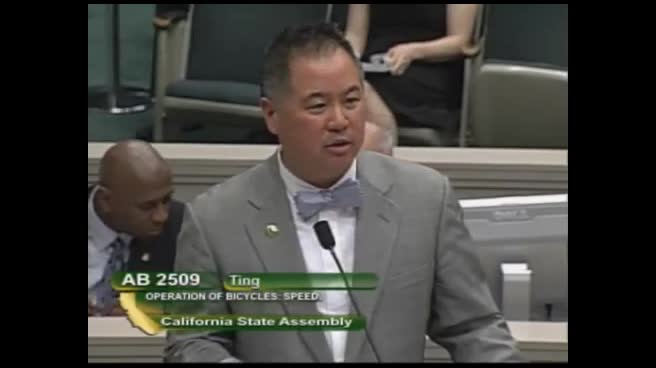 17MIN
Senate Standing Committee on Transportation and Housing
Bill Author

Bill Co-Author(s):