AB 1833: Transportation projects: environmental mitigation.
- Session Year: 2015-2016
- House: Assembly
- Latest Version Date: 2016-04-25
The California Environmental Quality Act (CEQA) requires a lead agency to prepare, or cause to be prepared, and certify the completion of an environmental impact report on a project, as defined, that it proposes to carry out or approve that may have a significant effect on the environment, as defined, or to adopt a negative declaration if it finds that the project will not have that effect, subject to certain exceptions.
The bill would create the Advanced Mitigation Program in the Department of Transportation to implement environmental mitigation measures in advance of future transportation projects. The bill, by February 1, 2017, would require the department to establish a steering committee to advise the department in that regard.
(1)The
The California Environmental Quality Act (CEQA) requires a lead agency to prepare, or cause to be prepared, and certify the completion of an environmental impact report on a project, as defined, that it proposes to carry out or approve that may have a significant effect on the environment, as defined, or to adopt a negative declaration if it finds that the project will not have that effect, subject to certain exceptions.
The bill would create the Advanced Mitigation Program in the Department of Transportation to implement environmental mitigation measures in advance of future transportation projects. The bill, by February 1, 2017, would require the department to establish a steering committee to advise the department in that regard.
(2)Existing federal law requires the United States Secretary of Transportation to carry out a surface transportation project delivery program, under which the participating states assume certain responsibilities for environmental review and clearance of transportation projects that would otherwise be the responsibility of the federal government. Existing law, until January 1, 2017, provides that the State of California consents to the jurisdiction of the federal courts with regard to the compliance, discharge, or enforcement of the responsibilities the Department of Transportation assumed as a participant in this program.
This bill would delete the January 1, 2017, repeal date and thereby extend these provisions indefinitely.
(3)Existing federal law requires the United States Secretary of Transportation to select, from states already approved to assume the above-referenced federal responsibilities for environmental review and clearance of transportation projects, a maximum of 5 states to participate in a program under which states may conduct environmental reviews and make approvals for projects under state environmental laws and regulations rather than under the National Environmental Policy Act of 1969, subject to certain conditions, including the consent of participating states to the jurisdiction of the federal courts in these matters.
This bill would extend the consent of the State of California to the jurisdiction of the federal courts with regard to the compliance, discharge, or enforcement of the responsibilities the Department of Transportation may assume as a participant in this program.
(1)The California Environmental Quality Act (CEQA) requires a lead agency to prepare, or cause to be prepared, and certify the completion of an environmental impact report on a project, as defined, that it proposes to carry out or approve that may have a significant effect on the environment, as defined, or to adopt a negative declaration if it finds that the project will not have that effect, subject to certain exceptions.
The bill would create the Advanced Mitigation Program in the Department of Transportation to implement environmental mitigation measures in advance of future transportation projects.
(2)Existing federal law requires the United States Secretary of Transportation to carry out a surface transportation project delivery program, under which the participating states assume certain responsibilities for environmental review and clearance of transportation projects that would otherwise be the responsibility of the federal government. Existing law, until January 1, 2017, provides that the State of California consents to the jurisdiction of the federal courts with regard to the compliance, discharge, or enforcement of the responsibilities the Department of Transportation assumed as a participant in this program.
This bill would delete the January 1, 2017, repeal date and thereby extend these provisions indefinitely.
(3)Existing federal law requires the United States Secretary of Transportation to select, from states already approved to assume the above-referenced federal responsibilities for environmental review and clearance of transportation projects, a maximum of 5 states to participate in a program under which states may conduct environmental reviews and make approvals for projects under state environmental laws and regulations rather than under the National Environmental Policy Act of 1969, subject to certain conditions, including the consent of participating states to the jurisdiction of the federal courts in these matters.
This bill would extend the consent of the State of California to the jurisdiction of the federal courts with regard to the compliance, discharge, or enforcement of the responsibilities the Department of Transportation may assume as a participant in this program.
(a)The Advanced Mitigation Program is hereby created in the department to accelerate project delivery and improve environmental outcomes of environmental mitigation for transportation infrastructure projects.
(b)For the purposes of this article, advanced mitigation means mitigation implemented before, and in anticipation of, environmental effects of future transportation projects. This program may utilize mitigation instruments including, but not limited to, mitigation banks, in lieu of fee programs, and conservation easements as defined in Section 815.1 of the Civil Code.
(c)The department shall track all implemented advanced mitigation projects to use as credits for environmental mitigation for state-sponsored transportation projects.
(d)The department may use advanced mitigation credits to fulfill mitigation requirements of any environmental law for a transportation project eligible for the State Transportation Improvement Program or the State Highway Operation and Protection Program.
(e)No later than February 1, 2017, the department shall establish an interagency transportation advanced mitigation steering committee consisting of the department and appropriate state and federal agencies to support the Advanced Mitigation Program so that advanced mitigation can be used as required mitigation for future transportation projects and provide improved environmental outcomes. The committee shall advise the department of opportunities to carry out advanced mitigation projects, provide the best available science, and actively participate in mitigation instrument reviews and approvals. The committee shall seek to develop streamlining opportunities, including those related to landscape scale mitigation planning, and alignment of federal and state regulations and procedures related to mitigation requirements and implementation. The committee shall also provide input on crediting, using, and tracking of advanced mitigation investments.
(f)Nothing in this article replaces or alters mitigation requirements of any other law. Any mitigation undertaken pursuant to this article shall meet or exceed all applicable requirements of the California Environmental Quality Act (Division 13 (commencing with Section 21000) of the Public Resources Code), the California Endangered Species Act (Chapter 1.5 (commencing with Section 2050) of Division 3 of the Fish and Game Code), or other applicable law.
(a)The Advanced Mitigation Program is hereby created in the department to accelerate project delivery and improve environmental outcomes of environmental mitigation for transportation infrastructure projects.
(b)For the purposes of this article, advanced mitigation means mitigation implemented before, and in anticipation of, environmental effects of future transportation projects. This program may utilize mitigation instruments including, but not limited to, mitigation banks, in lieu of fee programs, and conservation easements as defined in Section 815.1 of the Civil Code.
(c)The department shall track all implemented advanced mitigation projects to use as credits for environmental mitigation for state-sponsored transportation projects.
(d)The department may use advanced mitigation credits to fulfill mitigation requirements of any environmental law for a transportation project eligible for the State Transportation Improvement Program or the State Highway Operation and Protection Program.
(e)No later than February 1, 2017, the department shall establish an interagency transportation advanced mitigation steering committee consisting of the department and appropriate state and federal agencies to support the Advanced Mitigation Program so that advanced mitigation can be used as required mitigation for future transportation projects and provide improved environmental outcomes. The committee shall advise the department of opportunities to carry out advanced mitigation projects, provide the best available science, and actively participate in mitigation instrument reviews and approvals. The committee shall seek to develop streamlining opportunities, including those related to landscape scale mitigation planning, and alignment of federal and state regulations and procedures related to mitigation requirements and implementation. The committee shall also provide input on crediting, using, and tracking of advanced mitigation investments.
SEC. 2.Section 820.1 of the Streets and Highways Code is amended to read:820.1.(a)The State of California consents to the jurisdiction of the federal courts with regard to the compliance, discharge, or enforcement of the responsibilities assumed by the department pursuant to Section 326 of, subsection (a) of Section 327 of, and Section 330 of, Title 23 of the United States Code.
(b)In any action brought pursuant to the federal laws described in subdivision (a), no immunity from suit may be asserted by the department pursuant to the Eleventh Amendment to the United States Constitution, and any immunity is hereby waived.
(c)The department shall not delegate any of its responsibilities assumed pursuant to the federal laws described in subdivision (a) to any political subdivision of the state or its instrumentalities.
(d)The department shall, no later than January 1, 2016, submit a report to the Legislature that includes the following with respect to responsibilities assumed by the department pursuant to Section 326 of, and subsection (a) of Section 327 of, Title 23 of the United States Code:
(1)A comparative analysis of the environmental review process under the National Environmental Policy Act (Chapter 55 (commencing with Section 4321) of Title 42 of the United States Code) for the 30 projects, excluding those projects categorically excluded from environmental review, undertaken immediately preceding the enactment of this section that involved the Federal Highway Administration and the environmental review process for all projects, excluding those projects categorically excluded from environmental review, undertaken following the enactment of this section that did not involve the Federal Highway Administration. This analysis shall include department- and local agency-sponsored projects, and shall address the following:
(A)For each project included in the analysis, the environmental review process under the National Environmental Policy Act, including which state and federal agencies reviewed the environmental documents and the amount of time the documents were reviewed by each agency, shall be described.
(B)The points in the environmental review process under the National Environmental Policy Act when project delays occurred and the nature of the delays.
(C)The time saved in the environmental review process for projects undertaken following the enactment of this section in comparison to the review process for projects undertaken prior to the enactment of this section, and the points in the review process when time was saved.
(D)The circumstances when the Federal Highway Administration hindered and facilitated project delivery.
(2)All financial costs incurred by the department to assume the responsibilities pursuant to Section 326 of, and subsection (a) of Section 327 of, Title 23 of the United States Code, including, but not limited to, the following:
(A)Personnel to conduct and review environmental documents and to manage litigation.
(B)Administrative costs.
(C)Litigation.
(3)An explanation of all litigation initiated against the department for the responsibilities assumed pursuant to Section 326 of, subsection (a) of Section 327 of, Title 23 of the United States Code.
(4)A comparison of all costs and benefits of assuming these responsibilities.
(5)An assessment of overall project delivery time from the time environmental studies begin to the time the project is ready to advertise for construction, including the time required for each project phase and distinguishing between different types of environmental documents and between projects on the state highway system and local assistance projects. The department may also include other variables that it determines may be useful in the assessment.
(e)Nothing in this section affects the obligation of the department to comply with state and federal law.
(a)The Advanced Mitigation Program is hereby created in the department to accelerate project delivery and improve environmental outcomes of environmental mitigation for transportation infrastructure projects.
(b)For the purposes of this article, advanced mitigation means mitigation implemented before, and in anticipation of, environmental effects of future transportation projects. This program may utilize mitigation instruments including, but not limited to, mitigation banks, in lieu of fee programs, and conservation easements as defined in Section 815.1 of the Civil Code.
(c)The department shall track all implemented advanced mitigation projects to use as credits for environmental mitigation for state-sponsored transportation projects.
(d)The department may use advanced mitigation credits to fulfill mitigation requirements of any environmental law for a transportation project eligible for the State Transportation Improvement Program or the State Highway Operation and Protection Program.
(e)No later than February 1, 2017, the department shall establish an interagency transportation advanced mitigation steering committee consisting of the department and appropriate state and federal agencies to support the Advanced Mitigation Program so that advanced mitigation can be used as required mitigation for future transportation projects and provide improved environmental outcomes. The committee shall advise the department of opportunities to carry out advanced mitigation projects, provide the best available science, and actively participate in mitigation instrument reviews and approvals. The committee shall seek to develop streamlining opportunities, including those related to landscape scale mitigation planning, and alignment of federal and state regulations and procedures related to mitigation requirements and implementation. The committee shall also provide input on crediting, using, and tracking of advanced mitigation investments.
SEC. 2.Section 820.1 of the Streets and Highways Code is amended to read:820.1.(a)The State of California consents to the jurisdiction of the federal courts with regard to the compliance, discharge, or enforcement of the responsibilities assumed by the department pursuant to Section 326 of, and subsection (a) of Section 327 of, and Section 330 of, Title 23 of the United States Code.
(b)In any action brought pursuant to the federal laws described in subdivision (a), no immunity from suit may be asserted by the department pursuant to the Eleventh Amendment to the United States Constitution, and any immunity is hereby waived.
(c)The department shall not delegate any of its responsibilities assumed pursuant to the federal laws described in subdivision (a) to any political subdivision of the state or its instrumentalities.
(d)The department shall, no later than January 1, 2016, submit a report to the Legislature that includes the following: following with respect to responsibilities assumed by the department pursuant to Section 326 of, and subsection (a) of Section 327 of, Title 23 of the United States Code:
(1)A comparative analysis of the environmental review process under the National Environmental Policy Act (Chapter 55 (commencing with Section 4321) of Title 42 of the United States Code) for the 30 projects, excluding those projects categorically excluded from environmental review, undertaken immediately preceding the enactment of this section that involved the Federal Highway Administration and the environmental review process for all projects, excluding those projects categorically excluded from environmental review, undertaken following the enactment of this section that did not involve the Federal Highway Administration. This analysis shall include department- and local agency-sponsored projects, and shall address the following:
(A)For each project included in the analysis, the environmental review process under the National Environmental Policy Act, including which state and federal agencies reviewed the environmental documents and the amount of time the documents were reviewed by each agency, shall be described.
(B)The points in the environmental review process under the National Environmental Policy Act when project delays occurred and the nature of the delays.
(C)The time saved in the environmental review process for projects undertaken following the enactment of this section in comparison to the review process for projects undertaken prior to the enactment of this section, and the points in the review process when time was saved.
(D)The circumstances when the Federal Highway Administration hindered and facilitated project delivery.
(2)All financial costs incurred by the department to assume the responsibilities pursuant to Section 326 of, and subsection (a) of Section 327 of, Title 23 of the United States Code, including, but not limited to, the following:
(A)Personnel to conduct and review environmental documents and to manage litigation.
(B)Administrative costs.
(C)Litigation.
(3)An explanation of all litigation initiated against the department for the responsibilities assumed pursuant to Section 326 of, subsection (a) of Section 327 of, Title 23 of the United States Code.
(4)A comparison of all costs and benefits of assuming these responsibilities.
(5)An assessment of overall project delivery time from the time environmental studies begin to the time the project is ready to advertise for construction, including the time required for each project phase and distinguishing between different types of environmental documents and between projects on the state highway system and local assistance projects. The department may also include other variables that it determines may be useful in the assessment.
(e)(1)This section shall remain in effect only until January 1, 2017, and as of that date is repealed, unless a later enacted statute, that is enacted before January 1, 2017, deletes or extends that date.
(2)The state shall remain liable for any decisions made, or responsibilities assumed and exercised, prior to the repeal of this section under this subdivision, pursuant to applicable federal statutes of limitation for filing citizens suits in federal court.
(f)
(e)Nothing in this section affects the obligation of the department to comply with state and federal law.
|
Date
|
Status
|
|---|---|
| Feb 9, 2016 | Read first time. To print. |
| Feb 10, 2016 | From printer. May be heard in committee March 11. |
| Feb 25, 2016 | Referred to Coms. on TRANS. and NAT. RES. |
| Mar 16, 2016 | From committee chair, with author's amendments: Amend, and re-refer to Com. on TRANS. Read second time and amended. |
| Mar 17, 2016 | Re-referred to Com. on TRANS. |
| Apr 5, 2016 | From committee: Do pass and re-refer to Com. on NAT. RES. (Ayes 15. Noes 0.) (April 4). Re-referred to Com. on NAT. RES. |
| Apr 21, 2016 | From committee: Amend, and do pass as amended and re-refer to Com. on APPR. (Ayes 8. Noes 1.) (April 18). |
| Apr 25, 2016 | Read second time and amended. |
| Apr 26, 2016 | Re-referred to Com. on APPR. |
| May 11, 2016 | In committee: Set, first hearing. Referred to APPR. suspense file. |
| May 27, 2016 | In committee: Held under submission. |
|
Date
|
Description
|
Location
|
Votes
|
|
|---|---|---|---|---|
| Apr 18, 2016 | Do pass as amended and be re-referred to the Committee on [Appropriations] | Assembly Standing Committee on Natural Resources |
Passed |
|
| Apr 4, 2016 | Do pass and be re-referred to the Committee on [Natural Resources] | Assembly Standing Committee on Transportation |
Passed |
This list shows positions taken on this bill by organizations on the date displayed, which is linked to the original source.
Positions by individuals are not included.
|
Organization
|
Position
|
Date
|
|---|---|---|
| Associated General Contractors | ** Support | Apr 18, 2016 |
| California Association Of Councils Of Governments | * Support | Apr 4, 2016 |
| California League Of Conservation Voters | ** Against | Apr 18, 2016 |
| California Transportation Commission | ** Support | Apr 18, 2016 |
| Riverside County Transportation Commission | * Support | Apr 4, 2016 |
| Sierra Club California | ** Against | Apr 18, 2016 |
| TRANS. | ** Against | Apr 4, 2016 |
Date of Hearing: May 11, 2016
ASSEMBLY COMMITTEE ON APPROPRIATIONS
Lorena Gonzalez, Chair
ABPCA Bill Id:AB 1833
Author:(Linder) – As Amended Ver:April 25, 2016
Policy Committee: | Transportation | Vote: | 15 - 0 |
Natural Resources | 8 - 1 | ||
|
|
Urgency: No State Mandated Local Program: No Reimbursable: No
SUMMARY:
This bill establishes the Advanced Mitigation Program (AMP) at Caltrans to implement environmental mitigation measures in advance of future transportation projects. Specifically, this bill:
- Requires Caltrans to track all implemented advanced mitigation projects to use as credits to fulfill environmental mitigation requirements of any environmental law for a transportation project eligible for the State Transportation Improvement Program or the State Highway Operation and Protection Program.
- Requires Caltrans, no later than February 1, 2017, to establish an interagency transportation advanced mitigation steering committee consisting, as specified, to support the AMP.
- Stipulates that the AMP does not replace or alter mitigation requirements under the California Environmental Quality Act (CEQA), the California Endangered Species Act, or other applicable law.
FISCAL EFFECT:
An AMP would likely cost in the low tens of millions of dollars annually, including Caltrans' administrative costs for the steering committee. (This bill is identical to the advanced mitigation proposal in the Governor's proposed transportation funding package, except that the Governor also proposes $30 million annually to support the program.) Presumably, these up-front costs would eventually be more than offset by the avoided costs of mitigation within individual transportation project budgets that are assigned AMP credits and by cost savings related to shorter project delivery times.
COMMENTS:
Background and Purpose. CEQA provides a process for evaluating the environmental effects of applicable projects undertaken or approved by public agencies. If a project is not exempt from CEQA, an initial study is prepared to determine whether or not the project may have a significant effect on the environment. If not, the lead agency must prepare a negative declaration. If the study shows that the project may have a significant effect on the environment, the lead agency must prepare an EIR. Generally, an EIR must accurately describe the proposed project, identify and analyze each significant environmental impact expected to result from the proposed project, identify mitigation measures to reduce those impacts to the extent feasible, and evaluate a range of reasonable alternatives to the proposed project.
For large infrastructure development entities, like Caltrans, whose activities can result in a broad range of impacts from small, temporary disturbances associated with maintenance activities to large multi-acre impacts associated with building bridges or highway alignments, developing multiple small mitigation sites can be costly, time consuming, and result in fragmented habitats. To address these issues, both state and regional entities have utilized advanced mitigation as a way to provide high quality replacement habitat, achieve economies of scale in its development, and reduce project delivered delays. For the most part, Caltrans has greater experience developing smaller-scale advanced mitigation sites is that it must rely, almost exclusively, on funds from individual project budgets. Since project funds are not available far enough in advance, it is not possible for them to complete the costly and time consuming steps needed to complete advanced mitigation before the project goes to construction and mitigation credits are needed.
While this bill includes no funding and places in statute a tool that Caltrans may already use under CEQA and other environmental laws, it should provide added value requiring Caltrans to coordinate with other agencies in planning for the use of advanced mitigation for future transportation projects.
Analysis Prepared by: Chuck Nicol / APPR. / (916) 319-2081
Date of Hearing: April 18, 2016
ASSEMBLY COMMITTEE ON NATURAL RESOURCES
Das Williams, Chair
ABPCA Bill Id:AB 1833 (
Author:Linder) – As Amended Ver:March 16, 2016
SUBJECT: Transportation projects: environmental mitigation
SUMMARY: Creates the Advanced Mitigation Program (AMP) in the Department of Transportation (Caltrans) to implement environmental mitigation measures in advance of future transportation projects.
EXISTING LAW:
- The California Environmental Quality Act (CEQA) requires lead agencies with the principal responsibility for carrying out or approving a proposed project to prepare a negative declaration, mitigated negative declaration, or environmental impact report (EIR) for this action, unless the project is exempt from CEQA (CEQA includes various statutory exemptions, as well as categorical exemptions in the CEQA Guidelines).
- Pursuant to CEQA, the National Environmental Policy Act, and numerous other state and federal laws, requires mitigation for unavoidable impacts to certain resources as a result of project construction.
THIS BILL:
- Creates AMP in Caltrans to accelerate project delivery and improve environmental outcomes of environmental mitigation for transportation infrastructure projects.
- Defines “advanced mitigation” as mitigation implemented before, and in anticipation of, environmental effects of future transportation projects. Authorizes mitigation instruments including, but not limited to, mitigation banks, in lieu of fee programs, and conservation easements.
- Requires Caltrans to track all implemented advanced mitigation projects to use as credits for environmental mitigation for state-sponsored transportation projects.
- Authorizes Caltrans to use advanced mitigation credits to fulfill mitigation requirements of any environmental law for a transportation project eligible for the State Transportation Improvement Program or the State Highway Operation and Protection Program.
- Requires Caltrans, no later than February 1, 2017, to establish an interagency transportation advanced mitigation steering committee consisting of appropriate state and federal agencies to support AMP so that advanced mitigation can be used as required mitigation for future transportation projects and provide improved environmental outcomes. Requires the committee to:
- Advise Caltrans of opportunities to carry out advanced mitigation projects, provide the best available science, and actively participate in mitigation instrument reviews and approvals.
- Seek to develop streamlining opportunities, including those related to landscape scale mitigation planning, and alignment of federal and state regulations and procedures related to mitigation requirements and implementation.
- Provide input on crediting, using, and tracking of advanced mitigation investments.
FISCAL EFFECT: Unknown
COMMENTS:
- Background. CEQA provides a process for evaluating the environmental effects of applicable projects undertaken or approved by public agencies. If a project is not exempt from CEQA, an initial study is prepared to determine whether the project may have a significant effect on the environment.
If the initial study shows that there would not be a significant effect on the environment, the lead agency must prepare a negative declaration. If the initial study shows that the project may have a significant effect on the environment, the lead agency must prepare an EIR.
Generally, an EIR must accurately describe the proposed project, identify and analyze each significant environmental impact expected to result from the proposed project, identify mitigation measures to reduce those impacts to the extent feasible, and evaluate a range of reasonable alternatives to the proposed project. Prior to approving any project that has received environmental review, an agency must make certain findings. If mitigation measures are required or incorporated into a project, the agency must adopt a reporting or monitoring program to ensure compliance with those measures.
- Author's statement:
California infrastructure is reaching a critical mass. Last year, Governor Brown identified $66 billion in deferred maintenance. In 2011 the CTC identified a $200 billion shortfall in funding for projects. These numbers are, as the Governor said, “staggering.” On top of all this, Proposition 1B funds have been exhausted, leaving a massive funding gap.
Understandably the Legislature has been debating funding proposals to try and address these deficits, with little progress to show. While these talks continue the legislature must press forward on other solutions. In recent years, California has embraced new procurement methods such as Design-Build and CM/GC reducing costs and delivery times. Yet the largest contributor to time delays has barely been touched, environmental review and mitigation.
While regions around the state have been at the forefront of mitigating environmental impacts the state as a whole has been slow to adopt these policies. Orange and Riverside County have both been early in adoption of advanced mitigation. Both were able to realize significant savings by estimating the impacts from one or many transportation projects before or during the planning phase, instead of waiting till relatively late in the process.
Other states and localities have begun implementing advanced mitigations for its potential benefits of reducing project delays and costs, and improving mitigation quality to align with statewide and regional conservation priorities. States like Michigan have estimated cost savings of $70,000 per acre and Washington has estimated between 30% - 80% in cost savings over traditional wetland mitigation.
According to a study conducted by UC Davis, if national figures for advanced mitigation are applied, California should expect a reduction of the length of the project by 10% per project and significant cost savings. Given cost savings from projects conducted by other states and localities, California should also expect significant cost savings from advanced mitigation.
- This bill doesn't address the main obstacle to advanced mitigation – funding. For large infrastructure development entities, like Caltrans, whose activities can result in a broad range of impacts from small, temporary disturbances associated with maintenance activities to large multi-acre impacts associated with building bridges or highway alignments, developing multiple small mitigation sites can be costly, time consuming, and result in fragmented habitats.
To address these issues, both state and regional entities have utilized advanced mitigation as a way to provide high quality replacement habitat, achieve economies of scale in its development, and reduce project delivered delays. For the most part, Caltrans has greater experience developing smaller-scale advanced mitigation sites in comparison to regionally-led efforts where large-scale mitigation, some exceeding 500 acres, is more the norm.
One of the reasons Caltrans more frequently performs smaller-scale advanced mitigation is that it must rely, almost exclusively, on funds from individual project budgets. Since project funds are not available far enough in advance, it is not possible for them to complete the costly and time consuming steps needed to complete advanced mitigation before the project goes to construction and mitigation credits are needed.
Regionally-based advanced mitigation efforts, on the other hand, are distinguished by their large scale, both in terms of land area and financial commitment. Advanced mitigation efforts undertaken by regional entities in California are typically funded by local developer fees, bonds, grants and, sometimes, sales taxes. They also result in the protection of large land areas, sometimes up to 500 acres. Additionally, it can take regional entities decades to complete the mitigation site and make it ready for use as project mitigation. Also, costs to complete advanced mitigation can range from tens of millions to billions of dollars.
This bill is identical to the advanced mitigation proposal in the Governor's proposed transportation funding package, except that this bill left out the commitment of $30 million annually to support the program.
- What does the bill really do? It's not clear that this bill is necessary to authorize advanced mitigation, which can be undertaken under CEQA and other environmental laws that require mitigation using the standards and procedures in those laws. However, the bill's value may lie in requiring Caltrans to coordinate with other agencies in planning for the use of advanced mitigation for future transportation projects. To clarify that this bill does not change mitigation standards under CEQA and other laws, the author and the committee may wish to consider adding the following provision:
(f) Nothing in this article replaces or alters mitigation requirements of any other law. Any mitigation undertaken pursuant to this article shall meet or exceed all applicable requirements of the California Environmental Quality Act, the California Endangered Species Act, or other applicable law.
- Double referral. This bill passed the Assembly Transportation Committee by a vote of 15-0 on April 4, 2016.
REGISTERED SUPPORT / OPPOSITION:
Support
Associated General Contractors
California Transportation Commission
Opposition
California League of Conservation Voters
Sierra Club California
Analysis Prepared by: Lawrence Lingbloom / NAT. RES. / (916) 319-2092
Date of Hearing: April 4, 2016
ASSEMBLY COMMITTEE ON TRANSPORTATION
Jim Frazier, Chair
ABPCA Bill Id:AB 1833 (
Author:Linder) – As Amended Ver:March 16, 2016
SUBJECT: Transportation projects: environmental mitigation
SUMMARY: Creates an advanced mitigation program within the California Department of Transportation (Caltrans) to accelerate project delivery. Specifically, this bill:
- Creates an Advanced Mitigation Program within Caltrans to streamline the environmental process and accelerate project delivery.
- Requires Caltrans to establish, no later than February 1, 2017, an interagency transportation advanced mitigation steering committee (Interagency Committee) consisting of Caltrans and appropriate state and federal agencies.
- Defines "advanced mitigation" as mitigation implemented before, and in anticipation of, environmental effects of future transportation projects.
- Authorizes Caltrans to utilize a variety of mitigation instruments including mitigation banks, in lieu fee programs, and conservation easements.
- Authorizes Caltrans to use advanced mitigation credits to fulfill mitigation requirements of any eligible State Transportation Improvement Program (STIP) or State Highway Operation and Protection Program (SHOPP) project.
- Requires Caltrans to track all implemented advanced mitigation for use as credits for environmental mitigation of state-sponsored projects.
- Requires the Interagency Committee to advise Caltrans on opportunities to carry out advanced mitigation projects; to develop streamlining opportunities with regard to alignment of state and federal regulations and procedures related to mitigation requirements and implementation; and to provide input on crediting, using, and tracking advanced mitigation investments.
EXISTING LAW:
- Gives Caltrans authority and control over state highways.
- Requires state and local agencies, pursuant to the California Environmental Quality Act (CEQA), to identify significant environmental impacts of projects and to avoid or mitigate those impacts, if feasible.
- Requires, pursuant to CEQA, that lead agencies prepare a negative declaration, mitigated negative declaration, or environmental impact report with regard to project impacts.
- Pursuant to CEQA, the National Environmental Policy Act, and numerous other state and federal laws, requires mitigation for unavoidable impacts to certain resources as a result of a project construction.
FISCAL EFFECT: Unknown
COMMENTS: State and federal environmental laws have long required mitigation as a means of compensating for adverse impacts. While it is widely acknowledged that ecological impacts should be first avoided or minimized and then restored at the location where the impact occurs, many times unavoidable losses occur and can only be addressed by replacing (mitigating) the impacted habitat. For large infrastructure development entities, like Caltrans, whose activities can result in a broad range of impacts from small, temporary disturbances associated with maintenance activities to large multi-acre impacts associated with building bridges or highway alignments, developing multiple small mitigation sites can be costly, time consuming, and result in fragmented habitats.
To address these issues, both state and regional entities have utilized advanced mitigation as a way to provide high quality replacement habitat, achieve economies of scale in its development, and reduce project delivered delays. For the most part, Caltrans has greater experience developing smaller-scale advanced mitigation sites in comparison to regionally-led efforts where large-scale mitigation, some exceeding 500 acres, is more the norm.
One of the reasons Caltrans more frequently performs smaller-scale advanced mitigation is that it must rely, almost exclusively, on funds from individual project budgets. Since project funds are not available far enough in advance, it is not possible for them to complete the costly and time consuming steps needed to complete advanced mitigation before the project goes to construction and mitigation credits are needed.
Regionally-based advanced mitigation efforts, on the other hand, are distinguished by their large scale, both in term of land area and financial commitment. Advanced mitigation efforts undertaken by regional entities in California are typically funded by local developer fees, bonds, grants and, sometime, sales taxes. They also result in the protection of large land areas, sometimes up to 500 acres. Additionally, it can take regional entities decades to complete the mitigation site and make it ready for use as project mitigation. Also, costs to complete advanced mitigation can range from tens of millions to billions of dollars.
Committee concerns: By introducing AB 1833, the author seeks to provide Caltrans with the tools it needs to develop an advanced mitigation program so that greater project environmental streamlining can be achieved. While this is laudable, it can be argued that Caltrans already possesses and exercises much of the authority this bill provides. It could also be argued, however, that by setting a deadline in statute, AB 1833 provides Caltrans with incentive to move forward with advanced mitigation efforts. Unfortunately, what this bill does not provide is the desperately needed funding mechanism to ensure that Caltrans can successfully create advance mitigation.
Double referral: This bill will be referred to the Assembly Natural Resources Committee should it pass out of this committee.
Related legislation: SB 901 (Bates) is identical to this bill with the exception that SB 901 requires that Caltrans set aside at least $30 million annually for the program from the STIP and SHOPP and that the CTC allocate those funds consistent with the Advanced Mitigation Program. AB 901 is awaiting a hearing in the Senate Transportation and Housing Committee.
REGISTERED SUPPORT / OPPOSITION:
Support
None on file
Opposition
California League of Conservation Voters
Sierra Club California
Analysis Prepared by: Victoria Alvarez / TRANS. / (916) 319-2093
Discussed in Hearing
 6MIN
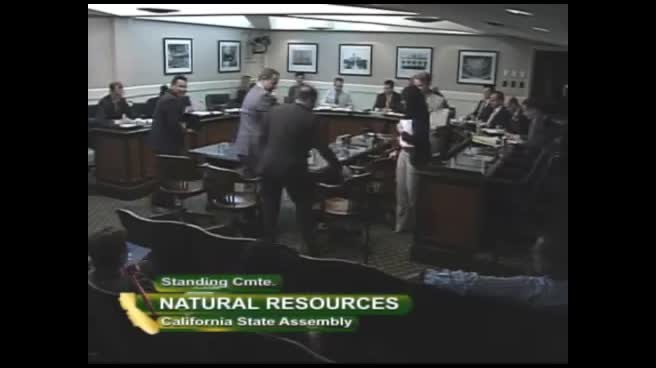
Assembly Standing Committee on Natural Resources
 6MIN
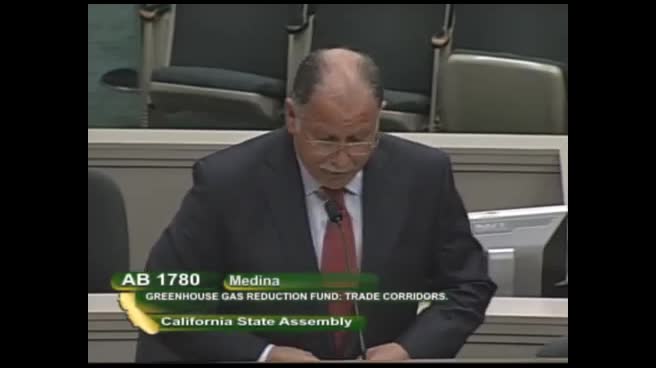
Assembly Standing Committee on Transportation
Bill Author
Bill Co-Author(s):