AB 2419: Public postsecondary education: The New University of California.
- Session Year: 2015-2016
- House: Assembly
- Latest Version Date: 2016-02-19
Existing law establishes the California Community Colleges, under the administration of the Board of Governors of the California Community Colleges, the California State University, under the administration of the Trustees of the California State University, and the University of California, under the administration of the Regents of the University of California, as the 3 segments of public postsecondary education in this state.
This bill would establish The New University of California as a 4th segment of public postsecondary education in this state. The university would provide no instruction, but rather would issue credit and degrees to persons who pass its examinations. The bill would establish an 11-member Board of Trustees of The New University of California as the governing body of the university, and specify the membership and appointing authority for the board of trustees. The bill would provide for the appointment of a Chancellor of The New University of California as the chief executive officer of the university.
(a)Public higher education consists of (1) the California Community Colleges, (2) the California State University, and each campus, branch, and function thereof, and (3) each campus, branch, and function of the University of California California, and (4) The New University of California.
(b)As used in this part, independent institutions of higher education are those nonpublic higher education institutions that grant undergraduate degrees, graduate degrees, or both, and that are formed as nonprofit corporations in this state and are accredited by an agency recognized by the United States Department of Education.
(c)No provision of this part is intended to regulate, subsidize, or intrude upon private education, including, but not limited to, independent educational institutions and religious schools, nor to vary existing state law or state constitutional provisions relating to private education.
SEC. 2.Section 66010.4 of the Education Code is amended to read:66010.4.The missions and functions of Californias public and independent segments, and their respective institutions of higher education shall be differentiated as follows:
(a)(1)The California Community Colleges shall, as a primary mission, offer academic and vocational instruction at the lower division level for both younger and older students, including those persons returning to school. Public community colleges shall offer instruction through but not beyond the second year of college. These institutions may grant the associate in arts and the associate in science degree.
(2)In addition to the primary mission of academic and vocational instruction, the community colleges shall offer instruction and courses to achieve all of the following:
(A)The provision of remedial instruction for those in need of it and, in conjunction with the school districts, instruction in English as a second language, adult noncredit instruction, and support services which help students succeed at the postsecondary level are reaffirmed and supported as essential and important functions of the community colleges.
(B)The provision of adult noncredit education curricula in areas defined as being in the states interest is an essential and important function of the community colleges.
(C)The provision of community services courses and programs is an authorized function of the community colleges so long as their provision is compatible with an institutions ability to meet its obligations in its primary missions.
(3)A primary mission of the California Community Colleges is to advance Californias economic growth and global competitiveness through education, training, and services that contribute to continuous work force improvement.
(4)The community colleges may conduct to the extent that state funding is provided, institutional research concerning student learning and retention as is needed to facilitate their educational missions.
(b)The California State University shall offer undergraduate and graduate instruction through the masters degree in the liberal arts and sciences and professional education, including teacher education. Presently established two-year programs in agriculture are authorized, but other two-year programs shall be permitted only when mutually agreed upon by the Trustees of the California State University and the Board of Governors of the California Community Colleges. The doctoral degree may be awarded jointly with the University of California, as provided in subdivision (c) and pursuant to Section 66904. The doctoral degree may also be awarded jointly with one or more independent institutions of higher education, provided that the proposed doctoral program is approved by the California Postsecondary Education Commission. Research, scholarship, and creative activity in support of its undergraduate and graduate instructional mission is authorized in the California State University and shall be supported by the state. The primary mission of the California State University is undergraduate and graduate instruction through the masters degree.
(c)The University of California may provide undergraduate and graduate instruction in the liberal arts and sciences and in the professions, including the teaching professions. It shall have exclusive jurisdiction in public higher education over instruction in the profession of law and over graduate instruction in the professions of medicine, dentistry, and veterinary medicine. It has the sole authority in public higher education to award the doctoral degree in all fields of learning, except that it may agree with the California State University to award joint doctoral degrees in selected fields. The University of California shall be the primary state-supported academic agency for research.
(d)(1)The New University of California shall provide no instruction, but shall issue college credit and baccalaureate and associate degrees to any person capable of passing appropriate examinations.
(2)The New University of California may contract with qualified entities for the formulation of peer-reviewed course examinations the passage of which would demonstrate that the student has the knowledge and skill necessary to receive college credit for that course.
(d)
(e)The independent institutions of higher education shall provide undergraduate and graduate instruction and research in accordance with their respective missions.
SEC. 3.Division 9.3 (commencing with Section 92990) is added to Title 3 of the Education Code, to read:9.3.THE NEW UNIVERSITY OF CALIFORNIA92990.(a)The New University of California is hereby established under the administration of the Board of Trustees of The New University of California. The New University of California shall provide no instruction, and the mission of the university shall be limited to issuing college credit and baccalaureate and associate degrees to any person capable of passing the examinations administered by the university. The goal of the university is for its students to obtain the requisite knowledge and skills to pass the examinations administered by the university from any source, such as massive open online courses, the student deems appropriate. When the student feels that he or she is ready to take an examination, the student shall pay the examination fee, present acceptable identification at the examination, and, upon passage of the examination, receive academic credit. When a student receives sufficient academic credit in prescribed courses, the university shall issue an appropriate degree to that student.
(b)The university may contract with qualified entities for the formulation of peer-reviewed course examinations the passage of which would demonstrate that the student has the knowledge and skill necessary to receive college credit for that course.
(c)The university may charge students a fee for the taking of examinations administered by the university. Fees charged under this subdivision shall not exceed the amount that is necessary for the university to recover the costs of administering the examination.
(d)The university may apply for accreditation to the Western Association of Schools and Colleges, or a successor body, or any other appropriate accrediting entity.
(e)The board of trustees shall authorize the Chancellor of The New University of California to grant baccalaureate and associate degrees in fields of study they deem appropriate. In selecting the fields in which degrees are to be awarded by the university, the board of trustees shall consult the labor needs forecasts issued by the Employment Development Department.
92991.(a)The New University of California shall be administered by the Board of Trustees of The New University of California, which is hereby established. The board of trustees shall include 11 voting members, as follows:
(1)Five ex officio members: the Governor, the Lieutenant Governor, the Superintendent of Public Instruction, and the Speaker of the Assembly, or their designees; and the person named by the board of trustees to serve as the Chancellor of The New University of California.
(2)(A)Six members of the public appointed by the Governor and subject to confirmation by a majority of the membership of the Senate.
(B)The terms of two of the members of the public appointed under this paragraph shall commence on July 1, 2017, and terminate on July 1, 2019. The terms of two of the members of the public appointed under this paragraph shall commence on July 1, 2017, and terminate on July 1, 2021. The terms of two of the members appointed under this paragraph shall commence on July 1, 2017, and terminate on July 1, 2023. Thereafter, the terms of all of the members of the public appointed under this paragraph shall be six years.
(b)Members of the board of trustees shall receive no salary for their service, but shall be reimbursed for the expenses they incur while carrying out their duties.
(c)All meetings of the board of trustees shall be subject to the Bagley-Keene Open Meeting Act (Article 9 (commencing with Section 11120) of Chapter 1 of Part 1 of Division 3 of Title 2 of the Government Code).
92992.The Chancellor of The New University of California shall be the chief executive officer of the university. The chancellor shall be appointed by, and serve at the pleasure of, the board of trustees. The chancellor shall be authorized to employ and fix the salaries of, employees to assist him or her in carrying out the functions of the university.
|
Date
|
Status
|
|---|---|
| Feb 19, 2016 | Introduced. To print. |
| Feb 21, 2016 | From printer. May be heard in committee March 22. |
| Feb 22, 2016 | Read first time. |
| Mar 8, 2016 | Referred to Com. on HIGHER ED. |
| Apr 19, 2016 | In committee: Set, first hearing. Failed passage. Reconsideration granted. |
|
Date
|
Description
|
Location
|
Votes
|
|
|---|---|---|---|---|
| Apr 19, 2016 | Reconsideration. | Assembly Standing Committee on Higher Education |
Passed |
|
| Apr 19, 2016 | Do pass and be re-referred to the Committee on [Appropriations] | Assembly Standing Committee on Higher Education |
Failed |
This list shows positions taken on this bill by organizations on the date displayed, which is linked to the original source.
Positions by individuals are not included.
|
Organization
|
Position
|
Date
|
|---|---|---|
| California Federation Of Teachers | ** Against | Apr 19, 2016 |
Date of Hearing: April 19, 2016
ASSEMBLY COMMITTEE ON HIGHER EDUCATION
Jose Medina, Chair
ABPCA Bill Id:AB 2419 (
Author:Jones) – As Introduced Ver:February 19, 2016
SUBJECT: Public postsecondary education: The New University of California
SUMMARY: Establishes the New University of California (New UC) as a segment of public higher education to provide college credit and baccalaureate and associate degrees to any person capable of passing appropriate examinations. Specifically, this bill:
- Establishes the New UC under the administration of the New UC Board of Trustees (BOT) to provide no instruction, and with the limited mission of issuing college credit and baccalaureate and associate degrees to any person capable of passing the examinations administered by the New UC.
- Provides that the goal of the New UC is for its students to obtain the requisite knowledge and skills to pass the examinations administered by the university from any source, such as massive open online courses, the student deems appropriate.
- Provides that when the student feels that he or she is ready to take an examination, the student shall pay the examination fee, present acceptable identification at the examination, and, upon passage of the examination, receive academic credit. Requires the New UC to issue the appropriate degree when a student receives sufficient academic credit.
- Provides that New UC may contract with qualified entities for the formulation of peer-reviewed course examinations the passage of which would demonstrate that the student has the knowledge and skill necessary to receive college credit for that course.
- Provides that New UC may charge students a fee for the taking of examinations and those fees charged may not exceed the amount necessary to recover the costs of administering the examination.
- Provides the New UC may apply for accreditation to the Western Association of Schools and Colleges (WASC), or a successor body, or any other appropriate accrediting entity.
- Provides that the New UC BOT shall authorize a Chancellor to grant baccalaureate and associate degrees in fields of study they deem appropriate. In selecting the fields in which degrees are to be awarded by the university, the board of trustees shall consult the labor needs forecasts issued by the Employment Development Department.
- Provides that the New UC BOT shall include 11 voting members, as follows:
- Five ex officio members: the Governor, the Lieutenant Governor, the Superintendent of Public Instruction, and the Speaker of the Assembly, or their designees; and the person named by the BOT to serve as the Chancellor; and,
- Six members of the public appointed by the Governor and subject to confirmation by a majority of the membership of the Senate. Provides that the terms of two of the members of the public appointed shall commence on July 1, 2017, and terminate on July 1, 2019. The terms of two of the members of the public appointed shall commence on July 1, 2017, and terminate on July 1, 2021. The terms of two of the members appointed shall commence on July 1, 2017, and terminate on July 1, 2023. Thereafter, the terms of all of the members of the public appointed under this paragraph shall be six years.
- Provides that members of the BOT shall receive no salary for their service, but shall be reimbursed for the expenses they incur while carrying out their duties.
- Provides that all meetings of the board of trustees shall be subject to the Bagley-Keene Open Meeting Act.
- Provides that the Chancellor of the New UC shall be the chief executive officer of the university. The chancellor shall be appointed by, and serve at the pleasure of, the BOT. The chancellor shall be authorized to employ and fix the salaries of, employees to assist him or her in carrying out the functions of the university.
EXISTING LAW: Establishes California's public higher education segments as the California Community Colleges (CCC), the California State University (CSU) and the University of California (UC) with the goals of providing access to education for all qualified Californians, quality teaching and programs to provide students the opportunity to address issues central to their full development as responsible citizens and educational equity through diverse and representative student body and faculty. Each of the segments has distinct missions and responsibilities, but also is required to collaborate and coordinate toward California's common educational goals. (Education Code Section 66000 et seq.)
FISCAL EFFECT: Unknown.
COMMENTS: Purpose of this bill. According to the author, "for centuries and even for millennia, special knowledge has resided and was created in the minds and libraries of institutions of higher learning throughout the world. Students had to travel to those institutions in order to obtain that knowledge. When the institution determined that the student had obtained the requisite knowledge and skills a certificate in the form of a college degree was awarded to the student.
The advent of the Internet has changed the whole concept of learning. Nearly all of the special knowledge of the world is now or is quickly becoming available to anyone with access to the internet. What is sorely lacking is an institution that specializes in certifying competencies - certifying that a student is sufficiently knowledgeable to be deserving of a college degree. This new type of institution also needs to be of sufficient statue to provide legitimacy to the degree awarded and so it needs to be created and operated by the state as another segment of public higher education.
There is no such institution under current law although most, if not all, public institutions have a hint of it in the form of credit by exam, such as Advanced Placement. This new institution would essentially be credit by exam on steroids."
Is existing credit by examination and distance learning efforts insufficient? All three segments currently have policies providing for awarding alternative credit and making distance education available to students for degree credit. According to a 2010 Legislative Analyst Office report, Using Distance Education to Increase College Access and Efficiency, distance education courses are offered at virtually all CCCs. CSU reports that it offers 84 undergraduate and master’s programs online, over 13,000 full online and hybrid courses, and 150 professional development certificate programs online. In addition, individual faculty and institutions throughout the public postsecondary education system have voluntarily partnered with private online providers to develop courses, some of which are available for credit. If the author believes existing efforts are insufficient, rather than establish a New UC to provide degrees solely through credit by examination it might be more appropriate to expand opportunities for alternative credit and distance education at the existing public segments.
Is credit by examination a substitute for faculty and classroom learning? Credit by examination is just one of many strategies possible for successfully meeting the increasing demand for higher education opportunity in California. This bill, however, would allow a college associate and baccalaureate degree to be granted through credit by examination; these degrees would be issued with no requirements for specific coursework and faculty/student engagement. In recent years California has moved away from measuring student preparedness through a single examination score. While the author points out that a variety of online sources for information exists, in general online courses have shown mixed results as a tool for student learning and success.
Quality of credit by examination degrees. This bill would authorize, but not require, the New UC to be accredited by WASC. However, based on the requirements for WASC accreditation (faculty, libraries, student learning outcomes, etc.) it is unlikely that the New UC could obtain WASC accreditation. In the absence of accreditation, how would these degrees be valued in the marketplace? Would other institutions recognize these degrees for purposes of transfer? Would the State of California recognize these degrees for purposes of licensure?
Funding is not provided. According to information provided by the author, the New UC would be self-sustaining through examination fees. However, costs associated with administration of the examinations and, should the New UC apply, accreditation by WASC could be significant. It is unclear if the author intends for fees to be sufficient to cover these additional costs. If that is the case, this would impact the affordability of this option for students.
REGISTERED SUPPORT / OPPOSITION:
Support
None on File
Opposition
California Federation of Teachers
Analysis Prepared by: Laura Metune / HIGHER ED. / (916) 319-3960
Discussed in Hearing
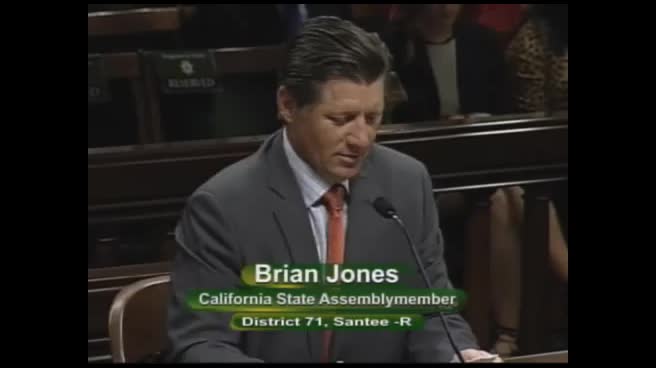 15MIN
Assembly Standing Committee on Higher Education
Bill Author

Bill Co-Author(s):