AB 677: School safety: door locks.
- Session Year: 2015-2016
- House: Assembly
- Latest Version Date: 2015-04-30
(1)Existing law, the Leroy F. Greene School Facilities Act of 1998 (the act), requires the State Allocation Board to allocate to applicant school districts prescribed per-unhoused-pupil state funding for construction and modernization of school facilities, including hardship funding and supplemental funding for site development and acquisition. Existing law requires all new construction projects submitted to the Division of the State Architect pursuant to the act to include locks that allow doors to classrooms and rooms with an occupancy of 5 or more persons to be locked from the inside, except as specified.
This bill would additionally require modernization projects submitted to the Division of the State Architect pursuant to those provisions to include those locks, except as specified, but would apply only to modernization projects that are funded by the proceeds of bonds issued pursuant to a state bond act for school facilities that is approved by the voters at a statewide election after January 1, 2016.
This bill, no later than January 1, 2022, would require the governing board of each school district and each county superintendent of schools, for each of its schools, to equip the doors of every classroom and every room with an occupancy of 5 or more persons with locks that allow the doors to be locked from the inside, except as specified. The bill would make this provision operative upon voter approved approval of a state bond act for school facilities at a statewide election after January 1, 2016. By imposing new requirements on local educational agencies, the bill would impose a state-mandated local program.
(2)Existing law, the Donahoe Higher Education Act, sets forth the missions and functions of the segments of postsecondary education in this state. The California Community Colleges, the California State University, and the University of California are the states 3 segments of public postsecondary education. Provisions of the Donahoe Higher Education Act only apply to the University of California to the extent that the Regents of the University of California act, by appropriate resolution, to make these provisions applicable.
This bill would provide that, when construction or modernization projects are undertaken at a campus or facility on a campus within its jurisdiction, the governing board of each campus of the California Community Colleges and the Trustees of the California State University shall, and the Regents of the University of California are requested to, equip classrooms, offices, or other rooms where students and school staff gather with locking mechanisms, commonly known as classroom function locks, that allow the doors to be locked from the inside or equip these doors with the best alternative technology that accomplishes the same result.
To the extent that this provision would impose new duties on community college districts, it would constitute a state-mandated local program.
(3)The California Constitution requires the state to reimburse local agencies and school districts for certain costs mandated by the state. Statutory provisions establish procedures for making that reimbursement.
This bill would provide that, if the Commission on State Mandates determines that the bill contains costs mandated by the state, reimbursement for those costs shall be made pursuant to these statutory provisions.
(1)Existing law, the Leroy F. Greene School Facilities Act of 1998 (the act), requires the State Allocation Board to allocate to applicant school districts prescribed per-unhoused-pupil state funding for construction and modernization of school facilities, including hardship funding and supplemental funding for site development and acquisition. Existing law requires all new construction projects submitted to the Division of the State Architect pursuant to the act to include locks that allow doors to classrooms and rooms with an occupancy of 5 or more persons to be locked from the inside, except as specified.
This bill would additionally require all modernization projects submitted to the Division of the State Architect pursuant to those provisions to include those locks, except as specified, but would apply only to modernization projects that are funded by the proceeds of bonds issued pursuant to a state bond act for school facilities that is approved by the voters at a statewide election after January 1, 2016.
This bill, no later than January 1, 2022, would require the governing board of each school district and each county superintendent of schools to, schools, for each of its schools, to equip the doors of every classroom and every room with an occupancy of 5 or more persons with locks that allow the doors to be locked from the inside, except as specified. The bill would make this provision operative upon voter approved of a state bond act for school facilities at a statewide election after January 1, 2016. By imposing new requirements on local educational agencies, the bill would impose a state-mandated local program.
(2)Existing law, the Donahoe Higher Education Act, sets forth the missions and functions of the segments of postsecondary education in this state. The California Community Colleges, the California State University, and the University of California are the states 3 segments of public postsecondary education. Provisions of the Donahoe Higher Education Act only apply to the University of California to the extent that the Regents of the University of California act, by appropriate resolution, to make these provisions applicable.
This bill would provide that, when construction or modernization projects are undertaken at a campus or facility within its jurisdiction, the governing board of each campus of the California Community Colleges and the Trustees of the California State University shall, and the Regents of the University of California are requested to, equip classrooms, offices, or other rooms where students and school staff gather with locking mechanisms, commonly known as classroom function locks, that allow the doors to be locked from the inside or equip these doors with the best alternative technology that accomplishes the same result.
To the extent that this provision would impose new duties on community college districts, it would constitute a state-mandated local program.
(3)The California Constitution requires the state to reimburse local agencies and school districts for certain costs mandated by the state. Statutory provisions establish procedures for making that reimbursement.
This bill would provide that, if the Commission on State Mandates determines that the bill contains costs mandated by the state, reimbursement for those costs shall be made pursuant to these statutory provisions.
(1)Existing law, the Leroy F. Greene School Facilities Act of 1998 (the act), requires the State Allocation Board to allocate to applicant school districts prescribed per-unhoused-pupil state funding for construction and modernization of school facilities, including hardship funding and supplemental funding for site development and acquisition. Existing law requires all new construction projects submitted to the Division of the State Architect pursuant to the act to include locks that allow doors to classrooms and rooms with an occupancy of 5 or more persons to be locked from the inside, except as specified.
This bill would additionally require all modernization projects submitted to the Division of the State Architect pursuant to those provisions to include those locks, except as specified.
This bill, no later than January 1, 2022, would require the governing board of each school district and each county superintendent of schools to, for each of its schools, equip the doors of every classroom and every room with an occupancy of 5 or more persons with locks that allow the doors to be locked from the inside, except as specified. By imposing new requirements on local educational agencies, the bill would impose a state-mandated local program.
(2)Existing law, the Donahoe Higher Education Act, sets forth the missions and functions of the segments of postsecondary education in this state. The California Community Colleges, the California State University, and the University of California are the states 3 segments of public postsecondary education. Provisions of the Donahoe Higher Education Act only apply to the University of California to the extent that the Regents of the University of California act, by appropriate resolution, to make these provisions applicable.
This bill would provide that, when construction or modernization projects are undertaken at a campus or facility within its jurisdiction, the governing board of each campus of the California Community Colleges and the Trustees of the California State University shall, and the Regents of the University of California are requested to, equip classrooms, offices, or other rooms where students and school staff gather with locking mechanisms, commonly known as classroom function locks, that allow the doors to be locked from the inside or equip these doors with the best alternative technology that accomplishes the same result.
To the extent that this provision would impose new duties on community college districts, it would constitute a state-mandated local program.
(3)The California Constitution requires the state to reimburse local agencies and school districts for certain costs mandated by the state. Statutory provisions establish procedures for making that reimbursement.
This bill would provide that, if the Commission on State Mandates determines that the bill contains costs mandated by the state, reimbursement for those costs shall be made pursuant to these statutory provisions.
(a)(1)All new construction projects submitted to the Division of the State Architect pursuant to this chapter shall include locks that allow doors to classrooms and any room with an occupancy of five or more persons to be locked from the inside.
(2)(A)On and after January 1, 2016, modernization projects meeting the criteria set forth in subparagraph (B) submitted to the Division of the State Architect pursuant to this chapter shall include locks that allow doors to classrooms and any room with an occupancy of five or more persons to be locked from the inside.
(B)This paragraph applies only to a modernization project that is funded by the proceeds of the sale of bonds issued pursuant to a state bond act for school facilities that is approved by the voters at a statewide election after January 1, 2016.
(b)The locks shall conform to the specifications and requirements set forth in Title 24 of the California Code of Regulations.
(c)Doors that are locked from the outside at all times and pupil restrooms are exempt from the requirements of this section.
SEC. 2.Article 4.5 2.5 (commencing with Section 32247) 32215) is added to Chapter 2 of Part 19 of Division 1 of Title 1 of the Education Code, to read:4.5. 2.5.Security Locks32247.32215.(a)Notwithstanding any other law, no later than January 1, 2022, the governing board of each school district and each county superintendent of schools shall, for each school within its jurisdiction, equip the doors of every classroom and every room with an occupancy of five or more persons with locks that allow the doors to be locked from the inside.
(b)The locks shall conform to the specifications and requirements set forth in Title 24 of the California Code of Regulations.
(c)This section shall only become operative upon the approval by the voters of a state bond act for school facilities at a statewide election after January 1, 2016.
SEC. 3.Section 67387 is added to the Education Code, to read:67387.When construction or modernization projects are undertaken at a campus or facility on a campus within its jurisdiction, the governing board of each campus of the California Community Colleges and the Trustees of the California State University shall, and the Regents of the University of California are requested to, equip classrooms, offices, or other rooms where students and school staff gather with locking mechanisms, commonly known as classroom function locks, that allow the doors to be locked from the inside or equip these doors with the best alternative technology that accomplishes the same result.
SEC. 4.If the Commission on State Mandates determines that this act contains costs mandated by the state, reimbursement to local agencies and school districts for those costs shall be made pursuant to Part 7 (commencing with Section 17500) of Division 4 of Title 2 of the Government Code.
(a)(1)All new construction and modernization projects submitted to the Division of the State Architect pursuant to this chapter shall include locks that allow doors to classrooms and any room with an occupancy of five or more persons to be locked from the inside.
(2)(A)On and after January 1, 2016, modernization projects meeting the criteria set forth in subparagraph (B) submitted to the Division of the State Architect pursuant to this chapter shall include locks that allow doors to classrooms and any room with an occupancy of five or more persons to be locked from the inside.
(B)This paragraph applies only to a modernization project that is funded by the proceeds of the sale of bonds issued pursuant to a state bond act for school facilities that is approved by the voters at a statewide election after January 1, 2016.
(b)The locks shall conform to the specifications and requirements set forth in Title 24 of the California Code of Regulations.
(c)Doors that are locked from the outside at all times and pupil restrooms are exempt from the requirements of this section.
SEC. 2.Article 4.5 (commencing with Section 32247) is added to Chapter 2 of Part 19 of Division 1 of Title 1 of the Education Code, to read:4.5.Security Locks32247.(a)Notwithstanding any other law, no later than January 1, 2022, the governing board of each school district and each county superintendent of schools shall, for each school within its jurisdiction, equip the doors of every classroom and every room with an occupancy of five or more persons with locks that allow the doors to be locked from the inside.
(b)The locks shall conform to the specifications and requirements set forth in Title 24 of the California Code of Regulations.
(c)This section shall only become operative upon the approval by the voters of a state bond act for school facilities at a statewide election after January 1, 2016.
SEC. 3.Section 67387 is added to the Education Code, to read:67387.When construction or modernization projects are undertaken at a campus or facility within its jurisdiction, the governing board of each campus of the California Community Colleges and the Trustees of the California State University shall, and the Regents of the University of California are requested to, equip classrooms, offices, or other rooms where students and school staff gather with locking mechanisms, commonly known as classroom function locks, that allow the doors to be locked from the inside or equip these doors with the best alternative technology that accomplishes the same result.
SEC. 4.If the Commission on State Mandates determines that this act contains costs mandated by the state, reimbursement to local agencies and school districts for those costs shall be made pursuant to Part 7 (commencing with Section 17500) of Division 4 of Title 2 of the Government Code.
(a)On and after July 1, 2011, all All new construction and modernization projects submitted to the Division of the State Architect pursuant to this chapter shall include locks that allow doors to classrooms and any room with an occupancy of five or more persons to be locked from the inside.
(b)The locks shall conform to the specifications and requirements set forth in Title 24 of the California Code of Regulations.
(c)Doors that are locked from the outside at all times and pupil restrooms are exempt from the requirements of this section.
SEC. 2.Article 4.5 (commencing with Section 32247) is added to Chapter 2 of Part 19 of Division 1 of Title 1 of the Education Code, to read:4.5.Security Locks32247.(a)Notwithstanding any other law, no later than January 1, 2022, the governing board of each school district and each county superintendent of schools shall, for each school within its jurisdiction, equip the doors of every classroom and every room with an occupancy of five or more persons with locks that allow the doors to be locked from the inside.
(b)The locks shall conform to the specifications and requirements set forth in Title 24 of the California Code of Regulations.
SEC. 3.Section 67387 is added to the Education Code, to read:67387.When construction or modernization projects are undertaken at a campus or facility within its jurisdiction, the governing board of each campus of the California Community Colleges and the Trustees of the California State University shall, and the Regents of the University of California are requested to, equip classrooms, offices, or other rooms where students and school staff gather with locking mechanisms, commonly known as classroom function locks, that allow the doors to be locked from the inside or equip these doors with the best alternative technology that accomplishes the same result.
SEC. 4.If the Commission on State Mandates determines that this act contains costs mandated by the state, reimbursement to local agencies and school districts for those costs shall be made pursuant to Part 7 (commencing with Section 17500) of Division 4 of Title 2 of the Government Code.
|
Date
|
Status
|
|---|---|
| Feb 25, 2015 | Read first time. To print. |
| Feb 26, 2015 | From printer. May be heard in committee March 28. |
| Mar 9, 2015 | Referred to Coms. on ED. and HIGHER ED. |
| Apr 16, 2015 | From committee: Amend, and do pass as amended and re-refer to Com. on HIGHER ED. (Ayes 7. Noes 0.) (April 8). |
| Apr 20, 2015 | Read second time and amended. |
| Apr 21, 2015 | Re-referred to Com. on HIGHER ED. |
| Apr 29, 2015 | From committee: Amend, and do pass as amended and re-refer to Com. on APPR. (Ayes 11. Noes 2.) (April 28). |
| Apr 30, 2015 | Read second time and amended. |
| May 4, 2015 | Re-referred to Com. on APPR. |
| May 13, 2015 | In committee: Set, first hearing. Referred to APPR. suspense file. |
| May 28, 2015 | In committee: Held under submission. |
| Jan 31, 2016 | Died pursuant to Article IV, Sec. 10(c) of the Constitution. |
| Feb 1, 2016 | From committee: Filed with the Chief Clerk pursuant to Joint Rule 56. |
|
Date
|
Description
|
Location
|
Votes
|
|
|---|---|---|---|---|
| Apr 28, 2015 | Do pass as amended and be re-referred to the Committee on [Appropriations] | Assembly Standing Committee on Higher Education |
Passed |
|
| Apr 8, 2015 | Do pass as amended and be re-referred to the Committee on [Higher Education] | Assembly Standing Committee on Education |
Passed |
This list shows positions taken on this bill by organizations on the date displayed, which is linked to the original source.
Positions by individuals are not included.
|
Organization
|
Position
|
Date
|
|---|---|---|
| Berkeley High School | * Indeterminate | Apr 28, 2015 |
| California Association Of School Business Officials | * Against | Apr 8, 2015 |
| California Faculty Association | * Indeterminate | Apr 28, 2015 |
| California Federation Of Teachers | ** Support | Apr 28, 2015 |
| California Labor Federation, Afl-Cio | * Indeterminate | Apr 28, 2015 |
| Corona-Norco Unified School District | ** Against | Apr 8, 2015 |
| County School Facilities Consortium | * Against | Apr 8, 2015 |
| County School Facilities Consortium | * Against Unless Amend | Apr 8, 2015 |
| Los Angeles Unified School District | * Against | Apr 8, 2015 |
| Riverside County Superintendent of Schools | ** Against | Apr 28, 2015 |
AB 677
Page 2
Date of Hearing: May 13, 2015
ASSEMBLY COMMITTEE ON APPROPRIATIONS
Jimmy Gomez, Chair
AB 677
(Dodd) – As Amended April 30, 2015
Policy Committee: |
Education |
Vote: |
7 - 0 |
|
Higher Education |
|
11 - 2 |
|
|
|
|
Urgency: No State Mandated Local Program: Yes Reimbursable: Yes
SUMMARY:
This bill requires K-12 and higher education institutions to equip the doors of every classroom with locks that allow the doors to be locked from the inside. Specifically, this bill:
Requires, on and after January 1, 2016, modernization projects submitted to the Division of the State Architect (DSA) and funded through future bond funds, as specified, to include locks that allow doors to classrooms and any room with an occupancy of five or more persons to be locked from the inside.
Requires, no later than January 1, 2022, the governing board of each school district and each county superintendent of schools, for each school within its jurisdiction, to equip the doors of every classroom and every room with an occupancy of five or more persons with locks that allow the doors to be locked from the inside. These requirements are also contingent upon future bond funds.
Requires the California Community Colleges (CCC) and California State University (CSU) Trustees, and the urges the University of California (UC) Regents, when constructing or modernizing a campus or facility within its jurisdiction, to equip classrooms, offices, or other rooms where students and school staff gather with locking mechanisms that allow the doors to be locked from the inside, or equip doors with the best alternative technology that accomplishes the same result.
FISCAL EFFECT:
Annual state school construction bond cost pressure, potentially in the range of $700,000 to $2.2 million, to require locks that allow doors to classrooms or any other specified room to be locked from the inside, as specified. The most recent estimate of classrooms that need to be modernized annually for the next five years to meet the state's need is 7,083. Costs related to modernizing classroom door locks can range from $500 to $1,500 for each door depending on the extent of repair needed.
AB 127 (Nuñez), Chapter 35, Statutes of 2006, authorized Proposition 1D: the Kindergarten-University Public Education Facilities Bond Act of 2006 for $10.416 billion. New construction and modernization funds authorized by this bond have been exhausted since 2012. Any cost pressure related to this bill would be applied to future bond measures.
Annual State and local facility projects costs to CCC, CSU and UC, likely in the millions, to require locks that allow doors to classrooms, or any other specified room, to be locked from the inside, as specified.
COMMENTS:
Purpose. According to the author, following the recent school shooting tragedies in Newtown, Connecticut and Taft, California, the state needs to rethink safety procedures in schools. “Lockdowns,” a temporary confinement of students and staff to classrooms, offices and other rooms during or following a disturbance, have proven to be an effective tool used on school campuses to facilitate the safety of both students and staff during a violent or potentially violent situation. In many cases, lockdown procedures are required in school safety plans. The door locks in many school classrooms, offices and other rooms where students and school staff gather can only be locked from the outside. The safety of students and school staff may be jeopardized as staff must enter hallways in an attempt to lock their doors during a “lockdown.”
Existing law, authorized by AB 211 (Mendoza), Chapter 430, Statutes of 2010, requires, as a condition for state education bond funds, all new construction projects submitted to the DSA on and after July 1, 2011, to include locks that allow a door to be locked from the inside of a classroom or any room that accommodates five or more people.
The California Federation of Teachers is sponsoring this bill to extend the requirement to K-12 modernization projects submitted to the DSA. The bill also requires all schools to be equipped with locks that can be locked from the inside by January 1, 2022, regardless of whether the school is undergoing any rehabilitation. This requirement would be contingent upon a school facilities bond approved by the voters.
Opposition. The California Association of School Business Officials (CASBO) is opposed to this bill due to significant fiscal pressure on school general fund budgets. The note that retrofitting door locks on older buildings could trigger other required upgrades, such as compliance with revised ADA requirements. With 10,134 schools in California, the cost could reach several millions, if not billions. Further, CASBO notes the provision requiring all rooms to be retrofitted with security locks by January 1, 2022, if a new state school bond is approved, is problematic because school bond funds are not specifically allocated for the replacement of security locks at the state level. Because of the way school bond funding works, school districts must apply under the current state school facilities program to receive matching funds from a state bond, which would only cover funding for the specific project under consideration and not the replacement of security locks at all schools. CASBO recognizes the need to modernize existing school infrastructure and to enhance critical components of school buildings. However, they encourage these issues to be considered in a comprehensive fashion and in the context of California’s ongoing discussions to finance school facilities construction and modernization.
Analysis Prepared by: Misty Feusahrens / APPR. / (916) 319-2081
AB 677
Page 3
Date of Hearing: April 28, 2015
ASSEMBLY COMMITTEE ON HIGHER EDUCATION
Jose Medina, Chair
AB 677
(Dodd) – As Amended April 20, 2015
SUBJECT: School safety: door locks
SUMMARY: Requires K-12 and higher education institutions to equip the doors of every classroom with locks that allow the doors to be locked from the inside. Specifically, this bill:
Requires all construction projects submitted to the Division of the State Architect (DSA) to include locks that allow doors to classrooms and any room with an occupancy of five or more persons to be locked from the inside.
Requires, on and after January 1, 2016, modernization projects, as specified and submitted to the DSA, shall include locks that allow doors to classrooms and any room with an occupancy of five or more persons to be locked from the inside.
Specifies that the locks provision to K-12 modernization projects, as specified, only applies to modernization projects that are funded by the proceeds of the sale of bonds issued pursuant to a state bond act for school facilities that is approved by the voters at a statewide election after January 1, 2016.
Requires, no later than January 1, 2022, the governing board of each school district and each county superintendent of schools to, for each school within its jurisdiction, equip the doors of every classroom and every room with an occupancy of five or more person with locks that allow the doors to be locked from the inside. Requires the locks to conform to the specifications and requirements set forth in the State Building Standards Code.
Requires the California Community Colleges (CCC) and California State University (CSU) Trustees, and the urges the University of California (UC) Regents, when constructing or modernizing a campus or facility within its jurisdiction, to equip classrooms, offices, or other rooms where students and school staff gather with locking mechanisms that allow the doors to be locked from the inside or equip doors with the best alternative technology that accomplishes the same result.
EXISTING LAW: Provides, as a condition of receipt of state bond funds, that all new construction projects submitted to the DSA include locks that allow classrooms and rooms with an occupancy of five persons or more to be locked from the inside and that these locks conform to Title 24 California Code of Regulations specifications and requirements. Current law exempts doors locked from the outside at all times and pupil restrooms from these requirements (Education Code Section 17075.50)
FISCAL EFFECT: Unknown
COMMENTS: This measure was heard and approved by a vote of 7-0 in the Assembly Education Committee relating to issues within its jurisdiction on April 8, 2015.
Background. The DSA provides design and construction oversight for K–12 schools and community colleges, and develops and maintains accessibility standards and codes utilized in public and private buildings throughout the State of California. The DSA ensures that all plans, specifications, and actual construction comply with Title 24 (California Building Standards Code), develops and maintains accessibility standards pursuant to the Americans with Disabilities Act, and reviews a school's working drawings to ensure that the proposed structures meet code requirements for seismic safety, fire & life safety, and accessibility.
Purpose of the measure. According to the author, in the wake of recent school shooting tragedies in Newtown, Connecticut and Taft, California, the state needs to rethink its safety procedures in schools. The author states, "The locks in many school classrooms, offices, and other rooms where students and school staff gather can only be locked from the outside which places school staff and students in jeopardy when educators are forced to go out into a hallway or their public areas to secure their doors during a lockdown." This bill requires all new construction or modernization projects in public schools (K- university) to include installation of locks that allow classrooms to be locked from the inside. The author contends, "The locks will eliminate the need for staff to exit their immediate facility during a disturbance at the school site."
Policy considerations. As presently drafted, this measure requires the CCC, CSU, and requests the UC, when undergoing construction or modernization projects to equip classrooms, offices, or other rooms where students and staff gather, with classroom function locks that allow the doors to be locked from the inside. Existing law does not define "modernization" for the higher education segments, it is unclear as to how the CCC, CSU, and UC would be able to implement this bill when undergoing "modernization" projects.
Additionally, as presently drafted, it is unclear as to when a CCC, CSU, or UC would have to ensure it replaces its existing locks with classroom function locks.
Committee
staff recommends the following amendments: 67387. When
construction or modernization
projects are undertaken at a campus or facility
at a facility on a campus within
its jurisdiction, the governing board of each campus of the
California Community Colleges and the Trustees of the California
State University shall, and the Regents of the University of
California are requested to…
Lastly, the K-12 sections of this bill are contingent upon the proceeds of the sale of bonds issued pursuant to a state bond act for school facilities that is approved by the voters at a statewide election after January 1, 2016. The author may wish to consider making the higher education section of this measure contingent upon the proceeds of the sale of bonds issued pursuant to a state bond act for higher education facilities that is approved by the voters at a statewide election after January 1, 2016.
Related legislation. SB 316 (Block), which was introduced in 2013, would have required, on or after January 1, 2016, all modernization projects submitted to the DSA to include locks that allow doors to classrooms and any room with an occupancy of five or more persons to be locked from the inside. The bill also directed the State Allocation Board to adjust modernization grants to reflect the associated cost of installing locks. The bill was held in the Assembly Appropriations Committee suspense file.
AB 85 (Mendoza), which was introduced in 2012, would have required all K-12 modernization projects and all community college district new construction projects that include rehabilitation in a classroom or a room with an occupancy of five or more to install locks that can be locked from the inside. The bill as held in the Assembly Appropriations Committee suspense file.
AB 211 (Mendoza), Chapter 430, Statutes of 2010, requires, as a condition for state education bond funds, all new construction projects submitted to the DSA on and after July 1, 2011 to include locks that allow a door to be locked from the inside of a classroom or any room that accommodates five or more people.
REGISTERED SUPPORT / OPPOSITION:
Support
California Federation of Teachers (sponsors)
Opposition
Riverside County Superintendent of Schools
Analysis Prepared by: Jeanice Warden / HIGHER ED. / (916) 319-3960
AB 677
Page 4
Date of Hearing: April 8, 2015
ASSEMBLY COMMITTEE ON EDUCATION
Patrick O'Donnell, Chair
AB 677
(Dodd) – As Introduced February 25, 2015
[Note: This bill is doubled referred to the Assembly Higher Education Committee and will be heard by that Committee as it relates to issues under its jurisdiction.]
SUBJECT: School safety: door locks
SUMMARY: Requires K-12 and higher education institutions to equip the doors of every classroom with locks that allow the doors to be locked from the inside. Specifically, this bill:
Requires all modernization projects submitted to the Division of State Architect (DSA) to include locks that allow doors to classrooms and any room with an occupancy of five or more persons to be locked from the inside.
Requires, no later than January 1, 2022, the governing board of each school district and each county superintendent of schools to, for each school within its jurisdiction, equip the doors of every classroom and every room with an occupancy of five or more person with locks that allow the doors to be locked from the inside. Requires the locks to conform to the specifications and requirements set forth in the State Building Standards Code.
Requires the California Community Colleges and Trustees of the California State University, and the urges the Regents of the University of California, when constructing or modernizing a campus or facility within its jurisdiction, to equip classrooms, offices, or other rooms where students and school staff gather with locking mechanisms that allow the doors to be locked from the inside or equip doors with the best alternative technology that accomplishes the same result.
EXISTING LAW:
Requires, under the Leroy F. Greene School Facilities Act of 1998, the State Allocation Board (SAB) to allocate to applicant school districts, prescribed per-unhoused-pupil state funding for construction and modernization of school facilities, including hardship funding, and supplemental funding for site development and acquisition.
Prohibits the SAB from apportioning funds to any school district unless the applicant school district has certified to the SAB that it has obtained the written approval of the California Department of Education (CDE) that the site selection, and the building plans and specifications, comply with the standards adopted by the CDE.
Prohibits the SAB from apportioning funds to any school district that has not received approval from the DSA that the project meets Field Act requirements.
Requires the DSA, under the police power of the state, to supervise the design and construction of any school building or the reconstruction or alteration of or addition to any school building to ensure that plans and specifications comply with existing law and Title 24 regulations.
Requires, on and after July 1, 2011, all new construction projects submitted to the DSA to include locks that allow doors to classrooms and any room with an occupancy of five or more persons to be locked form the inside. Requires the locks to conform to the specifications and requirements set forth in Title 24 regulations. Exempts doors that are locked from the outside at all times and pupil restrooms from the requirement.
FISCAL EFFECT: The Legislative Counsel has keyed this bill as a state-mandated local program.
COMMENTS: School safety. Since 1999, when two high school students killed 12 students and a teacher and wounded 23 others before committing suicide at Columbine High School in Colorado, school safety has been a major concern in schools across the country. In such situations, schools will employ lock downs to keep students in and perpetrators out. However, if teachers and other school staff do not have the capability to lock the outside from the inside, there could be a delay in time which could increase risk to harmful situations to pupils and staff. The SAB, the body that administers and allocates state bond funds, held a subcommittee hearing on school safety where the CDE reported that infrastructure, which includes safe rooms and classroom locks, is only one component of school security. Other components include securing perimeters, controlling access (ingress and egress), appropriate school staffing, and clear communication, including communication systems.
What does this bill do? AB 211 (Mendoza), Chapter 430, Statutes of 2010, requires, as a condition for state education bond funds, all new construction projects submitted to the DSA on and after July 1, 2011 to include locks that allow a door to be locked from the inside of a classroom or any room that accommodates five or more people. This bill extends the requirement to K-12 modernization projects submitted to the DSA. The bill also requires all schools to be equipped with locks that can be locked from the inside by January 1, 2022, regardless of whether the school is undergoing any rehabilitation.
Classroom security locks, which are locks that can be opened from the inside simply by turning a lever even when the door is locked, are estimated to cost $300 each and about $500 installed. Costs would be higher if a door frame and/or door need to be replaced.
AB 211 initially included modernization projects but was removed by the Assembly Appropriations Committee. Since AB 211, variations of this bill have been introduced but failed to pass the Legislature. This bill is different than prior versions of this bill in that prior versions made the requirement in connection with a project funded by state bond funds. This bill requires the installation of locks by 2022 whether or not a school is being modernized, and whether or not states bond funds are available to pay for the replacements. The last statewide bond was passed in 2006 and new construction and modernization funds have been exhausted since 2012. Opposition to this bill is not based on objection to changing locks but with the costs. Staff recommends an amendment stipulating that the requirement to change all locks is contingent upon the passage of a statewide education bond passed by voters after January 1, 2016.
Will changing locks require DSA approval? All K-14 proposed public school construction and modernization projects must receive approval from the DSA, which reviews architectural plans for compliance with the Field Act (seismic safety); fire, life and safety requirements; and access requirements under the Americans with Disability Act. DSA grants approvals based on the requirements specified by Title 24 regulations, also known as the California Building Standards Code. However, there are some exemptions based on the cost of a project that are adjusted annually. According to the DSA, for 2015, DSA review and approval is not required for alteration or reconstruction projects to school buildings governed by the Field Act with an estimated construction cost of $41,548.70, or less. In addition, DSA review and approval is not required for alteration or reconstruction projects to school buildings governed by the Field Act with an estimated construction cost between $41,548.70 and $166,194.78, when specific conditions are met. A small school district with a few buildings may not need to seek approval from the DSA solely to change locks. However, most school districts will likely be required to seek DSA approval.
Arguments in support. The author states, "'Lockdowns,' a temporary confinement of students and staff to classrooms, offices and other rooms during or following a disturbance, have proven to be an effective tool used on school campuses to facilitate the safety of both students and staff during a violent or potentially violent situation. In many cases, lockdown procedures are required in school safety plans. The door locks in many school classrooms, offices and other rooms where students and school staff gather can only be locked from the outside. The safety of students and school staff may be jeopardized as staff must enter hallways in an attempt to lock their doors during a 'lockdown.' Locking mechanisms that lock the door from the inside, commonly referred to as classroom function locks, have been invited for the doors to classrooms, offices, and other rooms. Updating doors to include the lock inside will eliminate the need for staff to exit their immediate facility during a disturbance."
Arguments in opposition. The Riverside County Superintendent of Schools states, "The locks in and of themselves are not our concerns, but rather the costly secondary and tertiary requirements that installing them would trigger. Specifically, the requirement to replace locks in existing buildings would trigger requirements to upgrade facilities to current accessibility requirements relating to the width of doors, paths of travel, nearby restroom facilities and common spaces, and perhaps even play spaces. This would occur because the very nature of installing door locks relates to the 'entry and egress' of a facility. Thus, what on the surface would appear to be a limited-cost safety measure could lead to millions, if not tens of millions, of dollars' worth of accessibility projects."
Prior related legislation. SB 316 (Block), introduced in 2013, would have required, on or after January 1, 2016, all modernization projects submitted to the DSA to include locks that allow doors to classrooms and any room with an occupancy of five or more persons to be locked from the inside. The bill also directed the SAB to adjust modernization grants to reflect the associated cost of installing locks. The bill was held in the Assembly Appropriations Committee suspense file.
AB 85 (Mendoza), introduced in 2012, requires all K-12 modernization projects and all community college district new construction projects that include rehabilitation in a classroom or a room with an occupancy of five or more to install locks that can be locked from the inside. The bill as held in the Assembly Appropriations Committee suspense file.
AB 211 (Mendoza), Chapter 430, Statutes of 2010, requires, as a condition for state education bond funds, all new construction projects submitted to the DSA on and after July 1, 2011 to include locks that allow a door to be locked from the inside of a classroom or any room that accommodates five or more people.
REGISTERED SUPPORT / OPPOSITION:
Support
California Federation of Teachers
California Labor Federation
State Public Affairs Committee of the Junior Leagues of California
Opposition
California Association of School Business Officials
Corona-Norco Unified School District
County School Facilities Consortium (unless amended)
Los Angeles Unified School District (unless amended)
Riverside County Superintendent of Schools
Analysis Prepared by: Sophia Kwong Kim / ED. / (916) 319-2087
Discussed in Hearing
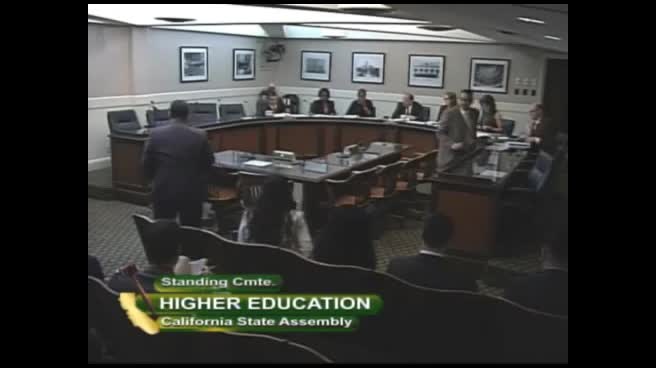 11MIN
Assembly Standing Committee on Higher Education
 11MIN
Assembly Standing Committee on Education
Bill Author

Bill Co-Author(s):