SB 1050: Postsecondary education: college readiness.
- Session Year: 2015-2016
- House: Senate
- Latest Version Date: 2016-05-10
Existing law requires the Superintendent of Public Instruction to compute the percentage of unduplicated pupils, defined as pupils enrolled in a school district or a charter school who are either classified as English learners, eligible for free or reduced-price meals, or foster youths.
This bill would require the Superintendent State Department of Education to develop and post on its Internet Web site a list of high schools with 75% or greater enrollment in this classification.
Existing law establishes certain block grants to be apportioned to a school district or charter school for specified purposes.
This bill would establish the K12 College Readiness Block Grant for the purposes of preparing Californias high school pupils, particularly pupils who are traditionally underrepresented in the University of California and the California State University, unduplicated pupils, to be eligible for admission into a postsecondary institution, and increasing the 4-year-college-going rates of these pupils. This program would be contingent on the appropriation of funding for its purposes in the annual Budget Act or another statute.
The California Constitution provides that the University of California constitutes a public trust administered by the Regents of the University of California, a corporation in the form of a board, with full powers of organization and government, subject to legislative control only for specified purposes. Existing law, until June 30, 2017, requests the Regents of the University of California, with the approval of the Concurrence Committee, to establish and maintain cooperative endeavors designed to accomplish specified purposes related to teacher professional development.
This bill would include among the goals of these endeavors providing administrators, counselors, and teachers of students at certain schools with strategies for improving AG course completion rates, college readiness, and college-going rates. This bill would also add the California College Readiness Project to the list of authorized endeavors and grant priority for admission to programs offered by the California College Readiness Project to school personnel employed by local educational agencies eligible for supplemental or concentration grant funding under the local control funding formula.
This bill would extend the operation of these provisions relating to teacher professional development indefinitely.
Existing policy of the Board of Admissions and Relations of the Academic Senate of the University of California allows pupils who, in addition to other criteria, graduate in the top 9% of their high school class to be granted admission into the University of California.
This bill would require the University of California, as a condition of Budget Act funding for specified enrollment increases, to develop an implementation plan to increase California resident admissions, significantly increase admissions for pupils enrolled in high schools with 75% or greater enrollment of pupils eligible for free or reduced-price meals, English learners, and foster youth, unduplicated pupils, and satisfy related objectives. This bill would also require the University of California, as a condition of Budget Act funding for specified enrollment increases, to annually report information related to these objectives to the appropriate policy and fiscal committees of the Legislature and the Department of Finance.
This bill would also make findings and declarations related to college readiness.
Existing law requires the Superintendent of Public Instruction to compute the percentage of unduplicated pupils, defined as pupils enrolled in a school district or a charter school who are either classified as English learners, eligible for free or reduced-price meals, or foster youths.
This bill would require the Superintendent to develop and post on its Internet Web site a list of high schools with 75% or greater enrollment in this classification.
Existing law establishes certain block grants to be apportioned to a school district or charter school for specified purposes.
This bill would establish the K12 College Readiness Block Grant for the purposes of preparing Californias high school pupils, particularly pupils who are traditionally underrepresented in the University of California and the California State University, to be eligible for admission into a postsecondary institution, and increasing the 4-year-college-going rates of these pupils. This program would be contingent on the appropriation of funding for its purposes in the annual Budget Act or another statute.
The California Constitution provides that the University of California constitutes a public trust administered by the Regents of the University of California, a corporation in the form of a board, with full powers of organization and government, subject to legislative control only for specified purposes. Existing law, until June 30, 2017, requests the Regents of the University of California, with the approval of the Concurrence Committee, to establish and maintain cooperative endeavors designed to accomplish specified purposes related to teacher professional development.
This bill would include among the goals of these endeavors providing administrators, counselors, and teachers of students at certain schools with strategies for improving AG course completion rates, college readiness, and college-going rates. This bill would also add the California College Readiness Project to the list of authorized endeavors and grant priority for admission to programs offered by the California College Readiness Project to school personnel employed by local educational agencies eligible for supplemental or concentration grant funding under the local control funding formula.
This bill would extend the operation of these provisions relating to teacher professional development indefinitely.
Existing policy of the Board of Admissions and Relations of the Academic Senate of the University of California allows pupils who, in addition to other criteria, graduate in the top 9% of their high school class to be granted admission into the University of California.
This bill would require the University of California, as a condition of Budget Act funding for specified enrollment increases, to develop an implementation plan to increase California resident admissions, significantly increase admissions for pupils enrolled in high schools with 75% or greater enrollment of pupils eligible for free or reduced-price meals, English learners, and foster youth, and satisfy related objectives. This bill would also require the University of California, as a condition of Budget Act funding for specified enrollment increases, to annually report information related to these objectives to the appropriate policy and fiscal committees of the Legislature and the Department of Finance.
This bill would also make findings and declarations related to college readiness.
Existing law encourages school districts maintaining any of grades 7 to 12, inclusive, to provide all pupils with a rigorous academic curriculum that integrates academic and career skills, incorporates applied learning in all disciplines, and prepares all pupils for high school graduation and career entry.
This bill would state the intent of the Legislature to enact legislation that would close the achievement gap, ensure an adequate supply of well-trained teachers, expand access to quality support services, and ensure access for all pupils to a rich course of study in both academic and career-related subjects.
The Legislature finds and declares all of the following:
(a)Of the 6.2 million pupils enrolled in California public schools, 59 percent are low income.
(b)Californias high school graduation rate is 81 percent, but only 42 percent of high school graduates meet AG course requirements, which are necessary for admission to Californias public universities.
(c)The Public Policy Institute of California reports that, in 2030, 38 percent of jobs will depend on workers with at least a bachelor degree, but only 33 percent of California workers will have one. Thus, the Public Policy Institute of California predicts that California will be short 1.1 million workers who have a bachelor degree by 2030.
(d)In 2013, California adopted the local control funding formula, which allocates the majority of state general funds to K12 school districts. This formula acknowledges that low-income pupils, English learners, and foster youth need more resources to help them succeed in school.
(e)Research and statistics reveal that high schools that enroll a large percentage of low-income pupils, English learners, and foster youth generally do not offer the same number of rigorous courses, such as advanced placement or AG courses, as high schools that enroll a smaller number of these pupils.
(f)All California high school students, regardless of income, ethnicity, or status, should have an equal opportunity to access rigorous coursework that will enable them to be eligible for admission to Californias public universities. All students must have the same opportunity to compete and succeed at the states university systems.
(g)California has the seventh largest economy in the world. In order for the states economy to grow and remain strong, the Legislature must ensure that more California students meet all college eligibility requirements and earn a bachelor degree.
SEC. 2.Section 33318.8 is added to the Education Code, to read:33318.8.The department shall annually develop and post on its Internet Web site a list of high schools with 75 percent or greater enrollment of unduplicated pupils, as defined pursuant to Section 42238.02.
SEC. 3.Article 8 (commencing with Section 41580) is added to Chapter 3.2 of Part 24 of Division 3 of Title 2 of the Education Code, to read:8.K12 College Readiness Block Grant41580.The K12 College Readiness Block Grant is hereby established for the purposes of preparing Californias high school pupils, particularly pupils who are traditionally underrepresented in the University of California and the California State University, including unduplicated pupils as defined in Section 42238.02, to be eligible for admission into a postsecondary institution, and increasing the four-year-college-going rates of these pupils. A school district or charter school shall expend funds under this article for any of the following purposes:
(a)Providing teachers, administrators, and counselors with professional development opportunities to improve pupil AG completion rates, pupil college-going rates, and college readiness of pupils, including providing for the development of honors and Advanced Placement courses.
(b)Providing counseling services to pupils and their families regarding college admission requirements and financial aid programs.
(c)Developing or purchasing materials that support college readiness, including materials that support high performance on assessments required for admittance to a postsecondary institution.
(d)Developing comprehensive advising plans to support pupil completion of AG requirements.
(e)Implementing collaborative partnerships between high schools and postsecondary institutions that support pupil transition to postsecondary education, including, but not limited to, strengthening existing partnerships with the University of California and the California State University to establish early academic outreach programs.
(f)Providing subsidies to unduplicated pupils, as defined in Section 42238.02, to pay fees for taking advanced placement exams.
(g)Expanding access to coursework or other opportunities to satisfy AG requirements to all pupils, including, but not limited to, pupils enrolled in schools identified by the department pursuant to Section 33318.8. These opportunities may include, but shall not be limited to, new or expanded partnerships with other secondary or postsecondary institutions.
41581.As a condition for receiving funds under this article, a school district or charter school shall develop a plan describing how the funds will be spent and describing how funds will supplement and not supplant funding for existing programs and services to ensure college readiness. The plan shall include information regarding how it aligns with the school districts local control and accountability plan required pursuant to Section 52060 or the charter schools local control and accountability plan required pursuant to Sections 47605, 47605.5, and 47606.5. The plan shall also include a description of the extent to which all pupils within the district or charter school, particularly unduplicated pupils as defined in Section 42238.02, will have access to AG courses approved by the University of California. In order to ensure community and stakeholder input, the plan shall be discussed at a regularly scheduled meeting by the governing board of the school district or governing body of the charter school and adopted at a subsequent regularly scheduled meeting.
41582.As a condition of receiving funds under this article, a school district or charter school shall report both of the following to the department:
(a)The number of pupils served under the block grant.
(b)The number of pupils admitted to a postsecondary institution, including the number of pupils admitted to the University of California and the California State University.
41583.The department shall compile the information reported to it pursuant to Section 41582 and submit a report to the appropriate policy and fiscal committees of the Legislature on or before April 30, 2017.
41584.(a)This article shall not be implemented unless funding is provided for this purpose in the annual Budget Act or another statute.
(b)It is the intent of the Legislature that funding shall be allocated to school districts and charter schools, with pupils who are traditionally underrepresented at four year universities and pupils who are unduplicated pupils as defined in Section 42238.02.
SEC. 4.Article 8 (commencing with Section 92680) is added to Chapter 6 of Part 57 of Division 9 of Title 3 of the Education Code, to read:8.Admissions for California Resident Students92680.(a)As a condition of receiving funding in the annual Budget Act for the enrollment of more California resident students at the University of California than were required to be enrolled pursuant to the 2015 Budget Act, the University of California shall develop an implementation plan, including a timeline, to do all of the following:
(1)Ensure each University of California campus increases the admission of California resident undergraduate students and undergraduate students meeting the requirements set forth in Section 68130.5, admitted each year above those admitted in the 201516 academic year, and significantly increases the number of Local Control Funding Formula Plus students enrolled at high schools identified by the department pursuant to Section 33318.8. students.
(2)Enhance the information provided to admissions personnel reviewing university applications about Local Control Funding Formula Plus student applicants by identifying this status in those students application files.
(3)Using information about California high schools made available pursuant to Section 33318.8, direct all campuses to give supplemental consideration in the admissions process to Local Control Funding Formula Plus students consistent with University of California admission policy. For the purpose of this paragraph, all Local Control Funding Formula Plus students shall meet the same admission eligibility requirements as non-Local Control Funding Formula Plus students and the University of California shall comply with all state law affecting admissions.
(4)Identify resident Local Control Funding Formula Plus student applicants who have fulfilled minimum admission requirements but do not meet the criteria for guaranteed admission to the University of California through Statewide Admission or Eligibility in the Local Context as a high-priority group within the Entitled to Review pool of applicants.
(5)Examine the costs and benefits of extending the eligibility for an application fee waiver to high school graduates from high schools identified on the list developed by the department pursuant to Section 33318.8 and increase the total number of campuses covered under the fee waiver policy for this group of applicants.
(6)Expand targeted support and retention services for disadvantaged or underprepared students, pupils who are unduplicated pupils as defined in Section 42238.02, including enrolled Local Control Funding Formula Plus students who graduated from high schools identified by the department pursuant to Section 33318.8. students. These services shall include, but not be limited to, counseling on course planning and scheduling, tutoring, financial assistance that supplements but does not supplant existing institutional, federal or state financial aid programs, and any other services that facilitate these students successful completion of an undergraduate degree within four years.
(b)By September 1, 2018, and annually thereafter, as a condition of receiving funding in the annual Budget Act for the enrollment of more California resident students at the University of California than were required to be enrolled pursuant to the 2015 Budget Act, the University of California shall report to the appropriate policy and fiscal committees of the Legislature and the Department of Finance each of the following:
(1)The number and the percentage of Local Control Funding Formula Plus students as a proportion of the total resident first-time freshman admitted and enrolled for the 201617 academic year at the systemwide and campus level and a comparison of these figures to those for the prior academic year.
(2)The percentage of Local Control Funding Formula Plus students who were admitted, disaggregated by the admission policy pursuant to which they were admitted and the geographic region in which they reside, as determined by the location of the high schools from which the pupils graduated.
(3)The percentage of Local Control Funding Formula Plus students enrolled systemwide and at each campus who have earned sufficient course credits by the end of their first year of enrollment to indicate they are on track to complete a degree in four years.
(4)Information regarding targeted support and retention services offered at each campus to Local Control Funding Formula Plus students enrolled at the University of California to support positive student outcomes, including, but not limited to, completing a degree in four years and, to the extent possible, the number of students that were served in the 201617 academic year.
(5)To the extent possible, information on the reasons Local Control Funding Formula Plus students who were admitted to the University of California but did not subsequently enroll in any of the University of California campuses chose not to enroll. The intent of this paragraph is to gather information to better target resources to achieve a greater enrollment yield.
(c)For the purposes of this section, the following terms have the following meanings:
(1)Local Control Funding Formula Plus students means students enrolled in a high school identified pursuant to Section 33318.8.
(2)Statewide Admission is the guaranteed admission pathway for California resident high school students who are in the top 9 percent of all California high school graduates based on a sliding scale using the University of California grade point average in a specific pattern of courses and standardized test scores.
(3)Eligibility in the Local Context is the guaranteed admission pathway for California resident high school students who have earned at least a 3.0 grade point average in a specific pattern of courses and are in the top 9 percent of their participating California high school.
(4)Entitled to Review refers to the guarantee of a comprehensive review for California resident applicants to the University of California who meet minimum University of California admission requirements, which is not a guarantee of admission.
SEC. 5.Section 99200 of the Education Code is amended to read:99200.(a)With funds appropriated therefor, and with the approval of the Concurrence Committee, the Regents of the University of California are requested to establish and maintain cooperative endeavors designed to accomplish the following:
(1)Develop and enhance teachers subject matter and content knowledge in the subject matter areas specified in Section 99201.
(2)Develop and enhance teachers instructional strategies to improve pupil learning and academic performance as measured against State Board of Education standards adopted pursuant to Sections 60605 and 60605.8 and, where applicable, to standards adopted pursuant to Section 60811 and any subsequently adopted standards.
(3)Provide teachers with instructional strategies for working with English learners.
(4)Provide teachers with instructional strategies for delivering career-oriented, integrated academic and technical content in a manner that is linked to high priority industry sectors identified in the California career technical education model curriculum standards as adopted by the State Board of Education. The Concurrence Committee, in consultation with the appropriate state entities, industry leaders, representatives of organized labor, educators, and other parties, shall determine the priority of industry sectors.
(5)Provide teachers with access to and opportunity to examine current research that is demonstrably linked to improved pupil learning and achievement as measured by performance levels on state tests administered pursuant to Section 60605, or any successor assessment system, or on English language development assessments developed, pursuant to Chapter 7 (commencing with Section 60810) of Part 33 of Division 4 of Title 2, or any successor assessments, for English language learners.
(6)Maintain subject-specific professional communities that create and encourage ongoing opportunities for teacher collaboration, learning, and research.
(7)Develop and deploy as teacher leaders, teachers with demonstrated levels of expertise in the classroom and certifiable levels of content knowledge.
(8)Provide teachers with instructional strategies for ongoing collaboration on the delivery of career-oriented, integrated academic and technical content.
(9)Provide administrators, counselors, and teachers with strategies for improving AG course completion rates, college-going rates, and college readiness of students who attend schools in local educational agencies eligible for supplemental or concentration grant funding under the local control funding formula established pursuant to Section 42238.02. The strategies shall address at least all of the following:
(A)The process for obtaining AG course approval.
(B)Recommended course sequences for college admission.
(C)Financial aid application processes.
(D)Honors and Advanced Placement course development and instruction.
(b)The duties of the Concurrence Committee shall include, but need not be limited to, all of the following:
(1)Ensuring that the statewide and local subject matter projects comply with requirements of this chapter.
(2)Developing rules and regulations for the statewide subject matter projects.
(3)On or before January 1, 2020, providing a report on the subject matter projects, including the California College Readiness Project, to the Governor and to appropriate policy and fiscal committees of the Legislature. The report shall include, but need not be limited to, all of the following information, compiled for a four-year period:
(A)The number, and level of experience, of participants in each subject matter project.
(B)The total amount of funds expended, on an annual basis, for each subject matter project.
(C)An explanation of the type of professional development activities offered pursuant to each subject matter project, including the extent to which teachers were provided professional development focused on delivering career-oriented, integrated academic and technical content.
(D)A list of the name and location of each school affiliated with a subject matter project.
(c)(1)Grants to establish local sites of statewide subject matter projects shall be available to institutions of higher education, county offices of education, and school districts, or any combination thereof, with a subject matter proposal approved pursuant to this article.
(2)Once established, each subject matter project shall be administered by the University of California in cooperation with the Concurrence Committee.
(3)Local sites of statewide subject matter projects shall be distributed throughout the state so that elementary, secondary, and postsecondary school personnel located in rural, urban, and suburban areas may avail themselves of subject matter projects.
(4)School personnel employed by local educational agencies eligible for supplemental or concentration grant funding under the local control funding formula established pursuant to Section 42238.02 shall receive priority for admission to any programs offered by the California College Readiness Project.
(d)The Concurrence Committee shall be composed of individuals who are affiliated with leadership, management, or instruction in education or education policy entities, including educational expertise on instructional strategies for English learners and academic language acquisition. They shall be selected as follows:
(1)One representative selected by the Regents of the University of California.
(2)One representative selected by the Board of Trustees of the California State University.
(3)One representative selected by the State Board of Education, who has significant experience with direct classroom instruction.
(4)One representative selected by the Governor.
(5)One representative selected by the Superintendent of Public Instruction.
(6)One representative selected by the Commission on Teacher Credentialing.
(7)One representative selected by the Curriculum Development and Supplemental Materials Commission.
(8)One representative of the California Community Colleges selected by the Board of Governors of the California Community Colleges.
(9)One representative of an independent postsecondary institution selected by the Association of Independent California Colleges and Universities.
(e)(1)The requirement for submitting a report pursuant to paragraph (3) of subdivision (b) is inoperative on January 1, 2021, pursuant to Section 10231.5 of the Government Code.
(2)A report to be submitted pursuant to paragraph (3) of subdivision (b) shall be in compliance with Section 9795 of the Government Code.
SEC. 6.Section 99200.5 of the Education Code is amended to read:99200.5.The statewide subject matter projects shall accomplish all of the following goals:
(a)Create opportunities for researchers, higher education faculty, and elementary and secondary school faculty to work together to accomplish all of the following:
(1)Identify exemplary teaching practices.
(2)Examine and develop research on learning, knowledge, and educational materials.
(3)Provide support to teachers to develop and enhance the content knowledge and pedagogical skills necessary to implement State Board of Education standards or curriculum frameworks adopted pursuant to Sections 51226, 60605, 60605.1, 60605.2, 60605.3, and 60605.8 and any subsequently adopted standards or curriculum frameworks.
(4)In partnership with the University of California Curriculum Integration Institute or other appropriate entities, provide teachers with support in the implementation of career-oriented, integrated academic and technical courses that meet course requirements for admission to the University of California and the California State University, and align with high-priority industry sectors as determined pursuant to paragraph (4) of subdivision (a) of Section 99200.
(b)Collect the necessary data to perform the evaluation required by subdivision (c) of Section 99200.
(c)Provide appropriate school personnel with support in the implementation of the strategies specified in paragraph (9) of subdivision (a) of Section 99200 to ensure that all students are afforded an opportunity to successfully meet the requirements for admission to the University of California and the California State University.
SEC. 7.Section 99201 of the Education Code is amended to read:99201.The following subject matter projects shall be authorized pursuant to this chapter:
(a)The California Writing Project.
(b)The California Reading and Literature Project.
(c)The California Mathematics Project.
(d)The California Science Project.
(e)The California History-Social Science Project.
(f)The World History and International Studies Project.
(g)The California Physical Education-Health Project.
(h)The California Arts Project.
(i)The California World Language Project.
(j)The California College Readiness Project.
SEC. 8.Section 99206 of the Education Code is repealed.The Legislature finds and declares all of the following:
(a)Of the 6.2 million pupils enrolled in California public schools, 59 percent are low income.
(b)Californias high school graduation rate is 81 percent, but only 42 percent of high school graduates meet AG course requirements, which are necessary for admission to Californias public universities.
(c)The Public Policy Institute of California reports that, in 2030, 38 percent of jobs will depend on workers with at least a bachelor degree, but only 33 percent of California workers will have one. Thus, the Public Policy Institute of California predicts that California will be short 1.1 million workers who have a bachelor degree by 2030.
(d)In 2013, California adopted the local control funding formula, which allocates the majority of state general funds to K12 school districts. This formula acknowledges that low-income pupils, English learners, and foster youth need more resources to help them succeed in school.
(e)Research and statistics reveal that high schools that enroll a large percentage of low-income pupils, English learners, and foster youth generally do not offer the same number of rigorous courses, such as advanced placement or AG courses, as high schools that enroll a smaller number of these pupils.
(f)All California high school students, regardless of income, ethnicity, or status, should have an equal opportunity to access rigorous coursework that will enable them to be eligible for admission to Californias public universities. All students must have the same opportunity to compete and succeed at the states university systems.
(g)California has the seventh largest economy in the world. In order for the states economy to grow and remain strong, the Legislature must ensure that more California students meet all college eligibility requirements and earn a bachelor degree.
SEC. 2.Section 33318.8 is added to the Education Code, to read:33318.8.The department shall annually develop and post on its Internet Web site a list of high schools with 75 percent or greater enrollment of unduplicated pupils, as defined pursuant to Section 42238.02.
SEC. 3.Article 8 (commencing with Section 41580) is added to Chapter 3.2 of Part 24 of Division 3 of Title 2 of the Education Code, to read:8.K12 College Readiness Block Grant41580.The K12 College Readiness Block Grant is hereby established for the purposes of preparing Californias high school pupils, particularly pupils who are traditionally underrepresented in the University of California and the California State University, including unduplicated pupils as defined in Section 42238.02, to be eligible for admission into a postsecondary institution, and increasing the four-year-college-going rates of these pupils. A school district or charter school shall expend funds under this article for any of the following purposes:
(a)Providing teachers, administrators, and counselors with professional development opportunities to improve pupil AG completion rates, pupil college-going rates, and college readiness of pupils, including providing for the development of honors and Advanced Placement courses.
(b)Providing counseling services to pupils regarding college admission requirements and financial aid programs.
(c)Developing or purchasing materials that support college readiness, including materials that support high performance on assessments required for admittance to a postsecondary institution.
(d)Developing comprehensive advising plans to support pupil completion of AG requirements.
(e)Implementing collaborative partnerships between high schools and postsecondary institutions that support pupil transition to postsecondary education, including, but not limited to, strengthening existing partnerships with the University of California and the California State University to establish early academic outreach programs.
(f)Providing subsidies to unduplicated pupils, as defined in Section 42238.02, to pay fees for taking advanced placement exams.
(g)Expanding access to coursework or other opportunities to satisfy AG requirements to all pupils, including, but not limited to, pupils enrolled in schools identified by the department pursuant to Section 33318.8. These opportunities may include, but shall not be limited to, new or expanded partnerships with other secondary or postsecondary institutions.
41581.As a condition for receiving funds under this article, a school district or charter school shall develop a plan describing how the funds will be spent. spent and describing how funds will supplement and not supplant funding for existing programs and services to ensure college readiness. The plan shall include information regarding how it aligns with the school districts local control and accountability plan required pursuant to Section 52060 or the charter schools local control and accountability plan required pursuant to Sections 47605, 47605.5, and 47606.5. The plan shall also include a description of the extent to which all pupils within the district or charter school, particularly unduplicated pupils as defined in Section 42238.02, will have access to AG courses approved by the University of California. In order to ensure community and stakeholder input, the plan shall be discussed at a regularly scheduled meeting by the governing board of the school district or governing body of the charter school and adopted at a subsequent regularly scheduled meeting.
41582.As a condition of receiving funds under this article, a school district or charter school shall report both of the following to the department:
(a)The number of pupils served under the block grant.
(b)The number of pupils admitted to a postsecondary institution, including the number of pupils admitted to the University of California and the California State University.
41583.The department shall compile the information reported to it pursuant to Section 41582 and submit a report to the appropriate policy and fiscal committees of the Legislature on or before April 30, 2017.
41584.(a)This article shall not be implemented unless funding is provided for this purpose in the annual Budget Act or another statute.
(b)It is the intent of the Legislature that funding shall be allocated to school districts and charter schools, with pupils who are traditionally underrepresented at four year universities and pupils who are unduplicated pupils as defined in Section 42238.02.
SEC. 4.Article 8 (commencing with Section 92680) is added to Chapter 6 of Part 57 of Division 9 of Title 3 of the Education Code, to read:8.Admissions for California Resident Students92680.(a)As a condition of receiving funding in the annual Budget Act for the enrollment of more California resident students at the University of California than were required to be enrolled pursuant to the 2015 Budget Act, the University of California shall develop an implementation plan, including a timeline, to do all of the following:
(1)Ensure each University of California campus increases the admission of California resident undergraduate students and undergraduate students meeting the requirements set forth in Section 68130.5, admitted each year above those admitted in the 201516 academic year, and significantly increases the number of Local Control Funding Formula Plus students enrolled at high schools identified by the department pursuant to Section 33318.8.
(2)Enhance the information provided to admissions personnel reviewing university applications about Local Control Funding Formula Plus student applicants by identifying this status in those students application files.
(3)Using information about California high schools made available pursuant to Section 33318.8, direct all campuses to give supplemental consideration in the admissions process to Local Control Funding Formula Plus students consistent with University of California admission policy. For the purpose of this paragraph, all Local Control Funding Formula Plus students shall meet the same admission eligibility requirements as non-Local Control Funding Formula Plus students and the University of California shall comply with all state law affecting admissions.
(4)Identify resident Local Control Funding Formula Plus student applicants who have fulfilled minimum admission requirements but do not meet the criteria for guaranteed admission to the University of California through Statewide Admission or Eligibility in the Local Context as a high-priority group within the Entitled to Review pool of applicants.
(5)Examine the costs and benefits of extending the eligibility for an application fee waiver to high school graduates from high schools identified on the list developed by the department pursuant to Section 33318.8 and increase the total number of campuses covered under the fee waiver policy for this group of applicants.
(6)Expand targeted support and retention services for disadvantaged or underprepared students, including enrolled Local Control Funding Formula Plus students who graduated from high schools identified by the department pursuant to Section 33318.8. These services shall include, but not be limited to, counseling on course planning and scheduling, tutoring, financial assistance that supplements but does not supplant existing institutional, federal or state financial aid programs, and any other services that facilitate these students successful completion of an undergraduate degree within four years.
(b)By September 1, 2018, and annually thereafter, as a condition of receiving funding in the annual Budget Act for the enrollment of more California resident students at the University of California than were required to be enrolled pursuant to the 2015 Budget Act, the University of California shall report to the appropriate policy and fiscal committees of the Legislature and the Department of Finance each of the following:
(1)The number and the percentage of Local Control Funding Formula Plus students as a proportion of the total resident first-time freshman admitted and enrolled for the 201617 academic year at the systemwide and campus level and a comparison of these figures to those for the prior academic year.
(2)The percentage of Local Control Funding Formula Plus students who were admitted, disaggregated by the admission policy pursuant to which they were admitted and the geographic region in which they reside, as determined by the location of the high schools from which the pupils graduated.
(3)The percentage of Local Control Funding Formula Plus students enrolled systemwide and at each campus who have earned sufficient course credits by the end of their first year of enrollment to indicate they are on track to complete a degree in four years.
(4)Information regarding targeted support and retention services offered at each campus to Local Control Funding Formula Plus students enrolled at the University of California to support positive student outcomes, including, but not limited to, completing a degree in four years and, to the extent possible, the number of students that were served in the 201617 academic year.
(5)To the extent possible, information on the reasons Local Control Funding Formula Plus students who were admitted to the University of California but did not subsequently enroll in any of the University of California campuses chose not to enroll. The intent of this paragraph is to gather information to better target resources to achieve a greater enrollment yield.
(c)For the purposes of this section, the following terms have the following meanings:
(1)Local Control Funding Formula Plus students means students enrolled in a high school identified pursuant to Section 33318.8.
(2)Statewide Admission is the guaranteed admission pathway for California resident high school students who are in the top 9 percent of all California high school graduates based on a sliding scale using the University of California grade point average in a specific pattern of courses and standardized test scores.
(3)Eligibility in the Local Context is the guaranteed admission pathway for California resident high school students who have earned at least a 3.0 grade point average in a specific pattern of courses and are in the top 9 percent of their participating California high school.
(4)Entitled to Review refers to the guarantee of a comprehensive review for California resident applicants to the University of California who meet minimum University of California admission requirements, which is not a guarantee of admission.
SEC. 5.Section 99200 of the Education Code is amended to read:99200.(a)With funds appropriated therefor, and with the approval of the Concurrence Committee, the Regents of the University of California are requested to establish and maintain cooperative endeavors designed to accomplish the following:
(1)Develop and enhance teachers subject matter and content knowledge in the subject matter areas specified in Section 99201.
(2)Develop and enhance teachers instructional strategies to improve pupil learning and academic performance as measured against State Board of Education standards adopted pursuant to Sections 60605 and 60605.8 and, where applicable, to standards adopted pursuant to Section 60811 and any subsequently adopted standards.
(3)Provide teachers with instructional strategies for working with English learners.
(4)Provide teachers with instructional strategies for delivering career-oriented, integrated academic and technical content in a manner that is linked to high priority industry sectors identified in the California career technical education model curriculum standards as adopted by the State Board of Education. The Concurrence Committee, in consultation with the appropriate state entities, industry leaders, representatives of organized labor, educators, and other parties, shall determine the priority of industry sectors.
(5)Provide teachers with access to and opportunity to examine current research that is demonstrably linked to improved pupil learning and achievement as measured by performance levels on state tests administered pursuant to Section 60605, or any successor assessment system, or on English language development assessments developed, pursuant to Chapter 7 (commencing with Section 60810) of Part 33 of Division 4 of Title 2, or any successor assessments, for English language learners.
(6)Maintain subject-specific professional communities that create and encourage ongoing opportunities for teacher collaboration, learning, and research.
(7)Develop and deploy as teacher leaders, teachers with demonstrated levels of expertise in the classroom and certifiable levels of content knowledge.
(8)Provide teachers with instructional strategies for ongoing collaboration on the delivery of career-oriented, integrated academic and technical content.
(9)Provide administrators, counselors, and teachers with strategies for improving AG course completion rates, college-going rates, and college readiness of students who attend schools in local educational agencies eligible for supplemental or concentration grant funding under the local control funding formula established pursuant to Section 42238.02. The strategies shall address at least all of the following:
(A)The process for obtaining AG course approval.
(B)Recommended course sequences for college admission.
(C)Financial aid application processes.
(D)Honors and Advanced Placement course development and instruction.
(b)The duties of the Concurrence Committee shall include, but need not be limited to, all of the following:
(1)Ensuring that the statewide and local subject matter projects comply with requirements of this chapter.
(2)Developing rules and regulations for the statewide subject matter projects.
(3)On or before January 1, 2016, 2020, providing a report on the subject matter projects projects, including the California College Readiness Project, to the Governor and to appropriate policy and fiscal committees of the Legislature. The report shall include, but need not be limited to, all of the following information, compiled for a four-year period:
(A)The number, and level of experience, of participants in each subject matter project.
(B)The total amount of funds expended, on an annual basis, for each subject matter project.
(C)An explanation of the type of professional development activities offered pursuant to each subject matter project, including the extent to which teachers were provided professional development focused on delivering career-oriented, integrated academic and technical content.
(D)A list of the name and location of each school affiliated with a subject matter project.
(c)(1)Grants to establish local sites of statewide subject matter projects shall be available to institutions of higher education, county offices of education, and school districts, or any combination thereof, with a subject matter proposal approved pursuant to this article.
(2)Once established, each subject matter project shall be administered by the University of California in cooperation with the Concurrence Committee.
(3)Local sites of statewide subject matter projects shall be distributed throughout the state so that elementary, secondary, and postsecondary school personnel located in rural, urban, and suburban areas may avail themselves of subject matter projects.
(4)School personnel employed by local educational agencies eligible for supplemental or concentration grant funding under the local control funding formula established pursuant to Section 42238.02 shall receive priority for admission to any programs offered by the California College Readiness Project.
(d)The Concurrence Committee shall be composed of individuals who are affiliated with leadership, management, or instruction in education or education policy entities, including educational expertise on instructional strategies for English learners and academic language acquisition. They shall be selected as follows:
(1)One representative selected by the Regents of the University of California.
(2)One representative selected by the Board of Trustees of the California State University.
(3)One representative selected by the State Board of Education, who has significant experience with direct classroom instruction.
(4)One representative selected by the Governor.
(5)One representative selected by the Superintendent of Public Instruction.
(6)One representative selected by the Commission on Teacher Credentialing.
(7)One representative selected by the Curriculum Development and Supplemental Materials Commission.
(8)One representative of the California Community Colleges selected by the Board of Governors of the California Community Colleges.
(9)One representative of an independent postsecondary institution selected by the Association of Independent California Colleges and Universities.
(e)(1)The requirement for submitting a report pursuant to paragraph (3) of subdivision (b) is inoperative on January 1, 2018, 2021, pursuant to Section 10231.5 of the Government Code.
(2)A report to be submitted pursuant to paragraph (3) of subdivision (b) shall be in compliance with Section 9795 of the Government Code.
SEC. 6.Section 99200.5 of the Education Code is amended to read:99200.5.The statewide subject matter projects shall accomplish all of the following goals:
(a)Create opportunities for researchers, higher education faculty, and elementary and secondary school faculty to work together to accomplish all of the following:
(1)Identify exemplary teaching practices.
(2)Examine and develop research on learning, knowledge, and educational materials.
(3)Provide support to teachers to develop and enhance the content knowledge and pedagogical skills necessary to implement State Board of Education standards or curriculum frameworks adopted pursuant to Sections 51226, 60605, 60605.1, 60605.2, 60605.3, and 60605.8 and any subsequently adopted standards or curriculum frameworks.
(4)In partnership with the University of California Curriculum Integration Institute or other appropriate entities, provide teachers with support in the implementation of career-oriented, integrated academic and technical courses that meet course requirements for admission to the University of California and the California State University, and align with high-priority industry sectors as determined pursuant to paragraph (4) of subdivision (a) of Section 99200.
(b)Collect the necessary data to perform the evaluation required by subdivision (c) of Section 99200.
(c)Provide appropriate school personnel with support in the implementation of the strategies specified in paragraph (9) of subdivision (a) of Section 99200 to ensure that all students are afforded an opportunity to successfully meet the requirements for admission to the University of California and the California State University.
SEC. 7.Section 99201 of the Education Code is amended to read:99201.The following subject matter projects shall be authorized pursuant to this chapter:
(a)The California Writing Project.
(b)The California Reading and Literature Project.
(c)The California Mathematics Project.
(d)The California Science Project.
(e)The California History-Social Science Project.
(f)The World History and International Studies Project.
(g)The California Physical Education-Health Project.
(h)The California Arts Project.
(i)The California World Language Project.
(j)The California College Readiness Project.
SEC. 8.Section 99206 of the Education Code is repealed.The Legislature finds and declares all of the following:
(a)Of the 6.2 million pupils enrolled in California public schools, 59 percent are low income.
(b)Californias high school graduation rate is 81 percent, but only 42 percent of high school graduates meet A-G course requirements, which are necessary for admission to Californias public universities.
(c)The Public Policy Institute of California reports that, in 2030, 38 percent of jobs will depend on workers with at least a bachelor degree, but only 33 percent of California workers will have one. Thus, the Public Policy Institute of California predicts that California will be short 1.1 million workers who have a bachelor degree by 2030.
(d)In 2013, California adopted the local control funding formula, which allocates the majority of state general funds to K12 school districts. This formula acknowledges that low-income pupils, English learners, and foster youth need more resources to help them succeed in school.
(e)Research and statistics reveal that high schools that enroll a large percentage of low-income pupils, English learners, and foster youth generally do not offer the same number of rigorous courses, such as advanced placement or A-G courses, as high schools that enroll a smaller number of these pupils.
(f)All California high school students, regardless of income, ethnicity, or status, should have an equal opportunity to access rigorous coursework that will enable them to be eligible for admission to Californias public universities. All students must have the same opportunity to compete and succeed at the states university systems.
(g)California has the seventh largest economy in the world. In order for the states economy to grow and remain strong, the Legislature must ensure that more California students meet all college eligibility requirements and earn a bachelor degree.
SEC. 2.Section 33318.8 is added to the Education Code, to read:33318.8.The department shall annually develop and post on its Internet Web site a list of high schools with 75 percent or greater enrollment of unduplicated pupils, as defined pursuant to Section 42238.02.
SEC. 3.Article 8 (commencing with Section 41580) is added to Chapter 3.2 of Part 24 of Division 3 of Title 2 of the Education Code, to read:8.K12 College Readiness Block Grant41580.The K12 College Readiness Block Grant is hereby established for the purposes of preparing Californias high school pupils, particularly pupils who are traditionally underrepresented in the University of California and the California State University, including unduplicated pupils as defined in Section 42238.02, to be eligible for admission into a postsecondary institution, and increasing the four-year-college-going rates of these pupils. A school district or charter school shall expend funds under this article for any of the following purposes:
(a)Providing teachers, administrators, and counselors with professional development opportunities to improve pupil AG completion rates, pupil college-going rates, and college readiness of pupils, including providing for the development of honors and Advanced Placement courses.
(b)Providing counseling services to pupils regarding college admission requirements and financial aid programs.
(c)Developing or purchasing materials that support college readiness, including materials that support high performance on assessments required for admittance to a postsecondary institution.
(d)Developing comprehensive advising plans to support pupil completion of AG requirements.
(e)Implementing collaborative partnerships between high schools and postsecondary institutions that support pupil transition to postsecondary education, including, but not limited to, strengthening existing partnerships with the University of California and the California State University to establish early academic outreach programs.
(f)Providing subsidies to unduplicated pupils, as defined in Section 42238.02, to pay fees for taking advanced placement exams.
41581.As a condition for receiving funds under this article, a school district or charter school shall develop a plan describing how the funds will be spent. The plan shall include information regarding how it aligns with the school districts local control and accountability plan required pursuant to Section 52060 or the charter schools local control and accountability plan required pursuant to Sections 47605, 47605.5, and 47606.5. In order to ensure community and stakeholder input, the plan shall be discussed at a regularly scheduled meeting by the governing board of the school district or governing body of the charter school and adopted at a subsequent regularly scheduled meeting.
41582.As a condition of receiving funds under this article, a school district or charter school shall report both of the following to the department:
(a)The number of pupils served under the block grant.
(b)The number of pupils admitted to a postsecondary institution, including the number of pupils admitted to the University of California and the California State University.
41583.The department shall compile the information reported to it pursuant to Section 41582 and submit a report to the appropriate policy and fiscal committees of the Legislature on or before April 30, 2017.
41584.(a)This article shall not be implemented unless funding is provided for this purpose in the annual Budget Act or another statute.
(b)It is the intent of the Legislature that funding shall be allocated to school districts and charter schools, with pupils who are traditionally underrepresented at four year universities and pupils who are unduplicated pupils as defined in Section 42238.02.
SEC. 4.Article 8 (commencing with Section 92680) is added to Chapter 6 of Part 57 of Division 9 of Title 3 of the Education Code, to read:8.Admissions for California Resident Students92680.(a)As a condition of receiving funding in the annual Budget Act for the enrollment of more California resident students at the University of California than were required to be enrolled pursuant to the 2015 Budget Act, the University of California shall develop an implementation plan, including a timeline, to do all of the following:
(1)Ensure each University of California campus increases the admission of California resident undergraduate students admitted each year above those admitted in the 201516 academic year, and significantly increases the number of Local Control Funding Formula Plus Students enrolled at high schools identified by the department pursuant to Section 33318.8.
(2)Enhance the information provided to admissions personnel reviewing university applications about Local Control Funding Formula Plus student applicants by identifying this status in those students application files.
(3)Using information about California high schools made available pursuant to Section 33318.8, direct all campuses to give supplemental consideration in the admissions process to Local Control Funding Formula Plus students consistent with University of California admission policy. For the purpose of this paragraph, all Local Control Funding Formula Plus students shall meet the same admission eligibility requirements as non-Local Control Funding Formula Plus students and the University of California shall comply with all state law affecting admissions.
(4)Identify resident Local Control Funding Formula Plus student applicants who have fulfilled minimum admission requirements but do not meet the criteria for guaranteed admission to the University of California through Statewide Admission or Eligibility in the Local Context as a high-priority group within the Entitled to Review pool of applicants
(5)Examine the costs and benefits of extending the eligibility for an application fee waiver to high school graduates from high schools identified on the list developed by the department pursuant to Section 33318.8 and increase the total number of campuses covered under the fee waiver policy for this group of applicants.
(6)Expand targeted support and retention services for disadvantaged or underprepared students, including enrolled Local Control Funding Formula Plus students who graduated from high schools identified by the department pursuant to Section 33318.8. These services shall include, but not be limited to, counseling on course planning and scheduling, tutoring, financial assistance that supplements but does not supplant existing institutional, federal or state financial aid programs, and any other services that facilitate these students successful completion of an undergraduate degree within four years.
(b)By September 1, 2018, and annually thereafter, as a condition of receiving funding in the annual Budget Act for the enrollment of more California resident students at the University of California than were required to be enrolled pursuant to the 2015 Budget Act, the University of California shall report to the appropriate policy and fiscal committees of the Legislature and the Department of Finance each of the following:
(1)The number and the percentage of Local Control Funding Formula Plus students as a proportion of the total resident first-time freshman admitted and enrolled for the 201617 academic year at the systemwide and campus level and a comparison of these figures to those for the prior academic year.
(2)The percentage of Local Control Funding Formula Plus students who were admitted, disaggregated by the admission policy pursuant to which they were admitted and the geographic region in which they reside, as determined by the location of the high schools from which the pupils graduated.
(3)The percentage of Local Control Funding Formula Plus students enrolled systemwide and at each campus who have earned sufficient course credits by the end of their first year of enrollment to indicate they are on track to complete a degree in four years.
(4)Information regarding targeted support and retention services offered at each campus to Local Control Funding Formula Plus students enrolled at the University of California to support positive student outcomes, including, but not limited to, completing a degree in four years and, to the extent possible, the number of students that were served in the 201617 academic year.
(5)To the extent possible, information on the reasons Local Control Funding Formula Plus students who were admitted to the University of California but did not subsequently enroll in any of the University of California campuses chose not to enroll. The intent of this paragraph is to gather information to better target resources to achieve a greater enrollment yield.
(c)For the purposes of this section, the following terms have the following meanings:
(1)Local Control Funding Formula Plus students means students enrolled in a high school identified pursuant to Section 33318.8.
(2)Statewide Admission is the guaranteed admission pathway for California resident high school students who are in the top 9 percent of all California high school graduates based on a sliding scale using the University of California grade point average in a specific pattern of courses and standardized test scores.
(3)Eligibility in the Local Context is the guaranteed admission pathway for California resident high school students who have earned at least a 3.0 grade point average in a specific pattern of courses and are in the top 9 percent of their participating California high school.
(4)Entitled to Review refers to the guarantee of a comprehensive review for California resident applicants to the University of California who meet minimum University of California admission requirements, which is not a guarantee of admission.
SEC. 5.Section 99200 of the Education Code is amended to read:99200.(a)With funds appropriated therefor, and with the approval of the Concurrence Committee, the Regents of the University of California are requested to establish and maintain cooperative endeavors designed to accomplish the following:
(1)Develop and enhance teachers subject matter and content knowledge in the subject matter areas specified in Section 99201.
(2)Develop and enhance teachers instructional strategies to improve pupil learning and academic performance as measured against State Board of Education standards adopted pursuant to Sections 60605 and 60605.8 and, where applicable, to standards adopted pursuant to Section 60811 and any subsequently adopted standards.
(3)Provide teachers with instructional strategies for working with English learners.
(4)Provide teachers with instructional strategies for delivering career-oriented, integrated academic and technical content in a manner that is linked to high priority industry sectors identified in the California career technical education model curriculum standards as adopted by the State Board of Education. The Concurrence Committee, in consultation with the appropriate state entities, industry leaders, representatives of organized labor, educators, and other parties, shall determine the priority of industry sectors.
(5)Provide teachers with access to and opportunity to examine current research that is demonstrably linked to improved pupil learning and achievement as measured by performance levels on state tests administered pursuant to Section 60605, or any successor assessment system, or on English language development assessments developed, pursuant to Chapter 7 (commencing with Section 60810) of Part 33 of Division 4 of Title 2, or any successor assessments, for English language learners.
(6)Maintain subject-specific professional communities that create and encourage ongoing opportunities for teacher collaboration, learning, and research.
(7)Develop and deploy as teacher leaders, teachers with demonstrated levels of expertise in the classroom and certifiable levels of content knowledge.
(8)Provide teachers with instructional strategies for ongoing collaboration on the delivery of career-oriented, integrated academic and technical content.
(9)Provide administrators, counselors, and teachers with strategies for improving AG course completion rates, college-going rates, and college readiness of students who attend schools in local educational agencies eligible for supplemental or concentration grant funding under the local control funding formula established pursuant to Section 42238.02. The strategies shall address at least all of the following:
(A)The process for obtaining AG course approval.
(B)Recommended course sequences for college admission.
(C)Financial aid application processes.
(D)Honors and Advanced Placement course development and instruction.
(b)The duties of the Concurrence Committee shall include, but need not be limited to, all of the following:
(1)Ensuring that the statewide and local subject matter projects comply with requirements of this chapter.
(2)Developing rules and regulations for the statewide subject matter projects.
(3)On or before January 1, 2016, providing a report on the subject matter projects to the Governor and to appropriate policy and fiscal committees of the Legislature. The report shall include, but need not be limited to, all of the following information, compiled for a four-year period:
(A)The number, and level of experience, of participants in each subject matter project.
(B)The total amount of funds expended, on an annual basis, for each subject matter project.
(C)An explanation of the type of professional development activities offered pursuant to each subject matter project, including the extent to which teachers were provided professional development focused on delivering career-oriented, integrated academic and technical content.
(D)A list of the name and location of each school affiliated with a subject matter project.
(c)(1)Grants to establish local sites of statewide subject matter projects shall be available to institutions of higher education, county offices of education education, and school districts, or any combination thereof, with a subject matter proposal approved pursuant to this article. Once established, each subject matter project shall be administered by the University of California in cooperation with the Concurrence Committee. Local sites of statewide subject matter projects shall be distributed throughout the state so that elementary, secondary, and postsecondary school personnel located in rural, urban, and suburban areas may avail themselves of subject matter projects.
(2)Once established, each subject matter project shall be administered by the University of California in cooperation with the Concurrence Committee.
(3)Local sites of statewide subject matter projects shall be distributed throughout the state so that elementary, secondary, and postsecondary school personnel located in rural, urban, and suburban areas may avail themselves of subject matter projects.
(4)School personnel employed by local educational agencies eligible for supplemental or concentration grant funding under the local control funding formula established pursuant to Section 42238.02 shall receive priority for admission to any programs offered by the California College Readiness Project.
(d)The Concurrence Committee shall be composed of individuals who are affiliated with leadership, management, or instruction in education or education policy entities, including educational expertise on instructional strategies for English learners and academic language acquisition. They shall be selected as follows:
(1)One representative selected by the Regents of the University of California.
(2)One representative selected by the Board of Trustees of the California State University.
(3)One representative selected by the State Board of Education, who has significant experience with direct classroom instruction.
(4)One representative selected by the Governor.
(5)One representative selected by the Superintendent of Public Instruction.
(6)One representative selected by the Commission on Teacher Credentialing.
(7)One representative selected by the Curriculum Development and Supplemental Materials Commission.
(8)One representative of the California Community Colleges selected by the Board of Governors of the California Community Colleges.
(9)One representative of an independent postsecondary institution selected by the Association of Independent California Colleges and Universities.
(e)(1)The requirement for submitting a report pursuant to paragraph (3) of subdivision (b) is inoperative on January 1, 2018, pursuant to Section 10231.5 of the Government Code.
(2)A report to be submitted pursuant to paragraph (3) of subdivision (b) shall be in compliance with Section 9795 of the Government Code.
SEC. 6.Section 99200.5 of the Education Code is amended to read:99200.5.The statewide subject matter projects shall accomplish all of the following goals:
(a)Create opportunities for researchers, higher education faculty, and elementary and secondary school faculty to work together to accomplish all of the following:
(1)Identify exemplary teaching practices.
(2)Examine and develop research on learning, knowledge, and educational materials.
(3)Provide support to teachers to develop and enhance the content knowledge and pedagogical skills necessary to implement State Board of Education standards or curriculum frameworks adopted pursuant to Sections 51226, 60605, 60605.1, 60605.2, 60605.3, and 60605.8 and any subsequently adopted standards or curriculum frameworks.
(4)In partnership with the University of California Curriculum Integration Institute or other appropriate entities, provide teachers with support in the implementation of career-oriented, integrated academic and technical courses that meet course requirements for admission to the University of California and the California State University, and align with high-priority industry sectors as determined pursuant to paragraph (4) of subdivision (a) of Section 99200.
(b)Collect the necessary data to perform the evaluation required by subdivision (c) of Section 99200.
(c)Provide appropriate school personnel with support in the implementation of the strategies specified in paragraph (9) of subdivision (a) of Section 99200 to ensure that all students are afforded an opportunity to successfully meet the requirements for admission to the University of California and the California State University.
SEC. 7.Section 99201 of the Education Code is amended to read:99201.The following subject matter projects shall be authorized pursuant to this chapter:
(a)The California Writing Project.
(b)The California Reading and Literature Project.
(c)The California Mathematics Project.
(d)The California Science Project.
(e)The California History-Social Science Project.
(f)The World History and International Studies Project.
(g)The California Physical Education-Health Project.
(h)The California Arts Project.
(i)The California World Language Project.
(j)The California College Readiness Project.
SEC. 8.Section 99206 of the Education Code is repealed.SECTION 1.It is the intent of the Legislature to enact legislation that would close the achievement gap, ensure an adequate supply of well-trained teachers, expand access to quality support services, and ensure access for all pupils to a rich course of study in both academic and career-related subjects.
It is the intent of the Legislature to enact legislation that would close the achievement gap, ensure an adequate supply of well-trained teachers, expand access to quality support services, and ensure access for all pupils to a rich course of study in both academic and career-related subjects.
|
Date
|
Status
|
|---|---|
| May 10, 2016 | From committee with author's amendments. Read second time and amended. Re-referred to Com. on APPR. |
| Jun 6, 2016 | Referred to Coms. on HIGHER ED. and ED. |
| Jun 1, 2016 | In Assembly. Read first time. Held at Desk. |
| May 31, 2016 | Read third time. Passed. (Ayes 32. Noes 6.) Ordered to the Assembly. |
| May 31, 2016 | Read third time. Passed. (Ayes 32. Noes 6. Page 4042.) Ordered to the Assembly. |
| May 27, 2016 | Read second time. Ordered to third reading. |
| May 27, 2016 | From committee: Do pass. (Ayes 5. Noes 2.) (May 27). |
| May 27, 2016 | From committee: Do pass. (Ayes 5. Noes 2. Page 4002.) (May 27). |
| May 20, 2016 | Set for hearing May 27. |
| May 16, 2016 | May 16 hearing: Placed on APPR. suspense file. (Ayes 7. Noes 0.) |
| Feb 16, 2016 | Introduced. Read first time. To Com. on RLS. for assignment. To print. |
| May 6, 2016 | Set for hearing May 16. |
| Apr 26, 2016 | Read second time and amended. Re-referred to Com. on APPR. |
| Apr 25, 2016 | From committee: Do pass as amended and re-refer to Com. on APPR. (Ayes 8. Noes 0.) (April 20). |
| Apr 25, 2016 | From committee: Do pass as amended and re-refer to Com. on APPR. (Ayes 8. Noes 0. Page 3607.) (April 20). |
| Apr 13, 2016 | Set for hearing April 20. |
| Apr 11, 2016 | Re-referred to Com. on ED. |
| Apr 7, 2016 | From committee with author's amendments. Read second time and amended. Re-referred to Com. on RLS. |
| Feb 25, 2016 | Referred to Com. on RLS. |
| Feb 17, 2016 | From printer. May be acted upon on or after March 18. |
|
Date
|
Description
|
Location
|
Votes
|
|
|---|---|---|---|---|
| May 31, 2016 | Senate 3rd Reading SB1050 De León | Senate Floor |
Passed |
|
| May 27, 2016 | Do pass | Senate Standing Committee on Appropriations |
Passed |
|
| May 16, 2016 | Placed on suspense file | Senate Standing Committee on Appropriations |
Passed |
|
| Apr 20, 2016 | Do pass as amended, but first amend, and re-refer to the Committee on [Appropriations] | Senate Standing Committee on Education |
Passed |
This list shows positions taken on this bill by organizations on the date displayed, which is linked to the original source.
Positions by individuals are not included.
|
Organization
|
Position
|
Date
|
|---|---|---|
| Advancement Project | ** Support | May 31, 2016 |
| Asian Americans Advancing Justice - California | ** Support | May 31, 2016 |
| Asian Law Alliance | ** Support | May 31, 2016 |
| California Association of Latino Superintendents and Administrators | ** Support | May 31, 2016 |
| California Association Of School Counselors | * Support | Apr 20, 2016 |
| California Charter School s Association Advocates | ** Support | May 31, 2016 |
| California Federation Of Teachers | ** Support | May 31, 2016 |
| California Teachers Association | * Support | Apr 20, 2016 |
| Campaign For College Opportunity | ** Support | May 31, 2016 |
| Central American Resource Center | ** Support | May 31, 2016 |
| Community Coalition | ** Support | May 31, 2016 |
| Council of Mexican Federations | ** Support | May 31, 2016 |
| Courage Campaign | ** Support | May 31, 2016 |
| Education Trust-West | ** Support | May 31, 2016 |
| Empowering Pacific Islander Communities | ** Support | May 31, 2016 |
| Garvey School District | ** Support | May 31, 2016 |
| InnerCity Struggle | ** Support | May 31, 2016 |
| Khmer Girls in Action | ** Support | May 31, 2016 |
| Los Angeles Unified School District | ** Support | May 31, 2016 |
| Los Angeles Urban League | ** Support | May 31, 2016 |
| Orange County Asian and Pacific Islander Community Alliance | ** Support | May 31, 2016 |
| PICO California | ** Support | May 31, 2016 |
| Policy Link | ** Support | May 31, 2016 |
| Public Advocates | * Support | Apr 20, 2016 |
| Public Charter School Educator | * Support | Apr 20, 2016 |
| San Bernardino City Unified School District | * Support | Apr 20, 2016 |
| Southeast Asia Resource Action Center | ** Support | May 31, 2016 |
| u None received. | ** Against | Apr 20, 2016 |
| University of California | * Neutral | Apr 20, 2016 |
Office of Senate Floor Analyses (916) 651-1520 Fax: (916) 327-4478 | SB |
THIRD READING
Bill No: SB 1050
:
SENATE EDUCATION COMMITTEE: 8-0, 4/20/16
AYES: Liu, Block, Hancock, Leyva, Mendoza, Monning, Pan, Vidak
NO VOTE RECORDED: Huff
SENATE APPROPRIATIONS COMMITTEE: 5-2, 5/27/16
AYES: Lara, Beall, Hill, McGuire, Mendoza
NOES: Bates, Nielsen
DIGEST: This bill, in order to increase the number of California students that meet college eligibility requirements to earn a bachelor’s degree 1) establishes the K-12 College Readiness Block Grant, contingent upon funding via statute or the annual budget act, to provide one-time funding to K-12 districts to prepare high school pupils, particularly those traditionally underrepresented at the University of California (UC) and the California State University (CSU), for admission into a postsecondary education institution; 2) requires, as a condition of annual budget act funding, as specified, that the UC develop and implement a plan and timeline for increasing the enrollment of students from high schools with a 75 percent or greater “unduplicated pupil count”, pursuant to Local Control Funding Formula (LCFF) calculations; and 3) requests that the UC establish a California subject matter project (CSMP) to provide administrators, counselors and teachers with strategies for improving college readiness, as specified.
Existing law:
- Implements the LCFF which, among other things, provides for a calculation of the amount of funding to be provided for an “unduplicated pupil.” An “unduplicated pupil” is defined for this purpose as a student enrolled in a school district or a charter school who is either classified as an English learner, eligible for a free or reduced-price meal, or is a foster youth. A pupil is only counted once for purposes of this calculation even if a single pupil is classified as an English learner, is eligible for a free or reduced-price meal and is a foster youth. A school district or charter school is required to annually report records for enrolled students in these categories to the Superintendent of Public Instruction using the California Longitudinal Pupil Achievement Data System. (Education Code § 42238.02)
- Authorizes the UC to establish and maintain Subject Matter Projects for the purpose of developing and enhancing teachers’ subject matter knowledge in the following six specified areas: writing, reading and literature, mathematics, science, history-social science, and world history and international studies. The Regents of the UC with the approval of an intersegmental Concurrence Committee to establish and maintain the projects with funds appropriated in the Budget Act. Existing law authorizes the UC to establish other subject matter projects (CSMP) and prohibits funds allocated in the Budget Act from being used for subject matter projects not specified in law. Current law makes the CSMP inoperative on June 30, 2107 and repeals the CSMP on January 1, 2018. Existing law requires a report on the CSMP to the Governor, Legislature, and appropriate policy and fiscal committees by January 1, 2016. (Education Code § 99200 - 99206)
This bill:
- Establishes the K-12 Readiness Block Grant, contingent upon funding via statute or the annual Budget Act, for purposes of preparing California's high school pupils to be eligible for admission into a postsecondary institution and increase their four-year-college-going rates. It:
- Provides that the particular focus of the program is on unduplicated pupils as defined under specified LCFF provisions.
- Requires that a school district or charter school expend funds for any of the following:
- Providing teachers, administrators, and counselors with professional development opportunities to improve A-G completion rates, pupil college-going rates, and college readiness of pupils, including the provision of honors and Advanced Placement courses.
- Provision of counseling services to students and their families regarding college admission requirements and financial aid programs.
- Developing or purchasing materials that support college readiness, including those that support high performance on admissions assessments.
- Developing comprehensive advising plants to support student completion of A-G requirements.
- Implementing and strengthening collaborative partnerships between high schools and postsecondary institutions, including, but not limited to, existing early academic outreach partnerships with the UC and the CSU.
- Providing subsidies to pay fees for advanced placement exams for unduplicated pupils, as defined under specified LCFF provisions.
- Expand access to opportunities to satisfy A-G requirements to all pupils (including LCFF Plus Students) including but not limited to coursework, and new or expanded partnerships with secondary or postsecondary institutions.
- Requires, as a condition for receiving funds, that a school district or charter school develop a plan describing how funds will be spent to supplement and not supplant funding for existing college readiness programs and services. Further it requires that the plan:
- Include Information about its alignment with the school district's or charter school's Local Control and Accountability Plan (LCAP).
- Include a description of the extent to which all pupils, particularly unduplicated pupils, will have access to UC approved A-G courses.
- Be discussed at a regularly scheduled governing board meeting and adopted at a subsequent regularly scheduled meeting.
- Requires, as a condition of receiving funds, that school districts and charter schools report to the California Department of Education (CDE) the number of students served under the grant and the number of students admitted to the UC and the CSU.
- Requires the CDE to compile the information received from districts and charter schools and submit a report to the appropriate Legislative policy and fiscal committees, by April 30, 2017.
- Declares the Legislature's intent that this funding be allocated to school districts and charter schools with students who are traditionally underrepresented at four year universities and students who are unduplicated pupils, as defined under specified LCFF provisions.
- Requires the CDE to annually develop and post on its website a list of high schools with 75 percent or greater enrollment of unduplicated pupils, as defined under specified LCFF provisions (LCFF Plus Students).
- Requires, as a condition of receiving funding for enrolling more California resident students in the annual Budget Act than that required under the 2015 Budget Act, that the UC develop an implementation plan and timeline to significantly increase the number of LCFF Plus students admitted. Specifically, it:
- Requires that each UC campus ensure that it increases the admission of California resident undergraduate students above those admitted in the 2015-16 academic year.
- Requires that each UC campus also ensure that it significantly increases the number of LCFF Plus students admitted.
- Requires that the UC identify a Local Control Funding Formula Plus Student's status as such in the student's application file and that this information be provided to admissions personnel.
- Requires that the UC identify as a high priority group within the "Entitled to Review" pool of applicants LCFF Plus student applicants who have fulfilled minimum admission requirements but do not meet the criteria for guaranteed admission through Statewide Admission or through Eligibility in the Local Context.
- Requires that the UC examine the costs/benefits of:
- Extending an application fee waiver to graduates of LCFF Plus high schools.
- Increasing the total number of campuses covered under the fee waiver policy for this group of applicants.
- Requires that the UC expand targeted support and retention services for unduplicated pupils, including LCFF Plus students, and requires that these services include but not be limited to:
- Counseling on course planning and scheduling.
- Tutoring.
- Financial assistance that supplements but does not supplant existing institutional, federal or state financial aid programs.
- Any other services that facilitate these students' successful completion of an undergraduate degree within four years.
- Requires, as a condition of budget funding, as specified, that the UC report, by September 1, 2018 and annually thereafter to the appropriate Legislative Policy and Fiscal Committees and the Department of Finance:
- The number and percentage of LCFF Plus students, as specified.
- The percentage of LCFF Plus students disaggregated as specified.
- The percentage of LCFF Plus students enrolled systemwide and at each campus earning enough credits in their first year to indicate they are on track to complete a degree in four years.
- Defines various terms for the purpose of these provisions.
- Requests that the UC establish the California College Readiness Project within the existing California Subject Matter Projects (CSMPs). It also:
- Makes conforming changes to the objectives and goals of the CSMPs to include:
- Provision of strategies for improving A-G course completion rates, college going rates, and college readiness of students who attend schools in local educational agencies eligible for supplemental and concentration grant funding under LCFF, as specified.
- Provision of support in the implementation of these strategies to appropriate school personnel to ensure that all students are afforded an opportunity to successfully meet the requirements for admission to the UC and the CSU.
- Requires that school personnel employed by local educational agencies eligible for supplemental or concentration grant funding under LCFF receive priority for admission to programs offered by the California College Readiness Project.
- Require a report on the CSMPs, by January 1, 2020, and requires that it specifically include information on the College Readiness project.
- Deletes the sunset and repeal of the CSMPs.
- Makes conforming changes to the objectives and goals of the CSMPs to include:
- Makes a number of related declarations and findings.
Comments
Need for the bill. According to the author, strategies to increase the number of college graduates requires strengthening of the relationship between the K-12 system and the state’s public universities. This bill attempts to incentivize the two systems to work together to create a pipeline from high school to our four-year university system and ensure that all California high school students, regardless of family income, have access to rigorous coursework, quality counseling services, and exposure to college through partnerships between high schools and higher education institutions.
This bill does three things in an effort to achieve the author’s goals. It creates a one-time block grant to provide college readiness funding to K-12 districts, it requires the UC to establish a College Readiness project to provide strategies for college readiness to K-12 staff and it requires that the UC increase admission of underrepresented students, particularly students from high schools with high proportions of unduplicated pupils.
Why is it important? According to a 2015 report by the Public Policy Institute of California (Will California Run Out of College Graduates?) if current trends continue, by 2030, the state will experience a shortage of 1.1 million workers for jobs that require a bachelor’s degree. While the state is expected to experience declines in the share of high school dropouts and increases in the share of college graduates, these improvements will not make up for the large numbers of highly educated baby boomers retiring from the labor force and even the number of highly educated workers from elsewhere is unlikely to be large enough to bridge this workforce skills gap.
The Public Policy Institute of California report finds that the most promising approach to closing the workforce skills gap is to concentrate on improving the educational attainment of California residents. It outlines four key strategies for the state and its colleges and universities to pursue, including increased access, improved college completion rates, expanded transfer pathways from community colleges, and being smart about financial aid programs. The report also indicates that research shows students are much more likely to earn a bachelor’s degree if they first enroll in a four-year college, rather than community college—even when accounting for differences in academic preparation. Increasing the share of high school graduates eligible for the UC and the CSU would be an important step toward increasing the number of college graduates. It would also improve access for students from low-income families and other underrepresented groups. The report concludes that a state plan for higher education should ensure that enough high school graduates are ready for college and enough slots are available for new college students.
Consistent with the recommendations of the report, this bill provides resources and tools to K-12 districts to ensure students are prepared for college and conditions budget funding for the UC on the increased admission of California resident undergraduate students, including those from school districts with large populations of low income, English learner, and foster youth students.
Related budget activity. The 2015 Budget Act provided $25 million to the UC contingent on increasing California resident enrollment by 5,000 students, holding resident tuition flat in 2015-16 and 2016-17, and redirecting non-resident institutional aid to support resident students. It also provided for an increase in the enrollment of 10,400 additional California residents at the CSU.
This bill requires the UC, as a condition of receiving any enrollment funding in the annual Budget Act, to increase the admission of California resident undergraduate students and to significantly increase admission of students from LCFF Plus high schools (as defined) and to provide targeted support and retention services to disadvantaged or underprepared students, including students who graduated from LCFF Plus high schools.
K-12 College Readiness Block Grant
Need for clarification of eligibility and use of funds? This bill provides that a particular focus of the College Readiness Block Grant is on students traditionally underrepresented in higher education, particularly unduplicated pupils as defined under LCFF, and declares the Legislature’s intent that funding be allocated to districts and charter schools that enroll these pupils. However, as currently drafted, the bill sets no threshold for determining eligibility or priority for funding, potentially making this funding available to any district or charter school that enrolls any number of unduplicated pupils. Should the bill be amended to prioritize funding for districts with the highest proportions of unduplicated pupils? Could/should the bill be amended to require that funds received by districts that have smaller populations of unduplicated students must ensure that funds are targeted to serve the unduplicated students?
UC Admissions
LCFF Plus schools. This bill creates a category of high schools, LCFF Plus schools, defined as having 75 percent or greater enrollment of unduplicated pupils, and requires the CDE to annually post a list of these high schools on its website. The bill requires that as a condition of budget funding, the UC significantly increase the admission of students from these high schools. In addition to considering application fee waivers for this group of applicants, the bill requires that UC expand targeted support and retention services for these students. According to the CDE, in 2013-14, about 500 schools throughout California met this definition. These schools had a total enrollment of about 590,000 students, with 85 percent of these students representing unduplicated pupil categories.
Eligibility for UC admission. According to the UC, its Comprehensive Review Policy governs the admission and selection of undergraduates at its nine campuses. Freshmen applications are assessed using multiple measures of achievement (high school course completion, GPA, and standardized test scores) and promise while considering applicants’ educational context. Comprehensive review involves consideration of 14 factors, utilized by all campuses, but the specific evaluation process and weight given to each factor differ from campus to campus, and year to year, based on campus-specific goals and needs.
UC’s admission guarantee policy, applicable to all California resident high school graduates, includes Statewide Eligibility (SE), Eligibility in the Local Context (ELC), and Entitled to Review (ETR). The UC guarantees admission to the system (though not necessarily to the first-choice campus) to all California applicants who are in the top 9 percent of California high school graduates (SE), or in the top 9 percent of their respective high school class (ELC). The top 9 percent is determined by a formula based on grade point average (GPA) and standardized test scores.
In 2012, the UC implemented a new freshman admissions policy, Entitled to Review (ETR). Under this policy students are not guaranteed admission, but are guaranteed a comprehensive review of their application if they have completed 11 of 15 required a-g courses with a weighted GPA of at least 3.0 by the end of their junior year. The intent was to confer the right to a full application review to a broader pool of college-going California students while ending the practice of excluding many high-achieving students solely on the basis of UC’s extensive standardized testing requirements.
Net effect? This bill, as a condition of budget act funding, requires each UC campus to increase the admission of California resident undergraduates and to significantly increase the number of admitted students from LCFF Plus high schools. It makes no changes to the UC’s admissions policy or to the eligibility requirements for admission. Rather, it requires that supplemental consideration be given to LCFF Plus students, consistent with UC admissions policy, and that these student applicants be identified as a high-priority group within the Entitled to Review pool.
This bill also requires reporting on the number and percentage of LCFF Plus students admitted systemwide and by campus, disaggregated by admission policy, as well as reporting on the support and retention services offered and progress toward 4-year degree completion for admitted LCFF Plus students.
College Readiness Project
Participation requirements. This bill establishes a College Readiness Project within the CSMPs and requires that school personnel employed by local educational agencies (LEAs) that are eligible for supplemental or concentration grant funding under LCFF receive priority for admission to these programs. Presumably the intent of these provisions is to ensure that less well-resourced schools with large populations of low-income and underrepresented students have the opportunity to secure staff professional development opportunities currently unavailable to them. However, as currently drafted, the bill sets no threshold for determining eligibility or priority for participation, potentially making this professional development available to any LEA that applies. Should the bill be amended to prioritize admission for school personnel from LEA’s with the highest proportions of unduplicated pupils?
CSMPs report. The CSMPs deliver intensive, discipline-based professional development in six content areas authorized by law to teachers and administrators. Current law required a report on the CSMPs, by January 2016. In its December 2015 report, the UC notes that from 2011-15, the CSMP serviced 102,412 participants (teachers) from 8,215 K-12 schools with service extending as far north as Del Norte County and as far south as Imperial County, and serving teachers in all 58 California counties. The top ten cities with the most schools served were Los Angeles, San Diego, Sacramento, San Jose, San Francisco, Oakland, Fresno, Bakersfield, Stockton, and Santa Ana. About 48 percent of the schools served by CSMP were designated as “low-performing,” as defined by the State’s Academic Performance Index (API of 1-5).
This bill creates a new effort, the College Readiness Project, within the CSMPs. This bill requires a similar report, due January 2020, with a particular emphasis on the new College Readiness Project.
FISCAL EFFECT: Appropriation: Fiscal Com.: Local:
The Senate Appropriations Committee identifies the following costs:
- Block Grant: Anticipated costs in the low hundreds of millions spent over three years. (Proposition 98)
- UC: The requirement for each campus to increase enrollment, and significantly increase LCFF Plus students, over 2015-16 levels could cost $50 million according to the UC, assuming an additional 5,000 students over two years at a rate of $10,000. In addition, UC cites costs of about $1 million for new counselors related to the bill’s required expansion of targeted support and retention services for unduplicated students. Costs related to carry out the subject matter project requirements are estimated to be $7 million.
- CDE: Anticipated costs of up to $157,000 over two years for staff to implement the requirements of this bill and apportion block grant funds.
- Sunset removal: $8.4 million cost pressure to continue funding existing California Subject Matter Projects ($5 million General Fund; $3.4 million Federal funds as of the 2015-16 Budget Act)
SUPPORT: (Verified 5/27/16)
Advancement Project
Asian Americans Advancing Justice - California
Asian Law Alliance
California Association of Latino Superintendents and Administrators
California Charter School s Association Advocates
California Federation of Teachers
Campaign for College Opportunity
Central American Resource Center
Clergy and Laity United for Economic Justice
Community Coalition
Council of Mexican Federations
Courage Campaign
Education Trust—West
Empowering Pacific Islander Communities
Garvey School District
InnerCity Struggle
Khmer Girls in Action
Los Angeles Unified School District
Los Angeles Urban League
Orange County Asian and Pacific Islander Community Alliance
PICO California
Policy Link
Riverside County Superintendent of Schools and the 23 school district
superintendents of Riverside County, San Bernardino City Unified School
District
Southeast Asia Resource Action Center
The Latino and Latina Roundtable of the San Gabriel Valley and Pomona Valley
OPPOSITION: (Verified 5/27/16)
None received
5/30/16 18:51:05
**** END ****
SENATE COMMITTEE ON
Senator Ricardo Lara, Chair
2015 - 2016 Regular Session
SB 1050 (De León) - Postsecondary education: college readiness
Version: | Policy Vote: |
Urgency: | Mandate: |
Hearing Date: | Consultant: |
This bill meets the criteria for referral to the Suspense File.
Bill Summary:
This bill: (1) establishes the K-12 College Readiness Block Grant, contingent upon funding provided by statute or the annual budget act, to provide one-time funding to K-12 districts to prepare high school pupils for admission to college; (2) requires, as a condition of annual budget act funding, as specified, that the University of California (UC) develop and implement a plan and timeline for increasing the enrollment of resident students, especially those from high schools which have 75 percent or greater enrollment of students that are English learners, low-income, or foster youth; and (3) requests that the UC establish a California subject matter project to provide appropriate school personnel with strategies for improving college readiness, as specified.
Fiscal Impact:
- Block Grant: Funding will ultimately depend upon the availability of one-time funding available for this purpose. Anticipated costs in the low hundreds of millions spent over three years. (Proposition 98)
- UC: The actual costs of the UC-related requirements in this bill will depend upon the amount of enrollment funding that would be provided in the annual budget act. The requirement for each campus to increase enrollment, and significantly increase LCFF Plus students, over 2015-16 levels could cost $50 million according to the UC, assuming an additional 5,000 students over two years at a rate of $10,000. In addition, UC cites costs of about $1 million for new counselors related to the bill’s required expansion of targeted support and retention services for unduplicated students. Costs related to carry out the subject matter project requirements are estimated to be $7 million. (General Fund)
- CDE: Anticipated costs of up to $157,000 over two years for staff to implement the requirements of this bill and apportion block grant funds. (General Fund)
- Sunset removal: $8.4 million cost pressure to continue funding existing California Subject Matter Projects ($5 million General Fund; $3.4 million Federal funds as of the 2015-16 Budget Act)
Background:
Existing law implements the LCFF which, among other things, provides for a calculation of the amount of funding to be provided for an “unduplicated pupil.” An “unduplicated pupil” is defined for this purpose as a student enrolled in a school district or a charter school who is either classified as an English learner, eligible for a free or reduced-price meal, or is a foster youth. A pupil is only counted once for purposes of this calculation even if a single pupil is classified as an English learner, is eligible for a free or reduced-price meal and is a foster youth. (Education Code § 42238.02)
Existing law authorizes the UC to establish and maintain Subject Matter Projects for the purpose of developing and enhancing teachers’ subject matter knowledge in the following six specified areas: writing, reading and literature, mathematics, science, history-social science, and world history and international studies. The Regents of the UC with the approval of an intersegmental Concurrence Committee establish and maintain the projects with funds appropriated in the Budget Act. Current law authorizes the UC to establish other subject matter projects and prohibits funds allocated in the Budget Act funds from being used for subject matter projects not specified in law. Current law makes the subject matter projects inoperative on June 30, 2017.
(Education Code § 99200 - 99206)
According to the author, strategies to increase the number of college graduates requires strengthening of the relationship between the K-12 system and the state’s public universities. This bill attempts to incentivize the two systems to work together to create a pipeline from high school to our four-year university system and ensure that all California high school students, regardless of family income, have access to rigorous coursework, quality counseling services, and exposure to college through partnerships between high schools and higher education institutions.
Proposed Law:
This bill:
CDE Requirements
- Requires the CDE to: (1) annually develop and post on its website a list of high schools with 75 percent or greater enrollment of unduplicated students (English learner, low-income, or foster youth); and (2) compile and report to the Legislature information reported by block grant recipients on the number of students serviced and the number of students admitted to a postsecondary institution, including the University of California (UC) and the California State University (CSU).
K-12 College Readiness Block Grant
Contingent up on funding provided in the budget act, establishes the K-12 College Readiness Block Grant to prepare high school students, particularly unduplicated students to be eligible for admission into a postsecondary institution, and increasing the four-year-college-going rates of these students. A school district or charter school is required to spend these funds on specified activities, such as:
- Professional development opportunities to improve student A-G completion rates, student college-going rates, and college readiness of students, including the development of honors and Advanced Placement courses;
- Counseling services to students and their families regarding college admission requirements and financial aid programs;
- Materials that support college readiness, including materials that support high performance on assessments required for admittance to a postsecondary institution;
- Comprehensive advising plans to support student completion of A-G requirements;
- Partnerships between high schools and postsecondary institutions that support student transition to postsecondary education; and
- Access to coursework or other opportunities to satisfy A-G requirements to all students.
As a condition for receiving block grant funds, requires a school district or charter school to develop a plan describing how the funds will be spent and how the funds will supplement and not supplant funding for existing programs and services to ensure college readiness. Requires information in the plan regarding how it aligns to the school district’s or charter school’s local control and accountability plan and a description of the extent to which all students will have access to A-G courses.
UC Admissions for California Resident Students
- Requires UC to develop an implementation plan and timeline, as a condition of receiving funding in the budget act for enrolling more resident students at the UC than the 2015-16 fiscal year, to do the following:
- Ensure each UC campus increases the admission of resident undergraduate students and AB 540 students admitted each year above those admitted in the 2015-16 academic year, and significantly increases the number of Local Control Funding Formula (LCFF) Plus students.
- Identify an applicant’s status as a LCFF Plus student in his or her application files and direct all campuses to give supplemental consideration in the admissions process to LCFF Plus students consistent with the UC admission policy.
- Identify resident LCFF Plus student applicants who have fulfilled minimum admission requirements but do not meet the criteria for guaranteed admission to the UC as a high-priority group within the Entitled to Review applicant pool (residents applicants entitled to a comprehensive review).
- Examine the costs and benefits of extending the eligibility for an application fee waiver to high school graduates from schools that LCFF Plus students attend, and increase the number of campuses covered under the fee waiver policy for this group of applicants.
- Expand targeted support and retention services for unduplicated students, including enrolled LCFF Plus students that facilitate completion of an undergraduate degree within four years.
As a condition of receiving enrollment funds, requires UC to report on various outcomes and services provided related to LCFF Plus students.
New California College Readiness Subject Matter Project
- Requests the UC Regents to establish the California College Readiness Project to provide administrators, counselors, and teachers with strategies, as specified for improving A-G course completion rates, college-going rates, and college readiness of students who attend schools in LEAs eligible for additional funding generated by unduplicated students pursuant to the state’s LCFF.
- Establishes that school personnel employed by LEAs eligible for eligible for supplemental or concentration grant funding generated by unduplicated students pursuant to the state’s LCFF receive priority for admission to any programs offered by the California College Readiness Project.
Finally, removes the sunset of existing California Subject Matter Projects.
Staff Comments: Staff notes timeline issues in which CDE will not have the required data to report to the Legislature by April 30, 2017 on the number of students served by the block grant and the number admitted to a postsecondary institution, as the first year of funding will not be complete by then.
-- END --
SENATE COMMITTEE ON EDUCATION
Senator Carol Liu, Chair
2015 - 2016 Regular
Bill No: SB 1050
Author: | |||
Version: | April 7, 2016 Hearing Date: April 20, 2016 | ||
Urgency: | No | Fiscal: | Yes |
Consultant: | Kathleen Chavira | ||
Subject: Postsecondary education: college readiness
SUMMARY
This bill, in order to increase the number of California students that meet college eligibility requirements to earn a bachelor’s degree:
- Establishes the K-12 College Readiness Block Grant, contingent upon funding via statute or the annual budget act, to provide one-time funding to K-12 districts to prepare high school pupils, particularly those traditionally underrepresented at the University of California (UC) and the California State University (CSU), for admission into a postsecondary education institution.
- Requires, as a condition of annual budget act funding, as specified, that the UC develop and implement a plan and timeline for increasing the enrollment of students from high schools with a 75 percent or greater “unduplicated pupil count”, pursuant to Local Control Funding Formula (LCFF) calculations.
- Requests that the UC establish a California subject matter project (CSMP) to provide administrators, counselors and teachers with strategies for improving college readiness, as specified.
BACKGROUND
Existing law implements the LCFF which, among other things, provides for a calculation of the amount of funding to be provided for an “unduplicated pupil.” An “unduplicated pupil” is defined for this purpose as a student enrolled in a school district or a charter school who is either classified as an English learner, eligible for a free or reduced-price meal, or is a foster youth. A pupil is only counted once for purposes of this calculation even if a single pupil is classified as an English learner, is eligible for a free or reduced-price meal and is a foster youth. A school district or charter school is required to annually report records for enrolled students in these categories to the Superintendent of Public Instruction using the California Longitudinal Pupil Achievement Data System (CALPADS). (Education Code § 42238.02)
Existing law authorizes the UC to establish and maintain Subject Matter Projects for the purpose of developing and enhancing teachers’ subject matter knowledge in the following six specified areas: writing, reading and literature, mathematics, science, history-social science, and world history and international studies. The Regents of the UC with the approval of an intersegmental Concurrence Committee to establish and maintain the projects with funds appropriated in the Budget Act. Current law authorizes the UC to establish other subject matter projects (CSMP) and prohibits funds allocated in the Budget Act from being used for subject matter projects not specified in law. Current law makes the CSMP inoperative on June 30, 2107 and repeals the CSMP on January 1, 2018. Current law requires a report on the CSMP to the Governor, Legislature, and appropriate policy and fiscal committees by January 1, 2016.
(Education Code § 99200 - 99206)
ANALYSIS
This bill:
- Establishes the K-12 Readiness Block Grant, contingent upon funding via statute or the annual Budget Act, for purposes of preparing California's high school pupils to be eligible for admission into a postsecondary institution and increase their four-year-college-going rates. It:
- Provides that the particular focus of the program is on students traditionally underrepresented in the University of California (UC) and the California State University (CSU).
- Includes in its focus, unduplicated pupils as defined under specified Local Control Funding Formula (LCFF) provisions.
- Requires that a school district or charter school expend funds for any of the following:
- Providing teachers, administrators, and counselors with professional development opportunities to improve A-G completion rates, pupil college-going rates, and college readiness of pupils, including the provision of honors and Advanced Placement courses.
- Provision of counseling services to students regarding college admission requirements and financial aid programs.
- Developing or purchasing materials that support college readiness, including those that support high performance on admissions assessments.
- Developing comprehensive advising plants to support student completion of A-G requirements.
- Implementing and strengthening collaborative partnerships between high schools and postsecondary institutions, including, but not limited to, existing early academic outreach partnerships with the UC and the CSU.
- Providing subsidies to pay fees for advanced placement exams for unduplicated pupils, as defined under specified LCFF provisions.
- Requires, as a condition for receiving funds, that a school district or charter school develop a plan describing how funds will be spent. Further it:
- Requires that the plan include information about its alignment with the school district's or charter school's Local Control and Accountability Plan (LCAP).
- Requires that the plan be discussed at a regularly scheduled governing board meeting and adopted at a subsequent regularly scheduled meeting.
- Requires, as a condition of receiving funds, that school districts and charter schools report to the California Department of Education (CDE) the number of students served under the grant and the number of students admitted to the University of California (UC) and the California State University (CSU).
- Requires the CDE to compile the information received from districts and charter schools and submit a report to the appropriate Legislative policy and fiscal committees, by April 30, 2017.
- Declares the Legislature's intent that this funding be allocated to school districts and charter schools with students who are traditionally underrepresented at four year universities and students who are unduplicated pupils, as defined under specified Local Control Funding Formula (LCFF) provisions.
- Requires, as a condition for receiving funds, that a school district or charter school develop a plan describing how funds will be spent. Further it:
- Requires the CDE to annually develop and post on its website a list of high schools with 75 percent or greater enrollment of unduplicated pupils, as defined under specified LCFF provisions (LCFF Plus Students).
- Requires, as a condition of receiving funding for enrolling more California resident students in the annual Budget Act than that required under the 2015 Budget Act, that the UC develop an implementation plan and timeline to significantly increase the admission of LCFF Plus students enrolled at the high schools identified by the CDE. Specifically it:
- Requires that each UC campus ensure that it increases the admission of California resident undergraduate students above those admitted in the 2015-16 academic year.
- Requires that each UC campus also ensure that it significantly increases the number of students admitted from LCFF Plus high schools.
- Requires that the UC identify a Local Control Funding Formula Plus Student's status as such in the student's application file and that this information be provided to admissions personnel.
- Requires that the University of California (UC) identify as a high priority group within the "Entitled to Review" pool of applicants Local Control Funding Formula (LCFF) Plus student applicants who have fulfilled minimum admission requirements but do not meet the criteria for guaranteed admission through Statewide Admission or through Eligibility in the Local Context.
- Requires that the UC examine the costs/benefits of:
- Extending an application fee waiver to graduates of LCFF Plus high schools.
- Increasing the total number of campuses covered under the fee waiver policy for this group of applicants.
- Requires that the UC expand targeted support and retention services for disadvantaged or underprepared students, including LCFF Plus students who graduated from the California Department of Education (CDE) identified LCFF Plus schools and requires that these services include but not be limited to:
- Counseling on course planning and scheduling.
- Tutoring.
- Financial assistance that supplements but does not supplant existing institutional, federal or state financial aid programs.
- Any other services that facilitate these students' successful completion of an undergraduate degree within four years.
- Requires, as a condition of budget funding, as specified, that the UC report, by September 1, 2018 and annually thereafter to the appropriate Legislative Policy and Fiscal Committees and the Department of Finance:
- The number and percentage of LCFF Plus students, as specified.
- The percentage of LCFF Plus students disaggregated as specified.
- The percentage of LCFF Plus students enrolled systemwide and at each campus earning enough credits in their first year to indicate they are on track to complete a degree in four years.
- Defines various terms for the purpose of these provisions.
- Requests that the UC establish the California College Readiness Project within the existing California Subject Matter Projects (CSMPs). It also:
- Makes conforming changes to the objectives and goals of the CSMPs to include:
- Provision of strategies for improving A-G course completion rates, college going rates, and college readiness of students who attend schools in local educational agencies eligible for supplemental and concentration grant funding under Local Control Funding Formula (LCFF), as specified.
- Provision of support in the implementation of these strategies to appropriate school personnel to ensure that all students are afforded an opportunity to successfully meet the requirements for admission to the University of California (UC) and the California State University (CSU).
- Requires that school personnel employed by local educational agencies eligible for supplemental or concentration grant funding under LCFF receive priority for admission to programs offered by the California College Readiness Project.
- Deletes the sunset and repeal of the CSMPs.
- Makes conforming changes to the objectives and goals of the CSMPs to include:
- Makes a number of related declarations and findings.
STAFF COMMENTS
- Need for the bill. According to the author, strategies to increase the number of college graduates requires strengthening of the relationship between the K-12 system and the state’s public universities. This bill attempts to incentivize the two systems to work together to create a pipeline from high school to our four-year university system and ensure that all California high school students, regardless of family income, have access to rigorous coursework, quality counseling services, and exposure to college through partnerships between high schools and higher education institutions.
This bill does three things in an effort to achieve the author’s goals. It creates a one-time block grant to provide college readiness funding to K-12 districts, it requires the UC to establish a College Readiness project to provide strategies for college readiness to K-12 staff and it requires that the UC increase admission of underrepresented students, particularly students from high schools with high proportions of unduplicated pupils.
- Why is it important? According to a 2015 report by the Public Policy Institute of California (Will California Run Out of College Graduates?) if current trends continue, by 2030, the state will experience a shortage of 1.1 million workers for jobs that require a bachelor’s degree. While the state is expected to experience declines in the share of high school dropouts and increases in the share of college graduates, these improvements will not make up for the large numbers of
highly educated baby boomers retiring from the labor force and even the number of highly educated workers from elsewhere is unlikely to be large enough to bridge this workforce skills gap.
The Public Policy Institute of California report finds that the most promising approach to closing the workforce skills gap is to concentrate on improving the educational attainment of California residents. It outlines four key strategies for the state and its colleges and universities to pursue, including increased access, improved college completion rates, expanded transfer pathways from community colleges, and being smart about financial aid programs. The report also indicates that research shows students are much more likely to earn a bachelor’s degree if they first enroll in a four-year college, rather than community college—even when accounting for differences in academic preparation. Increasing the share of high school graduates eligible for the University of California (UC) and the California State University (CSU) would be an important step toward increasing the number of college graduates. It would also improve access for students from low-income families and other underrepresented groups. The report concludes that a state plan for higher education should ensure that enough high school graduates are ready for college and enough slots are available for new college students.
Consistent with the recommendations of the report, this bill provides resources and tools to K-12 districts to ensure students are prepared for college and conditions budget funding for the UC on the increased admission of California resident undergraduate students, including those from school districts with large populations of low income, English learner, and foster youth students.
- Related budget activity. The 2015 Budget Act provided $25 million to the UC contingent on increasing California resident enrollment by 5,000 students, holding resident tuition flat in 2015-16 and 2016-17, and redirecting non-resident institutional aid to support resident students. It also provided for an increase in the enrollment of 10,400 additional California residents at the CSU.
This bill requires the UC, as a condition of receiving any enrollment funding in the annual Budget Act, to increase the admission of California resident undergraduate students and to significantly increase admission of students from Local Control Funding Formula (LCFF) Plus high schools (as defined) and to provide targeted support and retention services to disadvantaged or underprepared students, including students who graduated from LCFF Plus high schools.
K-12 College Readiness Block Grant
- Need for clarification of eligibility and use of funds? This bill provides that a particular focus of the College Readiness Block Grant is on students traditionally underrepresented in higher education, particularly unduplicated pupils as defined under LCFF, and declares the Legislature’s intent that funding be allocated to districts and charter schools that enroll these pupils. However, as currently drafted, the bill sets no threshold for determining eligibility or priority for funding, potentially making this funding available to any district or charter school that enrolls any number of unduplicated pupils. Should the bill be amended to prioritize funding for districts with the highest proportions of unduplicated pupils? Could/should the bill be amended to require that funds received by districts that have smaller populations of unduplicated students must ensure that funds are targeted to serve the unduplicated students?
In addition, current law requires that the Local Control and Accountability Plan (LCAP) include annual goals in each of eight state priority areas, including student achievement, as measured by the share of students who are college and career ready and the share of students completing AP exams with a score of 3 or higher. This bill currently requires submission of a plan describing the use of these funds and how this aligns with the school district’s/charter’s LCAP.
In order to ensure that these funds are used to enhance, and not subsidize existing efforts, staff recommends the bill be amended on page 5, line 17 after “spent” to insert, “ and shall describe how funds will supplement and not supplant funding for existing programs and services to ensure college readiness.”
- Strengthened requirements? This bill requires that districts and charter schools develop a plan describing how funds will be spent in order to receive funding from the new block grant. In light of the fact that the objective of the grant is to increase the 4-year college going rates of high school students, the block grant requirements could be strengthened to ensure that students will be provided with an opportunity to complete the A-G requirements necessary for admission.
Staff recommends the bill be amended on Page 5 line 15 to require expansion of A-G course offerings as an additional allowable use of the funds and to insert:
“(g) Expanding the offerings of A-G courses approved by the University of California and establishing or expanding partnerships with other secondary or postsecondary institutions to ensure that all students enrolled in schools identified by the department pursuant to Section 33318.8 have access to coursework or other opportunities to satisfy A-G requirements.”
Staff further recommends the bill be amended on Page 5 line 21 after the period to insert:
“The plan shall also include detailed information on the extent to which all pupils within the district or charter school, particularly unduplicated pupils, will have access to A-G courses approved by the University of California.”
UC Admissions
- LCFF Plus schools. This bill creates a category of high schools, LCFF Plus schools, defined as having 75 percent or greater enrollment of unduplicated pupils, and requires the California Department of Education (CDE) to annually post a list of these high schools on its website. The bill requires that as a condition of budget funding, the UC significantly increase the admission of students from these high schools. In addition to considering application fee waivers for this group of applicants, the bill requires that UC expand targeted support and retention services for these students. According to the CDE, in 2013-14, about 500 schools throughout California met this definition. These schools had a total enrollment of about 590,000 students, with 85 percent of these students representing unduplicated pupil categories.
- Eligibility for UC admission. According to the University of California (UC), its Comprehensive Review Policy governs the admission and selection of undergraduates at its nine campuses. Freshmen applications are assessed using multiple measures of achievement (high school course completion, GPA, and standardized test scores) and promise while considering applicants’ educational context. Comprehensive review involves consideration of 14 factors, utilized by all campuses, but the specific evaluation process and weight given to each factor differ from campus to campus, and year to year, based on campus-specific goals and needs.
UC’s admission guarantee policy, applicable to all California resident high school graduates, includes Statewide Eligibility (SE), Eligibility in the Local Context (ELC), and Entitled to Review (ETR). The UC guarantees admission to the system (though not necessarily to the first-choice campus) to all California applicants who are in the top 9 percent of California high school graduates (SE), or in the top 9 percent of their respective high school class (ELC). The top 9 percent is determined by a formula based on grade point average (GPA) and standardized test scores.
In 2012, the UC implemented a new freshman admissions policy, Entitled to Review (ETR). Under this policy students are not guaranteed admission, but are guaranteed a comprehensive review of their application if they have completed 11 of 15 required a-g courses with a weighted GPA of at least 3.0 by the end of their junior year. The intent was to confer the right to a full application review to a broader pool of college-going California students while ending the practice of excluding many high-achieving students solely on the basis of UC’s extensive standardized testing requirements.
- Net effect? This bill, as a condition of budget act funding, requires each UC campus to increase the admission of California resident undergraduates and to significantly increase the number of admitted students from Local Control Funding Formula (LCFF) Plus high schools. It makes no changes to the UC’s admissions policy or to the eligibility requirements for admission. Rather, it requires that supplemental consideration be given to LCFF Plus students, consistent with UC admissions policy, and that these student applicants be identified as a high-priority group within the Entitled to Review pool.
The bill also requires reporting on the number and percentage of LCFF Plus students admitted systemwide and by campus, disaggregated by admission policy, as well as reporting on the support and retention services offered and progress toward 4-year degree completion for admitted LCFF Plus students.
- AB 540 students? This bill requires that each UC campus increase the admission of California resident undergraduate students admitted each year as a condition of receiving funding in the annual budget act. Staff recommends the bill be amended on page 6 line 18 to insert “and undergraduate students meeting the requirements set forth in Section 68130.5” to ensure that these admission increases include AB 540 students.
College Readiness Project
- Participation requirements. This bill establishes a College Readiness Project within the California Subject Matter Projects (CSMPs) and requires that school personnel employed by local educational agencies (LEAs) that are eligible for supplemental or concentration grant funding under Local Control Funding Formula (LCFF) receive priority for admission to these programs. Presumably the intent of these provisions is to ensure that less well-resourced schools with large populations of low-income and underrepresented students have the opportunity to secure staff professional development opportunities currently unavailable to them. However, as currently drafted, the bill sets no threshold for determining eligibility or priority for participation, potentially making this professional development available to any LEA that applies. Should the bill be amended to prioritize admission for school personnel from LEA’s with the highest proportions of unduplicated pupils?
- CSMPs report. The CSMPs deliver intensive, discipline-based professional development in six content areas authorized by law to teachers and administrators. Current law required a report on the CSMPs, by January 2016. In its December 2015 report, the UC notes that from 2011-15, the CSMP serviced 102,412 participants (teachers) from 8,215 K-12 schools with service extending as far north as Del Norte County and as far south as Imperial County, and serving teachers in all 58 California counties. The top ten cities with the most schools served were Los Angeles, San Diego, Sacramento, San Jose, San Francisco, Oakland, Fresno, Bakersfield, Stockton, and Santa Ana. About 48 percent of the schools served by CSMP were designated as “low-performing,” as defined by the State’s Academic Performance Index (API of 1-5).
This bill creates a new effort, the College Readiness Project, within the CSMPs. A similar report would be helpful in evaluating the effectiveness of the new project. Staff recommends the bill be amended on page 10 lines 11-15 to require a report on the CSMPs, by January 1, 2020, and require that it specifically include information on the College Readiness project.
SUPPORT
Advancement Project
Asian Americans Advancing Justice - California
Asian Law Alliance
California Association of Latino Superintendents and Administrators (CALSA)
Campaign for College Opportunity
Central American Resource Center (CARECEN)
Clergy and Laity United for Economic Justice (CLUE)
Community Coalition
Council of Mexican Federations
Courage Campaign
Education Trust—West
Empowering Pacific Islander Communities (EPIC)
Garvey School District
InnerCity Struggle
Khmer Girls in Action
Los Angeles Unified School District
Los Angeles Urban League
Orange County Asian and Pacific Islander Community Alliance (OCAPICA)
PICO California
Policy Link
Riverside County Superintendent of Schools and the 23 school district superintendents
of Riverside County, San Bernardino City Unified School District
Southeast Asia Resource Action Center (SEARAC)
The Latino and Latina Roundtable of the San Gabriel Valley and Pomona Valley
OPPOSITION
None received.
-- END --
Discussed in Hearing
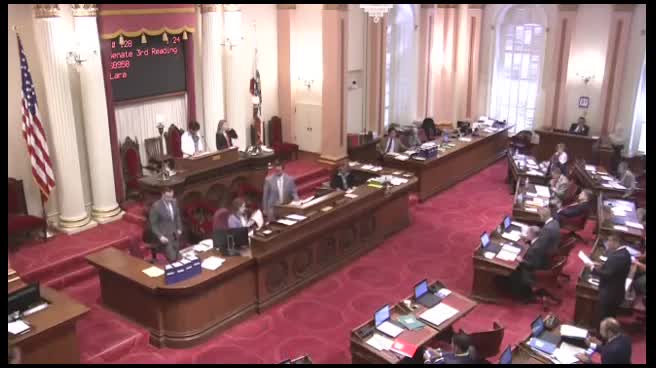 18MIN
Senate Floor
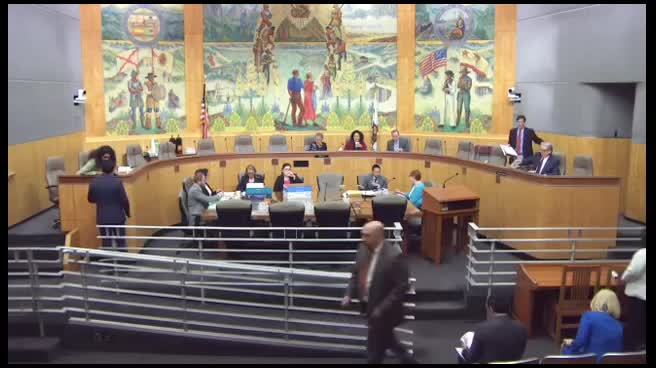
Senate Standing Committee on Education
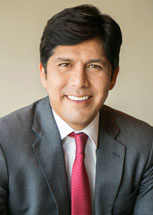

Bill Co-Author(s):
