SB 1259: Vehicles: toll payment: veterans.
- Session Year: 2015-2016
- House: Senate
- Latest Version Date: 2016-04-21
Under existing law, a vehicle that enters into or upon a vehicular crossing, as defined, is liable for tolls and other charges prescribed by the California Transportation Commission. Under existing law, it is unlawful to refuse to pay, or to evade or attempt to evade the payment of, tolls or other charges on any vehicular crossing, as defined, or toll highway. A violation of those provisions is subject to civil penalties. Existing law exempts authorized emergency vehicles, as defined, from payment of a toll and related fines under specified conditions.
This bill would exempt vehicles occupied by registered to a veteran and displaying a specialized veterans license plate, as specified, from payment of a toll or related fines on a toll road, high-occupancy toll (HOT) lane, toll bridge, toll highway, a vehicular crossing, or any other toll facility. The bill would also make conforming changes.
Under existing law, a vehicle that enters into or upon a vehicular crossing, as defined, is liable for tolls and other charges prescribed by the California Transportation Commission. Under existing law, it is unlawful to refuse to pay, or to evade or attempt to evade the payment of, tolls or other charges on any vehicular crossing, as defined, or toll highway. A violation of those provisions is subject to civil penalties. Existing law exempts authorized emergency vehicles, as defined, from payment of a toll and related fines under specified conditions.
This bill would exempt vehicles occupied by a veteran and displaying a specialized veterans license plate, as specified, from payment of a toll or related fines on a toll road, high-occupancy toll (HOT) lane, toll bridge, toll highway, a vehicular crossing, or any other toll facility. The bill would also make conforming changes.
Except as provided in Sections 23301.3 and 23301.5, each vehicle that enters into or upon a vehicular crossing is liable for those tolls and other charges prescribed by the California Transportation Commission.
SEC. 2.Section 23301.3 is added to the Vehicle Code, to read:23301.3.(a)A vehicle described in subdivision (b) is exempt from a toll or other charge on a toll road, high-occupancy toll (HOT) lane, toll bridge, toll highway, a vehicular crossing, or any other toll facility.
(b)The exemption described in subdivision (a) applies only to a vehicle that is occupied by registered to a veteran and displays displaying one of the following license plates:
(1)A license plate issued to a disabled veteran, pursuant to Section 5007.
(2)A license plate issued to a Pearl Harbor survivor, pursuant to Section 5101.3.
(3)A license plate issued to a recipient of the Army Medal of Honor, Navy Medal of Honor, Air Force Medal of Honor, Army Distinguished Service Cross, Navy Cross, or Air Force Cross, pursuant to Section 5101.4.
(4)A license plate issued to a former American prisoner of war, pursuant to Section 5101.5.
(5)A license plate issued to a recipient of the Congressional Medal of Honor, pursuant to Section 5101.6.
(6)A license plate issued to a recipient of the Purple Heart, pursuant to Section 5101.8.
(c)Sections 23302 and 23302.5 do not apply to vehicles exempt pursuant to this section.
Except as provided in Section Sections 23301.3 and 23301.5, each vehicle that enters into or upon a vehicular crossing immediately becomes is liable for those tolls and other charges as may from time to time be prescribed by the California Transportation Commission.
SEC. 2.Section 23301.3 is added to the Vehicle Code, to read:23301.3.(a)A vehicle described in subdivision (b) is exempt from a toll or other charge on a toll road, high-occupancy toll (HOT) lane, toll bridge, toll highway, a vehicular crossing, or any other toll facility.
(b)The exemption described in subdivision (a) applies only to a vehicle that is occupied by a veteran and displays one of the following license plates:
(1)A license plate issued to a disabled veteran, pursuant to Section 5007.
(2)A license plate issued to a Pearl Harbor survivor, pursuant to Section 5101.3.
(3)A license plate issued to a recipient of the Army Medal of Honor, Navy Medal of Honor, Air Force Medal of Honor, Army Distinguished Service Cross, Navy Cross, or Air Force Cross, pursuant to Section 5101.4.
(4)A license plate issued to a former American prisoner of war, pursuant to Section 5101.5.
(5)A license plate issued to a recipient of the Congressional Medal of Honor, pursuant to Section 5101.6.
(6)A license plate issued to a recipient of the Purple Heart, pursuant to Section 5101.8.
(c)Sections 23302 and 23302.5 do not apply to vehicles exempt pursuant to this section.
|
Date
|
Status
|
|---|---|
| Feb 18, 2016 | Introduced. Read first time. To Com. on RLS. for assignment. To print. |
| Feb 19, 2016 | From printer. May be acted upon on or after March 20. |
| Mar 3, 2016 | Referred to Com. on T. & H. |
| Mar 24, 2016 | Set for hearing April 19. |
| Apr 20, 2016 | From committee: Do pass as amended and re-refer to Com. on APPR. (Ayes 10. Noes 1. Page 3616.) (April 19). |
| Apr 20, 2016 | From committee: Do pass as amended and re-refer to Com. on APPR. (Ayes 10. Noes 1.) (April 19). |
| Apr 21, 2016 | Read second time and amended. Re-referred to Com. on APPR. |
| Apr 29, 2016 | Set for hearing May 9. |
| May 9, 2016 | From committee: Do pass. (Ayes 6. Noes 0. Page 3810.) (May 9). |
| May 9, 2016 | From committee: Do pass. (Ayes 6. Noes 0.) (May 9). |
| May 10, 2016 | Read second time. Ordered to third reading. |
| May 23, 2016 | In Assembly. Read first time. Held at Desk. |
| May 23, 2016 | Read third time. Passed. (Ayes 36. Noes 0. Page 3926.) Ordered to the Assembly. |
| May 23, 2016 | Read third time. Passed. (Ayes 36. Noes 0.) Ordered to the Assembly. |
| Jun 1, 2016 | Referred to Coms. on V.A. and TRANS. |
| Jun 14, 2016 | June 14 set for first hearing canceled at the request of author. |
|
Date
|
Description
|
Location
|
Votes
|
|
|---|---|---|---|---|
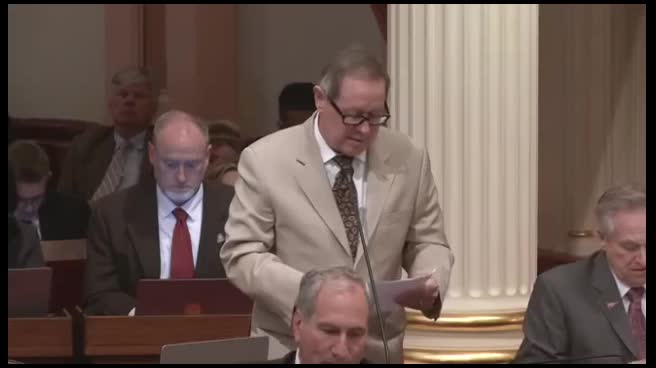
| May 23, 2016 | Senate 3rd Reading SB1259 Runner By Cannella | Senate Floor |
Passed |
|
| May 9, 2016 | Do pass | Senate Standing Committee on Appropriations |
Passed |
|
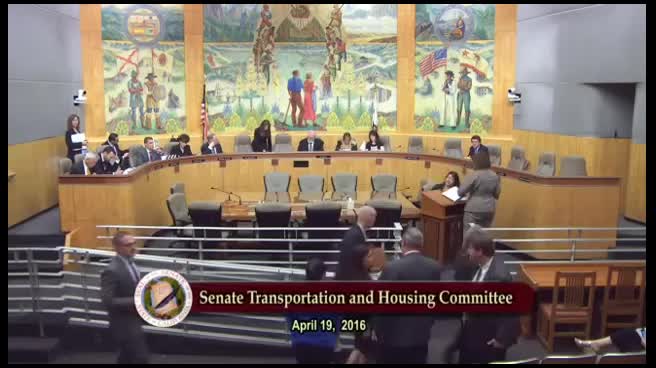
| Apr 19, 2016 | Do pass as amended, but first amend, and re-refer to the Committee on [Appropriations] | Senate Standing Committee on Transportation and Housing |
Passed |
This list shows positions taken on this bill by organizations on the date displayed, which is linked to the original source.
Positions by individuals are not included.
|
Organization
|
Position
|
Date
|
|---|---|---|
| Antelope Valley Veterans Community Action Coalition | ** Support | May 23, 2016 |
| China Lake Alliance | ** Support | May 23, 2016 |
| Disabled American Veterans, Antelope Valley Chapter | ** Support | May 23, 2016 |
| Metropolitan Transportation Commission | ** Against | May 23, 2016 |
Date of Hearing: June 14, 2016
ASSEMBLY COMMITTEE ON VETERANS AFFAIRS
Jacqui Irwin, Chair
SBPCA Bill Id:SB 1259
Author:(Runner) – As Amended Ver:April 21, 2016
SENATE VOTE: 36-0
SUBJECT: Vehicles: toll payment: veterans
SUMMARY: Exempts vehicles registered to a veteran and displaying a specialized veterans license plate, as specified, from payment of a toll or related fines on a toll road, high-occupancy toll (HOT) lane, toll bridge, toll highway, a vehicular crossing, or any other toll facility.
EXISTING LAW:
- Makes every vehicle using a toll bridge or toll highway liable for any tolls or other charges that may be prescribed and prohibits a person from evading or attempting to evade the payment of those tolls or charges.
- Exempts from toll payment properly marked emergency vehicles that are displaying exempt California license plates and either traveling to or returning from urgent or emergency response.
- Requires that if a vehicle is found by automated devices (including cameras), visual observation, or otherwise to have evaded a toll, the toll operator must issue a notice of toll evasion violation to the registered owner of the vehicle within 21 days of the violation. If the toll operator is unable to obtain accurate information concerning the identity and address of the registered owner within 21 days of the violation, it shall have an additional 45 calendar days to issue the notice.
FISCAL EFFECT: According to the Senate Appropriations Committee:
- Unknown, likely minor revenue losses to various local tolling and regional entities that operate toll facilities. (local funds)
- Unknown, likely minor foregone state revenues, to the extent the Department of Transportation develops and operates state toll facilities. (State Highway Account)
COMMENTS: According to the author the need for this bill is as follows:
Veterans who qualify for honorary plates have been wounded, disabled, held prisoner or have demonstrated extraordinary valor in combat. This measure simply provides a small measure of recognition to California veterans who have served our country with particular sacrifice and distinction.
Almost 48% of California veterans are age 65 or older. The general decline in the number of U.S. veterans is particularly evident among those who have received combat related honors.
Requirement that the veteran be in the vehicle:
Broadly generalizing, there is a strong sentiment in the veterans community that veterans honors belong only to the veteran; monetary benefits are also often provided to spouses and family members of veterans, though this is not a bright line test. Obviously the existing license plates allow for non-veteran drivers to use the specially plated car, but the bill adds an additional benefit at toll locations. Should anyone with permission from the veteran to drive the car be able to take advantage of the benefit?
Use of the plate to be the determining factor as opposed to the requisite status:
The bill would require that veterans who are otherwise eligible but who do not have the special plate apply for and obtain the plate in order to be eligible for the toll benefit. It seems likely, given the increasingly automated toll road and bridge systems,that the implementation will include some kind of transponder. To reduce costs of the proposal and the barriers to entry for veterans, why does the bill require both the plate and the transponder? There is an existing procedure for the disabled veteran placard (somewhat analogous to a transponder) which might be adoptable and provide a penalty structure as well.
What is the rationale behind the bill? Is there a problem that the bill is solving or is the bill in recognition of veterans service and sacrifice or both? What problem is the bill solving?
The statutory language provides a bright line test for who is eligible for the proposed benefit, but it also, somewhat arbitrarily, divides veterans, deeming some worthy of the benefit and not others, and it is not clear that there is any need for this other than to provide a bright line and cost reduction. Particularly with regard to disabled veterans, the definition in MVC of disabled veteran for the most part ties the disability to impaired mobility and related issues; the disabled veteran plate is analogous to the disabled placard and generally allows mobility impaired people to park more conveniently to help accommodate their disability. Does this test, focused primarily on mobility make sense in the case of a toll free benefit to veterans who drive or are driven by someone else through a toll crossing?
REGISTERED SUPPORT / OPPOSITION:
Support
Antelope Valley Veterans Community Action Coalition
China Lake Alliance
James Randall Wooderson (Individual)
Operation All The Way Home
Opposition
Metropolitan Transportation Commission.
Analysis Prepared by: John Spangler / V.A. / (916) 319-3550
Office of Senate Floor Analyses (916) 651-1520 Fax: (916) 327-4478 | SB |
THIRD READING
Bill No: SB 1259
:
SENATE TRANS. & HOUSING COMMITTEE: 10-1, 4/19/16
AYES: Beall, Cannella, Allen, Bates, Gaines, Galgiani, Leyva, McGuire, Mendoza, Roth
NOES: Wieckowski
SENATE APPROPRIATIONS COMMITTEE: 6-0, 5/9/16
AYES: Lara, Beall, Hill, McGuire, Mendoza, Nielsen
NO VOTE RECORDED: Bates
DIGEST: This bill exempts vehicles displaying certain veteran-specific license plates from paying tolls in California.
Existing law:
- Makes every vehicle using a toll bridge or toll highway liable for any tolls or other charges that may be prescribed and prohibits a person from evading or attempting to evade the payment of those tolls or charges.
- Exempts from toll payment properly marked emergency vehicles that are displaying exempt California license plates and either traveling to or returning from urgent or emergency response.
- Requires that if a vehicle is found by automated devices (including cameras), visual observation, or otherwise to have evaded a toll, the toll operator must issue a notice of toll evasion violation to the registered owner of the vehicle within 21 days of the violation. If the toll operator is unable to obtain accurate information concerning the identity and address of the registered owner within 21 days of the violation, it shall have an additional 45 calendar days to issue the notice.
This bill exempts from toll payment any vehicle registered to a veteran and displaying one of the six California license plate types that are only available to qualifying veterans. These veterans include:
- Disabled veterans;
- Pearl Harbor survivors;
- Members of the Legion of Valor, which includes recipients of the Army, Navy, and Air Force Medals of Honor, the Army Distinguished Service Cross, and the Navy and Air Force Crosses;
- Former American prisoners of war;
- Recipients of the Congressional Medal of Honor; and
- Recipients of the Purple Heart.
Comments
- Purpose. According to the author, there are few daily opportunities for the public to express gratitude for the sacrifices made by our most distinguished veterans. This bill provides such an opportunity by requiring that a vehicle displaying one of the existing enumerated veterans’ plates be exempt from tolls or other charges on toll roads or bridges. The author argues that this bill is an extension of the underlying state law which recognizes extraordinary military service through the issuance of specialized veterans’ license plates.
- What is covered? This bill applies to tolls and other charges on toll roads, high-occupancy toll lanes, toll bridges, toll highways, or other toll facilities.
- Who is covered? This bill does not excuse all veterans from paying tolls.
Rather, it exempts vehicles displaying special license plates that can only be obtained by veterans who meet specific, additional criteria and can provide official documentation of their status to the Department of Motor Vehicles (DMV). Special plates are available to veterans who have been prisoners of war, veterans who survived the attack on Pearl Harbor, veterans who have been severely disabled in the course of their service, and veterans who have received particular distinctions (e.g., the Purple Heart, the Congressional Medal of Honor). As these examples suggest, the special plate requirement limits the scope of this bill to a small subset of California veterans. The DMV indicates that there are 24,672 vehicles currently registered with specialized license plates that qualify for this bill’s toll exemption.
- De minimis impact? Supporters of this bill argue that due to the small number of covered veterans, the bill’s impact on revenues from toll highways and bridges would be de minimis. It is important to bear in mind, however, that distinguished veterans already receive similar small courtesies, such as discounted fishing licenses and free admission to California state parks. There are currently two bills before the Legislature that further reduce hunting and fishing license fees for veterans. Unlike programs that enhance veterans’ access to education, health care, housing, or employment, these small benefits do not substantively improve veterans’ opportunities or quality of life. They do, however, deprive public agencies of funds. While any such benefit taken in isolation may seem de minimis, the more that are permitted, the greater the cost to the rest of California’s citizens, who must make up the difference.
- Slippery slope? Exempting veterans from toll payment in California raises the question of whether various other groups will seek similar treatment. Unlike the exemption for emergency vehicles engaged in emergency response, this exemption is not based on a specific and tangible need. As such, this bill may open the door to additional toll exemptions.
FISCAL EFFECT: Appropriation: Fiscal Com.: Local:
According to the Senate Appropriations Committee:
- Unknown, likely minor revenue losses to various local tolling and regional entities that operate toll facilities. (local funds)
- Unknown, likely minor foregone state revenues, to the extent the Department of Transportation develops and operates state toll facilities. (State Highway Account)
Antelope Valley Veterans Community Action Coalition
China Lake Alliance
Disabled American Veterans, Antelope Valley Chapter
Metropolitan Transportation Commission
5/11/16 15:44:21
**** END ****
SENATE COMMITTEE ON APPROPRIATIONS
Senator Ricardo Lara, Chair
2015 - 2016 Regular Session
SB 1259 (Runner) - Vehicles: toll payment: veterans
Version: April 21, 2016 | Policy Vote: T. & H. 10 - 1 |
Urgency: No | Mandate: No |
Hearing Date: May 9, 2016 | Consultant: Mark McKenzie |
This bill does not meet the criteria for referral to the Suspense File.
Bill Summary:
SB 1259 would exempt vehicles with specified veterans license plates from paying tolls, charges, and related fines when accessing specified toll facilities.
Fiscal Impact:
- Unknown, likely minor revenue losses to various local tolling and regional entities that operate toll facilities. (local funds)
- Unknown, likely minor foregone state revenues, to the extent the Department of Transportation (Caltrans) develops and operates state toll facilities. (State highway Account) See staff comments.
Background:
Existing law makes every vehicle using a toll bridge, toll highway, high-occupancy toll (HOT) lane, or other toll facility liable for any tolls or other charges that may be prescribed, and prohibits a person from evading or attempting to evade the payment of those tolls or charges. Existing law exempts authorized emergency vehicles from paying tolls when responding to or returning from an urgent or emergency call, as specified.
Existing toll facilities are generally administered by local or regional transportation entities, and toll revenues are retained at the local level to cover administrative and maintenance costs, to pay off debt for capital improvements, or for other authorized expenditures within the corridor of the toll facility. Existing law, as enacted by AB 194 (Frazier), Chap. 687/2015, authorizes Caltrans and regional transportation entities to develop and operate HOT lanes and other toll facilities, upon approval by the California Transportation Commission.
Existing law authorizes the Department of Motor Vehicles (DMV) to issue various specialized license plates, including certain plates that are only available to qualifying veterans.
Proposed Law:
SB 1259 would exempt vehicles registered to a veteran and displaying certain veterans license plates from tolls or other charges on a toll road, HOT lane, toll bridge, toll highway, vehicular crossing, or any other toll facility. This exemption would apply to vehicles displaying a specialized license plate for disabled veterans, Pearl Harbor survivors, members of the Legion of Honor, former American prisoners of war, Congressional Medal of Honor recipients, and Purple Heart recipients.
Staff Comments:
DMV indicates that there are 24,672 vehicles currently registered with specialized license plates that qualify for this bill’s toll exemption. Revenue losses to individual tolling entities are unknown, but likely relatively minor, considering the exemption would only apply to a limited subset of the motoring public, and a small percentage of those vehicles would access any particular toll facility. Currently, all toll facilities are administered by local or regional transportation entities, so there would be no immediate state fiscal impacts.
To the extent Caltrans develops and operates toll facilities in the future, this bill could result in foregone revenues by exempting vehicles with certain veterans plates from paying tolls. Future impacts would be determined by the number of vehicles accessing state-administered toll facilities, and the amount of the tolls that would otherwise have been paid for accessing those facilities. Since the amount of individual tolls would likely be established based upon a projection of the number of toll-paying vehicles, any foregone revenues resulting from this bill would be covered by a proportionate increase in the amount of tolls paid by the drivers of other vehicles.
-- END --
SENATE COMMITTEE ON TRANSPORTATION AND HOUSING
Senator Jim Beall, Chair
2015 - 2016 Regular
Bill No: SB 1259 Hearing Date: 4/19/2016
Author: | Runner | ||
Version: | 2/18/2016 | ||
Urgency: | No | Fiscal: | Yes |
Consultant: | Sarah Carvill | ||
SUBJECT: Vehicles: toll payment: veterans
DIGEST: This bill exempts veterans traveling in vehicles with certain veteran-specific license plates from paying tolls in California.
ANALYSIS:
Existing law makes every vehicle using a toll bridge or toll highway liable for any tolls or other charges that may be prescribed and prohibits a person from evading or attempting to evade the payment of those tolls or charges. Emergency vehicles that are properly marked as such, displaying exempt California license plates, and either engaged in traveling to or returning from urgent or emergency response are exempt from toll payment.
If a vehicle is found, by automated devices (including cameras), by visual observation, or otherwise, to have evaded a toll, a toll operator must issue a notice of toll evasion violation to the registered owner of the vehicle within 21 days of the violation. If the toll operator is unable to obtain accurate information concerning the identity and address of the registered owner within 21 days of the violation, it shall have an additional 45 calendar days to issue the notice.
This bill:
- Exempts from toll payment any vehicle occupied by a veteran and displaying one of the six California license plate types that are only available to qualifying veterans. These veterans include:
- Disabled veterans
- Pearl harbor survivors
- Members of the Legion of Valor, which includes recipients of the Army, Navy, and Air Force Medals of Honor, the Army Distinguished Service Cross, and the Navy and Air Force Crosses
- Former American prisoners of war
- Recipients of the Congressional Medal of Honor
- Recipients of the Purple Heart
COMMENTS:
- Purpose. According to the author, there are few daily opportunities for the public to express gratitude for the sacrifices made by our most distinguished veterans. This bill provides such an opportunity by requiring that a vehicle displaying one of the existing enumerated veteran’s plates be exempt from tolls or other charges on toll roads or bridges. The author argues that this bill is an extension of the underlying state law which recognizes extraordinary military service through the issuance of specialized veterans’ license plates.
- What is covered? This bill applies to tolls and other charges on toll roads, high-occupancy toll (HOT) lanes, toll bridges, toll highways, or other toll facilities.
- Who is covered? This bill does not excuse all veterans from paying tolls. Rather, it exempts vehicles displaying special license plates that can only be obtained by veterans who meet specific, additional criteria and can provide official documentation of their status to the DMV. Special plates are available to veterans who have been prisoners of war, veterans who survived the attack on Pearl Harbor, veterans who have been severely disabled in the course of their service, and veterans who have received particular distinctions (e.g., the Purple Heart, the Congressional Medal of Honor). As these examples suggest, the special plate requirement limits the scope of the bill to a small subset of California veterans. The DMV does not track all of the special license plates that would qualify a veteran for a toll exemption under this legislation, but the total number of existing, covered plates is estimated to be between 9,000 and 10,000 statewide.
- Enforcement challenges. The exemption provided in this bill only applies when the qualifying veteran is inside the vehicle bearing the special license plate. This provision would be exceedingly difficult to enforce, since toll operators commonly and increasingly utilize automated systems to collect tolls from drivers. Because these systems often either rely primarily on or are backstopped by a camera that photographs each vehicle’s license plate as it passes through a toll booth, it may indeed be possible for toll operators to program their automated systems to identify vehicles displaying qualifying veteran plates. However, there would be no way for toll operators to verify that a qualifying veteran was actually in the vehicle at the time the photo was taken using existing systems. Relaxing the language so that the toll exemption only follows the car (as opposed to the car and the veteran, as is currently required) would solve the enforcement problem, but it would also extend the benefit beyond the target population to anyone who may have use of a vehicle registered to a veteran. It is also important to consider that some special status plates can be retained on a vehicle by a surviving spouse after the qualifying veteran’s death, posing further enforcement challenges. The bill provides no direction to toll facility operators regarding administration of this requirement.
- De minimis impact? Supporters of this legislation argue that due to the small number of covered veterans, the bill’s impact on revenues from toll highways and bridges would be de minimis. It is important to bear in mind, however, that distinguished veterans already receive similar small courtesies, such as discounted fishing licenses and free admission to California state parks. There are currently two bills before the Legislature that would further reduce hunting and fishing license fees for veterans. Unlike programs that enhance veterans’ access to education, health care, housing, or employment, these small benefits do not substantively improve veterans’ opportunities or quality of life. They do, however, deprive public agencies of funds. While any such benefit taken in isolation may seem de minimis, the more that are permitted, the greater the cost to the rest of California’s citizens, who must make up the difference.
- Slippery slope? Exempting veterans from toll payment in California raises the question of whether various other groups will seek similar treatment. Unlike the exemption for emergency vehicles engaged in emergency response, this exemption is not based on a specific and tangible need. As such, the bill may open the door to additional toll exemptions.
Related Legislation:
AB 254 (Jeffries, Chapter 425, Statutes of 2009) — exempted emergency vehicles engaged in emergency response from toll payment.
AB 1844 (Gallagher, 2016) — would reduce fees on lifetime fishing and hunting licenses for all honorably discharged veterans. This bill is pending in the Assembly Appropriations Committee.
SB 951 (McGuire, 2016) — would create a pilot program to provide veterans with free access to transit. This bill is pending in the Senate Environmental Quality Committee.
SB 1081 (Morrell, 2016) — would reduce fees on fishing and hunting licenses for all honorably discharged veterans and provide free licenses to certain veterans. This bill is pending in the Senate Appropriations Committee.
FISCAL EFFECT: Appropriation: Fiscal Com.: Local:
POSITIONS: (Communicated to the committee before noon on Wednesday,
April 13, 2016.)
SUPPORT:
China Lake Alliance
OPPOSITION:
None received
-- END --
Discussed in Hearing
 2MIN
Senate Floor
 2MIN
Senate Standing Committee on Appropriations
 4MIN
Senate Standing Committee on Transportation and Housing
Bill Author

Bill Co-Author(s):