SB 1317: Groundwater extraction permit.
- Session Year: 2015-2016
- House: Senate
- Latest Version Date: 2016-06-20
The California Constitution requires the reasonable and beneficial use of water and that the conservation of the water resources of the state is to be exercised with a view to the reasonable and beneficial use of the water in the interest of the people and for the public welfare. Existing law, the Sustainable Groundwater Management Act, requires all groundwater basins designated as high- or medium-priority basins by the Department of Water Resources and designated as subject to critical conditions of overdraft to be managed under a groundwater sustainability plan or coordinated groundwater sustainability plans by January 31, 2020, and requires all other groundwater basins designated as high- or medium-priority basins to be managed under a groundwater sustainability plan or coordinated groundwater sustainability plans by January 31, 2022, except as specified.
This bill, by January 1, 2018, would require a city or county overlying a basin designated as a high- or medium-priority basin to establish a process for the issuance of a groundwater extraction permit for the development of a groundwater extraction facility that requires an applicant for a groundwater extraction permit to demonstrate, based on substantial evidence, that extraction of groundwater from a proposed groundwater extraction facility will not contribute to or create an undesirable result, as prescribed. The bill would prohibit a groundwater extraction facility in a high- or medium-priority basin from being developed without a valid groundwater extraction permit, with certain exceptions. The bill would not require a city or county overlying a medium- or high-priority basin to have a process for the issuance of a groundwater extraction permit for the development of a groundwater extraction facility on or after January 31, 2022, or once the department has evaluated a groundwater sustainability plan for the basin the city or county overlies and determined the plan to be adequate and likely to achieve the sustainability goal for the basin, whichever comes first. By increasing the duties of cities and counties, this bill would impose a state-mandated local program.
The California Constitution requires the state to reimburse local agencies and school districts for certain costs mandated by the state. Statutory provisions establish procedures for making that reimbursement.
This bill would provide that no reimbursement is required by this act for a specified reason.
The California Constitution requires the reasonable and beneficial use of water and that the conservation of the water resources of the state is to be exercised with a view to the reasonable and beneficial use of the water in the interest of the people and for the public welfare. Existing law, the Sustainable Groundwater Management Act, requires all groundwater basins designated as high- or medium-priority basins by the Department of Water Resources and designated as subject to critical conditions of overdraft to be managed under a groundwater sustainability plan or coordinated groundwater sustainability plans by January 31, 2020, and requires all other groundwater basins designated as high- or medium-priority basins to be managed under a groundwater sustainability plan or coordinated groundwater sustainability plans by January 31, 2022, except as specified.
This bill, by July 1, 2017, January 1, 2018, would require a city or county overlying a basin designated as a high- or medium-priority basin to establish a process for the issuance of conditional use permits a groundwater extraction permit for the development of a groundwater extraction facility in order to prevent a new groundwater extraction facility from contributing to or creating an undesirable result, that requires an applicant for a groundwater extraction permit to demonstrate, based on substantial evidence, that extraction of groundwater from a proposed groundwater extraction facility will not contribute to or create an undesirable result, as prescribed. The bill would prohibit a groundwater extraction facility in a high- or medium-priority basin from being developed without a valid conditional use groundwater extraction permit, with certain exceptions. The bill would not require a city or county overlying a medium- or high-priority basin to have a process for the issuance of a conditional use groundwater extraction permit for the development of a groundwater extraction facility on or after January 31, 2022, or once the department has evaluated a groundwater sustainability plan for the basin the city or county overlies and determined the plan to be adequate and likely to achieve the sustainability goal for the basin, whichever comes first. By increasing the duties of cities and counties, this bill would impose a state-mandated local program.
The California Constitution requires the state to reimburse local agencies and school districts for certain costs mandated by the state. Statutory provisions establish procedures for making that reimbursement.
This bill would provide that no reimbursement is required by this act for a specified reason.
The California Constitution requires the reasonable and beneficial use of water and that the conservation of the water resources of the state is to be exercised with a view to the reasonable and beneficial use of the water in the interest of the people and for the public welfare. Existing law, the Sustainable Groundwater Management Act, requires all groundwater basins designated as high- or medium-priority basins by the Department of Water Resources that are and designated as basins subject to critical conditions of overdraft to be managed under a groundwater sustainability plan or coordinated groundwater sustainability plans by January 31, 2020, and requires all other groundwater basins designated as high- or medium-priority basins to be managed under a groundwater sustainability plan or coordinated groundwater sustainability plans by January 31, 2022, except as specified.
This bill, by July 1, 2017, would require a city or county overlying a basin designated as a high- or medium-priority basin to establish a process for the issuance of conditional use permits for the development of a groundwater extraction facility in order to prevent a new groundwater extraction facility from contributing to or creating an undesirable result, as prescribed. The bill would prohibit a groundwater extraction facility in a high- or medium-priority basin from being developed without a valid conditional use permit, with certain exceptions. The bill would not require a city or county overlying a medium- or high-priority basin to have a process for the issuance of a conditional use permit for the development of a groundwater extraction facility on or after January 31, 2022, or once the department has evaluated a groundwater sustainability plan for the basin the city or county overlies and determined the plan to be adequate and likely to achieve the sustainability goal for the basin, whichever comes first. By increasing the duties of cities and counties, this bill would impose a state-mandated local program.
The California Constitution requires the state to reimburse local agencies and school districts for certain costs mandated by the state. Statutory provisions establish procedures for making that reimbursement.
This bill would provide that no reimbursement is required by this act for a specified reason.
The California Constitution requires the reasonable and beneficial use of water and that the conservation of the water resources of the state is to be exercised with a view to the reasonable and beneficial use of the water in the interest of the people and for the public welfare. Existing law, the Sustainable Groundwater Management Act, requires all groundwater basins designated as high- or medium-priority basins by the Department of Water Resources that are designated as basins subject to critical conditions of overdraft to be managed under a groundwater sustainability plan or coordinated groundwater sustainability plans by January 31, 2020, and requires all other groundwater basins designated as high- or medium-priority basins to be managed under a groundwater sustainability plan or coordinated groundwater sustainability plans by January 31, 2022, except as specified.
This bill, by July 1, 2017, would require a city or county overlying a basin designated as a high- or medium-priority basin to establish a process for the issuance of conditional use permits for the development of a groundwater extraction facility in order to prevent a new groundwater extraction facility from contributing to or creating an undesirable result, as prescribed. By increasing the duties of cities and counties, this bill would impose a state-mandated local program.
The California Constitution requires the state to reimburse local agencies and school districts for certain costs mandated by the state. Statutory provisions establish procedures for making that reimbursement.
This bill would provide that no reimbursement is required by this act for a specified reason.
The Legislature finds and declares as follows:
(a)Groundwater provides substantial water supplies for many farms and communities across the state, particularly in drier years. While in some parts of the state groundwater is very well managed, in other parts there has been substantial groundwater overdraft.
(b)During Californias record drought, there has been a substantial increase in the extraction of groundwater resulting in impacts to aquifers.
(c)In 2014, California adopted landmark legislation, the Sustainable Groundwater Management Act (Part 2.74 (commencing with Section 10720) of Division 6 of the Water Code), to sustainably manage groundwater resources. The act will not be fully implemented for many years, allowing groundwater overdraft to continue in some regions.
(d)Despite the drought, there has been a substantial and dramatic increase in conversion of existing pastureland and nonirrigated lands to new permanent crops irrigated by new deep groundwater wells. In many parts of the central valley, these new orchards and groundwater wells have caused or contributed to existing groundwater wells drying up. These new groundwater wells exacerbate overdraft in some regions of the state and have harmed and will continue to harm groundwater supplies for existing farms and rural communities and the long-term viability of aquifers.
(e)A number of new developments also rely on individual new wells, further stressing overdrafted groundwater basins.
(f)The number of new wells supplying significant new demands for groundwater has resulted in alarming subsidence in many areas of California. Subsidence threatens statewide resources and infrastructure such as roads, highways, and aqueducts. Importantly, subsidence may also cause permanent damage to aquifers, threatening groundwater resources for future generations.
(g)The lack of protection for aquifers, existing groundwater users, and important infrastructure from the explosive increase in new wells is an issue of statewide importance and requires statewide regulation to avoid undesirable results to groundwater and statewide resources while local communities are working to comply with the provisions of the Sustainable Groundwater Management Act. Preventing undesirable results in a high- or medium-priority basin pursuant to this article and in furtherance of Section 113 of the Water Code is a matter of statewide concern and not a municipal affair, as that term is used in Section 5 of Article XI of the California Constitution. Therefore, this act applies to charter cities.
(h)This act is in furtherance of the policy contained in Section 2 of Article X of the California Constitution.
65891.1.As used in this article:
(a)Basin has the meaning provided in Section 10721 of the Water Code.
(b)Board means the State Water Resources Control Board.
(c)Bulletin 118 has the meaning provided in Section 10721 of the Water Code.
(d)De minimis extractor has the meaning provided in Section 10721 of the Water Code.
(e)Department means the Department of Water Resources.
(f)Disadvantaged unincorporated community has the meaning provided in Section 56033.5.
(g)Groundwater has the meaning provided in Section 10721 of the Water Code.
(h)Groundwater extraction facility has the meaning provided in Section 10721 of the Water Code.
(i)Groundwater sustainability plan has the meaning provided in Section 10721 of the Water Code.
(j)High-priority basin, medium-priority basin, low-priority basin, and very low priority basin have the same meaning as the categorization of a basin by the department pursuant to Section 10722.4 of the Water Code.
(k)Primary drinking water standards has the meaning provided in Section 116275 of the Health and Safety Code.
(l)Probationary basin has the meaning provided in Section 10735 of the Water Code.
(m)Special act water district means an agency created by statute to manage groundwater that is the exclusive local agency within its statutory boundaries with powers to comply with Part 2.74 (commencing with Section 10720) of Division 6 of the Water Code as described in paragraph (1) of subdivision (c) of Section 10723 of the Water Code.
(n)Undesirable result has the meaning provided in Section 10721 of the Water Code.
65891.2.(a)A city or county overlying a basin designated as a high- or medium-priority basin shall do both of the following:
(1)By January 1, 2018, establish a process for the issuance of a groundwater extraction permit for the development of a groundwater extraction facility that requires an applicant for a groundwater extraction permit to demonstrate, based on substantial evidence, that extraction of groundwater from a proposed groundwater extraction facility will not contribute to or create an undesirable result.
(2)Prohibit the issuance of a groundwater extraction permit for a new groundwater extraction facility in either of the following:
(A)A probationary basin, except if the board determines that part of a probationary basin is being adequately managed, in which case the prohibition on the issuance of a groundwater extraction permit for a new groundwater extraction facility shall apply only to those portions of the probationary basin not adequately managed as determined by the board.
(B)A basin designated in Bulletin 118 as a basin subject to critical conditions of overdraft.
(b)A groundwater extraction permit for the development of a groundwater extraction facility shall not be required for any of the following:
(1)A de minimis extractor.
(2)The replacement of an existing groundwater extraction facility with a new groundwater extraction facility with the same or a lessor extraction capacity. For the purposes of this article, replacement includes the deepening of a groundwater extraction facility.
(3)A groundwater extraction facility constructed to provide drinking water to a water system for the purposes of public health.
(4)A groundwater extraction facility necessary for habitat or wetlands conservation.
(5)A groundwater extraction facility necessary for a renewable energy project such as utility scale solar. for a photovoltaic or wind energy generation facility approved on or after January 1, 2017, that demands less than 75 acre-feet of groundwater annually.
(6)A groundwater extraction facility integral to a groundwater conjunctive use or storage program operating under an approved California Environmental Quality Act document.
(c)A city or county overlying a basin designated as a low- or very low priority basin may adopt an ordinance establishing a process for the issuance of groundwater extraction permits for the development of a groundwater extraction facility in accordance with this section.
(d)A groundwater extraction facility in a high- or medium-priority basin shall not be developed without a valid groundwater extraction permit issued pursuant to this section.
65891.3.(a)A city or county shall review an application for a groundwater extraction facility pursuant to the timelines established in the Permit Streamlining Act (Chapter 4.5 (commencing with Section 65920)).
(b)A fee charged by a city or county to review an application for a groundwater extraction facility shall be determined in accordance with Sections 66014 and 66016.
65891.4.This article does not require a city or county to establish a new process for the issuance of a groundwater extraction permit for the development of a groundwater extraction facility if the city or county has in effect an ordinance adopted before January 1, 2018, that imposes conditions on the development of a new groundwater extraction facility in order to prevent the new groundwater extraction facility from contributing to or creating an undesirable result.
65891.5.This article does not require a city or county overlying a medium- or high-priority basin to have a process for the issuance of a groundwater extraction permit for the development of a groundwater extraction facility on or after January 31, 2022, or once the department has evaluated a groundwater sustainability plan for the basin the city or county overlies and determined the plan to be adequate and likely to achieve the sustainability goal for the basin, whichever comes first.
65891.6.(a)This article does not apply to a basin for which a court or the State Water Resources Control Board has adjudicated the rights to extract groundwater.
(b)This article does not apply within the statutory boundaries of to a basin, or any portion of a basin, managed by a special act water district. district identified in paragraph (1) of subdivision (c) of Section 10723 of the Water Code.
(c)The Legislature finds and declares that the County of Napas groundwater conservation ordinance, Napa County Code Chapter 13.15, in conjunction with its water availability analysis policy adopted in May 2015, satisfies the purposes of the requirement in Section 65891.4. Accordingly, this article does not apply to a basin managed by the County of Napa if both the countys groundwater conservation ordinance and its water availability analysis policy remain in effect in substantially the same form as they existed on January 1, 2016.
SEC. 2.No reimbursement is required by this act pursuant to Section 6 of Article XIIIB of the California Constitution because a local agency or school district has the authority to levy service charges, fees, or assessments sufficient to pay for the program or level of service mandated by this act, within the meaning of Section 17556 of the Government Code.
The Legislature finds and declares as follows:
(a)Groundwater provides substantial water supplies for many farms and communities across the state, particularly in drier years. While in some parts of the state groundwater is very well managed, in other parts there has been substantial groundwater overdraft.
(b)During Californias record drought, there has been a substantial increase in the extraction of groundwater resulting in impacts to aquifers.
(c)In 2014, California adopted landmark legislation, the Sustainable Groundwater Management Act (Part 2.74 (commencing with Section 10720) of Division 6 of the Water Code), to sustainably manage groundwater resources. The act will not be fully implemented for many years, allowing groundwater overdraft to continue in some regions.
(d)Despite the drought, there has been a substantial and dramatic increase in conversion of existing pastureland and nonirrigated lands to new permanent crops irrigated by new deep groundwater wells. In many parts of the central valley, these new orchards and groundwater wells have caused or contributed to existing groundwater wells drying up. These new groundwater wells exacerbate overdraft in some regions of the state and have harmed and will continue to harm groundwater supplies for existing farms and rural communities and the long-term viability of aquifers.
(e)A number of new developments also rely on individual new wells, further stressing overdrafted groundwater basins.
(f)The number of new wells supplying significant new demands for groundwater has resulted in alarming subsidence in many areas of California. Subsidence threatens statewide resources and infrastructure such as roads, highways, and aqueducts. Importantly, subsidence may also cause permanent damage to aquifers, threatening groundwater resources for future generations.
(g)The lack of protection for aquifers, existing groundwater users, and important infrastructure from the explosive increase in new wells is an issue of statewide importance and requires statewide regulation to avoid undesirable results to groundwater and statewide resources while local communities are working to comply with the provisions of the Sustainable Groundwater Management Act. Preventing undesirable results in a high- or medium-priority basin pursuant to this article and in furtherance of Section 113 of the Water Code is a matter of statewide concern and not a municipal affair, as that term is used in Section 5 of Article XI of the California Constitution. Therefore, this act applies to charter cities.
(h)This act is in furtherance of the policy contained in Section 2 of Article X of the California Constitution.
65891.1.As used in this article:
(a)Basin has the meaning provided in Section 10721 of the Water Code.
(b)Board means the State Water Resources Control Board.
(b)
(c)Bulletin 118 has the meaning provided in Section 10721 of the Water Code.
(c)
(d)De minimis extractor has the meaning provided in Section 10721 of the Water Code.
(d)
(e)Department means the Department of Water Resources.
(e)
(f)Disadvantaged unincorporated community has the meaning provided in Section 56033.5.
(f)
(g)Groundwater has the meaning provided in Section 10721 of the Water Code.
(g)
(h)Groundwater extraction facility has the meaning provided in Section 10721 of the Water Code.
(h)
(i)Groundwater sustainability plan has the meaning provided in Section 10721 of the Water Code.
(i)
(j)High-priority basin, medium-priority basin, low-priority basin, and very low priority basin have the same meaning as the categorization of a basin by the department pursuant to Section 10722.4 of the Water Code.
(j)
(k)Primary drinking water standards has the meaning provided in Section 116275 of the Health and Safety Code.
(k)
(l)Probationary basin has the meaning provided in Section 10735 of the Water Code.
(l)
(m)Special act water district means an agency created by statute to manage groundwater that is the exclusive local agency within its statutory boundaries with powers to comply with Part 2.74 (commencing with Section 10720) of Division 6 of the Water Code as described in paragraph (1) of subdivision (c) of Section 10723 of the Water Code.
(m)
(n)Undesirable result has the meaning provided in Section 10721 of the Water Code.
65891.2.(a)A city or county overlying a basin designated as a high- or medium-priority basin shall do both of the following:
(1)By January 1, 2018, establish a process for the issuance of a groundwater extraction permit for the development of a groundwater extraction facility that requires an applicant for a groundwater extraction permit to demonstrate, based on substantial evidence, that extraction of groundwater from a proposed groundwater extraction facility will not contribute to or create an undesirable result.
(2)Prohibit the issuance of a groundwater extraction permit for a new groundwater extraction facility in either of the following:
(A)A probationary basin. basin, except if the board determines that part of a probationary basin is being adequately managed, in which case the prohibition on the issuance of a groundwater extraction permit for a new groundwater extraction facility shall apply only to those portions of the probationary basin not adequately managed as determined by the board.
(B)A basin designated in Bulletin 118 as a basin subject to critical conditions of overdraft.
(b)A groundwater extraction permit for the development of a groundwater extraction facility shall not be required for any of the following:
(1)A de minimis extractor.
(2)The replacement of an existing groundwater extraction facility with a new groundwater extraction facility with the same or a lessor extraction capacity. For the purposes of this article, replacement includes the deepening of a groundwater extraction facility.
(3)A groundwater extraction facility constructed to provide drinking water to a water system, if the water system meets both of the following conditions: system for the purposes of public health.
(A)The system provides water to a disadvantaged unincorporated community.
(B)The system has received a citation for a violation of primary drinking water standards within the prior two years.
(4)A groundwater extraction facility necessary for habitat or wetlands conservation.
(5)A groundwater extraction facility necessary for a renewable energy project such as utility scale solar.
(c)A city or county overlying a basin designated as a low- or very low priority basin may adopt an ordinance establishing a process for the issuance of groundwater extraction permits for the development of a groundwater extraction facility in accordance with this section.
(d)A groundwater extraction facility in a high- or medium-priority basin shall not be developed without a valid groundwater extraction permit issued pursuant to this section.
65891.3.(a)A city or county shall review an application for a groundwater extraction facility pursuant to the timelines established in the Permit Streamlining Act (Chapter 4.5 (commencing with Section 65920)).
(b)A fee charged by a city or county to review an application for a groundwater extraction facility shall be determined in accordance with Sections 66014 and 66016.
65891.4.This article does not require a city or county to establish a new process for the issuance of a groundwater extraction permit for the development of a groundwater extraction facility if the city or county has in effect an ordinance adopted before January 1, 2017, 2018, that imposes conditions on the development of a new groundwater extraction facility in order to prevent the new groundwater extraction facility from contributing to or creating an undesirable result.
65891.5.This article does not require a city or county overlying a medium- or high-priority basin to have a process for the issuance of a groundwater extraction permit for the development of a groundwater extraction facility on or after January 31, 2022, or once the department has evaluated a groundwater sustainability plan for the basin the city or county overlies and determined the plan to be adequate and likely to achieve the sustainability goal for the basin, whichever comes first.
65891.6.(a)This article does not apply to a basin for which a court or the State Water Resources Control Board has adjudicated the rights to extract groundwater.
(b)This article does not apply within the statutory boundaries of a special act water district.
SEC. 2.No reimbursement is required by this act pursuant to Section 6 of Article XIIIB of the California Constitution because a local agency or school district has the authority to levy service charges, fees, or assessments sufficient to pay for the program or level of service mandated by this act, within the meaning of Section 17556 of the Government Code.
The Legislature finds and declares as follows:
(a)Groundwater provides substantial water supplies for many farms and communities across the state, particularly in drier years. While in some parts of the state groundwater is very well managed, in other parts there has been substantial groundwater overdraft.
(b)During Californias record drought, there has been a substantial increase in the extraction of groundwater resulting in impacts to aquifers.
(c)In 2014, California adopted landmark legislation, the Sustainable Groundwater Management Act (Part 2.74 (commencing with Section 10720) of Division 6 of the Water Code), to sustainably manage groundwater resources. The act will not be fully implemented for many years, allowing groundwater overdraft to continue in some regions.
(d)Despite the drought, there has been a substantial and dramatic increase in conversion of existing pastureland and nonirrigated lands to new permanent crops irrigated by new deep groundwater wells. In many parts of the central valley, these new orchards and groundwater wells have caused or contributed to existing groundwater wells drying up. These new groundwater wells exacerbate overdraft in some regions of the state and have harmed and will continue to harm groundwater supplies for existing farms and rural communities and the long-term viability of aquifers.
(e)A number of new developments also rely on individual new wells, further stressing overdrafted groundwater basins.
(f)The number of new wells supplying significant new demands for groundwater has resulted in alarming subsidence in many areas of California. Subsidence threatens statewide resources and infrastructure such as roads, highways, and aqueducts. Importantly, subsidence may also cause permanent damage to aquifers, threatening groundwater resources for future generations.
(g)The lack of protection for aquifers, existing groundwater users, and important infrastructure from the explosive increase in new wells is an issue of statewide importance and requires statewide regulation to avoid undesirable results to groundwater and statewide resources while local communities are working to comply with the provisions of the Sustainable Groundwater Management Act. Preventing undesirable results in a high- or medium-priority basin pursuant to this article and in furtherance of Section 113 of the Water Code is a matter of statewide concern and not a municipal affair, as that term is used in Section 5 of Article XI of the California Constitution. Therefore, this act applies to charter cities.
(h)This act is in furtherance of the policy contained in Section 2 of Article X of the California Constitution.
65891.1.As used in this article:
(a)Basin has the meaning provided in Section 10721 of the Water Code.
(b)Bulletin 118 has the meaning provided in Section 10721 of the Water Code.
(c)De minimis extractor has the meaning provided in Section 10721 of the Water Code.
(d)Department means the Department of Water Resources.
(e)Disadvantaged unincorporated community has the meaning provided in Section 56033.5.
(f)Groundwater has the meaning provided in Section 10721 of the Water Code.
(g)Groundwater extraction facility has the meaning provided in Section 10721 of the Water Code.
(h)Groundwater sustainability plan has the meaning provided in Section 10721 of the Water Code.
(h)
(i)High-priority basin, medium-priority basin, low-priority basin, and very low priority basin have the same meaning as the categorization of a basin by the department pursuant to Section 10722.4 of the Water Code.
(i)
(j)Primary drinking water standards has the same meaning provided in Section 116275 of the Health and Safety Code.
(j)
(k)Probationary basin has the meaning provided in Section 10735 of the Water Code.
(k)
(l)Special act water district means an agency created by statute to manage groundwater that is the exclusive local agency within its statutory boundaries with powers to comply with Part 2.74 (commencing with Section 10720) of Division 6 of the Water Code as described in paragraph (1) of subdivision (c) of Section 10723 of the Water Code.
(m)Undesirable result has the meaning provided in Section 10721 of the Water Code.
65891.2.(a)A city or county overlying a basin designated as a high- or medium-priority basin shall do both of the following:
(1)By July 1, 2017, January 1, 2018, establish a process for the issuance of a conditional use groundwater extraction permit for the development of a groundwater extraction facility that imposes conditions on the development of a new groundwater extraction facility in order to prevent the new groundwater extraction facility from contributing to or creating an undesirable result. that requires an applicant for a groundwater extraction permit to demonstrate, based on substantial evidence, that extraction of groundwater from a proposed groundwater extraction facility will not contribute to or create an undesirable result.
(2)Prohibit the issuance of a conditional use groundwater extraction permit for a new groundwater extraction facility in either of the following:
(A)A probationary basin.
(B)A basin designated in Bulletin 118 as a basin subject to critical conditions of overdraft.
(b)A conditional use groundwater extraction permit for the development of a groundwater extraction facility shall not be required for any of the following:
(1)A de minimis extractor.
(2)The replacement of an existing groundwater extraction facility with a new groundwater extraction facility with the same or a lessor extraction capacity. For the purposes of this article, replacement includes the deepening of a groundwater extraction facility.
(3)A groundwater extraction facility constructed to provide drinking water to a water system, if the water system meets both of the following conditions:
(A)The system provides water to a disadvantaged unincorporated community.
(B)The system has received a citation for a violation of primary drinking water standards within the prior two years.
(4)A groundwater extraction facility necessary for habitat or wetlands conservation.
(5)A groundwater extraction facility necessary for a renewable energy project such as utility scale solar.
(c)A city or county overlying a basin designated as a low- or very low priority basin may adopt an ordinance establishing a process for the issuance of conditional use groundwater extraction permits for the development of a groundwater extraction facility in accordance with this section.
(d)A groundwater extraction facility in a high- or medium-priority basin shall not be developed without a valid conditional use groundwater extraction permit issued pursuant to this section.
65891.3.(a)A city or county shall review an application for a groundwater extraction facility pursuant to the timelines established in the Permit Streamlining Act (Chapter 4.5 (commencing with Section 65920)).
(b)A fee charged by a city or county to review an application for a groundwater extraction facility shall be determined in accordance with Sections 66014 and 66016.
65891.4.This article does not require a city or county to establish a new process for the issuance of a conditional use groundwater extraction permit for the development of a groundwater extraction facility if the city or county has in effect an ordinance adopted before January 1, 2017, that imposes conditions on the development of a new groundwater extraction facility in order to prevent the new groundwater extraction facility from contributing to or creating an undesirable result.
65891.5.This article does not require a city or county overlying a medium- or high-priority basin to have a process for the issuance of a conditional use groundwater extraction permit for the development of a groundwater extraction facility on or after January 31, 2022, or once the department has evaluated a groundwater sustainability plan for the basin the city or county overlies and determined the plan to be adequate and likely to achieve the sustainability goal for the basin, whichever comes first.
65891.6.(a)This article does not apply to a basin for which a court or the State Water Resources Control Board has adjudicated the rights to extract groundwater.
(b)This article does not apply within the statutory boundaries of a special act water district.
SEC. 2.No reimbursement is required by this act pursuant to Section 6 of Article XIIIB of the California Constitution because a local agency or school district has the authority to levy service charges, fees, or assessments sufficient to pay for the program or level of service mandated by this act, within the meaning of Section 17556 of the Government Code.
The Legislature finds and declares as follows:
(a)Groundwater provides substantial water supplies for many farms and communities across the state, particularly in drier years. While in some parts of the state groundwater is very well managed, in other parts there has been substantial groundwater overdraft.
(b)During Californias record drought, there has been a substantial increase in the extraction of groundwater resulting in impacts to aquifers.
(c)In 2014, California adopted landmark legislation, the Sustainable Groundwater Management Act (Part 2.74 (commencing with Section 10720) of Division 6 of the Water Code), to sustainably manage groundwater resources. The act will not be fully implemented for many years, allowing groundwater overdraft to continue in some regions.
(d)Despite the drought, there has been a substantial and dramatic increase in conversion of existing pastureland and nonirrigated lands to new permanent crops irrigated by new deep groundwater wells. In many parts of the central valley, these new orchards and groundwater wells have caused or contributed to existing groundwater wells drying up. These new groundwater wells exacerbate overdraft in some regions of the state and have harmed and will continue to harm groundwater supplies for existing farms and rural communities and the long-term viability of aquifers.
(e)A number of new developments also rely on individual new wells, further stressing overdrafted groundwater basins.
(f)The number of new wells supplying significant new demands for groundwater has resulted in alarming subsidence in many areas of California. Subsidence threatens statewide resources and infrastructure such as roads, highways, and aqueducts. Importantly, subsidence may also cause permanent damage to aquifers, threatening groundwater resources for future generations.
(g)The lack of protection for aquifers, existing groundwater users, and important infrastructure from the explosive increase in new wells is an issue of statewide importance and requires statewide regulation to avoid undesirable results to groundwater and statewide resources while local communities are working to comply with the provisions of the Sustainable Groundwater Management Act. Preventing undesirable results in a high- or medium-priority basin pursuant to this article and in furtherance of Section 113 of the Water Code is a matter of statewide concern and not a municipal affair, as that term is used in Section 5 of Article XI of the California Constitution. Therefore, this act applies to charter cities.
(h)This act is in furtherance of the policy contained in Section 2 of Article X of the California Constitution.
65891.1.As used in this article:
(a)Basin has the meaning provided in Section 10721 of the Water Code.
(b)Bulletin 118 has the meaning provided in Section 10721 of the Water Code.
(c)De minimis extractor has the meaning provided in Section 10721 of the Water Code.
(d)Department means the Department of Water Resources.
(e)Disadvantaged unincorporated community has the meaning provided in Section 56033.5.
(e)
(f)Groundwater has the meaning provided in Section 10721 of the Water Code.
(f)
(g)Groundwater extraction facility has the meaning provided in Section 10721 of the Water Code.
(g)
(h)High-priority basin, medium-priority basin, low-priority basin, and very low priority basin have the same meaning as the categorization of a basin by the department pursuant to Section 10722.4 of the Water Code.
(i)Primary drinking water standards has the same meaning provided in Section 116275 of the Health and Safety Code.
(h)
(j)Probationary basin has the meaning provided in Section 10735 of the Water Code.
(i)
(k)Undesirable result has the meaning provided in Section 10721 of the Water Code.
65891.2.(a)A city or county overlying a basin designated as a high- or medium-priority basin shall do both of the following:
(1)By July 1, 2017, establish a process for the issuance of a conditional use permit for the development of a groundwater extraction facility that imposes conditions on the development of a new groundwater extraction facility in order to prevent the new groundwater extraction facility from contributing to or creating an undesirable result.
(2)Prohibit the issuance of a conditional use permit for a new groundwater extraction facility in either of the following:
(A)A probationary basin.
(B)A basin designated in Bulletin 118 as a basin subject to critical conditions of overdraft.
(b)A conditional use permit for the development of a groundwater extraction facility shall not be required for either any of the following:
(1)A de minimis extractor.
(2)The replacement of an existing groundwater extraction facility with a new groundwater extraction facility with the same or a lessor extraction capacity. For the purposes of this article, replacement includes the deepening of a groundwater extraction facility.
(3)A groundwater extraction facility constructed to provide drinking water to a water system, if the water system meets both of the following conditions:
(A)The system provides water to a disadvantaged unincorporated community.
(B)The system has received a citation for a violation of primary drinking water standards within the prior two years.
(c)A city or county overlying a basin designated as a low- or very low priority basin may adopt an ordinance establishing a process for the issuance of conditional use permits for the development of a groundwater extraction facility in accordance with this section.
(d)A groundwater extraction facility in a high- or medium-priority basin shall not be developed without a valid conditional use permit issued pursuant to this section.
65891.3.(a)A city or county shall review an application for a groundwater extraction facility pursuant to the timelines established in the Permit Streamlining Act (Chapter 4.5 (commencing with Section 65920)).
(b)A fee charged by a city or county to review an application for a groundwater extraction facility shall be determined in accordance with Sections 66014 and 66016.
65891.4.This article does not require a city or county to establish a new process for the issuance of a conditional use permit for the development of a groundwater extraction facility if the city or county has in effect an ordinance adopted before January 1, 2017, that imposes conditions on the development of a new groundwater extraction facility in order to prevent the new groundwater extraction facility from contributing to or creating an undesirable result.
65891.5.This article does not require a city or county overlying a medium- or high-priority basin to have a process for the issuance of a conditional use permit for the development of a groundwater extraction facility on or after January 31, 2022, or once the department has evaluated a groundwater sustainability plan for the basin the city or county overlies and determined the plan to be adequate and likely to achieve the sustainability goal for the basin, whichever comes first.
65891.6.This article does not apply to a basin for which a court or the State Water Resources Control Board has adjudicated the rights to extract groundwater.
SEC. 2.No reimbursement is required by this act pursuant to Section 6 of Article XIIIB of the California Constitution because a local agency or school district has the authority to levy service charges, fees, or assessments sufficient to pay for the program or level of service mandated by this act, within the meaning of Section 17556 of the Government Code.
The Legislature finds and declares as follows:
(a)Groundwater provides substantial water supplies for many farms and communities across the state, particularly in drier years. While in some parts of the state groundwater is very well managed, in other parts there has been substantial groundwater overdraft.
(b)During Californias record drought, there has been a substantial increase in the extraction of groundwater resulting in impacts to aquifers.
(c)In 2014, California adopted landmark legislation, the Sustainable Groundwater Management Act (Part 2.74 (commencing with Section 10720) of Division 6 of the Water Code), to sustainably manage groundwater resources. The act will not be fully implemented for many years, allowing groundwater overdraft to continue in some regions.
(d)Despite the drought, there has been a substantial and dramatic increase in conversion of existing pastureland and nonirrigated lands to new permanent crops irrigated by new deep groundwater wells. In many parts of the central valley, these new orchards and groundwater wells have caused or contributed to existing groundwater wells drying up. These new groundwater wells exacerbate overdraft in some regions of the state and have harmed and will continue to harm groundwater supplies for existing farms and rural communities and the long-term viability of aquifers.
(e)A number of new developments also rely on individual new wells, further stressing overdrafted groundwater basins.
(f)The number of new wells supplying significant new demands for groundwater has resulted in alarming subsidence in many areas of California. Subsidence threatens statewide resources and infrastructure such as roads, highways, and aqueducts. Importantly, subsidence may also cause permanent damage to aquifers, threatening groundwater resources for future generations.
(g)The lack of protection for aquifers, existing groundwater users, and important infrastructure from the explosive increase in new wells is an issue of statewide importance and requires statewide regulation to avoid undesirable results to groundwater and statewide resources while local communities are working to comply with the provisions of the Sustainable Groundwater Management Act. Preventing undesirable results in a high- or medium-priority basin pursuant to this article and in furtherance of Section 113 of the Water Code is a matter of statewide concern and not a municipal affair, as that term is used in Section 5 of Article XI of the California Constitution. Therefore, this act applies to charter cities.
(h)This act is in furtherance of the policy contained in Section 2 of Article X of the California Constitution.
65891.1.As used in this article:
(a)Basin has the meaning provided in Section 10721 of the Water Code.
(b)Bulletin 118 has the meaning provided in Section 10721 of the Water Code.
(c)De minimis extractor has the meaning provided in Section 10721 of the Water Code.
(d)Department means the Department of Water Resources.
(e)Groundwater has the meaning provided in Section 10721 of the Water Code.
(f)Groundwater extraction facility has the meaning provided in Section 10721 of the Water Code.
(g)High-priority basin, medium-priority basin, low-priority basin, and very low priority basin have the same meaning as the categorization of a basin by the department pursuant to Section 10722.4 of the Water Code.
(h)Probationary basin has the meaning provided in Section 10735 of the Water Code.
(i)Undesirable result has the meaning provided in Section 10721 of the Water Code.
65891.2.(a)A city or county overlying a basin designated as a high- or medium-priority basin shall do both of the following:
(1)By July 1, 2017, establish a process for the issuance of a conditional use permit for the development of a groundwater extraction facility that imposes conditions on the development of a new groundwater extraction facility in order to prevent the new groundwater extraction facility from contributing to or creating an undesirable result.
(2)Prohibit the issuance of a conditional use permit for a new groundwater extraction facility in either of the following:
(A)A probationary basin.
(B)A basin designated in Bulletin 118 as a basin subject to critical conditions of overdraft.
(b)A conditional use permit for the development of a groundwater extraction facility shall not be required for either of the following:
(1)A de minimis extractor.
(2)The replacement of an existing groundwater extraction facility with a new groundwater extraction facility with the same or a lessor extraction capacity. For the purposes of this article, replacement includes the deepening of a groundwater extraction facility.
(c)A city or county overlying a basin designated as a low- or very low priority basin may adopt an ordinance establishing a process for the issuance of conditional use permits for the development of a groundwater extraction facility in accordance with this section.
65891.3.(a)A city or county shall review an application for a groundwater extraction facility pursuant to the timelines established in the Permit Streamlining Act (Chapter 4.5 (commencing with Section 65920)).
(b)A fee charged by a city or county to review an application for a groundwater extraction facility shall be determined in accordance with Sections 66014 and 66016.
65891.4.This article does not require a city or county to establish a new process for the issuance of a conditional use permit for the development of a groundwater extraction facility if the city or county has in effect an ordinance adopted before January 1, 2017, that imposes conditions on the development of a new groundwater extraction facility in order to prevent the new groundwater extraction facility from contributing to or creating an undesirable result.
SEC. 2.No reimbursement is required by this act pursuant to Section 6 of Article XIIIB of the California Constitution because a local agency or school district has the authority to levy service charges, fees, or assessments sufficient to pay for the program or level of service mandated by this act, within the meaning of Section 17556 of the Government Code.
|
Date
|
Status
|
|---|---|
| May 10, 2016 | From committee with author's amendments. Read second time and amended. Re-referred to Com. on APPR. |
| Jun 27, 2016 | June 28 set for first hearing canceled at the request of author. |
| Jun 23, 2016 | Assembly Rule 56 suspended. (Page 5473.) |
| Jun 23, 2016 | Assembly Rule 56 suspended. |
| Jun 20, 2016 | From committee with author's amendments. Read second time and amended. Re-referred to Com. on W., P., & W. |
| Jun 9, 2016 | Referred to Coms. on W., P., & W. and L. GOV. |
| Jun 2, 2016 | Read third time. Passed. (Ayes 21. Noes 17.) Ordered to the Assembly. |
| Jun 2, 2016 | Read third time. Passed. (Ayes 21. Noes 17. Page 4146.) Ordered to the Assembly. |
| Jun 2, 2016 | In Assembly. Read first time. Held at Desk. |
| May 31, 2016 | Read second time. Ordered to third reading. |
| May 27, 2016 | Read third time and amended. |
| May 27, 2016 | Ordered to second reading. |
| May 17, 2016 | Read second time. Ordered to third reading. |
| May 16, 2016 | From committee: Be ordered to second reading pursuant to Senate Rule 28.8. |
| Feb 19, 2016 | Introduced. To Com. on RLS. for assignment. To print. |
| May 6, 2016 | Set for hearing May 16. |
| Apr 26, 2016 | Read second time and amended. Re-referred to Com. on APPR. |
| Apr 25, 2016 | From committee: Do pass as amended and re-refer to Com. on APPR. (Ayes 5. Noes 2.) (April 20). |
| Apr 25, 2016 | From committee: Do pass as amended and re-refer to Com. on APPR. (Ayes 5. Noes 2. Page 3609.) (April 20). |
| Apr 14, 2016 | Set for hearing April 20. |
| Apr 12, 2016 | From committee: Do pass and re-refer to Com. on GOV. & F. (Ayes 6. Noes 2.) (April 12). Re-referred to Com. on GOV. & F. |
| Apr 12, 2016 | From committee: Do pass and re-refer to Com. on GOV. & F. (Ayes 6. Noes 2. Page 3495.) (April 12). Re-referred to Com. on GOV. & F. |
| Mar 29, 2016 | Set for hearing April 12. |
| Mar 28, 2016 | March 29 set for first hearing canceled at the request of author. |
| Mar 9, 2016 | Set for hearing March 29. |
| Mar 3, 2016 | Referred to Coms. on N.R. & W. and GOV. & F. |
| Feb 22, 2016 | Read first time. |
| Feb 22, 2016 | From printer. May be acted upon on or after March 23. |
|
Date
|
Description
|
Location
|
Votes
|
|
|---|---|---|---|---|
| Jun 2, 2016 | Senate 3rd Reading SB1317 Wolk | Senate Floor |
Passed |
|
| Apr 20, 2016 | Do pass as amended, but first amend, and re-refer to the Committee on [Appropriations] | Senate Standing Committee on Governance and Finance |
Passed |
|
| Apr 12, 2016 | Do pass, but first be re-referred to the Committee on [Governance and Finance] | Senate Standing Committee on Natural Resources and Water |
Passed |
This list shows positions taken on this bill by organizations on the date displayed, which is linked to the original source.
Positions by individuals are not included.
|
Organization
|
Position
|
Date
|
|---|---|---|
| Agricultural Council Of California | ** Against | Jun 2, 2016 |
| Association Of California Water Agencies | ** Against | Jun 2, 2016 |
| Azul | ** Support | Jun 2, 2016 |
| CalCan | ** Support | Jun 2, 2016 |
| California Building Industry Association | ** Against | Jun 2, 2016 |
| California Cattlemen'S Association | ** Against | Jun 2, 2016 |
| California Chamber Of Commerce | ** Against | Jun 2, 2016 |
| California Citrus Mutual | ** Against | Jun 2, 2016 |
| California Climate and Agriculture Network | ** Support | Jun 2, 2016 |
| CALIFORNIA CONSTRUCTION & INDUSTRIAL MATERIALS ASSOCIATION | * Against | Apr 20, 2016 |
| California Cotton Ginners and Growers Associations | ** Against | Jun 2, 2016 |
| California Dairies | ** Against | Jun 2, 2016 |
| California Farm Bureau | ** Against | Jun 2, 2016 |
| California Fresh Fruit Association | ** Against | Jun 2, 2016 |
| California Groundwater Association | ** Against | Jun 2, 2016 |
| California League Of Conservation Voters | ** Support | Jun 2, 2016 |
| California League of Food Processors | ** Against | Jun 2, 2016 |
| California Municipal Utilities Association | ** Against | Jun 2, 2016 |
| California State Association Of Counties | ** Against | Jun 2, 2016 |
| CLCV | ** Support | Jun 2, 2016 |
| Clean Water Action | ** Support | Jun 2, 2016 |
| Community Alliance With Family Farmers | ** Support | Jun 2, 2016 |
| Community Water Center | ** Support | Jun 2, 2016 |
| Food and Water Watch | ** Support | Jun 2, 2016 |
| Fresno County | ** Against | Jun 2, 2016 |
| Grower-Shipper Association | ** Against | Jun 2, 2016 |
| Kern County | ** Against | Jun 2, 2016 |
| Leadership Counsel | ** Support | Jun 2, 2016 |
| Leadership Counsel for Justice & Accountability | ** Support | Apr 12, 2016 |
| League Of California Cities | ** Against | Jun 2, 2016 |
| Lutheran Office of Public Policy California | ** Support | Jun 2, 2016 |
| Merced County | ** Against | Jun 2, 2016 |
| Natural Resources Defense Council | ** Support | Jun 2, 2016 |
| Nisei Farmers League | ** Against | Jun 2, 2016 |
| NRDC | ** Support | Jun 2, 2016 |
| Planning And Conservation League | ** Support | Jun 2, 2016 |
| Roseville, City Of | ** Against | Jun 2, 2016 |
| Rural County Representatives of California | ** Against | Jun 2, 2016 |
| Sacramento County | ** Against | Jun 2, 2016 |
| San Joaquin County | ** Against | Jun 2, 2016 |
| Sierra Club | ** Support | Jun 2, 2016 |
| The Nature Conservancy | ** Support | Jun 2, 2016 |
| Union Of Concerned Scientists | ** Support | Jun 2, 2016 |
| Wholly H2O | ** Support | Jun 2, 2016 |
Date of Hearing: June 28, 2016
ASSEMBLY COMMITTEE ON WATER, PARKS, AND WILDLIFE
Marc Levine, Chair
SBPCA Bill Id:SB 1317
Author:(Wolk) – As Amended Ver:June 20, 2016
SENATE VOTE: 21-17
SUBJECT: Groundwater extraction permit
SUMMARY: Requires a city or county overlying a basin designated as a high- or medium-priority basin to, under specified conditions and with exceptions, prohibit the issuance of a permit for a new groundwater extraction facility, or establish a process which requires an applicant for a permit to demonstrate the extraction of groundwater from the proposed facility will not contribute to or create an undesirable result. Specifically, this bill:
- By January 1, 2018, requires cities and counties overlying a basin designated as a high- or medium priority basin to establish a process for a groundwater extraction facility applicant to demonstrate that the extraction of groundwater from the facility will not contribute to or create an undesirable result or adopt an ordinance that prevents a new groundwater extraction facility from contributing to or creating an undesirable result.
- Prohibits the issuance of a groundwater extraction permit, with exceptions, for a new groundwater extraction facility in a probationary basin or basin subject to critical overdraft.
- Removes the requirement that specified cities and counties have a process for the issuance of a groundwater extraction permit on or after January 31, 2022, or once the Department of Water Resources (DWR) has determined a Groundwater Sustainability Plan (GSP) for the basin to be adequate.
- Does not apply the provisions of the bill to an adjudicated basin, a special act water district, or the county of Napa if both the county’s groundwater conservation ordinance and its water availability analysis policy remain in effect and are substantially the same as they existed on January 1, 2016.
EXISTING LAW:
- Specifies that cities and counties have a number of different responsibilities, including land use planning and permitting, and issuing permits for water well construction.
- Requires the DWR to evaluate groundwater basins and designate them as high, medium, low or very low, according to various factors including, but not limited to, level of dependence upon the basin by municipal and agricultural users.
- Requires the DWR to investigate existing patterns of groundwater extraction and groundwater recharge within basins to identify basins that are subject to critical conditions of overdraft.
- Requires that local agencies in high- and medium-priority basins subject to the Sustainable Groundwater Management Act (SGMA) form one or more Groundwater Sustainability Agency’s (GSAs) by June 30, 2017.
- Requires that GSAs in basins with chronic overdraft develop and adopt a GSP for their basin by January 31, 2020.
- Requires that GSAs in all other high- and medium-priority basins subject to SGMA develop and adopt GSPs by January 31, 2022.
- Prohibits a groundwater extractor who increases pumping after January 1, 2015, during the time the GSP is under development, from using that pumping increase, as the basis of an expanded claim to groundwater against other user's rights.
- Defines sustainable groundwater management in a GSP as avoiding undesirable results in the basin from groundwater pumping that results in any of the following: lowering of groundwater levels, reduction of groundwater storage, seawater intrusion, degraded water quality, land subsidence, and depletions of interconnected surface waters.
- Provides GSAs with optional tools for reaching sustainability including, but not limited to, the ability to conduct investigations, collect fees, limit pumping, require measurement and reporting of groundwater extractions, monitor compliance, charge civil penalties for violations, and implement plans and programs to recharge a basin.
- Authorizes the State Water Board to declare a basin in probationary status under specified circumstances.
FISCAL EFFECT: Unknown.
COMMENTS: This bill requires a city or county overlying a basin designated as a high- or medium-priority basin to, under specified conditions and with exceptions, prohibit the issuance of a permit for a new groundwater extraction facility, or establish a process which requires an applicant for a permit to demonstrate the extraction of groundwater from the proposed facility will not contribute to or create an undesirable result.
- Author’s Statement: Even with the passage of SGMA many of California’s groundwater basins are in serious and immediate danger of overdraft. We have to recognize that there are urgent problems in some groundwater basins that must be addressed before SGMA regulations start to take effect in 2020. Local governments need to take responsibility for their at-risk and critically overdrafted basins. New wells are being dug daily all over the state at an alarming rate in anticipation of SGMA. New straws suck the water out of the ground without any analysis of the impacts on neighboring farmers or the community within the groundwater basin. This bill seeks to slow this run on wells so there will actually be some groundwater left to manage in 2020.
- Background: Groundwater is a critically important component of water supply in California. Depending on conditions, groundwater provides a third to nearly two-thirds of the state’s water supply. The swing in the amount of total state supply that comes from groundwater is affected by a variety of factors including drought, the ability to move water across the state, local and state regulations, land use, and local conditions. While there has been increasingly more information gathered on groundwater wells and groundwater supplies we do not yet have a clear picture of the status of groundwater across the state.
The DWR estimates that there are between one to two million water wells (irrespective of condition or whether used or idle) scattered throughout the State. On average, 10,000 to 15,000 more wells are added to this total each year. Most are situated in the 515 groundwater basins/subbasins in California, although many are located in the hilly and mountainous areas. They range from hand dug wells to carefully designed large production wells drilled to great depths. While costs of a well vary dramatically it is not unusual for wells to cost hundreds of thousands of dollars.
The DWR is responsible for maintaining information on well completion reports, which must be submitted whenever a driller constructs, alters, or destroys a well. Information on well completion reports can be a valuable resource to learn about subsurface geologic conditions. The Legislature passed SB 83 (Committee on Budget), Chapter 24, Statutes of 2015, that among other things allows public access to well completion reports. The DWR has about 800,000 reports on file, SB 83 required that personal information be removed from the reports prior to making them public. Because it requires significant effort to redact the personal data from all reports those reports will, most likely, not be made publicly available until later this year.
In 2009, the Legislature passed SB6 x7 (Steinberg), Chapter 1, Statues of 2009, Seventh Extraordinary Session, which mandated a statewide groundwater elevation monitoring program to track seasonal and long-term trends in groundwater elevations in California's groundwater basins. As a result the DWR developed the California Statewide Groundwater Elevation Monitoring (CASGEM) program. The law anticipates that the monitoring of groundwater elevations required by the legislation will be done by local entities. The first two statewide CASGEM reports have been submitted, but do not yet paint a complete groundwater picture for the state.
In 2014, in the fourth year of drought with mounting evidence that groundwater was being depleted at an increasing rate, California became the last western state to regulate groundwater use through the enactment of SGMA. Overall, the State has been withdrawing more groundwater annually than is being replenished, on average by 1 million to 2 million acre-feet per year.
SGMA did not alter groundwater rights. In most areas of the State, overlying land owners may extract groundwater and put it to beneficial use without impediment.
Implementation of SGMA: SGMA requires a local process for high- or medium- priority basins to sustainably manage basins within 20 years, with basins in critical overdraft having to come into compliance two years earlier. California has 515 groundwater basins and subasins. Of the 515 basins, 127 have been designated by the DWR as high- or medium-priority basins. The 127 basins account for about 96% of the state’s groundwater use. Additionally, 21 basins have been identified by the DWR as being in a condition of critical overdraft. While critically overdraft basins are spread throughout the state, most of the San Joaquin Valley basins have been designated as being in a condition of critical overdraft.
SGMA Soon Enough: The question this bill raises is will SGMA be effective soon enough. One of the central features of SGMA was that groundwater management in California is best accomplished locally. GSA’s are required to address undesirable results that occur after January 1, 2015. Meaning, there is reason for local agencies to prevent severe actions that would make future implementation of sustainability challenging. GSP’s will be very through documents with a scientific level of understanding and coordination of regulation in each basin that does not exist today. As a result, the current timeframes that exist in SGMA are going to be challenging for many regions to meet.
This bill, by January 1, 2018, puts a limitation or prohibition on groundwater extraction that contributes to or creates an undesirable result. Undesirable results in high and medium priority basins will not be defined until GSP’s are established by January 31, 2022. This is a flaw that requires coming into compliance by 2018 with a standard that may not exist until 2022.
Local Actions: Cities and counties are responsible for issuing permits for groundwater extraction facilities. This bill is modeled off of an ordinance in Stanislaus County which would prohibit new groundwater wells that lead to “the unsustainable extraction of groundwater within the unincorporated areas of the County.” Similar to this legislation, the Stanislaus County ordinance requires applicants for groundwater extraction facility permits to demonstrate that the extraction from the facility will not “constitute unsustainable extraction of groundwater”. Other counties currently have or at times have put in place restrictions on groundwater extraction in response to their local groundwater management needs.
The Stanislaus County ordinance faced and prevailed, in Superior Court, a California Environmental Quality Act (CEQA) lawsuit. The challenge pertained to the County not applying a CEQA analysis on the permitting of wells because of reliance on the applicant certifying the impacts of the new facility. Last year, the Legislature passed SB 88 (Committee on Budget), Chapter 27, Statues of 2015, that among other things, excluded city and county ordinances that limit or prohibit the drilling of new or deeper groundwater wells from CEQA until July 1, 2017, or the end of the drought state of emergency declared by the Governor, whichever is later.
It is clear that the authority to enact local ordinances exists. It is clear that SGMA envisioned a local process that could include local ordinances. It is not clear if requiring local actions will enhance the ability to meet the requirements of sustainable groundwater management under SGMA.
Double Referral: If this bill should pass this committee it will be re-referred to Assembly Local Government Committee.
- Prior and Related Legislation:
- SB 1168 (Pavley), Chapter 346, Statutes of 2014, enacted SGMA.
- AB 1738 (Dickinson), Chapter 347, Statutes of 2014, enacted SGMA.
- SB 88 (Committee on Budget), Chapter 27, Statutes of 2015, added CEQA exemptions for city or county ordinances limiting or prohibiting the drilling of new or deeper groundwater wells.
- SB 83 (Committee on Budget), Chapter 24, Statutes of 2015, required public access to well completion reports.
- SB6 x7 (Steinberg), Chapter 1, Statues of 2009, Seventh Extraordinary Session, which mandated statewide groundwater elevation monitoring.
- Supporting Arguments: This bill will help prevent adverse impact to communities, the environment, and the economy dependent on groundwater while implementation of SGMA begins. Throughout the State, many basins are seeing rapid drawdown of groundwater levels due to unchecked permitting of new groundwater extraction sites, leading to subsidence, reduced water availability for communities, and environmental degradation. In many counties, the decision to grant a well permit is given no thought as to whether the well may cause undesirable results or permanent damage to the aquifer. Since the enactment of SGMA, and due to drought, we are seeing a rapid increase in well drilling across California. This bill will slow the pace of groundwater depletion by prohibiting the permitting of new wells within critically overdrafted basins and limiting well drilling in high and medium priority basins. This is a much needed step in order to protect the State’s aquifers from permanent damage as we implement SGMA, which does not fully take effect until 2042.
- Opposing Arguments: This bill undermines the intent of SGMA to achieve groundwater sustainability through local management by taking management decisions out of the hands of locals. The bill substantially interferes with the implementation of SGMA by mandating a city or county overlying a high or medium priority water basin to establish a process by January 1, 2018, for issuing a groundwater extraction permit and restricts permits for probationary basins and those in critical overdraft. This bill hinders the ability of local agencies to analyze and determine the necessary management tools required to achieve sustainability in each basin. SGMA should be given time to be implemented and the many significant local efforts should be allowed to succeed before adding additional mandates.
REGISTERED SUPPORT / OPPOSITION:
Support
AZUL
California League of Conservation Voters
Clean Water Action
Community Water Center
Endangered Habitats League
Food and Water Watch
Institute for Ecological Health
Leadership Counsel for Justice & Accountability
Lutheran Office of Public Policy
Natural Resources Defense Council
Planning and Conservation League
Sierra Club California
The Nature Conservancy
Union of Concerned Scientists
Wholly H2O
Opposition
Agricultural Council of California
Almond Hullers & Processors Association
Association of California Egg Farmers
Association of California Water Agencies
California Association of Wheat Growers
California Association of Winegrape Growers
California Bean Shippers Association
California Building Industry Association
California Cattlemen’s Association
California Chamber of Commerce
California Citrus Mutual
California Construction and Industrial Materials Association
California Cotton Ginners and Growers Associations
California Dairies, Inc.
California Farm Bureau Federation
California Fresh Fruit Association
California Grain and Feed Association
California Groundwater Association
California League of Food Processors
California Municipal Utilities Association
California Pear Growers Association
California Seed Association
California State Association of Counties
California State Floral Association
California Women for Agriculture
City of Roseville
Coachella Valley Water District
County of Del Norte Board of Supervisors
County of Sacramento
County of San Diego
Desert Water Agency
Fresno County Board of Supervisors
Grower-Shipper Association of Central California
Humboldt County Board of Supervisors
Indian Wells Valley Water District
Kern County Board of Supervisors
League of California Cities
Merced County Board of Supervisors
Nisei Farmers League
Regional Water Authority
Rural County Representatives of California
Sacramento County Board of Supervisors
San Joaquin County Board of Supervisors
San Joaquin Delta Coalition
Tehama Flood Control and Water Conservation District
Valley Ag Water Coalition
Western Agricultural Processors Association
Western Growers Association
Western Plant Health Association
Analysis Prepared by: Ryan Ojakian / W., P., & W. / (916) 319-2096
Office of Senate Floor Analyses (916) 651-1520 Fax: (916) 327-4478 | SB |
THIRD READING
Bill No: SB 1317
:
SENATE NATURAL RES. & WATER COMMITTEE: 6-2, 4/12/16
AYES: Pavley, Allen, Hertzberg, Jackson, Monning, Wolk
NOES: Stone, Vidak
NO VOTE RECORDED: Hueso
SENATE GOVERNANCE & FIN. COMMITTEE: 5-2, 4/20/16
AYES: Hertzberg, Beall, Hernandez, Lara, Pavley
NOES: Nguyen, Moorlach
SENATE APPROPRIATIONS COMMITTEE: Senate Rule 28.8
DIGEST: This bill requires cities and counties overlying a basin designated as a high- or medium-priority basin to establish a process for the issuance of a groundwater extraction permit for the development of a groundwater extraction facility.
Senate Floor Amendments of 5/27/16 delay the date by which cities and counties may adopt an alternate statute to comply with the provisions of this bill.
Existing law:
- Specifies that cities and counties have a number of different responsibilities, including:
- Land use planning and permitting.
- Issuing permits for water well construction.
- Enacts the Sustainable Groundwater Management Act (SGMA). The two principal bills that enacted SGMA were SB 1168 (Pavley, Chapter 346, Statutes of 2014) and AB 1738 (Dickinson, Chapter 347, Statutes of 2014), which included the following parallel legislative findings:
- Failure to manage groundwater to prevent long-term overdraft infringes on groundwater rights.
- Groundwater resources are most effectively managed at the local or regional level.
- Groundwater management will not be effective unless local actions to sustainably manage groundwater basins and subbasins are taken.
- Establishes as the Legislature’s intent, in enacting SGMA:
“To recognize and preserve the authority of cities and counties to manage groundwater pursuant to their police powers.”
- Requires, under SGMA, all groundwater basins designated as high- or medium-priority basins by the Department of Water Resources (DWR) that are designated as basins subject to critical conditions of overdraft to be managed by a groundwater sustainability agency under a groundwater sustainability plan or coordinated groundwater sustainability plans by January 31, 2020, and requires all other groundwater basins designated as high- or medium-priority basins to be managed under a groundwater sustainability plan or coordinated groundwater sustainability plans by January 31, 2022, except as specified.
- Provides that, among the powers SGMA grants to groundwater sustainability agencies is:
“To control groundwater extractions by regulating, limiting, or suspending extractions from individual groundwater wells or extractions from groundwater wells in the aggregate, construction of new groundwater wells, enlargement of existing groundwater wells, or reactivation of abandoned groundwater wells, or otherwise establishing groundwater extraction allocations…”
This bill:
- Requires a city or county overlying a basin designated as a high- or medium-priority basin to do both of the following:
- By January 1, 2018, establish a process for the issuance of a groundwater extraction permit for the development of a groundwater extraction facility.
The process must require an applicant for a groundwater extraction permit to demonstrate that extraction of groundwater from a proposed groundwater extraction facility will not contribute to or create an undesirable result.
- Prohibit the issuance of a groundwater extraction permit for a new groundwater extraction facility in either of the following:
- A probationary basin.
- A basin designated in Bulletin 118 as a basin subject to critical conditions of overdraft.
- A groundwater extraction permit for the development of a groundwater extraction facility shall not be required for any of the following:
- A de minimis extractor.
- The replacement of an existing groundwater extraction facility with a new groundwater extraction facility with the same or a lessor extraction capacity. Replacement includes the deepening of a groundwater extraction facility.
- A groundwater extraction facility constructed to provide drinking water to a water system, if it provides water to a disadvantaged unincorporated community and the system has received a citation for a violation of primary drinking water standards within the prior two years.
- A groundwater extraction facility necessary for habitat or wetlands conservation.
- A groundwater extraction facility necessary for a renewable energy project such as utility scale solar.
- Prohibit the issuance of a groundwater extraction permit for a new groundwater extraction facility in either of the following:
- Does not require a city or county to establish a new process for the issuance of a groundwater extraction permit if the city or county has in effect an ordinance adopted before January 1, 2018, that imposes conditions on the development of a new groundwater extraction facility in order to prevent the new groundwater extraction facility from contributing to or creating an undesirable result.
- Does not require a city or county overlying a medium- or high-priority basin to have a process for the issuance of a groundwater extraction on or after January 31, 2022, or once the DWR has evaluated a groundwater sustainability plan for the basin the city or county overlies and determined the plan to be adequate and likely to achieve the sustainability goal for the basin, whichever comes first.
- Does not apply to a basin for which a court or the State Water Resources Control Board has adjudicated the rights to extract groundwater.
- Does not apply within the statutory boundaries of a special act water district.
- Makes a number of findings and declarations:
- Most findings and declarations describe the potential harm “from the explosive increase in new wells.”
- The findings also include “Preventing undesirable results in a high- or medium-priority basin pursuant to this article and in furtherance of Section 113 of the Water Code is a matter of statewide concern and not a municipal affair, as that term is used in Section 5 of Article XI of the California Constitution. Therefore, this act applies to charter cities.”
Background
California has 515 groundwater basins and subbasins that provide about 40 percent of the state’s water supply. Of these 515 basins, 127 have been designated by DWR as high- or medium-priority basins. These 127 basins account for about 96 percent of the state’s groundwater use and are overlain by about 88 percent of the population served by groundwater.
Additionally, 21 of these basins have been identified by DWR as being in a condition of critical overdraft.
Comments
First law of holes. The first law of holes states that "if you find yourself in a hole, stop digging." Groundwater elevation charts show, that in at least some of our high- and medium-priority groundwater basins, there are distinct holes that continue to grow.
No more rubber stamps? Rural County Representatives of California and others wrote, commenting on a previous version of the bill, “A well permit is currently a relatively simple and low cost process …” and observe that requiring a conditional use permit could be a lengthy and costly process. Some would argue that that is the point – we should no longer just rubberstamp well permits without some consideration of the potential impact on the aquifers and other groundwater users.
Consistent with SGMA? One of the overarching themes in SGMA is that the Legislature established the desired outcomes and provided local agencies a suite of tools to attain those desired outcomes, and it was up to local agencies to determine which set of those tools they were going to use to meet attain the desired outcomes. This bill proposes that one tool local agencies in all 127 high- and medium-priority basins must use is requiring a conditional use for new wells, and a tool that must be used in all 21 of the critically overdrafted basins is a ban on new wells for all but de minimis groundwater users.
FISCAL EFFECT: Appropriation: Fiscal Com.: Local:
Azul
CalCAN
CLCV
Clean Water Action
Community Alliance with Family Farmers
Community Water Center
Food and Water Watch
Leadership Counsel
Lutheran Office of Public Policy California
NRDC
Planning and Conservation League
Sierra Club
The Nature Conservancy
Union of Concerned Scientists
Wholly H2O
OPPOSITION: (Verified 5/31/16)
Agricultural Council of California
Association of California Water Agencies
California Building Industry Association
California Cattlemen’s Association
California Chamber of Commerce
California Citrus Mutual
California Cotton Ginners and Growers Associations
California Dairies, Inc.
California Farm Bureau
California Fresh Fruit Association
California Groundwater Association
California League of Food Processors
California Municipal Utilities Association
California State Association of Counties
City of Roseville
Fresno County
Grower-Shipper Association
Kern County
League of California Cities
Merced County
Nisei Farmers League
Rural County Representatives of California
Sacramento County
San Joaquin County
Santa Clara Valley Water District
Valley Ag Water Coalition
Western Agricultural Processors Association
Western Growers
Western Plant Health Association
ARGUMENTS IN SUPPORT: According to the author, “Even with the passage of the Sustainable Groundwater Management Act of 2014, many of California’s groundwater basins are in serious and immediate danger of overdraft. We have to recognize that there are urgent problems in some groundwater basins that must be addressed before SGMA regulations start to take effect in 2020. Local governments need to take responsibility for their critically overdrafted basins. In the 21 critically overdrafted groundwater basins identified by the Department of Water Resources, measures must be taken at the local level – with guidance from the State - to restrict further depletion of groundwater and subsequent land subsidence. Local governments must actively analyze the condition and sustainability of its groundwater basins before approving new drilling permits. In other words, if you have a problem, you stop digging.”
ARGUMENTS IN OPPOSITION: The Rural County Representatives of California (RCRC), the California State Association of Counties (CSAC), and the League of California Cities (LCC) wrote, commenting on a previous version of this bill, “RCRC, CSAC and the LCC believe SB 1317 would get ahead of the GSA/GSP process and would intervene in the local agency decision-making process which is a key element and foundation of SGMA. Some of the specific concerns with SB 1317 include that out of the 127 high and medium priority basins only 21 have been designated as being in critical overdraft and the legislation would impose requirements in areas that do not have a groundwater problem. Second, for areas that may be experiencing a groundwater problem, SB 1317 provides a prescriptive solution that may not be in the local interest or the best approach to address the issue. SGMA was premised on local control and the “one size fits all” approach as outlined in SB 1317 would undermine both the premise and spirit of SGMA.”
5/31/16 22:24:25
**** END ****
Office of Senate Floor Analyses (916) 651-1520 Fax: (916) 327-4478 | SB |
THIRD READING
Bill No: SB 1317
:
SENATE NATURAL RES. & WATER COMMITTEE: 6-2, 4/12/16
AYES: Pavley, Allen, Hertzberg, Jackson, Monning, Wolk
NOES: Stone, Vidak
NO VOTE RECORDED: Hueso
SENATE GOVERNANCE & FIN. COMMITTEE: 5-2, 4/20/16
AYES: Hertzberg, Beall, Hernandez, Lara, Pavley
NOES: Nguyen, Moorlach
SENATE APPROPRIATIONS COMMITTEE: Senate Rule 28.8
DIGEST: This bill requires cities and counties overlying a basin designated as a high- or medium-priority basin to establish a process for the issuance of a groundwater extraction permit for the development of a groundwater extraction facility.
Existing law:
- Specifies that cities and counties have a number of different responsibilities, including:
- Land use planning and permitting.
- Issuing permits for water well construction.
- Enacts the Sustainable Groundwater Management Act (SGMA). The two principal bills that enacted SGMA were SB 1168 (Pavley, Chapter 346, Statutes of 2014) and AB 1738 (Dickinson, Chapter 347, Statutes of 2014), which included the following parallel legislative findings:
- Failure to manage groundwater to prevent long-term overdraft infringes on groundwater rights.
- Groundwater resources are most effectively managed at the local or regional level.
- Groundwater management will not be effective unless local actions to sustainably manage groundwater basins and subbasins are taken.
- Establishes as the Legislature’s intent, in enacting SGMA:
“To recognize and preserve the authority of cities and counties to manage groundwater pursuant to their police powers.”
- Requires, under SGMA, all groundwater basins designated as high- or medium-priority basins by the Department of Water Resources (DWR) that are designated as basins subject to critical conditions of overdraft to be managed by a groundwater sustainability agency under a groundwater sustainability plan or coordinated groundwater sustainability plans by January 31, 2020, and requires all other groundwater basins designated as high- or medium-priority basins to be managed under a groundwater sustainability plan or coordinated groundwater sustainability plans by January 31, 2022, except as specified.
- Provides that, among the powers SGMA grants to groundwater sustainability agencies is:
“To control groundwater extractions by regulating, limiting, or suspending extractions from individual groundwater wells or extractions from groundwater wells in the aggregate, construction of new groundwater wells, enlargement of existing groundwater wells, or reactivation of abandoned groundwater wells, or otherwise establishing groundwater extraction allocations…”
This bill:
- Requires a city or county overlying a basin designated as a high- or medium-priority basin to do both of the following:
- By January 1, 2018, establish a process for the issuance of a groundwater extraction permit for the development of a groundwater extraction facility.
The process must require an applicant for a groundwater extraction permit to demonstrate that extraction of groundwater from a proposed groundwater extraction facility will not contribute to or create an undesirable result.
- Prohibit the issuance of a groundwater extraction permit for a new groundwater extraction facility in either of the following:
- A probationary basin.
- A basin designated in Bulletin 118 as a basin subject to critical conditions of overdraft.
- A groundwater extraction permit for the development of a groundwater extraction facility shall not be required for any of the following:
- A de minimis extractor.
- The replacement of an existing groundwater extraction facility with a new groundwater extraction facility with the same or a lessor extraction capacity. Replacement includes the deepening of a groundwater extraction facility.
- A groundwater extraction facility constructed to provide drinking water to a water system, if it provides water to a disadvantaged unincorporated community and the system has received a citation for a violation of primary drinking water standards within the prior two years.
- A groundwater extraction facility necessary for habitat or wetlands conservation.
- A groundwater extraction facility necessary for a renewable energy project such as utility scale solar.
- Prohibit the issuance of a groundwater extraction permit for a new groundwater extraction facility in either of the following:
- Does not require a city or county to establish a new process for the issuance of a groundwater extraction permit if the city or county has in effect an ordinance adopted before January 1, 2017, that imposes conditions on the development of a new groundwater extraction facility in order to prevent the new groundwater extraction facility from contributing to or creating an undesirable result.
- Does not require a city or county overlying a medium- or high-priority basin to have a process for the issuance of a groundwater extraction on or after January 31, 2022, or once the DWR has evaluated a groundwater sustainability plan for the basin the city or county overlies and determined the plan to be adequate and likely to achieve the sustainability goal for the basin, whichever comes first.
- Does not apply to a basin for which a court or the State Water Resources Control Board has adjudicated the rights to extract groundwater.
- Does not apply within the statutory boundaries of a special act water district.
- Makes a number of findings and declarations:
- Most findings and declarations describe the potential harm “from the explosive increase in new wells.”
- The findings also include “Preventing undesirable results in a high- or medium-priority basin pursuant to this article and in furtherance of Section 113 of the Water Code is a matter of statewide concern and not a municipal affair, as that term is used in Section 5 of Article XI of the California Constitution. Therefore, this act applies to charter cities.”
Background
California has 515 groundwater basins and subbasins that provide about 40 percent of the state’s water supply. Of these 515 basins, 127 have been designated by DWR as high- or medium-priority basins. These 127 basins account for about 96 percent of the state’s groundwater use and are overlain by about 88 percent of the population served by groundwater.
Additionally, 21 of these basins have been identified by DWR as being in a condition of critical overdraft.
Comments
First law of holes. The first law of holes states that "if you find yourself in a hole, stop digging." Groundwater elevation charts show, that in at least some of our high- and medium-priority groundwater basins, there are distinct holes that continue to grow.
No more rubber stamps? Rural County Representatives of California and others wrote, commenting on a previous version of the bill, “A well permit is currently a relatively simple and low cost process …” and observe that requiring a conditional use permit could be a lengthy and costly process. Some would argue that that is the point – we should no longer just rubberstamp well permits without some consideration of the potential impact on the aquifers and other groundwater users.
Consistent with SGMA? One of the overarching themes in SGMA is that the Legislature established the desired outcomes and provided local agencies a suite of tools to attain those desired outcomes, and it was up to local agencies to determine which set of those tools they were going to use to meet attain the desired outcomes. This bill proposes that one tool local agencies in all 127 high- and medium-priority basins must use is requiring a conditional use for new wells, and a tool that must be used in all 21 of the critically overdrafted basins is a ban on new wells for all but de minimis groundwater users.
FISCAL EFFECT: Appropriation: Fiscal Com.: Local:
Azul
California Climate and Agriculture Network
California League of Conservation Voters
Clean Water Action
Community Alliance with Family Farmers
Community Water Center
Food and Water Watch
Leadership Counsel
Lutheran Office of Public Policy California
Natural Resources Defense Council
Planning and Conservation League
Sierra Club
The Nature Conservancy
Union of Concerned Scientists
Wholly H2O
OPPOSITION: (Verified 5/23/16)
Agricultural Council of California
Association of California Water Agencies
California Building Industry Association
California Cattlemen’s Association
California Chamber of Commerce
California Citrus Mutual
California Cotton Ginners and Growers Associations
California Dairies, Inc.
California Farm Bureau
California Fresh Fruit Association
California Groundwater Association
California League of Food Processors
California Municipal Utilities Association
California State Association of Counties
City of Roseville
Fresno County
Grower-Shipper Association
Kern County
League of California Cities
Merced County
Nisei Farmers League
Rural County Representatives of California
Sacramento County
San Joaquin County
Santa Clara Valley Water District
Valley Ag Water Coalition
Western Agricultural Processors Association
Western Growers
Western Plant Health Association
ARGUMENTS IN SUPPORT: According to the author, “Even with the passage of the Sustainable Groundwater Management Act of 2014, many of California’s groundwater basins are in serious and immediate danger of overdraft. We have to recognize that there are urgent problems in some groundwater basins that must be addressed before SGMA regulations start to take effect in 2020. Local governments need to take responsibility for their critically overdrafted basins. In the 21 critically overdrafted groundwater basins identified by the Department of Water Resources, measures must be taken at the local level – with guidance from the State - to restrict further depletion of groundwater and subsequent land subsidence. Local governments must actively analyze the condition and sustainability of its groundwater basins before approving new drilling permits. In other words, if you have a problem, you stop digging.”
ARGUMENTS IN OPPOSITION: The Rural County Representatives of California (RCRC), the California State Association of Counties (CSAC), and the League of California Cities (LCC) wrote, commenting on a previous version of this bill, “RCRC, CSAC and the LCC believe SB 1317 would get ahead of the GSA/GSP process and would intervene in the local agency decision-making process which is a key element and foundation of SGMA. Some of the specific concerns with SB 1317 include that out of the 127 high and medium priority basins only 21 have been designated as being in critical overdraft and the legislation would impose requirements in areas that do not have a groundwater problem. Second, for areas that may be experiencing a groundwater problem, SB 1317 provides a prescriptive solution that may not be in the local interest or the best approach to address the issue. SGMA was premised on local control and the “one size fits all” approach as outlined in SB 1317 would undermine both the premise and spirit of SGMA.”
5/23/16 11:37:25
**** END ****
Office of Senate Floor Analyses (916) 651-1520 Fax: (916) 327-4478 | SB |
THIRD READING
Bill No: SB 1317
:
SENATE NATURAL RES. & WATER COMMITTEE: 6-2, 4/12/16
AYES: Pavley, Allen, Hertzberg, Jackson, Monning, Wolk
NOES: Stone, Vidak
NO VOTE RECORDED: Hueso
SENATE GOVERNANCE & FIN. COMMITTEE: 5-2, 4/20/16
AYES: Hertzberg, Beall, Hernandez, Lara, Pavley
NOES: Nguyen, Moorlach
SENATE APPROPRIATIONS COMMITTEE: Senate Rule 28.8
DIGEST: This bill requires cities and counties overlying a basin designated as a high- or medium-priority basin to establish a process for the issuance of a groundwater extraction permit for the development of a groundwater extraction facility.
Existing law:
- Specifies that cities and counties have a number of different responsibilities, including:
- Land use planning and permitting.
- Issuing permits for water well construction.
- Enacts the Sustainable Groundwater Management Act (SGMA). The two principal bills that enacted SGMA were SB 1168 (Pavley, Chapter 346, Statutes of 2014) and AB 1738 (Dickinson, Chapter 347, Statutes of 2014), which included the following parallel legislative findings:
- Failure to manage groundwater to prevent long-term overdraft infringes on groundwater rights.
- Groundwater resources are most effectively managed at the local or regional level.
- Groundwater management will not be effective unless local actions to sustainably manage groundwater basins and subbasins are taken.
- Establishes as the Legislature’s intent, in enacting SGMA:
“To recognize and preserve the authority of cities and counties to manage groundwater pursuant to their police powers.”
- Requires, under SGMA, all groundwater basins designated as high- or medium-priority basins by the Department of Water Resources (DWR) that are designated as basins subject to critical conditions of overdraft to be managed by a groundwater sustainability agency under a groundwater sustainability plan or coordinated groundwater sustainability plans by January 31, 2020, and requires all other groundwater basins designated as high- or medium-priority basins to be managed under a groundwater sustainability plan or coordinated groundwater sustainability plans by January 31, 2022, except as specified.
- Provides that, among the powers SGMA grants to groundwater sustainability agencies is:
“To control groundwater extractions by regulating, limiting, or suspending extractions from individual groundwater wells or extractions from groundwater wells in the aggregate, construction of new groundwater wells, enlargement of existing groundwater wells, or reactivation of abandoned groundwater wells, or otherwise establishing groundwater extraction allocations…”
This bill:
- Requires a city or county overlying a basin designated as a high- or medium-priority basin to do both of the following:
- By January 1, 2018, establish a process for the issuance of a groundwater extraction permit for the development of a groundwater extraction facility.
The process must require an applicant for a groundwater extraction permit to demonstrate that extraction of groundwater from a proposed groundwater extraction facility will not contribute to or create an undesirable result.
- Prohibit the issuance of a groundwater extraction permit for a new groundwater extraction facility in either of the following:
- A probationary basin.
- A basin designated in Bulletin 118 as a basin subject to critical conditions of overdraft.
- A groundwater extraction permit for the development of a groundwater extraction facility shall not be required for any of the following:
- A de minimis extractor.
- The replacement of an existing groundwater extraction facility with a new groundwater extraction facility with the same or a lessor extraction capacity. Replacement includes the deepening of a groundwater extraction facility.
- A groundwater extraction facility constructed to provide drinking water to a water system, if it provides water to a disadvantaged unincorporated community and the system has received a citation for a violation of primary drinking water standards within the prior two years.
- A groundwater extraction facility necessary for habitat or wetlands conservation.
- A groundwater extraction facility necessary for a renewable energy project such as utility scale solar.
- Prohibit the issuance of a groundwater extraction permit for a new groundwater extraction facility in either of the following:
- Does not require a city or county to establish a new process for the issuance of a groundwater extraction permit if the city or county has in effect an ordinance adopted before January 1, 2017, that imposes conditions on the development of a new groundwater extraction facility in order to prevent the new groundwater extraction facility from contributing to or creating an undesirable result.
- Does not require a city or county overlying a medium- or high-priority basin to have a process for the issuance of a groundwater extraction on or after January 31, 2022, or once the DWR has evaluated a groundwater sustainability plan for the basin the city or county overlies and determined the plan to be adequate and likely to achieve the sustainability goal for the basin, whichever comes first.
- Does not apply to a basin for which a court or the State Water Resources Control Board has adjudicated the rights to extract groundwater.
- Does not apply within the statutory boundaries of a special act water district.
- Makes a number of findings and declarations:
- Most findings and declarations describe the potential harm “from the explosive increase in new wells.”
- The findings also include “Preventing undesirable results in a high- or medium-priority basin pursuant to this article and in furtherance of Section 113 of the Water Code is a matter of statewide concern and not a municipal affair, as that term is used in Section 5 of Article XI of the California Constitution. Therefore, this act applies to charter cities.”
Background
California has 515 groundwater basins and subbasins that provide about 40 percent of the state’s water supply. Of these 515 basins, 127 have been designated by DWR as high- or medium-priority basins. These 127 basins account for about 96 percent of the state’s groundwater use and are overlain by about 88 percent of the population served by groundwater.
Additionally, 21 of these basins have been identified by DWR as being in a condition of critical overdraft.
Comments
First law of holes. The first law of holes states that "if you find yourself in a hole, stop digging." Groundwater elevation charts show, that in at least some of our high- and medium-priority groundwater basins, there are distinct holes that continue to grow.
No more rubber stamps? Rural County Representatives of California and others write “A well permit is currently a relatively simple and low cost process …” and observe that requiring a conditional use permit could be a lengthy and costly process. Some would argue that that is the point – we should no longer just rubber stamp well permits without some consideration of the potential impact on the aquifers and other groundwater users.
Consistent with SGMA? One of the overarching themes in SGMA is that the Legislature established the desired outcomes and provided local agencies a suite of tools to attain those desired outcomes, and it was up to local agencies to determine which set of those tools they were going to use to meet attain the desired outcomes. This bill proposes that one tool local agencies in all 127 high- and medium-priority basins must use is requiring a conditional use for new wells, and a tool that must be used in all 21 of the critically overdrafted basins is a ban on new wells for all but de minimis groundwater users.
FISCAL EFFECT: Appropriation: Fiscal Com.: Local:
Azul
California Climate and Agriculture Network
California League of Conservation Voters
Clean Water Action
Community Alliance with Family Farmers
Community Water Center
Food and Water Watch
Leadership Counsel
Lutheran Office of Public Policy California
Natural Resources Defense Council
Planning and Conservation League
Sierra Club
The Nature Conservancy
Union of Concerned Scientists
Wholly H2O
OPPOSITION: (Verified 5/18/16)
Agricultural Council of California
Association of California Water Agencies
California Building Industry Association
California Cattlemen’s Association
California Chamber of Commerce
California Citrus Mutual
California Cotton Ginners and Growers Associations
California Dairies, Inc.
California Farm Bureau
California Fresh Fruit Association
California Groundwater Association
California League of Food Processors
California Municipal Utilities Association
California State Association of Counties
Fresno County
Grower-Shipper Association
Kern County
League of California Cities
Merced County
Nisei Farmers League
Rural County Representatives of California
Sacramento County
San Joaquin County
Santa Clara Valley Water District
Valley Ag Water Coalition
Western Agricultural Processors Association
Western Growers
Western Plant Health Association
ARGUMENTS IN SUPPORT: According to the author, “Even with the passage of the Sustainable Groundwater Management Act of 2014, many of California’s groundwater basins are in serious and immediate danger of overdraft. We have to recognize that there are urgent problems in some groundwater basins that must be addressed before SGMA regulations start to take effect in 2020. Local governments need to take responsibility for their critically overdrafted basins. In the 21 critically overdrafted groundwater basins identified by the Department of Water Resources, measures must be taken at the local level – with guidance from the State - to restrict further depletion of groundwater and subsequent land subsidence. Local governments must actively analyze the condition and sustainability of its groundwater basins before approving new drilling permits. In other words, if you have a problem, you stop digging.”
ARGUMENTS IN OPPOSITION: The Rural County Representatives of California (RCRC), the California State Association of Counties (CSAC), and the League of California Cities (LCC) wrote, commenting on a previous version of this bill, “RCRC, CSAC and the LCC believe SB 1317 would get ahead of the GSA/GSP process and would intervene in the local agency decision-making process which is a key element and foundation of SGMA. Some of the specific concerns with SB 1317 include that out of the 127 high and medium priority basins only 21 have been designated as being in critical overdraft and the legislation would impose requirements in areas that do not have a groundwater problem. Second, for areas that may be experiencing a groundwater problem, SB 1317 provides a prescriptive solution that may not be in the local interest or the best approach to address the issue. SGMA was premised on local control and the “one size fits all” approach as outlined in SB 1317 would undermine both the premise and spirit of SGMA.”
5/18/16 16:38:02
**** END ****
SENATE COMMITTEE ON GOVERNANCE AND FINANCE
Senator Robert M. Hertzberg, Chair
2015 - 2016 Regular
Bill No: | SB 1317 | Hearing Date: | 4/20/16 |
Author: | Wolk | Tax Levy: | No |
Version: | 2/19/16 | Fiscal: | Yes |
Consultant: | Favorini-Csorba | ||
Conditional use permit: groundwater extraction facility
Requires cities and counties overlying certain groundwater basins to establish processes for the conditional permitting of wells.
Background
Land Use Regulation. The California Constitution allows a city to "make and enforce within its limits, all local, police, sanitary and other ordinances and regulations not in conflict with general laws." It is from this fundamental power (commonly called the police power) that local governments derive their authority to regulate behavior to preserve the health, safety, and welfare of the public—including land use authority.
The Planning and Zoning Law allows cities and counties to adopt zoning ordinances that regulate private behavior to achieve public goals. Some local ordinances provide “ministerial” processes for approving projects—the zoning ordinance clearly states that a particular use is allowable, and local government does not have any discretion regarding approval of the permit if the application is complete. Local governments have two options for providing landowners with relief from zoning ordinances that might otherwise prohibit or restrict a particular land use: variances and conditional use permits. A variance may be granted to alleviate a unique hardship on a property owner because of the way a generally-applicable zoning ordinance affects a particular parcel, and a conditional use permit allows a land use that is not authorized by right in a zoning ordinance, but may be authorized if the property owner takes certain steps, such as to mitigate the potential impacts of the land use. Both of these processes require hearings by the local zoning board and public notice of those hearings.
While ministerial processes are not subject to the California Environmental Quality Act (CEQA), a conditional use permit can be subject to CEQA if they would result in a project because the approving agency can exercise some discretion over the permit.
Sustainable Groundwater Management Act. In response to a multi-year drought, the Legislature enacted the Sustainable Groundwater Management Act (SGMA) in 2014. Composed of three bills—AB 1739 (Dickinson), SB 1168 (Pavley) and SB 1319 (Pavley)—SGMA comprehensively reformed California’s groundwater laws. Among other provisions, the Act directs the Department of Water Resources (DWR) to categorize the state’s groundwater basins into high, medium, low, and very low priorities, based on factors such as the population overlying the basin, number of wells in the basin, and overlying irrigated acreage. The DWR must also identify basins subject to critical overdraft—where more water is consistently being removed than replaced.
Under SGMA, basins designated as high or medium priority must be managed by a groundwater sustainability agency (GSA). That agency must develop a groundwater sustainability plan to ensure that by 2040, the basin is in a sustainable condition—there can be no “undesirable results” (such as land sinking) from use of the basin. If a basin does not have a GSA or the agency fails to adopt or implement a plan, the State Water Resources Control Board may designate the basin as “probationary” and can develop its own plan to achieve sustainability for the basin. The deadlines for GSAs to adopt their plans vary by basin: high and medium priority basins in critical overdraft must adopt a plan by January 31, 2020; other high and medium priority basins have until January 31, 2022.
SGMA grants GSAs substantial new authorities to regulate groundwater use within their jurisdiction, including to impose fees to fund groundwater sustainability programs and to regulate, limit, or suspend:
- Extractions from individual groundwater wells or extractions from groundwater wells in the aggregate.
- Construction of new groundwater wells.
- Enlargement of existing groundwater wells.
- Reactivation of abandoned groundwater wells.
However, SGMA also states that counties have authority over well permitting unless that authority is specifically delegated to a GSA, and that nothing in SGMA impairs the land use authority of cities and counties.
Some counties have already used their police power to regulate groundwater use. Prior to the adoption of SGMA, 30 of California’s 58 counties have ordinances regulating groundwater in some manner. At least four counties have recently imposed moratoria on drilling new water wells of varying durations, while others have considered and rejected moratoria. Stanislaus County recently updated its groundwater ordinances to require an application for a new well to show that it will not negatively affect the county’s groundwater supplies.
Some advocates who are concerned about the impacts of groundwater pumping want to limit the potential undesirable results from new groundwater extraction facilities.
Proposed Law
Senate Bill 1317 requires a city or county overlying a basin designated as a high- or medium-priority basin to establish a process by July 1, 2017 for the issuance of a conditional use permit for the development of a groundwater extraction facility. The permit must impose conditions to prevent the facility from contributing to or creating an undesirable result. Those cities and counties must also prohibit the issuance of a conditional use permit for a new groundwater extraction facility in either a probationary basin or an overdrafted basin. Cities and counties overlying low- or very low-priority basins can adopt processes in accordance with the bill’s provisions, but are not required to.
SB 1317 exempts from the conditional use permitting process (1) a person that extracts less than two acre-feet a year of water for domestic purposes, and (2) new facilities that replace existing facilities with the same or less capacity.
SB 1317 requires cities and counties to review applications for groundwater extraction facilities under the timelines established by the Permit Streamlining Act and to charge fees that are determined according to existing statutory rules. Cities and counties that have ordinances in place by January 1, 2017 that comply with the bill do not have to enact a new ordinance.
State Revenue Impact
No estimate.
Comments
1. Purpose of the bill. SGMA was an important step towards sustainable management of California’s groundwater resources. Yet the requirements in SGMA to develop and implement groundwater sustainability plans do not go into effect until 2020 or later. Meanwhile, the Department of Water Resources has identified 21 critically overdrafted basins, and new agricultural operations continue to spring up, supplied by new wells. In many counties, little consideration is given to the harm that a new well might do to a groundwater basin. SB 1317 requires local governments to carefully examine the consequences of new wells in basins that are already threatened by excessive groundwater extraction. SB 1317 ensures that groundwater extraction will not cause irrecoverable losses in storage space, subsidence and the associated damage to infrastructure, or other undesirable results.
2. One size doesn’t fit all. SGMA was very carefully crafted to maintain local control over groundwater management and stated the Legislature’s intent to recognize and preserve the authority of cities and counties to manage groundwater pursuant to their police powers. Local governments have already begun to implement local regulations where they make sense in advance of SGMA’s requirements. But in other areas, it may be necessary to temporarily use water from overdrafted or probationary basins based on specific local conditions, such as the local economy. Local governments are best positioned to understand these needs and have the tools necessary to act on them through their police powers and the authorities granted to GSAs. SGMA further provided local agencies with sufficient time to complete the necessary studies to understand their basin conditions and carefully assess the best ways to bring their basins into balance. SB 1317 takes control away from local agencies before they have had a chance to act by requiring them to implement specific regulations. It upsets the carefully negotiated balance in SGMA regarding (1) state versus local regulations and (2) acting quickly to address groundwater problems versus giving local agencies enough time to act. It also potentially creates significant regulatory uncertainty and lengthy delays by introducing CEQA analysis into what is usually a straightforward process for receiving a permit. Finally, it may set a precedent for additional state interference in local land use decisions.
3. Sunset. SGMA requires GSAs to develop and begin implementing plans for achieving sustainability in the groundwater basins they manage by January 31, 2022—or earlier if the basin is critically overdrafted. At that time, GSAs will be responsible for regulating groundwater use to avoid undesirable results, and SGMA provided those agencies with additional enforcement tools. Accordingly, state-imposed restrictions on well drilling may be unnecessary and could create conflict with the authority granted to GSAs. The Committee may wish to amend SB 1317 to sunset on January 31, 2022 or once a groundwater sustainability agency has begun to implement its groundwater sustainability plan, whichever comes first.
4. Left out to dry. Some disadvantaged communities in California currently rely on substandard wells that do not have enough pressure to provide safe, adequate drinking water supplies. SB 1317 could prohibit efforts to enlarge these wells, leaving some communities without options for new water supplies. The Committee may wish to amend SB 1317 to add an exemption for new wells drilled to provide drinking water to systems that both serve disadvantaged communities and have had a recent violation of drinking water standards.
5. Clarifying amendments. The Committee may wish to consider the following clarifying amendments that further the intent of the bill:
- SB 1317 requires cities and counties to adopt ordinances that establish a process for the issuance of conditional use permits for groundwater extraction facilities, but does not explicitly prohibit the development of groundwater extraction facilities without a valid permit. The Committee may wish to consider amending SB 1317 to include such a prohibition.
- SB 1317 requires cities and counties to prohibit the issuance of a conditional use permit for a new groundwater extraction facility in probationary basins and overdrafted basins. However, this could be interpreted to simply require ministerial, non-discretionary permit for such facilities. The Committee may wish to consider amending SB 1317 to simply prohibit the construction of wells in these basins through a general law instead of requiring individual cities and counties to act.
- SB 1317 applies to adjudicated basins, which are managed according to a court order, while SGMA does not. Since these basins are already managed to provide a safe yield of groundwater production, the Committee may wish to consider amending SB 1317 to exempt cities and counties that overlie adjudicated basins from the requirements of the bill.
6. Charter cities. The California Constitution allows cities that adopt charters to control their own "municipal affairs." In all other matters, charter cities must follow the general, statewide laws. Because the Constitution doesn't define "municipal affairs," the courts determine whether a topic is a municipal affair or whether it's an issue of statewide concern. SB 1317 says that its statutory provisions apply to charter cities. To support this assertion, the bill includes a legislative finding and declaration that preventing undesirable results in a high- or medium-priority basin is a matter of statewide concern.
7. Incoming! The Senate Natural Resources and Water Committee approved SB 1317 by a vote of 6-2 on April 12, 2016.
8. Mandate. The California Constitution generally requires the state to reimburse local agencies for their costs when the state imposes new programs or additional duties on them. According to the Legislative Counsel’s Office, SB 1317 creates a new state-mandated local program. But SB 1317 disclaims the state's responsibility for reimbursing local agencies by including findings and declarations that local agencies may levy fees to cover the costs of the program.
Support and Opposition
(4/14/2016)
Support: AZUL; California League of Conservation Voters; Clean Water Action; Community Water Center; Food and Water Watch; Leadership Counsel for Justice and Accountability; Lutheran Office of Public Policy in California; Natural Resources Defense Council; The Nature Conservancy; Planning and Conservation League; Union of Concerned Scientists; Wholly H2O.
Opposition: Agricultural Council of California; Association of California Water Agencies; California Association of Winegrape Growers; California Cattlemen’s Association; California Chamber of Commerce; California Citrus Mutual; California Cotton Ginners and Growers Association; California Dairies, Inc.; California Farm Bureau Federation; California Fresh Fruit Association; California Groundwater Association; California League of Food Processors; California Mutual Utilities Association; California State Association of Counties; County of Kern; County of Merced; County of Sacramento; County of San Joaquin; Desert Water Agency; League of California Cities; Nisei Farmers League; Rural County Representatives of California; Western Agricultural Processors Association; Western Growers Association; Western Plant Health Association.
-- END --
SENATE COMMITTEE ON NATURAL RESOURCES AND WATER
Senator Fran Pavley, Chair
2015 - 2016 Regular
Bill No: SB Hearing Date: April 12, 2016
Author: | Wolk | ||
Version: | February 19, 2016 | ||
Urgency: | No | Fiscal: | Yes |
Consultant: | Dennis O'Connor | ||
Subject: Conditional use permit: groundwater extraction facility
BACKGROUND AND EXISTING LAW
- California has 515 groundwater basins and subbasins that provide about 40 percent of the state’s water supply. Of these 515 basins, 127 have been designated by the Department of Water Resources (DWR) as high- or medium-priority basins. These 127 basins account for about 96 percent of the state’s groundwater use and are overlain by about 88 percent of the population served by groundwater. Additionally, 21 of these basins have been identified by DWR as being in a condition of critical overdraft.
- Cities and counties have a number of different responsibilities, including:
- Land use planning and permitting.
- Issuing permits for water well construction.
- The two principle bills that enacted the Sustainable Groundwater Management Act (SGMA), SB 1168 (Pavley, Ch. 346, Stat. 2014) and AB 1738 (Dickinson, Ch. 347, Stat. 2014), included parallel legislative findings and intent statements. The findings included:
- Failure to manage groundwater to prevent long-term overdraft infringes on groundwater rights.
- Groundwater resources are most effectively managed at the local or regional level.
- Groundwater management will not be effective unless local actions to sustainably manage groundwater basins and subbasins are taken.
Both bills also stated that it was the legislature’s intent:
- To recognize and preserve the authority of cities and counties to manage groundwater pursuant to their police powers.
- SGMA requires all groundwater basins designated as high- or medium-priority basins by DWR that are designated as basins subject to critical conditions of overdraft to be managed by a groundwater sustainability agency under a groundwater sustainability plan or coordinated groundwater sustainability plans by January 31, 2020, and requires all other groundwater basins designated as high- or medium-priority basins to be managed under a groundwater sustainability plan or coordinated groundwater sustainability plans by January 31, 2022, except as specified.
- Among the powers SGMA grants to groundwater sustainability agencies is:
“To control groundwater extractions by regulating, limiting, or suspending extractions from individual groundwater wells or extractions from groundwater wells in the aggregate, construction of new groundwater wells, enlargement of existing groundwater wells, or reactivation of abandoned groundwater wells, or otherwise establishing groundwater extraction allocations…”
PROPOSED LAW
This bill would:
- Require a city or county overlying a basin designated as a high- or medium-priority basin to do both of the following:
- By July 1, 2017, establish a process for the issuance of a conditional use permit for the development of a groundwater extraction facility (i.e. a water well and related facilities) that imposes conditions on the development of a new groundwater extraction facility in order to prevent the new groundwater extraction facility from contributing to or creating an undesirable result.
- Prohibit the issuance of a conditional use permit for a new groundwater extraction facility in either of the following:
- A probationary basin.
- A basin designated by DWR as subject to critical conditions of overdraft.
- Exempt the following from needing a conditional use permit for the development of a groundwater extraction facility:
- A de minimis extractor (a person who extracts for domestic purposes 2 acre-feet per year or less).
- The replacement of an existing groundwater extraction facility with a new groundwater extraction facility with the same or a lessor extraction capacity. For the purposes of this article, replacement includes the deepening of a groundwater extraction facility.
- A city or county overlying a basin designated as a low- or very low priority basin may adopt an ordinance establishing a process for the issuance of conditional use permits for the development of a groundwater extraction facility in accordance with this section.
- This article does not require a city or county to establish a new process for the issuance of a conditional use permit for the development of a groundwater extraction facility if the city or county has in effect an ordinance adopted before January 1, 2017, that imposes conditions on the development of a new groundwater extraction facility in order to prevent the new groundwater extraction facility from contributing to or creating an undesirable result.
- Makes numerous findings regarding the importance of groundwater, challenges in managing groundwater, and the consequences of not managing properly managing groundwater.
ARGUMENTS IN SUPPORT
According to the author, ““Even with the passage of the Sustainable Groundwater Management Act of 2014, many of California’s groundwater basins are in serious and immediate danger of overdraft. We have to recognize that there are urgent problems in some groundwater basins that must be addressed before SGMA regulations start to take effect in 2020. Local governments need to take responsibility for their critically overdrafted basins. In the 21 critically overdrafted groundwater basins identified by the Department of Water Resources, measures must be taken at the local level – with guidance from the State - to restrict further depletion of groundwater and subsequent land subsidence. Local governments must actively analyze the condition and sustainability of its groundwater basins before approving new drilling permits. In other words, if you have a problem, you stop digging.”
According to the Natural Resources Defense Council (NRDC), “Over the past several years there has been a rapid expansion of orchards and the conversion of rangeland to orchards and other irrigated crops, many of which rely solely on groundwater. … SB 1317 would address this problem by requiring cities and counties overlying high or medium priority basins to establish a process for requiring a conditional use permit for new groundwater wells, ensuring that such new wells do not cause undesirable effects. It also prohibits the issuance of such permit for new groundwater wells in critically overdrafted basins. However, the bill is narrowly tailored to only address new groundwater wells; under SB 1317, conditional use permits would not be required for groundwater wells for domestic use and other de minimis extractors, and permits would not be required for the replacement, deepening, or repair of existing wells. SB 1317 ensures that new groundwater wells will not impact existing farms and communities, particularly disadvantaged communities.”
A coalition of environmental and environmental justice organizations wrote, “Currently the authority and responsibility of well permitting lies in the hands of the counties. However, in many counties, the decision to grant a well permit is given no thought as to whether the well may cause undesirable results or permanent damage to the aquifer. The well application instead is given a cursory glance and approved, sometimes within a span of 24-hours. SB 1317 will prohibit the permitting of new wells within critically overdrafted basins, and will task counties in high and medium priority basins with requiring conditional use permits for new groundwater extraction facilities to ensure they will not result in undesirable results. De minimis users and applications for replacement wells would be exempted. This is a much needed step in order to protect the State’s aquifers from permanent damage.”
ARGUMENTS IN OPPOSITION
The Rural County Representatives of California (RCRC), the California State Association of Counties (CSAC), and the League of California Cities (LCC) write, “RCRC, CSAC and the LCC believe SB 1317 would get ahead of the GSA/GSP process and would intervene in the local agency decision-making process which is a key element and foundation of SGMA. Some of the specific concerns with SB 1317 include that out of the 127 high and medium priority basins only 21 have been designated as being in critical overdraft and the legislation would impose requirements in areas that do not have a groundwater problem. Second, for areas that may be experiencing a groundwater problem, SB 1317 provides a prescriptive solution that may not be in the local interest or the best approach to address the issue. SGMA was premised on local control and the “one size fits all” approach as outlined in SB 1317 would undermine both the premise and spirit of SGMA.”
“A well permit is currently a relatively simple and low cost process in which a landowner is attempting to utilize their water rights and with counties fully vested in SGMA each permit is reviewed through that lens. SB 1317 would create the need for a conditional use permit (CUP) for wells which can be a lengthy and costly process for local government creating an undue burden which may not even address the issue. Additionally, SB 1317 as drafted would require cities and counties to use a CUP process for new well permit applications even in adjudicated basins, which under SGMA are not required to complete a GSP.”
A coalition of agricultural interests similarly assert, “SB 1317 mandates additional requirements to the SGMA that already includes significant groundwater reforms which focuses on improving the sustainability and reliability of California’s groundwater basins. We believe that the SGMA should be given time to be implemented and that it is premature to make significant policy changes to the Act at this time. We also believe SB 1317 unnecessarily makes substantive changes to water law, which runs contrary to the objectives and promises of the SGMA.”
COMMENTS
First law of holes. The first law of holes states that "if you find yourself in a hole, stop digging." Groundwater elevation charts show, that in at least some of our high- and medium-priority groundwater basins, there are distinct holes that continue to grow.
No more rubber stamps? RCRC et al write “A well permit is currently a relatively simple and low cost process …” and observe that requiring a conditional use permit could be a lengthy and costly process. Some would argue that that is the point – we should no longer just rubberstamp well permits without some consideration of the potential impact on the aquifers and other groundwater users.
Who has imposed moratoriums? A review of newspaper articles shows that at least 4 counties have recently imposed at least temporary moratoriums on drilling new water wells: Ventura, San Luis Obispo, Colusa, and Glenn counties. Three other counties have recently considered and rejected imposing moratoriums on drilling new water wells: Kern, Santa Barbara, and Madera counties.
Additionally, Stanislaus County recently made adjustments to its well drilling and groundwater sustainability management regulations. Specifically, it passed an ordinance that:
- Ordered well drilling permit applicants to show that the new well will not have a detrimental impact on the County’s groundwater supplies.
- Well owners must submit metering data at regular intervals to the County.
- The ordinance also banned the export of groundwater from the County.
Consistent with SGMA? One of the overarching themes in SGMA is that the legislature established the desired outcomes and provided local agencies a suite of tools to attain those desired outcomes, and it was up to local agencies to determine which set of those tools they were going to use to meet attain the desired outcomes. This bill proposes that one tool local agencies in all 127 high- and medium-priority basins must use is requiring a conditional use for new wells, and a tool that must be used in all 21 of the critically overdrafted basins is a ban on new wells for all but de minimis groundwater users.
Issues to consider. Should the committee pass this, there are some additional issues the author should consider as the bill moves forward. These include:
- The development of a process for issuance of conditional use permits should probably be done in collaboration with the relevant GSA.
- The process for removing a basin from probation status is not well defined in SGMA. Consequently, it is not clear how a city or county would know when it could resume issuing new well permits once basin is no longer deemed probationary
- It might make sense to sunset the provisions of this bill upon adoption of a GSP for that basin.
Double-Referral. The Rules Committee referred this bill to both the Committee on Natural Resources and Water and to the Committee on Governance and Finance. Therefore, if this bill passes this committee, it will be referred to the Committee on Governance and Finance, which will consider the issues within their jurisdiction.
Amendments in Governance & Finance. To ensure there is sufficient time to amend and hear this bill before the policy bill deadline, any amendments proposed by this committee should be taken in the Governance and Finance Committee
SUGGESTED AMENDMENTS: None
SUPPORT
Clean Water Action
Community Water Center
Leadership Counsel for Justice & Accountability
Sierra Club California
Union of Concerned Scientists
OPPOSITION
Agricultural Council of California
California Cattlemen’s Association
California Chamber of Commerce
California Citrus Mutual
California Cotton Ginners and Growers Association
California Dairies, Inc.
California Farm Bureau Federation
California Fresh Fruit Association
California Groundwater Association
California League of Food Processors
California Municipal Utilities Association
California State Association of Counties (CSAC)
League of California Cities (LCC)
Merced County
Nisei Farmers League
Rural County Representatives of California (RCRC)
Sacramento County
San Joaquin County
Wester Plant Health Association
Western Agricultural Processors Association
Western Growers
Discussed in Hearing
 17MIN
Senate Floor
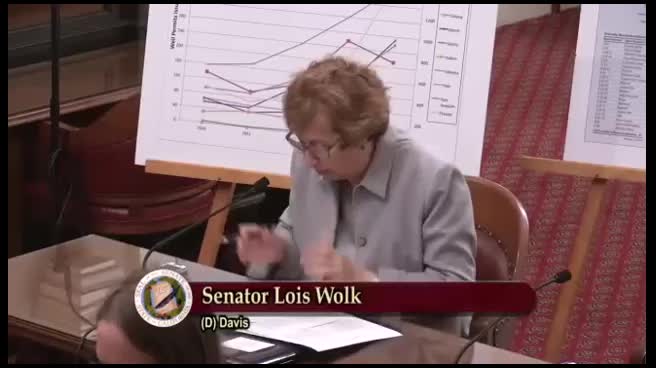 33MIN
Senate Standing Committee on Governance and Finance
 34MIN
Senate Standing Committee on Natural Resources and Water
Bill Author

Bill Co-Author(s):