SB 1470: Tobacco.
- Session Year: 2015-2016
- House: Senate
- Latest Version Date: 2016-02-19
Existing law, the Stop Tobacco Access to Kids Enforcement (STAKE) Act, imposes civil penalties for a person engaged in the retail sale of tobacco products who sells, offers for sale, or displays for sale of any tobacco product or tobacco paraphernalia by self-service display, except as specified. Existing law makes these penalties inapplicable to the display in a tobacco store of cigars, pipe tobacco, snuff, chewing tobacco, or dipping tobacco, as provided, and defines tobacco store to mean a retail business that meets specified requirements, including that it primarily sells tobacco products.
This bill would revise the definition of tobacco store to include the requirement that it primarily sells tobacco products and tobacco paraphernalia, as defined.
(a)For purposes of this section, the following terms have the following meanings:
(1)Self-service display means the open display of tobacco products or tobacco paraphernalia in a manner that is accessible to the general public without the assistance of the retailer or employee of the retailer.
(2)Tobacco paraphernalia means cigarette papers or wrappers, blunt wraps as defined in Section 308 of the Penal Code, pipes, holders of smoking materials of all types, cigarette rolling machines, or other instruments or things designed for the smoking or ingestion of tobacco products.
(3)Tobacco product means any product containing tobacco leaf, including, but not limited to, cigarettes, cigars, pipe tobacco, snuff, chewing tobacco, dipping tobacco, bidis, or any other preparation of tobacco.
(4)Tobacco store means a retail business that meets all of the following requirements:
(A)Primarily sells tobacco products. products and tobacco paraphernalia.
(B)Generates more than 60 percent of its gross revenues annually from the sale of tobacco products and tobacco paraphernalia.
(C)Does not permit any person under 18 years of age to be present or enter the premises at any time, unless accompanied by the persons parent or legal guardian, as defined in Section 6903 of the Family Code.
(D)Does not sell alcoholic beverages or food for consumption on the premises.
(b)(1)(A)Except as permitted in subdivision (b) of Section 22960, it is unlawful for a person engaged in the retail sale of tobacco products to sell, offer for sale, or display for sale any tobacco product or tobacco paraphernalia by self-service display. A person who violates this section is subject to those civil penalties specified in the schedule in subdivision (a) of Section 22958.
(B)A person who violates this section is subject to those civil penalties specified in the schedule in subdivision (a) of Section 22958.
(2)It is unlawful for a person engaged in the retail sale of blunt wraps to place or maintain, or to cause to be placed or maintained, any blunt wraps advertising display within two feet of candy, snack, or nonalcoholic beverage displayed inside any store or business.
(3)It is unlawful for any person or business to place or maintain, or cause to be placed or maintained, any blunt wrap advertising display that is less than four feet above the floor.
(c)Subdivision (b) shall not apply to the display in a tobacco store of cigars, pipe tobacco, snuff, chewing tobacco, or dipping tobacco, provided that in the case of cigars they are generally not sold or offered for sale in a sealed package of the manufacturer or importer containing less than six cigars. In any enforcement action brought pursuant to this division, the retail business that displays any of the items described in this subdivision in a self-service display shall have the burden of proving that it qualifies for the exemption established in this subdivision.
(d)The Attorney General, a city attorney, a county counsel, or a district attorney may bring a civil action to enforce this section.
(e)This section does not preempt or otherwise prohibit the adoption of a local standard that imposes greater restrictions on the access to tobacco products than the restrictions imposed by this section. To the extent that there is an inconsistency between this section and a local standard that imposes greater restrictions on the access to tobacco products, the greater restriction on the access to tobacco products in the local standard shall prevail.
|
Date
|
Status
|
|---|---|
| Feb 19, 2016 | Introduced. To Com. on RLS. for assignment. To print. |
| Feb 22, 2016 | From printer. May be acted upon on or after March 23. |
| Feb 22, 2016 | Read first time. |
| Mar 10, 2016 | Referred to Coms. on B., P. & E.D. and APPR. |
| Mar 11, 2016 | Set for hearing April 11. |
| Apr 12, 2016 | From committee: Do pass and re-refer to Com. on APPR. (Ayes 6. Noes 1. Page 3492.) (April 11). Re-referred to Com. on APPR. |
| Apr 12, 2016 | From committee: Do pass and re-refer to Com. on APPR. (Ayes 6. Noes 1.) (April 11). Re-referred to Com. on APPR. |
| Apr 15, 2016 | Set for hearing April 25. |
| Apr 25, 2016 | From committee: Be ordered to second reading pursuant to Senate Rule 28.8. |
| Apr 26, 2016 | Read second time. Ordered to third reading. |
| Apr 28, 2016 | In Assembly. Read first time. Held at Desk. |
| Apr 28, 2016 | Read third time. Passed. (Ayes 25. Noes 10. Page 3711.) Ordered to the Assembly. |
| Apr 28, 2016 | Read third time. Passed. (Ayes 25. Noes 10.) Ordered to the Assembly. |
| Jun 13, 2016 | Referred to Coms. on B. & P. and G.O. |
|
Date
|
Description
|
Location
|
Votes
|
|
|---|---|---|---|---|
| Apr 28, 2016 | Senate 3rd Reading SB1470 Wieckowski | Senate Floor |
Passed |
|
| Apr 11, 2016 | Do pass, but first be re-referred to the Committee on [Appropriations] | Senate Standing Committee on Business, Professions and Economic Development |
Passed |
This list shows positions taken on this bill by organizations on the date displayed, which is linked to the original source.
Positions by individuals are not included.
Office of Senate Floor Analyses (916) 651-1520 Fax: (916) 327-4478 | SB |
THIRD READING
Bill No: SB 1470
:
SENATE BUS, PROF. & ECON. DEV. COMMITTEE: 6-1, 4/11/16
AYES: Hill, Block, Hernandez, Jackson, Mendoza, Wieckowski
NOES: Berryhill
NO VOTE RECORDED: Bates, Galgiani
SENATE APPROPRIATIONS COMMITTEE: Senate Rule 28.8
DIGEST: This bill revises a definitional requirement of “tobacco store” to indicate that a retail business primarily sells tobacco products and tobacco paraphernalia.
Existing law:
- Defines a “tobacco store”, under the Stop Tobacco Access to Kids Enforcement Act, as a retail business that meets the following requirements: (Business and Professions Code (BPC) § 22962(4)(A))
- Primarily sells tobacco products.
- Generates more than 60 percent of its gross revenues annually from the sale of tobacco products and tobacco paraphernalia.
- Does not permit any person under 18 years of age to be present or enter the premises at any time, unless accompanied by the person’s parent or legal guardian, as defined in Family Code § 6903.
- Does not sell alcoholic beverages or food for consumption on the premises.
- Establishes the Cigarette and Tobacco Products Licensing Act, which outlines the licensing requirements on all retailers, wholesalers, and distributors of cigarettes and tobacco products, and all manufacturers and importers of cigarettes. (BPC § 22970 et seq.)
- Requires the State Board of Equalization (BOE), under the Cigarette and Tobacco Products Licensing Act, to administer a statewide program to license cigarette and tobacco products manufacturers, importers, distributors, wholesalers, and retailers. (BPC § 22970.2)
- Defines “retail location” as both any building from which cigarettes or tobacco products are sold at retail and a vending machine. (BPC § 22971(q))
- Requires a retailer, for purposes of collecting a tobacco tax, to obtain a separate license for each retail location that sells cigarettes and tobacco products and pay a one-time fee of $100. (BPC § 22973(7)(d))
- Prohibits selling tobacco products without a valid license, and makes violations punishable as a misdemeanor. (BPC § 22980.2; 22981)
This bill revises a definitional requirement of “tobacco store” to indicate that a retail business primarily sells tobacco products and tobacco paraphernalia.
Background
License for Retailers. Through AB 71 (Jerome Horton, Chapter 890, Statutes of 2003), the State of California enacted the Cigarette and Tobacco Products Licensing Act, which established a statewide licensing program under the Business and Professions Code (BPC § 22970 et seq.). The Act imposed licensing requirements on all retailers, wholesalers, and distributors of cigarettes and tobacco products, and all manufacturers and importers of cigarettes. These licensing requirements are in addition to the permits and licenses that may be required depending on the individual’s business operations. The Act, intended to decrease tax evasion on the sales of cigarettes and tobacco products in California, also included provisions for new recordkeeping requirements, inspection and seizure of any untaxed cigarettes or tobacco products, and imposed civil and criminal penalties for violations.
Every retailer who sells or will sell cigarettes or tobacco products in California is required to obtain a retailer's license from the BOE. An individual must obtain a license for each retail location they own or operate. For example, if a person operates several different stores, which each sell cigarettes or tobacco products, they must obtain a separate license for each store location. However, a person may submit a single application for multiple licenses, and include $100 for each location's license (BPC § 22972 (a)). The license is valid for one year and must be renewed annually. There is no additional charge to renew a license.
There are severe penalties of up to $5,000, or up to one year imprisonment in the county jail, or both the fine and imprisonment if an individual is caught selling cigarettes or tobacco products without a license (BPC § 22972(a); 22980.1(h); 22981).
FISCAL EFFECT: Appropriation: Fiscal Com.: Local:
None received
OPPOSITION: (Verified 4/25/16)
None received
4/27/16 15:57:33
**** END ****
SENATE COMMITTEE ON
BUSINESS, PROFESSIONS AND ECONOMIC DEVELOPMENT
Senator Jerry Hill, Chair
2015 - 2016 Regular
Bill No: SB 1470 Hearing Date: April 11, 2016
Author: | Wieckowski | ||
Version: |
| ||
Urgency: | Fiscal: | ||
Consultant: | |||
Subject: Tobacco
SUMMARY:
Revises a definitional requirement of “tobacco store” to indicate that a retail business primarily sells tobacco products and tobacco paraphernalia.
Existing law:
- Defines a “tobacco store”, under the Stop Tobacco Access to Kids Enforcement Act, as a retail business that meets the following requirements: (Business and Professions Code (BPC) § 22962(4)(A))
- Primarily sells tobacco products.
- Generates more than 60 percent of its gross revenues annually from the sale of tobacco products and tobacco paraphernalia.
- Does not permit any person under 18 years of age to be present or enter the premises at any time, unless accompanied by the person’s parent or legal guardian, as defined in Family Code § 6903.
- Does not sell alcoholic beverages or food for consumption on the premises.
- Establishes the Cigarette and Tobacco Products Licensing Act, which outlines the licensing requirements on all retailers, wholesalers, and distributors of cigarettes and tobacco products, and all manufacturers and importers of cigarettes.
(BPC § 22970 et seq.) - Requires the State Board of Equalization (BOE), under the Cigarette and Tobacco Products Licensing Act, to administer a statewide program to license cigarette and tobacco products manufacturers, importers, distributors, wholesalers, and retailers. (BPC § 22970.2)
- Defines “retail location” as both any building from which cigarettes or tobacco products are sold at retail and a vending machine. (BPC § 22971(q))
- Requires a retailer, for purposes of collecting a tobacco tax, to obtain a separate license for each retail location that sells cigarettes and tobacco products and pay a one-time fee of $100. (BPC § 22973(7)(d))
- Prohibits selling tobacco products without a valid license, and makes violations punishable as a misdemeanor. (BPC § 22980.2; 22981)
This bill: Revises a definitional requirement of “tobacco store” to indicate that a retail business primarily sells tobacco products and tobacco paraphernalia.
FISCAL EFFECT:
None. This bill is not keyed fiscal by Legislative Counsel.
COMMENTS:
- Purpose. The Author is the sponsor of the bill. According to the Author, “SB 1470 is a companion bill to SB 1400. With this in mind, this bill seeks to build on SB 1400 to further specify where tobacco products can be purchased.”
- Background. While California boasts the second-lowest smoking rate in the nation, tobacco-related diseases still claim the lives of 40,000 Californians every year. The state has worked successfully to discourage people from smoking; however, tobacco products are easily available in a gas station or grocery store. Unlike tobacco shops, there are no age restrictions on entering a gas station or grocery store. Consequently, tobacco products sold in these stores are visible and easily available to minors to purchase. Tobacco advertising is also commonplace at many retail locations.
A 2004 Stanford University study found that cigarettes are marketed more heavily in stores where adolescents shop – particularly the cigarette brands most popular with adolescent smokers. The report underscores that, “Compared to other stores in the same community, stores popular among adolescents displayed more than three times as many cigarette marketing materials outside, and contained almost three times more marketing materials and twice as much shelf space for Marlboro, Camel, and Newport. These three brands account for more than 80% of the cigarettes bought by US adolescents.”
- License for Retailers. Through AB 71 (Jerome Horton, Chapter 890, Statutes of 2003), the State of California enacted the Cigarette and Tobacco Products Licensing Act, which established a statewide licensing program under the Business and Professions Code (BPC § 22970 et seq.). The Act imposed licensing requirements on all retailers, wholesalers, and distributors of cigarettes and tobacco products, and all manufacturers and importers of cigarettes. These licensing requirements are in addition to the permits and licenses that may be required depending on the individual’s business operations. The Act, intended to decrease tax evasion on the sales of cigarettes and tobacco products in California, also included provisions for new recordkeeping requirements, inspection and seizure of any untaxed cigarettes or tobacco products, and imposed civil and criminal penalties for violations.
Every retailer who sells or will sell cigarettes or tobacco products in California is required to obtain a retailer's license from the BOE. An individual must obtain a license for each retail location they own or operate. For example, if a person operates several different stores, which each sell cigarettes or tobacco products, they must obtain a separate license for each store location. However, a person may submit a single application for multiple licenses, and include $100 for each location's license (BPC § 22972 (a)). The license is valid for one year and must be renewed annually. There is no additional charge to renew a license.
There are severe penalties of up to $5,000, or up to one year imprisonment in the county jail, or both the fine and imprisonment if an individual is caught selling cigarettes or tobacco products without a license (BPC § 22972(a); 22980.1(h); 22981).
- Tobacco Products Banned from Pharmacies. In 2008, San Francisco became the first city in the United States to ban the sale of tobacco products from retail pharmacies. The Author reports that San Francisco has “since expanded the law to apply to all stores containing pharmacies, such as Costco. One hundred six cities have since joined San Francisco in passing tobacco-free pharmacy laws.”
Additionally, CVS has announced that it will ban tobacco products from all of its stores.
- The Potential Impacts of Expanding the Definition of “Tobacco Store”. As mentioned in the analysis for SB 1400 (Wieckowski) of 2016, SB 1400 would prohibit retailers from selling cigarettes and tobacco products in retail locations by revising the definition of “retail location” to mirror that of “tobacco store”. This bill builds on that measure and further limits the sale of tobacco paraphernalia. SB 1400 (Wieckowski) and this measure are meant to complement each other.
- Related and Prior Legislation. SB 1400 () of 2016 recasts the definition of “retail location” as a tobacco store that is a retail business that, among other things, generates more than 60% of its gross revenues annually from the sale of tobacco products and tobacco paraphernalia. (Status: This bill is currently set to be heard in this committee on April 11, 2016.)
SBX2 – 5 (Leno) of 2015 recasts and broadens the definition of “tobacco product” in current law to include electronic cigarettes, as specified; extends current restrictions and prohibitions against the use of tobacco products to electronic cigarettes; extends current licensing requirements for manufacturers, importers, distributors, wholesalers, and retailers of tobacco products to electronic cigarettes; and requires electronic cigarette cartridges to be child-resistant. (Status: This bill is currently in engrossing and enrolling, pending the Governor’s signature.)
SB X2 – 7 (Hernandez) of 2015 increases the minimum legal age to purchase or consume tobacco from 18 to 21 and makes additional conforming changes to restrictions and enforcement mechanisms in current law. (Status: This bill is currently in engrossing and enrolling, pending the Governor’s signature.)
SB X2 – 10 (Beall) of 2015 revised the Cigarette and Tobacco Products Licensing Act of 2003 to change the retailer license fee from a $100 one-time fee to a $265 annual fee, and increased the distributor and wholesaler license fee from $1,000 to $1,200. (Status: This bill was held at the Assembly desk.)
SB 24 (Hill) of 2015 would have classified electronic cigarettes separately from tobacco products, added electronic cigarettes to the Stop Tobacco Access to Kids Enforcement Act, and smoking location prohibitions, and mandated childproof packaging for e-liquid used in electronic cigarettes. (Status: This bill was ultimately amended to deal with the California Public Employees’ Pension Reform Act of 2013.)
ABX2 – 6 (Cooper) of 2015 defined the term smoking for purposes of the Stop Tobacco Access to Kids Enforcement Act, expanded the definition of a tobacco product to include electronic cigarettes (e-cigarettes), and extended current restrictions and prohibitions against the use of tobacco products to electronic cigarettes. The bill further extended current licensing requirements for manufacturers, importers, distributors, wholesalers, and retailers of tobacco products to electronic cigarettes. (Status: This bill was never heard on the Assembly Floor.)
AB 1500 (Dickinson) of 2014 would have prohibited a delivery seller, as defined, from selling or delivering an electronic cigarette to a person under 18 years of age . (Status AB 1500 failed passage in the Assembly Appropriations Committee.)
SB 568 (Steinberg, Chapter 336, Statues of 2013) prohibits an operator of an Internet Web site, online service, online application, or mobile application, as specified, from marketing or advertising electronic cigarettes to a minor.
SB 648 (Corbett) of 2013 would have restricted electronic cigarettes from being sold in vending machines. (Status: SB 648 failed passage in the Assembly Appropriations Committee.)
SB 882 (Corbett, Chapter 312, Statutes of 2010) made it unlawful, to the extent not preempted by federal law, for a person to sell or otherwise furnish an electronic cigarette to a person less than 18 years of age.
SJR 8 (Corbett) of 2009 would have requested that the FDA prohibit sale of electronic cigarettes until they are deemed safe. (Status: SJR8 failed passage in the Assembly.)
SUPPORT AND OPPOSITION:
Support:
None on file as of April 4, 2016.
Opposition:
None on file as of April 4, 2016.
-- END --
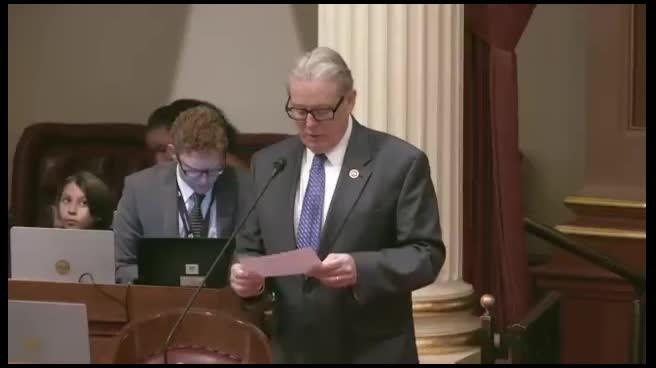
Bill Author
Bill Co-Author(s):