SB 38: Personal income taxes: earned income credit.
- Session Year: 2015-2016
- House: Senate
- Latest Version Date: 2015-06-02
(1)The
The Personal Income Tax Law allows various credits against the taxes imposed by that law, including certain credits that are allowed in modified conformity to credits allowed by federal income tax laws. Federal income tax laws allow a refundable earned income tax credit for certain low-income individuals who have earned income and who meet certain other requirements.
This bill, for taxable years beginning on or after January 1, 2016, and before January 1, 2027, would allow a credit based upon earned income that is equal to 30% for eligible individuals with qualifying children and 100% for eligible individuals with no qualifying children, as specified, of the earned income tax credit allowed by federal law. If the amount allowable as a credit exceeds tax liability, the bill would require the excess to be credited against other amounts due, if any, and the balance, if any, to be carried forward, or, upon appropriation by the Legislature, be paid from the General Fund and refunded to the eligible individual. The bill would require the Franchise Tax Board to report to the Legislature regarding the utilization of the tax credit, as provided. 2015, in modified conformity with federal income tax laws, would allow a refundable earned income credit to an eligible individual that is equal to the earned income tax credit allowed by federal law in an amount determined by the earned income tax credit adjustment factor as determined in the annual Budget Act.
This bill would also require the Franchise Tax Board to establish a pilot program to allow eligible individuals to secure advance payments of the aforementioned credit. The bill would make the pilot program applicable to taxable years beginning on or after January 1, 2017, and before January 1, 2019, where an employer and an eligible individual have agreed to participate in the pilot program. The bill would require the Franchise Tax Board to study and report on the pilot program by a specified date.
(2)Existing law establishes the California Tax Education Council, a nonprofit organization, and requires the council to register and regulate tax preparers. Existing law requires the council to issue a certificate of completion to the tax preparer when the tax preparer demonstrates that he or she has completed basic tax instruction from an approved curriculum provider. Existing law also requires a tax preparer to annually complete continuing education from an approved curriculum provider. Except as provided, a violation of the provisions governing tax preparers is a crime.
This bill, for purposes of basic instruction and continuing education, would require an approved curriculum provider to include instruction for preparing taxes for a taxpayer who is an eligible individual and meets the requirements for the state earned income tax credit, as described above. Because a violation of these requirements would constitute a crime, the bill would impose a state-mandated local program.
The California Constitution requires the state to reimburse local agencies and school districts for certain costs mandated by the state. Statutory provisions establish procedures for making that reimbursement.
This bill would provide that no reimbursement is required by this act for a specified reason.
Existing law establishes the continuously appropriated Tax Relief and Refund Account, and provides that payments required to be made to taxpayers or other persons from the Personal Income Tax Fund are to be paid from that account.
By authorizing a new, refundable income tax credit to be paid from that account, this bill would make an appropriation.
The Personal Income Tax Law imposes taxes based upon taxable income and also imposes interest and penalties with regard to those taxes under specified circumstances, including a penalty for the underpayment of estimated tax. Existing law provides no addition to tax shall be imposed to the extent that the underpayment was created or increased by any law that is chaptered during and operative for the taxable year of the underpayment.
This bill would provide that addition to tax shall not be imposed if the applicable percentage for the earned income tax credit for the taxable year was less than the applicable percentage for that credit for the preceding taxable year and would impose a penalty, in conformity with federal law, for failure to be diligent in determining eligibility for the earned income tax credit, as specified.
(1)The Personal Income Tax Law allows various credits against the taxes imposed by that law, including certain credits that are allowed in modified conformity to credits allowed by federal income tax laws.
This bill, for taxable years beginning on or after January 1, 2016, and before January 1, 2027, would allow a credit based upon earned income that is equal to 30% for eligible individuals with qualifying children and 100% for eligible individuals with no qualifying children, as specified, of the earned income tax credit allowed by federal law. If the amount allowable as a credit exceeds tax liability, the bill would require the excess to be credited against other amounts due, if any, and the balance, if any, to be carried forward, or, upon appropriation by the Legislature, be paid from the General Fund and refunded to the eligible individual. The bill would require the Franchise Tax Board to report to the Legislature regarding the utilization of the tax credit, as provided.
This bill would also require the Franchise Tax Board to establish a pilot program to allow eligible individuals to secure advance payments of the aforementioned credit. The bill would make the pilot program applicable to taxable years beginning on or after January 1, 2017, and before January 1, 2019, where an employer and an eligible individual have agreed to participate in the pilot program. The bill would require the Franchise Tax Board to study and report on the pilot program by a specified date.
(2)Existing law establishes the California Tax Education Council, a nonprofit organization, and requires the council to register and regulate tax preparers. Existing law requires the council to issue a certificate of completion to the tax preparer when the tax preparer demonstrates that he or she has completed basic tax instruction from an approved curriculum provider. Existing law also requires a tax preparer to annually complete continuing education from an approved curriculum provider. Except as provided, a violation of the provisions governing tax preparers is a crime.
This bill, for purposes of basic instruction and continuing education, would require an approved curriculum provider to include instruction for filing preparing taxes for a taxpayer who is an eligible individual and meets the requirements for the state earned income tax credit, as described above. Because a violation of these requirements would constitute a crime, the bill would impose a state-mandated local program.
The California Constitution requires the state to reimburse local agencies and school districts for certain costs mandated by the state. Statutory provisions establish procedures for making that reimbursement.
This bill would provide that no reimbursement is required by this act for a specified reason.
The
(1)The Personal Income Tax Law allows various credits against the taxes imposed by that law, including certain credits that are allowed in modified conformity to credits allowed by federal income tax laws.
This bill would, bill, for taxable years beginning on or after January 1, 2016, and before January 1, 2027, would allow a credit based upon earned income that is equal to 15% 30% for eligible individuals with qualifying children and 100% for eligible individuals with no qualifying children, as specified, of the earned income tax credit allowed by federal law. If the amount allowable as a credit exceeds tax liability, the bill would require the excess to be credited against other amounts due, if any, and the balance, if any, to be carried forward, or, upon appropriation by the Legislature, be paid from the General Fund and refunded to the eligible individual. The bill would require the Franchise Tax Board to report to the Legislature regarding the utilization of the tax credit, as provided.
This bill would take effect immediately as a tax levy.
This bill would also require the Franchise Tax Board to establish a pilot program to allow eligible individuals to secure advance payments of the aforementioned credit. The bill would make the pilot program applicable to taxable years beginning on or after January 1, 2017, and before January 1, 2019, where an employer and an eligible individual have agreed to participate in the pilot program. The bill would require the Franchise Tax Board to study and report on the pilot program by a specified date.
(2)Existing law establishes the California Tax Education Council, a nonprofit organization, and requires the council to register and regulate tax preparers. Existing law requires the council to issue a certificate of completion to the tax preparer when the tax preparer demonstrates that he or she has completed basic tax instruction from an approved curriculum provider. Existing law also requires a tax preparer to annually complete continuing education from an approved curriculum provider. Except as provided, a violation of the provisions governing tax preparers is a crime.
This bill, for purposes of basic instruction and continuing education, would require an approved curriculum provider to include instruction for filing taxes for a taxpayer who is an eligible individual and meets the requirements for the state earned income tax credit, as described above. Because a violation of these requirements would constitute a crime, the bill would impose a state-mandated local program.
The California Constitution requires the state to reimburse local agencies and school districts for certain costs mandated by the state. Statutory provisions establish procedures for making that reimbursement.
This bill would provide that no reimbursement is required by this act for a specified reason.
The Personal Income Tax Law allows various credits against the taxes imposed by that law, including certain credits that are allowed in modified conformity to credits allowed by federal income tax laws.
This bill would, for taxable years beginning on or after January 1, 2016, and before January 1, 2027, allow a credit based upon earned income that is equal to 15% of the earned income tax credit allowed by federal law. The bill would require the Franchise Tax Board to report to the Legislature regarding the utilization of the tax credit, as provided.
This bill would take effect immediately as a tax levy.
(a)(1)For each taxable year beginning on or after January 1, 2015, there shall be allowed against the net tax, as defined by Section 17039, an earned income tax credit in an amount equal to an amount determined in accordance with Section 32 of the Internal Revenue Code, relating to earned income, as applicable for federal income tax purposes for the taxable year, except as otherwise provided in this section.
(2)(A)The amount of the credit determined under Section 32 of the Internal Revenue Code, relating to earned income, as modified by this section, shall be multiplied by the earned income tax credit adjustment factor for the taxable year.
(B)Unless otherwise specified in the annual Budget Act, the earned income tax credit adjustment factor for a taxable year beginning on or after January 1, 2015, shall be zero percent.
(C)The earned income tax credit authorized by this section shall only be operative for taxable years for which resources are authorized in the annual Budget Act for the Franchise Tax Board to oversee and audit returns associated with the credit.
(b)(1)In lieu of the table prescribed in Section 32(b)(1) of the Internal Revenue Code, relating to percentages, the credit percentage and the phaseout percentage shall be determined as follows:
In the case of an eligible individual with: | The credit percentage is: | The phaseout percentage is: |
No qualifying children | 7.65% | 7.65% |
1 qualifying child | 34% | 34% |
2 or more qualifying children | 40% | 40% |
(2)(A)In lieu of the table prescribed in Section 32(b)(2)(A) of the Internal Revenue Code, the earned income amount and the phaseout amount shall be determined as follows:
In the case of an eligible individual with: | The earned income amount is: | The phaseout amount is: |
No qualifying children | $3,290 | $3,290 |
1 qualifying child | $4,940 | $4,940 |
2 or more qualifying children | $6,935 | $6,935 |
(B)Section 32(b)(2)(B) of the Internal Revenue Code, relating to joint returns, shall not apply.
(3)Section 32(b)(3)(A) of the Internal Revenue Code, relating to increased percentage for 3 or more qualifying children, is modified by substituting the credit percentage and phaseout percentage is 45 percent for the credit percentage is 45 percent.
(c)(1)Section 32(c)(1)(A)(ii)(I) of the Internal Revenue Code is modified by substituting this state for the United States.
(2)Section 32(c)(2)(A) of the Internal Revenue Code is modified as follows:
(A)Section 32(c)(2)(A)(i) is modified by deleting , plus and inserting in lieu thereof the following: and only if such amounts are subject to withholding pursuant to Division 6 (commencing with Section 13000) of the Unemployment Insurance Code.
(B)Section 32(c)(2)(A)(ii) shall not apply.
(3)Section 32(c)(3)(C) of the Internal Revenue Code, relating to place of abode, is modified by substituting this state for the United States.
(d)Section 32(i)(1) of the Internal Revenue Code is modified by substituting $3,400 for $2,200.
(e)In lieu of Section 32(j) of the Internal Revenue Code, relating to inflation adjustments, for taxable years beginning on or after January 1, 2016, the amounts specified in paragraph (2) of subdivision (b) and in subdivision (d) shall be recomputed annually in the same manner as the recomputation of income tax brackets under subdivision (h) of Section 17041.
(f)If the amount allowable as a credit under this section exceeds the tax liability computed under this part for the taxable year, the excess shall be credited against other amounts due, if any, and the balance, if any, shall be paid from the Tax Relief and Refund Account and refunded to the taxpayer.
(g)The Franchise Tax Board may prescribe rules, guidelines, or procedures necessary or appropriate to carry out the purposes of this section. Chapter 3.5 (commencing with Section 11340) of Part 1 of Division 3 of Title 2 of the Government Code shall not apply to any rule, guideline, or procedure prescribed by the Franchise Tax Board pursuant to this section.
(h)Notwithstanding any other law, amounts refunded pursuant to this section shall be treated in the same manner as the federal earned income refund for the purpose of determining eligibility to receive benefits under Division 9 (commencing with Section 10000) of the Welfare and Institutions Code or amounts of those benefits.
(i)(1)For the purpose of implementing the credit allowed by this section for the 2015 taxable year, the Franchise Tax Board shall be exempt from the following:
(A)Special Project Report requirements under State Administrative Manual Sections 4819.36, 4945, and 4945.2.
(B)Special Project Report requirements under Statewide Information Management Manual Section 30.
(C)Section 11.00 of the 2015 Budget Act.
(D)Sections 12101, 12101.5, and 12102, and 12102.1 of the Public Contract Code.
(2)The Franchise Tax Board shall formally incorporate the scope, costs, and schedule changes associated with the implementation of the credit allowed by this section in its next anticipated Special Project Report for its Enterprise Data to Revenue project.
SEC. 2.Section 19136 of the Revenue and Taxation Code is amended to read:19136.(a)Section 6654 of the Internal Revenue Code, relating to failure by an individual to pay estimated income tax, shall apply, except as otherwise provided.
(b)Section 6654(a)(1) of the Internal Revenue Code is modified to refer to the rate determined under Section 19521 in lieu of Section 6621 of the Internal Revenue Code.
(c)(1)Section 6654(e)(1) of the Internal Revenue Code, relating to exceptions where the tax is a small amount, does not apply.
(2)No addition to the tax shall be imposed under this section if the tax imposed under Section 17041 or 17048 and the tax imposed under Section 17062 for the preceding taxable year, minus the sum of any credits against the tax provided by Part 10 (commencing with Section 17001) or this part, or the tax computed under Section 17041 or 17048 upon the estimated income for the taxable year, minus the sum of any credits against the tax provided by Part 10 (commencing with Section 17001) or this part, is less than five hundred dollars ($500), except in the case of a separate return filed by a married person the amount shall be less than two hundred fifty dollars ($250).
(d)Section 6654(f) of the Internal Revenue Code does not apply and for purposes of this section the term tax means the tax imposed under Section 17041 or 17048 and the tax imposed under Section 17062 less any credits against the tax provided by Part 10 (commencing with Section 17001) or this part, other than the credit provided by subdivision (a) of Section 19002.
(e)(1)The credit for tax withheld on wages, as specified in Section 6654(g) of the Internal Revenue Code, is the credit allowed under subdivision (a) of Section 19002.
(2)(A)Section 6654(g)(1) of the Internal Revenue Code is modified by substituting the phrase the applicable percentage for the phrase an equal part.
(B)For purposes of this paragraph, applicable percentage means the percentage amount prescribed under Section 6654(d)(1)(A) of the Internal Revenue Code, as modified by subdivision (a) of Section 19136.1.
(f)This section applies to a nonresident individual.
(g)(1)No addition to tax shall be imposed under this section to the extent that the underpayment was created or increased by any law that is chaptered during and operative for the taxable year of the underpayment. either of the following:
(A)Any law that is chaptered during and operative for the taxable year of the underpayment.
(B)If, for a taxable year prior to its repeal, the adjustment factor for the credit authorized by Section 17052 for the taxable year was less than the adjustment factor for that credit for the preceding taxable year.
(2)(A)Notwithstanding Section 18415, this section subparagraph (A) of paragraph (1) applies to penalties imposed under this section on and after January 1, 2005.
(B)Notwithstanding Section 18415, subparagraph (B) of paragraph (1) applies to penalties imposed under this section on or after January 1, 2016.
(h)The amendments made to this section by Section 5 of Chapter 305 of the Statutes of 2008 apply to taxable years beginning on or after January 1, 2009.
(i)The amendments made to this section by the act adding this subdivision Section 3 of Chapter 15 of the 4th Extraordinary Session of the Statutes of 2009 apply to amounts withheld on wages beginning on or after January 1, 2009.
SEC. 3.Section 19167 of the Revenue and Taxation Code is amended to read:19167.A penalty shall be imposed under this section for any of the following:
(a)In accordance with Section 6695(a) of the Internal Revenue Code, for failure to furnish a copy of the return to the taxpayer, as required by Section 18625.
(b)In accordance with Section 6695(c) of the Internal Revenue Code, for failure to furnish an identifying number, as required by Section 18624.
(c)In accordance with Section 6695(d) of the Internal Revenue Code, for failure to retain a copy or list, as required by Section 18625 or for failure to retain an electronic filing declaration, as required by Section 18621.5.
(d)Failure to register as a tax preparer with the California Tax Education Council, as required by Section 22253 of the Business and Professions Code, unless it is shown that the failure was due to reasonable cause and not due to willful neglect.
(1)The amount of the penalty under this subdivision for the first failure to register is two thousand five hundred dollars ($2,500). This penalty shall be waived if proof of registration is provided to the Franchise Tax Board within 90 days from the date notice of the penalty is mailed to the tax preparer.
(2)The amount of the penalty under this subdivision for a failure to register, other than the first failure to register, is five thousand dollars ($5,000).
(e)The Franchise Tax Board shall not impose the penalties authorized by subdivision (d) until either one of the following has occurred:
(1)Commencing January 1, 2006, and continuing each year thereafter, there is an appropriation in the Franchise Tax Boards annual budget to fund the costs associated with the penalty authorized by subdivision (d).
(2)(A)An agreement has been executed between the California Tax Education Council and the Franchise Tax Board that provides that an amount equal to all first year costs associated with the penalty authorized by subdivision (d) shall be received by the Franchise Tax Board. For purposes of this subparagraph, first year costs include, but are not limited to, costs associated with the development of processes or systems changes, if necessary, and labor.
(B)An agreement has been executed between the California Tax Education Council and the Franchise Tax Board that provides that the annual costs incurred by the Franchise Tax Board associated with the penalty authorized by subdivision (d) shall be reimbursed by the California Tax Education Council to the Franchise Tax Board.
(C)Pursuant to the agreement described in subparagraph (A), the Franchise Tax Board has received an amount equal to the first year costs described in that subparagraph.
(f)In accordance with Section 6695(g) of the Internal Revenue Code, for failure to be diligent in determining eligibility for earned income credit for returns required to be filed on or after the effective date of the act adding this subdivision.
SEC. 4.It is the intent of the Legislature to enact legislation, as required by Section 41 of the Revenue and Taxation Code, to specify the goals, purposes, and objectives that the tax credit allowed by Section 17052 of the Revenue and Taxation Code will achieve along with indicators and data collected to measure whether the tax credit implemented by this act achieves the intended purpose.
SECTION 1.The Legislature finds and declares all of the following:
(a)In its Supplemental Poverty Measure report for the year 2013, released in October 2014, the United States Census Bureau reported Californias rate of poverty to be 23.4 percent. This rate is the highest among all 50 states.
(b)Using census data released in September 2014, the California Budget Project (CBP) reported that the economic recovery from the Great Recession has largely bypassed low- and middle-income Californians, with the bottom three-fifths of the income distribution experiencing stagnating income gains. This is contrasted with the top one-fifth of the income distribution experiencing gains of 52.4 percent.
(c)A briefing on poverty released by the CBP in August 2014 reports that 67 percent of families living in poverty were supported by one or more workers in 2012. Given that the majority of families living in poverty are working families in California, it is evident that poverty largely reflects low-paying jobs, not the absence of employment.
(d)In California, the Public Policy Institute of California (PPIC), in collaboration with the Stanford Center on Poverty and Inequality, has developed the California Poverty Measure (CPM), which underscores the role of Californias social safety net amount, which includes the CalFresh Program, CalWORKs, and the federal Earned Income Tax Credit (EITC), in mitigating poverty.
(e)Using data from 2011, a PPIC report on the CPM released in October 2013, reveals that 22 percent of Californians, 8.1 million people, lived in poverty. A comparison of CPM rates by county show that the three most populous counties, Los Angeles County, San Diego County, and Orange County, all had rates above the statewide CPM at 26.9 percent, 22.7 percent, and 24.3 percent, respectively.
(f)The CPM rate for children statewide, those under 18 years of age, was 25.1 percent, the highest rate of any age group. This amounts to 2.3 million of Californias children living in poverty.
(g)Without need-based safety net programs and resources, over 30 percent of Californians would be living in poverty. The absence of the safety net would increase the poverty rate among Californias children to 39 percent according to the CPM.
(h)Refundable tax credits, including the federal EITC, reduced the poverty rate in California by 3.2 percent overall. Among children, the poverty rate reduction was 6 percent. This means that 560,000 fewer children and 600,000 fewer working-age adults, 1.16 million people fewer in total, are living in poverty when refundable tax credits are accounted for in the CPM.
(i)According to the National Conference of State Legislatures, 25 states in the country and the District of Columbia, provide an EITC in addition to the federal EITC. California does not currently have a state EITC.
(j)A Brookings Institution report issued in January 2003, shows that in addition to boosting the family incomes of families in poverty, state EITC refunds served as an important economic stimulus for the communities and regions of the families by magnifying the impact of the federal EITC overall.
SEC. 2.Section 22255.5 is added to the Business and Professions Code, to read:22255.5.For purposes of basic instruction and continuing education as described in subdivisions (a) and (b) of Section 22255, an approved curriculum provider shall include instruction for preparing taxes for a taxpayer who is an eligible individual and meets the requirements for the state earned income tax credit described in Section 17052.1 of the Revenue and Taxation Code.
SEC. 3.Section 17052.1 is added to the Revenue and Taxation Code, to read:17052.1.(a)For each taxable year beginning on or after January 1, 2016, and before January 1, 2027, there shall be allowed a credit against the net tax, as defined in Section 17039, in an amount computed by multiplying the federal earned income credit amount, as defined in subdivision (b), by 30 percent for eligible individuals with qualifying children and 100 percent for eligible individuals with no qualifying children.
(b)For the purposes of this section, federal earned income credit amount means the amount determined under Section 32 of the Internal Revenue Code, relating to earned income as amended by Section 1002(a) of Public Law 111-5, as amended by Section 219(a)(2) of Public Law 111-226, as amended by Section 103(c) of Public Law 111-312, and as amended by Section 103(c) of Public Law 112-240.
(c)For the purposes of this section, an eligible individual shall have the same meaning as in Section 32(c)(1) of the Internal Revenue Code, except that Section 32(c)(1)(A)(ii)(II) of the Internal Revenue Code is modified to substitute age 21 for age 25.
(d)(1)Except as provided in paragraph (2), in the case where the credit allowed under this section exceeds net tax, the excess credit may be carried over to reduce the net tax in the following taxable year, and succeeding taxable years, if necessary, until the credit is exhausted.
(2)If the amount allowable as a credit under this section exceeds the tax liability computed under this part for the taxable year, the excess shall be credited against other amounts due, if any, and the balance, if any, shall, upon appropriation by the Legislature, be paid from the General Fund and refunded to the qualified taxpayer.
(e)Any amounts refunded to a taxpayer pursuant to this section shall not be included in income subject to tax under this part.
(f)For an individual who is a nonresident or is a part-year resident of this state, the amount of the credit or refund allowed under this section shall be determined based on the part of the earned income credit allowable for the taxable year that is attributable to California, determined by multiplying the federal earned income credit by a fraction as follows:
(1)The numerator of which is the California adjusted gross income of the individual.
(2)The denominator of which is the federal adjusted gross income of the individual.
(g)Notwithstanding any other provision, for the purpose of determining eligibility to receive benefits under Division 9 (commencing with Section 10000) of the Welfare and Institutions Code or the amounts of those benefits, any refund made to an individual (or the spouse or registered domestic partner of an individual) pursuant to this section, and any payment made to the individual (or the spouse or registered domestic partner) by an employer pursuant to Section 17052.2, shall not be treated as income and shall not be taken into account in determining resources for the month of its receipt and the following month.
(h)(1)Notwithstanding Section 10231.5 of the Government Code, on or before January 1, 2026, the Franchise Tax Board shall submit a report on the utilization of the credit described in subdivision (a) to the Legislature. The report shall include information regarding the effectiveness of the credit, including the amount of the credit claimed, the number of claims made, and an estimate of the amount overclaimed and underclaimed.
(2)The report submitted pursuant to this subdivision shall be submitted in compliance with Section 9795 of the Government Code.
(i)Section 41 does not apply to the credit allowed by this section.
(j)This section is repealed on December 1, 2027.
SEC. 4.Section 17052.2 is added to the Revenue and Taxation Code, to read:17052.2.(a)The Franchise Tax Board shall establish a pilot program to allow eligible individuals to secure advance payments of a credit amount for which they are qualified pursuant to Section 17052.1. The purpose of the pilot program is to study the feasibility and effectiveness of preventing debt and financial hardship among low-income working individuals and families.
(b)The pilot program shall apply to any credits for which a taxpayer is an eligible individual in accordance with Section 17052.1 for taxable years beginning on or after January 1, 2017, and before January 1, 2019, where an employer and an eligible individual have agreed to participate in the pilot program.
(c)(1)Not later than January 1, 2020, the Franchise Tax Board shall study the pilot program and report the findings of the pilot program to the Legislature.
(2)The report submitted pursuant to this subdivision shall be submitted in compliance with Section 9795 of the Government Code.
(d)This section is repealed on December 1, 2020.
SEC. 5.No reimbursement is required by this act pursuant to Section 6 of Article XIIIB of the California Constitution because the only costs that may be incurred by a local agency or school district will be incurred because this act creates a new crime or infraction, eliminates a crime or infraction, or changes the penalty for a crime or infraction, within the meaning of Section 17556 of the Government Code, or changes the definition of a crime within the meaning of Section 6 of Article XIIIB of the California Constitution.
The Legislature finds and declares all of the following:
(a)In its Supplemental Poverty Measure report for the year 2013, released in October 2014, the United States Census Bureau reported Californias rate of poverty to be 23.4 percent. This rate is the highest among all 50 states.
(b)Using census data released in September 2014, the California Budget Project (CBP) reported that the economic recovery from the Great Recession has largely bypassed low- and middle-income Californians, with the bottom three-fifths of the income distribution experiencing stagnating income gains. This is contrasted with the top one-fifth of the income distribution experiencing gains of 52.4 percent.
(c)A briefing on poverty released by the CBP in August 2014 reports that 67 percent of families living in poverty were supported by one or more workers in 2012. Given that the majority of families living in poverty are working families in California, it is evident that poverty largely reflects low-paying jobs, not the absence of employment.
(d)In California, the Public Policy Institute of California (PPIC), in collaboration with the Stanford Center on Poverty and Inequality, has developed the California Poverty Measure (CPM), which underscores the role of Californias social safety net amount, which includes the CalFresh Program, CalWORKs, and the federal Earned Income Tax Credit (EITC), in mitigating poverty.
(e)Using data from 2011, a PPIC report on the CPM released in October 2013, reveals that 22 percent of Californians, 8.1 million people, lived in poverty. A comparison of CPM rates by county show that the three most populous counties, Los Angeles County, San Diego County, and Orange County, all had rates above the statewide CPM at 26.9 percent, 22.7 percent, and 24.3 percent, respectively.
(f)The CPM rate for children statewide, those under 18 years of age, was 25.1 percent, the highest rate of any age group. This amounts to 2.3 million of Californias children living in poverty.
(g)Without need-based safety net programs and resources, over 30 percent of Californians would be living in poverty. The absence of the safety net would increase the poverty rate among Californias children to 39 percent according to the CPM.
(h)Refundable tax credits, including the federal EITC, reduced the poverty rate in California by 3.2 percent overall. Among children, the poverty rate reduction was 6 percent. This means that 560,000 fewer children and 600,000 fewer working-age adults, 1.16 million people fewer in total, are living in poverty when refundable tax credits are accounted for in the CPM.
(i)According to the National Conference of State Legislatures, 25 states in the country and the District of Columbia, provide an EITC in addition to the federal EITC. California does not currently have a state EITC.
(j)A Brookings Institution report issued in January 2003, shows that in addition to boosting the family incomes of families in poverty, state EITC refunds served as an important economic stimulus for the communities and regions of the families by magnifying the impact of the federal EITC overall.
SEC. 2.Section 22255.5 is added to the Business and Professions Code, to read:22255.5.For purposes of basic instruction and continuing education as described in subdivisions (a) and (b) of Section 22255, an approved curriculum provider shall include instruction for preparing taxes for a taxpayer who is an eligible individual and meets the requirements for the state earned income tax credit described in Section 17052.1 of the Revenue and Taxation Code.
SEC. 3.Section 17052.1 is added to the Revenue and Taxation Code, to read:17052.1.(a)For each taxable year beginning on or after January 1, 2016, and before January 1, 2027, there shall be allowed a credit against the net tax, as defined in Section 17039, in an amount computed by multiplying the federal earned income credit amount, as defined in subdivision (b), by 30 percent for eligible individuals with qualifying children and 100 percent for eligible individuals with no qualifying children.
(b)For the purposes of this section, federal earned income credit amount means the amount determined under Section 32 of the Internal Revenue Code, relating to earned income as amended by Section 1002(a) of Public Law 111-5, as amended by Section 219(a)(2) of Public Law 111-226, as amended by Section 103(c) of Public Law 111-312, and as amended by Section 103(c) of Public Law 112-240.
(c)For the purposes of this section, an eligible individual shall have the same meaning as in Section 32(c)(1) of the Internal Revenue Code, except that Section 32(c)(1)(A)(ii)(II) of the Internal Revenue Code is modified to substitute age 21 for age 25.
(d)(1)Except as provided in paragraph (2), in the case where the credit allowed under this section exceeds net tax, the excess credit may be carried over to reduce the net tax in the following taxable year, and succeeding taxable years, if necessary, until the credit is exhausted.
(2)If the amount allowable as a credit under this section exceeds the tax liability computed under this part for the taxable year, the excess shall be credited against other amounts due, if any, and the balance, if any, shall, upon appropriation by the Legislature, be paid from the General Fund and refunded to the qualified taxpayer.
(e)Any amounts refunded to a taxpayer pursuant to this section shall not be included in income subject to tax under this part.
(f)For an individual who is a nonresident or is a part-year resident of this state, the amount of the credit or refund allowed under this section shall be determined based on the part of the earned income credit allowable for the taxable year that is attributable to California, determined by multiplying the federal earned income credit by a fraction as follows:
(1)The numerator of which is the California adjusted gross income of the individual.
(2)The denominator of which is the federal adjusted gross income of the individual.
(g)Notwithstanding any other provision, for the purpose of determining eligibility to receive benefits under Division 9 (commencing with Section 10000) of the Welfare and Institutions Code or the amounts of those benefits, any refund made to an individual (or the spouse or registered domestic partner of an individual) pursuant to this section, and any payment made to the individual (or the spouse or registered domestic partner) by an employer pursuant to Section 17052.2, shall not be treated as income and shall not be taken into account in determining resources for the month of its receipt and the following month.
(h)(1)Notwithstanding Section 10231.5 of the Government Code, on or before January 1, 2026, the Franchise Tax Board shall submit a report on the utilization of the credit described in subdivision (a) to the Legislature. The report shall include information regarding the effectiveness of the credit, including the amount of the credit claimed, the number of claims made, and an estimate of the amount overclaimed and underclaimed.
(2)The report submitted pursuant to this subdivision shall be submitted in compliance with Section 9795 of the Government Code.
(i)Section 41 does not apply to the credit allowed by this section.
(j)This section is repealed on December 1, 2027.
SEC. 4.Section 17052.2 is added to the Revenue and Taxation Code, to read:17052.2.(a)The Franchise Tax Board shall establish a pilot program to allow eligible individuals to secure advance payments of a credit amount for which they are qualified pursuant to Section 17052.1. The purpose of the pilot program is to study the feasibility and effectiveness of preventing debt and financial hardship among low-income working individuals and families.
(b)The pilot program shall apply to any credits for which a taxpayer is an eligible individual in accordance with Section 17052.1 for taxable years beginning on or after taxable years January 1, 2017, and before January 1, 2019, where an employer and an eligible individual have agreed to participate in the pilot program.
(c)(1)Not later than January 1, 2020, the Franchise Tax Board shall study the pilot program and report the findings of the pilot program to the Legislature.
(2)The report submitted pursuant to this subdivision shall be submitted in compliance with Section 9795 of the Government Code.
(d)This section is repealed on December 1, 2020.
SEC. 5.No reimbursement is required by this act pursuant to Section 6 of Article XIIIB of the California Constitution because the only costs that may be incurred by a local agency or school district will be incurred because this act creates a new crime or infraction, eliminates a crime or infraction, or changes the penalty for a crime or infraction, within the meaning of Section 17556 of the Government Code, or changes the definition of a crime within the meaning of Section 6 of Article XIIIB of the California Constitution.
The Legislature finds and declares all of the following:
(a)In its Supplemental Poverty Measure report for the year 2013, released in October 2014, the United States Census Bureau reported Californias rate of poverty to be 23.4 percent. This rate is the highest among all 50 states.
(b)Using census data released in September 2014, the California Budget Project (CBP) reported that the economic recovery from the Great Recession has largely bypassed low- and middle-income Californians, with the bottom three-fifths of the income distribution experiencing stagnating income gains. This is contrasted with the top one-fifth of the income distribution experiencing gains of 52.4 percent.
(c)A briefing on poverty released by the CBP in August 2014 reports that 67 percent of families living in poverty were supported by one or more workers in 2012. Given that the majority of families living in poverty are working families in California, it is evident that poverty largely reflects low-paying jobs, not the absence of employment.
(d)In California, the Public Policy Institute of California (PPIC), in collaboration with the Stanford Center on Poverty and Inequality, has developed the California Poverty Measure (CPM), which underscores the role of Californias social safety net amount, which includes the CalFresh Program, CalWORKs, and the federal Earned Income Tax Credit (EITC), in mitigating poverty.
(e)Using data from 2011, a PPIC report on the CPM released in October 2013, reveals that 22 percent of Californians, 8.1 million people, lived in poverty. A comparison of CPM rates by county show that the three most populous counties, Los Angeles County, San Diego County, and Orange County, all had rates above the statewide CPM at 26.9 percent, 22.7 percent, and 24.3 percent, respectively.
(f)The CPM rate for children statewide, those under 18 years of age, was 25.1 percent, the highest rate of any age group. This amounts to 2.3 million of Californias children living in poverty.
(g)Without need-based safety net programs and resources, over 30 percent of Californians would be living in poverty. The absence of the safety net would increase the poverty rate among Californias children to 39 percent according to the CPM.
(h)Refundable tax credits, including the federal EITC, reduced the poverty rate in California by 3.2 percent overall. Among children, the poverty rate reduction was 6 percent. This means that 560,000 fewer children and 600,000 fewer working-age adults, 1.16 million people fewer in total, are living in poverty when refundable tax credits are accounted for in the CPM.
(i)According to the National Conference of State Legislatures, 25 states in the country and the District of Columbia, provide an EITC in addition to the federal EITC. California does not currently have a state EITC.
(j)A Brookings Institution report issued in January 2003, shows that in addition to boosting the family incomes of families in poverty, state EITC refunds served as an important economic stimulus for the communities and regions of the families by magnifying the impact of the federal EITC overall.
SEC. 2.Section 22255.5 is added to the Business and Professions Code, to read:22255.5.For purposes of basic instruction and continuing education as described in subdivisions (a) and (b) of Section 22255, an approved curriculum provider shall include instruction for preparing taxes for a taxpayer who is an eligible individual and meets the requirements for the state earned income tax credit described in Section 17052.1 of the Revenue and Taxation Code.
SECTION 1.SEC. 3.Section 17052.1 is added to the Revenue and Taxation Code, to read:17052.1.(a)For each taxable year beginning on or after January 1, 2016, and before January 1, 2027, there shall be allowed a credit against the net tax, as defined by in Section 17039, in an amount computed by multiplying the federal earned income credit amount, as defined in subdivision (b), by 15 percent. 30 percent for eligible individuals with qualifying children and 100 percent for eligible individuals with no qualifying children.
(b)For the purposes of this section, federal earned income credit amount means the amount determined under Section 32 of the Internal Revenue Code, relating to earned income as amended by Section 1002(a) of Public Law 111-5, as amended by Section 219(a)(2) of Public Law 111-226, as amended by Section 103(c) of Public Law 111-312, and as amended by Section 103(c) of Public Law 112-240.
(c)For the purposes of this section, an eligible individual shall have the same meaning as in Section 32(c)(1) of the Internal Revenue Code, except that Section 32(c)(1)(A)(ii)(II) of the Internal Revenue Code is modified to substitute age 21 for age 25.
(d)(1)Except as provided in paragraph (2), in the case where the credit allowed under this section exceeds net tax, the excess credit may be carried over to reduce the net tax in the following taxable year, and succeeding taxable years, if necessary, until the credit is exhausted.
(2)If the amount allowable as a credit under this section exceeds the tax liability computed under this part for the taxable year, the excess shall be credited against other amounts due, if any, and the balance, if any, shall, upon appropriation by the Legislature, be paid from the General Fund and refunded to the qualified taxpayer.
(e)Any amounts refunded to a taxpayer pursuant to this section shall not be included in income subject to tax under this part.
(f)For an individual who is a nonresident or is a part-year resident of this state, the amount of the credit or refund allowed under this section shall be determined based on the part of the earned income credit allowable for the taxable year that is attributable to California, determined by multiplying the federal earned income credit by a fraction as follows:
(1)The numerator of which is the California adjusted gross income of the individual.
(2)The denominator of which is the federal adjusted gross income of the individual.
(g)Notwithstanding any other provision, for the purpose of determining eligibility to receive benefits under Division 9 (commencing with Section 10000) of the Welfare and Institutions Code or the amounts of those benefits, any refund made to an individual (or the spouse or registered domestic partner of an individual) pursuant to this section, and any payment made to the individual (or the spouse or registered domestic partner) by an employer pursuant to Section 17052.2, shall not be treated as income and shall not be taken into account in determining resources for the month of its receipt and the following month.
(c)
(h)(1)Notwithstanding Section 10231.5 of the Government Code, on or before January 1, 2026, the Franchise Tax Board shall submit a report on the utilization of the credit described in subdivision (a) to the Legislature. The report shall include information regarding the effectiveness of the credit, including the amount of the credit claimed, the number of claims made, and an estimate of the amount overclaimed and underclaimed.
(2)The report submitted pursuant to this subdivision shall be submitted in compliance with Section 9795 of the Government Code.
(i)Section 41 does not apply to the credit allowed by this section.
(j)This section is repealed on December 1, 2027.
SEC. 2.This act provides for a tax levy within the meaning of Article IV of the Constitution and shall go into immediate effect.
SEC. 4.Section 17052.2 is added to the Revenue and Taxation Code, to read:17052.2.(a)The Franchise Tax Board shall establish a pilot program to allow eligible individuals to secure advance payments of a credit amount for which they are qualified pursuant to Section 17052.1. The purpose of the pilot program is to study the feasibility and effectiveness of preventing debt and financial hardship among low-income working individuals and families.
(b)The pilot program shall apply to any credits for which a taxpayer is an eligible individual in accordance with Section 17052.1 on or after taxable years January 1, 2017, and before January 1, 2019, where an employer and an eligible individual have agreed to participate in the pilot program.
(c)(1)Not later than January 1, 2020, the Franchise Tax Board shall study the pilot program and report the findings of the pilot program to the Legislature.
(2)The report submitted pursuant to this subdivision shall be submitted in compliance with Section 9795 of the Government Code.
(d)This section is repealed on December 1, 2020.
SEC. 5.No reimbursement is required by this act pursuant to Section 6 of Article XIIIB of the California Constitution because the only costs that may be incurred by a local agency or school district will be incurred because this act creates a new crime or infraction, eliminates a crime or infraction, or changes the penalty for a crime or infraction, within the meaning of Section 17556 of the Government Code, or changes the definition of a crime within the meaning of Section 6 of Article XIIIB of the California Constitution.
(a)For each taxable year beginning on or after January 1, 2016, and before January 1, 2027, there shall be allowed a credit against the net tax, as defined by Section 17039, an amount computed by multiplying the federal earned income credit amount, as defined in subdivision (b), by 15 percent.
(b)For purposes of this section, federal earned income credit amount means the amount determined under Section 32 of the Internal Revenue Code, as amended by Section 1002(a) of Public Law 111-5, as amended by Section 219(a)(2) of Public Law 111-226, as amended by Section 103(c) of Public Law 111-312, and as amended by Section 103(c) of Public Law 112-240.
(c)(1)Notwithstanding Section 10231.5 of the Government Code, on or before January 1, 2026, the Franchise Tax Board shall submit a report on the utilization of the credit described in subdivision (a) to the Legislature. The report shall include information regarding the effectiveness of the credit, including the amount of the credit claimed, the number of claims made, and an estimate of the amount overclaimed and underclaimed.
(2)The report submitted pursuant to this subdivision shall be submitted in compliance with Section 9795 of the Government Code.
SEC. 2.This act provides for a tax levy within the meaning of Article IV of the Constitution and shall go into immediate effect.
|
Date
|
Status
|
|---|---|
| May 18, 2015 | May 18 hearing: Placed on APPR. suspense file. |
| Jul 13, 2015 | July 13 set for second hearing canceled at the request of author. |
| Jun 24, 2015 | June 29 set for first hearing canceled at the request of author. |
| Jun 15, 2015 | Referred to Com. on REV. & TAX. |
| Jun 4, 2015 | In Assembly. Read first time. Held at Desk. |
| Jun 3, 2015 | Read third time. Passed. (Ayes 37. Noes 1.) Ordered to the Assembly. |
| Jun 3, 2015 | Read third time. Passed. (Ayes 37. Noes 1. Page 1292.) Ordered to the Assembly. |
| Jun 2, 2015 | Read second time and amended. Ordered to third reading. |
| Jun 1, 2015 | From committee: Do pass as amended. (Ayes 5. Noes 2.) (May 28). |
| Jun 1, 2015 | From committee: Do pass as amended. (Ayes 5. Noes 2. Page 1146.) (May 28). |
| May 23, 2015 | Set for hearing May 28. |
| Dec 1, 2014 | Introduced. Read first time. To Com. on RLS. for assignment. To print. |
| May 8, 2015 | Set for hearing May 18. |
| May 6, 2015 | Read second time and amended. Re-referred to Com. on APPR. |
| May 5, 2015 | From committee: Do pass as amended and re-refer to Com. on APPR. (Ayes 6. Noes 0.) (April 29). |
| May 5, 2015 | From committee: Do pass as amended and re-refer to Com. on APPR. (Ayes 6. Noes 0. Page 815.) (April 29). |
| Apr 21, 2015 | Set for hearing April 29. |
| Apr 20, 2015 | April 22 set for first hearing canceled at the request of author. |
| Apr 8, 2015 | Set for hearing April 22. |
| Mar 23, 2015 | From committee with author's amendments. Read second time and amended. Re-referred to Com. on GOV. & F. |
| Jan 15, 2015 | Referred to Com. on GOV. & F. |
| Dec 2, 2014 | From printer. May be acted upon on or after January 1. |
|
Date
|
Description
|
Location
|
Votes
|
|
|---|---|---|---|---|
| Jun 3, 2015 | Senate 3rd Reading SB38 Liu | Senate Floor |
Passed |
|
| May 28, 2015 | Do pass as amended | Senate Standing Committee on Appropriations |
Passed |
|
| May 18, 2015 | Placed on suspense file | Senate Standing Committee on Appropriations |
Passed |
|
| Apr 29, 2015 | Do pass as amended, but first amend, and re-refer to the Committee on [Appropriations] | Senate Standing Committee on Governance and Finance |
Passed |
This list shows positions taken on this bill by organizations on the date displayed, which is linked to the original source.
Positions by individuals are not included.
|
Organization
|
Position
|
Date
|
|---|---|---|
| Alameda County Board of Supervisors | ** Support | Jun 3, 2015 |
| American Academy Of Pediatrics, California | ** Support | Jun 3, 2015 |
| American Association of University Women | ** Support | Jun 3, 2015 |
| California Association Of Food Banks | ** Support | Jun 3, 2015 |
| California Catholic Conference of Bishops | ** Support | Jun 3, 2015 |
| California Food Policy Advocates | ** Support | Jun 3, 2015 |
| California Hunger Action Coalition | ** Support | Jun 3, 2015 |
| California Partnership | ** Support | Jun 3, 2015 |
| California Reinvestment Coalition | ** Support | Jun 3, 2015 |
| California Taxpayers' Association | ** Against | Jun 3, 2015 |
| Children'S Defense Fund - California | ** Support | Jun 3, 2015 |
| Community Action Partnership of Kern | ** Support | Jun 3, 2015 |
| Community Action Partnership of Riverside County | ** Support | Jun 3, 2015 |
| Courage Campaign | ** Support | Jun 3, 2015 |
| Friends Committee On Legislation Of California | ** Support | Jun 3, 2015 |
| Lutheran Office Of Public Policy - California | ** Support | Jun 3, 2015 |
| National Association Of Social Workers, California Chapter | ** Support | Jun 3, 2015 |
| Pacoima Beautiful | ** Support | Jun 3, 2015 |
| PolicyLink | ** Support | Jun 3, 2015 |
| Ventura County Board of Supervisors | ** Support | Jun 3, 2015 |
| Western Center On Law And Poverty Inc. | ** Support | Jun 3, 2015 |
SB 38
Page 5
|
Office of Senate Floor Analyses (916) 651-1520 Fax: (916) 327-4478 |
THIRD READING
Bill No: SB 38
Amended: 6/2/15
SENATE GOVERNANCE & FIN. COMMITTEE: 6-0, 4/29/15
AYES: Hertzberg, Nguyen, Beall, Hernandez, Lara, Pavley
NO VOTE RECORDED: Moorlach
SENATE APPROPRIATIONS COMMITTEE: 5-2, 5/28/15
AYES: Lara, Beall, Hill, Leyva, Mendoza
NOES: Bates, Nielsen
SUBJECT: Personal income tax: credit: earned income: tax preparer education
DIGEST: This bill creates a refundable Earned Income Tax Credit (EITC).
Existing law:
Provides various tax credits designed to provide tax relief for tax-payers who incur certain expenses or to influence behavior, including business practices.
Does not require individuals with income below a certain threshold to not file a return, when the standard deduction and personal exemption credit eliminate any tax liability.
This bill:
Provides a refundable tax credit, and unless otherwise specified in the annual Budget Act, the credit adjustment factor is zero percent.
Applies to taxable years for which resources are authorized in the annual Budget Act for the Franchise Tax Board (FTB) to oversee and audit returns.
Provides that the credit and phase out percentages shall be determined as follows:
7.65% for individuals with no qualifying children,
34% for individuals with one qualifying child,
40% for individuals with two or more qualifying children, and
45% for individuals with three or more qualifying children.
Provides that the earned income and phase out shall be determined as follows:
$3,290 for individuals with no qualifying children,
$4,940 for individuals with one qualifying child, and
$6,935 for individuals with two or more qualifying children.
Limits investment income, from interests and dividends, to no more than $3,400.
Limits eligibility to wage earners.
Applies to taxable years beginning on or after January 1, 2015.
Background
Tax credits differ from other tax expenditures in that they directly reduce income tax liability, as opposed to indirectly by reducing taxable income. For instance, a $1 credit reduces tax liability by $1, whereas a tax deduction of $1will reduce taxable income by $1, but reduces tax liability by the marginal tax rate. For example, an additional $1 of deduction for a taxpayer in the 10 percent tax bracket reduces tax liability by 10 cents, while a taxpayer in the 39.6 percent tax bracket reduces tax liability by 39.6 cents.
The federal EITC was enacted in 1975. It was originally intended to be temporary in nature, to mitigate the impact of (1) the Social Security payroll tax, and (2) rising food and energy prices. Instead, the EITC was made permanent in 1978. The Tax Reform Act of 1986 indexed both the maximum earned income and phase-out income levels to inflation. The EITC differs from most other tax credits in that it is partially or fully refundable. A taxpayer with $100 in tax liability and $200 in a refundable tax credit would receive a tax refund of $100.
The EITC is considered both (1) an anti-poverty program and (2) an alternative to cash-transfer programs because it incentivizes work. The EITC is work-oriented in that the amount of the credit is based on earnings. The amount of the credit (which varies depending on the number of qualifying children in addition to earned income) initially rises as earnings increase, then reaches a plateau, and then falls as earnings increase further. For example, for a couple with two children in 2014, the credit is equal to 40 percent (the credit rate) of the first $13,700 in earnings. The maximum credit of $5,460 is received by taxpayers with earnings between $13,700 and $23,300. The credit phases out at a rate of 21.06 percent (that is, it is reduced by 21.06 cents for every additional dollar of earnings) for earnings over $23,300 and is zero for taxpayers with earnings over $43,950.
The value of the EITC has increased over time. For example, the maximum credit for a worker with three children has increased from $400 in 1978 (roughly $1,465 in 2014 dollars) to $6,143 in 2014.
Current state law provides that individuals with income below specified levels are not required to file a return, as the standard deduction and personal exemption credit eliminate any tax liability. For 2013, these thresholds are $12,838 in adjusted gross income for single filers, and $25,678 for married individuals filing jointly. These thresholds are increased based on the number of dependents claimed and are increased annually for inflation.
Twenty-five states, the District of Columbia, and two local jurisdictions (New York City and Montgomery County, Maryland) currently provide the EITC in varying forms and amounts.
FISCAL EFFECT: Appropriation: Yes Fiscal Com.: Yes Local: No
According to the Senate Appropriations Committee, the Department of Finance estimates that this bill will result in an annual General Fund revenue loss of $380 million beginning in 2015‑16. Administration costs to FTB have not yet been identified, but would likely be in the millions of dollars annually (General Fund).
Alameda County Board of Supervisors
American Academy of Pediatrics, California
American Association of University Women
California Association of Food Banks
California Catholic Conference of Bishops
California Food Policy Advocates
California Hunger Action Coalition
California Partnership
California Reinvestment Coalition
Children’s Defense Fund – California
Coalition of California Welfare Rights Organization
Community Action Partnership of Kern
Community Action Partnership of Riverside County
Courage Campaign
Friends Committee on Legislation of California
Lutheran Office of Public Policy – California
National Association of Social Workers, California Chapter
Pacoima Beautiful
PolicyLink
Ventura County Board of Supervisors
Western Center on Law and Poverty
California Taxpayers Association
ARGUMENTS IN SUPPORT: According to the author, “The state EITC will help thousands of low- and middle-income working Californians and is an excellent complement to the federal tax credit. The federal EITC lifts 6.6 million Americans, including 3.3 million children, out of poverty each year, making it the nation’s largest and most successful anti-poverty program. Research shows that the credit does more than reduce poverty and provide a short-term safety net for low-income working families The EITC, which benefits between 25 and 30 million low- and moderate-income families, stimulates the local economy by increasing their spending power. That is in addition to the income, employment, educational, and health benefits to children that can extend into adulthood. Nearly 70% of families living in poverty in 2013 had at least one working adult. Further, according to the PPIC [Public Policy Institute of California] 61% of all of our state’s impoverished children live in working families. The state Earned Income Tax Credit will help struggling families while increasing the take up rate of the federal EITC, bringing more federal dollars into our state. With the economy improving this is an ideal time to make an investment in those that have yet to recover from the Great Recession. The state EITC is an effective anti-poverty policy and will help working Californians and our state’s children.”
ARGUMENTS IN OPPOSITION: Opponents argue that although the federal EITC lifts families and individuals out of poverty, the refundable credit is highly susceptible to fraud. The Treasury Inspector General for Tax Administration estimates that improper EITC claims total over $10 billion a year. The payments paid out improperly for 2012 were at least 21-25% of all payments, according to the latest report from the IRS inspector general.
Prepared by: Myriam Bouaziz / GOV. & F. / (916) 651-4119
6/2/15 21:49:51
**** END ****
SB 38 (Liu) Page 4 of 4
SENATE COMMITTEE ON APPROPRIATIONS
Senator Ricardo Lara, Chair
2015 - 2016 Regular Session
SB 38 (Liu) - Personal income tax: credit: earned income: tax preparer education
|
|
Version: May 6, 2015 |
Policy Vote: GOV. & F. 6 - 0 |
Urgency: No |
Mandate: Yes |
Hearing Date: May 18, 2015 |
Consultant: Robert Ingenito |
SUSPENSE FILE. AS AMENDED.
Bill Summary:
SB 38 would (1) create a refundable Earned Income Tax Credit (EITC), and (2) require the Franchise Tax Board (FTB) to establish an advance payments pilot program.
Fiscal Impact (as approved on May 28, 2015):
The Department of Finance estimates that this bill would result in an annual General Fund revenue loss of $380 million beginning in 2015‑16.
Administration costs to FTB have not yet been identified, but would likely be in the millions of dollars annually (General Fund).
Background:
Tax credits differ from other tax expenditures in that they directly reduce income tax liability, as opposed to indirectly by reducing taxable income. For instance, a one dollar credit reduces tax liability by one dollar, whereas a tax deduction of one dollar will reduce taxable income by one dollar, but reduces tax liability by the marginal tax rate. For example, an additional one dollar of deduction for a taxpayer in the 10 percent tax bracket reduces tax liability by 10 cents, while a taxpayer in the 39.6 percent tax bracket reduces tax liability by 39.6 cents.
The federal EITC was enacted in 1975. It was originally intended to be temporary in nature, to mitigate the impact of (1) the Social Security payroll tax, and (2) rising food and energy prices. Instead, the EITC was made permanent in 1978. The Tax Reform Act of 1986 indexed both the maximum earned income and phase-out income levels to inflation. The EITC differs from most other tax credits in that it is partially or fully refundable. A taxpayer with $100 in tax liability and $200 in a refundable tax credit would receive a tax refund of $100.
The EITC is considered both (1) an anti-poverty program and (2) an alternative to cash-transfer programs because it incentivizes work. The EITC is work-oriented in that the amount of the credit is based on earnings. The amount of the credit (which varies depending on the number of qualifying children in addition to earned income) initially rises as earnings increase, then reaches a plateau, and then falls as earnings increase further. For example, for a couple with two children in 2014, the credit is equal to 40 percent (the credit rate) of the first $13,700 in earnings. The maximum credit of $5,460 is received by taxpayers with earnings between $13,700 and $23,300. The credit phases out at a rate of 21.06 percent (that is, it is reduced by 21.06 cents for every additional dollar of earnings) for earnings over $23,300 and is zero for taxpayers with earnings over $43,950.
The value of the EITC has increased over time. For example, the maximum credit for a worker with three children has increased from $400 in 1978 (roughly $1,465 in 2014 dollars) to $6,143 in 2014.
Current state law provides that individuals with income below specified levels are not required to file a return, as the standard deduction and personal exemption credit eliminate any tax liability. For 2013, these thresholds are $12,838 in adjusted gross income for single filers, and $25,678 for married individuals filing jointly. These thresholds are increased based on the number of dependents claimed and are increased annually for inflation.
Twenty-five states, the District of Columbia, and two local jurisdictions (New York City and Montgomery County, Maryland) currently provide the EITC in varying forms and amounts.
Proposed Law:
This bill would allow a refundable tax credit, upon appropriation of the Legislature, equal to 30 percent of the federal EITC for eligible individuals (as defined) with qualifying children, and 100 percent for eligible individuals without qualifying children. The credit would be nonrefundable but could be carried over in years when an appropriation is not made by the Legislature.
The bill also would require FTB to (1) establish a pilot program to allow eligible individuals to secure advance payments of the EITC through their employers, and (2) report findings on the program, as specified. The pilot program would apply to taxable years 2017 and 2018.
Additionally, the bill would require providers of basic and continuing education to tax preparers to include instruction for preparing taxes for a taxpayer who is eligible for the state EITC.
The bill would take effect immediately as a tax levy and apply to taxable years 2016 through 2026.
Related Legislation:
SB 152 (Vidak, 2015), would create a refundable EITC equal to 15 percent of the federal EITC. SB 38 will be heard in this Committee on May 18th 2015.
AB 43 (Stone, 2015), would create a refundable EITC equal to 15, 35, or 60 percent of the federal EITC, as specified. AB 43 is pending before the Assembly Revenue and Taxation Committee.
SB 1189 (Liu, 2014), would have provided a nonrefundable EITC equal to 15 percent of the federal EITC. SB 1189 failed to pass out this Committee.
Staff Comments:
The actual revenue loss associated with the bill is difficult to estimate with precision. In order to claim the federal EITC, a qualifying taxpayer must file a federal income tax return. This is the only way to claim the credit, even for those taxpayers who do not earn sufficient income to be required to file. As a result, it has been estimated that in 2009, about 800,000 Californians (about 20 percent of those eligible) failed to claim EITC refunds worth $1.2 billion. The revenue estimate for this bill must incorporate assumptions regarding (1) whether the introduction of the state-level EITC increases the extent to which the federal EITC is claimed, and (2) the future growth of wage income (and by extension the growth of the economy). Greater EITC participation and a stronger wage growth would increase the revenue loss associated with this bill.
FTB notes several implementation considerations, all of which would have a fiscal impact:
Many taxpayers eligible for the federal EITC have no California income tax return filing requirement. These non-filers would be required to file a California income tax return to claim the proposed state EITC, which could impact the department's programs and costs.
Typically, refund returns are filed early in the filing season. If taxpayers claiming the California EITC file late in the filing season, after they receive their federal EITC, that behavior could have a major impact on the processing of returns and possibly cause delays in the issuance of refunds. The taxpayer error rate on the federal EITC and the fraud concerns cause the IRS to adjust many returns. Consequently, the correct federal EITC amount may be unknown until after the taxpayer has filed the state return, claimed the proposed California credit, and received a refund. FTB could be required to issue an assessment to retrieve incorrect refunds and incur costs to do so.
Relying on the EITC under federal law may present implementation problems for Registered Domestic Partners (RDPs). RDPs are required to file California income tax returns using the rules applicable to married individuals. If the author's intent is to allow EITCs for RDPs, a rule should be included in the bill to address the difference between federal and state law.
Historically, the department has had significant problems with refundable credits and fraud. These problems are aggravated because if a refund is made that is later determined to be fraudulent, the refund commonly cannot be recovered.
Finally, the Governor’s 2015-16 May Revision proposes an EITC, which would provide a refundable tax credit for wage income for households with income limits of $6,580 (zero dependents) up to $13,870 (three or more dependents). The credit would match 85 percent of the federal credits up to half of the federal phase-in range; and then, begin to taper off relative to these maximum wage amounts. The credit would be available beginning with tax returns filed for wages earned in 2015. The tax credit is estimated to reduce revenues by $380 million annually beginning in 2015-16, and benefit an estimated 825,000 families. The estimated average household benefit is $460 per year, with a maximum credit of $2,653.
Committee amendments make this bill identical to the EITC proposal contained in the Governor’s 2015-16 May Revision proposal.
-- END --
SB 38 (Liu) Page 4 of 4
SENATE COMMITTEE ON APPROPRIATIONS
Senator Ricardo Lara, Chair
2015 - 2016 Regular Session
SB 38 (Liu) - Personal income tax: credit: earned income: tax preparer education
|
|
Version: May 6, 2015 |
Policy Vote: GOV. & F. 6 - 0 |
Urgency: No |
Mandate: Yes |
Hearing Date: May 18, 2015 |
Consultant: Robert Ingenito |
This bill meets the criteria for referral to the Suspense File.
Bill Summary:
SB 38 would (1) create a refundable Earned Income Tax Credit (EITC), and (2) require the Franchise Tax Board (FTB) to establish an advance payments pilot program.
Fiscal Impact:
The fiscal impact depends in large part on future funding decisions by the Legislature. FTB estimates that, if there is no appropriation made by the Legislature, this bill would reduce General Fund revenues by $60 million in 2015-16, $300 million in 2016-17, and $350 million in 2017-18. Conversely, if the Legislature does make a yearly appropriation, FTB estimates that this bill would reduce General Fund revenues by $600 million in 2015-16, $2.9 billion in 2016-17, and $3 billion in 2017-18.
Administration costs to FTB have not yet been identified, but would likely be in the millions of dollars annually (General Fund).
Background:
Tax credits differ from other tax expenditures in that they directly reduce income tax liability, as opposed to indirectly by reducing taxable income. For instance, a one dollar credit reduces tax liability by one dollar, whereas a tax deduction of one dollar will reduce taxable income by one dollar, but reduces tax liability by the marginal tax rate. For example, an additional one dollar of deduction for a taxpayer in the 10 percent tax bracket reduces tax liability by 10 cents, while a taxpayer in the 39.6 percent tax bracket reduces tax liability by 39.6 cents.
The federal EITC was enacted in 1975. It was originally intended to be temporary in nature, to mitigate the impact of (1) the Social Security payroll tax, and (2) rising food and energy prices. Instead, the EITC was made permanent in 1978. The Tax Reform Act of 1986 indexed both the maximum earned income and phase-out income levels to inflation. The EITC differs from most other tax credits in that it is partially or fully refundable. A taxpayer with $100 in tax liability and $200 in a refundable tax credit would receive a tax refund of $100.
The EITC is considered both (1) an anti-poverty program and (2) an alternative to cash-transfer programs because it incentivizes work. The EITC is work-oriented in that the amount of the credit is based on earnings. The amount of the credit (which varies depending on the number of qualifying children in addition to earned income) initially rises as earnings increase, then reaches a plateau, and then falls as earnings increase further. For example, for a couple with two children in 2014, the credit is equal to 40 percent (the credit rate) of the first $13,700 in earnings. The maximum credit of $5,460 is received by taxpayers with earnings between $13,700 and $23,300. The credit phases out at a rate of 21.06 percent (that is, it is reduced by 21.06 cents for every additional dollar of earnings) for earnings over $23,300 and is zero for taxpayers with earnings over $43,950.
The value of the EITC has increased over time. For example, the maximum credit for a worker with three children has increased from $400 in 1978 (roughly $1,465 in 2014 dollars) to $6,143 in 2014.
Current state law provides that individuals with income below specified levels are not required to file a return, as the standard deduction and personal exemption credit eliminate any tax liability. For 2013, these thresholds are $12,838 in adjusted gross income for single filers, and $25,678 for married individuals filing jointly. These thresholds are increased based on the number of dependents claimed and are increased annually for inflation.
Twenty-five states, the District of Columbia, and two local jurisdictions (New York City and Montgomery County, Maryland) currently provide the EITC in varying forms and amounts.
Proposed Law:
This bill would allow a refundable tax credit, upon appropriation of the Legislature, equal to 30 percent of the federal EITC for eligible individuals (as defined) with qualifying children, and 100 percent for eligible individuals without qualifying children. The credit would be nonrefundable but could be carried over in years when an appropriation is not made by the Legislature.
The bill also would require FTB to (1) establish a pilot program to allow eligible individuals to secure advance payments of the EITC through their employers, and (2) report findings on the program, as specified. The pilot program would apply to taxable years 2017 and 2018.
Additionally, the bill would require providers of basic and continuing education to tax preparers to include instruction for preparing taxes for a taxpayer who is eligible for the state EITC.
The bill would take effect immediately as a tax levy and apply to taxable years 2016 through 2026.
Related Legislation:
SB 152 (Vidak, 2015), would create a refundable EITC equal to 15 percent of the federal EITC. SB 38 will be heard in this Committee on May 18th 2015.
AB 43 (Stone, 2015), would create a refundable EITC equal to 15, 35, or 60 percent of the federal EITC, as specified. AB 43 is pending before the Assembly Revenue and Taxation Committee.
SB 1189 (Liu, 2014), would have provided a nonrefundable EITC equal to 15 percent of the federal EITC. SB 1189 failed to pass out this Committee.
Staff Comments:
The actual revenue loss associated with the bill is difficult to estimate with precision. In order to claim the federal EITC, a qualifying taxpayer must file a federal income tax return. This is the only way to claim the credit, even for those taxpayers who do not earn sufficient income to be required to file. As a result, it has been estimated that in 2009, about 800,000 Californians (about 20 percent of those eligible) failed to claim EITC refunds worth $1.2 billion. The revenue estimate for this bill must incorporate assumptions regarding (1) whether the introduction of the state-level EITC increases the extent to which the federal EITC is claimed, and (2) the future growth of wage income (and by extension the growth of the economy). Greater EITC participation and a stronger wage growth would increase the revenue loss associated with this bill.
FTB notes several implementation considerations, all of which would have a fiscal impact:
Many taxpayers eligible for the federal EITC have no California income tax return filing requirement. These non-filers would be required to file a California income tax return to claim the proposed state EITC, which could impact the department's programs and costs.
Typically, refund returns are filed early in the filing season. If taxpayers claiming the California EITC file late in the filing season, after they receive their federal EITC, that behavior could have a major impact on the processing of returns and possibly cause delays in the issuance of refunds. The taxpayer error rate on the federal EITC and the fraud concerns cause the IRS to adjust many returns. Consequently, the correct federal EITC amount may be unknown until after the taxpayer has filed the state return, claimed the proposed California credit, and received a refund. FTB could be required to issue an assessment to retrieve incorrect refunds and incur costs to do so.
Relying on the EITC under federal law may present implementation problems for Registered Domestic Partners (RDPs). RDPs are required to file California income tax returns using the rules applicable to married individuals. If the author's intent is to allow EITCs for RDPs, a rule should be included in the bill to address the difference between federal and state law.
Historically, the department has had significant problems with refundable credits and fraud. These problems are aggravated because if a refund is made that is later determined to be fraudulent, the refund commonly cannot be recovered.
Finally, the Governor’s 2015-16 May Revision proposes an EITC, which would provide a refundable tax credit for wage income for households with income limits of $6,580 (zero dependents) up to $13,870 (three or more dependents). The credit would match 85 percent of the federal credits up to half of the federal phase-in range; and then, begin to taper off relative to these maximum wage amounts. The credit would be available beginning with tax returns filed for wages earned in 2015. The tax credit is estimated to reduce revenues by $380 million annually beginning in 2015-16, and benefit an estimated 825,000 families. The estimated average household benefit is $460 per year, with a maximum credit of $2,653.
-- END --
SB 38 (Liu) 3/23/15 Page 5 of 5
SENATE COMMITTEE ON GOVERNANCE AND FINANCE
Senator Robert M. Hertzberg, Chair
2015 - 2016 Regular
Bill No: |
SB 38 |
Hearing Date: |
4/29/15 |
Author: |
Liu |
Tax Levy: |
No |
Version: |
3/23/15 |
Fiscal: |
Yes |
Consultant: |
Bouaziz |
||
PERSONAL INCOME; CREDIT: EARNED INCOME: TAX PREPARER EDUCATION
Allows a refundable Earned Income Tax Credit (EITC), upon appropriation of the Legislature, equal to 30% or 100% of the federal EITC.
Background and Existing Law
Federal law allows eligible individuals a refundable EITC, which allows the taxpayer to obtain a refund for the excess of the credit over the taxpayer’s liability. As the name implies, the credit is based on a percentage of the taxpayer's earned income, and phases out as income increases. The percentage varies depending on whether the taxpayer has qualifying children. Married individuals are eligible for only one credit on their combined earned income and must file a joint return to claim the credit.
Federal law specifies that if the federal EITC is denied, and the Internal Revenue Service (IRS) determined that the taxpayer’s error was due to reckless or intentional disregard of EITC rules, the EITC would be denied for the next two years. If the error was due to fraud, the denial period would be ten years.
State law provides various tax credits designed to provide tax relief for tax-payers who incur certain expenses or to influence behavior, including business practices.
State law allows individuals with income below a certain threshold to not file a return, when the standard deduction and personal exemption credit eliminate any tax liability. For 2014, these thresholds are $16,047 in gross income or $12,838 in adjusted gross income (AGI) for single taxpayers and $33,097 in gross income or $25,678 in AGI for married individuals filing jointly. These thresholds are increased based on the number of dependents claimed, and are increased annually for inflation. State law does not provide an EITC.
Proposed Law
Senate Bill 38 allows a refundable tax credit, upon appropriation by the Legislature, equal to 30% of the federal EITC for eligible individuals with qualifying children or 100% for individuals with no qualifying children. In a year when an appropriation is not made by the Legislature, the credit becomes nonrefundable, but can be carried over to succeeding taxable years until exhausted.
An “eligible individual” would have the same meaning as in Section 32(c)(1) of the Internal Revenue Code (IRC), except that an individual without a qualifying child would qualify for the credit at age 21 instead of 25. Any amounts refunded to a taxpayer under SB 38 would not be included in income.
For an individual who is a nonresident or is a part-year resident of this state, the amount of the credit or refund allowed under this bill would be determined based on the part of the earned income credit that is attributable to California.
SB 38 also requires FTB to establish a pilot program to allow eligible individuals to secure advance payments of the EITC through their employers and requires FTB to report findings on the program. The pilot program applies to taxable years beginning on or after January 1, 2017 and before January 1, 2019.
SB 38 requires FTB to report to the legislature information on the effectiveness of the credit. Additionally, the bill requires providers of basic and continuing education to tax preparers to include instruction for preparing taxes for a taxpayer who is eligible for the state earned income tax credit
SB 38 takes effect immediately as a tax levy and applies to taxable years beginning on or after January 1, 2016 and before January 1, 2027.
State Revenue Impact
FTB estimates that this bill would reduce General Fund revenues by $60 million in fiscal year 2015-16, $300 million in 2016-17, and $350 million in 2017-18 if there is no appropriation made by the Legislature.
If there is a yearly appropriation made by the Legislature, FTB estimates that this bill would reduce General Fund revenues by $600 million in 2015-16, $2.9 billion in 2016-17, and $3 billion in 2017-18
Comments
1. Purpose of the bill. According to the author, “SB 38 will create a refundable state Earned Income Tax Credit (EITC) equal to 30% of the federal EITC for eligible individuals with qualifying dependents and 100% of the federal rate for eligible individuals with no qualifying dependents. Further, it calls upon the Franchise Tax Board (FTB) to establish a pilot advance pay program for the credit. The state EITC will help thousands of low- and middle-income working Californians and is an excellent complement to the federal tax credit. The federal EITC lifts 6.6 million Americans, including 3.3 million children, out of poverty each year, making it the nation’s largest and most successful anti-poverty program. Research shows that the credit does more than reduce poverty and provide a short-term safety net for low-income working families The EITC, which benefits between 25 and 30 million low- and moderate-income families, stimulates the local economy by increasing their spending power. That is in addition to the income, employment, educational, and health benefits to children that can extend into adulthood. Nearly 70% of families living in poverty in 2013 had at least one working adult. Further, according to the PPIC 61% of all of our state’s impoverished children live in working families. The state Earned Income Tax Credit will help struggling families while increasing the take up rate of the federal EITC, bringing more federal dollars into our state. With the economy improving this is an ideal time to make an investment in those that have yet to recover from the Great Recession. The state EITC is an effective anti-poverty policy and will help working Californians and our state’s children.”
2. What is an EITC? The EITC is a federal tax credit for low-to-moderate income individuals and families. Congress originally approved the tax credit legislation in 1975, in part to offset the burden of social security taxes and to provide an incentive to work. When EITC exceeds the amount of taxes owed, it results in a tax refund to those who claim and qualify for the credit.
In order for a taxpayer to qualify for the credit, an individual's AGI in the 2014 taxable year must be less than:
$46,997 ($52,427 filing jointly) with three or more qualifying children.
$43,756 ($49,186 filing jointly) with two qualifying children.
$38,511 ($43,941 filing jointly) with one qualifying child.
$14,590 ($20,020 filing jointly) without a qualifying child.
The 2014 maximum credit for taxpayers is as follows:
$6,143 with three or more qualifying children.
$5,460 with two qualifying children.
$3,305 with one qualifying child.
$496 with no qualifying children.
Taxpayers cannot claim the federal EITC if their 2014 investment income (from interests and dividends) is more than $3,350. The amount of the federal EITC is reduced by the alternative minimum tax (AMT), if any.
In 2009, 800,000 eligible Californians failed to claim over $1.2 billion worth of federal EITC dollars. According to the New America Foundation study Left on the Table, if these refunds were claimed, they would spur over $1.2 billion in business sales, pay $311 million in wages, and add nearly 7,500 jobs to the California economy, which would result in $88 million in taxes coming back to the state. According to the Internal Revenue Service (IRS), currently, 25 states and the District of Columbia offer state-level EITC for their residents.
3. A Note on Fraud. Although the federal EITC lifts families and individuals out of poverty, the refundable credit is highly susceptible to fraud. The Treasury Inspector General for Tax Administration estimates that improper EITC claims total over $10 billion a year. The payments paid out improperly for 2012 were at least 21-25% of all payments, according to the latest report from the IRS inspector general.
4. Another way? As stated in SB 38’s legislative findings, the federal EITC is a proven antipoverty measure, but there are other programs we can invest in to help working families. The state can invest in increasing TANF grants, restore CalWORKs childcare subsidies that were cut during the recession, and increase funding for food stamps, to name a few.
5. Let’s get clear. SB 38 lays out the framework for a California EITC, and a pilot program to secure advance payment of an EITC, but leaves out many critical details needed to implement both components of the bill. For example, the credit is refundable upon appropriation of the legislature, thus if there is no appropriation in the first two years, but an appropriation in the third, can individuals who would have received a refund amend their last two returns? Would individuals who are amending returns be entitled to payment first or would FTB prioritize individuals filing original returns? The simple solution would be to amend the bill to include a continuous appropriation; however this would likely result in the bill requiring a 2/3 vote for passage. Additionally, the pilot program does not specify an application process for participating or an entity that would process applications and determine eligibility. Also the pilot program does not contain a funding mechanism so employers can make advance payments. The Committee may wish to consider amending the bill to provide the infrastructure needed to implement the pilot program and to clarify the mechanics of who is eligible for a refund when an appropriation is made by the Legislature.
6. Related legislation. SB 152 (Vidak) creates a refundable EITC equal to 15 percent of the federal EITC. SB 152 is set to be heard on April 29, 2015 in this Committee. AB 43 (Stone) creates a refundable EITC equal to 15 to 60 percent of the federal EITC. AB 43 is set to be heard in the Assembly Revenue and Taxation Committee.
7. FTB's Implementation Concerns. FTB notes the following implementation concerns in its analysis of this bill:
Many taxpayers eligible for the federal EITC have no California income tax return filing requirement. These non-filers would be required to file a California income tax return to claim the proposed state EITC, which could impact the department's programs and costs.
Typically, refund returns are filed early in the filing season. If taxpayers claiming the California EITC file late in the filing season, after they receive their federal EITC, that behavior could have a major impact on the processing of returns and possibly cause delays in the issuance of refunds. The taxpayer error rate on the federal EITC and the fraud concerns cause the IRS to adjust many returns. Consequently, the correct federal EITC amount may be unknown until after the taxpayer has filed the state return, claimed the proposed California credit, and received a refund. FTB could be required to issue an assessment to retrieve incorrect refunds and incur costs to do so.
Relying on the EITC under federal law may present implementation problems for Registered Domestic Partners (RDPs). RDPs are required to file California income tax returns using the rules applicable to married individuals. If the author's intent is to allow EITCs for RDPs, a rule should be included in the bill to address the difference between federal and state law.
Historically, the department has had significant problems with refundable credits and fraud. These problems are aggravated because if a refund is made that is later determined to be fraudulent, the refund commonly cannot be recovered. Striking the refund provision from this credit would substantially reduce the department's concerns regarding fraud.
8. Let’s get technical. FTB has proposed the following clarifying amendment:
On page 6, line 19, after 17052.1, add “for taxable years beginning”
On page 6, line 19, after “on or after” strike out “taxable years” and add “January 1, 2017”
Support and Opposition
(4/23/15)
Support: Alameda County Board of Supervisors; American Academy of Pediatrics, California; American Association of University Women (AAUW); California Association of Food Banks; California Catholic Conference of Bishops; California Food Policy Advocates (CFPA); California Hunger Action Coalition (CHAC); California Partnership; California Reinvestment Coalition; Children’s Defense Fund – California (CDF-CA); Coalition of California Welfare Rights Organization; Community Action Partnership of Kern (CAPK); Community Action Partnership of Riverside County (CAP); Courage Campaign; Friends Committee on Legislation of California; Lutheran Office of Public Policy – California; National Association of Social Workers, California Chapter (NASW-CA); Pacoima Beautiful; PolicyLink; Ventura County Board of Supervisors; Western Center on Law and Poverty.
Opposition: California Taxpayers Association (CalTax)
-- END --
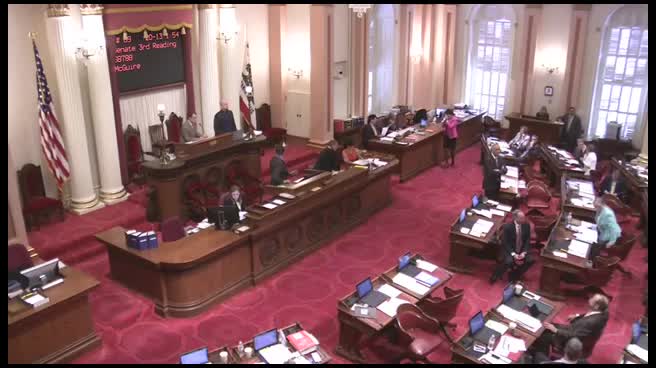
Bill Author

Bill Co-Author(s):