SB 417: Law enforcement: United States Immigration and Customs Enforcement holds.
- Session Year: 2015-2016
- House: Senate
- Latest Version Date: 2015-08-24
Existing law prohibits a law enforcement official, as defined, from detaining an individual on the basis of a United States Immigration and Customs Enforcement hold after that individual becomes eligible for release from custody, unless, at the time that the individual becomes eligible for release from custody, certain conditions are met, including, among other things, that the continued detention of the individual on the basis of the immigration hold would not violate any federal, state, or local law, or local policy, and that the individual has been convicted of, or arrested for, specified crimes.
This bill would instead require a law enforcement official to detain an individual on the basis of a United States Immigration and Customs Enforcement hold for up to 48 hours, excluding Saturdays, Sundays, and holidays, after that individual becomes eligible for release from custody if that individual has been convicted of, or arrested for, specified crimes and if the continued detention of the individual on the basis of the immigration hold would not violate any federal law. By imposing additional duties on local law enforcement officers, this bill would impose a state-mandated local program.
The bill would require a local agency that violates these provisions to pay a fine of $100,000, to be collected by the Attorney General, and would allow the Attorney General to commence a civil action to enforce the fine. The bill would require proceeds of the fine to be deposited in the Restitution Fund, a continuously appropriated fund. By increasing deposits to be made to a continuously appropriated fund, this bill would make an appropriation.
The California Constitution requires the state to reimburse local agencies and school districts for certain costs mandated by the state. Statutory provisions establish procedures for making that reimbursement.
This bill would provide that, if the Commission on State Mandates determines that the bill contains costs mandated by the state, reimbursement for those costs shall be made pursuant to these statutory provisions.
Existing law requires the precinct board, before receiving any ballots, in the presence of any persons assembled at the polling place, to open and exhibit and close the ballot container or containers. Thereafter, existing law prohibits the ballot container or containers from being removed from the polling place or presence of the bystanders until all the ballots are counted, nor opened until after the polls are finally closed.
This bill would authorize the precinct board of a county with a geographic area of at least 2,500 square miles to remove the ballot container or containers from the polling place while the polls remain open only to facilitate the early delivery of ballots to the receiving centers or central counting places. The bill would prohibit a local agency exercising this authorization from seeking state reimbursement for associated costs. The bill would require the Secretary of State to adopt regulations for the secure delivery and transfer of the ballots to the receiving center or central counting place.
Existing law requires the precinct board, before receiving any ballots, in the presence of any persons assembled at the polling place, to open and exhibit and close the ballot container or containers. Thereafter, existing law prohibits the ballot container or containers from being removed from the polling place or presence of the bystanders until all the ballots are counted, nor opened until after the polls are finally closed.
This bill would authorize the precinct board of a county with a geographic area of at least 2500 2,500 square miles to remove the ballot container or containers from the polling place while the polls remain open only to facilitate the early delivery of ballots to the receiving centers or central counting places. The bill would prohibit a local agency exercising this authorization from seeking state reimbursement for associated costs. The bill would require the Secretary of State to adopt regulations for the secure delivery and transfer of the ballots to the receiving center or central counting place.
Existing law requires the precinct board, before receiving any ballots, in the presence of any persons assembled at the polling place, to open and exhibit and close the ballot container or containers. Thereafter, existing law prohibits the ballot container or containers from being removed from the polling place or presence of the bystanders until all the ballots are counted, nor opened until after the polls are finally closed.
This bill would authorize the precinct board of a county with a geographic area of at least 2500 square miles to remove the ballot container or containers from the polling place while the polls remain open only to facilitate the early delivery of ballots to the receiving centers or central counting places. The bill would require the Secretary of State to adopt regulations for the secure delivery and transfer of the ballots to the receiving center or central counting place.
(a)A law enforcement official shall have discretion to cooperate with federal immigration officials by detaining an individual on the basis of an immigration hold for up to 48 hours, excluding Saturdays, Sundays, and holidays, after that individual becomes eligible for release from custody only custody, if the continued detention of the individual on the basis of the immigration hold would not violate any federal, state, or local federal law, or any local policy, and only under any of the following circumstances:
(1)The individual has been convicted of a serious or violent felony identified in subdivision (c) of Section 1192.7 of, or subdivision (c) of Section 667.5 of, the Penal Code.
(2)The individual has been convicted of a felony punishable by imprisonment in the state prison.
(3)The individual has been convicted within the past five years of a misdemeanor for a crime that is punishable as either a misdemeanor or a felony for, or has been convicted at any time of a felony for, any of the following offenses:
(A)Assault, as specified in, but not limited to, Sections 217.1, 220, 240, 241.1, 241.4, 241.7, 244, 244.5, 245, 245.2, 245.3, 245.5, 4500, and 4501 of the Penal Code.
(B)Battery, as specified in, but not limited to, Sections 242, 243.1, 243.3, 243.4, 243.6, 243.7, 243.9, 273.5, 347, 4501.1, and 4501.5 of the Penal Code.
(C)Use of threats, as specified in, but not limited to, Sections 71, 76, 139, 140, 422, 601, and 11418.5 of the Penal Code.
(D)Sexual abuse, sexual exploitation, or crimes endangering children, as specified in, but not limited to, Sections 266, 266a, 266b, 266c, 266d, 266f, 266g, 266h, 266i, 266j, 267, 269, 288, 288.5, 311.1, 311.3, 311.4, 311.10, 311.11, and 647.6 of the Penal Code.
(E)Child abuse or endangerment, as specified in, but not limited to, Sections 270, 271, 271a, 273a, 273ab, 273d, 273.4, and 278 of the Penal Code.
(F)Burglary, robbery, theft, fraud, forgery, or embezzlement, as specified in, but not limited to, Sections 211, 215, 459, 463, 470, 476, 487, 496, 503, 518, 530.5, 532, and 550 of the Penal Code.
(G)Driving under the influence of alcohol or drugs, but only for a conviction that is a felony.
(H)Obstruction of justice, as specified in, but not limited to, Sections 69, 95, 95.1, 136.1, and 148.10 of the Penal Code.
(I)Bribery, as specified in, but not limited to, Sections 67, 67.5, 68, 74, 85, 86, 92, 93, 137, 138, and 165 of the Penal Code.
(J)Escape, as specified in, but not limited to, Sections 107, 109, 110, 4530, 4530.5, 4532, 4533, 4534, 4535, and 4536 of the Penal Code.
(K)Unlawful possession or use of a weapon, firearm, explosive device, or weapon of mass destruction, as specified in, but not limited to, Sections 171b, 171c, 171d, 246, 246.3, 247, 417, 417.3, 417.6, 417.8, 4574, 11418, 11418.1, 12021.5, 12022, 12022.2, 12022.3, 12022.4, 12022.5, 12022.53, 12022.55, 18745, 18750, and 18755 of, and subdivisions (c) and (d) of Section 26100 of, the Penal Code.
(L)Possession of an unlawful deadly weapon, under the Deadly Weapons Recodification Act of 2010 (Part 6 (commencing with Section 16000) of the Penal Code).
(M)An offense involving the felony possession, sale, distribution, manufacture, or trafficking of controlled substances.
(N)Vandalism with prior convictions, as specified in, but not limited to, Section 594.7 of the Penal Code.
(O)Gang-related offenses, as specified in, but not limited to, Sections 186.22, 186.26, and 186.28 of the Penal Code.
(P)An attempt, as defined in Section 664 of, or a conspiracy, as defined in Section 182 of, the Penal Code, to commit an offense specified in this section.
(Q)A crime resulting in death, or involving the personal infliction of great bodily injury, as specified in, but not limited to, subdivision (d) of Section 245.6 of, and Sections 187, 191.5, 192, 192.5, 12022.7, 12022.8, and 12022.9 of, the Penal Code.
(R)Possession or use of a firearm in the commission of an offense.
(S)An offense that would require the individual to register as a sex offender pursuant to Section 290, 290.002, or 290.006 of the Penal Code.
(T)False imprisonment, slavery, and human trafficking, as specified in, but not limited to, Sections 181, 210.5, 236, 236.1, and 4503 of the Penal Code.
(U)Criminal profiteering and money laundering, as specified in, but not limited to, Sections 186.2, 186.9, and 186.10 of the Penal Code.
(V)Torture and mayhem, as specified in, but not limited to, Section 203 of the Penal Code.
(W)A crime threatening the public safety, as specified in, but not limited to, Sections 219, 219.1, 219.2, 247.5, 404, 404.6, 405a, 451, and 11413 of the Penal Code.
(X)Elder and dependent adult abuse, as specified in, but not limited to, Section 368 of the Penal Code.
(Y)A hate crime, as specified in, but not limited to, Section 422.55 of the Penal Code.
(Z)Stalking, as specified in, but not limited to, Section 646.9 of the Penal Code.
(AA)Soliciting the commission of a crime, as specified in, but not limited to, subdivision (c) of Section 286 of, and Sections 653j and 653.23 of, the Penal Code.
(AB)An offense committed while on bail or released on his or her own recognizance, as specified in, but not limited to, Section 12022.1 of the Penal Code.
(AC)Rape, sodomy, oral copulation, or sexual penetration, as specified in, but not limited to, paragraphs (2) and (6) of subdivision (a) of Section 261 of, paragraphs (1) and (4) of subdivision (a) of Section 262 of, Section 264.1 of, subdivisions (c) and (d) of Section 286 of, subdivisions (c) and (d) of Section 288a of, and subdivisions (a) and (j) of Section 289 of, the Penal Code.
(AD)Kidnapping, as specified in, but not limited to, Sections 207, 209, and 209.5 of the Penal Code.
(AE)A violation of subdivision (c) of Section 20001 of the Vehicle Code.
(4)The individual is a current registrant on the California Sex and Arson Registry.
(5)The individual is arrested and taken before a magistrate on a charge involving a serious or violent felony, as identified in subdivision (c) of Section 1192.7 or subdivision (c) of Section 667.5 of the Penal Code, a felony punishable by imprisonment in state prison, or any felony listed in paragraph (2) or (3) other than domestic violence, and the magistrate makes a finding of probable cause as to that charge pursuant to Section 872 of the Penal Code.
(6)The individual has been convicted of a federal crime that meets the definition of an aggravated felony as set forth in subparagraphs (A) to (P), inclusive, of paragraph (43) of subsection (a) of Section 101 of the federal Immigration and Nationality Act (8 U.S.C. Sec. 1101), or is identified by the United States Department of Homeland Securitys Immigration and Customs Enforcement as the subject of an outstanding federal felony arrest warrant.
(b)If none of the conditions listed in subdivision (a) is satisfied, an individual shall not be detained on the basis of an immigration hold after the individual becomes eligible for release from custody.
(b)A local agency that violates subdivision (a) shall pay a fine of one hundred thousand dollars ($100,000), to be collected by the Attorney General, for each failure to detain an individual in violation of subdivision (a). The Attorney General may commence a civil action to enforce the fine. Proceeds of the fine shall be deposited in the Restitution Fund in the State Treasury for purposes of Chapter 5 (commencing with Section 13950) of Part 4 of Division 3 of Title 2.
SEC. 2.If the Commission on State Mandates determines that this act contains costs mandated by the state, reimbursement to local agencies and school districts for those costs shall be made pursuant to Part 7 (commencing with Section 17500) of Division 4 of Title 2 of the Government Code.
SECTION 1.Section 14215 of the Elections Code is amended to read:14215.(a)Before receiving any ballots, the precinct board, in the presence of any persons assembled at the polling place, shall open and exhibit and close the ballot container or containers. Thereafter, except as specified in subdivision (b), the ballot container or containers shall not be removed from the polling place or presence of the bystanders until all the ballots are counted, nor opened until after the polls are finally closed.
(b)(1)The precinct board may remove the ballot container or containers from the polling place while the polls remain open only to facilitate the early delivery of ballots to the receiving centers or central counting places. The Secretary of State shall adopt regulations for the secure delivery and transfer of the ballots to the receiving center or central counting place.
(2)This subdivision applies only to a county of a geographic area of at least 2,500 square miles.
(3)A local agency that exercises the authority set forth in paragraph (1) shall not seek reimbursement from the state for associated costs pursuant to Part 7 (commencing with Section 17500) of Division 4 of Title 2 of the Government Code.
(a)Before receiving any ballots, the precinct board, in the presence of any persons assembled at the polling place, shall open and exhibit and close the ballot container or containers. Thereafter, except as specified in subdivision (b), the ballot container or containers shall not be removed from the polling place or presence of the bystanders until all the ballots are counted, nor opened until after the polls are finally closed.
(b)(1)The precinct board may remove the ballot container or containers from the polling place while the polls remain open only to facilitate the early delivery of ballots to the receiving centers or central counting places. The Secretary of State shall adopt regulations for the secure delivery and transfer of the ballots to the receiving center or central counting place.
(2)This subdivision shall only apply applies only to a county of a geographic area of at least 2500 2,500 square miles.
(3)A local agency that exercises the authority set forth in paragraph (1) shall not seek reimbursement from the state for associated costs pursuant to Part 7 (commencing with Section 17500) of Division 4 of Title 2 of the Government Code.
(a)Before receiving any ballots, the precinct board, in the presence of any persons assembled at the polling place, shall open and exhibit and close the ballot container or containers. Thereafter, except as specified in subdivision (b), the ballot container or containers shall not be removed from the polling place or presence of the bystanders until all the ballots are counted, nor opened until after the polls are finally closed.
(b)(1)The precinct board may remove the ballot container or containers from the polling place while the polls remain open only to facilitate the early delivery of ballots to the receiving centers or central counting places. The Secretary of State shall adopt regulations for the secure delivery and transfer of the ballots to the receiving center or central counting place.
(2)This subdivision shall only apply to a county of a geographic area of at least 2500 square miles.
|
Date
|
Status
|
|---|---|
| May 28, 2015 | From committee: Do pass. (Ayes 7. Noes 0. Page 1153.) (May 28). |
| Aug 27, 2015 | Re-referred to Com. on RLS. pursuant to Assembly Rule 96. |
| Aug 24, 2015 | From committee with author's amendments. Read second time and amended. Re-referred to Com. on E. & R. |
| Jun 23, 2015 | July 1 set for first hearing canceled at the request of author. |
| Jun 18, 2015 | Referred to Com. on E. & R. |
| Jun 2, 2015 | In Assembly. Read first time. Held at Desk. |
| Jun 1, 2015 | Read third time. Passed. (Ayes 40. Noes 0.) Ordered to the Assembly. |
| Jun 1, 2015 | Read third time. Passed. (Ayes 40. Noes 0. Page 1202.) Ordered to the Assembly. |
| May 28, 2015 | Read second time. Ordered to third reading. |
| May 28, 2015 | From committee: Do pass. (Ayes 7. Noes 0.) (May 28). |
| Feb 25, 2015 | Introduced. Read first time. To Com. on RLS. for assignment. To print. |
| May 23, 2015 | Set for hearing May 28. |
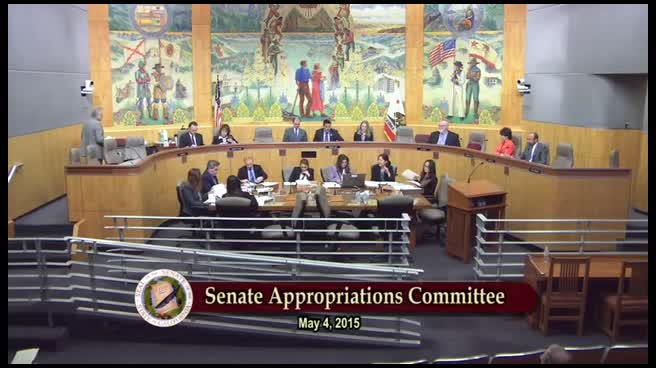
| May 4, 2015 | May 4 hearing: Placed on APPR. suspense file. |
| Apr 24, 2015 | Set for hearing May 4. |
| Apr 16, 2015 | Read second time and amended. Re-referred to Com. on APPR. |
| Apr 15, 2015 | From committee: Do pass as amended and re-refer to Com. on APPR. (Ayes 4. Noes 0. Page 523.) (April 7). |
| Mar 24, 2015 | Set for hearing April 7. |
| Mar 5, 2015 | Referred to Com. on E. & C.A. |
| Feb 26, 2015 | From printer. May be acted upon on or after March 28. |
|
Date
|
Description
|
Location
|
Votes
|
|
|---|---|---|---|---|
| Jun 1, 2015 | Senate 3rd Reading SB417 Stone | Senate Floor |
Passed |
|
| May 28, 2015 | Do pass | Senate Standing Committee on Appropriations |
Passed |
|
| May 4, 2015 | Placed on suspense file | Senate Standing Committee on Appropriations |
Passed |
|
| Apr 7, 2015 | Do pass as amended, but first amend, and re-refer to the Committee on [Appropriations] | Senate Standing Committee on Elections and Constitutional Amendments |
Passed |
This list shows positions taken on this bill by organizations on the date displayed, which is linked to the original source.
Positions by individuals are not included.
SB 417
Page 3
|
Office of Senate Floor Analyses (916) 651-1520 Fax: (916) 327-4478 |
THIRD READING
Bill No: SB 417
Amended: 4/16/15
SENATE ELECTIONS & C.A. COMMITTEE: 4-0, 4/7/15
AYES: Allen, Anderson, Hancock, Hertzberg
NO VOTE RECORDED: Liu
SENATE APPROPRIATIONS COMMITTEE: 7-0, 5/28/15
AYES: Lara, Bates, Beall, Hill, Leyva, Mendoza, Nielsen
SUBJECT: Elections: election day procedures
DIGEST: This bill authorizes the precinct board of a county with a geographic area of at least 2,500 square miles to remove the ballot container or containers from the polling place while the polls remain open only to facilitate the early delivery of ballots to the receiving centers or central counting places and also requires the Secretary of State (SOS) to adopt regulations for the secure delivery and transfer of the ballots to the receiving center or central counting place.
Existing law:
Establishes procedures for processing ballots following the closing of the polls on Election Day. Specifically, the members of the precinct board must conduct a reconciliation ensuring that all ballots delivered to them are accounted for whether voted, unused, spoiled, or canceled.
Prohibits the removal of a ballot container from a polling place or the presence of any persons assembled at the polling place until all the ballots are counted, and prohibits the ballot container from being opened until after the polls are closed.
This bill:
Allows a precinct board to remove the ballot container or containers from the polling place while the polls remain open only to facilitate the early delivery of ballots to the receiving centers or central counting places.
Requires the SOS to adopt regulations for the secure delivery and transfer of the ballots to the receiving center or central counting place.
Applies only to a county with a geographic area of at least 2,500 square miles.
Background
There are 22 counties in California that span 2,500 square miles or more. The counties of San Bernardino, Inyo, Kern, Riverside, Siskiyou, and Fresno are well over 5,000 square miles. Traditionally, after the polls close on Election Day, ballots are returned to the Registrar of Voters office for processing and counting.
These larger counties may encounter late reconciliation issues partly due to the size of the county that requires elections staff to be on the road driving to remote polling places to pick up ballot containers and then delivering them back to a central processing location.
Comments
According to the author:
Larger and more rural counties face numerous challenges in making
government work more efficiently. One of the challenges is the
timely counting of ballots on Election Day.
SB 417 would
allow a county with a geographic area of 2500 square miles or more to
remove the ballots already cast at midday and safely transport them
to the central counting place to begin the reconciliation process.
No ballots counted could be reported until the polls close on
Election Night. The bill would also require the Secretary of State
to develop the process and regulation for transporting the ballots.
Multiple ballot reconciliations. The SOS regulations required by this bill would have to include, among other things, a process whereby precinct boards must conduct a reconciliation of the ballots consistent with the process currently required after the closing of the polls. As stated above, existing law requires the members of the precinct board to conduct a reconciliation ensuring that all ballots delivered to them are accounted for whether voted, unused, spoiled, or canceled. Absent proper reconciliation, the ability to identify and correct any error will be lost.
Related/Prior Legislation
AB 363 (Steinorth, 2015), among other things, authorizes the county elections official to direct other elections officials to remove the sealed ballots prior to the closing of the polls and to deliver them to a receiving center or central counting place.
SB 1346 (Negrete-McLeod of 2012) was very similar to this bill, but died before being heard in the Senate Elections and Constitutional Amendments Committee.
FISCAL EFFECT: Appropriation: No Fiscal Com.: Yes Local: No
According to the Senate Appropriations Committee:
Approximately $55,000 administrative costs to the SOS (General Fund).
Participating counties will incur some non-reimbursable costs for making multiple trips to pick up ballot containers, but these costs will be offset by reduced overtime expenses after the close of polls.
None received
OPPOSITION: (Verified 5/27/15)
None received
Prepared by: Frances Tibon Estoista / E. & C.A. / (916) 651-4106
5/30/15 17:10:11
SB 417 (Stone) Page 2 of 2
SENATE COMMITTEE ON APPROPRIATIONS
Senator Ricardo Lara, Chair
2015 - 2016 Regular Session
SB 417 (Stone) - Elections: election day procedures
|
|
Version: April 16, 2015 |
Policy Vote: E. & C.A. 4 - 0 |
Urgency: No |
Mandate: No |
Hearing Date: May 28, 2015 |
Consultant: Maureen Ortiz |
SUSPENSE FILE.
Bill Summary:
SB 417 authorizes a precinct board of a county with a geographic area of at least 2,500 square miles to remove the ballot containers from the polling place while the polls remain open. The Secretary of State (SOS) will be required to adopt regulations to ensure the safe delivery and transfer of the ballots.
Fiscal Impact:
Approximately $55,000 administrative costs to the Secretary of State (General Fund)
Participating counties will incur some non-reimbursable costs for making multiple trips to pick up ballot containers, but these costs will be offset by reduced overtime expenses after the close of polls.
Background:
Existing law requires the precinct board, before receiving any ballot, to open and exhibit and close the ballot containers in the presence of any persons assembled at the polling place. Existing law prohibits the removal of a ballot container from a polling place or the presence of any persons assembled at the polling place until all the ballots are counted and prohibits the ballot container from being opened until after the polls are closed.
Proposed Law:
Specifically, SB 417 does the following:
Allows a precinct board to remove the ballot container or containers from the polling place while the polls remain open only to facilitate the early delivery of ballots to the receiving centers or central counting places.
Requires the SOS to adopt regulations for the secure delivery and transfer of the ballots to the receiving center or central counting place.
Only applies to a county with a geographic area of at least 2,500 square miles.
Related Legislation:
AB 363 (Steinorth) of this session, will among other things authorize the county elections official to direct other elections officials to remove the sealed ballots prior to the closing of the polls and to deliver them to a receiving center or central counting place. AB 363 is pending a hearing in the Assembly Elections and Redistricting Committee.
Staff Comments:
There are 22 counties in California that span 2,500 square miles or more. The counties of San Bernardino, Inyo, Kern, Riverside, Siskiyou and Fresno are well over 5,000 square miles. Traditionally, after the polls close on Election Day, ballots are returned to the Registrar of Voters office for processing and counting.
These larger counties may currently encounter late reconciliation issues partly due to the size of the county that requires elections staff to be on the road driving to remote polling places to pick up ballot containers and then delivering them back to a central processing location.
SB 417 will allow a county with a geographic area of 2,500 square miles or more to remove the ballots already cast at midday and safely transport them to the central counting place to begin the reconciliation process. No ballots counted will be allowed to be reported until the polls close on Election Night. The bill requires the Secretary of State to develop regulations outlining the process for securely transporting the ballots.
The SOS regulations required by this bill will have to include, among other things, a process whereby precinct boards must conduct a reconciliation of the ballots consistent with the process currently required after the closing of the polls. Existing law requires the members of the precinct board to conduct a reconciliation ensuring that all ballots delivered to them are accounted for whether voted, unused, spoiled, or canceled. Absent proper reconciliation, the ability to identify and correct any error will be lost.
-- END --
SB 417 (Stone) Page 2 of 2
SENATE COMMITTEE ON APPROPRIATIONS
Senator Ricardo Lara, Chair
2015 - 2016 Regular Session
SB 417 (Stone) - Elections: election day procedures
|
|
Version: April 16, 2015 |
Policy Vote: E. & C.A. 4 - 0 |
Urgency: No |
Mandate: No |
Hearing Date: May 4, 2015 |
Consultant: Maureen Ortiz |
This bill meets the criteria for referral to the Suspense File.
Bill Summary:
SB 417 authorizes a precinct board of a county with a geographic area of at least 2,500 square miles to remove the ballot containers from the polling place while the polls remain open. The Secretary of State (SOS) will be required to adopt regulations to ensure the safe delivery and transfer of the ballots.
Fiscal Impact:
Approximately $55,000 administrative costs to the Secretary of State (General Fund)
Participating counties will incur some non-reimbursable costs for making multiple trips to pick up ballot containers, but these costs will be offset by reduced overtime expenses after the close of polls.
Background:
Existing law requires the precinct board, before receiving any ballot, to open and exhibit and close the ballot containers in the presence of any persons assembled at the polling place. Existing law prohibits the removal of a ballot container from a polling place or the presence of any persons assembled at the polling place until all the ballots are counted and prohibits the ballot container from being opened until after the polls are closed.
Proposed Law:
Specifically, SB 417 does the following:
Allows a precinct board to remove the ballot container or containers from the polling place while the polls remain open only to facilitate the early delivery of ballots to the receiving centers or central counting places.
Requires the SOS to adopt regulations for the secure delivery and transfer of the ballots to the receiving center or central counting place.
Only applies to a county with a geographic area of at least 2,500 square miles.
Related Legislation:
AB 363 (Steinorth) of this session, will among other things authorize the county elections official to direct other elections officials to remove the sealed ballots prior to the closing of the polls and to deliver them to a receiving center or central counting place. AB 363 is pending a hearing in the Assembly Elections and Redistricting Committee.
Staff Comments:
There are 22 counties in California that span 2,500 square miles or more. The counties of San Bernardino, Inyo, Kern, Riverside, Siskiyou and Fresno are well over 5,000 square miles. Traditionally, after the polls close on Election Day, ballots are returned to the Registrar of Voters office for processing and counting.
These larger counties may currently encounter late reconciliation issues partly due to the size of the county that requires elections staff to be on the road driving to remote polling places to pick up ballot containers and then delivering them back to a central processing location.
SB 417 will allow a county with a geographic area of 2,500 square miles or more to remove the ballots already cast at midday and safely transport them to the central counting place to begin the reconciliation process. No ballots counted will be allowed to be reported until the polls close on Election Night. The bill requires the Secretary of State to develop regulations outlining the process for securely transporting the ballots.
The SOS regulations required by this bill will have to include, among other things, a process whereby precinct boards must conduct a reconciliation of the ballots consistent with the process currently required after the closing of the polls. Existing law requires the members of the precinct board to conduct a reconciliation ensuring that all ballots delivered to them are accounted for whether voted, unused, spoiled, or canceled. Absent proper reconciliation, the ability to identify and correct any error will be lost.
-- END --
SB 417 (Stone) Page 3 of 3
SENATE COMMITTEE ON
ELECTIONS AND CONSTITUTIONAL AMENDMENTS
Senator Ben Allen, Chair
2015 - 2016 Regular
Bill No: SB 417 Hearing Date: 4/7/15
Author: |
Stone |
||
Version: |
2/25/15 |
||
Urgency: |
No |
Fiscal: |
Yes |
Consultant: |
Frances Tibon Estoista |
||
Subject: Elections: election day procedures
DIGEST
This bill would authorize the precinct board of a county with a geographic area of at least 2500 square miles to remove the ballot container or containers from the polling place while the polls remain open only to facilitate the early delivery of ballots to the receiving centers or central counting places. The bill would require the Secretary of State (SOS) to adopt regulations for the secure delivery and transfer of the ballots to the receiving center or central counting place.
ANALYSIS
Existing law:
Establishes procedures for processing ballots following the closing of the polls on Election Day. Specifically, the members of the precinct board must conduct a reconciliation ensuring that all ballots delivered to them are accounted for whether voted, unused, spoiled, or canceled.
Prohibits the removal of a ballot container from a polling place or the presence of any persons assembled at the polling place until all the ballots are counted and prohibits the ballot container from being opened until after the polls are closed.
This bill:
Allows a precinct board to remove the ballot container or containers from the polling place while the polls remain open only to facilitate the early delivery of ballots to the receiving centers or central counting places.
Requires the SOS to adopt regulations for the secure delivery and transfer of the ballots to the receiving center or central counting place.
Only applies to a county with a geographic area of at least 2500 square miles.
BACKGROUND
There are 22 counties in California that span 2500 square miles or more. The counties of San Bernardino, Inyo, Kern, Riverside, Siskiyou and Fresno are well over 5000 square miles. Traditionally, after the polls close on Election Day, ballots are returned to the Registrar of Voters office for processing and counting.
These larger counties may encounter late reconciliation issues partly due to the size of the county that requires elections staff to be on the road driving to remote polling places to pick up ballot containers and then delivering them back to a central processing location.
COMMENTS
According to the Author: Larger and more rural counties face numerous challenges in making government work more efficiently. One of the challenges is the timely counting of ballots on Election Day.
SB 417 would allow a county with a geographic area of 2500 square miles or more to remove the ballots already cast at midday and safely transport them to the central counting place to begin the reconciliation process. No ballots counted could be reported until the polls close on Election Night. The bill would also require the Secretary of State to develop the process and regulation for transporting the ballots.
Multiple ballot reconciliations. The SOS regulations required by this bill would have to include, among other things, a process whereby precinct boards must conduct a reconciliation of the ballots consistent with the process currently required after the closing of the polls. As stated above, existing law requires the members of the precinct board to conduct a reconciliation ensuring that all ballots delivered to them are accounted for whether voted, unused, spoiled, or canceled. Absent proper reconciliation, the ability to identify and correct any error will be lost.
RELATED/PRIOR LEGISLATION
AB 363 (Steinorth) of this session, will among other things authorize the county elections official to direct other elections officials to remove the sealed ballots prior to the closing of the polls and to deliver them to a receiving center or central counting place. AB 363 is awaiting hearing in the Assembly Elections and Redistricting Committee.
SB 1346 (Negrete-McLeod) of 2012, was similar to this bill, but died before being heard in this Committee.
POSITIONS
Sponsor: Author
Support: None received
Oppose: None received
-- END --
Discussed in Hearing
View Older Hearings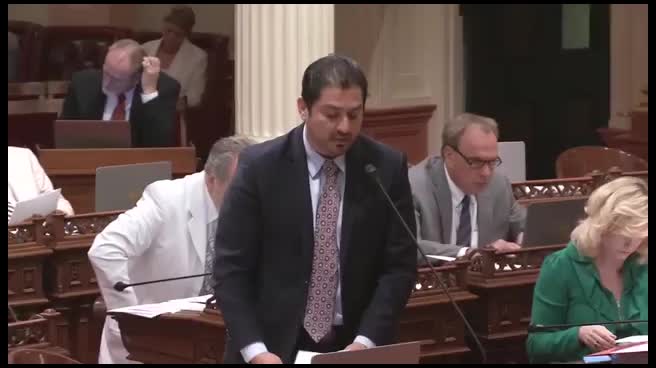
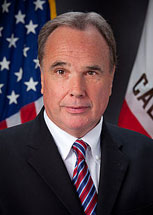


Bill Co-Author(s):