SR 37
- Session Year: 2015-2016
- House: Senate
- Latest Version Date: 2015-07-16
WHEREAS, Pope Francis is a global defender of the poor and all victims of injustice, including those suffering the devastating impacts of climate change; and
WHEREAS, Pope Francis, the leader of 1.2 billion Catholics worldwide, released a Papal encyclical on June 18, 2015, in which he issues a clarion call to action on climate change and caring for the earth as our common home; and
WHEREAS, A Papal encyclical is considered the highest level of teaching of a pope on faith and morals; and
WHEREAS, Pope Francis in his Papal encyclical recognizes that reversing global warming, halting the depletion of our resources, and combating environmental degradation falls upon us all: government, the private sector, and individuals; and
WHEREAS, Pope Francis declares that the climate is a common good, belonging to us all; and
WHEREAS, Pope Francis states that a solid scientific consensus indicates a disturbing warming of the climate, accompanied by rising sea levels and extreme weather events, even if a scientifically determined cause cannot be attributed to each phenomenon; and
WHEREAS, Pope Francis states that the problem is aggravated by a model of development based on the dominion of the planet and the intensive use of fossil fuels while failing to accept moral responsibility for the degrading global consequences of an unsustainable energy system; and
WHEREAS, Pope Francis sees an urgent need for a robust dialogue that includes the voices of all, especially those most marginalized, to develop policies so that in the near future the emission of carbon dioxide and other highly polluting gases can be drastically reduced by finding alternatives to fossil fuels and developing sources of renewable energy; and
WHEREAS, Pope Francis states, We are faced not with two separate crises, one environmental and the other social, but rather with one complex crisis which is both social and environmental. Strategies for a solution demand an integrated approach to combating poverty, restoring dignity to the excluded, and at the same time protecting nature; and
WHEREAS, Pope Francis states everyday experience and scientific research show that the gravest effects of all attacks on the environment are suffered by the poorest; and
WHEREAS, Pope Francis states that a true ecological approach must integrate questions of social and environmental justice in debates on the environment, so as to hear both the cry of the Earth and the cry of the poor; and
WHEREAS, California has already begun to incorporate questions of social and environmental justice in its approach to climate control, focusing resources to combat environmental degradation in Californias poorest communities; and
WHEREAS, The California Legislature recognizes the alarming rate of global warming caused by fossil fuels and the urgent need to continue to work toward a low-carbon economy, while fighting environmental degradation in our poorest communities and increasing their access to cleaner energy; and
WHEREAS, California is home to more Catholics than any other state in the nation with nearly one in three residents who self-identify as Christians being Catholic; and
WHEREAS, the Papal encyclical is anticipated to be not only of great importance in parishes throughout California, the nation, and world, but it is also expected to have significant political ramifications; now, therefore, be it
Resolved by the Senate of the State of California, That members of the Legislature review and take into account the Papal encyclical on climate change in relevant legislative actions; and be it further
Resolved, That the Governor and executive branch of state government consider the implications of the Papal encyclical and climate change in their policy and fiscal actions to prevent further environmental degradation; and be it further
Resolved, That appropriate policy committees of the Legislature convene hearings to consider the policy implications of the Papal encyclical and seek testimony from religious leaders, state officials, environmental organizations, business groups, and the general public; and be it further
Resolved, That the United States Congress and President Obama consider the implications of the Papal encyclical and climate change in their policy and fiscal actions to prevent further environmental degradation; and be it further
Resolved, That the Secretary of the Senate transmit copies of this resolution to the author for appropriate distribution.
WHEREAS, Pope Francis is a global defender of the poor and all victims of injustice, including those suffering the devastating impacts of climate change; and
WHEREAS, Pope Francis, the leader of 1.2 billion Catholics worldwide, released a Papal encyclical on June 18, 2015, in which he issues a clarion call to action on climate change; change and caring for the earth as our common home; and
WHEREAS, A Papal encyclical is a letter to bishops and considered the highest level of teaching of a pope; pope on faith and morals; and
WHEREAS, Pope Francis in his Papal encyclical recognizes that reversing global warming, halting the depletion of our resources, and combating environmental degradation falls upon us all: government, the private sector, and individuals; and
WHEREAS, Pope Francis declares that the climate is a common good, belonging to us all; and
WHEREAS, Pope Francis states that a solid scientific consensus indicates a disturbing warming of the climate, accompanied by rising sea levels and extreme weather events, even if a scientifically determined cause cannot be attributed to each phenomenon; and
WHEREAS, Pope Francis states that the problem is aggravated by a model of development based on the dominion of the planet and the intensive use of fossil fuels, which is at the heart of the worldwide fuels while failing to accept moral responsibility for the degrading global consequences of an unsustainable energy system; and
WHEREAS, Pope Francis sees an urgent need for a robust dialogue that includes the voices of all, especially those most marginalized, to develop policies so that in the near future the emission of carbon dioxide and other highly polluting gases can be drastically reduced by finding alternatives to fossil fuels and developing sources of renewable energy; and
WHEREAS, Pope Francis states, We are faced not with two separate crises, one environmental and the other social, but rather with one complex crisis which is both social and environmental. Strategies for a solution demand an integrated approach to combating poverty, restoring dignity to the excluded, and at the same time protecting nature; and
WHEREAS, Pope Francis states everyday experience and scientific research show that the gravest effects of all attacks on the environment are suffered by the poorest; and
WHEREAS, Pope Francis states that a true ecological approach must integrate questions of social and environmental justice in debates on the environment, so as to hear both the cry of the Earth and the cry of the poor; and
WHEREAS, California has already begun to incorporate questions of social and environmental justice in its approach to climate control, focusing resources to combat environmental degradation in Californias poorest communities; and
WHEREAS, The California Legislature recognizes the alarming rate of global warming caused by fossil fuels and the urgent need to continue to work toward a low-carbon economy, while fighting environmental degradation in our poorest communities and increasing their access to cleaner energy; and
WHEREAS, California is home to more Catholics than any other state in the nation with nearly one in three residents who self-identify as Christians being Catholic; and
WHEREAS, the Papal encyclical is anticipated to be not only of great importance in parishes throughout California, the nation, and world, but it is also expected to have significant political ramifications; now, therefore, be it
Resolved by the Senate of the State of California, That members of the Legislature review and take into account the Papal encyclical on climate change in relevant legislative actions; and be it further
Resolved, That the Governor and executive branch of state government consider the implications of the Papal encyclical and climate change in their policy and fiscal actions to prevent further environmental degradation; and be it further
Resolved, That appropriate policy committees of the Legislature convene hearings to consider the policy implications of the Papal encyclical and seek testimony from religious leaders, state officials, environmental organizations, business groups, and the general public; and be it further
Resolved, That the United States Congress and President Obama consider the implications of the Papal encyclical and climate change in their policy and fiscal actions to prevent further environmental degradation; and be it further
Resolved, That the Secretary of the Senate transmit copies of this resolution to the author for appropriate distribution.
WHEREAS, Pope Francis is a global defender of the poor and all victims of injustice, including those suffering the devastating impacts of climate change; and
WHEREAS, Pope Francis, the leader of 1.2 billion Catholics worldwide, released a Papal encyclical on June 18, 2015, in which he issues a clarion call to action on climate change; and
WHEREAS, A Papal encyclical is a letter to bishops and considered the highest teaching of a pope; and
WHEREAS, Pope Francis in his Papal encyclical recognizes that reversing global warming, halting the depletion of our resources, and combating environmental degradation falls upon us all: government, the private sector, and individuals; and
WHEREAS, Pope Francis declares that the climate is a common good, belonging to us all; and
WHEREAS, Pope Francis states that a solid scientific consensus indicates a disturbing warming of the climate, accompanied by rising sea levels and extreme weather events, even if a scientifically determined cause cannot be attributed to each phenomenon; and
WHEREAS, Pope Francis states that the problem is aggravated by a model of development based on the intensive use of fossil fuels, which is at the heart of the worldwide energy system; and
WHEREAS, Pope Francis sees an urgent need to develop policies so that in the near future the emission of carbon dioxide and other highly polluting gases can be drastically reduced by finding alternatives to fossil fuels and developing sources of renewable energy; and
WHEREAS, Pope Francis warns that the exploitation of the planet has already exceeded acceptable limits while the problem of poverty remains unsolved, and that doomsday predictions can no longer be met with irony or disdain; and
WHEREAS, Pope Francis states everyday experience and scientific research show that the gravest effects of all attacks on the environment are suffered by the poorest; and
WHEREAS, Pope Francis states that a true ecological approach must integrate questions of social and environmental justice in debates on the environment, so as to hear both the cry of the Earth and the cry of the poor; and
WHEREAS, California has already begun to incorporate questions of social and environmental justice in its approach to climate control, focusing resources to combat environmental degradation in Californias poorest communities; and
WHEREAS, The California Legislature recognizes the alarming rate of global warming caused by fossil fuels and the urgent need to continue to work toward a low-carbon economy, while fighting environmental degradation in our poorest communities and increasing their access to cleaner energy; and
WHEREAS, California is home to more Catholics than any other state in the nation with nearly one in three residents who self-identify as Christians being Catholic; and
WHEREAS, the Papal encyclical is anticipated to be not only of great importance in parishes throughout California, the nation, and world, but it is also expected to have significant political ramifications; now, therefore, be it
Resolved by the Senate of the State of California, That members of the Legislature review and take into account the Papal encyclical on climate change in relevant legislative actions; and be it further
Resolved, That the Governor and executive branch of state government consider the implications of the Papal encyclical and climate change in their policy and fiscal actions to prevent further environmental degradation; and be it further
Resolved, That appropriate policy committees of the Legislature convene hearings to consider the policy implications of the Papal encyclical and seek testimony from religious leaders, state officials, environmental organizations, business groups, and the general public; and be it further
Resolved, That the United States Congress and President Obama consider the implications of the Papal encyclical and climate change in their policy and fiscal actions to prevent further environmental degradation; and be it further
Resolved, That the Secretary of the Senate transmit copies of this resolution to the author for appropriate distribution.
|
Date
|
Status
|
|---|---|
| Jun 29, 2015 | Introduced. Referred to Com. on RLS. |
| Jul 1, 2015 | Re-referred to Com. on E.Q. |
| Jul 14, 2015 | From committee with author's amendments. Read second time and amended. Re-referred to Com. on E.Q. |
| Jul 15, 2015 | From committee: Be adopted. Ordered to third reading. (Ayes 6. Noes 0. Page 2012.) (July 15). |
| Jul 15, 2015 | From committee: Be adopted. Ordered to third reading. (Ayes 6. Noes 0.) (July 15). |
| Jul 16, 2015 | Read. Adopted. (Ayes 24. Noes 3. Page 1985.) |
| Jul 16, 2015 | Read. Adopted. (Ayes 24. Noes 3.) |
|
Date
|
Description
|
Location
|
Votes
|
|
|---|---|---|---|---|
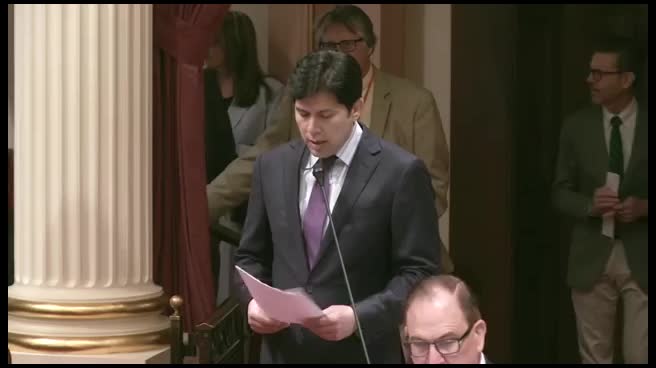
| Jul 16, 2015 | Senate 3rd Reading SR37 De León | Senate Floor |
Passed |
|
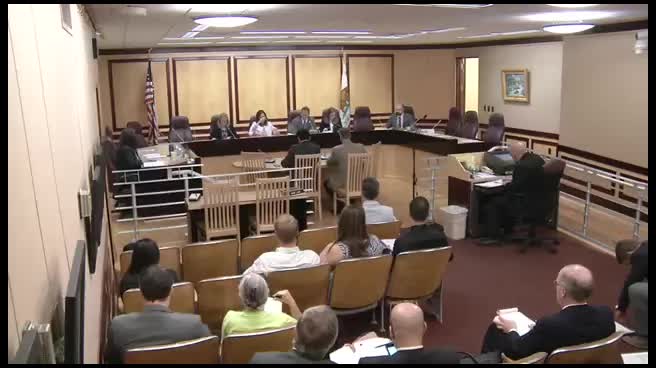
| Jul 15, 2015 | Be adopted. Ordered to third reading | Senate Standing Committee on Environmental Quality |
Passed |
This list shows positions taken on this bill by organizations on the date displayed, which is linked to the original source.
Positions by individuals are not included.
|
Organization
|
Position
|
Date
|
|---|---|---|
| Bishop Jaime Soto | ** Support | Jul 15, 2015 |
| California Catholic Conference | * Support | Jul 15, 2015 |
| Catholic Conference | * Support | Jul 15, 2015 |
| Environment California | * Support | Jul 15, 2015 |
SR 37
Page 5
|
Office of Senate Floor Analyses (916) 651-1520 Fax: (916) 327-4478 |
THIRD READING
Bill No: SR 37
Amended: 7/14/15 in Senate
SENATE ENVIRONMENTAL QUAL. COMMITTEE: 6-0, 7/15/15
AYES: Wieckowski, Bates, Hill, Jackson, Leno, Pavley
NO VOTE RECORDED: Gaines
DIGEST: This resolution makes findings on the recently released Papal encyclical, and resolves that the state Legislature, executive branch, United States Congress and President Obama, all consider the policy implications of the encyclical.
ANALYSIS: Existing law, under the California Global Warming
Solutions Act of 2006 (Health and Safety Code §38500 et seq.)
requires the California Air Resources Board (ARB) to determine the
1990 statewide greenhouse gas (GHG) emissions level and approve a
statewide GHG emissions limit that is equivalent to that level, to be
achieved by 2020, and to adopt GHG emissions reduction
measures by regulation.
This bill:
Makes findings regarding Pope Francis as a defender of the poor and those suffering the devastating impacts from climate change, and states that the Papal encyclical, released in June, among other things, declares a call to action on climate change and asserts that a true ecological approach to climate change must integrate questions of social and environmental justice.
Makes findings regarding California’s incorporation of social and environmental justice in the state’s approach to addressing climate change.
Resolves that members of the Legislature review and take into account the Papal encyclical on climate change in relevant legislative actions.
Resolves that the Governor and executive branch consider the implications of the Papal encyclical and climate change in their policy and fiscal actions to prevent further environmental degradation.
Resolves that the appropriate policy committees of the Legislature convene hearings to consider the policy implications of the Papal encyclical and seek testimony from religious leaders, state officials, environmental organizations, business groups and the general public.
Resolves that the United States Congress and President Obama consider the implications of the Papal encyclical and climate change in their policy and fiscal actions to prevent further environmental degradation.
Background
Papal encyclical. Pope Francis released a Papal encyclical on June 18, 2015, which called for a radical transformation of politics, economics and individual lifestyles to confront environmental degradation and climate change.
The encyclical asserts that
developed, industrialized countries are mostly responsible for the
impacts from climate change and are obligated to help poorer nations
confront the crisis. The encyclical also warns of an “unprecedented
destruction of ecosystems, with serious consequences for all of us”
if corrective action is not taken swiftly. The encyclical also notes
that, “climate change is a global problem with grave implications:
environmental, social, economic, political and for the distribution
of goods,” and that “it represents one of the principal
challenges facing humanity in our day.”
Climate change. There is broad scientific consensus that the climate is warming and that much of this warming is due to human activities, with serious implications for California. The fifth assessment report from the Intergovernmental Panel on Climate Change (IPCC) notes that atmospheric concentrations of global warming pollutants have risen to levels unseen in the past 800,000 years. Carbon dioxide concentrations have increased by 40% since pre-industrial times. There is broad scientific consensus that these global GHG emission increases are leading to higher air and water temperatures as well as rising sea levels, with serious consequences for California.
Sea level is expected to rise 17 to 66 inches by 2100, and the frequency of extreme events such as heat waves, wildfires, floods, and droughts is expected to increase.
Higher temperatures will result in more rain and less snow, diminishing the reserves of water in California’s Sierra Nevada snowpack. Even if all GHG emissions ceased today, some of these developments would be unavoidable because the climate system changes slowly.
There are significant public health risks associated with climate change. According to the United States Environmental Protection Agency, warmer average temperatures will likely lead to hotter days and more frequent and longer heat waves and could increase the number of heat-related illnesses and deaths. Increases in the frequency or severity of extreme weather events could increase the risk of dangerous flooding, high winds, concentrations of unhealthy air, and water pollutants, and potentially enhance the spread of certain diseases.
Along with the potential costs associated with public health impacts, climate change also represents a very real threat to California’s infrastructure, and could lead to billions of dollars in property damage. The Pacific Institute estimates that $100 billion worth of property in California is at risk of flooding during a 100-year flood with a projected 1.4 meters of sea level rise.
As the evidence for anthropogenic climate change has mounted over the last few decades, the state has implemented a broad climate portfolio to mitigate global warming impacts by pursuing policies that reduce GHGs.
The Global Warming Solutions Act of 2006. In 2006, the Global Warming Solutions Act of 2006, AB 32 (Núñez and Pavley, Chapter 488, Statutes of 2006) established a statewide GHG emissions limit by 2020. AB 32 defines GHGs as carbon dioxide (CO2), methane, nitrous oxide, hydrofluorocarbons, perfluorocarbons, and sulfur hexafluoride and requires ARB to determine the 1990 statewide GHG emissions level and approve a statewide GHG emissions limit that is equivalent to that level, to be achieved by 2020.
AB 32 also requires ARB, among other things, to inventory GHGs in California, outline a Scoping Plan for achieving the 2020 GHG emission limit, and implement regulations that achieve the maximum technologically feasible and cost-effective reduction of GHG emissions.
The statute also specifies that ARB may include market-based compliance mechanisms in the AB 32 regulations, after considering the potential for direct, indirect, and cumulative emission impacts from these mechanisms, including localized impacts in communities that are already adversely impacted by air pollution, and must design any market-based compliance mechanisms to prevent any increase in the emissions of toxic air contaminants or criteria air pollutants. The statute also specifies that market-based compliance mechanisms must also maximize additional environmental and economic benefits for California, as appropriate.
AB 32 Scoping Plan. Pursuant to AB 32, ARB approved the first Scoping Plan in 2008. The Scoping Plan outlined a suite of measures aimed at achieving 1990-level emissions, a reduction of 80 million metric tons of CO2 (MMT CO2e). Average emission data in the Scoping Plan reveal that transportation accounts for almost 40% of statewide GHG emissions, and electricity and commercial and residential energy sector account for over 30% of statewide GHG emissions. The industrial sector, including refineries, oil and gas production, cement plants, and food processors, was shown to contribute 20% of California’s total GHG emissions.
The 2008 Scoping Plan recommended that reducing GHG emissions from the wide variety of sources that make up the state’s emissions profile could best be accomplished through a cap-and-trade program along with a mix of other strategies including, among other measures, a low carbon fuel standard, light-duty vehicle GHG standards, expanding energy efficiency programs, and achieving a 33% renewable portfolio standard.
As outlined in the Scoping Plan, and pursuant to their authority under AB 32, ARB adopted a cap-and-trade program that places a “cap” on aggregate GHG emissions from large GHG emitters. ARB auctions allowances for purposes of compliance with the program quarterly. Several bills direct the investment of this auction revenue, including SB 535 (De León, Chapter 830, Statutes of 2012), which requires that 25% of auction revenue be used to benefit disadvantaged communities and that 10% of the auction revenue be invested within disadvantaged communities.
ARB approved an update to the Scoping Plan on May 22, 2014. The update asserts that California is on track with a variety of policies and programs, outlined in the original Scoping Plan, to meet the near-term 2020 greenhouse gas limit and is well positioned to maintain and continue GHG emission reductions beyond 2020.
FISCAL EFFECT: Appropriation: No Fiscal Com.: No Local: No
Bishop Jaime Soto
Catholic Conference
OPPOSITION: (Verified 7/14/15)
None received
Prepared by: Rebecca Newhouse / E.Q. / (916) 651-4108
7/15/15 16:49:42
**** END ****
SR 37 (De León) Page 5 of 5
SENATE COMMITTEE ON ENVIRONMENTAL QUALITY
Senator Wieckowski, Chair
2015 - 2016 Regular
Bill No: SR 37
Author: |
De León |
||
Version: |
7/14/2015 |
Hearing Date: |
7/15/2015 |
Urgency: |
|
Fiscal: |
|
Consultant: |
Rebecca Newhouse |
||
SUBJECT: Public resources.
ANALYSIS:
Existing law, under the California Global Warming Solutions Act of 2006 (Health and Safety Code §38500 et seq.) requires the California Air Resources Control Board (ARB) to determine the 1990 statewide greenhouse gas (GHG) emissions level and approve a statewide GHG emissions limit that is equivalent to that level, to be achieved by 2020, and to adopt GHG emissions reductions measures by regulation.
This bill:
Makes findings regarding Pope Francis as a defender of the poor and those suffering the devastating impacts from climate change, and states that the Papal encyclical, released in June, declared a call to action on climate change and asserts that a true ecological approach to climate change must integrate questions of social and environmental justice.
Makes findings regarding California’s incorporation of social and environmental justice in the state’s approach to addressing climate change.
Resolves that members of the Legislature review and take into account the Papal encyclical on climate change in relevant legislative actions;
Resolves that the Governor and executive branch consider the implications of the Papal encyclical and climate change in their policy and fiscal actions to prevent further environmental degradation;
Resolves that the appropriate policy committees of the Legislature convene hearings to consider the policy implications of the Papal encyclical and seek testimony from religious leaders, state officials, environmental organizations, business groups and the general public; and
Resolves that the United States Congress and President Obama consider the implications of the Papal encyclical and climate change in their policy and fiscal actions to prevent further environmental degradation.
Background
Papal encyclical. Pope Francis released a Papal encyclical on June 18, 2015, which called for a radical transformation of politics, economics and individual lifestyles to confront environmental degradation and climate change.
The
encyclical asserts that developed, industrialized countries are
mostly responsible for the impacts from climate change and are
obligated to help poorer nations confront the crisis. The encyclical
also warns of an “unprecedented destruction of ecosystems, with
serious consequences for all of us” if corrective action is not
taken swiftly. The encyclical also notes that, “climate change is
a global problem with grave implications: environmental, social,
economic, political and for the distribution of goods,” and that
“it represents one of the principal challenges facing humanity in
our day.”
Climate change. There is broad scientific consensus that the climate is warming and that much of this warming is due to human activities, with serious implications for California. The 5th assessment report from the Intergovernmental Panel on Climate Change (IPCC) notes that atmospheric concentrations of global warming pollutants have risen to levels unseen in the past 800,000 years. Carbon dioxide concentrations have increased by 40% since pre-industrial times. There is broad scientific consensus that these global greenhouse gases emission increases are leading to higher air and water temperatures as well as rising sea levels, with serious consequences for California.
Sea level is expected to rise 17 to 66 inches by 2100, and the frequency of extreme events such as heat waves, wildfires, floods, and droughts is expected to increase.
Higher temperatures will result in more rain and less snow, diminishing the reserves of water in California’s Sierra Nevada snowpack. Even if all GHG emissions ceased today, some of these developments would be unavoidable because the climate system changes slowly.
There are significant public health risks associated with climate change. According to the United States Environmental Protection Agency, warmer average temperatures will likely lead to hotter days and more frequent and longer heat waves and could increase the number of heat-related illnesses and deaths. Increases in the frequency or severity of extreme weather events could increase the risk of dangerous flooding, high winds, concentrations of unhealthy air, and water pollutants, and potentially enhance the spread of certain diseases.
Along with the potential costs associated with public health impacts, climate change also represents a very real threat to California’s infrastructure, and could lead to billions of dollars in property damage. The Pacific Institute estimates that $100 billion worth of property in California is at risk of flooding during a 100-year flood with a projected 1.4 meters of sea level rise.
As the evidence for anthropogenic climate change has mounted over the last few decades, the state has implemented a broad climate portfolio to mitigate global warming impacts by pursuing policies that reduce GHGs.
The Global Warming Solutions Act of 2006. In 2006, the Global Warming Solutions Act of 2006, AB 32 (Núñez, Pavley, Chapter 488, Statutes of 2006) established a statewide GHG emissions limit by 2020. AB 32 defines GHGs as carbon dioxide (CO2), methane, nitrous oxide, hydrofluorocarbons, perfluorocarbons, and sulfur hexafluoride and requires ARB to determine the 1990 statewide GHG emissions level and approve a statewide GHG emissions limit that is equivalent to that level, to be achieved by 2020.
AB 32 also requires ARB, among other things, to inventory GHGs in California, outline a Scoping Plan for achieving the 2020 GHG emission limit, and implement regulations that achieve the maximum technologically feasible and cost-effective reduction of GHG emissions.
The statute also specifies that ARB may include market-based compliance mechanisms in the AB 32 regulations, after considering the potential for direct, indirect, and cumulative emission impacts from these mechanisms, including localized impacts in communities that are already adversely impacted by air pollution, and must design any market-based compliance mechanisms to prevent any increase in the emissions of toxic air contaminants or criteria air pollutants. The statute also specifies that market-based compliance mechanisms must also maximize additional environmental and economic benefits for California, as appropriate.
AB 32 Scoping Plan. Pursuant to AB 32, ARB approved the first Scoping Plan in 2008. The Scoping Plan outlined a suite of measures aimed at achieving 1990-level emissions, a reduction of 80 million metric tons of CO2 (MMT CO2e). Average emission data in the Scoping Plan reveal that transportation accounts for almost 40% of statewide GHG emissions, and electricity and commercial and residential energy sector account for over 30% of statewide GHG emissions. The industrial sector, including refineries, oil and gas production, cement plants, and food processors, was shown to contribute 20% of California’s total GHG emissions.
The 2008 Scoping Plan recommended that reducing GHG emissions from the wide variety of sources that make up the state’s emissions profile could best be accomplished through a cap-and-trade program along with a mix of other strategies including, among other measures, a low carbon fuel standard, light-duty vehicle GHG standards, expanding energy efficiency programs, and achieving a 33% renewable portfolio standard.
As outlined in the Scoping Plan, and pursuant to their authority under AB 32, ARB adopted a cap-and-trade program that places a “cap” on aggregate GHG emissions from large GHG emitters. ARB auctions allowances for purposes of compliance with the program quarterly. Several bills direct the investment of this auction revenue, including SB 535 (de León, Chapter 830, Statutes of 2012), which requires that 25% of auction revenue be used to benefit disadvantaged communities and that 10% of the auction revenue be invested within disadvantaged communities.
ARB approved an update to the Scoping Plan on May 22, 2014. The update asserts that California is on track with a variety of policies and programs, outlined in the original Scoping Plan, to meet the near-term 2020 greenhouse gas limit and is well positioned to maintain and continue GHG emission reductions beyond 2020.
SOURCE:
Author
SUPPORT:
None received
OPPOSITION:
None received
-- END --
Discussed in Hearing
 22MIN
Senate Floor
 12MIN
Senate Standing Committee on Environmental Quality
Bill Author
Bill Co-Author(s):