AB 1257: Franchise Tax Board: debtor payment priorities.
- Session Year: 2017-2018
- House: Assembly
- Latest Version Date: 2017-04-17
Existing law requires, in the event that the debtor has more than one debt being collected by the Franchise Tax Board and the amount collected is insufficient to satisfy the total amount owed, the amount collected to be applied to specified priorities. Existing law also establishes, for tax liabilities that are due and payable, as defined, before, on, or after July 1, 2006, a statute of limitations on collections of those liabilities to limit the collection period to 20 years beginning from the last statutory lien date for each taxable year, and would extinguish that liability for that taxable year by abating the underlying tax.
This bill bill, beginning January 1, 2020, would make restitution payments to victims of crimes the first priority for debt collected by the Franchise Tax Board. Board and would provide for a stay on the statute of limitations for collection of tax due for the period for which an outstanding restitution amount exists.
Existing law requires, in the event that the debtor has more than one debt being collected by the Franchise Tax Board and the amount collected is insufficient to satisfy the total amount owed, the amount collected to be applied to specified priorities.
This bill would make restitution payments to victims of crimes the first priority for debt collected by the Franchise Tax Board.
(a)Except as otherwise provided in subdivisions (b) and (e), after 20 years have lapsed from the date the latest tax liability for a taxable year or the date any other liability that is not associated with a taxable year becomes due and payable within the meaning of Section 19221, the Franchise Tax Board may not collect that amount and the taxpayers liability to the state for that liability is abated by reason of lapse of time. Any actions taken by the Franchise Tax Board to collect an uncollectible liability shall be released, withdrawn, or otherwise terminated by the Franchise Tax Board, and no subsequent administrative or civil action shall be taken or brought to collect all or part of that uncollectible amount. Any amounts received in contravention of this section shall be considered an overpayment that may be credited and refunded in accordance with Article 1 (commencing with Section 19301) of Chapter 6.
(b)If a timely civil action filed pursuant to Article 2 of Chapter 6 of this part is commenced, or a claim is filed in a probate action, the period for which the liability is collectable shall be extended and shall not expire until that liability, probate claim, or judgment against the taxpayer arising from that liability is satisfied or becomes unenforceable under the laws applicable to the enforcement of civil judgments.
(c)For purposes of this section, both of the following apply:
(1)Tax liability means a liability imposed under Part 10 (commencing with Section 17001), Part 11 (commencing with Section 23001), or this part, and includes any additions to tax, interest, penalties, fees and any other amounts relating to the imposed liability.
(2)If more than one liability is due and payable for a particular taxable year, with the exception of a liability resulting from a penalty imposed under Section 19777.5, the due and payable date that is later in time shall be the date upon which the 20-year limitation of subdivision (a) commences.
(d)This section does not apply to amounts subject to collection by the Franchise Tax Board pursuant to Article 5.5 or 7 of this chapter, or any other amount that is not a tax imposed under Part 10 or Part 11, but which the Franchise Tax Board is collecting as though it were a final personal income tax delinquency.
(e)(1)The expiration of the period of limitation on collection under this section shall be suspended for the following periods:
(A)The period during which the Franchise Tax Board is prohibited by reason of a bankruptcy case from collecting, plus six months thereafter.
(B)The period described under subdivision (d) of Section 19008 relating to installment payment agreements.
(C)The period during which collection is postponed by operation of law under Section 18571, related to postponement by reason of service in a combat zone, or under Section 18572, related to postponement by reason of presidentially declared disaster or terroristic or military action.
(D)Beginning January 1, 2020, the period described under paragraph (1) of subdivision (a) of Section 19533 during which the Franchise Tax Board is collecting restitution payments to victims of crimes referred for collections pursuant to Article 5.5 (commencing with Section 19280).
(D)(E)During any other period during which collection of a tax is suspended, postponed, or extended by operation of law.
(2)A suspension of the period of limitation under this subdivision applies with respect to both parties of any liability that is joint and several.
(f)This section shall be applied on and after July 1, 2006, to any liability due and payable before, on, or after that date.
SECTION 1.SEC. 2.Section 19533 of the Revenue and Taxation Code is amended to read:19533.(a)In the event the debtor has more than one debt being collected by the Franchise Tax Board and the amount collected by the Franchise Tax Board is insufficient to satisfy the total amount owing, the amount collected shall be applied in the following priority:
(1)Restitution payments to victims of crimes referred for collection under Article 5.5 (commencing with Section 19280) of Chapter 5. (2)(1)Payment of any taxes, additions to tax, penalties, interest, fees, or other amounts due and payable under Part 7.5 (commencing with Section 13201), Part 10 (commencing with Section 17001), Part 11 (commencing with Section 23001), or this part, and amounts authorized to be collected under Section 19722.
(3)(2)Payment of delinquencies collected under Section 10878.
(4)(3)Payment of any amounts due that are referred for collection under Article 5.5 (commencing with Section 19280) of Chapter 5 and that are not described in paragraph (1). 5.
(5)(4)Payment of any delinquencies referred for collection under Article 7 (commencing with Section 19291) of Chapter 5.
(b)Notwithstanding the payment priority established by this section, voluntary payments designated by the taxpayer as payment for a personal income tax liability or as a payment on amounts authorized to be collected under Section 19722, shall not be applied pursuant to this priority, but shall instead be applied as designated.
(c)This section shall remain in effect only until January 1, 2020, and as of that date is repealed.
SEC. 3.Section 19533 is added to the Revenue and Taxation Code, to read:19533.(a)In the event the debtor has more than one debt being collected by the Franchise Tax Board and the amount collected by the Franchise Tax Board is insufficient to satisfy the total amount owing, the amount collected shall be applied in the following priority:
(1)Restitution payments to victims of crimes referred for collection under Article 5.5 (commencing with Section 19280) of Chapter 5.
(2)Payment of any taxes, additions to tax, penalties, interest, fees, or other amounts due and payable under Part 7.5 (commencing with Section 13201), Part 10 (commencing with Section 17001), Part 11 (commencing with Section 23001), or this part, and amounts authorized to be collected under Section 19722.
(3)Payment of delinquencies collected under Section 10878.
(4)Payment of any amounts due that are referred for collection under Article 5.5 (commencing with Section 19280) of Chapter 5 and that are not described in paragraph (1).
(5)Payment of any delinquencies referred for collection under Article 7 (commencing with Section 19291) of Chapter 5.
(b)Notwithstanding the payment priority established by this section, voluntary payments designated by the taxpayer as payment for a personal income tax liability or as a payment on amounts authorized to be collected under Section 19722 shall not be applied pursuant to this priority, but shall instead be applied as designated.
(c)This section shall become operative on January 1, 2020.
(a)In the event the debtor has more than one debt being collected by the Franchise Tax Board and the amount collected by the Franchise Tax Board is insufficient to satisfy the total amount owing, the amount collected shall be applied in the following priority:
(1)Restitution payments to victims of crimes referred for collection under Article 5.5 (commencing with Section 19280) of Chapter 5.
(1)(2)Payment of any taxes, additions to tax, penalties, interest, fees, or other amounts due and payable under Part 7.5 (commencing with Section 13201), Part 10 (commencing with Section 17001), Part 11 (commencing with Section 23001), or this part, and amounts authorized to be collected under Section 19722.
(2)(3)Payment of delinquencies collected under Section 10878.
(3)(4)Payment of any amounts due that are referred for collection under Article 5.5 (commencing with Section 19280) of Chapter 5 and that are not described in paragraph (1).
(4)(5)Payment of any delinquencies referred for collection under Article 7 (commencing with Section 19291) of Chapter 5.
(b)Notwithstanding the payment priority established by this section, voluntary payments designated by the taxpayer as payment for a personal income tax liability or as a payment on amounts authorized to be collected under Section 19722, shall not be applied pursuant to this priority, but shall instead be applied as designated.
|
Date
|
Status
|
|---|---|
| Feb 1, 2018 | From committee: Filed with the Chief Clerk pursuant to Joint Rule 56. |
| Jan 31, 2018 | Died pursuant to Art. IV, Sec. 10(c) of the Constitution. |
| May 26, 2017 | In committee: Held under submission. |
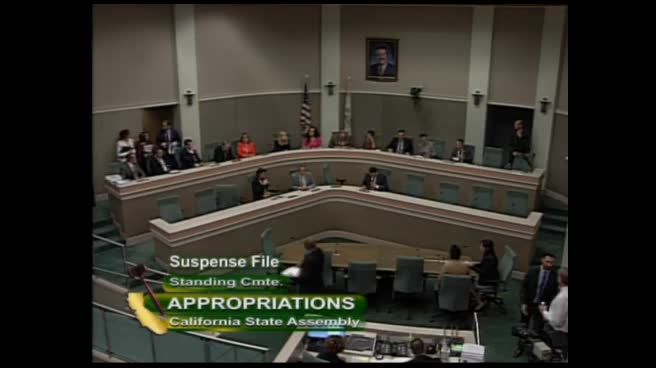
| Apr 26, 2017 | In committee: Set, first hearing. Referred to APPR. suspense file. |
| Apr 18, 2017 | Re-referred to Com. on APPR. |
| Apr 17, 2017 | Read second time and amended. |
| Apr 6, 2017 | From committee: Amend, and do pass as amended and re-refer to Com. on APPR. with recommendation: To Consent Calendar. (Ayes 10. Noes 0.) (April 3). |
| Mar 9, 2017 | Referred to Com. on REV. & TAX. |
| Feb 19, 2017 | From printer. May be heard in committee March 21. |
| Feb 17, 2017 | Read first time. To print. |
|
Date
|
Description
|
Location
|
Votes
|
|
|---|---|---|---|---|
| Apr 3, 2017 | Do pass as amended, and be re-referred to the Committee on [Appropriations] with recommendation: To Consent Calendar | Assembly Standing Committee on Revenue and Taxation |
Passed |
This list shows positions taken on this bill by organizations on the date displayed, which is linked to the original source.
Positions by individuals are not included.
Date of Hearing: April 26, 2017
ASSEMBLY COMMITTEE ON APPROPRIATIONS
Lorena Gonzalez Fletcher, Chair
ABPCA Bill Id:AB 1257
Author:(Baker) – As Amended Ver:April 17, 2017
Policy Committee: | Revenue and Taxation | Vote: | 10 - 0 |
Urgency: No State Mandated Local Program: No Reimbursable: No
SUMMARY:
This bill requires the Franchise Tax Board (FTB), starting on January 1, 2020, to prioritize crime victim restitution payments in its debt collection efforts when a debtor has multiple debts. Specifically, this bill:
- Changes FTB’s top debt collection priority from certain owed state taxes to Court Ordered Debt (COD) involving crime restitution payments.
- Allows FTB to provide for a stay on the statute of limitations on the collection of certain owed state taxes in cases when FTB collects crime victim restitution debt.
FISCAL EFFECT:
- Modest decline in annual collected tax revenue of less than $50,000 (GF) starting in 2020-21 because of the new prioritization of crime victim restitution payments over state tax debt payments as part of the debt collection process. Recent policy committee amendments to AB 1257 allow FTB to issue a stay on the statute of limitations on collecting taxes owed, thereby reducing the overall revenue impact.
- Significant one-time administrative costs in excess of $200,000 (GF) for FTB to develop new systems to implement the new prioritization process, including reprograming debt-collection systems and interfacing with county court systems to develop a process to separate restitution orders from other COD referrals.
COMMENTS:
- Background and Purpose. The California Constitution guarantees that all persons who suffer losses because of criminal activity have the right to seek and secure restitution from the persons convicted of the crimes causing the losses they suffer. Restitution is ordered from the convict in every case in which a crime victim suffers a loss, regardless of the sentence imposed, and all payments or property collected from the convict must first go towards paying the amounts ordered as restitution to the victim.
The FTB is authorized to collect restitution fines and orders under its COD program for participating courts and governments. However, when multiple debts owed by the same taxpayer are being collected by the FTB and the total amount collected is insufficient to satisfy all debts, the FTB applies a specified order of priority. Under existing practice, the FTB prioritizes the payment of any taxes, penalties, interest, fees, or other amounts due to the FTB. The second priority is payment of delinquent vehicle-related fees and penalties that the FTB collects for the FMV. The third priority is the payment of any amounts referred for collection under the COD program, including restitution fines and orders.
According to the author, AB 1257 will make crime victims priority for debt owed from a restitution order.
- Prior Legislation. AB 1530 (Skinner), Chapter 359, Statutes of 2010, provides express authority for the FTB to collect orders of restitution awarded to the FTB in criminal proceedings in the same manner and with the same priority as tax liabilities.
Analysis Prepared by: Luke Reidenbach / APPR. / (916) 319-2081
Date of Hearing: April 3, 2017
ASSEMBLY COMMITTEE ON REVENUE AND TAXATION
Sebastian Ridley-Thomas, Chair
ABPCA Bill Id:AB 1257 (
Author:Baker) – As Introduced Ver:February 17, 2017
Majority vote. Fiscal committee.
SUBJECT: Franchise Tax Board: debtor payment priorities
SUMMARY: Requires the Franchise Tax Board (FTB) to prioritize crime victim restitution payments in its debt collection efforts when a debtor has multiple debts. Specifically, this bill requires, in the event a debtor has more than one debt being collected by the FTB and the amount collected by the FTB is insufficient to satisfy the total amount owed, that the amount collected be applied first to crime victim restitution payments referred for collection by a court.
EXISTING LAW:
- Allows the FTB to collect criminal restitution fines and orders under the Court Ordered Debt (COD) program, in addition to other fines, state or local penalties, and forfeitures imposed by a juvenile or superior court of the State of California for criminal offenses if the amount exceeds $100 in the aggregate and is more than 90 days delinquent.
- Provides that restitution orders referred to the FTB must be imposed by a governmental entity that meets the following criteria:
- The governmental entity is authorized to collect on behalf of the state or the victim;
- The governmental entity is responsible for distributing the restitution order collections; and,
- The governmental entity ensures, in making restitution order referrals and distributions, that it coordinates with any other related collection activities that may occur by superior courts, counties, or other state agencies.
- Establishes a priority for payment of debts when multiple debts are owed by the same taxpayer, but the amount collected by the FTB is insufficient to satisfy the total amount owed. The order of priority is set as follows:
- Payment of any taxes, additions to tax, penalties, interest, fees, or other amounts due and payable to the FTB, including restitution orders for which the FTB is the victim;
- Payment of delinquent vehicle registration fees, transfer fees, license fees, use taxes, penalties for parking-related offenses, penalties for toll evasion, and court-imposed fines or penalty assessments subject to collection by the FTB upon transfer from the Department of Motor Vehicles (DMV);
- Payment of any amounts due referred for collection under the COD program; and,
- Payment of any delinquent tax debt referred for collection pursuant to an agreement between the FTB and the Internal Revenue Service (IRS) or any other state imposing an income tax.
- Provides that voluntary payments designated by the taxpayer as payment for a personal income tax liability or restitution order due and payable to the FTB are to be applied as designated, in lieu of the established order of priority.
- Allows the FTB to collect restitution orders awarded to the FTB by a court in criminal proceedings in the same manner and with the same priority as delinquent tax liabilities.
- Establishes a 20 year statute of limitations on the collection of a tax delinquency by the FTB, but provides a stay on the statute of limitations in specified circumstances, such as if the taxpayer is in bankruptcy or serving in a military combat zone.
FISCAL EFFECT: The FTB estimates General Fund revenue losses of $20,000 in fiscal year (FY) 2017-18, $90,000 in FY 2018-19, and $150,000 in FY 2019-20.
COMMENTS:
- The author has provided the following statement in support of this bill:
Under existing law, when a debtor owes multiple debts, and the amount collected is insufficient to satisfy the total amount owed, the amount gathered from the debtor is collected in a specific order of priority. Currently, the FTB collects taxes on the "income" from the criminal before the victim is able to receive restitution for his or her loss. Under Section 19533 of the Revenue and Taxation Code, the FTB has priority over victims of crime, and crime victims who have experienced an economic loss instead only receive a portion of the restitution order owed to them rather than the full reimbursement. Worse, they do not receive restitution for their loss until the FTB has collected taxes on the criminal's "income."
AB 1257 would amend current law to make crime victims priority for debt owed from a restitution order, coming before any collective actions made by the FTB. Victims would receive more restitution owed to them to help them recover from the loss they have suffered.
- Committee Staff Comments:
- Criminal Restitution and the COD Program: The California Constitution guarantees that all persons who suffer losses because of criminal activity have the right to seek and secure restitution from the persons convicted of the crimes causing the losses they suffer. Restitution is ordered from the convict in every case in which a crime victim suffers a loss, regardless of the sentence imposed, and all payments or property collected from the convict must first go towards paying the amounts ordered as restitution to the victim.
The FTB is authorized to collect restitution fines and orders under its COD program for participating courts and government entities, in addition to other delinquent court-ordered debt such as fines, state or local penalties, bail, forfeitures, and vehicle code violations, for participating courts and agencies. In order to qualify for the program, the debt must be over $100 and at least 90 days delinquent. Additionally, restitution orders must have been referred to the FTB by a governmental entity that is authorized to collect the debt on behalf of the state or victim, responsible for distributing restitution order collections, and coordinating with other related collection activities that may occur regarding the debt. According to the FTB, restitution orders are collected through an automated collection system that imposes wage garnishments, bank levies, and offsets. COD collectors respond to debtor contacts resulting from actions taken by the automated system, but do not take other enforcement actions such as field calls or asset seizure undertaken for tax debt collection.
- Payment Priority Order: When multiple debts owed by the same taxpayer are being collected by the FTB but the total amount collected is insufficient to satisfy all debts, the FTB must apply the amount collected in a specified order of priority. The first priority is payment of any taxes, additions to tax, penalties, interest, fees, or other amounts due to the FTB, including restitution orders for which the FTB is the victim. The second priority is payment of delinquent vehicle-related fees and penalties, such as the vehicle license fee and toll evasion penalties, that the FTB collects for the DMV. The third priority is payment of any amounts referred for collection under the COD program, including restitution fines and orders. The last priority is payment of tax debts due to the IRS or other states. This bill would set apart restitution payments to victims of crimes from the other debts collected via the COD program and make restitution payments the first priority for application of collected debt. All subsequent payment collections would be shifted down in order of priority, with non-restitution COD collection becoming fourth priority. Since collection methods for tax debt and COD differ, the FTB would thus be required to prioritize collection of restitution over tax debt if the debtor has more than one debt being collected by the FTB.
As noted by the FTB in its analysis of this bill, the FTB's core mission is to assist taxpayers in filing timely and accurate tax returns so the correct amount of tax due is paid to fund public services important to all Californians. This bill would shift the FTB's collections priority from unpaid taxes to delinquent restitution orders when a debtor has more than one debt being collected by the FTB. While crime victims are undoubtedly deserving of and entitled to timely restitution payments, prioritizing collection of delinquent restitution over tax debt means that some outstanding tax debts may become uncollectible if the statute of limitations on collections expires. The Committee may wish to consider providing a stay on the statute of limitations for collection of tax due if the taxpayer also has outstanding restitution due and collectable under the COD program.
- COD Program Limitations: The FTB's analysis of this bill also notes that setting apart restitution payments from other debts collected via the COD program would require the FTB and each county's superior court system to have the ability to identify and separate restitution orders accordingly. According to the FTB, such classification is not a feature of the current program system. The Committee may wish to consider whether the FTB and counties should be allotted more time to update their systems to facilitate the reprioritization of debt collection proposed by this bill.
- Prior Legislation: AB 1530 (Skinner, Chapter 359, Statutes of 2010) provided express authority for the FTB to collect orders of restitution awarded to the FTB in criminal proceedings in the same manner and with the same priority as tax liabilities.
REGISTERED SUPPORT / OPPOSITION:
Support
None on file
Opposition
None on file
Analysis Prepared by: Irene Ho / REV. & TAX. / (916) 319-2098
Discussed in Hearing
 1H