AB 1293: Electricity: rates: proposed investments: data.
- Session Year: 2017-2018
- House: Assembly
- Latest Version Date: 2017-04-26
Under existing law, the Public Utilities Commission has regulatory authority over public utilities, including electrical corporations, as defined, while local publicly owned electric utilities, as defined, are under the direction of their governing boards. Existing law authorizes the Public Utilities Commission to fix the rates and charges for every public utility, and requires that those rates and charges be just and reasonable.
This bill would require local publicly owned electric utilities, when adjusting their rates, to collect and analyze data supporting their proposed investments in the electrical grid, and would require each electrical corporation with more than 100,000 customer accounts in California, as part of its general rate case application, to submit data, and an analysis of that data, supporting its proposed investments in the electrical grid to the commission. The bill would require local publicly owned electric utilities and these electrical corporations grid. The bill would require those utilities to make their that data and analyses analysis publicly available and, upon request, to electronically transfer their that data and analyses analysis to the requester. The bill would require that the data and analyses analysis be in a digital, machine-readable format.
This bill would require the commission to consider providing the public with access to data, in a digital, machine-readable format, related to proposed investments in the electrical grid by electrical corporations, to the degree that the access is feasible and protects both grid security and privacy.
By imposing additional duties on local agencies, this bill would impose a state-mandated local program.
Under existing law, a violation of any order, decision, rule, direction, demand, or requirement of the commission is a crime. Because a violation of an order or decision of the commission implementing the requirements of the bill would be a crime, the bill would impose a state-mandated local program by creating a new crime.
The California Constitution requires the state to reimburse local agencies and school districts for certain costs mandated by the state. Statutory provisions establish procedures for making that reimbursement.
This bill would provide that no reimbursement is required by this act for specified reasons.
Under existing law, the Public Utilities Commission has regulatory authority over public utilities, including electrical corporations, as defined, while local publicly owned electric utilities, as defined, are under the direction of their governing boards. Existing law authorizes the Public Utilities Commission to fix the rates and charges for every public utility, and requires that those rates and charges be just and reasonable.
This bill would require local publicly owned electric utilities, when adjusting their rates, to collect and analyze data supporting their proposed investments in the electrical grid, and would require each electrical corporation with more than 100,000 customer accounts in California, as part of its general rate case application, to submit data, and an analysis of that data, supporting its proposed investments in the electrical grid to the commission. The bill would require local publicly owned electric utilities and these electrical corporations to make their data and analyses publicly available and, upon request, to electronically transfer their data and analyses to the requester. The bill would require that the data and analyses be in a digital, machine-readable format.
By imposing additional duties on local agencies, this bill would impose a state-mandated local program.
Under existing law, a violation of any order, decision, rule, direction, demand, or requirement of the commission is a crime. Because a violation of an order or decision of the commission implementing the requirements of the bill would be a crime, the bill would impose a state-mandated local program by creating a new crime.
The California Constitution requires the state to reimburse local agencies and school districts for certain costs mandated by the state. Statutory provisions establish procedures for making that reimbursement.
This bill would provide that no reimbursement is required by this act for specified reasons.
Under existing law, the Public Utilities Commission has regulatory authority over public utilities, including electrical corporations and gas corporations. Existing law authorizes the commission to fix the rates and charges for every public utility and requires that those rates and charges be just and reasonable. Existing law requires the commission and the Electricity Oversight Board to jointly facilitate the efforts of the states transmission owning electrical corporations to obtain authorization from the Federal Energy Regulatory Commission to recover reasonable expenditures made to plan, design, and engineer reconfiguration, replacement, or expansion of transmission facilities for the purposes of facilitating competition in electrical generation markets, ensuring open access and comparable service, or maintaining or enhancing reliability, whether or not these expenditures are for transmission facilities that become operational.This bill would make nonsubstantive changes in the language requiring that the commission and the Electricity Oversight Board jointly facilitate the efforts of the states transmission owning electrical corporations to obtain authorization from the Federal Energy Regulatory Commission to recover the above-described transmission related expenses.Under existing law, the Public Utilities Commission has regulatory authority over public utilities, including electrical corporations and gas corporations. Existing law authorizes the commission to fix the rates and charges for every public utility and requires that those rates and charges be just and reasonable. Existing law requires the commission and the Electricity Oversight Board to jointly facilitate the efforts of the states transmission owning electrical corporations to obtain authorization from the Federal Energy Regulatory Commission to recover reasonable expenditures made to plan, design, and engineer reconfiguration, replacement, or expansion of transmission facilities for the purposes of facilitating competition in electrical generation markets, ensuring open access and comparable service, or maintaining or enhancing reliability, whether or not these expenditures are for transmission facilities that become operational.
This bill would make nonsubstantive changes in the language requiring that the commission and the Electricity Oversight Board jointly facilitate the efforts of the states transmission owning electrical corporations to obtain authorization from the Federal Energy Regulatory Commission to recover the above-described transmission related expenses.
It is the intent of the Legislature to require maximum transparency and public review of technical data and analysis supporting proposed investments in the electrical grid by large electrical corporations and local publicly owned electric utilities.
SEC. 2.Chapter 7 (commencing with Section 8400) is added to Division 4.1 of the Public Utilities Code, to read:7.Ratemaking8400.(a)A local publicly owned electric utility, when adjusting its rates, shall collect and analyze data supporting its proposed investments in the electrical grid.
(b)The local publicly owned electric utility shall make the data and analysis publicly available, and shall, upon request, electronically transfer the data and analysis to the requester, who shall have flexible access to the information, as determined by the governing body of the local publicly owned electric utility.
(c)The local publicly owned electric utility shall ensure that the data and analysis is secure and that customer information remains confidential, while also maximizing the accessibility and usefulness of the information, as determined by the governing board of the local publicly owned electric utility.
(d)The data and analysis shall be in a digital, machine-readable format.
8401.(a)An electrical corporation, as part of its general rate case application, shall submit data, and an analysis of that data, supporting its proposed investments in the electrical grid to the commission.(b)The electrical corporation shall make the data and analysis publicly available, and shall, upon request, electronically transfer the data and analysis to the requester, who shall have flexible access to the information, as determined by the commission.(c)The electrical corporation shall ensure that the data and analysis is secure and that customer information remains confidential, while also maximizing the accessibility and usefulness of the information, as determined by the commission.(d)The data and analysis shall be in a digital, machine-readable format.(e)This section shall only apply to an electrical corporation with more than 100,000 customer accounts in California.8401.The commission shall, as part of Rulemaking 14-08-013 or another ongoing proceeding, consider providing the public with access to data, in a digital, machine-readable format, related to a proposed investment in the electrical grid by an electrical corporation, to the degree that the access is feasible and protects both grid security and privacy.
SEC. 3.No reimbursement is required by this act pursuant to Section 6 of Article XIIIB of the California Constitution because a local agency or school district has the authority to levy service charges, fees, or assessments sufficient to pay for the program or level of service mandated by this act or because costs that may be incurred by a local agency or school district will be incurred because this act creates a new crime or infraction, eliminates a crime or infraction, or changes the penalty for a crime or infraction, within the meaning of Section 17556 of the Government Code, or changes the definition of a crime within the meaning of Section 6 of Article XIIIB of the California Constitution.
It is the intent of the Legislature to require maximum transparency and public review of technical data and analysis supporting proposed investments in the electrical grid by large electrical corporations and local publicly owned electric utilities.
SEC. 2.Chapter 7 (commencing with Section 8400) is added to Division 4.1 of the Public Utilities Code, to read:7.Ratemaking8400.(a)A local publicly owned electric utility, when adjusting its rates, shall collect and analyze data supporting its proposed investments in the electrical grid.
(b)The local publicly owned electric utility shall make the data and analysis publicly available, and shall, upon request, electronically transfer the data and analysis to the requester, who shall have flexible access to the information, as determined by the governing body of the local publicly owned electric utility.
(c)The local publicly owned electric utility shall ensure that the data and analysis is secure and that customer information remains confidential, while also maximizing the accessibility and usefulness of the information, as determined by the governing board of the local publicly owned electric utility.
(d)The data and analysis shall be in a digital, machine-readable format.
8401.(a)An electrical corporation, as part of its general rate case application, shall submit data, and an analysis of that data, supporting its proposed investments in the electrical grid to the commission.
(b)The electrical corporation shall make the data and analysis publicly available, and shall, upon request, electronically transfer the data and analysis to the requester, who shall have flexible access to the information, as determined by the commission.
(c)The electrical corporation shall ensure that the data and analysis is secure and that customer information remains confidential, while also maximizing the accessibility and usefulness of the information, as determined by the commission.
(d)The data and analysis shall be in a digital, machine-readable format.
(e)This section shall only apply to an electrical corporation with more than 100,000 customer accounts in California.
SEC. 3.No reimbursement is required by this act pursuant to Section 6 of Article XIIIB of the California Constitution because a local agency or school district has the authority to levy service charges, fees, or assessments sufficient to pay for the program or level of service mandated by this act or because costs that may be incurred by a local agency or school district will be incurred because this act creates a new crime or infraction, eliminates a crime or infraction, or changes the penalty for a crime or infraction, within the meaning of Section 17556 of the Government Code, or changes the definition of a crime within the meaning of Section 6 of Article XIIIB of the California Constitution.
SECTION 1.Section 464 of the Public Utilities Code is amended to read:464.(a)Reasonable expenditures by transmission owners that are electrical corporations to plan, design, and engineer reconfiguration, replacement, or expansion of transmission facilities are in the public interest and are deemed prudent if made for the purpose of facilitating competition in electrical generation markets, ensuring open access and comparable service, or maintaining or enhancing reliability, whether or not these expenditures are for transmission facilities that become operational.(b)The commission and the Electricity Oversight Board shall jointly facilitate the efforts of the states transmission owning electrical corporations to obtain authorization from the Federal Energy Regulatory Commission to recover reasonable expenditures made for the purposes stated in subdivision (a).(c)Nothing in this section alters or affects the recovery of the reasonable costs of other electrical facilities in rates pursuant to the commissions existing ratemaking authority under this code or pursuant to the Federal Power Act (41 Stat. 1063; 16 U.S.C. Secs. 791a, et seq.). The commission may periodically review and adjust depreciation schedules and rates authorized for an electric plant that is under the jurisdiction of the commission and owned by an electrical corporation and periodically review and adjust depreciation schedules and rates authorized for a gas plant that is under the jurisdiction of the commission and owned by a gas corporation, consistent with this code.(a)Reasonable expenditures by transmission owners that are electrical corporations to plan, design, and engineer reconfiguration, replacement, or expansion of transmission facilities are in the public interest and are deemed prudent if made for the purpose of facilitating competition in electric electrical generation markets, ensuring open access and comparable service, or maintaining or enhancing reliability, whether or not these expenditures are for transmission facilities that become operational.
(b)The commission and the Electricity Oversight Board shall jointly facilitate the efforts of the states transmission owning electrical corporations to obtain authorization from the Federal Energy Regulatory Commission to recover reasonable expenditures made for the purposes stated in subdivision (a).
(c)Nothing in this section alters or affects the recovery of the reasonable costs of other electric electrical facilities in rates pursuant to the commissions existing ratemaking authority under this code or pursuant to the Federal Power Act (41 Stat. 1063; 16 U.S.C. Secs. 791a, et seq.). The commission may periodically review and adjust depreciation schedules and rates authorized for an electric plant that is under the jurisdiction of the commission and owned by an electrical corporation and periodically review and adjust depreciation schedules and rates authorized for a gas plant that is under the jurisdiction of the commission and owned by a gas corporation, consistent with this code.
|
Date
|
Status
|
|---|---|
| Feb 1, 2018 | From committee: Filed with the Chief Clerk pursuant to Joint Rule 56. |
| Jan 31, 2018 | Died pursuant to Art. IV, Sec. 10(c) of the Constitution. |
| May 26, 2017 | In committee: Held under submission. |
| May 10, 2017 | In committee: Set, first hearing. Referred to APPR. suspense file. |
| Apr 27, 2017 | Re-referred to Com. on APPR. |
| Apr 26, 2017 | Read second time and amended. |
| Apr 25, 2017 | From committee: Amend, and do pass as amended and re-refer to Com. on APPR. (Ayes 10. Noes 0.) (April 19). |
| Apr 4, 2017 | Re-referred to Com. on U. & E. |
| Apr 3, 2017 | From committee chair, with author's amendments: Amend, and re-refer to Com. on U. & E. Read second time and amended. |
| Mar 30, 2017 | Referred to Com. on U. & E. |
| Feb 19, 2017 | From printer. May be heard in committee March 21. |
| Feb 17, 2017 | Read first time. To print. |
|
Date
|
Description
|
Location
|
Votes
|
|
|---|---|---|---|---|
| Apr 19, 2017 | Do pass as amended and be re-referred to the Committee on [Appropriations] | Assembly Standing Committee on Utilities and Energy |
Passed |
This list shows positions taken on this bill by organizations on the date displayed, which is linked to the original source.
Positions by individuals are not included.
|
Organization
|
Position
|
Date
|
|---|---|---|
| CA Solar Energy Industries Association | * Support | Apr 19, 2017 |
| California Energy Efficiency Industry Council | * Support | Apr 19, 2017 |
| California Energy Storage Alliance | * Support | Apr 19, 2017 |
| California Municipal Utilities Association | * Against | Apr 19, 2017 |
| California Solar Energy Industries Association | * Support | Apr 19, 2017 |
| Coalition For Clean Air | ** Support | Apr 17, 2017 |
| DBL Investors | ** Support | Apr 17, 2017 |
| Green Charge | ** Support | Apr 17, 2017 |
| Northern California Power Agency | * For If Amend | Apr 19, 2017 |
| Sunrun Inc. | * Support | Apr 19, 2017 |
| Technet | * Support | Apr 19, 2017 |
| The SunSpec Alliance | ** Support | Apr 17, 2017 |
| UtilityAPI | ** Support | Apr 17, 2017 |
Date of Hearing: May 10, 2017
ASSEMBLY COMMITTEE ON APPROPRIATIONS
Lorena Gonzalez Fletcher, Chair
ABPCA Bill Id:AB 1293
Author:(Irwin) – As Amended Ver:April 26, 2017
Policy Committee: | Utilities and Energy | Vote: | 10 - 0 |
|
| ||
|
|
Urgency: No State Mandated Local Program: Yes Reimbursable: No
SUMMARY:
This bill requires publicly-owned electric utilities (POUs), when, adjusting their rates, to collect and analyze data supporting their proposed investments in the electrical grid. This bill also requires POUs to make data and analysis publicly available, and upon request, electronically transfer the data and analysis to any requester in a digital, machine-readable format, when adjusting rates. The POU is also required to ensure the data and analysis is secure and customer information remains confidential.
Additionally, this bill requires the California Public Utilities Commission (PUC), as part of Rulemaking 14-08-013 or another ongoing proceeding, to consider providing the public with access to data, in a digital, machine-readable format, related to a proposed investment in electric grid by an electrical corporation, to the degree the access is feasible and protects both grid security and privacy.
FISCAL EFFECT:
- One-time costs for the PUC to contract with consultants of $100,000 per year for four years to advise on and potentially develop machine readable data transfers, proposed energy investments, and security and privacy issues (Utilities Reimbursement Account).
- Ongoing annual administrative costs of approximately $220,000 for the PUC to assess the requested grid investments, and make determinations about which data are needed as well as the appropriate format for the data to be delivered (Utilities Reimbursement Account).
COMMENTS:
- Author’s Comments. According to the author, “Designing the grid of the future requires understanding the grid of the present – not just for utilities, but for all market participants. Increased transparency and data readability can help accelerate the innovation and development of the smart grid in which all industries, including customers, can participate. AB 1293 will require grid level data to be available in a machine readable format which will allow all market participants beside utilities to understand the grid and its infrastructure.”
- Background. The PUC is tackling the issue of access to grid data in its Distribution Resources Plan proceeding and has taken significant stakeholder comment and held workshops on the issue
Parties in D14-08-013 have asked the PUC to order the development of a centralized data access platform through which third parties could access data in standardized formats and with consistent authorizations across data types. The IOUs have included in their distribution resource plans (DRPs) applications proposals on data sharing policies and procedures, as well as how make grid condition and smart meter data publicly available.
Public Records Act. This bill mandates release of grid data by the POUs as well and to “electronically transfer the data and analysis to the requester, who shall have flexible access to the information.” Access to the data of public agencies is governed by public the Public Records Act and the POUs are not regulated by the PUC so the rules adopted in the DRP proceeding will not apply to the POUs.
Analysis Prepared by: Jennifer Galehouse / APPR. / (916) 319-2081
Date of Hearing: April 19, 2017
ASSEMBLY COMMITTEE ON UTILITIES AND ENERGY
Chris Holden, Chair
ABPCA Bill Id:AB 1293 (
Author:Irwin) – As Amended Ver:April 3, 2017
SUBJECT: Electricity: rates: proposed investments: data
SUMMARY: Mandates the release of data and analyses supporting proposed investments in the electric grid by the three largest electrical corporations (IOUs) and local publicly owned electric utilities (POUs) in machine readable format. Specifically, this bill:
- Requires POUs to make data and analysis publicly available, and upon request, electronically transfer the data and analysis to any requester in a digital, machine-readable format, when adjusting rates. The POU is also required to ensure that the data and analysis is secure and that customer information remains confidential.
- Requires IOUs, as part of general rate case applications, to include data and analysis supporting proposed grid investments and electronically transfer the data and analysis to any requester in a digital, machine-readable format. The IOU is also required to ensure that the data and analysis is secure and that customer information remains confidential
EXISTING LAW:
- Requires IOUs to file distribution resources plans with the CPUC which identify optimal locations for the deployment of distributed resources which are defined as distributed renewable generation resources, energy efficiency, energy storage, electric vehicles, and demand response technologies. (Public Utilities Code § 769)
- Requires that IOU spending on distribution infrastructure necessary to accomplish the distribution resources plan to be proposed and considered as part IOU general rate cases. (Public Utilities Code § 769(d))
- Require IOUs and POUs to use reasonable security procedures and practices to protect a customer’s unencrypted electrical or gas consumption data from unauthorized access, destruction, use, modification, or disclosure. (Public Utilities Code §§ 8380, 8381)
FISCAL EFFECT: This bill is keyed fiscal and will be referred to the Appropriations Committee for its review of the fiscal effect of this bill.
BACKGROUND:
CPUC & Data Access Rules. The CPUC has begun to address data access issues through many proceedings. Its first major decision focused on consumption data and considered several use case scenarios and types of entities interested in data access including government officials and researchers for different types of programs (e.g. benchmarking programs) and analysis (identifying patterns and drivers of electricity consumption, to target and evaluate energy investments). Also considered were third party requests for data access including analyzing customer data to increase deployment of distributed renewable energy and energy efficiency improvements at customer’s homes has the potential to offer great value to California residents. The commission found supported and encouraged the use of energy usage and usage-related data and found it “reasonable to require that the data be made available in a common data format(s), developed by the utilities in consultation with Commission Staff, that includes zip code, customer class, and, for each month, the number of customers, total consumption, and average consumption. At least one format must be machine readable.” The decision established a Data Request and Response Process, a protocol for IOUs to follow when providing customer usage data to eligible third party requesters.
Energy Data Access Committee. The CPUC also required the IOUs to establish the Energy Data Access Committee consisting of representatives from each IOU, CPUC staff, the Office of Ratepayer Advocates, researchers, customer and privacy advocacy groups, and other interested parties. The EDAC generally meets quarterly and provides advice regarding a utility's protocols for reviewing data requests, acts as an informal body to review disputes between a utility and a requestor, and acts as an on-going forum to discuss and review changes in protocols in response to changing technological abilities. The EDAC is non-adjudicatory and serves as a forum to discuss issues that arise from the data request process; formal dispute resolution may be sought through the Commission's
Distribution Resources Planning. Access to distribution and transmission data requires different methods, authorizations, and security standards to access different types of customer and planning data, considerations than those issues associated with consumption data addressed in a prior proceeding by the CPUC. The filing of distribution resources plans by the IOUs as required by AB 327 in 2013 is addressing third party access to this type of data.
Parties in D.14-08-013 have asked the CPUC to order the development of a centralized data access platform through which third parties could access data in standardized formats and with consistent authorizations across data types. The IOUs have included in their DRP applications proposals on data sharing policies and procedures, as well as how make grid condition and smart meter data publicly available. A later ruling in the proceeding solicited comments on questions related to data access, including: needed data types and granularity; how to improve the access and availability of existing public data; whether such data types would be provided through the ICA or LNBA; whether a data access working group is needed; and whether the utilities need to update their applications with regards to data access. These questions were explored in more detail at a subsequent workshop. The filings in this proceeding report that some grid data is already publicly available, but is located in different places, ranging from customer data available through the Customer Data Access platform to grid conditions data available through the Renewable Auction Mechanism maps.
“Unlocking Grid Data: Enabling Data Access and Transparency to Drive Innovation in the Electric Grid.” This report puts forth the case for increased data sharing and the reasons for sharing data with a wide group of stakeholders and market participants. The authors opine that “to accelerate delivery of innovative customer and DER solutions to offset and/or defer grid investments, granular data on grid needs and planned investments is critical. Regulators should require grid operators and utilities to share their holistic grid needs data from their distribution planning process through a machine readable, standard data format. In most cases this data is readily available to utilities but must also be made accessible to third parties.”
COMMENTS:
- Author’s Comments. According the authors office, “Designing the grid of the future requires understanding the grid of the present – not just for utilities, but for all market participants. Increased transparency and data readability can help accelerate the innovation and development of the smart grid in which all industries, including customers, can participate. AB 1293 will require grid level data to be available in a machine readable format which will allow all market participants beside utilities to understand the grid and its infrastructure.”
- What IOU Data? This bill broadly calls for the release of utility data supporting proposed investments in the electrical grid which lacks sufficient clarity for implementation by the CPUC and IOUs. Moreover, broad references run up against significant security and privacy issues which must be foremost in regulator review of data access by third parties.
- Already Down the Road. The CPUC is tackling the issue of access to grid data in its Distribution Resources Plan proceeding and has taken significant stakeholder comment and held workshops on the issue. The mandates of this bill would require the CPUC to open a separate proceeding to address access to grid data specifically associated with grid investments posed in general rate cases. An entirely new proceeding by the CPUC could duplicate existing proceedings and significantly delay the CPUC’s consideration of data access. Moreover, data and the rules for access are not dictated by the types of issues in a proceeding (e.g. rates vs. distributing planning) but are guided by security, feasibility and other cross-cutting issues which are being addressed by the CPUC.
The author reports that her primary concern in this bill is to ensure that data is available to third parties in machine-readable format. It is not clear how the format of released data will be addressed by the CPUC in the DRP proceeding. But to prevent duplication by the CPUC in its proceedings and also ensure that the issue of formatting is addressed, the committee may want to amend this bill to strike the current content and direct the CPUC to consider data access in machine readable format in its current proceeding D. 14-08-013. - Public Records Act. This bill mandates release of grid data by the POUs as well and to “electronically transfer the data and analysis to the requester, who shall have flexible access to the information.” Access to the data of public agencies is governed by public the Public Records Act and the POUs are not regulated by the CPUC so the rules adopted in the DRP proceeding will not apply to the POUs.
The bill specifically calls for POU data access to be subject to “determination of the local governing board” which the committee reads as permitting the governing board to address security, privacy, and feasibility issues. - Related Legislation.
SB 356 (Skinner) Requires the CPUC and California Energy Commission) to jointly make available electronically to the public certain data including pricing data for electricity, on a single Internet Web page. Status: Pending hearing in the Senate Energy, Utilities & Communications Committee.
AB 1431 (Arambula) Requires CEC and Government Operations Agency to make aggregate data available on its Internet Web site. Status: Set for hearing in the Assembly Utilities and Energy, April 19, 2017.
- Prior Legislation.
AB 327 (Perea) Among the provisions, requires the IOUs to develop and file Distribution Resource Plans with the CPUC. Status: Chapter 611, Statutes of 2013.
SB 1476 (Padilla) Required IOUs and POUs using advanced metering (smart meters) to protect consumers’ energy usage data from an unauthorized access or disclosure, and prohibited IOUs and POUs from certain activities. Status: Chapter 497, Statutes of 2010.
SB 674 (Padilla) Clarified that contracts between utilities and third parties to facilitate a customer’s access to consumption data require a customer’s prior consent for the third party use and release of a customer’s data for a secondary commercial purpose. Status: Chapter 255, Statutes of 2011.
REGISTERED SUPPORT / OPPOSITION:
Support
California Energy Efficiency Industry Council
California Solar Energy Industries Association
Coalition For Clean Air
DBL Investors
Green Charge
SunRun, Inc.
TechNet
The SunSpec Alliance
UtilityAPI
Opposition
None on file.
Analysis Prepared by: Elle Hoxworth / U. & E. /
Discussed in Hearing
 1H
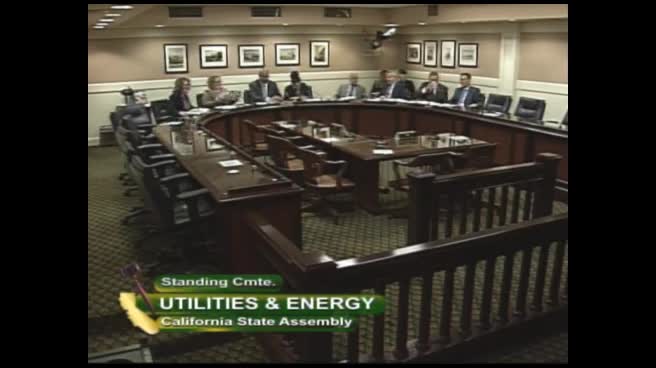
Assembly Standing Committee on Appropriations
 14MIN
Assembly Standing Committee on Utilities and Energy
Bill Author

Bill Co-Author(s):