AB 2418: Transportation: emerging transportation technologies: California Smart Cities Challenge Grant Program.
- Session Year: 2017-2018
- House: Assembly
- Latest Version Date: 2018-04-09
Existing law creates the California Transportation Commission, with various powers and duties relative to the programming of transportation capital projects and allocation of funds to those projects pursuant to the state transportation improvement program and various other transportation funding programs.
This bill would establish the California Smart City Challenge Grant Program to enable municipalities to compete for grant funding for emerging transportation technologies to serve their transportation system needs, and would specify certain program goals. The bill would require the commission to form the California Smart City Challenge Workgroup on or before July 1, 2019, to provide the commission with guidance on program matters, as specified. The bill would authorize require the commission, in consultation with the workgroup, to develop guidelines on or before March 1, 2020, for the program, which would not be subject to the Administrative Procedure Act, and to revise them as necessary. The bill would make the implementation of the program contingent upon an appropriation in the annual budget act.
Existing law creates the California Transportation Commission, with various powers and duties relative to the programming of transportation capital projects and allocation of funds to those projects pursuant to the state transportation improvement program and various other transportation funding programs.
This bill would establish the California Smart City Challenge Grant Program to enable municipalities to compete for grant funding for emerging transportation technologies to serve their transportation system needs, and would specify certain program goals. The bill would require the commission to form the California Smart City Challenge Workgroup to provide the commission with guidance on program matters, as specified. The bill would authorize the commission, in consultation with the workgroup, to develop guidelines for the program, which would not be subject to the Administrative Procedure Act, and to revise them as necessary. The bill would make the implementation of the program contingent upon an appropriation in the annual budget act.
Existing law provides various sources of funding for transportation purposes, including funding for the state highway system and the local street and road system. This bill would state the intent of the Legislature to enact legislation to establish a pilot program that allows municipalities to compete for grant funding, and to leverage both public and private funding to promote flexible innovation and encourage the use of advanced technologies to improve the states transportation system.Existing law provides various sources of funding for transportation purposes, including funding for the state highway system and the local street and road system.
This bill would state the intent of the Legislature to enact legislation to establish a pilot program that allows municipalities to compete for grant funding, and to leverage both public and private funding to promote flexible innovation and encourage the use of advanced technologies to improve the states transportation system.
The California Smart City Challenge Grant Program is hereby established to enable municipalities to compete for grant funding for emerging transportation technologies to serve their transportation system needs.
14540.1.It is the intent of the Legislature that the program encourage municipalities to incorporate advanced data and intelligent transportation system technologies and applications into their transportation planning efforts in order to accomplish the following program goals:
(a)Reduce congestion.
(b)Keep travelers safe.
(c)Meet environmental and climate change goals.
(d)Enhance mobility.
(e)Connect underserved communities.
(f)Support economic vitality.
(g)Attract private investment.
(h)Spur innovation.
14540.2.On or before July 1, 2019, the commission shall form the California Smart City Challenge Workgroup to provide the commission with guidance on program matters including, but not limited to, the development of, and subsequent revisions to, the guidelines developed pursuant to Section 14540.3, schedules and procedures, project selection criteria, performance measures, and evaluations. The workgroup may include, but shall not be limited to, representatives of local governmental agencies, local transportation organizations, and the University of Californias Institute of Transportation Studies.
14540.3.(a)On or before March 1, 2020, the commission, in consultation with the California Smart City Challenge Workgroup formed pursuant to Section 14540.2, shall develop guidelines for the program. The commission may revise the guidelines as necessary. The commission shall adopt the guidelines or revised guidelines following at least two public hearings.
(b)The guidelines shall include project selection criteria and define the types of projects eligible for funding through the program. The guidelines shall require that an eligible project serve one or more of the goals described in Section 14540.1 and may favor a project that serves more than one of those goals.
(c)The guidelines shall not be subject to the requirements of the Administrative Procedure Act (Chapter 3.5 (commencing with Section 11340) of Part 1 of Division 3 of Title 2 of the Government Code).
14540.4.Implementation of the grant program is contingent upon an appropriation in the annual Budget Act for purposes of the California Smart City Challenge Grant Program.
SECTION 1.Part 5 (commencing with Section 75250) is added to Division 44 of the Public Resources Code, to read:5.California Smart City Challenge Grant Program75250.The California Smart City Challenge Grant Program is hereby established to enable municipalities to compete for grant funding for emerging transportation technologies to serve their transportation system needs.75251.It is the intent of the Legislature that the program demonstrate how advanced data and intelligent transportation system (ITS) technologies and applications can be used to meet all of the following program goals:(a)Reduce congestion.(b)Keep travelers safe.(c)Establish environmental and climate change goals.(d)Enhance mobility.(e)Connect underserved communities.(f)Support economic vitality.(g)Attract private investment.(h)Spur innovation.75252.(a)The California Transportation Commission, in consultation with the California Smart City Challenge Workgroup formed pursuant to Section 75253, shall develop guidelines for the program and may revise them as necessary. The commission shall adopt the guidelines following at least two public hearings.(b)The guidelines shall include project selection criteria and define the types of projects eligible for funding through the program. The guidelines shall require that an eligible project serve one or more of the goals described in Section 75251 and may favor a project that serves more than one of those goals.(c)The guidelines shall not be subject to the requirements of the Administrative Procedure Act (Chapter 3.5 (commencing with Section 11340) of Part 1 of Division 3 of Title 2 of the Government Code).75253.The California Transportation Commission shall form the California Smart City Challenge Workgroup to provide the commission with guidance on program matters including, but not limited to, the development of and subsequent revisions to the guidelines developed pursuant to Section 75252, schedules and procedures, project selection criteria, performance measures, and evaluations. The workgroup may include, but shall not be limited to, representatives of local governmental agencies, local transportation organizations, and the University of Californias Institute of Transportation Studies.75254.Implementation of this part is contingent upon an appropriation in the annual Budget Act for purposes of the California Smart City Challenge Grant Program.The California Smart City Challenge Grant Program is hereby established to enable municipalities to compete for grant funding for emerging transportation technologies to serve their transportation system needs.
75251.It is the intent of the Legislature that the program demonstrate how advanced data and intelligent transportation system (ITS) technologies and applications can be used to meet all of the following program goals:
(a)Reduce congestion.
(b)Keep travelers safe.
(c)Establish environmental and climate change goals.
(d)Enhance mobility.
(e)Connect underserved communities.
(f)Support economic vitality.
(g)Attract private investment.
(h)Spur innovation.
75252.(a)The California Transportation Commission, in consultation with the California Smart City Challenge Workgroup formed pursuant to Section 75253, shall develop guidelines for the program and may revise them as necessary. The commission shall adopt the guidelines following at least two public hearings.
(b)The guidelines shall include project selection criteria and define the types of projects eligible for funding through the program. The guidelines shall require that an eligible project serve one or more of the goals described in Section 75251 and may favor a project that serves more than one of those goals.
(c)The guidelines shall not be subject to the requirements of the Administrative Procedure Act (Chapter 3.5 (commencing with Section 11340) of Part 1 of Division 3 of Title 2 of the Government Code).
75253.The California Transportation Commission shall form the California Smart City Challenge Workgroup to provide the commission with guidance on program matters including, but not limited to, the development of and subsequent revisions to the guidelines developed pursuant to Section 75252, schedules and procedures, project selection criteria, performance measures, and evaluations. The workgroup may include, but shall not be limited to, representatives of local governmental agencies, local transportation organizations, and the University of Californias Institute of Transportation Studies.
75254.Implementation of this part is contingent upon an appropriation in the annual Budget Act for purposes of the California Smart City Challenge Grant Program.
SECTION 1.It in the intent of the Legislature to enact legislation to establish a pilot program that allows municipalities to compete for grant funding, and to leverage both public and private funding to promote flexible innovation and encourage the use of advanced technologies to improve the states transportation system.It in the intent of the Legislature to enact legislation to establish a pilot program that allows municipalities to compete for grant funding, and to leverage both public and private funding to promote flexible innovation and encourage the use of advanced technologies to improve the states transportation system.
|
Date
|
Status
|
|---|---|
| May 25, 2018 | In committee: Held under submission. |
| May 2, 2018 | In committee: Set, first hearing. Referred to APPR. suspense file. |
| Apr 17, 2018 | From committee: Do pass and re-refer to Com. on APPR. (Ayes 14. Noes 0.) (April 16). Re-referred to Com. on APPR. |
| Apr 10, 2018 | Re-referred to Com. on TRANS. |
| Apr 9, 2018 | From committee chair, with author's amendments: Amend, and re-refer to Com. on TRANS. Read second time and amended. |
| Mar 19, 2018 | Re-referred to Com. on TRANS. |
| Mar 15, 2018 | Referred to Com. on TRANS. |
| Feb 15, 2018 | From printer. May be heard in committee March 17. |
| Feb 14, 2018 | Read first time. To print. |
|
Date
|
Description
|
Location
|
Votes
|
|
|---|---|---|---|---|
| Apr 16, 2018 | Do pass and be re-referred to the Committee on [Appropriations] | Assembly Standing Committee on Transportation |
Passed |
This list shows positions taken on this bill by organizations on the date displayed, which is linked to the original source.
Positions by individuals are not included.
|
Organization
|
Position
|
Date
|
|---|---|---|
| California Transportation Commission | * Support | Apr 16, 2018 |
| Qualcomm, Inc. | * Support | Apr 16, 2018 |
Date of Hearing: May 2, 2018
ASSEMBLY COMMITTEE ON APPROPRIATIONS
Lorena Gonzalez Fletcher, Chair
ABPCA Bill Id:AB 2418
Author:(Mullin) – As Amended Ver:April 9, 2018
Policy Committee: | Transportation | Vote: | 14 - 0 |
|
| ||
|
|
Urgency: No State Mandated Local Program: No Reimbursable: No
SUMMARY:
This bill creates the California Smart City Challenge Grant Program, administered by the California Transportation Commission (CTC), to award grants to cities to incorporate emerging technologies into their transportation systems. In addition, this bill requires the CTC to convene a workgroup to advise the CTC regarding the new program. This bill specifies a timeline for implementing the program and certain program criteria. Implementation of the program is contingent upon funding being appropriated in the budget act.
FISCAL EFFECT:
- Cost pressure to an unspecified fund source, likely in the tens of millions to hundreds of millions of dollars if onetime funding is provided, or in the millions to low tens of millions annually if the program is established on an ongoing basis to provide grant funding for the new program.
- Cost pressure to an unspecified fund source, likely around $150,000 annually for the duration of the program for one staff person for CTC to administer the program and convene the required working group.
- Other minor onetime costs, in the tens of thousands of dollars, related to convening the required workgroup.
COMMENTS:
Background. The CTC is responsible for overseeing the state’s transportation programs, allocating transportation funds, and administering several state grant programs. The CTC recommended in its annual report to the Legislature creation of the California Smart City Challenge program modeled after a 2015 US Department of Transportation program. The federal program incentivized cities to work with technology companies to consider innovative solutions to transportation challenges.
Analysis Prepared by: Jessica Peters / APPR. / (916) 319-2081
Date of Hearing: April 16, 2018
ASSEMBLY COMMITTEE ON TRANSPORTATION
Jim Frazier, Chair
ABPCA Bill Id:AB 2418 (
Author:Mullin) – As Amended Ver:April 9, 2018
SUBJECT: Transportation: emerging transportation technologies: California Smart Cities Challenge Grant Program
SUMMARY: Establishes a municipal grant program for encouraging entities to consider how emerging transportation technologies can serve city and county transportation system needs. Specifically, this bill:
- Establishes the California Smart City Challenge Grant Program (Program) to enable municipalities to compete for grant funding for emerging technologies to serve their transportation system needs.
- States that this program is intended to encourage municipalities to incorporate advanced data and intelligent transportation system technologies and applications into their transportation planning efforts in order to accomplish a number of goals, including:
- Reducing congestion;
- Keeping travelers safe;
- Meeting environmental and climate change goals;
- Enhancing mobility;
- Connecting underserved communities;
- Supporting economic vitality;
- Attracting private investment; and,
- Spurring innovation.
- Reducing congestion;
- Requires the California Transportation Commission (CTC), on or before July 1, 2019, to form the California Smart City Challenge Workgroup to provide CTC with guidance on program matters including, but not limited to:
- The development of, and subsequent revisions to, program guidelines;
- Schedules and procedures;
- Project selection criteria; and,
- Performance measures and evaluations.
- The development of, and subsequent revisions to, program guidelines;
- Provides that the California Smart City Challenge Workgroup may include, but is not limited to, representatives of local governmental agencies, local transportation organizations, and the University of California’s Institute of Transportation Studies.
- Requires CTC, on or before March 1, 2020, to develop guidelines for the Program in consultation with the California Smart City Challenge Workgroup following at least two public hearings.
- Provides that implementation of the Program is contingent upon an appropriation by the Legislature of funding for the grants.
EXISTING LAW:
- Requires CTC to advise and assist the Secretary of Transportation and the Legislature in formulating and evaluating state policies and plans for California’s transportation programs.
- Assigns CTC the responsibility of administering, overseeing, and allocating funding to projects in various state transportation programs, including formula-driven programs dedicated to capital expansion and highway maintenance, as well as competitive programs for active transportation, congested corridor relief, and freight mobility.
- Requires CTC to develop guidelines for its various programs through a public input process.
FISCAL EFFECT: Unknown
COMMENTS: In December 2015, the U.S. Department of Transportation launched its Smart City Challenge, asking mid-sized cities across America to develop ideas for an integrated, first-of-its-kind smart transportation system that would use data, applications, and technology to help people and goods move more quickly, cheaply, and efficiently. The challenge generated an overwhelming response: 78 applicant cities shared the challenges they face and ideas for how to tackle them. This program incentivized local jurisdictions to work with technology companies and consider solutions beyond the traditional transportation paradigm. While only a select few of these entities ended up winning the grants, all applicants benefited from the experience.
In CTC’s 2017 Annual Report to the Legislature, it recommended that the Legislature accelerate the testing and adoption of advanced technologies in California cities and counties through a pilot program in which municipalities compete for grant funding for these purposes. CTC argues that dedicating a small sum to the grant program will encourage numerous localities to actively consider how technology might help address their transportation challenges. The tangential benefits of encouraging communities to consider the incoming transportation changes and challenges could far outweigh the cost of administering the program. For example, while the federal program committed $40 million to its nationwide program, cities leveraged an additional $500 million in private and public funding to help make the various Smart City visions real.
The author states that this bill provides an incentive at the state level for municipalities in California to plan for and incorporate emerging technologies into their transportation systems.
REGISTERED SUPPORT / OPPOSITION:
Support
None on file
Opposition
None on file
Analysis Prepared by: Eric Thronson / TRANS. / (916) 319-2093
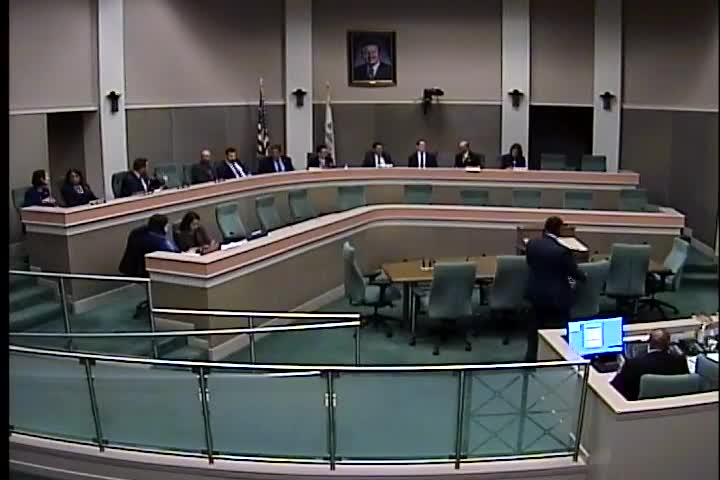
Discussed in Hearing
 5MIN
Assembly Standing Committee on Transportation
Bill Author

Bill Co-Author(s):