AB 2492: Medium duty vehicles: pilot program.
- Session Year: 2017-2018
- House: Assembly
- Latest Version Date: 2018-04-10
(1)Existing law requires the State Air Resources Board, in consultation with the Bureau of Automotive Repair, to adopt a program that allows for the voluntary retirement of passenger vehicles and light duty and medium duty trucks that are high polluters. Existing establishes the Clean Cars 4 All Program, administered by the state board, to focus on achieving reductions in the emissions of greenhouse gases, improvements in air quality, and benefits to low-income state residents through the replacement of high-polluter motor vehicles with cleaner and more efficient motor vehicles or a mobility option, as specified.
The California Global Warming Solutions Act of 2006 establishes the State Air Resources Board as the state agency responsible for monitoring and regulating sources emitting greenhouse gases. The act authorizes the state board to include the use of market-based compliance mechanisms. Existing law requires all moneys, except for fines and penalties, collected by the state board from the auction or sale of allowances as part of a market-based compliance mechanism to be deposited in the Greenhouse Gas Reduction Fund and to be available upon appropriation by the Legislature.
This bill would require the state board to adopt a pilot program program, administered by the air pollution control and air quality management districts designated as federal extreme nonattainment, to provide grants incentives for emissions repairs and testing for and to reduce the greenhouse gas emissions of class 3 medium-duty medium duty trucks, as specified, to be administered by air pollution control and air quality management districts designated as federal extreme nonattainment, as specified. The bill would authorize moneys from the Greenhouse Gas Reduction Fund to be available upon appropriation to implement the pilot program. By adding to the duties of air districts, this bill would impose a state-mandated local program.
(2)The California Constitution requires the state to reimburse local agencies and school districts for certain costs mandated by the state. Statutory provisions establish procedures for making that reimbursement.
This bill would provide that, if the Commission on State Mandates determines that the bill contains costs mandated by the state, reimbursement for those costs shall be made pursuant to the statutory provisions noted above.
Existing law requires the State Air Resources Board, in consultation with the Bureau of Automotive Repair, to adopt a program that allows for the voluntary retirement of passenger vehicles and light duty and medium duty trucks that are high polluters. Existing establishes the Clean Cars 4 All Program, administered by the state board, to focus on achieving reductions in the emissions of greenhouse gases, improvements in air quality, and benefits to low-income state residents through the replacement of high-polluter motor vehicles with cleaner and more efficient motor vehicles or a mobility option, as specified.
This bill would require the state board to adopt a pilot program to provide grants for emissions repairs and testing for class 3 medium-duty trucks, as specified, to be administered by air pollution control and air quality management districts designated as federal extreme nonattainment, as specified.
Existing law establishes the Carl Moyer Memorial Air Quality Standards Attainment Program, which is administered by the State Air Resources Board. The program authorizes the state board to provide grants to offset the incremental cost of eligible projects that reduce emissions from covered vehicular sources. The program also authorizes funding for a fueling infrastructure demonstration program and for technology development efforts that are expected to result in commercially available technologies in the near-term that would improve the ability of the program to achieve its goals.This bill would make technical, nonsubstantive changes to these provisions.Existing law establishes the Carl Moyer Memorial Air Quality Standards Attainment Program, which is administered by the State Air Resources Board. The program authorizes the state board to provide grants to offset the incremental cost of eligible projects that reduce emissions from covered vehicular sources. The program also authorizes funding for a fueling infrastructure demonstration program and for technology development efforts that are expected to result in commercially available technologies in the near-term that would improve the ability of the program to achieve its goals.
This bill would make technical, nonsubstantive changes to these provisions.
(a)The state board shall adopt a pilot program program, to be administered by the districts designated as federal extreme nonattainment, to provide grants incentives for emissions repairs and testing for and to reduce the greenhouse gas emissions of class 3 medium duty trucks that have a gross vehicle weight rating of between 10,000 and 14,000 pounds. The state board shall adopt guidelines that include all of the following:
(1)Modeled after existing, successful emission testing programs.
(2)Administered by districts designated as federal extreme nonattainment.(3)(A)Award grants to fleet owners whose annual receipts are less than ____ dollars ($____).(B)An applicant shall provide tax returns to verify income eligibility.(4)(2)Operate, to the extent feasible, with the enhanced fleet modernization program (Article 11 (commencing with Section 44125) of Chapter 5) and the motor vehicle inspection program (Chapter 5 (commencing with Section 44000)). 5).
(b)The state board, where applicable, shall ensure coordination, integration, and partnerships with other programs authorized by this division that target disadvantaged communities, as identified pursuant to Section 39711, and receive moneys Moneys from the Greenhouse Gas Reduction Fund, created pursuant to Section 16428.8 of the Government Code. Code, shall be available, upon appropriation by the Legislature, to implement this section.
SEC. 2.If the Commission on State Mandates determines that this act contains costs mandated by the state, reimbursement to local agencies and school districts for those costs shall be made pursuant to Part 7 (commencing with Section 17500) of Division 4 of Title 2 of the Government Code.
(a)The state board shall adopt a pilot program to provide grants for emissions repairs and testing for class 3 medium duty trucks that have a gross vehicle weight rating of between 10,000 and 14,000 pounds. The state board shall adopt guidelines that include all of the following:
(1)Modeled after existing, successful emission testing programs.
(2)Administered by districts designated as federal extreme nonattainment.
(3)(A)Award grants to fleet owners whose annual receipts are less than ____ dollars ($____).
(B)An applicant shall provide tax returns to verify income eligibility.
(4)Operate, to the extent feasible, with the enhanced fleet modernization program (Article 11 (commencing with Section 44125) of Chapter 5) and the motor vehicle inspection program (Chapter 5 (commencing with Section 44000)).
(b)The state board, where applicable, shall ensure coordination, integration, and partnerships with other programs authorized by this division that target disadvantaged communities, as identified pursuant to Section 39711, and receive moneys from the Greenhouse Gas Reduction Fund, created pursuant to Section 16428.8 of the Government Code.
SECTION 1.Section 44280 of the Health and Safety Code, as amended by Section 17 of Chapter 401 of the Statutes of 2013, is amended to read:44280.(a)There is hereby created the Carl Moyer Memorial Air Quality Standards Attainment Program. The program shall be administered by the state board in accordance with this chapter. The administration of the program may be delegated to the districts.(b)The program shall provide grants to offset the incremental cost of projects that reduce covered emissions from covered sources in the state. Eligibility for grant awards shall be determined by the state board, in consultation with the districts, in accordance with this chapter.(c)The program also shall provide funding for a fueling infrastructure demonstration program and for technology development efforts that are expected to result in commercially available technologies in the near-term that would improve the ability of the program to achieve its goals. The infrastructure demonstration and technology development portions of the program shall be managed by the commission, in consultation with the state board.(d)This section shall remain in effect only until January 1, 2024, and as of that date is repealed, unless a later enacted statute, that is enacted before January 1, 2024, deletes or extends that date.(a)There is hereby created the Carl Moyer Memorial Air Quality Standards Attainment Program. The program shall be administered by the state board in accordance with this chapter. The administration of the program may be delegated to the districts.
(b)The program shall provide grants to offset the incremental cost of projects that reduce covered emissions from covered sources in California. the state. Eligibility for grant awards shall be determined by the state board, in consultation with the districts, in accordance with this chapter.
(c)The program also shall also provide funding for a fueling infrastructure demonstration program and for technology development efforts that are expected to result in commercially available technologies in the near-term that would improve the ability of the program to achieve its goals. The infrastructure demonstration and technology development portions of the program shall be managed by the commission, in consultation with the state board.
(d)This section shall remain in effect only until January 1, 2024, and as of that date is repealed, unless a later enacted statute, that is enacted before January 1, 2024, deletes or extends that date.
|
Date
|
Status
|
|---|---|
| May 25, 2018 | In committee: Held under submission. |
| May 2, 2018 | In committee: Set, first hearing. Referred to APPR. suspense file. |
| Apr 17, 2018 | From committee: Do pass and re-refer to Com. on APPR. (Ayes 14. Noes 0.) (April 16). Re-referred to Com. on APPR. |
| Apr 11, 2018 | Re-referred to Com. on TRANS. |
| Apr 10, 2018 | From committee chair, with author's amendments: Amend, and re-refer to Com. on TRANS. Read second time and amended. |
| Apr 9, 2018 | In committee: Set, first hearing. Hearing canceled at the request of author. |
| Mar 19, 2018 | Re-referred to Com. on TRANS. |
| Mar 15, 2018 | From committee chair, with author's amendments: Amend, and re-refer to Com. on TRANS. Read second time and amended. |
| Feb 15, 2018 | From printer. May be heard in committee March 17. |
| Feb 14, 2018 | Read first time. To print. |
|
Date
|
Description
|
Location
|
Votes
|
|
|---|---|---|---|---|
| Apr 16, 2018 | Do pass and be re-referred to the Committee on [Appropriations] | Assembly Standing Committee on Transportation |
Passed |
This list shows positions taken on this bill by organizations on the date displayed, which is linked to the original source.
Positions by individuals are not included.
Date of Hearing: May 2, 2018
ASSEMBLY COMMITTEE ON APPROPRIATIONS
Lorena Gonzalez Fletcher, Chair
ABPCA Bill Id:AB 2492
Author:(Salas) – As Amended Ver:April 10, 2018
Policy Committee: | Transportation | Vote: | 14 - 0 |
|
| ||
|
|
Urgency: No State Mandated Local Program: Yes Reimbursable: Yes
SUMMARY:
This bill requires the Air Resources Board (ARB) to create a pilot program, which will be administered by certain air districts, to provide incentives to owners of specified medium-duty trucks for emission repairs and to reduce greenhouse gas (GHG) emissions. Specifically, this bill:
- Requires ARB to create a pilot program to provide incentives for emissions repairs and to reduce GHG emissions of class three medium-duty trucks that have a gross vehicle weight rating between 10,000-14,000.
- Requires ARB to adopt guidelines for the program that include modeling the program after existing successful emission testing programs, and operating to the extent feasible in conjunction with the existing Enhanced Fleet Modernization Program (EFMP).
- Requires air quality districts designated as federal extreme nonattainment administer the program created by ARB.
- Identifies the Greenhouse Gas Reduction Fund (GGRF) as the funding source for the program, upon appropriation.
FISCAL EFFECT:
- Cost pressures (GGRF), likely in the low tens of millions of dollars annually for the duration of the pilot program, to provide funding for the pilot program.
- Costs (GGRF) of $1.5 million annually for ARB to hire 9 staff to develop and administer the program.
- Potentially significant reimbursable state mandate costs for the San Joaquin and South Coast air quality districts to administer the program. However, administrative costs are likely to be funded directly through any funds appropriated for the program, rather than through a mandate claim.
COMMENTS:
- Background. Under existing law, the state has several programs to assist vehicle owners to make emissions-related repairs to their vehicles or to retire their vehicles and purchase vehicles that emit fewer emissions. First, the Bureau of Automotive Repair (BAR) Consumer Assistance Program (CAP) offers repair assistance of up to $500 in emission-related repairs to an income-eligible owner if the owner’s vehicle fails the smog check inspection. There are no weight restrictions for a vehicle to be eligible for a CAP incentive, although the program is not available for commercial vehicles.
The Enhanced Fleet Modernization Program (EFMP) includes two separate programs. EFMP “retirement-only” is administered by BAR in conjunction with BAR’s CAP program and based on guidelines developed by ARB. EFMP retirement-only provides $1,500 for qualifying vehicles to be retired if the owner meets income-eligibility criteria, and $1,000 for all other owners. EFMP retirement-only is available for passenger vehicles weighing 10,000 pounds or less. This program is not available for commercial vehicles. According to BAR’s website, the retirement-only program is oversubscribed and has exhausted all of the funding provided for the current fiscal year.
The second EFMP program, EFMP “retire and replace,” is established by ARB and administered by the San Joaquin Valley Air Pollution Control District and the South Coast Air Quality Management District. EFMP retire and replace is currently available only for vehicles registered to owners in the two air districts that administer the program. This program provides up to $4,500 to lower-income drivers to scrap an older vehicle and replace it with a cleaner, more fuel-efficient vehicle. In addition, the EFMP Plus-up program, also known as the Clean Cars 4 All program, provides additional funding for lower-income vehicle owners who choose to replace their vehicle with a hybrid-electric or battery-electric vehicle. Specifically, the Clean Cars 4 All program provides up to $5,000 more to vehicle owners, for a total of up to $9,500 ($4,500 from EFMP retire and replace and $5,000 from Clean Cars 4 All). Under the EFMP retire and replace and the Clean Cars 4 All programs, all vehicles that are replaced must be passenger vehicles that weigh 10,000 pounds or less.
- Purpose. The author introduced this bill to require ARB to establish a pilot program, similar to EFMP, for smog emission repairs of medium-duty trucks in order to reduce exposure to air pollution in low-income and disadvantaged communities and continue to significantly invest in air quality programs that have been proven to be effective in minimizing emissions from mobile sources.
Analysis Prepared by: Jessica Peters / APPR. / (916) 319-2081
Date of Hearing: April 16, 2018
ASSEMBLY COMMITTEE ON TRANSPORTATION
Jim Frazier, Chair
ABPCA Bill Id:AB 2492 (
Author:Salas) – As Amended Ver:April 10, 2018
SUBJECT: Medium duty vehicles: pilot program
SUMMARY: Requires the Air Resources Board (ARB) to create a pilot program, to be administered by certain air districts, to provide incentives for emission repairs and to reduce greenhouse gas (GHG) emissions of medium-duty trucks with a weight rating of 10,000- 14,000 pounds. Specifically, this bill:
- Requires ARB to create a pilot program, to be administered by air districts designated as federal extreme non-attainment, to provide incentives for emissions repairs and to reduce GHG emissions of class three medium-duty trucks that have a gross vehicle weight rating between 10,000-14,000.
- Requires ARB, when adopting the guidelines to the pilot program, to model the pilot after existing, successful emission testing programs and operate, to the extent feasible, with the Enhanced Fleet Modernization Program (EFMP).
- Provides that moneys from the Greenhouse Gas Reduction Fund (GGRF), upon appropriation by the Legislature, be used to implement the program.
EXISTING LAW:
- Establishes the Clean Air Act, pursuant to federal law, that requires the U.S. Environmental Protection Agency (EPA) to establish National Ambient Air Quality Standards (NAAQS) for certain air pollutants due to their negative impact on public health and provides that regions that do not meet the national standards for any one of the standards are designated as non-attainment areas.
- Establishes the Global Warming Solutions Act of 2006, AB 32 (Núñez), Chapter 244, Statutes of 2006, which requires ARB to determine the 1990 statewide GHG emissions level and approve a statewide GHG emissions limit that is equivalent to that level, to be achieved by 2020, and to adopt GHG emissions reductions measures by regulation. ARB is authorized to include the use of market-based mechanisms to comply with these regulations.
- Ensures that statewide GHG emissions are reduced to at least 40% below the 1990 level by 2030, pursuant to SB 32 (Pavley), Chapter 249, Statutes of 2016.
- Establishes the GGRF in the State Treasury, requires all moneys, except for fines and penalties, collected pursuant to a market-based mechanism be deposited in the fund and requires the Department of Finance, in consultation with ARB and any other relevant state agency, to develop, as specified, an investment plan for the moneys deposited in the GGRF.
- Establishes the smog check program, administered by the Bureau of Automotive Repair; (BAR) that generally requires vehicles, with some exceptions, to undergo emission inspections. Specifically, vehicle owners must have their vehicles tested every two years, with some exceptions.
- Establishes the Consumer Assistance Program (CAP), administered by BAR, to provide assistance to low-income owners of vehicles that have failed a smog test or a monetary incentive to retire (scrap) the vehicle.
- Establishes EFMP, administered by ARB and BAR, to provide for the voluntary retirement of passenger vehicles and light- and medium-duty trucks that are high polluters.
- Establishes the Clean Cars 4 All Program, administered by ARB and implemented by air districts, to achieve reductions of GHG emissions, improvements in air quality, and benefits to low-income state residents through the replacement of high-polluter motor vehicles with cleaner and more efficient motor vehicles or a mobility option.
- Establishes the Air Quality Improvement Program (AQIP), administered by ARB, to fund projects that reduce criteria air pollutants, improve air quality, and provide research for alternative fuels and vehicles, vessels, and equipment technologies. The two primary programs adopted by ARB pursuant to AQIP are the Clean Vehicle Rebate Project and the Hybrid and Zero Emissions Truck and Bus Voucher Incentive Program (HVIP).
- Establishes the Clean Truck Program, administered by ARB, to use GGRF funds for development, demonstration, pre-commercial pilot, and early commercial deployment of zero- and near zero-emission truck, bus, and off-road vehicle and equipment technologies.
FISCAL EFFECT: Unknown
COMMENTS: Under the federal Clean Air Act, U.S. EPA establishes NAAQS for outdoor air throughout the country. Regions that do not meet the NAAQS are designated non-attainment areas. In California, the South Coast and San Joaquin air basins are both designated as extreme non-attainment areas and as such are required to develop and implement comprehensive plans to attain and maintain federal air quality standards. Since transportation emissions are considered a primary source of air pollutants, plans to help achieve attainment typically involve efforts to increase the retirement of old, dirty vehicles and replace them with cleaner cars.
To improve air quality, help low-income vehicle owners pass smog checks and get older, high-polluting cars off of California roads, the state has created CAP, EFMP, and the Clean Cars 4 All Program (previously known as the EFMP Plus-Up). Through CAP, BAR offers $500 in emission-related repairs to an income-eligible owner whose vehicle fails its smog check inspection. In order to qualify for the incentive, BAR requires the vehicle, among other things, to not be registered to a business, fleet, or non-profit. However, there are no weight restrictions for a vehicle to be eligible for a CAP incentive.
EFMP has two components: retirement-only and retirement and replacement. EFMP retirement-only provides for the voluntary retirement of passenger vehicles and light- and medium-duty trucks that are high polluters and is administered by BAR contracts with dismantlers and other appropriate entities as necessary. Owners who scrap their vehicles are given a $1,000 voucher ($1,500 for low income consumers). To participate in the retirement-only portion of EFMP, BAR’s application indicates that an eligible vehicle, among other things, must not be registered to a business, fleet, or non-profit and must be a passenger vehicle, truck, SUV, or van with a gross vehicle weight rating of 10,000 pounds or less. Unlike CAP, however, EFMP allows vehicles to be retired without first having to fail a smog test. EFMP retirement-only has been very successful, has been typically oversubscribed and according to BAR’s website, funding has been exhausted for this fiscal year.
To enhance “retire and replace efforts” specifically in extreme non-attainment areas, EFMP retire and replace and the Clean Cars 4 All are currently available only in the San Joaquin Valley Air Pollution Control District and the South Coast Air Quality Management District jurisdictions. These programs are anticipated to be expanded this year to include the Bay Area Air Quality Management District, San Diego Air Pollution Control District, and Sacramento Metropolitan Air Quality Management District. Currently, San Joaquin Valley Air Pollution Control District and the South Coast Air Quality Management District, through EFMP retirement and replacement, provide an incentive of $2,500- $4,500 to low-income drivers who scrap an old car and replace it with a newer, cleaner and more fuel-efficient vehicle or an alternate mode of transportation, such as a transit pass. The exact incentive amount varies, depending on household income, and can be used for the purchase of a new or used qualified replacement vehicle. Clean Car 4 All is a complementary incentive program which augments EFMP. Incentives from Clean Cars 4 All can add up to an additional $5,000 incentive for the subset of participants living in or near a disadvantaged community census tract who choose a hybrid, plug-in hybrid, or battery electric vehicle. The highest incentive amount is available to the lowest income drivers choosing the cleanest replacement vehicles. Under the EFMP retire and replace and the Clean Cars 4 All, all vehicles that are replaced must also be 10,000 pounds or less such as a passenger vehicle, truck, sports utility vehicle (SUV), or van.
The author has introduced this bill to require ARB to establish a pilot program, similar to EFMP, for smog emission repairs of medium-duty trucks in order to reduce exposure to air pollution in low-income and disadvantaged communities and continue to significantly invest in air quality programs that have been proven to be effective in minimizing emissions from mobile sources.
Committee Concerns: ARB oversees a wide variety of programs designed to address the transportation sector with a number of those programs tailored to specifically target heavy-duty vehicles or light-duty vehicles, respectively. Trucks are typically classified by weight with Class 1 vehicles weighing 6,000 pounds or less (e.g., utility vans and full-size pickups); Class 2 vehicles weighing 6,001-10,000 pounds (e.g., utility and step vans); Class 3-6 vehicles weighing between 10,001 pounds and 26,000 pounds (e.g., city delivery trucks, beverage trucks, and school buses); and Class 7 and 8 trucks weighing 26,001 pounds or more (e.g., city transit buses, tractor trailers, dump trucks). ARB, however, differentiates its programs more broadly into heavy-duty and light-duty categories with light-duty programs targeting passenger fleet vehicles and heavy-duty vehicle programs targeting larger vehicles such as buses and trucks. Typically, light-duty programs have focused on ensuring drivers pass smog tests and providing incentives for the purchase/replacement of cleaner vehicles while heavy-duty programs have focused on the replacement of high-polluting heavy-duty vehicles, such as HVIP and the acceleration of heavy-duty technologies, such as the Clean Truck Program. It is unclear if investing in emission repairs is effective use of state money considering its broader goals to replace, not repair, heavy-duty vehicles.
This bill does not preclude the retirement and replacement of these vehicles but it does, however, require their repair.
Previous legislation: AB 188 (Salas), Chapter 629, Statutes of 2017, updates EFMP guidelines to make the program applicable to light-duty pickup trucks that have the same mile-per-gallon standard as minivans that are currently authorized under the program.
AB 630 (Cooper), Chapter 636, Statutes of 2017, establishes the Clean Cars 4 All Program to achieve reductions in the emissions of GHGs, improvements in air quality, and benefits to low-income residents through the replacement of high-polluter motor vehicles with cleaner and more efficient motor vehicles or mobility options.
AB 1691 (Gipson) of 2016, would have directed ARB to update the EFMP guidelines to reduce and eliminate backlogs and waitlists for Plus-Up, and prioritize older, higher-polluting vehicles for incentives. AB 1691 was held on the Senate Appropriations Committee suspense file.
AB 1965 (Cooper) of 2016, would have required ARB to update EFMP guidelines by July 1, 2018, expanded Plus-Up to include additional air districts, and included the development and reporting of program performance metrics. AB 1965 failed passage in the Senate Environmental Quality Committee.
SB 32 (Pavley), Chapter 249, Statutes of 2016, requires ARB to ensure that statewide GHG emissions are reduced to at least 40% below the 1990 level by 2030.
SB 1204 (Lara), Chapter 524, Statutes of 2014, created the Clean Truck Program to fund development, demonstration, pre-commercial pilot, and early commercial deployment of zero- and near-zero-emission truck, bus, and off-road vehicle and equipment technologies.
SB 459 (Pavley), Chapter 437, Statutes of 2013, required ARB to update the EFMP guidelines by June 30, 2015 to, among other things, focus program assistance on lower-income vehicle owners.
AB 118 (Núñez), Chapter 750, Statutes of 2007, provides funding measures to specified entities to develop and deploy technologies and alternative and renewable fuels in the marketplace to help attain the state’s climate change policies.
AB 32 (Núñez), Chapter 244, Statutes of 2006, requires ARB to determine the 1990 statewide GHG emissions level and approve a statewide GHG emissions limit that is equivalent to that level, to be achieved by 2020, and to adopt GHG emissions reductions measures by regulation.
REGISTERED SUPPORT / OPPOSITION:
Support
None on file
Opposition
None on file
Analysis Prepared by: Cynthia Alvarez / TRANS. / (916) 319-2093
Discussed in Hearing
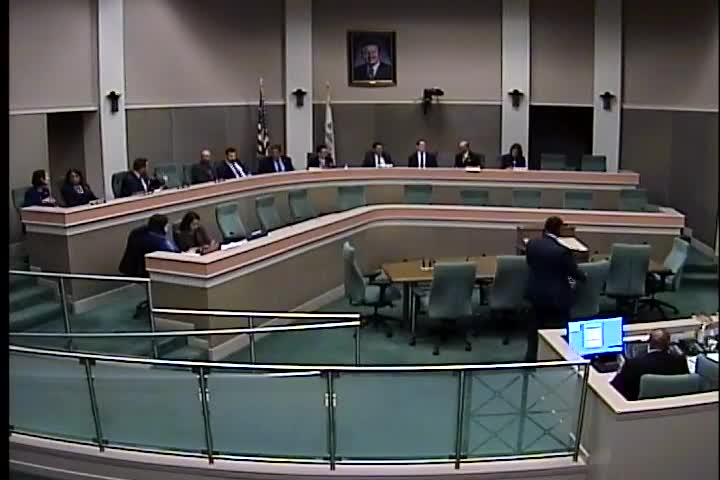 3MIN
Assembly Standing Committee on Transportation
Bill Author

Bill Co-Author(s):