AB 2530: Bonds: transportation.
- Session Year: 2017-2018
- House: Assembly
- Latest Version Date: 2018-02-14
Existing law, the California High-Speed Rail Act, creates the High-Speed Rail Authority to develop and implement a high-speed rail system in the state. Existing law, the Safe, Reliable High-Speed Passenger Train Bond Act for the 21st Century, approved by the voters as Proposition 1A at the November 4, 2008, general election, provides for the issuance of $9 billion in general obligation bonds for high-speed rail purposes and $950 million for other related rail purposes. Article XVI of the California Constitution requires measures authorizing general obligation bonds to specify the single object or work to be funded by the bonds and further requires a bond act to be approved by a 2/3 vote of each house of the Legislature and a majority of the voters.
This bill would provide that no further bonds shall be sold for high-speed rail purposes pursuant to the Safe, Reliable High-Speed Passenger Train Bond Act for the 21st Century, except as specifically provided with respect to an existing appropriation for high-speed rail purposes for early improvement projects in the Phase I blended system. The bill, subject to the above exception, would require redirection of the unspent proceeds received from outstanding bonds issued and sold for other high-speed rail purposes prior to the effective date of these provisions, upon appropriation, for use in retiring the debt incurred from the issuance and sale of those outstanding bonds. The bill, subject to the above exception, would also require the net proceeds of other bonds subsequently issued and sold under the high-speed rail portion of the bond act to be made available, upon appropriation, to fund projects for funding school buses for public school children. The bill would make no changes to the authorization under the bond act for issuance of $950 million for rail purposes other than high-speed rail. These provisions would become effective only upon approval by the voters at the next statewide general election.
This bill would declare that it is to take effect immediately as an urgency statute.
(a)(1)Notwithstanding any other provision of this chapter, and except as provided in paragraph (2), no further bonds shall be issued and sold for purposes of Section 2704.06 on and after the effective date of this section.
(2)This section shall not apply to bonds issued and sold for purposes of Section 2704.06 with respect to the appropriation in Item 2665-104-6043 of Section 2.00 of the Budget Act of 2012, as added by Section 3 of Chapter 152 of the Statutes of 2012.
(b)Notwithstanding any other provision of this chapter, and except as otherwise provided in paragraph (2) of subdivision (a), the unspent proceeds received from outstanding bonds issued and sold pursuant to Section 2704.06 prior to the effective date of this section shall, upon appropriation by the Legislature, be redirected from high-speed rail purposes for use in retiring the debt incurred from the issuance and sale of those outstanding bonds.
(c)Notwithstanding any other provision of this chapter, the remaining unissued bonds, as of the effective date of this section, that were previously authorized pursuant to Section 2704.06, except as otherwise provided in paragraph (2) of subdivision (a), are hereby authorized to be issued and sold, with the net proceeds, upon appropriation by the Legislature, to be made available for the purchase of providing school buses for public school children.
SEC. 2.Section 1 of this act would modify the single object or work of a general obligation bond act previously submitted to the voters by the Legislature pursuant to Section 1 of Article XVI of the California Constitution, and subsequently approved by the voters as Proposition 1A at the November 4, 2008, statewide general election. Accordingly, Section 1 of this act shall become effective only upon approval by the voters. The Secretary of State shall submit Section 1 of this act to the voters on the ballot of the next statewide general election.
SEC. 3.This act is an urgency statute necessary for the immediate preservation of the public peace, health, or safety within the meaning of Article IV of the Constitution and shall go into immediate effect. The facts constituting the necessity are:
In order to make necessary amendments to the Safe, Reliable High-Speed Passenger Train Bond Act for the 21st Century as quickly as possible to prevent certain further expenditures of state bond funds for a high-speed rail project that differs in both cost and substance from the project approved by voters in 2008, and to obtain voter approval to redirect certain net proceeds of future bonds under that act to the purchase of providing school buses for public school children, it is necessary that this act take effect immediately.
|
Date
|
Status
|
|---|---|
| Apr 16, 2018 | In committee: Set, first hearing. Failed passage. Reconsideration granted. |
| Mar 5, 2018 | Referred to Com. on TRANS. |
| Feb 15, 2018 | From printer. May be heard in committee March 17. |
| Feb 14, 2018 | Read first time. To print. |
|
Date
|
Description
|
Location
|
Votes
|
|
|---|---|---|---|---|
| Apr 16, 2018 | Reconsideration. | Assembly Standing Committee on Transportation |
Passed |
|
| Apr 16, 2018 | Do pass and be re-referred to the Committee on [Appropriations] | Assembly Standing Committee on Transportation |
Failed |
This list shows positions taken on this bill by organizations on the date displayed, which is linked to the original source.
Positions by individuals are not included.
|
Organization
|
Position
|
Date
|
|---|---|---|
| Association of California High-Speed Trains | * Against | Apr 16, 2018 |
| California Labor Federation | ** Against | Apr 13, 2018 |
| Howard Jones Taxpayers Association | * Support | Apr 16, 2018 |
| State Building And Construction Trade Council Of California | ** Against | Apr 13, 2018 |
Date of Hearing: April 16, 2018
ASSEMBLY COMMITTEE ON TRANSPORTATION
Jim Frazier, Chair
ABPCA Bill Id:AB 2530 (
Author:Melendez) – As Introduced Ver:February 14, 2018
SUBJECT: Bonds: transportation
SUMMARY: Directs that a referendum be placed on the ballot to redirect high-speed rail bond funding to the purchase of school buses for public school children. Specifically, this bill:
- Prohibits further issuance and sale of any authorized bonds for high-speed rail, except for early improvement projects (a.k.a. bookend projects) in the Phase 1 blended system for which appropriations have already been made.
- Redirects the proceeds of any outstanding bonds issued and sold, except for those related to the bookend projects, to debt retirement.
- Reauthorizes the issuance and sale of any unissued bonds, upon appropriation by the Legislature, to fund the purchase of school buses for public school children
- Directs the Secretary of State to submit the act to the voters on the ballot for the next statewide election.
- Contains an urgency clause.
EXISTING LAW:
- Establishes the California High-Speed Rail Authority (Authority) and vests with it the responsibility to develop and implement a high-speed rail system in California.
- Authorizes the sale of $9 billion in general obligation bonds to partially fund the development and construction of California's high-speed rail system.
- Authorizes the expenditure of an additional $950 million in general obligation bonds for capital projects on other passenger rail lines to provide connectivity to the high-speed rail system as well as for capacity enhancements and safety improvements to those lines.
- Requires the Authority to complete and submit to the Legislature funding plans and financial analyses prior to requesting an appropriation of bond funds for eligible capital costs and prior to committing bond proceeds for expenditure for construction, real property and equipment acquisition.
- Appropriates $1.1 billion of the $9 billion in high-speed rail bonds for use on bookend projects, including projects in the San Francisco Bay Area (Caltrain), and the Los Angeles region.
FISCAL EFFECT: According to the Authority, $2.7 billion in Proposition 1A bonds have been issued to date. Of that total, $2.1 billion (of the $9 billion) have been issued for the high-speed rail project and $633 million (of the $950 million) have been issued for connectivity projects.
COMMENTS: In 2008, voters approved Proposition 1A, the Safe, Reliable, High-Speed Passenger Train Bond Act, a $9.95 billion general obligation bond to fund the proposed California high-speed rail project and related improvements. As envisioned at the time of the ballot measure, the project was to consist of an 800-mile dedicated high-speed passenger rail system capable of speeds up to 220 miles per hour, initially serving the major metropolitan market of San Francisco through the Central Valley into Los Angeles and Anaheim (Phase 1), with service eventually extending to Sacramento, the Inland Empire, and San Diego (Phase II).
When the bonds were approved in 2008, costs for the entire project were estimated to be
$45 billion, to be paid by a mix of state bonds, federal grants, and private investments. Since then, estimated costs for the project have risen markedly. The Authority's most recent estimate for Phase 1 is $77.3 billion using the blended approach of relying in part on existing tracks in the Bay Area and parts of Los Angeles. Furthermore, federal contributions to date are limited to $3.3 billion and there have been no private investments.
In 2012, the Legislature passed and Governor Brown signed into law SB 1029 (Committee on Budget and Fiscal Review), Chapter 152, Statutes of 2012, to appropriate $8 billion to the Authority ($4.7 billion in Proposition 1A state bond funds and $3.3 billion in federal funds) to initiate construction of the high-speed rail project. This amount included $1.1 billion of Proposition 1A bond funding for the bookend projects in the San Francisco Peninsula and the Los Angeles region.
Two relevant court cases were litigated in 2013 regarding issuance of Proposition 1A bonds. Specifically, one case challenged the funding plan that was submitted to the Legislature prior to the appropriation as required by Proposition 1A. The lower court found that the plan did not meet the requirements set forth in Proposition 1A. However, the appellate court found that the purpose of the funding plan was to inform the Legislature and if the Legislature acts on the plan, the plan is presumed to have been sufficient. Additionally, the Authority filed a validation suit to clear any potential legal hurdles to issuance of the Proposition 1A bonds. The lower court ruled against the Authority noting that the Authority had not met the legal standards for issuing taxpayer bonds. The ruling was overturned by the California Supreme Court and the lower court was directed to issue an order validating the issuance of the bonds.
With the continued threat of litigation on the issuance and expenditure of the Proposition 1A bonds, the funds approved by the voters remain in question. To begin construction work in the Central Valley and move forward on the other project sections, the Authority negotiated its funding agreement with the federal government to allow a "tapered match"—i.e., to allow federal dollars to be spent first and state matching dollars to be spent later. Additionally, the 2014-15 state budget SB 862 (Committee on Budget and Fiscal Review), Chapter 36, Statutes of 2014, continuously appropriated 25% of the revenues derived from the state’s cap and trade program to the project.
In January 2017, the Authority submitted funding plans to the Department of Finance and the Joint Legislative Budget Committee for the Central Valley segment, the first segment of high-speed rail; and the Caltrain electrification project, a bookend project in the San Francisco Bay Area. In June 2017, the Authority also submitted a funding plan for the Rosecrans – Marquardt rail grade separation project, a bookend project in the Los Angeles region. The so-called “funding plan (d),” is required by Proposition 1A prior to any expenditure of bond funds for capital construction and must contain specific elements, including details of funding for and construction cost projections for the segment.
Following the submission of the funding plans for the Central Valley and Caltrain, a lawsuit was immediately filed to block the issuance of the bonds citing that the funding plans did not meet the standards in Proposition 1A. Although the court denied a request for a temporary restraining order to stop the sale of Proportion 1A bonds, the court case is still pending.
On March 9, 2018, the Authority released the 2018 Draft Business Plan which continues the commitment to a northern oriented and expanded IOS from the Silicon Valley to the Central Valley, the so-called “Valley to Valley” line. Additionally, the draft plan reflects work directed by the Authority’s Board of Directors in 2017 for a comprehensive review of the current Central Valley construction contracts and cost estimates for the Valley to Valley Line and full Phase I of the system. This new cost review was first unveiled in November 2017, when the Authority revealed that costs for the Central Valley segment had risen over $2.8 billion from previous estimates, due primarily to right-of way acquisition delays and so-called third party agreements with freight railroads and utilities. The new cost estimates are reflected in the draft plan. As mentioned, the updated cost for full Phase I of the system is $77.3 billion.
To date, the state has sold roughly $2.7 billion in Proposition 1A bonds to fund the high speed rail and bookend projects, and over $630 million for connectivity projects. The Department of Finance estimates that the bond debt service for Proposition 1A bonds will be approximately $366 million in the 2018-19 fiscal year. As the remaining Proposition 1A bonds are appropriated and cleared of legal hurdles for sale by the state, the debt service costs will likely increase.
This bill would place a referendum on the ballot to redirect the remaining Proposition 1A bonds to fund the purchase of school buses for public schools. According to the author, “the inability to afford transportation to and from school is one of the most frequently cited barriers that low-income youth face in attending school. Chronic absence rates in California are over 8% for K-5 students (an estimated 230,000 students missed 18 or more days of school), and as many as 31,000 students in California are estimated to have missed more than 36 days of school, or 20% of the school year.”
Further, she states that, “California does not guarantee school bus transportation to students who live beyond walking distance from school, unlike many other states. Funding for school buses is insufficient, and many districts have significantly reduced or eliminated busing. Bus transportation and maintenance costs the state and local school districts about $1.5 billion annually. This legislation ensures all students, despite a family’s income, have the opportunity to a quality education by removing barriers to access. No child should have to fall behind simply because they are unable to get to school.”
Writing in support of the bill, the Howard Jarvis Tax Payers Association notes that, “With every passing day, it’s clear that the high-speed rail project is simply not viable. The recent draft business plan shows just how unrealistic the project is becoming. It continues to bank on ongoing federal funding, even though it’s been eight years since the only $3.3 billion infusion and no more appears money appears to be forthcoming.” Further, “It’s time to do what a majority of Californians desire and put high-speed rail back on the ballot for voters to consider.”
Writing in opposition to the bill, the State Building and Construction Trades Council of California note that, “This bill is nothing more than a disingenuous and unrealistic redirection of funding from the high-speed rail project aimed solely at stopping the project’s completion.” Further, “The High-Speed Rail Authority has produced a new and achievable Draft Business Plan with adjusted cost projections, funding, ridership, and timelines, and responds to the public’s concerns. The project is heading in the right direction and to take money away from it now, when it is already creating jobs, is shortsighted. While funding public school buses is important we should look for funds in other areas without harming a vital project which is already under construction and providing a significant economic stimulus with continued momentum.”
Committee comments: This committee recently held an oversight hearing on the Draft 2018 Business Plan. The committee thoroughly discussed the issues facing the Authority, including the lack of funding to complete the IOS. The High-Speed Rail Peer Review Group clearly laid out options for the future of the high-speed rail project, including reconfirming the state’s commitment to the completion of the IOS and Phase I, completing parts of the system to provide independent utility, or ending the project.
It is clear that the project is at a crossroads, and as funding partners for the project the Legislature will need to consider these options in the near future in a deliberative manner, with stakeholder input. Stopping the project now by redirecting bonds would cause billions of dollars of work to be wasted and leave stranded, unusable assets. The Legislature should continue its strident oversight of the project and work on a long term solution.
Related legislation: AB 2712 (Allen), would direct that a referendum be placed on the ballot to stop the issuance of high-speed rail bonds and redirect any outstanding bond proceeds to be distributed to California taxpayers. AB 2712 is set for hearing in this committee on April 16, 2018.
Previous legislation: SB 414 (Vidak) of 2017, would have required the Secretary of State to put on the June 2018 general election ballot a legislative referendum which, if approved by voters, would prohibit the sale of any additional high-speed rail bonds and authorize the remaining bonds be issued to fund the repair and new construction projects on state highways and freeways and to cities and counties for transportation projects. SB 414 failed passage in the Senate Transportation and Housing Committee.
AB 1442 (Allen) of 2017, would have required the Secretary of State to put on the November 2018 general election ballot a legislative referendum which, if approved by the voters, would prohibit the sale of any additional high-speed rail bonds and authorize the remaining bonds be issued to fund state water projects. AB 1422 failed passage in this committee.
AB 1768 (Gallagher) of 2016, would have required the Secretary of State to put on the November 2016 general election ballot a legislative referendum which, if approved by the voters, would prohibit the sale of any additional high-speed rail bonds and authorize the remaining bonds be issued to fund the SHOPP. AB 1768 failed passage in this committee.
AB 1866 (Wilk) of 2016, would have required the Secretary of State to put on the November 2016 general election ballot a legislative referendum which, if approved by the voters, would prohibit the sale of any additional high-speed rail bonds and authorize the remaining bonds be issued to fund the construction of water projects. AB 1866 failed passage in this committee.
AB 2049 (Melendez) of 2016, would have required the Secretary of State to put on the November 2016 general election ballot a legislative referendum which, if approved by the voters, would prohibit the sale of any additional high-speed rail bonds and authorize the remaining bonds be issued to fund the construction of the SHOPP, STIP, and TCIF. AB 2049 failed passage in this committee.
AB 6 (Wilk) of 2015, would have required the Secretary of State to put on the November 2016 general election ballot a legislative referendum which, if approved by the voters, would prohibit the sale of any additional high-speed rail bonds and authorize the remaining bonds be issued to fund the construction of school facilities for K-12 and higher education. AB 6 failed passage in this committee.
AB 397 (Mathis) of 2015, would have required the Secretary of State to put on the November 2016 general election ballot a legislative referendum which, if approved by the voters, would prohibit the sale of any additional high-speed rail bonds and redirect the authorize the remaining bonds be issued to fund the construction of water capital projects. AB 397 failed in this committee and was granted reconsideration. AB 397 failed passage on reconsideration.
SBX1 3 (Vidak) of 2015, would have redirected high-speed rail bond proceeds to state freeways and highways, and local streets and roads, upon voter approval. SBX1 3 failed passage in the Senate Transportation and Infrastructure Committee in the 1st Extraordinary Session.
All of the following bills would have reduced the amount of authorized indebtedness for the Authority:
AB 2650 (Conway) of 2014, failed passage in this committee;
AB 1501 (Patterson) of 2014, failed passage in this committee;
SB 901 (Vidak) of 2014, failed passage in Senate Transportation and Housing Committee;
AB 842 (Donnelly) of 2013, failed passage in this committee;
AB 1455 (Harkey) of 2012, failed passage in this committee;
SB 22 (LaMalfa) of 2012, failed passage in the Senate Transportation and Housing Committee;
AB 76 (Harkey) of 2011, failed passage in this committee; and,
AB 2121 (Harkey) of 2010, died in the Senate Rules Committee.
REGISTERED SUPPORT / OPPOSITION:
Support
Howard Jarvis Taxpayers Association
Opposition
California Labor Federation
State Building and Construction Trade Council of California
Analysis Prepared by: Melissa White / TRANS. / (916) 319-2093
Discussed in Hearing
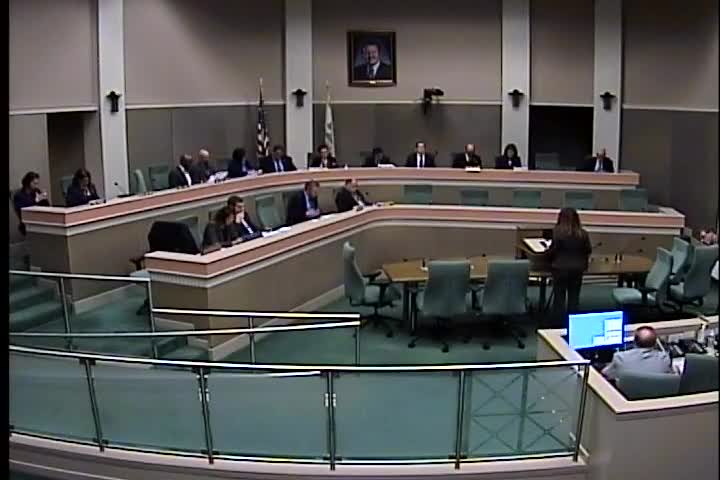 10MIN
Assembly Standing Committee on Transportation
Bill Author

Bill Co-Author(s):