AB 2919: Transportation: permits.
- Session Year: 2017-2018
- House: Assembly
- Latest Version Date: 2018-03-19
Existing law establishes the Department of Transportation and the California Transportation Commission and provides that the department has full possession and control of all state highways and all property and rights in property acquired for state highway purposes and authorizes and directs the department to lay out and construct all state highways between the termini designated by law and on the locations as determined by the commission.
Existing law, on or before April 1, 2018, requires the Secretary of Transportation, in consultation with the Secretary of the Natural Resources Agency, to establish a Transportation Permitting Taskforce consisting of the Secretary of Transportation, the Secretary of the Natural Resources Agency, and the Chair of the California Transportation Commission, or their designees, and representatives of specified entities. Existing law requires the taskforce to develop a process for early engagement of all parties in the development of transportation projects to reduce permit processing time, establish reasonable deadlines for permit approvals, and provide for greater certainty of permit approval requirements. Existing law requires the Secretary of Transportation, on or before December 1, 2019, to prepare and submit to the appropriate policy and fiscal committees of the Legislature a report of findings based on the efforts of the taskforce, as specified.
This bill would state the intent of the Legislature to enact legislation that would require all permitting agencies that interact with the Department of Transportation, including, but not limited to, the Department of Fish and Wildlife, the State Water Resources Control Board, and the California Coastal Commission, to approve and complete permits within a 2-year timeframe. require the Department of Fish and Wildlife, the State Water Resources Control Board, and the California Coastal Commission, upon receipt of a completed request from the Department of Transportation for a permit for a project, to complete its review of the request no later than two years after receipt. If a resource agency does not complete the review of the request for a permit within this timeframe, the bill would provide that the permit is deemed approved for purposes of the project.
Existing law, on or before April 1, 2018, requires the Secretary of Transportation, in consultation with the Secretary of the Natural Resources Agency, to establish a Transportation Permitting Taskforce consisting of the Secretary of Transportation, the Secretary of the Natural Resources Agency, and the Chair of the California Transportation Commission, or their designees, and representatives of specified entities. Existing law requires the taskforce to develop a process for early engagement of all parties in the development of transportation projects to reduce permit processing time, establish reasonable deadlines for permit approvals, and provide for greater certainty of permit approval requirements. Existing law requires the Secretary of Transportation, on or before December 1, 2019, to prepare and submit to the appropriate policy and fiscal committees of the Legislature a report of findings based on the efforts of the taskforce, as specified.
This bill would state the intent of the Legislature to enact legislation that would require all permitting agencies that interact with the Department of Transportation, including, but not limited to, the Department of Fish and Wildlife, the State Water Resources Control Board, and the California Coastal Commission, to approve and complete permits within a 2-year timeframe.
(a)For purposes of this section, resource agency means the Department of Fish and Wildlife, the State Water Resources Control Board, or the California Coastal Commission.
(b)Notwithstanding any other law, upon receipt of a completed request from the department for a permit for a project, a resource agency shall complete its review of the request no later than two years after receipt.
(c)If a resource agency does not complete the review of a request for a permit within two years as required in subdivision (b), then the permit is deemed approved for purposes of the project.
SECTION 1.It is the intent of the Legislature that would enact legislation to require all permitting agencies that interact with the Department of Transportation, including, but not limited to, the Department of Fish and Wildlife, the State Water Resources Control Board, and the California Coastal Commission, to approve and complete permits within a two-year timeframe.It is the intent of the Legislature that would enact legislation to require all permitting agencies that interact with the Department of Transportation, including, but not limited to, the Department of Fish and Wildlife, the State Water Resources Control Board, and the California Coastal Commission, to approve and complete permits within a two-year timeframe.
|
Date
|
Status
|
|---|---|
| Apr 24, 2018 | In committee: Set, first hearing. Hearing canceled at the request of author. |
| Apr 17, 2018 | From committee: Do pass and re-refer to Com. on E.S. & T.M. (Ayes 13. Noes 0.) (April 16). Re-referred to Com. on E.S. & T.M. |
| Mar 19, 2018 | From committee chair, with author's amendments: Amend, and re-refer to Com. on TRANS. Read second time and amended. |
| Mar 20, 2018 | Re-referred to Com. on TRANS. |
| Mar 19, 2018 | Referred to Com. on TRANS. |
| Feb 17, 2018 | From printer. May be heard in committee March 19. |
| Feb 16, 2018 | Read first time. To print. |
|
Date
|
Description
|
Location
|
Votes
|
|
|---|---|---|---|---|
| Apr 16, 2018 | Do pass and be re-referred to the Committee on [Environmental Safety and Toxic Materials] | Assembly Standing Committee on Transportation |
Passed |
This list shows positions taken on this bill by organizations on the date displayed, which is linked to the original source.
Positions by individuals are not included.
|
Organization
|
Position
|
Date
|
|---|---|---|
| Audubon California | ** Against | Apr 20, 2018 |
| California Coastal Protection Network | ** Against | Apr 20, 2018 |
| California Coastkeeper Alliance | ** Against | Apr 20, 2018 |
| California Council For Environmental And Economic Balance | ** Support | Apr 20, 2018 |
| California Environmental Justice Alliance | ** Against | Apr 20, 2018 |
| California State Association Of Counties | ** Support | Apr 20, 2018 |
| Clean Water Action | ** Against | Apr 20, 2018 |
| Defenders Of Wildlife | ** Against | Apr 20, 2018 |
| Friends Committee On Legislation Of California | ** Against | Apr 20, 2018 |
| Friends of the River | ** Against | Apr 20, 2018 |
| National Parks Conservation Association | ** Against | Apr 20, 2018 |
| NRDC | ** Against | Apr 20, 2018 |
| Planning And Conservation League | ** Against | Apr 20, 2018 |
| ReLeaf | ** Against | Apr 20, 2018 |
| Sierra Club California | ** Against | Apr 20, 2018 |
| The Nature Conservancy | ** Against | Apr 20, 2018 |
| The Trust For Public Land | ** Against | Apr 20, 2018 |
| Transform | ** Against | Apr 20, 2018 |
| United Contractors | ** Support | Apr 20, 2018 |
| Wholly H2O | ** Against | Apr 20, 2018 |
Date of Hearing: April 24, 2018
ASSEMBLY COMMITTEE ON ENVIRONMENTAL SAFETY AND TOXIC MATERIALS
Bill Quirk, Chair
ABPCA Bill Id:AB 2919 (
Author:Frazier) – As Amended Ver:March 19, 2018
SUBJECT: Transportation: permits
SUMMARY: Provides that a permit for a transportation project submitted by the Department of Transportation (Caltrans) to a "resource agency" as defined, shall be deemed approved within two years if the resources agency has not completed its review of the permit. Specifically, this bill:
1) Defines a "resource agency" as the Department of Fish and Wildlife (DFW), the State Water Resources Control Board (State Water Board), or the California Coastal Commission (Commission).
2) Requires a resource agency to complete its review of a permit for a project submitted by Caltrans within two years of receiving the request to review the permit.
3) Provides that if the resource agency does not complete the review of the request for a permit from Caltrans within two years, that the permit is deemed approved.
EXISTING LAW:
1) Establishes the federal Clean Water Act (CWA) to regulate discharges of pollutants into the waters of the United States and to regulate quality standards for surface waters. (33 United States Code (U.S.C.) §1251 et seq.)
2) Establishes the National Pollutant Discharge Elimination System (NPDES) permit program to regulate the discharge of pollutants in storm water, including municipal storm water systems. (33 U.S.C. § 1251 et seq.)
3) Establishes the Porter-Cologne Water Quality Control Act, which prohibits the discharge of pollutants to surface waters unless the discharger obtains a permit from the State Water Board. (Water Code § 1300 et seq.)
4) Requires the Secretary of the California State Transportation Agency (CalSTA), in consultation with the Secretary of the Natural Resources Agency, to create a Transportation Permitting Task Force by April 1, 2018, and submit a report to the Legislature by December 1, 2019 with recommendations for improving the permitting process. (Streets and Highways § Code 155.7)
5) Establishes the California Coastal Act and authorizes the California Coastal Commission to plan and regulate the use of land and water in the coastal zone. (Public Resources Code § 30000 et. al)
6) Requires any entity to notify DFW before beginning any activity that may substantially divert or obstruct the natural flow of, or substantially change or use any material from the bed, channel, or bank of any river, stream, or lake. Requires DFW, if it determines that the activity may substantially adversely affect fish and wildlife resources, to prepare a Lake or Streambed Alteration Agreement. (Fish and Game Code (FGC) § 1602)
7) Authorizes DFW to, through a permit or memorandum of understanding, authorize an individual, public agency, university, zoological garden, and scientific or educational institution to import, export, take, or possess any endangered species, threatened species, or candidate species, under certain conditions. (FGC § 2081)
FISCAL EFFECT: Unknown.
COMMENTS:
Need for the bill: According to the author,
"In order to deliver transportation projects in a timely, efficient and predictable manner, AB 2919 requires the Department of Fish and Wildlife, the State Water Resources Control Board, and the California Coastal Commission (resource agencies) to complete their reviews of environmental permits within two years of receiving a completed request from the Department of Transportation (Caltrans). If these resource agencies do not complete their review within two years, AB 2919 requires the permit to be deemed approved.
Recognizing the need to reduce inefficiencies, prevent project delays, and expedite environmental review and permitting of transportation projects, the California Transportation Commission (CTC) recommended in its 2016 Legislative Report that the Legislature create a task force comprised of state environmental permitting agencies and transportation entities in order to establish a process for early engagement of all parties in project development to reduce permit processing time, establish reasonable deadlines for permit approvals, and provide greater certainty of permit approval requirements.
The CTC noted in its report that, "early engagement of permitting agencies, and a commitment to reasonable deadlines for permit approvals, would improve the predictability and management of the project development process, and in turn, reduce the cost of delivering critical infrastructure."
In response to CTC’s recommendation, the Legislature passed AB 2812 (Mullin), Chapter 643, Statutes of 2017, which directs the Secretary of the California State Transportation Agency (CalSTA), by April 1, 2018, in consultation with the Secretary of the Natural Resources Agency, to create a Transportation Permitting Task Force. By December 1, 2019, the Secretary of CalSTA is required to prepare and submit a report of the task force's findings to the appropriate legislative policy and fiscal committees.
Additionally, SB 1 (Beall), Chapter 5, Statutes of 2017, directs Caltrans to generate up to $100 million annually in department efficiencies.
Under existing law, transportation projects can take many years to be completed due to the multi-stage development and review process that includes environmental impact review and mitigation, design and engineering, right-of-way acquisition, financing, construction and other related requirements. In fact, Caltrans needs to comply with over 100 different state and federal environmental laws and potentially interacts with over 30 local, state and federal agencies depending on the project.
AB 2919 builds on the momentum already made by the legislature and allows transportation projects to be delivered effectively, efficiently and with certainty by requiring a due sure date for all environmental permits."
Federal Clean Water Act (CWA): The federal CWA establishes the basic structure for regulating discharges of pollutants into the waters of the United States and regulating quality standards for surface waters. Under the CWA, the United States Environmental Protection Agency (US EPA) has implemented pollution control programs, including setting wastewater standards for industrial facilities, as well as setting water quality standards for all contaminants in surface waters. The CWA made it unlawful to discharge any pollutant from a point source into navigable waters without a permit. Industrial, municipal, and other facilities must obtain a permit under the National Pollutant Discharge Elimination System (NPDES) in order to discharge into surface water.
State regulation of federal water discharge requirements: As authorized by the CWA, the NPDES Permit Program controls water pollution by regulating point sources that discharge pollutants into waters of the United States. The NPDES Program is a federal program which has been delegated to the State of California for implementation through the State Water Board and the nine Regional Water Quality Control Boards. In California, NPDES permits are also referred to as waste discharge requirements that regulate discharges to waters of the United States. Since its introduction in 1972, the NPDES Program has been responsible for significant improvements to our nation's and state's water quality.
The California Coastal Commission (Commission): The California Coastal Commission was established by voter initiative in 1972 (Proposition 20) and later made permanent by the Legislature through adoption of the California Coastal Act of 1976. The Commission is an independent, quasi-judicial state agency. The Commission is composed of twelve voting members, appointed equally (four each) by the Governor, the Senate Rules Committee, and the Speaker of the Assembly. Six of the voting commissioners are locally elected officials and six are appointed from the public at large. Three ex-officio (non-voting) members represent the Resources Agency, the CalSTA, and the State Lands Commission.
In partnership with coastal cities and counties, the Commission plans and regulates the use of land and water in the coastal zone. Development activities, which are broadly defined by the Coastal Act to include (among others) construction of buildings, divisions of land, and activities that change the intensity of use of land or public access to coastal waters, generally require a coastal permit from either the Coastal Commission or the local government.
The Coastal Act includes specific policies that address issues such as shoreline public access and recreation, lower cost visitor accommodations, terrestrial and marine habitat protection, visual resources, landform alteration, agricultural lands, commercial fisheries, industrial uses, water quality, offshore oil and gas development, transportation, development design, power plants, ports, and public works. The coastal zone, which was specifically mapped by the Legislature, covers an area larger than the State of Rhode Island. On land, the coastal zone varies in width from only several hundred feet, in highly urbanized areas; to up to five miles, in certain rural areas; and offshore, the coastal zone includes a three-mile-wide band of ocean. The coastal zone established by the Coastal Act does not include San Francisco Bay, where development is regulated by the Bay Conservation and Development Commission.
Examples of transportation projects before the Commission: The realignment of Highway 1 in Northern San Luis Obispo County was a collaborative planning process, 20 years in the making, to relocate a three-mile stretch of ocean-front roadway approximately 500 feet inland where it is projected to be safe from hazards into the next century. The permit issued by the Commission in 2014 was the result of a long-term strategy, which included the Commission and Caltrans, as well as California Department of Parks and Recreation (State Parks), San Luis Obispo County, and other stakeholders. The project included bridges, culverts, wetland restoration at Arroyo de la Cruz, and conversion of the old alignment into a new segment of the California Coastal Trail. As part of this development package, State Parks also took over the management of all of the land west of the new alignment for public access and recreation in a 73-acre expansion to the Hearst San Simeon State Park.
Another project was the Caltrans North Coast Corridor Public Works Plan and Resource Enhancement Plan for Highway 5 and the Los Angeles-San Diego-San Luis Obispo (LOSSAN) rail corridors in San Diego County. This was an extremely complex, multi-faceted project involving the expansion of Highway 5, double tracking for passenger rail service, bridge replacements, signal improvements, pedestrian/bicycle access and coastal wetland enhancements, spanning multiple jurisdictions to be completed in multiple phases. Approved in 2015 by the Commission, it included Caltrans, San Diego Association of Governments, and the Army Corps of Engineers working together on the project for more a decade.
Collaborative partnership between the Commission and Caltrans: Over the years, Caltrans and the Commission have developed a successful working relationship. A representative from Caltrans sits as an ex-officio member on the Commission, and the two agencies have signed a Memorandum of Understanding (MOU) designed to facilitate early, effective coordination throughout project development. In 2000, Caltrans and the Commission solidified their working relationship by entering into an interagency agreement, the Caltrans Coastal Program. In 2015, Caltrans and Commission management designated an Integrated Planning Team to work with Sacramento State’s Center for Collaborative Policy. The effort was designed to focus on ways to improve communication and coordination during the earliest phases of the agencies’ respective planning processes so that subsequent transportation/access projects reflect Local Coastal Program and Coastal Act policies in ways that streamline their regulatory reviews and advance the shared goals of both agencies’ Strategic Plans.
The resulting Plan for Improved Agency Partnering and Partnership Agreement between Caltrans and the Coastal Commission (Plan) were finalized in early 2017. A presentation outlining the many features and commitments of the Plan was presented at the Coastal Commission’s July hearing. Implementation of the Plan continues on many fronts, giving special attention to the Coastal Trail and sea level rise. The interagency agreement provides a level of predictability that helps Caltrans and Commission staff identify projects, workload, and potential issues early in the Caltrans project delivery process. The agreement allows for closer coordination and communication of Caltrans and Commission staff throughout the project delivery process. Ongoing collaboration assists both agencies in meeting their statutory responsibilities through mutually beneficial practices and timelines, and also fosters the creation of a modern multimodal transportation network that complements the spectacular resources— natural, cultural, and visual—of the state.
Lake and Streambed alterations: Existing law requires any entity to notify DFW before beginning any activity that may substantially divert or obstruct the natural flow of, or substantially change or use any material from the bed, channel, or bank of any river, stream, or lake. If DFW determines that the activity may substantially adversely affect fish and wildlife resources, a Lake or Streambed Alteration Agreement (LSA Agreement) will be prepared. Additionally, "any river, stream or lake" includes those that are episodic (they are dry for periods of time) as well as those that are perennial (they flow year round). This includes ephemeral streams, desert washes, and watercourses with a subsurface flow. It may also apply to work undertaken within the flood plain of a body of water. An LSA Agreement includes measures necessary to protect existing fish and wildlife resources. DFW may suggest ways to modify the project that would eliminate or reduce harmful impacts to fish and wildlife resources. Before issuing an LSA Agreement, DFW must comply with the California Environmental Quality Act (CEQA).
California Endangered Species Act (CESA): CESA authorizes DFW to permit project proponents to take state-listed threatened, endangered or candidate species if certain conditions are met. The CESA Program administers the incidental take provisions of CESA, including Incidental Take Permits, Consistency Determinations, and Safe Harbor Agreements to ensure regulatory compliance and statewide consistency.
The CESA states that all native species of fish, amphibians, reptiles, birds, mammals, invertebrates, plants, and their habitats, threatened with extinction and those experiencing a significant decline which, if not halted, would lead to a threatened or endangered designation, will be protected or preserved. DFW works with all interested persons, agencies, and organizations to protect and preserve such sensitive resources and their habitats.
CESA prohibits the take of any species of wildlife designated by the California Fish and Game Commission as endangered, threatened, or candidate species. DFW may authorize the take of any such species if certain conditions are met.
Transportation permitting task force: In its 2016 annual report, the CTC recommended that the Legislature create a transportation permitting task force. Specifically, that report recommended that the Legislature create a task force comprised of state environmental permitting agencies and transportation entities to establish a process for early engagement of all parties in project development to reduce permit processing time, establish reasonable deadlines for permit approvals, and provide greater certainty of permit approval requirements.
As a result of the CTC recommendation, AB 1282 (Mullin, Chapter 643, Statutes of 2017) was passed by the Legislature and signed into law in 2017 that established a Transportation Permitting Task Force (Task Force).
According to the Secretary of Transportation, as of this hearing, the Task Force has been established with 16 members of whom 15 have been named. The Task Force has not had any meetings as of the writing of this analysis; however, it is scheduled to have an initial meeting on April 24th.
How Caltrans builds projects: According to a document by Caltrans titled, "How Caltrans Builds Projects" it lays out, at a high level, a multi-step process Caltrans uses when planning and building a transportation project. In this document, Caltrans identifies about twelve steps, from identifying a project need, to closing out a project. According to this document, Caltrans begins to obtain needed environmental permits from state and local governments at about the eighth step, more than halfway through its planning phase. According to this Caltrans document, there are multiple federal, state, and local permitting agencies that Caltrans seeks permits from during construction of a transportation project. These agencies include the Commission, or a local agency that implements the Coastal Act through a local coastal plan, the San Francisco Bay Conservation and Development Commission, the Tahoe Regional Planning Agency, the Reclamation Board, air pollution control or air quality management districts, DFW, the U.S. Fish and Wildlife Agency, national Marine Fisheries Agency, the State Lands Commission, the U.S. Army Corps of Engineers, the State Water Board, the Regional Water Boards, and the State Historic Preservation Office. AB 2919 only applies to the Commission, DFW and the State Water Board, leaving the vast majority of state and local agencies outside of this expedited approach.
Another permitting option: In 2018, Senator Jim Beall introduced SB 1301 which requires the Office of Planning and Research to develop a joint multiagency pre-application and a model fee-for-service agreement, in consultation with a state agency with the power to issue a permit that would authorize a dam safety project or authorize a flood risk reduction project and any interested potential project applicants. The bill authorizes a project applicant to complete a joint multiagency pre-application and submit the pre-application to each state agency named in the pre-application at any time. The bill requires the submission to cause, as appropriate for the proposed project and as specified in the pre-application, a state agency to appoint a member of the interagency team to work on the proposed project and to meet at least once per quarter, except that an interagency team is prohibited from commencing until a written fee-for-service agreement is entered. The bill authorizes and encourages certain federal agencies to participate in the pre-application process and any interagency team developed. SB 1301 passed the Senate Natural Resources and Water Committee and is set for hearing April 18th in the Senate Environmental Quality Committee.
Given the importance of state transportation projects, it is a good goal to process environmental permits as expeditiously as possible. However, deeming a permit approved could have adverse consequences for Caltrans projects. These permits may need to comply with federal law and, if the two year period in AB 2919 is not enough time, the environmental agency may be forced to deny the Caltrans permit. Additionally, it is likely that some of the time, it takes to process a permit includes a back and forth with Caltrans to potentially address shortcomings within Caltrans' permit; however, with a hard and fast two year requirement in AB 2919, it is possible that instead of a back and forth to address a permits shortcomings, the resource agency will be forced to deny the Caltrans permit.
Related legislation:
1) SB 1301 (Beall). Requires the Office of Planning and Research to develop a joint multiagency preapplication and a model fee-for-service agreement, in consultation with a state agency with the power to issue a permit that would authorize a dam safety project or authorize a flood risk reduction project and any interested potential project applicants. This bill is set for hearing in the Senate Environmental Quality Committee on April 18th.
2) AB 1282 (Mullin, Chapter 643, Statutes of 2017). Requires the Secretary of the California State Transportation Agency (CalSTA), in consultation with the Secretary of the Natural Resources Agency, to create a Transportation Permitting Task Force by April 1, 2018 and submit a report to the Legislature by December 1, 2019 with recommendations for improving the permitting process.
Double referral: This bill passed out of the Assembly Committee on Transportation on April 16, 2018.
REGISTERED SUPPORT / OPPOSITION:
Support
California Council for Environmental and Economic Balance
California State Association of Counties
United Contractors
Opposition
Audubon California
California Coastal Protection Network
California Coastkeeper Alliance
California Environmental Justice Alliance
Clean Water Action
Defenders of Wildlife
Friends Committee on Legislation of California
Friends of the River
National Parks Conservation Association
NRDC
Planning and Conservation League
ReLeaf
Sierra Club California
The Nature Conservancy
The Trust for Public Land
TransForm
Wholly H2O
Analysis Prepared by: Josh Tooker / E.S. & T.M. /
Date of Hearing: April 16, 2018
ASSEMBLY COMMITTEE ON TRANSPORTATION
Jim Frazier, Chair
ABPCA Bill Id:AB 2919 (
Author:Frazier) – As Amended Ver:March 19, 2018
SUBJECT: Transportation: permits
SUMMARY: Requires the Department of Fish and Wildlife, the State Water Resources Control Board, and the California Coastal Commission to complete their reviews of environmental permits within two years of receiving a completed request from the Department of Transportation (Caltrans) and requires the permit to be deemed approved within those two years if these resource agencies fail to complete their review.
EXISTING LAW: Regulates development activities that would otherwise be prohibited by law by establishing permit programs to ensure that such activities are carried out in a manner that safeguards, for example, endangered species, waterways, cultural resources, and air quality.
FISCAL EFFECT: Unknown
COMMENTS: Transportation projects can take many years from to complete inception to construction and operation. Project sponsors and applicants must maneuver through a multi-stage development and review process that includes environmental impact review and mitigation, design and engineering, right-of-way acquisition, financing, construction and other related requirements. Delays in the permit approval process are common and, because of the traditional sequential project approval and permitting processes, can greatly extend the length of time needed to complete a particular project. In fact, Caltrans needs to comply with over 100 different state and federal environmental laws and potentially interacts with over 30 local, state and federal agencies depending on the project. According to the California Transportation Commission (CTC), "The current state environmental permitting processes for transportation projects lead to increased costs and less efficient project delivery. Obtaining all necessary environmental permits and approvals from responsible agencies is a critical milestone in the project development process. If permits are delayed–whether due to insufficient staffing levels, competing priorities, or other factors affecting the responsiveness of the permitting agency–a project will be delayed and costs increased.
“Caltrans and other agencies often provide funding to support staff in resource agencies to facilitate timely review of project permitting and approval requirements. It continues to be a challenge, however, to achieve the early engagement of resource agency staff necessary to reduce uncertainty in project development, and to ensure resource agencies are adequately staffed. In addition, requirements of different permitting agencies can be in conflict, increasing uncertainty. Early engagement of permitting agencies, and a commitment to reasonable deadlines for permit approvals, would improve the predictability and management of the project development process, and in turn, reduce the cost of delivering critical infrastructure."
Recognizing the need to reduce inefficiencies, prevent project delays, and expedite environmental review and permitting of transportation projects, the CTC recommended in its 2016 Legislative Report that the Legislature create a task force comprised of state environmental permitting agencies and transportation entities in order to establish a process for early engagement of all parties in project development to reduce permit processing time, establish reasonable deadlines for permit approvals, and provide greater certainty of permit approval requirements. In response to CTC’s recommendation, the Legislature passed AB 1282 (Mullin), Chapter 643, Statutes of 2017, which directs the Secretary of the California State Transportation Agency (CalSTA), by April 1, 2018, in consultation with the Secretary of the Natural Resources Agency, to create a Transportation Permitting Task Force. By December 1, 2019, the Secretary of CalSTA is required to prepare and submit a report of the task force's findings to the appropriate legislative policy and fiscal committees. CalSTA is currently finalizing the taskforce’s membership and setting meeting dates in the coming months. Additionally, SB 1 (Beall), Chapter 5, Statutes of 2017, directs Caltrans to generate up to $100 million annually in transportation project efficiencies. The author contends reducing environmental delays can be part of these efficiencies.
According to the author, “In order to deliver transportation projects, including SB 1-funded projects, in a timely, efficient and predictable manner, AB 2919 requires key resource agencies to complete their reviews of environmental permits within two years of receiving a request from Caltrans. If these resource agencies do not complete their review within two years, AB 2919 requires the permit to be approved. AB 2919 builds on the momentum already made by the Legislature and allows transportation projects to be delivered effectively, efficiently and with certainty by requiring a due sure date for all environmental permits.”
Double referral: This bill will be referred to the Assembly Environmental Safety and Toxic Materials Committee should it pass out of this committee.
Previous legislation: SB 1 (Beall), Chapter 5, Statutes of 2017, directs Caltrans to generate up to $100 million annually in department efficiencies.
AB 1282 (Mullin), Chapter 643, Statutes of 2017, directs the Secretary of CalSTA, by April 1, 2018, in consultation with the Secretary of the Natural Resources Agency, to create a Transportation Permitting Task Force.
AB 189 (Horton) of 2005, would have established a pilot program to evaluate the potential benefits of an alternative environmental review process focused primarily on consolidating review and permit approval through early engagement of resource agencies, rather than the traditional sequential project approval and permitting process. AB 189 was held on the Assembly Appropriations Committee suspense file.
AB 1233 (Horton) of 2004, was virtually identical to AB 189, described above, and was also held on the Assembly Appropriations Committee suspense file.
REGISTERED SUPPORT / OPPOSITION:
Support
United Contractors
Opposition
None on File
Analysis Prepared by: Cynthia Alvarez / TRANS. / (916) 319-2093
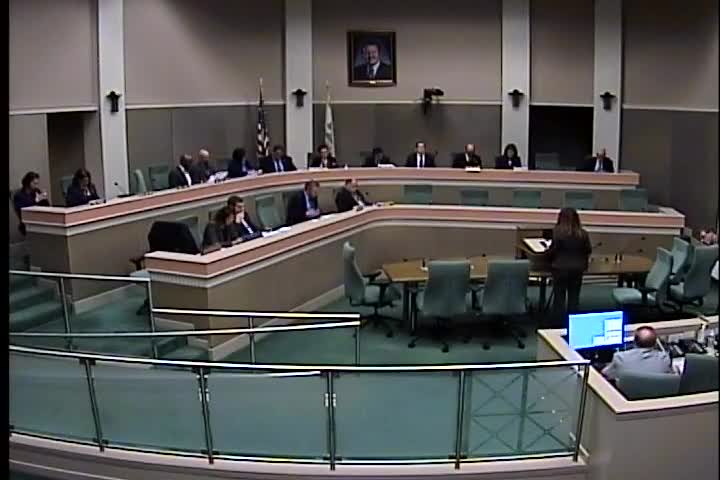
Discussed in Hearing
 6MIN
Assembly Standing Committee on Transportation
Bill Author

Bill Co-Author(s):