AB 2996: Department of Transportation: Job order contracting.
- Session Year: 2017-2018
- House: Assembly
- Latest Version Date: 2018-02-16
The State Contract Act generally provides for a contracting process by state agencies for public works of improvement pursuant to a competitive bidding process, under which bids are awarded to the lowest responsible bidder, with specified alternative procurement procedures authorized in certain cases.
This bill, until July 1, 2022, would authorize the Department of Transportation to use job order contracting, an alternative procurement procedure, for certain types of highway maintenance work. The bill would require the department to establish a procedure to prequalify job order contractors, and to award work for renewable 12-month contract terms based on competitive sealed bids pursuant to a unit price book of tasks and job order contract specifications. The bill would also require the department to report annually to the Legislature on specified matters relating to job order contracts.
(a)This section provides the Department of Transportation the opportunity to examine and evaluate an alternative procurement procedure for transportation maintenance projects.
(b)(1)It is the intent of the Legislature to enable the use of job order contracting as an option for constructing transportation maintenance projects when it is anticipated that it will reduce procurement costs or expedite project completion in a manner that is not achievable through the design-bid-build method.
(c)The department shall establish a procedure to prequalify job order contractors only for the following types of highway maintenance work:
(1)Routine bridge maintenance and preservation.
(2)Pavement repair, replacement, and seals.
(3)Clearing and grubbing.
(4)Traffic and detection system installation, replacement, and repair.
(5)Improvements to, and repairs of, maintenance facilities.
(6)Improvements to, removal of, and installation of facilities, systems, and traffic control devices needed to comply with the Americans with Disabilities Act of 1990 (Public Law 101-336).
(7)Routine culvert maintenance and preservation as applicable.
(8)Tree mortality mitigation.
(9)Water conservation mitigation.
(10)Stormwater mitigation.
(d)The department shall prepare a set of documents for each job order contract. The documents shall include a unit price book of construction tasks with preestablished unit prices, job order contract specifications, and any other information deemed necessary to describe adequately the departments needs.
(e)Based on the documents prepared under subdivision (d), the department shall prepare a request for bids that invites prequalified job order contractors to submit competitive sealed bids in the manner prescribed by the department.
(f)Job order contracts may be executed for an initial contract term of no more than 12 months, with the option of extending or renewing the job order contract for two 12-month periods. All extensions or renewals shall be priced as provided in the request for bids. The extension or renewal shall be mutually agreed to by the department and the job order contractor.
(g)On or before July 1 of each year, the department shall report to the Legislature with regard to the status of all active job order contracts and those job order contracts that expired in the previous year. The report shall be submitted pursuant to Section 9795 of the Government Code and shall include, but not be limited to, the following information:
(1)A listing of all projects completed under each job order contract.
(2)The name of each job order contractor awarded a contract.
(3)The estimated and actual project costs.
(4)The estimated procurement time savings.
(5)A description of any written protests concerning any aspect of the solicitation, bid, proposal, or award of the job order contract, including, but not limited to, the resolution of the protests.
(6)An assessment of the prequalification process and criteria.
(7)A summary of small business utilization.
(8)Recommendations regarding the most appropriate uses for the job order contract process.
(h)Any job order contractor that is selected to construct a project pursuant to this article shall possess or obtain sufficient bonding to cover the contract amount for construction services and risk and liability insurance as the department may require.
(i)Nothing in this article is intended to affect, expand, alter, or limit any rights or remedies otherwise available at law.
217.11.This article shall remain in effect only until July 1, 2022, and as of that date is repealed.
|
Date
|
Status
|
|---|---|
| May 23, 2018 | In committee: Set, second hearing. Hearing canceled at the request of author. |
| May 16, 2018 | In committee: Set, first hearing. Hearing canceled at the request of author. |
| May 9, 2018 | In committee: Hearing postponed by committee. |
| May 2, 2018 | In committee: Hearing postponed by committee. |
| Apr 17, 2018 | From committee: Do pass and re-refer to Com. on APPR. (Ayes 14. Noes 0.) (April 16). Re-referred to Com. on APPR. |
| Mar 12, 2018 | Referred to Com. on TRANS. |
| Feb 17, 2018 | From printer. May be heard in committee March 19. |
| Feb 16, 2018 | Read first time. To print. |
|
Date
|
Description
|
Location
|
Votes
|
|
|---|---|---|---|---|
| Apr 16, 2018 | Do pass and be re-referred to the Committee on [Appropriations] | Assembly Standing Committee on Transportation |
Passed |
This list shows positions taken on this bill by organizations on the date displayed, which is linked to the original source.
Positions by individuals are not included.
|
Organization
|
Position
|
Date
|
|---|---|---|
| Associated Builders And Contractors Of Northern California | ** Support | Apr 13, 2018 |
Date of Hearing: May 23, 2018
ASSEMBLY COMMITTEE ON APPROPRIATIONS
Lorena Gonzalez Fletcher, Chair
ABPCA Bill Id:AB 2996
Author:(Fong) – As Introduced Ver:February 16, 2018
Policy Committee: | Transportation | Vote: | 14 - 0 |
|
| ||
|
|
Urgency: No State Mandated Local Program: No Reimbursable: No
SUMMARY:
This bill allows the California Department of Transportation (Caltrans), until July 1, 2022, to pilot test the use of Job Order Contracting (JOC) for procurement of contracts related to transportation maintenance projects. This bill specifies details on the pilot program and requires Caltrans to report to the Legislature annually on the pilot.
FISCAL EFFECT:
- Minor onetime costs (transportation special funds) for Caltrans to prepare documents for use in JOC contracts.
- Potentially significant savings to Caltrans to the extent the department is able to complete routine maintenance work more quickly through JOC contracts.
COMMENTS:
- Background. JOC is a way of getting small, simple, and commonly encountered construction projects done easily and quickly. The JOC delivery method is particularly well suited to repetitive jobs and situations in which owners know that many small tasks will arise, but the timing, type of work, and quantity of work are unknown at the time the contract is signed. These jobs usually have minimal design requirements.
- Purpose. It can take Caltrans years to attend to routine maintenance on state highways because the department must use a lengthy project development and procurement process. The purpose of this bill is to allow Caltrans to pilot test the use of JOC to complete certain maintenance tasks much more quickly.
Analysis Prepared by: Jessica Peters / APPR. / (916) 319-2081
Date of Hearing: May 16, 2018
ASSEMBLY COMMITTEE ON APPROPRIATIONS
Lorena Gonzalez Fletcher, Chair
ABPCA Bill Id:AB 2996
Author:(Fong) – As Introduced Ver:February 16, 2018
Policy Committee: | Transportation | Vote: | 14 - 0 |
|
| ||
|
|
Urgency: No State Mandated Local Program: No Reimbursable: No
SUMMARY:
This bill allows the California Department of Transportation (Caltrans), until July 1, 2022, to pilot test the use of Job Order Contracting (JOC) for procurement of contracts related to transportation maintenance projects. This bill specifies details on the pilot program and requires Caltrans to report to the Legislature annually on the pilot.
FISCAL EFFECT:
- Minor onetime costs (transportation special funds) for Caltrans to prepare documents for use in JOC contracts.
- Potentially significant savings to Caltrans to the extent the department is able to complete routine maintenance work more quickly through JOC contracts.
COMMENTS:
- Background. JOC is a way of getting small, simple, and commonly encountered construction projects done easily and quickly. The JOC delivery method is particularly well suited to repetitive jobs and situations in which owners know that many small tasks will arise, but the timing, type of work, and quantity of work are unknown at the time the contract is signed. These jobs usually have minimal design requirements.
- Purpose. It can take Caltrans years to attend to routine maintenance on state highways because the department must use a lengthy project development and procurement process. The purpose of this bill is to allow Caltrans to pilot test the use of JOC to complete certain maintenance tasks much more quickly.
Analysis Prepared by: Jessica Peters / APPR. / (916) 319-2081
Date of Hearing: May 9, 2018
ASSEMBLY COMMITTEE ON APPROPRIATIONS
Lorena Gonzalez Fletcher, Chair
ABPCA Bill Id:AB 2996
Author:(Fong) – As Introduced Ver:February 16, 2018
Policy Committee: | Transportation | Vote: | 14 - 0 |
|
| ||
|
|
Urgency: No State Mandated Local Program: No Reimbursable: No
SUMMARY:
This bill allows the California Department of Transportation (Caltrans), until July 1, 2022, to pilot test the use of Job Order Contracting (JOC) for procurement of contracts related to transportation maintenance projects. This bill specifies details on the pilot program and requires Caltrans to report to the Legislature annually on the pilot.
FISCAL EFFECT:
- Minor onetime costs (transportation special funds) for Caltrans to prepare documents for use in JOC contracts.
- Potentially significant savings to Caltrans to the extent the department is able to complete routine maintenance work more quickly through JOC contracts.
COMMENTS:
- Background. JOC is a way of getting small, simple, and commonly encountered construction projects done easily and quickly. The JOC delivery method is particularly well suited to repetitive jobs and situations in which owners know that many small tasks will arise, but the timing, type of work, and quantity of work are unknown at the time the contract is signed. These jobs usually have minimal design requirements.
- Purpose. It can take Caltrans years to attend to routine maintenance on state highways because the department must use a lengthy project development and procurement process. The purpose of this bill is to allow Caltrans to pilot test the use of JOC to complete certain maintenance tasks much more quickly.
Analysis Prepared by: Jessica Peters / APPR. / (916) 319-2081
Date of Hearing: May 2, 2018
ASSEMBLY COMMITTEE ON APPROPRIATIONS
Lorena Gonzalez Fletcher, Chair
ABPCA Bill Id:AB 2996
Author:(Fong) – As Introduced Ver:February 16, 2018
Policy Committee: | Transportation | Vote: | 14 - 0 |
|
| ||
|
|
Urgency: No State Mandated Local Program: No Reimbursable: No
SUMMARY:
This bill allows the California Department of Transportation (Caltrans), until July 1, 2022, to pilot test the use of Job Order Contracting (JOC) for procurement of contracts related to transportation maintenance projects. This bill specifies details on the pilot program and requires Caltrans to report to the Legislature annually on the pilot.
FISCAL EFFECT:
- Minor onetime costs (transportation special funds) for Caltrans to prepare documents for use in JOC contracts.
- Potentially significant savings to Caltrans to the extent the department is able to complete routine maintenance work more quickly through JOC contracts.
COMMENTS:
- Background. JOC is a way of getting small, simple, and commonly encountered construction projects done easily and quickly. The JOC delivery method is particularly well suited to repetitive jobs and situations in which owners know that many small tasks will arise, but the timing, type of work, and quantity of work are unknown at the time the contract is signed. These jobs usually have minimal design requirements.
- Purpose. It can take Caltrans years to attend to routine maintenance on state highways because the department must use a lengthy project development and procurement process. The purpose of this bill is to allow Caltrans to pilot test the use of JOC to complete certain maintenance tasks much more quickly.
Analysis Prepared by: Jessica Peters / APPR. / (916) 319-2081
Date of Hearing: April 16, 2018
ASSEMBLY COMMITTEE ON TRANSPORTATION
Jim Frazier, Chair
ABPCA Bill Id:AB 2996 (
Author:Fong) – As Introduced Ver:February 16, 2018
SUBJECT: Department of Transportation: Job order contracting
SUMMARY: Creates a pilot program enabling the California Department of Transportation (Caltrans) to examine and evaluate an alternative procedure, called Job Order Contracting (JOC), for procurement of contracts related to transportation maintenance projects. Specifically, this bill:
- Enables Caltrans, until July 1, 2022, to use JOC for constructing transportation maintenance projects when it is anticipated that it will reduce procurement costs or expedite project completion in a manner that is not achievable through the design-bid-build method.
- Requires Caltrans to establish a procedure to prequalify contractors for the following types of highway maintenance projects:
- Routine bridge maintenance and preservation;
- Pavement repair, replacement, and seals;
- Clearing and grubbing;
- Traffic and detection system installation, replacement, and repair;
- Improvements to, and repairs of, maintenance facilities;
- Routine culvert maintenance and preservation;
- Tree mortality mitigation;
- Water conservation mitigation;
- Stormwater mitigation; and,
- Improvements to, removal of, and installation of facilities, systems, and traffic control devices needed to comply with the Americans with Disabilities Act of 1990.
- Routine bridge maintenance and preservation;
- Requires Caltrans to prepare documents for each job order contract, including a unit price book of construction tasks with pre-established unit prices, job order contract specifications, and any other information deemed necessary to adequately describe the department’s needs.
- Requires Caltrans to invite prequalified contractors to submit competitive sealed bids based on the documents Caltrans prepares for each job order contract.
- Limits each job order contract to up to 12 months, with the option of extending or renewing the contract for two 12-month periods.
- Requires each selected contractor to possess or obtain sufficient bonding to cover the contract amount for construction services and risk and liability insurance as Caltrans may require.
- Require Caltrans to report to the Legislature, on or before July 1 of each year, information related to the JOC pilot program including, but not limited to:
- A list of all projects completed under each contract;
- The name of each contractor awarded a contract;
- The estimated and actual project costs;
- The estimated procurement time savings;
- A description of any written contract protests and the resolution of those protests;
- An assessment of the prequalification process and criteria;
- A summary of small business utilization; and,
- Recommendations regarding the most appropriate uses for JOC.
- A list of all projects completed under each contract;
EXISTING LAW:
- Sets forth provisions governing public works contracting. These provisions generally require public agencies to seek bids from contractors and administer a thorough, transparent selection process for every project.
- Generally requires public works construction contracts to be awarded to the lowest responsible bidder.
- Enables certain state entities limited access to alternative procurement procedures to evaluate the efficacy of these alternatives in various situations.
FISCAL EFFECT: Unknown
COMMENTS: For decades, Caltrans and other state entities have traditionally used the design-bid-build process for procuring public works projects. This process relies on the project owner: 1) preparing, or causing to be prepared, complete project design specifications and estimates; 2) putting the complete package out to bid for construction; and 3) awarding the construction contract to the lowest responsible bidder. The design-bid-build process was developed to protect taxpayers from extravagance, corruption, and other improper practices by public officials as well as to secure a fair and reasonable price for public works construction by injecting competition amongst bidders into the process.
Although design-bid-build generally results in the award of the lowest cost construction contract, it is not without its drawbacks. Among those drawbacks is the fact that the process for developing the solicitation and awarding the contract can take some time, even for smaller, repetitive, more routine-types of projects.
The Basics of Job Order Contracting: JOC is a way of getting small, simple, and commonly encountered construction projects done easily and quickly. According to experts, the JOC delivery method is particularly well suited to repetitive jobs and situations in which owners know that many small tasks will arise, but the timing, type of work, and quantity of work are unknown at the time the contract is signed. Many diverse tasks such as routine maintenance, upgrades and renovations, alterations, and minor construction for a site can be efficiently handled using a single JOC contract. These jobs usually have minimal design requirements. Recently, legislation has authorized the use of JOC for public construction in many states.
Prior to the passage of the Road Repair and Accountability Act of 2017, SB 1 (Beall), Chapter 5, Statutes of 2017, the Brown Administration proposed a transportation funding and reform package in the 2017-18 Governor’s Budget. The transportation package included a number of reforms and efficiencies at Caltrans to streamline project delivery and advance projects more quickly. One reform was a JOC pilot project for procuring routine highway, bridge, and applicable culvert projects using the job order contracting method. According to the Administration, this pilot would allow the state to complete a large number of routine maintenance activities in a given area with a single, competitively-bid contract while eliminating much of the time and expense of the current process of separately bidding each project contract.
According to the author, JOC has been used for other public works projects in California and has been shown to reduce costs. Specifically, the Legislature authorized a JOC program for the Los Angeles Unified School District. The school district’s report showed costs were 9.3% lower than estimated. Due to its success, the pilot was permanently expanded to all school districts. By utilizing this procurement model, the author contends that JOC will enable Caltrans to deliver public works projects faster through reduced completion times and lower costs.
Committee Comment: There are several important advantages provided by JOC. For example, projects done under JOC contracts are often completed faster and cost less because it is not necessary to write separate contracts for each job. Since procurement procedures are major contributors to overhead and require significant staff resources, bypassing the usual bid process saves time and money. In addition, the JOC contract establishes prices for each unit of work or materials, so it is fast and easy to arrive at a fixed price for each job. This means there are no price negotiations involved in implementing a JOC contract, saving time and money.
The Legislature required in SB 1 that Caltrans identify $100 million in savings each year. Given this new requirement, it seems reasonable for Caltrans to consider new procurement strategies that could lead to savings.
REGISTERED SUPPORT / OPPOSITION:
Support
Associated Builders and Contractors of Northern California
Opposition
None on file
Analysis Prepared by: Eric Thronson / TRANS. / (916) 319-2093
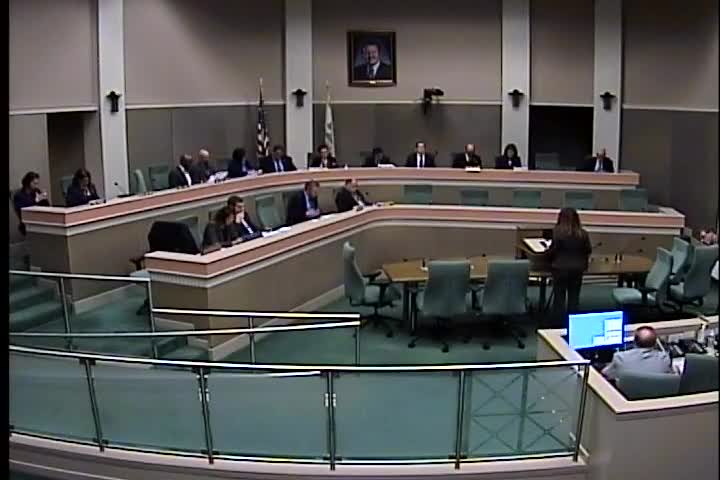
Discussed in Hearing
 2MIN
Assembly Standing Committee on Transportation
Bill Author

Bill Co-Author(s):