AB 473: Mental health: criminal justice: pilot project.
- Session Year: 2017-2018
- House: Assembly
- Latest Version Date: 2017-04-27
Existing law authorizes a person in custody who has been charged with, or convicted of, a criminal offense to apply for inpatient or outpatient mental health services.
This bill would require the University of California Criminal Justice and Health Consortium to administer a 4-year statewide pilot project in 6 counties, as specified, for the purpose of assisting participating counties in creating cost-effective programming for the large population of mentally ill adults in county jail systems who have cooccurring substance use disorders, utilizing eligible funds from existing programs established to address mental illness in California communities for purposes of the pilot project activities. The pilot project counties would be selected pursuant to a competitive application process. The bill would require each pilot project location to include a steering committee of representatives from relevant county agencies and community-based providers, as specified. The bill also would require each pilot project location to implement specified practices, including screening and diagnosis, integrated treatment, and transitional case management, as prescribed. The bill would require the consortium to confer on a regular basis with the State Department of Health Care Services regarding the progress of the pilot project and would require the department to provide relevant information and technical assistance as necessary to support the consortiums activities.
This bill would require the consortium to submit a report to the Legislature regarding the progress and effectiveness of the pilot project by January 1, 2021. The bill would repeal the pilot project as of January 1, 2022.
This bill would make these provisions apply to the consortium only to the extent that the Regents of the University of California, by resolution, make any of these provisions applicable to the consortium.
Existing law authorizes a person in custody who has been charged with with, or convicted of of, a criminal offense to apply for inpatient or outpatient mental health services.
This bill would require the State Department of Health Care Services, in conjunction with the Department of Corrections and Rehabilitation, and in cooperation with the University of California Criminal Justice and Health Consortium to conduct a ____-year administer a 4-year statewide pilot project in 6 counties counties, as specified, for the purpose of assisting participating counties in creating cost-effective programming and treatment for the large population of mentally ill adults in county jail systems who have cooccurring substance use disorders, utilizing eligible funds from existing programs established to address mental illness in California communities for purposes of the pilot project activities. The consortium would be responsible for administering all aspects of the pilot project, as specified. The pilot project counties would be selected pursuant to a competitive application process. The bill would require each pilot project location to include a steering committee of representatives from relevant county agencies and community-based providers, as specified. The bill also would require each pilot project location to implement specified practices, including screening and diagnosis, integrated treatment, and transitional case management, as prescribed. The bill would require the consortium to confer on a regular basis with the State Department of Health Care Services and the Department of Corrections and Rehabilitation regarding the progress of the pilot projects, project and would require the departments department to provide relevant information and technical assistance as necessary to support the consortiums activities.
This bill would require the consortium to submit a report to the Legislature regarding the progress and effectiveness of the pilot project by January 1, 2021. The bill would repeal the pilot project as of January 1, 2022.
This bill would make these provisions apply to the consortium only to the extent that the Regents of the University of California, by resolution, make any of these provisions applicable to the consortium.
Existing law authorizes a person in custody who has been charged with or convicted of a criminal offense to apply for inpatient or outpatient mental health services.
This bill would state the intent of the Legislature to enact legislation to set aside funds from existing state programs aimed at addressing mental illness to motivate partnerships between county jail systems and local universities or community treatment providers to develop model cost-effective, jail-based integrated treatment programming with ongoing continuity of care through reentry via community-based case management or similar services. The bill would further state the intent of the Legislature that the pilot programs established pursuant to that legislation include an evaluation component to describe the extent to which integrated treatment reduces recidivism and increases prosocial outcomes among criminal justice-involved Californians with co-occurring mental illness and substance use disorders.This bill would require the State Department of Health Care Services, in conjunction with the Department of Corrections and Rehabilitation, and in cooperation with the University of California Criminal Justice and Health Consortium to conduct a ____-year statewide pilot project in 6 counties for the purpose of assisting participating counties in creating cost-effective programming and treatment for the large population of mentally ill adults in county jail systems who have cooccurring substance use disorders, utilizing eligible funds from existing programs established to address mental illness in California communities for purposes of the pilot project activities. The consortium would be responsible for administering all aspects of the pilot project, as specified. The pilot project counties would be selected pursuant to a competitive application process. The bill would require each pilot project location to include a steering committee of representatives from relevant county agencies and community-based providers, as specified. The bill also would require each pilot project to implement specified practices, including screening and diagnosis, integrated treatment, and transitional case management, as prescribed. The bill would require the consortium to confer on a regular basis with the State Department of Health Care Services and the Department of Corrections and Rehabilitation regarding the progress of the pilot projects, and would require the departments to provide relevant information and technical assistance as necessary to support the consortiums activities.
Existing law authorizes a person in custody who has been charged with or convicted of a criminal offense to apply for inpatient or outpatient mental health services.
This bill would state the intent of the Legislature to enact legislation to set aside funds from existing state programs aimed at addressing mental illness to motivate partnerships between county jail systems and local universities or community treatment providers to develop model cost-effective, jail-based integrated treatment programming with ongoing continuity of care through reentry via community-based case management or similar services. The bill would further state the intent of the Legislature that the pilot programs established pursuant to that legislation include an evaluation component to describe the extent to which integrated treatment reduces recidivism and increases prosocial outcomes among criminal justice-involved Californians with co-occurring mental illness and substance use disorders.
The Legislature finds and declares as follows:
(a)The State of California has made it a priority to reduce recidivism among high-need populations in the criminal justice system, including the mentally ill and misdemeanor arrestees who would be better served through diversion than entry into the criminal justice system. However, despite Californias leadership on evidence-based criminal justice reform, an initiative has not been developed specifically for the population of adults with cooccurring mental illness and substance use disorders.
(b)The Vera Institute of Justice has found that 72 percent of individuals in jail with serious mental illness also have a substance use disorder and that these individuals spend more time in jail and have an elevated risk of recidivism compared to those with psychiatric disorders alone or substance use disorders alone. As California aims to reduce its criminal justice population, and reduce associated spending, it is critical to effectively treat this population.
(c)Strong evidence from the medical, criminological, and public health literatures shows that successful interventions for the target population include the following elements:
(1)Jail-based screening and diagnosis to identify the population early in their its involvement in the criminal justice system.
(2)An integrated treatment approach that begins in jail and continues into the community.
(3)Transitional case management that similarly extends from jail to the community.
(d)As with existing state-funded criminal justice reform programs, the effort to better serve this target population requires stakeholder input from across the criminal justice and health and social services landscape, as well as a robust, data-driven evaluation process.
(e)It is the intent of the Legislature to conduct a pilot project in various locations within the state to create cost-effective programming for the large population of mentally ill adults in county jail systems who have cooccurring substance use disorders, and to allow counties to utilize eligible funds from existing programs established to address mental illness in California communities to participate in a pilot project to create cost-effective programming for this population.
SEC. 2.Division 7.8 (commencing with Section 7800) is added to the Welfare and Institutions Code, to read:7.8.MENTAL HEALTH AND CRIMINAL JUSTICE PILOT PROJECT7800.The following definitions apply for purposes of this division:
(a)Consortium means the University of California (UC) Criminal Justice and Health Consortium.
(b)Integrated treatment means evidence-based interventions, including psychoeducation courses, cognitive behavioral therapies, and medicated assisted therapies for both substance use and mental health disorders that are administered in combination according to personalized treatment plans. These programs are intended to improve mental health and substance use outcomes as well as lead to the development of problem-solving skills and the elimination of problematic thinking patterns associated with recidivism.
(c)(1)Steering committee means a committee of representatives from relevant county agencies and community-based providers. A steering committee shall include a representative from each of the following:
(A)County sheriff departments.
(B)County probation departments.
(C)County mental health services.
(D)County substance abuse treatment programs.
(E)A former offender who is or has been a client of a mental health or substance abuse treatment facility, or both.
(F)At least ____ two representatives from public or community-based agencies, or both, that provide mental health, substance abuse, housing, and employment support services.
(2)A steering committee representative on the steering committee shall serve as the dedicated point person for his or her organization, to facilitate relations among the different systems, and to identify needed changes to support a comprehensive system of care from jail to the community for the target population.
(d)Transitional case management means the assignment of a community-based case manager to eligible persons still in jail for case management that continues through the transitional reentry into the community to provide support, coordination of care, and continuity of services. Case management programs shall coordinate mental health services, substance use treatment, health care, housing, transportation, employment, social relationships, and community participation.
(e)(1)A small county means a county with a population of not more than 750,000 residents.
(2)A medium county means a county with a population of not less than 750,001 residents and not more than 2,600,000 residents.
(3)A large county means a county with a population of not less than 2,600,001 residents.
7801.(a)The consortium shall administer a four-year statewide pilot project as described in this section. The purpose of the pilot project shall be to assist participating counties in creating cost-effective programming for the large population of mentally ill adults in county jail systems who have cooccurring substance use disorders.
(b)The pilot project shall be conducted in six counties throughout the state pursuant to a competitive application process. Participating counties may utilize eligible funds from existing programs established to address mental illness in California communities for purposes of the pilot project activities.
(c)(1)The consortium shall administer all aspects of the pilot project, including application and implementation, providing technical assistance to participants, and facilitating program evaluations by independent UC researchers. The consortium shall confer on a regular basis with the State Department of Health Care Services regarding the progress of the pilot project, and the department shall provide relevant information and technical assistance as necessary to support the consortiums activities.
(2)By January 1, 2021, the consortium shall submit a report to the Legislature regarding the progress and effectiveness of the pilot project. The report shall be submitted in compliance with Section 9795 of the Government Code.
(d)Each pilot project location shall include all of the following, in accordance with Section 7802:
(1)A screening and diagnostic strategy for identifying the target population early in its jail detainment.
(2)An integrated treatment program that begins in jail and continues through the transition to the community.
(3)A transitional case management program that provides ongoing support for participants engagement in care and distance from criminal behavior.
(4)A steering committee of representatives from relevant county agencies and community-based providers. In addition to administering and evaluating the pilot project program, the consortium shall provide participants with jail-based clinical training and policy review technical assistance to ensure the development of evidence-based integrated treatment and case management programs.
(e)It is the intent of the Legislature that two counties participating in the pilot project be small counties, with the remaining participating counties being medium or large counties.
7802.(a)Screening and diagnosis provided pursuant to the pilot project may be accomplished by cross-training jail-based staff to recognize and assess mental illness and substance use disorders. Clinical training shall be supported by updated jail intake and health screening policies and procedures. Validated diagnostic tools that assess the need for both substance use disorder and mental health treatment shall subsequently lead to be used to create personalized treatment plans.
(b)Integrated treatment provided pursuant to the pilot project shall include simultaneous treatment of both mental health and substance use disorders by a single multidisciplinary clinical team with specialized training and qualifications in treating the target population. Jail-based integrated treatment programs should include a variety of evidence-based interventions, including psychoeducation courses, cognitive behavioral therapies, and medicated assisted therapies for both substance use and mental health disorders that in combination can improve mental health and substance use outcomes as well as lead to the development of problem-solving skills and the elimination of problematic thinking patterns associated with recidivism.
(c)Transitional case management provided pursuant to the pilot project shall be employed when an individual moves from one setting to another, such as from incarceration to the community, to establish support, coordination of care, and continuity of services. Models such as forensic assertive community treatment, which employs the same multidisciplinary, team-based approach as integrated treatment, have been shown to reduce recidivism for individuals with serious mental illness leaving the criminal justice system by focusing on preventing future incarceration, rather than hospitalization, and directly collaborating with criminal justice authorities, including, but not limited to, probation departments. Case managers shall coordinate mental health services and substance use treatment with health care, housing, transportation, employment, social relationships, and community participation.
7803.This division shall remain in effect only until January 1, 2022, and as of that date is repealed.
SEC. 3.This act shall apply to the University of California Criminal Justice and Health Consortium only to the extent that the Regents of the University of California, by resolution, make any of these provisions applicable to the consortium.
The Legislature finds and declares as follows:
(a)The State of California has made it a priority to reduce recidivism among high-need populations in the criminal justice system system, including the mentally ill and misdemeanor arrestees who would be better served through diversion than entry into the criminal justice system. However, despite Californias leadership on evidence-based criminal justice reform, an initiative has not been developed specifically for the population of adults with cooccurring mental illness and substance use disorders.
(b)The Vera Institute of Justice has found that 72 percent of individuals in jail with serious mental illness also have a substance use disorder and that these individuals spend more time in jail and have an elevated risk of recidivism compared to those with psychiatric disorders alone or substance use disorders alone. As California aims to reduce its criminal justice population, and reduce associated spending, it is critical to effectively treat this population.
(c)Strong evidence from the medical, criminological, and public health literatures show shows that successful interventions for the target population include the following elements:
(1)Jail-based screening and diagnosis to identify the population early in their involvement in the criminal justice system.
(2)An integrated treatment approach that begins in jail and continues into the community.
(3)Transitional case management that similarly extends from jail to the community.
(d)As with existing state-funded criminal justice reform programs, the effort to better serve this target population requires stakeholder input from across the criminal justice and health and social services landscape, as well as a robust, data-driven evaluation process.
(e)It is the intent of the Legislature to conduct a pilot project in various locations within the state to create cost-effective programming for the large population of mentally ill adults in county jail systems who have cooccurring substance use disorders, and to allow counties to utilize eligible funds from existing programs established to address mental illness in California communities to participate in a pilot project to create cost-effective programming for this population.
SEC. 2.Division 7.8 (commencing with Section 7800) is added to the Welfare and Institutions Code, to read:7.8.MENTAL HEALTH AND CRIMINAL JUSTICE PILOT PROJECT7800.The following definitions apply for purposes of this division:
(a)Consortium means the University of California (UC) Criminal Justice and Health Consortium, an established community of experts representing all 10 campuses of the UC system that is headquartered at the University of California, San Francisco. The consortiums purpose is to develop and disseminate evidence-based policy and to provide technical assistance to advance health-focused criminal justice reform in California. Consortium.
(b)Integrated treatment means evidence-based interventions, including psychoeducation courses, cognitive behavioral therapies, and medicated assisted therapies for both substance use and mental health disorders that are administered in combination according to personalized treatment plans. These programs are intended to improve mental health and substance use outcomes as well as lead to the development of problem-solving skills and the elimination of problematic thinking patterns associated with recidivism.
(c)(1)Steering committee means a committee of representatives from relevant county agencies and community-based providers. A steering committee shall include a representative from each of the following:
(A)County sheriff departments.
(i)(B)County probation departments.
(ii)(C)County mental health services.
(iii)(D)County substance abuse treatment programs.
(iv)(E)A former offender who is or has been a client of a mental health or substance abuse treatment facility, or both.
(v)(F)At least ____ representatives from public or community-based agencies, or both, that provide mental health, substance abuse, housing, and employment support services.
(B)(2)A steering committee representative on the steering committee shall serve as the dedicated point person for his or her organization, to facilitate relations among the different systems, and to identify needed changes to support a comprehensive system of care from jail to the community for the target population.
(d)Transitional case management means the assignment of a community-based case manager to eligible persons still in jail for case management that continues through the transitional reentry into the community to provide support, coordination of care, and continuity of services. Case management programs shall coordinate mental health services, substance use treatment, health care, housing, transportation, employment, social relationships, and community participation participation.
(e)(1)A small county means a county with a population of not more than 750,000 residents.
(2)A medium county means a county with a population of not less than 750,001 residents and not more than 2,600,000 residents.
(3)A large county means a county with a population of not less than 2,600,001 residents.
7801.(a) The State Department of Health Care Services, in conjunction with the Department of Corrections and Rehabilitation, and in cooperation with the consortium, shall conduct a ____-year statewide pilot project as described in this section. The pilot project shall be administered by the consortium. consortium shall administer a four-year statewide pilot project as described in this section. The purpose of the pilot project shall be to assist participating counties in creating cost-effective programming for the large population of mentally ill adults in county jail systems who have cooccurring substance use disorders.
(b)The pilot project shall be conducted in six counties throughout the state pursuant to a competitive application process. Participating counties may utilize eligible funds from existing programs established to address mental illness in California communities for purposes of the pilot project activities.
(c)(1)The consortium shall administer all aspects of the pilot project, including application and implementation, and providing technical assistance to participants, and facilitating program evaluations by independent UC researchers. The consortium shall confer on a regular basis with the State Department of Health Care Services and the Department of Corrections and Rehabilitation regarding the progress of the pilot projects and the departments shall relevant provide project, and the department shall provide relevant information and technical assistance as necessary to support the consortiums activities.
(2)By January 1, 2021, the consortium shall submit a report to the Legislature regarding the progress and effectiveness of the pilot project. The report shall be submitted in compliance with Section 9795 of the Government Code.
(d)Each pilot project location shall include all of the following, in accordance with Section 7802:
(1)A screening and diagnostic strategy for identifying the target population early in their its jail detainment.
(2)An integrated treatment program that begins in jail and continues through the transition to the community.
(3)A transitional case management program that provides ongoing support for participants engagement in care and distance from criminal behavior.
(4)A steering committee of representatives from relevant county agencies and community-based providers. In addition to administering and evaluating the pilot project program, the consortium will shall provide participants with jail-based clinical training and policy review technical assistance to ensure the development of evidence-based integrated treatment and case management programs.
(e)It is the intent of the Legislature that pilot projects will be awarded to urban and rural counties in equal proportion to ensure that the pilot project produces models of care that are readily adaptable to all communities in the state. two counties participating in the pilot project be small counties, with the remaining participating counties being medium or large counties.
7802.(a)Screening and diagnosis provided pursuant to the pilot project may be accomplished by cross-training jail-based staff to recognize and assess mental illness and substance use disorders. Clinical training shall be supported by updated jail intake and health screening policies and procedures. Validated diagnostic tools that assess the need for both substance use disorder and mental health treatment shall subsequently lead to personalized treatment plans.
(b)Integrated treatment provided pursuant to the pilot project shall include simultaneous treatment of both mental health and substance use disorders by a single multidisciplinary clinical team with specialized training and qualifications in treating the target population. Jail-based integrated treatment programs should include a variety of evidence-based interventions, including psychoeducation courses, cognitive behavioral therapies, and medicated assisted therapies for both substance use and mental health disorders that in combination can improve mental health and substance use outcomes as well as lead to the development of problem-solving skills and the elimination of problematic thinking patterns associated with recidivism.
(c)Transitional case management provided pursuant to the pilot project shall be employed when an individual moves from one setting to another, such as from incarceration to the community, to establish support, coordination of care, and continuity of services. Models such as forensic assertive community treatment, which employs the same multidisciplinary, team-based approach as integrated treatment, have been shown to reduce recidivism for individuals with serious mental illness leaving the criminal justice system by focusing on preventing future incarceration, rather than hospitalization, and directly collaborating with criminal justice authorities, including, but not limited to, probation departments. Case managers shall coordinate mental health services and substance use treatment with health care, housing, transportation, employment, social relationships, and community participation.
7803.This division shall remain in effect only until ____, January 1, 2022, and as of that date is repealed.
SEC. 3.This act shall apply to the University of California Criminal Justice and Health Consortium only to the extent that the Regents of the University of California, by resolution, make any of these provisions applicable to the consortium.
The Legislature finds and declares as follows:
(a)The State of California has made it a priority to reduce recidivism among high-need populations in the criminal justice system including the mentally ill and misdemeanor arrestees who would be better served through diversion than entry into the criminal justice system. However, despite Californias leadership on evidence-based criminal justice reform, an initiative has not been developed specifically for the population of adults with cooccurring mental illness and substance use disorders.
(b)The Vera Institute has found that 72 percent of individuals in jail with serious mental illness also have a substance use disorder and that these individuals spend more time in jail and have an elevated risk of recidivism compared to those with psychiatric disorders alone or substance use disorders alone. As California aims to reduce its criminal justice population, and reduce associated spending, it is critical to effectively treat this population.
(c)Strong evidence from the medical, criminological, and public health literatures show that successful interventions for the target population include the following elements:
(1)Jail-based screening and diagnosis to identify the population early in their involvement in the criminal justice system.
(2)An integrated treatment approach that begins in jail and continues into the community.
(3)Transitional case management that similarly extends from jail to the community.
(d)As with existing state-funded criminal justice reform programs, the effort to better serve this target population requires stakeholder input from across the criminal justice and health and social services landscape, as well as a robust, data-driven evaluation process.
(e)It is the intent of the Legislature to conduct a pilot project in various locations within the state to create cost-effective programming for the large population of mentally ill adults in county jail systems who have cooccurring substance use disorders, and to allow counties to utilize eligible funds from existing programs established to address mental illness in California communities to participate in a pilot project to create cost-effective programming for this population.
SEC. 2.Division 7.8 (commencing with Section 7800) is added to the Welfare and Institutions Code, to read:7.8.MENTAL HEALTH AND CRIMINAL JUSTICE PILOT PROJECT7800.The following definitions apply for purposes of this division:
(a)Consortium means the University of California (UC) Criminal Justice and Health Consortium, an established community of experts representing all 10 campuses of the UC system that is headquartered at the University of California, San Francisco. The consortiums purpose is to develop and disseminate evidence-based policy and to provide technical assistance to advance health-focused criminal justice reform in California.
(b)Integrated treatment means evidence-based interventions, including psychoeducation courses, cognitive behavioral therapies, and medicated assisted therapies for both substance use and mental health disorders that are administered in combination according to personalized treatment plans. These programs are intended to improve mental health and substance use outcomes as well as lead to the development of problem-solving skills and the elimination of problematic thinking patterns associated with recidivism.
(c)(1)Steering committee means a committee of representatives from relevant county agencies and community-based providers. A steering committee shall include a representative from each of the following:
(A)County sheriff departments.
(i)County probation departments.
(ii)County mental health services.
(iii)County substance abuse treatment programs.
(iv)A former offender who is or has been a client of a mental health or substance abuse treatment facility, or both.
(v)At least ____ representatives from public or community-based agencies, or both, that provide mental health, substance abuse, housing, and employment support services.
(B)A steering committee representative on the steering committee shall serve as the dedicated point person for his or her organization, to facilitate relations among the different systems, and to identify needed changes to support a comprehensive system of care from jail to the community for the target population.
(d)Transitional case management means the assignment of a community-based case manager to eligible persons still in jail for case management that continues through the transitional reentry into the community to provide support, coordination of care, and continuity of services. Case management programs shall coordinate mental health services, substance use treatment, health care, housing, transportation, employment, social relationships, and community participation
7801.(a) The State Department of Health Care Services, in conjunction with the Department of Corrections and Rehabilitation, and in cooperation with the consortium, shall conduct a ____-year statewide pilot project as described in this section. The pilot project shall be administered by the consortium. The purpose of the pilot project shall be to assist participating counties in creating cost-effective programming for the large population of mentally ill adults in county jail systems who have cooccurring substance use disorders.
(b)The pilot project shall be conducted in six counties throughout the state pursuant to a competitive application process. Participating counties may utilize eligible funds from existing programs established to address mental illness in California communities for purposes of pilot project activities.
(c)The consortium shall administer all aspects of the pilot project, including application and implementation, and providing technical assistance to participants, and facilitating program evaluations by independent UC researchers. The consortium shall confer on a regular basis with the State Department of Health Care Services and the Department of Corrections and Rehabilitation regarding the progress of the pilot projects and the departments shall relevant provide information and technical assistance as necessary to support the consortiums activities.
(d)Each pilot project location shall include all of the following, in accordance with Section 7802:
(1)A screening and diagnostic strategy for identifying the target population early in their jail detainment.
(2)An integrated treatment program that begins in jail and continues through the transition to the community.
(3)A transitional case management program that provides ongoing support for participants engagement in care and distance from criminal behavior.
(4)A steering committee of representatives from relevant county agencies and community-based providers. In addition to administering and evaluating the pilot project program, the consortium will provide participants with jail-based clinical training and policy review technical assistance to ensure the development of evidence-based integrated treatment and case management programs.
(e)It is the intent of the Legislature that pilot projects will be awarded to urban and rural counties in equal proportion to ensure that the pilot project produces models of care that are readily adaptable to all communities in the state.
7802.(a)Screening and diagnosis provided pursuant to the pilot project may be accomplished by cross-training jail-based staff to recognize and assess mental illness and substance use disorders. Clinical training shall be supported by updated jail intake and health screening policies and procedures. Validated diagnostic tools that assess the need for both substance use disorder and mental health treatment shall subsequently lead to personalized treatment plans.
(b)Integrated treatment provided pursuant to the pilot project shall include simultaneous treatment of both mental health and substance use disorders by a single multidisciplinary clinical team with specialized training and qualifications in treating the target population. Jail-based integrated treatment programs should include a variety of evidence-based interventions, including psychoeducation courses, cognitive behavioral therapies, and medicated assisted therapies for both substance use and mental health disorders that in combination can improve mental health and substance use outcomes as well as lead to the development of problem-solving skills and the elimination of problematic thinking patterns associated with recidivism.
(c)Transitional case management provided pursuant to the pilot project shall be employed when an individual moves from one setting to another, such as from incarceration to the community, to establish support, coordination of care, and continuity of services. Models such as forensic assertive community treatment, which employs the same multidisciplinary, team-based approach as integrated treatment, have been shown to reduce recidivism for individuals with serious mental illness leaving the criminal justice system by focusing on preventing future incarceration, rather than hospitalization, and directly collaborating with criminal justice authorities, including, but not limited to, probation departments. Case managers shall coordinate mental health services and substance use treatment with health care, housing, transportation, employment, social relationships, and community participation.
7803.This division shall remain in effect only until ____, and as of that date is repealed.
SECTION 1.It is the intent of the Legislature to enact legislation to set aside funds from existing state programs aimed at addressing mental illness to motivate partnerships between county jail systems and local universities or community treatment providers to develop model cost-effective, jail-based integrated treatment programming with ongoing continuity of care through reentry via community-based case management or similar services. It is further the intent of the Legislature that the pilot programs established pursuant to that legislation include an evaluation component to describe the extent to which integrated treatment reduces recidivism and increases prosocial outcomes among criminal justice-involved Californians with co-occurring mental illness and substance use disorders.It is the intent of the Legislature to enact legislation to set aside funds from existing state programs aimed at addressing mental illness to motivate partnerships between county jail systems and local universities or community treatment providers to develop model cost-effective, jail-based integrated treatment programming with ongoing continuity of care through reentry via community-based case management or similar services. It is further the intent of the Legislature that the pilot programs established pursuant to that legislation include an evaluation component to describe the extent to which integrated treatment reduces recidivism and increases prosocial outcomes among criminal justice-involved Californians with co-occurring mental illness and substance use disorders.
|
Date
|
Status
|
|---|---|
| Feb 1, 2018 | From committee: Filed with the Chief Clerk pursuant to Joint Rule 56. |
| Jan 31, 2018 | Died pursuant to Art. IV, Sec. 10(c) of the Constitution. |
| May 26, 2017 | In committee: Set, first hearing. Hearing canceled at the request of author. |
| May 17, 2017 | In committee: Set, first hearing. Referred to APPR. suspense file. |
| May 1, 2017 | Re-referred to Com. on APPR. |
| Apr 27, 2017 | Read second time and amended. |
| Apr 18, 2017 | From committee: Do pass and re-refer to Com. on HEALTH with recommendation: To Consent Calendar. (Ayes 7. Noes 0.) (April 18). Re-referred to Com. on HEALTH. |
| Apr 26, 2017 | From committee: Amend, and do pass as amended and re-refer to Com. on APPR. (Ayes 15. Noes 0.) (April 25). |
| Apr 18, 2017 | Re-referred to Com. on PUB. S. |
| Apr 17, 2017 | From committee chair, with author's amendments: Amend, and re-refer to Com. on PUB. S. Read second time and amended. |
| Mar 30, 2017 | From committee chair, with author's amendments: Amend, and re-refer to Com. on PUB. S. Read second time and amended. |
| Apr 3, 2017 | Re-referred to Com. on PUB. S. |
| Mar 30, 2017 | Referred to Coms. on PUB. S. and HEALTH. |
| Feb 14, 2017 | From printer. May be heard in committee March 16. |
| Feb 13, 2017 | Read first time. To print. |
|
Date
|
Description
|
Location
|
Votes
|
|
|---|---|---|---|---|
| Apr 25, 2017 | Do pass as amended and be re-referred to the Committee on [Appropriations] | Assembly Standing Committee on Health |
Passed |
|
| Apr 18, 2017 | Do pass and be re-referred to the Committee on [Health] with recommendation: To Consent Calendar | Assembly Standing Committee on Public Safety |
Passed |
This list shows positions taken on this bill by organizations on the date displayed, which is linked to the original source.
Positions by individuals are not included.
|
Organization
|
Position
|
Date
|
|---|---|---|
| Association For Los Angeles Deputy Sheriffs | ** Support | May 1, 2017 |
| Association of Deputy District Attorneys | ** Support | May 1, 2017 |
| California Association Of Code Enforcement Officers | ** Support | May 1, 2017 |
| California Catholic Conference | ** Support | May 1, 2017 |
| California College And University Police Chiefs Association | ** Support | May 1, 2017 |
| California Narcotic Officers Association | ** Support | May 1, 2017 |
| California Public Defenders Association | ** Support | May 1, 2017 |
| Los Angeles County Professional Peace Officers Association | ** Support | May 1, 2017 |
| Los Angeles Police Protective League | ** Support | May 1, 2017 |
| Riverside Sheriffs Association | ** Support | May 1, 2017 |
| Riverside Sheriffs' Association | ** Support | May 1, 2017 |
| University of California Criminal Justice & Health Consortium | * Support | Apr 25, 2017 |
Date of Hearing: May 17, 2017
ASSEMBLY COMMITTEE ON APPROPRIATIONS
Lorena Gonzalez Fletcher, Chair
ABPCA Bill Id:AB 473
Author:(Waldron) – As Amended Ver:April 27, 2017
Policy Committee: | Public Safety | Vote: | 7 - 0 |
Health | 15 - 0 | ||
|
|
Urgency: No State Mandated Local Program: No Reimbursable: No
SUMMARY:
This bill requires the University of California (UC) Criminal Justice and Health Consortium to administer a four-year pilot project, to assist six eligible counties in creating cost-effective programming for mentally ill adults in county jail systems with co-occurring substance use disorders (SUD). Specifically, this bill:
- Requires the pilot project to be conducted in six counties throughout the state pursuant to a competitive application process, with the stated intent of two counties being small counties and the remaining four counties being medium or large counties.
- Permits, but does not require, participating counties to utilize eligible funds from existing programs established to address mental illness in California communities for purposes of pilot project activities.
- Requires the Consortium to administer all aspects of the pilot project, including application and implementation, providing technical assistance to participants, and facilitating program evaluations by independent UC researchers.
- Requires the Consortium to confer on a regular basis with DHCS and CDCR regarding the progress of the pilot projects and requires DHCS and CDCR to provide information and technical assistance as necessary to support the consortium’s activities.
- Specifies requirements for each of the pilot projects, including: steering committees, integrated treatment program that begins with jail and continues through transition to the community, and transitional case management that provides ongoing support
- Requires clinical training to be supported by updated jail intake and health screening policies and procedures. Requires validated diagnostic tools that assess the need for both SUD and mental health treatment to be used to create personalized treatment plans.
- Requires integrated treatment provided by the pilot project to include simultaneous treatment of both mental health and SUDs by a single multidisciplinary clinical team with specialized training and qualifications in treating the target population.
- Requires, by January 1, 2021, the Consortium to submit a report to the Legislature regarding the progress and effectiveness of the pilot project.
- Sunsets the pilot program on January 1, 2022.
FISCAL EFFECT:
- Unknown significant costs, expected to be in the hundreds of thousands of dollars (GF), for the UC Consortium to:
- Provide the necessary funding to the six participating counties during the four-year pilot projects, the grants will fund the necessary training, case managers, Steering Committee activities, and higher level of service to participating individuals.
- Establish criteria for the competitive grants to two small counties and four large or medium size counties.
- Provide technical assistance to the participating counties, administer all aspects of the project, facilitate program evaluation by UC researchers, and submit a report on the progress and effectiveness of the pilot project.
- Minor to moderate costs to DHCS and CDCR for the UC Consortium to confer with these two state agencies on a regular basis regarding the progress of the pilot projects, and for DHCS and CDCR to provide information and technical assistance as necessary to support the Consortium’s activities.
COMMENTS:
- Purpose. The author points out that, “Far too often those with mental illness or those that suffer from drug addiction get caught in the brutal cycle of the criminal justice system and do not receive proper treatment. Strong evidence from the medical, criminological, and public health literatures show that successful intervention for the Co-occuring disorder population includes: jail base screening and diagnosis, integrated treatment and transitional case management. By incorporating these three critical elements AB 473 will help the high-need populations that are currently not receiving the proper attention that they need.”
The intent of this bill is to assist participating counties in creating cost-effective programming for the large population of mentally ill adults in county jail systems who have co-occurring substance use disorders.
- Background. The UC Justice & Health Consortium is a collaborative effort of researchers, experts and advocates from across the University of California system working to bring evidence-based health and healthcare solutions to criminal justice reform in California and nationwide. According to the Consortium, their mission is to develop and support a community of UC researchers engaged in policy-oriented research at the intersection of criminal justice and health.
The Consortium states that they want to create and use the best available evidence-based research, programs and policies to deeply integrate health and healthcare into criminal justice reform. The Consortium is funded by the University of California Office of the President and is housed at UC San Francisco Division of Geriatrics. - Proposition 63 (2004 General Election): Proposition 63 was passed by Californians in the 2004 General Election. The proposition established a state personal income tax surcharge of 1% on taxpayers with annual taxable incomes of more than $1 million. The funds resulting from the surcharge are used to expand county mental health programs. The State Controller transfers specified amounts of state funding on a monthly basis into a state fund named the Mental Health Services Fund (MHSF).
This bill states that participating counties may utilize eligible funds from existing programs established to address mental illness for purposes of pilot project activities. To the extent that this bill anticipates the counties will use Prop. 63 money to implement the pilot program described in this bill, it seems that the pilot program would be allowable in within the parameters of Prop. 63 as an “innovation” program. However, AB 473 does not require counties to use their MHSF.
- Support. The California Catholic Conference points out that the mentally ill who would be better served through diversion than entry into the criminal justice system; and as the state aims to reduce the inmate population, it is critical to effectively treat the mentally ill population within the penal system.
Analysis Prepared by: Pedro Reyes / APPR. / (916) 319-2081
Date of Hearing:
Counsel: David Billingsley
ASSEMBLY COMMITTEE ON PUBLIC SAFETY
Reginald Byron Jones-Sawyer, Sr., Chair
ABPCA Bill Id:AB 473
Author:(Waldron) – As Amended Ver:
SUMMARY:
Requires the University of California (UC) Criminal Justice and Health Consortium to administer a four year pilot project in six counties for the purpose of creating programming and treatment for mentally ill adults in county jails who have co-occurring substance use disorders, utilizing eligible funds from existing programs. Specifically, this bill:
- Specifies that the University of California (UC) Criminal Justice and Health Consortium (consortium) shall conduct a four year statewide pilot project.
- State that the purpose of the pilot project shall be to assist participating counties in creating cost-effective programming for the large population of mentally ill adults in county jail systems who have co-occurring substance use disorders.
- Provides that the pilot project shall be conducted in six counties throughout the state pursuant to a competitive application process.
- States that it is the intent of the Legislature that two counties participating in the pilot project be small counties, with the remaining participating counties being medium or large counties.
- Defines “small,” “medium,” and “large” counties for purposes of this bill.
- States that participating counties may utilize eligible funds from existing programs established to address mental illness in California communities for purposes of pilot project activities.
- Requires the consortium to confer on a regular basis with the State Department of Health Care Services regarding the progress of the pilot projects and the department shall provide information and technical assistance as necessary to support the consortium’s activities.
- Requires each pilot project location to include all of the following:
- A screening and diagnostic strategy for identifying the target population early in their jail detainment;
- An integrated treatment program that begins in jail and continues through the transition to the community;
- A transitional case management program that provides ongoing support for participants’ engagement in care and distance from criminal behavior; and
- A steering committee of representatives, as specified, from relevant county agencies and community-based providers.
- A screening and diagnostic strategy for identifying the target population early in their jail detainment;
- States that the consortium will provide participants with jail-based clinical training and policy review technical assistance to ensure the development of evidence-based integrated treatment and case management programs.
- States that it is the intent of the Legislature that pilot projects will be awarded to urban and rural counties in equal proportion to ensure that the pilot project produces models of care that are readily adaptable to all communities in the state.
- Provides that screening and diagnosis provided pursuant to the pilot project may be accomplished by cross-training jail-based staff to recognize and assess mental illness and substance use disorders.
- States that clinical training shall be supported by updated jail intake and health screening policies and procedures.
- States that validated diagnostic tools that assess the need for both substance use disorder and mental health treatment shall subsequently lead to personalized treatment plans.
- Specifies that integrated treatment provided by the pilot project shall include simultaneous treatment of both mental health and substance use disorders by a single multidisciplinary clinical team with specialized training and qualifications in treating the target population.
States that jail-based integrated treatment programs should include a variety of evidence-based interventions, including psychoeducation courses, cognitive behavioral therapies, and medicated assisted therapies for both substance use and mental health disorders that in combination can improve mental health and substance use outcomes as well as lead to the development of problem-solving skills and the elimination of problematic thinking patterns associated with recidivism.
- Specifies that transitional case management provided pursuant to the pilot project shall be employed when an individual moves from one setting to another, such as from incarceration to the community, to establish support, coordination of care, and continuity of services.
- States that case managers shall coordinate mental health services and substance use treatment with health care, housing, transportation, employment, social relationships, and community participation.
- Requires the consortium to submit a report to the Legislature regarding the progress and effectiveness of the pilot project by January 1, 2021, as specified.
- Specifies that the provisions of this bill shall remain in effect only until January 1, 2022, and as of that date is repealed.
- Specifies that this bill shall apply to the consortium only to the extent that the regents of the University of California, by resolution, make the provisions of this bill applicable to the consortium.
EXISTING LAW:
- States that the State Department of Health Care Services, in coordination with counties, shall establish a program designed to prevent mental illnesses from becoming severe and disabling, which shall include the following components: (Welfare and Inst. Code, § 5840,subd.(a)-(b).)
- Outreach to families, employers, primary care health care providers, and others to recognize the early signs of potentially severe and disabling mental illnesses;
- Access and linkage to medically necessary care provided by county mental health programs for children with severe mental illness, as defined in Section 5600.3, and for adults and seniors with severe mental illness, as defined in Section 5600.3, as early in the onset of these conditions as practicable;
- Reduction in stigma associated with either being diagnosed with a mental illness or seeking mental health services; and
- Reduction in discrimination against people with mental illness.
- Outreach to families, employers, primary care health care providers, and others to recognize the early signs of potentially severe and disabling mental illnesses;
- Specifies that the program shall emphasize strategies to reduce the following negative outcomes that may result from untreated mental illness: (Welfare and Inst. Code, § 5840,subd.(d).)
- Suicide;
- Incarcerations;
- School failure or dropout;
- Unemployment;
- Prolonged suffering;
- Homelessness; and
- Removal of children from their homes.
- Suicide;
- The Department of Health Care Services shall contract for the provision of services with each county mental health program, as specified. (Welfare and Inst. Code, 5840.2, subd. (a).)
- Requires county mental health programs to develop plans for innovative programs to be funded, as specified. (Welfare and Inst. Code, 5830, subd. (a).)
- States that the innovative programs shall have the following purposes: (Welfare and Inst. Code, 5830, subd. (a)(1)-(4).)
- To increase access to underserved groups;
- To increase the quality of services, including better outcomes;
- To promote interagency collaboration; and
- To increase access to services.
- To increase access to underserved groups;
- Requires county mental health programs to receive funds for their innovation programs upon approval by the Mental Health Services Oversight and Accountability Commission. (Welfare and Inst. Code, 5830, subd. (b).)
- Establishes the Mental Health Services Oversight and Accountability Commission to oversee the Adult and Older Adult Mental Health System of Care Act, as specified. (Welfare and Inst. Code, 5845, subd. (a).)
- States that the commission shall annually review and approve each county mental health program for expenditures, as specified, for innovative programs and for prevention and early intervention. (Welfare and Inst. Code, 5846, subd. (a).)
- Allows the State Department of Health Care Services to provide technical assistance to any county mental health plan as needed to address concerns or recommendations of the commission or when local programs could benefit from technical assistance for improvement of their plans. (Welfare and Inst. Code, 5846, subd. (b).)
- Requires each county mental health program to prepare and submit a three-year plan which shall be updated at least annually and approved by the State Department of Health Care Services after review and comment by the Mental Health Services Oversight and Accountability Commission. (Welfare and Inst. Code, 5847, subd. (a).)
- Creates the Mental Health Services Fund which shall be administered by the State Department of Mental Health for the purpose of funding specified mental health programs. (Welfare and Inst. Code, 5890, subd. (a).)
FISCAL EFFECT:
Unknown
COMMENTS:
- Author's Statement: According to the author, "AB 473 is a vital step towards reducing recidivism among high-need populations in our State. Far too often those with mental illness or those that suffer from drug addiction get caught in the brutal cycle of the criminal justice system and do not receive proper treatment. Strong evidence from the medical, criminological, and public health literatures show that successful intervention for the Co-occuring disorder population includes: jail base screening and diagnosis, integrated treatment and transitional case management. By incorporating these three critical elements AB 473 will help the high-need populations that are currently not receiving the proper attention that they need.”
- Proposition 63 (2004 General Election): Proposition 63 was passed by Californians in the 2004 General Election. The proposition established a state personal income tax surcharge of 1 percent on taxpayers with annual taxable incomes of more than $1 million. The funds resulting from the surcharge are used to expand county mental health programs.
The State Controller transfers specified amounts of state funding on a monthly basis into a state fund named the Mental Health Services Fund. The amounts transferred are based on an estimate of the revenues to be received from the surcharge. The amounts deposited into the fund are adjusted later to reflect the revenues actually received from the tax surcharge. Revenues deposited in the Mental Health Services Fund are used to create new county mental health programs and to expand some existing programs. These funds are provided through the annual state budget act and thus amounts are not subject to change by actions of the Legislature and Governor.
Counties are required to prepare annual updates and expenditure plans for the provision of mental health services. The Department of Mental Health, in coordination with certain other state agencies, has the lead state role in implementing most of the programs specified in the measure and allocating the funds through contracts with counties. The Mental Health Services Oversight and Accountability Commission is responsible for reviewing county plans for mental health services and to approve expenditures for certain programs. (Analysis of the Legislative Analyst, Proposition 63, 2004 General Election.)
Prop. 63 funds can be used for the following activities:- Children’s System of Care;
- Adult System of Care;
- Prevention and Early Intervention;
- “Wraparound” Services for Families;
- “Innovation” Programs. New county programs to experiment with ways to improve access to mental health services, including for underserved groups, to improve program quality, or to promote interagency collaboration in the delivery of services to clients;
- Mental Health Workforce: Education and Training; and
- Capital Facilities and Technology
- Children’s System of Care;
This bill states that participating counties may utilize eligible funds from existing programs established to address mental illness for purposes of pilot project activities. To the extent that this bill anticipates the counties will use Prop. 63 money to implement the pilot program described in this bill, it seems that the pilot program would fit in within the parameters of Prop. 63 as an “innovation” program.
- Steinberg Institute Report on Prop. 63: The Steinberg Institute and the County Behavioral Health Directors published a report which analyzed about half the $947 million spent on Proposition 63 services in 2011-12.
Steinberg’s group worked with the County Behavioral Health Directors Association to evaluate the results of programs that used Proposition 63 money to help homeless and other severely mentally ill people with a variety of services that include housing, substance abuse treatment and job training.
The study looked at the previous year’s history of a group of mentally ill adults entering an array of Proposition 63 programs known as “full-service partnerships.” It found a 47 percent decrease in homelessness among them at discharge from the program and a 42 percent drop in psychiatric hospitalizations and an 82 percent decrease in arrests among those enrolled one year or more.
According to the report, the reductions in emergency room use, jail time, psychiatric hospitalizations and other public services contributed to a savings of more than $87.4 million. (www.sacbee.com/news/politics-government/capitol-alert/article13633121.html) (Steinberg Institute and County Behavioral Health Directors Report, March 11, 2015.) - UC Criminal Justice & Health Consortium (Consortium): The UC Justice & Health Consortium is a collaborative effort of researchers, experts and advocates from across the University of California system working to bring evidence-based health and healthcare solutions to criminal justice reform in California and nationwide.
According to the Consortium, their mission is to develop and support a community of UC researchers engaged in policy-oriented research at the intersection of criminal justice and health.
The Consortium states that they want to create and use the best available evidence-based research, programs and policies to deeply integrate health and healthcare into criminal justice reform. The Consortium is funded by the University of California Office of the President and is housed at UC San Francisco Division of Geriatrics. (http://ucjusticehealth.com/)
Under the provisions of this bill, the Consortium would be responsible for conducting the pilot program. - Co-occurring Disorders (COD): “Co-occurring disorders” and its acronym “COD” to describe what is also known as “dual diagnosis,” i.e., a combination of both mental illness and substance abuse disorders. Most of the individuals with mental illness who come in contact with the justice system also have substance abuse disorders. Co-occurring disorders are a serious and compelling concern throughout the mental health service delivery system as well as in jails. According to a report issued in November 2008 by the California Department of Mental Health (CDMH) Mental Health Services Oversight and Accountability Commission (MHSOAC) Workgroup on COD, COD are pervasive and disabling, yet they do not receive the treatment and attention necessary to reduce their impact. People with COD are said to “have more medical problems, poorer treatment outcomes, more negative social consequences and lower quality of life. They are disproportionately over-represented among arrestees, foster care placements, veterans, hospitalizations and the homeless.”
Even though, in many counties, Departments of Mental Health and Departments of Alcohol and Other Drugs are combined, silos exist resulting in little, if any, cooperation. Mental health providers often do not know how to effectively treat the individual with COD; their programs work only when a single diagnosis can be made. There are nationally recognized model programs that demonstrate cost-effective ways to reduce the financial impact of co-occurring disorders and simultaneously improve overall quality of care and clinical outcomes. One of these is the Screening and Brief Intervention for Substance Abuse Treatment (CASBRIT) pilot program in San Diego; others in California include the Full Service Partnerships developed under AB 2034 and the MHSA and the Substance Abuse and Crime Prevention Act (Proposition 36) program. - Individuals With Serious Mental Illnesses in County Jails: The Public Citizen’s Health Research Group and The Treatment Advocacy Center conducted a survey of jails in 2016, focusing on the mental health status of county jail inmates. The final sample comprised a total of 230 sheriffs’ departments from 39 states that operated jail facilities or detention centers. The report noted that the justice system inmates with mental illness place a huge burden on county jails that house them. “Unless a better-functioning public mental health treatment system that focuses on community-based treatment of individuals with mental illnesses is implemented in the U.S., this problem will only get worse.” (A Survey of Jail Staff’s Perspectives, Public Citizen’s Health Research Group and The Treatment Advocacy Center, July 14, 2016, p. iii.)
The report made the following recommendations to help county jails in diverting individuals with mental illnesses:
- Diversion programs that prevent the entry of mentally ill individuals into the criminal justice system by providing extensive training for police officers in the community about how to recognize offenders with mental illnesses and refer them to treatment programs or other settings. Within-jail diversion programs that identify and direct mentally ill offenders to treatment;
- Widespread assisted outpatient treatment programs that permit courts to order certain individuals with serious mental illnesses to comply with treatment while living in the community;
- A careful intake screening for individuals with serious mental illnesses in jails in order to identify and transfer them to a mental health care dormitory for further evaluation or treatment;
- Proper mental health treatment for seriously mentally ill inmates inside jails.
- Community-based pre-trial psychiatric competency evaluation and competency restoration treatment for qualifying mentally ill inmates;
- The restoration of a sufficient number of inpatient psychiatric beds to meet the need for inpatient care for mentally ill individuals both prior to arrest and when in need of care while incarcerated; and
- Mandatory jail pre-release planning for seriously mentally ill inmates to ensure their transition to proper treatment after release. (Id. at iii-iv.)
- Diversion programs that prevent the entry of mentally ill individuals into the criminal justice system by providing extensive training for police officers in the community about how to recognize offenders with mental illnesses and refer them to treatment programs or other settings. Within-jail diversion programs that identify and direct mentally ill offenders to treatment;
The intent of this bill is to assist participating counties in creating cost-effective programming for the large population of mentally ill adults in county jail systems who have co-occurring substance use disorders.
- Argument in Support: According to the California Catholic Conference, “The State of California has made it a priority to reduce recidivism among high need populations in the criminal justice system including the mentally ill who would be better served through diversion than entry into the criminal justice system. The Vera Institute has found that 72% of people in jail with serious mental illness also have a substance use disorder and that these individuals spend more time in jail. They also have an elevated risk of recidivism compared to those with psychiatric disorders alone or substance use disorders alone.
“AB 473 would require each pilot project to implement specified practices, including screening and diagnosis, integrated treatment and transitional case management. It will also ask that each department above confer on a regular basis regarding the progress of the pilot projects and require each other to provide relevant information and technical assistance as necessary to support this project. As California aims to reduce its criminal justice population, and reign in associated spending, it is critical to effectively treat the mentally ill population within our penal system.” - Related Legislation:
- AB 154 (Levine), would allow the court to order the defendant to serve part of his or her sentence in a residential mental health treatment facility or order the defendant placed in a mental health program in the state prison or county jail, if the defendant had a diagnosable mental condition. AB 154 is awaiting hearing in the Assembly Appropriations Committee.
- AB 720 (Eggman), would apply the existing framework for involuntary medication of a person in county jail after being sentenced on a criminal conviction, to all inmates in county jail. AB 720 is awaiting hearing in the Assembly Judiciary Committee.
- AB 154 (Levine), would allow the court to order the defendant to serve part of his or her sentence in a residential mental health treatment facility or order the defendant placed in a mental health program in the state prison or county jail, if the defendant had a diagnosable mental condition. AB 154 is awaiting hearing in the Assembly Appropriations Committee.
- Prior Legislation:
- AB 2262 (Levine), of the 2015-16 Legislative Session, would have allowed the court to order the defendant to serve part of his or her sentence in a residential mental health treatment facility or order the defendant placed in a mental health program in the state prison or county jail, if the defendant had a diagnosable mental condition. AB 2262 was held in the Assembly Appropriations Committee.
- AB 1006 (Levine), of the 2015-16 Legislative Session, would have allowed the court to order the defendant to serve part of his or her sentence in a residential mental health treatment facility or order the defendant placed in a mental health program in the state prison or county jail, if the defendant had a diagnosable mental condition. AB 1006 was held in the Assembly Appropriations Committee.
- SB 1054 (Steinberg), Chapter 436, Statutes of 2014, clarifies that mental health grants be divided equally between adult and juvenile mentally ill offender crime reduction grants and streamline the grant process.
- SB 1323 (Cedillo), of the Legislative Session of 2005-2006, would have appropriated $350,000 for allocation, over 5 years, to the County of Los Angeles, for the purpose of funding one position to work, in conjunction with the Los Angeles County Superior Court, on a 5‑year Prototype Court Pilot Program for nonviolent felony offenders in the state who have been identified as having both serious mental health and substance abuse problems. SB 1323 was held in the Senate Appropriations Committee.
- AB 2262 (Levine), of the 2015-16 Legislative Session, would have allowed the court to order the defendant to serve part of his or her sentence in a residential mental health treatment facility or order the defendant placed in a mental health program in the state prison or county jail, if the defendant had a diagnosable mental condition. AB 2262 was held in the Assembly Appropriations Committee.
REGISTERED SUPPORT / OPPOSITION:
Support
Association for Los Angeles Deputy Sheriffs
Association of Deputy District Attorneys
California Association of Code Enforcement Officers
California Catholic Conference
California College and University Police Chiefs Association
California Narcotic Officers Association
California Public Defenders Association
Los Angeles County Professional Peace Officers Association
Los Angeles police Protective League
Riverside Sheriffs’ Association
2 private individuals
Opposition
None
Analysis Prepared by:
David Billingsley / PUB. S. /
Date of Hearing: April 25, 2017
ASSEMBLY COMMITTEE ON HEALTH
Jim Wood, Chair
ABPCA Bill Id:AB 473
Author:(Waldron) – As Amended Ver:April 17, 2017
SUBJECT: Mental health: criminal justice: pilot project.
SUMMARY: Requires the Department of Health Care Services (DHCS) to establish a four-year pilot project, in conjunction with the Department of Corrections and Rehabilitation (CDCR) and administered by the University of California (UC) Criminal Justice and Health Consortium (Consortium), to assist eligible counties in creating cost-effective programming for mentally ill adults in county jail systems with co-occurring substance use disorders (SUD). Specifically, this bill:
- Requires the pilot project to be administered by the Consortium, as defined below.
- Requires the pilot project to be conducted in six counties throughout the state pursuant to a competitive application process, with the stated intent of two counties being small counties and the remaining four counties being medium or large counties.
- Permits participating counties to utilize eligible funds from existing programs established to address mental illness in California communities for purposes of pilot project activities.
- Requires the Consortium to administer all aspects of the pilot project, including application and implementation, providing technical assistance to participants, and facilitating program evaluations by independent UC researchers.
- Requires the Consortium to confer on a regular basis with DHCS and CDCR regarding the progress of the pilot projects and requires DHCS and CDCR to provide information and technical assistance as necessary to support the consortium’s activities.
- Requires each pilot project to include all of the following:
- A screening and diagnostic strategy for identifying the target population early in their jail detainment;
- An integrated treatment program that begins in jail and continues through the transition to the community;
- A transitional case management program that provides ongoing support for participants’ engagement in care and distance from criminal behavior; and,
- A steering committee of representatives from relevant county agencies and community-based providers.
- Permits screening and diagnosis provided pursuant to the pilot project to be administered by cross-training jail-based staff to recognize and assess mental illness and SUD.
- Requires clinical training to be supported by updated jail intake and health screening policies and procedures. Requires validated diagnostic tools that assess the need for both SUD and mental health treatment to be used to create personalized treatment plans.
- Requires integrated treatment provided by the pilot project to include simultaneous treatment of both mental health and SUDs by a single multidisciplinary clinical team with specialized training and qualifications in treating the target population.
- Permits jail-based integrated treatment programs to include a variety of evidence-based interventions, including psychoeducation courses, cognitive behavioral therapies, and medicated assisted therapies for both SUD and mental health disorders that in combination can improve mental health and substance use outcomes as well as lead to the development of problem-solving skills and the elimination of problematic thinking patterns associated with recidivism.
- Requires transitional case management provided by the pilot project to be employed when an individual moves from one setting to another, such as from incarceration to the community, to establish support, coordination of care, and continuity of services.
- Requires case managers to coordinate mental health services and substance use treatment with health care, housing, transportation, employment, social relationships, and community participation.
- Sunsets the pilot program on January 1, 2022.
- Requires, by January 1, 2021, the Consortium to submit a report to the Legislature regarding the progress and effectiveness of the pilot project.
- Establishes the following definitions:
- "Consortium" as the UC Criminal Justice and Health Consortium;
- “Integrated treatment” as evidence-based interventions, including psychoeducation courses, cognitive behavioral therapies, and medicated assisted therapies for both SUD and mental health disorders that are administered in combination according to personalized treatment plans intended to improve mental health and substance use outcomes, as well as lead to the development of problem-solving skills and the elimination of problematic thinking patterns associated with recidivism;
- “Steering committee” means a committee of representatives from relevant county agencies and community-based providers. Requires the steering committee to include a representative from each of the following:
- County sheriff departments;
- County probation departments;
- County mental health services;
- County substance abuse treatment programs;
- A former offender who is or has been a client of a mental health or substance abuse treatment facility, or both; and,
- An unspecified number of representatives from public or community-based agencies, or both, that provide mental health, substance abuse, housing, and employment support services.
- “Transitional case management” as the assignment of a community-based case manager to eligible persons still in jail for case management that continues through the transitional reentry into the community to provide support, coordination of care, and continuity of services. Requires case management programs to coordinate mental health services, substance use treatment, health care, housing, transportation, employment, social relationships, and community participation.
- “Small county” as a county with a population of not more than 750,000 residents.
- "Medium county” as a county with a population of not less than 750,001 residents and not more than 2.6 million residents.
- "Large county” as a county with a population of more than 2.6 million residents.
EXISTING LAW:
- Establishes the Mental Health Services Act (MHSA), enacted by voters in November 2004, as Proposition 63, to provide funds to counties to expand services, develop innovative programs, and integrated service plans for mentally ill children, adults, and seniors through a 1% income tax on personal income above $1 million.
- Requires DHCS, pursuant to the MHSA and in coordination with counties, to establish a program designed to prevent mental illnesses from becoming severe and disabling and requires the program to emphasize strategies to reduce the following negative outcomes that may result from untreated mental illness:
- Suicide;
- Incarcerations;
- School failure or dropout;
- Unemployment;
- Prolonged suffering;
- Homelessness; and,
- Removal of children from their homes.
- Requires DHCS to contract for the provision of services with each county mental health program (MHP), as specified and requires county MHPs to develop plans for innovative programs to be funded, as specified.
- Requires county MHPs to receive funds for their innovation programs upon approval by the Mental Health Services Oversight and Accountability Commission (Commission).
- Requires the Commission to oversee the Adult and Older Adult Mental Health System of Care Act, as specified.
- Requires the Commission to annually review and approve each county MHP for expenditures, as specified, for innovative programs and for prevention and early intervention.
- Permits DHCS to provide technical assistance to any county MHP as needed to address concerns or recommendations of the Commission or when local programs could benefit from technical assistance for improvement of their plans.
- Requires each county MHP to prepare and submit a three-year plan to be updated at least annually and approved by DHCS after review by the Commission.
- Creates the Mental Health Services Act Fund (MHSA Fund), administered by DHCS for the purpose of funding specified mental health programs.
FISCAL EFFECT: This bill has not yet been analyzed by a fiscal committee.
COMMENTS:
- PURPOSE OF THIS BILL. According to the author, this bill is a vital step towards reducing recidivism among high-need populations in our state. Far too often those with mental illness or those that suffer from drug addiction get caught in the brutal cycle of the criminal justice system and do not receive proper treatment. Strong evidence from the medical, criminological, and public health literatures show that successful intervention for the co-occurring disorder (COD) population includes: jail base screening and diagnosis, integrated treatment; and, transitional case management. By incorporating these three critical elements, this bill will help the high-need populations that are currently not receiving the proper attention that they need.
- BACKGROUND. Individuals with COD s are diagnosed with a combination of both mental illness and SUDs. Most of the individuals with mental illness who come in contact with the justice system also have substance abuse disorders. COD s are a serious and compelling concern throughout the mental health service delivery system as well as in jails. Even though, in many counties, Departments of Mental Health and Departments of Alcohol and Other Drugs are combined, silos exist resulting in little, if any, cooperation. Mental health providers often do not know how to effectively treat the individual with COD; their programs work only when a single diagnosis can be made.
- The Consortium. According to the Consortium's Website, the Consortium brings together researchers, experts, and advocates from across the UC system to advance criminal justice reform in California and across the country. Health and healthcare issues are at the core of each of these endeavors, yet criminal justice reform too rarely draws on health research or healthcare solutions. With a membership of more than 120 researchers, educators, and practitioners, the Consortium serves as a bridge between policymakers, community organizations, and academia. The Consortium studies the most pressing challenges in criminal justice reform, and works with partners throughout the criminal justice system to design evidence-based policies and programs to improve outcomes for criminal justice-involved populations and their communities. The Consortium's purpose is to bring public health and criminal justice reform together into one conversation.
- Proposition 63. Proposition 63 was passed by voters in November 2004. The MHSA imposes a 1% income tax on personal income in excess of $1 million and creates the 16 member Commission charged with overseeing the implementation of MHSA. The 2017-18 Governors’ Budget projected that $1.34 billion would be deposited into the MHSA Fund in fiscal year 2015-16. The MHSA addresses a broad continuum of prevention, early intervention and service needs, as well as providing funding for infrastructure, technology, and training needs for the community mental health system.
- Commission. MHSA requires each county mental health department to prepare and submit a three-year plan to DHCS that must be updated each year and approved by DHCS after review and comment by the Commission. In their three-year plans, counties are required to include a list of all programs for which MHSA funding is being requested and that identifies how the funds will be spent and which populations will be served. Counties must submit their plans for approval to the Commission before the counties may spend certain categories of funding.
- Funding. The MHSA provides funding for programs within five components:
- Community Services and Supports: Provides direct mental health services to the severely and seriously mentally ill, such as mental health treatment, cost of health care treatment, and housing supports. Regulation requires counties to direct the majority of its Community Services and Supports funds to Full Service Partnerships (FSPs). FSPs are county coordinated plans, in collaboration with the client and the family to provide the full spectrum of community services. These services consist of mental health services and supports, such as peer support and crisis intervention services; and nonmental health services and supports, such as food, clothing, housing, and the cost of medical treatment;
- Prevention and Early Intervention: Provides services to mental health clients in order to help prevent mental illness from becoming severe and to improve timely access for underserved populations. Prevention and early intervention programs emphasize strategies to reduce negative outcomes that may result from untreated mental illness: suicide, incarcerations, school failure or dropout, unemployment, prolonged suffering, homelessness, and removal of children from their homes;
- Innovation: Provides services and approaches that are creative in an effort to address mental health clients’ persistent issues, such as improving services for underserved or unserved populations within the community;
- Capital Facilities and Technological Needs: Creates additional county infrastructure such as additional clinics and facilities and/or development of a technology infrastructure for the mental health system, such as electronic health records for mental health services; and,
- Workforce Education and Training: Provides training for existing county mental health employees, outreach, and recruitment to increase employment in the mental health system, and financial incentives to recruit or retain employees within the public mental health system.
- Commission report on CODs. In 2008, the Commission authorized a 19-member workgroup on CODs (workgroup). The Commission charged the workgroup with developing comprehensive recommendations to address the needs of individuals with co-occurring mental illness and substance abuse. The central finding of the workgroup was that CODs are pervasive and disabling, yet individuals with co-occurring mental illness and substance abuse are among California’s most underserved. The workgroup found that CODs are disproportionately prevalent among those who are homeless and stated that while it costs on average $16,000 annually per person to provide full-service supportive housing, these costs easily offset the $61,000 in annual emergency medical, hospital, law enforcement, and other services provided per person to those who are not housed. The workgroup also stated that integrating care to provide appropriate treatment for CODs will simultaneously improve our mental health system to efficiently and effectively meet the complex needs of individuals with mental illness.
- Individuals With Serious Mental Illnesses in County Jails: The Public Citizen’s Health Research Group and The Treatment Advocacy Center conducted a survey of jails in 2016, focusing on the mental health status of county jail inmates. The final sample comprised a total of 230 sheriffs’ departments from 39 states that operated jail facilities or detention centers. The report noted that the justice system inmates with mental illness place a huge burden on county jails that house them. “Unless a better-functioning public mental health treatment system that focuses on community-based treatment of individuals with mental illnesses is implemented in the U.S., this problem will only get worse.” (A Survey of Jail Staff’s Perspectives, Public Citizen’s Health Research Group and The Treatment Advocacy Center, July 14, 2016)
The report made the following recommendations to help county jails in diverting individuals with mental illnesses:
- Diversion programs that prevent the entry of mentally ill individuals into the criminal justice system by providing extensive training for police officers in the community about how to recognize offenders with mental illnesses and refer them to treatment programs or other settings. Within-jail diversion programs that identify and direct mentally ill offenders to treatment;
- Widespread assisted outpatient treatment programs that permit courts to order certain individuals with serious mental illnesses to comply with treatment while living in the community;
- A careful intake screening for individuals with serious mental illnesses in jails in order to identify and transfer them to a mental health care dormitory for further evaluation or treatment;
- Proper mental health treatment for seriously mentally ill inmates inside jails;
- Community-based pre-trial psychiatric competency evaluation and competency restoration treatment for qualifying mentally ill inmates;
- The restoration of a sufficient number of inpatient psychiatric beds to meet the need for inpatient care for mentally ill individuals both prior to arrest and when in need of care while incarcerated; and,
- Mandatory jail pre-release planning for seriously mentally ill inmates to ensure their transition to proper treatment after release.
- Diversion programs that prevent the entry of mentally ill individuals into the criminal justice system by providing extensive training for police officers in the community about how to recognize offenders with mental illnesses and refer them to treatment programs or other settings. Within-jail diversion programs that identify and direct mentally ill offenders to treatment;
- RELATED LEGISLATION. AB 727 (Nazarian) clarifies that counties may spend MHSA monies on housing assistance, as defined, for people in the target population identified in the MHSA. AB 727 is pending in the Assembly.
- DOUBLE REFERRAL. This bill is double referred; it was heard in the Assembly Committee on Public Safety on April 18, 2017 and passed out on a 7-0 vote.
- SUGGESTED AMENDMENTS. This bill currently requires an unspecified number of representatives from public or community-based agencies, or both, that provide mental health, substance abuse, housing, and employment support services. The Committee may wish to require two representatives from the groups identified to participate on the steering committees required by the pilot programs. The Committee also recommends other technical, clarifying amendments.
REGISTERED SUPPORT / OPPOSITION:
Support
Association for Los Angeles Deputy Sheriffs
Association for Deputy District Attorneys
California Association of Code Enforcement Officers
California College and University Police Chiefs Association
California Narcotic Officers Association
Los Angeles County Professional Peace Officers Association
Los Angeles Police Protective League
Riverside Sheriff's Association
Opposition
None on file.
Analysis Prepared by: Paula Villescaz / HEALTH / (916) 319-2097
Discussed in Hearing
 1H
Assembly Standing Committee on Appropriations
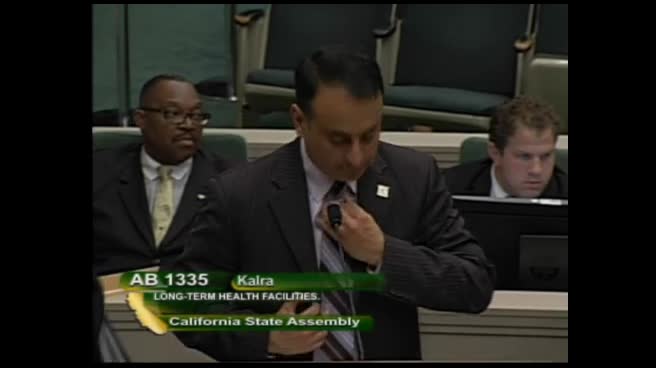 7MIN
Assembly Standing Committee on Health
Bill Author

Bill Co-Author(s):