AB 871: Office of Emergency Services: disaster programs.
- Session Year: 2017-2018
- House: Assembly
- Latest Version Date: 2017-04-06
Existing law requires the Office of Emergency Services, in coordination with all interested state agencies with designated response roles in the State Emergency Plan and interested local emergency management agencies, to jointly establish by regulation a Standardized Emergency Management System for use by all emergency response agencies, as specified. Existing law requires all state agencies to use the Standardized Emergency Management System to coordinate multiple jurisdiction or multiple agency emergency and disaster operations. Existing law requires the Office of Emergency Services, in coordination with the Office of the State Fire Marshal, the Department of the California Highway Patrol, the Commission on Peace Officer Standards and Training, the Emergency Medical Services Authority, and all other interested state agencies with designated response roles in the State Emergency Plan, to jointly develop an approved course of instruction for use in training all emergency response personnel, consisting of the concepts and procedures associated with the Standardized Emergency Management System.
This bill would appropriate $3,000,000 from the General Fund to the Office of Emergency Services to fund current disaster preparedness, resiliency, and response programs in vulnerable underserved neighborhoods and communities that may be subject to earthquake, fire, or other disaster. The bill would require the office to distribute the funds on or before June 31, 2018, to a qualified charitable organization, as defined, that provides a regional disaster preparedness, response, and resilience program to underserved neighborhoods and communities that meets specified criteria, including that it have, among other things, an educational component that aims to educate underserved neighborhoods and communities on the risks that make them more susceptible to disasters and emergencies, and have a focus on increasing reliance with a volunteer workforce to support disaster response.
Existing law requires the Office of Emergency Services, in coordination with all interested state agencies with designated response roles in the State Emergency Plan and interested local emergency management agencies, to jointly establish by regulation a Standardized Emergency Management System for use by all emergency response agencies, as specified. Existing law requires all state agencies to use the Standardized Emergency Management System to coordinate multiple jurisdiction or multiple agency emergency and disaster operations. Existing law requires the Office of Emergency Services, in coordination with the Office of the State Fire Marshal, the Department of the California Highway Patrol, the Commission on Peace Officer Standards and Training, the Emergency Medical Services Authority, and all other interested state agencies with designated response roles in the State Emergency Plan, to jointly develop an approved course of instruction for use in training all emergency response personnel, consisting of the concepts and procedures associated with the Standardized Emergency Management System.
This bill would appropriate $3,000,000 from the General Fund to the Office of Emergency Services to fund current disaster preparedness, resiliency, and response programs in vulnerable communities that may be subject to earthquake, fire, or other disaster.
Under existing law, the Superior Court Security Act of 2012, a sheriffs department is responsible for providing the necessary level of court security services in all counties, except as specified. Existing law requires the presiding judge, in conjunction with the sheriff or marshal, to develop an annual or multiyear comprehensive court security plan, as specified. Existing law requires the sheriff to attend all superior court sessions held within his or her county except for a noncriminal, nondelinquency action if the presiding judge or his or her designee determines that the sheriffs attendance is not necessary for reasons of public safety. Existing law authorizes the court to use court attendants, as defined, in courtrooms hearing noncriminal, nondelinquency actions.This bill would make technical, nonsubstantive changes to those provisions.Under existing law, the Superior Court Security Act of 2012, a sheriffs department is responsible for providing the necessary level of court security services in all counties, except as specified. Existing law requires the presiding judge, in conjunction with the sheriff or marshal, to develop an annual or multiyear comprehensive court security plan, as specified. Existing law requires the sheriff to attend all superior court sessions held within his or her county except for a noncriminal, nondelinquency action if the presiding judge or his or her designee determines that the sheriffs attendance is not necessary for reasons of public safety. Existing law authorizes the court to use court attendants, as defined, in courtrooms hearing noncriminal, nondelinquency actions.
This bill would make technical, nonsubstantive changes to those provisions.
(a)The sum of three million dollars ($3,000,000) is hereby appropriated from the General Fund to the Office of Emergency Services to fund current disaster preparedness, resiliency, and response programs in underserved neighborhoods and communities that may be subject to earthquake, fire, or other disaster.
(b)The Office of Emergency Services shall distribute the funds appropriated in subdivision (a) on or before June 31, 2018, to a qualified charitable organization that provides a regional disaster preparedness, response, and resilience program to underserved neighborhoods and communities. In order to be eligible to receive funding, a qualified charitable organizations current disaster preparedness, resiliency, and response program shall, at minimum, meet all of the following criteria:
(1)Be focused on collaborating with community coalitions and partners to provide disaster preparedness education to threatened underserved neighborhoods and communities.
(2)Be able to promote disaster preparedness through both English and multilingual communities and media.
(3)Have an educational component that aims to educate underserved neighborhoods and communities on the risks that make them more susceptible to disasters and emergencies, and have a focus on increasing reliance with a volunteer workforce to support disaster response.
(4)Distribute disaster preparedness supplies that are essential to educate neighborhood residents on prevention and protection of their homes and neighborhoods from disasters and emergencies.
(5)Create communities of self-sufficiency by use of a base of diverse community volunteers trained in cultural competency which training may include, but not be limited to, targeted disaster institutes.
(6)Acquire supplies to respond to citizens with access and functional needs in disasters and emergencies.
(7)Provide transparency and define success by building resiliency, engaging community partners, including elected officials, increasing multilingual engagement and volunteer workforce capacity, and increasing response activity.
(c)For purposes of this section, the following definitions apply:
(1)Resiliency means the ability for communities to cope with stress, overcome adversity, and to return to the way things were before a disaster or emergency in a timely and safe manner. Resilient communities use their assets to meet basic human needs, no matter what the circumstances.
Resiliency is necessary for community functions that are adapting to hazard risks. Facilitation of hazard-focused community preparedness, risk management, and mitigation actions that reduce long-term vulnerabilities will take place to enable postdisaster community recovery and redevelopment.
(2)Underserved neighborhoods and communities means neighborhoods and communities that have an overall vulnerability because of socioeconomic status, housing composition, disability, minority status, language, transportation, food insecurity, or geological factors.
(3)Qualified charitable organization means an organization that is issued a charter by the United States Congress and is exempt from federal income tax as an organization described in Section 501(c)(3) of the Internal Revenue Code with an ongoing commitment and history of providing preparedness, response, and recovery from disasters and emergencies.
SECTION 1.The sum of three million dollars ($3,000,000) is hereby appropriated from the General Fund to the Office of Emergency Services to fund current disaster preparedness, resiliency, and response programs in vulnerable communities that may be subject to earthquake, fire, or other disaster. REVISIONS: HeadingLine 2.The sum of three million dollars ($3,000,000) is hereby appropriated from the General Fund to the Office of Emergency Services to fund current disaster preparedness, resiliency, and response programs in vulnerable communities that may be subject to earthquake, fire, or other disaster.
SECTION 1.Section 69921 of the Government Code is amended to read:69921.For purposes of this article, all of the following definitions apply:(a)Court attendant means a nonarmed, nonlaw enforcement employee of the superior court who performs those functions specified by the court, except those functions that may only be performed by armed and sworn personnel. A court attendant is not a peace officer or a public safety officer.(b)Court security plan means a plan provided by the superior court to the Administrative Office of the Courts, including a law enforcement security plan and all other court security matters.(c)Law enforcement security plan means a plan provided by a sheriff or marshal, including policies and procedures for providing public safety and law enforcement services to the court.For purposes of this article: article, all of the following definitions apply:
(a)Court attendant means a nonarmed, nonlaw enforcement employee of the superior court who performs those functions specified by the court, except those functions that may only be performed by armed and sworn personnel. A court attendant is not a peace officer or a public safety officer.
(b)Court security plan means a plan that is provided by the superior court to the Administrative Office of the Courts that includes Courts, including a law enforcement security plan and all other court security matters.
(c)Law enforcement security plan means a plan that is provided by a sheriff or marshal that includes marshal, including policies and procedures for providing public safety and law enforcement services to the court.
|
Date
|
Status
|
|---|---|
| Feb 1, 2018 | From committee: Filed with the Chief Clerk pursuant to Joint Rule 56. |
| Jan 31, 2018 | Died pursuant to Art. IV, Sec. 10(c) of the Constitution. |
| May 26, 2017 | In committee: Held under submission. |
| Apr 26, 2017 | In committee: Set, first hearing. Referred to APPR. suspense file. |
| Apr 19, 2017 | Coauthors revised. |
| Apr 17, 2017 | Re-referred to Com. on G.O. |
| Apr 6, 2017 | From committee chair, with author's amendments: Amend, and re-refer to Com. on G.O. Read second time and amended. |
| Mar 22, 2017 | Re-referred to Com. on G.O. |
| Mar 21, 2017 | From committee chair, with author's amendments: Amend, and re-refer to Com. on G.O. Read second time and amended. |
| Mar 20, 2017 | Referred to Com. on G.O. |
| Feb 17, 2017 | From printer. May be heard in committee March 19. |
| Feb 16, 2017 | Read first time. To print. |
|
Date
|
Description
|
Location
|
Votes
|
|
|---|---|---|---|---|
| Apr 19, 2017 | Do pass and be re-referred to the Committee on [Appropriations] | Assembly Standing Committee on Governmental Organization |
Passed |
This list shows positions taken on this bill by organizations on the date displayed, which is linked to the original source.
Positions by individuals are not included.
|
Organization
|
Position
|
Date
|
|---|---|---|
| American Red Cross California Chapter | * Support | Apr 19, 2017 |
| American Red Cross, California Chapter | * Support | Apr 19, 2017 |
| Buddhist Tzu Chi Foundation | ** Support | Apr 18, 2017 |
| Camino Nuevo Charter Academy | ** Support | Apr 18, 2017 |
| Central City Neighborhood Partners | ** Support | Apr 18, 2017 |
| Herb J. Wesson, Councilmember | ** Support | Apr 18, 2017 |
| Mexican American Opportunity Foundation | ** Support | Apr 18, 2017 |
| San Gabriel Valley Conservation Corps | ** Support | Apr 18, 2017 |
| University of the West | ** Support | Apr 18, 2017 |
| Weingart East Los Angeles YMCA | ** Support | Apr 18, 2017 |
| Wilshire Center Business Improvement District | ** Support | Apr 18, 2017 |
| Youth Empowered through Scholastics Sports & Service | ** Support | Apr 18, 2017 |
Date of Hearing: April 26, 2017
ASSEMBLY COMMITTEE ON APPROPRIATIONS
Lorena Gonzalez Fletcher, Chair
ABPCA Bill Id:AB 871
Author:(Santiago) – As Amended Ver:April 6, 2017
Policy Committee: | Governmental Organization | Vote: | 15 - 2 |
|
| ||
|
|
Urgency: No State Mandated Local Program: No Reimbursable: No
SUMMARY:
This bill appropriates $3 million from the General Fund (GF) to the Governor’s Office of Emergency Services (CalOES) to fund current disaster preparedness, resiliency, and response programs in vulnerable underserved neighborhoods and communities that may be subject to disasters. CalOES must distribute the funds on or before June 31, 2018, to a qualified charitable organization that meet certain criteria, including that it provides a regional disaster preparedness, response, and resilience program to underserved neighborhoods and communities.
FISCAL EFFECT:
This bill appropriates $3 million from the GF to the CalOES.
COMMENTS:
- Purpose and Background. According to the author, AB 871 will support program implementation in underserved communities and provide residents with lifesaving information, supplies, and skills. It achieves this by providing funding to a nonprofit that meet a criteria similar to programs that the American Red Cross has deployed called PrepareLA and Prepare San Diego. These two programs aim to help underserved communities prepare for disasters, small and large – from home fires to earthquakes. The American Red Cross works alongside with communities to identify their vulnerabilities and increase their resiliency before and after a disaster. Under AB 871, similar programs would be expanded throughout the state.
- Support. This bill is sponsored by the American Red Cross, who notes that a combination of socioeconomic status, language barriers, and geographic location can make certain communities especially vulnerable to disasters such as earthquakes.
Analysis Prepared by: Luke Reidenbach / APPR. / (916) 319-2081
Date of Hearing: April 19, 2017
ASSEMBLY COMMITTEE ON GOVERNMENTAL ORGANIZATION
Adam Gray, Chair
ABPCA Bill Id:AB 871 (
Author:Santiago) – As Amended Ver:April 6, 2017
SUBJECT: Office of Emergency Services: disaster programs
SUMMARY: Would appropriate $3,000,000 from the General Fund to the Governor’s Office of Emergency Services (CalOES) to fund current disaster preparedness, resiliency, and response programs in vulnerable underserved neighborhoods and communities that may be subject to earthquake, fire, or other disasters. Specifically, this bill:
- Requires CalOES to distribute the funds on or before June 31, 2018, to a qualified charitable organization that provides a regional disaster preparedness, response, and resilience program to underserved neighborhoods and communities.
- Requires a qualified charitable organization to meet the following criteria:
- Be focused on collaborating with community coalitions and partners to provide disaster preparedness education to threatened underserved neighborhoods and communities.
- Be able to promote disaster preparedness through both English and multilingual communities and media.
- Have an educational component that aims to educate underserved neighborhoods and communities on the risks that make them more susceptible to disasters and emergencies, and have a focus on increasing reliance with a volunteer workforce to support disaster response.
- Distribute disaster preparedness supplies that are essential to educate neighborhood residents on prevention and protection of their homes and neighborhoods from disasters and emergencies.
- Create communities of self-sufficiency by use of a base of diverse community volunteers trained in cultural competency which training may include, but not be limited to, targeted “disaster institutes.”
- Acquire supplies to respond to citizens with access and functional needs in disasters and emergencies.
- Provide transparency and define success by building resiliency, engaging community partners, including elected officials, increasing multilingual engagement and volunteer workforce capacity, and increasing response activity.
- Defines “Resiliency” as the ability for communities to cope with stress, overcome adversity, and to return to the way things were before a disaster or emergency in a timely and safe manner.
- Defines “Underserved neighborhoods and communities” as neighborhoods and communities that have an overall vulnerability because of socioeconomic status, housing composition, disability, minority status, language, transportation, food insecurity, or geological factors.
- Defines “Qualified charitable organization” as an organization that is issued a charter by the United States Congress and is exempt from federal income tax as an organization described in Section 501(c)(3) of the Internal Revenue Code with an ongoing commitment and history of providing preparedness, response, and recovery from disasters and emergencies.
EXISTING LAW:
- Establishes CalOES by the Governor's Reorganization Plan No.2, operative July 1, 2013.
- Requires CalOES to perform a variety of duties with respect to specified emergency preparedness, mitigation, and response activities in the state, including emergency medical services.
- Requires the Governor and CalOES, pursuant to the California Emergency Services Act (CESA), to prepare for and mitigate the effects of emergencies in the state.
- Specifies that the State Emergency Plan (SEP) shall be in effect in each political subdivision of the state, and the governing body of each political subdivision shall take such action as may be necessary to carry out the provisions thereof.
- Requires the Governor to coordinate SEP and those programs necessary to mitigate the effects of an emergency.
- Requires the Governor to coordinate the preparation of plans and programs for the mitigation of the effects of an emergency by the political subdivisions of California, such plans and programs to be integrated into and coordinated with the SEP and the plans and programs of the federal government and of other states to the fullest possible extent.
FISCAL EFFECT: Unknown
COMMENTS:
Purpose of the Bill: According to the author, “AB 871 would support program implementation within underserved communities to provide them with lifesaving information, supplies, and skills. Providing such resources will enable community functions that are critical for absorbing, rebounding from, and adapting to disasters and emergencies. By increasing disaster awareness and preparedness, this measure will ensure California’s most vulnerable are prepared to survive and recover from disasters and emergencies.”
Background: The California Disaster Act was enacted by the State Legislature in 1945. The Act combined responsibility for planning and preparing for emergencies, whether natural, technological and human-caused into a single state agency. The California Emergency Services Act was enacted in 1970 to supersede the California Disaster Act. The new Act established the Governor's Office Emergency Services with a Director reporting to the Governor. The office was given responsibility to coordinate statewide emergency preparedness, post emergency recovery and mitigation efforts, and the development, review, approval, and integration of emergency plans.
In 2009, the California Legislature merged the powers, purposes, and responsibilities of the former Cal OES with those of the Office of Homeland Security (OHS) into the newly- created California Emergency Management Agency (CalEMA).On July 1, 2013, Governor Edmund G. Brown Jr.’s Reorganization Plan #2 eliminated Cal EMA and restored it to the Governor’s Office, renaming it the California Governor’s Office of Emergency Services (CalOES), and merging it with the Office of Public Safety Communications. Today, CalOES is responsible for overseeing and coordinating emergency preparedness, response, recovery and homeland security activities within the state.
State Emergency Plan (SEP): On June 23, 2009, Governor Arnold Schwarzenegger promulgated the 2009 edition of the SEP. The plan, in accordance with the California Emergency Services Act (CESA) addresses the state's response to extraordinary emergency situations associated with natural disasters or human-caused emergencies. The SEP is a management document intended to be read and understood before an emergency occurs. In accordance with the Act, the plan describes the methods for carrying out emergency operations, the process for rendering mutual aid, the emergency services of governmental agencies, how resources are mobilized, how the public will be informed and the process to ensure continuity of government during an emergency or disaster.
The SEP is designed to outline the activities of all California jurisdictions within a statewide emergency management system and it embraces the capabilities and resources in the broader emergency management community that includes individuals, businesses, non-governmental organizations, tribal governments, other states, federal government and international assistance.
Standardized Emergency Management System (SEMS): SEMS is the system used for coordinating state and local emergency response in California. SEMS provides a multiple level emergency response organization that facilitates the flow of emergency information and resources. SEMS consists of the Incident Command System (ICS), mutual aid, the operational area concept and multi-interagency coordination. SEMS is designed to be flexible and adaptable to the varied emergencies that can occur in California, and to meet the emergency management needs of all responders. Government Code 8607(a), requires CalOES, in coordination with other state agencies and interested local emergency management agencies, to establish SEMS by regulation.
SB 1451 (Kehoe), Chapter 600, Statutes of 2006, required CalOES to ensure that members of the disabled community are represented on all pertinent SEMS Specialist Committees to ensure that the needs of people with disabilities are met during emergency and disaster situations. The bill also required OES to submit a report to the Legislature and appropriate state and local agencies by January 1, 2009 containing recommendations regarding emergency preparedness and the needs of people with disabilities. The bill also required CalOES to prepare and disseminate sample brochures and other materials on the emergency preparedness and evacuations needs of the disabled community.
Similar Programs: AB 871 carefully defines the criteria a charitable organization must meet in order to receive the $3 million to fund disaster preparedness, resiliency, and response programs in vulnerable underserved neighborhoods and communities. The criteria are similar to current programs American Red Cross (ARC) has deployed in Southern California, known as PrepareLA and Prepare San Diego.
PrepareLA and Prepare San Diego are programs targeted on helping underserved communities prepare for disasters, small and large – from home fires to earthquakes. The programs center on ARC working alongside with communities to identify their vulnerabilities and increase their resiliency before and after a disaster. For the first three years, five communities at a time have been the focus of the PrepareLA effort, totaling 15 communities. The 15 targeted communities that were chosen based on disaster vulnerability ranking are Van Nuys, South El Monte/El Monte, Koreatown, Paramount, East L.A., Pacoima, Pomona, Westlake/Pico Union, Compton/East Compton, Bell/Bell Gardens, San Fernando, Rosemead/South San Gabriel, South L.A., Wilmington and Huntington Park/Walnut Park. Prepare San Diego has been deployed in the 18 cities which comprise San Diego County as well as the 7 cities in Imperial County.
ARC currently receives funding for these programs through small county and city grants as well as private donations. Should AB 871 become law and ARC were to receive the funding in question from CalOES, it could be used to expand these existing programs to other areas of the state.
Support: According to American Red Cross, “The American Red Cross is pleased to sponsor AB 871, which provides funding for disaster and emergency preparedness in underserved communities throughout California. In continually carrying out this mission, the Red Cross has systematically identified communities in California – starting with the Los Angeles and San Diego regions – that are particularly vulnerable to disasters due to a combination of socioeconomic status, language barriers, and geographic location (proximity to earthquake fault lines, etc…). In these targeted communities, the Red Cross has been an active leader and convener by coalition building, educating, and promoting disaster preparedness in an effort to solidify the potential for self-sufficiency and post-disaster resiliency. AB 871 further buttresses these efforts by providing the opportunity for funding aimed at expanding these efforts to other communities so that additional underserved/vulnerable areas of the state are readily prepared for disaster with adequate training, education, and materials.”
REGISTERED SUPPORT / OPPOSITION:
Support
American Red Cross (Sponsor)
Buddhist Tzu Chi Foundation
Camino Nuevo Charter Academy
Central City Neighborhood Partners
Eric Garcetti, Mayor, City of Los Angeles
Evergreen Baptist Church of LA
Gil Cedillo, Councilmember, First District of the City of Los Angeles
Herb J. Wesson, Councilmember/President, Tenth District of the City of Los Angeles
Mexican American Opportunity Foundation
San Gabriel Valley Conservation Corps
University of the West
Weingart East Los Angeles YMCA
Wilshire Center Business Improvement District
Youth Empowered through Scholastics Sports & Service
Opposition
None on file
Analysis Prepared by: Kenton Stanhope / G.O. / (916) 319-2531
Discussed in Hearing
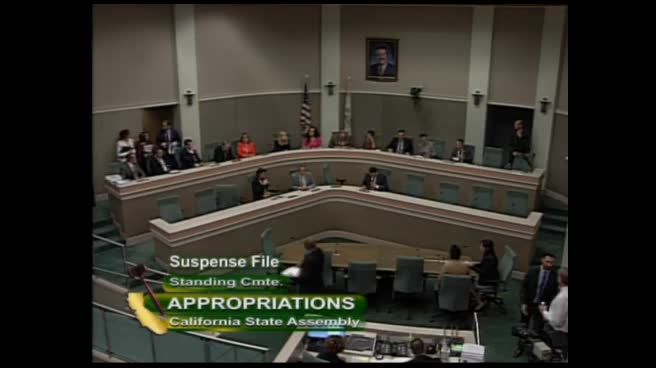 1H
Assembly Standing Committee on Appropriations
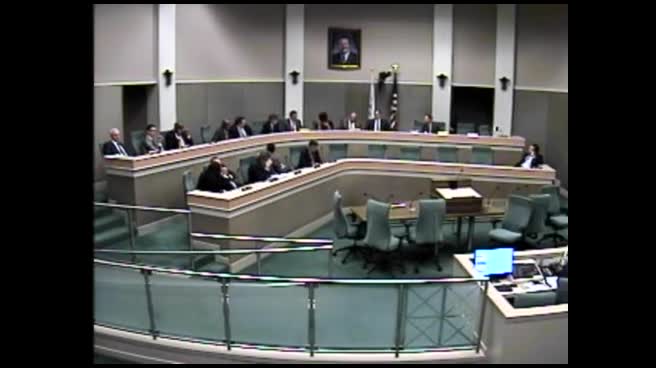 17MIN
Assembly Standing Committee on Governmental Organization
Bill Author