AB 909: Emergency response: trauma kits.
- Session Year: 2017-2018
- House: Assembly
- Latest Version Date: 2017-05-02
Under existing law, everyone is generally responsible, not only for the result of his or her willful acts, but also for an injury occasioned to another by his or her want of ordinary care or skill in the management of his or her property or person. Existing law exempts from civil liability any person who, in good faith and not for compensation, renders emergency medical or nonmedical care or assistance at the scene of an emergency other than an act or omission constituting gross negligence or willful or wanton misconduct. Existing law exempts public or private organizations that sponsor, authorize, support, finance, or supervise the training of people, or certifies those people in emergency medical services, from liability for civil damages alleged to result from those training programs.
This bill would define trauma kit to mean a first aid response kit that contains specified items, including, among other things, at least 2 tourniquets. The bill would require a person or entity that supplies a trauma kit to provide the person or entity that acquires the trauma kit with all information governing the use, installation, operation, training, and maintenance of the trauma kit. The bill would apply the provisions governing civil liability described above to a lay rescuer or person who renders emergency care or treatment by the use of a trauma kit and to a person or entity that provides training in the use of a trauma kit to provide emergency medical treatment, or certifies certain persons in the use of a trauma kit.
Existing law requires certain occupied structures that are not owned or operated by any local government entity and are constructed on or after January 1, 2017, to have an automated external defibrillator on the premises.
This bill would require the entity responsible for managing the building, facility, and tenants of the above-referenced occupied structures, including those that are owned or operated by a local government entity, and that are constructed on or after January 1, 2018, to acquire and place a trauma kit on the premises. require the State Fire Marshal, the Department of Housing and Community Development, and the California Building Standards Commission to research and collect public input, as specified, between January 1, 2018, and January 1, 2020, for the purpose of determining if mandatory or voluntary building standards should be adopted regarding the placement of trauma kits in a public building constructed, or a public building that has any addition, significant repair, or alteration completed, on or after January 1, 2018. The bill would require that entity an entity responsible for managing the building, facility, and tenants of an occupied structure in which a trauma kit is placed to comply with certain requirements, such as periodically inspecting and replacing the contents of a trauma kit, restocking the trauma kit after each use, and notifying tenants of the building or structure of the location of the trauma kit. The bill would exempt a person or entity that acquires and places a trauma kit for emergency care from liability for civil damages resulting from any acts or omissions in the rendering of emergency care if those requirements have been met.
Under existing law, everyone is generally responsible, not only for the result of his or her willful acts, but also for an injury occasioned to another by his or her want of ordinary care or skill in the management of his or her property or person. Existing law exempts from civil liability any person who, in good faith and not for compensation, renders emergency medical or nonmedical care or assistance at the scene of an emergency other than an act or omission constituting gross negligence or willful or wanton misconduct. Existing law exempts public or private organizations that sponsor, authorize, support, finance, or supervise the training of people, or certifies those people in emergency medical services, from liability for civil damages alleged to result from those training programs.
This bill would define trauma kit to mean a first aid response kit that contains specified items, including, among other things, at least 2 tourniquets. The bill would require a person or entity that supplies a trauma kit to provide the acquirer of person or entity that acquires the trauma kit with all information governing the use, installation, operation, training, and maintenance of the trauma kit. The bill would apply the provisions governing civil liability described above to a lay rescuer or person who renders emergency care or treatment by the use of a trauma kit and to a person or entity that provides emergency first aid, trauma, or similar training in the use of a trauma kit to a person who renders emergency care, as specified. provides training in the use of a trauma kit to provide emergency medical treatment, or certifies certain persons in the use of a trauma kit.
Existing law requires certain occupied structures that are not owned or operated by any local government entity and are constructed on or after January 1, 2017, to have an automated external defibrillator on the premises.
This bill would require the entity responsible for managing the building, facility, and tenants of the above-referenced occupied structures, including those that are owned or operated by a local government entity, and that are constructed on or after January 1, 2018, to have acquire and place a trauma kit on the premises. The bill would require a person or entity that acquires a trauma kit that entity to comply with certain requirements, such as periodically inspect and replace inspecting and replacing the contents of a trauma kit and to notify the local EMS agency of the location and contents of the trauma kit. kit, restocking the trauma kit after each use, and notifying tenants of the building or structure of the location of the trauma kit. The bill would exempt a person or entity that acquires and places a trauma kit for emergency care from liability for civil damages resulting from any acts or omissions in the rendering of emergency care if those requirements have been met. The bill would require the owner of a building or structure in which a trauma kit is placed to provide tenants with information regarding the location of, sources of training in the use of, and instructions in the use of, the trauma kit.
Under existing law, everyone is generally responsible, not only for the result of his or her willful acts, but also for an injury occasioned to another by his or her want of ordinary care or skill in the management of his or her property or person. Existing law exempts from civil liability any person who, in good faith and not for compensation, renders emergency care or treatment by the use of an automated external defibrillator (AED) at the scene of an emergency, except in the case of personal injury or wrongful death that results from the gross negligence or willful or wanton misconduct of the person who renders emergency care or treatment. medical or nonmedical care or assistance at the scene of an emergency other than an act or omission constituting gross negligence or willful or wanton misconduct. Existing law exempts public or private organizations that sponsor, authorize, support, finance, or supervise the training of people, or certifies those people in emergency medical services, from liability for civil damages alleged to result from those training programs.
This bill would define trauma PAK kit to mean a first aid response kit that contains specified items, including, among other things, at least 2 tourniquets. The bill would require a person or entity that supplies a trauma PAK to notify an agent of the local emergency medical service agency of the existence, location, and contents of the trauma PAK and to kit to provide the acquirer of the trauma PAK kit with all information governing the use, installation, operation, training, and maintenance of the trauma PAK. kit. The bill would provide an exemption from civil liability for a person who, in good faith and not for compensation, renders emergency care or treatment by the use of a trauma PAK at the scene of an emergency, as specified. The bill would provide an exemption from civil liability for a person or entity that provides first care provider training for the use of a trauma PAK to a person who renders emergency care pursuant to the above provision. The bill would also provide civil immunity for a person or entity that provides active shooter awareness training. apply the provisions governing civil liability described above to a lay rescuer or person who renders emergency care or treatment by the use of a trauma kit and to a person or entity that provides emergency first aid, trauma, or similar training in the use of a trauma kit to a person who renders emergency care, as specified.
Existing law requires certain occupied structures that are not owned or operated by any local government entity and are constructed on or after January 1, 2017, to have an automated external defibrillator (AED) on the premises.
This bill would require the above above-referenced occupied structures, including those that are owned or operated by a local government entity, and that are constructed on or after January 1, 2018, to have a trauma PAK kit on the premises. The bill would require a person or entity that supplies a trauma PAK to comply with the above requirements and acquires a trauma kit to comply with certain requirements, such as periodically inspect and replace the contents of a trauma kit and to notify the local EMS agency of the location and contents of the trauma kit. The bill would exempt a person or entity that acquires a trauma PAK kit for emergency care from liability for civil damages resulting from any acts or omissions in the rendering of emergency care if certain those requirements have been met. The bill would require the owner of a building or structure in which a trauma kit is placed to provide tenants with information regarding the location of, sources of training in the use of, and instructions in the use of, the trauma kit.
Under existing law, everyone is generally responsible, not only for the result of his or her willful acts, but also for an injury occasioned to another by his or her want of ordinary care or skill in the management of his or her property or person. Existing law exempts from civil liability any person who, in good faith and not for compensation, renders emergency care or treatment by the use of an automated external defibrillator (AED) at the scene of an emergency, except in the case of personal injury or wrongful death that results from the gross negligence or willful or wanton misconduct of the person who renders emergency care or treatment.
This bill would define trauma PAK to mean a first aid response kit that contains specified items, including, among other things, at least 2 tourniquets. The bill would require a person or entity that supplies a trauma PAK to notify an agent of the local emergency medical service agency of the existence, location, and contents of the trauma PAK and to provide the acquirer of the trauma PAK with all information governing the use, installation, operation, training, and maintenance of the trauma PAK. The bill would provide an exemption from civil liability for a person who, in good faith and not for compensation, renders emergency care or treatment by the use of a trauma PAK at the scene of an emergency, as specified. The bill would provide an exemption from civil liability for a person or entity that provides first care provider training for the use of a trauma PAK to a person who renders emergency care pursuant to the above provision. The bill would also provide civil immunity for a person or entity that provides active shooter awareness training.
Existing law requires certain occupied structures that are not owned or operated by any local government entity and are constructed on or after January 1, 2017, to have an automated external defibrillator (AED) on the premises.
This bill would require the above occupied structures, including those that are owned or operated by a local government entity, and that are constructed on or after January 1, 2018, to have a trauma PAK on the premises. The bill would require a person or entity that supplies a trauma PAK to comply with the above requirements and would exempt a person or entity that acquires a trauma PAK for emergency care from liability for civil damages resulting from any acts or omissions in the rendering of emergency care if certain requirements have been met.
(a)For purposes of this section, trauma kit means a first aid response kit that contains at least all of the following:
(1)Two tourniquets.
(2)Two pressure dressings that are inspected for replacement no less than every three years.
(3)Four chest seals that are inspected for replacement no less than every three years.
(4)Medical materials and equipment similar to those described in paragraphs (1) to (3), inclusive, and any additional items that are approved by local law enforcement or first responders, that adequately treat a traumatic injury, and can be stored in a readily available kit.
(5)Instructional documents developed by the First Care Provider program, the Committee for Tactical Emergency Casualty Care, or the federal Stop the Bleed campaign. based upon nationally or internationally recognized evidence-based treatment recommendations, guidelines, and programs.
(b)Section 1799.102 of the Health and Safety Code, the Good Samaritan Law, shall apply to any lay rescuer or person who, in good faith and not for compensation, renders emergency care or treatment by the use of a trauma kit at the scene of an emergency.
(c)Section 1799.100 of the Health and Safety Code shall apply to a person or entity that voluntarily, and without expectation and receipt of compensation, provides training in the use of a trauma kit to provide emergency medical treatment to victims of trauma, including, but not limited to, training in the use of the trauma kit in emergency first care response to an active shooter, or certifies persons, other than physicians and surgeons, registered nurses, and licensed vocational nurses, who are trained in the use of a trauma kit to provide emergency medical treatment to victims of trauma.
SEC. 3.Chapter 4 (commencing with Section 19305) is added to Part 3 of Division 13 of the Health and Safety Code, to read:4.Trauma Kits19305.For purposes of this section, trauma kit means a first aid response kit that contains at least all of the following:
(a)Two tourniquets.
(b)Two pressure dressings that are inspected for replacement no less than every three years.
(c)Four chest seals that are inspected for replacement no less than every three years.
(d)Medical materials and equipment similar to those described in subdivisions (a) to (c), inclusive, and any additional items that are approved by local law enforcement or first responders, that adequately treat a traumatic injury, and can be stored in a readily available kit.
(e)Instructional documents developed by the First Care Provider program, the Committee for Tactical Emergency Casualty Care, or the federal Stop the Bleed campaign. based upon nationally or internationally recognized evidence-based treatment recommendations, guidelines, and programs.
19307.In order to ensure public safety, a person or entity that supplies a trauma kit shall provide the person or entity that acquires the trauma kit with all information governing the use, installation, operation, training, and maintenance of the trauma kit.
19308.(a)Commencing January 1, 2018, the State Fire Marshal, the Department of Housing and Community Development, and the California Building Standards Commission shall conduct research and collect public comment for the purpose of determining if mandatory or voluntary building standards should be adopted regarding the placement of trauma kits in a public building constructed, or a public building that has any addition, significant repair, or alteration completed, on or after January 1, 2018.
(b)The research and determination described in subdivision (a) shall be completed no later than January 1, 2020.
(c)The entities conducting public research and collecting public comment pursuant to subdivision (a) shall conduct one or more public workshops to seek input from interested parties during the research period.
19310.(a)This chapter applies to all of the following structures, as defined in Chapter 3 (commencing with Section 301.1) of Part 2, the California Building Code, of Title 24, the California Building Standards Code, of the California Code of Regulations, that are constructed on or after January 1, 2018:(1)Group A assembly buildings with an occupancy of greater than 300.(2)Group B business buildings with an occupancy of 200 or more.(3)Group E educational buildings with an occupancy of 200 or more.(4)Group F factory buildings with an occupancy of 200 or more.(5)Group I institutional buildings with an occupancy of 200 or more.(6)Group M mercantile buildings with an occupancy of 200 or more.(7)Group R residential buildings with an occupancy of 200 or more, excluding single-family and multifamily dwelling units. (b)The entity responsible for managing the building, facility, and tenants of any structure described in subdivision (a) that is an occupied structure shall acquire and place a trauma kit on the premises.(c)(1)This chapter shall apply to a structure in subdivision (a) that is owned or operated by any local government entity.(2)This chapter shall not apply to a health facility licensed under subdivision (a), (b), (c), or (f) of Section 1250 of the Health and Safety Code. (3)This chapter shall not be construed to apply to a structure that is vacant or under construction or renovation.(d)19310.(a)A person or entity that acquires and places a trauma kit for emergency care pursuant to this section in a structure shall not be liable for any civil damages resulting from any acts or omissions in the rendering of emergency care by use of a the trauma kit if that person or entity has complied with subdivision (e). (b).
(e)(b)In order to ensure public safety, the entity responsible for managing the building, facility, and tenants of any structure described in subdivision (a) a structure in which a trauma kit is placed that is an occupied structure shall do all of the following:
(1)Comply with all regulations governing the placement of a trauma kit.
(2)Inspect all trauma kits acquired and placed on the premises of a building or structure every three years from the date of installation to ensure that all materials, supplies, and equipment contained in the trauma kit are not expired, and replace any expired materials, supplies, and equipment as necessary.
(3)Restock the trauma kit after each use and replace any materials, supplies, and equipment as necessary to ensure that all materials, supplies, and equipment required to be contained in the trauma kit are contained in the trauma kit.
(4)At least once per year, notify tenants of the building or structure of the location of the trauma kit and provide information to tenants regarding contact information for training in the use of the trauma kit.
(5)Provide tenants with instructions in the use of the trauma kit from the training programs described in paragraph (5) of subdivision (e) of Section 19305.
(f)For the purposes of this section, a local EMS agency means an agency described in Section 1797.200. REVISIONS: HeadingLine 3.(a)For purposes of this section, trauma kit means a first aid response kit that contains at least all of the following:
(1)Two tourniquets.
(2)Two pressure dressings that are inspected for replacement no less than every three years.
(3)Four chest seals that are inspected for replacement no less than every three years.
(4)Medical materials and equipment similar to those described in paragraphs (1) to (3), inclusive, and any additional items that are approved by local law enforcement or first responders, that adequately treat a traumatic injury, and can be stored in a readily available kit.
(5)Instructional documents developed by the First Care Provider program, the Committee for Tactical Emergency Casualty Care, or the federal Stop the Bleed campaign.
(b)Section 1799.102 of the Health and Safety Code, the Good Samaritan Law, shall apply to any lay rescuer or person who, in good faith and not for compensation, renders emergency care or treatment by the use of a trauma kit at the scene of an emergency.
(c)Section 1799.100 of the Health and Safety Code shall apply to a person or entity that provides emergency first aid, trauma, or similar training, including, but not limited to, training for the emergency first care response to an active shooter or another emergency, in the use of a trauma kit to a person who renders emergency care pursuant to subdivision (b). that voluntarily, and without expectation and receipt of compensation, provides training in the use of a trauma kit to provide emergency medical treatment to victims of trauma, including, but not limited to, training in the use of the trauma kit in emergency first care response to an active shooter, or certifies persons, other than physicians and surgeons, registered nurses, and licensed vocational nurses, who are trained in the use of a trauma kit to provide emergency medical treatment to victims of trauma.
SEC. 4.SEC. 3.Chapter 4 (commencing with Section 19305) is added to Part 3 of Division 13 of the Health and Safety Code, to read:4.Trauma Kits19305.For purposes of this section, trauma kit means a first aid response kit that contains at least all of the following:
(a)Two tourniquets.
(b)Two pressure dressings that are inspected for replacement no less than every three years.
(c)Four chest seals that are inspected for replacement no less than every three years.
(d)Medical materials and equipment similar to those described in subdivisions (a) to (c), inclusive, and any additional items that are approved by local law enforcement or first responders, that adequately treat a traumatic injury, and can be stored in a readily available kit.
(e)Instructional documents developed by the First Care Provider program, the Committee for Tactical Emergency Casualty Care, or the federal Stop the Bleed campaign.
19307.In order to ensure public safety, a person or entity that supplies a trauma kit shall provide the acquirer of person or entity that acquires the trauma kit with all information governing the use, installation, operation, training, and maintenance of the trauma kit.
19310.(a)This chapter applies to all of the following structures, as defined in Chapter 3 (commencing with Section 301.1) of Part 2, the California Building Code, of Title 24, the California Building Standards Code, of the California Code of Regulations, that are constructed on or after January 1, 2018:
(1)Group A assembly buildings with an occupancy of greater than 300.
(2)Group B business buildings with an occupancy of 200 or more.
(3)Group E educational buildings with an occupancy of 200 or more.
(4)Group F factory buildings with an occupancy of 200 or more.
(5)Group I institutional buildings with an occupancy of 200 or more.
(6)Group M mercantile buildings with an occupancy of 200 or more.
(7)Group R residential buildings with an occupancy of 200 or more, excluding single-family and multifamily dwelling units.
(b)A The entity responsible for managing the building, facility, and tenants of any structure described in subdivision (a) that is an occupied structure shall have acquire and place a trauma kit on the premises.
(c)(1)This chapter shall apply to a structure in subdivision (a) that is owned or operated by any local government entity.
(2)This chapter shall not apply to a health facility licensed under subdivision (a), (b), (c), or (f) of Section 1250 of the Health and Safety Code.
(3)This chapter shall not be construed to apply to a structure that is vacant or under construction or renovation.
(d)A person or entity that acquires and places a trauma kit for emergency care pursuant to this section shall not be liable for any civil damages resulting from any acts or omissions in the rendering of emergency care by use of a trauma kit if that person or entity has complied with subdivision (e).
(e)In order to ensure public safety, a person or entity that acquires a trauma kit the entity responsible for managing the building, facility, and tenants of any structure described in subdivision (a) that is an occupied structure shall do all of the following:
(1)Comply with all regulations governing the placement of a trauma kit.
(2)Notify an agent of a local EMS agency of the existence, location, and materials contained in the trauma kit.(3)(2)Inspect all trauma kits acquired and placed on the premises of a building or structure every three years from the date of installation to ensure that all materials, supplies, and equipment contained in the trauma kit are not expired, and replace any expired materials, supplies, and equipment as necessary.
(3)Restock the trauma kit after each use and replace any materials, supplies, and equipment as necessary to ensure that all materials, supplies, and equipment required to be contained in the trauma kit are contained in the trauma kit.
(f)When a trauma kit is placed on the premises of a building or structure, the owner of the building or structure shall do all of the following:(1)(4)At least once per year, notify tenants of the building or structure of the location of the trauma kit and provide information to tenants regarding contact information for training in the use of the trauma kit.
(2)(5)Provide tenants with instructions in the use of the trauma kit from the training programs described in paragraph (5) of subdivision (e) of Section 19305.
(g)(f)For the purposes of this section, a local EMS agency means an agency described in Section 1797.200.
The Legislature finds and declares the following:
(a)On December 2, 2015, a terrorist attack occurred at the Inland Regional Center in the County of San Bernardino in which 14 people were killed and 22 people were injured.
(b)President Obamas speech from the Oval Office stated that the San Bernardino attack was an act of terrorism designed to kill innocent people.
(c)The City of Rancho Cucamonga implemented the principles of the First Care Provider program to build community resiliency and empower citizens to get involved during a disaster by providing the tools, equipment, and knowledge needed to make a difference in preventable death or injuries that occur during terrorist incidents or acts of mass violence.
(d)The successful operation of that program has trained hundreds of employees and thousands of civilians.
(e)There is an obligation to respond to the changing dynamic of emergency care situations by implementing adequate emergency preparation.
SEC. 2.This act shall be known and may be cited as the Tactical Response to TerrorismTraumatic Injuries Act. Tactical Response to Terrorism Traumatic Injuries Act SEC. 3.Section 1714.27 is added to the Civil Code, to read:1714.27.(a)For purposes of this section, public access trauma kit or trauma PAK trauma kit means a first aid response kit that contains at least all of the following:
(1)Two tourniquets.
(2)Two pressure dressings that are inspected for replacement no less than every three years.
(3)Four chest seals that are inspected for replacement no less than every three years.
(4)Medical materials and equipment similar to those described in paragraphs (1) to (3), inclusive, that are approved by local law enforcement or first responders, that adequately treat a traumatic injury, and can be stored in a readily available kit.
(4)(5)Instructional documents developed by the First Care Provider program or program, the Committee for Tactical Emergency Casualty Care, or both. or the federal Stop the Bleed campaign.
(b)Any person who, in good faith and not for compensation, renders emergency care or treatment by the use of a trauma PAKat the scene of an emergency is not liable for any civil damages resulting from any acts or omissions in rendering the emergency care if the trauma PAK is checked for readiness after each use and at least once a year if it has not been used in the preceding year.(c)A person or entity that provides first care provider training for the use of a trauma PAK to a person who renders emergency care pursuant to subdivision (b) is not liable for any civil damages resulting from any acts or omissions of the person rendering the emergency care.(d)A person or entity that provides active shooter awareness training is not liable for any civil damages resulting from any acts or omissions of the person rendering the emergency care.(e)The protections specified in this section do not apply in the case of personal injury or wrongful death that results from the gross negligence or willful or wanton misconduct of the person who renders emergency care or treatment by the use of a trauma PAK.(b)Section 1799.102 of the Health and Safety Code, the Good Samaritan Law, shall apply to any lay rescuer or person who, in good faith and not for compensation, renders emergency care or treatment by the use of a trauma kit at the scene of an emergency.
(c)Section 1799.100 of the Health and Safety Code shall apply to a person or entity that provides emergency first aid, trauma, or similar training, including, but not limited to, training for the emergency first care response to an active shooter or another emergency, in the use of a trauma kit to a person who renders emergency care pursuant to subdivision (b).
SEC. 4.Section 1797.161 is added to the Health and Safety Code, to read:1797.161.(a)For purposes of this section, public access trauma kit or trauma PAK means a first aid response kit that contains at least all of the following:(1)Two tourniquets.(2)Two pressure dressings that are inspected for replacement no less than every three years.(3)Four chest seals that are inspected for replacement no less than every three years. (4)Instructional documents developed by the First Care Provider program or the Committee for Tactical Emergency Casualty Care, or both.(b)In order to ensure public safety, a person or entity that supplies a trauma PAK shall do all of the following:(1)Notify an agent of the local EMS agency of the existence, location, and contents of trauma PAK acquired.(2)Provide the acquirer of the trauma PAK with all information governing the use, installation, operation, training, and maintenance of the trauma PAK.SEC. 5.SEC. 4.Chapter 4 (commencing with Section 19310) 19305) is added to Part 3 of Division 13 of the Health and Safety Code, to read:4.Public Access Trauma Kit Trauma Kits19305.For purposes of this section, trauma kit means a first aid response kit that contains at least all of the following:
(a)Two tourniquets.
(b)Two pressure dressings that are inspected for replacement no less than every three years.
(c)Four chest seals that are inspected for replacement no less than every three years.
(d)Medical materials and equipment similar to those described in subdivisions (a) to (c), inclusive, that are approved by local law enforcement or first responders, that adequately treat a traumatic injury, and can be stored in a readily available kit.
(e)Instructional documents developed by the First Care Provider program, the Committee for Tactical Emergency Casualty Care, or the federal Stop the Bleed campaign.
19307.In order to ensure public safety, a person or entity that supplies a trauma kit shall provide the acquirer of the trauma kit with all information governing the use, installation, operation, training, and maintenance of the trauma kit.
19310.(a)This chapter applies to all of the following structures, as defined in Chapter 3 (commencing with Section 301.1) of Part 2, the California Building Code, of Title 24, the California Building Standards Code, of the California Code of Regulations, that are constructed on or after January 1, 2018:
(1)Group A assembly buildings with an occupancy of greater than 300.
(2)Group B business buildings with an occupancy of 200 or more.
(3)Group E educational buildings with an occupancy of 200 or more.
(4)Group F factory buildings with an occupancy of 200 or more.
(5)Group I institutional buildings with an occupancy of 200 or more.
(6)Group M mercantile buildings with an occupancy of 200 or more.
(7)Group R residential buildings with an occupancy of 200 or more, excluding single-family and multifamily dwelling units.
(b)A structure described in subdivision (a) that is an occupied structure shall have a trauma PAK, as defined in subdivision (a) of Section 1797.161, on the premises subject to the requirements in Section 1797.161. A person or entity that acquires a trauma PAK for emergency care pursuant to this section shall not be liable for any civil damages resulting from any acts or omissions in the rendering of the emergency care by use of a trauma PAK if that person or entity has complied with subdivision (b) of Section 1797.161. kit on the premises.
(c)(1)This chapter shall apply to a structure in subdivision (a) that is owned or operated by any local government entity.
(2)This chapter shall not apply to a health facility licensed under subdivision (a), (b), (c), or (f) of Section 1250 of the Health and Safety Code.
(3)This chapter shall not be construed to apply to a structure that is vacant or under construction or renovation.
(d)A person or entity that acquires a trauma PAK for emergency care for a structure included in subdivision (a) that is constructed and occupied shall not be liable for any civil damages resulting from any acts or omissions in the rendering of the emergency care by use of a trauma PAK if that person or entity has complied with subdivision (b) of Section 1797.161. kit for emergency care pursuant to this section shall not be liable for any civil damages resulting from any acts or omissions in the rendering of emergency care by use of a trauma kit if that person or entity has complied with subdivision (e).
(e)In order to ensure public safety, a person or entity that acquires a trauma kit shall do all of the following:
(1)Comply with all regulations governing the placement of a trauma kit.
(2)Notify an agent of a local EMS agency of the existence, location, and materials contained in the trauma kit.
(3)Inspect all trauma kits acquired and placed on the premises of a building or structure every three years from the date of installation to ensure that all materials, supplies, and equipment contained in the trauma kit are not expired, and replace any expired materials, supplies, and equipment as necessary.
(f)When a trauma kit is placed on the premises of a building or structure, the owner of the building or structure shall do all of the following:
(1)At least once per year, notify tenants of the building or structure of the location of the trauma kit and provide information to tenants regarding contact information for training in the use of the trauma kit.
(2)Provide tenants with instructions in the use of the trauma kit from the training programs described in paragraph (5) of subdivision (e) of Section 19305.
(g)For the purposes of this section, a local EMS agency means an agency described in Section 1797.200.
The Legislature finds and declares the following:
(a)On December 2, 2015, a terrorist attack occurred at the Inland Regional Center in the County of San Bernardino in which 14 people were killed and 22 people were injured.
(b)President Obamas speech from the Oval Office stated that the San Bernardino attack was an act of terrorism designed to kill innocent people.
(c)The City of Rancho Cucamonga implemented the principles of the First Care Provider program to build community resiliency and empower citizens to get involved during a disaster by providing the tools, equipment, and knowledge needed to make a difference in preventable death or injuries that occur during terrorist incidents or acts of mass violence.
(d)The successful operation of that program has trained hundreds of employees and thousands of civilians.
(e)There is an obligation to respond to the changing dynamic of emergency care situations by implementing adequate emergency preparation.
SEC. 2.This act shall be known and may be cited as the Tactical Response to Terrorism Act. Tactical Response to Terrorism Act SEC. 3.Section 1714.27 is added to the Civil Code, to read:1714.27.(a)For purposes of this section, public access trauma kit or trauma PAK means a first aid response kit that contains at least all of the following:
(1)Two tourniquets.
(2)Two pressure dressings that are inspected for replacement no less than every three years.
(3)Four chest seals that are inspected for replacement no less than every three years.
(4)Instructional documents developed by the First Care Provider program or the Committee for Tactical Emergency Casualty Care, or both.
(b)Any person who, in good faith and not for compensation, renders emergency care or treatment by the use of a trauma PAK at the scene of an emergency is not liable for any civil damages resulting from any acts or omissions in rendering the emergency care if the trauma PAK is checked for readiness after each use and at least once a year if it has not been used in the preceding year.
(c)A person or entity that provides first care provider training for the use of a trauma PAK to a person who renders emergency care pursuant to subdivision (b) is not liable for any civil damages resulting from any acts or omissions of the person rendering the emergency care.
(d)A person or entity that provides active shooter awareness training is not liable for any civil damages resulting from any acts or omissions of the person rendering the emergency care.
(e)The protections specified in this section do not apply in the case of personal injury or wrongful death that results from the gross negligence or willful or wanton misconduct of the person who renders emergency care or treatment by the use of a trauma PAK.
SEC. 4.Section 1797.161 is added to the Health and Safety Code, to read:1797.161.(a)For purposes of this section, public access trauma kit or trauma PAK means a first aid response kit that contains at least all of the following:
(1)Two tourniquets.
(2)Two pressure dressings that are inspected for replacement no less than every three years.
(3)Four chest seals that are inspected for replacement no less than every three years.
(4)Instructional documents developed by the First Care Provider program or the Committee for Tactical Emergency Casualty Care, or both.
(b)In order to ensure public safety, a person or entity that supplies a trauma PAK shall do all of the following:
(1)Notify an agent of the local EMS agency of the existence, location, and contents of trauma PAK acquired.
(2)Provide the acquirer of the trauma PAK with all information governing the use, installation, operation, training, and maintenance of the trauma PAK.
SEC. 5.Chapter 4 (commencing with Section 19310) is added to Part 3 of Division 13 of the Health and Safety Code, to read:4.Public Access Trauma Kit19310.(a)This chapter applies to all of the following structures, as defined in Chapter 3 (commencing with Section 301.1) of Part 2, the California Building Code, of Title 24, the California Building Standards Code, of the California Code of Regulations, that are constructed on or after January 1, 2018:
(1)Group A assembly buildings with an occupancy of greater than 300.
(2)Group B business buildings with an occupancy of 200 or more.
(3)Group E educational buildings with an occupancy of 200 or more.
(4)Group F factory buildings with an occupancy of 200 or more.
(5)Group I institutional buildings with an occupancy of 200 or more.
(6)Group M mercantile buildings with an occupancy of 200 or more.
(7)Group R residential buildings with an occupancy of 200 or more, excluding single-family and multifamily dwelling units.
(b)A structure described in subdivision (a) that is an occupied structure shall have a trauma PAK, as defined in subdivision (a) of Section 1797.161, on the premises subject to the requirements in Section 1797.161. A person or entity that acquires a trauma PAK for emergency care pursuant to this section shall not be liable for any civil damages resulting from any acts or omissions in the rendering of the emergency care by use of a trauma PAK if that person or entity has complied with subdivision (b) of Section 1797.161.
(c)(1)This chapter shall apply to a structure in subdivision (a) that is owned or operated by any local government entity.
(2)This chapter shall not apply to a health facility licensed under subdivision (a), (b), (c), or (f) of Section 1250 of the Health and Safety Code.
(3)This chapter shall not be construed to apply to a structure that is vacant or under construction or renovation.
(d)A person or entity that acquires a trauma PAK for emergency care for a structure included in subdivision (a) that is constructed and occupied shall not be liable for any civil damages resulting from any acts or omissions in the rendering of the emergency care by use of a trauma PAK if that person or entity has complied with subdivision (b) of Section 1797.161.
REVISIONS: HeadingLine 3.|
Date
|
Status
|
|---|---|
| Feb 1, 2018 | From committee: Filed with the Chief Clerk pursuant to Joint Rule 56. |
| Jan 31, 2018 | Died pursuant to Art. IV, Sec. 10(c) of the Constitution. |
| Jan 18, 2018 | In committee: Held under submission. |
| Jun 20, 2017 | Coauthors revised. |
| May 26, 2017 | In committee: Hearing postponed by committee. |
| May 17, 2017 | In committee: Set, first hearing. Referred to APPR. suspense file. |
| May 3, 2017 | Re-referred to Com. on APPR. |
| May 2, 2017 | From committee chair, with author's amendments: Amend, and re-refer to Com. on APPR. Read second time and amended. |
| Apr 24, 2017 | Re-referred to Com. on APPR. |
| Apr 20, 2017 | Read second time and amended. |
| Apr 19, 2017 | From committee: Amend, and do pass as amended and re-refer to Com. on APPR. (Ayes 11. Noes 0.) (April 18). |
| Apr 17, 2017 | Re-referred to Com. on JUD. |
| Apr 6, 2017 | From committee chair, with author's amendments: Amend, and re-refer to Com. on JUD. Read second time and amended. |
| Mar 30, 2017 | Coauthors revised. |
| Mar 28, 2017 | Coauthors revised. |
| Mar 23, 2017 | In committee: Set, first hearing. Hearing canceled at the request of author. |
| Mar 2, 2017 | Referred to Com. on JUD. |
| Feb 17, 2017 | From printer. May be heard in committee March 19. |
| Feb 16, 2017 | Read first time. To print. |
|
Date
|
Description
|
Location
|
Votes
|
|
|---|---|---|---|---|
| Apr 18, 2017 | Do pass as amended and be re-referred to the Committee on [Appropriations] | Assembly Standing Committee on Judiciary |
Passed |
This list shows positions taken on this bill by organizations on the date displayed, which is linked to the original source.
Positions by individuals are not included.
|
Organization
|
Position
|
Date
|
|---|---|---|
| California Police Chiefs Association | ** Support | Apr 14, 2017 |
| City of Rancho Cucamonga | ** Support | Apr 14, 2017 |
| First Care Provider Foundation | ** Support | Apr 14, 2017 |
| Rancho Cucamonga Fire District | * Support | Apr 18, 2017 |
| San Diego Chapter-American College of Surgeons | ** Support | Apr 14, 2017 |
Date of Hearing: May 17, 2017
ASSEMBLY COMMITTEE ON APPROPRIATIONS
Lorena Gonzalez Fletcher, Chair
ABPCA Bill Id:AB 909
Author:(Steinorth) – As Amended Ver:May 2, 2017
Policy Committee: | Judiciary | Vote: | 11 - 0 |
|
| ||
|
|
Urgency: No State Mandated Local Program: No Reimbursable: No
SUMMARY:
This bill requires a study to determine whether mandatory or voluntary building standards should be adopted regarding trauma kits (as defined) placement in certain public buildings. In addition, this bill contains other provisions relating to trauma kits that could be placed in buildings as a result of the study. Specifically, this bill:
- Requires the State Fire Marshal, the Department of Housing and Community Development and the California Building Standards Commission to jointly conduct research and collect public comments in order to determine whether mandatory or voluntary building standards should be adopted relating to the placement of trauma kits in public buildings that are constructed or renovated after January 1, 2018.
- Defines a trauma kit as including a specific number of certain first aid items, such as tourniquets, pressure dressings, and associated instructional materials.
- Provides “Good Samaritan” immunity to an individual or entity that places a trauma kit in a building.
- Requires individuals or entities that place a trauma kit in a building to comply with any regulations that could be developed regarding trauma kits, inspect the kits once every three years, restock the kit after use, and annually notify tenants of the building about the location of the kit and instructions on the use of the kit.
FISCAL EFFECT:
Unknown costs (GF and special funds), likely in the tens of thousands to hundreds of thousands of dollars for the state entities specified to form a working group, conduct research, and collect public input.
COMMENTS:
- Background. Existing law requires certain lifesaving medical equipment, such as Automated Electronic Defibrillators (AED), be placed in certain occupied buildings. Existing law provides Good Samaritan protections to individuals or entities that provide or use an AED in an emergency situation. In addition, the placement and use of AEDs are subject to certain regulations and testing and maintenance requirements.
- Purpose. According to the author, “While many buildings have basic first-aid equipment, many of these supplies are not adequate to treat wounds like gunshots or other types of severe trauma. Having updated equipment in a convenient case or pack, combined with proper training, could greatly improve the chances of survival for victims until they can be transferred to the appropriate care.”
Analysis Prepared by: Jessica Peters / APPR. / (916) 319-2081
Date of Hearing: April 18, 2017
ASSEMBLY COMMITTEE ON JUDICIARY
Mark Stone, Chair
ABPCA Bill Id:AB 909 (
Author:Steinorth) – As Amended Ver:April 6, 2017
As Proposed to be Amended
SUBJECT: EMERGENCY RESPONSE: TRAUMA KITS
KEY ISSUES:
- SHOULD PUBLIC AND PRIVATE BUILDINGS THAT ARE REQUIRED TO INSTALL AUTOMATED ELECTRONIC DEFIBRILLATORS (AEDS) ON THEIR PREMISES ALSO BE REQUIRED TO MAKE A “TRAUMA KIT” AVAILABLE FOR EMERGENCY MEDICAL CARE?
- SHOULD ENTITIES THAT OBTAIN AND INSTALL TRAUMA KITS ON THEIR PREMISES BE PROTECTED FROM LIABILITY FOR ANY INJURIES CAUSED BY THE USE OF THOSE KITS BY LAY RESCUERS?
SYNOPSIS:
This bill has two main components. First, it would require certain public and private buildings—which happen to be the same types of buildings that are required by existing law to install automated electronic defibrillators (AEDs) on their premises--to also acquire and place a “trauma kit” on the premises. The bill defines a “trauma kit” to mean a first aid response kit that contains at least two tourniquets; two pressure dressings; and four chest seals. According to the author, this bill is intended to encourage lay persons, at the scene of incidents such as terrorist attacks and mass shootings that cause traumatic injuries, to provide emergency medical care to victims who suffer serious injuries and trauma in those incidents. While the risk of being killed in a terrorist attack is extremely low (approximately one in 3.6 million), the risk of being killed by gun violence, on the other hand, is far greater, and impacts workplace safety, especially when domestic violence is involved. Given the possibility that some lay rescuers may have the skills and presence of mind to treat victims of trauma who are injured in such an incident, and such assistance is more likely to be effective if the lay rescuer is trained, it seems like an appropriate and reasonable policy to encourage training in emergency medical services, as proposed by this well-intentioned bill.
Second, the bill includes several immunity provisions that either clarify that certain people who perform certain acts, such as lay persons who provide emergency medical care and persons who provide training to lay persons in emergency medical services, are already covered by immunity provisions in existing law. It also adds a new immunity provision for any person or entity who is required to acquire and place a trauma kit on the premises of a building that is required to have such a kit, in the event that the kit is used by a lay rescuer and the lay person who provides emergency medical care with the kit somehow injures the person who needs the care, which is a modest expansion of existing law that is very similar to the immunity enjoyed by persons who acquire and install AEDs on their premises. The bill is supported by the American Federation of State, County and Municipal Employees, AFL-CIO; California Police Chiefs Association; City of Rancho Cucamonga; and the First Care Provider Foundation and has no opposition on file.
SUMMARY: Requires certain private and public buildings to make a “trauma kit,” designed and intended for treatment of emergency medical care, available on their premises; clarifies that a “Good Samaritan” who uses such a kit to administer emergency medical care and an entity that trains lay rescuers to use the kit is not liable for injuries resulting from such use; and protects a person or entity that acquires a trauma kit from liability for misuse of such a kit, as long as minimum requirements regarding installation and maintenance are satisfied. Specifically, this bill:
- Defines “trauma kit” to mean a first aid response kit that contains at least all of the following:
- Two tourniquets.
- Two pressure dressings that are inspected for replacement no less than every three years.
- Four chest seals that are inspected for replacement no less than every three years.
- Medical materials and equipment similar to those described in a), b), and c) and any additional items that are approved by local law enforcement or first responders, that adequately treat a traumatic injury, and can be stored in a readily available kit.
- Instructional documents developed by the First Care Provider program, the Committee for Tactical Emergency Casualty Care, or the federal Stop the Bleed campaign.
- Clarifies that the “Good Samaritan Law” applies to any lay rescuer or person who, in good faith and not for compensation, renders emergency care or treatment by the use of a trauma kit at the scene of an emergency.
- Clarifies that a person or entity that voluntarily and without expectation and receipt of compensation, provides training in the use of a trauma kit to provide emergency medical treatment to victims of trauma or certifies persons who are trained, other than physicians and surgeons, registered nurses, and licensed vocational nurses, in the use of a trauma kit to provide emergency medical treatment to victims of trauma, is immune from liability for injuries caused by use of the trauma kit, as provided under existing law.
- Requires each building constructed on or after January 1, 2018 that is required to install an Automated Electronic Defibrillator (AED) on its premises to also have a trauma kit, as defined in 1) above, on its premises. Specifically, the following buildings would be required to have a trauma kit on their premises:
- Group A assembly buildings with an occupancy of greater than 300.
- Group B business buildings with an occupancy of 200 or more.
- Group E educational buildings with an occupancy of 200 or more.
- Group F factory buildings with an occupancy of 200 or more.
- Group I institutional buildings with an occupancy of 200 or more.
- Group M mercantile buildings with an occupancy of 200 or more.
- Group R residential buildings with an occupancy of 200 or more, excluding single-family and multifamily dwelling units.
- Exempts the following structures from the trauma kit requirement:
- A licensed health facility licensed.
- A structure that is vacant or under construction or renovation.
- In order to ensure public safety, requires a person or entity that supplies a trauma kit to provide the person or entity that acquires the trauma kit with all information governing the use, installation, operation, training, and maintenance of the trauma kit.
- Immunizes a person or entity that acquires a trauma kit for emergency care pursuant to this section from any civil damages resulting from any acts or omissions in the rendering of emergency care by use of a trauma kit if that person or entity has complied with the requirements of 8) below.
- Requires the entity responsible for managing the building, facility, and tenants of any structure required to have a trauma kit to do all of the following:
- Comply with all regulations governing the placement of a trauma kit.
- Inspect all trauma kits acquired and placed on the premises of a building or structure every three years from the date of installation to ensure that all materials, supplies, and equipment contained in the trauma kit are not expired, and replace any expired materials, supplies, and equipment as necessary.
- Restock the trauma kit after each use and replace any materials, supplies, and equipment as necessary to ensure that all materials, supplies, and equipment required to be contained in the trauma kit are contained in the kit.
- At least once per year, notify tenants of the building or structure of the location of the trauma kit and provide information to tenants regarding contact information for training in the use of the trauma kit.
- Provide tenants with instructions in the use of the trauma kit from one of three training programs specified in 1e), above.
EXISTING LAW:
- Provides that no local agency, entity of state or local government, private business or nonprofit organization included on the statewide registry that voluntarily and without expectation and receipt of compensation donates services, goods, labor, equipment, resources, or other public or private organization which sponsors, authorizes, supports, finances, or supervises the training of people, or certifies those people, excluding physicians and surgeons, registered nurses, and licensed vocational nurses in emergency medical services, shall be liable for any civil damages alleged to result from those training programs. (Health and Safety Code Section 1799.100. All further statutory references are to this code, unless otherwise indicated.)
- Provides that a “Good Samaritan” who in good faith, and not for compensation, renders medical or nonmedical care at the scene of an emergency shall not be liable for any civil damages resulting from any act or omission other than an act or omission constituting gross negligence or willful or wanton misconduct. (Section 1799.102.)
- Requires certain buildings and structures that are occupied to have an Automated Electronic Defibrillator (AED) installed on their premises. (Section 19300.)
- Provides that a person or entity that acquires an AED for emergency use is not liable for any civil damages resulting from any acts or omissions when the AED is used to render emergency care, provided that the person or entity has complied with all of the following specified maintenance, training, and notice requirements:
- Comply with all regulations governing the placement of an AED.
- Notify an agent of the local EMS agency of the existence, location, and type of AED acquired.
- Ensure that the AED is maintained and tested according to the operation and maintenance guidelines set forth by the manufacturer.
- Ensure that the AED is tested at least biannually and after each use.
- Ensure that an inspection is made of all AEDs on the premises at least every 90 days for potential issues related to operability of the device, including a blinking light or other obvious defect that may suggest tampering or that another problem has arisen with the functionality of the AED.
- Ensure that records of the maintenance and testing required pursuant to this paragraph are maintained. (Section 1797.196 (b)(1).)
- Requires, when an AED is placed in a building, the building owner to do all of the following:
- At least once a year, notify the tenants as to the location of the AED units and provide information to tenants about who they can contact if they want to voluntarily take AED or CPR training.
- At least once a year, offer a demonstration to at least one person associated with the building so that the person can be walked through how to use an AED properly in an emergency. The building owner may arrange for the demonstration or partner with a nonprofit organization to do so.
- Next to the AED, post instructions, in no less than 14-point type, on how to use the AED. (Section 1797.196 (b)(2).)
- Pursuant to Department of Industrial Relations (DIR) regulations, requires all employers to “ensure the ready availability of medical personnel for advice and consultation on matters of industrial health or injury.” (8 CCR section 3400 (a).)
- Pursuant to DIR regulations, requires all employers, in the absence of an infirmary, clinic, or hospital, in near proximity to the workplace, which is used for the treatment of all injured employees, to have a person or persons adequately trained to render first aid. Training shall be equal to that of the American Red Cross or the Mine Safety and Health Administration. (8 CCR section 3400 (b).)
- Pursuant to DIR regulations, requires all employers, to have specific medical and first aid equipment, including the following:
- “Adequate first-aid materials, approved by the consulting physician, readily available for employees on every job. Such materials shall be kept in a sanitary and usable condition. A frequent inspection shall be made of all first-aid materials, which shall be replenished as necessary.” (8 CCR section 3400 (c).)
- Where the eyes or body of any person may be exposed to injurious corrosive materials, suitable facilities for quick drenching or flushing of the eyes and body shall be provided within the work area for immediate emergency use. (8 CCR section 3400 (d).)
- Stretchers and blankets, or other adequate warm covering, may be required by the Division, unless ambulance service is available within 30 minutes under normal conditions. (8 CCR section 3400 (e).)
- Effective provisions shall be made in advance for prompt medical treatment in the event of serious injury or illness. This shall be accomplished by one or a combination of the following that will avoid unnecessary delay in treatment:
- A communication system for contacting a doctor or emergency medical service, such as access to 911 or equivalent telephone system. The communication system or employees using the system shall have the ability to direct emergency services to the location of the injured or ill employee.
- Readily accessible and available on-site treatment facilities suitable for treatment of reasonably anticipated injury and illness.
- Proper equipment for prompt medical transport when transportation of injured or ill employees is necessary and appropriate. (8 CCR section 3400 (f).)
FISCAL EFFECT: As currently in print this bill is keyed fiscal.
COMMENTS: According to the author, this bill is intended to encourage lay persons, at the scene of incidents such as terrorist attacks and mass shootings that cause traumatic injuries, to provide emergency medical care to victims who suffer serious injuries and trauma in those incidents:
Victims of active shooters and emergencies stand the best chance of survival if they receive medical attention and first-aid as quickly as possible. While many buildings have basic first-aid equipment, many of these supplies are not adequate to treat wounds like gunshots or other types of severe trauma. Having updated equipment in a convenient case or pack, combined with proper training, could greatly improve the chances of survival for victims until they can be transferred to the appropriate care.
AB 909 will create a trauma public access kit . . .to provide improved medical equipment in specific types of large buildings. This [kit] has essential medical equipment like chest seals and tourniquets proven to help minimize blood loss from specific injuries. AB 909 also creates civil immunities for building owners and those that treat victims with a trauma [kit].
As currently in print, the bill makes a number of legislative findings, including about the tragic incident on December 2, 2015, when an American man and his foreign-born wife attacked a holiday party at the Inland Regional Center in San Bernardino County with high-powered rifles. The attack was later determined to be inspired by the terrorist group, ISIS, to which the couple had sworn allegiance. Fourteen people were killed and 22 others were injured in the incident, the second deadliest ever committed by a foreign-born terrorist on U.S. soil.
Fortunately, terrorist attacks, such as the attack in San Bernardino County, are extremely rare. According to a 2016 Cato Institute study, “From 1975 through 2015, the average chance of dying in an attack by a foreign-born terrorist on U.S. soil in any one year was one in 3.6 million. For 30 of those 41 years, no Americans were killed on U.S. soil in terrorist attacks caused by foreigners or immigrants.” (https://www.cato.org/publications/policy-analysis/terrorism-immigration-risk-analysis.) The risk of being killed by gun violence, on the other hand, is far greater: about one in 25,000 in any given year. ( http://www.economist.com/blogs/graphicdetail/2013/02/daily-chart-7?fsrc=scn/tw/te/dc/dangerofdeath.) Even the risk of dying in an earthquake—one in 20,000 over a lifetime—is far higher than the risk of dying in a terrorist attack. (http://www.latimes.com/local/lanow/la-me-ln-chance-dying-earthquake-20160518-snap-htmlstory.html.)
Also, workplace violence, including workplace shootings arising from domestic violence, are relatively—and tragically--common. Just last week, a teacher and an eight year-old boy were shot and killed in San Bernardino by the teacher’s estranged husband, who was angry that the teacher had left him, in a murder-suicide. (http://www.latimes.com/local/lanow/la-me-ln-san-bernardino-school-shooting-north-park-20170411-story.html.) Spouses, intimate partners, and former spouses and intimate partners were responsible for the on-the-job deaths of 321 women and 38 men from 1997-2009, according to the U.S. Department of Labor, Bureau of Labor Statistics. (U.S. Department of Labor, Bureau of Labor Statistics. 2010, Occupational Homicides by Selected Characteristics, 1997-2009.) Nearly 33 percent of all women killed in U.S. workplaces between 2003 and 2008 were killed by a current or former intimate partner. (Tiesman H, Gurka K, Konda S, Coben J, Amandus HE. (2012), Workplace Homicides Among U.S. Women: The Role of Intimate Partner Violence. Ann Epidemiol; 22:277–284.) According to a 2006 study from the U.S. Bureau of Labor Statistics, nearly one in four large private industry establishments (with more than 1,000 employees) reported at least one incidence of domestic violence, including threats and assaults, in the past year. (U.S. Department of Labor, Bureau of Labor Statistics. 2006, Survey of Workplace Violence Prevention, 2005, Washington, DC.)
Section 1 of the bill, as now in print, makes a number of legislative findings that focus exclusively on the risk of terrorist attacks as justifying the need for trauma kits, and training in the use of trauma kits, to be available in specified buildings, as required by the bill. Given the facts that the risk of a terrorist attack is extremely low and other more likely risks could also result in traumatic injury (or death), the author reasonably proposes to remove Section 1 from the bill. Given the possibility that some lay rescuers may have the skills and presence of mind to treat victims of trauma who are injured in such an incident, and such assistance is more likely to be effective if the lay rescuer is trained, it seems like an appropriate and reasonable policy to encourage training in emergency medical services, as proposed by this well-intentioned bill.
Buildings and structures that are subject to the trauma kit requirement are the same as those required to have AEDs on their premises. As a result of SB 287 (Hueso), Chapter 449, Statutes of 2015, certain newly constructed structures and buildings are required to have AEDs on their premises as of January 1, 2017. It followed from, and expanded on, 1999 legislation that provided, in an effort to encourage the installation and use of AEDs in commercial buildings, qualified immunity to commercial property owners who installed AEDs in their buildings. That legislation, SB 911 (Figueroa), Chapter 163, Statutes of 1999, put in place a number of requirements for property owners who installed AEDs in order to obtain qualified immunity for civil liability associated with the installation or use of the AED. This bill seeks to similarly encourage the installation of trauma kits in the same buildings that are subject to the AED requirement, specifically the following newly constructed and occupied structures:
- Group A assembly buildings with an occupancy of greater than 300.
- Group B business buildings with an occupancy of 200 or more.
- Group E educational buildings with an occupancy of 200 or more.
- Group F factory buildings with an occupancy of 200 or more.
- Group I institutional buildings with an occupancy of 200 or more.
- Group M mercantile buildings with an occupancy of 200 or more.
- Group R residential buildings with an occupancy of 200 or more, excluding single-family and multifamily dwelling units.
The "Good Samaritan" Law and the unintended consequences of express immunities. Under existing common law tort rules, a person who voluntarily comes to the aid of another person suffering a medical emergency is immune from liability for injuries and even death, so long as that person acts in a reasonably prudent manner under the circumstances. In addition, in 2009, California adopted a so-called "Good Samaritan" statute. (The term refers to the parable in the Gospel of Luke about the "lowly" Samaritan who came to the aid of a stranger left for dead while supposedly more upstanding citizens ignored the cries of the dying man.) California's Good Samaritan statute (Section 1799.102) grants qualified immunity to any person who renders medical or non-medical aid in an emergency, so long as that person acts in good faith and not for compensation, and so long as that person's conduct is not grossly negligent or willful or wanton.
In recent years this Committee has heard, and the Legislature has enacted, bills seeking express immunity from liability for lay people (as well as off-duty professionals) who voluntarily render medical aid in a specific emergency situation, such as administering cardiopulmonary resuscitation (CPR), applying an automated external defibrillator (AED), or giving an opioid antidote, among other voluntary actions. These provisions, granting immunity to persons performing CPR or administering AED devices or epinephrine auto-injectors, may be unnecessary given that any of these methods of administering medical or non-medical care by a lay rescuer at the scene of an emergency would most certainly qualify as rendering medical aid in an emergency by a Good Samaritan, regardless of the mechanism by which the care is administered.
For example, it is difficult to imagine a situation in which a person who rendered emergency trauma care with the contents of a trauma kit installed pursuant to the requirements of this bill (or even an untrained lay person who voluntarily rendered aid to a victim of trauma by providing or assisting the victim with materials or equipment not found in a trauma pack, such as using a t-shirt, scarf, or tie as a tourniquet) would not be protected from liability under the Good Samaritan statute. While providing express immunity for specific medical emergencies may be unnecessary in light of the Good Samaritan statute, one could argue that this bill – and prior bills like it – is a harmless and potentially useful clarification of existing law. Therefore, this bill merely confirms that a lay rescuer who provides emergency medical services with a trauma kit is considered a “Good Samaritan” under Section 1799.102.
Immunity for persons and entities that provide training in the use of trauma kits. Existing law, in order to encourage and facilitate more widespread training in emergency medical services, provides immunity to entities that provide such training. (Section 1799.100.) But the immunity in Section 1799.100 is limited by two important factors. It only applies to training provided under the following circumstances: (1) “voluntarily and without expectation and receipt of compensation;” and (2) to persons who are not physicians and surgeons, registered nurses, and licensed vocational nurses.
1799.100. In order to encourage local agencies and other organizations to train people in emergency medical services, no local agency, entity of state or local government, private business or nonprofit organization included on the statewide registry that voluntarily and without expectation and receipt of compensation donates services, goods, labor, equipment, resources, or dispensaries or other facilities, in compliance with Section 8588.2 of the Government Code, or other public or private organization which sponsors, authorizes, supports, finances, or supervises the training of people, or certifies those people, excluding physicians and surgeons, registered nurses, and licensed vocational nurses, as defined, in emergency medical services, shall be liable for any civil damages alleged to result from those training programs.
This bill, as now in print, seeks to provide similar immunity to entities that provide training in the use of trauma kits by cross-referencing Section 1799.100. However, neither of the two important limitations on immunity in Section 1799.100—training provided without expectation of payment and training and certification of lay rescuers—is explicitly included in the bill. Also, the bill’s current wording does not make it clear that the training in question should be focused on how to use the trauma kit (versus other emergency medical equipment) in emergencies. In order to clarify these issues and ensure the bill is consistent with Section 179.100, the author has agreed to the following clarifying amendment:
(c) Section 1799.100 of the Health and Safety Code shall apply to a person or entity that voluntarily and without expectation and receipt of compensation, provides training in the use of a trauma kit to provide emergency medical services to treat victims of trauma emergency first aid, trauma, or similar training, including, but not limited to, training for the use of the trauma kit in emergency first care response to an active shooter or another emergency, in the use of a trauma kit to a person who renders emergency care pursuant to subdivision (b) or persons who are trained, other than physicians and surgeons, registered nurses, and licensed vocational nurses, in the use of a trauma kit to provide emergency medical treatment to victims of trauma.
Immunity for an entity that “acquires” a trauma kit. As currently in print, the bill seeks to provide immunity from civil liability to an entity that “acquires” a trauma kit, as long as the entity complies with certain requirements about placement and maintenance of the kit. The bill also provides immunity to building owners (but not managers) with immunity for complying with different requirements, despite the fact that the building owner (or manager) may be the entity who both acquires and maintains the trauma kit.
Given the complete protection from immunity from liability that a Good Samaritan has in rendering emergency medical care, regardless of the mechanism by which the care is rendered, it is hard to imagine a scenario under which the person who provides a trauma kit for the use by a Good Samaritan would incur any liability. However, in order to encourage building owners and operators to provide emergency medical supplies—such as an AED—there is precedent for such arguably unneeded immunity. Furthermore, persons who acquire an AED are required to comply with a number of installation and maintenance requirements.
In order to clarify these issues, the author reasonably proposes to require the “entity responsible for managing the building, facility, and tenants of any structure [required to have a trauma kit] that is an occupied structure” to obtain a trauma kit, as well as to maintain the kit and inform tenants about it. As a result, that entity is given immunity from liability for any injuries caused by lay rescuers who use the kit.
Clarification of duties of the responsible entity. As currently in print, the bill requires the person or entity that acquires a trauma kit to do the following:
(2) Notify an agent of a local EMS agency of the existence, location, and materials contained in the trauma kit.
Concerns have been raised by some first responders that the language would cause more problems than it would solve, requiring agencies to hire additional staff to track this information and causing confusion about whether first responders would use their own equipment, as opposed to a trauma kit, when responding to an emergency. Therefore, the author reasonably proposes to delete this requirement.
However, the bill in print does not require the person or entity that obtains and installs a trauma kit to ensure that the kit is restocked after it is used. Therefore, the author proposes the following amendments to this provision:
(4) Restock the trauma kit after each use and replace any used materials, supplies, and equipment as necessary to ensure that all materials, supplies, and equipment contained in the trauma kit are contained in the kit.
Potentially overlapping or conflicting requirements for “employers” to provide medical treatment and supplies to employees. There is a “general industry” regulation (meaning it applies to all industries) about maintaining a first aid kit at every worksite. The Department of Industrial Relations regulation, 8 C.C.R. Section 3400, means that every employer must have a mechanism to provide emergency medical care to employees whenever there are multiple employers in a building. The regulation is tied to the employer and the worksite, rather than a building (as provided in this bill). Some businesses may occupy a building but not have any “employees” (a small office suite of some professionals that are independent contractors) and therefore would not be required by the regulation, but the vast majority of employers, both public and private, must, in the absence of an infirmary, clinic, or hospital, in near proximity to the workplace that is used for the treatment of all injured employees, have a person or persons adequately trained to render first aid whose training must be equal to that of the American Red Cross or the Mine Safety and Health Administration. (8 CCR section 3400 (b).) Employers are also required to have “[a]dequate first-aid materials, approved by the consulting physician, readily available for employees on every job” that are “kept in a sanitary and usable condition” and required to be inspected frequently and “replenished as necessary.” (8 CCR section 3400 (c).)
The DIR regulations do not specifically require the type of materials in a “trauma kit” that are designed to treat trauma and which are required by this bill to be placed in specific occupied buildings. So how would an employer who complied with the DIR regulation be impacted by the new requirements of this bill? If the employer did not own the building where employees were located, the bill would likely have no impact on the employer because the requirement to acquire and place a trauma kit only applies to an “entity responsible for managing the building, facility, and tenants.” For an employer who owned a building where employees were located and was therefore responsible for the building, the employer would merely have to obtain the additional relatively inexpensive supplies mandated in a trauma kit, if those were not already in the first aid materials kept at the workplace, in order to comply with the requirements of the bill.
ARGUMENTS IN SUPPORT: First Care Provider Foundation writes that, “As the world becomes more complex and violent, we must rethink the traditional response-only approach to disaster planning. Focusing only on law enforcement and EMS response propagates a reactive approach to these events, while AB 909 would stimulate a proactive approach to saving lives.” Likewise, the American Federation of State, County and Municipal Employees, AFL-CIO writes that “When a community member trained as a first care provider is on the scene at the time of the shooting, they have the potential to help lower the death count even more while the emergency responders are on their way.”
REGISTERED SUPPORT / OPPOSITION:
Support
American Federation of State, County and Municipal Employees, AFL-CIO
California Police Chiefs Association
City of Rancho Cucamonga
First Care Provider Foundation
San Diego Chapter-American College of Surgeons
Opposition
None on file
Analysis Prepared by: Alison Merrilees / JUD. / (916) 319-2334
Discussed in Hearing
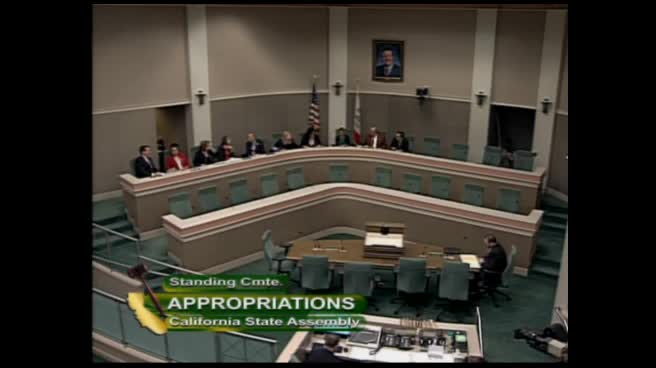 21MIN
Assembly Standing Committee on Appropriations
 1H
Assembly Standing Committee on Appropriations
 19MIN
Assembly Standing Committee on Judiciary
Bill Author

Bill Co-Author(s):