SB 1392: Sentencing.
- Session Year: 2017-2018
- House: Senate
- Latest Version Date: 2018-05-09
Existing law imposes an additional 3-year sentence for each prior separate prison term served by a defendant where the prior and current offense was a violent felony, as defined. If that provision does not apply, existing law instead imposes a one-year term for each prior separate prison term or county jail felony term under the law, except under specified circumstances.
This bill would delete the provision that requires an additional one-year term. The bill would make additional technical, nonsubstantive changes.
Existing law imposes an additional 3-year sentence for each prior separate prison term served by a defendant where the prior and current offense was a violent felony, as defined. If that provision does not apply, existing law instead imposes a one-year term for each prior separate prison term or county jail felony term under the law, except under specified circumstances.
This bill would delete the provision that requires an additional one-year term.
Enhancement of prison terms for new offenses because of prior prison terms shall be imposed as follows:
(a)Where one of the new offenses is one of the violent felonies specified in subdivision (c), in addition to and consecutive to any other prison terms therefor, the court shall impose a three-year term for each prior separate prison term served by the defendant where the prior offense was one of the violent felonies specified in subdivision (c).
(b)No An additional term shall not be imposed under subdivision (a) for any prison term served prior to a period of 10 years in which the defendant remained free of both prison custody and the commission of an offense which results in a felony conviction.
(c)For the purpose of this section, violent felony shall mean any of the following:
(1)Murder or voluntary manslaughter.
(2)Mayhem.
(3)Rape Rape, as defined in paragraph (2) or (6) of subdivision (a) of Section 261 or paragraph (1) or (4) of subdivision (a) of Section 262.
(4)Sodomy Sodomy, as defined in subdivision (c) or (d) of Section 286.
(5)Oral copulation copulation, as defined in subdivision (c) or (d) of Section 288a.
(6)Lewd or lascivious act act, as defined in subdivision (a) or (b) of Section 288.
(7)Any felony punishable by death or imprisonment in the state prison for life.
(8)Any felony in which the defendant inflicts great bodily injury on any person other than an accomplice which has been charged and proved as provided for in Section 12022.7, 12022.8, or 12022.9 on or after July 1, 1977, or as specified prior to July 1, 1977, in Sections 213, 264, and 461, or any felony in which the defendant uses a firearm which use has been charged and proved as provided in subdivision (a) of Section 12022.3, or Section 12022.5 or 12022.55.
(9)Any robbery.
(10)Arson, in violation of subdivision (a) or (b) of Section 451.
(11)Sexual penetration penetration, as defined in subdivision (a) or (j) of Section 289.
(12)Attempted murder.
(13)A violation of Section 18745, 18750, or 18755.
(14)Kidnapping.
(15)Assault with the intent to commit a specified felony, in violation of Section 220.
(16)Continuous sexual abuse of a child, in violation of Section 288.5.
(17)Carjacking, as defined in subdivision (a) of Section 215.
(18)Rape, spousal rape, or sexual penetration, in concert, in violation of Section 264.1.
(19)Extortion, as defined in Section 518, which would constitute a felony violation of Section 186.22.
(20)Threats to victims or witnesses, as defined in Section 136.1, which would constitute a felony violation of Section 186.22.
(21)Any burglary of the first degree, as defined in subdivision (a) of Section 460, wherein it is charged and proved that another person, other than an accomplice, was present in the residence during the commission of the burglary.
(22)Any violation of Section 12022.53.
(23)A violation of subdivision (b) or (c) of Section 11418. The Legislature finds and declares that these specified crimes merit special consideration when imposing a sentence to display societys condemnation for these extraordinary crimes of violence against the person.
(d)For the purposes of this section, the defendant shall be deemed to remain in prison custody for an offense until the official discharge from custody, including any period of mandatory supervision, or until release on parole or postrelease community supervision, whichever first occurs, including any time during which the defendant remains subject to reimprisonment or custody in county jail for escape from custody or is reimprisoned on revocation of parole or postrelease community supervision. The additional penalties provided for prior prison terms shall not be imposed unless they are charged and admitted or found true in the action for the new offense.
(e)The additional penalties provided for prior prison terms shall not be imposed for any felony for which the defendant did not serve a prior separate term in state prison or in county jail under subdivision (h) of Section 1170.
(f)A prior conviction of a felony shall include a conviction in another jurisdiction for an offense which, if committed in California, is punishable by imprisonment in the state prison or in county jail under subdivision (h) of Section 1170 if the defendant served one year or more in prison for the offense in the other jurisdiction. A prior conviction of a particular felony shall include a conviction in another jurisdiction for an offense which includes all of the elements of the particular felony as defined under California law if the defendant served one year or more in prison for the offense in the other jurisdiction.
(g)A prior separate prison term for the purposes of this section shall mean a continuous completed period of prison incarceration imposed for the particular offense alone or in combination with concurrent or consecutive sentences for other crimes, including any reimprisonment on revocation of parole which is not accompanied by a new commitment to prison, and including any reimprisonment after an escape from incarceration.
(h)Serving a prison term includes any confinement time in any state prison or federal penal institution as punishment for commission of an offense, including confinement in a hospital or other institution or facility credited as service of prison time in the jurisdiction of the confinement.
(i)For the purposes of this section, a commitment to the State Department of Mental Health, or its successor the State Department of State Hospitals, as a mentally disordered sex offender following a conviction of a felony, which commitment exceeds one year in duration, shall be deemed a prior prison term.
(j)For the purposes of this section, when a person subject to the custody, control, and discipline of the Secretary of the Department of Corrections and Rehabilitation is incarcerated at a facility operated by the Division of Juvenile Justice, that incarceration shall be deemed to be a term served in state prison.
(k)(1)Notwithstanding subdivisions (d) and (g) or any other provision of law, where one of the new offenses is committed while the defendant is temporarily removed from prison pursuant to Section 2690 or while the defendant is transferred to a community facility pursuant to Section 3416, 6253, or 6263, or while the defendant is on furlough pursuant to Section 6254, the defendant shall be subject to the full enhancements provided for in this section.
(2)This subdivision shall not apply when a full, separate, and consecutive term is imposed pursuant to any other provision of law.
Enhancement of prison terms for new offenses because of prior prison terms shall be imposed as follows:
(a)Where one of the new offenses is one of the violent felonies specified in subdivision (c), in addition to and consecutive to any other prison terms therefor, the court shall impose a three-year term for each prior separate prison term served by the defendant where the prior offense was one of the violent felonies specified in subdivision (c). However, no
(b)No additional term shall be imposed under this subdivision (a) for any prison term served prior to a period of 10 years in which the defendant remained free of both prison custody and the commission of an offense which results in a felony conviction.
(b)Except where subdivision (a) applies, where the new offense is any felony for which a prison sentence or a sentence of imprisonment in a county jail under subdivision (h) of Section 1170 is imposed or is not suspended, in addition and consecutive to any other sentence therefor, the court shall impose a one-year term for each prior separate prison term or county jail term imposed under subdivision (h) of Section 1170 or when sentence is not suspended for any felony; provided that no additional term shall be imposed under this subdivision for any prison term or county jail term imposed under subdivision (h) of Section 1170 or when sentence is not suspended prior to a period of five years in which the defendant remained free of both the commission of an offense which results in a felony conviction, and prison custody or the imposition of a term of jail custody imposed under subdivision (h) of Section 1170 or any felony sentence that is not suspended. A term imposed under the provisions of paragraph (5) of subdivision (h) of Section 1170, wherein a portion of the term is suspended by the court to allow mandatory supervision, shall qualify as a prior county jail term for the purposes of the one-year enhancement.(c)For the purpose of this section, violent felony shall mean any of the following:
(1)Murder or voluntary manslaughter.
(2)Mayhem.
(3)Rape as defined in paragraph (2) or (6) of subdivision (a) of Section 261 or paragraph (1) or (4) of subdivision (a) of Section 262.
(4)Sodomy as defined in subdivision (c) or (d) of Section 286.
(5)Oral copulation as defined in subdivision (c) or (d) of Section 288a.
(6)Lewd or lascivious act as defined in subdivision (a) or (b) of Section 288.
(7)Any felony punishable by death or imprisonment in the state prison for life.
(8)Any felony in which the defendant inflicts great bodily injury on any person other than an accomplice which has been charged and proved as provided for in Section 12022.7, 12022.8, or 12022.9 on or after July 1, 1977, or as specified prior to July 1, 1977, in Sections 213, 264, and 461, or any felony in which the defendant uses a firearm which use has been charged and proved as provided in subdivision (a) of Section 12022.3, or Section 12022.5 or 12022.55.
(9)Any robbery.
(10)Arson, in violation of subdivision (a) or (b) of Section 451.
(11)Sexual penetration as defined in subdivision (a) or (j) of Section 289.
(12)Attempted murder.
(13)A violation of Section 18745, 18750, or 18755.
(14)Kidnapping.
(15)Assault with the intent to commit a specified felony, in violation of Section 220.
(16)Continuous sexual abuse of a child, in violation of Section 288.5.
(17)Carjacking, as defined in subdivision (a) of Section 215.
(18)Rape, spousal rape, or sexual penetration, in concert, in violation of Section 264.1.
(19)Extortion, as defined in Section 518, which would constitute a felony violation of Section 186.22.
(20)Threats to victims or witnesses, as defined in Section 136.1, which would constitute a felony violation of Section 186.22.
(21)Any burglary of the first degree, as defined in subdivision (a) of Section 460, wherein it is charged and proved that another person, other than an accomplice, was present in the residence during the commission of the burglary.
(22)Any violation of Section 12022.53.
(23)A violation of subdivision (b) or (c) of Section 11418. The Legislature finds and declares that these specified crimes merit special consideration when imposing a sentence to display societys condemnation for these extraordinary crimes of violence against the person.
(d)For the purposes of this section, the defendant shall be deemed to remain in prison custody for an offense until the official discharge from custody, including any period of mandatory supervision, or until release on parole or postrelease community supervision, whichever first occurs, including any time during which the defendant remains subject to reimprisonment or custody in county jail for escape from custody or is reimprisoned on revocation of parole or postrelease community supervision. The additional penalties provided for prior prison terms shall not be imposed unless they are charged and admitted or found true in the action for the new offense.
(e)The additional penalties provided for prior prison terms shall not be imposed for any felony for which the defendant did not serve a prior separate term in state prison or in county jail under subdivision (h) of Section 1170.
(f)A prior conviction of a felony shall include a conviction in another jurisdiction for an offense which, if committed in California, is punishable by imprisonment in the state prison or in county jail under subdivision (h) of Section 1170 if the defendant served one year or more in prison for the offense in the other jurisdiction. A prior conviction of a particular felony shall include a conviction in another jurisdiction for an offense which includes all of the elements of the particular felony as defined under California law if the defendant served one year or more in prison for the offense in the other jurisdiction.
(g)A prior separate prison term for the purposes of this section shall mean a continuous completed period of prison incarceration imposed for the particular offense alone or in combination with concurrent or consecutive sentences for other crimes, including any reimprisonment on revocation of parole which is not accompanied by a new commitment to prison, and including any reimprisonment after an escape from incarceration.
(h)Serving a prison term includes any confinement time in any state prison or federal penal institution as punishment for commission of an offense, including confinement in a hospital or other institution or facility credited as service of prison time in the jurisdiction of the confinement.
(i)For the purposes of this section, a commitment to the State Department of Mental Health, or its successor the State Department of State Hospitals, as a mentally disordered sex offender following a conviction of a felony, which commitment exceeds one year in duration, shall be deemed a prior prison term.
(j)For the purposes of this section, when a person subject to the custody, control, and discipline of the Secretary of the Department of Corrections and Rehabilitation is incarcerated at a facility operated by the Division of Juvenile Justice, that incarceration shall be deemed to be a term served in state prison.
(k)(1)Notwithstanding subdivisions (d) and (g) or any other provision of law, where one of the new offenses is committed while the defendant is temporarily removed from prison pursuant to Section 2690 or while the defendant is transferred to a community facility pursuant to Section 3416, 6253, or 6263, or while the defendant is on furlough pursuant to Section 6254, the defendant shall be subject to the full enhancements provided for in this section.
(2)This subdivision shall not apply when a full, separate, and consecutive term is imposed pursuant to any other provision of law.
|
Date
|
Status
|
|---|---|
| May 31, 2018 | Read third time. Refused passage. (Ayes 18. Noes 16.) |
| May 29, 2018 | Read third time. Refused passage. (Ayes 17. Noes 14.) |
| May 10, 2018 | Read second time. Ordered to third reading. |
| May 9, 2018 | Read third time and amended. |
| Apr 17, 2018 | Read second time. Ordered to third reading. |
| Apr 16, 2018 | From committee: Be ordered to second reading pursuant to Senate Rule 28.8. |
| Apr 9, 2018 | Set for hearing April 16. |
| Apr 3, 2018 | From committee: Do pass and re-refer to Com. on APPR. (Ayes 5. Noes 1.) (April 3). Re-referred to Com. on APPR. |
| Mar 20, 2018 | Set for hearing April 3. |
| Mar 8, 2018 | Referred to Com. on PUB. S. |
| Feb 20, 2018 | From printer. May be acted upon on or after March 22. |
| Feb 16, 2018 | Introduced. Read first time. To Com. on RLS. for assignment. To print. |
|
Date
|
Description
|
Location
|
Votes
|
|
|---|---|---|---|---|
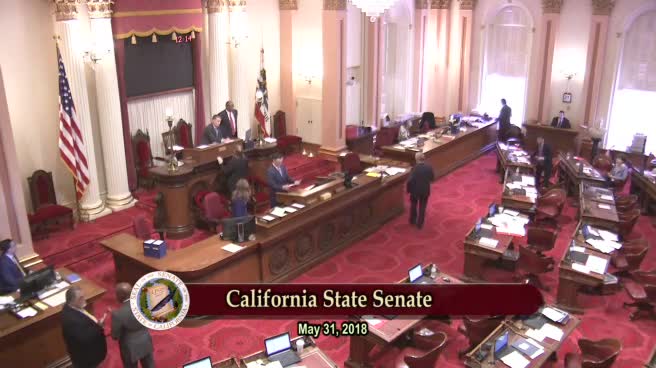
| May 31, 2018 | Senate 3rd Reading SB1392 Mitchell et al. | Senate Floor |
Passed |
|
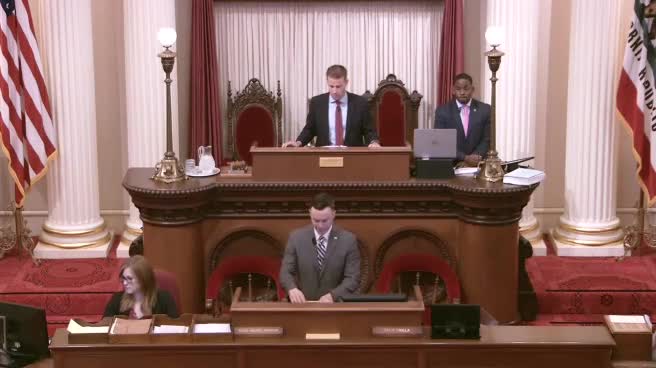
| May 29, 2018 | Senate 3rd Reading SB1392 Mitchell et al. Reconsider | Senate Floor |
Passed |
|
| May 29, 2018 | Senate 3rd Reading SB1392 Mitchell et al. | Senate Floor |
Passed |
|
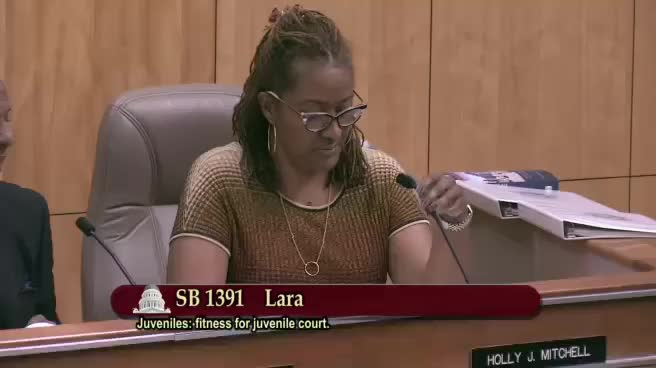
| Apr 3, 2018 | Do pass, but first be re-referred to the Committee on [Appropriations] | Senate Standing Committee on Public Safety |
Passed |
This list shows positions taken on this bill by organizations on the date displayed, which is linked to the original source.
Positions by individuals are not included.
|
Organization
|
Position
|
Date
|
|---|---|---|
| 1 private citizen | * Support | Apr 3, 2018 |
| 4. Argument In Support | ** Against | Apr 2, 2018 |
| A New Way of Life Reentry Project | ** Support | May 29, 2018 |
| Access Support Network | ** Support | May 29, 2018 |
| alameda county public defender's office | ** Support | May 29, 2018 |
| Alliance San Diego | ** Support | May 29, 2018 |
| American Civil Liberties Union of California | ** Support | May 29, 2018 |
| American Friends Society Committee | ** Support | May 29, 2018 |
| Anti-Recidivism Coaition | * Support | Apr 3, 2018 |
| Anti-Recidivism Coalition | * Support | Apr 3, 2018 |
| Asian Americans Advancing Justice California | * Support | Apr 3, 2018 |
| Association for Deputy District Attorneys | * Against | Apr 3, 2018 |
| Association For Los Angeles Deputy Sheriffs | ** Against | May 29, 2018 |
| Blog | ** Against | Apr 2, 2018 |
| California Association of Alcohol and Drug Program Executives | ** Support | May 29, 2018 |
| California Attorneys For Criminal Justice | * Support | Apr 3, 2018 |
| California Catholic Conference | ** Support | May 29, 2018 |
| California Coalition for Women Prisoners | ** Support | May 29, 2018 |
| California Code Enforcement Officers | ** Against | May 29, 2018 |
| California College And University Police Chiefs Association | ** Against | May 29, 2018 |
| California Correctional Supervisors Organization | ** Against | May 29, 2018 |
| California District Attorneys Association | ** Against | May 29, 2018 |
| California Immigrant Policy Center | ** Support | May 29, 2018 |
| California Narcotic Officers Association | ** Against | May 29, 2018 |
| California Police Chiefs Association | * Against | Apr 3, 2018 |
| California Public Defenders Association | ** Support | May 29, 2018 |
| California Re-Investment Coalition | * Support | Apr 3, 2018 |
| California State Sheriffs' Association | ** Against | May 29, 2018 |
| Californians United for a Responsible Budget | ** Support | May 29, 2018 |
| Center on Juvenile and Criminal Justice | ** Support | May 29, 2018 |
| Coalition for Humane Immigrant Rights, Los Angeles | * Support | Apr 3, 2018 |
| Coleman Advocates for Children and Youth | ** Support | May 29, 2018 |
| Contra Costa County Racial Justice Coalition | ** Support | May 29, 2018 |
| Courage Campaign | ** Support | May 29, 2018 |
| Crossroads, Inc. | ** Support | May 29, 2018 |
| Dr. Martin Luther King, Jr. Academic Middle School | ** Support | May 29, 2018 |
| Drug Policy Alliance | ** Support | May 29, 2018 |
| Education Is A Vital Sign | ** Support | May 29, 2018 |
| Ella Baker Center For Human Rights | ** Support | May 29, 2018 |
| Felony Murder Elimination Project | ** Support | May 29, 2018 |
| Files | ** Against | Apr 2, 2018 |
| Friends Committee On Legislation Of California | ** Support | May 29, 2018 |
| Greenlining Institute | ** Support | May 29, 2018 |
| Harm Reduction Coalition | ** Support | May 29, 2018 |
| Harm Reduction Services | ** Support | May 29, 2018 |
| Healing Dialogue and Action | * Support | Apr 3, 2018 |
| Immigrant Legal Resource Center | ** Support | May 29, 2018 |
| Jeff Adachi, San Francisco Public Defender | * Support | Apr 3, 2018 |
| Johnjay.Jjay.Cuny.Edu | ** Against | Apr 2, 2018 |
| Justice Now | ** Support | May 29, 2018 |
| Law Enforcement Action Partnership | ** Support | May 29, 2018 |
| Lawyers Committee for Civil Rights | ** Support | May 29, 2018 |
| Legal Services for Prisoners with Children | ** Support | May 29, 2018 |
| Lhc.Ca.Gov | ** Against | Apr 2, 2018 |
| Los Angeles Police Protective League | ** Against | May 29, 2018 |
| Los Angeles Professional Peace Officers Association | ** Against | May 29, 2018 |
| Los Angeles Regional Reentry Partnerships | ** Support | May 29, 2018 |
| Nas_Report_On_Incarceration.Pdf.) | ** Against | Apr 2, 2018 |
| National Association for Social Workers, California Chapter | * Support | Apr 3, 2018 |
| National Center for Youth Law | * Support | Apr 3, 2018 |
| Need For This Bill | ** Against | Apr 2, 2018 |
| Oakland Rising | ** Support | May 29, 2018 |
| Peace Officers Research Association Of California | ** Against | May 29, 2018 |
| Pillars of the Community | ** Support | May 29, 2018 |
| Prison Renaissance | ** Support | May 29, 2018 |
| Public Health Justice Collective | ** Support | May 29, 2018 |
| PURPOSE | ** Against | Apr 2, 2018 |
| Report219.Pdf.) | ** Against | Apr 2, 2018 |
| Reports | ** Against | Apr 2, 2018 |
| Restaurant Opportunities Centers Of California | ** Support | May 29, 2018 |
| Riverside Sheriff's Association | * Against | Apr 3, 2018 |
| Riverside Temple Beth El | ** Support | May 29, 2018 |
| Root & Rebound | ** Support | May 29, 2018 |
| Rubicon Programs | ** Support | May 29, 2018 |
| San Diego Immigrant Rights Consortium | ** Support | May 29, 2018 |
| San Francisco Public Defenders Office | ** Support | May 29, 2018 |
| self | * Support | Apr 3, 2018 |
| Self-Awareness and Recovery | * Support | Apr 3, 2018 |
| Sentence-Enhancements-Next-Target-Corrections-Reform | ** Against | Apr 2, 2018 |
| Sentencing Enhancements | ** Against | Apr 2, 2018 |
| Several individuals | ** Support | May 29, 2018 |
| Showing Up for Racial Justice | ** Support | May 29, 2018 |
| Showing Up For Racial Justice-Los Angeles | ** Support | May 29, 2018 |
| Silicon Valley Debug | * Support | Apr 3, 2018 |
| Sites | ** Against | Apr 2, 2018 |
| St. James Infirmary | ** Support | May 29, 2018 |
| Successful Reentry, Llc | ** Support | May 29, 2018 |
| Tarzana Treatment Centers | ** Support | May 29, 2018 |
| The Advocacy Fund | ** Support | May 29, 2018 |
| Tides Center | * Support | Apr 3, 2018 |
| Underground Scholars Initiative | * Support | Apr 3, 2018 |
| Unknown affiliation | * Support | Apr 3, 2018 |
| W. Hayward Burns Institute | ** Support | May 29, 2018 |
| W. Haywood Burns Institute | * Support | Apr 3, 2018 |
| western center on law and poverty | ** Support | May 29, 2018 |
| White People 4 Black Lives | ** Support | May 29, 2018 |
| Women's Foundation of California | ** Support | May 29, 2018 |
| Www.Ppic.Org | ** Against | Apr 2, 2018 |
| Youth Justice Coalition | * Support | Apr 3, 2018 |
| [As Of Mar. 21, 2018].) | ** Against | Apr 2, 2018 |
Office of Senate Floor Analyses (916) 651-1520 Fax: (916) 327-4478 | SB |
THIRD READING
Bill No: SB 1392
Amended:
SENATE PUBLIC SAFETY COMMITTEE: 5-1, 4/3/18
AYES: Skinner, Bradford, Jackson, Mitchell, Wiener
NOES: Stone
NO VOTE RECORDED: Anderson
SENATE APPROPRIATIONS COMMITTEE: Senate Rule 28.8
SENATE FLOOR: 17-14, 5/29/18 (FAIL)
AYES: Allen, Atkins, Beall, Bradford, De León, Hertzberg, Hill, Jackson, Lara, Leyva, McGuire, Mitchell, Monning, Pan, Skinner, Wieckowski, Wiener
NOES: Anderson, Bates, Cannella, Dodd, Fuller, Gaines, Galgiani, Moorlach, Morrell, Nguyen, Nielsen, Stone, Vidak, Wilk
NO VOTE RECORDED: Berryhill, Glazer, Hernandez, Hueso, Newman, Portantino, Roth, Stern
SOURCE: American Civil Liberties Union of California
California Coalition for Women Prisoners
Californians United for a Responsible Budget
Drug Policy Alliance
Ella Baker Center for Human Rights
Friends Committee on Legislation of California
Pillars of the Community
The Advocacy Fund
Women’s Foundation of California
DIGEST:
This bill repeals the one-year sentence enhancement for each prior prison or county jail felony term that applies to a defendant sentenced on a new felony.
Senate Floor Amendments of 5/9/18 add coauthors.
Existing law:
- Imposes a three-year sentence enhancement for each prior separate prison term served by the defendant if the prior offense was a violent felony and the new offense is a violent felony. (Pen. Code, § 667.5, subd. (a).)
- Imposes a one-year sentence enhancement for each prior prison or county jail felony term if the new offense is a felony. (Pen. Code, § 667.5, subd. (b).)
This bill deletes the one-year sentence enhancement for prison or county jail felony priors.
FISCAL EFFECT: Appropriation: Fiscal Com.: Local:
American Civil Liberties Union of California (co-source)
California Coalition for Women Prisoners (co-source)
Californians United for a Responsible Budget (co-source)
Drug Policy Alliance (co-source)
Ella Baker Center for Human Rights (co-source)
Friends Committee on Legislation of California (co-source)
Pillars of the Community (co-source)
The Advocacy Fund (co-source)
Women’s Foundation of California (co-source)
A New Way of Life Reentry Project
Access Support Network
Alameda County Public Defender’s Office
Alliance San Diego
American Friends Society Committee
California Association of Alcohol and Drug Program Executives
California Catholic Conference
California Immigrant Policy Center
California Public Defenders Association
Center on Juvenile and Criminal Justice
Coleman Advocates for Children and Youth
Contra Costa County Racial Justice Coalition
Courage Campaign
Crossroads, Inc.
Dr. Martin Luther King, Jr. Academic Middle School
Education is a Vital Sign
Felony Murder Elimination Project
Greenlining Institute
Harm Reduction Coalition
Harm Reduction Services
HealthRIGHT 360
Immigrant Legal Resource Center
Justice Now
Law Enforcement Action Partnership
Lawyers Committee for Civil Rights
Legal Services for Prisoners with Children
Los Angeles Regional Reentry Partnerships
Oakland Rising
Prison Renaissance
Public Health Justice Collective
Restaurant Opportunities Centers of California
Riverside Temple Beth El
Root & Rebound
Rubicon Programs
San Diego Immigrant Rights Consortium
San Francisco Public Defenders Office
Showing Up for Racial Justice
St. James Infirmary
Successful Reentry, LLC
Tarzana Treatment Centers
W. Hayward Burns Institute
Western Center on Law and Poverty
White People 4 Black Lives/Showing Up for Racial Justice-Los Angeles
Several individuals
Association for Los Angeles Deputy Sheriffs
California Code Enforcement Officers
California College and University Police Chiefs Association
California Correctional Supervisors Organization
California District Attorneys Association
California Narcotic Officers Association
California State Sheriffs’ Association
Los Angeles Police Protective League
Los Angeles Professional Peace Officers Association
Peace Officers Research Association of California
ARGUMENTS IN SUPPORT: According to the American Civil Liberties Union of California, a co-sponsor of this bill, “This punishment has failed to protect communities or reduce crime, but has resulted in overcrowded jails and prisons and harsh punishments. By repealing this ineffective, harmful, and costly punishment, the state will also free up funds to invest in community programs that actually improve the quality of life and reduce crime.
“Counties around the state are building new jails to imprison more people with long sentences, funneling away money that could instead be used for community-based programs and services. Since 2007, California has spent $2.5 billion on county jail construction (fn. omitted) — not including the costs borne by the counties for construction and increased staffing, or the state’s debt service for these high-interest loans. Sheriffs have argued for this expansion by pointing to their growing jail populations, particularly people with long sentences and with mental health and substance use needs. By repealing sentence enhancements for people with prior prison and felony jail terms, SB 1392 will address a key driver of costly jail expansion, allowing state and county funds to be invested in programs and services that meet community needs and improve public safety, including community-based mental health and substance use treatment, job programs, and affordable housing.”
ARGUMENTS IN OPPOSITION: According to the California Code Enforcement Officers, “These enhancements exist, in part, to allow sentences to appropriately reflect someone’s criminal conduct history. A person who has previously been sent to prison, only to commit a new felony upon their release is subject to the one-year enhancement SB 1392 seeks to eliminate. A person who has previously been sent to prison three times would potentially be subject to three one-year enhancements. That is, if the prosecutor alleged and proved the grounds for the enhancement, and a judge chose not to dismiss or strike the enhancement.
“The underlying premise of SB 1392 is that a recalcitrant criminal should be
sentenced the same as a first time offender, despite a lengthy criminal history and a track record of disregard for the law. We reject that premise.”
5/29/18 18:06:36
**** END ****
Office of Senate Floor Analyses (916) 651-1520 Fax: (916) 327-4478 | SB |
THIRD READING
Bill No: SB 1392
Amended:
SENATE PUBLIC SAFETY COMMITTEE: 5-1, 4/3/18
AYES: Skinner, Bradford, Jackson, Mitchell, Wiener
NOES: Stone
NO VOTE RECORDED: Anderson
SENATE APPROPRIATIONS COMMITTEE: Senate Rule 28.8
SOURCE: American Civil Liberties Union of California
California Coalition for Women Prisoners
Californians United for a Responsible Budget
Drug Policy Alliance
Ella Baker Center for Human Rights
Friends Committee on Legislation of California
Pillars of the Community
The Advocacy Fund
Women’s Foundation of California
DIGEST:
This bill repeals the one-year sentence enhancement for each prior prison or county jail felony term that applies to a defendant sentenced on a new felony.
Senate Floor Amendments of 5/9/18 add coauthors.
Existing law:
- Imposes a three-year sentence enhancement for each prior separate prison term served by the defendant if the prior offense was a violent felony and the new offense is a violent felony. (Pen. Code, § 667.5, subd. (a).)
- Imposes a one-year sentence enhancement for each prior prison or county jail felony term if the new offense is a felony. (Pen. Code, § 667.5, subd. (b).)
This bill deletes the one-year sentence enhancement for prison or county jail felony priors.
FISCAL EFFECT: Appropriation: Fiscal Com.: Local:
American Civil Liberties Union of California (co-source)
California Coalition for Women Prisoners (co-source)
Californians United for a Responsible Budget (co-source)
Drug Policy Alliance (co-source)
Ella Baker Center for Human Rights (co-source)
Friends Committee on Legislation of California (co-source)
Pillars of the Community (co-source)
The Advocacy Fund (co-source)
Women’s Foundation of California (co-source)
A New Way of Life Reentry Project
Access Support Network
Alameda County Public Defender’s Office
Alliance San Diego
American Friends Society Committee
California Association of Alcohol and Drug Program Executives
California Catholic Conference
California Immigrant Policy Center
California Public Defenders Association
Center on Juvenile and Criminal Justice
Coleman Advocates for Children and Youth
Contra Costa County Racial Justice Coalition
Courage Campaign
Crossroads, Inc.
Dr. Martin Luther King, Jr. Academic Middle School
Education is a Vital Sign
Felony Murder Elimination Project
Greenlining Institute
Harm Reduction Coalition
Harm Reduction Services
HealthRIGHT 360
Immigrant Legal Resource Center
Justice Now
Law Enforcement Action Partnership
Lawyers Committee for Civil Rights
Legal Services for Prisoners with Children
Los Angeles Regional Reentry Partnerships
Oakland Rising
Prison Renaissance
Public Health Justice Collective
Restaurant Opportunities Centers of California
Riverside Temple Beth El
Root & Rebound
Rubicon Programs
San Diego Immigrant Rights Consortium
San Francisco Public Defenders Office
Showing Up for Racial Justice
St. James Infirmary
Successful Reentry, LLC
Tarzana Treatment Centers
W. Hayward Burns Institute
Western Center on Law and Poverty
White People 4 Black Lives/Showing Up for Racial Justice-Los Angeles
Several individuals
Association for Los Angeles Deputy Sheriffs
California Code Enforcement Officers
California College and University Police Chiefs Association
California Correctional Supervisors Organization
California District Attorneys Association
California Narcotic Officers Association
California State Sheriffs’ Association
Los Angeles Police Protective League
Los Angeles Professional Peace Officers Association
Peace Officers Research Association of California
ARGUMENTS IN SUPPORT: According to the American Civil Liberties Union of California, a co-sponsor of this bill, “This punishment has failed to protect communities or reduce crime, but has resulted in overcrowded jails and prisons and harsh punishments. By repealing this ineffective, harmful, and costly punishment, the state will also free up funds to invest in community programs that actually improve the quality of life and reduce crime.
“Counties around the state are building new jails to imprison more people with long sentences, funneling away money that could instead be used for community-based programs and services. Since 2007, California has spent $2.5 billion on county jail construction (fn. omitted) — not including the costs borne by the counties for construction and increased staffing, or the state’s debt service for these high-interest loans. Sheriffs have argued for this expansion by pointing to their growing jail populations, particularly people with long sentences and with mental health and substance use needs. By repealing sentence enhancements for people with prior prison and felony jail terms, SB 1392 will address a key driver of costly jail expansion, allowing state and county funds to be invested in programs and services that meet community needs and improve public safety, including community-based mental health and substance use treatment, job programs, and affordable housing.”
ARGUMENTS IN OPPOSITION: According to the California Code Enforcement Officers, “These enhancements exist, in part, to allow sentences to appropriately reflect someone’s criminal conduct history. A person who has previously been sent to prison, only to commit a new felony upon their release is subject to the one-year enhancement SB 1392 seeks to eliminate. A person who has previously been sent to prison three times would potentially be subject to three one-year enhancements. That is, if the prosecutor alleged and proved the grounds for the enhancement, and a judge chose not to dismiss or strike the enhancement.
“The underlying premise of SB 1392 is that a recalcitrant criminal should be sentenced the same as a first time offender, despite a lengthy criminal history and a track record of disregard for the law. We reject that premise.”
5/11/18 12:41:46
**** END ****
Office of Senate Floor Analyses (916) 651-1520 Fax: (916) 327-4478 | SB |
THIRD READING
Bill No: SB 1392
:
SENATE PUBLIC SAFETY COMMITTEE: 5-1, 4/3/18
AYES: Skinner, Bradford, Jackson, Mitchell, Wiener
NOES: Stone
NO VOTE RECORDED: Anderson
SENATE APPROPRIATIONS COMMITTEE: Senate Rule 28.8
California Coalition for Women Prisoners
Californians United for a Responsible Budget
Drug Policy Alliance
Ella Baker Center for Human Rights
Friends Committee on Legislation of California
Pillars of the Community
The Advocacy Fund
Women’s Foundation of California
DIGEST:
This bill repeals the one-year sentence enhancement for each prior prison or county jail felony term that applies to a defendant sentenced on a new felony.
Existing law:
- Imposes a three-year sentence enhancement for each prior separate prison term served by the defendant if the prior offense was a violent felony and the new offense is a violent felony. (Pen. Code, § 667.5, subd. (a).)
- Imposes a one-year sentence enhancement for each prior prison or county jail felony term if the new offense is a felony. (Pen. Code, § 667.5, subd. (b).)
This bill deletes the one-year sentence enhancement for prison or county jail felony priors.
FISCAL EFFECT: Appropriation: Fiscal Com.: Local:
ACLU of California (co-source)
California Coalition for Women Prisoners (co-source)
Californians United for a Responsible Budget (co-source)
Drug Policy Alliance (co-source)
Ella Baker Center for Human Rights (co-source)
Friends Committee on Legislation of California (co-source)
Pillars of the Community (co-source)
The Advocacy Fund (co-source)
Women’s Foundation of California (co-source)
Access Support Network
Alameda County Public Defender’s Office
Alliance San Diego
American Friends Society Committee
California Association of Alcohol and Drug Program Executives
California Catholic Conference
California Immigrant Policy Center
California Public Defenders Association
Center on Juvenile and Criminal Justice
Coleman Advocates for Children and Youth
Contra Costa County Racial Justice Coalition
Courage Campaign
Crossroads, Inc.
Dr. Martin Luther King, Jr. Academic Middle School
Education is a Vital Sign
Felony Murder Elimination Project
Greenlining Institute
Harm Reduction Coalition
Harm Reduction Services
HealthRIGHT 360
Immigrant Legal Resource Center
Justice Now
Law Enforcement Action Partnership
Lawyers Committee for Civil Rights
Legal Services for Prisoners with Children
Los Angeles Regional Reentry Partnerships
A New Way of Life Reentry Project
Oakland Rising
Prison Renaissance
Public Health Justice Collective
Restaurant Opportunities Centers of California
Riverside Temple Beth El
Root & Rebound
Rubicon Programs
San Diego Immigrant Rights Consortium
San Francisco Public Defenders Office
Showing Up for Racial Justice
St. James Infirmary
Successful Reentry, LLC
Tarzana Treatment Centers
W. Hayward Burns Institute
Western Center on Law and Poverty
White People 4 Black Lives/Showing Up for Racial Justice-Los Angeles
Several individuals
OPPOSITION: (Verified 4/17/18)
Association for Los Angeles Deputy Sheriffs
California Code Enforcement Officers
California College and University Police Chiefs Association
California Correctional Supervisors Organization
California District Attorneys Association
California Narcotic Officers Association
California State Sheriffs’ Association
Los Angeles Police Protective League
Los Angeles Professional Peace Officers Association
Peace Officers Research Association of California
ARGUMENTS IN SUPPORT: According to ACLU of California, a co-sponsor of this bill, “This punishment has failed to protect communities or reduce crime, but has resulted in overcrowded jails and prisons and harsh punishments. By repealing this ineffective, harmful, and costly punishment, the state will also free up funds to invest in community programs that actually improve the quality of life and reduce crime.
“Counties around the state are building new jails to imprison more people with long sentences, funneling away money that could instead be used for community-based programs and services. Since 2007, California has spent $2.5 billion on county jail construction (fn. omitted) — not including the costs borne by the counties for construction and increased staffing, or the state’s debt service for these high-interest loans. Sheriffs have argued for this expansion by pointing to their growing jail populations, particularly people with long sentences and with mental health and substance use needs. By repealing sentence enhancements for people with prior prison and felony jail terms, SB 1392 will address a key driver of costly jail expansion, allowing state and county funds to be invested in programs and services that meet community needs and improve public safety, including community-based mental health and substance use treatment, job programs, and affordable housing.”
ARGUMENTS IN OPPOSITION: According to the California Code Enforcement Officers, “These enhancements exist, in part, to allow sentences to appropriately reflect someone’s criminal conduct history. A person who has previously been sent to prison, only to commit a new felony upon their release is subject to the one-year enhancement SB 1392 seeks to eliminate. A person who has previously been sent to prison three times would potentially be subject to three one-year enhancements. That is, if the prosecutor alleged and proved the grounds for the enhancement, and a judge chose not to dismiss or strike the enhancement.
“The underlying premise of SB 1392 is that a recalcitrant criminal should be sentenced the same as a first time offender, despite a lengthy criminal history and a track record of disregard for the law. We reject that premise.”
Prepared by: Stella Choe / PUB. S. /
4/18/18 11:53:41
**** END ****
SENATE COMMITTEE ON PUBLIC SAFETY
Senator Nancy Skinner, Chair
2017 - 2018 Regular
Bill No: SB 1392 Hearing Date: April 3, 2018
Author: | Mitchell | ||
Version: | February 16, 2018 | ||
Urgency: | No | Fiscal: | Yes |
Consultant: | SC | ||
Subject: Sentence Enhancements: Prior Convictions
HISTORY
Source: American Civil Liberties Union (ACLU) of California
The Advocacy Fund
California Coalition for Women Prisoners
Californians United for a Responsible Budget
Drug Policy Alliance
Ella Baker Center for Human Rights
Friends Committee on Legislation of California
Pillars of the Community
Women’s Foundation of California
Prior Legislation: SB 180 (Mitchell), Ch. 677, Stats. 2017
SB 620 (Bradford), Ch. 682, Stats. 2017
SB 966 (Mitchell), 2015-2016, failed Assembly Public Safety Committee
Support: Access Support Network; Alameda County Public Defender’s Office; Alliance San Diego; American Friends Society Committee; California Association of Alcohol and Drug Program Executives; California Catholic Conference; California Immigrant Policy Center; California Public Defenders Association; Center on Juvenile and Criminal Justice; Coleman Advocates for Children and Youth; Contra Costa County Racial Justice Coalition; Courage Campaign; Crossroads, Inc.; Dr. Martin Luther King, Jr. Academic Middle School; Education is a Vital Sign; Felony Murder Elimination Project; Greenlining Institute; Harm Reduction Coalition; Harm Reduction Services; HealthRIGHT 360; Immigrant Legal Resource Center; Justice Now; Law Enforcement Action Partnership; Lawyers Committee for Civil Rights; Legal Services for Prisoners with Children; Los Angeles Regional Reentry Partnerships; A New Way of Life Reentry Project; Oakland Rising; Prison Renaissance; Public Health Justice Collective; Restaurant Opportunities Centers of California; Riverside Temple Beth El; Root & Rebound; Rubicon Programs; San Diego Immigrant Rights Consortium; San Francisco Public Defenders Office; Showing Up for Racial Justice; St. James Infirmary; Successful Reentry, LLC; Tarzana Treatment Centers; W. Hayward Burns Institute; Western Center on Law and Poverty; White People 4 Black Lives/Showing Up for Racial Justice-Los Angeles; several individuals
Opposition: Association for Los Angeles Deputy Sheriffs; California Code Enforcement Officers; California College and University Police Chiefs Association; California Correctional Supervisors Organization; California District Attorneys Association; California Narcotic Officers Association; California State Sheriffs’ Association; Los Angeles Police Protective League; Los Angeles Professional Peace Officers Association; Peace Officers Research Association of California
PURPOSE
The purpose of this bill is to repeal the one-year sentence enhancement for each prior prison or county jail felony term that applies to a defendant sentenced on a new felony.
Existing law imposes a three-year sentence enhancement for each prior separate prison term served by the defendant if the prior offense was a violent felony and the new offense is a violent felony. (Pen. Code, § 667.5, subd. (a).)
Existing law imposes a one-year sentence enhancement for each prior prison or county jail felony term if the new offense is a felony. (Pen. Code, § 667.5, subd. (b).)
This bill deletes the one-year sentence enhancement for prison or county jail felony priors.
COMMENTS
- Need for This Bill
According to the author:
Existing law imposes an additional one-year term for each prior separate prison term or county jail felony term under the law, except under specified circumstances. Sentencing enhancements have not made the public safer. Instead they place a significant burden on taxpayers and families across California. Each additional year in prison costs more than $70,000 dollars per person. Long and punitive sentences cripple state and local budgets and shift dollars away from the supportive services that are needed to protect public safety.
SB 1392, the Repeal Ineffective Sentencing Enhancements (RISE) Act of 2018 repeals the provision under Penal Code 667.5(b) that requires an additional one-year term for each prior separate prison term or county jail felony term under the law.
- Sentencing Enhancements
Existing law contains a variety of enhancements that can be used to increase the term of imprisonment a defendant will serve. Enhancements add time to a person’s sentence for factors relevant to the defendant such as prior criminal history or for specific facts related to the crime. Multiple enhancements can be imposed in a single case and can range from adding a specified number of years to a person’s sentence, or doubling a person’s sentence or even converting a determinate sentence into a life sentence.
A recent Public Policy Institute of California (PPIC) publication on enhancements found that, “As of September 2016, 79.9% of prisoners in institutions operated by the California Department of Corrections and Rehabilitation (CDCR) had some kind of sentence enhancement; 25.5% had three or more. Aside from second and third strikes, the most common enhancement adds one year for each previous prison or jail term.” (Sentence Enhancements: Next Target of Corrections Reform? PPIC (Sept. 2017) < http://www.ppic.org/blog/sentence-enhancements-next-target-corrections-reform/ > [as of Mar. 21, 2018].)
According to data provided by CDCR, as of December 1, 2017, there were 16,177 sentences that had the enhancement that this bill would repeal.
3. Sentence Increases: Research on the Deterrent Effect and Impact on State Prisons
A comprehensive report published in 2014, entitled The Growth of Incarceration in the United States, discusses the effects on crime reduction through incapacitation and deterrence, and describes general deterrence compared to specific deterrence:
A large body of research has studied the effects of incarceration and other criminal penalties on crime. Much of this research is guided by the hypothesis that incarceration reduces crime through incapacitation and deterrence. Incapacitation refers to the crimes averted by the physical isolation of convicted offenders during the period of their incarceration. Theories of deterrence distinguish between general and specific behavioral responses. General deterrence refers to the crime prevention effects of the threat of punishment, while specific deterrence concerns the aftermath of the failure of general deterrence—that is, the effect on reoffending that might result from the experience of actually being punished.
(National Research Council (2014) The Growth of Incarceration in the United States: Exploring Causes and Consequences Committee on Causes and Consequences of High Rates of Incarceration, J. Travis, B. Western, and S. Redburn, Editors. Committee on Law and Justice, Division of Behavioral and Social Sciences and Education. Washington, DC: The National Academies Press. (http://johnjay.jjay.cuny.edu/nrc/NAS_report_on_incarceration.pdf.)
In regard to deterrence, the authors note that in “the classical theory of deterrence, crime is averted when the expected costs of punishment exceed the benefits of offending. Much of the empirical research on the deterrent power of criminal penalties has studied sentence enhancements and other shifts in penal policy.” (National Research Council, supra, The Growth of Incarceration in the United States, p. 132.)
Deterrence theory is underpinned by a rationalistic view of crime. In this view, an individual considering commission of a crime weighs the benefits of offending against the costs of punishment. Much offending, however, departs from the strict decision calculus of the rationalistic model. Robinson and Darley (2004) review the limits of deterrence through harsh punishment. They report that offenders must have some knowledge of criminal penalties to be deterred from committing a crime, but in practice often do not.
(Id. at p. 133.) The report concludes: The incremental deterrent effect of increases in lengthy prison sentences is modest at best. “Because recidivism rates decline markedly with age, lengthy prison sentences, unless they specifically target very high-rate or extremely dangerous offenders, are an inefficient approach to preventing crime by incapacitation.” (Id. at p. 5.)
In a 2014 report, the Little Hoover Commission addressed the disconnect between science and sentencing: putting away offenders for increasingly longer periods of time, with no evidence that lengthy incarceration, for many, brings any additional public safety benefit. The report also explains how California’s sentencing structure and enhancements contributed to a 20-year state prison building boom. (http://lhc.ca.gov/sites/lhc.ca.gov/files/Reports/219/Report219.pdf.)
4. Argument in Support
According to ACLU of California, a sponsor of this bill:
This punishment has failed to protect communities or reduce crime, but has resulted in overcrowded jails and prisons and harsh punishments. By repealing this ineffective, harmful, and costly punishment, the state will also free up funds to invest in community programs that actually improve the quality of life and reduce crime.
. . . .
Counties around the state are building new jails to imprison more people with long sentences, funneling away money that could instead be used for community-based programs and services. Since 2007, California has spent $2.5 billion on county jail construction (fn. omitted) — not including the costs borne by the counties for construction and increased staffing, or the state’s debt service for these high-interest loans. Sheriffs have argued for this expansion by pointing to their growing jail populations, particularly people with long sentences and with mental health and substance use needs. By repealing sentence enhancements for people with prior prison and felony jail terms, SB 1392 will address a key driver of costly jail expansion, allowing state and county funds to be invested in programs and services that meet community needs and improve public safety, including community-based mental health and substance use treatment, job programs, and affordable housing.
5. Argument in Opposition
The California Code Enforcement Officers writes in opposition:
These enhancements exist, in part, to allow sentences to appropriately reflect someone’s criminal conduct history. A person who has previously been sent to prison, only to commit a new felony upon their release is subject to the one-year enhancement SB 1392 seeks to eliminate. A person who has previously been sent to prison three times would potentially be subject to three one-year enhancements. That is, if the prosecutor alleged and proved the grounds for the enhancement, and a judge chose not to dismiss or strike the enhancement.
The underlying premise of SB 1392 is that a recalcitrant criminal should be sentenced the same as a first time offender, despite a lengthy criminal history and a track record of disregard for the law. We reject that premise.
-- END –
Discussed in Hearing
 2MIN
Senate Floor
 46MIN
Senate Floor
 26MIN









