SB 1508: Corporate taxation: voluntary disclosure agreements: qualified entities.
- Session Year: 2017-2018
- House: Senate
- Latest Version Date: 2018-07-02
Existing law authorizes the Franchise Tax Board to enter into voluntary disclosure agreements with specified entities, including a qualified entity. Existing law does not include as a qualified entity an entity that is qualified or registered with the office of the Secretary of State.
This bill would include as a qualified entity a foreign corporation or foreign limited liability company corporation, foreign limited liability company, foreign limited liability partnership, or foreign limited partnership that has qualified or registered with the office of the Secretary of State within 6 months of the signing date of the voluntary disclosure agreement, date the application for a voluntary disclosure agreement is filed with the Franchise Tax Board, subject to specified limitations.
Existing law authorizes the Franchise Tax Board to enter into voluntary disclosure agreements with specified entities, including a qualified entity. Existing law does not include as a qualified entity an entity that is qualified or registered with the office of the Secretary of State.
This bill would include as a qualified entity a foreign corporation or foreign limited liability company that has qualified or registered with the office of the Secretary of State within 6 months of the signing date of the voluntary disclosure agreement, subject to specified limitations.
For purposes of this article, the following terms have the following meanings:
(a)(1)Qualified entity means an entity that is all of the following:
(A)A corporation, as defined in Section 23038, a limited liability company, as defined in subdivision (d) of Section 17941, a qualified trust, as defined in paragraph (7), or a qualified partnership, as defined in paragraph (12).
(B)An entity, including any predecessors to the entity, that previously has never filed a return with the Franchise Tax Board pursuant to this part, Part 10 (commencing with Section 17001), or Part 11 (commencing with Section 23011).
(C)An entity, including any predecessors to the entity, that previously has not been the subject of an inquiry by the Franchise Tax Board with respect to liability for any of the taxes imposed under Part 10 (commencing with Section 17001) or Part 11 (commencing with Section 23001).
(D)An entity that voluntarily comes forward prior to any unilateral contact from the Franchise Tax Board, makes files an application for a voluntary disclosure agreement in a form and manner prescribed by the Franchise Tax Board, and makes a full and accurate statement of its activities in this state for the six immediately preceding taxable years.
(2)(A)Notwithstanding paragraph (1), a qualified entity does not include any of the following:
(i)An entity that is organized and existing under the laws of this state.
(ii)(I)Except as provided in subclause (II), an entity that is qualified or registered with the office of the Secretary of State.
(II)A foreign corporation or foreign limited liability company corporation, foreign limited liability company, foreign limited liability partnership, or foreign limited partnership that has qualified or registered with the office of the Secretary of State within six months of the signing date, as defined in subdivision (b), may be a qualified entity for purposes of this section and Section 19191, but any tax liability for the period that the foreign corporation or foreign limited liability company is qualified or registered in this state shall be excluded from the voluntary disclosure agreement. date the application for a voluntary disclosure agreement is filed with the Franchise Tax Board may be a qualified entity for purposes of this section and Section 19191.
(iii)An entity that maintains and staffs a permanent facility in this state.
(B)For purposes of this paragraph, the storing of materials, goods, or products in a public warehouse pursuant to a public warehouse contract does not constitute maintaining a permanent facility in this state.
(3)Qualified shareholder means an individual that is all of the following:
(A)A nonresident on the signing date of the voluntary disclosure agreement.
(B)A shareholder of an S corporation (defined in Section 23800) that has applied for a voluntary disclosure agreement under this article under which all material facts pertinent to the shareholders liability would be disclosed on that S corporations voluntary disclosure agreement as required under clause (i) of subparagraph (A) of paragraph (2) of subdivision (d) of Section 19191.
(4)Notwithstanding paragraph (3), subparagraph (B) of paragraph (1) of subdivision (d) of Section 19191 shall not apply to any of the six taxable years immediately preceding the signing date that the qualified shareholder was a California resident required to file a California tax return, nor to any penalties or additions to tax attributable to income other than the California source income from the S corporation that filed an application under this article.
(5)Qualified member means an individual, corporation, or limited liability company that is all of the following:
(A)(i)In the case of an individual, is a nonresident on the signing date of the voluntary disclosure agreement.
(ii)In the case of a corporation or limited liability company, is not either of the following:
(I)Organized under the laws of this state.
(II)Qualified or registered with the office of the Secretary of State.
(B)A member of a limited liability company that has applied for a voluntary disclosure agreement under this article under which all material facts pertinent to the members liability would be disclosed on that limited liability companys voluntary disclosure agreement as required under clause (i) of subparagraph (A) of paragraph (2) of subdivision (d) of Section 19191.
(6)Notwithstanding paragraph (5), in the case of a qualified member who is an individual, subparagraph (B) of paragraph (1) of subdivision (d) of Section 19191 shall not apply to any of the six taxable years immediately preceding the signing date that the qualified member was a California resident required to file a California tax return, nor to any penalties or additions to tax attributable to income other than the California source income from the limited liability company that filed an application under this article.
(7)Qualified trust means a trust, the administration of which has never been performed in California. For purposes of this paragraph, administrative activities performed in California would be deemed to be performed outside of California if those activities were inconsequential to the overall administration of the trust.
(8)Qualified beneficiary means an individual who is all of the following:
(A)A nonresident on the signing date of the voluntary disclosure agreement and a nonresident during each of the six taxable years ending immediately preceding the signing date of the voluntary disclosure agreement.
(B)A beneficiary with a contingent or noncontingent interest in the qualified trust. A beneficiarys trust interest for a taxable year is not contingent if the trust has made any distribution to that beneficiary.
(C)A beneficiary of a qualified trust that has applied for a voluntary disclosure agreement under this article under which all material facts pertinent to the beneficiarys liability would be disclosed on that trusts voluntary disclosure agreement as required under clause (i) of subparagraph (A) of paragraph (2) of subdivision (d) of Section 19191.
(9)Notwithstanding paragraph (8), subparagraph (B) of paragraph (1) of subdivision (d) of Section 19191 shall not apply to any penalties or additions to tax attributable to income other than income from the trust that filed an application under this article.
(10)Qualified partner means an individual that is both of the following:
(A)A nonresident of this state as of the signing date of the voluntary disclosure agreement.
(B)A partner of a qualified partnership that has applied for a voluntary disclosure agreement under this article under which all material facts pertinent to the partners liability would be disclosed on the partnerships voluntary disclosure agreement as required under clause (i) of subparagraph (A) of paragraph (2) of subdivision (d) of Section 19191.
(11)Notwithstanding paragraph (10), in the case of a qualified partner, subparagraph (B) of paragraph (1) of subdivision (d) of Section 19191 shall not apply to any of the six taxable years immediately preceding the signing date that the qualified partner was a California resident required to file a California tax return, nor to any penalties or additions to tax attributable to income other than the California source income from the partnership that filed an application under this article.
(12)Qualified partnership means a partnership, as defined in Section 17008, a limited partnership, as defined in subdivision (d) of Section 17935, or a limited liability partnership, within the meaning of Section 17948.
(b)Signing date of the voluntary disclosure agreement means the date on which a person duly authorized by the Franchise Tax Board signs the agreement.
(c)The amendments to this section made by Chapter 954 of the Statutes of 1996 shall apply to taxable years beginning on or after January 1, 1997.
(d)The amendments to this section made by Chapter 543 of the Statutes of 2001 shall apply to voluntary disclosure agreements entered into on or after January 1, 2002.
(e)The amendments to this section made by Chapter 354 of the Statutes of 2004 shall apply to voluntary disclosure agreements entered into on or after January 1, 2005.
(f)The amendments to this section made by Chapter 288 of the Statutes of 2017 shall apply to voluntary disclosure agreements entered into on or after January 1, 2018.
(g)The amendments to this section made by the act adding this subdivision shall apply to taxable years beginning voluntary disclosure agreements entered into on or after January 1, 2019.
For purposes of this article, the following terms have the following meanings:
(a)(1)Qualified entity means an entity that is all of the following:
(A)A corporation, as defined in Section 23038, a limited liability company, as defined in subdivision (d) of Section 17941, a qualified trust, as defined in paragraph (7), or a qualified partnership, as defined in paragraph (12).
(B)An entity, including any predecessors to the entity, that previously has never filed a return with the Franchise Tax Board pursuant to this part, Part 10 (commencing with Section 17001), or Part 11 (commencing with Section 23011).
(C)An entity, including any predecessors to the entity, that previously has not been the subject of an inquiry by the Franchise Tax Board with respect to liability for any of the taxes imposed under Part 10 (commencing with Section 17001) or Part 11 (commencing with Section 23001).
(D)An entity that voluntarily comes forward prior to any unilateral contact from the Franchise Tax Board, makes application for a voluntary disclosure agreement in a form and manner prescribed by the Franchise Tax Board, and makes a full and accurate statement of its activities in this state for the six immediately preceding taxable years.
(2)(A)Notwithstanding paragraph (1), a qualified entity does not include any of the following:
(i)An entity that is organized and existing under the laws of this state.
(ii)An (I)Except as provided in subclause (II), an entity that is qualified or registered with the office of the Secretary of State.
(II)A foreign corporation or foreign limited liability company that has qualified or registered with the office of the Secretary of State within six months of the signing date, as defined in subdivision (b), may be a qualified entity for purposes of this section and Section 19191, but any tax liability for the period that the foreign corporation or foreign limited liability company is qualified or registered in this state shall be excluded from the voluntary disclosure agreement.
(iii)An entity that maintains and staffs a permanent facility in this state.
(B)For purposes of this paragraph, the storing of materials, goods, or products in a public warehouse pursuant to a public warehouse contract does not constitute maintaining a permanent facility in this state.
(3)Qualified shareholder means an individual that is all of the following:
(A)A nonresident on the signing date of the voluntary disclosure agreement.
(B)A shareholder of an S corporation (defined in Section 23800) that has applied for a voluntary disclosure agreement under this article under which all material facts pertinent to the shareholders liability would be disclosed on that S corporations voluntary disclosure agreement as required under clause (i) of subparagraph (A) of paragraph (2) of subdivision (d) of Section 19191.
(4)Notwithstanding paragraph (3), subparagraph (B) of paragraph (1) of subdivision (d) of Section 19191 shall not apply to any of the six taxable years immediately preceding the signing date that the qualified shareholder was a California resident required to file a California tax return, nor to any penalties or additions to tax attributable to income other than the California source income from the S corporation that filed an application under this article.
(5)Qualified member means an individual, corporation, or limited liability company that is all of the following:
(A)(i)In the case of an individual, is a nonresident on the signing date of the voluntary disclosure agreement.
(ii)In the case of a corporation or limited liability company, is not either of the following:
(I)Organized under the laws of this state.
(II)Qualified or registered with the office of the Secretary of State.
(B)A member of a limited liability company that has applied for a voluntary disclosure agreement under this article under which all material facts pertinent to the members liability would be disclosed on that limited liability companys voluntary disclosure agreement as required under clause (i) of subparagraph (A) of paragraph (2) of subdivision (d) of Section 19191.
(6)Notwithstanding paragraph (5), in the case of a qualified member who is an individual, subparagraph (B) of paragraph (1) of subdivision (d) of Section 19191 shall not apply to any of the six taxable years immediately preceding the signing date that the qualified member was a California resident required to file a California tax return, nor to any penalties or additions to tax attributable to income other than the California source income from the limited liability company that filed an application under this article.
(7)Qualified trust means a trust, the administration of which has never been performed in California. For purposes of this paragraph, administrative activities performed in California would be deemed to be performed outside of California if those activities were inconsequential to the overall administration of the trust.
(8)Qualified beneficiary means an individual who is all of the following:
(A)A nonresident on the signing date of the voluntary disclosure agreement and a nonresident during each of the six taxable years ending immediately preceding the signing date of the voluntary disclosure agreement.
(B)A beneficiary with a contingent or noncontingent interest in the qualified trust. A beneficiarys trust interest for a taxable year is not contingent if the trust has made any distribution to that beneficiary.
(C)A beneficiary of a qualified trust that has applied for a voluntary disclosure agreement under this article under which all material facts pertinent to the beneficiarys liability would be disclosed on that trusts voluntary disclosure agreement as required under clause (i) of subparagraph (A) of paragraph (2) of subdivision (d) of Section 19191.
(9)Notwithstanding paragraph (8), subparagraph (B) of paragraph (1) of subdivision (d) of Section 19191 shall not apply to any penalties or additions to tax attributable to income other than income from the trust that filed an application under this article.
(10)Qualified partner means an individual that is both of the following:
(A)A nonresident of this state as of the signing date of the voluntary disclosure agreement.
(B)A partner of a qualified partnership that has applied for a voluntary disclosure agreement under this article under which all material facts pertinent to the partners liability would be disclosed on the partnerships voluntary disclosure agreement as required under clause (i) of subparagraph (A) of paragraph (2) of subdivision (d) of Section 19191.
(11)Notwithstanding paragraph (10), in the case of a qualified partner, subparagraph (B) of paragraph (1) of subdivision (d) of Section 19191 shall not apply to any of the six taxable years immediately preceding the signing date that the qualified partner was a California resident required to file a California tax return, nor to any penalties or additions to tax attributable to income other than the California source income from the partnership that filed an application under this article.
(12)Qualified partnership means a partnership, as defined in Section 17008, a limited partnership, as defined in subdivision (d) of Section 17935, or a limited liability partnership, within the meaning of Section 17948.
(b)Signing date of the voluntary disclosure agreement means the date on which a person duly authorized by the Franchise Tax Board signs the agreement.
(c)The amendments to this section made by Chapter 954 of the Statutes of 1996 shall apply to taxable years beginning on or after January 1, 1997.
(d)The amendments to this section made by Chapter 543 of the Statutes of 2001 shall apply to voluntary disclosure agreements entered into on or after January 1, 2002.
(e)The amendments to this section made by the act adding this subdivision Chapter 354 of the Statutes of 2004 shall apply to voluntary disclosure agreements entered into on or after January 1, 2005.
(f)The amendments to this section made by the act adding this subdivision Chapter 288 of the Statutes of 2017 shall apply to voluntary disclosure agreements entered into on or after January 1, 2018.
(g)The amendments to this section made by the act adding this subdivision shall apply to taxable years beginning on or after January 1, 2019.
|
Date
|
Status
|
|---|---|
| Aug 16, 2018 | August 16 hearing: Held in committee and under submission. |
| Aug 8, 2018 | August 8 set for first hearing. Placed on suspense file. |
| Jul 2, 2018 | Read second time and amended. Re-referred to Com. on APPR. |
| Jun 28, 2018 | From committee: Do pass as amended and re-refer to Com. on APPR. with recommendation: To consent calendar. (Ayes 9. Noes 0.) (June 25). |
| Jun 11, 2018 | Referred to Com. on REV. & TAX. |
| May 31, 2018 | In Assembly. Read first time. Held at Desk. |
| May 31, 2018 | Read third time. Passed. (Ayes 39. Noes 0.) Ordered to the Assembly. |
| May 29, 2018 | Ordered to special consent calendar. |
| May 25, 2018 | From committee: Do pass. (Ayes 7. Noes 0.) (May 25). |
| May 18, 2018 | Set for hearing May 25. |
| May 7, 2018 | May 7 hearing: Placed on APPR. suspense file. |
| Apr 27, 2018 | Set for hearing May 7. |
| Apr 25, 2018 | From committee: Do pass and re-refer to Com. on APPR. with recommendation: To consent calendar. (Ayes 7. Noes 0.) (April 25). Re-referred to Com. on APPR. |
| Apr 10, 2018 | Set for hearing April 25. |
| Apr 4, 2018 | Referred to Com. on GOV. & F. |
| Mar 22, 2018 | From printer. May be acted upon on or after April 21. |
| Mar 21, 2018 | Introduced. Read first time. To Com. on RLS. for assignment. To print. |
|
Date
|
Description
|
Location
|
Votes
|
|
|---|---|---|---|---|
| Jun 25, 2018 | Do pass as amended, and be re-referred to the Committee on [Appropriations] with recommendation: To Consent Calendar | Assembly Standing Committee on Revenue and Taxation |
Passed |
|
| May 31, 2018 | Special Consent SB1508 GOV. & F. | Senate Floor |
Passed |
|
| May 25, 2018 | Do pass | Senate Standing Committee on Appropriations |
Passed |
|
| May 7, 2018 | Placed on suspense file | Senate Standing Committee on Appropriations |
Passed |
|
| Apr 25, 2018 | Do pass, but first be re-referred to the Committee on [Appropriations] with the recommendation: To Consent Calendar | Senate Standing Committee on Governance and Finance |
Passed |
This list shows positions taken on this bill by organizations on the date displayed, which is linked to the original source.
Positions by individuals are not included.
|
Organization
|
Position
|
Date
|
|---|---|---|
| California Society Of Enrolled Agents | ** Support | Jun 22, 2018 |
| California Society Of Enrolled Agents; Caltax. | ** Support | Apr 23, 2018 |
| California Taxpayers Association | ** Support | Jun 22, 2018 |
Date of Hearing: August 8, 2018
ASSEMBLY COMMITTEE ON APPROPRIATIONS
Lorena Gonzalez Fletcher, Chair
SBPCA Bill Id:SB 1508
Author:(Committee on Governance and Finance) – As Amended Ver:July 2, 2018
Policy Committee: | Revenue and Taxation | Vote: | 9 - 0 |
|
| ||
|
|
Urgency: No State Mandated Local Program: No Reimbursable: No
SUMMARY:
This bill expands the Franchise Tax Board’s Voluntary Disclosure Program (VDP) to include a foreign corporation, foreign limited liability company (LLC), foreign limited liability partnership, or foreign limited partnership that has registered with the Secretary of State (SOS) within six months of the application for a voluntary disclosure agreement.
FISCAL EFFECT:
- One-time General Fund (GF) costs of $100,000 and ongoing administrative GF costs of $40,000 for the Franchise Tax Board to implement the new VDP process and to process new applications.
- Unknown GF revenue impact. An increase in VDP applications would lead to a possible increase in collected tax revenues, but there will also be a reduction in penalty revenues collected from noncompliant taxpayers. SB 1508’s impact on state revenues depends on the number of new applications and the amount of penalty relief granted by FTB.
COMMENTS:
- Background. The VDP allows the FTB to enter into an agreement with a qualified taxpayer with an unpaid California tax liability. Under such an agreement, the taxpayer discloses the tax liability for the preceding six taxable years, and the FTB waives penalties associated with these filings. Generally, the taxpayer has 30 days to file tax returns and pay all applicable taxes and interest once the agreement is signed, and the taxpayer must also agree to continue filing relevant taxes in the future. Qualified taxpayers include certain business entities, shareholders, and trust beneficiaries
The VDP is intended to encourage out-of-state taxpayers that were unaware of California tax obligations to come forward and pay those obligations without fear of penalties. However, eligibility is limited. For example, a qualified entity may participate as long as it has never filed a state tax return, never had contact with FTB, and never registered with the SOS.
- SOS registration. When a foreign corporation or a foreign LLC decides to expand its business to California, it’s common for the entity to register with SOS first. According to supporters, current VDP policy inadvertently requires a foreign entity o remain non-compliant with the SOS as a condition to participate VDP. Supporters note this is confusing and punitive for those companies attempting to become compliant.
- Purpose. SB 1508 allows foreign entities to participate in the VDP despite having first registered with the SOS. According to the author, this will encourage complaints with state law and benefit the state in the long run.
Analysis Prepared by: Luke Reidenbach / APPR. / (916) 319-2081
Date of Hearing: June 25, 2018
ASSEMBLY COMMITTEE ON REVENUE AND TAXATION
Autumn R. Burke, Chairwoman
SBPCA Bill Id:SB 1508
Author:(Committee on Governance and Finance) – As Introduced Ver:March 21, 2018
Majority vote. Fiscal Committee.
SENATE VOTE: 39-0
SUBJECT: Corporate taxation: voluntary disclosure agreements: qualified entities
SUMMARY: Expands the existing Franchise Tax Board (FTB) Voluntary Disclosure Program (VDP) to extend participation to an out-of-state corporation or out-of-state limited liability company that has registered with the Secretary of State (SOS). Specifically, this bill:
- Allows a "qualified entity" to include a foreign (out-of-state) corporation or foreign limited liability company (LLC) if the entity qualified or registered with the office of the SOS within six months of the FTB signing the Voluntary Disclosure Program agreement (VDA) with the entity.
- Excludes any tax liability relief for the period the foreign corporation or foreign LLC was qualified or registered to do business in California with the SOS from a VDA.
- Specifies that the above provisions apply to tax years beginning on or after January 1, 2019.
- Updates references to previously enacted legislation.
EXISTING LAW:
- Establishes the VDP, which allows "qualified entities", qualified shareholders, qualified members, qualified beneficiaries, or qualified partners, as defined, that may have incurred an unpaid California tax liability or an unfulfilled filing requirement to disclose their tax liability voluntarily.
- Authorizes the FTB to enter into a VDA with any "qualified entity"; qualified shareholder; qualified member; qualified beneficiary; or, qualified partner.
- Defines "qualified entity" as a corporation, a limited liability company (LLC), a qualified partnership, or a qualified trust that:
- Has never filed an income tax return with the FTB, as specified;
- Has not been the subject of an FTB inquiry regarding tax liability, as specified; and,
- Comes forward voluntarily before any unilateral contact from the FTB, applies for a VDA, and makes a full and accurate statement of its California activities for the six immediately preceding taxable years.
- Excludes the following entities as a "qualified entity":
- An entity that is organized under the laws of California (non-foreign);
- An entity that has qualified or registered with the SOS; or,
- An entity that maintains and staffs a permanent facility in California, as specified.
- Requires the FTB to consider the following criteria when reviewing an entity's offer to enter into a VDA:
- The nature and magnitude of the entity's previous presence and activitiy in California and the facts and circumstances by which nexus was established;
- The extent to which the weight of the factual circumstances demonstrates that a prudent business person excercising reasonable care would conclude that the previous activities and presence in California were or were not immune from taxation, as specified;
- Reasonable reliance on the advice of a person in a fiduciary position or other competent advice that the entity activities were immune from taxation by California;
- Lack of evidence of willful disregard or neglect of the tax laws of California on the part of the entity;
- Demonstrations of good faith on the part of the entity; and,
- Benefits that will accrue to California by entering into a VDA.
- Defines the VDA "signing date" as the date on which a FTB-duly authorized person signs the agreement.
- Requires, subject to exceptions, a VDA to waive the FTB's authority to assess or propose to assess taxes, additions to tax, fees, or penalties with respect to taxable years ending prior to six years from the VDA signing date.
- Allows the FTB to waive any of the following penalties and fees with respect to each of the six taxable years ending immediately preceding the VDA signing date:
- Failure to make and file a return;
- Failure to pay any amount due by the date prescribed for payment;
- Underpayment of estimated tax;
- Failure to file an annual statement of general information with the SOS under the Corporations Code;
- Failure to furnish information or maintain records;
- Underpayment of tax;
- Late filing of specified partnership returns;
- Late filing of "S" corporation required returns;
- Failure to file information returns; and,
- Relief from contract voidability.
FISCAL EFFECT: Unknown
COMMENTS:
- The author has provided the following statement in support of this bill:
Certain foreign entities may be unaware of their California franchise tax liability, their California income tax liability, or their California filing requirements. Even though FTB has specific tools and methods to enforce proper compliance, it may still be unable to identify these noncompliant foreign entities. Additionally, due to the substantial penalties and fees that apply to both delinquent return filings and late tax payments, foreign entities may be reluctant to voluntarily disclose their California presence, which could result in years of both noncompliance and taxes unpaid. To increase voluntary self-compliance, the Legislature established VDP. Over time, eligibility to participate in VDP has been expanded to include S-corporations whose shareholders are nonresidents of California as well as limited liability companies. SB 1508 would seek to add both foreign corporations and foreign limited liability companies who have already registered with SOS to the list of entities that can participate in VDP. Allowing these foreign entities to apply for VDP will encourage compliance which in the long run, will benefit the state.
- This bill is sponsored by the California Society of Enrolled Agents, which notes the following:
Existing law inadvertently requires a foreign entity to remain non-compliant with the Secretary of State (SOS) in order to participate in the VDP. Some entities that don't know this […] file with the SOS before applying for the VDP. It's confusing and punitive for the entity attempting to become compliant.
SB 1508 fixes this glitch in the VDP that impacts foreign entities attempting to become compliant with California tax filing laws. Making tax filing compliance easier is better for the state and taxpayers alike.
- This bill is supported by the California Taxpayers Association, which notes the following:
Since its inception, the VDP has increased compliance and revenue collection from out-of-state entities, an area of enforcement that has been particularly challenging, as these taxpayers are not readily known to the FTB.
SB 1508 furthers tax compliance and collection. It allows foreign corporations and foreign LLCs – who otherwise would be barred from the VDP because of their untimely registration with the Secretary of State – to voluntarily file returns and pay their taxes. SB 1508 is a common-sense good-government measure […].
- The FTB notes the following policy and administrative concerns in its staff analysis of this bill:
- "This bill would provide a tax benefit for foreign corporations and foreign LLCs that would be unavailable to similarly situated California-based business entities. Thus, this bill would provide differing treatment based solely on classification.
- "An otherwise eligible applicant would be unable to participate in the VDP if the application remains outstanding when the 6-month period expires, which may be beyond the applicant's control. To preserve eligibility for applications received within 6 months of the date of registration or qualification with the SOS, this bill should be amended.
- "It is unclear whether and to what extent the taxpayer anonymity inherent to the VDP would be preserved once an entity had registered or qualified with the SOS.
- "It is unclear how the VDP would apply when the 6-month period fell into two taxable years. Would both taxable years be included in the VDP? Only the first of the two taxable years?"
- Committee Staff Comments:
- VDP background: The VDP allows qualified entities, qualified shareholders, qualified members, qualified beneficiaries, or qualified partners that may have incurred an unpaid California tax liability and an unfulfilled filing requirement to disclose their liability voluntarily. VDP participants are required to disclose their California tax liability only for the immediately preceding six taxable years via an anonymous application. Under the VDP, the FTB may waive penalties and fees associated with the return filings (note that the tax liability for the six-year period and interest is not waived). Additionally, the FTB will waive its authority to assess taxes, additions to taxes, fees, or penalties for the taxable years ending prior to the six taxable years covered by the agreement.
- What does this bill do? This bill allows out-of-state corporations and out-of-state LLCs to participate in the VDP despite having first registered with the SOS, provided the registration occurs within a specified time frame. The VDP expansion provides an opportunity for these out-of-state entities discovering that they have a California tax filing obligation to limit their California tax liability exposure to the immediately preceding six taxable years and, at FTB's discretion, a waiver of significant penalties and fees. This allows entities to become compliant at a potentially significantly reduced cost. In turn, the state receives tax revenues from previously unknown entities, which may otherwise remain undiscovered and uncollected.
- Operative date keyed to the January 1, 2019 tax year rather than the date of the VDA: This bill's provisions apply to taxable years beginning on or after January 1, 2019. Keying this bill's operative date in this manner delays this bill's full impact until tax years beginning on or after January 1, 2025. This may create false expectations from VDP applicants who come forward prior to January 1, 2025, should they anticipate an agreement that covers a six-year look back. Committee staff recommends amending this bill to instead key the operative date to VDA's entered into on or after January 1, 2019 consistent with prior VDP expansions.
- The FTB cautions that VDP applications may take longer than six months to culminate in a signed VPA: This bill requires the FTB to sign an agreement within six months of the entity registering with the SOS. If this timeline is not met, then the applicant would be denied this bill's intended benefits for reasons beyond the applicant's control. Committee staff recommends this bill be amended to key the six-month eligibility period to the date the applicant files the VDP application with the FTB instead.
- Foreign limited partnerships (LPs) and foreign limited liability partnerships (LLPs): The FTB has indicated that if the Legislature expands the VDP to include foreign corporations and foreign LLCs, additionally including foreign LPs and foreign LLPs, would simplify the FTB's administration of the VDP. Committee staff recommends this bill be amended to include foreign LPs and foreign LLPs.
- The VDP does not forgive tax liability: Under the VDP, the "tax liability" for the preceding six tax years is not forgiven by a VDA, only penalties and fees, which can be substantial and exceed the tax liability itself. To avoid confusion on this point, the FTB suggests deleting "but any tax liability for the period that the foreign corporation or foreign LLC is qualified for registered in this state shall be excluded from the voluntary disclosure agreement" at page 2, lines 32 to 35.
- Suggested amendments: The amendments suggested above would read as follows:
19192 (a)(1)(D) An entity that voluntarily comes forward prior to any unilateral contact from the Franchise Tax Board, makes files an application for a voluntary disclosure agreement in a form and manner prescribed by the Franchise Tax Board, and makes a full and accurate statement of its activities in this state for the six immediately preceding taxable years.
…
(a)(2)(A)(II) A foreign corporation, or foreign limited liability company, foreign limited liability partnership, or foreign limited partnership that has qualified or registered with the office of the Secretary of State within six months of the date the signing date , as defined in subdivision (b) application for a voluntary disclosure agreement is filed with the Franchise Tax Board, may be a qualified entity for purposes of this section and Section 19191., but any tax liability for the period that the foreign corporation or foreign limited liability company is qualified or registered in this state shall be excluded from the voluntary disclosure agreement.
…
(g) The amendments to this section made by the act adding this subdivision shall apply to voluntary disclosure agreements entered into on or after taxable years beginning on or after January 1, 2019.
- Related legislation:
- SB 813 (Committee on Governance and Finance), Chapter 288, Statutes of 2017, modified the VDP provisions to allow out-of-state partnerships and nonresident partners of GPs, LPs and LLPs and out-of-state trusts with California resident beneficiaries to participate in the VDP.
- AB 1719 (Committee on Revenue & Taxation), Chapter 176, Statutes of 2017, modified the VDP to allow "S" corporations or LLCs classified as partnerships penalty relief from the late filing penalties.
- Prior legislation:
- AB 3073 (Committee on Revenue and Taxation), Chapter 354, Statutes of 2004, allowed LLCs to qualify for the VDP.
- SB 1185 (Committee on Revenue & Taxation), Chapter 543, Statutes of 2001, an FTB-sponsored bill, added trusts and nonresident beneficiaries to the VDP.
- SB 38 (Lockyer), Chapter 954, Statutes of 1996, added "S" corporation shareholders to the VDP.
- AB 2880 (Caldera), Chapter 367, Statutes of 1994, an FTB-sponsored bill, created the VDP.
- Related legislation:
REGISTERED SUPPORT / OPPOSITION:
Support
California Society of Enrolled Agents (Sponsor)
California Taxpayers Association
Opposition
None on file
Analysis Prepared by: Rose Marie Kinnee / REV. & TAX. / (916) 319-2098
Office of Senate Floor Analyses (916) 651-1520 Fax: (916) 327-4478 | SB |
THIRD READING
Bill No: SB 1508
:
SENATE GOVERNANCE & FIN. COMMITTEE: 7-0, 4/25/18
AYES: McGuire, Nguyen, Beall, Hernandez, Hertzberg, Lara, Moorlach
SENATE APPROPRIATIONS COMMITTEE: 7-0, 5/25/18
AYES: Lara, Bates, Beall, Bradford, Hill, Nielsen, Wiener
SOURCE: California Society of Enrolled Agents
DIGEST:
This bill updates the Voluntary Disclosure Program to include both foreign corporations and foreign limited liability companies that meet certain requirements.
Existing law:
- Establishes the Voluntary Disclosure Program (VDP), which allows qualified entities, qualified shareholders, or beneficiaries to voluntarily disclose that they have incurred either an unpaid state tax liability or an unfulfilled filing requirement.
- Establishes the following requirement for VDP applicants:
- Applicants have never filed a state tax return;
- Applicants have never had prior contact with the Franchise Tax Board (FTB); and
- Applicants have never registered with the Secretary of State (SOS).
- Allows the following entities, shareholders, and beneficiaries the ability to participate in VDP:
- Any corporation;
- An S-corporation and its nonresident shareholders;
- A limited liability company (LLC) and its nonresident shareholders;
- A trust and its nonresident beneficiaries;
- An out-of-state trust and its resident beneficiaries; and
- A partnership and its nonresident partners.
- Defines a foreign corporation and/or a foreign LLC for VDP purposes as any corporation or LLC that is not incorporated in California.
- Requires SOS to process, file, and maintain business records as well as to both register and authenticate a business entity and its trademarks.
This bill:
- Allows foreign corporations and foreign LLCs, who have registered with SOS within six months of signing the voluntary disclosure agreement, to participate in VDP.
- Provides that any tax liability for the period that the foreign corporation or foreign LLC is qualified or registered in California cannot be included in the VDP agreement.
Background
VDP. The VDP allows qualified entities, qualified shareholders, or beneficiaries that may have incurred an unpaid California tax liability or an unfulfilled filing requirement to voluntarily disclose their tax liability (AB 2880, Caldera, 1994). Qualified entities, qualified shareholders, or beneficiaries that choose to participate in VDP must file an anonymous application with the FTB. The application must accurately disclose their California tax liability for the preceding six taxable years. If the three-member FTB board approves the application, then FTB can waive penalties, fees, and additional taxes for the previous six taxable years covered by the voluntary disclosure agreement. However, taxpayers participating in VDP must still pay any interest due. Unlike tax amnesty programs, which the Legislature authorizes at a specific point in time, VDP eligibility is ongoing. Thus, taxpayers do not have to endure the uncertain nature of a tax amnesty program, which is at the will of the legislature.
Since enactment of VDP in 1994, the Legislature has expanded the list of eligible entities. However, foreign corporations and foreign LLCs – any corporation or LLC not incorporated in California – that have qualified or registered with SOS do not qualify for participation in VDP. Since the VDP statute does not explicitly include these entities, these entities can either file returns and pay all the applicable taxes, penalties, and interest, or simply hope that they avoid detection.
SOS. The SOS has numerous responsibilities, which includes processing, filing, and maintaining business records. The main service it provides to businesses is it both registers and authenticates the business entity as well as the entity’s trademarks. In fact, most businesses are required to be registered with the SOS in order to obtain a bank loan, a business license, a business permit, or in the matter of a lawsuit, to conduct service of process. When a foreign corporation or a foreign limited liability company decides to expand its business to California, it’s common for the entity to register with SOS first.
FISCAL EFFECT: Appropriation: Fiscal Com.: Local:
According to the Senate Appropriations Committee, the FTB indicates that the revenue impact resulting from the bill is unknown. FTB’s administrative costs resulting from the bill have yet to be determined.
California Society of Enrolled Agents (source)
CalTax
OPPOSITION: (Verified 5/25/18)
None received
ARGUMENTS IN SUPPORT: According to the California Society of Enrolled Agents, “Existing law inadvertently requires a foreign entity to remain non-compliant with the Secretary of State (SOS) in order to participate in the VDP. Some entities that don’t know this and file with the SOS before applying for the VDP. The act of filing with the SOS first, disqualifies the foreign entity from participating in the VPD. It’s confusing and punitive for the entity attempting to become compliant. SB 1508 fixes this glitch in the VDP that impacts foreign entities attempting to become compliant with California tax filing laws. Making tax filing compliance easier is better for the state and taxpayers alike.”
5/26/18 15:26:32
**** END ****
SENATE COMMITTEE ON APPROPRIATIONS
Senator Ricardo Lara, Chair
2017 - 2018 Regular Session
SB 1508 (Committee on Governance and Finance) - Corporate taxation: voluntary disclosure agreements: qualified entities
Version: March 21, 2018 | Policy Vote: GOV. & F. 7 - 0 |
Urgency: No | Mandate: No |
Hearing Date: May 7, 2018 | Consultant: Robert Ingenito |
This bill meets the criteria for referral to the Suspense File.
Bill Summary:
SB 1508 would update the Voluntary Disclosure Program to include foreign corporations and foreign limited liability companies that meet certain requirements.
Fiscal Impact:
The Franchise Tax Board (FTB) indicates that the revenue impact resulting from the bill is unknown (General Fund, see Staff Comments). FTB’s administrative costs resulting from the bill have yet to be determined.
Background:
The Voluntary Disclosure Program (VDP) allows qualified entities, qualified shareholders, or beneficiaries to voluntarily disclose that they may have incurred an unpaid California tax liability or an unfulfilled filing requirement. Those that choose to participate in VDP must file an anonymous application with FTB. The application must accurately disclose their California tax liability for the preceding six taxable years. If FTB’s board approves the application, then it can waive penalties, fees, and additional taxes for the previous six taxable years covered by the voluntary disclosure agreement. However, taxpayers participating in VDP must still pay any interest due. VDP eligibility is ongoing, unlike tax amnesty programs authorized by the Legislature at discreet points in time. Thus, taxpayers do not have to endure the uncertain timing and duration of tax amnesty programs
Currently, the following entities, shareholders, and beneficiaries can participate in VDP: (1) any corporation, (2) an S-corporation and its nonresident shareholders, (3) a limited liability company (LLC) and its nonresident shareholders, (4) a trust and its nonresident beneficiaries, (5) an out of state trust and its resident beneficiaries, and (6) a partnership and its nonresident partners. These entities, shareholders, and beneficiaries can only participate as long as (1) they’ve never filed a state tax return, (2) they’ve never had contact with FTB prior to their VDP application, (3) and they do not qualify or register with the Secretary of State (SOS).
Since enactment of VDP in 1994, the Legislature has expanded the list of eligible entities. However, foreign corporations and foreign limited liability companies — any corporation or limited liability company not incorporated in California — that have qualified or registered with SOS do not qualify for participation in VDP. Since the VDP statute does not explicitly include these entities, these entities can either file returns and pay all the applicable taxes, penalties, and interest, or simply hope that they avoid detection.
In addition to its election-related workload, SOS has numerous responsibilities, which includes processing, filing, and maintaining business records. SOS both registers and authenticates a business entity as well as the entity’s trademarks. Most businesses are required to be registered with SOS in order to obtain a bank loan, a business license, a business permit, or in the matter of a lawsuit, to conduct service of process. When a foreign corporation or a foreign LLC decides to expand its business to California, it’s common for the entity to register with SOS first.
Proposed Law:
This bill would make two changes applicable to agreements entered into on or after January 1st, 2019. Specifically it would:
- Allow foreign corporations and foreign LLCs, who have registered with SOS within six months of signing the voluntary disclosure agreement, to participate in VDP.
- Provide that any tax liability for the period that the foreign corporation or foreign LLC is qualified or registered in California cannot be included in the VDP agreement.
Staff Comments:
This bill would allow foreign corporations and foreign limited liability companies (LLCs) that have registered with SOS to become eligible for VDP if the registration is completed within six months of the date the entity signs a voluntary disclosure agreement with FTB.
As noted previously, FTB has yet to determine its administration costs resulting from the bill. However, expanding eligibility for the program would likely increase the number of applicants, requiring a commensurate increase in staffing and training. With respect to the bill’s impact on state revenues, estimating the amount of penalty relief granted for the failure to file a return would depend on (1) the number of out-of-state (foreign) corporations or LLCs with non-resident members, and (2) the amount of the penalty relief granted by FTB. Because FTB cannot predict the frequency and the value of future applications, the revenue impact is unknown.
-- END --
SENATE COMMITTEE ON GOVERNANCE AND FINANCE
Senator Mike McGuire, Chair
2017 - 2018 Regular
Bill No: | SB 1508 | Hearing Date: | 4/25/18 |
Author: | Committee on Governance and Finance | Tax Levy: | No |
Version: | 3/21/18 | Fiscal: | Yes |
Consultant: | Brown | ||
Corporate taxation: voluntary disclosure agreements: qualified entities
Update the Voluntary Disclosure Program to include foreign corporations and foreign limited liability companies that meet certain requirements.
Background
Voluntary Disclosure Program. The Voluntary Disclosure Program (VDP) allows qualified entities, qualified shareholders, or beneficiaries that may have incurred an unpaid California tax liability or an unfulfilled filing requirement to voluntarily disclose their tax liability (AB 2880, Caldera, 1994). Qualified entities, qualified shareholders, or beneficiaries that choose to participate in VDP must file an anonymous application with the Franchise Tax Board (FTB). The application must accurately disclose their California tax liability for the preceding six taxable years. If the three-member FTB board approves the application, then FTB can waive penalties, fees, and additional taxes for the previous six taxable years covered by the voluntary disclosure agreement. However, taxpayers participating in VDP must still pay any interest due. Unlike tax amnesty programs, which the Legislature authorizes at a specific point in time, VDP eligibility is ongoing. Thus, taxpayers do not have to endure the uncertain nature of a tax amnesty program, which is at the will of the legislature.
Currently, the following entities, shareholders, and beneficiaries can participate in VDP:
- Any corporation;
- An S-corporation and its nonresident shareholders;
- A limited liability company and its nonresident shareholders;
- A trust and its nonresident beneficiaries;
- An out of state trust and its resident beneficiaries; and
- A partnership and its nonresident partners.
These entities, shareholders, and beneficiaries can only participate as long as they’ve never filed a state tax return, they’ve never had contact with the FTB prior to their VDP application, and they do not qualify or register with the Secretary of State (SOS).
Since enactment of VDP in 1994, the Legislature has expanded the list of eligible entities. However, foreign corporations and foreign limited liability companies — any corporation or limited liability company not incorporated in California — that have qualified or registered with SOS do not qualify for participation in VDP. Since the VDP statute does not explicitly include these entities, these entities can either file returns and pay all the applicable taxes, penalties, and interest, or simply hope that they avoid detection.
The Secretary of State. SOS has numerous responsibilities, which includes processing, filing, and maintaining business records. The main service it provides to businesses is it both registers and authenticates the business entity as well as the entity’s trademarks. In fact, most businesses are required to be registered with the SOS in order to obtain a bank loan, a business license, a business permit, or in the matter of a lawsuit, to conduct service of process. When a foreign corporation or a foreign limited liability company decides to expand its business to California, it’s common for the entity to register with SOS first.
The California Society of Enrolled Agents wants to extend legal authorization of VDP to include foreign corporations and foreign limited liability companies that meet certain requirements.
Proposed Law
SB 1508 makes two changes:
- Allows foreign corporations and foreign limited liability companies, who have registered with SOS within six months of signing the voluntary disclosure agreement, to participate in VDP; and
- Provides that any tax liability for the period that the foreign corporation or foreign limited liability company is qualified or registered in this state cannot be included in the VDP agreement.
SB 1508 applies to agreements entered into on or after January 1st, 2019. The bill also makes technical and conforming changes.
State Revenue Impact
No estimate.
Comments
1. Purpose of the bill. Certain foreign entities may be unaware of their California franchise tax liability, their California income tax liability, or their California filing requirements. Even though FTB has specific tools and methods to enforce proper compliance, it may still be unable to identify these noncompliant foreign entities. Additionally, due to the substantial penalties and fees that apply to both delinquent return filings and late tax payments, foreign entities may be reluctant to voluntarily disclose their California presence, which could result in years of both noncompliance and taxes unpaid. To increase voluntary self-compliance, the Legislature established VDP. Over time, eligibility to participate in VDP has been expanded to include S-corporations whose shareholders are nonresidents of California as well as limited liability companies. SB 1508 would seek to add both foreign corporations and foreign limited liability companies who have already registered with SOS to the list of entities that can participate in VDP. Allowing these foreign entities to apply for VDP will encourage compliance which in the long run, will benefit the state.
2. Implementation complication. Allowing foreign corporations and foreign limited liability companies to apply for VDP within 6 months of registering with SOS could complicate implementation of the program. When an entity applies for VDP, its identity remains anonymous until the entity has been accepted in the program. That way, if the entity is not allowed in VDP, FTB cannot use the information that was volunteered during the VDP application process to then go after the entity for noncompliance. However, once an entity registers with SOS, its information is shared with FTB. SOS gives newly registered entities’ information to FTB so that FTB can make sure these new companies, who are now doing business in California, are in compliance. Once FTB gets that information, it can analyze the entity for compliance with state tax law. If the entity is not in compliance, FTB can then issue a notice telling the entity it needs to come into compliance.
However, the requirement for SOS to notify FTB creates a timing issue for a foreign corporation that wants to use the VDP eligibility granted by SB 1508. Specifically, a foreign corporation that should have been paying California taxes can only apply for VDP after it registers with the SOS, at which time the SOS notifies FTB of a newly registered foreign corporation. This notification triggers FTB’s analysis of the corporation’s tax liability. If FTB finds out that the corporation was not in compliance with state tax laws, FTB sends it a notice—at the same time as when the corporation is applying anonymously for VDP. The corporation then faces a difficult choice: respond to the notice and give up its eligibility for VDP, or ignore FTB’s notice and incur more penalties and fees that are not waived by enrollment in VDP. The Committee may wish to consider the implementation complications SB 1508 could create for FTB.
3. Dear old ma and pa. Most, if not all, of the foreign corporations and foreign limited liability corporations that SB 1508 would help are small “ma and pa” limited liability companies that were formed in Arizona, New Mexico, or some other state bordering California. Big corporations have entire departments dedicated to making sure that they are in compliance with tax laws. In fact, big corporations do not enter new markets until the idea has been fully vetted by the in-house tax department to make sure it’s done in the most cost-effective way. SB 1508 would help small ma and pa limited liability companies, who do not have in-house tax departments and had no idea they had to file a California tax return.
Support and Opposition
(4/25/18)
Support: California Society of Enrolled Agents; CalTax.
Opposition: None received.
-- END --
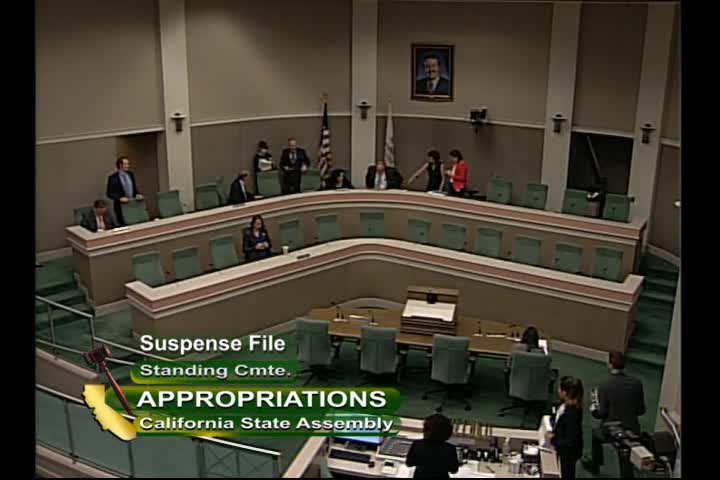
Discussed in Hearing
 1H
Assembly Standing Committee on Appropriations
Bill Author
Bill Co-Author(s):