SJR 24: Firearms.
- Session Year: 2017-2018
- House: Senate
- Latest Version Date: 2018-04-12
This measure would urge the Congress of the United States to reauthorize and strengthen the federal assault weapons ban and would urge the Congress to pass, and the President to sign, the federal Assault Weapons Ban of 2018. The measure would call on CalPERS to divest all its holdings related to the production and sale of firearms. engage with companies in which it is invested that produce or sell firearms to determine a reasonable method for those companies to withdraw from the production and sale of firearms or to produce a plan to divest from those companies, as specified.
This measure would urge the Congress of the United States to reauthorize and strengthen the federal assault weapons ban and would urge the Congress to pass, and the President to sign, the federal Assault Weapons Ban of 2018. The measure would call on CalPERS to divest all its holdings related to the production and sale of firearms.
WHEREAS, Since the 1979 shooting spree at Grover Cleveland Elementary School in San Diego, California, where two adults were killed and eight children and a police officer were injured, school shootings have become a regular occurrence in this country; and
WHEREAS, The British Broadcasting Corporation reports that there has been on average one school shooting per week in the United States since 2013; and
WHEREAS, It is the right of California students to attend school in a safe environment, free from gun violence; and
WHEREAS, The Marjory Stoneman Douglas High School mass shooting in Parkland, Florida, which resulted in the deaths of 17 students and faculty, further demonstrates the need for stronger laws to prevent gun violence; and
WHEREAS, Numerous factors contribute to the occurrence of mass shootings, including unregulated access to assault weapons and assault magazines, insufficient background checks, and needed improvements to our mental health system, among others; and
WHEREAS, Semiautomatic weapons designed with military features allow for the rapid fire of potentially large numbers of bullets, and are distinguishable from standard sporting firearms by features such as the ability to accept a detachable magazine, pistol grips, and folding or telescoping stocks; and
WHEREAS, Semiautomatic assault weapons are frequently used in mass shootings, including the July 2012, Aurora, Colorado, theater shooting which left 12 dead and 70 injured, the December 2012, school shooting in Newtown, Connecticut, in which 20 students and six adults were killed, the 2015, San Bernardino, California, shooting which left 14 people dead and 22 others seriously injured, the June 2016, Pulse nightclub shooting in Orlando, Florida, in which 49 people were killed and 58 injured, the 2017, Las Vegas, Nevada, shooting, which killed 58 people and left 851 injured, and the 2017, Sutherland Springs, Texas, shooting in which 26 were killed and 20 were injured; and
WHEREAS, The United States Supreme Court has established that Americans have a right to keep and bear arms in its surprising, precedent setting holding. However, as the late Justice Antonin Scalia opined in the District of Columbia v. Heller decision, the Second Amendment does not prohibit laws forbidding firearms in places such as schools or regulation of unusually dangerous weapons, nor does it restrict laws prohibiting felons, the mentally ill, and other dangerous people from carrying guns; and
WHEREAS, The National Firearms Act of 1934 regulates the possession and transfer of fully automatic machine guns through background checks, registration, and excise taxes, with individual states permitted to enact their own stronger gun legislation and regulations which may or may not be similar to other states; and
WHEREAS, Seven states, including California, and the District of Columbia have enacted laws strictly regulating the possession, manufacture, and transfer of assault weapons; and
WHEREAS, Because our borders are porous and only a small number of states regulate assault weapons and high-capacity assault magazines, states like California that take steps to protect their communities from these weapons are vulnerable to criminals who obtain and use these weapons without a comprehensive federal approach to curb gun violence; and
WHEREAS, It is estimated that 40 percent of firearm transfers are completed without a federal background check, including the transfer of semiautomatic, military-style firearms from a private collection or at a gun show; and
WHEREAS, A recent Washington Post-ABC News poll showed that 77 percent of respondents said President Donald J. Trump and Congress are not doing enough to stop mass shootings, and a Quinnipiac Poll found that 66 percent of voters support stricter gun laws, 67 percent support a nationwide ban on the sale of assault weapons, 83 percent support a mandatory waiting period for all gun purchases, and an overwhelming 97 percent want universal background checks; and
WHEREAS, California requires background checks for all firearm sales and transfers through various procedures; and
WHEREAS, A renewed assault weapons ban will not necessarily stop every mass shooting but will begin to remove these weapons of war from our streets; and
WHEREAS, The California Legislature commends companies who have terminated their business dealings with the National Rifle Association; and
WHEREAS, The California Legislature further commends CalSTRS for divesting its holdings in companies making guns that are illegal in California; and
WHEREAS, With its passage of comprehensive gun reform, California has reduced its gun mortality rate by 56 percent since 1993, three and one-half times the reduction made in the rest of the United States; now, therefore, be it
Resolved by the Senate and the Assembly of the State of California, jointly, That a comprehensive federal approach to reducing and preventing gun violence is needed to ensure that our communities are safe from future mass shootings; and be it further
Resolved, That the California State Legislature calls on CalPERS to divest all its holdings related to the production and sale of firearms; engage with companies in which it is invested that produce or sell firearms to determine a reasonable method for those companies to withdraw from the production and sale of firearms, and if a company refuses to participate in that engagement with CalPERS, to produce a plan to divest from that company; and be it further
Resolved, That the Legislature urges the Congress of the United States to reauthorize and strengthen the federal assault weapons ban and for the Congress to pass, and the President to sign, the federal Assault Weapons Ban of 2018; and be it further
Resolved, the Secretary of the Senate transmit copies of this resolution to the President and Vice President of the United States, to the Speaker of the House of Representatives, to the Majority Leader of the Senate, to each Senator and Representative from California in the Congress of the United States, and to the author for appropriate distribution.
WHEREAS, Since the 1979 shooting spree at Grover Cleveland Elementary School in San Diego, California, where two adults were killed and eight children and a police officer were injured, school shootings have become a regular occurrence in this country; and
WHEREAS, The British Broadcasting Corporation reports that there has been on average one school shooting per week in the United States since 2013; and
WHEREAS, It is the right of California students to attend school in a safe environment, free from gun violence; and
WHEREAS, The Marjory Stoneman Douglas High School mass shooting in Parkland, Florida, which resulted in the deaths of 17 students and faculty, further demonstrates the need for stronger laws to prevent gun violence; and
WHEREAS, Numerous factors contribute to the occurrence of mass shootings, including unregulated access to assault weapons and assault magazines, insufficient background checks, and needed improvements to our mental health system, among others; and
WHEREAS, Semiautomatic weapons designed with military features allow for the rapid fire of potentially large numbers of bullets, and are distinguishable from standard sporting firearms by features such as the ability to accept a detachable magazine, pistol grips, and folding or telescoping stocks; and
WHEREAS, Semiautomatic assault weapons are frequently used in mass shootings, including the July 2012, Aurora, Colorado, theater shooting which left 12 dead and 70 injured, the December 2012, school shooting in Newtown, Connecticut, in which 20 students and six adults were killed, the 2015, San Bernardino, California, shooting which left 14 people dead and 22 others seriously injured, the June 2016, Pulse nightclub shooting in Orlando, Florida, in which 49 people were killed and 58 injured, the 2017, Las Vegas, Nevada, shooting, which killed 58 people and left 851 injured, and the 2017, Sutherland Springs, Texas, shooting in which 26 were killed and 20 were injured; and
WHEREAS, The United States Supreme Court has established that Americans have a right to keep and bear arms in its surprising, precedent setting holding. However, as the late Justice Antonin Scalia opined in the District of Columbia v. Heller decision, the Second Amendment does not prohibit laws forbidding firearms in places such as schools or regulation of unusually dangerous weapons, nor does it restrict laws prohibiting felons, the mentally ill, and other dangerous people from carrying guns; and
WHEREAS, The National Firearms Act of 1934 regulates the possession and transfer of fully automatic machine guns through background checks, registration, and excise taxes, with individual states permitted to enact their own stronger gun legislation and regulations which may or may not be similar to other states; and
WHEREAS, Seven states, including California, and the District of Columbia have enacted laws strictly regulating the possession, manufacture, and transfer of assault weapons; and
WHEREAS, Because our borders are porous and only a small number of states regulate assault weapons and high-capacity assault magazines, states like California that take steps to protect their communities from these weapons are vulnerable to criminals who obtain and use these weapons without a comprehensive federal approach to curb gun violence; and
WHEREAS, It is estimated that 40 percent of firearm transfers are completed without a federal background check, including the transfer of semiautomatic, military-style firearms from a private collection or at a gun show; and
WHEREAS, A recent Washington Post-ABC News poll showed that 77 percent of respondents said President Donald J. Trump and Congress are not doing enough to stop mass shootings, and a Quinnipiac Poll found that 66 percent of voters support stricter gun laws, 67 percent support a nationwide ban on the sale of assault weapons, 83 percent support a mandatory waiting period for all gun purchases, and an overwhelming 97 percent want universal background checks; and
WHEREAS, California requires background checks for all firearm sales and transfers through various procedures; and
WHEREAS, A renewed assault weapons ban will not necessarily stop every mass shooting but will begin to remove these weapons of war from our streets; and
WHEREAS, The California Legislature commends companies who have terminated their business dealings with the National Rifle Association; and
WHEREAS, The California Legislature further commends CalSTRS for divesting its holdings in companies making guns that are illegal in California; and
WHEREAS, With its passage of comprehensive gun reform, California has reduced its gun mortality rate by 56 percent since 1993, three and one-half times the reduction made in the rest of the United States; now, therefore, be it
Resolved by the Senate and the Assembly of the State of California, jointly, That a comprehensive federal approach to reducing and preventing gun violence is needed to ensure that our communities are safe from future mass shootings; and be it further
Resolved, That the California State Legislature calls on CalPERS to divest all its holdings related to the production and sale of firearms; and be it further
Resolved, That the Legislature urges the Congress of the United States to reauthorize and strengthen the federal assault weapons ban and for the Congress to pass, and the President to sign, the federal Assault Weapons Ban of 2018; and be it further
Resolved, the Secretary of the Senate transmit copies of this resolution to the President and Vice President of the United States, to the Speaker of the House of Representatives, to the Majority Leader of the Senate, to each Senator and Representative from California in the Congress of the United States, and to the author for appropriate distribution.
|
Date
|
Status
|
|---|---|
| Jun 20, 2018 | June 20 hearing: Failed passage in committee. (Ayes 1. Noes 1.) |
| Jun 7, 2018 | Re-referred to Com. on P.E., R., & S.S. pursuant to Assembly Rule 96. |
| Jun 4, 2018 | Referred to Coms. on PUB. S. and P.E., R., & S.S. |
| May 29, 2018 | In Assembly. Held at Desk. |
| May 29, 2018 | Read. Adopted. (Ayes 24. Noes 9.) Ordered to the Assembly. |
| May 25, 2018 | From committee: Be adopted. Ordered to third reading. (Ayes 5. Noes 2.) (May 25). |
| May 18, 2018 | Set for hearing May 25. |
| May 7, 2018 | May 7 hearing: Placed on APPR. suspense file. |
| Apr 27, 2018 | Set for hearing May 7. |
| Apr 24, 2018 | From committee: Be adopted and re-refer to Com. on APPR. (Ayes 3. Noes 1. Page 4790.) (April 23). Re-referred to Com. on APPR. |
| Apr 23, 2018 | From committee: Be adopted and re-refer to Com. on APPR. (Ayes 3. Noes 1.) (April 23). Re-referred to Com. on APPR. |
| Apr 12, 2018 | From committee with author's amendments. Read second time and amended. Re-referred to Com. on P.E. & R. |
| Apr 12, 2018 | Set for hearing April 23. |
| Apr 11, 2018 | From committee: Be adopted and re-refer to Com. on P.E. & R. (Ayes 5. Noes 2.) (April 10). Re-referred to Com. on P.E. & R. |
| Apr 5, 2018 | Set for hearing April 10. |
| Apr 4, 2018 | Re-referred to Coms. on PUB. S. and P.E. & R. |
| Mar 20, 2018 | Introduced. Referred to Com. on RLS. |
|
Date
|
Description
|
Location
|
Votes
|
|
|---|---|---|---|---|
| Jun 20, 2018 | Be adopted and re-referred to the Committee on [Appropriations] | Assembly Standing Committee on Public Employees, Retirement, and Social Security |
Passed |
|
| May 29, 2018 | Senate 3rd Reading SJR24 Jackson | Senate Floor |
Passed |
|
| May 25, 2018 | Be adopted. Ordered to third reading | Senate Standing Committee on Appropriations |
Passed |
|
| May 7, 2018 | Placed on suspense file | Senate Standing Committee on Appropriations |
Passed |
|
| Apr 23, 2018 | Be adopted, but first be re-referred to the Committee on [Appropriations] | Senate Standing Committee on Public Employment and Retirement |
Passed |
|
| Apr 10, 2018 | Be adopted, but first be re-referred to the Committee on [Public Employment and Retirement] | Senate Standing Committee on Public Safety |
Passed |
This list shows positions taken on this bill by organizations on the date displayed, which is linked to the original source.
Positions by individuals are not included.
|
Organization
|
Position
|
Date
|
|---|---|---|
| Brady Campaign to Prevent Gun Violence | * Support | Apr 10, 2018 |
| Firearms Policy Coalition | * Against | Jun 20, 2018 |
| Gun Owners of California | ** Against | Jun 19, 2018 |
| National Rifle Association Institute For Legislative Action | ** Against | Jun 19, 2018 |
| PURPOSE | ** Against | Apr 9, 2018 |
Date of Hearing: June 20, 2018
ASSEMBLY COMMITTEE ON PUBLIC EMPLOYEES, RETIREMENT, AND SOCIAL SECURITY
Freddie Rodriguez, Chair
SBPCA Bill Id:SJR 24
Author:(Jackson) – As Amended Ver:April 12, 2018
SENATE VOTE: 24-9
SUBJECT: Firearms
SUMMARY: Calls upon the California Public Employees’ Retirement System (CalPERS) to (1) engage with companies in which it is invested that produce or sell firearms to determine a reasonable method for those companies to withdraw from the production and sale of firearms, and (2) if a company refuses to participate in engagement, CalPERS to produce a plan to divest from that company.
This resolution also makes numerous declarations regarding incidents involving the use of assault weapons, and commends CalPERS for divesting from its holdings in companies making guns that are illegal in California, and the need for a comprehensive federal approach to reducing and preventing gun violence.
EXISTING LAW: Provides, pursuant to Section 17 of Article XVI of the California Constitution, that:
1) The boards of California’s public retirement systems have “plenary authority and fiduciary responsibility for [the] investment of monies and administration of the system.”
2) “The members of the retirement board of a public pension or retirement system shall discharge their duties with respect to the system solely in the interest of, and for the exclusive purposes of providing benefits to, participants and their beneficiaries, minimizing employer contributions thereto, and defraying reasonable expenses of administrating the system…[and] the board shall diversify the investments of the system so as to minimize the risk of loss and to maximize the rate of return unless under the circumstances it is clearly prudent to do so.”
3) The Legislature retains its authority to, by statute, “continue to prohibit certain investments by a retirement board where it is in the public interest to do so, and provided that the prohibition satisfies the standards of fiduciary care and loyalty required of a retirement board… .”
FISCAL EFFECT: According to the Senate Appropriations Committee, “[t]his resolution would result in unknown cost pressures to CalPERS in several areas to the extent CalPERS elected to divest from specified companies. First, CalPERS would need to determine which companies in it holdings manufacture and/or sell firearms. Second, it would have to contact and communicate with these companies regarding exiting the firearms industry. Third, to the extent those companies instead elect to continue participating in the firearms industry, CalPERS would incur one-time administrative costs to liquidate securities, as specified.
Finally, there would be an unknown impact on the CalPERS retirement system portfolio. CalPERS may incur an opportunity cost if alternative investments do not produce greater investment returns than the divested securities would have generated. To the extent that limiting investment opportunities or reducing diversification results in lower investment returns than otherwise would have occurred, CalPERS could require higher employer contribution rates, which would impact all state departments (General and special funds).
COMMENTS: According to the author, “[r]apid-fire assault weapons with large clips of ammunition have only one purpose: the mass slaughter of large numbers of human beings. There were designed for use by the military to achieve that mission in combat – and that mission alone. No one argues that other combat weapons like rocket-propelled grenades (RPGs) or stinger missiles should be widely available to anyone at a local gun shop. Some weapons are simply too dangerous for civilian use.
‘That’s why, for nearly 80 years, federal law has banned machine guns, sawed-off shotguns, silencers, very high-caliber firearms, grenades and bombs. Military-style assault weapons – like the ones used to murder defenseless children in Newtown and Parkland – are versions of military weapons that are designed for rapid fire. Seven states, including California, have enacted laws strictly regulating the making, possession, and transfer of assault weapons. Without a comprehensive federal law, states that take steps to protect their communities from assault weapons remain vulnerable to criminals who use these weapons.”
1) CalPERS’ and CalSTRS’ Fiduciary Responsibility and the Prudent Investment Standard
As previously stated, the California Constitution vests “sole and exclusive” fiduciary responsibility over the assets of a public pension or retirement system with its board. In addition, the retirement board must discharge its duties with respect to the system “solely in the interests of, and for the exclusive purposes to, participants and their beneficiaries… [and] that this takes precedence over any other duty.”
The combined assets of CalPERS’ and CalSTRS’ investment holdings total over one-half of one trillion dollars. When investing funds, the California Constitution requires that the boards discharge their duties with respect to the system “with the care, skill, prudence, and diligence under the circumstances then prevailing that a prudent person acting in a like capacity and familiar with these matters would use in the conduct of an enterprise of a like character and with like aims.” This is known as the prudent investor standard.
When considering divestment as a public policy tool to effectuate change, though well-meaning, the systems are bound by legal duties and standards. The assets of a public pension or retirement system are trust funds held for the exclusive purposes of providing benefits to participants in the pension or retirement system, or their beneficiaries – which takes precedence over any other duty.
2) The Current Funded Status of the Systems
The current funded status of CalPERS’ is approximately 71 percent, and CalSTRS currently is 62.6 percent.
Although a portion of this funded status can be attributed to both systems lowering their discount rate (i.e., the assumed rate of return on investments), impact of the funded status of each system also can be directly attributed to investment performance, including enacted policies that call for divestment.
Though serving various purposes, in aggregate, divestment legislation has a negative impact on the funded status of each system, as discussed, infra. Given the current funded status of each system and the possibility of a significant market correction in the future related to investments, divestment legislation should be viewed and considered with caution.
3) Joint Informational Hearing on the Subject of Pension Fund Investment and Divestment
On January 10, 2018, this committee and the Senate Public Employment and Retirement Committee held a joint informational hearing titled, “How California’s Public Pension Funds Support California Values While Fulfilling Their Fiduciary Obligations.”
During the hearing, the committees heard from CalPERS, CalSTRS, numerous stakeholders of the systems, and others on the subject of divestment, among other items related to the contributions and effects of the systems on the state, national, and global economies, and their individual impacts in the investment market. In addition, the committee received testimony that highlighted the increased effectiveness that the systems have when collectively working with other similarly situated institutional investors on issues where common interests and goals are shared.
The committee consistently was informed and advised by each of the presenters and those providing public testimony, that divestment is not as effective as the seeming prevailing thought or strategy to effectuate change in offending activity. Moreover, if it is to be used, it should only be used as tool of absolute and last resort. The committee also was informed that in addition to investment losses and lost earnings opportunities resulting from divestment, additional costs are borne by the systems relating to fees to “unwind” investments (i.e., liquidate assets) and that it takes time to find a buyer of those shares at the then-prevailing or desirable price; the lack of earnings on divested funds during the period of time in which those funds are not invested; and, additional fees paid to reinvest those funds. These additional costs can amount to millions of dollars per divestment action.
In addition, in the vast majority of instances, divestment simply provides an opportunity to another investor – that likely does not share California’s values – to purchase the assets previously held by the systems, and usually at a discounted price. Thus, the desire to effectuate change from offending behavior is not realized, and that only resultant change is a financial loss to the funds.
When considering the assets of CalPERS in comparison to other institutional investors, although attractive to use a method of leverage for change, CalPERS can be most effective through a thoughtful and targeted strategy of engagement, not only by itself, but increasingly effective when engagement activities are sustained in partnership with other like-minded institutional investors.
4) Downstream Effects of Divestment
Legislation that calls for, or requires, divestment could be expected to contribute to an increased burden on employees and employers through increased contribution rates (i.e., the rate at which an employer contributes money on employees’ behalf).
Every investment dollar that is lost opportunity as a result of divestment must be made up by an increase in employer and employee contributions, unless the returns on other investments can offset the lost opportunity. When participating employers have to contribute more to a public employee retirement system, their budgets are negatively affected which could lead to reductions in services, positions and employees. Flexibility related to investment options coupled with successful investing helps to ease cost pressure that will be borne by the systems, and ultimately, participating employers, members of the systems, and taxpayers.
Because of the potential profit associated with investments, divestment by pension funds from a particular business or industry inevitably results in what is a common practice in the investment market – another investor that will fill the ‘gap’ and that potentially could reap the benefits of a return on an investment that pension fund otherwise would have gained. Consequently, this becomes a loss without another source of identified monies to backfill that loss.
For example, an analysis completed by Wilshire Associates in 2015 found that previous divestment efforts have collectively reduced the present value of the CalPERS portfolio by a range of $3.8 billion to $8.3 billion, with ongoing losses as a result of the divestment.
Divestment targets that were included in this study were South African securities, tobacco-related securities, California Iran and Sudan Act lists, and firearm-related companies.
5) Prior and Current Actions Performed by CalPERS and CalSTRS Related to The Subject of This Measure
While the measure before this committee specifically targets CalPERS, the following information is provided to illustrate the activities or actions that both pension funds have taken related to the subject of this measure:
a) CalPERS:
i) Engagement
As of March 2018, CalPERS has engaged several companies (i.e., retailers) regarding their sale of assault weapons. To date, among these retailers, the efficacy of this engagement has achieved a combination of positive reactions by the retailers that have resulted in a change in current business practice or policy. These changes or commitments consist of discontinuing the sale of such weapons; assurance that there is no current inventory across the retail chain; change in company policy regarding the sale of firearms and ammunition to individuals under a certain age; and, calling on policy makers to issue regulations to ban assault-style firearms (including closing private sales and gun show loopholes), high capacity magazines, and bump-stocks.
ii) Divestment
In February 2013, CalPERS took action to divest from gun manufacturers of illegal weapons under California law. Investment holdings by CalPERS in these manufacturers was approximately $5 million.
b) CalSTRS:
i) Engagement
Upon engagement of firearms manufacturers in 2013, manufacturers refused to speak to the system even after meetings were scheduled to discuss the issue. Thereafter, CalSTRS was informed by counsel for firearms manufacturers that communications were barred.
ii) Divestment
Because engagement did not work, CalSTRS’ Investment Committee approved to divest from companies that manufacture firearms illegal to the public in California based on its Divestment Policy. To date, CalSTRS continues to implement this divestment decision.
In furtherance of this effort, CalSTRS’ current focus recently expanded to retailers. On May 9, 2018, CalSTRS’ Investment Committee voted to do the following in this area:
- Amend its Corporate Governance Engagement Plan to add engagement of companies that manufacture and sell illegal firearms in California, and place it as a top priority;
- Develop and execute a communication plan to make this engagement public;
- Authorize the creation of additional positions to Corporate Governance to lead in these efforts;
- Direct staff to report to the Investment Committee on the effectiveness of engagement;
- Exercise shareholder votes against the entirety of the Board of Directors of a company if it is not making an adequate effort to engage or be responsive to CalSTRS’ requests, and utilize all governance and communications tools to reinforce active engagement; and,
- If engagement is not effective, to consider divestment.
6) Pending Legislation that Would Require External Review of Divestment Legislation
Historically, legislation that seeks or requires divestment is intended to effect change from offending activity inimical to California’s values in extraordinary circumstances. However, when compared to years prior as discussed infra, since 2011, the number and frequency of legislative proposals introduced that affect CalPERS’ and CalSTRS’ investments have increased, which have contributed to the current funded status of the system, as discussed supra.
Currently pending before this committee, SB 783 (Pan) would establish the Pension Divestment Review Program to provide expert, independent, and dispassionate review of legislative proposals affecting the investment earnings of public employee pension funds towards balancing the constitutional authority granted to the Legislature and public employee pension funds, and to determine the efficacy and financial effects of a legislative proposals that require divestment, or restrict investments by CalPERS and CalSTRS.
7) Current and Prior Legislation Relating to Pension Fund Investments
2018: Senate Bill 459 (Portantino) requires CalPERS and CalSTRS to adopt an investment policy for retailers or wholesalers of banned weapons; engage those sellers; exercise proxy votes if engagement is unsuccessful; and, divest from those companies if engagement and the exercise of proxy votes are unsuccessful, among other provisions. This bill currently is pending in the Assembly Public Employees, Retirement, and Social Security Committee.
2017: Assembly Bill 1597 (Nazarian) would prohibit CalPERS and CalSTRS from investing in any investment vehicle issued by, owned, controlled, or managed by the government of Turkey. This bill is currently pending in the Senate Public Employment and Retirement Committee.
Senate Bill 30 (Lara) previously would have prohibited the state from awarding or renewing a contract with a person who is providing or has provided goods or services to the federal government for the construction of a federally funded wall, fence or other barrier along California's southern border. This bill was substantially amended to remove all provisions related to this subject, and is currently pending in the Assembly Rules Committee.
2016: Assembly Bill 1410 (Nazarian) would have prohibited CalPERS and CalSTRS from investing public employee retirement funds in specified investments issued by, owned, controlled, or managed by the government of Turkey. This bill was held in the Assembly Appropriations Committee.
Assembly Bill 1551 (Allen) would have required public retirement funds, on or after January 1, 2017, to make no additional investments or renew existing investments in business firms or financial institutions that engage in business practices in furtherance of the boycott of Israel, among other provisions. This bill was held in the Assembly.
Assembly Bill 2283 (Calderon) would have required CalPERS and CalSTRS to evaluate their investments in securitized home rental properties and ensure certain requirements were met, as specified, prior to investing or reinvesting in securitized home rental properties, among other provisions. This bill was held in the Assembly Public Employee, Retirement and Social Security Committee.
Assembly Bill 2650 (Nazarian) would have prohibited CalPERS and CalSTRS from investing public employee retirement funds in specified investments issued by, owned, controlled, or managed by the government of Turkey. This bill was held in the Assembly Appropriations Committee.
2015: Chapter 605 (Senate Bill 185, De Leon) prohibits CalPERS and CalSTRS from investing public employee retirement funds in thermal coal companies, as specified, and among other provisions.
2013: Chapter 83, Statutes of 2013 (Senate Joint Resolution 1, Wolk) urged the President and the Congress of the United States to pursue a comprehensive federal approach to reduce and prevent gun violence, and urged the President to take steps to ensure all states and applicable federal agencies reported all necessary records to the National Instant Criminal Background Check System.
Assembly Bill 761 (Dickinson) would have prohibited CalPERS and CalSTRS from investing in companies that manufacture firearms or ammunition for a recipient other than the U.S. military, subject to a process specified in the bill and consistent with previous divestment legislation, but subject to the board's fiduciary duties. This bill was held in the Assembly Appropriations Committee.
Senate Resolution 18 (Leno) encouraged CalPERS and CalSTRS, whenever feasible and consistent with their fiduciary responsibilities, to cease making direct investments in Russia and to encourage companies in which employee retirement funds are invested and that are doing business in Russia not to take actions that promote or otherwise enable human rights violations in Russia. This resolution was adopted.
2011: Chapter 411 (Assembly Bill 1151, Feuer) amended the California Public Divest from Iran Act to, among other things, clarify that the boards of CalPERS and CalSTRS must divest pension funds, unless to do so would breach a fiduciary duty, among other provisions.
Senate Bill 903 (Anderson) would have amended the California Public Divest from Iran Act to clarify the criteria and process that the boards of CalPERS and CalSTRS must use to invest in Iran. This bill was held in the Senate Appropriations Committee
2010: Assembly Bill 2337 (Ammiano) would have prohibited CalPERS and CalSTRS from participating in predatory real estate investment practices related to rent-regulated housing that results in excessive rent increases, the displacement of tenants, or conversion of rent-regulated housing to market rate units. This bill was held in Senate Public Employment and Retirement Committee
2007: Chapter 671 (Assembly Bill 221, Anderson) prohibits CalPERS and CalSTRS from investing in companies that have specified energy or defense-related operations in Iran.
2006: Chapter 442 (Assembly Bill 2941, Koretz) prohibits CalPERS and CalSTRS from investing public employee retirement funds in a company with business operations in the Sudan, as specified.
2005: Chapter 9 (Senate Bill 424, Poochigian), established April 24 of each year as the “California Day of Remembrance of the Armenian Genocide” and the period beginning on the Sunday before that day through the following Sunday as the days of remembrance of the Armenian Genocide.
Chapter 22 (Senate Joint Resolution 2, Speier) designated April 24, 2005, as the “California Day of Remembrance for the Armenian Genocide of 1915-1923” and also memorialized the United States Congress to act likewise to commemorate the Armenian Genocide.
2000: Assembly Bill 107 (Knox) would have prohibited new or additional investments in tobacco companies by CalPERS and CalSTRS on and after January 1, 2001, and would have required divestment from existing investments by July 1, 2002. This bill was held in the Assembly with concurrence pending.
1992: Chapter 1351 (Assembly Bill 2251, Margolin) prohibits state trust fund and state money investments in business firms or financial institutions that engage in discriminatory business practices after January 1, 1994, relating to the Arab League’s economic boycott of Israel.
1986 Chapter 1254 (Assembly Bill 134, Waters) prohibits the use of state trust funds or state monies to make additional or new investments, or renew existing investments in firms doing business with or in South Africa as of January 1, 1987.
REGISTERED SUPPORT / OPPOSITION:
Support
None on file.
Opposition
Gun Owners of California
National Rifle Association Institute for Legislative Action
Analysis Prepared by: Michael Bolden / P.E.,R., & S.S. / (916) 319-3957
Office of Senate Floor Analyses (916) 651-1520 Fax: (916) 327-4478 | SJR |
THIRD READING
Bill No: SJR 24
:
SENATE PUBLIC SAFETY COMMITTEE: 5-2, 4/10/18
AYES: Skinner, Bradford, Jackson, Mitchell, Wiener
NOES: Anderson, Stone
SENATE PUBLIC EMP. & RET. COMMITTEE: 3-1, 4/23/18
AYES: Pan, Leyva, Portantino
NOES: Moorlach
NO VOTE RECORDED: Morrell
SENATE APPROPRIATIONS COMMITTEE: 5-2, 5/25/18
AYES: Lara, Beall, Bradford, Hill, Wiener
NOES: Bates, Nielsen
DIGEST:
This resolution urges the Congress of the United States to reauthorize and strengthen the federal assault weapons ban and urges the Congress to pass, and the President to sign, the federal Assault Weapons Ban of 2018. This resolution additionally calls upon the California Public Employees’ Retirement System (CalPERS) to (1) engage with companies with which it is invested that produce or sell firearms to determine a reasonable method for those companies to withdraw from the production and sale of firearms, or (2) produce a plan to divest from those companies, as specified.
ANALYSIS: Existing federal law banned, through the federal assault weapons law (the Violent Crime Control and Law Enforcement Act, H.R. 3355, Pub.L. 103-322.), which became effective on September 13, 1994, the possession of “assault weapons” and “large capacity ammunition feeding devices,” defined as a magazine capable of holding more than ten rounds of ammunition, manufactured after that date. That law expired in 2004 and has not been reenacted.
Existing state law:
- Defines “assault weapon” as any of the following:
- A semiautomatic, centerfire rifle that does not have a fixed magazine but has any one of the following:
- a pistol grip that protrudes conspicuously beneath the action of the weapon.
- a thumbhole stock;
- a folding or telescoping stock;
- a grenade launcher or flare launcher;
- a flash suppressor; or,
- a forward pistol grip.
- A semiautomatic, centerfire rifle that has a fixed magazine with the capacity to accept more than 10 rounds.
- A semiautomatic, centerfire rifle that has an overall length of less than 30 inches.
- A semiautomatic pistol that does not have a fixed magazine but has any one of the following:
- a threaded barrel, capable of accepting a flash suppressor, forward handgrip, or silencer;
- a second handgrip;
- a shroud that is attached to, or partially or completely encircles, the barrel that allows the bearer to fire the weapon without burning the bearer’s hand, except a slide that encloses the barrel; or,
- the capacity to accept a detachable magazine at some location outside of the pistol grip.
- A semiautomatic pistol with a fixed magazine that has the capacity to accept more than 10 rounds.
- A semiautomatic shotgun that has both of the following:
- a folding or telescoping stock; and,
- a pistol grip that protrudes conspicuously beneath the action of the weapon, thumbhole stock, or vertical handgrip.
- A semiautomatic shotgun that has the ability to accept a detachable magazine.
- Any shotgun with a revolving cylinder. (Penal Code Sections 30510, 30515.)
- A semiautomatic, centerfire rifle that does not have a fixed magazine but has any one of the following:
- Defines “large-capacity magazine” as any ammunition-feeding device with the capacity to accept more than 10 rounds, not including any feeding device that has been permanently altered so that it cannot accept more than 10 rounds, any .22 caliber tube ammunition-feeding device, or any tubular magazine that is contained in a lever-action firearm. (Penal Code Section 16740.)
- Prohibits the possession or transfer of assault weapons, except for the sale, purchase, importation, or possession of assault weapons by specified individuals, including law enforcement officers. (Penal Code Section 30600.)
- Prohibits the manufacture, importation, keeping for sale, offering or exposing for sale, giving, or lending of any large-capacity magazine with specified exceptions. (Penal Code Section 32310.)
- Gives the governing body or board of a public pension or retirement system plenary authority and fiduciary responsibility for investment of moneys and administration of the system. (California Constitution Article XVI, Section 17.)
- States that the Legislature may by statute prohibit certain investments by a governing board of a public pension or retirement system where it is in the public interest to do so, and provided that the prohibition satisfies the standards of fiduciary care and loyalty required of a board. (California Constitution Article XVI, Section 17.)
This resolution:
- Calls upon CalPERS to:
- engage with companies with which it is invested that produce or sell firearms to determine a reasonable method for those companies to withdraw from the production and sale of firearms, or
- produce a plan to divest from those companies, as specified.
- Resolves that the Legislature urges the Congress of the United States to reauthorize and strengthen the federal assault weapons ban and for the Congress to pass, and the President to sign, the federal Assault Weapons Ban of 2018.
- Makes numerous declarations regarding incidents involving the use of assault weapons, that numerous factors contribute to the occurrence of mass shootings, that the Second Amendment does not prohibit laws forbidding firearms in schools or regulation of unusually dangerous weapons, that an estimated 40% of firearm transfers are completed without a background check, that a renewed assault weapons ban will not necessarily stop every mass shooting but will begin to remove deadly weapons from our streets, that the Legislature commends companies who have terminated their business dealings with the National Rifle Association, that the Legislature commends CalPERS for divesting from its holdings in companies making guns that are illegal in California, and the need for a comprehensive federal approach to reducing and preventing gun violence.
Background
The number of mass shootings and deaths resulting from mass shootings has continued to grow in the United States.
A press release by U.S. Senator Dianne Feinstein regarding the federal Assault Weapons Ban states:
“Between 1988 and 1997, 125 were killed in 18 mass shootings. The next decade, 1998 to 2007, 171 were killed in 21 mass shootings. And over the last 10 years, 2008 to 2017, 437 were killed in 50 mass shootings.” (U.S. Senator Dianne Feinstein, Senators Introduce Assault Weapons Ban (November 8, 2017).)
The five deadliest mass shootings in the U.S. have occurred in the past 10 years. The deadliest mass shooting in U.S. history occurred on October 1, 2017 in Las Vegas, when a single shooter left 58 dead after firing on a crowd of concertgoers from his hotel window. On June 12, 2016, 49 people were killed when a gunman opened fire inside of Orlando’s Pulse nightclub.
A number of mass shootings occur in schools. On February 14, 2018, 14 students and adults were killed by a single gunman at Marjory Stoneman Douglas High School in Parkland, Florida. The New York Times reports that since the mass shooting at Sandy Hook Elementary School in 2012, there have been at least 239 school shootings nationwide. (The New York Times, After Sandy Hook, More Than 400 People Have Been Shot in Over 200 School Shootings (February 15, 2018).)
According to a 2018 Mother Jones study, more than three quarters of the guns possessed by mass shooters in the past 35 years obtained their guns legally. (Mother Jones, A Guide to Mass Shootings in America (March 10, 2018).)
The Federal Assault Weapons Ban of 1994
The Federal Assault Weapons Ban of 1994 was passed as a portion of the Violent Crime Control and Law Enforcement Act on September 13, 1994. The Act specified which weapons were classified as assault weapons. The Act defined features which classified specified semi-automatic rifles, pistols, and shotguns as assault weapons. The Act was limited to semi-automatic weapons only, as fully automatic weapons were addressed in earlier legislation passed in 1934 and 1986. The Act banned large-capacity ammunition feeding devices and high-capacity magazines. After ten years of existence, the Act expired in 2004 and was not reenacted.
The Assault Weapons Ban of 2018 (U.S. House Resolution 5087 (Cicilline).)
On February 26, 2018, U.S. Congressman David Cicilline introduced U.S. House Resolution 5087, the Assault Weapons Ban of 2018. The bill, along with a companion bill introduced by U.S. Senator Dianne Feinstein in 2017, would ban the sale, manufacture, transfer, possession, and importation of semiautomatic assault weapons. The bill additionally would ban large capacity ammunition feeding devices, which enable an individual to fire 10 rounds of ammunition or more without having to reload and which are frequently used in mass shootings. The bill would require a background check on any future sale, trade, or gifting of an assault weapon covered by the bill. Weapons which were lawfully possessed on the date of enactment are exempt from the ban, but they must be securely stored.
FISCAL EFFECT: Appropriation: No Fiscal Com.: Yes Local: No
According to the Senate Appropriations Committee:
This resolution would result in unknown cost pressures to CalPERS in several areas to the extent CalPERS elected to divest from specified companies. First, CalPERS would need to determine which companies in it holdings manufacture and/or sell firearms. Second, it would have to contact and communicate with these companies regarding exiting the firearms industry. Third, to the extent those companies instead elect to continue participating in the firearms industry, CalPERS would incur one-time administrative costs to liquidate securities, as specified. Finally, there would be an unknown impact on the CalPERS retirement system portfolio. CalPERS may incur an opportunity cost if alternative investments do not produce greater investment returns than the divested securities would have generated. To the extent that limiting investment opportunities or reducing diversification results in lower investment returns than otherwise would have occurred, CalPERS could require higher employer contribution rates, which would impact all state departments (General and special funds).
None received
OPPOSITION: (Verified 5/25/18)
National Rifle Association
Prepared by: Gabe Caswell / PUB. S. /
5/26/18 15:01:17
**** END ****
SENATE COMMITTEE ON APPROPRIATIONS
Senator Ricardo Lara, Chair
2017 - 2018 Regular Session
SJR 24 (Jackson) - Firearms
Version: April 12, 2018 | Policy Vote: PUB. S. 5 - 2, P.E. & R. 3 - 1 |
Urgency: | Mandate: |
Hearing Date: May 7, 2018 | Consultant: Robert Ingenito |
This bill meets the criteria for referral to the Suspense File.
Bill Summary:
SJR 24 is a resolution that would call upon the California Public Employees’ Retirement System (CalPERS) to (1) engage with companies with which it is invested that produce or sell firearms to determine a reasonable method for those companies to withdraw from the production and sale of firearms, or (2) produce a plan to divest from those companies, as specified.
Fiscal Impact:
This resolution would result in unknown cost pressures to CalPERS in several areas to the extent CalPERS elected to divest from specified companies. First, CalPERS would need to determine which companies in it holdings manufacture and/or sell firearms. Second, it would have to contact and communicate with these companies regarding exiting the firearms industry. Third, to the extent those companies instead elect to continue participating in the firearms industry, CalPERS would incur one-time administrative costs to liquidate securities, as specified. Finally, there would be an unknown impact on the CalPERS retirement system portfolio. CalPERS may incur an opportunity cost if alternative investments do not produce greater investment returns than the divested securities would have generated. To the extent that limiting investment opportunities or reducing diversification results in lower investment returns than otherwise would have occurred, CalPERS could require higher employer contribution rates, which would impact all state departments (General and special funds).
Background:
Under existing provisions of Section 17 of Article XVI of the California Constitution, as amended by Proposition 162 of 1992, the CalSTRS board and CalPERS board have plenary authority and fiduciary responsibility over the investment of retirement plan assets and are required to discharge their duties solely in the interests of the members and beneficiaries for the exclusive purpose of providing benefits. The boards must invest the assets of the plan with care, skill and diligence of a prudent person engaged in a similar enterprise so as to maximize the investments and minimize the risk of loss. The Constitution does allow the Legislature by statute to prohibit certain investments by a retirement board when it is in the public interest to do so and provided the prohibition satisfies the standards of fiduciary care and loyalty required of the retirement board.
Other measures have been enacted by the Legislature to prohibit certain investments by public pension funds. For instance, AB 221 (Anderson, Chapter 671, Statutes of 2007) prohibits CalPERS and CalSTRS from investing in companies that have specified energy or defense-related operations in Iran, AB 2941 (Koretz, Chapter 442, Statutes of 2006) prohibits CalPERS and CalSTRS from investing public employee retirement funds in a company with business operations in the Sudan, as specified, and SB 185 (De Leon, Chapter 605, Statutes of 2015) prohibits CalPERS and CalSTRS from investing public employee retirement funds in thermal coal companies.
Proposed Law:
This resolution would, among other things, do the following:
- Call upon CalPERS to engage with companies with which it is invested that produce or sell firearms to determine a reasonable method for those companies to withdraw from the production and sale of firearms or, if the company refuses to participate in that engagement with CalPERS, to produce a plan to divest from those companies.
- Direct the Secretary of the Senate to transmit copies of this resolution as specified.
Related Legislation:
SJR 1 (Wolk, Chapter 83, Statutes of 2013), urged the President and the Congress of the United States to pursue a comprehensive federal approach to reduce and prevent gun violence, and urged the President to take steps to ensure all states and applicable federal agencies reported all necessary records to the National Instant Criminal Background Check System.
Staff Comments:
A 2015 analysis by Wilshire Associates found that previous divestment efforts have collectively reduced the present value of the CalPERS portfolio by an estimated $8.3 billion.
-- END --
SENATE COMMITTEE ON
PUBLIC EMPLOYMENT AND RETIREMENT
Dr. Richard Pan, Chair
2017 - 2018 Regular
Bill No: SJR 24 Hearing Date: 4/23/18
Author: | Jackson | ||
Version: | 4/12/18 As amended | ||
Urgency: |
| Fiscal: | Yes |
Consultant: | Korinne Sugasawara | ||
Subject: Firearms.
SOURCE: Author
DIGEST: This resolution calls upon California Public Employees’ Retirement System (CalPERS) to engage with companies with which it is invested that produce or sell firearms to determine a reasonable method for those companies to withdraw from the production and sale of firearms or to produce a plan to divest from those companies, as specified.
ANALYSIS:
Existing law:
- Provides under Article XVI, Section 17 of the California Constitution that the boards of California’s public retirement systems have “plenary authority and fiduciary responsibility for [the] investment of monies and administration of the system.”
- Provides under the California Constitution that “the members of the retirement board of a public pension or retirement system shall discharge their duties with respect to the system solely in the interest of, and for the exclusive purposes of providing benefits to, participants and their beneficiaries, minimizing employer contributions thereto, and defraying reasonable expenses of administrating the system…[and] the board shall diversify the investments of the system so as to minimize the risk of loss and to maximize the rate of return unless under the circumstances it is clearly prudent to do so.”
- Provides under the California Constitution that the Legislature retains its authority to, by statute, “continue to prohibit certain investments by a retirement board where it is in the public interest to do so, and provided that the prohibition satisfies the standards of fiduciary care and loyalty required of a retirement board pursuant to this section.”
This resolution:
- Calls upon the federal government to create a comprehensive approach to reduce and prevent gun violence and ensure communities are safe from further mass shootings.
- Calls upon CalPERS to engage with companies with which it is invested that produce or sell firearms to determine a reasonable method for those companies to withdraw from the production and sale of firearms or, if the company refuses to participate in that engagement with CalPERS, to produce a plan to divest from those companies.
- Urges the Congress of the United States to reauthorize and strengthen the federal assault weapons ban and for Congress to pass, and the President to sign, the federal Assault Weapons Ban of 2018.
- Directs the Secretary of the Senate to transmit copies of this resolution to the President and Vice President of the United States, the Speaker of the House of Representatives, to the Majority Leader of the Senate, to each Senator and Representative from California in the United States Congress, and to the author for appropriate distribution.
- Makes various declarations regarding mass shooting incidents involving the use of assault weapons; the right of California students to a safe school environment; that numerous factors contribute to the occurrence of mass shootings; that the Second Amendment does not prohibit laws forbidding firearms in schools or the regulation of unusually dangerous weapons; that an estimated 40 percent of firearm transfers are completed without a federal background check; that a renewed assault weapons ban will begin to remove dangerous weapons from our streets; that the Legislature commends companies that have terminated their business dealings with the National Rifle Association; that the Legislature commends California State Teachers’ Retirement System (CalSTRS) for divesting from its holdings in companies making guns that are illegal in California; and the need for a comprehensive federal approach to reducing and preventing gun violence.
Background
The Federal Assault Weapons Ban of 1994
Passed as a portion of the Violent Crime Control and Law Enforcement Act, the federal assault weapons ban prohibited the manufacture for civilian use and possession of “assault weapons” and banned civilians from purchasing newly manufactured “large capacity ammunition feeding devices,” defined as a magazine capable of holding more than ten rounds of ammunition. However, the Violent Crime Control and Law Enforcement Act expired on September 13, 2004 due to a sunset clause, and semi-automatic, military style weapons are now legal unless banned by state or local law.
CalPERS and Investor Engagement
CalPERS is the largest public pension system in the county, investing billions of dollars across multiple asset classes. Investment returns sustain a large portion of CalPERS’ ability to provide pensions and retirement benefits to members. A 2015 analysis by Wilshire Associates found that previous divestment efforts have collectively reduced the present value of the CalPERS portfolio by an estimated $8.3 billion. Rather than divesting, which can limit investment opportunities, decrease diversification, increase risk, and limit returns, engagement allows CalPERS, as a large investor, opportunities for leverage.
Fiduciary Responsibility
The California Constitution vests “sole and exclusive” fiduciary responsibility over the assets of a public pension or retirement system with its board.
Related/Prior Legislation
SJR 1 (Wolk, Chapter 83, Statutes of 2013), urged the President and the Congress of the United States to pursue a comprehensive federal approach to reduce and prevent gun violence, and urged the President to take steps to ensure all states and applicable federal agencies reported all necessary records to the National Instant Criminal Background Check System.
FISCAL EFFECT: Appropriation: Fiscal Com.: Yes Local:
SUPPORT:
None received.
OPPOSITION:
Gun Owners of California
ARGUMENTS IN SUPPORT:
The author’s office states, “the only gun control measure that has had a statistically significant effect on the number and severity of school shootings is the federal assault weapons ban. We have many protections in California and some of the toughest gun laws in the country. Given the easy ability to transport weapons across state lines, though, it is way past time for the federal government to step up and ban these weapons of war so all Americans can have the same protections.
ARGUMENTS IN OPPOSITION:
Gun Owners of California writes, “The Department of Justice’s National Institute of Justice reported the [federal assault weapons] ban could not be credited with any reduction in crime. Penalizing the lawful for the misdeeds of the unlawful will never have its anticipated resolution and reducing the pool of firearms available for lawful individuals to possess will do nothing to stem an increase in crime.”
SENATE COMMITTEE ON PUBLIC SAFETY
Senator Nancy Skinner, Chair
2017 - 2018 Regular
Bill No: SJR 24 Hearing Date: April 10, 2018
Author: | Jackson | ||
Version: | March 20, 2018 | ||
Urgency: | No | Fiscal: | Yes |
Consultant: | AY | ||
Subject: Firearms
HISTORY
Source: Author
Prior Legislation: SJR 1 (Wolk), 2013
AJR 45 (Feuer), Ch. 143, Stats. of 2012
SJR 7 (Padillla), Ch. 63, Stats. of 2011
AJR 56 (Frommer), Ch. 188, Stats. of 2004
SJR 23 (Perata), Ch. 129, Stats. of 1999
Support: Unknown
Opposition: National Rifle Association
PURPOSE
This resolution urges the Congress of the United States to reauthorize and strengthen the federal assault weapons ban and for the Congress to pass, and the President to sign, the Assault Weapons Ban of 2018. This measure additionally calls on CalPERS to divest from its holdings related to the production and sale of firearms.
Existing law defines “assault weapon” as any of the following:
1) A semiautomatic, centerfire rifle that does not have a fixed magazine but has any one of the following:
- a pistol grip that protrudes conspicuously beneath the action of the weapon;
- a thumbhole stock;
- a folding or telescoping stock;
- a grenade launcher or flare launcher;
- a flash suppressor; or,
- a forward pistol grip.
2) A semiautomatic, centerfire rifle that has a fixed magazine with the capacity to accept
more than 10 rounds.
3) A semiautomatic, centerfire rifle that has an overall length of less than 30 inches.
4) A semiautomatic pistol that does not have a fixed magazine but has any one of the following:
- a threaded barrel, capable of accepting a flash suppressor, forward handgrip, or silencer;
- a second handgrip;
- a shroud that is attached to, or partially or completely encircles, the barrel that allows the bearer to fire the weapon without burning the bearer’s hand, except a slide that encloses the barrel; or,
- the capacity to accept a detachable magazine at some location outside of the pistol grip.
5) A semiautomatic pistol with a fixed magazine that has the capacity to accept more than 10 rounds.
6) A semiautomatic shotgun that has both of the following:
- a folding or telescoping stock; and,
- a pistol grip that protrudes conspicuously beneath the action of the weapon, thumbhole stock, or vertical handgrip.
7) A semiautomatic shotgun that has the ability to accept a detachable magazine.
8) Any shotgun with a revolving cylinder. (Penal Code Sections 30510, 30515.)
Existing law defines “large-capacity magazine” as any ammunition-feeding device with the capacity to accept more than 10 rounds, not including any feeding device that has been permanently altered so that it cannot accept more than 10 rounds, any .22 caliber tube ammunition-feeding device, or any tubular magazine that is contained in a lever-action firearm. (Penal Code Section 16740.)
Existing law prohibits the possession or transfer of assault weapons, except for the sale, purchase, importation, or possession of assault weapons by specified individuals, including law enforcement officers. (Penal Code Section 30600.)
Existing law prohibits the manufacture, importation, keeping for sale, offering or exposing for sale, giving, or lending of any large-capacity magazine with specified exceptions. (Penal Code Section 32310.)
Existing law gives the governing body or board of a public pension or retirement system plenary authority and fiduciary responsibility for investment of moneys and administration of the system. (California Constitution Article XVI, Section 17.)
Existing law states that the Legislature may by statute prohibit certain investments by a governing board of a public pension or retirement system where it is in the public interest to do so, and provided that the prohibition satisfies the standards of fiduciary care and loyalty required of a board. (California Constitution Article XVI, Section 17.)
Current federal law - The federal assault weapons law (the Violent Crime Control and Law Enforcement Act, H.R. 3355, Pub.L. 103-322.) became effective on September 13, 1994, and banned the possession of “assault weapons” and “large capacity ammunition feeding devices,” defined as a magazine capable of holding more than ten rounds of ammunition, manufactured after that date. That law expired in 2004 and has not been reenacted.
This resolution resolves that the Legislature calls on CalPERS to divest all its holdings related to the production and sale of firearms.
This resolution resolves that the Legislature urges the Congress of the United States to reauthorize and strengthen the federal assault weapons ban and for the Congress to pass, and the President to sign, the federal Assault Weapons Ban of 2018.
This resolution makes numerous declarations regarding incidents involving the use of assault weapons, that numerous factors contribute to the occurrence of mass shootings, that the Second Amendment does not prohibit laws forbidding firearms in schools or regulation of unusually dangerous weapons, that an estimated 40% of firearm transfers are completed without a background check, that a renewed assault weapons ban will not necessarily stop every mass shooting but will begin to remove deadly weapons from our streets, that the Legislature commends companies who have terminated their business dealings with the National Rifle Association, that the Legislature commends CalPERS for divesting from its holdings in companies making guns that are illegal in California, and the need for a comprehensive federal approach to reducing and preventing gun violence.
COMMENTS
1. Need for This Bill
According to the author:
Congress passed an assault weapons ban as part of the Violent Crime Control and Law Enforcement Act (Act) on September 13, 1994. The Act specified which weapons were classified as assault weapons. The Act defined features which classified specified semi-automatic rifles, pistols, and shotguns as assault weapons. The Act was limited to semi-automatic weapons only, as fully automatic weapons were addressed in earlier legislation passed in 1934 and 1986. The Act banned large-capacity ammunition feeding devices and high-capacity magazines. After 10 years of existence, the Act expired in 2004 and was not reenacted.
Rapid-fire assault weapons with large clips of ammunition have only one purpose: the mass slaughter of large numbers of human beings. They were designed for use by the military to achieve that mission in combat — and that mission alone. No one argues that other combat weapons like rocket-propelled grenades (RPGs) or stinger missiles should be widely available to anyone at a local gun shop. Some weapons are simply too dangerous for civilian use.
That’s why, for nearly 80 years, federal law has banned machineguns, sawed-off shotguns, silencers, very high-caliber firearms, grenades and bombs. Military-style assault weapons — like the one used to murder defenseless children in Newtown and Parkland — are versions of military weapons that are designed for rapid fire. Seven states, including California, have enacted laws strictly regulating the making, possession, and transfer of assault weapons. Without a comprehensive federal law, states that take steps to protect their communities from assault weapons remain vulnerable to criminals who use those weapons.
A primary criticism of the proposed assault weapons ban is the idea that the vast majority of gun deaths in the U.S. aren't performed with the aid of assault weapons. Critics of the ban hold that it will not have a notable effect on gun violence while taking away what they perceive as a right to own semiautomatic weapons.
But an assault weapons ban is designed for an entirely different subset of homicides: It targets the mass shootings that have occurred roughly once per month since 2009, according to the Mayors Against Illegal Guns data.
Mass shooters who use an assault weapon or a high capacity magazine shoot more than twice as many people than those who use handguns, according to the MAIG data. The data also shows them to be 54 percent more lethal. When assault weapons or high capacity magazines are used in a mass shooting — 23 percent of the time since 2009 — more people are shot and more people are killed.
When a shooter doesn't use an assault weapon or high capacity magazine, he or she shoots 7 and kills 5.4 people on average. When a shooter is using a high capacity magazine or an assault weapon, he or she shoots 15.6 and kills 8.3 people on average.
In the 10 years that the federal ban on assault weapons was in effect, the percentage of assault weapons traced to crime fell by 66 percent. In short, the federal assault weapons ban worked, and it’s past time to reinstate it.
2. Mass Shootings in the U.S.
The number of mass shootings and deaths resulting from mass shootings has continued to grow in the United States.
A press release by U.S. Senator Dianne Feinstein regarding the federal Assault Weapons Ban states:
“Between 1988 and 1997, 125 were killed in 18 mass shootings. The next decade, 1998 to 2007, 171 were killed in 21 mass shootings. And over the last 10 years, 2008 to 2017, 437 were killed in 50 mass shootings.” (U.S. Senator Dianne Feinstein, Senators Introduce Assault Weapons Ban (November 8, 2017).)
The five deadliest mass shootings in the U.S. have occurred in the past 10 years. The deadliest mass shooting in U.S. history occurred on October 1, 2017 in Las Vegas, when a single shooter left 58 dead after firing on a crowd of concertgoers from his hotel window. On June 12, 2016, 49 people were killed when a gunman opened fire inside of Orlando’s Pulse nightclub.
A number of mass shootings occur in schools. On February 14, 2018, 14 students and adults were killed by a single gunman at Marjory Stoneman Douglas High School in Parkland, Florida. The New York Times reports that since the mass shooting at Sandy Hook Elementary School in 2012, there have been at least 239 school shootings nationwide. (The New York Times, After Sandy Hook, More Than 400 People Have Been Shot in Over 200 School Shootings (February 15, 2018).)
According to a 2018 Mother Jones study, more than three quarters of the guns possessed by mass shooters in the past 35 years obtained their guns legally. (Mother Jones, A Guide to Mass Shootings in America (March 10, 2018).)
3. The Federal Assault Weapons Ban of 1994
The Federal Assault Weapons Ban of 1994 was passed as a portion of the Violent Crime Control and Law Enforcement Act on September 13, 1994. The Act specified which weapons were classified as assault weapons. The Act defined features which classified specified semi-automatic rifles, pistols, and shotguns as assault weapons. The Act was limited to semi-automatic weapons only, as fully automatic weapons were addressed in earlier legislation passed in 1934 and 1986. The Act banned large-capacity ammunition feeding devices and high-capacity magazines. After ten years of existence, the Act expired in 2004 and was not reenacted.
4. The Assault Weapons Ban of 2018 (U.S. House Resolution 5087 (Cicilline).)
On February 26, 2018, U.S. Congressman David Cicilline introduced U.S. House Resolution 5087, the Assault Weapons Ban of 2018. The bill, along with a companion bill introduced by U.S. Senator Dianne Feinstein in 2017, would ban the sale, manufacture, transfer, possession, and importation of semiautomatic assault weapons. The bill additionally would ban large capacity ammunition feeding devices, which enable an individual to fire 10 rounds of ammunition or more without having to reload and which are frequently used in mass shootings. The bill would require a background check on any future sale, trade, or gifting of an assault weapon covered by the bill. Weapons which were lawfully possessed on the date of enactment are exempt from the ban, but they must be securely stored.
5. Argument in Opposition
According to the National Rifle Association:
SJR 24 would urge the Congress of the United States to reauthorize and strengthen the federal assault weapons ban and would urge the Congress to pass, and the President to sign, the federal Assault Weapons Ban of 2018 and would call on the California Public Employee’ Retirement System (CalPERS) to divest all its holdings related to the production and sale of firearms.
An "assault-weapons" ban represents the worst form of gun control. It would burden the self-defense rights of law-abiding Americans without meaningfully addressing the problems it’s purportedly designed to address, it would not impact overall gun death rates, and there is no evidence it would prevent mass shootings. Given that reality, it looks much less like rational policy-making and much more like legislative emoting — a moral gesture with the primary impact of diminishing American constitutional rights.
It is obvious that SJR 24 is not about reducing California’s and the Nations firearm crime rate, but is simply another attempt to further strip the law-abiding citizens of their Constitutional right to self-defense.
-- END –
Discussed in Hearing
 8MIN
Assembly Standing Committee on Public Employees, Retirement, and Social Security
 8MIN
Senate Floor
 2MIN
Senate Standing Committee on Appropriations
 5MIN
Senate Standing Committee on Public Employment and Retirement
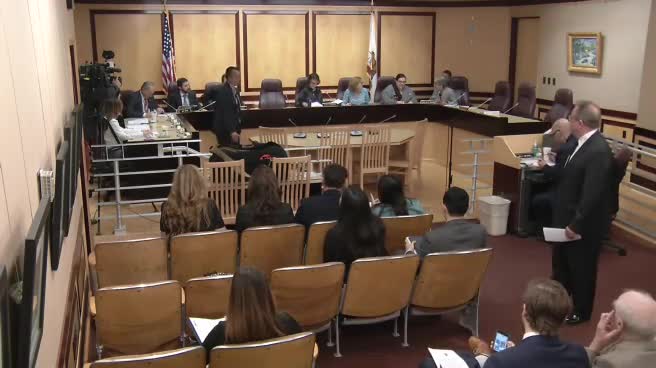 12MIN
Senate Standing Committee on Public Safety
Bill Author

Bill Co-Author(s):