AB 243: Child abduction survivors: address confidentiality program.
- Session Year: 2023-2024
- House: Assembly
- Latest Version Date: 2023-10-10
Current Status:
Passed
(2023-10-10: Chaptered by Secretary of State - Chapter 642, Statutes of 2023.)
Introduced
In Committee
First Chamber
In Committee
Second Chamber
Enacted
What does this bill do?
This bill adds victims of child abduction and their household members to California’s address confidentiality program, letting them use a Secretary of State–designated substitute mailing address so their real home, work, or school address is kept out of many public records. It also expands which agencies can help applicants, requires the Secretary of State to provide notices about trusts and name changes, and creates a legal presumption that program registration protects location information in court discovery (a judge can overturn that with clear and convincing evidence); knowingly falsifying location to avoid custody is a misdemeanor.
The summary is provided by generative AI which can make mistakes. For original language, please view the details in the table below.
Existing law authorizes victims of domestic violence, sexual assault, stalking, human trafficking, and elder or dependent adult abuse, and members of their households, to complete an application to be approved by the Secretary of State for the purpose of enabling state and local agencies to respond to requests for public records without disclosing a program participants changed name or location, subject to specified conditions. Existing law makes it a misdemeanor for any person to make a false statement in an application.
This bill, beginning on July 1, 2024, would make victims of child abduction, as defined, and members of their households eligible for the protections of this address confidentiality program. By expanding the scope of the program to include victims of child abduction and their household members, this bill would impose new duties on local public officials and expand the scope of an existing crime, thereby imposing a state-mandated local program.
The California Constitution requires the state to reimburse local agencies and school districts for certain costs mandated by the state. Statutory provisions establish procedures for making that reimbursement.
This bill would provide that with regard to certain mandates no reimbursement is required by this act for a specified reason.
With regard to any other mandates, this bill would provide that, if the Commission on State Mandates determines that the bill contains costs so mandated by the state, reimbursement for those costs shall be made pursuant to the statutory provisions noted above.
Existing law authorizes victims of domestic violence, sexual assault, stalking, human trafficking, and elder or dependent adult abuse abuse, and members of their households, to complete an application to be approved by the Secretary of State for the purpose of enabling state and local agencies to respond to requests for public records without disclosing a program participants changed name or location, subject to specified conditions. Existing law makes it a misdemeanor for any person to make a false statement in an application.
This bill bill, beginning on July 1, 2024, would make victims of child abduction, as defined, and members of their households eligible for the protections of this address confidentiality program. By expanding the scope of the program to include victims of child abduction and their household members, this bill would impose new duties on local public officials and expand the scope of an existing crime, thereby imposing a state-mandated local program.
The California Constitution requires the state to reimburse local agencies and school districts for certain costs mandated by the state. Statutory provisions establish procedures for making that reimbursement.
This bill would provide that with regard to certain mandates no reimbursement is required by this act for a specified reason.
With regard to any other mandates, this bill would provide that, if the Commission on State Mandates determines that the bill contains costs so mandated by the state, reimbursement for those costs shall be made pursuant to the statutory provisions noted above.
Existing law authorizes victims of domestic violence, sexual assault, stalking, human trafficking, and elder or dependent adult abuse to complete an application to be approved by the Secretary of State for the purpose of enabling state and local agencies to respond to requests for public records without disclosing a program participants changed name or location, subject to specified conditions. Existing law makes it a misdemeanor for any person to make a false statement in an application.
This bill would make victims of child abduction, as defined, and members of their households eligible for the protections of this address confidentiality program. By expanding the scope of the program to include victims of child abduction and their household members, this bill would impose new duties on local public officials and expand the scope of an existing crime, thereby imposing a state-mandated local program.
The California Constitution requires the state to reimburse local agencies and school districts for certain costs mandated by the state. Statutory provisions establish procedures for making that reimbursement.
This bill would provide that with regard to certain mandates no reimbursement is required by this act for a specified reason.
With regard to any other mandates, this bill would provide that, if the Commission on State Mandates determines that the bill contains costs so mandated by the state, reimbursement for those costs shall be made pursuant to the statutory provisions noted above.
(a)The Legislature finds that persons attempting to escape from actual or threatened domestic violence, sexual assault, stalking, human trafficking, or elder or dependent adult abuse frequently establish new names or addresses in order to prevent their assailants or probable assailants from finding them. The purpose of this chapter is to enable state and local agencies to respond to requests for public records without disclosing the changed name or location of a victim of domestic violence, sexual assault, stalking, human trafficking, or elder or dependent adult abuse to enable interagency cooperation with the Secretary of State in providing name and address confidentiality for victims of domestic violence, sexual assault, stalking, human trafficking, or elder or dependent adult abuse and to enable state and local agencies to accept a program participants use of an address designated by the Secretary of State as a substitute mailing address.
(b)This section shall remain in effect only until July 1, 2024, and as of that date is repealed.
SEC. 3.Section 6205 is added to the Government Code, to read:6205.(a)The Legislature finds that persons attempting to escape from actual or threatened domestic violence, sexual assault, stalking, human trafficking, child abduction, or elder or dependent adult abuse frequently establish new names or addresses to prevent their assailants or probable assailants from finding them. The purpose of this chapter is to enable state and local agencies to respond to requests for public records without disclosing the changed name or location of a victim of domestic violence, sexual assault, stalking, human trafficking, child abduction, or elder or dependent adult abuse to enable interagency cooperation with the Secretary of State in providing name and address confidentiality for victims of domestic violence, sexual assault, stalking, human trafficking, child abduction, or elder or dependent adult abuse and to enable state and local agencies to accept a program participants use of an address designated by the Secretary of State as a substitute mailing address.
(b)This section shall become operative on July 1, 2024.
SEC. 4.Section 6205.5 of the Government Code is amended to read:6205.5.(a)Unless the context clearly requires otherwise, the definitions in this section apply throughout this chapter.
(1)Address means a residential street address, school address, or work address of an individual, as specified on the individuals application to be a program participant under this chapter.
(2)Cohabitant has the same meaning as in subdivision (b) of Section 18291 of the Welfare and Institutions Code.
(3)Domestic violence means an act as defined in Section 6211 of the Family Code.
(4)Domicile means a place of habitation as defined in Section 349 of the Elections Code.
(5)Elder or dependent adult abuse means an act described in Section 15610.07 of the Welfare and Institutions Code or an offense described in Section 368 of the Penal Code.
(6)Household member means an adult person who resides at the same residential address as the applicant or participant and is related to the applicant or participant by blood, marriage, registered domestic partnership, adoption, or is a cohabitant of an applicant or participant.
(7)Human trafficking means any act punishable pursuant to Section 236.1 of the Penal Code.
(8)Program participant means a person certified as a program participant under Section 6206.
(9)Sexual assault means an act or attempt made punishable by Section 220, 261, 261.5, 264.1, 266c, 269, 285, 286, 287, 288, 288.5, 289, or 647.6 of, or former Section 262 or 288a of, the Penal Code.
(10)Stalking means an act as defined in Section 646.9 of the Penal Code.
(b)This section shall remain in effect only until July 1, 2024, and as of that date is repealed.
SEC. 5.Section 6205.5 is added to the Government Code, to read:6205.5.(a)Unless the context clearly requires otherwise, the definitions in this section apply throughout this chapter.
(1)Address means a residential street address, school address, or work address of an individual, as specified on the individuals application to be a program participant under this chapter.
(2)Child abduction means an act or attempted act made punishable pursuant to Section 278 or 278.5 of the Penal Code.
(3)Cohabitant has the same meaning as in subdivision (b) of Section 18291 of the Welfare and Institutions Code.
(4)Domestic violence means an act as defined in Section 6211 of the Family Code.
(5)Domicile means a place of habitation as defined in Section 349 of the Elections Code.
(6)Elder or dependent adult abuse means an act described in Section 15610.07 of the Welfare and Institutions Code or an offense described in Section 368 of the Penal Code.
(7)Household member means an adult person who resides at the same residential address as the applicant or participant and is related to the applicant or participant by blood, marriage, registered domestic partnership, adoption, or is a cohabitant of an applicant or participant.
(8)Human trafficking means any act punishable pursuant to Section 236.1 of the Penal Code.
(9)Program participant means a person certified as a program participant under Section 6206.
(10)Sexual assault means an act or attempted act made punishable by Section 220, 261, 261.5, 264.1, 266c, 269, 285, 286, 287, 288, 288.5, 289, or 647.6 of, or former Section 262 or 288a of, the Penal Code.
(11)Stalking means an act as defined in Section 646.9 of the Penal Code.
(b)This section shall become operative on July 1, 2024.
SEC. 6.Section 6206 of the Government Code is amended to read:6206.(a)An adult person, a parent or guardian acting on behalf of a minor, or a guardian acting on behalf of an incapacitated person, who is domiciled in California, may apply to the Secretary of State to have an address designated by the Secretary of State serve as the persons address or the address of the minor or incapacitated person. An application shall be completed in person at a community-based victims assistance program or a community-based assistance program that serves victims of elder or dependent adult abuse pursuant to the Elder Abuse and Dependent Adult Civil Protection Act (Chapter 11 (commencing with Section 15600) of Part 3 of Division 9 of the Welfare and Institutions Code). The application process shall include a requirement that the applicant meet with a victims assistance counselor and receive orientation information about the program. The Secretary of State shall approve an application if it is filed in the manner and on the form prescribed by the Secretary of State and if it contains all of the following:
(1)A sworn statement by the applicant that the applicant has good reason to believe both of the following:
(A)That the applicant, or the minor or incapacitated person on whose behalf the application is made, is a victim of domestic violence, sexual assault, stalking, human trafficking, or elder or dependent adult abuse, or is a household member of a victim who is making or has made an application pursuant to this section, unless the applicant is the perpetrator of the crime that provided the basis for that victims application.
(B)That the applicant fears for their safety, the safety of their children or household members, or the safety of the minor or incapacitated person on whose behalf the application is made.
(2)If the applicant alleges that the basis for the application is that the applicant, or the minor or incapacitated person on whose behalf the application is made, is a victim of domestic violence, sexual assault, stalking, human trafficking, or elder or dependent adult abuse, the application may be accompanied by evidence, including, but not limited to, any of the following:
(A)Police, court, or other government agency records or files.
(B)Documentation from a domestic violence or sexual assault program if the person is alleged to be a victim of domestic violence, sexual assault, stalking, or human trafficking.
(C)Documentation from a legal, clerical, medical, or other professional from whom the applicant or person on whose behalf the application is made has sought assistance in dealing with the alleged domestic violence, sexual assault, stalking, human trafficking, or elder or dependent adult abuse.
(D)Any other evidence that supports the sworn statement, such as a statement from any other individual with knowledge of the circumstances that provides the basis for the claim, or physical evidence of the act or acts of domestic violence, sexual assault, stalking, human trafficking, or elder or dependent adult abuse.
(3)If the basis for the application is that the applicant, or the minor or incapacitated person on whose behalf the application is made, is a household member of a person described in paragraph (2), the application shall include the name of that person and evidence that the applicant is a household member.
(4)The name and last known address of the applicants minor child or children, and the name and last known address of all other parents or guardians of the minor child or children of the applicant, as legally established by voluntary declaration of paternity, court order, placement on the childs birth certificate, or other legal method pursuant to the Uniform Parentage Act (Part 3 (commencing with Section 7600) of Division 12 of the Family Code). If no other parent or guardian has been established for the applicants minor child or children, this section may be left blank.
(5)A designation of the Secretary of State as agent for purposes of service of process and for the purpose of receipt of mail.
(A)Service on the Secretary of State of any summons, writ, notice, demand, or process shall be made by delivering to the address confidentiality program personnel of the office of the Secretary of State a copy of the summons, writ, notice, demand, or process.
(B)If a summons, writ, notice, demand, or process is served on the Secretary of State, the Secretary of State shall immediately cause a copy to be forwarded to the program participant at the address shown on the records of the address confidentiality program so that the summons, writ, notice, demand, or process is received by the program participant within three days of the Secretary of States having received it.
(C)The Secretary of State shall keep a record of all summonses, writs, notices, demands, and processes served upon the Secretary of State under this section and shall record the time of that service and the Secretary of States action.
(D)The office of the Secretary of State and any agent or person employed by the Secretary of State shall be held harmless from liability in any action brought by a person injured or harmed as a result of the handling of first-class mail on behalf of program participants.
(6)The mailing address and the telephone number or numbers where the applicant can be called by the Secretary of State, and if available, the email address where the applicant can be contacted by the Secretary of State.
(7)The address or addresses that the applicant requests not be disclosed for the reason that disclosure will increase the risk of domestic violence, sexual assault, stalking, human trafficking, or elder or dependent adult abuse.
(8)The signature of the applicant and of any individual or representative of any office designated in writing under Section 6208.5 who assisted in the preparation of the application, and the date on which the applicant signed the application.
(b)Commencing January 1, 2023, the Secretary of State shall make the application form for participation in the program and any explanatory materials available in English and in at least the other languages described in Section 1632 of the Civil Code. The Secretary of State may make the application available in additional languages.
(c)Applications shall be filed with the office of the Secretary of State.
(d)Upon filing a properly completed application, the Secretary of State shall certify the applicant as a program participant. Applicants shall be certified for four years following the date of filing unless the certification is withdrawn or invalidated before that date. The Secretary of State shall, by rule, establish a renewal procedure. A minor program participant who reaches 18 years of age during their enrollment may renew as an adult following the renewal procedures established by the Secretary of State.
(e)If a minor child has any other legally established parent or parents, upon certification, the Secretary of State shall, within 10 days, notify all other parents or guardians identified pursuant to paragraph (4) of subdivision (a) of the designation of the Secretary of State as agent for purposes of service of process and, unless there is a court order prohibiting contact between the other parent or parents or guardian and the minor child or children of the participant, the address designated by the Secretary of State for the program participant. The notice shall be given by mail, return receipt requested, postage prepaid, to the last known address of the other parent or parents or guardian to be notified. A copy shall also be sent to that parents or guardians counsel of record, if provided to the Secretary of State by the applicant.
(f)A person who falsely attests in an application that disclosure of the applicants address would endanger the applicants safety or the safety of the applicants children or household members, or the minor or incapacitated person on whose behalf the application is made, or who knowingly provides false or incorrect information upon making an application, is guilty of a misdemeanor. A notice shall be printed in bold type and in a conspicuous location on the face of the application informing the applicant of the penalties under this subdivision. Commencing January 1, 2023, the Secretary of State shall make the notice required by this subdivision available in English and in at least the other languages described in Section 1632 of the Civil Code. The Secretary of State may make the notice available in additional languages.
(g)This section shall remain in effect only until July 1, 2024, and as of that date is repealed.
SEC. 7.Section 6206 is added to the Government Code, to read:6206.(a)An adult person, a parent or guardian acting on behalf of a minor, or a guardian acting on behalf of an incapacitated person, who is domiciled in California, may apply to the Secretary of State to have an address designated by the Secretary of State serve as the persons address or the address of the minor or incapacitated person. An application shall be completed in person at a community-based victims assistance program or a community-based assistance program that serves victims of elder or dependent adult abuse pursuant to the Elder Abuse and Dependent Adult Civil Protection Act (Chapter 11 (commencing with Section 15600) of Part 3 of Division 9 of the Welfare and Institutions Code). The application process shall include a requirement that the applicant meet with a victims assistance counselor and receive orientation information about the program. The Secretary of State shall approve an application if it is filed in the manner and on the form prescribed by the Secretary of State and if it contains all of the following:
(1)A sworn statement by the applicant that the applicant has good reason to believe both of the following:
(A)That the applicant, or the minor or incapacitated person on whose behalf the application is made, is a victim of domestic violence, sexual assault, stalking, human trafficking, child abduction, or elder or dependent adult abuse, or is a household member of a victim who is making or has made an application pursuant to this section, unless the applicant is the perpetrator of the crime that provided the basis for that victims application.
(B)That the applicant fears for their safety, the safety of their children or household members, or the safety of the minor or incapacitated person on whose behalf the application is made.
(2)If the applicant alleges that the basis for the application is that the applicant, or the minor or incapacitated person on whose behalf the application is made, is a victim of domestic violence, sexual assault, stalking, human trafficking, child abduction, or elder or dependent adult abuse, the application may be accompanied by evidence, including, but not limited to, any of the following:
(A)Police, court, or other government agency records or files.
(B)Documentation from a domestic violence or sexual assault program, if the person is alleged to be a victim of domestic violence, sexual assault, stalking, or human trafficking.
(C)Documentation from a legal, clerical, medical, or other professional from whom the applicant or person on whose behalf the application is made has sought assistance in dealing with the alleged domestic violence, sexual assault, stalking, human trafficking, child abduction, or elder or dependent adult abuse.
(D)Any other evidence that supports the sworn statement, such as a statement from any other individual with knowledge of the circumstances that provides the basis for the claim, or physical evidence of the act or acts of domestic violence, sexual assault, stalking, human trafficking, child abduction, or elder or dependent adult abuse.
(3)If the basis for the application is that the applicant, or the minor or incapacitated person on whose behalf the application is made, is a household member of a person described in paragraph (2), the application shall include the name of that person and evidence that the applicant is a household member.
(4)The name and last known address of the applicants minor child or children, and the name and last known address of all other parents or guardians of the minor child or children of the applicant, as legally established by voluntary declaration of paternity, court order, placement on the childs birth certificate, or other legal method pursuant to the Uniform Parentage Act (Part 3 (commencing with Section 7600) of Division 12 of the Family Code). If no other parent or guardian has been established for the applicants minor child or children, this section may be left blank.
(5)A designation of the Secretary of State as agent for purposes of service of process and for the purpose of receipt of mail.
(A)Service on the Secretary of State of any summons, writ, notice, demand, or process shall be made by delivering to the address confidentiality program personnel of the office of the Secretary of State a copy of the summons, writ, notice, demand, or process.
(B)If a summons, writ, notice, demand, or process is served on the Secretary of State, the Secretary of State shall immediately cause a copy to be forwarded to the program participant at the address shown on the records of the address confidentiality program so that the summons, writ, notice, demand, or process is received by the program participant within three days of the Secretary of States having received it.
(C)The Secretary of State shall keep a record of all summonses, writs, notices, demands, and processes served upon the Secretary of State under this section and shall record the time of that service and the Secretary of States action.
(D)The office of the Secretary of State and any agent or person employed by the Secretary of State shall be held harmless from liability in any action brought by a person injured or harmed as a result of the handling of first-class mail on behalf of program participants.
(6)The mailing address and the telephone number or numbers where the applicant can be called by the Secretary of State, and if available, the email address where the applicant can be contacted by the Secretary of State.
(7)The address or addresses that the applicant requests not be disclosed for the reason that disclosure will increase the risk of domestic violence, sexual assault, stalking, human trafficking, child abduction, or elder or dependent adult abuse.
(8)The signature of the applicant and of any individual or representative of any office designated in writing under Section 6208.5 who assisted in the preparation of the application, and the date on which the applicant signed the application.
(b)Commencing January 1, 2023, the Secretary of State shall make the application form for participation in the program and any explanatory materials available in English and in at least the other languages described in Section 1632 of the Civil Code. The Secretary of State may make the application available in additional languages.
(c)Applications shall be filed with the office of the Secretary of State.
(d)Upon filing a properly completed application, the Secretary of State shall certify the applicant as a program participant. Applicants shall be certified for four years following the date of filing, unless the certification is withdrawn or invalidated before that date. The Secretary of State shall, by rule, establish a renewal procedure. A minor program participant who reaches 18 years of age during their enrollment may renew as an adult following the renewal procedures established by the Secretary of State.
(e)If a minor child has any other legally established parent or parents, upon certification, the Secretary of State shall, within 10 days, notify all other parents or guardians identified pursuant to paragraph (4) of subdivision (a) of the designation of the Secretary of State as agent for purposes of service of process and, unless there is a court order prohibiting contact between the other parent or parents or guardian and the minor child or children of the participant, the address designated by the Secretary of State for the program participant. The notice shall be given by mail, return receipt requested, postage prepaid, to the last known address of the other parent or parents or guardian to be notified. A copy shall also be sent to that parents or guardians counsel of record, if provided to the Secretary of State by the applicant.
(f)A person who falsely attests in an application that disclosure of the applicants address would endanger the applicants safety or the safety of the applicants children or household members, or the minor or incapacitated person on whose behalf the application is made, or who knowingly provides false or incorrect information upon making an application, is guilty of a misdemeanor. A notice shall be printed in bold type and in a conspicuous location on the face of the application informing the applicant of the penalties under this subdivision. Commencing January 1, 2023, the Secretary of State shall make the notice required by this subdivision available in English and in at least the other languages described in Section 1632 of the Civil Code. The Secretary of State may make the notice available in additional languages.
(g)This section shall become operative on July 1, 2024.
SEC. 8.Section 6208.5 of the Government Code is amended to read:6208.5.(a)The Secretary of State shall designate state and local agencies and nonprofit agencies that provide counseling and shelter services to victims of domestic violence, sexual assault, stalking, or human trafficking as well as agencies that serve victims of elder or dependent adult abuse pursuant to the Elder Abuse and Dependent Adult Civil Protection Act (Chapter 11 (commencing with Section 15600) of Part 3 of Division 9 of the Welfare and Institutions Code) to assist victims of domestic violence, sexual assault, stalking, human trafficking, or elder or dependent adult abuse applying to be program participants. The Secretary of State shall conduct outreach activities to identify and recruit the agencies. Any assistance and counseling rendered by the office of the Secretary of State or its designees to applicants shall in no way be construed as legal advice.
(b)This section shall remain in effect only until July 1, 2024, and as of that date is repealed.
SEC. 9.Section 6208.5 is added to the Government Code, to read:6208.5.(a)The Secretary of State shall designate state and local agencies and nonprofit agencies that provide counseling and shelter services to victims of domestic violence, sexual assault, stalking, child abduction, or human trafficking as well as agencies that serve victims of elder or dependent adult abuse pursuant to the Elder Abuse and Dependent Adult Civil Protection Act (Chapter 11 (commencing with Section 15600) of Part 3 of Division 9 of the Welfare and Institutions Code) to assist victims of domestic violence, sexual assault, stalking, human trafficking, child abduction, or elder or dependent adult abuse applying to be program participants. The Secretary of State shall conduct outreach activities to identify and recruit the agencies. Any assistance and counseling rendered by the office of the Secretary of State or its designees to applicants shall in no way be construed as legal advice.
(b)This section shall become operative on July 1, 2024.
SEC. 10.Section 6209.5 of the Government Code is amended to read:6209.5.(a)The Secretary of State shall provide each program participant a notice in clear and conspicuous font that contains all of the following information:
(1)The program participant is authorized by law to request to use the address designated by the Secretary of State on real property deeds, change of ownership forms, and deeds of trust when purchasing or selling a home.
(2)The program participant may create a revocable living trust and place their real property into the trust to protect their residential street address from disclosure in real property transactions.
(3)The program participant may obtain a change of their legal name to protect their anonymity.
(4)A list of contact information for entities that the program participant may contact to receive information on, or receive legal services for, the creation of a trust to hold real property or obtaining a name change, including county bar associations, legal aid societies, domestic violence prevention organizations, human trafficking prevention organizations, elder and dependent adult abuse prevention organizations, state and local agencies, or other nonprofit organizations that may be able to assist program participants.
(b)Commencing January 1, 2023, the Secretary of State shall make the notice required by this section available in English and in at least the other languages described in Section 1632 of the Civil Code. The Secretary of State may make the notice available in additional languages.
(c)This section shall remain in effect only until July 1, 2024, and as of that date is repealed.
SEC. 11.Section 6209.5 is added to the Government Code, to read:6209.5.(a)The Secretary of State shall provide each program participant a notice in clear and conspicuous font that contains all of the following information:
(1)The program participant is authorized by law to request to use the address designated by the Secretary of State on real property deeds, change of ownership forms, and deeds of trust when purchasing or selling a home.
(2)The program participant may create a revocable living trust and place their real property into the trust to protect their residential street address from disclosure in real property transactions.
(3)The program participant may obtain a change of their legal name to protect their anonymity.
(4)A list of contact information for entities that the program participant may contact to receive information on, or receive legal services for, the creation of a trust to hold real property or obtaining a name change, including county bar associations, legal aid societies, domestic violence prevention organizations, human trafficking prevention organizations, child abduction prevention organizations, elder and dependent adult abuse prevention organizations, state and local agencies, or other nonprofit organizations that may be able to assist program participants.
(b)Commencing January 1, 2023, the Secretary of State shall make the notice required by this section available in English and in at least the other languages described in Section 1632 of the Civil Code. The Secretary of State may make the notice available in additional languages.
(c)This section shall become operative on July 1, 2024.
SEC. 12.Section 6209.7 of the Government Code is amended to read:6209.7.(a)Nothing in this chapter, nor participation in this program, affects custody or visitation orders in effect before or during program participation. A program participant who falsifies their location in order to unlawfully avoid custody or visitation orders is subject to immediate termination from the program and is guilty of a misdemeanor.
(b)(1)The fact that a participant is registered with the program shall create a rebuttable presumption that disclosure of information about the participants location and activities during the period of the registration, including, but not limited to, the participants current and past residential, work, or school addresses and other location information, would lead to the discovery of the participants actual residential address or physical location, would endanger the safety of the participant, and is not authorized.
(2)This subdivision creates a presumption affecting the burden of producing evidence and may be rebutted by clear and convincing evidence showing, among other things, that discovery of the information about the participants location and activities would not lead to discovery of the participants actual residential address or physical location and would not endanger the safety of the participant. The presumption shall not be rebutted merely by the other parents desire to know the participants address and the court shall weigh participant safety. If a court finds the presumption is rebutted, it shall provide its reasons on the record.
(3)This presumption shall also govern discovery requests under the Civil Discovery Act (Title 4 (commencing with Section 2016.010) of Part 4 of the Code of Civil Procedure). A participant shall not be required to provide, in discovery, their residential address or other location information reasonably likely to lead to the discovery of these addresses unless ordered to do so by a court after the other party has rebutted the presumption against disclosure of this information.
(c)Participation in the program does not constitute evidence of domestic violence, stalking, sexual assault, human trafficking, or elder or dependent adult abuse for purposes of making custody or visitation orders.
(d)This section shall remain in effect only until July 1, 2024, and as of that date is repealed.
SEC. 13.Section 6209.7 is added to the Government Code, to read:6209.7.(a)Nothing in this chapter, nor participation in this program, affects custody or visitation orders in effect before or during program participation. A program participant who falsifies their location in order to unlawfully avoid custody or visitation orders is subject to immediate termination from the program and is guilty of a misdemeanor.
(b)(1)The fact that a participant is registered with the program shall create a rebuttable presumption that disclosure of information about the participants location and activities during the period of the registration, including, but not limited to, the participants current and past residential, work, or school addresses and other location information, would lead to the discovery of the participants actual residential address or physical location, would endanger the safety of the participant, and is not authorized.
(2)This subdivision creates a presumption affecting the burden of producing evidence and may be rebutted by clear and convincing evidence showing, among other things, that discovery of the information about the participants location and activities would not lead to discovery of the participants actual residential address or physical location and would not endanger the safety of the participant. The presumption shall not be rebutted merely by the other parents desire to know the participants address, and the court shall weigh participant safety. If a court finds the presumption is rebutted, it shall provide its reasons on the record.
(3)This presumption shall also govern discovery requests under the Civil Discovery Act (Title 4 (commencing with Section 2016.010) of Part 4 of the Code of Civil Procedure). A participant shall not be required to provide, in discovery, their residential address or other location information reasonably likely to lead to the discovery of these addresses, unless ordered to do so by a court after the other party has rebutted the presumption against disclosure of this information.
(c)Participation in the program does not constitute evidence of domestic violence, stalking, sexual assault, human trafficking, child abduction, or elder or dependent adult abuse for purposes of making custody or visitation orders.
(d)This section shall become operative on July 1, 2024.
SEC. 14.No reimbursement is required by this act pursuant to Section 6 of Article XIIIB of the California Constitution for certain costs that may be incurred by a local agency or school district because, in that regard, this act creates a new crime or infraction, eliminates a crime or infraction, or changes the penalty for a crime or infraction, within the meaning of Section 17556 of the Government Code, or changes the definition of a crime within the meaning of Section 6 of Article XIIIB of the California Constitution.
However, if the Commission on State Mandates determines that this act contains other costs mandated by the state, reimbursement to local agencies and school districts for those costs shall be made pursuant to Part 7 (commencing with Section 17500) of Division 4 of Title 2 of the Government Code.
SEC. 15.Section 1 of this act shall become operative on July 1, 2024.
(a)The Legislature finds that persons attempting to escape from actual or threatened domestic violence, sexual assault, stalking, human trafficking, or elder or dependent adult abuse frequently establish new names or addresses in order to prevent their assailants or probable assailants from finding them. The purpose of this chapter is to enable state and local agencies to respond to requests for public records without disclosing the changed name or location of a victim of domestic violence, sexual assault, stalking, human trafficking, or elder or dependent adult abuse to enable interagency cooperation with the Secretary of State in providing name and address confidentiality for victims of domestic violence, sexual assault, stalking, human trafficking, or elder or dependent adult abuse and to enable state and local agencies to accept a program participants use of an address designated by the Secretary of State as a substitute mailing address.
(b)This section shall remain in effect only until July 1, 2024, and as of that date is repealed.
SEC. 3.Section 6205 is added to the Government Code, to read:6205.(a)The Legislature finds that persons attempting to escape from actual or threatened domestic violence, sexual assault, stalking, human trafficking, child abduction, or elder or dependent adult abuse frequently establish new names or addresses to prevent their assailants or probable assailants from finding them. The purpose of this chapter is to enable state and local agencies to respond to requests for public records without disclosing the changed name or location of a victim of domestic violence, sexual assault, stalking, human trafficking, child abduction, or elder or dependent adult abuse to enable interagency cooperation with the Secretary of State in providing name and address confidentiality for victims of domestic violence, sexual assault, stalking, human trafficking, child abduction, or elder or dependent adult abuse and to enable state and local agencies to accept a program participants use of an address designated by the Secretary of State as a substitute mailing address.
(b)This section shall become operative on July 1, 2024.
SEC. 4.Section 6205.5 of the Government Code is amended to read:6205.5.(a)Unless the context clearly requires otherwise, the definitions in this section apply throughout this chapter.
(a)(1)Address means a residential street address, school address, or work address of an individual, as specified on the individuals application to be a program participant under this chapter.
(b)(2)Cohabitant has the same meaning as in subdivision (b) of Section 18291 of the Welfare and Institutions Code.
(c)(3)Domestic violence means an act as defined in Section 6211 of the Family Code.
(d)(4)Domicile means a place of habitation as defined in Section 349 of the Elections Code.
(e)(5)Elder or dependent adult abuse means an act described in Section 15610.07 of the Welfare and Institutions Code or an offense described in Section 368 of the Penal Code.
(f)(6)Household member means an adult person who resides at the same residential address as the applicant or participant and is related to the applicant or participant by blood, marriage, registered domestic partnership, adoption, or is a cohabitant of an applicant or participant.
(g)(7)Human trafficking means any act punishable pursuant to Section 236.1 of the Penal Code.
(h)(8)Program participant means a person certified as a program participant under Section 6206.
(i)(9)Sexual assault means an act or attempt made punishable by Section 220, 261, 261.5, 262, 264.1, 266c, 269, 285, 286, 287, 288, 288.5, 289, or 647.6 of, or former Section 262 or 288a of, the Penal Code.
(j)(10)Stalking means an act as defined in Section 646.9 of the Penal Code.
(b)This section shall remain in effect only until July 1, 2024, and as of that date is repealed.
SEC. 5.Section 6205.5 is added to the Government Code, to read:6205.5.(a)Unless the context clearly requires otherwise, the definitions in this section apply throughout this chapter.
(1)Address means a residential street address, school address, or work address of an individual, as specified on the individuals application to be a program participant under this chapter.
(2)Child abduction means an act or attempted act made punishable pursuant to Section 278 or 278.5 of the Penal Code.
(3)Cohabitant has the same meaning as in subdivision (b) of Section 18291 of the Welfare and Institutions Code.
(4)Domestic violence means an act as defined in Section 6211 of the Family Code.
(5)Domicile means a place of habitation as defined in Section 349 of the Elections Code.
(6)Elder or dependent adult abuse means an act described in Section 15610.07 of the Welfare and Institutions Code or an offense described in Section 368 of the Penal Code.
(7)Household member means an adult person who resides at the same residential address as the applicant or participant and is related to the applicant or participant by blood, marriage, registered domestic partnership, adoption, or is a cohabitant of an applicant or participant.
(8)Human trafficking means any act punishable pursuant to Section 236.1 of the Penal Code.
(9)Program participant means a person certified as a program participant under Section 6206.
(10)Sexual assault means an act or attempted act made punishable by Section 220, 261, 261.5, 264.1, 266c, 269, 285, 286, 287, 288, 288.5, 289, or 647.6 of, or former Section 262 or 288a of, the Penal Code.
(11)Stalking means an act as defined in Section 646.9 of the Penal Code.
(b)This section shall become operative on July 1, 2024.
SEC. 6.Section 6206 of the Government Code is amended to read:6206.(a)An adult person, a parent or guardian acting on behalf of a minor, or a guardian acting on behalf of an incapacitated person, who is domiciled in California, may apply to the Secretary of State to have an address designated by the Secretary of State serve as the persons address or the address of the minor or incapacitated person. An application shall be completed in person at a community-based victims assistance program or a community-based assistance program that serves victims of elder or dependent adult abuse pursuant to the Elder Abuse and Dependent Adult Civil Protection Act (Chapter 11 (commencing with Section 15600) of Part 3 of Division 9 of the Welfare and Institutions Code). The application process shall include a requirement that the applicant meet with a victims assistance counselor and receive orientation information about the program. The Secretary of State shall approve an application if it is filed in the manner and on the form prescribed by the Secretary of State and if it contains all of the following:
(1)A sworn statement by the applicant that the applicant has good reason to believe both of the following:
(A)That the applicant, or the minor or incapacitated person on whose behalf the application is made, is a victim of domestic violence, sexual assault, stalking, human trafficking, or elder or dependent adult abuse, or is a household member of a victim who is making or has made an application pursuant to this section, unless the applicant is the perpetrator of the crime that provided the basis for that victims application.
(B)That the applicant fears for their safety, the safety of their children or household members, or the safety of the minor or incapacitated person on whose behalf the application is made.
(2)If the applicant alleges that the basis for the application is that the applicant, or the minor or incapacitated person on whose behalf the application is made, is a victim of domestic violence, sexual assault, stalking, human trafficking, or elder or dependent adult abuse, the application may be accompanied by evidence, including, but not limited to, any of the following:
(A)Police, court, or other government agency records or files.
(B)Documentation from a domestic violence or sexual assault program if the person is alleged to be a victim of domestic violence, sexual assault, stalking, or human trafficking.
(C)Documentation from a legal, clerical, medical, or other professional from whom the applicant or person on whose behalf the application is made has sought assistance in dealing with the alleged domestic violence, sexual assault, stalking, human trafficking, or elder or dependent adult abuse.
(D)Any other evidence that supports the sworn statement, such as a statement from any other individual with knowledge of the circumstances that provides the basis for the claim, or physical evidence of the act or acts of domestic violence, sexual assault, stalking, human trafficking, or elder or dependent adult abuse.
(3)If the basis for the application is that the applicant, or the minor or incapacitated person on whose behalf the application is made, is a household member of a person described in paragraph (2), the application shall include the name of that person and evidence that the applicant is a household member.
(4)The name and last known address of the applicants minor child or children, and the name and last known address of all other parents or guardians of the minor child or children of the applicant, as legally established by voluntary declaration of paternity, court order, placement on the childs birth certificate, or other legal method pursuant to the Uniform Parentage Act (Part 3 (commencing with Section 7600) of Division 12 of the Family Code). If no other parent or guardian has been established for the applicants minor child or children, this section may be left blank.
(5)A designation of the Secretary of State as agent for purposes of service of process and for the purpose of receipt of mail.
(A)Service on the Secretary of State of any summons, writ, notice, demand, or process shall be made by delivering to the address confidentiality program personnel of the office of the Secretary of State a copy of the summons, writ, notice, demand, or process.
(B)If a summons, writ, notice, demand, or process is served on the Secretary of State, the Secretary of State shall immediately cause a copy to be forwarded to the program participant at the address shown on the records of the address confidentiality program so that the summons, writ, notice, demand, or process is received by the program participant within three days of the Secretary of States having received it.
(C)The Secretary of State shall keep a record of all summonses, writs, notices, demands, and processes served upon the Secretary of State under this section and shall record the time of that service and the Secretary of States action.
(D)The office of the Secretary of State and any agent or person employed by the Secretary of State shall be held harmless from liability in any action brought by a person injured or harmed as a result of the handling of first-class mail on behalf of program participants.
(6)The mailing address and the telephone number or numbers where the applicant can be called by the Secretary of State, and if available, the email address where the applicant can be contacted by the Secretary of State.
(7)The address or addresses that the applicant requests not be disclosed for the reason that disclosure will increase the risk of domestic violence, sexual assault, stalking, human trafficking, or elder or dependent adult abuse.
(8)The signature of the applicant and of any individual or representative of any office designated in writing under Section 6208.5 who assisted in the preparation of the application, and the date on which the applicant signed the application.
(b)Commencing January 1, 2023, the Secretary of State shall make the application form for participation in the program and any explanatory materials available in English and in at least the other languages described in Section 1632 of the Civil Code. The Secretary of State may make the application available in additional languages.
(c)Applications shall be filed with the office of the Secretary of State.
(d)Upon filing a properly completed application, the Secretary of State shall certify the applicant as a program participant. Applicants shall be certified for four years following the date of filing unless the certification is withdrawn or invalidated before that date. The Secretary of State shall, by rule, establish a renewal procedure. A minor program participant who reaches 18 years of age during their enrollment may renew as an adult following the renewal procedures established by the Secretary of State.
(e)If a minor child has any other legally established parent or parents, upon certification, the Secretary of State shall, within 10 days, notify all other parents or guardians identified pursuant to paragraph (4) of subdivision (a) of the designation of the Secretary of State as agent for purposes of service of process and, unless there is a court order prohibiting contact between the other parent or parents or guardian and the minor child or children of the participant, the address designated by the Secretary of State for the program participant. The notice shall be given by mail, return receipt requested, postage prepaid, to the last known address of the other parent or parents or guardian to be notified. A copy shall also be sent to that parents or guardians counsel of record, if provided to the Secretary of State by the applicant.
(f)A person who falsely attests in an application that disclosure of the applicants address would endanger the applicants safety or the safety of the applicants children or household members, or the minor or incapacitated person on whose behalf the application is made, or who knowingly provides false or incorrect information upon making an application, is guilty of a misdemeanor. A notice shall be printed in bold type and in a conspicuous location on the face of the application informing the applicant of the penalties under this subdivision. Commencing January 1, 2023, the Secretary of State shall make the notice required by this subdivision available in English and in at least the other languages described in Section 1632 of the Civil Code. The Secretary of State may make the notice available in additional languages.
(g)This section shall remain in effect only until July 1, 2024, and as of that date is repealed.
SEC. 7.Section 6206 is added to the Government Code, to read:6206.(a)An adult person, a parent or guardian acting on behalf of a minor, or a guardian acting on behalf of an incapacitated person, who is domiciled in California, may apply to the Secretary of State to have an address designated by the Secretary of State serve as the persons address or the address of the minor or incapacitated person. An application shall be completed in person at a community-based victims assistance program or a community-based assistance program that serves victims of elder or dependent adult abuse pursuant to the Elder Abuse and Dependent Adult Civil Protection Act (Chapter 11 (commencing with Section 15600) of Part 3 of Division 9 of the Welfare and Institutions Code). The application process shall include a requirement that the applicant meet with a victims assistance counselor and receive orientation information about the program. The Secretary of State shall approve an application if it is filed in the manner and on the form prescribed by the Secretary of State and if it contains all of the following:
(1)A sworn statement by the applicant that the applicant has good reason to believe both of the following:
(A)That the applicant, or the minor or incapacitated person on whose behalf the application is made, is a victim of domestic violence, sexual assault, stalking, human trafficking, child abduction, or elder or dependent adult abuse, or is a household member of a victim who is making or has made an application pursuant to this section, unless the applicant is the perpetrator of the crime that provided the basis for that victims application.
(B)That the applicant fears for their safety, the safety of their children or household members, or the safety of the minor or incapacitated person on whose behalf the application is made.
(2)If the applicant alleges that the basis for the application is that the applicant, or the minor or incapacitated person on whose behalf the application is made, is a victim of domestic violence, sexual assault, stalking, human trafficking, child abduction, or elder or dependent adult abuse, the application may be accompanied by evidence, including, but not limited to, any of the following:
(A)Police, court, or other government agency records or files.
(B)Documentation from a domestic violence or sexual assault program, if the person is alleged to be a victim of domestic violence, sexual assault, stalking, or human trafficking.
(C)Documentation from a legal, clerical, medical, or other professional from whom the applicant or person on whose behalf the application is made has sought assistance in dealing with the alleged domestic violence, sexual assault, stalking, human trafficking, child abduction, or elder or dependent adult abuse.
(D)Any other evidence that supports the sworn statement, such as a statement from any other individual with knowledge of the circumstances that provides the basis for the claim, or physical evidence of the act or acts of domestic violence, sexual assault, stalking, human trafficking, child abduction, or elder or dependent adult abuse.
(3)If the basis for the application is that the applicant, or the minor or incapacitated person on whose behalf the application is made, is a household member of a person described in paragraph (2), the application shall include the name of that person and evidence that the applicant is a household member.
(4)The name and last known address of the applicants minor child or children, and the name and last known address of all other parents or guardians of the minor child or children of the applicant, as legally established by voluntary declaration of paternity, court order, placement on the childs birth certificate, or other legal method pursuant to the Uniform Parentage Act (Part 3 (commencing with Section 7600) of Division 12 of the Family Code). If no other parent or guardian has been established for the applicants minor child or children, this section may be left blank.
(5)A designation of the Secretary of State as agent for purposes of service of process and for the purpose of receipt of mail.
(A)Service on the Secretary of State of any summons, writ, notice, demand, or process shall be made by delivering to the address confidentiality program personnel of the office of the Secretary of State a copy of the summons, writ, notice, demand, or process.
(B)If a summons, writ, notice, demand, or process is served on the Secretary of State, the Secretary of State shall immediately cause a copy to be forwarded to the program participant at the address shown on the records of the address confidentiality program so that the summons, writ, notice, demand, or process is received by the program participant within three days of the Secretary of States having received it.
(C)The Secretary of State shall keep a record of all summonses, writs, notices, demands, and processes served upon the Secretary of State under this section and shall record the time of that service and the Secretary of States action.
(D)The office of the Secretary of State and any agent or person employed by the Secretary of State shall be held harmless from liability in any action brought by a person injured or harmed as a result of the handling of first-class mail on behalf of program participants.
(6)The mailing address and the telephone number or numbers where the applicant can be called by the Secretary of State, and if available, the email address where the applicant can be contacted by the Secretary of State.
(7)The address or addresses that the applicant requests not be disclosed for the reason that disclosure will increase the risk of domestic violence, sexual assault, stalking, human trafficking, child abduction, or elder or dependent adult abuse.
(8)The signature of the applicant and of any individual or representative of any office designated in writing under Section 6208.5 who assisted in the preparation of the application, and the date on which the applicant signed the application.
(b)Commencing January 1, 2023, the Secretary of State shall make the application form for participation in the program and any explanatory materials available in English and in at least the other languages described in Section 1632 of the Civil Code. The Secretary of State may make the application available in additional languages.
(c)Applications shall be filed with the office of the Secretary of State.
(d)Upon filing a properly completed application, the Secretary of State shall certify the applicant as a program participant. Applicants shall be certified for four years following the date of filing, unless the certification is withdrawn or invalidated before that date. The Secretary of State shall, by rule, establish a renewal procedure. A minor program participant who reaches 18 years of age during their enrollment may renew as an adult following the renewal procedures established by the Secretary of State.
(e)If a minor child has any other legally established parent or parents, upon certification, the Secretary of State shall, within 10 days, notify all other parents or guardians identified pursuant to paragraph (4) of subdivision (a) of the designation of the Secretary of State as agent for purposes of service of process and, unless there is a court order prohibiting contact between the other parent or parents or guardian and the minor child or children of the participant, the address designated by the Secretary of State for the program participant. The notice shall be given by mail, return receipt requested, postage prepaid, to the last known address of the other parent or parents or guardian to be notified. A copy shall also be sent to that parents or guardians counsel of record, if provided to the Secretary of State by the applicant.
(f)A person who falsely attests in an application that disclosure of the applicants address would endanger the applicants safety or the safety of the applicants children or household members, or the minor or incapacitated person on whose behalf the application is made, or who knowingly provides false or incorrect information upon making an application, is guilty of a misdemeanor. A notice shall be printed in bold type and in a conspicuous location on the face of the application informing the applicant of the penalties under this subdivision. Commencing January 1, 2023, the Secretary of State shall make the notice required by this subdivision available in English and in at least the other languages described in Section 1632 of the Civil Code. The Secretary of State may make the notice available in additional languages.
(g)This section shall become operative on July 1, 2024.
SEC. 8.Section 6208.5 of the Government Code is amended to read:6208.5.(a)The Secretary of State shall designate state and local agencies and nonprofit agencies that provide counseling and shelter services to victims of domestic violence, sexual assault, stalking, or human trafficking as well as agencies that serve victims of elder or dependent adult abuse pursuant to the Elder Abuse and Dependent Adult Civil Protection Act (Chapter 11 (commencing with Section 15600) of Part 3 of Division 9 of the Welfare and Institutions Code) to assist victims of domestic violence, sexual assault, stalking, human trafficking, or elder or dependent adult abuse applying to be program participants. The Secretary of State shall conduct outreach activities to identify and recruit the agencies. Any assistance and counseling rendered by the office of the Secretary of State or its designees to applicants shall in no way be construed as legal advice.
(b)This section shall remain in effect only until July 1, 2024, and as of that date is repealed.
SEC. 9.Section 6208.5 is added to the Government Code, to read:6208.5.(a)The Secretary of State shall designate state and local agencies and nonprofit agencies that provide counseling and shelter services to victims of domestic violence, sexual assault, stalking, child abduction, or human trafficking as well as agencies that serve victims of elder or dependent adult abuse pursuant to the Elder Abuse and Dependent Adult Civil Protection Act (Chapter 11 (commencing with Section 15600) of Part 3 of Division 9 of the Welfare and Institutions Code) to assist victims of domestic violence, sexual assault, stalking, human trafficking, child abduction, or elder or dependent adult abuse applying to be program participants. The Secretary of State shall conduct outreach activities to identify and recruit the agencies. Any assistance and counseling rendered by the office of the Secretary of State or its designees to applicants shall in no way be construed as legal advice.
(b)This section shall become operative on July 1, 2024.
SEC. 10.Section 6209.5 of the Government Code is amended to read:6209.5.(a)The Secretary of State shall provide each program participant a notice in clear and conspicuous font that contains all of the following information:
(1)The program participant is authorized by law to request to use the address designated by the Secretary of State on real property deeds, change of ownership forms, and deeds of trust when purchasing or selling a home.
(2)The program participant may create a revocable living trust and place their real property into the trust to protect their residential street address from disclosure in real property transactions.
(3)The program participant may obtain a change of their legal name to protect their anonymity.
(4)A list of contact information for entities that the program participant may contact to receive information on, or receive legal services for, the creation of a trust to hold real property or obtaining a name change, including county bar associations, legal aid societies, domestic violence prevention organizations, human trafficking prevention organizations, elder and dependent adult abuse prevention organizations, state and local agencies, or other nonprofit organizations that may be able to assist program participants.
(b)Commencing January 1, 2023, the Secretary of State shall make the notice required by this section available in English and in at least the other languages described in Section 1632 of the Civil Code. The Secretary of State may make the notice available in additional languages.
(c)This section shall remain in effect only until July 1, 2024, and as of that date is repealed.
SEC. 11.Section 6209.5 is added to the Government Code, to read:6209.5.(a)The Secretary of State shall provide each program participant a notice in clear and conspicuous font that contains all of the following information:
(1)The program participant is authorized by law to request to use the address designated by the Secretary of State on real property deeds, change of ownership forms, and deeds of trust when purchasing or selling a home.
(2)The program participant may create a revocable living trust and place their real property into the trust to protect their residential street address from disclosure in real property transactions.
(3)The program participant may obtain a change of their legal name to protect their anonymity.
(4)A list of contact information for entities that the program participant may contact to receive information on, or receive legal services for, the creation of a trust to hold real property or obtaining a name change, including county bar associations, legal aid societies, domestic violence prevention organizations, human trafficking prevention organizations, child abduction prevention organizations, elder and dependent adult abuse prevention organizations, state and local agencies, or other nonprofit organizations that may be able to assist program participants.
(b)Commencing January 1, 2023, the Secretary of State shall make the notice required by this section available in English and in at least the other languages described in Section 1632 of the Civil Code. The Secretary of State may make the notice available in additional languages.
(c)This section shall become operative on July 1, 2024.
SEC. 12.Section 6209.7 of the Government Code is amended to read:6209.7.(a)Nothing in this chapter, nor participation in this program, affects custody or visitation orders in effect before or during program participation. A program participant who falsifies their location in order to unlawfully avoid custody or visitation orders is subject to immediate termination from the program and is guilty of a misdemeanor.
(b)(1)The fact that a participant is registered with the program shall create a rebuttable presumption that disclosure of information about the participants location and activities during the period of the registration, including, but not limited to, the participants current and past residential, work, or school addresses and other location information, would lead to the discovery of the participants actual residential address or physical location, would endanger the safety of the participant, and is not authorized.
(2)This subdivision creates a presumption affecting the burden of producing evidence and may be rebutted by clear and convincing evidence showing, among other things, that discovery of the information about the participants location and activities would not lead to discovery of the participants actual residential address or physical location and would not endanger the safety of the participant. The presumption shall not be rebutted merely by the other parents desire to know the participants address and the court shall weigh participant safety. If a court finds the presumption is rebutted, it shall provide its reasons on the record.
(3)This presumption shall also govern discovery requests under the Civil Discovery Act (Title 4 (commencing with Section 2016.010) of Part 4 of the Code of Civil Procedure). A participant shall not be required to provide, in discovery, their residential address or other location information reasonably likely to lead to the discovery of these addresses unless ordered to do so by a court after the other party has rebutted the presumption against disclosure of this information.
(c)Participation in the program does not constitute evidence of domestic violence, stalking, sexual assault, human trafficking, or elder or dependent adult abuse for purposes of making custody or visitation orders.
(d)This section shall remain in effect only until July 1, 2024, and as of that date is repealed.
SEC. 13.Section 6209.7 is added to the Government Code, to read:6209.7.(a)Nothing in this chapter, nor participation in this program, affects custody or visitation orders in effect before or during program participation. A program participant who falsifies their location in order to unlawfully avoid custody or visitation orders is subject to immediate termination from the program and is guilty of a misdemeanor.
(b)(1)The fact that a participant is registered with the program shall create a rebuttable presumption that disclosure of information about the participants location and activities during the period of the registration, including, but not limited to, the participants current and past residential, work, or school addresses and other location information, would lead to the discovery of the participants actual residential address or physical location, would endanger the safety of the participant, and is not authorized.
(2)This subdivision creates a presumption affecting the burden of producing evidence and may be rebutted by clear and convincing evidence showing, among other things, that discovery of the information about the participants location and activities would not lead to discovery of the participants actual residential address or physical location and would not endanger the safety of the participant. The presumption shall not be rebutted merely by the other parents desire to know the participants address, and the court shall weigh participant safety. If a court finds the presumption is rebutted, it shall provide its reasons on the record.
(3)This presumption shall also govern discovery requests under the Civil Discovery Act (Title 4 (commencing with Section 2016.010) of Part 4 of the Code of Civil Procedure). A participant shall not be required to provide, in discovery, their residential address or other location information reasonably likely to lead to the discovery of these addresses, unless ordered to do so by a court after the other party has rebutted the presumption against disclosure of this information.
(c)Participation in the program does not constitute evidence of domestic violence, stalking, sexual assault, human trafficking, child abduction, or elder or dependent adult abuse for purposes of making custody or visitation orders.
(d)This section shall become operative on July 1, 2024.
SEC. 8.SEC. 14.No reimbursement is required by this act pursuant to Section 6 of Article XIIIB of the California Constitution for certain costs that may be incurred by a local agency or school district because, in that regard, this act creates a new crime or infraction, eliminates a crime or infraction, or changes the penalty for a crime or infraction, within the meaning of Section 17556 of the Government Code, or changes the definition of a crime within the meaning of Section 6 of Article XIIIB of the California Constitution.
However, if the Commission on State Mandates determines that this act contains other costs mandated by the state, reimbursement to local agencies and school districts for those costs shall be made pursuant to Part 7 (commencing with Section 17500) of Division 4 of Title 2 of the Government Code.
SEC. 15.Section 1 of this act shall become operative on July 1, 2024.
The Legislature finds that persons attempting to escape from actual or threatened domestic violence, sexual assault, stalking, human trafficking, child abduction, or elder or dependent adult abuse frequently establish new names or addresses in order to prevent their assailants or probable assailants from finding them. The purpose of this chapter is to enable state and local agencies to respond to requests for public records without disclosing the changed name or location of a victim of domestic violence, sexual assault, stalking, human trafficking, child abduction, or elder or dependent adult abuse to enable interagency cooperation with the Secretary of State in providing name and address confidentiality for victims of domestic violence, sexual assault, stalking, human trafficking, child abduction, or elder or dependent adult abuse and to enable state and local agencies to accept a program participants use of an address designated by the Secretary of State as a substitute mailing address.
SEC. 3.Section 6205.5 of the Government Code is amended to read:6205.5.Unless the context clearly requires otherwise, the definitions in this section apply throughout this chapter.
(a)Address means a residential street address, school address, or work address of an individual, as specified on the individuals application to be a program participant under this chapter.
(b)Child abduction means an act or attempted act made punishable pursuant to Section 278 or 278.5 of the Penal Code.
(c)Cohabitant has the same meaning as in subdivision (b) of Section 18291 of the Welfare and Institutions Code.
(d)Domestic violence means an act as defined in Section 6211 of the Family Code.
(e)Domicile means a place of habitation as defined in Section 349 of the Elections Code.
(f)Elder or dependent adult abuse means an act described in Section 15610.07 of the Welfare and Institutions Code or an offense described in Section 368 of the Penal Code.
(g)Household member means an adult person who resides at the same residential address as the applicant or participant and is related to the applicant or participant by blood, marriage, registered domestic partnership, adoption, or is a cohabitant of an applicant or participant.
(h)Human trafficking means any act punishable pursuant to Section 236.1 of the Penal Code.
(i)Program participant means a person certified as a program participant under Section 6206.
(j)Sexual assault means an act or attempt attempted act made punishable by Section 220, 261, 261.5, 264.1, 266c, 269, 285, 286, 287, 288, 288.5, 289, or 647.6 of, or former Section 262 or 288a of, the Penal Code.
(k)Stalking means an act as defined in Section 646.9 of the Penal Code.
SEC. 4.Section 6206 of the Government Code is amended to read:6206.(a)An adult person, a parent or guardian acting on behalf of a minor, or a guardian acting on behalf of an incapacitated person, who is domiciled in California, may apply to the Secretary of State to have an address designated by the Secretary of State serve as the persons address or the address of the minor or incapacitated person. An application shall be completed in person at a community-based victims assistance program or a community-based assistance program that serves victims of elder or dependent adult abuse pursuant to the Elder Abuse and Dependent Adult Civil Protection Act (Chapter 11 (commencing with Section 15600) of Part 3 of Division 9 of the Welfare and Institutions Code). The application process shall include a requirement that the applicant meet with a victims assistance counselor and receive orientation information about the program. The Secretary of State shall approve an application if it is filed in the manner and on the form prescribed by the Secretary of State and if it contains all of the following:
(1)A sworn statement by the applicant that the applicant has good reason to believe both of the following:
(A)That the applicant, or the minor or incapacitated person on whose behalf the application is made, is a victim of domestic violence, sexual assault, stalking, human trafficking, child abduction, or elder or dependent adult abuse, or is a household member of a victim who is making or has made an application pursuant to this section, unless the applicant is the perpetrator of the crime that provided the basis for that victims application.
(B)That the applicant fears for their safety, the safety of their children or household members, or the safety of the minor or incapacitated person on whose behalf the application is made.
(2)If the applicant alleges that the basis for the application is that the applicant, or the minor or incapacitated person on whose behalf the application is made, is a victim of domestic violence, sexual assault, stalking, human trafficking, child abduction, or elder or dependent adult abuse, the application may be accompanied by evidence, including, but not limited to, any of the following:
(A)Police, court, or other government agency records or files.
(B)Documentation from a domestic violence or sexual assault program program, if the person is alleged to be a victim of domestic violence, sexual assault, stalking, or human trafficking.
(C)Documentation from a legal, clerical, medical, or other professional from whom the applicant or person on whose behalf the application is made has sought assistance in dealing with the alleged domestic violence, sexual assault, stalking, human trafficking, child abduction, or elder or dependent adult abuse.
(D)Any other evidence that supports the sworn statement, such as a statement from any other individual with knowledge of the circumstances that provides the basis for the claim, or physical evidence of the act or acts of domestic violence, sexual assault, stalking, human trafficking, child abduction, or elder or dependent adult abuse.
(3)If the basis for the application is that the applicant, or the minor or incapacitated person on whose behalf the application is made, is a household member of a person described in paragraph (2), the application shall include the name of that person and evidence that the applicant is a household member.
(4)The name and last known address of the applicants minor child or children, and the name and last known address of all other parents or guardians of the minor child or children of the applicant, as legally established by voluntary declaration of paternity, court order, placement on the childs birth certificate, or other legal method pursuant to the Uniform Parentage Act (Part 3 (commencing with Section 7600) of Division 12 of the Family Code). If no other parent or guardian has been established for the applicants minor child or children, this section may be left blank.
(5)A designation of the Secretary of State as agent for purposes of service of process and for the purpose of receipt of mail.
(A)Service on the Secretary of State of any summons, writ, notice, demand, or process shall be made by delivering to the address confidentiality program personnel of the office of the Secretary of State a copy of the summons, writ, notice, demand, or process.
(B)If a summons, writ, notice, demand, or process is served on the Secretary of State, the Secretary of State shall immediately cause a copy to be forwarded to the program participant at the address shown on the records of the address confidentiality program so that the summons, writ, notice, demand, or process is received by the program participant within three days of the Secretary of States having received it.
(C)The Secretary of State shall keep a record of all summonses, writs, notices, demands, and processes served upon the Secretary of State under this section and shall record the time of that service and the Secretary of States action.
(D)The office of the Secretary of State and any agent or person employed by the Secretary of State shall be held harmless from liability in any action brought by a person injured or harmed as a result of the handling of first-class mail on behalf of program participants.
(6)The mailing address and the telephone number or numbers where the applicant can be called by the Secretary of State, and if available, the email address where the applicant can be contacted by the Secretary of State.
(7)The address or addresses that the applicant requests not be disclosed for the reason that disclosure will increase the risk of domestic violence, sexual assault, stalking, human trafficking, child abduction, or elder or dependent adult abuse.
(8)The signature of the applicant and of any individual or representative of any office designated in writing under Section 6208.5 who assisted in the preparation of the application, and the date on which the applicant signed the application.
(b)Commencing January 1, 2023, the Secretary of State shall make the application form for participation in the program and any explanatory materials available in English and in at least the other languages described in Section 1632 of the Civil Code. The Secretary of State may make the application available in additional languages.
(c)Applications shall be filed with the office of the Secretary of State.
(d)Upon filing a properly completed application, the Secretary of State shall certify the applicant as a program participant. Applicants shall be certified for four years following the date of filing filing, unless the certification is withdrawn or invalidated before that date. The Secretary of State shall, by rule, establish a renewal procedure. A minor program participant who reaches 18 years of age during their enrollment may renew as an adult following the renewal procedures established by the Secretary of State.
(e)If a minor child has any other legally established parent or parents, upon certification, the Secretary of State shall, within 10 days, notify all other parents or guardians identified pursuant to paragraph (4) of subdivision (a) of the designation of the Secretary of State as agent for purposes of service of process and, unless there is a court order prohibiting contact between the other parent or parents or guardian and the minor child or children of the participant, the address designated by the Secretary of State for the program participant. The notice shall be given by mail, return receipt requested, postage prepaid, to the last known address of the other parent or parents or guardian to be notified. A copy shall also be sent to that parents or guardians counsel of record, if provided to the Secretary of State by the applicant.
(f)A person who falsely attests in an application that disclosure of the applicants address would endanger the applicants safety or the safety of the applicants children or household members, or the minor or incapacitated person on whose behalf the application is made, or who knowingly provides false or incorrect information upon making an application, is guilty of a misdemeanor. A notice shall be printed in bold type and in a conspicuous location on the face of the application informing the applicant of the penalties under this subdivision. Commencing January 1, 2023, the Secretary of State shall make the notice required by this subdivision available in English and in at least the other languages described in Section 1632 of the Civil Code. The Secretary of State may make the notice available in additional languages.
SEC. 5.Section 6208.5 of the Government Code is amended to read:6208.5.The Secretary of State shall designate state and local agencies and nonprofit agencies that provide counseling and shelter services to victims of domestic violence, sexual assault, stalking, child abduction, or human trafficking as well as agencies that serve victims of elder or dependent adult abuse pursuant to the Elder Abuse and Dependent Adult Civil Protection Act (Chapter 11 (commencing with Section 15600) of Part 3 of Division 9 of the Welfare and Institutions Code) to assist victims of domestic violence, sexual assault, stalking, human trafficking, child abduction, or elder or dependent adult abuse applying to be program participants. The Secretary of State shall conduct outreach activities to identify and recruit the agencies. Any assistance and counseling rendered by the office of the Secretary of State or its designees to applicants shall in no way be construed as legal advice.
SEC. 6.Section 6209.5 of the Government Code is amended to read:6209.5.(a)The Secretary of State shall provide each program participant a notice in clear and conspicuous font that contains all of the following information:
(1)The program participant is authorized by law to request to use the address designated by the Secretary of State on real property deeds, change of ownership forms, and deeds of trust when purchasing or selling a home.
(2)The program participant may create a revocable living trust and place their real property into the trust to protect their residential street address from disclosure in real property transactions.
(3)The program participant may obtain a change of their legal name to protect their anonymity.
(4)A list of contact information for entities that the program participant may contact to receive information on, or receive legal services for, the creation of a trust to hold real property or obtaining a name change, including county bar associations, legal aid societies, domestic violence prevention organizations, human trafficking prevention organizations, child abduction prevention organizations, elder and dependent adult abuse prevention organizations, state and local agencies, or other nonprofit organizations that may be able to assist program participants.
(b)Commencing January 1, 2023, the Secretary of State shall make the notice required by this section available in English and in at least the other languages described in Section 1632 of the Civil Code. The Secretary of State may make the notice available in additional languages.
SEC. 7.Section 6209.7 of the Government Code is amended to read:6209.7.(a)Nothing in this chapter, nor participation in this program, affects custody or visitation orders in effect before or during program participation. A program participant who falsifies their location in order to unlawfully avoid custody or visitation orders is subject to immediate termination from the program and is guilty of a misdemeanor.
(b)(1)The fact that a participant is registered with the program shall create a rebuttable presumption that disclosure of information about the participants location and activities during the period of the registration, including, but not limited to, the participants current and past residential, work, or school addresses and other location information, would lead to the discovery of the participants actual residential address or physical location, would endanger the safety of the participant, and is not authorized.
(2)This subdivision creates a presumption affecting the burden of producing evidence and may be rebutted by clear and convincing evidence showing, among other things, that discovery of the information about the participants location and activities would not lead to discovery of the participants actual residential address or physical location and would not endanger the safety of the participant. The presumption shall not be rebutted merely by the other parents desire to know the participants address address, and the court shall weigh participant safety. If a court finds the presumption is rebutted, it shall provide its reasons on the record.
(3)This presumption shall also govern discovery requests under the Civil Discovery Act (Title 4 (commencing with Section 2016.010) of Part 4 of the Code of Civil Procedure). A participant shall not be required to provide, in discovery, their residential address or other location information reasonably likely to lead to the discovery of these addresses addresses, unless ordered to do so by a court after the other party has rebutted the presumption against disclosure of this information.
(c)Participation in the program does not constitute evidence of domestic violence, stalking, sexual assault, human trafficking, child abduction, or elder or dependent adult abuse for purposes of making custody or visitation orders.
SEC. 8.No reimbursement is required by this act pursuant to Section 6 of Article XIIIB of the California Constitution for certain costs that may be incurred by a local agency or school district because, in that regard, this act creates a new crime or infraction, eliminates a crime or infraction, or changes the penalty for a crime or infraction, within the meaning of Section 17556 of the Government Code, or changes the definition of a crime within the meaning of Section 6 of Article XIIIB of the California Constitution.
However, if the Commission on State Mandates determines that this act contains other costs mandated by the state, reimbursement to local agencies and school districts for those costs shall be made pursuant to Part 7 (commencing with Section 17500) of Division 4 of Title 2 of the Government Code.
The Legislature finds that persons attempting to escape from actual or threatened domestic violence, sexual assault, stalking, human trafficking, child abduction, or elder or dependent adult abuse frequently establish new names or addresses in order to prevent their assailants or probable assailants from finding them. The purpose of this chapter is to enable state and local agencies to respond to requests for public records without disclosing the changed name or location of a victim of domestic violence, sexual assault, stalking, human trafficking, child abduction, or elder or dependent adult abuse to enable interagency cooperation with the Secretary of State in providing name and address confidentiality for victims of domestic violence, sexual assault, stalking, human trafficking, child abduction, or elder or dependent adult abuse and to enable state and local agencies to accept a program participants use of an address designated by the Secretary of State as a substitute mailing address.
SEC. 3.Section 6205.5 of the Government Code is amended to read:6205.5.Unless the context clearly requires otherwise, the definitions in this section apply throughout this chapter.
(a)Address means a residential street address, school address, or work address of an individual, as specified on the individuals application to be a program participant under this chapter.
(b)Child abduction means an act punishable pursuant to Section 278 or 278.5 of the Penal Code.
(b)(c)Cohabitant has the same meaning as in subdivision (b) of Section 18291 of the Welfare and Institutions Code.
(c)(d)Domestic violence means an act as defined in Section 6211 of the Family Code.
(d)(e)Domicile means a place of habitation as defined in Section 349 of the Elections Code.
(e)(f)Elder or dependent adult abuse means an act described in Section 15610.07 of the Welfare and Institutions Code or an offense described in Section 368 of the Penal Code.
(f)(g)Household member means an adult person who resides at the same residential address as the applicant or participant and is related to the applicant or participant by blood, marriage, registered domestic partnership, adoption, or is a cohabitant of an applicant or participant.
(g)(h)Human trafficking means any act punishable pursuant to Section 236.1 of the Penal Code.
(h)(i)Program participant means a person certified as a program participant under Section 6206.
(i)(j)Sexual assault means an act or attempt made punishable by Section 220, 261, 261.5, 262, 264.1, 266c, 269, 285, 286, 287, 288, 288.5, 289, or 647.6 of, or former Section 262 or 288a of, the Penal Code.
(j)(k)Stalking means an act as defined in Section 646.9 of the Penal Code.
SEC. 4.Section 6206 of the Government Code is amended to read:6206.(a)An adult person, a parent or guardian acting on behalf of a minor, or a guardian acting on behalf of an incapacitated person, who is domiciled in California, may apply to the Secretary of State to have an address designated by the Secretary of State serve as the persons address or the address of the minor or incapacitated person. An application shall be completed in person at a community-based victims assistance program or a community-based assistance program that serves victims of elder or dependent adult abuse pursuant to the Elder Abuse and Dependent Adult Civil Protection Act (Chapter 11 (commencing with Section 15600) of Part 3 of Division 9 of the Welfare and Institutions Code). The application process shall include a requirement that the applicant meet with a victims assistance counselor and receive orientation information about the program. The Secretary of State shall approve an application if it is filed in the manner and on the form prescribed by the Secretary of State and if it contains all of the following:
(1)A sworn statement by the applicant that the applicant has good reason to believe both of the following:
(A)That the applicant, or the minor or incapacitated person on whose behalf the application is made, is a victim of domestic violence, sexual assault, stalking, human trafficking, child abduction, or elder or dependent adult abuse, or is a household member of a victim who is making or has made an application pursuant to this section, unless the applicant is the perpetrator of the crime that provided the basis for that victims application.
(B)That the applicant fears for their safety, the safety of their children or household members, or the safety of the minor or incapacitated person on whose behalf the application is made.
(2)If the applicant alleges that the basis for the application is that the applicant, or the minor or incapacitated person on whose behalf the application is made, is a victim of domestic violence, sexual assault, stalking, human trafficking, child abduction, or elder or dependent adult abuse, the application may be accompanied by evidence, including, but not limited to, any of the following:
(A)Police, court, or other government agency records or files.
(B)Documentation from a domestic violence or sexual assault program if the person is alleged to be a victim of domestic violence, sexual assault, stalking, or human trafficking.
(C)Documentation from a legal, clerical, medical, or other professional from whom the applicant or person on whose behalf the application is made has sought assistance in dealing with the alleged domestic violence, sexual assault, stalking, human trafficking, child abduction, or elder or dependent adult abuse.
(D)Any other evidence that supports the sworn statement, such as a statement from any other individual with knowledge of the circumstances that provides the basis for the claim, or physical evidence of the act or acts of domestic violence, sexual assault, stalking, human trafficking, child abduction, or elder or dependent adult abuse.
(3)If the basis for the application is that the applicant, or the minor or incapacitated person on whose behalf the application is made, is a household member of a person described in paragraph (2), the application shall include the name of that person and evidence that the applicant is a household member.
(4)The name and last known address of the applicants minor child or children, and the name and last known address of all other parents or guardians of the minor child or children of the applicant, as legally established by voluntary declaration of paternity, court order, placement on the childs birth certificate, or other legal method pursuant to the Uniform Parentage Act (Part 3 (commencing with Section 7600) of Division 12 of the Family Code). If no other parent or guardian has been established for the applicants minor child or children, this section may be left blank.
(5)A designation of the Secretary of State as agent for purposes of service of process and for the purpose of receipt of mail.
(A)Service on the Secretary of State of any summons, writ, notice, demand, or process shall be made by delivering to the address confidentiality program personnel of the office of the Secretary of State a copy of the summons, writ, notice, demand, or process.
(B)If a summons, writ, notice, demand, or process is served on the Secretary of State, the Secretary of State shall immediately cause a copy to be forwarded to the program participant at the address shown on the records of the address confidentiality program so that the summons, writ, notice, demand, or process is received by the program participant within three days of the Secretary of States having received it.
(C)The Secretary of State shall keep a record of all summonses, writs, notices, demands, and processes served upon the Secretary of State under this section and shall record the time of that service and the Secretary of States action.
(D)The office of the Secretary of State and any agent or person employed by the Secretary of State shall be held harmless from liability in any action brought by a person injured or harmed as a result of the handling of first-class mail on behalf of program participants.
(6)The mailing address and the telephone number or numbers where the applicant can be called by the Secretary of State, and if available, the email address where the applicant can be contacted by the Secretary of State.
(7)The address or addresses that the applicant requests not be disclosed for the reason that disclosure will increase the risk of domestic violence, sexual assault, stalking, human trafficking, child abduction, or elder or dependent adult abuse.
(8)The signature of the applicant and of any individual or representative of any office designated in writing under Section 6208.5 who assisted in the preparation of the application, and the date on which the applicant signed the application.
(b)Commencing January 1, 2023, the Secretary of State shall make the application form for participation in the program and any explanatory materials available in English and in at least the other languages described in Section 1632 of the Civil Code. The Secretary of State may make the application available in additional languages.
(c)Applications shall be filed with the office of the Secretary of State.
(d)Upon filing a properly completed application, the Secretary of State shall certify the applicant as a program participant. Applicants shall be certified for four years following the date of filing unless the certification is withdrawn or invalidated before that date. The Secretary of State shall, by rule, establish a renewal procedure. A minor program participant who reaches 18 years of age during their enrollment may renew as an adult following the renewal procedures established by the Secretary of State.
(e)If a minor child has any other legally established parent or parents, upon certification, the Secretary of State shall, within 10 days, notify all other parents or guardians identified pursuant to paragraph (4) of subdivision (a) of the designation of the Secretary of State as agent for purposes of service of process and, unless there is a court order prohibiting contact between the other parent or parents or guardian and the minor child or children of the participant, the address designated by the Secretary of State for the program participant. The notice shall be given by mail, return receipt requested, postage prepaid, to the last known address of the other parent or parents or guardian to be notified. A copy shall also be sent to that parents or guardians counsel of record, if provided to the Secretary of State by the applicant.
(f)A person who falsely attests in an application that disclosure of the applicants address would endanger the applicants safety or the safety of the applicants children or household members, or the minor or incapacitated person on whose behalf the application is made, or who knowingly provides false or incorrect information upon making an application, is guilty of a misdemeanor. A notice shall be printed in bold type and in a conspicuous location on the face of the application informing the applicant of the penalties under this subdivision. Commencing January 1, 2023, the Secretary of State shall make the notice required by this subdivision available in English and in at least the other languages described in Section 1632 of the Civil Code. The Secretary of State may make the notice available in additional languages.
SEC. 5.Section 6208.5 of the Government Code is amended to read:6208.5.The Secretary of State shall designate state and local agencies and nonprofit agencies that provide counseling and shelter services to victims of domestic violence, sexual assault, stalking, child abduction, or human trafficking as well as agencies that serve victims of elder or dependent adult abuse pursuant to the Elder Abuse and Dependent Adult Civil Protection Act (Chapter 11 (commencing with Section 15600) of Part 3 of Division 9 of the Welfare and Institutions Code) to assist victims of domestic violence, sexual assault, stalking, human trafficking, child abduction, or elder or dependent adult abuse applying to be program participants. The Secretary of State shall conduct outreach activities to identify and recruit the agencies. Any assistance and counseling rendered by the office of the Secretary of State or its designees to applicants shall in no way be construed as legal advice.
SEC. 6.Section 6209.5 of the Government Code is amended to read:6209.5.(a)The Secretary of State shall provide each program participant a notice in clear and conspicuous font that contains all of the following information:
(1)The program participant is authorized by law to request to use the address designated by the Secretary of State on real property deeds, change of ownership forms, and deeds of trust when purchasing or selling a home.
(2)The program participant may create a revocable living trust and place their real property into the trust to protect their residential street address from disclosure in real property transactions.
(3)The program participant may obtain a change of their legal name to protect their anonymity.
(4)A list of contact information for entities that the program participant may contact to receive information on, or receive legal services for, the creation of a trust to hold real property or obtaining a name change, including county bar associations, legal aid societies, domestic violence prevention organizations, human trafficking prevention organizations, child abduction prevention organizations, elder and dependent adult abuse prevention organizations, state and local agencies, or other nonprofit organizations that may be able to assist program participants.
(b)Commencing January 1, 2023, the Secretary of State shall make the notice required by this section available in English and in at least the other languages described in Section 1632 of the Civil Code. The Secretary of State may make the notice available in additional languages.
SEC. 7.Section 6209.7 of the Government Code is amended to read:6209.7.(a)Nothing in this chapter, nor participation in this program, affects custody or visitation orders in effect before or during program participation. A program participant who falsifies their location in order to unlawfully avoid custody or visitation orders is subject to immediate termination from the program and is guilty of a misdemeanor.
(b)(1)The fact that a participant is registered with the program shall create a rebuttable presumption that disclosure of information about the participants location and activities during the period of the registration, including, but not limited to, the participants current and past residential, work, or school addresses and other location information, would lead to the discovery of the participants actual residential address or physical location, would endanger the safety of the participant, and is not authorized.
(2)This subdivision creates a presumption affecting the burden of producing evidence and may be rebutted by clear and convincing evidence showing, among other things, that discovery of the information about the participants location and activities would not lead to discovery of the participants actual residential address or physical location and would not endanger the safety of the participant. The presumption shall not be rebutted merely by the other parents desire to know the participants address and the court shall weigh participant safety. If a court finds the presumption is rebutted, it shall provide its reasons on the record.
(3)This presumption shall also govern discovery requests under the Civil Discovery Act (Title 4 (commencing with Section 2016.010) of Part 4 of the Code of Civil Procedure). A participant shall not be required to provide, in discovery, their residential address or other location information reasonably likely to lead to the discovery of these addresses unless ordered to do so by a court after the other party has rebutted the presumption against disclosure of this information.
(c)Participation in the program does not constitute evidence of domestic violence, stalking, sexual assault, human trafficking, child abduction, or elder or dependent adult abuse for purposes of making custody or visitation orders.
SEC. 8.No reimbursement is required by this act pursuant to Section 6 of Article XIIIB of the California Constitution for certain costs that may be incurred by a local agency or school district because, in that regard, this act creates a new crime or infraction, eliminates a crime or infraction, or changes the penalty for a crime or infraction, within the meaning of Section 17556 of the Government Code, or changes the definition of a crime within the meaning of Section 6 of Article XIIIB of the California Constitution.
However, if the Commission on State Mandates determines that this act contains other costs mandated by the state, reimbursement to local agencies and school districts for those costs shall be made pursuant to Part 7 (commencing with Section 17500) of Division 4 of Title 2 of the Government Code.
|
Date
|
Status
|
|---|---|
| Oct 10, 2023 | Chaptered by Secretary of State - Chapter 642, Statutes of 2023. |
| Oct 10, 2023 | Approved by the Governor. |
| Sep 21, 2023 | Enrolled and presented to the Governor at 3:30 p.m. |
| Sep 14, 2023 | Senate amendments concurred in. To Engrossing and Enrolling. (Ayes 80. Noes 0. Page 3563.). |
| Sep 12, 2023 | In Assembly. Concurrence in Senate amendments pending. |
| Sep 12, 2023 | Read third time. Passed. Ordered to the Assembly. (Ayes 39. Noes 0. Page 2684.). |
| Sep 8, 2023 | Ordered to special consent calendar. |
| Sep 5, 2023 | Read second time. Ordered to third reading. |
| Sep 1, 2023 | From committee: Do pass. (Ayes 7. Noes 0.) (September 1). |
| Aug 14, 2023 | In committee: Referred to APPR suspense file. |
| Jun 28, 2023 | From committee: Do pass and re-refer to Com. on APPR with recommendation: To Consent Calendar. (Ayes 11. Noes 0.) (June 27). Re-referred to Com. on APPR. |
| Jun 12, 2023 | From committee chair, with author's amendments: Amend, and re-refer to committee. Read second time, amended, and re-referred to Com. on JUD. |
| Jun 7, 2023 | Referred to Com. on JUD. |
| May 26, 2023 | In Senate. Read first time. To Com. on RLS. for assignment. |
| May 26, 2023 | Read third time. Passed. Ordered to the Senate. (Ayes 77. Noes 0. Page 1853.) |
| May 18, 2023 | Read second time. Ordered to third reading. |
| May 18, 2023 | From committee: Do pass. (Ayes 15. Noes 0.) (May 18). |
| Apr 19, 2023 | In committee: Set, first hearing. Referred to APPR. suspense file. |
| Mar 14, 2023 | From committee: Do pass and re-refer to Com. on APPR. with recommendation: To Consent Calendar. (Ayes 11. Noes 0.) (March 14). Re-referred to Com. on APPR. |
| Feb 28, 2023 | Re-referred to Com. on JUD. |
| Feb 27, 2023 | From committee chair, with author's amendments: Amend, and re-refer to Com. on JUD. Read second time and amended. |
| Feb 2, 2023 | Referred to Com. on JUD. |
| Jan 18, 2023 | From printer. May be heard in committee February 17. |
| Jan 17, 2023 | Read first time. To print. |
|
Date
|
Description
|
Location
|
Votes
|
|
|---|---|---|---|---|
| Sep 14, 2023 | AB 243 Alanis Concurrence in Senate Amendments | Assembly Floor |
Passed |
|
| Sep 12, 2023 | Special Consent AB243 Alanis et al. By Ochoa Bogh | Senate Floor |
Passed |
|
| Sep 1, 2023 | Do pass | Senate Standing Committee on Appropriations |
Passed |
|
| Aug 14, 2023 | Placed on suspense file | Senate Standing Committee on Appropriations |
Passed |
|
| Jun 27, 2023 | Do pass, but first be re-referred to the Committee on [Appropriations] with the recommendation: To Consent Calendar | Senate Standing Committee on Judiciary |
Passed |
|
| May 26, 2023 | AB 243 Alanis Assembly Third Reading | Assembly Floor |
Passed |
|
| May 18, 2023 | Do pass. | Assembly Standing Committee on Appropriations |
Passed |
|
| Mar 14, 2023 | Do pass and be re-referred to the Committee on [Appropriations] with recommendation: To Consent Calendar | Assembly Standing Committee on Judiciary |
Passed |
This list shows positions taken on this bill by organizations on the date displayed, which is linked to the original source.
Positions by individuals are not included.
|
Organization
|
Position
|
Date
|
|---|---|---|
| ARCADIA POLICE OFFICERS ASSOCIATION | ** Support | |
| Burbank Police Officers Association | ** Support | |
| Calegislation | ** Support | |
| California Coalition of School Safety Professionals | ** Support | |
| California Sexual Assault Investigators Association | ** Support | |
| CLAREMONT POLICE OFFICERS ASSOCIATION | ** Support | |
| Corona Police Officers Association | ** Support | |
| Crime Victims United | ** Support | |
| Culver City Police Officers' Association | ** Support | |
| FULLERTON POLICE OFFICERS ASSOCIATION | ** Support | |
| Inglewood Police Officers Association | ** Support | |
| los angeles school police officers association | ** Support | |
| National Center for Missing & Exploited Children | ** Support | |
| National Center for Missing and Exploited Children | ** Support | |
| Newport Beach Police Association | ** Support | |
| Palos Verdes Police Officers Association | ** Support | |
| Peace Officers Research Association Of California | ** Support | |
| Placer County Deputy Sheriffs’ Association | ** Support | |
| POMONA POLICE OFFICERS ASSOCIATION | ** Support | |
| RIVERSIDE POLICE OFFICERS ASSOCIATION | ** Support | |
| Riverside Sheriffs Association | ** Support | |
| Santa Ana Police Officers Association | ** Support | |
| Take A Stand Stanislaus | ** Support | |
| Upland Police Officers Association | ** Support |
CONCURRENCE IN SENATE AMENDMENTS
CSA1 Bill Id:AB 243
Author:(Alanis)
As Amended Ver:June 12, 2023
Majority vote
SUMMARY
Makes survivors of child abduction, as defined, and members of their households eligible for the protections of the Safe at Home (SAH) address confidentiality program.
Major Provisions
- Makes legislative findings that persons escaping from actual or threatened child abduction frequently establish new names or addresses to prevent their assailants or probable assailants from finding them; the purpose of the SAH program is to enable state and local agencies to respond to requests for public records without disclosing the changed name or location of such a victim; and to enable interagency cooperation with the Secretary of State in providing name and address confidentiality for such victims.
- Defines "child abduction" to mean an act or attempted act punishable pursuant to Penal Code Section 278 or 278.5.
- Allows an adult person, a parent or guardian acting on behalf of a minor, or a guardian acting on behalf of an incapacitated person, who is domiciled in California, to apply for SAH address confidentiality program within the office of the Secretary of State (SOS) on the basis that the minor or incapacitated person is a survivor of child abduction or a member or their household, using the same process that applies for persons attempting to escape from actual or threatened domestic violence, sexual assault, stalking, human trafficking, or elder or dependent adult abuse.
- Requires the SOS to designate state and local agencies and nonprofit agencies that provide counseling and shelter services to victims of child abduction to assist victims of child abduction.
- Provides that no reimbursement is required by this act pursuant to Section 6 of Article XIII B of the California Constitution for certain costs that may be incurred by a local agency or school district because, in that regard, this act creates a new crime or infraction, eliminates a crime or infraction, or changes the penalty for a crime or infraction, within the meaning of Government Code Section 17556, or changes the definition of a crime within the meaning of California Constitution Article XIII B, Section 6. However, if the Commission on State Mandates determines that this act contains other costs mandated by the state, reimbursement to local agencies and school districts for those costs shall be made pursuant to of Government Code Title 2, Division 4, Part 7 (commencing with Section 17500).
Senate Amendments
Revise and recast the above provisions without making substantive changes. Make the bill’s proposed changes to existing law effective as of July 1, 2024.
COMMENTS
This bill, sponsored by the National Center for Missing and Exploited Children (NCMEC), allows victims of child abduction and attempted child abduction – as well as their non-offending parent or guardian and household members – to enroll in the Safe at Home (SAH) program administered by the California Secretary of State (SOS).
Background. The SAH program was originally created in 1998 to allow survivors of domestic violence or stalking to obtain an alternate confidential address to be used in public records. The program has been expanded over time to include survivors of other crimes – including sexual assault, human trafficking, stalking, and elder or dependent adult abuse.
In 2002, the SAH program was replicated and made available to reproductive health care services providers, employees, volunteers and patients who are fearful for their safety. Last year, as the result of SB 1131 ((Newman), Chapter 554, Statutes of 2022), the law was expanded again, allowing individuals who face threats of violence because of their work for public entities to participate in the address confidentiality program.
Under the SAH program, the SOS is responsible for providing a substitute address to program participants while protecting their actual residential addresses, and also acts as the participants' agent for service of process, and forwards mail received at the substitute address. A participant must be certified by the enrolling office and may stay in the program for four years unless recertified or terminated prior to the expiration of the program. Their SAH address is also accepted by California state, county, and city government agencies in lieu of a residential or other mailing address.
Minors protected under Safe at Home. Existing law permits a parent or guardian acting on behalf of a minor who is domiciled in California to apply for the SAH program through a community-based victims' assistance program to have an address designated by the SOS as their substitute mailing address. Generally, when a parent or guardian applies for the SAH program on behalf of a minor in their custody, the SOS must notify the other parent or guardian of the application. However, as the result of last year's AB 2872 ((Weber), Chapter 975, Statutes of 2022), the SOS is not required to notify the other parent in a case where there is a court order prohibiting "contact between the other parent or parents and the minor child or children of the participant."
This bill. The bill allows the parent or guardian of a child who is the survivor of child abduction or attempted child abduction to apply for participation in the SAH address confidentiality program on behalf of the minor survivor. The application process would be identical to the application for persons who are currently eligible to apply for the program (i.e. victims of domestic violence, sexual assault, stalking, human trafficking, or elder or dependent adult abuse). All other aspects of current law—such as termination, renewal, and the confidentiality of the physical address and identifying information of program participants—would also apply to the new category of applicants and participants proposed to be created by the bill.
According to the Author
This program has helped thousands of victims since its creation in 1999 by providing name and address confidentiality on public records. Over time, various pieces of legislation have expanded the program to include victims of sexual assault, victims of human trafficking, and even some government employees and healthcare employees who have experienced legitimate threats related to their work. Passing a bill to include child abduction victims in the list of eligible applicants for the Safe at Home program is long overdue.
Arguments in Support
The sponsor of the bill, The National Center for Missing and Exploited Children, writes that survivors of child abduction and attempted abduction need the same address confidentiality protections as survivors of other crimes who are now eligible to participate in the SAH program:
Similar to survivors of sex trafficking and sexual exploitation, child abduction survivors and their families are susceptible to harassments and attempts by perpetrators to initiate unwanted contact, including continued threats, especially in the case of family abductions. Allowing child abduction survivors and their families to enroll in the SAH program will provide them with the same protections already available to other child victims in California, and will further ensure that public agencies will shield these survivor's addresses to prevent perpetrators from disturbing a survivor's recovery.
Arguments in Opposition
No opposition on file.
FISCAL COMMENTS
According to the Senate Appropriations Committee, one-time costs of $36,000 and annual, ongoing costs of $466,000 to the SOS in additional staff resources, operating expenses and equipment, services costs, and postage (General Fund).
VOTES:
ASM JUDICIARY: 11-0-0
YES: Maienschein, Essayli, Connolly, Dixon, Haney, Kalra, Pacheco, Papan, Reyes, Robert Rivas, Sanchez
ASM APPROPRIATIONS: 15-0-1
YES: Holden, Megan Dahle, Bryan, Calderon, Wendy Carrillo, Dixon, Mike Fong, Hart, Lowenthal, Mathis, Papan, Pellerin, Sanchez, Weber, Ortega
ABS, ABST OR NV: Robert Rivas
ASSEMBLY FLOOR: 77-0-3
YES: Aguiar-Curry, Alanis, Alvarez, Arambula, Bains, Bauer-Kahan, Bennett, Berman, Boerner, Bonta, Bryan, Calderon, Juan Carrillo, Cervantes, Chen, Connolly, Megan Dahle, Davies, Dixon, Essayli, Mike Fong, Vince Fong, Friedman, Gabriel, Gallagher, Garcia, Gipson, Grayson, Haney, Hart, Holden, Hoover, Irwin, Jackson, Jones-Sawyer, Kalra, Lackey, Lee, Low, Lowenthal, Maienschein, Mathis, McCarty, McKinnor, Muratsuchi, Stephanie Nguyen, Ortega, Pacheco, Papan, Jim Patterson, Joe Patterson, Pellerin, Petrie-Norris, Quirk-Silva, Ramos, Reyes, Luz Rivas, Robert Rivas, Rodriguez, Blanca Rubio, Sanchez, Santiago, Schiavo, Soria, Ta, Ting, Valencia, Villapudua, Waldron, Wallis, Ward, Weber, Wicks, Wilson, Wood, Zbur, Rendon
ABS, ABST OR NV: Addis, Wendy Carrillo, Flora
UPDATED
VERSION: June 12, 2023
CONSULTANT: Alison Merrilees / JUD. / (916) 319-2334 FN: 0001825
SENATE RULES COMMITTEE Office of Senate Floor Analyses (916) 651-1520 Fax: (916) 327-4478 | AB 243 |
THIRD READING
Bill No: AB 243
Author: Alanis (R), et al.
Amended: 6/12/23 in Senate
Vote: 21
SENATE JUDICIARY COMMITTEE: 11-0, 6/27/23
AYES: Umberg, Wilk, Allen, Ashby, Caballero, Durazo, Laird, Min, Niello, Stern, Wiener
SENATE APPROPRIATIONS COMMITTEE: 7-0, 9/1/23
AYES: Portantino, Jones, Ashby, Bradford, Seyarto, Wahab, Wiener
ASSEMBLY FLOOR: 77-0, 5/26/23 - See last page for vote
SUBJECT: Child abduction survivors: address confidentiality program
SOURCE: National Center for Missing and Exploited Children
DIGEST:
This bill includes victims of child abduction, as defined, in the list of eligible participants for the Secretary of State’s (SOS) Safe at Home address confidentiality program, starting July 1, 2024.
ANALYSIS:
Existing law:
- Establishes the Safe at Home program in order to enable: (a) state and local agencies to respond to requests for public records without disclosing the changed name or location of a victim of domestic violence, sexual assault, stalking, human trafficking, or elder or dependent adult abuse; (b) interagency cooperation with the SOS in providing name and address confidentiality for such victims; and (c) state and local agencies to accept a program participant’s use of an address designated by the SOS as a substitute mailing address. (Gov. Code § 6205.)
- Authorizes an adult person, or a guardian on behalf of a minor or an incapacitated person, to apply to participate in the Safe at Home program by stating that they are a victim of domestic violence, sexual assault, stalking, human trafficking, or elder or dependent adult abuse, designating the SOS as the agent for service of process and receipt of mail, and providing the SOS with any address they wish to be kept confidential. (Gov. Code § 6206.)
- Requires an applicant to provide the name and last known address of the applicant’s minor child or children, the name and last known address of the other parent or parents of the minor child or children of the applicant, and all court orders related to the minor child or children of the applicant, and legal counsel of record in those cases. (Gov. Code § 6206.)
- Provides that a person who falsifies information on an application, as specified, is guilty of a misdemeanor and requires that a bold-type conspicuous notice of this penalty be printed on the face of the application. (Gov. Code § 6206.)
- Requires the SOS to provide each program participant a notice in clear and conspicuous font that contains information relating to: (a) using the confidential address in real property deeds and transactions, (b) changing one’s name, and (c) entities that provide legal services. (Gov. Code § 6209.5.)
- Prohibits the disclosure of a participant’s home address with the intent to threaten the participant or to incite harm against the participant, as provided. (Gov. Code § 6208.1.)
- States that participation in the Safe at Home program does not constitute evidence of domestic violence, stalking, sexual assault, human trafficking, or elder or dependent adult abuse for purposes of making custody or visitation orders. (Gov. Code § 6209.7.)
- Provides that every person, not having a right to custody, who maliciously takes, entices away, keeps, withholds, or conceals any child with the intent to detain or conceal that child from a lawful custodian shall be punished with imprisonment and/or a fine, as provided. (Pen. Code § 278.)
- Provides that every person who takes, entices away, keeps, withholds, or conceals a child and maliciously deprives a lawful custodian of a right to custody, or a person of a right to visitation, shall be punished with imprisonment and/or a fine, as provided. (Pen. Code § 278.5.)
This bill:
- Adds victims of child abduction, and their households, to the list of eligible participants for the Safe at Home program, starting July 1, 2024.
- Defines “child abduction” as an act or attempted act made punishable pursuant to Section 278 or 278.5 of the Penal Code.
Background
Safe at Home is a confidential address program administered by the SOS that enables victims of domestic violence, stalking, sexual assault, human trafficking, and elder and dependent adult abuse, and their households, to obtain a substitute mailing address to receive mail. Government agencies in California must accept this address in lieu of a residential or other address. The program, established in 1999, has protected thousands of victims.
This bill is sponsored by the National Center for Missing and Exploited Children. There is no known opposition.
Comments
In 1998, SB 489 (Alpert, Chapter 1005, Statutes of 1998) established the “Address Confidentiality for Victims of Domestic Violence” program, which is now referred to as the “Safe at Home” program. This was based on the Legislature’s finding that persons attempting to escape from actual or threatened violence frequently establish new names or addresses in order to prevent their assailants or probable assailants from finding them.
Over the years, the program has been expanded to include victims of other crimes. The Safe at Home program is now available to victims of domestic violence, sexual assault, stalking, human trafficking, and elder or dependent adult abuse, and provides these individuals with a substitute mailing address in order to protect the confidentiality of the participant’s home, work, or school address. Address confidentiality has even been extended to specified government employees and healthcare workers.
The substitute mailing address is an assigned post office box, and the SOS is designated as the participant’s agent for service of process and receipt of mail. Mail is forwarded by the SOS from the post office box to the participant. Thus, the Safe at Home program allows participants to have a publicly available address without disclosing the participant’s actual residence or alternate location.
Upon successful application, a program participant is certified to remain in the program for four years, subject to early termination or withdrawal. The participant must re-certify pursuant to the SOS’s renewal process if they wish to continue in the program beyond the four-year enrollment period. For victims not yet of the age of majority, or for incapacitated persons, a parent or guardian may apply to enroll the victim into the program. In 2020, there were nearly 5,000 active participants.[1]
Opening the protections of the Safe at Home program to victims of child abduction
This bill adds victims of child abduction to those eligible for the Safe at Home program. It defines child abduction as an act or attempted act made punishable pursuant to Section 278 or 278.5 of the Penal Code. Those statutes impose liability on persons that maliciously take, entice away, keep, withhold, or conceal any child with the intent to detain or conceal that child from a lawful custodian, as provided, or that maliciously deprives a lawful custodian of a right to custody, or a person of a right to visitation.
The Department of Justice reports that over 60,000 children were reported missing each year in the past five years. On average, about 1,500 of those children are abducted, mostly by a parent or other family member. The most obvious benefit of the Safe at Home program is the ability to keep one’s residential address confidential. Address confidentiality ensures that survivors of these child abductions can attend school and otherwise participate in regular life, without fear that their addresses will be publicly available to abductors who may still wish to cause them harm. The program also extends to the households of such victims, excluding the perpetrators of the abduction. This ensures that the rightful parent or guardian of abducted children is also provided the benefits and fully effectuates the purpose for the children participants.
In order to give the SOS time to prepare for these new applicants, the changes to the Safe at Home program do not take effect until July 1, 2024.
According to the author:
AB 243 will add child abduction victims to the list of victims eligible for the Safe at Home Program, upon approved application. This program has helped thousands of victims since its creation in 1999 by providing name and address confidentiality on public records. Over time, various pieces of legislation have expanded the program to include victims of sexual assault, victims of human trafficking, and even some government employees and healthcare employees who have experienced legitimate threats related to their work. Passing a bill to include child abduction victims in the list of eligible applicants for the Safe at Home Program is long overdue.
FISCAL EFFECT: Appropriation: No Fiscal Com.: Yes Local: Yes
According to the Senate Appropriations Committee, one-time costs of $36,000 and annual, ongoing costs of $466,000 to the SOS in additional staff resources, operating expenses and equipment, services costs, and postage (General Fund).
SUPPORT: (Verified 8/29/23)
National Center for Missing and Exploited Children (source)
Arcadia Police Officers’ Association
Burbank Police Officers’ Association
Calegislation
California Coalition of School Safety Professionals
Claremont Police Officers Association
Corona Police Officers Association
Crime Victims United
Culver City Police Officers’ Association
Fullerton Police Officers’ Association
Inglewood Police Officers Association
Los Angeles School Police Officers Association
Newport Beach Police Association
Palos Verdes Police Officers Association
Peace Officers Research Association of California
Placer County Deputy Sheriffs’ Association
Pomona Police Officers’ Association
Riverside Police Officers Association
Riverside Sheriffs’ Association
Santa Ana Police Officers Association
Take a Stand Stanislaus
Upland Police Officers Association
OPPOSITION: (Verified 8/29/23)
None received
ARGUMENTS IN SUPPORT: The National Center for Missing and Exploited Children writes:
Address confidentiality protections are an important component of a survivor’s overall safety plan and recovery process, and California has been the State leader in providing these safeguards to vulnerable victims for over two decades. Recently, several State legislatures have amended their address confidentiality programs to accommodate abduction survivors. In 2022, Connecticut, Maine, Nebraska, New York, Oklahoma, Pennsylvania and Rhode Island each expanded their address confidentiality protections to specifically provide enrollment access to abduction survivors. Today, NCMEC is asking this Committee to join this effort by voting in favor of Assembly Bill 243 and enabling child abduction survivors and their families to participate in California’s Safe at Home address confidentiality program.
ASSEMBLY FLOOR: 77-0, 5/26/23
AYES: Aguiar-Curry, Alanis, Alvarez, Arambula, Bains, Bauer-Kahan, Bennett, Berman, Boerner, Bonta, Bryan, Calderon, Juan Carrillo, Cervantes, Chen, Connolly, Megan Dahle, Davies, Dixon, Essayli, Mike Fong, Vince Fong, Friedman, Gabriel, Gallagher, Garcia, Gipson, Grayson, Haney, Hart, Holden, Hoover, Irwin, Jackson, Jones-Sawyer, Kalra, Lackey, Lee, Low, Lowenthal, Maienschein, Mathis, McCarty, McKinnor, Muratsuchi, Stephanie Nguyen, Ortega, Pacheco, Papan, Jim Patterson, Joe Patterson, Pellerin, Petrie-Norris, Quirk-Silva, Ramos, Reyes, Luz Rivas, Robert Rivas, Rodriguez, Blanca Rubio, Sanchez, Santiago, Schiavo, Soria, Ta, Ting, Valencia, Villapudua, Waldron, Wallis, Ward, Weber, Wicks, Wilson, Wood, Zbur, Rendon
NO VOTE RECORDED: Addis, Wendy Carrillo, Flora
Prepared by: Christian Kurpiewski / JUD. / (916) 651-4113
9/2/23 14:58:32
**** END ****
2020 Annual Legislative Report for the Secretary of State’s Safe at Home Program, p. 2, available at https://admin.cdn.sos.ca.gov/reports/2020/sah-annual-report.pdf [as of September 1, 2023]. ↑
SENATE COMMITTEE ON
Senator Anthony Portantino, Chair
2023 - 2024 Regular Session
AB 243 (Alanis) - Child abduction survivors: address confidentiality program
Version: | Policy Vote: |
Urgency: | Mandate: |
Hearing Date: August 14, 2023 | Consultant: |
Bill Summary:
AB 243 would include victims of child abduction, as defined, in the list of eligible participants for the Secretary of State’s (SOS) Safe at Home address confidentiality program.
Fiscal Impact:
One-time costs of $36,000 and annual, ongoing costs of $466,000 to the SOS in additional staff resources, operating expenses and equipment, services costs, and postage (General Fund).
Background:
Safe at Home is a confidential address program administered by the Secretary of State (SOS) that enables victims of domestic violence, stalking, sexual assault, human trafficking, and elder and dependent adult abuse, and their households, to obtain a substitute mailing address to receive mail. Government agencies in California must accept this address in lieu of a residential or other address. The program was first established in 1999, and has protected thousands of victims since its inception.
Proposed Law:
Adds victims of child abduction, and their households, to the list of eligible participants for the Safe at Home program, starting July 1, 2024.
Related Legislation:
- SB 1131 (Newman, Ch. 554, Stats. 2022) established an address confidentiality program for public entity employees and contractors, as provided. It prohibited the names of precinct board members from being listed when posting information, as specified, and required county elections officials to make certain information appearing on the affidavit of registration confidential upon request of a qualified worker. SB 1131 included harassment as a basis for application in the existing Safe at Home program for reproductive health care service providers.
- AB 1726 (Aguiar-Curry, Ch. 686, Stats. 2022) provided additional protections and eased requirements applicable to participants in the Safe at Home program.
- AB 2872 (Akilah Weber, Ch. 975, Stats. 2022) made a series of modifications to the Safe at Home program, including changes to applications, notice requirements, and bases for termination.
- AB 277 (Valladares, Ch. 457, Stats. 2021) required, by January 1, 2023, the SOS to provide application forms, notices, and explanatory materials related to the Safe at Home program in at least five languages; and the inclusion of information about the Safe at Home program on Judicial Council forms relating to domestic violence.
- AB 611 (Quirk-Silva, Ch. 151, Stats. 2021) required homeowner associations to keep a member’s residential address and other specified contact information confidential, upon the request of the member, if the member is a participant in the Safe at Home program.
- SB 1320 (Stern, Ch. 517, Stats. 2018) added victims of elder or dependent adult abuse to those who qualify for the Safe at Home program.
- SB 597 (Leyva, Ch. 570, Stats. 2017) added victims of human trafficking to those who qualify for the Safe at Home program and expanded the program to include household members of victims of domestic violence, sexual assault, stalking, and human trafficking, as specified.
Staff Comments:
The Secretary of State estimates that it would need 3.0 permanent positions in order to implement AB 243. Those positions would consist of one Staff Services Manager III in order to provide oversight, one Associate Governmental Program Analyst to process enrollment, assist with processing confidential name change requests and confidential voter registration requests, and provide program information, and one Program Technician II to process additional participant mail, assist in the processing of applications, enrollments, renewals, confidential name changes, confidential voter registration, and respond to questions and concerns received via phone, email, mail, and fax. Additional costs would include equipment, infrastructure and services in order to accommodate the mailings of additional participants in the Safe at Home Program.
-- END --
Senator Thomas Umberg, Chair
2023-2024 Regular Session
Bill No: AB 243 (Author:Alanis)
Version: June 12, 2023
Hearing Date: June 27, 2023
Fiscal: Yes
Urgency: No
Consultant: CK
SUBJECT
Child abduction survivors: address confidentiality program
DIGEST
This bill includes victims of child abduction, as defined, in the list of eligible participants for the Secretary of State’s Safe at Home address confidentiality program, starting July 1, 2024.
EXECUTIVE SUMMARY
Safe at Home is a confidential address program administered by the Secretary of State (SOS) that enables victims of domestic violence, stalking, sexual assault, human trafficking, and elder and dependent adult abuse, and their households, to obtain a substitute mailing address to receive mail. Government agencies in California must accept this address in lieu of a residential or other address. The program, established in 1999, has protected thousands of victims.
This bill is sponsored by the National Center for Missing and Exploited Children.
There is no known support or opposition.
PROPOSED CHANGES TO THE LAW
Existing law:
- Establishes the Safe at Home program in order to enable: (1) state and local agencies to respond to requests for public records without disclosing the changed name or location of a victim of domestic violence, sexual assault, stalking, human trafficking, or elder or dependent adult abuse; (2) interagency cooperation with the SOS in providing name and address confidentiality for such victims; and (3) state and local agencies to accept a program participant’s use of an address designated by the SOS as a substitute mailing address. (Gov. Code § 6205.)
- Authorizes an adult person, or a guardian on behalf of a minor or an incapacitated person, to apply to participate in the Safe at Home program by stating that they are a victim of domestic violence, sexual assault, stalking, human trafficking, or elder or dependent adult abuse, designating the SOS as the agent for service of process and receipt of mail, and providing the SOS with any address they wish to be kept confidential. (Gov. Code § 6206.)
- Requires an applicant to provide the name and last known address of the applicant’s minor child or children, the name and last known address of the other parent or parents of the minor child or children of the applicant, and all court orders related to the minor child or children of the applicant, and legal counsel of record in those cases. (Gov. Code § 6206.)
- Provides that a person who falsifies information on an application, as specified, is guilty of a misdemeanor and requires that a bold-type conspicuous notice of this penalty be printed on the face of the application. (Gov. Code § 6206.)
- Requires the SOS to provide each program participant a notice in clear and conspicuous font that contains information relating to: (1) using the confidential address in real property deeds and transactions, (2) changing one’s name, and (3) entities that provide legal services. (Gov. Code § 6209.5.)
- Prohibits the disclosure of a participant’s home address with the intent to threaten the participant or to incite harm against the participant, as provided. (Gov. Code § 6208.1.)
- States that participation in the Safe at Home program does not constitute evidence of domestic violence, stalking, sexual assault, human trafficking, or elder or dependent adult abuse for purposes of making custody or visitation orders. (Gov. Code § 6209.7.)
- Provides that every person, not having a right to custody, who maliciously takes, entices away, keeps, withholds, or conceals any child with the intent to detain or conceal that child from a lawful custodian shall be punished with imprisonment and/or a fine, as provided. (Pen. Code § 278.)
- Provides that every person who takes, entices away, keeps, withholds, or conceals a child and maliciously deprives a lawful custodian of a right to custody, or a person of a right to visitation, shall be punished with imprisonment and/or a fine, as provided. (Pen. Code § 278.5.)
This bill:
- Adds victims of child abduction, and their households, to the list of eligible participants for the Safe at Home program, starting July 1, 2024.
- Defines “child abduction” as an act or attempted act made punishable pursuant to Section 278 or 278.5 of the Penal Code.
COMMENTS
- Safe at Home
In 1998, SB 489 (Alpert, Ch. 1005, Stats. 1998) established the “Address Confidentiality for Victims of Domestic Violence” program, which is now referred to as the “Safe at Home” program. This was based on the Legislature’s finding that persons attempting to escape from actual or threatened violence frequently establish new names or addresses in order to prevent their assailants or probable assailants from finding them.
Over the years, the program has been expanded to include victims of other crimes. The Safe at Home program is now available to victims of domestic violence, sexual assault, stalking, human trafficking, and elder or dependent adult abuse, and provides these individuals with a substitute mailing address in order to protect the confidentiality of the participant’s home, work, or school address. Address confidentiality has even been extended to specified government employees and healthcare workers.
The substitute mailing address is an assigned post office box, and the SOS is designated as the participant’s agent for service of process and receipt of mail. Mail is forwarded by the SOS from the post office box to the participant. Thus, the Safe at Home program allows participants to have a publicly available address without disclosing the participant’s actual residence or alternate location.
Upon successful application, a program participant is certified to remain in the program for four years, subject to early termination or withdrawal. The participant must re-certify pursuant to the SOS’s renewal process if they wish to continue in the program beyond the four-year enrollment period. For victims not yet of the age of majority, or for incapacitated persons, a parent or guardian may apply to enroll the victim into the program. In 2020, there were nearly 5,000 active participants.[1]
- Opening the protections of the Safe at Home program to victims of child abduction
This bill adds victims of child abduction to those eligible for the Safe at Home program. It defines child abduction as an act or attempted act made punishable pursuant to Section 278 or 278.5 of the Penal Code. Those statutes impose liability on persons that maliciously take, entice away, keep, withhold, or conceal any child with the intent to detain or conceal that child from a lawful custodian, as provided, or that maliciously deprives a lawful custodian of a right to custody, or a person of a right to visitation.
The Department of Justice reports that over 60,000 children were reported missing each year in the past five years. On average, about 1,500 of those children are abducted, mostly by a parent or other family member. The most obvious benefit of the Safe at Home program is the ability to keep one’s residential address confidential. Address confidentiality ensures that survivors of these child abductions can attend school and otherwise participate in regular life, without fear that their addresses will be publicly available to abductors who may still wish to cause them harm. The program also extends to the households of such victims, excluding the perpetrators of the abduction. This ensures that the rightful parent or guardian of abducted children is also provided the benefits and fully effectuates the purpose for the children participants.
In order to give the SOS time to prepare for these new applicants, the changes to the Safe at Home program do not take effect until July 1, 2024.
According to the author:
AB 243 will add child abduction victims to the list of victims eligible for the Safe at Home Program, upon approved application. This program has helped thousands of victims since its creation in 1999 by providing name and address confidentiality on public records. Over time, various pieces of legislation have expanded the program to include victims of sexual assault, victims of human trafficking, and even some government employees and healthcare employees who have experienced legitimate threats related to their work. Passing a bill to include child abduction victims in the list of eligible applicants for the Safe at Home Program is long overdue.
The National Center for Missing and Exploited Children, the sponsor of this bill, writes:
Address confidentiality protections are an important component of a survivor's overall safety plan and recovery process, and California has been the State leader in providing these safeguards to vulnerable victims for over two decades. Recently, several State legislatures have amended their address confidentiality programs to accommodate abduction survivors. In 2022, Connecticut, Maine, Nebraska, New York, Oklahoma, Pennsylvania and Rhode Island each expanded their address confidentiality protections to specifically provide enrollment access to abduction survivors. Today, NCMEC is asking this Committee to join this effort by voting in favor of Assembly Bill 243 and enabling child abduction survivors and their families to participate in California's Safe at Home address confidentiality program.
SUPPORT
National Center for Missing and Exploited Children (sponsor)
OPPOSITION
None known
RELATED LEGISLATION
Pending Legislation: None known.
Prior Legislation:
SB 1131 (Newman, Ch. 554, Stats. 2022) established an address confidentiality program for public entity employees and contractors, as provided. It prohibited the names of precinct board members from being listed when posting information, as specified, and required county elections officials to make certain information appearing on the affidavit of registration confidential upon request of a qualified worker. SB 1131 included harassment as a basis for application in the existing Safe at Home program for reproductive health care service providers.
AB 1726 (Aguiar-Curry, Ch. 686, Stats. 2022) provided additional protections and eased requirements applicable to participants in the Safe at Home program.
AB 2872 (Akilah Weber, Ch. 975, Stats. 2022) made a series of modifications to the Safe at Home program, including changes to applications, notice requirements, and bases for termination.
AB 277 (Valladares, Ch. 457, Stats. 2021) required, by January 1, 2023, the SOS to provide application forms, notices, and explanatory materials related to the Safe at Home program in at least five languages; and the inclusion of information about the Safe at Home program on Judicial Council forms relating to domestic violence.
AB 611 (Quirk-Silva, Ch. 151, Stats. 2021) required homeowner associations to keep a member’s residential address and other specified contact information confidential, upon the request of the member, if the member is a participant in the Safe at Home program.
SB 1320 (Stern, Ch. 517, Stats. 2018) added victims of elder or dependent adult abuse to those who qualify for the Safe at Home program.
SB 597 (Leyva, Ch. 570, Stats. 2017) added victims of human trafficking to those who qualify for the Safe at Home program and expanded the program to include household members of victims of domestic violence, sexual assault, stalking, and human trafficking, as specified.
SB 1233 (Oropeza, Ch. 326, Stats. 2010) made the Safe at Home program permanent, removing the sunset provision on the law.
SB 1062 (Bowen, Ch. 639, Stats. 2006) added sexual assault victims to those who qualify for the Safe at Home program.
AB 1669 (Assembly Committee on Judiciary, Ch. 668, Stats. 2000) exempted domestic violence victims from the publication requirement of the name change procedures of the Code of Civil Procedure for participants in the Safe at Home Program.
SB 1318 (Alpert, Ch. 562, Stats. 2000) added stalking victims to those who qualify for the Safe at Home program.
SB 489 (Alpert, Ch. 1005, Stats. 1998) See Comment 1.
PRIOR VOTES:
Assembly Floor (Ayes 77, Noes 0)
Assembly Appropriations Committee (Ayes 15, Noes 0)
Assembly Judiciary Committee (Ayes 11, Noes 0)
**************
2020 Annual Legislative Report for the Secretary of State’s Safe at Home Program, p. 2, available at https://admin.cdn.sos.ca.gov/reports/2020/sah-annual-report.pdf [as of June 19, 2023]. ↑
ASSEMBLY THIRD READING
ATR Bill Id:AB 243
Author:(Alanis)
As Amended Ver:February 27, 2023
Majority vote
SUMMARY
Makes survivors of child abduction, as defined, and members of their households eligible for the protections of the Safe at Home (SAH) address confidentiality program.
Major Provisions
- Makes legislative findings that persons escaping from actual or threatened child abduction frequently establish new names or addresses to prevent their assailants or probable assailants from finding them; the purpose of the SAH program is to enable state and local agencies to respond to requests for public records without disclosing the changed name or location of such a victim; and to enable interagency cooperation with the Secretary of State in providing name and address confidentiality for such victims.
- Defines "child abduction" to mean an act or attempted act punishable pursuant to Section 278 or 278.5 of the Penal Code.
- Allows persons attempting to escape from actual or threatened child abduction to apply for SAH address confidentiality program within the office of the Secretary of State (SOS) using the same process that applies for persons attempting to escape from actual or threatened domestic violence, sexual assault, stalking, human trafficking, or elder or dependent adult abuse.
- Requires the SOS to designate state and local agencies and nonprofit agencies that provide counseling and shelter services to victims of child abduction to assist victims of child abduction.
- Provides that no reimbursement is required by this act pursuant to Section 6 of Article XIII B of the California Constitution for certain costs that may be incurred by a local agency or school district because, in that regard, this act creates a new crime or infraction, eliminates a crime or infraction, or changes the penalty for a crime or infraction, within the meaning of Section 17556 of the Government Code, or changes the definition of a crime within the meaning of Section 6 of Article XIII B of the California Constitution. However, if the Commission on State Mandates determines that this act contains other costs mandated by the state, reimbursement to local agencies and school districts for those costs shall be made pursuant to Part 7 (commencing with Section 17500) of Division 4 of Title 2 of the Government Code.
COMMENTS
This bill, sponsored by the National Center for Missing and Exploited Children (NCMEC), allows victims of child abduction and attempted child abduction – as well as their non-offending parent or guardian and household members – to enroll in the Safe at Home (SAH) program administered by the California Secretary of State (SOS).
Background. The SAH program was originally created in 1998 to allow survivors of domestic violence or stalking to obtain an alternate confidential address to be used in public records. The program has been expanded over time to include survivors of other crimes – including sexual assault, human trafficking, stalking, and elder or dependent adult abuse.
In 2002, the SAH program was replicated and made available to reproductive health care services providers, employees, volunteers and patients who are fearful for their safety. Last year, as the result of SB 1131 ((Newman), Chapter 554, Statutes of 2022), the law was expanded again, allowing individuals who face threats of violence because of their work for public entities to participate in the address confidentiality program.
Under the SAH program, the SOS is responsible for providing a substitute address to program participants while protecting their actual residential addresses, and also acts as the participants' agent for service of process, and forwards mail received at the substitute address. A participant must be certified by the enrolling office and may stay in the program for four years unless recertified or terminated prior to the expiration of the program. Their SAH address is also accepted by California state, county, and city government agencies in lieu of a residential or other mailing address.
Minors protected under Safe at Home. Existing law permits a parent or guardian acting on behalf of a minor who is domiciled in California to apply for the SAH program through a community-based victims' assistance program to have an address designated by the SOS as their substitute mailing address. Generally, when a parent or guardian applies for the SAH program on behalf of a minor in their custody, the SOS must notify the other parent or guardian of the application. However, as the result of last year's AB 2872 (Weber, Chapter 975, Statutes of 2022), the SOS is not required to notify the other parent in a case where there is a court order prohibiting "contact between the other parent or parents and the minor child or children of the participant."
This bill. The bill allows the parent or guardian of a child who is the survivor of child abduction or attempted child abduction to apply for participation in the SAH address confidentiality program on behalf of the minor survivor. The application process would be identical to the application for persons who are currently eligible to apply for the program (i.e. victims of domestic violence, sexual assault, stalking, human trafficking, or elder or dependent adult abuse). All other aspects of current law—such as termination, renewal, and the confidentiality of the physical address and identifying information of program participants—would also apply to the new category of applicants and participants proposed to be created by the bill.
According to the Author
This program has helped thousands of victims since its creation in 1999 by providing name and address confidentiality on public records. Over time, various pieces of legislation have expanded the program to include victims of sexual assault, victims of human trafficking, and even some government employees and healthcare employees who have experienced legitimate threats related to their work. Passing a bill to include child abduction victims in the list of eligible applicants for the Safe at Home program is long overdue.
Arguments in Support
The sponsor of the bill, The National Center for Missing and Exploited Children, writes that survivors of child abduction and attempted abduction need the same address confidentiality protections as survivors of other crimes who are now eligible to participate in the SAH program:
Similar to survivors of sex trafficking and sexual exploitation, child abduction survivors and their families are susceptible to harassments and attempts by perpetrators to initiate unwanted contact, including continued threats, especially in the case of family abductions. Allowing child abduction survivors and their families to enroll in the SAH program will provide them with the same protections already available to other child victims in California, and will further ensure that public agencies will shield these survivor's addresses to prevent perpetrators from disturbing a survivor's recovery.
Arguments in Opposition
No opposition on file.
FISCAL COMMENTS
According to the Assembly Appropriations Committee, the cost of this bill (General Fund) would be in the hundreds of thousands each year. The SOS estimates costs of $291,732 in the first year of the bill's implementation, with an annual cost of $260,021 each subsequent year. These estimates include staffing, infrastructure and materials, printing services, and postage.
VOTES
ASM JUDICIARY: 11-0-0
YES: Maienschein, Essayli, Connolly, Dixon, Haney, Kalra, Pacheco, Papan, Reyes, Robert Rivas, Sanchez
ASM APPROPRIATIONS: 15-0-1
YES: Holden, Megan Dahle, Bryan, Calderon, Wendy Carrillo, Dixon, Mike Fong, Hart, Lowenthal, Mathis, Papan, Pellerin, Sanchez, Weber, Ortega
ABS, ABST OR NV: Robert Rivas
UPDATED
VERSION: February 27, 2023
CONSULTANT: Alison Merrilees / JUD. / (916) 319-2334 FN: 0000440
Date of Hearing: April 19, 2023
ASSEMBLY COMMITTEE ON APPROPRIATIONS
Chris Holden, Chair
ABPCA Bill Id:AB 243
Author:(Alanis) – As Amended Ver:February 27, 2023
Policy Committee: | Judiciary | Vote: | 11 - 0 |
|
| ||
|
|
Urgency: No State Mandated Local Program: Yes Reimbursable: No
SUMMARY:
This bill makes victims of child abduction and members of their households eligible for the Safe at Home (SAH) address confidentiality program, which helps shield participants’ private mailing addresses from public disclosure.
Specifically, this bill:
- Makes legislative findings that persons escaping from actual or threatened child abduction frequently establish new names or addresses to prevent their assailants or probable assailants from finding them; the purpose of the SAH program is to enable state and local agencies to respond to requests for public records without disclosing the changed name or location of such a victim; and to enable interagency cooperation with the Secretary of State (SOS) in providing name and address confidentiality for such victims.
- Defines “child abduction” to mean an act or attempted act punishable under Section 278 or 278.5 of the Penal Code.
- Allows persons attempting to escape from actual or threatened child abduction to apply for the SAH program within the office of the SOS using the same process currently in place for persons attempting to escape from actual or threatened domestic violence, sexual assault, stalking, human trafficking, or elder or dependent adult abuse.
- Requires the SOS to designate state and local agencies and nonprofit agencies that provide counseling and shelter services to victims of child abduction to assist victims of child abduction.
- Provides that no reimbursement is required by this act pursuant to Section 6 of Article XIII B of the California Constitution for certain costs that may be incurred by a local agency or school district because, in that regard, this act creates a new crime or infraction, eliminates a crime or infraction, or changes the penalty for a crime or infraction, within the meaning of Section 17556 of the Government Code, or changes the definition of a crime within the meaning of Section 6 of Article XIII B of the California Constitution. However, if the Commission on State Mandates determines that this act contains other costs mandated by the state, reimbursement to local agencies and school districts for those costs shall be made pursuant to Part 7 (commencing with Section 17500) of Division 4 of Title 2 of the Government Code.
FISCAL EFFECT:
The cost of this bill (General Fund) would be in the hundreds of thousands each year. The SOS estimates costs of $291,732 in the first year of the bill’s implementation, with an annual cost of $260,021 each subsequent year. These estimates include staffing, infrastructure and materials, printing services, and postage.
COMMENTS:
1) Purpose. This bill is sponsored by the National Center for Missing and Exploited Children. According to the author:
This program has helped thousands of victims since its creation in 1999 by providing name and address confidentiality on public records. Over time, various pieces of legislation have expanded the program to include victims of sexual assault, victims of human trafficking, and even some government employees and healthcare employees who have experienced legitimate threats related to their work. Passing a bill to include child abduction victims in the list of eligible applicants for the Safe at Home program is long overdue.
2) Background. The SAH program is available to victims of domestic violence, sexual assault, stalking, human trafficking, and elder or dependent adult abuse. The program helps protect participants’ private mailing addresses from public release by acting as an intermediary for their mail service. SAH provides each participant with an alternate mailing address to use for any public correspondence they send, and forwards mail received at that address to the participant’s private, personal address. This bill would expand the program to make it available to victims of child abduction and attempted child abduction, as well as members of their households.
Analysis Prepared by: Annika Carlson / APPR. / (916) 319-2081
Date of Hearing: March 14, 2023
ASSEMBLY COMMITTEE ON JUDICIARY
Brian Maienschein, Chair
ABPCA Bill Id:AB 243
Author:(Alanis) – As Amended Ver:February 27, 2023
proposed consent
SUBJECT: Child abduction survivors: address confidentiality program
KEY ISSUE: Should survivors of child abuduction be eligible for the confidentiality protections of the Safe at Home program?
SYNOPSIS
The Safe at Home (SAH) program was originally created in 1998 to allow survivors of domestic violence or stalking to obtain an alternate confidential address to be used in public records. The program has been expanded over time to include survivors of other crimes – including sexual assault, human trafficking, stalking, and elder or dependent adult abuse. This bill, sponsored by the National Center for Missing and Exploited Children (NCMEC), allows survivors of child abduction and attempted child abduction—as well as their non-offending parent or guardian and household members-- to enroll in the Secretary of State’s Safe at Home program. The bill allows the parent or guardian of a child who is the survivor of child abduction or attempted child abduction to apply for participation in the SAH address confidentiality program on behalf of the minor survivor. The application process would be identical to the application for persons who are currently eligible to apply for the program (i.e. victims of domestic violence, sexual assault, stalking, human trafficking, or elder or dependent adult abuse). All other aspects of current law—such as termination, renewal, and the confidentiality of the physical address and identifying information of program participants—would also apply to the new category of applicants and participants proposed to be created by the bill. This bill is supported by numerous community groups, law enforcement, crime victim advocacy organizations, and the California Sexual Assault Investigators Association. It has no opposition on file.
SUMMARY: Makes survivors of child abduction, as defined, and members of their households eligible for the protections of the Safe at Home address confidentiality program. Specifically, this bill:
- Makes legislative findings that persons escaping from actual or threatened child abduction frequently establish new names or addresses to prevent their assailants or probable assailants from finding them; the purpose of the SAH program is to enable state and local agencies to respond to requests for public records without disclosing the changed name or location of such a victim; and to enable interagency cooperation with the Secretary of State in providing name and address confidentiality for such victims.
- Defines “child abduction” to mean an act or attempted act punishable pursuant to Section 278 or 278.5 of the Penal Code.
- Allows persons attempting to escape from actual or threatened child abduction to apply for the Safe at Home (SAH) address confidentiality program within the office of the Secretary of State (SOS) using the same process that applies for persons attempting to escape from actual or threatened domestic violence, sexual assault, stalking, human trafficking, or elder or dependent adult abuse.
- Requires the SOS to designate state and local agencies and nonprofit agencies that provide counseling and shelter services to victims of child abduction to assist victims of child abduction.
- Provides that no reimbursement is required by this act pursuant to Section 6 of Article XIII B of the California Constitution for certain costs that may be incurred by a local agency or school district because, in that regard, this act creates a new crime or infraction, eliminates a crime or infraction, or changes the penalty for a crime or infraction, within the meaning of Section 17556 of the Government Code, or changes the definition of a crime within the meaning of Section 6 of Article XIII B of the California Constitution. However, if the Commission on State Mandates determines that this act contains other costs mandated by the state, reimbursement to local agencies and school districts for those costs shall be made pursuant to Part 7 (commencing with Section 17500) of Division 4 of Title 2 of the Government Code.
EXISTING LAW:
- Establishes the SAH address confidentiality program in order to enable state and local agencies to both accept and respond to requests for public records without disclosing the changed name or address of a victim of domestic violence, sexual assault, or stalking. (Chapter 3.1 (commencing with Section 6205) of Division 7 of Title 1 of the Government Code. All further statutory references are to the Government Code, unless otherwise indicated.)
- Makes legislative findings that persons attempting to escape from actual or threatened domestic violence, sexual assault, stalking, human trafficking, or elder or dependent adult abuse frequently establish new names or addresses in order to prevent their assailants or probable assailants from finding them; and that the purpose of the SAH program is to enable state and local agencies to respond to requests for public records without disclosing the changed name or location of a victim of domestic violence, sexual assault, stalking, human trafficking, or elder or dependent adult abuse to enable interagency cooperation with the Secretary of State in providing name and address confidentiality for victims of domestic violence, sexual assault, stalking, human trafficking, or elder or dependent adult abuse and to enable state and local agencies to accept a program participant’s use of an address designated by the Secretary of State as a substitute mailing address. (Section 6205.)
- Permits any such adult victim, or parent or guardian acting on behalf of a minor or incapacitated person, who is domiciled in California, to apply through a community-based victims’ assistance program to have an address designated by the SOS as his or her substitute mailing address. (Section 6206 (a).)
- Requires an application to be filed in the manner and on the form prescribed by the Secretary of State that contains all of the following:
- A sworn statement by the applicant that the applicant has good reason to believe both of the following:
- That the applicant, or the minor or incapacitated person on whose behalf the application is made, is a victim of domestic violence, sexual assault, stalking, human trafficking, or elder or dependent adult abuse, or is a household member of a victim who is making or has made an application pursuant to this section, unless the applicant is the perpetrator of the crime that provided the basis for that victim’s application.
- That the applicant fears for their safety, the safety of their children or household members, or the safety of the minor or incapacitated person on whose behalf the application is made.
- If the applicant alleges that the basis for the application is that the applicant, or the minor or incapacitated person on whose behalf the application is made, is a victim of domestic violence, sexual assault, stalking, human trafficking, or elder or dependent adult abuse, the application may be accompanied by evidence, including, but not limited to, any of the following:
- Police, court, or other government agency records or files.
- Documentation from a domestic violence or sexual assault program if the person is alleged to be a victim of domestic violence, sexual assault, stalking, or human trafficking.
- Documentation from a legal, clerical, medical, or other professional from whom the applicant or person on whose behalf the application is made has sought assistance in dealing with the alleged domestic violence, sexual assault, stalking, human trafficking, or elder or dependent adult abuse.
- Any other evidence that supports the sworn statement, such as a statement from any other individual with knowledge of the circumstances that provides the basis for the claim, or physical evidence of the act or acts of domestic violence, sexual assault, stalking, human trafficking, or elder or dependent adult abuse. (Section 6206.)
- Prohibits the disclosure of a participant’s home address on the internet or any other public space with the intent to threaten the participant, or a coresident of that person, in a manner that places them in objectively reasonable fear for their personal safety. (Section 6208.1 (a)(1)(B).)
- Requires the SOS to designate state and local agencies and nonprofit agencies that provide counseling and shelter services to victims of domestic violence, sexual assault, stalking, or human trafficking as well as agencies that serve victims of elder or dependent adult abuse to assist victims of domestic violence, sexual assault, stalking, human trafficking, or elder or dependent adult abuse applying to be program participants; and to conduct outreach activities to identify and recruit the agencies. Provides that any assistance and counseling rendered by the office of the SOS or its designees to applicants shall in no way be construed as legal advice. (Section 6208.5.)
- Requires the SOS to provide each program participant a notice in clear and conspicuous font and multiple languages that contains all of the following information:
- The program participant is authorized by law to request to use the address designated by the Secretary of State on real property deeds, change of ownership forms, and deeds of trust when purchasing or selling a home.
- The program participant may create a revocable living trust and place their real property into the trust to protect their residential street address from disclosure in real property transactions.
- The program participant may obtain a change of their legal name to protect their anonymity.
- A list of contact information for entities that the program participant may contact to receive information on, or receive legal services for, the creation of a trust to hold real property or obtaining a name change, including county bar associations, legal aid societies, domestic violence prevention organizations, human trafficking prevention organizations, elder and dependent adult abuse prevention organizations, state and local agencies, or other nonprofit organizations that may be able to assist program participants. (Section 6209.5.)
- Provides that participation in the SAH program does not affect custody or visitation orders in effect before or during program participation; and that a program participant who falsifies their location in order to unlawfully avoid custody or visitation orders is subject to immediate termination from the program and is guilty of a misdemeanor. (Section 6209.7 (a).)
- States that participation in the SAH program does not constitute evidence of domestic violence, stalking, sexual assault, human trafficking, or elder or dependent adult abuse for purposes of making custody or visitation orders. (Section 6209.7 (b).)
- Provides that every person, not having a right to custody, who maliciously takes, entices away, keeps, withholds, or conceals any child with the intent to detain or conceal that child from a lawful custodian shall be punished by imprisonment in a county jail not exceeding one year, a fine not exceeding one thousand dollars ($1,000), or both that fine and imprisonment, or by imprisonment pursuant to subdivision (h) of Section 1170 for two, three, or four years, a fine not exceeding ten thousand dollars ($10,000), or both that fine and imprisonment. (Penal Code Section 278.)
- Provides that every person who takes, entices away, keeps, withholds, or conceals a child and maliciously deprives a lawful custodian of a right to custody, or a person of a right to visitation, shall be punished by imprisonment in a county jail not exceeding one year, a fine not exceeding one thousand dollars ($1,000), or both that fine and imprisonment, or by imprisonment pursuant to subdivision (h) of Section 1170 for 16 months, or two or three years, a fine not exceeding ten thousand dollars ($10,000), or both that fine and imprisonment. Also provides that any custody order obtained after the taking, enticing away, keeping, withholding, or concealing of a child does not constitute a defense to a crime charged under this section. (Penal Code Section 278.5.)
FISCAL EFFECT: As currently in print this bill is keyed fiscal.
COMMENTS: This bill, sponsored by the National Center for Missing and Exploited Children (NCMEC), allows victims of child abduction and attempted child abduction—as well as their non-offending parent or guardian and household members-- to enroll in the Safe at Home (SAH) program administered by the California Secretary of State (SOS). According to the author:
This program has helped thousands of victims since its creation in 1999 by providing name and address confidentiality on public records. Over time, various pieces of legislation have expanded the program to include victims of sexual assault, victims of human trafficking, and even some government employees and healthcare employees who have experienced legitimate threats related to their work. Passing a bill to include child abduction victims in the list of eligible applicants for the Safe at Home program is long overdue.
Background. The SAH program was originally created in 1998 to allow survivors of domestic violence or stalking to obtain an alternate confidential address to be used in public records. The program has been expanded over time to include survivors of other crimes – including sexual assault, human trafficking, stalking, and elder or dependent adult abuse. (See Section 6205.)
In 2002, the SAH program was replicated and made available to reproductive health care services providers, employees, volunteers and patients who are fearful for their safety. (See Sections 6218 et seq.) Last year, as the result of SB 1131 (Newman), the law was expanded again, allowing individuals who face threats of violence because of their work for public entities to participate in the address confidentiality program.
Under the SAH program, the SOS is responsible for providing a substitute address to program participants while protecting their actual residential addresses, and also acts as the participants’ agent for service of process, and forwards mail received at the substitute address. A participant must be certified by the enrolling office and may stay in the program for four years unless recertified or terminated prior to the expiration of the program. Their SAH address is also accepted by California state, county, and city government agencies in lieu of a residential or other mailing address.
Minors protected under Safe at Home. Existing law permits a parent or guardian acting on behalf of a minor who is domiciled in California to apply for the SAH program through a community-based victims’ assistance program to have an address designated by the SOS as their substitute mailing address. (Section 6206.) Generally, when a parent or guardian applies for the SAH program on behalf of a minor in their custody, the SOS must notify the other parent or guardian of the application. However, as the result of last year’s AB 2872 (Weber, Chap. 975, Stats. 2022), the SOS is not required to notify the other parent in a case where there is a court order prohibiting “contact between the other parent or parents and the minor child or children of the participant.”
This bill. The bill allows the parent or guardian of a child who is the survivor of child abduction or attempted child abduction to apply for participation in the SAH address confidentiality program on behalf of the minor survivor. The application process would be identical to the application for persons who are currently eligible to apply for the program (i.e. victims of domestic violence, sexual assault, stalking, human trafficking, or elder or dependent adult abuse). All other aspects of current law—such as termination, renewal, and the confidentiality of the physical address and identifying information of program participants—would also apply to the new category of applicants and participants proposed to be created by the bill.
ARGUMENTS IN SUPPORT: The sponsor of the bill, The National Center for Missing and Exploited Children, writes that survivors of child abduction and attempted abduction need the same address confidentiality protections as survivors of other crimes who are now eligible to participate in the SAH program:
Similar to survivors of sex trafficking and sexual exploitation, child abduction survivors and their families are susceptible to harassments and attempts by perpetrators to initiate unwanted contact, including continued threats, especially in the case of family abductions. Allowing child abduction survivors and their families to enroll in the SAH program will provide them with the same protections already available to other child victims in California, and will further ensure that public agencies will shield these survivor's addresses to prevent perpetrators from disturbing a survivor's recovery.
REGISTERED SUPPORT / OPPOSITION:
Support
Arcadia Police Officers' Association
Burbank Police Officers' Association
Calegislation
California Coalition of School Safety Professionals
California Sexual Assault Investigators Association
Claremont Police Officers Association
Corona Police Officers Association
Crime Victims United
Culver City Police Officers' Association
Fullerton Police Officers' Association
Inglewood Police Officers Association
Los Angeles School Police Officers Association
National Center for Missing & Exploited Children
Newport Beach Police Association
Palos Verdes Police Officers Association
Peace Officers Research Association of California (PORAC)
Placer County Deputy Sheriffs' Association
Pomona Police Officers' Association
Riverside Police Officers Association
Riverside Sheriffs' Association
Santa Ana Police Officers Association
Take a Stand Stanislaus
Upland Police Officers Association
Opposition
None on file
Analysis Prepared by: Alison Merrilees / JUD. / (916) 319-2334
Discussed in Hearing
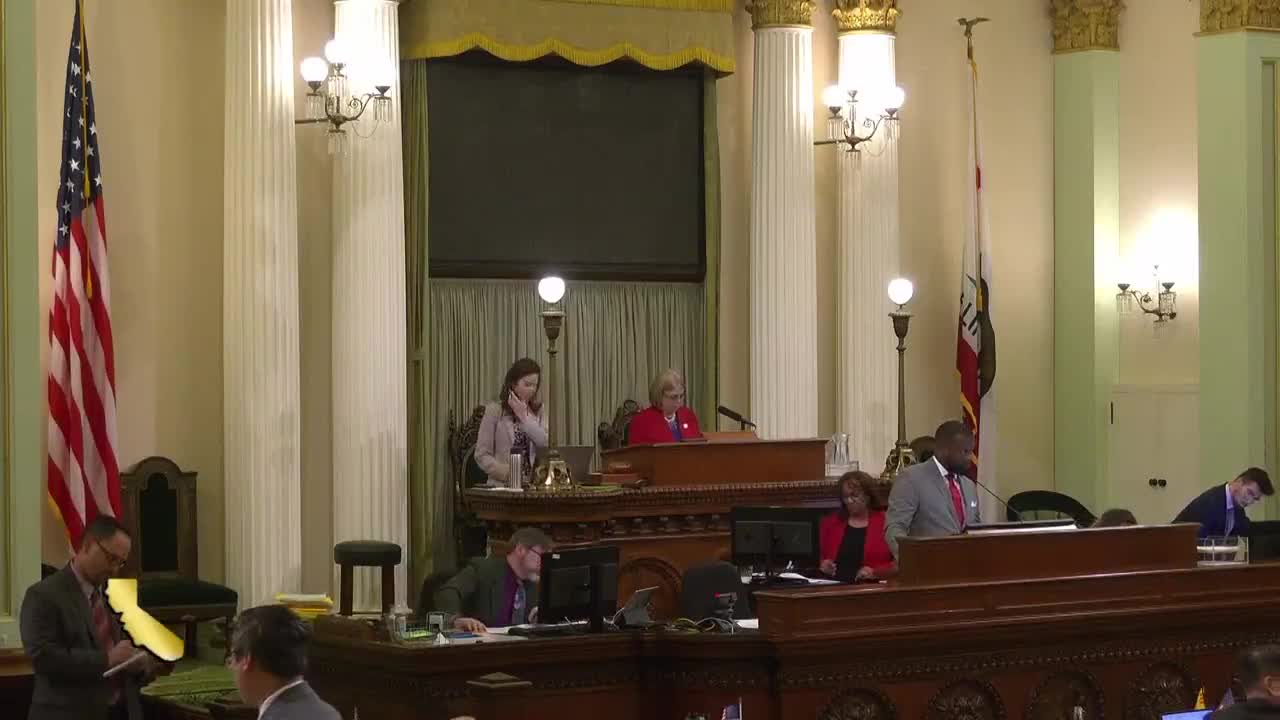 2MIN
Assembly Floor
 51SEC
Senate Standing Committee on Appropriations
 2MIN