AB 629: Personal Income Tax Law: deferred compensation: exclusions: long-term qualified tuition program.
- Session Year: 2023-2024
- House: Assembly
- Latest Version Date: 2023-04-25
Current Status:
Failed
(2024-02-01: From committee: Filed with the Chief Clerk pursuant to Joint Rule 56.)
Introduced
In Committee
First Chamber
In Committee
Second Chamber
Enacted
The Personal Income Tax Law, in conformity with federal income tax law, generally defines gross income as income from whatever source derived, except as specifically excluded, and provides various exclusions from gross income. Existing law, known as the Golden State Scholarshare Trust Act, establishes the Golden State Scholarshare College Savings Trust (Scholarshare trust), under the administration of the Scholarshare Investment Board, to provide financial aid for postsecondary education costs of participating students. Existing state and federal law generally includes in gross income distributions from a qualified tuition program, as defined to include the Scholarshare trust, except as provided. Existing
Existing federal law, the Consolidated Appropriations Act, 2023, excludes from gross income, for federal income tax purposes, distributions from a qualified tuition program that are made after December 31, 2023, and are paid in a direct trustee-to-trustee transfer to a Roth IRA, as described.
This bill would exempt from gross income distribution made from a Scholarshare trust account after December 31, 2023, long-term qualified tuition program during the taxable years beginning on or after January 1, 2024, and before January 1, 2029, that are paid in a direct trustee-to-trustee transfer to a Roth IRA. IRA, and would conform state tax law to those changes relating to federal law, as described above.
Existing Personal Income Tax Law conforms to federal law in its treatment of specified retirement accounts, including Roth IRAs. Existing state and federal law generally do not allow rollover contributions, as defined, unless they are qualified rollover contributions. Existing federal law, the Consolidated Appropriations Act, 2023, expands the definition of qualified rollover contribution, for contributions occurring after December 31, 2023, to include rollover contributions from a qualified tuition program, as specified. This bill would expand the definition of qualified rollover contributions to include rollover contributions made after December 31, 2023, from a qualified tuition program.Existing law requires a bill authorizing a new tax expenditure to contain, among other things, specific goals, purposes, and objectives the tax expenditure will achieve, detailed performance indicators, and data collection requirements.
This bill would include additional information required for any bill authorizing a new tax expenditure.
This bill would take effect immediately as a tax levy.
The Personal Income Tax Law, in conformity with federal income tax law, generally defines gross income as income from whatever source derived, except as specifically excluded, and provides various exclusions from gross income. Existing law, known as the Golden State Scholarshare Trust Act, establishes the Golden State Scholarshare College Savings Trust (Scholarshare trust), under the administration of the Scholarshare Investment Board, to provide financial aid for postsecondary education costs of participating students. Existing state and federal law generally includes in gross income distributions from a qualified tuition program, as defined to include the Scholarshare trust, except as provided. Existing federal law, the Consolidated Appropriations Act, 2023, excludes from gross income, for federal income tax purposes, distributions from a qualified tuition program that are made after December 31, 2023, and are paid in a direct trustee-to-trustee transfer to a Roth IRA, as described.
This bill would exempt from gross income distribution made from a Scholarshare trust account after December 31, 2023, that are paid in a direct trustee-to-trustee transfer to a Roth IRA.
Existing Personal Income Tax Law conforms to federal law in its treatment of specified retirement accounts, including Roth IRAs. Existing state and federal law generally do not allow rollover contributions, as defined, unless they are qualified rollover contributions. Existing federal law, the Consolidated Appropriations Act, 2023, expands the definition of qualified rollover contribution, for contributions occurring after December 31, 2023, to include rollover contributions from a qualified tuition program, as specified.
This bill would expand the definition of qualified rollover contributions to include rollover contributions made after December 31, 2023, from a qualified tuition program.
This bill would take effect immediately as a tax levy.
(a)For purposes of this section, the following terms have the following meanings as provided in the Golden State Scholarshare Trust Act (Article 19 (commencing with Section 69980) of Chapter 2 of Part 42 of the Education Code):
(1)Beneficiary has the meaning set forth in subdivision (c) of Section 69980 of the Education Code.
(2)Benefit has the meaning set forth in subdivision (d) of Section 69980 of the Education Code.
(3)Participant has the meaning set forth in subdivision (h) of Section 69980 of the Education Code.
(4)Participation agreement has the meaning set forth in subdivision (i) of Section 69980 of the Education Code.
(5)Scholarshare trust has the meaning set forth in subdivision (f) of Section 69980 of the Education Code.
(b)For taxable years beginning on or after January 1, 1998, and before January 1, 2002, except as otherwise provided in subdivision (c), gross income of a beneficiary or a participant does not include any of the following:
(1)Any distribution or earnings under a Scholarshare trust participation agreement, as provided in Article 19 (commencing with Section 69980) of Chapter 2 of Part 42 of the Education Code.
(2)Any contribution to the Scholarshare trust on behalf of a beneficiary shall not be includable as gross income of that beneficiary.
(c)For taxable years beginning on or after January 1, 1998, and before January 1, 2002:
(1)Any distribution under a Scholarshare trust participation agreement shall be includable in the gross income of the distributee in the manner as provided under Section 72 of the Internal Revenue Code, as modified by Section 17085, to the extent not excluded from gross income under this part. For purposes of applying Section 72 of the Internal Revenue Code, the following apply:
(A)All Scholarshare trust accounts of which an individual is a beneficiary shall be treated as one account, except as otherwise provided.
(B)All distributions during a taxable year shall be treated as one distribution.
(C)The value of the participation agreement, income on the participation agreement, and investment in the participation agreement shall be computed as of the close of the calendar year in which the taxable year begins.
(2)A contribution by a for-profit or nonprofit entity, or by a state or local government agency, for the benefit of an owner or employee of that entity or a beneficiary whom the owner or employee has the power to designate, including the owner or employees minor children, shall be included in the gross income of that owner or employee in the year the contribution is made.
(3)For purposes of this subdivision, distribution includes any benefit furnished to a beneficiary under a participation agreement, as provided in Article 19 (commencing with Section 69980) of Chapter 2 of Part 42 of the Education Code.
(4)(A)Paragraph (1) shall not apply to that portion of any distribution that, within 60 days of distribution, is transferred to the credit of another beneficiary under the Scholarshare trust who is a member of the family, as that term is used in Section 529(e)(2) of the Internal Revenue Code, as amended by Section 211 of the Taxpayer Relief Act of 1997 (Public Law 105-34), of the former beneficiary of that Scholarshare trust.
(B)Any change in the beneficiary of an interest in the Scholarshare trust shall not be treated as a distribution for purposes of paragraph (1) if the new beneficiary is a member of the family, as that term is used in Section 529(e)(2) of the Internal Revenue Code, as amended by Section 211 of the Taxpayer Relief Act of 1997 (Public Law 105-34), of the former beneficiary of that Scholarshare trust.
(d)For taxable years beginning on or after January 1, 2002, Sections 529(c) and 529(e) of the Internal Revenue Code, relating to tax treatment of designated beneficiaries and contributors and to other definitions and special rules, respectively, shall apply, except as otherwise provided in Part 11 (commencing with Section 23001) and this part.
(e)(1)The amendments made by Section 302(a)(1) of Division Q of the Consolidated Appropriations Act, 2016 (Public Law 114-113) to Section 529(e) of the Internal Revenue Code, relating to other definitions and special rules, shall apply except as otherwise provided.
(2)The amendments made by Section 302(b)(1) of Division Q of the Consolidated Appropriations Act, 2016 (Public Law 114-113) to Section 529(c)(3) of the Internal Revenue Code, relating to distributions, shall apply, except as otherwise provided.
(3)The amendments made by Section 302(c)(1) of Division Q of the Consolidated Appropriations Act, 2016 (Public Law 114-113) to Section 529(c)(3)(D) of the Internal Revenue Code, relating to special rule for contributions of refunded amounts, shall apply, except as otherwise provided.
(f)(1)The amendments made by Section 11025(a) of the Tax Cuts and Jobs Act (Public Law 115-97) to Section 529(c)(3)(C) of the Internal Revenue Code, relating to change in beneficiaries or programs, shall apply, except as otherwise provided.
(2)(A)The amendments made by Section 11032(a)(1) of the Tax Cuts and Jobs Act (Public Law 115-97) to Section 529(c) of the Internal Revenue Code, relating to tax treatment of designated beneficiaries and contributors, shall not apply, except as otherwise provided.
(B)The amendments made by Section 11032(a)(2) of the Tax Cuts and Jobs Act (Public Law 115-97) to Section 529(e)(3)(A) of the Internal Revenue Code, relating to qualified higher education expenses, shall not apply, except as otherwise provided.
(C)In the case of any distribution made under Section 529(e)(3)(A) of the Internal Revenue Code, as amended by Section 11032(a)(2) of the Tax Cuts and Jobs Act (Public Law 115-97), that would be treated for federal income tax purposes as a qualified higher education expense under Section 529(c)(7) of the Internal Revenue Code, as added by Section 11032(a)(1) of the Tax Cuts and Jobs Act (Public Law 115-97), the amount of that distribution shall, notwithstanding anything in Section 529 of the Internal Revenue Code to the contrary, be includable in the gross income of the distributee in the manner as provided under Section 72 of the Internal Revenue Code.
(D)Any distribution includable in the gross income of a distributee under subparagraph (C) shall not affect the exempt status of the qualified tuition program under Section 529 of the Internal Revenue Code for purposes of this part.
(g)(1)The amendments made by Section 126(a) of Title I of Division T of the Consolidated Appropriations Act, 2023 (Public Law 117-328) to Section 529(c) of the Internal Revenue Code, relating to special rollovers to Roth IRAs, IRAs from long-term qualified tuition programs, shall apply with respect to distributions made after December 31, 2023. during the taxable years beginning on or after January 1, 2024, and before January 1, 2029.
(2)The amendments made by Section 126(c) of Title I of Division T of the Consolidated Appropriations Act, 2023 (Public Law 117-328) to Section 529(d), 529(d) of the Internal Revenue Code, relating to reporting, shall apply with respect to distributions made after December 31, 2023, in taxable years beginning on or after January 1, 2024, except that Franchise Tax Board shall be substituted for Secretary.
(3)For the purpose of complying with Section 41, the Legislature finds and declares the following with respect to the exclusions from income for distributions allowed by this section:
(A)The specific goal that the exclusion will achieve is to encourage additional savings for educational expenses and to conform to federal law to bring tax relief and ease return preparation for taxpayers who transfer funds under this subdivision.
(B)Detailed performance indicators for the Legislature to use in determining whether the exclusion meets the goal described in subparagraph (A) are the number of taxpayers that make the transfer permitted under this subdivision and the amount of additional savings added to Scholarshare trust accounts.
(h)(1)For taxable years beginning on or after January 1, 2021, the amendments made by Section 302(a) of Division O of the Further Consolidated Appropriations Act, 2020 (Public Law 116-94) to Section 529(c)(8) of the Internal Revenue Code, relating to distributions for certain expenses associated with registered apprenticeship programs, shall apply.
(2)For taxable years beginning on or after January 1, 2021, the amendments made by Section 302(b)(1) of Division O of the Further Consolidated Appropriations Act, 2020 (Public Law 116-94) to Section 529(c)(9) of the Internal Revenue Code, relating to distributions for qualified education loan repayments, shall apply.
SEC. 2.Section 17501 of the Revenue and Taxation Code is amended to read:17501.(a)Subchapter D of Chapter 1 of Subtitle A of the Internal Revenue Code, relating to deferred compensation, shall apply, except as otherwise provided.(b)Notwithstanding the specified date contained in paragraph (1) of subdivision (a) of Section 17024.5, Part I of Subchapter D of Chapter 1 of Subtitle A of the Internal Revenue Code, relating to pension, profitsharing, stock bonus plans, etc., and Part III of Subchapter D of Chapter 1 of Subtitle A of the Internal Revenue Code, relating to rules relating to minimum funding standards and benefit limitations, shall apply, except as otherwise provided, without regard to taxable year to the same extent as applicable for federal income tax purposes.(c)The maximum amount of elective deferrals (as defined in Section 402(g)(3)) for the taxable year that may be excluded from gross income under Section 402(g) of the Internal Revenue Code, as applicable for state purposes, shall not exceed the amount of elective deferrals that may be excluded from gross income under Section 402(g) of the Internal Revenue Code, as in effect on January 1, 2010, including additional elective deferrals under Section 414(v) of the Internal Revenue Code, as in effect on January 1, 2010.(d)(1)For taxable years beginning on or after January 1, 2002, the basis of any person in the plan, account, or annuity shall be increased by the amount of elective deferrals not excluded as a result of the application of subdivision (c).(2)Any basis described in paragraph (1) shall be recovered in the manner specified in Section 17085.(e)Notwithstanding the limitations provided in subdivision (c), any income attributable to elective deferrals in taxable years beginning on or after January 1, 2002, in conformance with Part I of Subchapter D of Chapter 1 of Subtitle A of the Internal Revenue Code, as applicable for federal and state purposes, shall not be includable in the gross income of the individual for whose benefit the plan or account was established until distributed pursuant to the plan or by operation of law.(f)The amendments made by Section 126(b) of Title I of Division T of the Consolidated Appropriations Act, 2023 (Public Law 117-328) to Section 408A shall apply with respect to distributions made after December 31, 2023.SEC. 2.Section 17140.3 of the Revenue and Taxation Code is amended to read:17140.3.Section 529 of the Internal Revenue Code, relating to qualified state tuition programs, shall apply, except as otherwise provided.
(a)Section 529(a) of the Internal Revenue Code is modified as follows:
(1)By substituting the phrase under this part and Part 11 (commencing with Section 23001) in lieu of the phrase under this subtitle.
(2)By substituting Article 2 (commencing with Section 23731) in lieu of Section 511.
(b)A copy of the report required to be filed with the Secretary of the Treasury under Section 529(d) of the Internal Revenue Code shall be filed with the Franchise Tax Board at the same time and in the same manner as specified in that section.
(c)(1)The amendments made by Section 302(a)(1) of Division Q of the Consolidated Appropriations Act, 2016 (Public Law 114-113) to Section 529(e) of the Internal Revenue Code, relating to other definitions and special rules, shall apply except as otherwise provided.
(2)The amendments made by Section 302(b)(1) of Division Q of the Consolidated Appropriations Act, 2016 (Public Law 114-113) to Section 529(c)(3) of the Internal Revenue Code, relating to distributions, shall apply, except as otherwise provided.
(3)The amendments made by Section 302(c)(1) of Division Q of the Consolidated Appropriations Act, 2016 (Public Law 114-113) to Section 529(c)(3)(D) of the Internal Revenue Code, relating to special rule for contributions of refunded amounts, shall apply, except as otherwise provided.
(d)(1)The amendments made by Section 11025(a) of the Tax Cuts and Jobs Act (Public Law 115-97) to Section 529(c)(3)(C) of the Internal Revenue Code, relating to change in beneficiaries or programs, shall apply, except as otherwise provided.
(2)(A)The amendments made by Section 11032(a)(1) of the Tax Cuts and Jobs Act (Public Law 115-97) to Section 529(c) of the Internal Revenue Code, relating to tax treatment of designated beneficiaries and contributors, shall not apply, except as otherwise provided.
(B)The amendments made by Section 11032(a)(2) of the Tax Cuts and Jobs Act (Public Law 115-97) to Section 529(e)(3)(A) of the Internal Revenue Code, relating to qualified higher education expenses, shall not apply, except as otherwise provided.
(C)In the case of any distribution made under Section 529(e)(3)(A) of the Internal Revenue Code, as amended by Section 11032(a)(2) of the Tax Cuts and Jobs Act (Public Law 115-97), that would be treated for federal income tax purposes as a qualified higher education expense under Section 529(c)(7) of the Internal Revenue Code, as added by Section 11032(a)(1) of the Tax Cuts and Jobs Act (Public Law 115-97), the amount of that distribution shall, notwithstanding anything in Section 529 of the Internal Revenue Code to the contrary, be includable in the gross income of the distributee in the manner as provided under Section 72 of the Internal Revenue Code.
(D)Any distribution includable in the gross income of a distributee under subparagraph (C) shall not affect the exempt status of the qualified tuition program under Section 529 of the Internal Revenue Code for purposes of this part.
(e)(1)The amendments made by Section 126(a) of Title I of Division T of the Consolidated Appropriations Act, 2023 (Public Law 117-328) to Section 529(c) of the Internal Revenue Code, relating to special rollovers to Roth IRAs from long-term qualified tuition programs, shall apply with respect to distributions made during the taxable years beginning on or after January 1, 2024, and before January 1, 2029.
(2)The amendments made by Section 126(c) of Title I of Division T of the Consolidated Appropriations Act, 2023 (Public Law 117-328) to Section 529(d) of the Internal Revenue Code, relating to reporting, shall apply with respect to distributions made in taxable years beginning on or after January 1, 2024, except that Franchise Tax Board shall be substituted for Secretary.
(3)For the purpose of complying with Section 41, the Legislature finds and declares the following with respect to the exclusions from income for distributions allowed by this section:
(A)The specific goal that the exclusion will achieve is to encourage additional savings for educational expenses and to conform to federal law to bring tax relief and ease return preparation for taxpayers who transfer funds under this subdivision.
(B)Detailed performance indicators for the Legislature to use in determining whether the exclusion meets the goal described in subparagraph (A) are the number of taxpayers that make the transfer permitted under this subdivision and the amount of additional savings added to qualified tuition programs.
(e)(f)(1)For taxable years beginning on or after January 1, 2021, the amendments made by Section 302(a) of Division O of the Further Consolidated Appropriations Act, 2020 (Public Law 116-94) to Section 529(c)(8) of the Internal Revenue Code, relating to distributions for certain expenses associated with registered apprenticeship programs, shall apply.
(2)For taxable years beginning on or after January 1, 2021, the amendments made by Section 302(b)(1) of Division O of the Further Consolidated Appropriations Act, 2020 (Public Law 116-94) to Section 529(c)(9) of the Internal Revenue Code, relating to distributions for qualified education loan repayments, shall apply.
SEC. 3.This act provides for a tax levy within the meaning of Article IV of the California Constitution and shall go into immediate effect.
(a)For purposes of this section, the following terms have the following meanings as provided in the Golden State Scholarshare Trust Act (Article 19 (commencing with Section 69980) of Chapter 2 of Part 42 of the Education Code):
(1)Beneficiary has the meaning set forth in subdivision (c) of Section 69980 of the Education Code.
(2)Benefit has the meaning set forth in subdivision (d) of Section 69980 of the Education Code.
(3)Participant has the meaning set forth in subdivision (h) of Section 69980 of the Education Code.
(4)Participation agreement has the meaning set forth in subdivision (i) of Section 69980 of the Education Code.
(5)Scholarshare trust has the meaning set forth in subdivision (f) of Section 69980 of the Education Code.
(b)For taxable years beginning on or after January 1, 1998, and before January 1, 2002, except as otherwise provided in subdivision (c), gross income of a beneficiary or a participant does not include any of the following:
(1)Any distribution or earnings under a Scholarshare trust participation agreement, as provided in Article 19 (commencing with Section 69980) of Chapter 2 of Part 42 of the Education Code.
(2)Any contribution to the Scholarshare trust on behalf of a beneficiary shall not be includable as gross income of that beneficiary.
(c)For taxable years beginning on or after January 1, 1998, and before January 1, 2002:
(1)Any distribution under a Scholarshare trust participation agreement shall be includable in the gross income of the distributee in the manner as provided under Section 72 of the Internal Revenue Code, as modified by Section 17085, to the extent not excluded from gross income under this part. For purposes of applying Section 72 of the Internal Revenue Code, the following apply:
(A)All Scholarshare trust accounts of which an individual is a beneficiary shall be treated as one account, except as otherwise provided.
(B)All distributions during a taxable year shall be treated as one distribution.
(C)The value of the participation agreement, income on the participation agreement, and investment in the participation agreement shall be computed as of the close of the calendar year in which the taxable year begins.
(2)A contribution by a for-profit or nonprofit entity, or by a state or local government agency, for the benefit of an owner or employee of that entity or a beneficiary whom the owner or employee has the power to designate, including the owner or employees minor children, shall be included in the gross income of that owner or employee in the year the contribution is made.
(3)For purposes of this subdivision, distribution includes any benefit furnished to a beneficiary under a participation agreement, as provided in Article 19 (commencing with Section 69980) of Chapter 2 of Part 42 of the Education Code.
(4)(A)Paragraph (1) shall not apply to that portion of any distribution that, within 60 days of distribution, is transferred to the credit of another beneficiary under the Scholarshare trust who is a member of the family, as that term is used in Section 529(e)(2) of the Internal Revenue Code, as amended by Section 211 of the Taxpayer Relief Act of 1997 (Public Law 105-34), of the former beneficiary of that Scholarshare trust.
(B)Any change in the beneficiary of an interest in the Scholarshare trust shall not be treated as a distribution for purposes of paragraph (1) if the new beneficiary is a member of the family, as that term is used in Section 529(e)(2) of the Internal Revenue Code, as amended by Section 211 of the Taxpayer Relief Act of 1997 (Public Law 105-34), of the former beneficiary of that Scholarshare trust.
(d)For taxable years beginning on or after January 1, 2002, Sections 529(c) and 529(e) of the Internal Revenue Code, relating to tax treatment of designated beneficiaries and contributors and to other definitions and special rules, respectively, shall apply, except as otherwise provided in Part 11 (commencing with Section 23001) and this part.
(e)(1)The amendments made by Section 302(a)(1) of Division Q of the Consolidated Appropriations Act, 2016 (Public Law 114-113) to Section 529(e) of the Internal Revenue Code, relating to other definitions and special rules, shall apply except as otherwise provided.
(2)The amendments made by Section 302(b)(1) of Division Q of the Consolidated Appropriations Act, 2016 (Public Law 114-113) to Section 529(c)(3) of the Internal Revenue Code, relating to distributions, shall apply, except as otherwise provided.
(3)The amendments made by Section 302(c)(1) of Division Q of the Consolidated Appropriations Act, 2016 (Public Law 114-113) to Section 529(c)(3)(D) of the Internal Revenue Code, relating to special rule for contributions of refunded amounts, shall apply, except as otherwise provided.
(f)(1)The amendments made by Section 11025(a) of the Tax Cuts and Jobs Act (Public Law 115-97) to Section 529(c)(3)(C) of the Internal Revenue Code, relating to change in beneficiaries or programs, shall apply, except as otherwise provided.
(2)(A)The amendments made by Section 11032(a)(1) of the Tax Cuts and Jobs Act (Public Law 115-97) to Section 529(c) of the Internal Revenue Code, relating to tax treatment of designated beneficiaries and contributors, shall not apply, except as otherwise provided.
(B)The amendments made by Section 11032(a)(2) of the Tax Cuts and Jobs Act (Public Law 115-97) to Section 529(e)(3)(A) of the Internal Revenue Code, relating to qualified higher education expenses, shall not apply, except as otherwise provided.
(C)In the case of any distribution made under Section 529(e)(3)(A) of the Internal Revenue Code, as amended by Section 11032(a)(2) of the Tax Cuts and Jobs Act (Public Law 115-97), that would be treated for federal income tax purposes as a qualified higher education expense under Section 529(c)(7) of the Internal Revenue Code, as added by Section 11032(a)(1) of the Tax Cuts and Jobs Act (Public Law 115-97), the amount of that distribution shall, notwithstanding anything in Section 529 of the Internal Revenue Code to the contrary, be includable in the gross income of the distributee in the manner as provided under Section 72 of the Internal Revenue Code.
(D)Any distribution includable in the gross income of a distributee under subparagraph (C) shall not affect the exempt status of the qualified tuition program under Section 529 of the Internal Revenue Code for purposes of this part.
(g)(1)The amendments made by Section 126(a) of Title I of Division T of the Consolidated Appropriations Act, 2023 (Public Law 117-328) to Section 529(c) of the Internal Revenue Code, relating to special rollovers to Roth IRAs, shall apply with respect to distributions made after December 31, 2023.
(2)The amendments made by Section 126(c) of Title I of Division T of the Consolidated Appropriations Act, 2023 (Public Law 117-328) to Section 529(d), relating to reporting, shall apply with respect to distributions made after December 31, 2023, except that Franchise Tax Board shall be substituted for Secretary.
(g)(h)(1)For taxable years beginning on or after January 1, 2021, the amendments made by Section 302(a) of Division O of the Further Consolidated Appropriations Act, 2020 (Public Law 116-94) to Section 529(c)(8) of the Internal Revenue Code, relating to distributions for certain expenses associated with registered apprenticeship programs, shall apply.
(2)For taxable years beginning on or after January 1, 2021, the amendments made by Section 302(b)(1) of Division O of the Further Consolidated Appropriations Act, 2020 (Public Law 116-94) to Section 529(c)(9) of the Internal Revenue Code, relating to distributions for qualified education loan repayments, shall apply.
SEC. 2.Section 17501 of the Revenue and Taxation Code is amended to read:17501.(a)Subchapter D of Chapter 1 of Subtitle A of the Internal Revenue Code, relating to deferred compensation, shall apply, except as otherwise provided.
(b)Notwithstanding the specified date contained in paragraph (1) of subdivision (a) of Section 17024.5, Part I of Subchapter D of Chapter 1 of Subtitle A of the Internal Revenue Code, relating to pension, profitsharing, stock bonus plans, etc., and Part III of Subchapter D of Chapter 1 of Subtitle A of the Internal Revenue Code, relating to rules relating to minimum funding standards and benefit limitations, shall apply, except as otherwise provided, without regard to taxable year to the same extent as applicable for federal income tax purposes.
(c)The maximum amount of elective deferrals (as defined in Section 402(g)(3)) for the taxable year that may be excluded from gross income under Section 402(g) of the Internal Revenue Code, as applicable for state purposes, shall not exceed the amount of elective deferrals that may be excluded from gross income under Section 402(g) of the Internal Revenue Code, as in effect on January 1, 2010, including additional elective deferrals under Section 414(v) of the Internal Revenue Code, as in effect on January 1, 2010.
(d)(1)For taxable years beginning on or after January 1, 2002, the basis of any person in the plan, account, or annuity shall be increased by the amount of elective deferrals not excluded as a result of the application of subdivision (c).
(2)Any basis described in paragraph (1) shall be recovered in the manner specified in Section 17085.
(e)Notwithstanding the limitations provided in subdivision (c), any income attributable to elective deferrals in taxable years beginning on or after January 1, 2002, in conformance with Part I of Subchapter D of Chapter 1 of Subtitle A of the Internal Revenue Code, as applicable for federal and state purposes, shall not be includable in the gross income of the individual for whose benefit the plan or account was established until distributed pursuant to the plan or by operation of law.
(f)The amendments made by Section 126(b) of Title I of Division T of the Consolidated Appropriations Act, 2023 (Public Law 117-328) to Section 408A shall apply with respect to distributions made after December 31, 2023.
SEC. 3.This act provides for a tax levy within the meaning of Article IV of the California Constitution and shall go into immediate effect.
|
Date
|
Status
|
|---|---|
| Feb 1, 2024 | From committee: Filed with the Chief Clerk pursuant to Joint Rule 56. |
| Jan 31, 2024 | Died pursuant to Art. IV, Sec. 10(c) of the Constitution. |
| May 18, 2023 | In committee: Held under submission. |
| May 18, 2023 | Joint Rule 62(a), file notice suspended. (Page 1580.) |
| May 17, 2023 | In committee: Set, first hearing. Referred to APPR. suspense file. |
| May 2, 2023 | From committee: Do pass and re-refer to Com. on APPR. (Ayes 11. Noes 0.) (May 1). Re-referred to Com. on APPR. |
| Apr 26, 2023 | Re-referred to Com. on REV. & TAX. |
| Apr 25, 2023 | From committee chair, with author's amendments: Amend, and re-refer to Com. on REV. & TAX. Read second time and amended. |
| Mar 28, 2023 | In committee: Set, second hearing. Referred to REV. & TAX. suspense file. |
| Mar 21, 2023 | In committee: Set, first hearing. Hearing canceled at the request of author. |
| Feb 17, 2023 | Referred to Com. on REV. & TAX. |
| Feb 10, 2023 | From printer. May be heard in committee March 12. |
| Feb 9, 2023 | Read first time. To print. |
|
Date
|
Description
|
Location
|
Votes
|
|
|---|---|---|---|---|
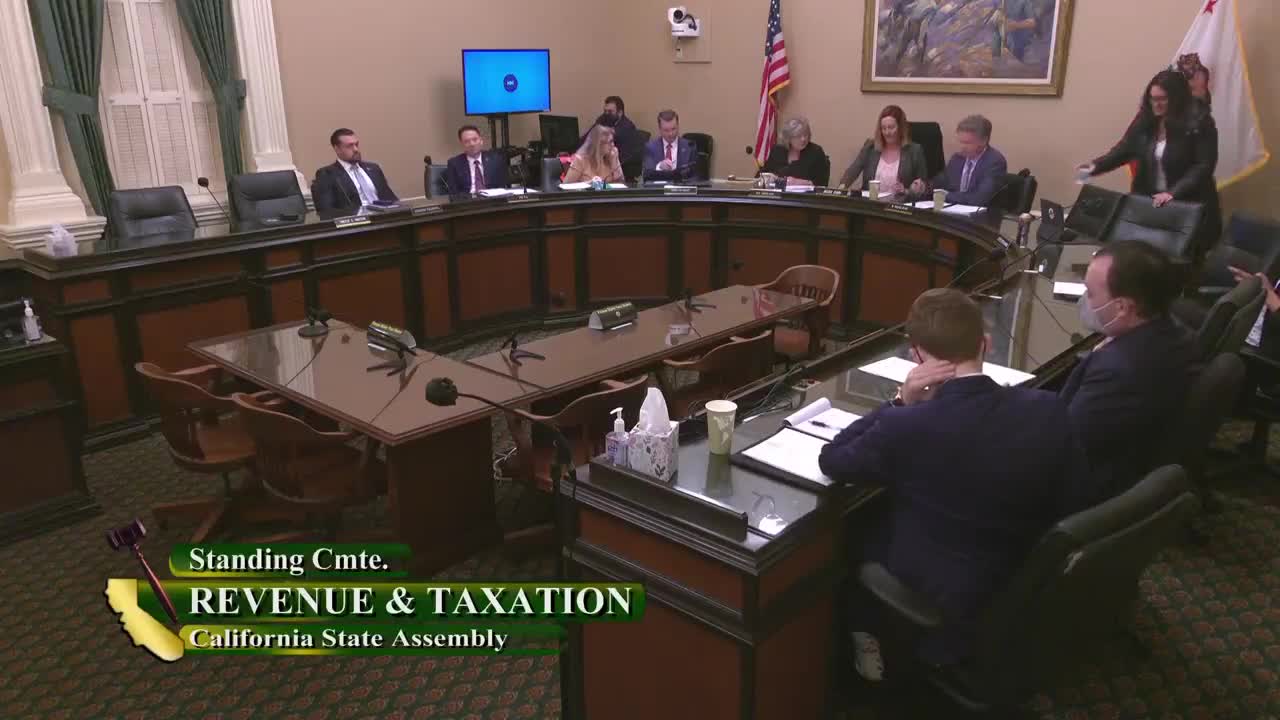
| May 1, 2023 | Do pass and be re-referred to the Committee on [Appropriations] | Assembly Standing Committee on Revenue and Taxation |
Passed |
This list shows positions taken on this bill by organizations on the date displayed, which is linked to the original source.
Positions by individuals are not included.
Date of Hearing: May 17, 2023
ASSEMBLY COMMITTEE ON APPROPRIATIONS
Chris Holden, Chair
ABPCA Bill Id:AB 629
Author:(Wallis) – As Amended Ver:April 25, 2023
Policy Committee: | Revenue and Taxation | Vote: | 11 - 0 |
|
| ||
|
|
Urgency: No State Mandated Local Program: No Reimbursable: No
SUMMARY:
This bill exempts, for taxable years beginning on or after January 1, 2024, and before January 1, 2029, from gross income under the Personal Income Tax Law a distribution made from a long-term qualified tuition program (QTP) paid in a direct trustee-to-trustee transfer to a Roth Individual Retirement Account (IRA).
This bill provides conformity to federal law and declares the goal and performance indicators for the income exclusion.
FISCAL EFFECT:
- General Fund (GF) revenue loss of approximately $4.6 million in fiscal year (FY) 2023-24, $6.8 million in FY 2024-25, and $8.1 million in FY 2025-26.
- Costs of an unknown, but potentially absorbable, amount to the Franchise Tax Board (FTB) to administer the exclusion.
COMMENTS:
- Purpose. According to the author:
In December 2022, Congress passed and President Biden signed the omnibus spending package, Secure 2.0, which includes a provision that allows savers to roll money from 529 plans to Roth [IRAs] free of income tax or tax penalties. AB 629 conforms state tax to federal law to allow transfers from 529 plans to Roth IRA accounts without incurring taxes or penalties. This change will encourage people to save for their children’s education expenses, knowing that any unspent funds can be rolled over to their Roth IRA account.
- Scholarshare 529 and Other QTPs. Schloarshare 529 is the state-sponsored, tax-advantaged QTP, or college savings investment program helping families plan for the costs of higher education. The plan provides families with a diverse set of low-cost investment options, tax-deferred growth on investments and tax-free withdrawals on distributions used for qualified education expenses. Recent changes to federal law expanded distributions from a QTP that may be excluded from gross income to include distributions made after December 31, 2023, to a Roth IRA, with certain limitations on the amount transferred.
This bill conforms to federal law in that regard for distributions made during the next five taxable years, thus allowing a QTP beneficiary to transfer certain amounts from their QTP account into a Roth IRA without being taxed on the distribution. Although federal conformity eases tax administration for both the government and taxpayer, providing this income exclusion would also provide a tax benefit to Californians with the means to save money for higher education, at the expense of other Californians without such means.
- Prior Legislation. AB 340 (Ward), Chapter 557, Statutes of 2021, conformed Scholarshare 529 to changes in federal tax law that expanded allowable distributions from QTPs to include expenses related to registered apprenticeship program participation and student loan repayment.
Analysis Prepared by: Irene Ho / APPR. / (916) 319-2081
Date of Hearing: May 1, 2023
ASSEMBLY COMMITTEE ON REVENUE AND TAXATION
Jacqui Irwin, Chair
ABPCA Bill Id:AB 629 (
Author:Wallis) – As Amended Ver:April 25, 2023
SUSPENSE
Majority vote. Tax levy. Fiscal committee.
SUBJECT: Personal Income Tax Law: deferred compensation: exclusions: long-term qualified tuition program
SUMMARY: Conforms, for taxable years beginning on or after January 1, 2024, and before January 1, 2029, to federal law by exempting from gross income distributions made from a long-term qualified tuition plan (QTP) that are transferred to a Roth Individual Retirement Account (IRA). Specifically, this bill:
- Conforms state law to recent federal changes made by the Consolidated Appropriations Act of 2023 (CAA), which exempt from taxation amounts transferred after December 31, 2023 from a QTP to a Roth IRA, as specified.
- Replaces references to the "Secretary" with the Franchise Tax Board (FTB).
- Provides that, for purposes of complying with Revenue and Taxation Code (R&TC) Section 41, the Legislature finds and declares:
- The specific goal that the exclusion will achieve is to encourage additional savings for educational expenses and to conform to federal law to bring tax relief and ease return preparation for taxpayers who transfer funds; and,
- The detailed performance indicators for the Legislature to use in determining whether the exclusion meets the goal described above are the number of taxpayers that make the transfer permitted and the amount of additional savings added to QTPs.
- Takes immediate effect as a tax levy.
EXISTING FEDERAL LAW:
- Authorizes eligible educational institutions or a state, state agency, or any instrumentality of a state, to establish a tax-exempt QTP, which accepts taxed contributions on behalf of a beneficiary to pay for certain education related expenses. Contributions must generally be made in cash and are not subject to a limit. Interest earned on amounts contributed to the QTP, and amounts distributed from the program to pay for eligible expenses, are excluded from gross income. Eligible expenses include tuition, fees, books, and supplies, among others. Ineligible distributions are taxed as normal income, and are subject to an additional 10% penalty. (Internal Revenue Code (IRC) Section 529 et. seq.)
- Excludes from gross income eligible amounts distributed from a Roth IRA. To benefit from the exclusion, distributions must generally be made to the beneficiary after the age of 59 and ½. Amounts contributed to the Roth IRA are included as taxable income and subject to certain limitations depending on the taxpayer's modified adjusted gross income (MAGI) and filing status. Married taxpayers filing jointly with MAGI over $214,000, and single filers with MAGI over $144,000, may not contribute any amount to a Roth IRA. The maximum amount a taxpayer may contribute for the 2023 taxable year is $6,500, or $7,500 if the taxpayer is age 50 or older. (IRC Section 408A et. seq.)
- Excludes from gross income amounts distributed after December 31, 2023 from a QTP in a direct trustee-to-trustee transfer to a Roth IRA with the same beneficiary. The QTP must be maintained for 15 years and amounts cannot exceed the aggregate contributions to, and earnings in, the QTP over the prior five years. Excluded amounts may not exceed the annual amount that an individual may contribute to a Roth IRA and the total aggregate amount that may be transferred is limited to $35,000. (IRC Section 529 (c)(3)(E).)
EXISTING STATE LAW:
- Conforms, under the Personal Income Tax (PIT) Law, to the treatment of Roth IRAs under IRC Section 408A, without regard to the specified date-change conformity to federal law in the R&TC. (R&TC Section 17051(b).)
- Conforms, with certain modifications under the PIT Law, to the federal gross income exclusion for eligible amounts distributed from a QTP. (R&TC Section 17140.3.)
- Establishes the Golden State ScholarShare Trust Program as a QTP administered by the State Treasurer's Office. This program offers California taxpayers a college tuition savings plan, the distributions from which are excluded from gross income if spent on eligible higher education expenses. Under this program, specified amounts that are transferred to a Roth IRA are currently included in gross income. (R&TC Section 17140.)
FISCAL EFFECT: The FTB estimates this bill would result in a General Fund revenue loss of $4.6 million in fiscal year (FY) 2023-24, $6.8 million in FY 2024-25, and $8.1 million in FY 2025-26.
COMMENTS:
- The author has provided the following statement in support of this bill:
In December 2022, Congress passed and President Biden signed the omnibus spending package, SECURE 2.0, which includes a provision that allows savers to roll money from 529 plans to Roth individual retirement accounts free of income tax or tax penalties. AB 629 conforms state tax to federal law to allow transfers from 529 plans to Roth IRA accounts without incurring taxes or penalties. This change will encourage people to save for their children's education expenses, knowing that any unspent funds can be rolled over to their Roth IRA account.
- Committee Staff Comments:
- 529 plans: Existing law authorizes individuals to make after-tax contributions to a QTP. These are commonly referred to as "529 plans" as the construction of these QTPs is governed by IRC Section 529. There are two types of QTPs: prepaid tuition plans and education savings plans. Prepaid tuition plans allow a contributor to purchase units or credits at participating institutions of higher education for future tuition and fee costs. Education savings plans have greater flexibility and allow a contributor to open an investment account that accumulates earnings and makes disbursements for qualifying education expenses without being subject to income taxation[1]. The CAA expanded distributions from a QTP that may be excluded from gross income to include distributions made after December 31, 2023 to a Roth IRA, with certain limitations on the amount transferred.
- What does this bill do? This bill would conform California law to federal law regarding QTP rollover amounts to a Roth IRA, subject to certain limitations. In essence, the beneficiary of a QTP would be able to transfer certain amounts from their QTP account into a Roth IRA without being taxed on the distribution.
- Tax benefits are a form of financial aid to students: According to a report published by the Legislative Analyst's Office in 2017, tax benefits are one of three main types of financial aid for students in California.[2] The other two types of financial aid are "loans" and "gift aid." This bill provides financial aid to certain taxpayers that rollover amounts from a QTP into a Roth IRA in the form of a tax benefit.
- What is a "tax expenditure"? Existing law provides various credits, deductions, exclusions, and exemptions for particular taxpayer groups. In the late 1960s, United States Treasury officials began arguing that these features of the tax law should be referred to as "expenditures" since they are generally enacted to accomplish some governmental purpose and there is a determinable cost associated with each of them (in the form of forgone revenues). This bill expands an existing gross income exclusion related to QTP rollovers, enacting a tax expenditure.
- Committee's tax expenditure policy: SB 1335 (Leno), Chapter 845, Statutes of 2014, added R&TC Section 41, which recognized that the Legislature should apply the same level of review used for government spending programs to tax credits introduced on or after January 1, 2015. AB 263 (Burke), Chapter 743, Statutes of 2019, extended the requirements in R&TC Section 41 to all tax expenditure measures under the PIT Law, the Corporation Tax Law, and the Sales and Use Tax Law introduced on or after January 1, 2020. A tax expenditure proposal must outline specific goals, purposes, and objectives that the tax expenditure will achieve, along with detailed performance indicators for the Legislature to use when measuring whether the tax expenditure meets those stated goals, purposes, and objectives. In addition to the R&TC Section 41 requirements, this Committee's policy also requires that all tax expenditure proposals contain an appropriate sunset provision to be eligible for a vote[3]. Sunsets are required because eliminating a tax expenditure generally requires a two-thirds vote. These requirements must be satisfied before a bill can receive a vote in this Committee. This bill has been amended to comply with R&TC Section 41 and now includes an appropriate five-year sunset.
- Related legislation: AB 1026 (Ta) would allow a qualified taxpayer a deduction from gross income for contributions made to a California QTP. AB 1026 is pending hearing by this Committee.
- Previous legislation: AB 340 (Ward), Chapter 557, Statutes of 2021, conforms the existing Golden State ScholarShare Trust for college savings to the federal QTP definition of qualified higher education expenses by adding apprenticeship program expenses, and principal and interest of qualified education expenses.
REGISTERED SUPPORT / OPPOSITION:
Support
None on file
Opposition
None on file
Analysis Prepared by: Harrison Bowlby / REV. & TAX. / (916) 319-2098
"An Introduction to 529 Plans" U.S. Securities & Exchange Commission (SEC) Office of Investor Education & Advocacy (May 29, 2018), <https://www.sec.gov/about/reports-publications/investor-publications/introduction-529-plans> (accessed March 2023). ↑
Overview of Student Loans, Legislative Analyst's Office (2017), <https://lao.ca.gov/handouts/education/2017
/Student-Loans-Overview-082917.pdf> (accessed March 2023). ↑An "appropriate sunset provision" shall mean five years, except in the case of a tax expenditure measure providing relief to California veterans, in which case "appropriate sunset provision" shall mean 10 years. ↑
Date of Hearing: March 27, 2023
ASSEMBLY COMMITTEE ON REVENUE AND TAXATION
Jacqui Irwin, Chair
ABPCA Bill Id:AB 629 (
Author:Wallis) – As Introduced Ver:February 9, 2023
Majority vote. Tax levy. Fiscal committee.
SUBJECT: Personal Income Tax Law: deferred compensation: exclusions: Golden State Scholarshare Trust
SUMMARY: Conforms, in part, to federal changes regarding rollover contribution amounts from a "qualified tuition program" (QTP) to a Roth Individual Retirement Account (IRA), subject to certain limitations. Specifically, this bill:
- Conforms the Golden State ScholarShare Trust Program to recent federal changes made by the Consolidated Appropriations Act of 2023 (CAA), which exempts from taxation amounts transferred after December 31, 2023 from a "QTP" to a Roth IRA, as specified.
- Replaces references to the "Secretary" with the "Franchise Tax Board" (FTB).
- Takes immediate effect as a tax levy.
EXISTING FEDERAL LAW:
- Authorizes eligible educational institutions or a state, state agency, or any instrumentality of a state, to establish a tax exempt "QTP," which accepts taxed contributions on behalf of a beneficiary to pay for certain education related expenses. Contributions must generally be made in cash and are not subject to a limit. Interest earned on amounts contributed to the QTP, and amounts distributed from the program to pay for eligible expenses are excluded from gross income. Eligible expenses include tuition, fees, books, and supplies, among others. Ineligible distributions are taxed as normal income, and are subject to an additional 10% penalty. (Internal Revenue Code (IRC) Section 529 et. seq.)
- Excludes from gross income eligible amounts distributed from a Roth IRA. To benefit from the exclusion, distributions must generally be made to the beneficiary after the age of 59 and ½. Amounts contributed to the Roth IRA are included as taxable income and subject to certain limitations depending on the taxpayer's modified adjusted gross income (MAGI) and filing status. Married taxpayers filing jointly with MAGI over $214,000, and single filers with MAGI over $144,000, may not contribute any amount to a Roth IRA. The maximum amount a taxpayer may contribute for the 2023 taxable year is $6,500, or $7,500 if the taxpayer is age 50 or older. (IRC Section 408A et. seq.)
- Excludes from gross income amounts distributed after December 31, 2023 from a QTP in a direct trustee-to-trustee transfer to a Roth IRA with the same beneficiary. The QTP must be maintained for 15 years and amounts cannot exceed the aggregate contributions to, and earnings in, the QTP over the prior five years. Excluded amounts may not exceed the annual amount that an individual may contribute to a Roth IRA and limits the total aggregate amount that may be transferred to $35,000. (IRC Section 529 (c)(3)(E).)
EXISTING STATE LAW:
- Conforms, under the Personal Income Tax (PIT) Law, to the treatment of Roth IRAs under IRC Section 408A, without regard to the specified date-change conformity to federal law in the Revenue and Taxation Code (R&TC). (R&TC Section 17051(b).)
- Conforms, with certain modifications under the PIT Law, to the federal gross income exclusion for eligible amounts distributed from a QTP. (R&TC Section 17140.3.)
- Establishes the Golden State ScholarShare Trust Program as a qualified tuition program administered by the State Treasurer's Office. This program offers California taxpayers a college tuition savings plan, the distributions from which are excluded from gross income if spent on eligible higher education expenses. Under this program, specified amounts that are transferred to a Roth IRA are included in gross income. (R&TC Section 17140.)
FISCAL EFFECT: The FTB estimates this bill would result in a General Fund revenue loss of $4.6 million in fiscal year (FY) 2023-24, $6.8 million in FY 2024-25, and $8.1 million in FY 2025-26.
COMMENTS:
- The author has provided the following statement in support of this bill:
In December 2022, Congress passed and President Biden signed the omnibus spending package, SECURE 2.0, which includes a provision that allows savers to roll money from 529 plans to Roth individual retirement accounts free of income tax or tax penalties. AB 629 conforms state tax to federal law to allow transfers from 529 plans to Roth IRA accounts without incurring taxes or penalties. This change will encourage people to save for their children's education expenses, knowing that any unspent funds can be rolled over to their Roth IRA account.
- Committee Staff Comments:
- 529 plans: Existing law authorizes individuals to make after-tax contributions in a QTP. These are commonly referred to as "529 plans" as the construction of these QTPs is governed by IRC Section 529. There are two types of QTPs: prepaid tuition plans and education savings plans. Prepaid tuition plans allow a contributor to purchase units or credits at participating institutions of higher education for future tuition and fee costs. Education savings plans have greater flexibility and allow a contributor to open an investment account that accumulates earnings and makes disbursements for qualifying education expenses without being subject to income taxation[1]. The CAA expanded distributions from a QTP that may be excluded from gross income to include distributions made after December 31, 2023 to a Roth IRA, with certain limitations on the amount transferred.
- State administered 529 plan: The Golden State ScholarShare Trust Program is the state administered 529 plan, under the jurisdiction of the State Treasurer's Office. This program benefits from the same general treatment of 529 plans under both state and federal law, except that this program does not exclude from gross income rollover contributions to a Roth IRA.
- What does this bill do? This bill would conform the Golden State ScholarShare Trust Program to federal law regarding contribution amounts to a Roth IRA, subject to certain limitations. In essence, the beneficiary of the state's QTP may transfer certain amounts from their Golden State ScholarShare Trust Program account into a Roth IRA without being taxed on the distribution.
- Selective conformity: While this bill authorizes the federal exclusion of amounts rolled over into a Roth IRA under the Golden State ScholarShare Trust Program specifically, it does not authorize the exclusion under state law for other types of QTPs more generally. Thus, this bill would only partially conform to the changes in the CAA related to 529 plans. If this is not the intent, the author may wish to amend this bill.
- Tax benefits are a form of financial aid to students: According to a report published by the Legislative Analyst's Office (LAO) in 2017, tax benefits are one of three main types of financial aid for students in California.[2] The other two types of financial aid are "loans" and "gift aid." This bill provides financial aid to certain taxpayers that rollover amounts from a QTP into a Roth IRA in the form of a tax benefit.
- FTB analysis: The FTB has noted the following considerations in its analysis of this bill:
- This bill's provisions would be operative for taxable years after December 31, 2023. The author may wish to amend this bill to provide January 1, 2024 as the operative date, which would provide clarity to taxpayers and consistency with terminology in the R&TC.
- For consistency with terminology in the R&TC, it is recommended that, on Page 5, Line 16, the phrase "relating to special rollovers to Roth IRAs" be replaced with "relating to special rollover to Roth IRAs from long-term qualified tuition programs," and on Page 5, Line 20, insert the phrase "of the Internal Revenue Code" after the term "529(d)."
- Delete Section 2 of this bill, as California automatically conforms to IRC Section 408A under RT&C Section 17051 (b).
- What is a "tax expenditure"? Existing law provides various credits, deductions, exclusions, and exemptions for particular taxpayer groups. In the late 1960s, United States Treasury officials began arguing that these features of the tax law should be referred to as "expenditures" since they are generally enacted to accomplish some governmental purpose and there is a determinable cost associated with each of them (in the form of forgone revenues). This bill expands an existing gross income exclusion related to the Golden State ScholarShare Trust Program, enacting a tax expenditure.
- Committee's tax expenditure policy: SB 1335 (Leno), Chapter 845, Statutes of 2014, added R&TC Section 41, which recognized that the Legislature should apply the same level of review used for government spending programs to tax credits introduced on or after January 1, 2015. AB 263 (Burke), Chapter 743, Statutes of 2019, extended the requirements in R&TC Section 41 to all tax expenditure measures under the PIT Law, the Corporation Tax Law, and the Sales and Use Tax Law introduced on or after January 1, 2020. A tax expenditure proposal must outline specific goals, purposes, and objectives that the tax expenditure will achieve, along with detailed performance indicators for the Legislature to use when measuring whether the tax expenditure meets those stated goals, purposes, and objectives. In addition to the R&TC Section 41 requirements, this Committee's policy also requires that all tax expenditure proposals contain an appropriate sunset provision to be eligible for a vote[3]. Sunsets are required because eliminating a tax expenditure generally requires a two-thirds vote. These requirements must be satisfied before a bill can receive a vote in this Committee. This bill does not comply with R&TC Section 41 nor does it include an appropriate five-year sunset.
- Related legislation: AB 1026 (Ta) would allow a qualified taxpayer a deduction from gross income for contributions made to a California QTP. AB 1026 is pending hearing by this Committee.
- Previous legislation: AB 340 (Ward), Chapter 557, Statutes of 2021, conforms the existing Golden State ScholarShare Trust for college savings to the federal QTP definition of qualified higher education expenses by adding apprenticeship program expenses, and principal and interest of qualified education expenses.
REGISTERED SUPPORT / OPPOSITION:
Support
None on file
Opposition
None on file
Analysis Prepared by: Harrison Bowlby / REV. & TAX. / (916) 319-2098
"An Introduction to 529 Plans" U.S. Securities & Exchange Commission (SEC) Office of Investor Education & Advocacy (May 29, 2018), <https://www.sec.gov/about/reports-publications/investor-publications/introduction-529-plans> (accessed March 2023). ↑
Overview of Student Loans, LAO (2017), <https://lao.ca.gov/handouts/education/2017
/Student-Loans-Overview-082917.pdf> (accessed March 2023). ↑An "appropriate sunset provision" shall mean five years, except in the case of a tax expenditure measure providing relief to California veterans, in which case "appropriate sunset provision" shall mean 10 years. ↑
Discussed in Hearing
 2MIN
Assembly Standing Committee on Revenue and Taxation
Bill Author

Bill Co-Author(s):