AB 78: Grand juries.
- Session Year: 2023-2024
- House: Assembly
- Latest Version Date: 2022-12-15
Current Status:
Failed
(2024-02-01: From committee: Filed with the Chief Clerk pursuant to Joint Rule 56.)
Introduced
In Committee
First Chamber
In Committee
Second Chamber
Enacted
Under existing law, a grand jury is a body of the required number of persons chosen from the citizens of the county to serve before a court of competent jurisdiction, and sworn to inquire of public offenses that are committed or triable within the county. Existing law permits a grand jury to inquire into all public offenses committed or triable within the county and present them to the court by indictment. Existing law requires the fees for grand jurors to be $15 per each days attendance as a grand juror.
This bill would require that fee to be equal to 70% of the county median daily income for each days attendance. By increasing the fee for grand jurors, this bill would impose a state-mandated local program.
Existing law requires the superior court of each county to select grand jurors, as specified, and create a list of the persons selected to serve as grand jurors. Existing law requires the jury commissioner to file this list in the jury commissioners office and have the list published one time in a newspaper of general circulation. Existing law requires grand juries to be impaneled from this list. Existing law authorizes the presiding judge to name up to 10 jurors not previously named, who served on the previous grand jury and who consent to serve for a 2nd year on the grand jury.
This bill would require the list of grand jurors to contain the persons gender, age, race or ethnicity, and residential ZIP Code or supervisorial district of the respective counties. The bill would require a separate list to be published in a newspaper containing each persons name and the name of the judge who selected the jurors. The bill would require a list of specified prospective and impaneled jurors containing each persons gender, age, race or ethnicity, and residential ZIP Code or supervisorial district to be published on an internet website, and would require that version of the list to not contain the persons name. The bill would authorize the presiding judge to add up to 10 jurors from among the list of qualified jurors not selected in an effort to balance demographic diversity to reflect the general population of the county. The bill would require each court, on or before March 15, 2024, and on or before March 15 of each year thereafter, to provide the Judicial Council with the list and aggregate data of specified prospective and impaneled jurors containing the persons gender, age, race or ethnicity, and residential ZIP Code or supervisorial district of the respective counties, as well as the name of the judge who selected each person. The bill would require the Judicial Council to, on or before June 15, 2024, and on or before June 15 of each year thereafter, report that information to the Legislature. The bill would additionally authorize summons for prospective jurors to include information on how to become a juror on a grand jury.
The California Constitution requires the state to reimburse local agencies and school districts for certain costs mandated by the state. Statutory provisions establish procedures for making that reimbursement.
This bill would provide that, if the Commission on State Mandates determines that the bill contains costs mandated by the state, reimbursement for those costs shall be made pursuant to the statutory provisions noted above.
The summons shall contain the date, time, and place of appearance required of the prospective juror or, alternatively, instructions as to the procedure for calling the jury commissioner for telephonic instructions for appearance as well as such additional juror information as deemed appropriate by the jury commissioner. The summons may, as determined by the court, additionally contain information on how to become a juror on a grand jury pursuant to Chapter 2 (commencing with Section 893) of Title 4 of Part 2 of the Penal Code.
SEC. 2.Section 890 of the Penal Code is amended to read:890.Unless a higher fee or rate of mileage is otherwise provided by statute or county or city and county ordinance, the fees for grand jurors are fifteen dollars ($15) a day equal to seventy percent of the county median daily income for each days attendance as a grand juror, and the mileage reimbursement applicable to county employees for each mile actually traveled in attending court as a grand juror.
SEC. 3.Section 896 of the Penal Code is amended to read:896.(a)Immediately after an order is made pursuant to Section 895, the court shall select the grand jurors required by personal interview for the purpose of ascertaining whether they possess the qualifications prescribed by subdivision (a) of Section 893. If a person so interviewed, in the opinion of the court, possesses the necessary qualifications, in order to be listed the person shall sign a statement declaring that the person will be available for jury service for the number of hours usually required of a member of the grand jury in that county.
(b)The selections shall be made of men and women persons who are not exempt from serving and who are suitable and competent to serve as grand jurors pursuant to Sections 893, 898, and 899. The court shall list the persons so selected and required by the order to serve as grand jurors during the ensuing fiscal year of the county, or until a new list of grand jurors is provided, and shall at once place this list in the possession of the jury commissioner. The list shall contain the persons gender, age, race or ethnicity, and residential ZIP Code or supervisorial district of the respective counties.
SEC. 4.Section 900 of the Penal Code is amended to read:900.On receiving the list of persons selected by the court, the jury commissioner shall file it in the jury commissioners office and have the list, office, which shall include the name of the judge who selected each person on the list, published and the persons gender, age, race or ethnicity, and residential ZIP Code or supervisorial district of the respective counties. A separate list shall be published containing only each persons name and the name of the judge who selected each person on the list, one time in a newspaper of general circulation, as defined in Section 6000 of the Government Code, in the county. The jury commissioner shall then do either of the following:
(a)Write down the names on the list onto separate pieces of paper of the same size and appearance, fold each piece so as to conceal the name, and deposit the pieces in a box to be called the grand jury box.
(b)Assign a number to each name on the list and place, in a box to be called the grand jury box, markers of the same size, shape, and color, each containing a number which that corresponds with a number on the list.
SEC. 5.Section 901 of the Penal Code is amended to read:901.(a)The persons whose names are so returned shall be known as regular jurors, and shall serve for one year and until other persons are selected and returned.
(b)If the superior court so decides, the presiding judge may name up to 10 regular jurors not previously so named, who served on the previous grand jury or are among the list of qualified jurors not selected and who so consent, to serve for a second year. year in an effort to balance demographic diversity to reflect the general population of the county.
(c)The court may also decide to select grand jurors pursuant to Section 908.2.
SEC. 6.Section 903.3 of the Penal Code is amended to read:903.3.(a)Pursuant to the rules or instructions adopted by a majority of the judges of the superior court, the jury commissioner shall return to the judges the list of persons recommended by him the jury commissioner for grand jury duty. The list shall contain the persons name, gender, age, race or ethnicity, and residential ZIP Code or supervisorial district of the respective counties. The judges of the superior court shall examine the jury list so returned and from such list a majority of the judges may select, to serve as grand jurors in the superior court of the county during the ensuing year or until a new list of jurors is required, such persons as, in their opinion, should be selected for grand jury duty. The persons so selected shall, in the opinion of the judges selecting them, be persons suitable and competent to serve as jurors, as required by law. law, and the list of their names shall constitute the list of certified names of impaneled persons.
(b)A separate list of prospective regular grand jurors, any carry-over grand jurors, persons recommended by the jury commissioner, persons selected by the court, and certified impaneled grand jurors shall contain the persons gender, age, race or ethnicity, and residential ZIP Code or supervisorial district of the respective counties, shall not contain the persons name, and shall be published on an internet website used for the disclosure of demographic information for the countys grand jury.
SEC. 7.Section 905.5 of the Penal Code is amended to read:905.5.(a)Except as otherwise provided in subdivision (b), the grand jury shall be impaneled and serve during the fiscal year of the county in the manner provided in this chapter.
(b)The board of supervisors of a county may provide that the grand jury shall be impaneled and serve during the calendar year. The board of supervisors shall provide for an appropriate transition from fiscal year term to calendar year term or from calendar year term to fiscal year term for the grand jury. The provisions of subdivisions (a) and (b) of Section 901 shall not be deemed a limitation on any appropriate transition provisions as determined by resolution or ordinance; and, except as otherwise provided in this chapter, no transition grand jury shall serve more than 18 months.
(c)Members of the grand jury shall be entitled to compensation in the amount described in Section 890, and reimbursed for reasonable travel and other costs associated with the performance of duties.
SEC. 8.Section 913.5 is added to the Penal Code, to read:913.5.(a)Each superior court shall, on or before March 15, 2024, and on or before March 15 of each year thereafter, provide the Judicial Council with the list and aggregate data of prospective regular grand jurors, any carry-over grand jurors, persons recommended by the jury commissioner, persons selected by the court, and certified impaneled grand jurors that contains the persons gender, age, race or ethnicity, and residential ZIP Code or supervisorial district of the respective counties, as well as the name of the judge who selected each person pursuant to Section 903.3.
(b)The Judicial Council shall, on or before June 15, 2024, and on or before June 15 of each year thereafter, report to the Legislature on the information reported by each court pursuant to subdivision (a) on a county and statewide basis.
(c)A report to be submitted pursuant to subdivision (b) shall be submitted in compliance with Section 9795 of the Government Code.
SEC. 9.If the Commission on State Mandates determines that this act contains costs mandated by the state, reimbursement to local agencies and school districts for those costs shall be made pursuant to Part 7 (commencing with Section 17500) of Division 4 of Title 2 of the Government Code.
|
Date
|
Status
|
|---|---|
| Feb 1, 2024 | From committee: Filed with the Chief Clerk pursuant to Joint Rule 56. |
| Jan 31, 2024 | Died pursuant to Art. IV, Sec. 10(c) of the Constitution. |
| May 18, 2023 | In committee: Held under submission. |
| Mar 22, 2023 | In committee: Set, first hearing. Referred to APPR. suspense file. |
| Feb 28, 2023 | From committee: Do pass and re-refer to Com. on APPR. (Ayes 6. Noes 2.) (February 28). Re-referred to Com. on APPR. |
| Feb 2, 2023 | Referred to Com. on PUB. S. |
| Jan 4, 2023 | Read first time. |
| Dec 16, 2022 | From printer. May be heard in committee January 15. |
| Dec 15, 2022 | Introduced. To print. |
|
Date
|
Description
|
Location
|
Votes
|
|
|---|---|---|---|---|
| Feb 28, 2023 | Do pass and be re-referred to the Committee on [Appropriations] | Assembly Standing Committee on Public Safety |
Passed |
This list shows positions taken on this bill by organizations on the date displayed, which is linked to the original source.
Positions by individuals are not included.
|
Organization
|
Position
|
Date
|
|---|---|---|
| California Grand Jurors Association | * Against | Feb 28, 2023 |
| California Public Defenders Association | * Support | Feb 28, 2023 |
| California State Association Of Counties | * Against Unless Amend | Feb 28, 2023 |
| Californians for Safety and Justice | * Support | Feb 28, 2023 |
| Prosecutors Alliance of California | * Support | Feb 28, 2023 |
| Rural County Representatives Of California | * Against Unless Amend | Feb 28, 2023 |
| The Western Center on Law and Poverty | * Support | Feb 28, 2023 |
| Urban Counties of California | ** Against |
Date of Hearing: March 22, 2023
ASSEMBLY COMMITTEE ON APPROPRIATIONS
Chris Holden, Chair
ABPCA Bill Id:AB 78
Author:(Ward) – As Introduced Ver:December 15, 2022
Policy Committee: | Public Safety | Vote: | 6 - 2 |
|
| ||
|
|
Urgency: No State Mandated Local Program: Yes Reimbursable: No
SUMMARY:
This bill increases the compensation for any individual selected to serve as a grand juror and requires demographic data to be collected during the grand jury selection process.
Specifically, this bill:
- Sets the compensation for a grand juror at 70% of the county median daily income for each day a person attends as grand juror.
- Requires a grand juror be reimbursed for reasonable travel and other costs associated with the performance of their duties.
- Requires the list of persons selected by the court to serve as grand jurors contain each juror’s gender, age, race or ethnicity, and residential zip code or supervisorial district.
- Requires the jury commissioner to publish, one time in a newspaper of general circulation in the county, a list containing only each juror’s name and the name of the judge who selected each juror.
- Requires the prospective regular grand jurors, carry-over grand jurors, persons recommended by the jury commissioner, persons selected by the court, and the list of certified impaneled grand jurors not containing the person’s name, to be published on a website used for the disclosure of demographic information for the county’s grand jury.
- Requires each superior court, on or before March 15, 2024, and on or before March 15 of each year thereafter, provide the Judicial Council with aggregate data of prospective regular grand jurors, any carry-over grand jurors, persons recommended by the jury commissioner, persons selected by the court, and list of certified impaneled grand jurors.
- Requires the Judicial Council, on or before June 15, 2024, and on or before June 15 of each year thereafter, to submit a report to the Legislature on the information reported by each superior court on a county and statewide basis.
- Permits trial jury summonses to contain information on how to become a grand juror.
FISCAL EFFECT:
- Possibly reimbursable costs (General funds (GF) and local funds)) likely in the millions of dollars annually to counties for increased grand juror payment. Existing law requires grand jurors to be paid $15 a day. This bill requires grand jurors be paid 70% of the county median daily income for each day a person serves as a grand juror. As an example, the daily median income for Los Angeles County is approximately $212 (the median annual household income is approximately $77,400 divided by 365 days). If 15 grand jurors are required to serve 10 days annually, the cost to Los Angeles County would be approximately $32,000. While some counties will likely have a lower daily median income and fewer grand jurors serving less time annually, the cost statewide to pay grand jurors 70% of the daily median income may be between $1.3 million dollars and $1.8 million dollars annually ($32,000 multiplied by an estimated 40 to 57 counties). Additional costs may also result from reimbursing travel and other costs related to serving as a grand juror. Costs to the GF will depend on whether Commission on State Mandates determines the requirements of this bill constitute a state-mandated local program.
- Annual costs (Trial Court Trust Fund) possibly in the upper hundreds of thousands of dollars in increased workload for court staff to compile aggregate data on grand jurors and post it on a county website and for the Judicial Council to issue a report to the Legislature annually regarding the demographic make-up of grand jurors in each county.
COMMENTS:
- Purpose. According to the author:
Grand juries play a crucial role in California’s criminal justice system and help provide municipal oversight. However, they are not always representative of the demographics of a particular area. Currently, the role of a grand juror is largely voluntary with very little compensation being given daily for their civic service. This leads to disproportionate representation within courtrooms. [This bill] will help increase transparency around the process of jury selection and ensure jurors are fairly compensated for their time.
- Grand Juries. Grand juries have the authority to investigate the possibility a crime may have been committed and act as watchdogs of the public trust and as an objective body reporting on the operations of local government. Grand juries may also be appointed to determine if probable cause exists to indict a defendant for a criminal act; however, in California, prosecutors usually file an information and proceed to a preliminary hearing.
Currently, grand jurors receive a nominal fee of $15 per day for each day’s attendance at court and mileage reimbursement applicable to county employees for each mile actually traveled in attending court. (Pen. Code, §890.) Though often referred to as “voluntary,” any person that is summoned as a grand juror, who willfully and without reasonable excuse fails to attend, may be compelled to attend, and the court may impose a fine not exceeding $50 for failure to do so. Existing law does not require employers to pay employees for time lost from work due to jury service. California’s current minimum of $15 per day was last adjusted in 2001 by AB 1161 (Papan), Chapter 218, Statutes of 2001. By comparison, federal grand jurors are paid $50 a day. Jurors can receive up to $60 a day after serving 45 days on a grand jury. Jurors also are reimbursed for reasonable transportation expenses and parking fees. Federal grand jurors also receive a subsistence allowance covering their meals and lodging if they are required to stay overnight. - Argument in Support. According to the California Public Defenders Association:
This bill does two great things: it ensures that a reasonable fee would be paid for serving on a grand jury, either criminal or civil, and it requires that the grand jury membership reflect the demographic diversity of its county. The reasonable fee would enable a more diverse cross-section of the community to serve on grand juries without economic hardship. Impaneling a grand jury that reflects the diversity of the county in which they reside and provide their service will lead to more faith by the community in the criminal justice system and civil society.
- Argument in Opposition. The California State Association of Counties, the Urban Counties of California, and the Rural Counties of California are jointly opposed to the increase in grand juror compensation. The opposition states:
This county coalition’s opposition to AB 78 relates exclusively to the changes in Section 890 of the Penal Code, which would increase the per diem rate paid to civil and criminal grand juries from the current statutorily required $15 per day to an amount “equal to seventy percent of the county median daily income.” While we appreciate and understand the desire to encourage increased diversity on grand juries, we are opposed to AB 78 because it lacks a mechanism to cover our low-end estimate of $16.9 million in new and unanticipated county general fund costs. Costs could be considerably higher given that (a) our estimate reflects a conservative projection of the number of meetings per county; (b) it assumes the bill language does not expand the number of days the stipend applies to and (c) it assumes that the number of grand jury meetings will remain static. Further, our estimate is based on information reported by counties on civil grand juries only, although the bill would also apply to criminal grand juries.
- Prior Legislation. AB 1972 (Ward), of the 2021-2022 Legislative Session, was substantially similar to this bill. AB 1972 was held on the Senate Appropriations suspense file.
Analysis Prepared by: Kimberly Horiuchi / APPR. / (916) 319-2081
Date of Hearing: February 28, 2023
Counsel: Liah Burnley
ASSEMBLY COMMITTEE ON
Reginald Byron Jones-Sawyer, Sr., Chair
ABPCA Bill Id:
Author:() – As Ver:
SUMMARY:
Increases the compensation for individuals selected to serve as grand jurors and requires demographic data to be collected during the grand jury selection process. Specifically, this bill:
- Sets the compensation for grand jurors to 70% of the county median daily income for each day a person attends as grand juror.
- States that grand jurors shall be reimbursed for reasonable travel and other costs associated with the performance of their duties.
- Requires the list of persons selected by the court to serve as grand jurors filed in the jury commissioner’s office to contain each juror’s gender, age, race or ethnicity, and residential zip code or supervisorial district.
- Requires the jury commissioner to publish a list containing only each juror’s name and the name of the judge who selected each juror, one time in a newspaper of general circulation in the county.
- Requires the jury commissioner’s list of persons recommended for grand jury duty to contain each person’s name, gender, age, race or ethnicity, and residential zip code or supervisorial district. This list constitutes the list of certified names of impaneled persons.
- Requires the prospective regular grand jurors, carry-over grand jurors, persons recommended by the jury commissioner, persons selected by the court, and the list of certified impaneled grand jurors not containing the person’s name, to be published on a website used for the disclosure of demographic information for the county’s grand jury.
- Requires each superior court, on or before March 15, 2024, and on or before March 15 of each year thereafter, to provide the Judicial Council with aggregate data of prospective regular grand jurors, any carry-over grand jurors, persons recommended by the jury commissioner, persons selected by the court, and list of certified impaneled grand jurors.
- Requires the Judicial Council, on or before June 15, 2024, and on or before June 15 of each year thereafter, to submit a report to the Legislature on the information reported by each superior court on a county and statewide basis.
- Permits trial jury summonses to contain information on how to become a grand juror.
EXISTING LAW:
- Requires each county to have a grand jury drawn and summoned at least once a year. (Cal. Const. Art. I, §23.)
- Defines a “Grand jury” as a body of persons from the county sworn before a court of competent jurisdiction to inquire of public offenses committed or triable within the county. Grand juries investigate or inquire into county matters of civil concern, such as the needs of county officers, including the abolition or creation of offices for, the purchase, lease, or sale of equipment for, or changes in the method or system of, performing the duties of the agencies subject to investigation. (Pen. Code, § 888.)
- Provides that the grand jury of a county may inquire into all public offenses committed or triable within the county, and present them to the court by indictment. (Pen. Code, § 917.)
- Provides that the compensation for grand jurors is $15 a day for each day’s attendance unless a higher fee is set by statute, county or city ordinance. (Pen. Code, § 890.)
- Provides that the mileage reimbursement for grand jurors is the mileage applicable to county employees for each mule actually traveled in attending court, unless a higher rate of mileage is set by statute, county or city ordinance. (Pen. Code, § 890.)
- Authorizes the board of supervisors in each county to specify by ordinance the compensation and mileage for members of the grand jury in that county. (Gov. Code, § 68091.)
- States that the juror fees shall be paid by the treasurer of the county out of the general fund of the county. (Pen. Code, § 890.1.)
- States that the grand juror selections shall be made of men and women who are not exempt from serving and who are suitable and competent to serve as grand jurors. (Pen. Code § 895, subd. (b).)
- States that the court shall select the grand jurors by personal interview to ascertain whether they are competent to be a grand juror. (Pen. Code § 895, subd. (a).)
- Provides that a person is competent be a grand juror if they meet the following qualifications:
- The person is a citizen of the United States;
- The person is over the age of 18;
- The person is a resident of the state and of the county or city and county for one year immediately before being selected;
- The person is in possession of their natural faculties, or ordinary intelligence, and is of sound judgment and fair character; and,
- The person has proficient and sufficient knowledge of the English language. (Pen. Code, § 893.)
- The person is a citizen of the United States;
- Provides that a person is not competent be a grand juror if any of the following apply:
- The person is serving as a trial juror;
- The person has been discharged as a grand juror within one year;
- The person has been convicted of malfeasance in office or any felony or other high crime; and,
- The person is serving as an elected public officer. (Pen. Code, § 893.)
- The person is serving as a trial juror;
- Requires grand jurors to be selected from the different wards, judicial districts or supervisorial districts of the respective counties in proportion to the number of inhabitants therein. In counties with a population of 4,000,000 and over, the grand jurors may be selected from the county at large. (Pen. Code, § 899.)
- Authorizes the superior court to name up to 10 regular carryover jurors who served on the previous grand jury and who consent to serve for a second year and encourages the court to consider carryover grand jury selections that ensure broad-based representation. (Pen. Code, § 901 subds. (a) & (b); Cal. Rules of Court, Standard 10.50, subd. (c).)
- Requires the court to list the persons selected to serve as grand jurors and to place the list in the possession of the jury commissioner. (Pen. Code, § 895, subd. (b).)
- Requires the jury commissioner to file the grand juror list in the jury commissioner’s office and have the list, which includes the name of the judge who selected each person on the list, published one time in a newspaper of general circulation in the county. (Pen. Code, § 900.)
- Establishes an alternative grand jury selection procedure, which requires the jury commissioner, annually, to furnish a list of persons qualified to serve as grand jurors to the judges of the court. (Pen. Code, §§ 903.1, 903.3.)
- Provides that the judges shall examine the list of persons recommended by the jury commissioner for the grand jury, and may select persons from the list to serve as grand jurors. (Pen. Code, § 903.3.)
- Provides that judges are not required to select any name from the list returned by the jury commissioner and may in their judgment, make every, or any selection from among the body of persons in the county suitable and competent to serve as jurors. (Pen. Code, § 903.4.)
- States that judges who nominate persons for grand jury selection are encouraged to select candidates from a list returned by the jury commissioner or to otherwise employ a nomination procedure that will ensure broad-based representation from the community. (Cal. Rules of Court, Standard 10.50(d).)
- Provides that no challenge may be made to the panel of the grand jurors or to an individual grand juror, except when made by the court on the ground that the juror is not qualified to act as a grand juror. (Pen. Code, §§ 909, 910.)
- Requires the jury commissioner to mail trial jurors jury summonses, as specified. (Code Civ. Proc., § 207.)
- States that trial summonses shall contain the date, time, and place of appearance required of the prospective juror, and additional juror information as deemed appropriate by the jury commissioner. (Code Civ. Proc., § 210.)
FISCAL EFFECT:
Unknown
COMMENTS:
- Author's Statement: According to the author, “Grand juries play a crucial role in California’s criminal justice system and help provide municipal oversight. However, they are not always representative of the demographics of a particular area. Currently, the role of a grand juror is largely voluntary with very little compensation being given daily for their civic service. This leads to disproportionate representation within courtrooms. AB 1972 will help increase transparency around the process of jury selection and ensure jurors are fairly compensated for their time.”
- Role of Grand Juries: In California, the grand jury determines whether there is probable cause to believe a crime has been committed and protects citizens against unfounded criminal prosecutions. (People v. Flores (1969) 276 Cal.2d 61, 65.) Grand jurors have the power to investigate the possibility that a crime has been committed and act as watchdogs of the public trust by reporting on local government operations. (People v. Cohen (1970) 12 Cal.App.3d 298, 311.)
- Right to a Nondiscriminatory Grand Jury: “The constitutional standards controlling the selection of grand jurors are the same as for [trial] jurors. ... They must be selected in a manner which does not systematically exclude, or substantially underrepresent, the members of any identifiable group in the community.” (People v. Newton (1970) 8 Cal.App.3d 359, 388; see e.g., Peters v. Kiff (1972) 407 U.S. 493, [systematic exclusion of black persons from grand juries required reversal of conviction, even though defendant was white]; Vasquez v. Hillery (1986) 474 U.S. 254, [intentional discrimination in selection of grand jurors makes a conviction reversible]; People v. Navarette (1976) 54 Cal.App.3d 1064 [underrepresentation of women on grand jury was discriminatory even though there was no apparent attempt to discriminate in selection process].)
According to materials from the author, “current data shows that grand juries are disproportionately made up of white individuals who can afford to take time off to serve. In Santa Clara County, for example, 75% of applicants for its 2022 Grand Jury identify as white, with only 1% identifying as Black or Latino despite the county’s white non-Hispanic or Latino population being 30%.” (Superior Court of California, County of Santa Clara, 2022 Civil Grand Jury Demographic Data<https://www.scscourt.org/court_divisions/civil/cgj/CRC%2010.625%20Data%20for%202022%20CGJ.pdf> [as of Feb. 8, 2023].) - Grand Juror Diversity: Research shows that diverse juries “deliberated longer and considered a wider range of information than did homogeneous groups.” (Sommers, On Racial Diversity and Group Decision Making: Identifying Multiple Effects of Racial Composition on Jury Deliberations (2006) 90 J. Personality and Social Psychology 597, 606.) Being part of a diverse group seems to make people better jurors; for example, when white people were members of racially mixed juries, they “raised more case facts, made fewer factual errors, and were more amenable to discussion of race-related issues.” (Ibid.) People on racially mixed juries “are more likely to respect different racial perspectives and to confront their own prejudice and stereotypes when such beliefs are recognized and addressed during deliberations.” (Ramirez, Affirmative Jury Selection: A Proposal to Advance Both the Deliberative Ideal and Jury Diversity (1998) 7 Univ. Chicago Legal Forum 161, 164.) In addition, the decisions diverse juries render are more likely to be viewed as legitimate by the public. (Ibid.)
The California Rules of Court encourage courts to consider grand jury selections to ensure broad-based representation. However, there is no statute requiring the same. The law merely requires jury commissioners to note the supervisorial district of grand juror candidates in an effort to promote geographic diversity. There are no further requirements that would help judges create diversity on race, gender, age, or other demographic characteristics of grand juries.
In order to facilitate the selection of diverse grand juries that represent the demographics of their counties, this bill would require each superior court, annually, to provide the Judicial Council with aggregate data on the gender, age, and race or ethnicity of persons impaneled on the grand jury and requires the Judicial Council, each year, to submit a report to the Legislature on the information. These reports intend to provide state and local governments the tools needed to both understand and address the underlying issues that cause a lack of diversity on grand juries.
- Grand Juror Compensation: Grand jurors receive $15 per day for their service and mileage reimbursement applicable to county employees for each mile actually traveled in attending court. (Pen. Code, §890.)
By comparison, federal grand jurors are paid $50 a day. Jurors can receive up to $60 a day after serving 45 days on a grand jury. Jurors also are reimbursed for reasonable transportation expenses and parking fees. Federal grand jurors also receive a subsistence allowance covering their meals and lodging if they are required to stay overnight. (U.S. Courts, Juror Pay <https://www.uscourts.gov/services-forms/jury-service/juror-pay#:~:text=Grand%20Jury,transportation%20expenses%20and%20parking%20fees> [as of Feb. 8, 2023].)
California’s current minimum of $15 per day was last adjusted in 2001, by AB 1161 (Papan), Chapter 218, Statutes of 2021. AB 1161 raised the minimum from $10, which was set in 1971, to $15 and set the mileage reimbursement rate to that applicable to county employees. As measured by the Consumer Price Index (CPI), $15 in 2001 is worth over $25 today based on the CPI inflation calculator of the U.S. Bureau of Labor Statistics.
Prior to AB 1161, the mileage reimbursement rate was 15 cents per mile, one way only, which was established in 1959. Historically, jurors were compensated at levels closer to the average wage. In 1974, the minimum wage was $2.00 per hour; and $1.00 per hour in 1957. (See, Department of Industrial Relations, History of California Minimum Wage, <https://www.dir.ca.gov/iwc/minimumwagehistory.htm> [as of Feb. 8, 2023].)
California’s $15 current daily pay is pennies on the dollar compared to that could be earned at work— the total daily compensation for grand jury service is the minimum pay for one hour of work for most Californians[1], and well below the daily equivalent of the poverty threshold. As Californians have found it harder to make ends meet in light of inflation and increased costs of living, jury compensation has not progressed. Jurors sacrifice both their time and earnings in service of the justice system. The low compensation is felt especially by self-employed individuals, parents without the means to obtain childcare and part or fulltime workers who receive no compensation from their employers. As stated in the Assembly Floor Analysis for 1452 (Ting), Chapter 717 Statutes of 2021, “Because many low-income families cannot afford to forfeit days, weeks, or months of their salary, many minimum wage, low-income workers or workers file a claim of financial hardship and are excused from service. As a result, jury pools tend to be composed of people who can afford to serve unpaid or who have employers who’ll pay them while they’re serving. Diverse juries are critical to the fair delivery of justice…”
This bill seeks to remove economic barriers to jury participation by setting the fee to 70% of the county median daily income for each a person serves as a grand juror. Increasing grand juror pay will likely result in juries that are more economically and racially diverse and therefore are more reflective of the local population. Further, by tying grand juror pay to the county median daily income, this bill would establish a flexible method of determining the minimum compensation owed to jurors commensurate with the local cost of living, without need for future legislation.
- Argument in Support: According to the California Public Defenders Association (CPDA), “This bill does two great things: it ensures that a reasonable fee would be paid for serving on a grand jury, either criminal or civil, and it requires that the grand jury membership reflect the demographic diversity of its county. The reasonable fee would enable a more diverse cross-section of the community to serve on grand juries without economic hardship. Impaneling a grand jury that reflects the diversity of the county in which they reside and provide their service will lead to more faith by the community in the criminal justice system and civil society.”
- Argument in Opposition: According to the California State Association of Counties (CSAC), “While we appreciate and understand the desire to encourage increased diversity on grand juries, we are opposed to AB 78 because it lacks a mechanism to cover our low-end estimate of $16.9 million in new and unanticipated county general fund costs. […]
“While the state is experiencing a revenue shortfall after gains that have exceeded expectations and historical precedent year after year, in most counties, per capita revenues have never recovered from the Great Recession of 2007 to 2009, in real dollars. We therefore request that the provision in Section 2 of the bill providing for increased compensation apply only in years the state budget has provided a sufficient appropriation for the purpose. Doing so would provide county governments with the fiscal resources to meet their obligations under this measure.” - Related Legislation: AB 881 (Ting), would raise juror pay in criminal cases from $15 to $100 per day for low-to-moderate income jurors. AB 881 is pending hearing in this Committee.
- Prior Legislation:
- AB 1972 (Ward), of the 2021-2022 Legislative Session, was substantially similar to this bill. AB 1972 was held under submission in Senate Appropriations Committee.
- AB 1452 (Ting), Chapter 717, Statutes of 2021, authorized the Superior Court of San Francisco to conduct a pilot program to determine whether paying low-income trial jurors $100 per day in criminal cases promotes a more economically and racially diverse trial jury panel.
- SB 1673 (Romero), of the 2003-2004 Legislative Session, would have required a judge who rejects a person from serving on a grand jury to issue a written explanation of the reasons for the rejection. SB 1637 died in Senate Judiciary Committee without a hearing.
- AB 1161 (Papan), Chapter 218, Statutes of 2001, set the fees for grand jurors at $15 a day and the mileage reimbursement applicable to county employees for each mile actually traveled.
- AB 1972 (Ward), of the 2021-2022 Legislative Session, was substantially similar to this bill. AB 1972 was held under submission in Senate Appropriations Committee.
REGISTERED SUPPORT / OPPOSITION:
Support
California Public Defenders Association (CPDA)
Prosecutors Alliance California
Opposition
California State Association of Counties (CSAC)
Rural County Representatives of California (RCRC)
Urban Counties of California (UCC)
Analysis Prepared by:
As of January 1, 2023, California’s minimum wage is $15.50 per hour. (Department of Industrial Relations, Minimum Wage <https://www.dir.ca.gov/dlse/faq_minimumwage.htm> [as of Feb. 8, 2023].) ↑
Discussed in Hearing
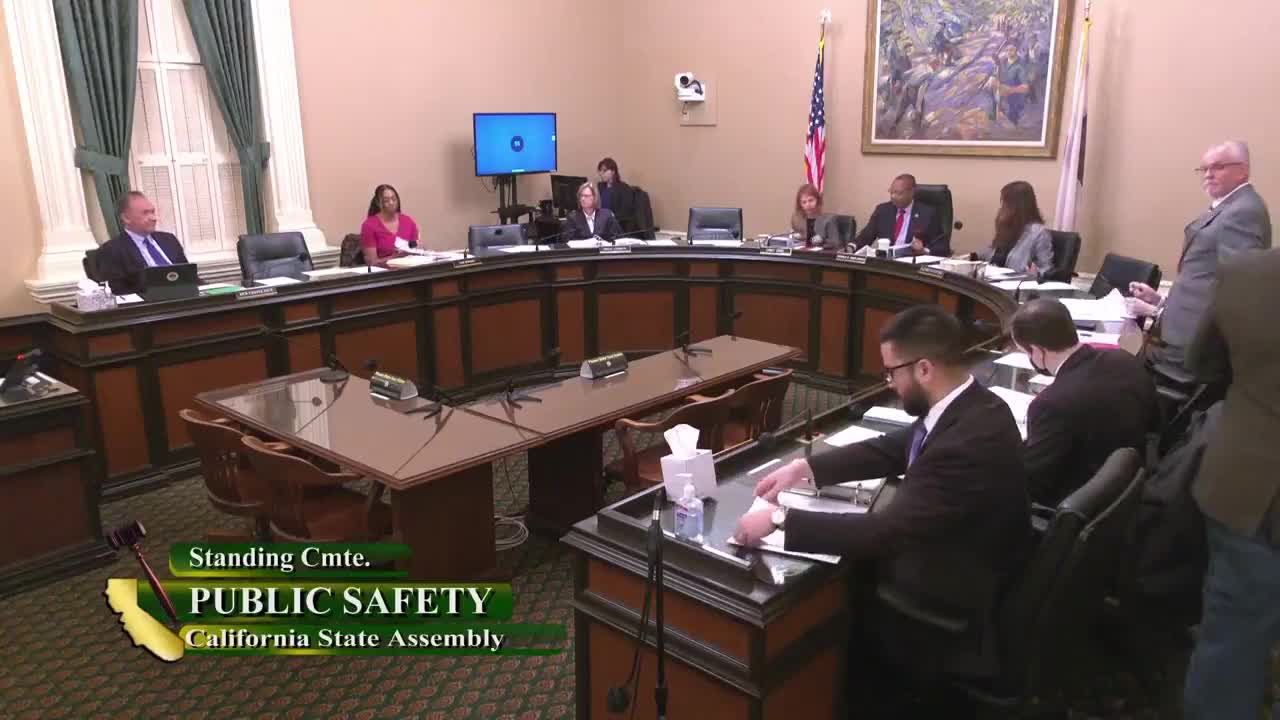 13MIN
Assembly Standing Committee on Public Safety
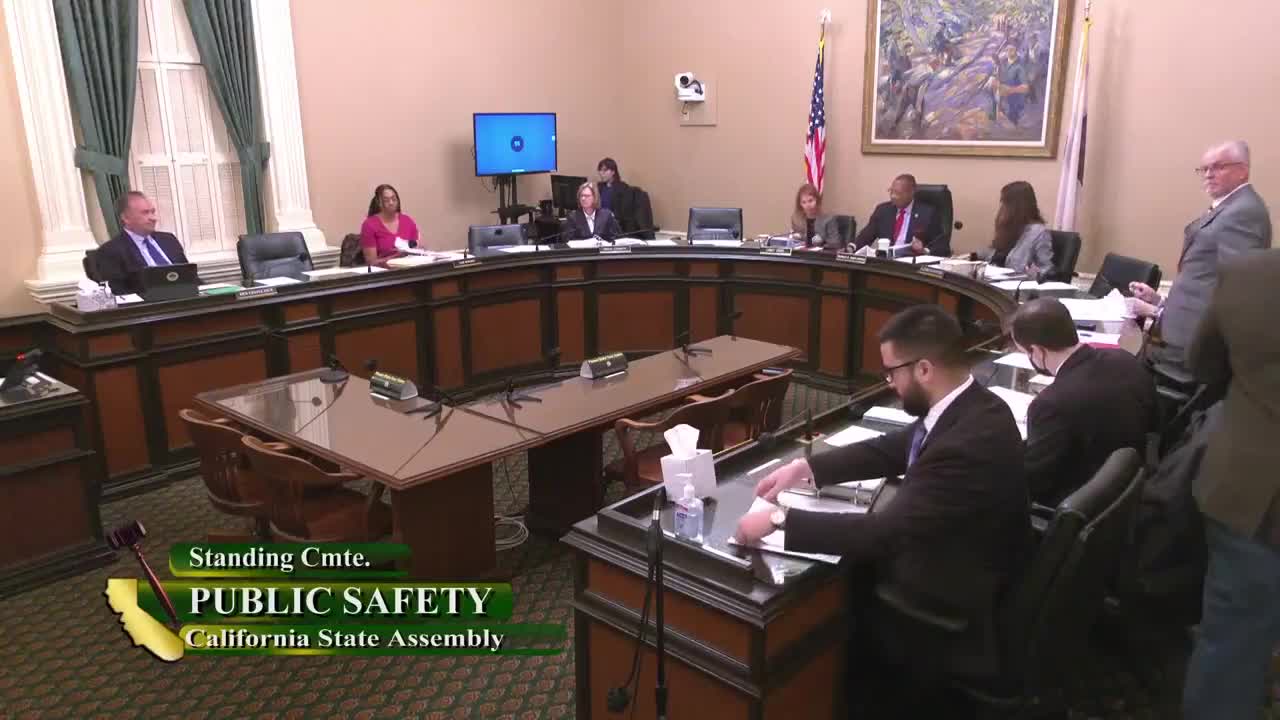 13MIN
Assembly Standing Committee on Public Safety
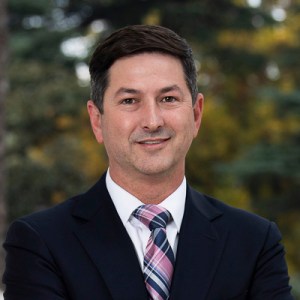
Bill Author
Bill Co-Author(s):