SB 1038: Firearms.
- Session Year: 2023-2024
- House: Senate
- Latest Version Date: 2024-04-11
Current Status:
Failed
(2024-05-16: May 16 hearing: Held in committee and under submission.)
Introduced
In Committee
First Chamber
In Committee
Second Chamber
Enacted
(1)Existing law, as enacted by the Safety for All Act of 2016, an initiative statute approved by voters as Proposition 63 at the November 8, 2016, statewide general election, requires a person to report the loss or theft of a firearm that the person owns or possesses to a local law enforcement agency in the jurisdiction in which the theft or loss occurred within 5 days of the time that the owner or possessor knew or should have known that the firearm had been stolen or lost, as specified.
Proposition 63 allows its provisions to be amended by a vote of 55% of the Legislature so long as the amendments are consistent with, and further the intent of, the act.
This bill would amend Proposition 63 by requiring a person to report the loss or theft within 48 hours of the time that the owner or possessor knew or should have known that the firearm had been stolen or lost.
(2)Existing law directs law enforcement agencies to submit the description of a firearm that has been reported stolen, lost, found, recovered, or under observation directly to an automated Department of Justice system. Existing law requires these law enforcement agencies to report to the Department of Justice any information in their possession necessary to identify and trace the history of a recovered firearm that is illegally possessed, has been used in a crime, or is suspected of having been used in a crime. Existing law requires the department to analyze this data and to submit an annual report to the Legislature summarizing this analysis, as specified.
This bill would require the department to inspect the 25 firearm dealer locations in the annual report that are the source or origin of the highest gross number of firearms that were illegally possessed, used in a crime, or suspected to have been used in a crime, as specified.
(3)Existing law generally regulates the sale and transfer of firearms, including, among other requirements, that every dealer keep a record of electronic or telephonic transfers of firearms.
This bill would require a firearm dealer to annually certify their inventory to the Department of Justice, as specified. Upon request by a local law enforcement agency, the bill would require the Department of Justice to send a copy of the annual certifications to the agency. The bill would authorize the Attorney General, a city attorney, or county counsel to impose a civil penalty on a person who violates this provision in the amount of $3,000 per day for the first violation, $5,000 per day for a 2nd violation, and $10,000 per day for a 3rd and subsequent violation, as specified.
(4)Existing law requires, with certain exceptions, a firearm dealer to report an acquisition of a firearm to the Department of Justice, as specified.
This bill would, commencing January 1, 2027, remove specified exceptions to those provisions.
(1)Existing law, as enacted by the Safety for All Act of 2016, an initiative statute approved by voters as Proposition 63 at the November 8, 2016, statewide general election, requires a person to report the loss or theft of a firearm that the person owns or possesses to a local law enforcement agency in the jurisdiction in which the theft or loss occurred within 5 days of the time that the owner or possessor knew or should have known that the firearm had been stolen or lost, as specified.
Proposition 63 allows its provisions to be amended by a vote of 55% of the Legislature so long as the amendments are consistent with, and further the intent of, the act.
This bill would amend Proposition 63 by requiring a person to report the loss or theft within 2 days 48 hours of the time that the owner or possessor knew or should have known that the firearm had been stolen or lost.
(2)Existing law directs law enforcement agencies to submit the description of a firearm that has been reported stolen, lost, found, recovered, or under observation directly to an automated Department of Justice system. Existing law requires these law enforcement agencies to report to the Department of Justice any information in their possession necessary to identify and trace the history of a recovered firearm that is illegally possessed, has been used in a crime, or is suspected of having been used in a crime. Existing law requires the department to analyze this data and to submit an annual report to the Legislature summarizing this analysis, as specified.
This bill would require the department to inspect the 25 firearm dealer locations in the annual report that are the source or origin of the most highest gross number of firearms that were illegally possessed, used in a crime, or suspected to have been used in a crime, as specified.
(3)Existing law generally regulates the sale and transfer of firearms, including, among other requirements, that every dealer keep a record of electronic or telephonic transfers of firearms.
This bill would require a firearm dealer to annually certify their inventory to a local law enforcement agency in their jurisdiction, the Department of Justice, as specified. Upon request by a local law enforcement agency, the bill would require the Department of Justice to send a copy of the annual certifications to the agency. The bill would authorize a city attorney or county counsel the Attorney General, a city attorney, or county counsel to impose a civil penalty on a person who violates this provision in the amount of $3,000 per day for the first violation, $5,000 per day for a 2nd violation, and $10,000 per day for a 3rd and subsequent violation, as specified.
(4)Existing law requires, with certain exceptions, a firearm dealer to report an acquisition of a firearm to the Department of Justice, as specified.
This bill would, commencing January 1, 2027, remove specified exceptions to those provisions.
(1)Existing law, as enacted by the Safety for All Act of 2016, an initiative statute approved by voters as Proposition 63 at the November 8, 2016, statewide general election, requires a person to report the loss or theft of a firearm that the person owns or possesses to a local law enforcement agency in the jurisdiction in which the theft or loss occurred within 5 days of the time that the owner or possessor knew or should have known that the firearm had been stolen or lost, as specified.
Proposition 63 allows its provisions to be amended by a vote of 55% of the Legislature so long as the amendments are consistent with, and further the intent of, the act.
This bill would amend Proposition 63 by requiring a person to report the loss or theft within 2 days of the time that the owner or possessor knew or should have known that the firearm had been stolen or lost.
(2)Existing law directs law enforcement agencies to submit the description of a firearm that has been reported stolen, lost, found, recovered, or under observation directly to an automated Department of Justice system. Existing law requires these law enforcement agencies to report to the Department of Justice any information in their possession necessary to identify and trace the history of a recovered firearm that is illegally possessed, has been used in a crime, or is suspected of having been used in a crime. Existing law requires the department to analyze this data and to submit an annual report to the Legislature summarizing this analysis, as specified.
This bill would require the department to inspect the 25 firearm dealer locations in the annual report that are the source or origin of the most firearms that were illegally possessed, used in a crime, or suspected to have been used in a crime, as specified.
(3)Existing law generally regulates the sale and transfer of firearms, including, among other requirements, that every dealer keep a record of electronic or telephonic transfers of firearms.
This bill would require a firearm dealer to annually certify their inventory to a local law enforcement agency in their jurisdiction, as specified. The bill would authorize a city attorney or county counsel to impose a civil penalty on a person who violates this provision in the amount of $3,000 per day for the first violation, $5,000 per day for a 2nd violation, and $10,000 per day for a 3rd and subsequent violation, as specified.
(4)Existing law requires, with certain exceptions, a firearm dealer to report an acquisition of a firearm to the Department of Justice, as specified.
This bill would, commencing January 1, 2027, remove specified exceptions to those provisions.
(a)In addition to the requirements of Section 11108.2 that apply to a law enforcement agencys duty to report to the Department of Justice the recovery of a firearm, a law enforcement agency described in Section 11108.2 shall, and any other law enforcement agency or agent, including but not limited to a federal or tribal law enforcement agency or agent, may, report to the department in a manner determined by the Attorney General in consultation with the Bureau of Alcohol, Tobacco, Firearms and Explosives all available information necessary to identify and trace the history of all recovered firearms that are illegally possessed, have been used in a crime, or are suspected of having been used in a crime, within seven calendar days of obtaining the information.
(b)When the department receives information from a law enforcement agency pursuant to subdivision (a), it shall promptly forward this information to the National Tracing Center of the federal Bureau of Alcohol, Tobacco, Firearms and Explosives to the extent practicable.
(c)In implementing this section, the Attorney General shall ensure to the maximum extent practical that both of the following apply:
(1)The information provided to the federal Bureau of Alcohol, Tobacco, Firearms and Explosives enables that agency to trace the ownership of the firearm described in subdivision (a).
(2)Law enforcement agencies can report all relevant information without being unduly burdened by this reporting function.
(d)Information collected pursuant to this section shall be maintained by the department for a period of not less than 10 years, and shall be available, under guidelines set forth by the Attorney General, for academic and policy research purposes.
(e)The department shall, on an ongoing basis, analyze the information collected pursuant to this section for patterns and trends relating to recovered firearms that have been illegally possessed, used in a crime, or suspected to have been used in a crime, including the leading sources and origins of those firearms.
(f)(1)The department shall, by no later than July 1, 2023, and annually thereafter, prepare and submit a report to the Legislature summarizing the analysis completed pursuant to subdivision (e). This report shall be submitted in compliance with Section 9795 of the Government Code.
(2)The report shall, without limitation and to the extent possible, include all of the following:
(A)The total number of firearms recovered in the state.
(B)The number of firearms recovered, disaggregated by county and by city.
(C)The number of firearms recovered, disaggregated by the firearms dealer where the most recent sale or transfer of the firearm occurred. This shall include the full name and address of the firearms dealer.
(D)The number of firearms recovered, disaggregated by manufacturer.
(E)The total number of unserialized firearms recovered in the state.
(F)The number of unserialized firearms recovered, disaggregated by county and by city.
(3)The department shall make the report described in this subdivision available to the public.
(g)The Attorney General may issue regulations to further the purposes of this section.
(h)(1)The department shall inspect the 25 firearm dealer locations that are the source or origin of the highest gross number of firearms that were illegally possessed, used in a crime, or suspected to have been used in a crime, as described in the report specified in subdivision (e) and submitted pursuant to subdivision (f) within the previous year.
(2)This subdivision does not require a dealer location to be inspected if an inspection has already been completed by the department within the previous year pursuant to Section 26720.
SEC. 2.Section 25250 of the Penal Code is amended to read:25250.(a)Every person shall report the loss or theft of a firearm they own or possess to a local law enforcement agency in the jurisdiction in which the theft or loss occurred within 48 hours of the time they knew or reasonably should have known that the firearm had been stolen or lost.
(b)Every person who has reported a firearm lost or stolen under subdivision (a) shall notify the local law enforcement agency in the jurisdiction in which the theft or loss occurred within five days if the firearm is subsequently recovered by the person.
(c)Notwithstanding subdivision (a), a person shall not be required to report the loss or theft of a firearm that is an antique firearm within the meaning of subdivision (c) of Section 16170.
SEC. 3.Section 26835 of the Penal Code is amended to read:26835.(a)A licensee shall conspicuously post within the licensed premises the following warnings in block letters not less than one inch in height:
(1)FIREARMS MUST BE HANDLED RESPONSIBLY AND SECURELY STORED TO PREVENT ACCESS BY CHILDREN AND OTHER UNAUTHORIZED USERS. CALIFORNIA HAS STRICT LAWS PERTAINING TO FIREARMS, AND YOU MAY BE FINED OR IMPRISONED IF YOU FAIL TO COMPLY WITH THEM. VISIT THE WEBSITE OF THE CALIFORNIA ATTORNEY GENERAL AT HTTPS://OAG.CA.GOV/FIREARMS FOR INFORMATION ON FIREARM LAWS APPLICABLE TO YOU AND HOW YOU CAN COMPLY.
(2)IF YOU KEEP A FIREARM WITHIN ANY PREMISES UNDER YOUR CUSTODY OR CONTROL, AND A PERSON UNDER 18 YEARS OF AGE OBTAINS IT AND USES IT, RESULTING IN INJURY OR DEATH, OR CARRIES IT TO A PUBLIC PLACE, YOU MAY BE GUILTY OF A MISDEMEANOR OR A FELONY UNLESS YOU STORED THE FIREARM IN A LOCKED CONTAINER OR LOCKED THE FIREARM WITH A LOCKING DEVICE TO KEEP IT FROM TEMPORARILY FUNCTIONING.
(3)CHILDREN MAY BE UNABLE TO DISTINGUISH FIREARMS FROM TOYS AND MAY OPERATE FIREARMS, CAUSING SEVERE INJURIES OR DEATH. IF YOU KEEP A FIREARM WITHIN ANY PREMISES UNDER YOUR CUSTODY OR CONTROL, AND A PERSON UNDER 18 YEARS OF AGE GAINS ACCESS TO THE FIREARM AND CARRIES IT OFF-PREMISES, YOU MAY BE GUILTY OF A MISDEMEANOR, UNLESS YOU STORED THE FIREARM IN A LOCKED CONTAINER, OR LOCKED THE FIREARM WITH A LOCKING DEVICE TO KEEP IT FROM TEMPORARILY FUNCTIONING.
(4)YOU MAY BE GUILTY OF A MISDEMEANOR, INCLUDING A SIGNIFICANT FINE OR IMPRISONMENT, IF YOU KEEP A FIREARM WHERE A MINOR IS LIKELY TO ACCESS IT OR IF A MINOR OBTAINS AND IMPROPERLY USES IT, OR CARRIES IT OFF OF THE PREMISES TO A SCHOOL OR SCHOOL-SPONSORED EVENT, UNLESS YOU STORED THE FIREARM IN A LOCKED CONTAINER OR LOCKED THE FIREARM WITH A LOCKING DEVICE.
(5)IF YOU NEGLIGENTLY STORE OR LEAVE A FIREARM WITHIN ANY PREMISES UNDER YOUR CUSTODY OR CONTROL WHERE A PERSON UNDER 18 YEARS OF AGE IS LIKELY TO ACCESS IT, YOU MAY BE GUILTY OF A MISDEMEANOR, INCLUDING A SIGNIFICANT FINE, UNLESS YOU STORED THE FIREARM IN A LOCKED CONTAINER OR LOCKED THE FIREARM WITH A LOCKING DEVICE.
(6)DISCHARGING FIREARMS IN POORLY VENTILATED AREAS, CLEANING FIREARMS, OR HANDLING AMMUNITION MAY RESULT IN EXPOSURE TO LEAD, A SUBSTANCE KNOWN TO CAUSE BIRTH DEFECTS, REPRODUCTIVE HARM, AND OTHER SERIOUS PHYSICAL INJURY. HAVE ADEQUATE VENTILATION AT ALL TIMES. WASH HANDS THOROUGHLY AFTER EXPOSURE.
(7)FEDERAL REGULATIONS PROVIDE THAT IF YOU DO NOT TAKE PHYSICAL POSSESSION OF THE FIREARM THAT YOU ARE ACQUIRING OWNERSHIP OF WITHIN 30 DAYS AFTER YOU COMPLETE THE INITIAL BACKGROUND CHECK PAPERWORK, THEN YOU HAVE TO GO THROUGH THE BACKGROUND CHECK PROCESS A SECOND TIME IN ORDER TO TAKE PHYSICAL POSSESSION OF THAT FIREARM.
(8)NO PERSON SHALL MAKE AN APPLICATION TO PURCHASE MORE THAN ONE FIREARM WITHIN ANY 30-DAY PERIOD AND NO DELIVERY SHALL BE MADE TO ANY PERSON WHO HAS MADE AN APPLICATION TO PURCHASE MORE THAN ONE FIREARM WITHIN ANY 30-DAY PERIOD.
(9)IF A FIREARM YOU OWN OR POSSESS IS LOST OR STOLEN, YOU MUST REPORT THE LOSS OR THEFT TO A LOCAL LAW ENFORCEMENT AGENCY WHERE THE LOSS OR THEFT OCCURRED WITHIN 48 HOURS OF THE TIME YOU KNEW OR REASONABLY SHOULD HAVE KNOWN THAT THE FIREARM HAD BEEN LOST OR STOLEN.
(b)(1)In addition to the notice required by subdivision (a), a licensee shall post conspicuously within the licensed premises, on a contrasting background and written in block letters not less than one inch in height, an additional notice containing the following statement:
WARNING:
IF YOU OR A LOVED ONE IS EXPERIENCING DISTRESS OR DEPRESSION OR IS CONTEMPLATING SUICIDE, PLEASE CALL 988 (THE 988 SUICIDE AND CRISIS LIFELINE).
ACCESS TO A FIREARM IN THE HOME SIGNIFICANTLY INCREASES THE RISK OF SUICIDE, DEATH, AND INJURY DURING DOMESTIC VIOLENCE DISPUTES, AND THE UNINTENTIONAL DEATH AND TRAUMATIC INJURY TO CHILDREN, HOUSEHOLD MEMBERS, AND GUESTS.
(2)The statement in paragraph (1) shall be posted on the counter of one of the main gun displays or within five feet of the cash register. In the case that posting the statement on the counter of a gun display or within five feet of the cash register is impossible, the licensed dealer shall post the statement conspicuously within the licensed premises. The statement shall not be placed on the floor or the ceiling of the premises.
(3)The word WARNING in paragraph (1) shall be on a separate line above the other text in the statement.
(4)The sentence IF YOU OR A LOVED ONE IS EXPERIENCING DISTRESS OR DEPRESSION OR IS CONTEMPLATING SUICIDE, PLEASE CALL 988 (THE 988 SUICIDE AND CRISIS LIFELINE). in paragraph (1) shall be on a separate line below WARNING and above the other text in the statement.
(c)This section shall become operative on January 1, 2024.
SEC. 4.Section 26905 of the Penal Code is amended to read:26905.(a)On the date of receipt, a licensee shall report to the Department of Justice, in a format prescribed by the department, the acquisition by the licensee of the ownership of a firearm.
(b)The provisions of this section shall not apply to any of the following transactions:
(1)A transaction subject to the provisions of Sections 26960 and 27660.
(2)The dealer acquired the firearm from a wholesaler.
(3)The dealer acquired the firearm from a person who is licensed as a manufacturer or importer to engage in those activities pursuant to Chapter 44 (commencing with Section 921) of Title 18 of the United States Code and any regulations issued pursuant to those provisions.
(4)The dealer acquired the firearm from a person who resides outside this state who is licensed pursuant to Chapter 44 (commencing with Section 921) of Title 18 of the United States Code and any regulations issued pursuant to those provisions.
(5)When a dealer who is also licensed as a secondhand dealer, pursuant to Article 4 (commencing with Section 21625) of Chapter 9 of Division 8 of the Business and Professions Code, acquires a firearm and reports its acquisition pursuant to Section 21628.2 of the Business and Professions Code.
(c)This section shall become inoperative on January 1, 2027, and as of that date is repealed.
SEC. 5.Section 26905 is added to the Penal Code, to read:26905.(a)On the date of receipt, a licensee shall report to the Department of Justice, in a format prescribed by the department, the acquisition by the licensee of the ownership of a firearm.
(b)The provisions of this section shall not apply to any either of the following transactions:
(1)A transaction subject to the provisions of Sections 26960 and 27660.
(2)When a dealer who is also licensed as a secondhand dealer, pursuant to Article 4 (commencing with Section 21625) of Chapter 9 of Division 8 of the Business and Professions Code, acquires a firearm and reports its acquisition pursuant to Section 21628.2 of the Business and Professions Code.
(c)This section shall become operative on January 1, 2027.
SEC. 6.Article 7 (commencing with Section 28495) is added to Chapter 6 of Division 6 of Title 4 of Part 6 of the Penal Code, to read:7.Annual Reporting of Inventory by Dealers28495.(a)(1)A firearm dealer shall annually annually, by December 31 of each year, certify their inventory to the Department of Justice.
(2)A firearm dealer shall include the make, model, and serial number of their entire inventory in the annual certification.
(3)Upon request by a local law enforcement agency, the Department of Justice shall send a copy of the annual certifications to the agency.
(b)The Attorney General, a city attorney, or county counsel may impose a civil penalty on a person who violates this section in the amount of three thousand dollars ($3,000) per day for the first violation, five thousand dollars ($5,000) per day for a second violation, and ten thousand dollars ($10,000) per day for a third and subsequent violation. Any civil penalties collected pursuant to this section shall be paid to the office of the Attorney General, city attorney, or county counsel, whichever office brought the action.
(a)In addition to the requirements of Section 11108.2 that apply to a law enforcement agencys duty to report to the Department of Justice the recovery of a firearm, a law enforcement agency described in Section 11108.2 shall, and any other law enforcement agency or agent, including but not limited to a federal or tribal law enforcement agency or agent, may, report to the department in a manner determined by the Attorney General in consultation with the Bureau of Alcohol, Tobacco, Firearms and Explosives all available information necessary to identify and trace the history of all recovered firearms that are illegally possessed, have been used in a crime, or are suspected of having been used in a crime, within seven calendar days of obtaining the information.
(b)When the department receives information from a law enforcement agency pursuant to subdivision (a), it shall promptly forward this information to the National Tracing Center of the federal Bureau of Alcohol, Tobacco, Firearms and Explosives to the extent practicable.
(c)In implementing this section, the Attorney General shall ensure to the maximum extent practical that both of the following apply:
(1)The information provided to the federal Bureau of Alcohol, Tobacco, Firearms and Explosives enables that agency to trace the ownership of the firearm described in subdivision (a).
(2)Law enforcement agencies can report all relevant information without being unduly burdened by this reporting function.
(d)Information collected pursuant to this section shall be maintained by the department for a period of not less than 10 years, and shall be available, under guidelines set forth by the Attorney General, for academic and policy research purposes.
(e)The department shall, on an ongoing basis, analyze the information collected pursuant to this section for patterns and trends relating to recovered firearms that have been illegally possessed, used in a crime, or suspected to have been used in a crime, including the leading sources and origins of those firearms.
(f)(1)The department shall, by no later than July 1, 2023, and annually thereafter, prepare and submit a report to the Legislature summarizing the analysis completed pursuant to subdivision (e). This report shall be submitted in compliance with Section 9795 of the Government Code.
(2)The report shall, without limitation and to the extent possible, include all of the following:
(A)The total number of firearms recovered in the state.
(B)The number of firearms recovered, disaggregated by county and by city.
(C)The number of firearms recovered, disaggregated by the firearms dealer where the most recent sale or transfer of the firearm occurred. This shall include the full name and address of the firearms dealer.
(D)The number of firearms recovered, disaggregated by manufacturer.
(E)The total number of unserialized firearms recovered in the state.
(F)The number of unserialized firearms recovered, disaggregated by county and by city.
(3)The department shall make the report described in this subdivision available to the public.
(g)The Attorney General may issue regulations to further the purposes of this section.
(h)(1)The department shall inspect the 25 firearm dealer locations that are the source or origin of the most highest gross number of firearms that were illegally possessed, used in a crime, or suspected to have been used in a crime, as described in the report specified in subdivision (e) and submitted pursuant to subdivision (f) within the previous year.
(2)This subdivision does not require a dealer location to be inspected if an inspection has already been completed by the department within the previous year pursuant to Section 26720.
SEC. 2.Section 25250 of the Penal Code is amended to read:25250.(a)Every person shall report the loss or theft of a firearm they own or possess to a local law enforcement agency in the jurisdiction in which the theft or loss occurred within two days 48 hours of the time they knew or reasonably should have known that the firearm had been stolen or lost.
(b)Every person who has reported a firearm lost or stolen under subdivision (a) shall notify the local law enforcement agency in the jurisdiction in which the theft or loss occurred within five days if the firearm is subsequently recovered by the person.
(c)Notwithstanding subdivision (a), a person shall not be required to report the loss or theft of a firearm that is an antique firearm within the meaning of subdivision (c) of Section 16170.
SEC. 3.Section 26835 of the Penal Code is amended to read:26835.(a)A licensee shall conspicuously post within the licensed premises the following warnings in block letters not less than one inch in height:
(1)FIREARMS MUST BE HANDLED RESPONSIBLY AND SECURELY STORED TO PREVENT ACCESS BY CHILDREN AND OTHER UNAUTHORIZED USERS. CALIFORNIA HAS STRICT LAWS PERTAINING TO FIREARMS, AND YOU MAY BE FINED OR IMPRISONED IF YOU FAIL TO COMPLY WITH THEM. VISIT THE WEBSITE OF THE CALIFORNIA ATTORNEY GENERAL AT HTTPS://OAG.CA.GOV/FIREARMS FOR INFORMATION ON FIREARM LAWS APPLICABLE TO YOU AND HOW YOU CAN COMPLY.
(2)IF YOU KEEP A FIREARM WITHIN ANY PREMISES UNDER YOUR CUSTODY OR CONTROL, AND A PERSON UNDER 18 YEARS OF AGE OBTAINS IT AND USES IT, RESULTING IN INJURY OR DEATH, OR CARRIES IT TO A PUBLIC PLACE, YOU MAY BE GUILTY OF A MISDEMEANOR OR A FELONY UNLESS YOU STORED THE FIREARM IN A LOCKED CONTAINER OR LOCKED THE FIREARM WITH A LOCKING DEVICE TO KEEP IT FROM TEMPORARILY FUNCTIONING.
(3)CHILDREN MAY BE UNABLE TO DISTINGUISH FIREARMS FROM TOYS AND MAY OPERATE FIREARMS, CAUSING SEVERE INJURIES OR DEATH. IF YOU KEEP A FIREARM WITHIN ANY PREMISES UNDER YOUR CUSTODY OR CONTROL, AND A PERSON UNDER 18 YEARS OF AGE GAINS ACCESS TO THE FIREARM AND CARRIES IT OFF-PREMISES, YOU MAY BE GUILTY OF A MISDEMEANOR, UNLESS YOU STORED THE FIREARM IN A LOCKED CONTAINER, OR LOCKED THE FIREARM WITH A LOCKING DEVICE TO KEEP IT FROM TEMPORARILY FUNCTIONING.
(4)YOU MAY BE GUILTY OF A MISDEMEANOR, INCLUDING A SIGNIFICANT FINE OR IMPRISONMENT, IF YOU KEEP A FIREARM WHERE A MINOR IS LIKELY TO ACCESS IT OR IF A MINOR OBTAINS AND IMPROPERLY USES IT, OR CARRIES IT OFF OF THE PREMISES TO A SCHOOL OR SCHOOL-SPONSORED EVENT, UNLESS YOU STORED THE FIREARM IN A LOCKED CONTAINER OR LOCKED THE FIREARM WITH A LOCKING DEVICE.
(5)IF YOU NEGLIGENTLY STORE OR LEAVE A FIREARM WITHIN ANY PREMISES UNDER YOUR CUSTODY OR CONTROL WHERE A PERSON UNDER 18 YEARS OF AGE IS LIKELY TO ACCESS IT, YOU MAY BE GUILTY OF A MISDEMEANOR, INCLUDING A SIGNIFICANT FINE, UNLESS YOU STORED THE FIREARM IN A LOCKED CONTAINER OR LOCKED THE FIREARM WITH A LOCKING DEVICE.
(6)DISCHARGING FIREARMS IN POORLY VENTILATED AREAS, CLEANING FIREARMS, OR HANDLING AMMUNITION MAY RESULT IN EXPOSURE TO LEAD, A SUBSTANCE KNOWN TO CAUSE BIRTH DEFECTS, REPRODUCTIVE HARM, AND OTHER SERIOUS PHYSICAL INJURY. HAVE ADEQUATE VENTILATION AT ALL TIMES. WASH HANDS THOROUGHLY AFTER EXPOSURE.
(7)FEDERAL REGULATIONS PROVIDE THAT IF YOU DO NOT TAKE PHYSICAL POSSESSION OF THE FIREARM THAT YOU ARE ACQUIRING OWNERSHIP OF WITHIN 30 DAYS AFTER YOU COMPLETE THE INITIAL BACKGROUND CHECK PAPERWORK, THEN YOU HAVE TO GO THROUGH THE BACKGROUND CHECK PROCESS A SECOND TIME IN ORDER TO TAKE PHYSICAL POSSESSION OF THAT FIREARM.
(8)NO PERSON SHALL MAKE AN APPLICATION TO PURCHASE MORE THAN ONE FIREARM WITHIN ANY 30-DAY PERIOD AND NO DELIVERY SHALL BE MADE TO ANY PERSON WHO HAS MADE AN APPLICATION TO PURCHASE MORE THAN ONE FIREARM WITHIN ANY 30-DAY PERIOD.
(9)IF A FIREARM YOU OWN OR POSSESS IS LOST OR STOLEN, YOU MUST REPORT THE LOSS OR THEFT TO A LOCAL LAW ENFORCEMENT AGENCY WHERE THE LOSS OR THEFT OCCURRED WITHIN FIVE DAYS 48 HOURS OF THE TIME YOU KNEW OR REASONABLY SHOULD HAVE KNOWN THAT THE FIREARM HAD BEEN LOST OR STOLEN.
(b)(1)In addition to the notice required by subdivision (a), a licensee shall post conspicuously within the licensed premises, on a contrasting background and written in block letters not less than one inch in height, an additional notice containing the following statement:
WARNING:
IF YOU OR A LOVED ONE IS EXPERIENCING DISTRESS OR DEPRESSION OR IS CONTEMPLATING SUICIDE, PLEASE CALL 988 (THE 988 SUICIDE AND CRISIS LIFELINE).
ACCESS TO A FIREARM IN THE HOME SIGNIFICANTLY INCREASES THE RISK OF SUICIDE, DEATH, AND INJURY DURING DOMESTIC VIOLENCE DISPUTES, AND THE UNINTENTIONAL DEATH AND TRAUMATIC INJURY TO CHILDREN, HOUSEHOLD MEMBERS, AND GUESTS.
(2)The statement in paragraph (1) shall be posted on the counter of one of the main gun displays or within five feet of the cash register. In the case that posting the statement on the counter of a gun display or within five feet of the cash register is impossible, the licensed dealer shall post the statement conspicuously within the licensed premises. The statement shall not be placed on the floor or the ceiling of the premises.
(3)The word WARNING in paragraph (1) shall be on a separate line above the other text in the statement.
(4)The sentence IF YOU OR A LOVED ONE IS EXPERIENCING DISTRESS OR DEPRESSION OR IS CONTEMPLATING SUICIDE, PLEASE CALL 988 (THE 988 SUICIDE AND CRISIS LIFELINE). in paragraph (1) shall be on a separate line below WARNING and above the other text in the statement.
(c)This section shall become operative on January 1, 2024.
SEC. 3.SEC. 4.Section 26905 of the Penal Code is amended to read:26905.(a)On the date of receipt, a licensee shall report to the Department of Justice, in a format prescribed by the department, the acquisition by the licensee of the ownership of a firearm.
(b)The provisions of this section shall not apply to any of the following transactions:
(1)A transaction subject to the provisions of Sections 26960 and 27660.
(2)The dealer acquired the firearm from a wholesaler.
(3)The dealer acquired the firearm from a person who is licensed as a manufacturer or importer to engage in those activities pursuant to Chapter 44 (commencing with Section 921) of Title 18 of the United States Code and any regulations issued pursuant to those provisions.
(4)The dealer acquired the firearm from a person who resides outside this state who is licensed pursuant to Chapter 44 (commencing with Section 921) of Title 18 of the United States Code and any regulations issued pursuant to those provisions.
(5)When a dealer who is also licensed as a secondhand dealer, pursuant to Article 4 (commencing with Section 21625) of Chapter 9 of Division 8 of the Business and Professions Code, acquires a firearm and reports its acquisition pursuant to Section 21628.2 of the Business and Professions Code.
(c)This section shall become inoperative on January 1, 2027, and as of that date is repealed.
SEC. 4.SEC. 5.Section 26905 is added to the Penal Code, to read:26905.(a)On the date of receipt, a licensee shall report to the Department of Justice, in a format prescribed by the department, the acquisition by the licensee of the ownership of a firearm.
(b)The provisions of this section shall not apply to any of the following transactions:
(1)A transaction subject to the provisions of Sections 26960 and 27660.
(2)When a dealer who is also licensed as a secondhand dealer, pursuant to Article 4 (commencing with Section 21625) of Chapter 9 of Division 8 of the Business and Professions Code, acquires a firearm and reports its acquisition pursuant to Section 21628.2 of the Business and Professions Code.
(c)This section shall become operative on January 1, 2027.
SEC. 5.SEC. 6.Article 7 (commencing with Section 28495) is added to Chapter 6 of Division 6 of Title 4 of Part 6 of the Penal Code, to read:7.Annual Reporting of Inventory by Dealers28495.(a)(1)A firearm dealer shall annually certify their inventory to a local law enforcement agency in their jurisdiction. the Department of Justice.
(2)A firearm dealer shall include the make, model, and serial number of their entire inventory in the annual certification.
(3)Upon request by a local law enforcement agency, the Department of Justice shall send a copy of the annual certifications to the agency.
(b)A city attorney or county counsel The Attorney General, a city attorney, or county counsel may impose a civil penalty on a person who violates this section in the amount of three thousand dollars ($3,000) per day for the first violation, five thousand dollars ($5,000) per day for a second violation, and ten thousand dollars ($10,000) per day for a third and subsequent violation. Any civil penalties collected pursuant to this section shall be paid to the office of the city attorney or county counsel, Attorney General, city attorney, or county counsel, whichever office brought the action.
(a)In addition to the requirements of Section 11108.2 that apply to a law enforcement agencys duty to report to the Department of Justice the recovery of a firearm, a law enforcement agency described in Section 11108.2 shall, and any other law enforcement agency or agent, including but not limited to a federal or tribal law enforcement agency or agent, may, report to the department in a manner determined by the Attorney General in consultation with the Bureau of Alcohol, Tobacco, Firearms and Explosives all available information necessary to identify and trace the history of all recovered firearms that are illegally possessed, have been used in a crime, or are suspected of having been used in a crime, within seven calendar days of obtaining the information.
(b)When the department receives information from a law enforcement agency pursuant to subdivision (a), it shall promptly forward this information to the National Tracing Center of the federal Bureau of Alcohol, Tobacco, Firearms and Explosives to the extent practicable.
(c)In implementing this section, the Attorney General shall ensure to the maximum extent practical that both of the following apply:
(1)The information provided to the federal Bureau of Alcohol, Tobacco, Firearms and Explosives enables that agency to trace the ownership of the firearm described in subdivision (a).
(2)Law enforcement agencies can report all relevant information without being unduly burdened by this reporting function.
(d)Information collected pursuant to this section shall be maintained by the department for a period of not less than 10 years, and shall be available, under guidelines set forth by the Attorney General, for academic and policy research purposes.
(e)The department shall, on an ongoing basis, analyze the information collected pursuant to this section for patterns and trends relating to recovered firearms that have been illegally possessed, used in a crime, or suspected to have been used in a crime, including the leading sources and origins of those firearms.
(f)(1)The department shall, by no later than July 1, 2023, and annually thereafter, prepare and submit a report to the Legislature summarizing the analysis completed pursuant to subdivision (e). This report shall be submitted in compliance with Section 9795 of the Government Code.
(2)The report shall, without limitation and to the extent possible, include all of the following:
(A)The total number of firearms recovered in the state.
(B)The number of firearms recovered, disaggregated by county and by city.
(C)The number of firearms recovered, disaggregated by the firearms dealer where the most recent sale or transfer of the firearm occurred. This shall include the full name and address of the firearms dealer.
(D)The number of firearms recovered, disaggregated by manufacturer.
(E)The total number of unserialized firearms recovered in the state.
(F)The number of unserialized firearms recovered, disaggregated by county and by city.
(3)The department shall make the report described in this subdivision available to the public.
(g)The Attorney General may issue regulations to further the purposes of this section.
(h)(1)The department shall inspect the 25 firearm dealer locations that are the source or origin of the most firearms that were illegally possessed, used in a crime, or suspected to have been used in a crime, as described in the report specified in subdivision (e) and submitted pursuant to subdivision (f) within the previous year.
(2)This subdivision does not require a dealer location to be inspected if an inspection has already been completed by the department within the previous year pursuant to Section 26720.
SEC. 2.Section 25250 of the Penal Code is amended to read:25250.(a)Commencing July 1, 2017, every Every person shall report the loss or theft of a firearm he or she owns or possesses they own or possess to a local law enforcement agency in the jurisdiction in which the theft or loss occurred within five days of the time he or she two days of the time they knew or reasonably should have known that the firearm had been stolen or lost.
(b)Every person who has reported a firearm lost or stolen under subdivision (a) shall notify the local law enforcement agency in the jurisdiction in which the theft or loss occurred within five days if the firearm is subsequently recovered by the person.
(c)Notwithstanding subdivision (a), a person shall not be required to report the loss or theft of a firearm that is an antique firearm within the meaning of subdivision (c) of Section 16170.
SEC. 3.Section 26905 of the Penal Code is amended to read:26905.(a)On the date of receipt, a licensee shall report to the Department of Justice, in a format prescribed by the department, the acquisition by the licensee of the ownership of a handgun, and commencing January 1, 2014, of any a firearm.
(b)The provisions of this section shall not apply to any of the following transactions:
(1)A transaction subject to the provisions of Sections 26960 and 27660.
(2)The dealer acquired the firearm from a wholesaler.
(3)The dealer acquired the firearm from a person who is licensed as a manufacturer or importer to engage in those activities pursuant to Chapter 44 (commencing with Section 921) of Title 18 of the United States Code and any regulations issued pursuant thereto. to those provisions.
(4)The dealer acquired the firearm from a person who resides outside this state who is licensed pursuant to Chapter 44 (commencing with Section 921) of Title 18 of the United States Code and any regulations issued pursuant thereto. to those provisions.
(5)The dealer is also licensed as a secondhand dealer pursuant to Article 4 (commencing with Section 21625) of Chapter 9 of Division 8 of the Business and Professions Code, acquires a handgun, and, commencing January 1, 2014, any firearm, and reports its acquisition pursuant to Section 21628.2 of the Business and Professions Code.(5)When a dealer who is also licensed as a secondhand dealer, pursuant to Article 4 (commencing with Section 21625) of Chapter 9 of Division 8 of the Business and Professions Code, acquires a firearm and reports its acquisition pursuant to Section 21628.2 of the Business and Professions Code.
(c)This section shall become inoperative on January 1, 2027, and as of that date is repealed.
SEC. 4.Section 26905 is added to the Penal Code, to read:26905.(a)On the date of receipt, a licensee shall report to the Department of Justice, in a format prescribed by the department, the acquisition by the licensee of the ownership of a firearm.
(b)The provisions of this section shall not apply to any of the following transactions:
(1)A transaction subject to the provisions of Sections 26960 and 27660.
(2)When a dealer who is also licensed as a secondhand dealer, pursuant to Article 4 (commencing with Section 21625) of Chapter 9 of Division 8 of the Business and Professions Code, acquires a firearm and reports its acquisition pursuant to Section 21628.2 of the Business and Professions Code.
(c)This section shall become operative on January 1, 2027.
SEC. 5.Article 7 (commencing with Section 28495) is added to Chapter 6 of Division 6 of Title 4 of Part 6 of the Penal Code, to read:7.Annual Reporting of Inventory by Dealers28495.(a)(1)A firearm dealer shall annually certify their inventory to a local law enforcement agency in their jurisdiction.
(2)A firearm dealer shall include the make, model, and serial number of their entire inventory in the annual certification.
(b)A city attorney or county counsel may impose a civil penalty on a person who violates this section in the amount of three thousand dollars ($3,000) per day for the first violation, five thousand dollars ($5,000) per day for a second violation, and ten thousand dollars ($10,000) per day for a third and subsequent violation. Any civil penalties collected pursuant to this section shall be paid to the office of the city attorney or county counsel, whichever office brought the action.
|
Date
|
Status
|
|---|---|
| May 16, 2024 | May 16 hearing: Held in committee and under submission. |
| May 14, 2024 | Set for hearing May 16. |
| May 13, 2024 | May 13 hearing: Placed on APPR suspense file. |
| May 3, 2024 | Set for hearing May 13. |
| Apr 11, 2024 | Read second time and amended. Re-referred to Com. on APPR. |
| Apr 10, 2024 | From committee: Do pass as amended and re-refer to Com. on APPR. (Ayes 8. Noes 2. Page 3530.) (April 9). |
| Mar 28, 2024 | Set for hearing April 9. |
| Mar 19, 2024 | From committee: Do pass and re-refer to Com. on JUD. (Ayes 4. Noes 1. Page 3351.) (March 19). Re-referred to Com. on JUD. |
| Mar 11, 2024 | From committee with author's amendments. Read second time and amended. Re-referred to Com. on PUB S. |
| Feb 28, 2024 | Set for hearing March 19. |
| Feb 14, 2024 | Referred to Coms. on PUB S. and JUD. |
| Feb 7, 2024 | From printer. May be acted upon on or after March 8. |
| Feb 6, 2024 | Introduced. Read first time. To Com. on RLS. for assignment. To print. |
|
Date
|
Description
|
Location
|
Votes
|
|
|---|---|---|---|---|
| May 13, 2024 | Placed on suspense file | Senate Standing Committee on Appropriations |
Passed |
|
| Apr 9, 2024 | Do pass as amended, but first amend, and re-refer to the Committee on [Appropriations] | Senate Standing Committee on Judiciary |
Passed |
|
| Mar 19, 2024 | Do pass, but first be re-referred to the Committee on [Judiciary] | Senate Standing Committee on Public Safety |
Passed |
This list shows positions taken on this bill by organizations on the date displayed, which is linked to the original source.
Positions by individuals are not included.
|
Organization
|
Position
|
Date
|
|---|---|---|
| Accountable | ** Support | |
| All Rise Alameda | ** Support | |
| Brady Campaign to Prevent Gun Violence | * Support | Apr 9, 2024 |
| Building the Base Face to Face | ** Support | |
| California Attorneys For Criminal Justice | * Indeterminate | Mar 19, 2024 |
| California Resident | * Against | Mar 19, 2024 |
| California Rifle & Pistol Association, Inc. | ** Against | |
| Change Begins With Me | ** Support | |
| City Of Alameda | * Support | Apr 9, 2024 |
| Cloverdale Indivisible | ** Support | |
| Contra Costa Move On | ** Support | |
| Defending Our Future: Indivisible in CA 52nd District | ** Support | |
| East Valley Indivisibles | ** Support | |
| El Cerrito Progressives | ** Support | |
| Everytown for Gun Safety | * Support | Apr 9, 2024 |
| Feminists In Action Los Angeles | ** Support | |
| Giffords Law Center to Prevent Gun Violence | * Support | Apr 9, 2024 |
| Gun Owners Of California Inc | ** Against | |
| Hillcrest Indivisible | ** Support | |
| Indi Squared | ** Support | |
| Indian Valley Indivisibles | ** Support | |
| Indivisible 30/Keep Sherman | ** Support | |
| Indivisible 36 | ** Support | |
| Indivisible 41 | ** Support | |
| Indivisible Auburn Ca | ** Support | |
| Indivisible Beach Cities | ** Support | |
| Indivisible Ca-25 Simi Valley Porter Ranch | ** Support | |
| Indivisible CA-29 Indivisible CA-37 | ** Support | |
| Indivisible Ca-33 | ** Support | |
| Indivisible CA-37 | ** Support | |
| Indivisible Ca-39 | ** Support | |
| Indivisible Ca-43 | ** Support | |
| Indivisible Claremont / Inland Valley | ** Support | |
| Indivisible Colusa County Indivisible East Bay | ** Support | |
| Indivisible El Dorado Hills | ** Support | |
| Indivisible Elmwood | ** Support | |
| Indivisible Euclid | ** Support | |
| Indivisible Lorin | ** Support | |
| Indivisible Los Angeles | ** Support | |
| Indivisible Manteca | ** Support | |
| Indivisible Marin | ** Support | |
| Indivisible Media City Burbank | ** Support | |
| Indivisible Mendocino | ** Support | |
| Indivisible Normal Heights | ** Support | |
| Indivisible North Oakland Resistance | ** Support | |
| Indivisible North San Diego County | ** Support | |
| Indivisible OC 46 | ** Support | |
| Indivisible OC 48 | ** Support | |
| Indivisible Petaluma | ** Support | |
| Indivisible Sacramento | ** Support | |
| Indivisible San Bernardino | ** Support | |
| Indivisible San Jose | ** Support | |
| Indivisible San Pedro | ** Support | |
| Indivisible Santa Barbara | ** Support | |
| Indivisible Santa Cruz County | ** Support | |
| Indivisible Sausalito | ** Support | |
| Indivisible Sebastopol | ** Support | |
| Indivisible Sf | ** Support | |
| Indivisible Sf Peninsula And Ca-14 | ** Support | |
| Indivisible Sonoma County | ** Support | |
| Indivisible South Bay LA | ** Support | |
| Indivisible Stanislaus | ** Support | |
| Indivisible Suffragists Indivisible Ventura Indivisible Westside L.A. | ** Support | |
| Indivisible Windsor | ** Support | |
| Indivisible Yolo | ** Support | |
| Indivisible: San Diego Central | ** Support | |
| Indivisibles Of Sherman Oaks | ** Support | |
| Livermore Indivisible | ** Support | |
| mill valley community action network | ** Support | |
| Mountain Progressives | ** Support | |
| National Rifle Association | * Against | Mar 19, 2024 |
| NeverAgainCA | ** Support | |
| Nothing Rhymes With Orange | ** Support | |
| Orchard City Indivisible | ** Support | |
| Orinda Progressive Action Alliance | ** Support | |
| our revolution, long beach | ** Support | |
| Prosecutors Alliance of California, a Project of Tides Advocacy | ** Support | |
| Riseup | ** Support | |
| Rooted in Resistance | ** Support | |
| Ross Valley Indivisible | ** Support | |
| San Diegans for Gun Violence Prevention | * Support | Apr 9, 2024 |
| San Diego City Attorney's Office | ** Support | |
| San Diego Indivisible Downtown | ** Support | |
| SFV Indivisible | ** Support | |
| Tehama Indivisible | ** Support | |
| The Resistance Northridge | ** Support | |
| Together We Will Contra Costa | ** Support | |
| Tww/indivisible - Los Gatos | ** Support | |
| Vallejo-Benicia Indivisible | ** Support | |
| Venice Resistance | ** Support | |
| Women for American Values and Ethics | ** Support | |
| Women's Alliance Los Angeles | ** Support | |
| Yalla Indivisible | ** Support |
SENATE COMMITTEE ON
Senator Anna Caballero, Chair
2023 - 2024 Regular Session
SB 1038 (Blakespear) - Firearms
Version: | Policy Vote: |
Urgency: | Mandate: |
Hearing Date: | Consultant: |
Bill Summary: AB 1038 amends Proposition 63 (2016) to shorten the timeframe in which a gun owner must report a lost or stolen firearm, from 5 days to 48 hours; requires the Department of Justice (DOJ) to inspect the 25 firearm dealer locations that are the source of the highest gross number of crime guns in the previous year, as specified; and, requires firearm dealers to annually certify their inventory and report specified acquisitions to the DOJ.
Fiscal Impact:
- Unknown, potentially reimbursable costs to local law enforcement agencies to process reports of lost and stolen precursor parts and enter them into the Automated Firearms Systems (AFS) database (local funds, General Fund). General Fund costs will depend on whether the duties imposed by this bill constitute a reimbursable state mandate, as determined by the Commission on State Mandates.
- Unknown potentially significant costs pressures (General Fund, DROS Fund) to the Department of Justice (DOJ) for workload increases due to the additional inspections required by this bill.
Background: Federal law requires firearms dealers to obtain a license (also known as a “federal firearms license,” or “FFL”) through the Bureau of Alcohol, Tobacco, Firearms and Explosives (ATF). An FFL is necessary but not sufficient for obtaining a firearms dealer license in California. Additional requirements include any business license required by local government, a seller’s permit issued by the California Department of Tax and Fee Administration, a seller’s license issued by the local licensing authority of a local government, a certificate of eligibility (COE) issued by the DOJ (verifying that a background check has taken place), and being recorded on the DOJ’s centralized list of firearms dealers. In California, only individuals that have obtained a valid license through the DOJ may lawfully sell, lease or transfer firearms within the state, subject to limited exceptions. Licensed firearms dealers in California are subject to inspections by both the state and federal government. As of 2022, existing law requires the DOJ to conduct inspections of licensed firearms dealers every three years to ensure compliance.
Proposed Law:
- Requires DOJ to inspect the 25 firearm dealer locations that are the source or origin of the highest gross number of firearms that were illegally possessed, used in a crime, or suspected to have been used in a crime within the previous year, unless an inspection of the dealer location has already been completed by the DOJ within the previous year.
- Requires every person to report the loss of a firearm they own or possess within 48 hours, instead of 5 days, of the time they knew or reasonably should have known the firearm is stolen or lost. Requires licensees to update the forms they are required to post at their premises to reflect this change.
- Requires firearm dealers to annually, by December 31 of each year, certify their inventory to the DOJ The certification must include the make, model, and serial number of the dealer’s entire inventory.
- Requires, upon request by a local law enforcement agency, the DOJ to send a copy of the annual certifications to the agency.
- Authorizes the Attorney General (AG), city attorneys, and county counsels to impose a civil penalty on a person who fails to certify their inventory to the DOJ in the amount of $3,000 per day for the first violation, $5,000 per day for a second violation, $10,000 per day for a third and subsequent violation. Civil penalties collected pursuant to this section shall be paid to the office of the AG, city attorney, or county counsel, whichever office brought the action.
- Repeals the exceptions for firearms dealers to report acquisitions of firearms from a wholesaler and acquisitions from parties licensed pursuant to federal law commencing January 1, 2027.
-- END --
Senator Thomas Umberg, Chair
2023-2024 Regular Session
Bill No: SB 1038 (Author:Blakespear)
Version: March 11, 2024
Hearing Date: April 9, 2024
Fiscal: Yes
Urgency: No
Consultant: AM
SUBJECT
Firearms
DIGEST
This bill requires every person to report the loss or theft of a firearm owned or possessed by them to a local law enforcement agency within 48 hours of knowing or when the person reasonably should have known the firearm was stolen or lost. The bill requires the California Department of Justice (DOJ) to inspect the 25 firearm dealer locations that are the source or origin of crime guns,[1] as specified. The bill requires a firearms dealer to annually certify their inventory to the DOJ and makes a person who violates this provision subject to a civil penalty. The bill also requires, beginning January 1, 2027, firearms dealers to report to DOJ acquisitions of firearms from a wholesaler and acquisitions from parties licensed pursuant to federal law, which are currently exempted from reporting under existing law.
EXECUTIVE SUMMARY
This bill seeks to bolster California’s exiting laws related to the reporting of information on firearms to the DOJ in order to have more accurate and timely data. First, it requires that a theft or loss of a firearm be reported to law enforcement within 48 hours of discovery, instead of five days. Second, it deletes existing exemptions on reporting dealer acquisitions from wholesalers and manufacturers or persons licensed by the federal government. Lastly, it requires a firearms dealer to annually certify their inventory to the DOJ, subject to civil penalties for failure to comply. The bill also requires the DOJ to inspect the 25 firearm dealer locations that are the source or origin of the highest gross number of crime guns. The bill is sponsored by San Diegans for Gun Violence Prevention and the San Diego City Attorney’s Office. The bill is supported by numerous organizations that advocate for reform around firearm laws and violence caused by firearms and a numerous branches of Indivisible CA: StateStrong. The bill is opposed by entities that advocate for firearms dealers and manufactures and owners of firearms and also by six individuals. The bill passed the Senate Public Safety Committee on a vote of 4 to 1. Since this bill amends an initiative statute, it requires a 55 percent vote.
PROPOSED CHANGES TO THE LAW
Existing federal law:
- Provides, pursuant to the Second Amendment to the United States Constitution, that a well regulated militia, being necessary to the security of a free state, the right of the people to keep and bear arms, shall not be infringed. (U.S. Const. Amend. 2.)
- Requires licensed importers and licensed manufacturers to identify each firearm imported or manufactured by using the serial number engraved or cast on the receiver or frame of the weapon, in such manner as prescribed by the Attorney General (AG). (18 U.S.C. § 923, subd. (i).)
- Requires federally licensed firearm dealers to report the theft or loss of firearms from their inventory within 48 hours after the theft or loss is discovered. (27 C.F.R. § 478.39a.)
Existing state law:
- Prohibits, generally, the sale, lease or transfer of firearms unless the person has been issued a license by the DOJ, except as specified. (Pen. Code §§ 26500 et. seq.)
- Requires the DOJ to keep a centralized list of all persons licensed to sell, lease, or transfer firearms at retail. (Pen. Code § 26715.)
- Requires every person to report the loss or theft of a firearm owned or possessed by them to a local law enforcement agency in the jurisdiction in which the theft or loss occurred within five days of the person knowing or when the person reasonably should have known that the firearm had been stolen or lost. (Pen. Code § 25250(a).)
- Every person who has reported a lost or stolen firearm is required to notify the local law enforcement agency to whom they reported the loss or theft within 5 days if the firearm is subsequently recovered. (Pen. Code § 25250(b).)
- Every person reporting a lost or stolen firearm must report the make, model, and serial number of the firearm, if known, and any additional relevant information required by the local law enforcement agency taking the report. (Pen. Code, § 25270.)
- A person is not required to report the loss of an antique firearm, as defined. (Pen. Code § 25250(c).)
- Failure to report a lost or stolen firearm is punished as an infraction with a fine up to $100 for a first offense and up to $1,000 for a second offense, and as a misdemeanor for any subsequent offense. (Pen. Code, § 25265.)
- Requires law enforcement agencies to enter into the DOJ Automated Firearms System (AFS) every firearm that has been reported stolen, lost, found, recovered, held for safekeeping, surrendered or relinquished, as specified. (Pen. Code §§ 11108.2 & 25260.)
- Law enforcement agencies subject to the above reporting requirement must, and other specified agencies may, report to the DOJ all available information necessary to identify and trace the history of all recovered firearms that are illegally possessed, have been used in a crime, or are suspected of having been used in a crime, within seven calendar days of procuring the information. (Pen. Code § 11108.3(a).)
- Authorizes the DOJ to assess civil fines against a licensee for any breach of a prohibition or requirement that subjects the licensee to forfeiture of their license to sell firearms, as specified. (Pen. Code § 26800(b).)
- Requires every licensed firearms dealer to:
- Keep a register or record of electronic or telephonic transfer in which specified information regarding firearm purchases must be recorded, and to make information regarding firearm transactions available to law enforcement. (Pen. Code §§ 26900, 28100 & 28160.)
- Record and forward certain information regarding firearm transactions, including firearm purchaser information, to the DOJ before completing a sale, lease, or transfer of a firearm. (Pen. Code, §§ 28200 et seq.)
- Report to the DOJ, on the date of receipt, the acquisition of any firearm, subject to certain exceptions, including:
- acquisitions of firearms by a dealer from a wholesaler;
- acquisitions by a dealer from a person licensed as a manufacturer or importer to engage in those activities pursuant to federal law; and
- acquisitions by a dealer from a person who resides outside the state who is licensed as a “federal firearms licensee” (FFL) pursuant to federal law. (Pen Code § 26905.)
- Requires the DOJ to maintain the above described information and to analyze the information collected, on an ongoing basis, for patterns and trends relating to crime guns, as specified, including the leading sources and origins of those firearms. (Pen. Code § 11108.3(d) & (e).)
- The DOJ is required to prepare and submit a report to the Legislature summarizing the analysis above and requires specified information regarding the quantity of certain firearms recovered by law enforcement, disaggregated as specified, to be included in the report. (Pen. Code § 11108.3(f).)
- Authorizes the DOJ to inspect firearms dealers every three years, as specified, in order to ensure compliance with certain statutes and any other applicable state law. (Pen. Code §26720.)
- The DOJ is required to maintain and make available information concerning those inspections, as specified. (Pen. Code § 26725.)
This bill:
- Requires every person to report the loss or theft of a firearm owned or possessed by them to a local law enforcement agency in the jurisdiction in which the theft or loss occurred within 48 days of the person knowing or when the person reasonably should have known that the firearm had been stolen or lost.
- Requires the DOJ to inspect the 25 firearm dealer locations that are the source or origin of the highest gross number of firearms that have been illegally possessed, used in a crime, or suspected to have been used in a crime as described in the report the DOJ is required to provide to the Legislature.
- Specifies that this provision does not require a dealer location to be inspected if an inspection has already been completed by the DOJ within the previous year.
- Repeals the exceptions for firearms dealers to report acquisitions of firearms from a wholesaler and acquisitions from parties licensed pursuant to federal law commencing January 1, 2027.
- Requires a firearms dealer to annually certify their inventory to the DOJ, including the make, model, and serial number of their entire inventory.
- Authorizes the DOJ to send a copy of the annual certifications to a local law enforcement agency, upon request of that agency.
- Authorizes the Attorney General (AG), city attorney, or county counsel to impose a civil penalty on a person who violates this section in the amount of $3,000 per day for the first violation, $5,000 per day for a second violation, and $10,000 per day for a third and subsequent violation.
- All civil penalties collected are to be paid to the office that brought the action.
COMMENTS
- Stated need for the bill
The author writes:
Today, there are more guns than people[2] and more gun dealers than all McDonalds, Burger Kings, Subways, and Wendy’s restaurants combined in the United States. [3] Considering the number of firearms circulating throughout our country, it is unsurprising that many firearms end up lost, stolen, trafficked, and associated with crimes.
Between 2017 and 2021, there were over one million reported gun losses or thefts,[4] and the ATF noted this number significantly underrepresents the actual total because many people don’t report lost or stolen guns. The most recent estimate of stolen firearms found that approximately 380,000 firearms a year are stolen from private citizens.[5] These guns, alongside guns trafficked from out-of-state and purchased from dealers that often violate state and federal regulations, often end up being used in crimes.[6] According to the DOJ, from 2010 to 2022, law enforcement recovered 545,946 crime guns in California. Over half of the 80,000 traceable crime guns came from just 82 dealers in California.[7]
Although much of gun trafficking is due to guns passing from states with weak gun laws to those with strong laws like California, there are things we can do right now to reduce gun trafficking and, consequently, the opportunity for gun crime. Right now, people have five days to report lost or stolen firearms, which is longer than 13 other states. If someone steals your car, you don't wait five days. You shouldn't wait with a gun either. SB 1038 gives people 48 hours to report the missing firearm, which is more than enough time to reach out to local law enforcement. Importantly, requiring people report missing firearms helps prevent straw purchases—purchases in which someone who can legally purchase a firearm buys it for someone who can’t legally buy it themselves because the person cannot falsely claim its missing down the line without repercussions.
We can also focus on gun dealers that are disproportionately selling guns that wind up used in crimes. SB 1038 will require dealers to (1) report almost all acquisitions of firearms alongside sales, (2) certify their inventories annually, so when we identify bad actors, we have records to challenge them on, and (3) direct the California Department of Justice to increase scrutiny on bad actors and less on good, law-abiding dealers. For instance, over a 12-year period, one gun California dealer location was associated with 1,652 crime guns.[8] If enacted, SB 1038 would require that location to undergo inspection more frequently to ensure that the dealer is not directly contributing to our crime gun problem. When retailers are held accountable, the flow of new guns into the illicit market often decreases.[9]
Death by firearm is the number one killer of our children. We must do more to curb gun violence, including reducing gun trafficking and the number of crime guns in our state.[10] SB 1038 does just that by increasing scrutiny of problematic dealers, improving dealer recordkeeping, and requiring people report lost or stolen firearms within 48 hours.
- This bill requires a person to report a lost or stolen firearm within 48 hours, instead of five days
In 2016, California voters enacted Proposition 63, the Background Checks for Ammunition Purchases and Large-Capacity Ammunition Magazine Ban Initiative (generally referred to as the Safety for All Act), which, among other things, required lost or stolen firearms to be reported to local law enforcement within five days. (Prop. 63, Nov. 8, 2016, gen. elec.; Pen. Code § 25250.)[11] Prop. 63 specified that it could only be amended by a 55 percent vote and only if the amendments are consistent with and further the purposes of the proposition. (§ 13, Prop. 63, Nov. 8, 2016, gen. elec.) This bill amends Prop. 63 by requiring a person to report a lost or stolen firearm within 48 hours, instead of five days.
As noted by the Senate Public Safety Committee analysis of this bill:[12]
While federal law does not require individual gun owners to report the loss or theft of a firearm to law enforcement, 16 states have mandatory loss and/or theft reporting laws, while three states impose some level of liability for stolen firearms. Of the states that require reporting, 11 require reporting within 72 hours of discovery of the loss or theft, while California is one of only 3 states that allows gun owners 5 days to report. This bill brings California into alignment with Virginia as the only 2 states that would have a 48-hour reporting requirement, with only Massachusetts, Ohio, Washington D.C., Hawaii, New York, and Rhode Island having stricter requirements. [13]
- Crime guns and increased reporting requirements for firearms dealers
In 2023 the DOJ released their mandated report to the Legislature reviewing crime gun data between 2010 and 2022. The report revealed that during that period law enforcement in every county recovered crime guns.[14] Roughly 545,946 crime guns with identifiable serial numbers were recovered by California law enforcement agencies and 85,402 without a serial number.[15] Of the guns with serial numbers, 76,135 could be associated with 1,929 distinct California firearms licensees—with 82 dealers being associated with roughly half of all crime guns and one specific dealer associated with 1,652 crime guns. [16]
This bill requires that the DOJ inspect the 25 dealer locations that are the source or origin of the highest gross number of crime guns within the previous year, as evaluated by the DOJ. Under existing law, the DOJ is required, beginning this year, to conduct inspections of licensed firearms dealers at least once every three years to ensure they are complying with all existing law they are subject to including an audit of dealer records. In recognition of the 3-year inspection requirement and to avoid unnecessarily duplicating efforts being made by the DOJ, this bill provides an exemption for dealer locations that have already been inspected by the DOJ within the previous year.
This bill increases reporting requirements on firearms dealers in two ways. First, beginning January 1, 2027, it deletes existing exemptions on reporting dealer acquisitions from wholesalers, manufacturers licensed by the federal government, or persons who reside outside the state and are licensed by the federal government. This will allow the DOJ to get more accurate and complete data.
Under existing law, firearms dealers only have to provide information to the DOJ in certain circumstances, which are generally prompted by the acquisition, sale or transfer of a firearms. This bill would require a firearms dealer to annually certify their inventory to the DOJ. The certification must include the make, model, and serial number for the dealer’s entire inventory. Under the bill, the DOJ is authorized to send a copy of the annual certification to a local law enforcement agency, upon their request. A violation of the annual inventory certification may be enforced through civil penalties in the amount of $3,000 per day for the first violation, $5,000 per day for a second violation, and $10,000 per day for a third and subsequent violation. The bill authorizes an action for enforcement to be brought by the AG, a city attorney, or county counsel and provides that all civil penalties collected are required to be paid to the office that brought the action.
- Proposed amendment
Since there is a civil penalty attached to the annual inventory certification, the author may wish to specify the date by which the certification is due to the DOJ annually. The specific amendment is:
Amendment[17]
On page 8, in line 34, strike out “annually” and insert:
annually, by December 31 of each year,
- Statements in support
The Giffords Law Center to Prevent Gun Violence writes in support stating:
While California overall has the strongest gun safety laws in the nation, it nonetheless still faces a big problem with gun trafficking. Recently, researchers at the University of California at Davis conducted a study (“the UC Davis study”) of the records for over 380,000 crime guns recovered by law enforcement. They documented a dramatic increase over the decade from 2010 to 2021 in both firearm purchasing and recoveries of crime guns. According to these researchers, the number of crime guns recovered in the state per capita has grown by close to 70% over the last decade. […]
This bill would strengthen California’s law by shortening the time period in which a person must report the loss or theft of a gun to 48 hours. By making California’s law stronger in this way, this bill would discourage false reports, provide enhanced accountability for gun owners, and provide law enforcement with better information to combat gun traffickers. […]
Inspections of gun dealers are crucial to ensuring that dealers are complying with the law. The bill would require DOJ to inspect the 25 firearm dealer locations that are the source of the highest gross number of crime guns. By requiring DOJ to inspect the dealers who supply the highest numbers of crime guns, this bill will ensure that DOJ is effectively using the resources it has available for gun store inspections.
A small number of gun dealers in California are the sources of a disproportionate number of the firearms recovered after use in crime in California. More specifically, while 344 licensed gun dealers were associated with only one crime gun, 82 dealers were associated with roughly half of all crime guns (38,230 firearms). The highest number of crime guns associated with one dealer was 1,652. The UC Davis study agrees. It found that 10% of federal firearms licensees (FFLs) account for 95% of crime guns, and 15% of FFLs account for 98% of crime guns.
In a tight budget environment, it makes sense to focus the use of resources on inspecting those dealers who are the source of the greatest numbers of traced firearms. These inspections will ensure that dealers comply with the law and improve their business practices to reduce the number of firearms that end up being used in crimes. […]
Gun dealers should conduct regular, thorough audits of their inventory to ensure that their records properly reflect all firearms in their possession. This certification will help ensure that these audits occur at least annually and help gun dealers to promptly identify instances when guns have been lost, stolen, or sold “off the books” in any illegal manner without the required record-keeping. This requirement will deter gun trafficking, careless storage practices, and thefts by employees and provide law enforcement with crucial information that can be used to trace crime guns and prevent future gun trafficking.
- Statements in opposition
The California Rifle & Pistol Association writes in opposition stating:
SB 1038 seeks further penalize Federal Firearms Dealers in the execution of their business under the guise of public safety. There has been no evidence shown that the lack of this legislation is the cause of any of the firearm’s violence in California.
This bill as proposed is designed to dissuade law-abiding firearms dealers from exercising their constitutional rights and running a business where they are arguably the most taxed and scrutinized. The author perceives that this legislation will somehow reduce gun violence but nowhere has she to date provided such evidence.
This bill like many others come at a time where California has the most stringent firearms laws and adding another one will only further restrict the ability of law abiding citizens to be able to exercise their rights.
SUPPORT
San Diegans for Gun Violence Prevention (sponsor)
San Diego City Attorney's Office (sponsor)
All Rise Alameda
Brady California
Brady Campaign
Building the Base Face to Face
Change Begins With ME
Cloverdale Indivisible
Contra Costa MoveOn
Defending Our Future: Indivisible in CA 52nd District
East Valley Indivisibles
El Cerrito Progressives
Feminists in Action Los Angeles (Indivisible CA 34 Womens)
Giffords Law Center to Prevent Gun Violence
Hillcrest Indivisible
Indi Squared
Indian Valley Indivisibles
Indivisible 30/Keep Sherman
Accountable
Indivisible 36
Indivisible 41
Indivisible Auburn CA
Indivisible Beach Cities
Indivisible CA-3
Indivisible CA-7
Indivisible CA-25 Simi Valley-Porter Ranch
Indivisible CA-29 Indivisible CA-37
Indivisible CA-39
Indivisible CA-43
Indivisible Claremont/Inland Valley
Indivisible Colusa County Indivisible East Bay
Indivisible El Dorado Hills
Indivisible Elmwood
Indivisible Euclid
Indivisible Lorin
Indivisible Los Angeles
Indivisible Manteca
Indivisible Marin
Indivisible Media City Burbank
Indivisible Mendocino
Indivisible Normal Heights
Indivisible North Oakland Resistance
Indivisible North San Diego County
Indivisible OC 46
Indivisible OC 48
Indivisible Petaluma
Indivisible Sacramento
Indivisible San Bernardino
Indivisible San Jose
Indivisible San Pedro
Indivisible Santa Barbara
Indivisible Santa Cruz County
Indivisible Sausalito
Indivisible Sebastopol
Indivisible SF
Indivisible SF Peninsula and CA-14
Indivisible Sonoma County
Indivisible South Bay LA
Indivisible Stanislaus
Indivisible Suffragists Indivisible Ventura Indivisible Westside L.A.
Indivisible Windsor
Indivisible Yolo
Indivisible: San Diego Central
Indivisibles of Sherman Oaks
Livermore Indivisible
Mill Valley Community Action Network
Mountain Progressives
NeverAgainCA
Nothing Rhymes with Orange
Orchard City Indivisible
Orinda Progressive Action Alliance
Our Revolution Long Beach
Prosecutors Alliance of California, a Project of Tides Advocacy
RiseUp
Rooted in Resistance
Ross Valley Indivisible
San Diego Indivisible Downtown
SFV Indivisible
Tehama Indivisible
The Resistance Northridge
Together We Will Contra Costa
TWW/Indivisible - Los Gatos
Vallejo-Benicia Indivisible
Venice Resistance
Women for American Values and Ethics
Women's Alliance Los Angeles
Yalla Indivisible
OPPOSITION
California Rifle & Pistol Association, Inc.
Gun Owners of California, Inc.
6 individuals
RELATED LEGISLATION
Pending Legislation: SB 965 (Min, 2024) requires the DOJ to submit a report to the Legislature including information about dealer inspections and DOJ staffing related to those inspections. SB 965 is currently pending in the Senate Appropriations Committee.
Prior Legislation:
AB 228 (Rodriguez, Ch. 138, Stats. 2022) required the DOJ, beginning in 2024, to conduct inspections of licensed firearm dealers at least every three years, subject to exceptions, and as specified.
AB 725 (Lowenthal, Ch. 239, Stats. 2023), commencing July 1, 2026, clarified that firearm frames, receivers and precursor parts fall under the definition of “firearm” for the purposes of existing law relating to the reporting of a lost or stolen firearm, and makes a failure to do so punishable as an infraction.
AB 1420 (Berman, Ch. 45, Stats. 2023) expanded the authority of the DOJ to conduct firearm dealer inspections to ensure compliance with all applicable state laws, and required DOJ to maintain information on the number of firearms dealers found to have violated applicable state laws with knowledge or gross negligence.
AB 1191 (McCarty, Ch. 683, Stats. 2021) required the DOJ to analyze crime gun data to recognize patterns related to illegal possession and trafficking and provide their findings in a report to the Legislature.
SB 894 (Jackson, 2016), was substantially similar to both SB 1366 (DeSaulnier, 2012) and SB 299 (DeSaulnier, 2013), except that it would have required reporting of a lost or stolen gun within five days. SB 894 was vetoed by then Governor Brown stating he had already vetoed two similar bills and he had not changed his opinion.
SB 299 (DeSaulnier, 2013), was substantially similar to SB 1366 (DeSaulnier, 2012), except it required reporting of a lost or stolen gun within seven days. SB 299 was vetoed by then Governor Brown for the same reasons he vetoed SB 1366.
SB 1366 (DeSaulnier, 2012), would have required that (1) owners and possessors of firearms report the theft or loss of a firearm within 48 hours, subject to infraction and misdemeanor penalties; and that (2) firearms dealers post a notice of this requirement; and (3) provided that these provisions did not preempt a local ordinance to impose additional penalties or requirements. SB 1366 was vetoed by then Governor Brown stating he was not convinced that criminalizing the failure to report a lost or stolen firearm would improve identification of gun traffickers or help law enforcement disarm people prohibited from possessing guns.
PRIOR VOTES
Senate Public Safety Committee (Ayes 4, Noes 1)
**************
A crime gun is a firearm that was recovered by a law enforcement agency after it was used in a crime, suspected to have been used in a crime, or was illegally possessed. (Pen. Code § 11108.3.) ↑
Thomas Black, Americans Have More Guns Than Anywhere Else in the World and They Keep Buying More, Bloomberg, (May 25, 2022), https://www.bloomberg.com/news/articles/2022-05-25/how-many-guns-in-the-us-buying-spree-bolsters-lead-as-most-armed-country. ↑
Everytown Research & Policy, Inside the Gun Shop: Firearms Dealers and their Impact, (Jul. 7, 2023), https://everytownresearch.org/report/firearms-dealers-and-their-impact/. ↑
Part V: Firearm Thefts, Bur. Of Alcohol, Tobacco and Firearms, (Jan. 11, 2023), https://www.atf.gov/firearms/docs/report/nfcta-volume-ii-part-v-firearm-thefts/download. ↑
David Hemenway, et. al. Whose guns are stolen? The epidemiology of gun theft victims, Injury Epidemiology, (Apr. 10, 2017), https://injepijournal.biomedcentral.com/articles/10.1186/s40621-017-0109-8. ↑
Brian Freskos, Missing Pieces: Gun theft from legal owners is on the rise, quietly fueling crime across America, The Trace, (Nov. 20, 2017), https://www.thetrace.org/2017/11/stolen-guns-violent-crime-america/. ↑
Cal. Dept. of Justice, Crime Guns in California: Mandated Reporting Statistics AB 1191 Legislative Report, (June 30, 2023), https://oag.ca.gov/system/files/attachments/press-docs/AB%201191%20Crime%20Gun%20Report.pdf. ↑
Ibid. ↑
Giffords Law Center to Prevent Gun Violence, Trafficking & Straw Purchasing, https://giffords.org/lawcenter/gun-laws/policy-areas/crime-guns/trafficking-straw-purchasing/#footnote_17_5599. ↑
John Hopkins Bloomberg School of Public Health, CDC Provisional Data: Gun Suicides Reach All-time High in 2022, Gun Homicides Down Slightly from 2021, (Jul. 27, 2023), https://publichealth.jhu.edu/2023/cdc-provisional-data-gun-suicides-reach-all-time-high-in-2022-gun-homicides-down-slightly-from-2021#:~:text=Guns%20were%20the%20leading%20cause%20of%20death%20for,second%20highest%20rate%20in%2025%20years%20behind%202021. ↑
A provision of Prop. 63 is currently being challenged as in violation of the Second Amendment; however, the specific provision being challenged relates to the ban of large capacity magazines in § 32310 of the Penal Code. (Duncan v. Bonta (2023) 83 F.4th 803 (9th Cir.).) ↑
Sen. Pub. Safety Comm. analysis SB 1038 (2023-24 reg. sess.) as amended Mar. 11, 2024 at p. 5. ↑
Giffords Law Center to Prevent Gun Violence, Reporting Lost and Stolen Firearms, https://giffords.org/lawcenter/gun-laws/policy-areas/owner-responsibilities/reporting-lost-stolen-guns/. ↑
Crime Guns in California fn. 6, supra at p. 3. ↑
Ibid. ↑
Ibid. ↑
The amendments may also include technical, nonsubstantive changes recommended by the Office of Legislative Counsel. ↑
SENATE COMMITTEE ON PUBLIC SAFETY
Senator Aisha Wahab, Chair
2023 - 2024 Regular
Bill No: SB 1038 Hearing Date: March 19, 2024
Author: | Blakespear | ||
Version: | March 11, 2024 | ||
Urgency: | No | Fiscal: | Yes |
Consultant: | AB | ||
Subject: Firearms
HISTORY
Source: San Diegans for Gun Violence Prevention; San Diego City Attorney’s Office
Prior Legislation: AB 725 (Lowenthal), Ch. 239, Stats. of 2023
AB 1420 (Berman), Ch. 45, Stats. of 2023
AB 228 (Rodriguez), Ch. 138, Stats. of 2022
AB 1191 (McCarty), Ch. 683, Stats. of 2021
SB 894 (Jackson, 2016), vetoed by the Governor
SB 299 (DeSaulnier, 2013), vetoed by the Governor
SB 1366 (DeSaulnier, 2012), vetoed by the Governor
AB 809 (Feuer), Ch. 745, Stats. of 2011
Support: Brady California; Brady Campaign; Gifford’s Law Center to Prevent Gun Violence; NeveragainCA; Prosecutors Alliance of California; Women Against Gun Violence’ Women for American Values and Ethics
Opposition: California Rifle and Pistol Association; Gun Owners of California, Inc.
PURPOSE
The purpose of this bill is to 1) amend Proposition 63 (2016) to shorten the timeframe in which a gun owner must report a lost or stolen firearm, from 5 days to 48 hours; 2) require the Department of Justice (DOJ) to inspect the 25 firearm dealer locations that are the source of the highest gross number of crime guns in the previous year, as specified; and, 3) require firearm dealers to annually certify their inventory and report specified acquisitions.
Existing law generally prohibits the sale, lease or transfer of firearms unless the person has been issued a license by the California Department of Justice, and establishes various exceptions to this prohibition. (Penal Code §§26500 – 26625)
Existing law provides that a license to sell firearms is subject to forfeiture for any violation of a number of specified prohibitions and requirements, with limited exceptions. (Penal Code §26800(a).)
Existing law provides that the DOJ may assess specified civil fines against a licensee for any breach of a prohibition or requirement that subjects the licensee to forfeiture of their license to sell firearms. (Penal Code §26800(b).)
Existing law requires a firearms dealer or licensee to meet all the following requirements:
- Have a valid federal firearms license;
- Have any regulatory or business license, or licenses, required by local government;
- Have a valid seller’s permit issued by the State Board of Equalization;
- Have a certificate of eligibility issued by the DOJ, as specified;
- Have a license issued in a specified format granted by the local licensing authority; and,
- Be recorded in the DOJ’s centralized list of licensees. (Pen. Code, § 26700.)
Existing law requires every licensed dealer to keep a register or record of electronic or telephonic transfer in which specified information regarding firearm purchases must be recorded, and to make firearm transaction information available to law enforcement. (Pen. Code §§ 26900, 28100, 28160)
Existing law generally requires a firearms dealer to record and forward certain firearm transaction information, including firearm purchaser information, to the DOJ before completing a sale, lease, or transfer of a firearm. (Pen. Code, §§ 28200 et seq.)
Existing law requires DOJ to keep a centralized list of all persons licensed to sell, lease or transfer firearms at retail. (Pen. Code §26715.)
Existing law authorizes the DOJ to inspect firearms dealers every three years, as specified, in order to ensure compliance with certain specified statutes and any other applicable state law, and to requires the DOJ to maintain and make available information concerning those inspections, as specified. (Pen. Code §26720, 26725.)
Existing law requires law enforcement agencies to enter into the DOJ Automated Firearms System (AFS) each firearm that has been reported stolen, lost, found, recovered, held for safekeeping, surrendered or relinquished, as specified. (Pen. Code §§ 11108.2, 25260)
Existing law provides that law enforcement agencies subject to the above requirement shall, and other specified agencies may, report to the DOJ in a manner determined by the Attorney General in consultation with the Bureau of Alcohol, Tobacco, Firearms and Explosives (ATF) all available information necessary to identify and trace the history of all recovered firearms that are illegally possessed, have been used in a crime, or are suspected of having been used in a crime (hereinafter, “crime guns”), within 7 calendar days of obtaining the information (Pen. Code § 11108.3(a).)
Existing law provides that information collected pursuant to the above provision shall be maintained by the DOJ for academic and policy purposes, as specified, and requires the DOJ, on an ongoing basis, to analyze the information collected for patterns and trends relating to crime guns, as specified, including the leading sources and origins of those firearms. (Pen. Code § 11108.3(d), (e).)
Existing law requires the DOJ to prepare and submit a report to the Legislature summarizing the analysis above, and including specified information regarding the quantity of certain firearms recovered by law enforcement, disaggregated as specified. (Pen. Code § 11108.3(f).)
This bill requires the DOJ to inspect the 25 firearm dealer locations that are the source or origin of the highest gross number of firearms as described in the report required above within the previous year.
This bill specifies that it does not require a dealer location to be inspected if an inspection has already by been completed by the DOJ within the previous year pursuant to existing law.
Existing law requires every person to report the loss or theft of a firearm he or she owns or possesses to a local law enforcement agency in the jurisdiction in which the theft or loss occurred within five days of the time he or she knew or reasonably should have known that the firearm had been stolen or lost. (Pen. Code § 25250(a).)
Existing law requires every person who has reported a lost or stolen firearm per the above to notify the local law enforcement agency to whom the loss or theft was report within 5 days if the firearm is subsequently recovered by the person. (Pen. Code § 25250(b).)
Existing law specifies that a person is not required to report the loss of an antique firearm, as defined. (Pen. Code, §25250(c).)
Existing law exempts peace officers acting within the course and scope of their duties from reporting the theft or loss of a firearm if they reported it to their employing agency. Also exempts members of the U.S. Armed Forces, and other specified persons, if they lost the firearm while engage in their official duties, as well as firearms lost or stolen prior to July 1, 2017. (Pen. Code, § 25255.)
Existing law punishes the failure to report a lost or stolen firearm as an infraction with a fine up to $100 for a first offense and up to $1,000 for a second offense, and as a misdemeanor for any subsequent offense. (Pen. Code, § 25265.)
Existing law provides that every person reporting a lost or stolen firearm shall report the make, model and serial number of the firearm, if known by the person, and any additional relevant information required by the local law enforcement agency taking the report. (Pen. Code, § 25270.)
This bill provides that every person shall report the loss or theft of a firearm they own or possess to a local law enforcement agency in the jurisdiction in which the theft or loss occurred within 48 hours of the time they knew or reasonably should have known that the firearm had been lost or stolen.
Existing law provides that, on the date of receipt, a licensee shall report to the DOJ the acquisition by the licensee of any firearm, subject to the following exceptions:
- Specified transactions between dealers when the firearm is not intended as merchandise in the receiving dealers business.
- Acquisitions of firearms by a dealer from a wholesaler.
- Acquisitions by a dealer from a person licensed as a manufacturer or importer to engage in those activities pursuant to federal law.
- Acquisitions by a dealer from a person who resides outside the state who is licensed as a “federal firearms licensee” (FFL) pursuant to federal law.
- Acquisitions of a firearm by a dealer who is also licensed as a secondhand dealer under existing law, as specified.
This bill, commencing on January 1, 2027, repeals the above exemptions for acquisitions of firearms from a wholesaler and acquisitions from parties licensed pursuant to federal law.
This bill requires firearm dealers in California to annually certify their inventory to the Department of Justice and include the make, model and serial number of their entire inventory in the annual certification.
This bill specifies that upon request by a local law enforcement agency, the DOJ shall send a copy of the annual certifications to the agency.
This bill authorizes the Attorney General, a city attorney or county counsel to impose a civil penalty on a person who violates the inventory requirement in the amount of $3,000 per day for the first violation, $5,000 per day for a second violation, and $10,000 per day for a third and subsequent violation.
This bill specifies that any civil penalties collected pursuant to this section shall be paid to the office of the Attorney General, city attorney or county counsel, whichever office brought the action.
COMMENTS
- Need for This Bill
According to the Author:
Considering there are more guns than people in our country, it is unsurprising that many firearms end up lost, stolen, trafficked, and associated with crimes. Between 2017 and 2021, there were over one million reported gun losses or thefts, and the ATF noted this number significantly underrepresents the actual total.
Currently, Californians have five days to report lost or stolen firearms, which is longer than 13 other states. SB 1038 gives people 48 hours to report the missing firearm. Requiring people report missing firearms helps prevent straw purchases in which someone who can legally purchase a firearm buys it for someone who can’t legally buy it themselves because the person cannot falsely claim its missing down the line without repercussions.
We can also focus on gun dealers that are selling guns that wind up used in crimes. SB 1038 will require dealers to (1) report almost all acquisitions of firearms alongside sales, (2) certify their inventories annually, so when we identify bad actors, we have records to challenge them on, and (3) direct the California Department of Justice to increase scrutiny on bad actors and less on good, law-abiding dealers. For instance, over a 12-year period, one California gun dealer location was associated with 1,652 crime guns. If enacted, SB 1038 would require that location to undergo inspection more frequently to ensure that the dealer is not directly contributing to our crime gun problem. When retailers are held accountable, the flow of new guns into the illicit market often decreases.
- Prop 63 and Lost and Stolen Firearms
Proposition 63, the “Background Checks for Ammunition Purchases and Large-Capacity Ammunition Magazine Ban Initiative,” (also known as the Safety for All Act) was approved by California voters on the November 8, 2016 ballot. This initiative (1) requires individuals to pass a background check and obtain DOJ authorization to purchase ammunition, (2) requires most ammunition sales to be made through licensed ammunition vendors and reported to DOJ, (3)prohibits possession of large-capacity magazines and requires their disposal, (4) prohibits persons convicted of stealing a firearm from possessing firearms, (5) establishes new procedures for enforcing laws prohibiting firearm possession, (6) requires DOJ to provide information about prohibited persons to federal National Instant Criminal Background Check System, and, of most relevance to this bill, (7) requires lost or stolen firearms to be reported to law enforcement within a specified timeframe.[1] Specifically, existing law, enacted by Prop 63, requires lost or stolen firearms be reported to law enforcement in the jurisdiction where the loss or theft occurred within 5 days of the time the owner/person possessing the firearm discovered or reasonably should have discovered the loss or theft.[2]
The Legislature may not amend the statute enacted by voter initiative without subsequent voter approval unless the initiative permits such amendment, and then only upon whatever conditions the voters attached to the Legislature's amendatory powers. The California Constitution states, "The Legislature may amend or repeal referendum statutes. It may amend or repeal an initiative statute by another statute that becomes effective only when approved by the electors unless the initiative statute permits amendment or repeal without their approval."[3] Therefore, unless the initiative expressly authorizes the Legislature to amend, only the voters may alter statutes created by initiative. The purpose of California's constitutional limitation on the Legislature's power to amend initiative statutes is to protect the people's initiative powers by precluding the Legislature from undoing what the people have done, without the electorate's consent. Courts have a duty to jealously guard the people's initiative power and, hence, to apply a liberal construction to this power wherever it is challenged in order that the right to resort to the initiative process is not improperly annulled by a legislative body.[4]
As to the Legislature's authority to amend Proposition 63, Section 13 of the initiative states:
This Act shall be broadly construed to accomplish its purposes. The provisions of this measure may be amended by a vote of 55 percent of the members of each house of the Legislature and signed by the Governor so long as such amendments are consistent with and further the intent of this Act.
This bill amends Proposition 63 to shorten the window for reporting lost or stolen firearms to the relevant law enforcement agency, from five days to 48 hours, and as such, is keyed as requiring a vote of 55 percent of the members of the Legislature.
While federal law does not require individual gun owners to report the loss or theft of a firearm to law enforcement, 16 states have mandatory loss and/or theft reporting laws, while three states impose some level of liability for stolen firearms. Of the states that require reporting, 11 require reporting within 72 hours of discovery of the loss or theft, while California is one of only 3 states that allows gun owners 5 days to report.[5] This bill brings California into alignment with Virginia as the only 2 states that would have a 48-hour reporting requirement, with only Massachusetts, Ohio, Washington D.C., Hawaii, New York, and Rhode Island having stricter requirements.[6]
- Firearm Dealer Licensing and Inspection by the Department of Justice
Federal law requires firearms dealers to obtain a license (also known as a “federal firearms license,” or “FFL”) through the Bureau of Alcohol, Tobacco, Firearms and Explosives (ATF). The ATF issues various types of FFLs depending on the primary activity engaged in by the licensee: there are separate licenses for firearms dealers, pawnbrokers, collectors, manufacturers, and importers. According to the ATF, as of December 2023, there were 1,761 FFLs issued for firearms dealers and pawnbrokers in California, and a total of 9,673 FFLs in the state.[7] An FFL is necessary but not sufficient for obtaining a firearms dealer license in California. Additional requirements include any business license required by local government, a seller’s permit issued by the California Department of Tax and Fee Administration, a seller’s license issued by the local licensing authority of a local government, a certificate of eligibility (COE) issued by the DOJ (verifying that a background check has taken place), and being recorded on the DOJ’s centralized list of firearms dealers.[8] In California, only individuals that have obtained a valid license through the DOJ may lawfully sell, lease or transfer firearms within the state, subject to limited exceptions.[9]
Firearm dealers in California are subject to numerous state and federal laws that they must abide by in order to remain in operation. Such laws specify the manner in which firearm dealers must keep their records, deliver a firearm, secure and store their inventory, obtain security measures, and impose numerous other requirements. Firearm dealers who do not comply with such laws have been linked to a greater likelihood that firearms from their inventory will be recovered in a crime. A recent report from Brady United Against Gun Violence cites data from the ATF highlighting that when ATF inspected the 1% of gun dealers that supplied almost 60% of crime guns nationwide, it found that 75% of these dealers had violated federal law, including significant recordkeeping violations and participation in sales to potential gun traffickers and prohibited persons. In comparison, when ATF inspected a random sample of dealers, the number that were found to be noncompliant dropped to 37%.[10] Additionally, a recent report published by the California DOJ reviewing crime gun[11] data gathered by the department between 2010 and 2022 revealed that of the approximately 545,946 crime guns with identifiable serial numbers recovered by California law enforcement agencies during that period, 76,135 could be associated with 1,929 distinct California firearms licensees. The report also showed that 82 dealers were associated with roughly half of all crime guns, and one specific dealer could be associated with 1,652 crime guns.[12]
Existing law, effective January 1, 2024 and enacted by recent legislation[13], requires the DOJ to conduct inspections of licensed firearms dealers at least once every three years to ensure compliance with any and all existing requirements to which they are subject. Moreover, dealer inspections must include an audit of dealer records that includes a sampling of at least 25% but no more than 50% of each record type. This bill requires that the DOJ inspect the 25 dealer locations that are the source or origin of the highest gross number of crime guns within the previous year, as assessed by DOJ. To prevent duplication of efforts, the bill includes an exemption to this requirement for inspections of dealer locations that have already been completed by the DOJ within the previous year.
- Dealer Inventory Certification and Purchase Reporting
Existing law requires the Department of Justice to maintain certain data regarding firearm dealers, owners and transfers between certain parties, such as firearms surrendered to or recovered by law enforcement, issuance of concealed carry permits, dealer records of sale (DROS), importation of firearms by new residents, and ownership of relics, curios and other now-prohibited weapons.[14] With regard to dealers specifically, existing law requires the reporting of all firearm purchases, sales and transfers conducted via licensed dealer to the DOJ. For each transaction, existing law requires dealers to collect and report to DOJ over 40 discrete pieces of data, including information regarding the seller, the purchaser/transferor/transferee and the firearm(s) being transferred.[15] Additionally, under existing law, licensed dealers are required to report to the DOJ any firearm they acquire from a non-licensed private party intended to be merchandise in the dealer’s inventory. However, several transfers are exempt from this requirement, include acquisitions from wholesalers, licensed manufacturers or importers, and licensed FFLs from other states.[16]
Whereas existing law only requires dealer reporting to DOJ in specific circumstances – primarily triggered by the acquisition, sale or transfer or firearms – this bill requires firearm dealers in California to annually certify their entire inventory to the DOJ, including the make, model and serial number of each firearm. The bill authorizes local law enforcement agencies to request and receive a copy of these certifications, and authorizes the Attorney General, a city attorney or county counsel to impose a specified civil penalty for violations of this requirement. Additionally, the bill removes the reporting exemptions listed above for dealer acquisitions from wholesalers, manufacturers, importers and out-of-state FFLs. Under this bill, all of those acquisitions are required to be reported to the DOJ. Given the extent of the records already required by DOJ from dealers, and the recordkeeping and retention already necessary to run a firearm dealership, the annual certification and increased reporting of firearm acquisitions should not impose a significant burden on firearm licensees, provided the DOJ does not need create an entirely new database with requirements and processes distinct from existing systems, such as DROS, the California Firearms Application Reporting System (CFARS), and the Automated Firearms System (AFS)(for additional information, see footnote 15.)
- Related Legislation – SB 965 (Min)
SB 965 (Min), which, at the time this analysis was finalized, was set for hearing in this committee on March 12, requires DOJ to submit a report to the Legislature including, in relevant part, information about dealer inspections and DOJ staffing related to those inspections.
- Argument in Support
According to NeverAgainCA, writing in support of the bill:
In the United States, there are more firearms than people and more dealers than all McDonalds, Burger King, Subway, and Wendy’s restaurants combined. Because we have so many guns in our country, the problem of unaccounted firearms is a significant concern. The Federal Bureau of Alcohol, Tobacco, Firearms, and Explosives (ATF) found over one million gun losses or thefts were reported from 2017 to 2021. This number significantly underrepresents the actual number of missing firearms, as only an estimated 75% of private individuals report firearm thefts.
Moreover, we know that certain dealers have higher associations with crime guns than others. According to the DOJ, from 2010 to 2022, law enforcement recovered 545,946 crime guns in California. Over half of the nearly 80,000 crime guns traced came from only 82 dealer locations, with a single location accounting for 1,652 crime guns. Evidence shows that a dealer’s sales practices correlate with the number of crime guns traced back to them. We must direct our limited resources to increase scrutiny of dealers who sell higher numbers of guns that end up used in crimes.
SB 1038 proposes practical solutions to this issue:
- Reducing the reporting time: The bill reduces an individual's time to report lost or stolen firearms from five days to 48 hours, aligning with the existing requirement for licensed firearms dealers.
- Annual inventory certification: It requires licensed firearm dealers to certify their inventory to the CA DOJ annually and allows local law enforcement to hold them accountable if they do not, improving accountability.
- DOJ inspections: The bill mandates the DOJ to inspect the top 25 dealer locations listed on the annual AB 1191 Crime Gun Report within one calendar year of the report’s release.
- Reporting acquisitions: It requires licensed firearm dealers to report acquisitions from manufacturers and wholesalers to the DOJ beginning on January 1, 2027.
These measures will significantly enhance our ability to track firearms, prevent them from falling into the wrong hands, and ultimately, make our communities safer.
- Argument in Opposition
According to Gun Owners of California, writing in opposition:
Without question, no one will argue that it’s important to inform law enforcement when a firearm is missing or stolen; the issue with this proposal, however, is that the reporting time frame is exceedingly restrictive and thus places lawful individuals at risk of unknowingly breaking the law. The original five-day mandate drew concern from law enforcement and the courts because the enforcement provisions are primarily focused on the law abiding and thus places an unrealistic burden on gun owners. The bill would essentially force them to routinely take inventory of their belongings - which are required to be under lock and key. It could be weeks before someone knows whether a secured firearm has been stolen; this bill shifts the focus from the criminal and places it on the responsible, lawful person.
Further, the requirement for a dealer to annually certify their inventory is unnecessarily onerous. Under current California law, dealers are already inspected biannually by DOJ - with additional inspections by the Bureau of Alcohol, Tobacco, Firearms and Explosives – each of which include a complete inventory of guns. Thus, this provision is redundant and appears punitive.
-- END –
California Proposition 63, Ballotpedia. California Proposition 63, Background Checks for Ammunition Purchases and Large-Capacity Ammunition Magazine Ban (2016) - Ballotpedia ↑
Penal Code §25250 ↑
People v. Superior Court (Pearson) (2010) 48 Cal.4th 564, 568; Cal. Const., art. II, § 10, subd. (c).) ↑
Proposition 103 Enforcement Project v. Quackenbush (1998) 64 Cal.App.4th 1473. ↑
“Reporting Lost and Stolen Firearms.” Giffords Law Center. Reporting Lost & Stolen Guns | Giffords ↑
Ibid. ↑
“Complete Federal Firearms Listings.” Bureau of Alcohol, Tobacco, Firearms and Explosives (ATF). Complete Federal Firearms Listings | Bureau of Alcohol, Tobacco, Firearms and Explosives (atf.gov) ↑
Penal Code §26700 ↑
Penal Code §26500; see Penal Code §§27850 et. seq. for exceptions related to private party transfer. ↑
Brady United Against Gun Violence. A California Case Study: Government Agencies Should Screen Firearms Vendors. <https://s3.amazonaws.com/brady-static/Procurement-CA-v5.pdf ↑
A “crime gun” is defined as a firearm that was recovered by a law enforcement agency after it was (1) used in a crime, (2) suspected to have been used in a crime, or (3) illegally possessed. ↑
“Crime Guns in California: Mandated Reporting Statistics AB 1191 Legislative Report.” California Department of Justice. 30 June 2023. AB 1191 Crime Gun Report.pdf ↑
AB 1420 (Berman), Ch. 45, Stats. of 2023, AB 228 (Rodriguez), Ch. 138, Stats. of 2022 ↑
Penal Code §§ 11106, 11108.2, 11108.3, 28100 et. seq, 17000, 27560, 27565, 28000, 30900. ↑
Penal Code §28160; For additional information on DOJ’s various firearms databases and how they interact, see the department’s 2022 Armed and Prohibited Persons Report, particularly p. 43. Armed and Prohibited Persons System Report 2022 (ca.gov) ↑
Penal Code §26905. ↑
Discussed in Hearing
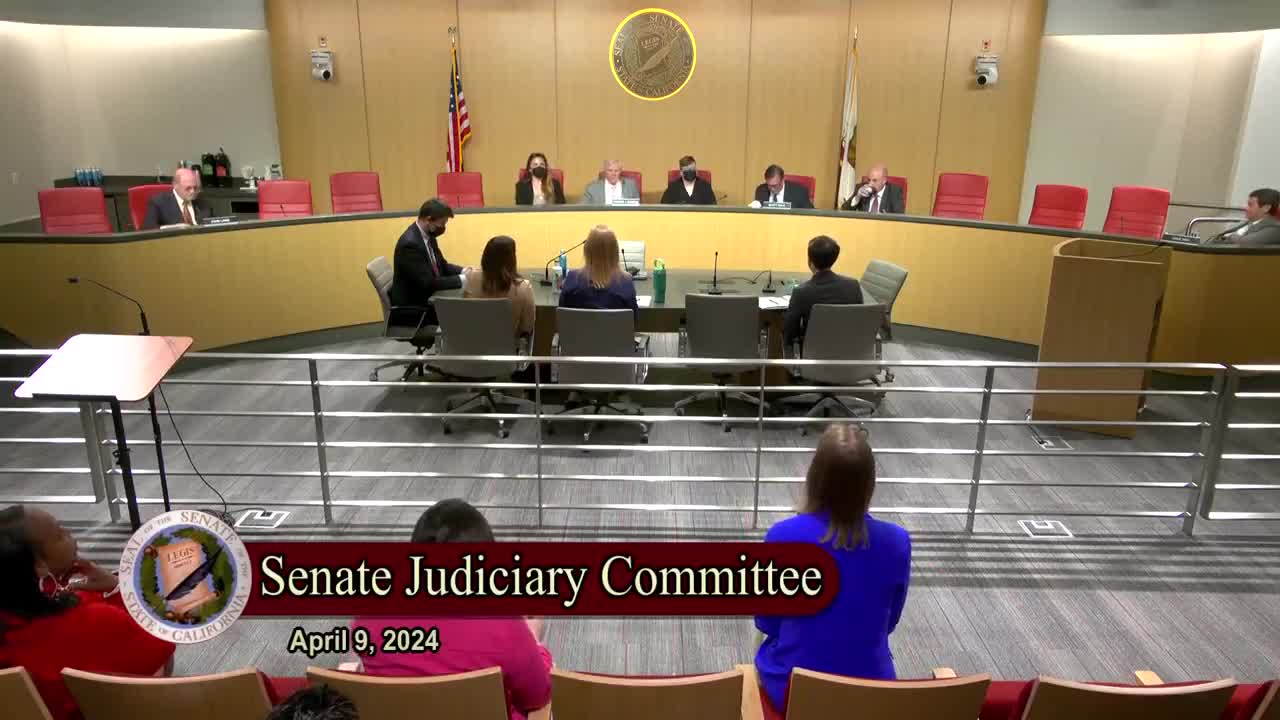 5MIN
Senate Standing Committee on Judiciary
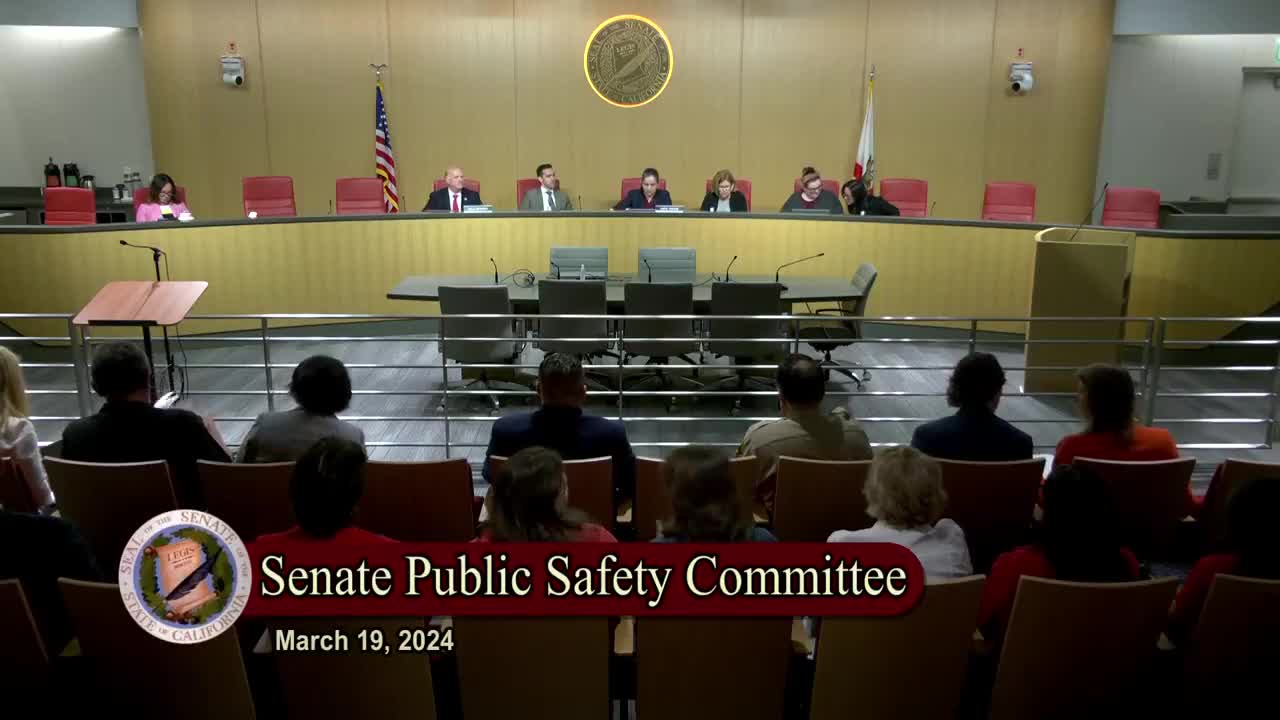 16MIN
Senate Standing Committee on Public Safety
Bill Author

Bill Co-Author(s):