AB 1211: CalFresh: maintenance of benefit level.
- Session Year: 2025-2026
- House: Assembly
- Latest Version Date: 2025-02-21
Current Status:
Failed
(2026-02-02: From committee: Filed with the Chief Clerk pursuant to Joint Rule 56.)
Introduced
In Committee
Awaiting First Chamber Vote
Passed First Chamber
In Committee
Awaiting Second Chamber Vote
Passed Second Chamber
Enacted
Existing federal law establishes the Supplemental Nutrition Assistance Program (SNAP), known in California as CalFresh, under which supplemental nutrition assistance benefits allocated to the state by the federal government are distributed to eligible individuals by each county.
This bill would require the State Department of Social Services to ensure that the level of CalFresh benefits remain at least at the level that was in effect on January 20, 2025, under the Thrifty Food Plan, which is a food plan designed by the United States Department of Agriculture to determine SNAP benefit amounts.
Under the bill, the above-described benefit maintenance requirement would be triggered if the federal government makes reductions to SNAP benefits that would result in the level of CalFresh benefits being lower than the threshold. If federal funding is insufficient, when combined with the nonfederal share, to maintain that level, the bill would require the department to implement these provisions using state funds subject to an appropriation.
The bill would also require the department to conduct a feasibility study on increasing the eligibility and benefits of the CalFresh program, and to prepare a one-time report containing findings from the study. The bill would require the department to submit the report by January 1, 2027, to the relevant policy committees of the Legislature and the Joint Legislative Budget Committee. The bill would repeal the provisions relating to the study and report on January 1, 2031.
The Legislature finds and declares all of the following:
(a)No person should go hungry in this country and especially not in California, a state that boasts the fifth largest economy in the world and where food system workers grow, pick, package, and prepare food for people around the world.
(b)The federal Supplemental Nutrition Assistance Program (SNAP), referred to as CalFresh in California, is the nations most important anti-hunger program, serving over 40 million Americans.
(c)The average per-day SNAP benefit per person is only $6.16.
(d)The current benefit amount reflects a 2021 adjustment to the programs Thrifty Food Plan, which is used to establish the benefit amounts for SNAP recipients.
(e)The Thrifty Food Plan adjustments were authorized by the United States Congress and were based on calculations by the United States Department of Agriculture, under the Biden Administration, for what it costs to buy a nutritious diet with minimal resources.
(f)The Trump Administration and leaders of the 119th United States Congress have proposed reducing the amount of benefits provided through the Thrifty Food Plan as one of the cuts that they would pursue to fund the tax credits for the billionaire class.
(g)California should minimize the harm that the proposal described in subdivision (f) would bring, if implemented, to low-income families and individuals who rely on the CalFresh program to meet their basic food needs.
SEC. 2.Section 18921 is added to the Welfare and Institutions Code, to read:18921.(a)If the federal government makes reductions to benefits under the Supplemental Nutrition Assistance Program (SNAP) that would result in the level of CalFresh benefits being lower than the level of CalFresh benefits that was in effect on January 20, 2025, under the Thrifty Food Plan, the department shall ensure that the level of CalFresh benefits remain at least at that level that was in effect on January 20, 2025.
(b)If federal funding is insufficient, when combined with the nonfederal share, to maintain the level of CalFresh benefits as described in subdivision (a), the department shall implement this section using state funds subject to an appropriation made by the Legislature for the purpose of this section.
(c)For purposes of this section, Thrifty Food Plan means the lowest cost among the food plans designed by the United States Department of Agriculture to determine SNAP benefit amounts.
SEC. 3.Section 18921.5 is added to the Welfare and Institutions Code, to read:18921.5.(a)The department shall conduct a feasibility study on increasing the eligibility and benefits of the CalFresh program.
(b)The department shall prepare a one-time report containing findings from the study described in subdivision (a). By January 1, 2027, the department shall submit the report to the relevant policy committees of the Legislature and the Joint Legislative Budget Committee, in accordance with Section 9795 of the Government Code.
(c)In accordance with Section 10231.5 of the Government Code, this section shall remain in effect only until January 1, 2031, and as of that date is repealed.
|
Date
|
Status
|
|---|---|
| Feb 2, 2026 | From committee: Filed with the Chief Clerk pursuant to Joint Rule 56. |
| Jan 31, 2026 | Died pursuant to Art. IV, Sec. 10(c) of the Constitution. |
| May 23, 2025 | In committee: Held under submission. |
| Apr 30, 2025 | In committee: Set, first hearing. Referred to suspense file. |
| Apr 9, 2025 | From committee: Do pass and re-refer to Com. on APPR. (Ayes 5. Noes 1.) (April 8). Re-referred to Com. on APPR. |
| Mar 10, 2025 | Referred to Com. on HUM. S. |
| Feb 24, 2025 | Read first time. |
| Feb 22, 2025 | From printer. May be heard in committee March 24. |
| Feb 21, 2025 | Introduced. To print. |
|
Date
|
Description
|
Location
|
Votes
|
|
|---|---|---|---|---|
| Apr 8, 2025 | Do pass and be re-referred to the Committee on [Appropriations] | Assembly Standing Committee on Human Services |
Passed |
This list shows positions taken on this bill by organizations on the date displayed, which is linked to the original source.
Positions by individuals are not included.
Date of Hearing: April 30, 2025
ASSEMBLY COMMITTEE ON APPROPRIATIONS
Buffy Wicks, Chair
ABPCA Bill Id:AB 1211
Author:(Sharp-Collins) – As Introduced Ver:February 21, 2025
Policy Committee: | Human Services | Vote: | 5 - 1 |
|
| ||
|
|
Urgency: No State Mandated Local Program: No Reimbursable: No
SUMMARY:
If federal Supplemental Nutrition Assistance Program (SNAP) benefits (known as CalFresh in California) fall below a specified threshold, this bill requires the California Department of Social Services (CDSS) to use state funds to ensure CalFresh benefits remain at least at the level in effect on January 1, 2025. This bill also requires CDSS to conduct a feasibility study on increasing eligibility and benefits of the CalFresh program.
Specifically, this bill:
- If the federal government reduces benefits under SNAP that would result in CalFresh benefits falling below the level of CalFresh benefits in effect on January 20, 2025, under the federal Thrifty Food Plan, requires CDSS to ensure the level of CalFresh benefits remains at least at the level in effect on January 20, 2025.
- If federal funding is insufficient when combined with the nonfederal share to maintain the level of CalFresh benefits as described in item 1, above, requires CDSS to implement these provisions using state funds, subject to an appropriation by the Legislature.
- Defines “Thrifty Food Plan” as the lowest cost among the food plans designed by the United States Department of Agriculture (USDA) to determine SNAP benefit amounts.
- Requires CDSS to conduct a feasibility study on increasing the eligibility and benefits of the CalFresh program and to prepare and submit a one-time report on the findings to the relevant policy committees of the Legislature and the Joint Legislative Budget Committee by January 1, 2027.
FISCAL EFFECT:
This bill could result in ongoing General Fund costs in the low billions of dollars annually, based on the following:
- Ongoing GF costs in the range of $4 billion to $5 billion annually to maintain food benefits, if federal funding is reduced. This estimate assumes a loss of $30 billion in federal SNAP funding over eight years.
- One-time GF automation costs in the range of $400,000 to $500,000 for changes to the California Statewide Automated Welfare System (CalSAWS) and the Electronic Benefit Transfer (EBT) system.
- Administrative costs to CDSS to provide county guidance, ensure automation, and conduct the feasibility study are likely absorbable by the department.
COMMENTS:
- Purpose. The author aims to protect CalFresh recipients against potential federal benefit reductions by using state funds to maintain benefits at their January 20, 2025, levels. According to the author:
While the federal government threatens long-standing programs that successfully uplift working families, California will continue to support our residents and combat food insecurity. By proactively protecting the amount of CalFresh assistance families receive, [this bill] creates a more inclusive and effective food assistance system that supports the well-being of all Californians and ensures no step backward fighting poverty-related hunger.
- Background. CalFresh. The CalFresh program is California’s version of the federal SNAP, which provides monthly food assistance to qualifying low‑income households. CalFresh benefits are 100% federally funded and national income eligibility standards and benefit levels are established by the federal government. Costs to administer the program are shared among the federal government, the state and counties. Under federal law, CalFresh benefits are available to U.S. citizens and, under narrow circumstances, lawfully-present non-U.S. citizens.
California administers approximately $12.6 billion federal SNAP funds through the CalFresh program, serving approximately 5.5 million CalFresh participants.
The USDA’s Thrifty Food Plan, which estimates the cost of purchasing a nutritious diet at a minimal cost, determines the maximum monthly SNAP benefit. The Thrifty Food Plan annually adjusts the benefit amount to reflect changes in food prices. The most recent major update occurred in 2021.
For federal fiscal year (FY) 2024-25, the maximum CalFresh benefit is $292 per month for a household of one and $768 per month for a household of three. However, most households do not receive the maximum benefit. In 2024, the average monthly benefit in California was $189 per person.
Federal SNAP cuts. In February 2025, Congress proposed cutting $230 billion from SNAP funding through 2034. If the $230 billion reduction occurs, California could lose up to $30 billion in federal SNAP funding from 2026 through 2034, leading to a loss of food benefits for low-income households.
Analysis Prepared by: Jennifer Swenson / APPR. / (916) 319-2081
Discussed in Hearing
 8MIN
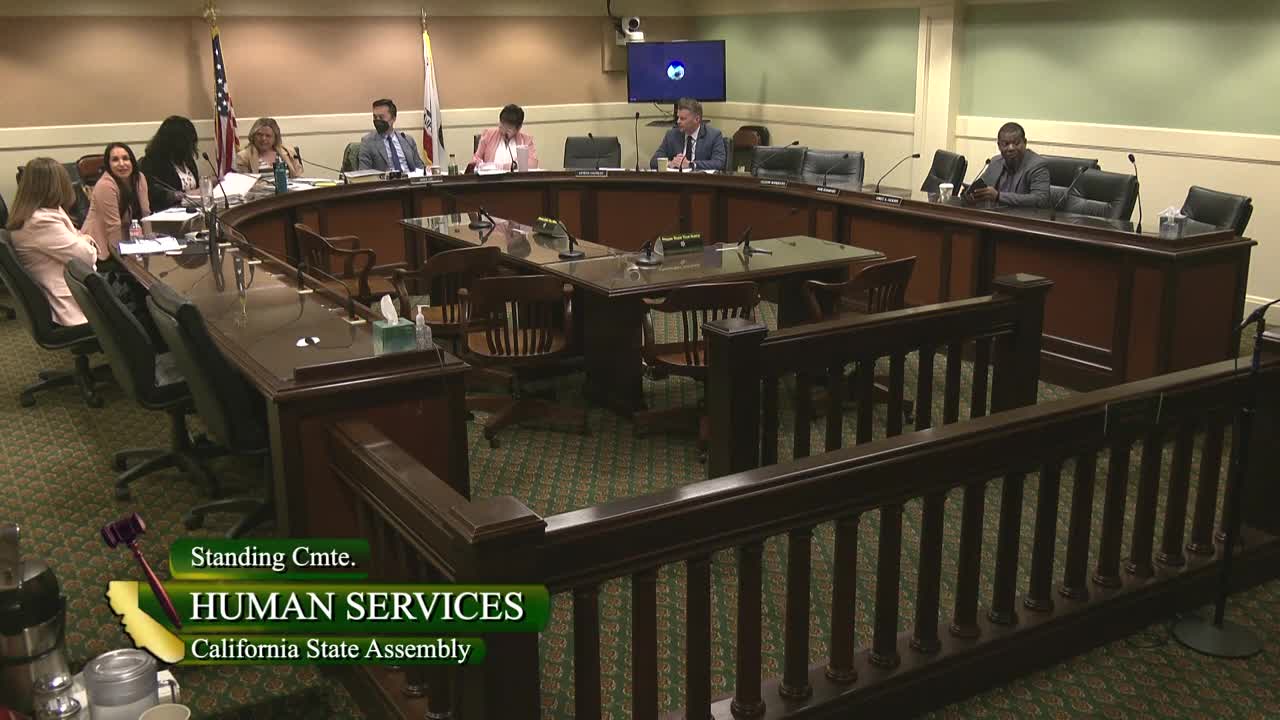
Assembly Standing Committee on Human Services
Bill Author

Bill Co-Author(s):