AB 1320: California Affordable Drug Manufacturing Act of 2020: opioid antagonists.
- Session Year: 2025-2026
- House: Assembly
- Latest Version Date: 2025-02-21
Current Status:
Failed
(2026-02-02: From committee: Filed with the Chief Clerk pursuant to Joint Rule 56.)
Introduced
In Committee
Awaiting First Chamber Vote
Passed First Chamber
In Committee
Awaiting Second Chamber Vote
Passed Second Chamber
Enacted
Existing law, the California Affordable Drug Manufacturing Act of 2020, requires the California Health and Human Services Agency (CHHSA) or its departments to enter into partnerships, in consultation with other state departments as necessary, to increase competition, lower prices, and address shortages in the market for generic prescription drugs, to reduce the cost of prescription drugs for public and private purchasers, taxpayers, and consumers, and to increase patient access to affordable drugs. For purposes of implementing these provisions, existing law authorizes CHHSA and its departments, including the Department of Health Care Access and Information, to enter into exclusive or nonexclusive contracts on a bid or negotiated bases. Existing law exempts these contracts entered into by CHHSA and its departments from the review or approval of any division of the Department of General Services as well as from provisions pertaining to bidding and awarding of state contracts.
This bill would prohibit a state agency from awarding a contract, pursuant to the above provisions, on a noncompetitive basis for the purchase or acquisition of an opioid antagonist, as defined, with a contractor that has entered into a multistate settlement agreement for its role in contributing to the opioid epidemic. The bill would make a contract void and unenforceable for a violation of this provision and apply those provisions retroactively to contracts entered into before January 1, 2026.
(a)Notwithstanding Section 127692, a state agency shall not, pursuant to this chapter, award a contract on a noncompetitive basis for the purchase or acquisition of an opioid antagonist with a contractor that has entered into a multistate settlement agreement for its role in contributing to the opioid epidemic.
(b)A contract is void and unenforceable if it violates this section.
(c)This section shall apply retroactively to any contract entered into before January 1, 2026.
(d)For purposes of this section, opioid antagonist means naloxone hydrochloride or another drug approved by the United States Food and Drug Administration that, when administered, negates or neutralizes in whole or in part the pharmacological effects of an opioid in the body, and has been approved for the treatment of an opioid overdose.
|
Date
|
Status
|
|---|---|
| Feb 2, 2026 | From committee: Filed with the Chief Clerk pursuant to Joint Rule 56. |
| Jan 31, 2026 | Died pursuant to Art. IV, Sec. 10(c) of the Constitution. |
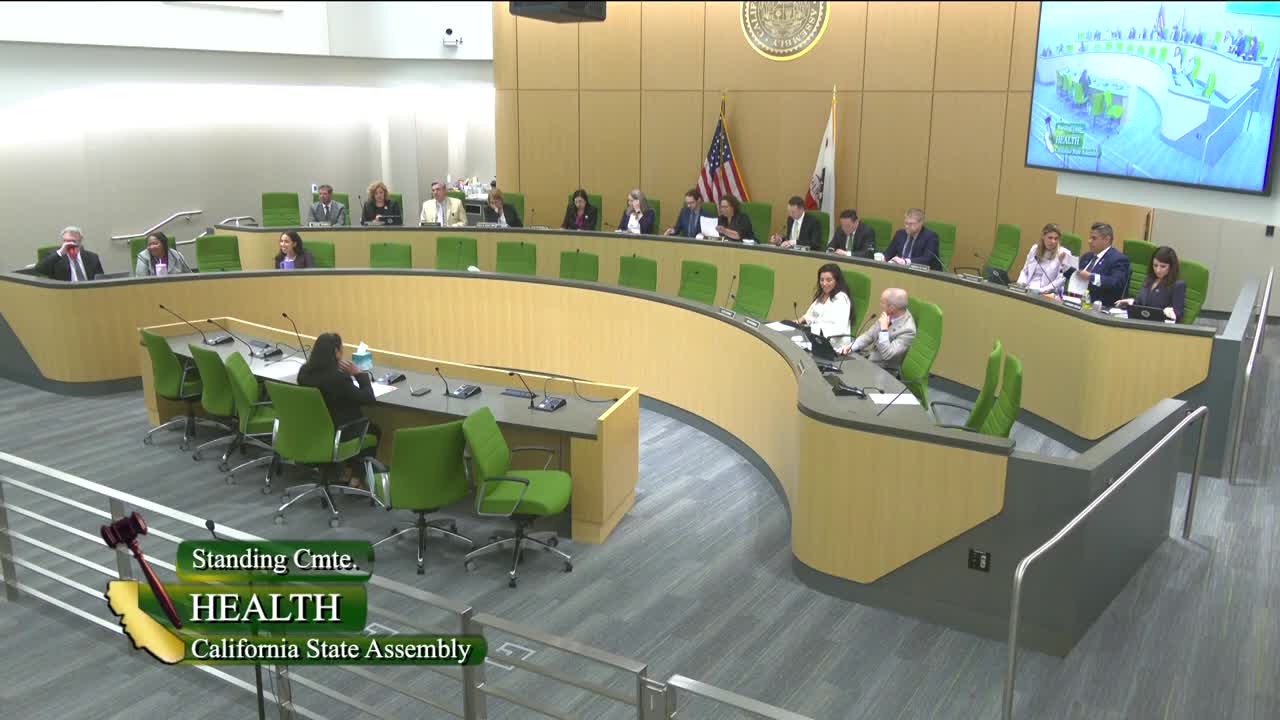
| Apr 29, 2025 | In committee: Set, first hearing. Failed passage. Reconsideration granted. |
| Mar 13, 2025 | Referred to Com. on HEALTH. |
| Feb 24, 2025 | Read first time. |
| Feb 22, 2025 | From printer. May be heard in committee March 24. |
| Feb 21, 2025 | Introduced. To print. |
|
Date
|
Description
|
Location
|
Votes
|
|
|---|---|---|---|---|
| Apr 29, 2025 | Reconsideration. | Assembly Standing Committee on Health |
Passed |
|
| Apr 29, 2025 | Do pass and be re-referred to the Committee on [Appropriations] | Assembly Standing Committee on Health |
Failed |
This list shows positions taken on this bill by organizations on the date displayed, which is linked to the original source.
Positions by individuals are not included.
|
Organization
|
Position
|
Date
|
|---|---|---|
| Association for Accessible Medicines | ** Against | |
| California Syringe Exchange Program Coalition | ** Against | |
| Drug Policy Alliance | ** Against | |
| End the Epidemics: Californians Mobilizing to End Hiv, Viral Hepatitis, Stis, and Overdose | ** Against | |
| Hope in The Valley | ** Against | |
| National Harm Reduction Coalition | ** Against | |
| Treatment on Demand Coalition | ** Against |
Date of Hearing: April 29, 2025
ASSEMBLY COMMITTEE ON HEALTH
Mia Bonta, Chair
ABPCA Bill Id:AB 1320
Author:(Patterson) – As Introduced Ver:February 21, 2025
SUBJECT: California Affordable Drug Manufacturing Act of 2020: opioid antagonists.
SUMMARY: Prohibits a state agency from awarding a contract pursuant to the California Affordable Drug Manufacturing Act of 2020 on a noncompetitive basis for the purchase of an opioid antagonist with any entity that has entered into a multistate settlement agreement for its role in contributing to the opioid epidemic and would void any contract entered into under the conditions prior to January 1, 2026. Specifically, this bill:
- Prohibits a state agency from awarding a contract pursuant to the California Affordable Drug Manufacturing Act of 2020 on a noncompetitive basis for the purchase of an opioid antagonist with any entity that has entered into a multistate settlement agreement for its role in contributing to the opioid epidemic.
- Deems a contract void and unenforceable if it violates this prohibition and applies the law retroactively to any contract entered into before January 1, 2026.
- Defines opioid antagonist for the purposes of this bill to mean naloxone hydrochloride or another drug approved by the United States Food and Drug Administration that, when administered, negates or neutralizes in whole or in part the pharmacological effects of an opioid in the body, and has been approved for the treatment of an opioid overdose.
EXISTING LAW:
- Establishes the California Affordable Drug Manufacturing Act of 2020. Requires the California Health and Human Services Agency (CHHSA) or its departments to enter into partnerships to increase competition, lower prices, and address shortages in the market for generic prescription drugs, to reduce the cost of prescription drugs for public and private purchasers, taxpayers, and consumers, and to increase patient access to affordable drugs. Permits CHHSA and its departments to enter into exclusive or nonexclusive contracts on a bid or negotiated basis. [Health and Safety Code (HSC) § 127690 et seq.]
- Requires CHHSA to enter into partnerships resulting in the production, procurement, or distribution of generic prescription drugs, with the intent that these drugs be made widely available to public and private purchasers, providers and suppliers, and pharmacies. States that CHHSA will only enter into production partnerships at a price that results in savings, targets failures in the market for generic drugs, or improves patient access to affordable medications. Requires CHHSA to prioritize the selection of generic prescription drugs that have the greatest impact on lowering drug costs to patients, increasing competition and addressing shortages in the prescription drug market, improving public health, or reducing the cost of prescription drugs to public and private purchasers. [HSC § 127693]
- Permits CHHSA and its departments, including the Department of Health Care Access and Information (HCAI), to enter into exclusive or nonexclusive contracts on a bid or negotiated basis in accomplishing 2) above. Exempts contracts entered into or amended pursuant to this authority from 7) and 8) of existing law below, and exempts these contracts from the review or approval of any division of the Department of General Services (DGS). [HSC § 127692]
- Requires, upon appropriation by the Legislature, CHHSA to submit a report to the Legislature, by December 31, 2023, that assesses the feasibility of directly manufacturing generic prescription drugs and selling generic prescription drugs at a fair price. Requires the report to include an analysis of governance structure options for manufacturing functions, including chartering a private organization, a public-private partnership, or a public board of directors. [HSC § 127694]
- Permits CHHSA to enter into partnerships regarding over-the-counter naloxone products that may allow the development, manufacturing, or distribution of over-the-counter naloxone products by any entity that is authorized to do so under federal or state law. [HSC § 127697]
- Establishes the Opioid Settlements Fund (OSF) in the State Treasury to receive funds allocated to the state for state opioid remediation from various opioid settlements. Requires, upon appropriation by the Legislature, OSF be used for opioid remediation in accordance with the terms of the judgment or settlement from which the funds were received. [Government (GOV) Code § 12534]
- Establishes the State Contract Act to regulate contracting between state agencies and private contractors, and outlines requirements for bidding and awarding of contracts for projects. [Public Contract Code § 10100 et seq.]
- Requires DGS to publish the California State Contracts Register, which includes contracting opportunities with the state. [GOV § 14825 et seq.]
FISCAL EFFECT: Unknown. This bill has not been analyzed by a fiscal committee.
COMMENTS:
- PURPOSE OF THIS BILL. According to the author, days after settling a lawsuit for $272.5 million with a pharmaceutical company for allegedly “fueling the opioid epidemic,” California knowingly entered into a contract with that same company to provide the antidote (naloxone) on a no-bid basis. The author argues that the company is being paid to solve a problem it may have helped create, without the benefit of an open and public bidding process. With 5,502 Californians dying due to an opioid overdose in 2020, and more dying every year since, the author does not believe the state should reward this reprehensible conduct with lucrative state contracts. The author states this bill takes a more measured approach by permitting companies settling opioid-related lawsuits to win naloxone contracts only if they go through a competitive and transparent bidding process. This bill will also void any existing contracts that were signed on a no-bid basis. The author concludes that this approach ensures that any state contract is a win for taxpayers, while also recognizing the magnitude of the opioid crisis and the impact it has had in every region of the state.
- BACKGROUND.
- Prevalence of Substance Use Disorders (SUD) in California. A 2024 publication from Health Management Associates and the California Health Care Foundation titled, “Substance Use Disorder in California — a Focused Landscape Analysis” reported that approximately 9% of Californians ages 12 years and older met the criteria for SUD in 2022. According to the report, the prevalence of SUD among individuals 12 years of age and older increased to 8.8% in 2022 from 8.1% in 2015. While the health care system is moving toward acknowledging SUD as a chronic illness, only 6% of Americans and 10% of Californians ages 12 and older with an SUD received treatment for their condition in 2021. More than 19,335 Californians ages 12 years and older died from the effects of alcohol from 2020 to 2021, and the total annual number of alcohol-related deaths increased by approximately 18% in the state from 2020 to 2021. Overdose deaths from both opioids and psychostimulants (such as amphetamines), are soaring. This issue, compounded by the increased availability of fentanyl, has resulted in a 10-fold increase in fentanyl related deaths between 2015 and 2019. According to the Department of Public Health (DPH) Overdose Prevention Initiative, 7,847 opioid-related overdose deaths occurred in California in 2023. In the first two quarters of 2024, 2,975 opioid-related overdose deaths were recorded in California.
- DPH statewide standing order for Naloxone. According to the CDC naloxone is a medicine that can help people who are overdosing on an opioid, and can be given safely to people of all ages, from infants to older adults. This includes an adolescent or young adult who may have unintentionally taken an opioid. Opioids include prescription medications, heroin, and fentanyl. Naloxone will not harm someone if you give it to them and they are not overdosing on an opioid. During an overdose, a person's breathing can be dangerously slowed or stopped, causing brain damage or death. Sometimes other drugs, including cocaine and methamphetamine, are mixed with fentanyl, and the user may not be aware of this mixture or contamination.
Unfortunately many organizations found it difficult to obtain the required standing order to obtain naloxone from health care providers. DPH issued a standing order in 2017 to address this need and support equitable naloxone access. The standing order:
- Allows community organizations and other entities in California that are not currently working with a physician, to distribute naloxone to a person at risk of an opioid-related overdose or to a family member, friend, or other person in a position to assist; and,
- Allows for the administration of naloxone by a family member, friend, or other person to a person experiencing or reasonably suspected of experiencing an opioid overdose.
Among the organizations and entities that can distribute naloxone under the order are colleges, first responders, veteran organizations, homelessness programs, libraries, religious entities, recovery facilities, harm reduction and syringe access programs, and more. An individual at risk of experiencing an opioid-related overdose or someone who can assist an individual at risk is allowed to do so. Under the statewide standing order, staff of community organizations and other entities distributing naloxone must be trained. They are also required to provide training to individuals who receive naloxone from them. Colleges and other organizations may apply to use the statewide standing order if they meet certain conditions. As of November 2023, DPH stated that a standing order is no longer needed for Narcan or other approved over-the-counter naloxone nasal sprays, but all other formulations remain available by prescription only and require a standing order to distribute and administer.
- CalRx. To help reduce the cost of prescription drugs in state programs and to consumers, the state recently created the CalRx program at HCAI. Established by SB 852 (Pan), Chapter 207, Statutes of 2020, the program aims to reduce the cost of drugs by expanding the availability of low‑cost generics in the market. According to the Legislative Analyst’s Office (LAO), CalRx accomplishes this objective by entering into partnerships with private entities to distribute or manufacture generic drugs. Before entering into these partnerships, HCAI must ensure they result in savings, address market failures, improve patient access, and are viable. The Legislature has directed HCAI to work on two key drug initiatives through CalRx, insulin and naloxone. The 2023‑24 budget provided $30 million one‑time from OSF for a partnership to produce a generic, over the counter naloxone nasal spray product. The 2024‑25 budget later reduced this amount to $25 million.
HCAI reports eight respondents to their request for applications in July 2023. HCAI evaluated several criteria, including: key expertise, development progress, manufacturing capability, speed to market, pricing, distribution strategies, expected market entry impact, scalability, delivery risk, non-profit status, and funding requests. Additionally, HCAI conducted follow-up interviews with all eight respondents to ensure a comprehensive evaluation and understanding of the written materials they submitted. HCAI states that it was aware of the pending settlement at the time the contract was negotiated and that two of the eight applicants were part of opioid litigation.
The LAO recently provided an update on the naloxone initiative. The LAO reports that in February 2024, HCAI entered into a contract with a private company (Amneal Pharmaceuticals) for the naloxone initiative. Under the contract, which extends through the end of 2026 (with two additional one-year options to extend), the contractor is to sell the new over‑the‑counter naloxone nasal spray product at $24 for each twin pack. The product entered the market in May 2024. The Naloxone Distribution Project (NDP), which is administered by DHCS, provides free naloxone products by request to hospitals, schools, law enforcement, and other public and community‑based organizations, is used as the distribution method for CalRx naloxone. The CalRx naloxone product is the primary supplier to this state program, reflecting a 40% lower rate than the previous supplier. As a result, HCAI estimates the new product has saved the state millions of dollars annually. In April 2025, HCAI announced that CalRx branded naloxone would be available for direct consumer, over the counter purchase.
“Increasing competition, improving access, and lowering the cost of naloxone in California” published in Health Affairs Scholar (with disclosed funding from HCAI) reports that in its first six months, internal calculations suggest that the CalRx generic naloxone has saved the state over $2.6 million, which could be used to provide more than 108,000 additional units of naloxone free of charge to communities across California. The article notes that overall generic naloxone prices declined by 22% in a single quarter immediately following CalRx entry into the market. The article concludes that the CalRx experience has helped disrupt the naloxone market by increasing competition and reducing prices and demonstrates that leveraging states’ substantial purchasing power to negotiate lower prescription drug prices can have immediate market impact.
- Opioid Settlements. According to a DHCS FAQ on opioid settlements, state, local, and tribal governments have brought lawsuits against pharmaceutical and drug distribution companies that have fueled the opioid crisis. The lawsuits allege that these companies fueled the opioid crisis by marketing opioids in misleading ways, downplaying risks, exaggerating benefits, and engaging in reckless distribution practices. The lawsuits seek to recover costs associated with the opioid epidemic and remediation. To address and prevent further crises, California has joined several lawsuits against manufacturers, distributors, pharmacies, and other entities responsible for aiding the opioid epidemic. Participating subdivisions (participating cities and counties) in California are receiving funding from settlements to be used for future opioid remediation activities. California’s participating subdivisions are expected to receive additional funds as more settlements are finalized. Funds from the California opioid settlements originate from multistate settlements with prescription opioid manufacturers, distributors, and pharmacies.
- OPPOSITION. The Drug Policy Alliance, the California Syringe Exchange Program Coalition, End the Epidemics, and the National Harm Reduction Coalition oppose this bill stating it decreases competition between opioid antagonist distributors, thus jeopardizing the cost and availability of overdose reversal medication. They argue this bill could potentially exclude the distributors of naloxone who were sued as part of the settlements, which includes AmerisourceBergen, McKesson, and Cardinal — the main wholesale distributors of naloxone to states. This bill would aggravate procurement contracts in place with one of these wholesale distributors meaning harm reduction organizations, first responders, and treatment providers throughout the state could experience lengthy delays in naloxone access. Opponents state evidence suggests that out-of-pocket naloxone prices remain a substantial barrier to access, and this bill will spur the consolidation of the market and risks driving up the cost of opioid antagonists.
The Association for Accessible Medicines (AAM) also opposes this bill due to the significant restrictions on the sale and distribution of life-saving opioid antagonist drug products it imposes. AAM says it is the nation’s leading trade association for manufacturers of generic and biosimilar prescription medicines. AAM argues that widespread access to naloxone has been shown to reduce opioid-related mortality, and restrictions on these products hinder public health efforts to combat opioid misuse. Patients and providers rely on these medications and California should not artificially limit access to them. AAM supports open and fair competition when the state is seeking to partner with a manufacturer for any drug product. However, the limitation against contracting with a manufacturer that participated in a negotiated opioid settlement could lead to shortages of opioid antagonists. While the bill seems to be drafted to address one particular contract, it limits any state agency from entering contracts with most entities engaged in the opioid antagonist supply chain. AAM states based on a review of 2024 sales data, prohibiting the state from contracting with a manufacturer that entered a negotiated opioid settlement would exclude nearly 50 percent of naloxone products available in the U.S. today. AAM says limiting access to such a large percentage of these essential medicines could lead to significant localized shortages depending on where wholesalers and distributors move a particular manufacturer’s product.
- PREVIOUS LEGISLATION.
- AB 118 (Committee on Budget), Chapter 42, Statutes of 2023 extends the authority of CHHSA to enter into exclusive or nonexclusive contracts on a bid or negotiated basis, for purposes of the California Affordable Drug Manufacturing Act of 2020, indefinitely and requires CHHSA to enter into partnerships for the procurement of general prescription drugs.
- SB 137 (Committee on Budget and Fiscal Review) Chapter 191, Statutes of 2023 expands the authority of HCAI to enter partnerships to develop, manufacture, or distribute an over-the-counter version of a naloxone nasal product.
- SB 184 (Committee on Budget and Fiscal Review), Chapter 47, Statutes of 2022 creates the OSF to be administered DHCS, and requires the moneys in the OSF to be used for opioid remediation in accordance with the terms of the judgment or settlement from which the funds were received. Requires DHCS to produce periodic written reports.
- SB 838 (Pan), Chapter 603, Statutes of 2022 requires the CHHSA to enter into a partnership to manufacture at least one form of insulin, to be made available at production and dispensing costs, requires this partnership to include representation and involvement with the governance of the contractor entity, and requires CHHSA, upon appropriation by the Legislature, to develop a California-based manufacturing facility for generic drugs.
- SB 852 (Pan), Chapter 207, Statutes of 2020 requires CHHSA to enter into partnerships to increase competition, lower prices, and address shortages in the market for generic prescription drugs, to reduce the cost of prescription drugs for public and private purchasers, taxpayers, and consumers, and, to increase patient access to affordable drugs.
- POLICY COMMENTS.
- Unintended consequences. The author’s stated intent to ensure that companies are not profiting from solutions to the opioid epidemic they may have helped create is laudable. As noted in b) of the Background section, under the contract with Amneal the state is paying 40% less than the previous supplier of the NDP. Currently, a two pack of Narcan is available for purchase online and in person through various pharmacies, or through Amazon, for $44.99. Walgreens sells generic naloxone nasal spray in a two pack for $34.99. Despite what seems like a positive outcome for the state in achieving expanded access to naloxone at a lower price, the contract would be void under this bill. There is no guarantee that a new contract would present better financial value to the state, or better access to a lifesaving drug. The process of awarding this contract is allowed by law, and the Legislature’s intent is clearly laid out in statute that “any manufacturing that is done under this section is intended to benefit the residents of this state by ensuring adequate supplies and access to generic prescription drugs and lowering health care costs through savings to public health care programs and private health insurance coverage.”
If this contract is void, there are several practical implications to consider about what happens to naloxone products that have already been manufactured with the CalRx branding and whether this will disrupt the state’s immediate access to this lifesaving drug. While the author contends that any manufacturer would still be eligible to bid for the contract, it would be happening in the context of a voided agreement with the state’s supplier to the NDP. The NDP has distributed 6.1 million kits of naloxone, which have been used to reverse more than 355,000 overdoses. DHCS has approved applications from 14,995 entities to receive NDP distributions of naloxone as of April 2025, 19% of which are from law enforcement, 17% from schools and colleges, and 12% from community-based organizations.
If DHCS loses its primary supplier for NDP naloxone, HCAI would likely be incentivized to address this gap as expediently as possible with a new CalRx contract, which would be unlikely through a full and thorough bid process that the author cites as an option. Should this bill move forward, the author may wish to consider how to minimize the potential risks posed by reduced access to naloxone.
- Which entities benefit by placing requirements specifically on participants in settlements? In September 2023, The Washington Post reported that Emergent BioSolutions refused to allow Narcan to be sold over the counter, frustrating health experts and workers on the epidemic’s front lines who saw making Narcan and other naloxone-based medicines easier to buy as a way to save lives[1]. The article says that Robert Califf, former head of the Food and Drug Administration, blamed Narcan’s over-the-counter delay on Emergent’s pursuit of profits. “I think the problem is that the financial model doesn’t appear to be working for the company, so they’re not motivated to do it,” Califf said at a 2022 conference. The article notes that Narcan’s list price hadn’t gone up since its debut in 2016 and that public agencies receive discounts. Through legal action, Emergent was able to delay generic competition by four years, until 2022. While this bill proposes restricting how a contractor that was part of an opioid settlement can engage in securing a CalRx naloxone contract with the state, other behaviors by companies can also prove harmful, but their ability to secure contracts would not be impacted by this bill.
Opposition notes that in January 2025, Hikma entered into an exclusive commercial partnership with Emergent for the sale of its Kloxxado naloxone nasal spray in the U.S. and Canada. Under the six year agreement, Emergent will incorporate Kloxxado into its naloxone product portfolio and handle all North American sales and marketing. Hikma will continue manufacturing the 8 mg naloxone nasal spray as the exclusive supplier to Emergent. Unlike Hikma and Amneal, Emergent is not involved in an opioid settlement. The opponents argue that Emergent is now positioned to have a disproportionate share of the market, controlling both Narcan and Kloxxado. This partnership between Hikma and Emergent could sidestep the proposed restrictions for companies implicated in opioid settlements to profit further and capture the market on naloxone.
Under this bill, any participant in a settlement would be allowed to enter into a CalRx naloxone contract, provided that contract is not established through a noncompetitive bid process. However, existing law already requires that any contract entered into by CHHSA or HCAI under CalRx increase competition, lower prices, and address shortages in the market for generic prescription drugs, reduce the cost of prescription drugs for public and private purchasers, taxpayers, and consumers, and increase patient access to affordable drugs. Should this bill move forward, the author may wish to consider how it could unintentionally benefit companies that may also have contributed to overdose deaths, but are not a part of a settlement, and how these market forces may conflict with HCAI’s required considerations.
REGISTERED SUPPORT / OPPOSITION:
Support
None on file
Opposition
Association for Accessible Medicines
California Syringe Exchange Program (CASEP) Coalition
Drug Policy Alliance
End the Epidemics: Californians Mobilizing to End HIV, Viral Hepatitis, STIs, and Overdose
Hope in The Valley
National Harm Reduction Coalition
Treatment on Demand Coalition
Two individuals
Analysis Prepared by: Logan Hess / HEALTH / (916) 319-2097
Frankel, Todd, “ How one company profited while delaying Narcan’s drugstore debut,” The Washington Post, 18 September 2023, https://www.washingtonpost.com/business/2023/09/18/narcan-over-the-counter-delays-emergent-biosolutions/ ↑
Bill Author
Bill Co-Author(s):