AB 1358: Santa Ana River Conservancy Program: lower Santa Ana River region.
- Session Year: 2025-2026
- House: Assembly
- Latest Version Date: 2025-03-13
Current Status:
Failed
(2026-02-02: From committee: Filed with the Chief Clerk pursuant to Joint Rule 56.)
Introduced
In Committee
Awaiting First Chamber Vote
Passed First Chamber
In Committee
Awaiting Second Chamber Vote
Passed Second Chamber
Enacted
What does this bill do?
The bill requires the State Coastal Conservancy’s Santa Ana River Conservancy Program to direct at least 60% of funds for site, recreation, public access, nature, historic, or habitat projects to heavily urbanized parts of the lower Santa Ana River region to benefit disadvantaged, severely disadvantaged, or vulnerable populations. It also defines key terms: a "heavily urbanized area" is a city of 300,000 or more; a "disadvantaged" community has a median household income under 80% of the area or state median, "severely disadvantaged" is under 60%, and "vulnerable population" means groups at higher risk from climate change with fewer resources.
The summary is provided by generative AI which can make mistakes. For original language, please view the details in the table below.
Existing law establishes the Santa Ana River Conservancy Program to be administered by the State Coastal Conservancy. Existing law requires the conservancy, for purposes of carrying out the program, to use the services of the California Conservation Corps and Community Conservation Corps, as provided. Existing law authorizes the conservancy to, among other things, undertake or fund projects for several purposes, including to implement site improvements, upgrade deteriorating facilities or construct new facilities for outdoor recreation, public access, nature appreciation and interpretation, and historic and cultural preservation.
This bill would require at least 60% of the funds allocated to fund or undertake the above-described projects to be for projects in heavily urbanized areas, as defined, of the lower Santa Ana River region, as defined, to benefit disadvantaged communities, severely disadvantaged communities, or vulnerable populations. The bill would define various terms for this purpose.
This bill would make a nonsubstantive change to the above law relating to the conservancys use of the corps programs.Existing law establishes the Santa Ana River Conservancy Program to be administered by the State Coastal Conservancy. Existing law requires the conservancy, for purposes of carrying out the program, to use the services of the California Conservation Corps and Community Conservation Corps, as provided.
This bill would make a nonsubstantive change to the above law relating to the conservancys use of the corps programs.
For purposes of this chapter, the following terms have the following meanings:
(a)Disadvantaged community means a community with a median household income of less than 80 percent of the area average or less than 80 percent of statewide median household income.
(b)Heavily urbanized area means a city with a population of 300,000 or more.
(c)Lower Santa Ana River region means those lands west of the Santa Ana Mountains that are located within one-half mile on either side of the riverbed of the Santa Ana River, or any of its tributaries, and adjacent watersheds and lands as described in paragraph (2) of subdivision (a) of Section 31175 that are west of the Santa Ana Mountains.
(a)(d)Program means the Santa Ana River Conservancy Program.
(b)(e)Program lands means interests in real property acquired, managed, or subject to a project under this chapter.
(c)(f)Santa Ana River region means those lands that are located within one-half mile on either side of the riverbed of the Santa Ana River, or any of its tributaries, from its headwaters near the San Gorgonio Wilderness Area to the Pacific Ocean at the Santa Ana River Mouth Beach in Huntington Beach and adjacent watersheds and lands as described in paragraph (2) of subdivision (a) of Section 31175.
(g)Severely disadvantaged community means a community with a median household income of less than 60 percent of the area average or less than 60 percent of statewide median household income.
(h)Vulnerable population means a subgroup of population within a region or community that faces a disproportionately heightened risk or increased sensitivity to impacts of climate change and that lacks adequate resources to cope with, adapt to, or recover from such impacts.
SEC. 2.Section 31175 of the Public Resources Code is amended to read:31175.In carrying out the purposes of this chapter, and without limiting the express or implied powers of the conservancy in implementing other provisions of this division, the conservancy shall have, and may exercise, all necessary rights and powers, expressed or implied, except as otherwise provided in this chapter. Without limitation, the conservancy may do all of the following:
(a)(1)Acquire interests and options in real property and make acquisition grants for these purposes.
(2)With respect to real property acquisitions by the conservancy of watersheds and lands that are within the Santa Ana River region but not within one-half mile on either side of the riverbed of the Santa Ana River, the conservancy shall provide to the city or county with geographic jurisdiction over the affected real property 30 days written notice of the conservancys intent, unless the city or county agrees to accept less notice in a given case.
(b)Exercise a right of first refusal, to the extent not in conflict with another law, for surplus public agency property located within the Santa Ana River region, consistent with the Santa Ana River Parkway and Open Space Plan, adopted pursuant to subdivision (b) of Section 31174.
(c)Lease, rent, sell, exchange, or transfer interests in real property.
(d)(1)Undertake or fund projects to implement site improvements, upgrade deteriorating facilities or construct new facilities for outdoor recreation, public access, nature appreciation and interpretation; historic and cultural preservation; or protection, restoration, or enhancement of natural resources and habitat.
(2)If the conservancy intends to undertake a project directly, the conservancy shall provide 30 days written notice to the city or county with geographic jurisdiction over the affected real property, unless the city or county agrees to accept less notice in a given case.
(3)At least 60 percent of the funds allocated to undertake or fund projects pursuant to paragraph (1) of subdivision (d) shall be for projects in heavily urbanized areas of the lower Santa Ana River region to benefit disadvantaged communities, severely disadvantaged communities, or vulnerable populations.
(e)Provide for the management of program lands.
(f)Fix and collect fees for the use of any land owned or controlled, or for any service provided, by the conservancy. The amount of the fees shall not exceed the reasonable cost of maintaining and operating the land or providing the services rendered by the conservancy.
(g)The conservancy may apply for and accept grants, gifts, donations of money and property, subventions, rents, royalties, and other assistance from public and private sources. These funds shall be deposited in the Santa Ana River Conservancy Program Account, as specified in Section 31179, for use in furthering the program.
(h)Recruit and coordinate volunteers and experts to conduct interpretive and recreational programs, and assist with construction projects and the maintenance of facilities.
(i)Enter into contracts and joint powers agreements.
(j)Sue and be sued.
SECTION 1.Section 31178 of the Public Resources Code is amended to read:31178.To the extent feasible, in carrying out the purposes of this chapter, the conservancy shall use the services of the California Conservation Corps and Community Conservation Corps, as defined in Section 14507.5.To the extent feasible, in carrying out the purposes of this chapter, the conservancy shall utilize use the services of the California Conservation Corps and Community Conservation Corps, as defined in Section 14507.5.
|
Date
|
Status
|
|---|---|
| Feb 2, 2026 | From committee: Filed with the Chief Clerk pursuant to Joint Rule 56. |
| Jan 31, 2026 | Died pursuant to Art. IV, Sec. 10(c) of the Constitution. |
| May 23, 2025 | In committee: Held under submission. |
| Apr 23, 2025 | In committee: Set, first hearing. Referred to suspense file. |
| Apr 8, 2025 | From committee: Do pass and re-refer to Com. on APPR. (Ayes 9. Noes 4.) (April 7). Re-referred to Com. on APPR. |
| Mar 17, 2025 | Re-referred to Com. on NAT. RES. |
| Mar 13, 2025 | From committee chair, with author's amendments: Amend, and re-refer to Com. on NAT. RES. Read second time and amended. |
| Mar 13, 2025 | Referred to Com. on NAT. RES. |
| Feb 24, 2025 | Read first time. |
| Feb 22, 2025 | From printer. May be heard in committee March 24. |
| Feb 21, 2025 | Introduced. To print. |
|
Date
|
Description
|
Location
|
Votes
|
|
|---|---|---|---|---|
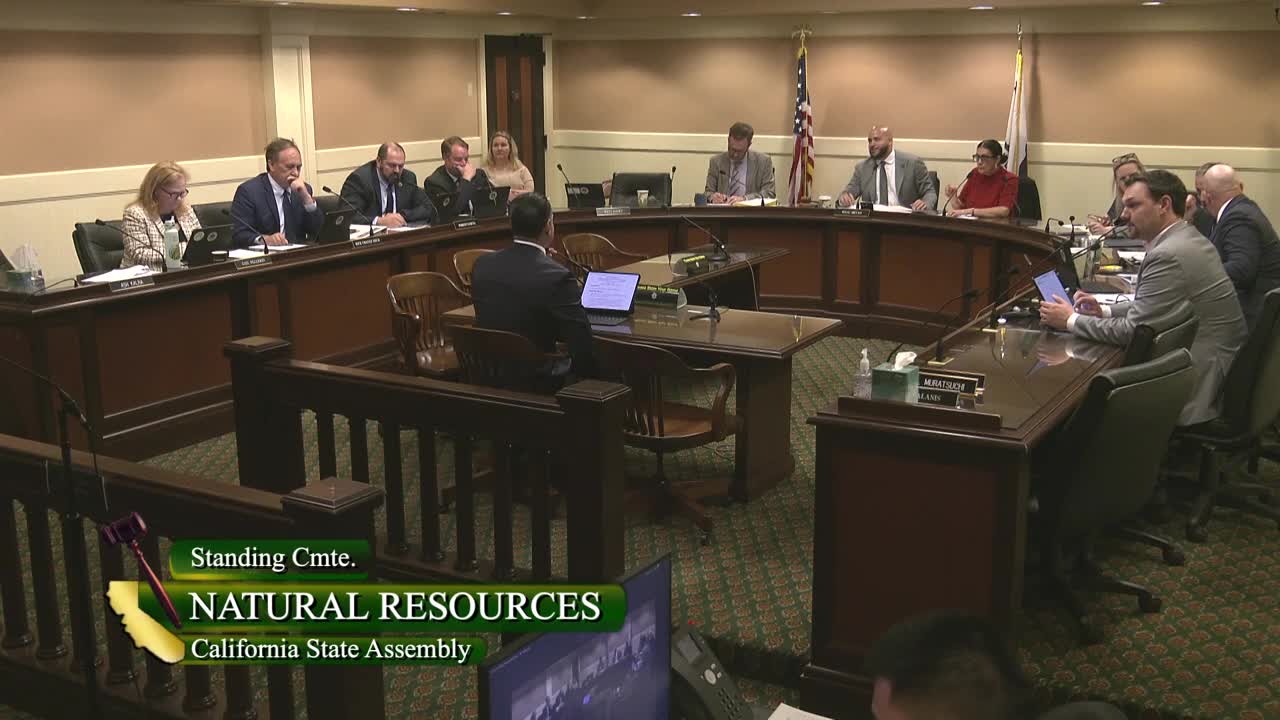
| Apr 7, 2025 | Do pass and be re-referred to the Committee on [Appropriations] | Assembly Standing Committee on Natural Resources |
Passed |
This list shows positions taken on this bill by organizations on the date displayed, which is linked to the original source.
Positions by individuals are not included.
|
Organization
|
Position
|
Date
|
|---|---|---|
| City of Riverside | ** Against | |
| City of Santa Ana | ** Support |
Date of Hearing: April 23, 2025
ASSEMBLY COMMITTEE ON APPROPRIATIONS
Buffy Wicks, Chair
ABPCA Bill Id:AB 1358
Author:(Valencia) – As Amended Ver:March 13, 2025
Policy Committee: | Natural Resources | Vote: | 9 - 4 |
|
| ||
|
|
Urgency: No State Mandated Local Program: No Reimbursable: No
SUMMARY:
This bill requires the Santa Ana River Conservancy (SARCON) to provide at least 60% of the funds allocated for specifies purposes to projects in heavily urbanized areas of the lower Santa Ana River region to benefit disadvantaged communities (DACs), severely disadvantaged communities (SDACs), or vulnerable populations, as defined. Those specified purposes are to implement site improvements, upgrade deteriorating facilities or construct new facilities for outdoor recreation, public access, nature appreciation and interpretation; historic and cultural preservation; or, protection, restoration, or enhancement of natural resources and habitat.
FISCAL EFFECT:
Cost pressure of an unknown but potentially significant amount, possibly in the low to tens of millions of dollars (General Fund, special fund, or bond funds) to provide additional funding to jurisdictions that would receive a lower percentage of funds from SARCON as a result of the 60% set-aside in the bill. For example, the Santa Ana River Trail is nearly complete in Orange County, with about three miles remaining. Conversely, there are 10 miles and 8 miles left to complete in Riverside and San Bernardino counties, respectively. By requiring 60% of Proposition 4 and other funds allocated to SARCON to be invested in heavily urbanized areas of the lower Santa Ana River region to benefit DACs, SDACs, or vulnerable populations, this bill arguably results in less funding for projects in regions such as Riverside and San Bernardino.
COMMENTS:
1) Purpose. According to the author:
The Santa Ana River is an extraordinary resource we are privileged to have in southern California. Over the years, the river has undergone intense usage and development, particularly in the highly urbanized areas. Therefore, the river and is in need of restoration and conversation. AB 1358 will uplift the needs of both disadvantaged and severely disadvantaged communities who are located alongside it…With voters approving Proposition 4, California has the opportunity to fund projects that will mitigate the effects of climate change, strengthen our infrastructure, create green and accessible spaces, and more. AB 1358 strives to ensure our communities with the greatest needs are prioritized and not left behind.
2) Background.
SARCON. In 2014, the Legislature enacted SB 1390 (Correa), Chapter 562, Statutes of 2014, to create SARCON within the State Coastal Conservancy. The program addresses the resource and recreational goals of the Santa Ana River region, including open space, trails, wildlife habitat, agricultural land protection, water quality protection, educational use, and public access. AB 1390 required SARCON to create an advisory group and develop a Santa Ana River Parkway and Open Space Plan to guide the future development and management of the Santa Ana River Parkway. Since its creation, SARCON has supported access and enhancement projects in the Santa Ana River watershed, including through the ongoing development of the Santa Ana River Trail and the Santa Ana River Parkway.
In the enacting legislation, the Legislature acknowledged that not all Orange County residents have equal access to green space. The communities with the least access to parks lie along the river in north Orange County, with low-income levels and high concentrations of people of color. Further, the statute states that, despite vast areas of parkland in the region, many communities in San Bernardino and Riverside Counties are park poor, with less than three acres of green space per 1,000 residents.
Funding. To date, SARCON has issued grants totaling $60.3 million – approximately $23.3 million from the General Fund, $13.4 million from Proposition 68, $23.4 million from Proposition 84, and $265,000 from Environmental License Plate Fund. SARCON has spent more than half of this funding on projects benefitting a DAC, in a DAC, or both – $11.5 million in Orange County, $20.6 million in Riverside County, $30,000 in San Bernardino County, and $185,000 spread across all three counties. SARCON has approximately $690,000 in Proposition 68 funding that it plans to provide via grants in the coming years.
The Proposition 4 cliamte bond, approved by voters in 2024, authorizes $25 million for SARCON. Proposition 4 requires at least 40% of this allocation to benefit DACs, SDACs, or vulnerable populations. This bill require at least 60% of Proposition 4, as well as other funding received by SARCON for specified purposes, be used for projects in heavily urbanized areas of the lower Santa Ana River region to benefit DACs, SDACs, or vulnerable populations, as those terms are defined in the bill.
SARCON expects to rely on its Santa Ana River Parkway and Open Space Plan to guide its expenditure of Proposition 4 funds. Projects are funded as they become ready and available, based on this plan and stakeholder input from members of the policy advisory group. SARCON notes that the advisory group is comprised of members of the environmental community, local and regional government agencies, and nonprofit organization representatives. The advisory group makes recommendations to SARCON on project needs, funding priorities, and implementation of the program. All three counties (Orange, Riverside, and San Bernardino) are represented on the advisory group and work together to identify the most efficient and effective way to direct funding toward projects based on the project’s impact, community benefits, and readiness. SARCON contends that this process has resulted in a fair allocation of funding between the counties and a clear, shared vision of how to proceed.
It is unclear how the bill’s required set-aside will interact with this current process, the vision of the Santa Ana River Parkway and Open Space Plan, and the ongoing collaboration via the multijurisdictional advisory group.
3) Support and Opposition. Writing in support, the City of Santa Ana writes:
Over the years, the river has undergone intense usage and development, particularly in the highly urbanized areas and is in need of restoration and conversation. At the same time, disadvantaged and severely disadvantaged communities who are located alongside the river are disproportionately impacted by climate change…Unfortunately, when efforts are funded to help reduce the harmful impacts caused by climate change, communities with the greatest need are not always prioritized… By prioritizing disadvantaged communities, the bill ensures historically underserved populations gain greater access to green spaces, recreation, and environmental education.
The bill is opposed by the City of Corona, the City and the County of Riverside, and the City and the County of San Bernardino. Riverside Mayor Patricia Lock Dawson writes:
A broad bi-partisan coalition of cities and counties along the river worked to support the bill and place the proposition on the ballot. The voters of the State of California directed the Coastal Conservancy to administer these funds in a competitive grant process along the length of the river. Assemblymember Valencia is now proposing that 60% of the $25 million be spent on projects in his district. This does not align with the intent of the voters, nor does it uphold the authority of the Coastal Conservancy to equitably distribute these funds as projects are ready to be funded.
The San Bernardino County Board of Supervisors writes:
Several gaps in San Bernardino and Riverside counties must be completed to ensure the Santa Ana River Trail extends seamlessly from the Pacific coast to the San Bernardino National Forest. Reallocating funds now would jeopardize this progress and undermine the long-standing vision of a fully connected, regional trail system. This bill reverses years of coordinated planning and shifts focus away from equitable, needs-based investment. It prioritizes one county at the expense of others still working to deliver on voter-supported goals.
Analysis Prepared by: Nikita Koraddi / APPR. / (916) 319-2081
Discussed in Hearing
 10MIN
Assembly Standing Committee on Natural Resources
Bill Author

Bill Co-Author(s):