AB 1782: Incarcerated persons: mental health evaluations.
- Session Year: 2025-2026
- House: Assembly
- Latest Version Date: 2026-02-09
Current Status:
Failed
(2026-04-20: From committee: Without further action pursuant to Joint Rule 62(a).)
Introduced
In Committee
Awaiting First Chamber Vote
Passed First Chamber
In Committee
Awaiting Second Chamber Vote
Passed Second Chamber
Enacted
What does this bill do?
The bill lets the chief psychiatrist confirm that a prisoner up for parole (release under supervision) meets three of five specified mental‑health conditions to be placed in treatment by the State Department of State Hospitals, instead of requiring the prisoner to meet all of them. The five conditions include having a severe mental health disorder, the disorder not being in remission or needing treatment to stay in remission, that the disorder helped cause the crime, having at least 90 days of treatment in the past year, or posing a substantial danger of physical harm; "physical harm" is expanded to include sexual harassment and battery.
The summary is provided by generative AI which can make mistakes. For original language, please view the details in the table below.
Existing law requires that, as a condition of parole, a prisoner who has a severe mental health disorder be treated by the State Department of State Hospitals if the prisoner meets certain requirements, including, among others, that the severe mental health disorder was one of the causes of, or was an aggravating factor in, the commission of a specified crime for which the prisoner was sentenced to prison, and that prior to release on parole, the prisoner has been evaluated, as specified, and the chief psychiatrist of the Department of Corrections and Rehabilitation has certified that the prisoner has a severe mental health disorder, that the disorder is not in remission or cannot be kept in remission without treatment, that the severe mental health disorder was one of the causes or was an aggravating factor in the prisoners criminal behavior, that the prisoner has been in treatment for the severe mental health disorder for 90 days or more within the year prior to the prisoners parole release day, and that by reason of the prisoners severe mental health disorder, the prisoner represents a substantial danger of physical harm to others.
This bill would instead require the chief psychiatrist of the Department of Corrections and Rehabilitation to certify that the prisoner meets three of the following criteria: a severe mental health disorder, the disorder is not in remission or cannot be kept in remission without treatment, the severe mental health disorder was one of the causes or was an aggravating factor in the prisoners criminal behavior, the prisoner has been in treatment for the severe mental health disorder for 90 days or more within the year prior to the prisoners parole release day, and by reason of the prisoners severe mental health disorder, the prisoner represents a substantial danger of physical harm to others. The bill would include sexual harassment and battery under physical harm.
As a condition of parole, a prisoner who meets all of the following criteria shall be provided necessary treatment by the State Department of State Hospitals as follows:
(a)(1)The prisoner has a severe mental health disorder that is not in remission or that cannot be kept in remission without treatment.
(2)The term severe mental health disorder means an illness, disease, or condition that substantially impairs the persons thought, perception of reality, emotional process, or judgment; or that grossly impairs behavior; or that demonstrates evidence of an acute brain syndrome for which prompt remission, in the absence of treatment, is unlikely. The term severe mental health disorder, as used in this section, does not include a personality or adjustment disorder, epilepsy, intellectual disability or other developmental disabilities, or addiction to or abuse of intoxicating substances.
(3)The term remission means a finding that the overt signs and symptoms of the severe mental health disorder are controlled either by psychotropic medication or psychosocial support. A person cannot be kept in remission without treatment if during the year prior to the question being before the Board of Parole Hearings or a trial court, the person has been in remission and has been physically violent, except in self-defense, or has made a serious threat of substantial physical harm upon the person of another so as to cause the target of the threat to reasonably fear for their safety or the safety of their immediate family, or the person has intentionally caused property damage, or has not voluntarily followed the treatment plan. In determining if a person has voluntarily followed the treatment plan, the standard is whether the person has acted as a reasonable person would in following the treatment plan.
(b)The severe mental health disorder was one of the causes of, or was an aggravating factor in, the commission of a crime for which the prisoner was sentenced to prison.
(c)The prisoner has been in treatment for the severe mental health disorder for 90 days or more within the year prior to the prisoners parole or release.
(d)(1)(A)Prior to release on parole, the person in charge of treating the prisoner and a practicing psychiatrist or psychologist from the State Department of State Hospitals have evaluated the prisoner at a facility of the Department of Corrections and Rehabilitation, and a chief psychiatrist of the Department of Corrections and Rehabilitation has certified to the Board of Parole Hearings that the prisoner has a severe mental health disorder, that the disorder is not in remission or cannot be kept in remission without treatment, that the severe mental health disorder was one of the causes or was an aggravating factor in the prisoners criminal behavior, that the prisoner has been in treatment for the severe mental health disorder for 90 days or more within the year prior to the prisoners parole release day, and that by reason of the prisoners severe mental health disorder, the prisoner represents a substantial danger of physical harm to others. met three of the following criteria:
(i)A severe mental health disorder.
(ii)The disorder is not in remission or cannot be kept in remission without treatment.
(iii)The severe mental health disorder was one of the causes or was an aggravating factor in the prisoners criminal behavior.
(iv)The prisoner has been in treatment for the severe mental health disorder for 90 days or more within the year prior to the prisoners parole release day.
(v)By reason of the prisoners severe mental health disorder, the prisoner represents a substantial danger of physical harm to others. For purposes of this clause, physical harm includes sexual harassment and battery.
(A)(B)For prisoners being treated by the State Department of State Hospitals pursuant to Section 2684, the certification shall be by a chief psychiatrist of the Department of Corrections and Rehabilitation, and the evaluation shall be conducted at a state hospital by the person at the state hospital in charge of treating the prisoner and a practicing psychiatrist or psychologist from the Department of Corrections and Rehabilitation.
(B)(C)For the evaluation of Department of Corrections and Rehabilitation prisoners who are temporarily housed at a county correctional facility, a county medical facility, or a state-assigned mental health provider, a practicing psychiatrist or psychologist from the State Department of State Hospitals, the Department of Corrections and Rehabilitation, or the Board of Parole Hearings shall be afforded prompt and unimpeded access to the prisoner and their records for the period of confinement at that facility upon submission of current and valid proof of state employment and a departmental letter or memorandum arranging the appointment.
(2)If the professionals doing the evaluation pursuant to paragraph (1) do not concur that (A) the prisoner has a severe mental health disorder, (B) that the disorder is not in remission or cannot be kept in remission without treatment, or (C) that the severe mental health disorder was a cause of, or aggravated, the prisoners criminal behavior, and a chief psychiatrist has certified the prisoner to the Board of Parole Hearings pursuant to this paragraph, the Board of Parole Hearings shall order a further examination by two independent professionals, as provided for in Section 2978.
(3)If at least one of the independent professionals who evaluate the prisoner pursuant to paragraph (2) concurs with the chief psychiatrists certification of the issues described in paragraph (2), this subdivision shall be applicable to the prisoner. The professionals appointed pursuant to Section 2978 shall inform the prisoner that the purpose of their examination is not treatment, but to determine if the prisoner meets certain criteria to be involuntarily treated as an offender with a mental health disorder. It is not required that the prisoner appreciate or understand that information.
(e)The crime referred to in subdivision (b) meets both of the following criteria:
(1)The defendant received a determinate sentence pursuant to Section 1170 for the crime.
(2)The crime is one of the following:
(A)Voluntary manslaughter.
(B)Mayhem.
(C)Kidnapping in violation of Section 207.
(D)A robbery wherein it was charged and proved that the defendant personally used a deadly or dangerous weapon, as provided in subdivision (b) of Section 12022, in the commission of that robbery.
(E)Carjacking, as defined in subdivision (a) of Section 215, if it is charged and proved that the defendant personally used a deadly or dangerous weapon, as provided in subdivision (b) of Section 12022, in the commission of the carjacking.
(F)Rape, as defined in paragraph (2) or (6) of subdivision (a) of Section 261 or paragraph (1) or (4) of subdivision (a) of former Section 262.
(G)Sodomy by force, violence, duress, menace, or fear of immediate and unlawful bodily injury on the victim or another person.
(H)Oral copulation by force, violence, duress, menace, or fear of immediate and unlawful bodily injury on the victim or another person.
(I)Lewd acts on a child under 14 years of age in violation of Section 288.
(J)Continuous sexual abuse in violation of Section 288.5.
(K)The offense described in subdivision (a) of Section 289 if the act was accomplished against the victims will by force, violence, duress, menace, or fear of immediate and unlawful bodily injury on the victim or another person.
(L)Arson in violation of subdivision (a) of Section 451, or arson in violation of any other provision of Section 451 or in violation of Section 455 if the act posed a substantial danger of physical harm to others.
(M)A felony in which the defendant used a firearm which use was charged and proved as provided in Section 12022.5, 12022.53, or 12022.55.
(N)A violation of Section 18745.
(O)Attempted murder.
(P)A crime not enumerated in subparagraphs (A) to (O), inclusive, in which the prisoner used force or violence, or caused serious bodily injury as defined in paragraph (4) of subdivision (f) of Section 243.
(Q)A crime in which the perpetrator expressly or impliedly threatened another with the use of force or violence likely to produce substantial physical harm in a manner that a reasonable person would believe and expect that the force or violence would be used. For purposes of this subparagraph, substantial physical harm does not require proof that the threatened act was likely to cause great or serious bodily injury.
(f)For purposes of meeting the criteria set forth in this section, the existence or nature of the crime, as defined in paragraph (2) of subdivision (e), for which the prisoner has been convicted may be shown with documentary evidence. The details underlying the commission of the offense that led to the conviction, including the use of force or violence, causing serious bodily injury, or the threat to use force or violence likely to produce substantial physical harm, may be shown by documentary evidence, including, but not limited to, preliminary hearing transcripts, trial transcripts, probation and sentencing reports, and evaluations by the State Department of State Hospitals.
(g)As used in this chapter, substantial danger of physical harm does not require proof of a recent overt act.
|
Date
|
Status
|
|---|---|
| Apr 20, 2026 | From committee: Without further action pursuant to Joint Rule 62(a). |
| Mar 17, 2026 | In committee: Set, first hearing. Failed passage. |
| Feb 23, 2026 | Referred to Com. on PUB. S. |
| Feb 10, 2026 | From printer. May be heard in committee March 12. |
| Feb 9, 2026 | Read first time. To print. |
|
Date
|
Description
|
Location
|
Votes
|
|
|---|---|---|---|---|
| Mar 17, 2026 | Do pass and be re-referred to the Committee on [Appropriations] | Assembly Standing Committee on Public Safety |
Failed |
This list shows positions taken on this bill by organizations on the date displayed, which is linked to the original source.
Positions by individuals are not included.
|
Organization
|
Position
|
Date
|
|---|---|---|
| Aclu California Action | ** Support | |
| Aclu California Action | ** Against | |
| Cal Voices | ** Against | |
| Cal Voices | ** Support | |
| California Attorneys For Criminal Justice | ** Support | |
| California Attorneys For Criminal Justice | ** Against | |
| California Public Defenders Association | ** Against | |
| California Public Defenders Association | ** Support | |
| Disability Rights California | ** Support | |
| Disability Rights California | ** Against | |
| Ella Baker Center For Human Rights | ** Against | |
| Ella Baker Center For Human Rights | ** Support | |
| Felony Murder Elimination Project | ** Against | |
| Felony Murder Elimination Project | ** Support | |
| Initiate Justice | ** Support | |
| Initiate Justice | ** Against | |
| Justice2jobs Coalition | ** Support | |
| Justice2jobs Coalition | ** Against | |
| LA Defensa | ** Support | |
| LA Defensa | ** Against | |
| San Francisco Public Defender | ** Support | |
| San Francisco Public Defender | ** Against | |
| Smart Justice California A Project Of Beyond Impact | ** Support | |
| Smart Justice California A Project Of Beyond Impact | ** Against | |
| Uncommon Law | ** Support | |
| Uncommon Law | ** Against |
Date of Hearing:
Chief Counsel: Andrew Ironside
ASSEMBLY COMMITTEE ON
Nick Schultz, Chair
ABPCA Bill Id:
Author:() – As Ver:
SUMMARY:
Reduces the number of factors to which the chief psychiatrist of the California Department of Correction and Rehabilitation (CDCR) must certify to the Board of Parole Hearings (BPH) prior to the involuntary commitment of an offender with a mental health disorder (OMHD). Specifically, this bill:
- Provides that, prior to an incarcerated person’s release on parole, a chief psychiatrist of CDCR must certify to BPH that the person meets three, instead of all, of the following criteria:
- A severe mental health disorder.
- The disorder is not in remission or cannot be kept in remission without treatment.
- The severe mental health disorder was one of the causes of, or was an aggravating factor in, the prisoner’s criminal behavior.
- The prisoner has been in treatment for the severe mental health disorder for 90 days or more within the year prior to the prisoner’s parole release day.
- By reason of the prisoner’s severe mental health disorder, the prisoner represents a substantial danger of physical harm to others. For purposes of this clause, “physical harm” includes sexual harassment and battery.
- A severe mental health disorder.
EXISTING LAW:
- Provides that, as a condition of parole, a prisoner who meets the following criteria shall be provided necessary treatment by the State Department of State Hospitals (DSH) as follows:
- The prisoner has a severe mental health disorder that is not in remission or that cannot be kept in remission without treatment.
- The severe mental health disorder was one of the causes of, or was an aggravating factor in, the commission of a crime for which the prisoner was sentenced to prison.
- The prisoner has been in treatment for the severe mental health disorder for 90 days or more within the year prior to the prisoner’s parole or release.
- Prior to release on parole, the person in charge of treating the prisoner and a practicing psychiatrist or psychologist from DSH have evaluated the prisoner at a facility of CDCR, and a chief psychiatrist of CDCR has certified to BPH the following:
- The incarcerated person has a severe mental health disorder;
- The disorder is not in remission and cannot be kept in remission without treatment;
- The severe mental health disorder was one of the causes of, or was an aggravating factor in, the prisoner’s criminal behavior;
- The prisoner has been in treatment of the severe mental health disorder for 90 days or more within the year prior to the prisoner’s parole release day; and,
- By reason of the prisoner’s severe mental health disorder, the prisoner represents a substantial danger of physical harm to others. (Pen. Code, § 2962, subds. (a)-(d).)
- The incarcerated person has a severe mental health disorder;
- The prisoner has a severe mental health disorder that is not in remission or that cannot be kept in remission without treatment.
- Provides that, if the professionals doing the evaluation do not concur that (A) the prisoner has a severe mental health disorder, (B) that the disorder is not in remission or cannot be kept in remission without treatment, or (C) that the severe mental health disorder was a cause of, or aggravated, the prisoner’s criminal behavior, and a chief psychiatrist has certified the prisoner to the BPH pursuant to this paragraph, BPH shall order a further examination by two independent professionals, as provided. (Pen. Code, § 2962, subd. (d)(2).)
- Provides that, if at least one of the independent professionals who evaluate the prisoner concurs with the chief psychiatrist’s certification of the issues, the person may be involuntarily committed. (Pen. Code, § 2962, subd. (d)(3).)
- States that the crimes which qualify an individual for involuntary commitment if the individual’s severe mental health disorder was one of the causes of, was an aggravating factor in its commission, meets both of the following criteria:
- The defendant received a determinate sentence, as specified, for the crime; and,
- The crime for, among others, voluntary manslaughter; mayhem; kidnapping, a specified; robbery with a deadly or dangerous weapon, as specified; carjacking with a deadly or dangerous weapon, as specified; rape and other sex crimes, as specified; arson, as specified; a felony in which the defendant used a firearm, as specified; attempted murder; a crime in which the prisoner used force or violence, or caused serious bodily injury, as specified; and a crime in which the perpetrator expressly or impliedly threatened another with the use of force or violence likely to produce substantial physical harm in a manner that a reasonable person would believe and expect that the force or violence would be used. (Pen. Code, § 2962, subd. (e)(1) & (2).)
- The defendant received a determinate sentence, as specified, for the crime; and,
- Provides that the existence or nature of the crime for which the person has been convicted may be shown with documentary evidence. The details underlying the commission of the offense that led to the conviction, including the use of force or violence, causing serious bodily injury, or the threat to use force or violence likely to produce substantial physical harm, may be shown by documentary evidence, including, but not limited to, preliminary hearing transcripts, trial transcripts, probation and sentencing reports, and evaluations by DSH. (Pen. Code, § 2962, subd. (f).)
- Provides that “substantial danger of physical harm” does not require proof of a recent overt act. (Pen. Code, § 2962, subd. (g).)
- Defines “severe mental health disorder” to mean an illness, disease, or condition that substantially impairs the person’s thought, perception of reality, emotional process, or judgment; or that grossly impairs behavior; or that demonstrates evidence of an acute brain syndrome for which prompt remission, in the absence of treatment, is unlikely. (Pen. Code, § 2962, subd. (a)(2).)
- Provides that the term “severe mental health disorder” does not include a personality or adjustment disorder, epilepsy, intellectual disability or other developmental disabilities, or addiction to or abuse of intoxicating substances. (Pen. Code, § 2962, subd. (a)(2).)
- Defines “remission” to mean a finding that the overt signs and symptoms of the severe mental health disorder are controlled either by psychotropic medication or psychosocial support. (Pen. Code, § 2962, subd. (a)(3).)
- Provides that a person “cannot be kept in remission without treatment” if during the year prior to the question being before BPH or a trial court, the person has been in remission and has been physically violent, except in self-defense, or has made a serious threat of substantial physical harm upon the person of another so as to cause the target of the threat to reasonably fear for their safety or the safety of their immediate family, or the person has intentionally caused property damage, or has not voluntarily followed the treatment plan. (Pen. Code, § 2962, subd. (a)(3).)
- Provides that, in determining if a person has voluntarily followed the treatment plan, the standard is whether the person has acted as a reasonable person would in following the treatment plan. (Pen. Code, § 2962, subd. (a)(3).)
- Allows BPH, upon a showing of good cause, to order an incarcerated person to remain in custody for up to 45 days past the scheduled release date for a full OMHD evaluation. (Pen. Code § 2963.)
- Allows the prisoner to challenge the OMHD determination both administratively (a hearing before the board) and judicially (a superior court jury trial). (Pen. Code § 2966.)
- Requires OMHD treatment to be inpatient treatment unless there is reasonable cause to believe that the parolee can be safely and effectively treated on an outpatient basis. (Pen. Code, § 2964, subd. (a).)
- Specifies that if the person’s severe mental disorder is put into remission during the parole period and can be kept that way, the director of the hospital shall notify the BPH and shall discontinue treatment. (Pen. Code, § 2968.)
- Allows the district attorney to file a petition with the superior court seeking a one-year extension of the OMHD commitment. (Pen. Code, § 2970.)
FISCAL EFFECT:
Unknown
COMMENTS:
- Author's Statement: According to the author, “It is the duty of the state to ensure dangerous individuals with mental health disorders receive the proper care when released from prison, as well as ensuring communities are protected from these individuals. As of now, California has become too soft in determining who would receive care from the State Hospitals, resulting in dangerous individuals being released into communities. This bill will ensure those with mental health disorders will receive the proper care while protecting Californians.”
- Impetus for this Bill: The inspiration for AB 1782 is the case of Bill Gene Hobbs, a story that has received extensive media coverage since his release from state prison last year.[1] Hobbs has a history of involvement with the criminal justice system for repeatedly harassing women.[2] He has spent time in jail for misdemeanor convictions for stalking and sexual battery, and recently he was released from state prison after serving time for felony false imprisonment.[3] After his release, Hobbs was sent to a state hospital for treatment as an OMHD, but five months later he was released when a local judge determined that he no longer satisfied criteria for commitment.[4] Hobbs soon began to harass women on the streets of San Francisco, where he was quickly rearrested on a parole violation.[5]
Since his return to San Francisco, media outlets have asked why Hobbs was released from DSH after only a short commitment and whether more could be done to prevent his release without more monitoring.[6] - Overview of the Commitment Process for an OMHD: Existing law provides that, as a condition of parole, an incarcerated person who meets specified criteria can be involuntarily committed to DSH for treatment. (Pen. Code, § 2962 et seq.) The OMHD scheme is designed to confine an incarcerated person who is about to be released on parole if they suffer from a severe mental health disorder that contributed to the commission of their crime. Rather than release them to the community, CDCR paroles the incarcerated person to the supervision of DSH, and the person remains under DSH supervision throughout the parole period. (Pen. Code, § 2962). Treatment can continue for one year upon termination of parole (Pen. Code § 2970), and treatment can be extended for an additional year after expiration of the original, or previous, one-year commitment (Pen. Code § 2972). (People v. Cobb (2010) 48 Cal.4th 243, 251.)
Commitment as an OMHD requires a showing that the incarcerated person has a severe mental health disorder that is not in remission or that cannot be kept in remission without treatment. (Pen. Code, § 2962, subd. (a)(1).) Existing law defines “severe mental health disorder” as an illness, disease, or condition that substantially impairs the person’s thought, perception of reality, emotional process, or judgment; or that grossly impairs behavior; or that demonstrates evidence of an acute brain syndrome for which prompt remission, in the absence of treatment, is unlikely. (Pen. Code, § 2962, subd. (a)(2).) The severe mental health disorder also must have been one of the causes of, or have been an aggravating factor in, the commission of a crime for which the person was sentenced. (Pen. Code, § 2962, subd. (b).) The incarcerated person must also have been in treatment for the disorder for 90 days or more within the year prior to parole or release. (Pen. Code, § 2962, subd. (c).)
The initial determination that an incarcerated person qualifies as an OMHD is made administratively. Prior to release on parole, the person in charge of treating the incarcerated person and a practicing psychiatrist or psychologist from DSH must have evaluated the person at a CDCR facility, and a chief psychiatrist of CDCR must have certified to BPH that the incarcerated person has a severe mental health disorder; that the disorder is not in remission and cannot be kept in remission without treatment; that the disorder was one of the causes or was an aggravating factor in the incarcerated person’s criminal behavior; that the incarcerated person has been in treatment for the severe mental health disorder for 90 days or more within the year prior to the incarcerated person’s parole release day; and that, by reason of their severe mental health disorder, the incarcerated person represents a substantial danger of physical harm to others. (Pen. Code, § 2962, subd. (d).)
If the professionals doing the evaluation do not agree that incarcerated person has a severe mental health disorder, that the disorder is not in remission or cannot be kept in remission without treatment, or that the severe mental health disorder was a cause of, or aggravated, the prisoner’s criminal behavior, and a chief psychiatrist has certified the incarcerated person BPH, then BPH must order an examination of the incarcerated person by two independent professionals. (Pen. Code, § 2962, subd. (d)(2).) If at least one of the independent professionals who evaluate the person concurs with the chief psychiatrist’s certification of the incarcerated person as an OMHD, the person can be involuntarily committed. (Pen. Code, § 2962, subd. (d)(3).)
The incarcerated person may request a hearing before BPH to require proof that that they qualify as an OMHD. (Pen. Code, § 2966, subd. (a).) If BPH determines that the person qualifies, the inmate may file, in the superior court of the county in which he or she is incarcerated or is being treated, a petition for a jury trial. (Pen. Code, § 2966, subd. (b).) The jury must unanimously agree beyond a reasonable doubt that the inmate is an OMHD. (Ibid.) If the jury, or the court if a jury trial is waived, reverses the determination of BPH, the court is required to stay the execution of the decision for five working days to allow for an orderly release of the incarcerated person. (Ibid.) - Effect of this Bill: As described above, under existing law, a chief psychiatrist of CDCR must certify five factors before an incarcerated person may be involuntarily committed as an OMHD. This bill would require that the chief psychiatrist of CDCR certify only three, instead of all, of those factors. As a result, an incarcerated person could be involuntarily committed even where the chief psychiatrist only attested that the incarcerated person had a severe mental health disorder that was not in remission, or cannot be kept in remission without treatment, and that the incarcerated person has been in treatment for that for 90 days or more within the year prior to their scheduled release. Indeed, this bill would provide that an OMHD could be committed even if their disorder was not a cause of, or an aggravating factor in, their criminal behavior and they did not represent a substantial danger of physical harm to others.
This outcome is in direct contravention to the stated purpose of the OMHD statute. Penal Code section 2960 articulates the Legislature’s findings and declarations for the need to involuntarily commit certain individuals with several mental health disorders. The statute’s express application is to those with severe mental health disorders that were a cause of, or an aggravating factor in, the commission of their crimes:
The Legislature finds that there are prisoners who have a treatable, severe mental health disorder that was one of the causes of, or was an aggravating factor in, the commission of the crime for which they were incarcerated. Secondly, the Legislature finds that if the severe mental health disorders of those prisoners are not in remission or cannot be kept in remission at the time of their parole or upon termination of parole, there is a danger to society, and the state has a compelling interest in protecting society. Thirdly, the Legislature finds that in order to protect the public from those persons, it is necessary to provide mental health treatment until severe mental health disorder that was one of the causes of or was an aggravating factor in the person’s criminal behavior is in remission and can be kept in remission. (Pen. Code, § 2960, subd. (a).)
Contrary to the statute’s stated purpose, this bill would dispel with the necessity that the chief psychiatrist of CDCR certify to BPH that a person is suffering from a severe mental health disorder that was one of the causes of, or an aggravating factor in, the person’s criminal behavior. In fact, this bill would require neither that the person’s severe mental health disorder contributed to their criminal conduct nor that the person represents a substantial danger of physical harm to others. Because the showing of dangerousness would be dispensed with, this bill arguably would undermine the state’s “compelling interest” in the involuntarily commitment of OMHDs, at least as articulated in the Legislature’s findings and declarations.
- Constitutional Concerns: The OMHD law was enacted in 1985. Unlike existing law, the original statute did not require a finding that the incarcerated person represents a substantial danger of physical harm to others. (People v. Harrison (2013) 57 Cal.4th 1211, 1227) However, other involuntary commitment statutes required a showing of dangerousness. Because of this discrepancy, the law was challenged as a violation of the equal protection clause of both the state and federal constitutions.
The equal protection clause of the United States Constitution requires at a minimum that persons standing in the same relation to a challenged government action will be uniformly treated. Traditionally, social and economic legislation will be upheld if the classification drawn by the statutes is rationally related to legitimate state interests. When the classification touches on a fundamental right, it must be judicially determined under the strictest standard whether it is necessary to promote a compelling government interest. Whether a right is fundamental depends on whether it is implicitly or explicitly guaranteed by the federal Constitution.
Although freedom from involuntary custodial confinement would appear to be the equivalent of "liberty" explicitly guaranteed by the Fifth and Fourteenth Amendments, the United States Supreme Court has not expressly held that classifications touching upon liberty are fundamental for these purposes. [In cases] related to challenged classifications in substance and procedure for involuntary commitment, the court appears to use the traditional rational basis test. Consequently for purposes of federal law analysis so shall we.
Any equal protection challenge requires a determination whether the groups which are differently treated are similarly situated for purposes of the law. If they are not, no equal protection claim is applicable. (People v. Gibson (1988) 204 Cal.App.3d 1425, 1435-1436 (internal citations omitted).)
The court observed that the OMHD scheme was similar to other statutes that provided for the involuntary commitment of people for treatment and for the protection of the public, “for renewable periods, until they no longer pose a danger to the public whether or not they remain mentally ill.” (Id. at p. 1436.) The court compared OMHDs to persons found not guilty by reason of insanity who had been involuntarily committed after a term of imprisonment and to juveniles with mental health disorders who, “now adults, have been recommitted after” imprisonment (Ibid.) Each group of individuals had been found to have committed a criminal offense, and the commitment of both OMHDs and individuals found not guilty by reason of insanity rested on the link between their mental health disorders and their criminal conduct. (Id. at p. 1437.) According to the court, under the law as originally enacted, “The [OMHD] commitment scheme, however, contains one critical and significant difference from all the others; it does not require proof of any present dangerousness as a result of mental illness for commitment or recommitment.” (Id. at p. 1436.) Because OMHDs were treated differently from these similarly situated groups, the court called it “unreasonable and arbitrary to exempt [OMHD’s] from a requirement of proof of dangerousness applicable to all other persons subject to involuntary commitment,” thereby violating the equal protection clause of the Fourteenth Amendment of the United States Constitution. (Id. at pp. 1440-1441.)
Further, holding that the original OMHD scheme also violated the equal protection clause of the California Constitution, the court added:
It must be remembered that appellant and those in this class of [OMHD] committees are all legally sane and have been subject to punishment for their offenses for the term prescribed by the Legislature. At the end of their terms even the most dangerous offenders and most likely recidivists are subject to release so long as they are not mentally ill as defined. Unless proven to be dangerous the equal protection clause requires the mentally ill inmate must also be released from custody. (Id. at pp. 1442-1443.)
In response the court’s ruling, the Legislature quickly passed urgency legislation that incorporated the language contained in current law—that the incarcerated person must “represent[] a substantial danger of physical harm to others.” (People v. Harrison (2013) 57 Cal.4th 1211, 1227; People v. Superior Court (Myers) 50 Cal.App.4th 826, 830.)
OMHDs remain similarly situated to other persons involuntarily committed because they represent a danger to others. For example, like with OMHDs, a defendant found not guilty of a felony by reason of insanity still may be committed to DSH beyond the original prescribed term “if the person…by reason of a mental disease, defect, or disorder represents a substantial danger of physical harm to others.” (Pen. Code, § 1026.5, subd. (b)(1) (emphasis added); see also Welf. & Inst., § 5008, subd. (h)(1)(B)(iv) (defining a person “found mentally incompetent [because]…among several factors, the person represents a substantial danger of physical harm to others by reason of a mental disease, defect, or disorder” to be “gravely disabled” for purposes of conservatorship) (emphasis added).
As previously noted, this bill would allow for the involuntary commitment of an OMHD without a finding that the person represents a substantial danger of physical harm to others. OMHDs would thereby be treated differently than similarly situated groups of people also subject to involuntary commitment on the grounds that they represent a danger to public safety. As the court ruled 40 years ago, the disparate treatment of OMHDs is constitutionally suspect.
- Related Bills on the Commitment of OMHDs: In addition to this bill, the committee has been referred two additional bills seeking to address the involuntary commitment of OMHDs—AB 1825 (Krell) and AB 1897 (Haney). As currently in print, AB 1897 would require the chief psychiatrist of CDCR to certify among other things that an incarcerated person represents a “threat of physical harm to others,” rather than a substantial danger of physical harm to others.
Rather than removing criteria for commitment or changing the risk standard, AB 1825 would clarify the factors the CDCR chief psychiatrist must consider when determining whether an incarcerated person, as a result of a serve mental health disorder, represents a “substantial danger of physical harm” to others. Specifically, AB 1825 would require the chief psychiatrist to consider recent threats of violence or acts of violence directed toward another individual, group, or location; recent threats of violence or acts of violence directed toward themselves; a pattern of violent acts or violent threats within the past 12 months; a history of violent behavior, including prior convictions for violent offenses; treatment compliance history and response to treatment; and a prior history of state hospital commitment. - Argument in Support: None submitted.
- Argument in Opposition: According to the Disability Rights California, “Existing law requires state officials to prove five criteria before they can involuntarily commit a person to a psychiatric hospital upon completion of their time in state prison. These criteria were carefully designed to ensure that only individuals whose mental health condition is directly connected to their offense and who pose a substantial danger to others would be subjected to additional locked and segregated settings after prison. AB 1782 would significantly weaken these safeguards by allowing certification when only three of five criteria are met, rather than all criteria. This change raises serious concerns for the disability community.
“First, lowering the burden of proof undermines the due process protections that are critical to prevent people with mental health disabilities from being unnecessarily swept into extended state control and involuntary treatment. The current statutory framework requires a clear nexus between a person’s mental health disorder, their criminal conduct, and the risk of substantial harm to others. The bill would subject people to involuntary institutionalization even when they do not present a substantial danger to others, or when the connection between their disability and their past criminal behavior has not been established. The disability community has long advocated for policies that avoid unnecessary institutionalization and prevent individuals with mental health disabilities from being subjected to overly broad or punitive interventions. The Americans with Disabilities Act similarly prohibits the unnecessary segregation of people with disabilities.
“Second, the bill’s expansion of the definition of physical harm to include sexual harassment and battery further broadens the scope of conduct that could trigger involuntary institutionalization, potentially capturing individuals whose behavior does not rise to the level of serious physical violence. While such conduct should be addressed appropriately, lowering the commitment criteria in this way risks misusing a mental health treatment framework to respond to behavior that may be better addressed through other legal and rehabilitative approaches.
“Finally, the bill would increase stigma and discrimination against people with psychiatric disabilities. By lowering the criteria for involuntary institutionalization, the bill risks reinforcing harmful and false stereotypes that conflate mental health disabilities with danger. The vast majority of individuals with mental health conditions are not violent, and policies that conflate disability with dangerousness can deepen stigma and add barriers to community integration, employment, and housing.
“California should be working toward policies that promote voluntary, community based mental health services and protect the civil rights of people with disabilities, rather than expanding involuntary systems that disproportionately impact this community.” - Related Legislation:
- AB 46 (Nguyen) would make various changes to the mental health diversion program including raising the public safety standard criteria for finding a particular defendant suitable for diversion. AB 46 is scheduled for hearing today in the Senate Public Safety Committee.
- AB 1825 (Krell) Specifies factors that a chief psychiatrist of CDCR shall consider when determining whether an incarcerated person with a severe mental health disorder poses a substantial danger of physical harm to others. AB 1825 is scheduled for hearing today in this committee.
- AB 1897 (Haney) would require the chief psychiatrist of CDCR to certify among other things that a incarcerated person represents a threat of physical harm to others, rather than a substantial danger of physical harm to others. AB 1897 is pending a hearing in this committee.
- AB 2259 (Ransom) would establish a pilot program at two CDCR facilities that provides mental health therapy either through virtual therapy or contracted license mental health providers. AB 2259 is pending a hearing in this committee.
- AB 2275 (Bains), among other things, would change the public safety standard for suitability for mental health diversion from an unreasonable risk to public safety, as defined, to "a risk of significant physical harm or substantial monetary loss that would compromise public safety." AB 2275 is pending a hearing in this committee.
- AB 46 (Nguyen) would make various changes to the mental health diversion program including raising the public safety standard criteria for finding a particular defendant suitable for diversion. AB 46 is scheduled for hearing today in the Senate Public Safety Committee.
- Prior Legislation:
- SB 591 (Galgiani), Chapter 649, Statutes 2019, stated that a practicing psychiatrist or DSH or CDCR psychologist be afforded prompt and unimpeded access to an inmate temporarily housed at a county jail, when the psychiatrist or psychologist is conducting an evaluation of the inmate as an OMHD; and made changes to the process to determine whether an inmate is an OMHD.
- SB 350 (Galgiani), of the 2017-2018 Legislative Session, would have required the disclosure of medical, dental, and mental health information between a county correctional facility, a county medical facility, a state correctional facility, a state hospital, or a state-assigned mental health provider when an inmate is transferred from or between state and county facilities, as specified. SB 350 was held in the Senate Appropriations Committee.
- SB 1443 (Galgiani), of the 2015-2016 Legislative Session, would have permitted the sharing of medical, mental health and dental information between correctional facilities, as specified. SB 1443 was held in the Senate Appropriations Committee.
- SB 1295 (Nielsen), Chapter 430, Statutes of 2016, authorized the use of documentary evidence for purposes of satisfying the criteria used to evaluate whether a prisoner released on parole is required to be treated by DSH as an OMHD.
- SB 591 (Galgiani), Chapter 649, Statutes 2019, stated that a practicing psychiatrist or DSH or CDCR psychologist be afforded prompt and unimpeded access to an inmate temporarily housed at a county jail, when the psychiatrist or psychologist is conducting an evaluation of the inmate as an OMHD; and made changes to the process to determine whether an inmate is an OMHD.
REGISTERED SUPPORT / OPPOSITION:
Support
Opposition
ACLU California Action
Cal Voices
California Attorneys for Criminal Justice
California Public Defenders Association
Disability Rights California
Ella Baker Center for Human Rights
Felony Murder Elimination Project
Initiate Justice
Justice2jobs Coalition
LA Defensa
San Francisco Public Defender
Smart Justice California, a Project of Beyond Impact
Uncommon Law
Analysis Prepared by:
See, e.g., Vainshtein, et al., Convicted groper back in SF after prison – and again approaching women, S.F. Chronicle (Oct. 20, 2025) <https://www.sfchronicle.com/sf/article/bill-gene-hobbs-released-san-francisco-21110868.php> [as of Mar. 11, 2026]; Kukura, Serial Harasser Bill Gene Hobbs Apparently Out of State Prison, Back to Harassing Women on SF Streets, SFist (Oct. 21, 2025) <https://sfist.com/2025/10/21/serial-harasser-bill-gene-hobbs-apparently-out-of-state-prison-back-to-harassing-women-on-sf-streets/> [as of Mar. 11, 2026]; Wang, Convicted harasser back in jail after reportedly approaching women in San Franciso, ABC7 News (Oct. 24, 2025) <https://abc7news.com/post/convicted-harasser-prison-seen-approaching-women-san-francisco-report-says/18054316/> [as of March 11, 2026]; Editorial Board, Why was Bill Gene Hobbs back on S.F. streets? His case shows the state of California’s justice system, S.F. Chronicle (Nov. 3, 2025) <https://www.sfchronicle.com/opinion/editorials/article/california-san-francisco-bill-gene-hobbs-21122904.php> [as of Mar. 11, 2026]. ↑
Vainshtein, supra. ↑
Wang, supra. ↑
Editorial Board, supra; see also Wang, supra. ↑
Ibid. ↑
Ibid. ↑
Discussed in Hearing
 16MIN
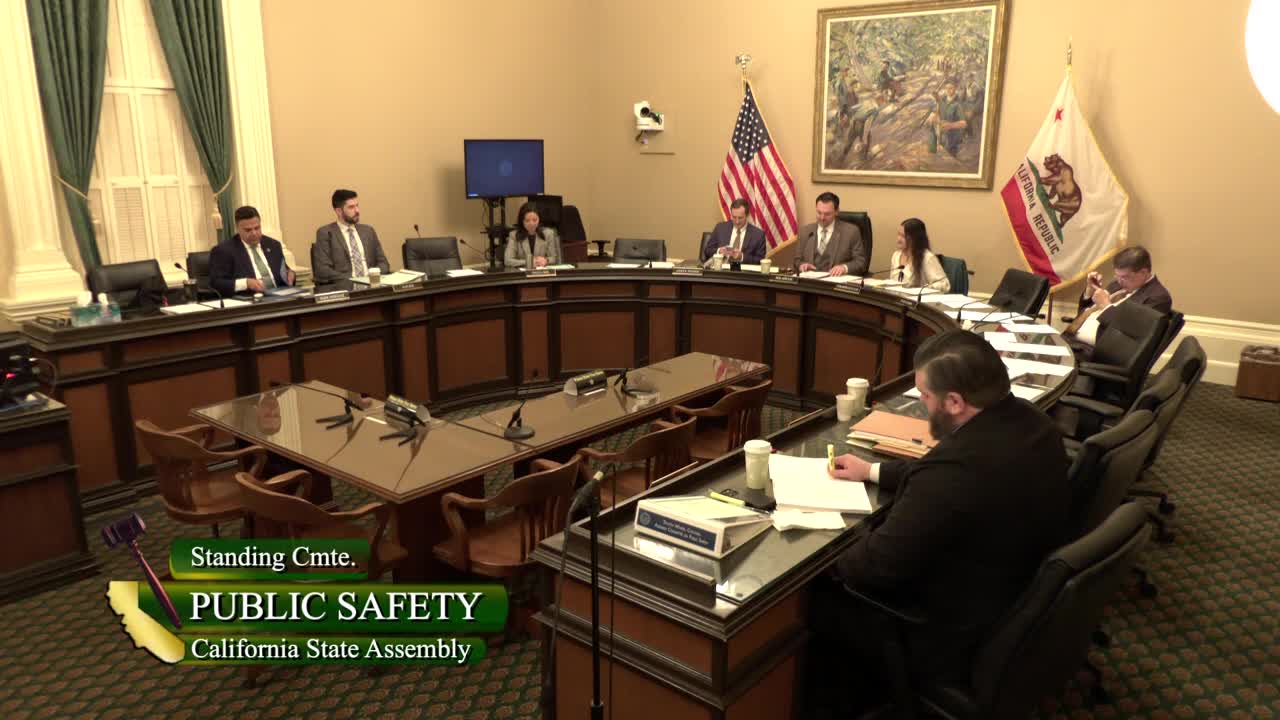
Assembly Standing Committee on Public Safety
Bill Author

Bill Co-Author(s):