AB 885: Public postsecondary education: College Access for All Fund.
- Session Year: 2025-2026
- House: Assembly
- Latest Version Date: 2025-04-21
Current Status:
Failed
(2026-02-02: From committee: Filed with the Chief Clerk pursuant to Joint Rule 56.)
Introduced
In Committee
Awaiting First Chamber Vote
Passed First Chamber
In Committee
Awaiting Second Chamber Vote
Passed Second Chamber
Enacted
What does this bill do?
Creates the College Access for All Fund to give money to the University of California and California State University to lower costs for undergraduate students. The fund may be used for tuition reductions, loan repayment programs, or a combination of both.
The summary is provided by generative AI which can make mistakes. For original language, please view the details in the table below.
The Donahoe Higher Education Act establishes the California State University, under the administration of the Trustees of the California State University, and the University of California, under the administration of the Regents of the University of California, as 2 of the 3 segments of public postsecondary education in the state.
This bill would establish the Debt Free College at the UC and the CSU College Access for All Fund in the State Treasury and would require all moneys in the fund to be available, upon appropriation by the Legislature, to the University of California and the California State University for purposes of lowering the cost of undergraduate attendance, either through tuition reductions or loan repayment programs, or a combination of tuition reductions and loan repayment programs.
The Donahoe Higher Education Act establishes the California Community Colleges, under the administration of the Board of Governors of the California Community Colleges, the California State University, under the administration of the Trustees of the California State University, and the University of California, under the administration of the Regents of the University of California, as 2 of the 3 segments of public postsecondary education in the state.
This bill would state the intent of the Legislature to enact subsequent legislation authorizing a revenue measure to invest in higher education, specifically to pay the tuition of higher education students in public postsecondary education.This bill would establish the Debt Free College at the UC and the CSU Fund in the State Treasury and would require all moneys in the fund to be available, upon appropriation by the Legislature, to the University of California and the California State University for purposes of lowering the cost of undergraduate attendance, either through tuition reductions or loan repayment programs, or a combination of tuition reductions and loan repayment programs.
The Donahoe Higher Education Act establishes the California Community Colleges, under the administration of the Board of Governors of the California Community Colleges, the California State University, under the administration of the Trustees of the California State University, and the University of California, under the administration of the Regents of the University of California, as the 3 segments of public postsecondary education in the state.
This bill would state the intent of the Legislature to enact subsequent legislation authorizing a revenue measure to invest in higher education, specifically to pay the tuition of higher education students in public postsecondary education.
The Legislature finds and declares all of the following:
(a)According to Georgetown University, over the past 20 years a college degree has increasingly become a prerequisite to a well-paying, stable job.
(b)The Public Policy Institute of California found that on average, graduates of Californias public universities earn up to 62 percent more annually than a high school graduate.
(c)Over the past 50 years, tuition and fees at the University of California have nearly quadrupled, while at the California State University tuition and fees have jumped sixfold.
(d)The cost of attending the University of California has ballooned to over $45,000 annually, $14,934 of which accounts for tuition and fees. At the California State University, tuition and fees average nearly $8,000 annually.
(e)According to the Public Policy Institute of California, the high cost of tuition, coupled with Californias high cost of living, forces two-thirds of undergraduates at the University of California and the California State University to take on student debt.
(f)Nearly 4,000,000 Californians already owe over $142 billion in student debt, and this acts as a drag on the states economy.
(g)The lack of an educated workforce will deny the state the ability to draw upon the critical resources that are necessary to assist with the states current economic crisis and to support future economic growth.
(h)Current budget proposals will jeopardize the enrollment of students at the University of California and the California State University.
SEC. 2.Chapter 15.8 (commencing with Section 67394) is added to Part 40 of Division 5 of Title 3 of the Education Code, to read:15.8.Debt Free College at the UC and the CSU College Access for All Fund67394.(a)The Debt Free College at the UC and the CSU College Access for All Fund is hereby established in the State Treasury.
(b)All moneys in the fund shall be available, upon appropriation by the Legislature, to the University of California and the California State University for purposes of lowering the cost of undergraduate attendance, either through tuition reductions or loan repayment programs, or a combination of tuition reductions and loan repayment programs.
The Legislature finds and declares all of the following:
(a)According to Georgetown University, over the past 20 years a college degree has increasingly become a prerequisite to a well-paying, stable job.
(b)The Public Policy Institute of California found that on average, graduates of Californias public universities earn up to 62 percent more annually than a high school graduate.
(c)Over the past 50 years, tuition and fees at the University of California have nearly quadrupled, while at the California State University tuition and fees have jumped sixfold.
(d)The cost of attending the University of California has ballooned to over $45,000 annually, $14,934 of which accounts for tuition and fees. At the California State University, tuition and fees average nearly $8,000 annually.
(e)According to the Public Policy Institute of California, the high cost of tuition, coupled with Californias high cost of living, forces two-thirds of undergraduates at the University of California and the California State University to take on student debt.
(f)Nearly 4,000,000 Californians already owe over $142 billion in student debt, and this acts as a drag on the states economy.
(g)The lack of an educated workforce will deny the state the ability to draw upon the critical resources that are necessary to assist with the states current economic crisis and to support future economic growth.
(h)Current budget proposals will jeopardize the enrollment of students at the University of California and the California State University.
SEC. 2.Chapter 15.8 (commencing with Section 67394) is added to Part 40 of Division 5 of Title 3 of the Education Code, to read:15.8.Debt Free College at the UC and the CSU Fund67394.(a)The Debt Free College at the UC and the CSU Fund is hereby established in the State Treasury.
(b)All moneys in the fund shall be available, upon appropriation by the Legislature, to the University of California and the California State University for purposes of lowering the cost of undergraduate attendance, either through tuition reductions or loan repayment programs, or a combination of tuition reductions and loan repayment programs.
SECTION 1.It is the intent of the Legislature to enact subsequent legislation authorizing a revenue measure to invest in higher education, specifically to pay the tuition of higher education students in public postsecondary education.It is the intent of the Legislature to enact subsequent legislation authorizing a revenue measure to invest in higher education, specifically to pay the tuition of higher education students in public postsecondary education.
|
Date
|
Status
|
|---|---|
| Feb 2, 2026 | From committee: Filed with the Chief Clerk pursuant to Joint Rule 56. |
| Jan 31, 2026 | Died pursuant to Art. IV, Sec. 10(c) of the Constitution. |
| May 23, 2025 | In committee: Held under submission. |
| May 14, 2025 | In committee: Set, first hearing. Referred to APPR. suspense file. |
| Apr 30, 2025 | From committee: Do pass and re-refer to Com. on APPR. (Ayes 10. Noes 0.) (April 29). Re-referred to Com. on APPR. |
| Apr 22, 2025 | Re-referred to Com. on HIGHER ED. |
| Apr 21, 2025 | From committee chair, with author's amendments: Amend, and re-refer to Com. on HIGHER ED. Read second time and amended. |
| Mar 25, 2025 | Re-referred to Com. on HIGHER ED. |
| Mar 24, 2025 | From committee chair, with author's amendments: Amend, and re-refer to Com. on HIGHER ED. Read second time and amended. |
| Mar 24, 2025 | Referred to Com. on HIGHER ED. |
| Feb 20, 2025 | From printer. May be heard in committee March 22. |
| Feb 19, 2025 | Read first time. To print. |
|
Date
|
Description
|
Location
|
Votes
|
|
|---|---|---|---|---|
| Apr 29, 2025 | Do pass and be re-referred to the Committee on [Appropriations] | Assembly Standing Committee on Higher Education |
Passed |
This list shows positions taken on this bill by organizations on the date displayed, which is linked to the original source.
Positions by individuals are not included.
Date of Hearing: May 14, 2025
ASSEMBLY COMMITTEE ON APPROPRIATIONS
Buffy Wicks, Chair
ABPCA Bill Id:AB 885
Author:(Solache) – As Amended Ver:April 21, 2025
Policy Committee: | Higher Education | Vote: | 10 - 0 |
|
| ||
|
|
Urgency: No State Mandated Local Program: No Reimbursable: No
SUMMARY:
This bill establishes the College Access for All Fund to make moneys available, upon appropriation by the Legislature, to the University of California (UC) and California State University (CSU) to lower undergraduate tuition costs or offer loan repayment programs or both.
FISCAL EFFECT:
Ongoing General Fund cost pressures of an unknown but significant amount, likely in the hundreds of millions of dollars, for the CSU and UC to reduce undergraduate tuition costs or offer loan repayment programs.
If the state chooses to appropriate funds sufficient to reduce CSU student tuition and fees alone by 10% for all students, the bill creates approximately $360 million in costs annually.
COMMENTS:
- Purpose. According to the author:
The College Access for All bill works to ensure that every California can work to obtain an undergraduate higher education without fear of financial stress or debt. By establishing the College Access for All Fund within the State Treasury the bill creates a pool of funding to be used solely for reducing the cost of tuition and fees at UC and CSU and for costs of student loan debt. The bill also works to craft a solution for the longstanding structural issue within the State Budget.
- Background. In September 2023, the CSU Trustees approved a multi-year tuition increase commencing with the fall 2024 semester. For the 2024-25 academic year, full-time undergraduate students will pay, on average, tuition and fees of $6,084 (an increase of $342). Under this multi-year plan, tuition at the CSU will increase 6% over the next five years. After five years, the annual undergraduate tuition at the CSU will be $1,940 higher than it was in the 2023-24 academic year.
Currently, annual tuition and campus fees at most CSU campuses are below $8,000 and below the national average of $10,000 a year. Notably, the majority of CSU students are entitled to Cal Grant financial aid awards, which fully covers their tuition for four years. The CSU also reports that 64% of their students graduate with zero student loan debt and for the students who do borrow, the average amount (about $17,000) is lower than the state and national average.
The UC Regents approved a multi-year Tuition Stability Plan in July 2021. Beginning in the fall of 2022, the UC will adjust the systemwide tuition and student service fees for each incoming undergraduate class, but will subsequently remain flat until the student graduates, for up to six years. For undergraduates who first enrolled in Fall 2021, or earlier, tuition will remain flat at current rates for the duration of their enrollment, up to six years.
According to the Public Policy Institute of California, borrowing levels among undergraduates at four-year institutions nationwide decreased by 10% from 2012 to 2020. Borrowing rates in California, which have long tracked below the national average, dropped even more markedly with only one-third of undergraduate students borrowing in the 2019–20 school year.
Analysis Prepared by: Aaron Heredia / APPR. / (916) 319-2081
Date of Hearing: April 29, 2025
ASSEMBLY COMMITTEE ON HIGHER EDUCATION
Mike Fong, Chair
ABPCA Bill Id:AB 885 (
Author:Solache) – As Amended Ver:April 21, 2025
SUBJECT: Public postsecondary education: College Access for All Fund.
SUMMARY: Establishes the College Access for All Fund in the State Treasury. Specifically, this bill:
- Stipulates that all moneys in the College Access for all Fund (as established pursuant to the summary above), must be available, upon appropriation by the Legislature, to the University of California (UC) and the California State University (CSU) for purposes of lowering the cost of undergraduate attendance, either through tuition reductions or loan repayment programs, or a combination of tuition reductions and loan repayment programs.
- Finds and declares all of the following:
- According to Georgetown University, over the past 20 years a college degree has increasingly become a prerequisite to a well-paying, stable job;
- The Public Policy Institute of California (PPIC) found that on average, graduates of California’s public universities earn up to 62% more annually than a high school graduate;
- Over the past 50 years, tuition and fees at the UC have nearly quadrupled, while at the CSU tuition and fees have jumped sixfold;
- The cost of attending the UC has ballooned to over $45,000 annually, $14,934 of which accounts for tuition and fees. At the CSU, tuition and fees average nearly $8,000 annually;
- According to the PPIC, the high cost of tuition, coupled with California’s high cost of living, forces two-thirds of undergraduates at the UC and the CSU to take on student debt;
- Nearly four million Californians already owe over $142 billion in student debt, and this acts as a drag on the state’s economy;
- The lack of an educated workforce will deny the state the ability to draw upon the critical resources that are necessary to assist with the state’s current economic crisis and to support future economic growth; and,
- Current budget proposals will jeopardize the enrollment of students at the UC and the CSU.
EXISTING LAW:
- Establishes the UC as a public trust to be administered by the Regents of the UC; and, grants the Regents full powers of organization and government, subject only to such legislative control as may be necessary to insure security of its funds, compliance with the terms of its endowments, statutory requirements around competitive bidding and contracts, sales of property and the purchase of materials, goods and services (Article IX, Section (9)(a) of the California Constitution).
- Establishes the CSU system, made of 23 campuses, and bestows upon the CSU Trustees, through the Board of Trustees, the power, duties, and functions with respect to the management, administration, and control of the CSU system (Education Code (EC) Sections 66606 and 89030, et seq.).
- Establishes the Donahoe Higher Education Act and assigns the missions of the CSU and the UC (EC Section 66010, et seq.).
FISCAL EFFECT: Unknown
COMMENTS: Background. The CSU and UC receive their funding through the annual Budget Act. There is no funding policy in statute for these institutions; thus, their funding is discretionary. However, UC and CSU have entered into system-specific "compacts" and "partnerships" with several Governors to ensure stable multi-year funding in exchange for a commitment to deliver on specific performance measures.
Purpose of the measure. The author contends that, “The College Access for All Bill works to ensure that every California can work to obtain an undergraduate higher education without fear of financial stress or debt. By establishing the College Access for All Fund within the State Treasury the bill creates a pool of funding to be used solely for reducing the cost of tuition and fees at UC and CSU and for costs of student loan debt. The bill also works to craft a solution for the longstanding structural issue within the State Budget.”
Tuition changes at the CSU and UC. In September 2023, the CSU Trustees approved a multi-year tuition increase commencing with the Fall 2024 semester. For the 2024-25 academic year, full-time undergraduate students will pay on average tuition and fees of $6,084 (an increase of $342). Under this multi-year plan, tuition at the CSU will increase 6% over the next five years. After five years, the annual undergraduate tuition at the CSU will be $1,940 higher than it was in the 2023-24 academic year.
Currently, annual tuition and campus fees at most CSU campuses are below $8,000 and below the national average of annual average of $10,000.
Committee Staff understands that after five years, the CSU Trustees will have to evaluate the systemwide tuition and fees structure and determine if tuition will be increased again.
Prior to 2023, the last time the CSU increased student tuition and fees was 2017.
The UC Regents approved a multi-year Tuition Stability Plan in July 2021. Beginning in the Fall of 2022, the systemwide tuition and student service fees was adjusted for each incoming undergraduate class, but will subsequently remain flat until the student graduates, for up to six years. For undergraduates who first enrolled in Fall 2021, or earlier, tuition will remain flat at current rates for the duration of their enrollment, up to six years.
Committee Staff understands that after five years, the plan will be up for reauthorization by the UC Regents.
Prior to the implementation of the Tuition Stability Plan, the last time the UC increased tuition and fees was in 2017; the increase was 2.5%.
Student Debt. According to a June 2023 Public Policy Institute of California (PPIC) Fact Sheet, entitled, Student Loan Debt in California, borrowing levels among undergraduates at four-year institutions nationwide decreased by 10 percentage points from 2012 to 2020. Borrowing rates in California, which have long been below the national average, dropped even more markedly; only one-third borrowed in 2019–20.
Committee Staff understands that the decline in student borrowing in this State is due, in part to the State’s robust financial aid program, the Cal Grant, which covers the total cost of tuition and fees annually for hundreds of thousands of eligible students attending the CSU and UC. In fact, at the CSU, nearly two-thirds of CSU’s undergraduate students earn their degrees without any incurred student debt. At the UC, 64% of UC’s undergraduate students earn their degree without any student debt incurred.
Committee comments. This measure seeks to establish the College Access for All Fund, requiring all moneys in the fund to be available only upon appropriation by the Legislature. It is presently unclear the dollar amount and/or the goal of the amount of moneys in the fund and if the Legislature will appropriate moneys to the fund.
Moving forward, the author may wish to work with the appropriate stakeholders, including, but not limited to, the Budget Committees of the Legislature, the Department of Finance, the CSU and the UC, in order to ascertain an estimated cost projection for the fund to serve its intended purpose.
The State already provides a general fund appropriation to the CSU and UC and could, within that appropriation, provide additional funding with the requirement that the increase in funding beyond the base appropriation be used to charge down the tuition and fees a student would otherwise be required to pay, potentially negating the need to establish a special fund.
The fund is subject to an appropriation by the State; and would be subject to the ebbs and flows of the economy, which could create an unstable and unreliable source of funding for families to plan and prepare for year after year. It is presently unclear how, or if, this fund would impact the direct State apportionment for the Cal Grant.
Further, as currently drafted, the measure stipulates that the moneys in the fund must be made available to the CSU and UC for purposes of lowering the cost of undergraduate attendance, either through tuition reductions, loan repayment programs, or a combination of both. However, it is unclear how the CSU and UC would make these determinations.
Additionally, the CSU and UC are not loan repayment organizations. At a time whereby both segments are facing an 8% budget cut, the Committee may wish to examine if it is prudent to task the segments with potentially having to create a loan repayment program.
REGISTERED SUPPORT / OPPOSITION:
Support
None on file.
Opposition
None on file.
Analysis Prepared by: Jeanice Warden / HIGHER ED. / (916) 319-3960
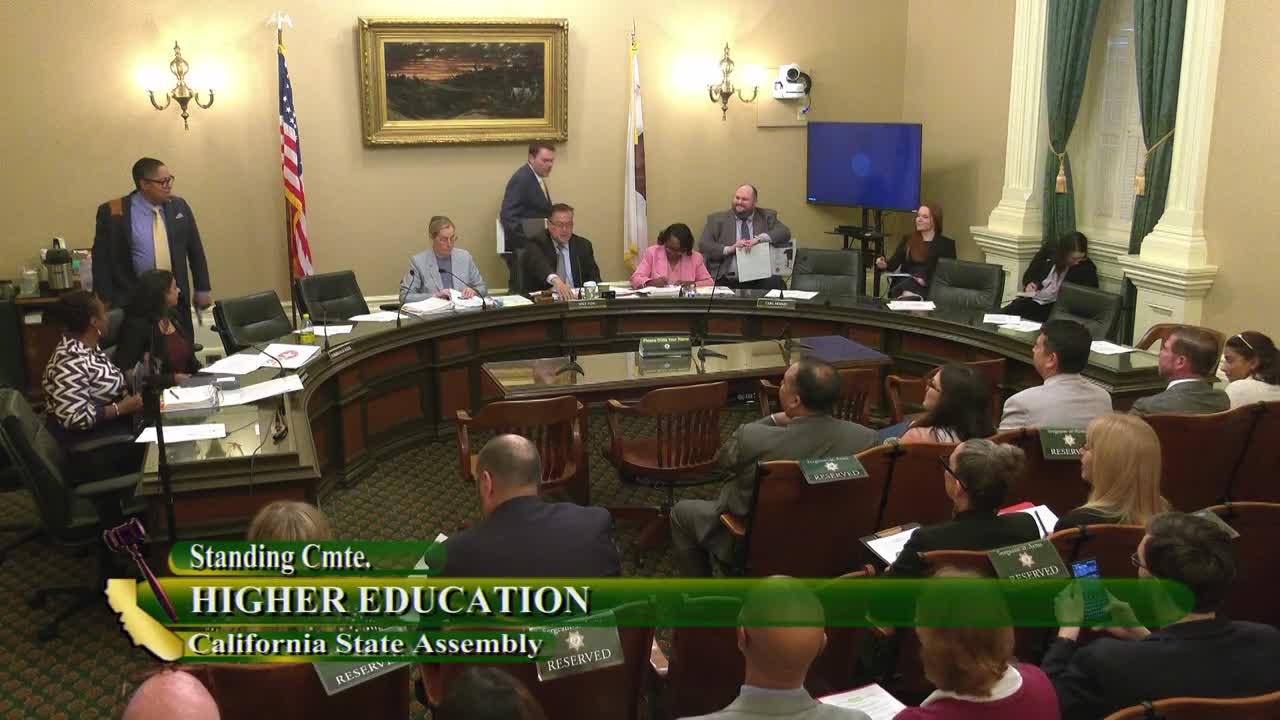
Discussed in Hearing
 7MIN
Assembly Standing Committee on Higher Education
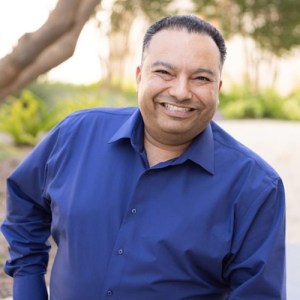
Bill Author
Bill Co-Author(s):