SB 422: California Workforce Development Board: developmental services.
- Session Year: 2025-2026
- House: Senate
- Latest Version Date: 2025-02-18
Current Status:
Failed
(2026-02-02: Returned to Secretary of Senate pursuant to Joint Rule 56.)
Introduced
In Committee
Awaiting First Chamber Vote
Passed First Chamber
In Committee
Awaiting Second Chamber Vote
Passed Second Chamber
Enacted
Existing law establishes the California Workforce Development Board as the body responsible for assisting the Governor in the development, oversight, and continuous improvement of Californias workforce investment system and the alignment of the education and workforce investment systems to the needs of the 21st century economy and workforce. Existing law requires the board to assist the Governor in certain activities, including the review and technical assistance of statewide policies, programs, and recommendations to support workforce development systems in the state, as specified.
This bill would require the board, on or before January 1, 2027, to review existing recommendations and to research and provide a report to the Governor and the Legislature including recommendations on the most compelling strategies for addressing the workforce shortage in Californias developmental services system, as specified. The bill would require the State Department of Developmental Services to provide staff support and expertise to the board for this purpose.
(a)On or before January 1, 2027, the board shall review recommendations from the current body of work in national and state-level developmental services policy reports and shall research and provide a report to the Governor and the Legislature including recommendations on the most compelling strategies for addressing the workforce shortage in Californias developmental services system. The report shall identify the state entities best suited for, and that have the jurisdiction and authority aligned with, implementing the identified workforce strategies.
(b)(1)Before submitting the report required by subdivision (a), the board shall solicit input from all relevant stakeholders, including, but not limited to, people with developmental disabilities and their family members, direct support professionals, developmental services providers, the Association of Regional Center Agencies, local workforce development boards, and subject matter experts in workforce development.
(2)(A)The State Department of Developmental Services shall provide staff support and expertise necessary to the board to complete the review and report required by subdivision (a).
(B)The State Department of Developmental Services shall identify subject matter experts regarding the workforce issues impacting children and adults served through the Lanterman Developmental Disabilities Services Act (Division 4.5 (commencing with Section 4500) of the Welfare and Institutions Code) and the California Early Intervention Services Act (Title 14 (commencing with Section 95000) of the Government Code).
(c)(1)A report to be submitted pursuant to subdivision (a) shall be submitted in compliance with Section 9795 of the Government Code.
(2)Pursuant to Section 10231.5 of the Government Code, this section is repealed on January 1, 2028.
|
Date
|
Status
|
|---|---|
| Feb 2, 2026 | Returned to Secretary of Senate pursuant to Joint Rule 56. |
| May 23, 2025 | May 23 hearing: Held in committee and under submission. |
| May 16, 2025 | Set for hearing May 23. |
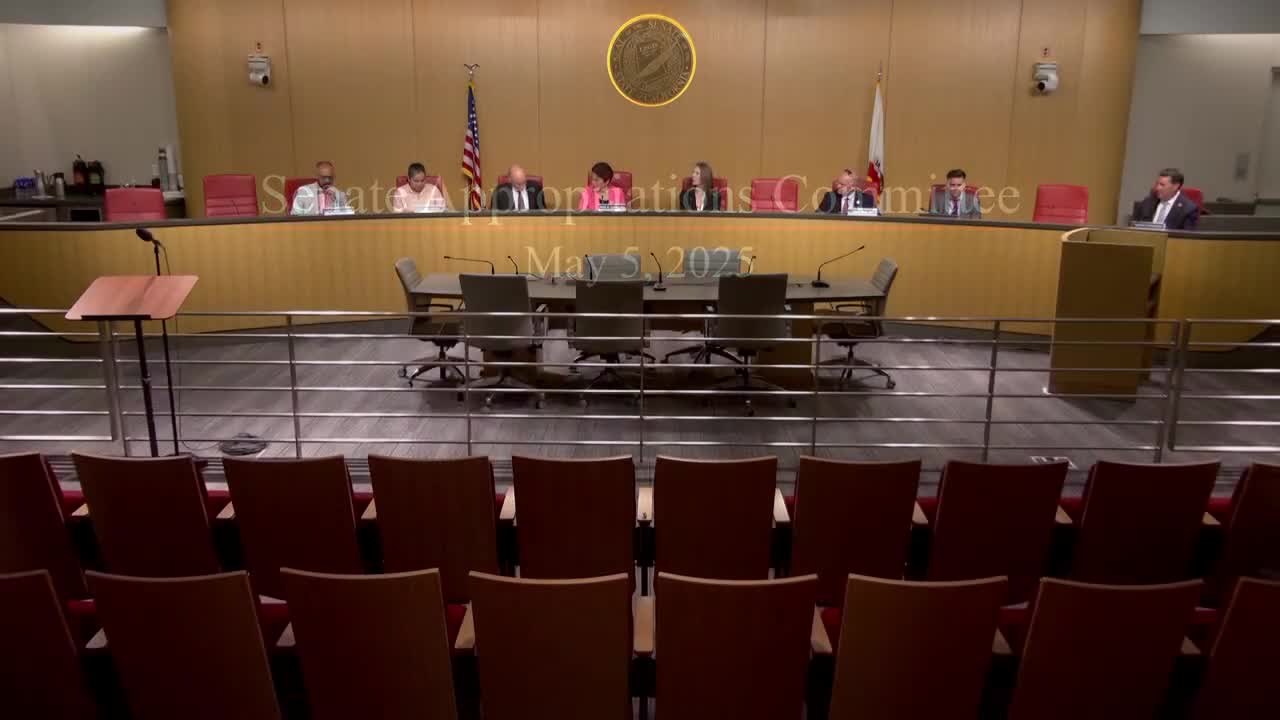
| May 5, 2025 | May 5 hearing: Placed on APPR. suspense file. |
| Apr 25, 2025 | Set for hearing May 5. |
| Apr 22, 2025 | From committee: Do pass and re-refer to Com. on APPR. with recommendation: To consent calendar. (Ayes 5. Noes 0. Page 812.) (April 21). Re-referred to Com. on APPR. |
| Apr 4, 2025 | Set for hearing April 21. |
| Mar 26, 2025 | From committee: Do pass and re-refer to Com. on HUMAN S. with recommendation: To consent calendar. (Ayes 5. Noes 0. Page 567.) (March 26). Re-referred to Com. on HUMAN S. |
| Mar 18, 2025 | Set for hearing March 26. |
| Feb 26, 2025 | Referred to Coms. on L., P.E. & R. and HUMAN S. |
| Feb 19, 2025 | From printer. May be acted upon on or after March 21. |
| Feb 18, 2025 | Introduced. Read first time. To Com. on RLS. for assignment. To print. |
|
Date
|
Description
|
Location
|
Votes
|
|
|---|---|---|---|---|
| May 5, 2025 | Placed on suspense file | Senate Standing Committee on Appropriations |
Passed |
|
| Apr 21, 2025 | Do pass, but first be re-referred to the Committee on [Appropriations] with the recommendation: To Consent Calendar | Senate Standing Committee on Human Services |
Passed |
|
| Mar 26, 2025 | Do pass, but first be re-referred to the Committee on [Human Services] with the recommendation: To Consent Calendar | Senate Standing Committee on Labor, Public Employment and Retirement |
Passed |
This list shows positions taken on this bill by organizations on the date displayed, which is linked to the original source.
Positions by individuals are not included.
|
Organization
|
Position
|
Date
|
|---|---|---|
| Association Of Regional Center Agencies | ** Support | |
| Autism Speaks | ** Support | |
| Aveanna Healthcare | ** Support | |
| Avenues Supported Living Services | ** Support | |
| Caapse | ** Support | |
| Cal-TASH | ** Support | |
| Easterseals Northern California | ** Support | |
| Infant Development Association of California | ** Support | |
| Integrated Resources Institute | ** Support | |
| L.I.F.E. | ** Support | |
| PathPoint | ** Support | |
| San Gabriel/pomona Regional Center | ** Support | |
| Scdd | ** Support |
SENATE COMMITTEE ON
Senator Anna Caballero, Chair
2025 - 2026 Regular Session
SB 422 (Grayson) - California Workforce Development Board: developmental services
Version: | Policy Vote: |
Urgency: | Mandate: |
Hearing Date: | Consultant: |
Bill Summary:
SB 422 would require the California Workforce Development Board (CWDB) to research and provide a report to the Governor and the Legislature including recommendations to address the workforce shortage in California’s developmental services system.
Fiscal Impact:
- CWDB indicates that it would incur minimum annual costs of $504,000 in 2026-07 and 2027-28 to produce the requisite report (General Fund).
- The Department of Development Services (DDS) would incur costs of $129,000 in 2025-26, $258,000 in 2026-27, and $129,000 in 2027-28. The corresponding General Fund amounts would be $103,000 in 2025-26, $206,000 in 2026-27, and $103,000 in 2028. DDS would require 1.5 limited-term positions as a result of the bill.
Background:
Current law defines “developmental disability” to be one that originates before an individual reaches 18 years of age, continues, or can be expected to continue, indefinitely, and constitutes a substantial disability for that individual. As defined by DDS, in consultation with the Superintendent of Public Instruction, the term includes intellectual disabilities, cerebral palsy, epilepsy, autism, and other closely related disabling conditions.
The workforce needs for this constituency comprise an array of critical supports to permit people with intellectual and developmental disabilities (IDD) to live, work, and thrive in their communities. The care needs include teachers, nurses, psychologists, occupational therapists, physical therapists, counselors, dieticians to chauffeurs, personal trainers, and others. As noted by a recent study that evaluated the IDD workforce trends post COVID-19, “there is no Bureau of Labor Statistics occupational classification for direct support professionals and they are often categorized with home health aides, personal care assistants, certified nurse assistants, and others. Providing home and community-based supports for people with IDD, however, requires specialized skills and competencies; unfortunately, this is not reflected in their low wages, limited access to benefits, and lack of respect afforded to this essential workforce.”
Under the Lanterman Developmental Disabilities Services Act, DDS is responsible for overseeing the coordination and delivery of services and supports to more than 400,000 Californians with developmental disabilities. According to the Senate Human Services Committee, “Direct responsibility for implementation of the Lanterman Act’s service system is shared by DDS and a statewide network of 21 regional centers, which are private, community-based nonprofit entities that contract with DDS to carry out many of the state’s responsibilities. Regional center contracts include specific and measurable performance objectives. Every year, DDS reviews each regional center’s performance data for compliance with their contracts and posts them on their website. Regional center services are not consistent across the state. One often-cited strength of the regional center system is each regional center’s local control and flexibility, while one challenge is the system’s lack of uniformity.”
Much like other industries, staff shortages exist with respect to meeting the needs of the IDD community. A survey conducted by the Institute on Community Integration and the National Alliance for Direct Support Professionals (DSPs) to evaluate the impacts of COVID-19 on the direct support workforce, found that 43 percent of DSPs left their positions in 2019 with one-third leaving in the first six months of employment (National Core Indicators, 2020). Vacancy rates were 8.5% for full-time and 11% for part-time positions. Consequently, (1) many DSPs, supervisors, and other staff consistently have to work overtime to provide supports, and (2) sometimes people with IDD go without supports that they need and that have been authorized. Family members often end up providing these supports themselves, which affects their availability to maintain their own employment.
In response to the challenges facing the IDD population and opportunities for improving consumer experiences in the provision of developmental services, the Legislature enacted AB 162 (Committee on Budget, 2024) to, among other things, direct the development of a Master Plan for Developmental Services. This Master Plan is intended to strengthen accessibility, quality, and equity of the developmental services system for all system consumers and their families. Additionally, the Master Plan also seeks to create and strengthen bridges that connect the developmental services system to other critical systems, including education, housing, employment, transportation, and safety. Five workgroups were established as part of the Master Plan development, including one on workforce. The final Master Plan was released in March, 2025.
Proposed Law:
This bill, among other things, would do the following:
- Require CWDB, by January 1, 2027, to research and review recommendations from the current body of work in national and state-level developmental services policy reports and provide a report to the Governor and the Legislature including recommendations on the most compelling strategies for addressing the workforce shortage in California's developmental services system.
- Require the report to identify the state entities best suited for, and that have the jurisdiction and authority aligned with, implementing the identified workforce strategies.
- Require CWDB, before submitting the required report, to solicit input from all relevant stakeholders, including, but not limited to, people with developmental disabilities and their family members, direct support professionals, developmental services providers, the Association of Regional Center Agencies, local workforce development boards, and subject matter experts in workforce development.
- Require DDS to (1) provide staff support and expertise necessary to complete the review and report, and (2) identify subject matter experts regarding the workforce issues impacting children and adults served through the Lanterman Developmental Disabilities Services Act and the California Early Intervention Services Act, as specified.
Related Legislation:
AB 162 (Committee on Budget, Chapter 47, Statutes of 2024), among other things, directed the development of a Master Plan for Developmental Services.
-- END --
SENATE COMMITTEE ON HUMAN SERVICES
Senator Arreguín, Chair
2025 - 2026 Regular
Bill No: | SB 422 | ||
Author: | Grayson | ||
Version: | February 18, 2025 | Hearing Date: | April 21, 2025 |
Urgency: | No | Fiscal: | Yes |
Consultant: | Diana Dominguez | ||
Subject: California Workforce Development Board: developmental services
SUMMARY
This bill would require the California Workforce Development Board, on or before January 1, 2027, to review recommendations from national and state-level developmental services policy reports and provide a report to the Governor and Legislature including recommendations on the most compelling strategies for addressing the workforce shortage in California’s developmental services system. This bill requires the California Workforce Development Board to solicit input from all relevant stakeholders, including, but not limited to, people with disabilities, direct support professionals, service providers, and the Association of Regional Center Agencies, and requires the Department of Developmental Services (DDS) to provide staff support and expertise.
ABSTRACT
Existing Law:
- Establishes the California Workforce Development Board, under the purview of the Labor and Workforce Development Agency, as the body responsible for assisting the Governor in the development, oversight, and continuous improvement of California’s workforce system, including its alignment to the needs of the economy and the workforce. (Unemployment Insurance Code 14010 et seq.)
- Establishes DDS under the Health and Welfare Agency with jurisdiction over the execution of the laws relating to the care, custody, and treatment of developmentally disabled persons, as provided. (WIC 4400 et seq.)
- Establishes the Lanterman Developmental Disabilities Services Act (Lanterman Act), which states that California is responsible for providing a range of services and supports sufficiently complete to meet the needs and choices of each person with developmental disabilities, regardless of age or degree of disability, and at each stage of life, and to support their integration into the mainstream life of the community. (WIC 4500 et seq.)
- Establishes a system of nonprofit regional centers, overseen by DDS, to provide fixed points of contact in the community for all persons with developmental disabilities and their families, to coordinate services and supports best suited to them throughout their lifetime. (WIC 4620)
- Makes Legislative findings and declarations, including the following:
- Workforce capacity among direct support professionals (DSPs) and regional center service coordinators is a growing concern in the developmental services system.
- Based on annual projected regional center caseload growth and assumptions about direct support professional turnover, the developmental services system is projected to need approximately 33,000 direct support professionals and 2,700 regional center service coordinators over the next five years.
- To be responsive to California’s changing demographics, DDS should support regional centers and service providers in undertaking a purposeful approach to recruiting and hiring workers from diverse communities and explore technological advancements as a complement to workers who provide direct services. (WIC 4699)
This Bill:
- Requires the California Workforce Development Board (Board), on or before January 1, 2027, to review recommendations from the current body of work in national and state-level developmental services policy reports. Further requires the Board to research and provide a report to the Governor and the Legislature including recommendations on the most compelling strategies for addressing the workforce shortage in California’s developmental services system.
- Requires the report to identify the state entities best suited for, and that have the jurisdiction and authority aligned with, implementing the identified workforce strategies.
- Requires the Board, prior to submitting the report, to solicit input from all relevant stakeholders, including, but not limited to, all of the following:
- People with developmental disabilities and their family members,
- DSPs,
- Developmental services providers,
- The Association of Regional Center Agencies,
- Local workforce development boards, and
- Subject matter experts in workforce development
- Requires DDS to provide staff support and expertise necessary to the Board to complete the required review of policies and subsequent report. Requires DDS to identify subject matter experts regarding the workforce issues impacting children and adults served through the Lanterman Act and the California Early Intervention Services Act.
- Specifies the report shall be submitted in compliance with Government Code 9795. Repeals this provision on January 1, 2028.
FISCAL IMPACT
This bill has not yet been analyzed by a fiscal committee.
BACKGROUND AND DISCUSSION
Purpose of the Bill:
According to the author, “SB 422 directs the California Workforce Development Board (CWDB) to analyze the factors behind the workforce shortage in supporting individuals with developmental disabilities. By reviewing expert research and evaluating proposed solutions, the CWDB can recommend policy actions to address the shortage.”
Lanterman Act
In 1969, the Lanterman Act established that individuals with intellectual and developmental disabilities (I/DD) and their families have a right to receive the necessary services and supports required for them to live independently in the community. The Lanterman Act enumerates the rights of individuals with I/DD, the rights of their families, and what services and supports are available to these individuals. The term “developmental disability” is defined as a disability that originates before a person reaches 18 years of age, is expected to continue indefinitely, and is a significant disability for the individual; such disabilities include, among others: epilepsy, autism spectrum disorder, intellectual disability, and cerebral palsy. There are no income-related eligibility criteria to access developmental services. The Department of Finance estimates that approximately 465,165 individuals will receive developmental services in 2024–25, increasing to 504,905 in 2025–26.[1]
In addition to establishing the rights of individuals, the Lanterman Act also created California’s regional center system, comprised of 21 nonprofit regional centers throughout the state whose primary purpose is to connect individuals with services in the community. Regional center services may include diagnosis, evaluation, treatment, and care coordination of services such as personal care, day care, special living arrangements, and physical, occupational, and speech therapy. Additional services include, but are not limited to: mental health services, recreation, counseling for the individual served and their family, assistance locating a home, behavior training and modification programs, emergency and crisis intervention, and many others. The regional center system can also provide respite for family caregivers, short-term out-of-home care, social skills training, specialized medical and dental care, telehealth services and supports, training for parents of children with developmental disabilities, and transportation services necessary to ensure the delivery of services to persons with developmental disabilities. An individual with I/DD who is eligible for regional center services is called a “consumer”.
Services for regional center consumers are outlined in an Individual Program Plan (IPP), which is developed according to the needs and personal choices of the individual. The IPP serves as a tool to maximize the opportunities for each consumer to develop relationships, integrate into community life, increase control over their life, and obtain positive roles in the community. The IPP is required to prioritize the services and supports that allow minors to live with their families and adults to live in the community as independently as possible. Consumers are assigned a service coordinator employed by the regional center who is responsible for implementing, overseeing, and monitoring the consumer’s IPP.
Direct Support Professional (DSP) Workforce
Regional centers contract with service providers, or vendors, that employ direct support professionals (DSPs), sometimes referred to as direct service professionals, to work directly with consumers. As outlined above, services and supports available to consumers may include independent and supported living, day programs, and employment services, among others. According to the Administration for Community Living:
“DSPs support people with disabilities in a wide variety of ways, based upon the unique needs of the person receiving support. Many provide assistance with activities of daily living, but their role is much broader than that. DSPs may also provide job coaching and employment support, independent living skills training, assistance with accessing resources and opportunities in the community, and more. Without DSPs, many people with disabilities would not be able to live independently.”
More DSPs may be needed when a service is offered in-home or on a more individualized level. Some services and supports have low DSP-to-consumer ratios, as low as 1:1. For example, day services, which help individuals develop skills and integrate into the community, can be provided with staffing ratios of 1:2 to 1:10.[2] Behavioral day services, which are day services for individuals that require a behavior plan to address behaviors that require additional support, can be provided with staffing ratios of 1:2 to 1:3. In-home day services, which are day services for individuals who are unable to attend day programs outside their homes because of medical conditions that prevent travel, can be provided with staffing ratios of 1:1 to 1:3. On a case-by-case basis, depending on the service, a consumer’s IPP team may decide that more staff support is needed than 1:1.
According to the Association of Regional Center Agencies, the number of DSPs in California’s developmental services system is estimated at around 100,000.
DDS Workforce Initiatives
As of March 2025, DDS has seven initiatives to promote workforce stability and development. These initiatives include:
- DSP Training Stipends. Provides up to two $625 training stipends to DSPs who complete training and development courses approved by DDS through the online Association of Regional Center Agencies Learning Center. At program completion in August 2024, 85,632 DSPs had registered and 77,771 DSPs had completed two courses.
- DSP Internship Program. Affords entry-level interns the opportunity to be paid for up to 30 hours per week for up to three months while learning high-quality DSP skills alongside a qualified DSP in a variety of settings performing a variety of functions. As of February 25, 2025, 108 interns have been placed, 25 interns have converted to employment, 62 interns are in queue, and 54 service providers are participating.
- Technology Pilot for Remote Supports. The technology pilot provides supports and services necessary for individuals to access services remotely and meet the goals identified in their IPPs. As of March 2025, the total number of active participants is 28.
- Regional Center Staff Tuition Reimbursement. A tuition reimbursement program for regional center employees who seek a degree or certification in a health or human services-related field. Qualifying employees are eligible to receive up to $10,000 annually for up to three years. As of February 25, 2025, there are 570 participating regional staff members.
- DSP Bilingual/Multilingual Pay Differential. Pay differential to DSPs who have job responsibilities which require the use of a language or medium other than English while communicating with individuals served or their families, when appropriate. Statewide implementation deferred to summer 2025.
- Special Needs Network Workforce Development. Train eligible program participants, called fellows, and connect them with agencies that provide critical early services for children with developmental disabilities in communities of color. As of March 2025, the new two-year cohort targets 500 fellows and 218 fellows are currently participating. Expanded to all seven of the Los Angeles County regional centers, as well as Inland, Kern, and Orange Counties.
- DSP Workforce Training and Development (DSP University). Establish a training and certification program for DSPs tied to wage differentials to foster a more sustainable and professional workforce. Anticipated start of summer 2025.
Service Provider Rate Reform
In 2019, DDS, in consultation with Burns & Associates, Inc., published a vendor rate study[3] and submitted recommendations to the Legislature including rate models within each service category. As a result of the rate study, the 2021 Budget Act initiated a five-year phase in plan for rate reform, including gradual increases to service provider rates. The 2024 Budget Act changed the date for full implementation of rate reform to January 1, 2025. According to DDS, at full implementation, the rate study will increase service provider payments by $2.2 billion annually.[4] While rate reform has increased provider rates, it is difficult to gauge how much it has affected DSP pay. While the rate models include an assumption of how much providers will pay DSPs, there is no requirement for a certain percentage or amount of the rate model for a service to be paid to a DSP by a provider.
DSP Workforce Shortage Report
The California Policy Center for Intellectual and Developmental Disabilities (CPCIDD) published a report in January 2025 entitled “The Impact of the Direct Support Professional Workforce Shortage on Individuals and Families Served by the Regional Center System in California”.[5] This report outlined changes in regional center caseload and the vendor rate model over time and included data from surveys, focus groups, and one-on-one interviews with individuals with I/DD, family members, DSPs, service providers, and service coordinators. The key findings included, among others:
- Effects of staff turnover: Sixty-four percent of individuals with I/DD experienced DSPs leaving in the last 12 months. Staff turnover, especially high levels and frequent turnover, increases feelings of sadness, fear, anxiety, anger, and disruption for people with I/DD. Individuals with I/DD who had previously experienced living in more restrictive settings have higher levels of concern about losing their independence if there are not enough DSPs to provide support for them.
- Reduced access to services: Fifty-eight percent of surveyed family members reported their family member with I/DD was not able to access all of the services in their IPP because of the DSP workforce shortage. Seventy-six percent of surveyed service coordinators report that the DSP workforce shortage is one of the main reasons individuals are not receiving the full amount of services listed in their IPP.
- Low wages: There is a disconnect between the low wages DSPs get paid and the high level of skill required to perform the job, which is the number one reasons DSPs leave the job. DSPs feel there is a fundamental lack of respect or recognition of the profession, especially in light of new minimum wages in the fast food and entry-level health care sectors. Forty-six percent of surveyed DSPs reported working two or more jobs because they cannot make a living working as a DSP.
- Recruitment and retention challenges: Across every service type, surveyed providers reported significant challenges recruiting and retaining DSPs, with the main reason being low wages. Fifty-six percent of surveyed providers have had to turn down referrals due to the DSP workforce shortage, and 35 percent report having a waiting list.
Master Plan for Developmental Services
The Master Plan for Developmental Services[6] was published on March 28, 2025. The Master Plan was developed between April 2024 and March 2025 by a committee of diverse I/DD stakeholders including people with I/DD, family members, workforce members, and other community members. In addition, five workgroups were created to focus on different goal areas. The Master Plan includes 167 recommendations, including the following recommendations related to the DSP workforce:
- Give students information about disability service careers, including information and career guidance for interested students.
- Spread awareness about disability related careers.
- Help people start disability service careers through a paid internship program.
- Help connect people to jobs using existing employment tools.
- Help people be successful as disability service providers through low- or no-cost apprenticeships and competency-based education opportunities.
- Make sure people in disability service careers have benefits, including health care benefits, retirement programs, and other savings and insurance programs.
- Make sure people in disability service careers make enough money by updating the vendor rate model, conducting a wage and skills study, and conducting an assessment of how vendors use rate increases.
DDS will reconvene the Master Plan committee two times per year to share updates on work related to the Master Plan recommendations. DDS will also submit an annual report to the Legislature in March of each year, beginning in 2026 and ending in 2036.
Related/Prior Legislation:
AB 2423 (Mathis, Chapter 904, Statutes of 2024) requires DDS, commencing July 1, 2025, and every other year thereafter, subject to appropriation and the approval of federal funds, to review and update the service provider rate models and post the updated rate models to its internet website no later than January 1 of the following year.
AB 162 (Committee on Budget, Chapter 47, Statutes of 2024), among other things, required the Secretary of California Health and Human Services, in coordination with DDS, to lead the development and implementation of the Master Plan for Developmental Services. AB 162 also changed the date for full implementation of service provider rate reform to January 1, 2025.
AB 121 (Committee on Budget, Chapter 44, Statues of 2023), among other things, required the rate models, commencing July 1, 2024, to be updated to account for the current and any subsequent changes to the statewide minimum wage.
SB 188 (Committee on Budget and Fiscal Review, Chapter 49, Statutes of 2022), among other things, required DDS to establish an entry-level training and internship program for individuals interested in becoming DSPs, a program to provide training stipends to DSPs, and a tuition reimbursement program for regional center employees. SB 188 also requires DDS to seek input from stakeholders throughout the implementation of these programs and to report quarterly to legislative staff on the progress of these programs.
AB 136 (Committee on Budget, Chapter 76, Statutes of 2021), among other things, required DDS to implement enhanced DSP training that promotes services that are person centered and culturally and linguistically sensitive, and that improve outcomes for individuals with I/DD. The resulting training program is known as DSP University, described above. AB 136 also specified the timeline for implementation of the service provider rate models proposed in the rate study.
AB 1 X2 (Thurmond, Chapter 3, Statutes of 2016), among other things, required DDS to submit a rate study to the Legislature on or before March 1, 2019, regarding community-based services for individuals with developmental disabilities.
COMMENTS
This bill seeks to engage the California Workforce Development Board in strategic planning related to the recruitment and retention of DSPs in the developmental services system. DSPs provide vital care to individuals with I/DD in order to help them remain in the least restrictive setting. As I/DD is a lifelong condition that differs vastly from person to person, there is no singular definition for the type of services and supports a DSP provides to an individual with I/DD. Although there have been national advocacy efforts to professionalize DSP work by establishing a standard occupational code through the Bureau of Labor and Statistics, these efforts have not yet been realized, in part due to lack of data.
According to the U.S. Department of Labor, there is a current nationwide shortage of direct care workers, including DSPs, and this shortage adversely affects the many people who use or could benefit from care services.[7] The Administration for Community Living (ACL) estimates more than 1.3 million new direct care workers will be needed nationwide by 2030. In 2022, the ACL created the Direct Care Workforce Strategies Center to provide technical assistance to states and service providers and to facilitate collaboration with stakeholders to improve recruitment, retention, training, and professional development for the direct care workforce. On March 27, 2025, a White House press release[8] announced that critical programs within the ACL that support older adults and people of all ages with disabilities will be split across the Administration for Children and Families, Assistant Secretary for Planning and Evaluation, and Centers for Medicare and Medicaid Services. It is unclear whether federal efforts to strengthen the direct care workforce will continue.
PRIOR VOTES
Senate Labor, Public Employment and Retirement Committee: | 5 - 0 |
POSITIONS
Support:
Association of Regional Center Agencies (Sponsor)
Autism Speaks
Aveanna Healthcare
Avenues Supported Living Services
Caapse
Easterseals Northern California
Infant Development Association of California
Integrated Resources Institute
San Gabriel/pomona Regional Center
Scdd
Oppose:
None
-- END --
https://www.dds.ca.gov/wp-content/uploads/2025/01/GovernorsBudgetHighlights_20250110.pdf ↑
https://www.dds.ca.gov/wp-content/uploads/2024/12/D-2024RateReform-008_RateReformImplementationForAdultDayServices.pdf ↑
https://www.healthmanagement.com/burns-reports/california-dds-vendor-rate-study/ ↑
https://www.dds.ca.gov/wp-content/uploads/2024/09/RateReform_RefresherTraining_20240926.pdf ↑
https://www.cpcidd.org/wp-content/uploads/2025/02/CPCIDD_Report_Jan2025.pdf ↑
https://www.chhs.ca.gov/wp-content/uploads/2025/03/MPDS_ACommunityDrivenVision.pdf ↑
https://www.dol.gov/agencies/odep/program-areas/individuals/DSP ↑
https://www.hhs.gov/press-room/hhs-restructuring-doge-fact-sheet.html ↑
SENATE COMMITTEE ON LABOR, PUBLIC EMPLOYMENT AND RETIREMENT
Senator Lola Smallwood-Cuevas, Chair
2025 - 2026 Regular
Bill No: SB 422 Hearing Date: March 26, 2025
Author: | Grayson | ||
Version: | February 18, 2025 | ||
Urgency: | No | Fiscal: | Yes |
Consultant: | Alma Perez-Schwab | ||
SUBJECT: California Workforce Development Board: developmental services
KEY ISSUE
This bill would require the California Workforce Development Board to research and provide a report to the Governor and the Legislature including recommendations on the most compelling strategies for addressing the workforce shortage in California’s developmental services system.
ANALYSIS
Existing law:
- Establishes the California Workforce Development Board (CWDB), under the purview of the Labor and Workforce Development Agency, as the body responsible for assisting the Governor in the development, oversight, and continuous improvement of California’s workforce system, including its alignment to the needs of the economy and the workforce. (Unemployment Insurance Code §14010 et seq.)
- Establishes the State Department of Developmental Services (DDS) to ensure Californians with developmental disabilities have the opportunity to make choices and lead independent, productive lives as members of their communities in the least restrictive setting possible. (Welfare and Institutions Code §21 et seq.)
- Establishes the Lanterman Developmental Disabilities Services Act (Lanterman Act), which states that California is responsible for providing a range of services and supports sufficiently complete to meet the needs and choices of each person with developmental disabilities, regardless of age or degree of disability, and at each stage of life, and to support their integration into the mainstream life of the community. (Welfare and Institutions Code §4500 et seq.)
- Establishes a system of nonprofit Regional Centers, overseen by DDS, to provide fixed points of contract in the community for all persons with developmental disabilities and their families, to coordinate services and supports best suited to them throughout their lifetime. The network of Regional Centers is intended to be accessible to every family in need and that the design and activities reflect a strong commitment to the delivery of direct service coordination. (Welfare and Institutions Code §4620)
This bill:
- Requires the California Workforce Development Board, on or before January 1, 2027, to research and review recommendations from the current body of work in national and state-level developmental services policy reports and provide a report to the Governor and the Legislature including recommendations on the most compelling strategies for addressing the workforce shortage in California’s developmental services system.
- Requires the report to identify the state entities best suited for, and that have the jurisdiction and authority aligned with, implementing the identified workforce strategies.
- Requires the CWDB, before submitting the required report, to solicit input from all relevant stakeholders, including, but not limited to, people with developmental disabilities and their family members, direct support professionals, developmental services providers, the Association of Regional Center Agencies, local workforce development boards, and subject matter experts in workforce development.
- Requires the State Department of Developmental Services to:
- Provide staff support and expertise necessary to complete the review and report.
- Identify subject matter experts regarding the workforce issues impacting children and adults served through the Lanterman Developmental Disabilities Services Act and the California Early Intervention Services Act, as specified.
- Requires that the report be submitted in compliance with existing reporting provisions under Section 9795 of the Government Code and repeals these reporting provisions on January 1, 2028.
COMMENTS
1. Background
Existing law defines “developmental disability” to mean a disability that originates before an individual attains 18 years of age, continues, or can be expected to continue, indefinitely, and constitutes a substantial disability for that individual. As defined by the Director of DDS, in consultation with the Superintendent of Public Instruction, this term shall include intellectual disabilities, cerebral palsy, epilepsy, autism, and other closely related disabling conditions. (Welfare and Institutions Code §4512)
The workforce needs for this population encompass an array of critical supports making it possible for people with intellectual and developmental disabilities (IDD) to live, work, and thrive in their communities. The care needs include teachers, nurses, psychologists, occupational therapists, physical therapists, counselors, dieticians to chauffeurs, personal trainers, and others. As noted by a recent study that evaluated the IDD workforce trends post COVID-19, “there is no Bureau of Labor Statistics occupational classification for direct support professionals and they are often categorized with home health aides, personal care assistants, certified nurse assistants, and others. Providing home and community-based supports for people with IDD, however, requires specialized skills and competencies; unfortunately, this is not reflected in their low wages, limited access to benefits, and lack of respect afforded to this essential workforce.”[1]
As noted by the DDS, under the Lanterman Developmental Disabilities Services Act, DDS is responsible for overseeing the coordination and delivery of services and supports to more than 400,000 Californians with developmental disabilities.
According to the Senate Human Services Committee:
“Direct responsibility for implementation of the Lanterman Act’s service system is shared by DDS and a statewide network of 21 regional centers, which are private, community-based nonprofit entities that contract with DDS to carry out many of the state’s responsibilities. Regional center contracts include specific and measurable performance objectives. Every year, DDS reviews each regional center’s performance data for compliance with their contracts and posts them on their website. Regional center services are not consistent across the state. One often-cited strength of the regional center system is each regional center’s local control and flexibility, while one challenge is the system’s lack of uniformity.”
Workforce Shortages and Challenges
Much like other industries, staff shortages for meeting the needs of the IDD community are concerning. A survey conducted by the Institute on Community Integration and the National Alliance for Direct Support Professionals (DSPs) to evaluate the impacts of COVID-19 on the direct support workforce, found the following:
“Over 43% of DSPs left their positions in 2019 with one-third leaving in the first six months of employment (National Core Indicators, 2020). Vacancy rates were 8.5% for full-time and 11% for part-time positions. As a result of high vacancies, many DSPs, supervisors, and other staff consistently have to work overtime to provide supports (Hewitt et al., 2019; Test et al., 2003). Another consequence of high vacancies in DSP positions is that sometimes people with IDD go without supports that they need and that have been authorized. Family members often end up providing these supports themselves, which affects their availability to maintain their own employment (Anderson et al., 2002). The threat of contracting COVID-19, social distancing guidelines, and stay-at-home orders affected people with IDD and DSPs.
People with IDD are more likely to contract COVID19 (Gleason et al., 2021) and are at greater risk of mortality from COVID-19 than nearly any other diagnosis type (Kaye, 2021). During the pandemic, they have experienced loss of employment and social isolation. DSPs are most often their primary supports. The purpose of the COVID-19 DSP initial and six-month follow-up surveys was to gather information about the experiences of DSPs related to the COVID-19 pandemic to inform efforts to prepare for future waves of the pandemic.”[2]
Master Plan for Development Services
In acknowledgement of the challenges facing the IDD population and opportunities for improving consumer experiences in the provision of developmental services, the Legislature passed and the Governor Newsom signed into law, AB 162 (Committee on Budget, Chapter 47 Statutes of 2024) to, among other things, direct the development of a Master Plan for Developmental Services. The Master Plan for Developmental Services is intended to strengthen accessibility, quality, and equity of the developmental services system for all system consumers and their families, regardless of their language spoken, demographic group, geographic region, or socioeconomic status, and improves the accountability and transparency of the systems supporting them.
In recognition that California’s developmental disabilities system is deeply connected to other health and social systems, the Master Plan also seeks to create and strengthen bridges that connect the developmental services system to other critical systems including education, housing, employment, transportation, and safety. Five workgroups were established as part of the Master Plan development, including one on workforce.
The final Master Plan is scheduled to be completed this month and will be posted on the California Health and Human Services Agency website by Friday, March 28, 2025.
2. Need for this bill?
According to the author:
“These regional centers are strongly committed to ensuring a robust service network for California’s IDD community and their families, however, there is a critical shortage of service providers. According to the American Network of Community Options and Resources, the annual turnover rate for direct support professionals (DSPs) is 44%. Additionally, the President’s Committee for People with Intellectual Disabilities reports an average vacancy rate of over 20%. With the demand for DSP workers expected to rise and the workforce remaining stagnant—or even shrinking—these shortages will only worsen in the near future.
California is facing a crisis in access to care for individuals in the IDD community, driven by a significant shortage of service providers dedicated to supporting those with developmental disabilities. If this workforce shortage isn't addressed promptly, it will lead to even greater financial challenges for both the state and the families in urgent need of care.”
3. Proponent Arguments:
According to the sponsors of the measure, the Association of Regional Center Agencies:
“SB 422 (Grayson) is not just a study bill to investigate the problem or impact of the workforce shortage for developmental services. Rather it is unique in that it calls upon the state’s foremost authority on workforce development, the California Workforce Development Board (CWDB), to analyze the most compelling recommendations for addressing the workforce shortage, as documented in national and state-level policy reports, 2024 peer reviewed research, and a series of policy bills from the 118th Congress.
Our association is deeply invested in having robust service capacity to support Californians with developmental disabilities and their families. The regional centers are collectively driven by the mission to ensure people with disabilities have the support they need to be full participants in their communities. However, they are unable to achieve our purpose without an adequate league of qualified Direct Support Professionals who come in direct contact with people with disabilities every day in their efforts to work, learn, and play in inclusive communities of their choosing.
We strongly support SB 422. This issue should be a state priority and needs the attention of the CWBD and the Governor to map out a way forward.”
4. Opponent Arguments:
None received.
5. Double Referral:
This bill has been double referred and if approved by this Committee today, will be sent to Senate Human Services Committee for a hearing.
6. Prior Legislation:
AB 162 (Committee on Budget, Chapter 47, Statutes of 2024), among other things, directed the development of a Master Plan for Developmental Services.
SUPPORT
Association of Regional Center Agencies (Sponsor)
Avenues Supported Living Services
Cal-TASH
Infant Development Association of California
L.I.F.E.
PathPoint
OPPOSITION
None received.
-- END --
Discussed in Hearing
 25SEC
Senate Standing Committee on Appropriations
Bill Author

Bill Co-Author(s):