AB 1569: California Environmental Quality Act: exemption: existing transportation infrastructure.
- Session Year: 2015-2016
- House: Assembly
- Latest Version Date: 2016-03-28
The California Environmental Quality Act (CEQA) requires a lead agency, as defined, to prepare, or cause to be prepared, and certify the completion of, an environmental impact report on a project that it proposes to carry out or approve that may have a significant effect on the environment or to adopt a negative declaration if it finds that the project will not have that effect. CEQA also requires a lead agency to prepare a mitigated negative declaration for a project that may have a significant effect on the environment if revisions in the project would avoid or mitigate that effect and there is no substantial evidence that the project, as revised, would have a significant effect on the environment.
This bill would exempt from the provisions of CEQA a project, or the issuance of a permit for a project, that consists of the inspection, maintenance, repair, rehabilitation, replacement, or removal of, or the addition of an auxiliary lane or bikeway to, existing transportation infrastructure and that meets certain requirements. The bill would require the public agency carrying out the project to take certain actions.
(a)This division does not apply to a project, or the issuance of a permit for a project, that consists of the inspection, maintenance, repair, rehabilitation, replacement, or removal of existing transportation infrastructure, including, but not limited to, highways, roadways, bridges, culverts, tunnels, transit systems, bikeways, and paths and sidewalks serving bicycles or pedestrians, or both bicycles and pedestrians, or the addition of an auxiliary lane or bikeway to existing transportation infrastructure if the project is located within an existing right-of-way, and any area surrounding the right-of-way that is to be altered as a result of construction activities that are necessary for the completion of the project will be restored to its condition before the project, and does not add additional motor vehicle lanes, except auxiliary lanes.
(b)For a project meeting the requirements of subdivision (a), the public agency carrying out the project shall do all of the following:
(1)Notify, in writing, any affected public agency, including, but not limited to, any public agency having that has permit, land use, environmental, public health protection, or emergency response authority over the project.
(2)Provide the notice of exemption in a manner specified in subdivision (b) of Section 21108 or subdivision (b) of Section 21152.
(3)Comply with all conditions otherwise authorized by law, and any conditions imposed by the city or county planning department as part of any applicable local agency permit process that are required to mitigate potential impacts of the project and to otherwise comply with the Porter-Cologne Water Quality Control Act (Division 7 (commencing with Section 13000) of the Water Code), Chapter 6 (commencing with Section 1600) of Division 2 of the Fish and Game Code, the California Endangered Species Act (Chapter 1.5 (commencing with Section 2050) of Division 3 of the Fish and Game Code), and other applicable state and federal law. laws.
(c)For purposes of this section, auxiliary lane means the portion of the roadway used for weaving, truck climbing, speed change, or for other purposes supplemental to through traffic movement.
(a)This division does not apply to a project, or the issuance of a permit for a project, that consists of the inspection, maintenance, repair, rehabilitation, replacement, or removal of existing transportation infrastructure, including, but not limited to, highways, roadways, bridges, culverts, tunnels, transit systems, bikeways, and paths and sidewalks serving bicycles or pedestrians, or both bicycles and pedestrians, or the addition of an auxiliary lane or bikeway to existing transportation infrastructure if the project is located within an existing right-of-way, and any area surrounding the right-of-way that is to be altered as a result of construction activities that are necessary for the completion of the project will be restored to its condition before the project, and does not add additional motor vehicle lanes, except auxiliary lanes.
(b)For a project meeting the requirements of subdivision (a), the public agency carrying out the project shall do all of the following:
(1)Notify, in writing, any affected public agency, including, but not limited to, any public agency having permit, land use, environmental, public health protection, or emergency response authority over the project.
(2)Provide the notice of exemption in a manner specified in subdivision (b) of Section 21108 or subdivision (b) of Section 21152.
(3)Comply with all conditions otherwise authorized by law, and any conditions imposed by the city or county planning department as part of any applicable local agency permit process that are required to mitigate potential impacts of the project and to otherwise comply with the Porter-Cologne Water Quality Control Act (Division 7 (commencing with Section 13000) of the Water Code), Chapter 6 (commencing with Section 1600) of Division 2 of the Fish and Game Code, the California Endangered Species Act (Chapter 1.5 (commencing with Section 2050) of Division 3 of the Fish and Game Code), and other applicable state and federal law.
(c)For purposes of this section, auxiliary lane means the portion of the roadway used for weaving, truck climbing, speed change, or for other purposes supplemental to through traffic movement.
|
Date
|
Status
|
|---|---|
| Jan 4, 2016 | Read first time. To print. |
| Jan 5, 2016 | From printer. May be heard in committee February 4. |
| Feb 1, 2016 | Referred to Coms. on NAT. RES. and TRANS. |
| Mar 7, 2016 | In committee: Set, first hearing. Hearing canceled at the request of author. |
| Mar 28, 2016 | From committee chair, with author's amendments: Amend, and re-refer to Com. on NAT. RES. Read second time and amended. |
| Mar 29, 2016 | Re-referred to Com. on NAT. RES. |
| Apr 4, 2016 | In committee: Set, second hearing. Failed passage. Reconsideration granted. |
|
Date
|
Description
|
Location
|
Votes
|
|
|---|---|---|---|---|
| Apr 4, 2016 | Reconsideration. | Assembly Standing Committee on Natural Resources |
Passed |
|
| Apr 4, 2016 | Do pass and be re-referred to the Committee on [Transportation] | Assembly Standing Committee on Natural Resources |
Failed |
This list shows positions taken on this bill by organizations on the date displayed, which is linked to the original source.
Positions by individuals are not included.
|
Organization
|
Position
|
Date
|
|---|---|---|
| California Chamber Of Commerce | ** Support | Apr 4, 2016 |
| California Construction And Industrial Materials Association | ** Support | Apr 4, 2016 |
| California State Association Of Counties | * Support | Apr 4, 2016 |
| California Transportation Commission | * Support | Apr 4, 2016 |
| Civil Justice Association Of California | ** Support | Apr 4, 2016 |
| County of San Bernardino | ** Support | Apr 4, 2016 |
| County of Santa Clara, Board of Supervisors | ** Support | Apr 4, 2016 |
| Metropolitan Transportation Commission | * Support | Apr 4, 2016 |
| Orange County Transportation Authority | ** Support | Apr 4, 2016 |
| Planning And Conservation League | ** Against | Apr 4, 2016 |
| San Bernardino Associated Governments | * Support | Apr 4, 2016 |
| Santa Clara County, Board of Supervisors | ** Support | Apr 4, 2016 |
| Southern California Association Of Governments | ** Support | Apr 4, 2016 |
| United Contractors | * Support | Apr 4, 2016 |
| Western States Trucking Association | ** Support | Apr 4, 2016 |
Date of Hearing: April 4, 2016
ASSEMBLY COMMITTEE ON NATURAL RESOURCES
Das Williams, Chair
ABPCA Bill Id:AB 1569 (
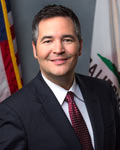
Author:Steinorth) – As Amended Ver:March 28, 2016
SUBJECT: California Environmental Quality Act: exemption: existing transportation infrastructure
SUMMARY: Exempts from the California Environmental Quality Act (CEQA) a transportation infrastructure project, if the project is located within an existing right-of-way and does not add additional motor vehicle lanes, except auxiliary lanes
EXISTING LAW:
- CEQA requires lead agencies with the principal responsibility for carrying out or approving a proposed project to prepare a negative declaration, mitigated negative declaration, or environmental impact report (EIR) for this action, unless the project is exempt from CEQA (CEQA includes various statutory exemptions, as well as categorical exemptions in the CEQA Guidelines).
- Exempts, until January 1, 2020, minor roadway repairs, maintenance, and minor alterations meeting the following conditions:
- The project is carried out by a city or county with a population of less than 100,000 to improve public safety.
- The project does not cross a "waterway" (defined as a bay; estuary; lake; pond; river; slough; or a perennial, intermittent, or ephemeral stream, lake; or estuarine-marine shoreline).
- Exclude projects on state roadways; sites containing wetlands, riparian areas, and significant wildlife habitat value; and that harm any protected species, impact cultural resources, or affect scenic resources.
- Require the lead agency to mitigate potential vehicular traffic and safety impacts, and bicycle and pedestrian safety impacts; hold a noticed public hearing on the project to hear and respond to public comments; and to file a notice of exemption with the Office of Planning and Research (OPR).
- Exempts any emergency project to maintain, repair, or restore an existing highway, except for a state-designated scenic highway, within the existing right-of-way of the highway, damaged as a result of fire, flood, storm, earthquake, land subsidence, gradual earth movement, or landslide, within one year of the damage. This section does not exempt any project to expand or widen a damaged highway.
- Exempts the following specific transportation projects:
- U.S. Highway 101 interchange modification, adding southbound auxiliary lane and southbound mixed flow lane, from Interstate 280 to Yerba Buena Road, in Santa Clara County.
- Construct north and southbound high-occupancy vehicle lanes on I-805 from I-5 to Carroll Canyon Road, including construction of north-facing direct access ramps in San Diego County.
- State Route 99, Los Molinas rehabilitation and traffic calming, from Orange Street to Tehama Vine Road, in Tehama County.
- State Route 99, Island Park widening project, adding one mixed flow lane in each direction, from Ashlan Avenue to Grantlund Avenue, in Fresno County.
- State Route 99 median widening, adding one mixed flow lane in each direction, from State Route 120 west to 0.4 miles north of Arch Road, in Manteca in San Joaquin County.
- State Route 12 pavement rehabilitation and shoulder widening in San Joaquin County on Bouldin Island.
- State Route 91 widening, adding one mixed flow lane in each direction, from State Route 55 to Weir Canyon Road in Orange County.
- U.S. Highway 101 pavement rehabilitation and shoulder widening in San Luis Obispo County.
- Requires the CEQA Guidelines to include a list of classes of projects which have been determined not to have a significant effect on the environment and which shall, therefore, be exempt from CEQA. These "categorical exemptions" include work on existing facilities where there is negligible expansion of an existing use, specifically including "(e)xisting highways and streets…" [CEQA Guidelines, Section 15301(c)]. Unlike statutory exemptions, categorical exemptions are subject to exceptions to assure the project claiming the exemption does not have a significant effect on the environment. The exceptions include when the cumulative impact of successive projects of the same type in the same place, over time is significant, and well as when there is a reasonable possibility that the activity will have a significant effect on the environment due to unusual circumstances. In addition, a categorical exemption may not be used for a project which may result in damage to scenic resources within a state-designated scenic highway.
THIS BILL:
- Exempts from CEQA the inspection, maintenance, repair, rehabilitation, replacement, or removal of existing transportation infrastructure, including, but not limited to, highways, roadways, bridges, culverts, tunnels, transit systems, bikeways, and paths and sidewalks serving bicycles or pedestrians, or both bicycles and pedestrians, or the addition of an auxiliary lane or bikeway to existing transportation infrastructure if the project is located within an existing right-of-way, and any area surrounding the right-of-way that is to be altered as a result of construction activities that are necessary for the completion of the project will be restored to its condition before the project, and does not add additional motor vehicle lanes, except auxiliary lanes.
- Requires the public agency carrying out the project to:
- Notify, in writing, any affected public agency, including, but not limited to, any public agency having permit, land use, environmental, public health protection, or emergency response authority over the project.
- Provide the notice of exemption to OPR if the project is approved or carried out by a state agency or to the county clerk of each county in which the project will be located if the project is approved or carried out by a local agency.
- Comply with all conditions otherwise authorized by law, and any conditions imposed by the city or county planning department as part of any applicable local agency permit process that are required to mitigate potential impacts of the project and to otherwise comply with applicable state and federal law.
- Defines “auxiliary lane” as the portion of the roadway used for weaving, truck climbing, speed change, or for other purposes supplemental to through traffic movement.
FISCAL EFFECT: Unknown
COMMENTS:
- Background. CEQA provides a process for evaluating the environmental effects of applicable projects undertaken or approved by public agencies. If a project is not exempt from CEQA, an initial study is prepared to determine whether the project may have a significant effect on the environment.
If the initial study shows that there would not be a significant effect on the environment, the lead agency must prepare a negative declaration. If the initial study shows that the project may have a significant effect on the environment, the lead agency must prepare an EIR. Generally, an EIR must accurately describe the proposed project, identify and analyze each significant environmental impact expected to result from the proposed project, identify mitigation measures to reduce those impacts to the extent feasible, and evaluate a range of reasonable alternatives to the proposed project. Prior to approving any project that has received environmental review, an agency must make certain findings. If mitigation measures are required or incorporated into a project, the agency must adopt a reporting or monitoring program to ensure compliance with those measures.
It should be noted that CEQA already provides alternatives to comprehensive environmental review for minor projects. First, the CEQA Guidelines provide a categorical exemption for work on existing facilities where there is negligible expansion of an existing use, specifically including "(e)xisting highways and streets…" (CEQA Guidelines, Section 15301(c)). Second, if the project is not exempt from CEQA, but the initial study shows that it would not result in a significant effect on the environment, the lead agency must prepare a negative declaration, and no EIR is required.
- Author's statement:
This bill solves a problem in that CEQA, while well-intentioned, is often abused by persons/organizations who oppose a project for any myriad of reasons. Beyond litigation delays, the nature of bureaucracy and government approval processes naturally subjects any project that must undergo a CEQA review to an unpredictable timeline, increasing project costs and delaying meaningful action.
The Governor has recommended the specific policy of AB 1569 as part of his larger transportation package. However, his proposals, as well as those introduced by legislators in the special session, appear to be stalled. Thus, AB 1569 ensures that a sound policy with bipartisan support does not fail simply because the greater picture of a complete transportation package presents more complex discussions.
AB 1569 will streamline the environmental review and permitting processes for transportation projects to avoid potentially duplicative analysis, while still maintaining environmental protections. AB 1569 will maximize government efficiency as the state embarks on a $57 billion task to repair and improve California’s infrastructure to support our greater economy.
Limited in scope, AB 1569 is an appropriate and reasonable CEQA efficiency measure for projects to inspect, maintain, repair, or replace existing highways and roads. While there is significant debate regarding how to fund these projects, the Legislature must also consider how to complete these projects efficiently – securing billions of dollars in funding will be a futile effort if transportation projects are not acted upon once that time comes.
With regard to the critical importance of protecting our environment, AB 1569 specifies that any area impacted by a project must be restored to its original condition once the project is completed. All projects must also comply with all requirements of the city or county planning department to mitigate potential environmental impacts of the project. Any impacted agency with environmental, land use, public health, emergency response, or permitting authority over the impacted land would have to be notified of the project appropriately.
- Existing transportation project exemptions have well-reasoned limits, which this bill would remove. As noted in the existing law section, there are a multitude of exemptions for transportation projects which do not involve significant environmental impacts. Transportation infrastructure projects routinely are approved via exemption or negative declaration. By establishing a broad statutory exemption, this bill would eliminate the exceptions which require projects to be reviewed to assure the project does not have a significant effect on the environment before a categorical exemption is claimed. The bill increases the scope of exempt projects to include road projects which expand motor vehicle capacity, as well as projects that damage scenic resources on state-designated scenic highways, which are not eligible for exemption under current law. The bill also removes the authority of responsible agencies to apply CEQA when issuing permits.
- Double referral. This bill has been double-referred to the Transportation Committee.
REGISTERED SUPPORT / OPPOSITION:
Support
American Council of Engineering Companies
California Chamber of Commerce
California Construction and Industrial Materials Association
California State Association of Counties
California Transportation Commission
Civil Justice Association of California
County of San Bernardino
County of Santa Clara, Board of Supervisors
Metropolitan Transportation Commission
Orange County Transportation Authority
San Bernardino Associated Governments
Santa Clara County, Board of Supervisors
Southern California Association of Governments
United Contractors
Western States Trucking Association
Opposition
Planning and Conservation League
Analysis Prepared by: Lawrence Lingbloom / NAT. RES. / (916) 319-2092
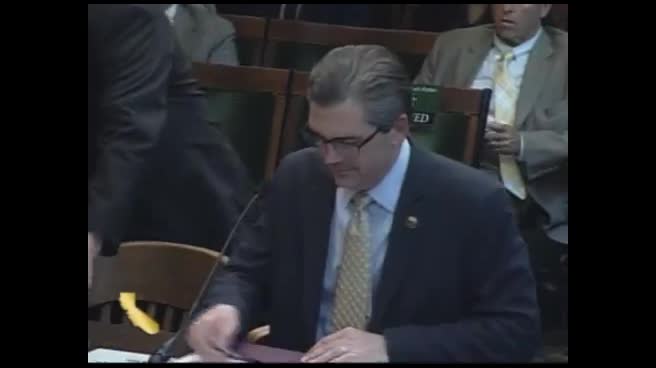
Discussed in Hearing
 14MIN
Assembly Standing Committee on Natural Resources
Bill Author

Bill Co-Author(s):