AB 393: Veteran Resource Centers Grant Program.
- Session Year: 2015-2016
- House: Assembly
- Latest Version Date: 2015-03-23
Existing law establishes the California Community Colleges under the administration of the Board of Governors of the California Community Colleges. Existing law requires the board of governors to appoint a chief executive officer, to be known as the Chancellor of the California Community Colleges.
This bill would establish the Veteran Resource Centers Grant Program, which would authorize the governing board of a community college district that has or intends to establish veteran resource centers on campuses within the community college district and a community college campus at which a veterans resource center has been or is intended to be established to jointly apply to the chancellor for a grant for purposes of providing resources to veterans and active duty members of the Armed Forces of the United States enrolled at those campuses. the campus. The bill would establish the Veteran Resource Centers Grant Fund in the State Treasury. The bill would allocate moneys in the fund, upon appropriation by the Legislature in the annual Budget Act, to the chancellor for, among other things, administration of the program and distribution of awards to recipient community college districts. The bill would also require the Board of Governors of the California Community Colleges to submit a report to the Legislature on the progress of the program by May 31, 2018.
Existing law establishes the California Community Colleges under the administration of the Board of Governors of the California Community Colleges. Existing law requires the board of governors to appoint a chief executive officer, to be known as the Chancellor of the California Community Colleges.
This bill would establish the Veteran Resource Centers Grant Program, which would authorize the governing board of a community college district that has or intends to establish veteran resource centers on campuses within the community college district to apply to the chancellor for a grant for purposes of providing resources to veterans and active duty members of the Armed Forces of the United States enrolled at those campuses. The bill would establish the Veteran Resource Centers Grant Fund in the State Treasury. The bill would allocate moneys in the fund, upon appropriation by the Legislature in the annual Budget Act, to the chancellor for, among other things, administration of the program and distribution of awards to recipient community college districts.
The Legislature finds and declares the following:
(a)More than 44,000 60,000 veterans and active duty service members enrolled at campuses of the California Community Colleges in the 201213 201314 academic year.
(b)Education is a tool for community college students to achieve economic success.
(c)Veterans face unique challenges in achieving professional success, including posttraumatic stress disorder and assimilation to civilian life during and after serving on active duty.
(d)The intent of the Veteran Resource Centers Grant Program is to help veterans and active duty service members enrolled at campuses of the California Community Colleges achieve academic and professional success.
SEC. 2.Part 52.7 (commencing with Section 88750) is added to Division 7 of Title 3 of the Education Code, to read:52.7.Veteran Resource Centers Grant Program1.General Provisions88750.This part shall be known, and may be cited as, the Veteran Resource Centers Grant Program.
88751.The Veteran Resource Centers Grant Fund is hereby established in the State Treasury. Moneys in the fund, upon appropriation by the Legislature in the annual Budget Act, shall be allocated to the chancellor for the implementation and administration of this part.
88752.The A governing board of a community college district that and a community college campus at which a veterans resource center has been or intends to establish veteran resource centers on campuses within the community college district is intended to be established may jointly apply to the chancellor for a grant for purposes of providing resources to veterans and active duty members of the Armed Forces of the United States enrolled at those campuses the campus to help them succeed academically.
88753.(a)The chancellor shall do the following:
(a)
(1)Administer the program and distribute awards to recipient community college districts. districts and campuses.
(b)
(2)Develop application criteria, administrative guidelines, and other requirements, by May 26, 2016, through a stakeholder process and public meetings, for purposes of administering the program. Those requirements may include the chancellor awarding funding priority to community college district and campus applicants that commit to contributing an amount of funds in addition to the grant for purposes of developing or enhancing to develop, enhance, or maintain a veteran resource centers on campuses within the community college district. center at a community college campus.
(c)Submit
(b)The Board of Governors of the California Community Colleges shall submit a report to the Legislature on the progress of the program on or before May 31, 2018.
(d)
(c)(1)The requirement for submitting a report imposed under subdivision (c) (b) is inoperative on June 1, 2022, pursuant to Section 10231.5 of the Government Code.
(2)A report to be submitted pursuant to subdivision (c) (b) shall be submitted in compliance with Section 9795 of the Government Code.
The Legislature finds and declares the following:
(a)More than 44,000 veterans and active duty service members enrolled at campuses of the California Community Colleges in the 201213 academic year.
(b)Education is a tool for community college students to achieve economic success.
(c)Veterans face unique challenges in achieving professional success, including posttraumatic stress disorder and assimilation to civilian life during and after serving on active duty.
(d)The intent of the Veteran Resource Centers Grant Program is to help veterans and active duty service members enrolled at campuses of the California Community Colleges achieve academic and professional success.
SEC. 2.Part 52.7 (commencing with Section 88750) is added to Division 7 of Title 3 of the Education Code, to read:52.7.Veteran Resource Centers Grant Program1.General Provisions88750.This part shall be known, and may be cited as, the Veteran Resource Centers Grant Program.
88751.The Veteran Resource Centers Grant Fund is hereby established in the State Treasury. Moneys in the fund, upon appropriation by the Legislature in the annual Budget Act, shall be allocated to the chancellor for the implementation and administration of this part.
88752.The governing board of a community college district that has or intends to establish veteran resource centers on campuses within the community college district may apply to the chancellor for a grant for purposes of providing resources to veterans and active duty members of the Armed Forces of the United States enrolled at those campuses to help them succeed academically.
88753.The chancellor shall do the following:
(a)Administer the program and distribute awards to recipient community college districts.
(b)Develop application criteria, administrative guidelines, and other requirements, by May 26, 2016, through a stakeholder process and public meetings, for purposes of administering the program. Those requirements may include the chancellor awarding funding priority to community college district applicants that commit to contributing an amount of funds in addition to the grant for purposes of developing or enhancing veteran resource centers on campuses within the community college district.
(c)Submit a report to the Legislature on the progress of the program on or before May 31, 2018.
(d)(1)The requirement for submitting a report imposed under subdivision (c) is inoperative on June 1, 2022, pursuant to Section 10231.5 of the Government Code.
(2)A report to be submitted pursuant to subdivision (c) shall be submitted in compliance with Section 9795 of the Government Code.
|
Date
|
Status
|
|---|---|
| Feb 18, 2015 | Read first time. To print. |
| Feb 19, 2015 | From printer. May be heard in committee March 21. |
| Mar 5, 2015 | Referred to Coms. on HIGHER ED. and V.A. |
| Mar 23, 2015 | From committee chair, with author's amendments: Amend, and re-refer to Com. on HIGHER ED. Read second time and amended. |
| Mar 24, 2015 | Re-referred to Com. on HIGHER ED. |
| Apr 8, 2015 | From committee: Do pass and re-refer to Com. on V.A. (Ayes 12. Noes 0.) (April 7). Re-referred to Com. on V.A. |
| Apr 29, 2015 | From committee: Do pass and re-refer to Com. on APPR. (Ayes 8. Noes 0.) (April 28). Re-referred to Com. on APPR. |
| May 13, 2015 | In committee: Set, first hearing. Referred to APPR. suspense file. |
| May 28, 2015 | In committee: Held under submission. |
| Jan 31, 2016 | Died pursuant to Article IV, Sec. 10(c) of the Constitution. |
| Feb 1, 2016 | From committee: Filed with the Chief Clerk pursuant to Joint Rule 56. |
|
Date
|
Description
|
Location
|
Votes
|
|
|---|---|---|---|---|
| Apr 28, 2015 | Do pass and be re-referred to the Committee on [Appropriations] | Assembly Standing Committee on Veterans Affairs |
Passed |
|
| Apr 7, 2015 | Do pass and be re-referred to the Committee on [Veterans Affairs] | Assembly Standing Committee on Higher Education |
Passed |
This list shows positions taken on this bill by organizations on the date displayed, which is linked to the original source.
Positions by individuals are not included.
|
Organization
|
Position
|
Date
|
|---|---|---|
| American Legion | * Support | Apr 28, 2015 |
| Amvets, Department Of California | ** Support | Apr 28, 2015 |
| California Association Of County Veterans Service Officers | ** Support | Apr 28, 2015 |
| Citrus College | * Support | Apr 7, 2015 |
| Citrus Community College | ** Support | Apr 7, 2015 |
| Community College League of California | ** Support | Apr 28, 2015 |
| Mccallum Group, Inc. | * Support | Apr 7, 2015 |
| Military Officers Association Of America, California Council Of Chapters | ** Support | Apr 28, 2015 |
| Pete Conaty and Associates | * Support | Apr 28, 2015 |
| The Veterans Of Foreign Wars, Department Of California | ** Support | Apr 28, 2015 |
| Veterans Coalition | * Support | Apr 7, 2015 |
| Vietnam Veterans Of America, California State Council | ** Support | Apr 28, 2015 |
AB 393
Page 2
Date of Hearing: May 13, 2015
ASSEMBLY COMMITTEE ON APPROPRIATIONS
Jimmy Gomez, Chair
AB 393
(Roger Hernández) – As Amended March 23, 2015
Policy Committee: |
Higher Education |
Vote: |
12 - 0 |
|
Veterans Affairs |
|
8 - 0 |
|
|
|
|
Urgency: No State Mandated Local Program: No Reimbursable: No
SUMMARY:
The bill establishes a grant program to support California Community Colleges (CCC) veterans' resource centers. Specifically, this bill:
Requires the Chancellor of the CCC to develop and administer the grant program. Community college districts may apply for grants for existing or planned centers to provide assistance to veterans and active duty Armed Forces members to help them succeed academically.
Provides that the program requirements may include funding priority to campuses providing matching funds.
Stipulates that funding for the program is subject to appropriation by the Legislature.
Requires the Chancellor to provide a progress report to the Legislature regarding the program by May 31, 2018.
FISCAL EFFECT:
State costs will depend on the parameters of the grant program, such as the extent of any district matching requirement, and how many districts seek to participate. It is assumed the grants would be an ongoing cost to support the veterans' resource center, though the program could be designed to phase out state support after a period of time. A viable state grant program would be at least several million dollars annually. Assuming a minimum state grant of $100,000 per campus, statewide costs would be $11 million annually. [GF-Prop 98]
The Chancellor's Office would need at least one staff to administer the program at an annual GF cost of around $110,000.
COMMENTS:
Purpose. According to the CCC Chancellor's Office, in 2013-14, veterans and active duty military personnel comprised over 60,000 of the over 2.1 million students attending CCCs.
According to the author, "Based on our research, current law is silent regarding VRCs [Veterans Resource Centers]. The recent proliferation of VRCs is largely based on philanthropic efforts by public and private donors." The author contends that, "AB 393 demonstrates a commitment by the state to work with charitable groups and build VRCs to provide veterans with necessary academic tools to succeed." There are reportedly 54 CCC campuses that current have VRCs.
Related Legislation. AB 421 (Calderon), also on today's committee agenda, in part requires every community college district governing board to provide each of its colleges having 200 or more enrolled student veterans with a veterans counselor.
Analysis Prepared by: Chuck Nicol / APPR. / (916) 319-2081
AB 393
Page 2
Date of Hearing: April 28, 2015
ASSEMBLY COMMITTEE ON VETERANS AFFAIRS
Jacqui Irwin, Chair
AB 393
(Roger Hernández) – As Amended March 23, 2015
SUBJECT: Veteran Resource Centers Grant Program
SUMMARY: Establishes the Veteran Resource Centers Grant (VRCG) Program and the VRCG Fund housed in the State Treasury. Specifically, this bill:
Creates the VRCG Program and Fund.
States the Legislature finds and declares all of the following: a) more than 60,000 veterans and active duty service members enrolled at campuses of the California Community Colleges (CCC) in the 2013–14 academic year; b) education is a tool for community college students to achieve economic success; c) veterans face unique challenges in achieving professional success, including posttraumatic stress disorder (PTSD) and assimilation to civilian life during and after serving on active duty; and, the intent of the VRCG Program is to help veterans and active duty service members enrolled at campuses of the CCC achieve academic and professional success.
Specifies the VRCG Fund is established in the State Treasury; and, that monies in the Fund, upon appropriation by the Legislature in the annual Budget Act, shall be allocated to the CCC Chancellor for the implementation and administration of the VRCG Program.
Authorizes a governing board of a community college district (CCD) and a CCC campus at which a veterans resource center has been or is intended to be established to jointly apply to the CCC Chancellor for a grant for purposes of providing resources to the veterans and active duty members of the Armed Forces of the United States enrolled at the campus to help them succeed academically.
Specifies that the CCC Chancellor shall do all of the following:
Administer the VRCG Program and distribute awards to recipient CCDs and CCCs; and,
Develop application criteria, administrative guidelines, and other requirements, by May 26, 2016, through a stakeholder process and public meetings, for purposes of administering the program. Specifies that said requirements may include the CCC Chancellor awarding funding priority to CCD and campus applicants that commit to contributing an amount of funds in addition to the grant to develop, enhance, or maintain a veteran resource center at a CCC campus.
Requires the CCC Board of Governors (BOG) to submit a progress report of the VRCG Program to the Legislature on or before May 31, 2018.
Specifies that the reporting requirements, as specified, will become inoperative on June 1, 2022; and, shall comply with current law reporting requirements.
EXISTING LAW:
Establishes the California Community Colleges under the administration of the Board of Governors of the California Community Colleges.
Requires the board of governors to appoint a chief executive officer, to be known as the Chancellor of the California Community Colleges.
FISCAL EFFECT: Unknown.
COMMENTS:
According to the author:
Based on our research, current law is silent regarding VRCs [Veterans Resource Centers]. The recent proliferation of VRCs is largely based on philanthropic efforts by public and private donors. AB 393 demonstrates a commitment by the state to advance the creation and maintenance of VRCs to provide veterans with necessary academic tools to succeed.
Veterans have been trained to fight and win the Nation's wars. Their warrior training, culture, or experiences may pose challenges for them later integrating smoothly and rapidly into a non-military academic environment. These students volunteered to each shoulder a portion of the burden of defense of the Nation; when they are no longer performing that duty, from which all Americans benefit, it has been the consistent policy of this state to recognize that service and sacrifice to the maximum extent feasible.
This bill would create a grant program. This type of program offers maximum responsivity to the variety of needs the schools may have (some may have nothing yet and some an established program). The grant structure may also allow the Chancellor's Office to create targeted initiatives and to introduce elements of competition and innovation among schools serving veterans students.
REGISTERED SUPPORT / OPPOSITION:
Support
AMVETS, Department of California
California Association of County Veterans Service Officers
Community College League of California
Military Officers Association of America, California Council of Chapters
Veterans of Foreign Wars, Department of California
Vietnam Veterans of America, California State Council
Opposition
None on File.
Analysis Prepared by: John Spangler / V.A. / (916) 319-3550
AB 393
Page 3
`Date of Hearing: April 7, 2015
ASSEMBLY COMMITTEE ON HIGHER EDUCATION
Jose Medina, Chair
AB 393
(Roger Hernández) – As Amended March 23, 2015
[Note: This bill is doubled referred to the Assembly Veterans Affairs Committee and will be heard as it relates to issues under its jurisdiction.]
SUBJECT: Veteran Resource Centers Grant Program
SUMMARY: Establishes the Veteran Resource Centers Grant (VRCG) Program and the VRCG Fund housed in the State Treasury. Specifically, this bill:
Creates the VRCG Program and Fund.
States the Legislature finds and declares all of the following: a) more than 60,000 veterans and active duty service members enrolled at campuses of the California Community Colleges (CCC) in the 2013–14 academic year; b) education is a tool for community college students to achieve economic success; c) veterans face unique challenges in achieving professional success, including posttraumatic stress disorder (PTSD) and assimilation to civilian life during and after serving on active duty; and, the intent of the VRCG Program is to help veterans and active duty service members enrolled at campuses of the CCC achieve academic and professional success.
Specifies the VRCG Fund is established in the State Treasury; and, that monies in the Fund, upon appropriation by the Legislature in the annual Budget Act, shall be allocated to the CCC Chancellor for the implementation and administration of the VRCG Program.
Authorizes a governing board of a community college district (CCD) and a CCC campus at which a veterans resource center has been or is intended to be established to jointly apply to the CCC Chancellor for a grant for purposes of providing resources to the veterans and active duty members of the Armed Forces of the United States enrolled at the campus to help them succeed academically.
Specifies that the CCC Chancellor shall do all of the following:
Administer the VRCG Program and distribute awards to recipient CCDs and CCCs; and,
Develop application criteria, administrative guidelines, and other requirements, by May 26, 2016, through a stakeholder process and public meetings, for purposes of administering the program. Specifies that said requirements may include the CCC Chancellor awarding funding priority to CCD and campus applicants that commit to contributing an amount of funds in addition to the grant to develop, enhance, or maintain a veteran resource center at a CCC campus.
Requires the CCC Board of Governors (BOG) to submit a progress report of the VRCG Program to the Legislature on or before May 31, 2018.
Specifies that the reporting requirements, as specified, will become inoperative on June 1, 2022; and, shall comply with current law reporting requirements.
EXISTING LAW:
Requires the California State University (CSU) and the CCC and encourages the University of California (UC) to coordinate services for qualified students who are veterans or members of the military by clearly designating Military and Veterans Offices and individuals to provide specified services to qualified students. Current law defines "qualified student" as a student who is any of the following: an active duty member of the Armed Forces of the United States, the California National Guard, a reserve component of the Armed Forces of the Unites States, a veteran of the Armed Forces of the United States, and/or a family member of a person (as described above) who is a legal dependent under 28 years of age or living in the household of that person and eligible to be claimed as a dependent on federal or state tax returns (Education Code Section 69785).
Requests the UC, CSU, the CCC to report annually to the California Department of Veterans Affairs the number of qualified students assisted by a Military and Veterans Office; the number of qualified students assisted who are active duty members of the Armed Forces of the United States, the California National Guard, or a reserve component of the Armed Forces of the United States, or are veterans of the Armed Forces of the United States; and the total education benefits by all qualified students assisted by an office (EC Section 69786).
FISCAL EFFECT: Unknown
COMMENTS: Background. According to a recent survey by the National Center for Veterans Studies at the University of Utah, veteran students are six times more likely to attempt suicide than the general student population. Nearly 50 percent of the 525 veteran students surveyed reported having had suicidal thoughts some time in their lives. Twenty percent of these veteran students said they had suicidal thoughts with a plan; this is a rate three times higher than general college students who seriously considered suicide. Experts in this field agree that suicidal thinking with a plan is considered a very severe suicidal risk. The majority of individuals with serious suicide risks deal with PTSD symptoms such as: significant anxiety, intrusive thoughts, sleep disturbances, and recurrent images from combat.
According to the National Center for Posttraumatic Stress Disorder (Center), in 2012, nationwide over 660,000 undergraduate students were veterans, constituting about 3 percent of all undergraduates. Additionally, in 2013, approximately 215,000 undergraduate students were military service members on active duty or in the reserves, constituting about 1 percent of all undergraduates. Increasing numbers of military service members are using Government Issued (GI) education benefits for postsecondary education. The Center reports that approximately 40 percent of military service members used their veteran education benefits in 2007-2008.
According to the CCC Chancellor's Office, in 2013-14, veterans and active duty military personnel comprised over 60,000 of the over 2.1 million students attending CCCs.
Purpose of the measure. According to the author, "Based on our research, current law is silent regarding VRCs [Veterans Resource Centers]. The recent proliferation of VRCs is largely based on philanthropic efforts by public and private donors." The author contends that, "AB 393 demonstrates a commitment by the state to work with charitable groups and build VRCs to provide veterans with necessary academic tools to succeed."
Joint hearing on student veteran issues. To prepare for the influx of veterans, on February 28, 2012, the Assembly Higher Education and Assembly Veterans Affairs Committees held a joint oversight hearing on the challenges facing California student veterans. Several students and representatives from the higher education institutions spoke for the need for more resources for veterans' services, including more transition assistance, improving outreach and campus-based programs, and easing the matriculation of prior military learning.
Current student veterans outreach. The CCCs are providing more services to a growing population of student veterans; the CCCCO recognizes the need for continued support of our student veterans and as such has been the lead on several statewide projects, including, but not limited to, the Veterans Resource Center Project: At VRCs, student veterans can interact with one another and obtain information and services. As a result, 24 additional colleges have established a VRC on their campus.
To note, because the individual campuses do not have to report to the CCCCO as to if they have a VRC, it is presently unknown the exact number of campuses that have VRCs, however, it is estimated that at least half of the CCCs have a VRC. Additionally, VRCs are staffed by either full-time employees or a mix of volunteers and student mentors.
Related legislation. AB 421 (Calderon), which will be heard by this Committee today, would, among other things, require the governing board of a CCC to provide each college within the district a veterans counselor.
REGISTERED SUPPORT / OPPOSITION:
Support
AMVETS, Department of California
California Association of County Veterans Service Officers
Community College League of California
Citrus Community College
Military Officers Association of America, California Council of Chapters
Veterans of Foreign Wars, Department of California
Vietnam Veterans of America, California State Council
23 individuals
Opposition
None on file.
Analysis Prepared by: Jeanice Warden / HIGHER ED. / (916) 319-3960
Discussed in Hearing
 8MIN
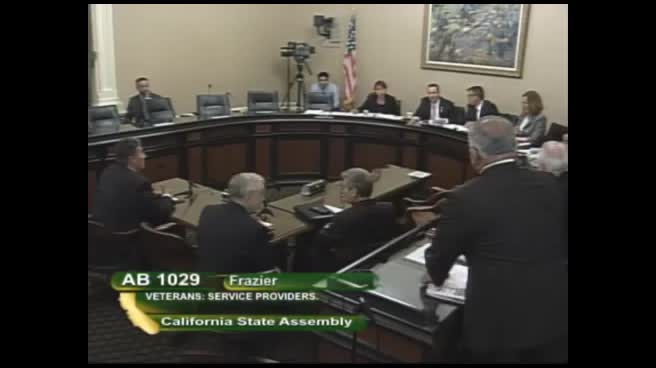
Assembly Standing Committee on Veterans Affairs
 13MIN
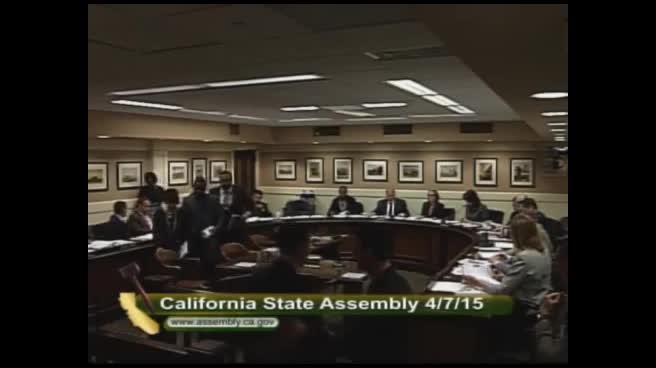
Assembly Standing Committee on Higher Education
Bill Author

Bill Co-Author(s):