SB 1049: Public Utilities Commission: electrical and gas corporations: close call reporting programs.
- Session Year: 2015-2016
- House: Senate
- Latest Version Date: 2016-08-03
Under existing law, the Public Utilities Commission has regulatory authority over public utilities, including electrical and gas corporations. The California Constitution authorizes the commission to establish rules for electrical and gas corporations, subject to control by the Legislature.
This bill would require authorize the commission to establish procedures and processes to implement a confidential, nonpunitive, and independent close call reporting program for purposes of facilitating the identification of accident precursors by persons familiar with the operations of electrical or gas corporations and of collecting, analyzing, and disseminating unbiased safety information. The bill would authorize any person to voluntarily submit through the program a confidential close call report that both involves an electrical or gas corporation and relates to public, employee, or contractor safety. The bill would also require the commission to implement, through a proceeding, a close call reporting pilot program that would be consistent with the program described above.
Under existing law, the Public Utilities Commission has regulatory authority over public utilities. utilities, including electrical and gas corporations. The California Constitution authorizes the commission to establish rules for all public utilities, electrical and gas corporations, subject to control by the Legislature.
This bill would require the commission to establish procedures and processes to implement a confidential, nonpunitive, and independent close call reporting program for purposes of facilitating the identification of accident precursors by persons familiar with public utility the operations of electrical or gas corporations and of collecting, analyzing, and disseminating unbiased safety information. The bill would authorize any person to voluntarily submit through the program a confidential close call report that both involves a public utility an electrical or gas corporation and relates to public, employee, or contractor safety.
Under existing law, the Public Utilities Commission has regulatory authority over public utilities. The California Constitution authorizes the commission to establish rules for all public utilities, subject to control by the Legislature.
This bill would require the commission to establish procedures and processes to implement a confidential, nonpunitive, and independent close call reporting program for purposes of facilitating the identification of accident precursors by persons familiar with public utility operations and of collecting, analyzing, and disseminating unbiased safety information. The bill would authorize any person to voluntarily submit through the program a confidential close call report that both involves a public utility and relates to public, employee, or contractor safety.
Under existing law, the Public Utilities Commission has regulatory authority over public utilities, including electrical corporations and gas corporations. The Natural Gas Pipeline Safety Act of 2011 requires each gas corporation to develop a plan, as specified, for the safe and reliable operation of its commission-regulated gas pipeline facility, as defined. Existing law requires the commission to adopt inspection, maintenance, repair, and replacement standards for the distribution systems of electrical corporations in order to provide high-quality, safe, and reliable service. Existing law requires every electrical corporation to cooperate fully with the commission in an investigation into any major accident or any reportable incident, as defined by the commission, concerning overhead electric supply facilities, regardless of pending litigation or other investigations, including those that may be related to a commission investigation. Existing law requires every electrical corporation, after the scene of the incident has been made safe and service has been restored, to provide the commission, upon its request, immediate access to specified evidence, information, and documents, including any and all documents under the electrical corporations control that are related to the incident and are not subject to attorney-client privilege or attorney work product doctrine.
This bill would require every electrical corporation to cooperate fully with the commission in an investigation into any major accident or any reportable incident concerning any electric supply facilities, rather than only overhead electric supply facilities. The bill would make the above-described requirements that are currently applicable to an electrical corporation additionally applicable to gas corporations, but would permit all of these corporations to postpone commission access to the specified evidence, information, and documents until after service restoration only in the case of a major outage. The bill would provide that facts, information, or documents that concern, discuss, or analyze an accident or a failure involving electrical corporation or gas corporation facilities, but that themselves are not privileged or subject to the attorney work product doctrine, may not be withheld from the commission on the basis that they are or were referenced or discussed in a communication with counsel or incorporated into an attorneys work product.
Under existing law, a violation of the Public Utilities Act or any order, decision, rule, direction, demand, or requirement of the commission is a crime.
Because the provisions of this bill would be a part of the act and because a violation of an order or decision of the commission implementing its requirements would be a crime, the bill would impose a state-mandated local program by creating a new crime.
The California Constitution requires the state to reimburse local agencies and school districts for certain costs mandated by the state. Statutory provisions establish procedures for making that reimbursement.
This bill would provide that no reimbursement is required by this act for a specified reason.
Under existing law, the Public Utilities Commission has regulatory authority over public utilities, including electrical corporations and gas corporations. The Natural Gas Pipeline Safety Act of 2011 requires each gas corporation to develop a plan, as specified, for the safe and reliable operation of its commission-regulated gas pipeline facility, as defined. Existing law requires the commission to adopt inspection, maintenance, repair, and replacement standards for the distribution systems of electrical corporations in order to provide high quality high-quality, safe, and reliable service. Existing law requires every electrical corporation to cooperate fully with the commission in an investigation into any major accident or any reportable incident, as defined by the commission, concerning overhead electric supply facilities, regardless of pending litigation or other investigations, including those that may be related to a commission investigation. Existing law requires every electrical corporation corporation, after the scene of the incident has been made safe and service has been restored, to provide the commission, upon its request, immediate access to specified evidence, information, and documents, including any and all documents under the electrical corporations control that are related to the incident and are not subject to attorney-client privilege or attorney work product doctrine.
This bill would require every electrical corporation to cooperate fully with the commission in an investigation into any major accident or any reportable incident concerning any electric supply facilities, rather than only overhead electric supply facilities. The bill would require every gas corporation to cooperate fully with the commission in an investigation into any major accident or any reportable incident concerning commissionregulated gas pipeline facilities, regardless of pending litigation or other investigations. The bill would require each electrical corporation and gas corporation, after the scene of the incident has been made safe and, in the case of a major outage, service has been restored, to provide the commission, upon request, with access to all measurements of every utility instrumentality or facility in the vicinity of the incident, all calculations regarding every instrumentality or facility in the vicinity of the incident, any analysis regarding the cause, or causes, of the incident, and any recording or paraphrasing of any statement by a witness. make the above-described requirements that are currently applicable to an electrical corporation additionally applicable to gas corporations, but would permit all of these corporations to postpone commission access to the specified evidence, information, and documents until after service restoration only in the case of a major outage. The bill would provide that facts, information, or documents that concern, discuss, or analyze an accident or a failure involving electrical corporation or gas corporation facilities, but that themselves are not privileged or subject to the attorney work product doctrine, may not be withheld from the commission on the basis that they are or were referenced or discussed in a communication with counsel or incorporated into an attorneys work product.
Under existing law, a violation of the Public Utilities Act or any order, decision, rule, direction, demand, or requirement of the commission is a crime.
Because the provisions of this bill would be a part of the act and because a violation of an order or decision of the commission implementing its requirements would be a crime, the bill would impose a state-mandated local program by creating a new crime.
The California Constitution requires the state to reimburse local agencies and school districts for certain costs mandated by the state. Statutory provisions establish procedures for making that reimbursement.
This bill would provide that no reimbursement is required by this act for a specified reason.
Under existing law, the Public Utilities Commission has regulatory authority over public utilities, including electrical corporations and gas corporations. The Natural Gas Pipeline Safety Act of 2011 requires each gas corporation to develop a plan, as specified, for the safe and reliable operation of its commission-regulated gas pipeline facility, as defined. Existing law requires the commission to adopt inspection, maintenance, repair, and replacement standards for the distribution systems of electrical corporations in order to provide high quality, safe, and reliable service. Existing law requires every electrical corporation to cooperate fully with the commission in an investigation into any major accident or any reportable incident, as defined by the commission, concerning overhead electric supply facilities, regardless of pending litigation or other investigations, including those that may be related to a commission investigation. Existing law requires every electrical corporation to provide the commission, upon its request, immediate access to specified documents, including any and all documents under the electrical corporations control that are related to the incident and are not subject to attorney-client privilege or attorney work product doctrine.
This bill would require every electrical corporation to cooperate fully with the commission in an investigation into any major accident or any reportable incident concerning any electric supply facilities, rather than only overhead electric supply facilities. The bill would require an electrical corporation seeking to protect commission requested documents related to an accident or reportable incident from disclosure under the attorney-client privilege or attorney work product doctrine to bring a motion for protective order. The bill would establish procedures for making the motion, deciding the motion, and commission and judicial review of that decision. The bill would require every gas corporation to cooperate fully with the commission in an investigation into any major accident or any reportable incident concerning commissionregulated gas pipeline facilities, regardless of pending litigation or other investigations. The bill would require each electrical corporation and gas corporation, after the scene of the incident has been made safe and, in the case of a major outage, service has been restored, to provide the commission, upon request, with access to all measurements of every utility instrumentality or facility in the vicinity of the incident, all calculations regarding every instrumentality or facility in the vicinity of the incident, any analysis regarding the cause, or causes, of the incident, and any recording or paraphrasing of any statement by a witness.
Under existing law, a violation of the Public Utilities Act or any order, decision, rule, direction, demand, or requirement of the commission is a crime.
Because the provisions of this bill would be a part of the act and because a violation of an order or decision of the commission implementing its requirements would be a crime, the bill would impose a state-mandated local program by creating a new crime.
The California Constitution requires the state to reimburse local agencies and school districts for certain costs mandated by the state. Statutory provisions establish procedures for making that reimbursement.
This bill would provide that no reimbursement is required by this act for a specified reason.
Under existing law, the Public Utilities Commission has regulatory authority over public utilities, including electrical corporations. Existing law requires the commission to adopt inspection, maintenance, repair, and replacement standards for the distribution systems of electrical corporations in order to provide high quality, safe, and reliable service. Existing law requires every electrical corporation to cooperate fully with the commission in an investigation into any major accident or any reportable incident, as defined by the commission, concerning overhead electric supply facilities, regardless of pending litigation or other investigations, including those that may be related to a commission investigation. Existing law requires every electrical corporation to provide the commission, upon its request, immediate access to specified documents, including any and all documents under the electrical corporations control that are related to the incident and are not subject to attorney-client privilege or attorney work product doctrine.
This bill would require every electrical corporation to cooperate fully with the commission in an investigation into any major accident or any reportable incident concerning any electric supply facilities, rather than only overhead electric supply facilities. The bill would require an electrical corporation seeking to protect commission requested documents related to an accident or reportable incident from disclosure under the attorney-client privilege or attorney work product doctrine to bring a motion for protective order. The bill would establish procedures for making the motion, deciding the motion, and commission and judicial review of that decision.
Under existing law, a violation of the Public Utilities Act or any order, decision, rule, direction, demand, or requirement of the commission is a crime.
Because the provisions of this bill would be a part of the act and because a violation of an order or decision of the commission implementing its requirements would be a crime, the bill would impose a state-mandated local program by creating a new crime.
The California Constitution requires the state to reimburse local agencies and school districts for certain costs mandated by the state. Statutory provisions establish procedures for making that reimbursement.
This bill would provide that no reimbursement is required by this act for a specified reason.
(a)The commission shall may establish procedures and processes to implement a confidential, nonpunitive, and independent close call reporting program for purposes of facilitating the identification of accident precursors by persons familiar with the operations of electrical or gas corporations, including, but not limited to, employees and contractors of electrical or gas corporations, and of collecting, analyzing, and disseminating unbiased safety information. Through the program, any person, including, but not limited to, an employee or contractor of an electrical or gas corporation or a member of the public, may voluntarily submit a confidential close call report that both involves an electrical or gas corporation and relates to public, employee, or contractor safety.
(b)The commission shall not use a report submitted pursuant to subdivision (a) or information derived therefrom, except for information concerning an accident or criminal offense, in an enforcement action.
(c)The commission may contract with a third party to administer the program.
(d) An employee of, or the employee of a contractor performing work for, an electrical or gas corporation shall not be subject to demotion, discharge, or any other form of retaliation or discrimination for participating in the close call reporting program established pursuant to this section.
SEC. 2.Section 326.1 is added to the Public Utilities Code, to read:326.1.(a)On or before July 1, 2017, the commission shall implement, through a proceeding, a confidential, nonpunitive, and independent close call reporting pilot program that is consistent with the program described in Section 326.
(b)This section shall remain in effect only until January 1, 2022, and as of that date is repealed, unless a later enacted statute, that is enacted before January 1, 2022, deletes or extends that date.
(a)The commission shall establish procedures and processes to implement a confidential, nonpunitive, and independent close call reporting program for purposes of facilitating the identification of accident precursors by persons familiar with public utility operations, the operations of electrical or gas corporations, including, but not limited to, public utility employees and contractors, contractors of electrical or gas corporations, and of collecting, analyzing, and disseminating unbiased safety information. Through the program, any person, including, but not limited to, a public utility an employee or contractor of an electrical or gas corporation or a member of the public, may voluntarily submit a confidential close call report that both involves a public utility an electrical or gas corporation and relates to public, employee, or contractor safety.
(b)The commission shall not use a report submitted pursuant to subdivision (a) or information derived therefrom, except for information concerning an accident or criminal offense, in an enforcement action. The commission may establish additional exceptions to this subdivision.
(c)The commission may contract with a third party to administer the program.
(d)A public utility An employee of, or the employee of a contractor performing work for a public utility for, an electrical or gas corporation shall not be subject to demotion, discharge, or any other form of retaliation or discrimination for participating in the close call reporting program established pursuant to this section.
(a)The commission shall establish procedures and processes to implement a confidential, nonpunitive, and independent close call reporting program for purposes of facilitating the identification of accident precursors by persons familiar with public utility operations, including, but not limited to, public utility employees and contractors, and of collecting, analyzing, and disseminating unbiased safety information. Through the program, any person, including, but not limited to, a public utility employee or contractor or a member of the public, may voluntarily submit a confidential close call report that both involves a public utility and relates to public, employee, or contractor safety.
(b)The commission shall not use a report pursuant to subdivision (a) or information derived therefrom, except for information concerning an accident or criminal offense, in an enforcement action. The commission may establish additional exceptions to this subdivision.
(c)The commission may contract with a third party to administer the program.
(d)A public utility employee or the employee of a contractor performing work for a public utility shall not be subject to demotion, discharge, or any other form of retaliation or discrimination for participating in the close call reporting program established pursuant to this section.
SECTION 1.Section 316 of the Public Utilities Code is amended to read:316.(a)Each electrical corporation and gas corporation shall cooperate fully with the commission in an investigation into any major accident or any reportable incident, as these terms are defined by the commission, concerning electric supply facilities and commission-regulated gas pipeline facilities, regardless of pending litigation or other investigations, including, but not limited to, those that may be related to a commission investigation.
(b)After the scene of the incident has been made safe and, in the case of a major outage, service has been restored, each electrical corporation and gas corporation shall provide the commission, upon its request, immediate access to all of the following:
(1)Any factual or physical evidence under the electrical or gas corporations, or its agents, physical control, custody, or possession related to the incident.
(2)The name and contact information of any known percipient witness.
(3)Any employee percipient witness under the electrical or gas corporations control.
(4)The name and contact information of any person or entity that has taken possession of any physical evidence removed from the site of the incident.
(5)Any and all documents under the electrical or gas corporations control that are related to the incident and are not subject to attorney-client privilege or the attorney work product doctrine. Facts, information, or documents that concern, discuss, or analyze an accident or a failure involving utility facilities, but that themselves are not privileged or subject to the attorney work product doctrine, may not be withheld from the commission on the basis that they are or were referenced or discussed in a communication with counsel or incorporated into an attorneys work product.
(c)Each electrical corporation and gas corporation shall preserve any and all documents or evidence it collects as part of its own investigation related to the incident for at least five years or a shorter period of time as authorized by the commission.
(d)Any and all documents collected by an electrical corporation or gas corporation pursuant to this section shall be catalogued and preserved in an accessible manner for assessment by commission investigators as determined by the commission.
SEC. 2.No reimbursement is required by this act pursuant to Section 6 of Article XIIIB of the California Constitution because the only costs that may be incurred by a local agency or school district will be incurred because this act creates a new crime or infraction, eliminates a crime or infraction, or changes the penalty for a crime or infraction, within the meaning of Section 17556 of the Government Code, or changes the definition of a crime within the meaning of Section 6 of Article XIIIB of the California Constitution.
(a)Each electrical corporation and gas corporation shall cooperate fully with the commission in an investigation into any major accident or any reportable incident, as these terms are defined by the commission, concerning electric supply facilities and commission-regulated gas pipeline facilities, regardless of pending litigation or other investigations, including, but not limited to, those that may be related to a commission investigation.
(b)After the scene of the incident has been made safe and, in the case of a major outage, service has been restored, each electrical corporation and gas corporation shall provide the commission, upon its request, immediate access to all of the following:
(1)Any factual or physical evidence under the electrical or gas corporations, or its agents, physical control, custody, or possession related to the incident.
(2)The name and contact information of any known percipient witness.
(3)Any employee percipient witness under the electrical or gas corporations control.
(4)The name and contact information of any person or entity that has taken possession of any physical evidence removed from the site of the incident.
(5)Each and every measurement of every utility instrumentality or facility in the vicinity of the incident. Historical, as well as post-incident measurements, shall be produced. Measurements of instrumentalities or facilities not owned by the utility shall also be produced, if those measurements are available.
(6)Each and every calculation regarding every instrumentality or facility in the vicinity of the incident. Historical, as well as postincident, calculations shall be produced.
(7)Each and every analysis regarding the cause, or causes, of the incident. Each analysis shall be produced regardless of whether identified as a root cause analysis, a causal evaluation, a failure analysis, a storm register, or identified in some other manner.
(8)Each and every recording or paraphrasing of any statement by a witness.
(9)
(5)Any and all documents under the electrical or gas corporations control that are related to the incident and are not subject to attorney-client privilege or the attorney work product doctrine. Facts, information, or documents that concern, discuss, or analyze an accident or a failure involving utility facilities, but that themselves are not privileged or subject to the attorney work product doctrine, may not be withheld from the commission on the basis that they are or were referenced or discussed in a communication with counsel or incorporated into an attorneys work product.
(c)Each electrical corporation and gas corporation shall preserve any and all documents or evidence it collects as part of its own investigation related to the incident for at least five years or a shorter period of time as authorized by the commission.
(d)Any and all documents collected by an electrical corporation or gas corporation pursuant to this section shall be catalogued and preserved in an accessible manner for assessment by commission investigators as determined by the commission.
SEC. 2.No reimbursement is required by this act pursuant to Section 6 of Article XIIIB of the California Constitution because the only costs that may be incurred by a local agency or school district will be incurred because this act creates a new crime or infraction, eliminates a crime or infraction, or changes the penalty for a crime or infraction, within the meaning of Section 17556 of the Government Code, or changes the definition of a crime within the meaning of Section 6 of Article XIIIB of the California Constitution.
(a)Each electrical corporation and gas corporation shall cooperate fully with the commission in an investigation into any major accident or any reportable incident, as these terms are defined by the commission, concerning electric supply facilities, facilities and commission-regulated gas pipeline facilities, regardless of pending litigation or other investigations, including, but not limited to, those that may be related to a commission investigation.
(b)After the scene of the incident has been made safe and and, in the case of a major outage, service has been restored, each electrical corporation and gas corporation shall provide the commission, upon its request, immediate access to all of the following:
(1)Any factual or physical evidence under the electrical or gas corporations, or its agents, physical control, custody, or possession related to the incident.
(2)The name and contact information of any known percipient witness.
(3)Any employee percipient witness under the electrical or gas corporations control.
(4)The name and contact information of any person or entity that has taken possession of any physical evidence removed from the site of the incident.
(5)Each and every measurement of every utility instrumentality or facility in the vicinity of the incident. Historical, as well as post-incident measurements, shall be produced. Measurements of instrumentalities or facilities not owned by the utility shall also be produced, if those measurements are available.
(6)Each and every calculation regarding every instrumentality or facility in the vicinity of the incident. Historical, as well as postincident, calculations shall be produced.
(7)Each and every analysis regarding the cause, or causes, of the incident. Each analysis shall be produced regardless of whether identified as a root cause analysis, a causal evaluation, a failure analysis, a storm register, or identified in some other manner.
(8)Each and every recording or paraphrasing of any statement by a witness.
(5)
(9)Any and all documents under the electrical or gas corporations control that are related to the incident and are not subject to attorney-client privilege or the attorney work product doctrine.
(c)In order to prevent disclosure of documents requested by the commission pursuant to paragraph (5) of subdivision (b) under the attorney-client privilege or attorney work product doctrine, an electrical corporation shall bring a motion for protective order for a declaration that the documents not be produced. A motion for protective order shall be made promptly, within 10 working days of a request for production of documents, or shall be denied as untimely. If a proceeding investigating the accident or reportable incident has been opened and an administrative law judge has been assigned for the proceeding, the motion for protective order shall be filed with the assigned administrative law judge. If no proceeding has been opened or no administrative law judge has been assigned to the proceeding, the motion for protective order shall be filed with the chief administrative law judge of the commission. The chief administrative law judge or assigned administrative law judge shall hear and decide the motion for protective order promptly, within 10 working days of the filing of the motion. Notwithstanding Section 1731, if the motion for protective order is denied, or denied in part, the electrical corporation may seek a writ of review without having brought a motion for reconsideration. Notwithstanding the 30-day time period of subdivision (a) of Section 1756, any writ of review shall be brought promptly, within 10 working days of service of the order denying, or denying in part, the motion for protective order, or it shall be denied as untimely. If the chief administrative law judge or assigned administrative law judge grants the motion for protective order, in whole or in part, the division of the commission responsible for investigating the accident or reportable incident shall either amend its request for documents to exclude those documents that are protected from disclosure or shall seek a rehearing before the full commission pursuant to Article 2 (commencing with Section 1731) of Chapter 9. The commission may shorten the time for hearing of the motion for rehearing pursuant to this paragraph. An electrical corporation may, pursuant to Section 1756, seek a writ of review from the order of the commission on the motion for rehearing, except that the writ shall be brought within 10 working days of the date of the order, or shall be denied as untimely.
(d)
(c)Each electrical corporation and gas corporation shall preserve any and all documents or evidence it collects as part of its own investigation related to the incident for at least five years or a shorter period of time as authorized by the commission.
(e)
(d)Any and all documents collected by an electrical corporation or gas corporation pursuant to this section shall be catalogued and preserved in an accessible manner for assessment by commission investigators as determined by the commission.
SEC. 2.No reimbursement is required by this act pursuant to Section 6 of Article XIIIB of the California Constitution because the only costs that may be incurred by a local agency or school district will be incurred because this act creates a new crime or infraction, eliminates a crime or infraction, or changes the penalty for a crime or infraction, within the meaning of Section 17556 of the Government Code, or changes the definition of a crime within the meaning of Section 6 of Article XIIIB of the California Constitution.
(a)Each electrical corporation shall cooperate fully with the commission in an investigation into any major accident or any reportable incident, as these terms are defined by the commission, concerning overhead electric supply facilities, regardless of pending litigation or other investigations, including, but not limited to, those that may be related to a commission investigation.
(b)After the scene of the incident has been made safe and service has been restored, each electrical corporation shall provide the commission, upon its request, immediate access to all of the following:
(1)Any factual or physical evidence under the electrical corporations, or its agents, physical control, custody, or possession related to the incident.
(2)The name and contact information of any known percipient witness.
(3)Any employee percipient witness under the electrical corporations control.
(4)The name and contact information of any person or entity that has taken possession of any physical evidence removed from the site of the incident.
(5)Any and all documents under the electrical corporations control that are related to the incident and are not subject to attorney-client privilege or attorney work product doctrine.
(c)In order to prevent disclosure of documents requested by the commission pursuant to paragraph (5) of subdivision (b) under the attorney-client privilege or attorney work product doctrine, an electrical corporation shall bring a motion for protective order for a declaration that the documents not be produced. A motion for protective order shall be made promptly, within 10 working days of a request for production of documents, or shall be denied as untimely. If a proceeding investigating the accident or reportable incident has been opened and an administrative law judge has been assigned for the proceeding, the motion for protective order shall be filed with the assigned administrative law judge. If no proceeding has been opened or no administrative law judge has been assigned to the proceeding, the motion for protective order shall be filed with the chief administrative law judge of the commission. The chief administrative law judge or assigned administrative law judge shall hear and decide the motion for protective order promptly, within 10 working days of the filing of the motion. Notwithstanding Section 1731, if the motion for protective order is denied, or denied in part, the electrical corporation may seek a writ of review without having brought a motion for reconsideration. Notwithstanding the 30-day time period of subdivision (a) of Section 1756, any writ of review shall be brought promptly, within 10 working days of service of the order denying, or denying in part, the motion for protective order, or it shall be denied as untimely. If the chief administrative law judge or assigned administrative law judge grants the motion for protective order, in whole or in part, the division of the commission responsible for investigating the accident or reportable incident shall either amend its request for documents to exclude those documents that are protected from disclosure or shall seek a rehearing before the full commission pursuant to Article 2 (commencing with Section 1731) of Chapter 9. The commission may shorten the time for hearing of the motion for rehearing pursuant to this paragraph. An electrical corporation may, pursuant to Section 1756, seek a writ of review from the order of the commission on the motion for rehearing, except that the writ shall be brought within 10 working days of the date of the order, or shall be denied as untimely.
(c)
(d)Each electrical corporation shall preserve any and all documents or evidence it collects as part of its own investigation related to the incident for at least five years or a shorter period of time as authorized by the commission.
(d)
(e)Any and all documents collected by an electrical corporation pursuant to this section shall be catalogued and preserved in an accessible manner for assessment by commission investigators as determined by the commission.
SEC. 2.No reimbursement is required by this act pursuant to Section 6 of Article XIIIB of the California Constitution because the only costs that may be incurred by a local agency or school district will be incurred because this act creates a new crime or infraction, eliminates a crime or infraction, or changes the penalty for a crime or infraction, within the meaning of Section 17556 of the Government Code, or changes the definition of a crime within the meaning of Section 6 of Article XIIIB of the California Constitution.
|
Date
|
Status
|
|---|---|
| May 27, 2016 | Read third time and amended. |
| Aug 11, 2016 | Joint Rule 62(a) suspended. |
| Aug 11, 2016 | August 11 hearing. Held in committee and under submission. |
| Aug 10, 2016 | August 10 set for first hearing. Placed on APPR. suspense file. |
| Aug 3, 2016 | From committee with author's amendments. Read second time and amended. Re-referred to Com. on APPR. |
| Aug 1, 2016 | Read second time and amended. Re-referred to Com. on APPR. |
| Jun 30, 2016 | From committee: Do pass as amended and re-refer to Com. on APPR. (Ayes 12. Noes 1.) (June 29). |
| Jun 15, 2016 | From committee with author's amendments. Read second time and amended. Re-referred to Com. on U. & C. |
| Jun 14, 2016 | June 22 set for first hearing canceled at the request of author. |
| Jun 9, 2016 | Referred to Com. on U. & C. |
| Jun 2, 2016 | In Assembly. Read first time. Held at Desk. |
| Jun 1, 2016 | Read third time. Passed. (Ayes 39. Noes 0.) Ordered to the Assembly. |
| Jun 1, 2016 | Read third time. Passed. (Ayes 39. Noes 0. Page 4111.) Ordered to the Assembly. |
| May 31, 2016 | Read second time. Ordered to third reading. |
| Feb 12, 2016 | Introduced. Read first time. To Com. on RLS. for assignment. To print. |
| May 27, 2016 | Ordered to second reading. |
| May 17, 2016 | Read second time. Ordered to third reading. |
| May 16, 2016 | From committee: Be ordered to second reading pursuant to Senate Rule 28.8. |
| May 6, 2016 | Set for hearing May 16. |
| Apr 19, 2016 | From committee: Do pass and re-refer to Com. on APPR. (Ayes 11. Noes 0.) (April 19). Re-referred to Com. on APPR. |
| Apr 19, 2016 | From committee: Do pass and re-refer to Com. on APPR. (Ayes 11. Noes 0. Page 3593.) (April 19). Re-referred to Com. on APPR. |
| Apr 11, 2016 | From committee with author's amendments. Read second time and amended. Re-referred to Com. on E., U., & C. |
| Mar 30, 2016 | Set for hearing April 19. |
| Mar 28, 2016 | March 29 hearing postponed by committee. |
| Mar 9, 2016 | Set for hearing March 29. |
| Feb 25, 2016 | Referred to Com. on E., U., & C. |
| Feb 16, 2016 | From printer. May be acted upon on or after March 17. |
|
Date
|
Description
|
Location
|
Votes
|
|
|---|---|---|---|---|
| Jun 29, 2016 | Do pass as amended and be re-referred to the Committee on [Appropriations] | Assembly Standing Committee on Utilities and Commerce |
Passed |
|
| Jun 1, 2016 | Senate 3rd Reading SB1049 Hill | Senate Floor |
Passed |
|
| Apr 19, 2016 | Do pass, but first be re-referred to the Committee on [Appropriations] | Senate Standing Committee on Energy, Utilities and Communications |
Passed |
This list shows positions taken on this bill by organizations on the date displayed, which is linked to the original source.
Positions by individuals are not included.
|
Organization
|
Position
|
Date
|
|---|---|---|
| American Insurance Association | ** Against | Jun 1, 2016 |
| California Cable and Telecommunications Association | ** Against | Jun 29, 2016 |
| California Chamber Of Commerce | ** Against | Jun 1, 2016 |
| California railroad industry | ** Against | Jun 29, 2016 |
| Civil Justice Association Of California | ** Against | Jun 1, 2016 |
| Edison International & Affiliates Southern California Edison | * Against | Apr 19, 2016 |
| Engineers And Scientists Of California Local 20, Ifpte Afl-Cio & Clc | * Support | Jun 29, 2016 |
| Utility Workers Union Of America, Local 132 | * Support | Jun 29, 2016 |
Date of Hearing: August 10, 2016
ASSEMBLY COMMITTEE ON APPROPRIATIONS
Lorena Gonzalez, Chair
SBPCA Bill Id:SB 1049
Author:(Hill) – As Amended Ver:August 3, 2016
Policy Committee: | Utilities and Commerce | Vote: | 12 - 1 |
Urgency: No State Mandated Local Program: No Reimbursable: No
SUMMARY:
This bill authorizes the California Public Utilities Commission (PUC) to establish procedures and processes to implement an independent close call reporting program to facilitate the identification of accident precursors. The program would be established to receive voluntary close call reports by people with information involving electrical or gas corporations. This information would be used to help protect public, employee, or contractor safety. Additionally, this bill:
- Prohibits the PUC from using the report in an enforcement action, except for an accident or criminal offense.
- Authorizes the PUC to contract with a third party to administer the program.
- Prohibits an employee, or employee of a contractor from being subject to demotion, discharge or any form of retaliation or discrimination for participating in the close call reporting program.
- Requires the PUC to implement a confidential, nonpunitive, and independent close call reporting pilot program, by July 1, 2017, through a proceeding. The pilot program must be consistent with the requirements of the bill.
- Sunsets the provisions of this bill on January 1, 2022.
FISCAL EFFECT:
Increased one-time costs of $500,000 to establish program and ongoing costs of $3.5 million (Public Utilities Account) to contract with a third party to administer the program until January 1, 2022.
COMMENTS:
- Purpose. According to the author, in order to encourage the reporting of near misses by utility employees and foster a culture of communications between utility employees and management, the PUC needs to implement a confidential close call reporting system to protect the confidentiality of reporting employees and disseminate safety lessons industry-wide.
- Similar Reporting Programs. The Federal Aviation Administration (FAA) and the Fderal Railroad Administration (FRA) use a third party to administer an employee reporting program. The reports to the third party are not confidential, but after follow-up by third party analysts the reports are de-identified before evaluation (in the FAA program) or forwarding to a peer review team of labor, management, and regulatory staff (FRA program). Both the FAA and FRA use the National Aeronautics and Space Administration (NASA) to administer their programs.
Analysis Prepared by: Jennifer Galehouse / APPR. / (916) 319-2081
Date of Hearing: June 29, 2016
ASSEMBLY COMMITTEE ON UTILITIES AND COMMERCE
Mike Gatto, Chair
SBPCA Bill Id:SB 1049
Author:(Hill) – As Amended Ver:June 15, 2016
SENATE VOTE: 39-0
SUBJECT: Public Utilities Commission: close call reporting program
SUMMARY: Requires the California Public Utilities Commission (CPUC) to establish procedures and processes to implement a "close call reporting program" for purposes of facilitating the identification of accident precursors by persons familiar with public utility operations and of collecting, analyzing, and disseminating unbiased safety information. Specifically, this bill:
- Requires the CPUC to establish procedures and processes to implement a confidential, nonpunitive, and independent close call reporting program for purposes of facilitating the identification of accident precursors by persons familiar with public utility operations, including, but not limited to, public utility employees and contractors, and of collecting, analyzing, and disseminating unbiased safety information.
- Allows any person, including, but not limited to, a public utility employee, or contractor, or a member of the public, to voluntarily submit a confidential close call report, that both involves a public utility and relates to public, employee, or contractor safety.
- Prohibits the CPUC from using through this program, or information derived therefrom, except for information concerning an accident or criminal offense, in an enforcement action and allow the CPUC to establish additional exceptions to this subdivision.
- Allows the CPUC to contract with a third party to administer the program.
- Specifies that a public utility employee or the employee of a contractor performing work for a public utility shall not be subject to demotion, discharge, or any other form of retaliation or discrimination for participating in the close call reporting program established pursuant to this section.
EXISTING LAW:
- CPUC has regulatory authority over public utilities and authorizes the CPUC to fix rates, establish rules, examine records, issue subpoenas, administer oaths, take testimony, punish for contempt, and prescribe a uniform system of accounts for all public utilities subject to its jurisdiction. (California Constitution, Article XII, Sections 3 and 6)
- Authorizes the CPUC to, at any time, inspect the accounts, books, papers, or records kept by the public utility. (Public Utilities Code Section 314)
- Requires the CPUC to investigate the cause of all accidents occurring within this state upon the property of any public utilities or directly or indirectly arising from or connected with its maintenance or operation, resulting in loss of life or injury to person or property and requiring, in the judgement of the CPUC, investigation by it, and may make such order or recommendation with respect thereto as in its judgement seems just and reasonable. (Public Utilities Code Section 315)
- Establishes that neither the order or recommendation of the CPUC nor any accident report filed with the CPUC shall be admitted as evidence in any action for damages based on or arising out of such loss of life, or injury to person or property. (Public Utilities Code Section 315)
- Requires every public utility to file with the CPUC, under such rules as the CPUC prescribes, a report of each accident so occurring of such kinds or classes as the CPUC from time to time designates. (Public Utilities Code Section 315)
- Requires every electrical corporation to cooperate fully with the CPUC in an investigation into any major accident or any reportable incident concerning overhead electric supply facilities. (Public Utilities Code Section 316)
- Requires every electrical corporation to provide the CPUC, upon its request, immediate access to specified documents, including any and all documents under the electrical corporation's control that are related to the incident and are not subject to attorney-client privilege or attorney work product doctrine. (Public Utilities Code Section 316)
- Requires every public utility to furnish and maintain such adequate, efficient, just and reasonable service, instrumentalities, equipment, and facilities, as are necessary to promote the safety, health, comfort, and convenience of its patrons, employees, and the public. (Public Utilities Code Section 451)
- Requires that every public utility shall deliver to the CPUC, when required by the CPUC, copies of any or all maps, profiles, contracts, agreements, franchises, reports, books, accounts, papers, and records in its possessions or in any way relating to its property or affecting its business, and also a complete inventory of all its property in such form as the CPUC may direct. (Public Utilities Code Section 582)
- Establishes that the attorney-client privilege is waived when the holder of the privilege, without coercion, discloses a significant part of the privileged communication or consents to such disclosure. (Evidence Code Section 912(a))
- Establishes that a client has a privilege to refuse to disclose, and to prevent another from disclosing, a confidential communication between client and lawyer, if the privilege is claimed by: a) the holder of the privilege; b) a person who is authorized to claim the privilege by the holder of the privilege; or c) the person who as the lawyer at the time of the confidential communication, but such person may not claim the privilege if there is no holder of the privilege in existence or if he is otherwise instructed by a person authorized to permit disclosure. (Evidence Code Section 954)
FISCAL EFFECT: Unknown.
COMMENTS:
- Author's Statement: "Recent utility disasters such as the Aliso Canyon gas leak, the Butte Fire, and the San Bruno explosion have demonstrated the need to better incorporate employee observations into utility safety initiatives. In order to empower utility employee reporting of near misses and foster a culture of communication between utility employees and management, the CPUC needs to implement a confidential close call reporting system, such as the successful program created by the Federal Aviation Administration forty years ago, that protects the confidentiality of reporting employees and disseminates safety lessons industry-wide."
- Background: This bill requires the CPUC to implement a non-punitive close call reporting program that may be administered by a third party and that protects utility and contract employees from punishment by the CPUC or retaliation by their employers.
According to the author, James Reason in Managing the Risks of Organizational Accidents (1997), confidentiality is a necessary element to encourage employees to report safety problems. Anonymity, however, impedes the ability for an investigator to ask important follow up questions. The solution used by the Federal Aviation Administration (FAA) and copied by the Federal Railroad Administration (FRA) and elsewhere is to use a third party to administer the reporting program. The reports to the third party would not be confidential, but after follow-up by third party analysts the reports would be de-identified before evaluation (in the FAA program) or forwarding to a peer review team of labor, management, and regulatory staff (FRA program). Both the FAA and FRA use the National Aeronautics and Space Administration (NASA) to administer their programs.
The CPUC works in close cooperation with the FRA on railway matters and receives grants from the FRA to perform rail inspections. The Rail Transit Safety Branch of the CPUC's Safety and Enforcement Division ("SED") is responsible for the CPUC's rail transit safety oversight program, which includes oversight of 15 fixed guideway public transportation systems in California. According to the CPUC, Federal law establishes a close relationship between states and the Federal Railroad Administration (FRA) and affirms the commitment both entities share toward ensuring rail safety.
- Suggested amendment: The author may wish to consider limiting the applicability of this measure to electric and gas utilities and striking the provision that allows the CPUC to establishing additional exemptions to this subdivision because it provides the CPUC with the means to establish unlimited exceptions, which would undermine the purpose of the programs to encourage reporting of safety problems.
SECTION 1. Section 326 is added to the Public Utilities Code, to read:
326. (a) The commission shall establish procedures and processes to implement a confidential, nonpunitive, and independent close call reporting program for purposes of facilitating the identification of accident precursors by persons familiar with public utility gas and electric utility operations, including, but not limited to, public utility employees and contractors, and of collecting, analyzing, and disseminating unbiased safety information. Through the program, any person, including, but not limited to, a public utility employee or contractor or a member of the public, may voluntarily submit a confidential close call report that both involves a public utility and relates to public, employee, or contractor safety.
(b) The commission shall not use a report pursuant to subdivision (a) or information derived therefrom, except for information concerning an accident or criminal offense, in an enforcement action. The commission may establish additional exceptions to this subdivision.
(c) The commission may contract with a third party to administer the program.
(d) A public utility employee or the employee of a contractor performing work for a public utility shall not be subject to demotion, discharge, or any other form of retaliation or discrimination for participating in the close call reporting program established pursuant to this section.
- Support and Opposition: The California Railroad Industry opposes unless amended, because this bill in its current form will be duplicative of the Federal Railroad Administration's Confidential Close Call Reporting System, and, therefore, unnecessary for railroad operations.
The California Cable and Telecommunications Association (CCTA) and its members oppose this bill because of the vague language used in the proposed statute, what issue the statute is supposedly addressing, as well as the manner in which the CPUC could potentially use the information derived from this program.
- Prior Legislation:
AB 2584 (Bradford), Chapter 262, Statutes of 2012: Requires every electrical corporation to cooperate fully with CPUC investigations of overhead electric supply facilities regardless of pending litigation or other investigations.
REGISTERED SUPPORT / OPPOSITION:
Support
None on file.
Opposition
California Cable and Telecommunications Association
California Railroad Industry
Analysis Prepared by: Sue Kateley / U. & C. / (916) 319-2083
Office of Senate Floor Analyses (916) 651-1520 Fax: (916) 327-4478 | SB |
THIRD READING
Bill No: SB 1049
:
SENATE ENERGY, U. & C. COMMITTEE: 11-0, 4/19/16
AYES: Hueso, Morrell, Cannella, Gaines, Hertzberg, Hill, Lara, Leyva, McGuire, Pavley, Wolk
SENATE APPROPRIATIONS COMMITTEE: Senate Rule 28.8
DIGEST: This bill requires every electrical and gas corporation to cooperate fully with the California Public Utilities Commission (CPUC) in an investigation into any major accident or any reportable incident. This bill requires a utility to provide all facts, information, or documents that concern, discuss, or analyze an accident that is not subject to attorney client privilege or attorney work product doctrine.
Senate Floor Amendments of 5/27/16 more clearly provide that a utility may not withhold documents related to an accident investigation on the basis that the document/information has been referenced in communication with counsel. The amendments address concerns expressed by opponents regarding references to the utility’s own analysis and investigation of the accident. The amendments further remove language that was not clearly defined, such as “storm register.”
Existing law:
- CPUC has regulatory authority over public utilities and authorizes the CPUC to fix rates, establish rules, examine records, issue subpoenas, administer oaths, take testimony, punish for contempt, and prescribe a uniform system of accounts for all public utilities subject to its jurisdiction. (California Constitution, Article XII, §§3 and 6)
- Authorizes the CPUC to, at any time, inspect the accounts, books, papers, or records kept by the public utility. (Public Utilities Code §314)
- Requires the CPUC to investigate the cause of all accidents occurring within this state upon the property of any public utilities or directly or indirectly arising from or connected with its maintenance or operation, resulting in loss of life or injury to person or property and in the judgment of the CPUC requires an investigation by it, and may make such order or recommendation which in its judgment seems just and reasonable. (Public Utilities Code §315)
- Establishes that neither the order nor recommendation of the CPUC nor any accident report filed with the CPUC shall be admitted as evidence in any action for damages based on or arising out of such loss of life, or injury to person or property. (Public Utilities Code §315)
- Requires every public utility to file with the CPUC, under such rules as the CPUC prescribes, a report of each accident so occurring of such kinds or classes as the CPUC from time to time designates. (Public Utilities Code §315)
- Requires every electrical corporation to cooperate fully with the CPUC in an investigation into any major accident or any reportable incident concerning overhead electric supply facilities. (Public Utilities Code §316)
- Requires every electrical corporation to provide the CPUC, upon its request, immediate access to specified documents, including any and all documents under the electrical corporation’s control that are related to the incident and are not subject to attorney-client privilege or attorney work product doctrine. (Public Utilities Code §316)
- Requires every public utility to furnish and maintain such adequate, efficient, just and reasonable service, instrumentalities, equipment, and facilities, as are necessary to promote the safety, health, comfort, and convenience of its patrons, employees, and the public. (Public Utilities Code §451)
- Requires that every public utility shall deliver to the CPUC, when required by the CPUC, copies of any or all maps, profiles, contracts, agreements, franchises, reports, books, accounts, papers, and records in its possessions or in any way relating to its property or affecting its business, and also a complete inventory of all its property in such form as the CPUC may direct. (Public Utilities Code §582)
- Establishes that the attorney-client privilege is waived when the holder of the privilege, without coercion, discloses a significant part of the privileged communication or consents to such disclosure. (Evidence Code §912(a))
- Establishes that a client has a privilege to refuse to disclose, and to prevent another from disclosing, a confidential communication between client and lawyer, if the privilege is claimed by: (a) the holder of the privilege; (b) a person who is authorized to claim the privilege by the holder of the privilege; or (c) the person who as the lawyer at the time of the confidential communication, but such person may not claim the privilege if there is no holder of the privilege in existence or if he is otherwise instructed by a person authorized to permit disclosure. (Evidence Code §954)
This bill:
- Requires each electrical corporation to cooperate fully with the CPUC in an investigation into any major accident or any reportable incident concerning electric supply facilities, rather than only overhead electric supply facilities.
- Requires every gas corporation to cooperate fully with the CPUC in an investigation into any major accident or any reportable incident concerning CPUC-regulated gas pipeline facilities, regardless of pending litigation or other investigations, including, but not limited to, those that may be related to a CPUC investigation.
- Requires each electrical and gas corporation, after the scene of the incident has been made safe and, in the case of a major outage, service has been restored, to provide the CPUC, upon request, with access to any and all documents under the electrical or gas corporation’s control that are related to the incident and are not subject to attorney-client privilege or the attorney work product doctrine, in addition to other statutorily required documents.
- Requires that facts, information, or documents that concern, discuss or analyze an accident for a failure involving utility facilities, but that themselves are not privileged or subject to the attorney work product doctrine, may not be withheld from the CPUC on the basis that they are or were referenced in a communication with counsel or incorporated into an attorney’s work product.
Background
In September 2013, Brandon Orozco, age 28, working under a contractor for Southern California Edison (SCE), died when an electrical vault he was working on exploded in Huntington Beach. The CPUC’s Safety and Enforcement Division (SED) found that SCE workers switched off the electricity in only some of the circuits in the underground vault. Subsequently, Mr. Orozco, working for an SCE contractor, entered the vault to perform maintenance on the circuits that were not energized, but he appears not to have known which circuits were energized and which were not, and he touched the wrong one. The details of why this happened are not fully known, as SCE has claimed that its investigation is subject to attorney-client privilege as it was prepared by the SCE Claims Department, a department within the utility’s legal division, at the request of SCE lawyers. SCE has refused requests to provide the investigation to the CPUC, although it’s provided other information.
According to the CPUC’s October 2015 incident investigation report:
SCE’s refusal to provide ESRB [CPUC’s Electric Safety and Reliability Branch (ESRB)] its Investigation Report and a list of documents SCE reviewed in its investigation of the incident, under a claim of attorney-client privilege, hampered ESRB’s investigation of the incident and ability to determine whether SCE has identified root causes of the incident and appropriate corrective actions, and whether SCE has incorporated “lessons learned” in other aspects of its operations. SCE’s decision to withhold this information is counter to the requirements of Public Utilities Code §§314 and 582. [CPUC Safety and Enforcement Division, Electric Safety and Reliability Branch. “Investigation Report of the September 30, 2013 Subcontractor Fatality at a Southern California Edison Company Underground Vault in Huntington Beach Public Report.” October 2015. Filed November 18, 2015.]
The CPUC was able to secure some information from the Cal/OSHA incident investigation report. However, SCE continued to refuse to provide its investigation report and related documents. In response to the CPUC’s claims that SCE’s actions hindered the CPUC investigation and violated the statutes, SCE claims:
The Investigation Report sought by the SED is an absolutely privileged attorney-client communication. It was prepared by the SCE Claims Department at the request of SCE lawyers, and in anticipation of litigation. The authors of the Investigation Report were not independent witnesses of the incident. They were instructed by SCE counsel to open a confidential investigation of the incident, and the report has remained accessible only to SCE counsel and those acting at their direction. In addition to qualifying for absolute protection under the attorney-client privilege, the Investigation Report is protected by the attorney work-product doctrine because it was compiled at the direction of SCE counsel.
Attorney-client privilege. As stated by the American Bar Association’s Center for Professional Responsibility:
The attorney-client privilege, sometimes referred to as the testimonial privilege, is a concept from the law of evidence and is present in the common law or statutes of the fifty states. The client, acting through the lawyer, may claim the privilege. As stated in Model Rule 1.6, Comment [3]: “The attorney-client privilege and work product doctrine apply in judicial and other proceedings in which a lawyer may be called as a witness or otherwise required to produce evidence concerning a client.” Work-product protection is of relatively recent origin, springing from court decisions construing the formal discovery procedures enshrined in the Federal Rules of Civil Procedure. Under this doctrine, a lawyer’s notes, observations, thoughts and research are protected from discovery processes. The attorney-client privilege only protects the essence of the communications actually had by the client and lawyer and only extends to information given for the purpose of obtaining legal representation. The underlying information is not protected if it is available from another source. Therefore, information cannot be placed under an evidentiary “cloak” of protection simply because it has been told to the lawyer. [Michmerhuizen, Sue. “Confidentiality, Privilege: A Basic Value in Two Different Applications,” American Bar Association’s Center for Professional Responsibility, May 2007. http://www.americanbar.org/content/dam/aba/administrative/professional_responsibility/confidentiality_or_attorney.authcheckdam.pdf.]
CPUC application of attorney-client privilege. The CPUC also adheres to the attorney-client privilege in its oversight of utilities. In general, the CPUC provides:
- Attorney client privilege – if only facts are sought, the case law is very strong on the side of the CPUC’s SED to access facts to inform their investigation. However, attorney-client privilege provides that no conversations with the utility’s attorney are sought by the CPUC.
- Work-product doctrine – according to the CPUC, claims by a utility of attorney work product doctrine can be more problematic and challenging for the CPUC to overcome. If the utility attorney is directing what the utility investigator is investigating, the work product doctrine may apply. However, it is a qualified privilege, and the CPUC SED has argued in the past that the CPUC investigation to ensure the public is safe outweighs the utility work product concerns, or that the utility’s compliance with the accident reporting requirement in Section 316 of the Public Utilities Code waives any right the utility has to resist the CPUC SED investigation.
The author of this bill notes that if a utility is unconcerned with safety and only wants to know what happened in an incident in order to protect itself from litigation, it will direct its attorneys to investigate accidents and assert that information as protected under attorney-client privilege. The SCE Huntington Beach fatality incident is an example of this practice, as it illustrates the need to further clarify additional documents/information required of utilities in CPUC investigations to avoid similar situations in the future. According to the CPUC, some utility investigators are organizationally placed within the utility’s claims department, which may be housed within the utility’s legal department. Therefore, any follow-up on the part of the CPUC SED or others to the utility’s accident report is often met with resistance by the utility, which claims the info is protected under (1) the attorney-client privilege and (2) the work product doctrine.
CPUC Legal Division has had some success addressing these issues. The issue of attorney-client privilege was successfully litigated in the 2007 Malibu Canyon Fire investigation prior to the amendments of Public Utilities Code §316 by AB 2584 (Bradford, Chapter 262, Statutes of 2012).
What trumps what? – unresolved. The author of this bill intends to better address root cause analysis when a major incident occurs related to a utility in order to prevent similar incidents in the future. Currently, competing statutes can make it challenging, at best, to determine what information is shared with the CPUC, let alone the public. These include the Public Records Act – the public’s right to know; Public Utilities Code §583 – confidentiality of utility information; Public Utilities Code §§582 and 316 – requiring utilities to provide requested information to the CPUC; and the American jurisprudence principle of attorney-client privilege. This bill, as currently drafted, preserves the attorney-client privilege while providing additional specified requirements of information that must be shared by utilities with the CPUC. This bill, as drafted, does not guarantee that CPUC requested information would be automatically shared by a utility during an accident investigation, or shared at al. However, the bill may help to better position the CPUC in arguing to a judge that specified information related to an investigation or outage should be shared.
Applying Public Utilities Code §316 More Broadly. The current statute limits the investigation requirements of Public Utilities Code §316 to overhead electric facilities. However, it makes sense to include all electric facilities, especially with recent incidents of underground vaults exploding in Long Beach, as well as, the incident in Huntington Beach which is the premise for this bill. When §316 was originally proposed in AB 2584 (Bradford) the language also included gas corporations. However, for reasons not explained in the committee analysis, gas corporations were removed by the Senate Committee on Energy, Utilities and Communications. In light of recent incidents related to gas corporations, including the 2010 fatal explosion in San Bruno and the recent leak in Aliso Canyon, it makes sense to also include gas corporations under the requirements of this section.
Related/Prior Legislation
AB 2584 (Bradford, Chapter 262, Statutes of 2012) required every electrical corporation to cooperate fully with CPUC investigations of overhead electric supply facilities regardless of pending litigation or other investigations.
FISCAL EFFECT: Appropriation: Fiscal Com.: Local:
None received
None received
ARGUMENTS IN SUPPORT: The author states: “Public utilities need to prepare root cause analyses to learn from accidents so that their engineers and operations managers can prevent them from recurring. Were such analyses to be kept private – solely used by lawyers to protect the utility from lawsuits brought by victims and their surviving families – the utility would risk sacrificing its responsibility service “to promote the safety, health, comfort, and convenience of its patrons, employees, and the public” (Public Utilities Code §451). Root cause analyses need not be subject to attorney-client privilege or attorney work product doctrine, and they should be available to utility personnel and regulators to learn from accident and prevent tragedy from striking again.”
6/1/16 10:50:31
**** END ****
Office of Senate Floor Analyses (916) 651-1520 Fax: (916) 327-4478 | SB |
THIRD READING
Bill No: SB 1049
:
SENATE ENERGY, U. & C. COMMITTEE: 11-0, 4/19/16
AYES: Hueso, Morrell, Cannella, Gaines, Hertzberg, Hill, Lara, Leyva, McGuire, Pavley, Wolk
SENATE APPROPRIATIONS COMMITTEE: Senate Rule 28.8
DIGEST: This bill requires every electrical and gas corporation to cooperate fully with the California Public Utilities Commission (CPUC) in an investigation into any major accident or any reportable incident. This bill requires a utility to provide all facts, information, or documents that concern, discuss, or analyze an accident that is not subject to attorney client privilege or attorney work product doctrine.
Senate Floor Amendments of 5/27/16 more clearly provide that a utility may not withhold documents related to an accident investigation on the basis that the document/information has been referenced in communication with counsel. The amendments address concerns expressed by opponents regarding references to the utility’s own analysis and investigation of the accident. The amendments further remove language that was not clearly defined, such as “storm register.”
Existing law:
- CPUC has regulatory authority over public utilities and authorizes the CPUC to fix rates, establish rules, examine records, issue subpoenas, administer oaths, take testimony, punish for contempt, and prescribe a uniform system of accounts for all public utilities subject to its jurisdiction. (California Constitution, Article XII, §§3 and 6)
- Authorizes the CPUC to, at any time, inspect the accounts, books, papers, or records kept by the public utility. (Public Utilities Code §314)
- Requires the CPUC to investigate the cause of all accidents occurring within this state upon the property of any public utilities or directly or indirectly arising from or connected with its maintenance or operation, resulting in loss of life or injury to person or property and in the judgment of the CPUC requires an investigation by it, and may make such order or recommendation which in its judgment seems just and reasonable. (Public Utilities Code §315)
- Establishes that neither the order nor recommendation of the CPUC nor any accident report filed with the CPUC shall be admitted as evidence in any action for damages based on or arising out of such loss of life, or injury to person or property. (Public Utilities Code §315)
- Requires every public utility to file with the CPUC, under such rules as the CPUC prescribes, a report of each accident so occurring of such kinds or classes as the CPUC from time to time designates. (Public Utilities Code §315)
- Requires every electrical corporation to cooperate fully with the CPUC in an investigation into any major accident or any reportable incident concerning overhead electric supply facilities. (Public Utilities Code §316)
- Requires every electrical corporation to provide the CPUC, upon its request, immediate access to specified documents, including any and all documents under the electrical corporation’s control that are related to the incident and are not subject to attorney-client privilege or attorney work product doctrine. (Public Utilities Code §316)
- Requires every public utility to furnish and maintain such adequate, efficient, just and reasonable service, instrumentalities, equipment, and facilities, as are necessary to promote the safety, health, comfort, and convenience of its patrons, employees, and the public. (Public Utilities Code §451)
- Requires that every public utility shall deliver to the CPUC, when required by the CPUC, copies of any or all maps, profiles, contracts, agreements, franchises, reports, books, accounts, papers, and records in its possessions or in any way relating to its property or affecting its business, and also a complete inventory of all its property in such form as the CPUC may direct. (Public Utilities Code §582)
- Establishes that the attorney-client privilege is waived when the holder of the privilege, without coercion, discloses a significant part of the privileged communication or consents to such disclosure. (Evidence Code §912(a))
- Establishes that a client has a privilege to refuse to disclose, and to prevent another from disclosing, a confidential communication between client and lawyer, if the privilege is claimed by: (a) the holder of the privilege; (b) a person who is authorized to claim the privilege by the holder of the privilege; or (c) the person who as the lawyer at the time of the confidential communication, but such person may not claim the privilege if there is no holder of the privilege in existence or if he is otherwise instructed by a person authorized to permit disclosure. (Evidence Code §954)
This bill:
- Requires each electrical corporation to cooperate fully with the CPUC in an investigation into any major accident or any reportable incident concerning electric supply facilities, rather than only overhead electric supply facilities.
- Requires every gas corporation to cooperate fully with the CPUC in an investigation into any major accident or any reportable incident concerning CPUC-regulated gas pipeline facilities, regardless of pending litigation or other investigations, including, but not limited to, those that may be related to a CPUC investigation.
- Requires each electrical and gas corporation, after the scene of the incident has been made safe and, in the case of a major outage, service has been restored, to provide the CPUC, upon request, with access to any and all documents under the electrical or gas corporation’s control that are related to the incident and are not subject to attorney-client privilege or the attorney work product doctrine, in addition to other statutorily required documents.
- Requires that facts, information, or documents that concern, discuss or analyze an accident for a failure involving utility facilities, but that themselves are not privileged or subject to the attorney work product doctrine, may not be withheld from the CPUC on the basis that they are or were referenced in a communication with counsel or incorporated into an attorney’s work product.
Background
In September 2013, Brandon Orozco, age 28, working under a contractor for Southern California Edison (SCE), died when an electrical vault he was working on exploded in Huntington Beach. The CPUC’s Safety and Enforcement Division (SED) found that SCE workers switched off the electricity in only some of the circuits in the underground vault. Subsequently, Mr. Orozco, working for an SCE contractor, entered the vault to perform maintenance on the circuits that were not energized, but he appears not to have known which circuits were energized and which were not, and he touched the wrong one. The details of why this happened are not fully known, as SCE has claimed that its investigation is subject to attorney-client privilege as it was prepared by the SCE Claims Department, a department within the utility’s legal division, at the request of SCE lawyers. SCE has refused requests to provide the investigation to the CPUC, although it’s provided other information.
According to the CPUC’s October 2015 incident investigation report:
SCE’s refusal to provide ESRB [CPUC’s Electric Safety and Reliability Branch (ESRB)] its Investigation Report and a list of documents SCE reviewed in its investigation of the incident, under a claim of attorney-client privilege, hampered ESRB’s investigation of the incident and ability to determine whether SCE has identified root causes of the incident and appropriate corrective actions, and whether SCE has incorporated “lessons learned” in other aspects of its operations. SCE’s decision to withhold this information is counter to the requirements of Public Utilities Code §§314 and 582. [CPUC Safety and Enforcement Division, Electric Safety and Reliability Branch. “Investigation Report of the September 30, 2013 Subcontractor Fatality at a Southern California Edison Company Underground Vault in Huntington Beach Public Report.” October 2015. Filed November 18, 2015.]
The CPUC was able to secure some information from the Cal/OSHA incident investigation report. However, SCE continued to refuse to provide its investigation report and related documents. In response to the CPUC’s claims that SCE’s actions hindered the CPUC investigation and violated the statutes, SCE claims:
The Investigation Report sought by the SED is an absolutely privileged attorney-client communication. It was prepared by the SCE Claims Department at the request of SCE lawyers, and in anticipation of litigation. The authors of the Investigation Report were not independent witnesses of the incident. They were instructed by SCE counsel to open a confidential investigation of the incident, and the report has remained accessible only to SCE counsel and those acting at their direction. In addition to qualifying for absolute protection under the attorney-client privilege, the Investigation Report is protected by the attorney work-product doctrine because it was compiled at the direction of SCE counsel.
Attorney-client privilege. As stated by the American Bar Association’s Center for Professional Responsibility:
The attorney-client privilege, sometimes referred to as the testimonial privilege, is a concept from the law of evidence and is present in the common law or statutes of the fifty states. The client, acting through the lawyer, may claim the privilege. As stated in Model Rule 1.6, Comment [3]: “The attorney-client privilege and work product doctrine apply in judicial and other proceedings in which a lawyer may be called as a witness or otherwise required to produce evidence concerning a client.” Work-product protection is of relatively recent origin, springing from court decisions construing the formal discovery procedures enshrined in the Federal Rules of Civil Procedure. Under this doctrine, a lawyer’s notes, observations, thoughts and research are protected from discovery processes. The attorney-client privilege only protects the essence of the communications actually had by the client and lawyer and only extends to information given for the purpose of obtaining legal representation. The underlying information is not protected if it is available from another source. Therefore, information cannot be placed under an evidentiary “cloak” of protection simply because it has been told to the lawyer. [Michmerhuizen, Sue. “Confidentiality, Privilege: A Basic Value in Two Different Applications,” American Bar Association’s Center for Professional Responsibility, May 2007. http://www.americanbar.org/content/dam/aba/administrative/professional_responsibility/confidentiality_or_attorney.authcheckdam.pdf.]
CPUC application of attorney-client privilege. The CPUC also adheres to the attorney-client privilege in its oversight of utilities. In general, the CPUC provides:
- Attorney client privilege – if only facts are sought, the case law is very strong on the side of the CPUC’s SED to access facts to inform their investigation. However, attorney-client privilege provides that no conversations with the utility’s attorney are sought by the CPUC.
- Work-product doctrine – according to the CPUC, claims by a utility of attorney work product doctrine can be more problematic and challenging for the CPUC to overcome. If the utility attorney is directing what the utility investigator is investigating, the work product doctrine may apply. However, it is a qualified privilege, and the CPUC SED has argued in the past that the CPUC investigation to ensure the public is safe outweighs the utility work product concerns, or that the utility’s compliance with the accident reporting requirement in Section 316 of the Public Utilities Code waives any right the utility has to resist the CPUC SED investigation.
The author of this bill notes that if a utility is unconcerned with safety and only wants to know what happened in an incident in order to protect itself from litigation, it will direct its attorneys to investigate accidents and assert that information as protected under attorney-client privilege. The SCE Huntington Beach fatality incident is an example of this practice, as it illustrates the need to further clarify additional documents/information required of utilities in CPUC investigations to avoid similar situations in the future. According to the CPUC, some utility investigators are organizationally placed within the utility’s claims department, which may be housed within the utility’s legal department. Therefore, any follow-up on the part of the CPUC SED or others to the utility’s accident report is often met with resistance by the utility, which claims the info is protected under (1) the attorney-client privilege and (2) the work product doctrine.
CPUC Legal Division has had some success addressing these issues. The issue of attorney-client privilege was successfully litigated in the 2007 Malibu Canyon Fire investigation prior to the amendments of Public Utilities Code §316 by AB 2584 (Bradford, Chapter 262, Statutes of 2012).
What trumps what? – unresolved. The author of this bill intends to better address root cause analysis when a major incident occurs related to a utility in order to prevent similar incidents in the future. Currently, competing statutes can make it challenging, at best, to determine what information is shared with the CPUC, let alone the public. These include the Public Records Act – the public’s right to know; Public Utilities Code §583 – confidentiality of utility information; Public Utilities Code §§582 and 316 – requiring utilities to provide requested information to the CPUC; and the American jurisprudence principle of attorney-client privilege. This bill, as currently drafted, preserves the attorney-client privilege while providing additional specified requirements of information that must be shared by utilities with the CPUC. This bill, as drafted, does not guarantee that CPUC requested information would be automatically shared by a utility during an accident investigation, or shared at al. However, the bill may help to better position the CPUC in arguing to a judge that specified information related to an investigation or outage should be shared.
Applying Public Utilities Code §316 More Broadly. The current statute limits the investigation requirements of Public Utilities Code §316 to overhead electric facilities. However, it makes sense to include all electric facilities, especially with recent incidents of underground vaults exploding in Long Beach, as well as, the incident in Huntington Beach which is the premise for this bill. When §316 was originally proposed in AB 2584 (Bradford) the language also included gas corporations. However, for reasons not explained in the committee analysis, gas corporations were removed by the Senate Committee on Energy, Utilities and Communications. In light of recent incidents related to gas corporations, including the 2010 fatal explosion in San Bruno and the recent leak in Aliso Canyon, it makes sense to also include gas corporations under the requirements of this section.
Related/Prior Legislation
AB 2584 (Bradford, Chapter 262, Statutes of 2012) required every electrical corporation to cooperate fully with CPUC investigations of overhead electric supply facilities regardless of pending litigation or other investigations.
FISCAL EFFECT: Appropriation: Fiscal Com.: Local:
None received
OPPOSITION: (Verified 5/31/16)
American Insurance Association
California Chamber of Commerce
Civil Justice Association of California
ARGUMENTS IN SUPPORT: The author states: “Public utilities need to prepare root cause analyses to learn from accidents so that their engineers and operations managers can prevent them from recurring. Were such analyses to be kept private – solely used by lawyers to protect the utility from lawsuits brought by victims and their surviving families – the utility would risk sacrificing its responsibility service “to promote the safety, health, comfort, and convenience of its patrons, employees, and the public” (Public Utilities Code §451). Root cause analyses need not be subject to attorney-client privilege or attorney work product doctrine, and they should be available to utility personnel and regulators to learn from accident and prevent tragedy from striking again.”
ARGUMENTS IN OPPOSITION: The Civil Justice Association of California and the American Insurance Association oppose this bill due to concerns that this bill sets a bad precedent by establishing a unique and diminished form of attorney-client privilege for electrical and gas corporations subject to the CPUC requests for information. They specifically take issue with language that has now been amended in Appropriations Committee.
5/31/16 22:06:46
**** END ****
Office of Senate Floor Analyses (916) 651-1520 Fax: (916) 327-4478 | SB |
THIRD READING
Bill No: SB 1049
:
SENATE ENERGY, U. & C. COMMITTEE: 11-0, 4/19/16
AYES: Hueso, Morrell, Cannella, Gaines, Hertzberg, Hill, Lara, Leyva, McGuire, Pavley, Wolk
SENATE APPROPRIATIONS COMMITTEE: Senate Rule 28.8
DIGEST: This bill requires every electrical and gas corporation to cooperate fully with the California Public Utilities Commission (CPUC) in an investigation into any major accident or any reportable incident. This bill requires a utility to provide all measurements and analysis once an incident scene has been secured or service has been restored.
Existing law:
- Provides that the CPUC has regulatory authority over public utilities and authorizes the CPUC to fix rates, establish rules, examine records, issue subpoenas, administer oaths, take testimony, punish for contempt, and prescribe a uniform system of accounts for all public utilities subject to its jurisdiction. (California Constitution, Article XII, §§3 and 6)
- Authorizes the CPUC to, at any time, inspect the accounts, books, papers, or records kept by the public utility. (Public Utilities Code §314)
- Requires the CPUC to investigate the cause of all accidents occurring within this state upon the property of any public utilities or directly or indirectly arising from or connected with its maintenance or operation, resulting in loss of life or injury to person or property and in the judgment of the CPUC requires an investigation by it, and may make such order or recommendation which in its judgment seems just and reasonable. (Public Utilities Code §315)
- Establishes that neither the order nor recommendation of the CPUC nor any accident report filed with the CPUC shall be admitted as evidence in any action for damages based on or arising out of such loss of life, or injury to person or property. (Public Utilities Code §315)
- Requires every public utility to file with the CPUC, under such rules as the CPUC prescribes, a report of each accident so occurring of such kinds or classes as the CPUC from time to time designates. (Public Utilities Code §315)
- Requires every electrical corporation to cooperate fully with the CPUC in an investigation into any major accident or any reportable incident concerning overhead electric supply facilities. (Public Utilities Code §316)
- Requires every electrical corporation to provide the CPUC, upon its request, immediate access to specified documents, including any and all documents under the electrical corporation’s control that are related to the incident and are not subject to attorney-client privilege or attorney work product doctrine. (Public Utilities Code §316)
- Requires every public utility to furnish and maintain such adequate, efficient, just and reasonable service, instrumentalities, equipment, and facilities, as are necessary to promote the safety, health, comfort, and convenience of its patrons, employees, and the public. (Public Utilities Code §451)
- Requires that every public utility shall deliver to the CPUC, when required by the CPUC, copies of any or all maps, profiles, contracts, agreements, franchises, reports, books, accounts, papers, and records in its possession or in any way relating to its property or affecting its business, and also a complete inventory of all its property in such form as the CPUC may direct. (Public Utilities Code §582)
- Establishes that the attorney-client privilege is waived when the holder of the privilege, without coercion, discloses a significant part of the privileged communication or consents to such disclosure. (Evidence Code §912(a))
- Establishes that a client has a privilege to refuse to disclose, and to prevent another from disclosing, a confidential communication between client and lawyer, if the privilege is claimed by: (a) the holder of the privilege; (b) a person who is authorized to claim the privilege by the holder of the privilege; or (c) the person who as the lawyer at the time of the confidential communication, but such person may not claim the privilege if there is no holder of the privilege in existence or if he is otherwise instructed by a person authorized to permit disclosure. (Evidence Code §954)
This bill:
- Requires each electrical corporation to cooperate fully with the CPUC in an investigation into any major accident or any reportable incident concerning electric supply facilities, rather than only overhead electric supply facilities.
- Requires every gas corporation to cooperate fully with the CPUC in an investigation into any major accident or any reportable incident concerning CPUC-regulated gas pipeline facilities, regardless of pending litigation or other investigations, including, but not limited to, those that may be related to a CPUC investigation.
- Requires each electrical and gas corporation, after the scene of the incident has been made safe and, in the case of a major outage, service has been restored, to provide the CPUC, upon request, with access to all of the following, in addition to other statutorily required documents:
- Each and every measurement of every utility instrumentality or facility in the vicinity of the incident, including historical, as well as post-incident measurements, and measurements of instrumentalities of facilities not owned by the utility, if those measurements are available.
- Each and every calculation regarding every instrumentality or facility in the vicinity of the incident, including historical, as well as, post incident, calculations.
- Each and every analysis regarding the cause, or causes, of the incident, regardless of whether identified as a root cause analysis, a causal evaluation, a failure analysis, a storm register, or identified in some other manner.
- Each and every recording or paraphrasing of any statement by a witness.
Background
In September 2013, Brandon Orozco, age 28, working under a contractor for Southern California Edison (SCE), died when an electrical vault he was working on exploded in Huntington Beach. The CPUC’s Safety and Enforcement Division (SED) found that SCE workers switched off the electricity in only some of the circuits in the underground vault. Subsequently, Mr. Orozco, working for an SCE contractor, entered the vault to perform maintenance on the circuits that were not energized, but he appears not to have known which circuits were energized and which were not, and he touched the wrong one. The details of why this happened are not fully known, as SCE has claimed that its investigation is subject to attorney-client privilege as it was prepared by the SCE Claims Department, a department within the utility’s legal division, at the request of SCE lawyers. SCE has refused requests to provide the investigation to the CPUC, although it has provided other information.
According to the CPUC’s October 2015 incident investigation report:
SCE’s refusal to provide ESRB [CPUC’s Electric Safety and Reliability Branch (ESRB)] its Investigation Report and a list of documents SCE reviewed in its investigation of the incident, under a claim of attorney-client privilege, hampered ESRB’s investigation of the incident and ability to determine whether SCE has identified root causes of the incident and appropriate corrective actions, and whether SCE has incorporated “lessons learned” in other aspects of its operations. SCE’s decision to withhold this information is counter to the requirements of Public Utilities Code §§314 and 582. [CPUC Safety and Enforcement Division, Electric Safety and Reliability Branch. “Investigation Report of the September 30, 2013 Subcontractor Fatality at a Southern California Edison Company Underground Vault in Huntington Beach Public Report.” October 2015. Filed November 18, 2015.]
The CPUC was able to secure some information from the Cal/OSHA incident investigation report. However, SCE continued to refuse to provide its investigation report and related documents. In response to the CPUC’s claims that SCE’s actions hindered the CPUC investigation and violated the statutes, SCE claims:
The Investigation Report sought by the SED is an absolutely privileged attorney-client communication. It was prepared by the SCE Claims Department at the request of SCE lawyers, and in anticipation of litigation. The authors of the Investigation Report were not independent witnesses of the incident. They were instructed by SCE counsel to open a confidential investigation of the incident, and the report has remained accessible only to SCE counsel and those acting at their direction. In addition to qualifying for absolute protection under the attorney-client privilege, the Investigation Report is protected by the attorney work-product doctrine because it was compiled at the direction of SCE counsel.
Attorney-client privilege. As stated by the American Bar Association’s Center for Professional Responsibility:
The attorney-client privilege, sometimes referred to as the testimonial privilege, is a concept from the law of evidence and is present in the common law or statutes of the fifty states. The client, acting through the lawyer, may claim the privilege. As stated in Model Rule 1.6, Comment [3]: “The attorney-client privilege and work product doctrine apply in judicial and other proceedings in which a lawyer may be called as a witness or otherwise required to produce evidence concerning a client.” Work-product protection is of relatively recent origin, springing from court decisions construing the formal discovery procedures enshrined in the Federal Rules of Civil Procedure. Under this doctrine, a lawyer’s notes, observations, thoughts and research are protected from discovery processes. The attorney-client privilege only protects the essence of the communications actually had by the client and lawyer and only extends to information given for the purpose of obtaining legal representation. The underlying information is not protected if it is available from another source. Therefore, information cannot be placed under an evidentiary “cloak” of protection simply because it has been told to the lawyer. [Michmerhuizen, Sue. “Confidentiality, Privilege: A Basic Value in Two Different Applications,” American Bar Association’s Center for Professional Responsibility, May 2007. http://www.americanbar.org/content/dam/aba/administrative/professional_responsibility/confidentiality_or_attorney.authcheckdam.pdf]
CPUC application of attorney-client privilege. The CPUC also adheres to the attorney-client privilege in its oversight of utilities. In general, the CPUC provides:
- Attorney client privilege – if only facts are sought, the case law is very strong on the side of the CPUC’s SED to access facts to inform their investigation. However, attorney-client privilege provides that no conversations with the utility’s attorney are sought by the CPUC.
- Work-product doctrine – The utility also refers to the work-product doctrine, which is more problematic and challenging for the agency. If the utility attorney is directing what the utility investigator is investigating, the work-product doctrine may apply. However, it is a qualified privilege, and the CPUC SED has argued in the past that the CPUC investigation to ensure the public is safe outweighs the utility work-product concerns, or that the utility’s compliance with the accident reporting requirement in Public Utilities Code §316 waives any right the utility has to resist the CPUC SED investigation.
According to the CPUC, some utility investigators are organizationally placed within the utility’s claims department, which may be housed within the utility’s legal department. Therefore, any follow-up on the part of the CPUC SED or others to the utility’s accident report is often met with resistance by the utility, which claims the info is protected under (1) the attorney-client privilege and (2) the work product doctrine. The author of this bill notes that if a utility is unconcerned with safety and only wants to know what happened in an incident in order to protect itself from litigation, it will direct its attorneys to investigate accidents and assert that information as protected under attorney-client privilege. The SCE Huntington Beach fatality incident is an example of this practice, as it illustrates the need to further clarify additional documents/information required of utilities in CPUC investigations to avoid similar situations in the future.
CPUC Legal Division has had some success addressing these issues. The issue of attorney-client privilege was successfully litigated in the 2007 Malibu Canyon Fire investigation even before Public Utilities Code §316 was amended by AB 2584 (Bradford, Chapter 262, Statutes of 2012).
What trumps what – unresolved. The author of this bill intends to better address root cause analysis when a major incident occurs related to a utility in order to prevent similar incidents in the future. Currently, competing statutes can make it challenging, at best, to determine what information is shared with the CPUC, let alone the public. These include the Public Records Act – the public’s right to know; Public Utilities Code §583 – confidentiality of utility information; Public Utilities Code §§582 and 316 – requiring utilities to provide requested information to the CPUC; and the American jurisprudence principle of attorney-client privilege. This bill, as currently drafted, preserves the attorney-client privilege while providing additional specified requirements of information that must be shared by utilities with the CPUC. However, as noted in SCE’s response to the CPUC, assertions that any investigation or analysis on the part of a utility’s legal department is their own investigation and not something that should be required to share with the CPUC may still be subject to a judge’s decision based on the specific facts of that case. This bill, as drafted, does not guarantee that information would be automatically shared, or shared at all, but it may help to better position the CPUC in arguing to a judge that it should be shared.
Applying Public Utilities Code Section §316 more broadly. The current statute limits the investigation requirements of Public Utilities Code §316 to overhead electric facilities. However, it would seem to make sense to include all electric facilities, especially with recent incidents of underground vaults exploding in Long Beach, as well as, the incident in Huntington Beach. When §316 was originally proposed in AB 2584 (Bradford) the language also included gas corporations. However, for reasons not explained in the committee analysis, gas corporations were removed by the Senate Committee on Energy, Utilities and Communications. In light of recent incidents related to gas corporations, including the 2010 fatal explosion in San Bruno and the recent leak in Aliso Canyon, it makes sense to also include gas corporations under the requirements of this section.
Need for definitions. This bill, as proposed, includes a number of words that merit further definition, including; root cause analysis, vicinity, and storm register.
Prior Legislation
AB 2584 (Bradford, Chapter 262, Statutes of 2012) required every electrical corporation to cooperate fully with CPUC investigations of overhead electric supply facilities regardless of pending litigation or other investigations.
FISCAL EFFECT: Appropriation: Fiscal Com.: Local:
None received
OPPOSITION: (Verified 5/18/16)
American Insurance Association
California Chamber of Commerce
Civil Justice Association of California
ARGUMENTS IN SUPPORT: The author states: “Public utilities need to prepare root cause analyses to learn from accidents so that their engineers and operations managers can prevent them from recurring. Were such analyses to be kept private – solely used by lawyers to protect the utility from lawsuits brought by victims and their surviving families – the utility would risk sacrificing its responsibility service “to promote the safety, health, comfort, and convenience of its patrons, employees, and the public” (Public Utilities Code §451). Root cause analyses need not be subject to attorney-client privilege or attorney work product doctrine, and they should be available to utility personnel and regulators to learn from accident and prevent tragedy from striking again”
ARGUMENTS IN OPPOSITION: The Civil Justice Association of California (CJAC) and the American Insurance Association oppose SB 1049 due to concerns that this bill sets a bad precedent by establishing a unique and diminished form of attorney-client privilege for electrical and gas corporations subject to the CPUC requests for information. They specifically take issue with this bill’s requirements to produce measurements and calculations that are not related to the incident and this bill’s requirement of electrical or gas corporations to provide the CPUC access to witness statements and internal analyses, whether or not they are subject to attorney-client privilege or the attorney work-product doctrine. CJAC argues that passage of this bill will encourage subsequent attempts to diminish evidentiary privileges for other parties in other venues.
5/18/16 16:27:55
**** END ****
SENATE COMMITTEE ON ENERGY, UTILITIES AND COMMUNICATIONS
Senator Ben Hueso, Chair
2015 - 2016 Regular
Bill No: Hearing Date: 4/19/2016
Author: | |||
Version: | As Amended | ||
Urgency: | Fiscal: | ||
Consultant: | |||
SUBJECT:
DIGEST: This bill would require every electrical and gas corporation to cooperate fully with the California Public Utilities Commission (CPUC) in an investigation into any major accident or any reportable incident. This bill would require a utility to provide all measurements and analysis once an incident scene has been secured or service has been restored.
ANALYSIS:
Existing law:
- CPUC has regulatory authority over public utilities and authorizes the CPUC to fix rates, establish rules, examine records, issue subpoenas, administer oaths, take testimony, punish for contempt, and prescribe a uniform system of accounts for all public utilities subject to its jurisdiction. (California Constitution, Article XII, §§3 and 6)
- Authorizes the CPUC to, at any time, inspect the accounts, books, papers, or records kept by the public utility. (Public Utilities Code §314)
- Requires the CPUC to investigate the cause of all accidents occurring within this state upon the property of any public utilities or directly or indirectly arising from or connected with its maintenance or operation, resulting in loss of life or injury to person or property and requiring, in the judgement of the CPUC, investigation by it, and may make such order or recommendation with respect thereto as in its judgement seems just and reasonable. (Public Utilities Code §315)
- Establishes that neither the order or recommendation of the CPUC nor any accident report filed with the CPUC shall be admitted as evidence in any action for damages based on or arising out of such loss of life, or injury to person or property. (Public Utilities Code §315)
- Requires every public utility to file with the CPUC, under such rules as the CPUC prescribes, a report of each accident so occurring of such kinds or classes as the CPUC from time to time designates. (Public Utilities Code §315)
- Requires every electrical corporation to cooperate fully with the CPUC in an investigation into any major accident or any reportable incident concerning overhead electric supply facilities. (Public Utilities Code §316)
- Requires every electrical corporation to provide the CPUC, upon its request, immediate access to specified documents, including any and all documents under the electrical corporation’s control that are related to the incident and are not subject to attorney-client privilege or attorney work product doctrine. (Public Utilities Code §316)
- Requires every public utility to furnish and maintain such adequate, efficient, just and reasonable service, instrumentalities, equipment, and facilities, as are necessary to promote the safety, health, comfort, and convenience of its patrons, employees, and the public. (Public Utilities Code §451)
- Requires that every public utility shall deliver to the CPUC, when required by the CPUC, copies of any or all maps, profiles, contracts, agreements, franchises, reports, books, accounts, papers, and records in its possessions or in any way relating to its property or affecting its business, and also a complete inventory of all its property in such form as the CPUC may direct. (Public Utilities Code §582)
- Establishes that the attorney-client privilege is waived when the holder of the privilege, without coercion, discloses a significant part of the privileged communication or consents to such disclosure. (Evidence Code §912(a))
- Establishes that a client has a privilege to refuse to disclose, and to prevent another from disclosing, a confidential communication between client and lawyer, if the privilege is claimed by: (a) the holder of the privilege; (b) a person who is authorized to claim the privilege by the holder of the privilege; or (c) the person who as the lawyer at the time of the confidential communication, but such person may not claim the privilege if there is no holder of the privilege in existence or if he is otherwise instructed by a person authorized to permit disclosure. (Evidence Code §954)
This bill would:
- Require each electrical corporation to cooperate fully with the CPUC in an investigation into any major accident or any reportable incident concerning electric supply facilities, rather than only overhead electric supply facilities.
- Require every gas corporation to cooperate fully with the CPUC in an investigation into any major accident or any reportable incident concerning to CPUC-regulated gas pipeline facilities, regardless of pending litigation or other investigations, including but not limited to those that may be related to a CPUC investigation.
- Require each electrical and gas corporation, after the scene of the incident has been made safe and, in the case of a major outage, service has been restored, to provide the CPUC, upon request, with access to all of the following, in addition to other statutorily required documents:
- Each and every measurement of every utility instrumentality of facility in the vicinity of the incident. Historical, as well as post-incident measurements, shall be produced. Measurements of instrumentalities of facilities not owned by the utility shall also be produced, if those measurements are available.
- Each and every calculation regarding every instrumentality or facility in the vicinity of the incident. Historical, as well as, post incident, calculations shall be produced.
- Each and every analysis regarding the cause, or causes, of the incident. Each analysis shall be produced regardless of whether identified as a root cause analysis, a causal evaluation, a failure analysis, a storm register, or identified in some other manner.
- Each and every recording or paraphrasing of any statement by a witness.
Background
In September of 2013, Brandon Orozco, 28, working under a contractor for Southern California Edison (SCE), died when an electrical vault he was working on exploded in Huntington Beach. The CPUC’s Safety and Enforcement Division (SED) found that SCE workers switched off the electricity in some of the circuits in the underground vault but not all of them. Subsequently, Mr. Orozco, working for an SCE contractor, entered the vault to perform maintenance on the circuits that were not energized, but he appears not to have known which circuits were energized and which were not, and he touched the wrong one. The details of why this happened are not fully known, as SCE has claimed that its investigation is subject to attorney-client privilege as it was prepared by the SCE Claims Department, a department within the utility’s legal division, at the request of SCE lawyers. SCE is therefore not providing the investigation to the CPUC, even after repeated requests by CPUC to do so.
According to the CPUC’s October 2015 incident investigation report:
SCE’s refusal to provide ESRB [CPUC’s Electric Safety and Reliability Branch] its Investigation Report and a list of documents SCE reviewed in its investigation of the incident, under a claim of attorney-client privilege, hampered ESRB’s investigation of the incident and ability to determine whether SCE has identified root causes of the incident and appropriate corrective actions, and whether SCE has incorporated “lessons learned” in other aspects of its operations. SCE’s decision to withhold this information is counter to the requirements of Public Utilities Code §§314 and 582.[1]
The CPUC was able to secure some information from the Cal/OSHA incident investigation report. However, SCE continued to refuse to provide its investigation report and related documents. In response to the CPUC’s claims that SCE’s actions hindered the CPUC investigation and violated the statutes, SCE claims:
The Investigation Report sought by the SED is an absolutely privileged attorney-client communication. It was prepared by the SCE Claims Department at the request of SCE lawyers, and in anticipation of litigation. The authors of the Investigation Report were not independent witnesses of the incident. They were instructed by SCE counsel to open a confidential investigation of the incident, and the report has remained accessible only to SCE counsel and those acting at their direction. In addition to qualifying for absolute protection under the attorney-client privilege, the Investigation Report is protected by the attorney work-product doctrine because it was compiled at the direction of SCE counsel.
Attorney-client privilege. As stated by the American Bar Association’s Center for Professional Responsibility:
The attorney-client privilege, sometimes referred to as the testimonial privilege, is a concept from the law of evidence and is present in the common law or statutes of the fifty states. The client, acting through the lawyer, may claim the privilege. As stated in Model Rule 1.6, Comment [3]: “The attorney-client privilege and work product doctrine apply in judicial and other proceedings in which a lawyer may be called as a witness or otherwise required to produce evidence concerning a client.” Work-product protection is of relatively recent origin, springing from court decisions construing the formal discovery procedures enshrined in the Federal Rules of Civil Procedure. Under this doctrine, a lawyer’s notes, observations, thoughts and research are protected from discovery processes. The attorney-client privilege only protects the essence of the communications actually had by the client and lawyer and only extends to information given for the purpose of obtaining legal representation. The underlying information is not protected if it is available from another source. Therefore, information cannot be placed under an evidentiary “cloak” of protection simply because it has been told to the lawyer.[2]
CPUC application of attorney-client privilege. The CPUC also adheres to the attorney-client privilege in its oversight of utilities. In general, the CPUC provides:
(1) Attorney client privilege – if only facts are sought, the case law is very strong on the side of the CPUC’s SED. Attorney-client privilege provides that no conversations with the utility’s attorney are sought. SED is just asking for facts to inform their investigation.
(2) Work-product doctrine – The utility also refers to the work-product doctrine, which is more problematic. If the utility attorney is directing what the utility investigator is investigating, the work-product doctrine may apply. However, it is a qualified privilege, and the CPUC/SED has argued in the past that the CPUC investigation to ensure the public is safe outweighs the utility work-product concerns, or that the utility’s compliance with the accident reporting requirement in section 316 of the Public Utilities Code waives any right the utility has to resist the CPUC/SED investigation.
According to the CPUC, some utility investigators are organizationally placed within the utility’s Claims Department, which is often part of the utility’s Legal Department. Therefore, any follow-up on the part of the CPUC SED or others to the utility’s accident report is often met with resistance by the utility, which claims the info is protected under (1) the attorney-client privilege and (2) the work product doctrine. The author of this bill notes that if a utility is unconcerned with safety and only wants to know what happened in an incident in order to protect itself from litigation, it will direct its attorneys to investigate accidents and assert that information as protected under attorney-client privilege. The SCE Huntington Beach fatality incident is an example of this practice, as it illustrates the need to further clarify additional documents/information required of utilities in CPUC investigations to avoid similar situations in the future.
CPUC Legal Division has had some success addressing these issues. The CPUC/SED investigators can get assistance from the CPUC Legal Division, although they have not always sought this assistance. The issue of attorney-client privilege was successfully litigated in the 2007 Malibu Canyon Fire investigation even before Public Utilities Code §316 was improved by AB 2584 (Bradford, Chapter 262, Statutes of 2012). In October 2007, three utility poles in Malibu Canyon broke and ignited a fire. After the fire, SCE sent one of its employees to conduct a forensic examination of the failed poles. The employee took written notes of his field observations, and sent copies of his notes to SCE’s Law Department. The CPUC filed a motion to compel SCE to produce the documents, however, SCE refused arguing the documents were shielded from disclosure by attorney-client privilege and the attorney work-product doctrine. Since SCE had shared the documents under a signed agreement with CPUC on a confidential basis, the judge ruled SCE had waived its attorney-client privilege.[3] Therefore, CPUC was successful in securing the information.
What Trumps What – Unresolved. The author of this bill intends to better address root cause analysis when a major incident occurs related to a utility in order to prevent similar incidents in the future. Currently, competing statutes can make it challenging, at best, to determine what information is shared with the CPUC, let alone the public. These include the Public Records Act – the public’s right to know; Public Utilities Code §583 – confidentiality of utility information; Public Utilities Code §§582 and 316 – requiring utilities to provide requested information to the CPUC; and the American jurisprudence principle of attorney-client privilege. This bill as currently drafted preserves the attorney-client privilege while providing additional specified requirements of information that must be shared by utilities with the CPUC. However, as noted in SCE’s response to the CPUC, concerns that any investigation or analysis on the part of a utility’s legal department is their own investigation and not something that should be required to share with the CPUC may still be subject to a judge’s decision based on the specific facts of that case. This bill as drafted would not guarantee that information would be automatically shared, or shared at all, but it may help to better position the CPUC in arguing that it should be shared.
Applying Section 316 More Broadly. The current statute limits the investigation requirements of Public Utilities Code §316 to overhead electric facilities. However, it would seem to make sense to include all electric facilities, especially with recent incidents of underground vaults exploding in Long Beach, as well as, the incident in Huntington Beach. When Section 316 was originally proposed in AB 2584 (Bradford) the language also included gas corporations. However, for reasons not explained in the committee analysis, gas corporations were removed by the Senate Committee on Energy, Utilities and Communications. In light of recent incidents related to gas corporations, including the 2010 fatal explosion in San Bruno and the recent leak in Aliso Canyon, it makes sense to also include gas corporations under the requirements of this section.
Need for Definitions. This bill, as proposed, includes a number of words that merit further definition, including; root cause analysis, vicinity, and storm register. The author may wish to include definition in the statute, where appropriate, or direct the CPUC to establish definitions in its rules.
Prior/Related Legislation
AB 2584 (Bradford, Chapter 262, Statutes of 2012) required every electrical corporation to cooperate fully with CPUC investigations of overhead electric supply facilities regardless of pending litigation or other investigations.
FISCAL EFFECT: Appropriation: Fiscal Com.: Local:
SUPPORT:
None received
OPPOSITION:
Civil Justice Association of California (CJAC)
ARGUMENTS IN SUPPORT: The author states: “Public utilities need to prepare root cause analyses to learn from accidents so that their engineers and operations managers can prevent them from recurring. Were such analyses to be kept private – solely used by lawyers to protect the utility from lawsuits brought by victims and their surviving families – the utility would risk sacrificing its responsibility service “to promote the safety, health, comfort, and convenience of its patrons, employees, and the public” (Public Utilities Code §451). Root cause analyses need not be subject to attorney-client privilege or attorney work product doctrine, and they should be available to utility personnel and regulators to learn from accident and prevent tragedy from striking again”
ARGUMENTS IN OPPOSITION: CJAC has expressed opposition to this bill due to concerns that this bill is establishing a unique and diminished form of attorney-client privilege for electrical and gas corporations subject to the CPUC requests for information sets a bad precedent. Further arguing that lawyers must be able to have frank and confidential communications with their clients in order to properly represent their interests. Passage of this bill will encourage subsequent attempts to diminish evidentiary privileges for other parties in other venues.
-- END --
CPUC Safety and Enforcement Division, Electric Safety and Reliability Branch. “Investigation Report of the September 30, 2013 Subcontractor Fatality at a Southern California Edison Company Underground Vault in Huntington Beach Public Report.” October 2015. Filed November 18, 2015. ↑
Michmerhuizen,Sue. “Confidentiality, Privilege: A Basic Value in Two Different Applications,” American Bar Association’s Center for Professional Responsibility, May 2007. http://www.americanbar.org/content/dam/aba/administrative/professional_responsibility/confidentiality_or_attorney.authcheckdam.pdf ↑
CPUC Administrative Law Judge Ruling Denying Southern California Edison Company’s Motion to File Under Seal. Investigation 09-01-018, Filed January 29, 2009. Investigation into the CPUC’s Own Motion into Operations and practices of SCE, et al, regarding the Utility Facilities and the Canyon Fire in Malibu of October 2007. ↑
Discussed in Hearing
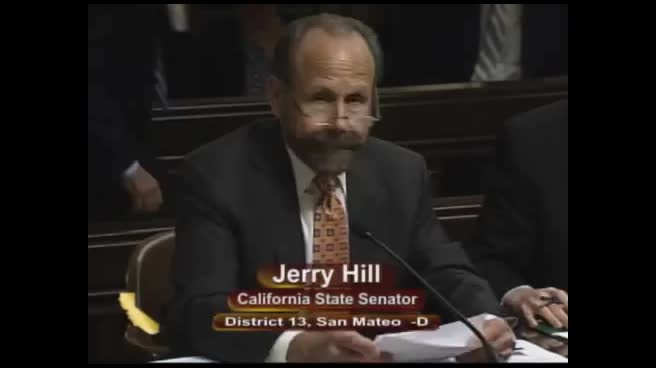 2MIN
Assembly Standing Committee on Utilities and Commerce
 42SEC
Senate Floor
 15MIN
Senate Standing Committee on Energy, Utilities and Communications
Bill Author

Bill Co-Author(s):