SB 1136: Fire prevention: state responsibility areas: report.
- Session Year: 2015-2016
- House: Senate
- Latest Version Date: 2016-06-15
Existing law requires the State Board of Forestry and Fire Protection to adopt emergency regulations to establish a fire prevention fee in an amount not to exceed $150 to be charged on each habitable structure, as defined, on a parcel that is within a state responsibility area, as defined. Existing law requires the state board to adjust the fire prevention fee annually using prescribed methods, and requires the state board, until January 31, 2017, to submit a report to the Legislature every January 31 on the status and uses of the fund, containing specified information and recommendations.
This bill would instead require the Department of Forestry and Fire Protection to submit that report to the Legislature and the board, and would extend to January 31, 2021, the time until which the state board report is required to submit the report to the Legislature, and be submitted. The bill would additionally require that the report include specified information on each program, subprogram, and element for which the Department of Forestry and Fire Protection department uses money generated from that fire prevention fee, and other information regarding fund expenditures, as provided.
Existing law requires the State Board of Forestry and Fire Protection to adopt emergency regulations to establish a fire prevention fee in amount not to exceed $150 to be charged on each habitable structure, as defined, on a parcel that is within a state responsibility area, as defined. Existing law requires the state board to adjust the fire prevention fee annually using prescribed methods, and requires the state board, until January 31, 2017, to submit a report to the Legislature every January 31 on the status and uses of the fund, containing specified information and recommendations.
This bill would extend to January 31, 2021, the time until which the state board is required to submit the report to the Legislature, and would additionally require that the report include specified information on each program and subprogram program, subprogram, and element for which the Department of Forestry and Fire Protection uses money generated from that fire prevention fee. fee, and other information regarding fund expenditures, as provided.
Existing law requires the State Board of Forestry and Fire Protection to adopt emergency regulations to establish a fire prevention fee in amount not to exceed $150 to be charged on each habitable structure, defined as a building used or intended to be used for human habitation, as defined, on a parcel that is within a state responsibility area, as defined. Existing law requires the state board to adjust the fire prevention fee annually using prescribed methods, and requires the state board, until January 31, 2017, to submit a report to the Legislature every January 31 on the status and uses of the fund. fund, containing specified information and recommendations.
This bill would extend to January 31, 2021, the time until which the state board is required to submit the report to the Legislature, and would additionally require that the report include specified information on each program and subprogram for which the Department of Forestry and Fire Protection uses money generated from that fire prevention fee.
Existing law requires the State Board of Forestry and Fire Protection to adopt emergency regulations to establish a fire prevention fee in amount not to exceed $150 to be charged on each structure, defined as a building used or intended to be used for human habitation, on a parcel that is within a state responsibility area, as defined. Existing law requires the state board to adjust the fire prevention fee annually using prescribed methods, and requires the state board, until January 31, 2017, to report to the Legislature every January 31 on the status and uses of the fund.
This bill would extend to January 31, 2021, the time until which the state board is required to report to the Legislature, and would additionally require that the report include specified information on each program for which the Department of Forestry and Fire Protection uses money generated from that fire prevention fee.
(a)Fire prevention fees collected pursuant to this chapter shall be expended, upon appropriation by the Legislature, as follows:
(1)The State Board of Equalization shall retain moneys necessary for the payment of refunds pursuant to Section 4228 and reimbursement of the State Board of Equalization for expenses incurred in the collection of the fee.
(2)The moneys collected, other than those retained by the State Board of Equalization pursuant to paragraph (1), shall be deposited into the State Responsibility Area Fire Prevention Fund, which is hereby created in the State Treasury, and shall be available to the board and the department to expend for fire prevention activities specified in subdivision (d) that benefit the owners of habitable structures within a state responsibility area who are required to pay the fire prevention fee. The amount expended to benefit the owners of habitable structures within a state responsibility area shall be commensurate with the amount collected from the owners within that state responsibility area. All moneys in excess of the costs of administration of the board and the department shall be expended only for fire prevention activities in counties with state responsibility areas.
(b)(1)The fund may also be used to cover the costs of administering this chapter.
(2)The fund shall cover all startup costs incurred over a period not to exceed two years.
(c)It is the intent of the Legislature that the moneys in this fund be fully appropriated to the board and the department each year in order to effectuate the purposes of this chapter.
(d)Moneys in the fund shall be used only for the following fire prevention activities, which shall benefit owners of habitable structures within the state responsibility areas who are required to pay the annual fire prevention fee pursuant to this chapter:
(1)Local assistance grants pursuant to subdivision (e).
(2)Grants to Fire Safe Councils, the California Conservation Corps, or certified local conservation corps for fire prevention projects and activities in the state responsibility areas.
(3)Grants to a qualified nonprofit organization with a demonstrated ability to satisfactorily plan, implement, and complete a fire prevention project applicable to the state responsibility areas. The department may establish other qualifying criteria.
(4)Inspections by the department for compliance with defensible space requirements around habitable structures in state responsibility areas as required by Section 4291.
(5)Public education to reduce fire risk in the state responsibility areas.
(6)Fire severity and fire hazard mapping by the department in the state responsibility areas.
(7)Other fire prevention projects in the state responsibility areas, authorized by the board.
(e)(1)The board shall establish a local assistance grant program for fire prevention activities designed to benefit habitable structures within state responsibility areas, including public education, that are provided by counties and other local agencies, including special districts, with state responsibility areas within their jurisdictions.
(2)In order to ensure an equitable distribution of funds, the amount of each grant shall be based on the number of habitable structures in state responsibility areas for which the applicant is legally responsible and the amount of moneys made available in the annual Budget Act for this local assistance grant program.
(f)By January 31, 2015, 2017, and annually thereafter, the board department shall submit to the Legislature and the board a written report on the status and uses of the fund pursuant to this chapter. The written report shall include all of the following for each reporting period:
(1)A description of each program, subprogram, and element for which the department uses money generated from the fire prevention fee, including an itemized accounting of expenditures for each program, subprogram, and element.
(2)An evaluation of the benefits received by counties based on the number of habitable structures in state responsibility areas within their jurisdictions, the effectiveness of the boards grant programs, the number of defensible space inspections in the reporting period, the degree of compliance with defensible space requirements, and measures to increase compliance, if any.
(3)An accounting of expenditures for equipment.
(4)Positions that are associated with each expenditure.
(5)A description of the grants awarded and expenditures of grant moneys.
(6)A description of actual expenditures for the past fiscal year and year, estimated expenditures for the current fiscal year and estimated year, and budgeted expenditures for the budget year.
(7)Any recommendations to the Legislature on the status and uses of the fund.
(g)(1)The requirement for submitting a report imposed under subdivision (f) is inoperative on January 31, 2021, pursuant to Section 10231.5 of the Government Code.
(2)A report to be submitted pursuant to subdivision (f) shall be submitted in compliance with Section 9795 of the Government Code.
(h)It is essential that this article be implemented without delay. To permit timely implementation, the department may contract for services related to the establishment of the fire prevention fee collection process. For this purpose only, and for a period not to exceed 24 months, the provisions of the Public Contract Code or any other provision of law related to public contracting shall not apply.
(a)Fire prevention fees collected pursuant to this chapter shall be expended, upon appropriation by the Legislature, as follows:
(1)The State Board of Equalization shall retain moneys necessary for the payment of refunds pursuant to Section 4228 and reimbursement of the State Board of Equalization for expenses incurred in the collection of the fee.
(2)The moneys collected, other than those retained by the State Board of Equalization pursuant to paragraph (1), shall be deposited into the State Responsibility Area Fire Prevention Fund, which is hereby created in the State Treasury, and shall be available to the board and the department to expend for fire prevention activities specified in subdivision (d) that benefit the owners of habitable structures within a state responsibility area who are required to pay the fire prevention fee. The amount expended to benefit the owners of habitable structures within a state responsibility area shall be commensurate with the amount collected from the owners within that state responsibility area. All moneys in excess of the costs of administration of the board and the department shall be expended only for fire prevention activities in counties with state responsibility areas.
(b)(1)The fund may also be used to cover the costs of administering this chapter.
(2)The fund shall cover all startup costs incurred over a period not to exceed two years.
(c)It is the intent of the Legislature that the moneys in this fund be fully appropriated to the board and the department each year in order to effectuate the purposes of this chapter.
(d)Moneys in the fund shall be used only for the following fire prevention activities, which shall benefit owners of habitable structures within the state responsibility areas who are required to pay the annual fire prevention fee pursuant to this chapter:
(1)Local assistance grants pursuant to subdivision (e).
(2)Grants to Fire Safe Councils, the California Conservation Corps, or certified local conservation corps for fire prevention projects and activities in the state responsibility areas.
(3)Grants to a qualified nonprofit organization with a demonstrated ability to satisfactorily plan, implement, and complete a fire prevention project applicable to the state responsibility areas. The department may establish other qualifying criteria.
(4)Inspections by the department for compliance with defensible space requirements around habitable structures in state responsibility areas as required by Section 4291.
(5)Public education to reduce fire risk in the state responsibility areas.
(6)Fire severity and fire hazard mapping by the department in the state responsibility areas.
(7)Other fire prevention projects in the state responsibility areas, authorized by the board.
(e)(1)The board shall establish a local assistance grant program for fire prevention activities designed to benefit habitable structures within state responsibility areas, including public education, that are provided by counties and other local agencies, including special districts, with state responsibility areas within their jurisdictions.
(2)In order to ensure an equitable distribution of funds, the amount of each grant shall be based on the number of habitable structures in state responsibility areas for which the applicant is legally responsible and the amount of moneys made available in the annual Budget Act for this local assistance grant program.
(f)By January 31, 2015, and annually thereafter, the board shall submit to the Legislature a written report on the status and uses of the fund pursuant to this chapter. The written report shall include all of the following for each reporting period:
(1)A description of each program and subprogram program, subprogram, and element for which the department uses money generated from the fire prevention fee, including an itemized accounting of expenditures for each program and subprogram program, subprogram, and element.
(2)An evaluation of the benefits received by counties based on the number of habitable structures in state responsibility areas within their jurisdictions, the effectiveness of the boards grant programs, the number of defensible space inspections in the reporting period, the degree of compliance with defensible space requirements, and measures to increase compliance, if any.
(3)An accounting of expenditures for equipment.
(4)Positions that are associated with each expenditure.
(5)A description of the grants awarded and expenditures of grant moneys.
(6)A description of actual expenditures for the past fiscal year and the current fiscal year and estimated expenditures for the budget year.
(6)
(7)Any recommendations to the Legislature on the status and uses of the fund.
(g)(1)The requirement for submitting a report imposed under subdivision (f) is inoperative on January 31, 2021, pursuant to Section 10231.5 of the Government Code.
(2)A report to be submitted pursuant to subdivision (f) shall be submitted in compliance with Section 9795 of the Government Code.
(h)It is essential that this article be implemented without delay. To permit timely implementation, the department may contract for services related to the establishment of the fire prevention fee collection process. For this purpose only, and for a period not to exceed 24 months, the provisions of the Public Contract Code or any other provision of law related to public contracting shall not apply.
(a)Fire prevention fees collected pursuant to this chapter shall be expended, upon appropriation by the Legislature, as follows:
(1)The State Board of Equalization shall retain moneys necessary for the payment of refunds pursuant to Section 4228 and reimbursement of the State Board of Equalization for expenses incurred in the collection of the fee.
(2)The moneys collected, other than those retained by the State Board of Equalization pursuant to paragraph (1), shall be deposited into the State Responsibility Area Fire Prevention Fund, which is hereby created in the State Treasury, and shall be available to the board and the department to expend for fire prevention activities specified in subdivision (d) that benefit the owners of habitable structures within a state responsibility area who are required to pay the fire prevention fee. The amount expended to benefit the owners of habitable structures within a state responsibility area shall be commensurate with the amount collected from the owners within that state responsibility area. All moneys in excess of the costs of administration of the board and the department shall be expended only for fire prevention activities in counties with state responsibility areas.
(b)(1)The fund may also be used to cover the costs of administering this chapter.
(2)The fund shall cover all startup costs incurred over a period not to exceed two years.
(c)It is the intent of the Legislature that the moneys in this fund be fully appropriated to the board and the department each year in order to effectuate the purposes of this chapter.
(d)Moneys in the fund shall be used only for the following fire prevention activities, which shall benefit owners of habitable structures within the state responsibility areas who are required to pay the annual fire prevention fee pursuant to this chapter:
(1)Local assistance grants pursuant to subdivision (e).
(2)Grants to Fire Safe Councils, the California Conservation Corps, or certified local conservation corps for fire prevention projects and activities in the state responsibility areas.
(3)Grants to a qualified nonprofit organization with a demonstrated ability to satisfactorily plan, implement, and complete a fire prevention project applicable to the state responsibility areas. The department may establish other qualifying criteria.
(4)Inspections by the department for compliance with defensible space requirements around habitable structures in state responsibility areas as required by Section 4291.
(5)Public education to reduce fire risk in the state responsibility areas.
(6)Fire severity and fire hazard mapping by the department in the state responsibility areas.
(7)Other fire prevention projects in the state responsibility areas, authorized by the board.
(e)(1)The board shall establish a local assistance grant program for fire prevention activities designed to benefit habitable structures within state responsibility areas, including public education, that are provided by counties and other local agencies, including special districts, with state responsibility areas within their jurisdictions.
(2)In order to ensure an equitable distribution of funds, the amount of each grant shall be based on the number of habitable structures in state responsibility areas for which the applicant is legally responsible and the amount of moneys made available in the annual Budget Act for this local assistance grant program.
(f)By January 31, 2015, and annually thereafter, the board shall submit to the Legislature a written report on the status and uses of the fund pursuant to this chapter. The written report shall include a all of the following for each reporting period:
(1)A description of each program and subprogram element for which the department uses money generated from the fire prevention fee, including an itemized accounting of expenditures for each program and subprogram, an subprogram element.
(2)An evaluation of the benefits received by counties based on the number of habitable structures in state responsibility areas within their jurisdictions, the effectiveness of the boards grant programs, the number of defensible space inspections in the reporting period, the degree of compliance with defensible space requirements, and measures to increase compliance, if any, and any recommendations any.
(3)An accounting of expenditures for equipment.
(4)Positions that are associated with each expenditure.
(5)A description of the grants awarded and expenditures of grant moneys.
(6)Any recommendations to the Legislature on the status and uses of the fund.
(g)(1)The requirement for submitting a report imposed under subdivision (f) is inoperative on January 31, 2021, pursuant to Section 10231.5 of the Government Code.
(2)A report to be submitted pursuant to subdivision (f) shall be submitted in compliance with Section 9795 of the Government Code.
(h)It is essential that this article be implemented without delay. To permit timely implementation, the department may contract for services related to the establishment of the fire prevention fee collection process. For this purpose only, and for a period not to exceed 24 months, the provisions of the Public Contract Code or any other provision of law related to public contracting shall not apply.
(a)Fire prevention fees collected pursuant to this chapter shall be expended, upon appropriation by the Legislature, as follows:
(1)The State Board of Equalization shall retain moneys necessary for the payment of refunds pursuant to Section 4228 and reimbursement of the State Board of Equalization for expenses incurred in the collection of the fee.
(2)The moneys collected, other than those retained by the State Board of Equalization pursuant to paragraph (1), shall be deposited into the State Responsibility Area Fire Prevention Fund, which is hereby created in the State Treasury, and shall be available to the board and the department to expend for fire prevention activities specified in subdivision (d) that benefit the owners of habitable structures within a state responsibility area who are required to pay the fire prevention fee. The amount expended to benefit the owners of habitable structures within a state responsibility area shall be commensurate with the amount collected from the owners within that state responsibility area. All moneys in excess of the costs of administration of the board and the department shall be expended only for fire prevention activities in counties with state responsibility areas.
(b)(1)The fund may also be used to cover the costs of administering this chapter.
(2)The fund shall cover all startup costs incurred over a period not to exceed two years.
(c)It is the intent of the Legislature that the moneys in this fund be fully appropriated to the board and the department each year in order to effectuate the purposes of this chapter.
(d)Moneys in the fund shall be used only for the following fire prevention activities, which shall benefit owners of habitable structures within the state responsibility areas who are required to pay the annual fire prevention fee pursuant to this chapter:
(1)Local assistance grants pursuant to subdivision (e).
(2)Grants to Fire Safe Councils, the California Conservation Corps, or certified local conservation corps for fire prevention projects and activities in the state responsibility areas.
(3)Grants to a qualified nonprofit organization with a demonstrated ability to satisfactorily plan, implement, and complete a fire prevention project applicable to the state responsibility areas. The department may establish other qualifying criteria.
(4)Inspections by the department for compliance with defensible space requirements around habitable structures in state responsibility areas as required by Section 4291.
(5)Public education to reduce fire risk in the state responsibility areas.
(6)Fire severity and fire hazard mapping by the department in the state responsibility areas.
(7)Other fire prevention projects in the state responsibility areas, authorized by the board.
(e)(1)The board shall establish a local assistance grant program for fire prevention activities designed to benefit habitable structures within state responsibility areas, including public education, that are provided by counties and other local agencies, including special districts, with state responsibility areas within their jurisdictions.
(2)In order to ensure an equitable distribution of funds, the amount of each grant shall be based on the number of habitable structures in state responsibility areas for which the applicant is legally responsible and the amount of moneys made available in the annual Budget Act for this local assistance grant program.
(f)By January 31, 2015, and annually thereafter, the board shall submit to the Legislature a written report on the status and uses of the fund pursuant to this chapter. The written report shall also include a description of each program and subprogram for which the department uses money generated from the fire prevention fee, including an itemized accounting of expenditures for each program and subprogram, an evaluation of the benefits received by counties based on the number of habitable structures in state responsibility areas within their jurisdictions, the effectiveness of the boards grant programs, the number of defensible space inspections in the reporting period, the degree of compliance with defensible space requirements, measures to increase compliance, if any, and any recommendations to the Legislature.
(g)(1)The requirement for submitting a report imposed under subdivision (f) is inoperative on January 31, 2017, 2021, pursuant to Section 10231.5 of the Government Code.
(2)A report to be submitted pursuant to subdivision (f) shall be submitted in compliance with Section 9795 of the Government Code.
(h)It is essential that this article be implemented without delay. To permit timely implementation, the department may contract for services related to the establishment of the fire prevention fee collection process. For this purpose only, and for a period not to exceed 24 months, the provisions of the Public Contract Code or any other provision of law related to public contracting shall not apply.
|
Date
|
Status
|
|---|---|
| Apr 25, 2016 | From committee: Be ordered to second reading pursuant to Senate Rule 28.8. |
| Aug 11, 2016 | August 11 hearing. Held in committee and under submission. |
| Jun 29, 2016 | June 29 set for first hearing. Placed on APPR. suspense file. |
| Jun 15, 2016 | Read second time and amended. Re-referred to Com. on APPR. |
| Jun 14, 2016 | From committee: Do pass as amended and re-refer to Com. on APPR. (Ayes 8. Noes 0.) (June 13). |
| May 9, 2016 | Referred to Com. on NAT. RES. |
| Apr 28, 2016 | Read third time. Passed. (Ayes 37. Noes 0.) Ordered to the Assembly. |
| Apr 28, 2016 | Read third time. Passed. (Ayes 37. Noes 0. Page 3710.) Ordered to the Assembly. |
| Apr 28, 2016 | In Assembly. Read first time. Held at Desk. |
| Apr 26, 2016 | Read second time. Ordered to third reading. |
| Feb 18, 2016 | Introduced. Read first time. To Com. on RLS. for assignment. To print. |
| Apr 19, 2016 | Set for hearing April 25. |
| Apr 5, 2016 | Read second time and amended. Re-referred to Com. on APPR. |
| Apr 4, 2016 | From committee: Do pass as amended and re-refer to Com. on APPR. (Ayes 9. Noes 0.) (March 29). |
| Apr 4, 2016 | From committee: Do pass as amended and re-refer to Com. on APPR. (Ayes 9. Noes 0. Page 3313.) (March 29). |
| Mar 28, 2016 | From committee with author's amendments. Read second time and amended. Re-referred to Com. on N.R. & W. |
| Mar 24, 2016 | Set for hearing March 29. |
| Mar 3, 2016 | Referred to Com. on N.R. & W. |
| Feb 19, 2016 | From printer. May be acted upon on or after March 20. |
|
Date
|
Description
|
Location
|
Votes
|
|
|---|---|---|---|---|
| Jun 13, 2016 | Do pass as amended and be re-referred to the Committee on [Appropriations] | Assembly Standing Committee on Natural Resources |
Passed |
|
| Apr 28, 2016 | Senate 3rd Reading SB1136 Morrell | Senate Floor |
Passed |
|
| Mar 29, 2016 | Do pass as amended, but first amend, and re-refer to the Committee on [Appropriations] | Senate Standing Committee on Natural Resources and Water |
Passed |
This list shows positions taken on this bill by organizations on the date displayed, which is linked to the original source.
Positions by individuals are not included.
|
Organization
|
Position
|
Date
|
|---|---|---|
| City of Big Bear Lake | ** Support | Jun 13, 2016 |
| Former State Senator George Runner | ** Support | Apr 28, 2016 |
| Howard Jarvis Taxpayers Association | ** Support | Jun 13, 2016 |
| Riverside County Board of Supervisors | * Support | Jun 13, 2016 |
| Riverside; County Of | * Support | Jun 13, 2016 |
| Rural County Representatives of California | ** Support | Jun 13, 2016 |
| San Bernardino County | ** Support | Apr 28, 2016 |
| San Bernardino County Board of Supervisors | ** Support | Jun 13, 2016 |
| Santa Barbara County Board of Supervisors | ** Support | Jun 13, 2016 |
| Sen. George Runner, Member, State Board of Equalization | ** Support | Jun 13, 2016 |
| Senator George Runner | ** Support | Mar 29, 2016 |
Date of Hearing: June 29, 2016
ASSEMBLY COMMITTEE ON APPROPRIATIONS
Lorena Gonzalez, Chair
SBPCA Bill Id:SB 1136
Author:(Morrell) – As Amended Ver:June 15, 2016
Policy Committee: | Natural Resources | Vote: | 8 - 0 |
Urgency: No State Mandated Local Program: No Reimbursable: No
SUMMARY:
This bill extends the sunset date and adds additional reporting requirements to the annual report regarding the expenditure of state responsibility area (SRA) fire fees. Specifically, this bill:
- Requires CalFire rather than the Board of Forestry and Fire Protection (Board) to prepare and submit the report.
- Extends the sunset date on the report to from January 31, 2017, to January 31, 2021.
- Adds specific information to the report on expenditures from each program, subprogram, and element for which CalFire uses funds generated by the fee. Adds a reporting requirement for actual and current year fiscal expenditures and budgeted expenditures.
- Requires an accounting of expenditures for equipment, staff positions associated with all expenditures, and a description of the grants awarded and how the funds were spent.
FISCAL EFFECT:
Any additional Calfire reporting costs are absorbable.
COMMENTS:
- Purpose. According to the author, the expenditure reporting for the SRA fee has been inadequate and confusing. This bill clarifies what must be reported and changes the reporting responsibility from the Board to CAL FIRE.
- Background. The state is responsible for wildland fire protection in state responsibility areas (SRA), which are generally defined to include most nonfederal timberlands, rangelands and watersheds thinly populated and not within the boundaries of a city. Over 31 million acres, much privately owned, are located in SRA. In the past, SRA lands were largely unpopulated. In recent years, however, local governments have allowed increased housing development in SRA but at a level of density that maintains the state's obligation to provide wildland fire protection.
As housing development in SRA increased, so did state fire protection costs. In 1996-97, the department spent $475 million on fire protection; in more recent years, CALFIRE's annual fire protection costs neared or surpassed $1 billion.
- SRA Fire Protection Fees. In 2011 the Legislature passed ABx1 29 (Blumenfield), requiring the Board of Forestry and Fire Protection to adopt emergency regulations to establish a fire prevention fee. The fee, not to exceed $150 on each structure, was to raise $50 million to fund CALFIRE fire prevention activities. In January 2012, the board issued its regulation, establishing a fee of $150 per habitable structure on a parcel located within SRA, with a $35 reduction for each habitable structure that is also within the boundaries of a local agency that provides fire protection services. Revenues from the fee are to be used exclusively for fire protection. In authorizing the fee, the Legislature recognized that individual owners within SRA received a disproportionately larger benefit from fire prevention activities than realized by the state’s residents generally.
As allowed by law, the Board adjusted the fee for inflation and it is currently $152.33 per habitable structure outside a fire protection district and $117.33 for habitable structures within a fire protection district. Approximately 10% of those required to pay the fee have not paid any amount since the fee was established. Almost $40 million in fees remain uncollected.
Analysis Prepared by: Jennifer Galehouse / APPR. / (916) 319-2081
Date of Hearing: June 13, 2016
ASSEMBLY COMMITTEE ON NATURAL RESOURCES
Das Williams, Chair
SBPCA Bill Id:SB 1136
Author:(Morrell) – As Amended Ver:April 5, 2016
SENATE VOTE: 37-0
SUBJECT: Fire prevention: state responsibility areas: report
SUMMARY: Extends the sunset and adds reporting requirements to the annual report from the Board of Forestry and Fire Protection (Board) regarding the expenditure of state responsibility area (SRA) fire fees.
EXISTING LAW:
- Requires the Board to classify all lands within the state for the purpose of determining areas in which the financial responsibility of preventing and suppressing fires is primarily the responsibility of the state. (i.e., SRAs.)
- Declares that it is necessary to impose a fee to pay for fire prevention activities in the SRA that specifically benefit owners of structures in the SRA.
- Requires the Board to adopt regulations to establish the fee in an amount not to exceed $150, and allows the Board to adjust the fee every year for inflation. Requires the fee to be charged on each “structure” on a parcel that is within the SRA. Defines “structure” as a building used or intended to be used for human habitation, including a mobile home or manufactured home. Reduces the fire prevention fee by $35 if the structure is also within the boundaries of a local agency that provides fire protection services. Defines “owner of a habitable structure” as the person that is the owner of record of a habitable structure in the county tax assessor rolls or as recorded by the Department of Housing and Community Development (HCD) on July 1 of the state fiscal year for which the fee is due. Requires the Board of Equalization (BOE) to collect the fee.
- Requires the fee to be deposited in the State Responsibility Area Fire Prevention Fund, which is available to the Board and the Department of Forestry and Fire Protection (CAL FIRE) to expend for fire prevention activities that benefit the owners of structures within the SRA. Limits fire prevention activities to the following:
a) Local assistance grants established by the Board;
b) Grants to Fire Safe Councils, the California Conservation Corps, or certified local conservation corps for fire prevention projects and activities in the SRA;
c) Grants to a qualified nonprofit organization with a demonstrated ability to satisfactorily plan, implement, and complete a fire prevention project applicable to the SRA;
d) Inspections by CAL FIRE for compliance with defensible space requirements around structures in the SRA;
e) Public education to reduce fire risk in the SRA;
f) Fire severity and fire hazard mapping by CAL FIRE in the SRA; and,
g) Other fire prevention projects in the SRA that are authorized by the Board.
- Requires the Board, until January 31, 2017, to submit a report to the Legislature every January 31 on the status and uses of the fund, containing specified information and recommendations.
FISCAL EFFECT: According to the Senate Appropriations Committee, pursuant to Senate Rule 28.8, negligible state costs.
COMMENTS:
- Background. California’s SRA covers over 31 million acres and includes land in every county except San Francisco and Sutter. CAL FIRE operates more than 200 fire stations within the SRA, contracts with other firefighting agencies, and has a proposed wildland fire protection budget of $1.8 billion for this fiscal year. The fire protection budget includes, among other things, fire prevention activities, such as brush clearance, defensible space inspections, fire breaks, and other measures to reduce the cost of firefighting, property loss, injury to firefighters, and damage to the environment.
CAL FIRE’s fire protection budget has seen a steady increase over the years and is the largest budget in the Natural Resources Agency. In the 1996-97 fiscal year, CAL FIRE’s fire protection budget was $266 million. This increase has been attributed in large part to the significant housing development at the boundaries between wildlands and urban areas, the heightened risk of catastrophic fires due to fire suppression activities over the last century, and increased staff costs.
- Fire Prevention Fee. In early 2011, the state was facing a $26.6 billion budget deficit, and an annual structural deficit of up to $21.5 billion was projected into the future. In March 2011, the Legislature passed $13.4 billion in budget solutions (consisting mostly of spending cuts) to address the deficit; however, there was still a shortfall of $10.8 billion. To assist in addressing the budget shortfall, the Legislature passed, among other bills, ABX1 29 (Blumenfield), Chapter 8, Statutes of 2011-12, First Extraordinary Session, which required the Board to adopt emergency regulations to establish a “fire prevention fee” not to exceed $150 for each structure on a parcel that is within the SRA. The fee was intended to fill a hole created by a $50 million General Fund cut to CAL FIRE in the 2011 budget bill. The fee generates around $80 million a year in revenues, which is used to enhance statewide fire prevention work, including local assistance grants. Recent local assistance grant awards have focused on responding to the tree mortality crisis in California where 29 million trees have died. The local assistance grants help locals reduce wildfire and tree fall risks near homes in high tree mortality areas.
- Amendments. The author believes that the expenditure reporting for the SRA fee has been inadequate and confusing. This bill clarifies what must be reported. However, part of the confusion maybe that the reporting requirement is placed on the Board when it is CAL FIRE that holds the data for the report. The author and committee may wish to consider requiring CAL FIRE to complete the report and present it to the Board and Legislature. In addition, the author and committee may also wish to consider technical amendments to correct drafting errors.
- Related/Prior Legislation.
SB 1347 (Nielsen) also extends the sunset for the annual report from the Board regarding the expenditure of SRA fire fees. The bill is awaiting hearing in this committee.
AB 1642 (Obernolte) extends the deadlines to either pay the SRA fire prevention fee or file a petition for redetermination of the fee from 30 days to 60 days. This bill was held on suspense in the Assembly Appropriations Committee.
AB 2048 (Dahle, Chesbro, and Gordon), Chapter 895, Statutes of 2014, among other things, reduces the penalties for unpaid fees and simplifies the appeals process.
REGISTERED SUPPORT / OPPOSITION:
Support
Sen. George Runner, Member, State Board of Equalization
City of Big Bear Lake
Howard Jarvis Taxpayers Association
Riverside County Board of Supervisors
Rural County Representatives of California
San Bernardino County Board of Supervisors
Santa Barbara County Board of Supervisors
45 Individuals
Opposition
None on file
Analysis Prepared by: Michael Jarred / NAT. RES. / (916) 319-2092
Office of Senate Floor Analyses (916) 651-1520 Fax: (916) 327-4478 | SB |
THIRD READING
Bill No: SB 1136
:
SENATE NATURAL RES. & WATER COMMITTEE: 9-0, 3/29/16
AYES: Pavley, Stone, Allen, Hertzberg, Hueso, Jackson, Monning, Vidak, Wolk
SENATE APPROPRIATIONS COMMITTEE: Senate Rule 28.8
DIGEST: This bill extends the sunset and adds reporting requirements to the annual report from the California Department of Forestry and Fire Protection (CDF) regarding the expenditure of state responsibility area (SRA) fire fees.
Existing law:
- Enacts the SRA fire prevention fee following the signing of ABX1 29 (Blumenfield, Chapter 8, Statutes of 2011-12 First Extraordinary Session) in July 2011. The law approved the new fee to pay for fire prevention services within the SRA. The fee is applied to all habitable structures within the SRA.
- Requires an annual report on SRA fire fee expenditures. The sunset date on these reports is January, 2017. In a recent informational report from last year, CDF summarized expenditures for the three fiscal years 2012-15. That report is available on the CDF Web site.
This bill:
- Extends the sunset date on the report to January 31, 2021.
- Adds reporting requirements that require specific information on expenditures from each program, subprograms, and element for which CDF uses money from the fee. It also adds a reporting provision for actual and current year fiscal expenditures.
- Provides that additional reporting requirements pertain to equipment expenditures, personnel positions that are associated with each expenditure, and descriptions and expenditures on each SRA grant awarded.
Comments
The additional reporting requirements reflect frustration on the part of some legislators regarding the information provided them regarding this fee, which is unpopular in some areas of the state. The author acknowledged that he has received most, if not all, of the information he requested in an acceptable format. If there is an open question regarding this bill it is whether the Legislature should codify an information request that has already been satisfied.
The SRA fee generates approximately $74 million annually. Effective July 1, 2014, the fee is levied at the rate of $152.33 per habitable structure, which is defined as a building that can be occupied for residential use. Owners of habitable structures who are also within the boundaries of a local fire protection agency will receive a reduction of $35 per habitable structure.
According to the CDF Web site, this fee funds a variety of important fire prevention services in the SRA. Such activities include fuel reduction activities that lessen risk of wildfire to communities and evacuation routes. Other activities include defensible space inspections, fire prevention engineering, emergency evacuation planning, fire prevention education, fire hazard severity mapping, implementation of the state and local Fire Plans and fire-related law enforcement activities such as arson investigation.
The legality of the fee is being challenged in court, and it is not clear when the trial will occur. The argument is that the fee should have been enacted as a tax with a 2/3 vote.
Since its adoption, the Legislature has considered many bills to repeal the fee, none of which were passed. It also passed bills allowing a landowner to apportion the fee with a prospective buyer, to index the fee for inflation, and to exempt structures destroyed by natural disasters from the fee.
FISCAL EFFECT: Appropriation: Fiscal Com.: Local:
Former State Senator George Runner
Howard Jarvis Taxpayers Association
San Bernardino County
46 individuals
OPPOSITION: (Verified 4/25/16)
None received
ARGUMENTS IN SUPPORT: According to the author, he (and the co-authors) were not receiving adequate information about SRA fire fee expenditures despite the annual report. He believes that SRA grant fee expenditures are reported much more transparently than the fire prevention activities that are also funded from SRA fire fees. At the request of the author, CDF provided a much more detailed report on SRA fire prevention activities that he believes is an adequate precedent for future reports should this bill be enacted.
4/27/16 15:57:22
**** END ****
SENATE COMMITTEE ON NATURAL RESOURCES AND WATER
Senator Fran Pavley, Chair
2015 - 2016 Regular
Bill No: SB Hearing Date: March 29, 2016
Author: | Morrell | ||
Version: | March 28, 2016 | ||
Urgency: | No | Fiscal: | Yes |
Consultant: | William Craven | ||
Subject: Fire prevention: state responsibility areas: report
BACKGROUND AND EXISTING LAW
The State Responsibility Area (SRA) fire prevention fee was enacted following the signing of Assembly Bill X1 29 in July 2011. The law approved the new fee to pay for fire prevention services within the SRA. The fee is applied to all habitable structures within the SRA and generates approximately $74 million annually.
Effective July 1, 2014, the fee is levied at the rate of $152.33 per habitable structure, which is defined as a building that can be occupied for residential use. Owners of habitable structures who are also within the boundaries of a local fire protection agency will receive a reduction of $35 per habitable structure.
According to the website of the Department of Forestry and Fire Protection (CDF), this fee funds a variety of important fire prevention services in the SRA. Such activities include fuel reduction activities that lessen risk of wildfire to communities and evacuation routes. Other activities include defensible space inspections, fire prevention engineering, emergency evacuation planning, fire prevention education, fire hazard severity mapping, implementation of the State and local Fire Plans and fire-related law enforcement activities such as arson investigation.
The legality of the fee is being challenged in court, and it is not clear when the trial will occur. The argument is that the fee should have been enacted as a tax with a 2/3 vote.
Since its adoption, the Legislature has considered many bills to repeal the fee, none of which were passed. It also passed bills allowing a landowner to apportion the fee with a prospective buyer, to index the fee for inflation, and to exempt structures destroyed by natural disasters from the fee.
An annual report on SRA fire fee expenditures is required by law. The sunset date on these reports is January, 2017. In a recent informational report from last year, CDF summarized expenditures for the three fiscal years 2012-15. That report is available on the CDF website.
Some legislators were concerned that they (and the public) were not getting adequate information about SRA fire fee expenditures despite this report and other information provided to them by CDF.
PROPOSED LAW
This bill would amend the annual reporting statute for SRA fee expenditures by requiring that each report include a description of each program and subprogram element for which the department uses money generated from the fire prevention fee, including an itemized accounting of expenditures for each program and subprogram. The bill would also require reporting on equipment expenditures, personnel positions that are associated with each expenditure, descriptions and expenditures on each SRA grant awarded by CDF, and past year, current year, and budget year expenditures for each annual report. It also directs the department to make any appropriate recommendations to the Legislature. The bill extends the sunset on the reporting provisions until January 31, 2021.
ARGUMENTS IN SUPPORT
According to the author, CDF does report its SRA grant fee expenditures much more transparently than it reports its fire prevention activities that are also funded from SRA fire fees. At the request of the author, CDF provided a much more detailed report on SRA fire prevention activities that he believes is an adequate precedent for future reports should this bill be enacted.
ARGUMENTS IN OPPOSITION
None received
COMMENTS
The author acknowledged that the department has provided the expenditure information he sought in an acceptable format. The question before the committee is whether that fulfilled request should now be codified, or whether the author can obtain agreement on another way to obtain a commitment from the department for the expenditure information to be available to the public without the need for a bill. That question may be resolved at this hearing or at any future point in the process.
AMENDMENTS
The author has requested three technical amendments that he will adopt as author’s amendments as well as adding co-authors:
- Page 3, in subdivision (f) include in the Cal Fire report past year actuals, current year, and budget year estimates.
- Page 3, include a comma in line 27 after the word “subprogram”
- Page 3, include a comma in line 30 after the word “subprogram”
- Add Senate co-authors Berryhill, Fuller, Bates, and Runner and Assembly co-authors Gallagher, Jones, Wagner, and Olbernolte.
SUPPORT
Senator George Runner (Ret.)
Howard Jarvis Taxpayers Association
46 Individuals
OPPOSITION
None Received
-- END --
Discussed in Hearing
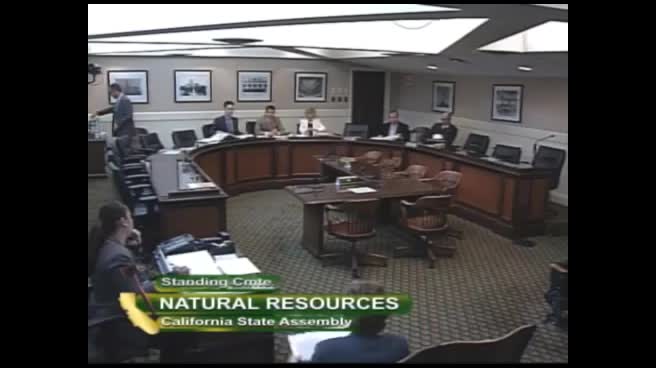 4MIN
Assembly Standing Committee on Natural Resources
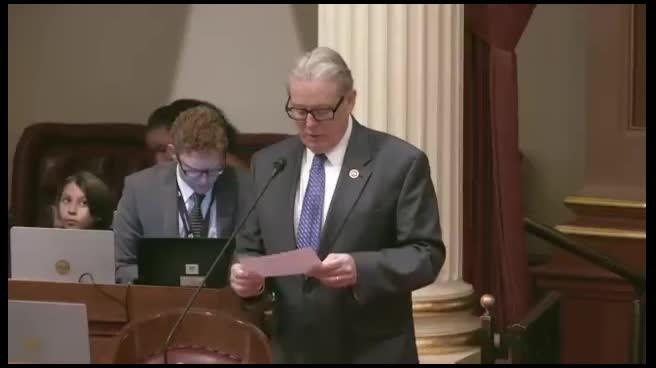 1MIN
Senate Floor
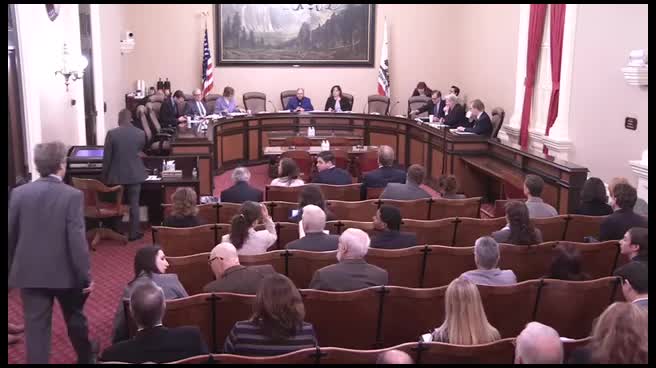 14MIN