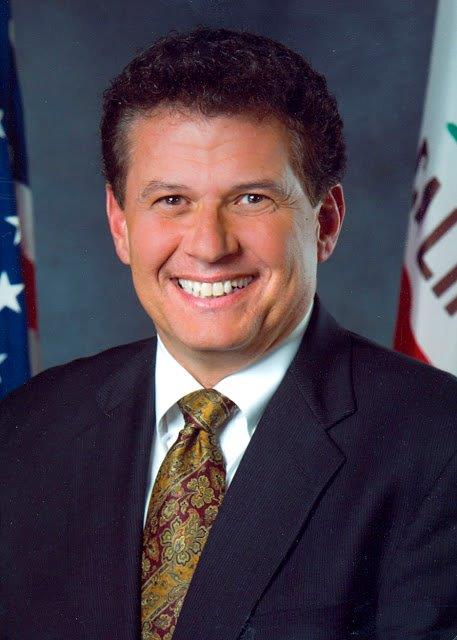
SB 650: Firearms: assault weapons.
- Session Year: 2015-2016
- House: Senate
- Latest Version Date: 2016-05-05
(1)Existing law generally prohibits the possession or transfer of assault weapons, except for the sale, purchase, importation, or possession of assault weapons by specified individuals, including law enforcement officers. Under existing law, assault weapon means, among other things, a semiautomatic centerfire rifle or a semiautomatic pistol that has the capacity to accept a detachable magazine and has any one of specified attributes, including, for rifles, a thumbhole stock, and for pistols, a second handgrip.
This bill would revise this definition of assault weapon to mean a semiautomatic centerfire rifle or a semiautomatic pistol that does not have a fixed magazine but has any one of those specified attributes. The bill would also define fixed magazine to mean an ammunition feeding device contained in, or permanently attached to, a firearm in such a manner that the device cannot be removed without disassembly of the firearm action.
By expanding the definition of an existing crime, the bill would impose a state-mandated local program.
(2)Existing law requires that any person who, within this state, possesses an assault weapon, except as otherwise provided, be punished for a felony or for a period not to exceed one year in a county jail.
This bill would exempt from punishment under that provision a person who possessed an assault weapon prior to January 1, 2017, if specified requirements are met.
(3)Existing law requires that, with specified exceptions, any person who, prior to January 1, 2001, lawfully possessed an assault weapon prior to the date it was defined as an assault weapon and that was not specified as an assault weapon at the time of lawful possession, must register the firearm with the Department of Justice. Existing law permits the Department of Justice to charge a fee for registration of up to $20 per person but not to exceed the actual processing costs of the department. Existing law, after the department establishes fees sufficient to reimburse the department for processing costs, requires fees charged to increase at a rate not to exceed the legislatively approved annual cost-of-living adjustment for the departments budget or as otherwise increased through the Budget Act. Existing law requires those fees to be deposited into the Dealers Record of Sale Special Account. Existing law, the Administrative Procedure Act, establishes the requirements for the adoption, publication, review, and implementation of regulations by state agencies.
This bill would require that any person who, from January 1, 2001, to December 31, 2016, inclusive, lawfully possessed an assault weapon that does not have a fixed magazine, as defined, including those weapons with an ammunition feeding device that can be removed readily from the firearm with the use of a tool, register the firearm with the Department of Justice before January 1, 2018, but not before the effective date of specified regulations. The bill would permit the department to increase the $20 registration fee as long as it does not exceed the reasonable processing costs of the department. The bill would also require registrations to be submitted electronically via the Internet utilizing a public-facing application made available by the department. The bill would require the registration to contain specified information, including, but not limited to, a description of the firearm that identifies it uniquely and specified information about the registrant. The bill would permit the department to charge a fee of up to $15 per person for registration through the Internet, not to exceed the reasonable processing costs of the department to be paid and deposited, as specified, for purposes of the registration program. The bill would require the department to adopt regulations for the purpose of implementing those provisions and would exempt those regulations from the Administrative Procedure Act. The bill would also make technical and conforming changes.
(4)The California Constitution requires the state to reimburse local agencies and school districts for certain costs mandated by the state. Statutory provisions establish procedures for making that reimbursement.
This bill would provide that no reimbursement is required by this act for a specified reason.
Existing law, the Gambling Control Act, establishes the California Gambling Control Commission. Existing law requires the commission to keep a record of all proceedings at its regular and special meetings and a record of all applications for licenses under the Gambling Control Act, and to make these records open to public inspection.
This bill would require the commission to make these records open to public inspection during normal business hours.
The Gambling Control Act provides for the licensure and regulation of various legalized gambling activities by the California Gambling Control Commission and the investigation and enforcement of those activities and establishments by the Department of Justice. Existing law requires a gambling license to be renewed biennially. Existing law requires the owner licensee or key employee to file an application for renewal with the Department of Justice no later than 120 calendar days before the expiration of the current license. A willful violation of these provisions is punishable as a misdemeanor.
This bill would require the owner licensee or key employee to file an application for renewal with the California Gambling Control Commission by no later than 120 calendar days after the end of the owner licensees fiscal year. The bill would automatically renew a license annually upon the payment of an annual renewal fee, as specified. The bill would also make conforming changes. Because a willful violation of these provisions would be a crime, the bill would impose a state-mandated local program.
The California Constitution requires the state to reimburse local agencies and school districts for certain costs mandated by the state. Statutory provisions establish procedures for making that reimbursement.
This bill would provide that no reimbursement is required by this act for a specified reason.
(a)Notwithstanding Section 30510, assault weapon also means any of the following:
(1)A semiautomatic, centerfire rifle that has the capacity to accept a detachable magazine and does not have a fixed magazine but has any one of the following:
(A)A pistol grip that protrudes conspicuously beneath the action of the weapon.
(B)A thumbhole stock.
(C)A folding or telescoping stock.
(D)A grenade launcher or flare launcher.
(E)A flash suppressor.
(F)A forward pistol grip.
(2)A semiautomatic, centerfire rifle that has a fixed magazine with the capacity to accept more than 10 rounds.
(3)A semiautomatic, centerfire rifle that has an overall length of less than 30 inches.
(4)A semiautomatic pistol that has the capacity to accept a detachable magazine and does not have a fixed magazine but has any one of the following:
(A)A threaded barrel, capable of accepting a flash suppressor, forward handgrip, or silencer.
(B)A second handgrip.
(C)A shroud that is attached to, or partially or completely encircles, the barrel that allows the bearer to fire the weapon without burning the bearers hand, except a slide that encloses the barrel.
(D)The capacity to accept a detachable magazine at some location outside of the pistol grip.
(5)A semiautomatic pistol with a fixed magazine that has the capacity to accept more than 10 rounds.
(6)A semiautomatic shotgun that has both of the following:
(A)A folding or telescoping stock.
(B)A pistol grip that protrudes conspicuously beneath the action of the weapon, thumbhole stock, or vertical handgrip.
(7)A semiautomatic shotgun that has the ability to accept a detachable magazine.
(8)Any shotgun with a revolving cylinder.
(b)For purposes of this section, fixed magazine means an ammunition feeding device contained in, or permanently attached to, a firearm in such a manner that the device cannot be removed without disassembly of the firearm action.
(b)
(c)The Legislature finds a significant public purpose in exempting from the definition of assault weapon pistols that are designed expressly for use in Olympic target shooting events. Therefore, those pistols that are sanctioned by the International Olympic Committee and by USA Shooting, the national governing body for international shooting competition in the United States, and that were used for Olympic target shooting purposes as of January 1, 2001, and that would otherwise fall within the definition of assault weapon pursuant to this section are exempt, as provided in subdivision (c). (d).
(c)
(d)Assault weapon does not include either of the following:
(1)Any antique firearm.
(2)Any of the following pistols, because they are consistent with the significant public purpose expressed in subdivision (b): (c):
| MANUFACTURER | MODEL | CALIBER |
| BENELLI | MP90 | .22LR |
| BENELLI | MP90 | .32 S&W LONG |
| BENELLI | MP95 | .22LR |
| BENELLI | MP95 | .32 S&W LONG |
| HAMMERLI | 280 | .22LR |
| HAMMERLI | 280 | .32 S&W LONG |
| HAMMERLI | SP20 | .22LR |
| HAMMERLI | SP20 | .32 S&W LONG |
| PARDINI | GPO | .22 SHORT |
| PARDINI | GP-SCHUMANN | .22 SHORT |
| PARDINI | HP | .32 S&W LONG |
| PARDINI | MP | .32 S&W LONG |
| PARDINI | SP | .22LR |
| PARDINI | SPE | .22LR |
| WALTHER | GSP | .22LR |
| WALTHER | GSP | .32 S&W LONG |
| WALTHER | OSP | .22 SHORT |
| WALTHER | OSP-2000 | .22 SHORT |
(3)The Department of Justice shall create a program that is consistent with the purposes stated in subdivision (b) (c) to exempt new models of competitive pistols that would otherwise fall within the definition of assault weapon pursuant to this section from being classified as an assault weapon. The exempt competitive pistols may be based on recommendations by USA Shooting consistent with the regulations contained in the USA Shooting Official Rules or may be based on the recommendation or rules of any other organization that the department deems relevant.
SEC. 2.Section 30680 is added to the Penal Code, to read:30680.Notwithstanding the meaning of assault weapon under Section 30515, as amended by the act that added this section, Section 30605 does not apply to the possession of an assault weapon by a person who has possessed the assault weapon prior to January 1, 2017, if all of the following are applicable:
(a)Prior to January 1, 2017, the person was eligible to register that assault weapon pursuant to subdivision (b) of Section 30900.
(b)The person lawfully possessed that assault weapon prior to January 1, 2017.
(c)The person registers the assault weapon by January 1, 2018, in accordance with subdivision (b) of Section 30900.
SEC. 3.Section 30900 of the Penal Code is amended to read:30900.(a)(1) Any person who, prior to June 1, 1989, lawfully possessed an assault weapon, as defined in former Section 12276, as added by Section 3 of Chapter 19 of the Statutes of 1989, shall register the firearm by January 1, 1991, and any person who lawfully possessed an assault weapon prior to the date it was specified as an assault weapon pursuant to former Section 12276.5, as added by Section 3 of Chapter 19 of the Statutes of 1989 or as amended by Section 1 of Chapter 874 of the Statutes of 1990 or Section 3 of Chapter 954 of the Statutes of 1991, shall register the firearm within 90 days with the Department of Justice pursuant to those procedures that the department may establish.
(b)
(2)Except as provided in Section 30600, any person who lawfully possessed an assault weapon prior to the date it was defined as an assault weapon pursuant to former Section 12276.1, as it read in Section 7 of Chapter 129 of the Statutes of 1999, and which was not specified as an assault weapon under former Section 12276, as added by Section 3 of Chapter 19 of the Statutes of 1989 or as amended at any time before January 1, 2001, or former Section 12276.5, as added by Section 3 of Chapter 19 of the Statutes of 1989 or as amended at any time before January 1, 2001, shall register the firearm by January 1, 2001, with the department pursuant to those procedures that the department may establish.
(c)
(3)The registration shall contain a description of the firearm that identifies it uniquely, including all identification marks, the full name, address, date of birth, and thumbprint of the owner, and any other information that the department may deem appropriate.
(d)
(4)The department may charge a fee for registration of up to twenty dollars ($20) per person but not to exceed the actual reasonable processing costs of the department. After the department establishes fees sufficient to reimburse the department for processing costs, fees charged shall increase at a rate not to exceed the legislatively approved annual cost-of-living adjustment for the departments budget or as otherwise increased through the Budget Act. Act but not to exceed the reasonable costs of the department. The fees shall be deposited into the Dealers Record of Sale Special Account.
(b)(1)Any person who, from January 1, 2001, to December 31, 2016, inclusive, lawfully possessed an assault weapon that does not have a fixed magazine, as defined in Section 30515, including those weapons with an ammunition feeding device that can be readily removed from the firearm with the use of a tool, shall register the firearm before January 1, 2018, but not before the effective date of the regulations adopted pursuant to paragraph (5), with the department pursuant to those procedures that the department may establish by regulation pursuant to paragraph (5).
(2)Registrations shall be submitted electronically via the Internet utilizing a public-facing application made available by the department.
(3)The registration shall contain a description of the firearm that identifies it uniquely, including all identification marks, the date the firearm was acquired, the name and address of the individual from whom or business from which the firearm was acquired, as well as the registrants full name, address, telephone number, date of birth, sex, height, weight, eye color, hair color, and California drivers license number or California identification card number.
(4)The department may charge a fee in an amount of up to fifteen dollars ($15) per person but not to exceed the reasonable processing costs of the department. The fee shall be paid by debit or credit card at the time that the electronic registration is submitted to the department. The fee shall be deposited in the Dealers Record of Sale Special Account to be used for purposes of this section.
(5)The department shall adopt regulations for the purpose of implementing this subdivision. These regulations are exempt from the Administrative Procedure Act (Chapter 3.5 (commencing with Section 11340) of Part 1 of Division 3 of Title 2 of the Government Code).
SEC. 4.No reimbursement is required by this act pursuant to Section 6 of Article XIIIB of the California Constitution because the only costs that may be incurred by a local agency or school district will be incurred because this act creates a new crime or infraction, eliminates a crime or infraction, or changes the penalty for a crime or infraction, within the meaning of Section 17556 of the Government Code, or changes the definition of a crime within the meaning of Section 6 of Article XIIIB of the California Constitution.
SECTION 1.Section 19821 of the Business and Professions Code is amended to read:19821.(a)The commission shall cause to be made and kept a record of all proceedings at regular and special meetings of the commission. These records shall be open to public inspection during normal business hours.
(b)The department shall maintain a file of all applications for licenses under this chapter. The commission shall maintain a record of all actions taken with respect to those applications. The file and record shall be open to public inspection during normal business hours.
(c)The department and commission may maintain any other files and records as they deem appropriate. Except as provided in this chapter, the records of the department and commission are exempt from disclosure under Chapter 3.5 (commencing with Section 6250) of Division 7 of Title 1 of the Government Code.
(d)Except as necessary for the administration of this chapter, no commissioner and no official, employee, or agent of the commission or the department, having obtained access to confidential records or information in the performance of duties pursuant to this chapter, shall knowingly disclose or furnish the records or information, or any part thereof, to any person who is not authorized by law to receive it. A violation of this subdivision is a misdemeanor.
(e)Notwithstanding subdivision (k) of Section 1798.24 of the Civil Code, a court shall not compel disclosure of personal information in the possession of the department or the commission to any person in any civil proceeding wherein the department or the commission is not a party, except for good cause and upon a showing that the information cannot otherwise be obtained. This section shall not authorize the disclosure of personal information that is otherwise exempt from disclosure.
(a)The commission shall cause to be made and kept a record of all proceedings at regular and special meetings of the commission. These records shall be open to public inspection. inspection during normal business hours.
(b)The department shall maintain a file of all applications for licenses under this chapter. The commission shall maintain a record of all actions taken with respect to those applications. The file and record shall be open to public inspection. inspection during normal business hours.
(c)The department and commission may maintain any other files and records as they deem appropriate. Except as provided in this chapter, the records of the department and commission are exempt from disclosure under Chapter 3.5 (commencing with Section 6250) of Division 7 of Title 1 of the Government Code.
(d)Except as necessary for the administration of this chapter, no commissioner and no official, employee, or agent of the commission or the department, having obtained access to confidential records or information in the performance of duties pursuant to this chapter, shall knowingly disclose or furnish the records or information, or any part thereof, to any person who is not authorized by law to receive it. A violation of this subdivision is a misdemeanor.
(e)Notwithstanding subdivision (k) of Section 1798.24 of the Civil Code, a court shall not compel disclosure of personal information in the possession of the department or the commission to any person in any civil proceeding wherein the department or the commission is not a party, except for good cause and upon a showing that the information cannot otherwise be obtained. This section shall not authorize the disclosure of personal information that is otherwise exempt from disclosure.
SECTION 1.Section 19876 of the Business and Professions Code is amended to read:19876.(a)Subject to the power of the commission to deny, revoke, suspend, condition, or limit any license, as provided in this chapter, a license shall be automatically renewed annually upon the payment of an annual renewal fee, as listed in subparagraph (B) of paragraph (2) of subdivision (b) of Section 19951.
(b)An application for renewal of a gambling license shall be filed by the owner licensee or key employee with the commission no later than 120 calendar days following the end of the owner licensees fiscal year. The commission shall act upon any application for renewal before the date of expiration of the current license. Upon renewal of any owner license, the commission shall issue an appropriate renewal certificate or validating device or sticker.
(c)Unless the commission determines otherwise, renewal of an owners gambling license shall be deemed to effectuate the renewal of every other gambling license endorsed thereon.
(d)In addition to the penalties provided by law, any owner licensee who deals, operates, carries on, conducts, maintains, or exposes for play any gambling game after the expiration date of the gambling license is liable to the state for all license fees and penalties that would have been due upon renewal.
(e)If an owner licensee fails to renew the gambling license as provided in this chapter, the commission may order the immediate closure of the premises and a cessation of all gambling activity therein until the license is renewed.
SEC. 2.No reimbursement is required by this act pursuant to Section 6 of Article XIIIB of the California Constitution because the only costs that may be incurred by a local agency or school district will be incurred because this act creates a new crime or infraction, eliminates a crime or infraction, or changes the penalty for a crime or infraction, within the meaning of Section 17556 of the Government Code, or changes the definition of a crime within the meaning of Section 6 of Article XIIIB of the California Constitution.
(a)Subject to the power of the commission to deny, revoke, suspend, condition, or limit any license, as provided in this chapter, a license shall be renewed biennially automatically renewed annually upon the payment of an annual renewal fee, as listed in subparagraph (B) of paragraph (2) of subdivision (b) of Section 19951.
(b)An application for renewal of a gambling license shall be filed by the owner licensee or key employee with the department no later than 120 calendar days prior to the expiration of the current license commission no later than 120 calendar days following the end of the owner licensees fiscal year. The commission shall act upon any application for renewal prior to before the date of expiration of the current license. Upon renewal of any owner license, the commission shall issue an appropriate renewal certificate or validating device or sticker.
(c)Notwithstanding the provisions of subdivision (b), if an owner licensee has submitted an application for renewal prior to the original expiration date of the current license and the commission is unable to act on the application prior to the expiration date, the commission may extend the current license for up to 180 days.
(d)
(c)Unless the commission determines otherwise, renewal of an owners gambling license shall be deemed to effectuate the renewal of every other gambling license endorsed thereon.
(e)
(d)In addition to the penalties provided by law, any owner licensee who deals, operates, carries on, conducts, maintains, or exposes for play any gambling game after the expiration date of the gambling license is liable to the state for all license fees and penalties that would have been due upon renewal.
(f)
(e)If an owner licensee fails to renew the gambling license as provided in this chapter, the commission may order the immediate closure of the premises and a cessation of all gambling activity therein until the license is renewed.
(g)If an owner licensee submits an application for renewal of the gambling license after the deadline set in subdivision (b) but before the original expiration date of the license, the commission may assess reasonable delinquency fees not to exceed three times the usual application fee.
SEC. 2.No reimbursement is required by this act pursuant to Section 6 of Article XIIIB of the California Constitution because the only costs that may be incurred by a local agency or school district will be incurred because this act creates a new crime or infraction, eliminates a crime or infraction, or changes the penalty for a crime or infraction, within the meaning of Section 17556 of the Government Code, or changes the definition of a crime within the meaning of Section 6 of Article XIIIB of the California Constitution.
|
Date
|
Status
|
|---|---|
| Feb 27, 2015 | Introduced. To Com. on RLS. for assignment. To print. |
| Mar 2, 2015 | From printer. May be acted upon on or after April 1. |
| Mar 2, 2015 | Read first time. |
| Mar 12, 2015 | Referred to Com. on G.O. |
| Apr 8, 2015 | From committee with author's amendments. Read second time and amended. Re-referred to Com. on G.O. |
| Apr 16, 2015 | Set for hearing April 28. |
| Apr 28, 2015 | From committee: Do pass. Ordered to consent calendar. (Ayes 7. Noes 0. Page 796.) (April 28). |
| Apr 29, 2015 | Read second time. Ordered to consent calendar. |
| May 4, 2015 | Read third time. Passed. (Ayes 35. Noes 0. Page 883.) Ordered to the Assembly. |
| May 5, 2015 | In Assembly. Read first time. Held at Desk. |
| Jun 1, 2015 | Referred to Com. on G.O. |
| May 5, 2016 | From committee with author's amendments. Read second time and amended. Re-referred to Com. on G.O. |
| May 12, 2016 | Re-referred to Com. on RLS. pursuant to Assembly Rule 96. |
| Jun 1, 2016 | From committee: Be re-referred to Com. on PUB. S. (Ayes 11. Noes 0.) (June 1). Re-referred to Com. on PUB. S. |
|
Date
|
Description
|
Location
|
Votes
|
|
|---|---|---|---|---|
| Jun 1, 2016 | Be re-referred to the Committee on [Public Safety] | Assembly Standing Committee on Rules |
Passed |
|
| May 4, 2015 | Consent Calendar 2nd SB650 Hall | Senate Floor |
Passed |
|
| Apr 28, 2015 | Do pass and be ordered to the Consent Calendar | Senate Standing Committee on Governmental Organization |
Passed |
This list shows positions taken on this bill by organizations on the date displayed, which is linked to the original source.
Positions by individuals are not included.
SB 650
Page 3
|
Office of Senate Floor Analyses (916) 651-1520 Fax: (916) 327-4478 |
CONSENT
Bill No: SB 650
Amended: 4/8/15
SENATE GOVERNMENTAL ORG. COMMITTEE: 7-0, 4/28/15
AYES: Hall, Block, Hernandez, Hill, Hueso, Lara, McGuire
NO VOTE RECORDED: Berryhill, Gaines, Galgiani, Vidak
SUBJECT: California Gambling Control Commission: records
DIGEST: This bill clarifies that the California Gambling Control Commission (CGCC) shall keep a record pertaining to its regular and special meetings and a record of all applications for licenses under the Gambling Control Act open to public inspection during normal business hours.
ANALYSIS:
Existing law:
Establishes, under the Gambling Control Act, the CGCC and requires five members to be appointed to the CGCC by the Governor, subject to confirmation by the California State Senate.
Requires the CGCC to keep a record of all proceedings at its regular and special meetings and requires that these records be open to public inspection.
Requires the Department of Justice to maintain a file of all applications for licenses under the Gambling Control Act. The CGCC shall maintain a record of all actions taken with respect to those applications and make that record open to public inspection.
This bill clarifies that the CGCC shall make these records open to public inspection during normal business hours.
Background
Purpose of the bill. The author argues that this bill simply aims to clarify when records maintained by the CGGC should be made open for public inspection. By clarifying that records should be made open for public inspections during normal business hours, we can ensure that these records are available for public inspection during the time of day when employees are expected to be in the office while continuing to provide transparency and open government.
The Gambling Control Act. The Gambling Control Act, established in 1998, created a comprehensive scheme for statewide regulation of legal gambling under a bifurcated system of administration involving the Bureau of Gambling Control (Bureau) within the Attorney General’s Office and the five-member CGCC by the Governor. The CGCC is authorized to establish minimum regulatory standards for the gambling industry and to ensure that the state gambling licenses are not issued to or held by unsuitable or unqualified individuals.
The Bureau monitors the conduct of gaming operations to ensure compliance with state gambling laws and conducts extensive background investigations of applicants seeking a state gambling license. The Bureau also conducts background checks for all key employees and state gambling license and vendor applications.
The Bureau inspects premises where gambling is conducted, examines gambling equipment, audits papers, books, and records of the gambling establishment, investigates suspected violations of gambling laws, and is ultimately responsible for enforcing compliance with all state laws pertaining to gambling.
Prior/Related Legislation
SB 399 (Hall, 2015) requires that a public record of every vote of the CGCC be posted on the CGCC’s Internet Web site no later than 48 hours after the vote is taken.
AB 2720 (Ting, Chapter 510, Statutes of 2014) required a state body to publicly report any action taken and the vote or abstention on that action of each member present for the action.
SB 95 (Ayala, Chapter 949, Statutes of 1997) made various changes to the Bagley-Keene Act by expanding the notice, disclosure and reporting requirements for open and closed meetings of state bodies.
FISCAL EFFECT: Appropriation: No Fiscal Com.: No Local: No
SUPPORT: (Verified 4/28/15)
None received
OPPOSITION: (Verified 4/28/15)
None received
Prepared by: Felipe Lopez / G.O. / (916) 651-1530
4/29/15 16:07:32
**** END ****
SB 650 (Hall) Page 3 of 3
SENATE COMMITTEE ON GOVERNMENTAL ORGANIZATION
Senator Isadore Hall, III
Chair
2015 - 2016 Regular
Bill No: SB 650 Hearing Date: 4/28/2015
Author: |
Hall |
||
Version: |
4/8/2015 |
||
Urgency: |
No |
Fiscal: |
No |
Consultant: |
Felipe Lopez |
||
SUBJECT: California Gambling Control Commission: records
DIGEST: This bill clarifies that the California Gambling Control Commission (CGCC) shall keep a record pertaining to its regular and special meetings and a record of all applications for licenses under the Gambling Control Act open to public inspection during normal business hours.
ANALYSIS:
Existing law:
Establishes, under the Gambling Control Act, the CGCC and requires five members to be appointed to the CGCC by the Governor, subject to confirmation by the California State Senate.
Requires the CGCC to keep a record of all proceedings at its regular and special meetings and requires that these records be open to public inspection.
Requires the Department of Justice (DOJ) to maintain a file of all applications for licenses under the Gambling Control Act. The CGCC shall maintain a record of all actions taken with respect to those applications and make that record open to public inspection.
This bill clarifies that the CGCC shall make these records open to public inspection during normal business hours.
Background
Purpose of the bill: The author argues that the bill simply aims to clarify when records maintained by the CGGC should be made open for public inspection. By clarifying that records should be made open for public inspections during normal business hours we can ensure that these records are available for public inspection during the time of day when employees are expected to be in the office while continuing to provide transparency and open government.
The Gambling Control Act: The Gambling Control Act, established in 1998, created a comprehensive scheme for statewide regulation of legal gambling under a bifurcated system of administration involving the Bureau of Gambling Control (Bureau) within the Attorney General’s Office and the five member CGCC by the Governor. The CGCC is authorized to establish minimum regulatory standards for the gambling industry and to ensure that the state gambling licenses are not issued to or held by unsuitable or unqualified individuals.
The Bureau monitors the conduct of gaming operations to ensure compliance with state gambling laws and conducts extensive background investigations of applicants seeking a state gambling license. The Bureau also conducts background checks for all key employees and state gambling license and vendor applications.
The Bureau inspects premises where gambling is conducted, examines gambling equipment, audits papers, books, and records of the gambling establishment, investigates suspected violations of gambling laws, and is ultimately responsible for enforcing compliance with all state laws pertaining to gambling.
Prior/Related Legislation
SB 399 (Hall), 2015-2016 Legislative Session. The bill requires that a public record of every vote of the CGCC be posted on the CGCC’s Internet Web site no later than 48 hours after the vote is taken. (Pending in Senate Governmental Organization Committee)
AB 2720 (Ting), Chapter 510, Statutes of 2014. The bill required a state body to publicly report any action taken and the vote or abstention on that action of each member present for the action.
SB 95 (Ayala), Chapter 949, Statutes of 1997. The bill made various changes to the Bagley-Keene Act by expanding the notice, disclosure and reporting requirements for open and closed meetings of state bodies.
FISCAL EFFECT: Appropriation: No Fiscal Com.: No Local: No
SUPPORT:
None received
OPPOSITION:
None received