SB 690: Property tax: senior and disabled veterans.
- Session Year: 2015-2016
- House: Senate
- Latest Version Date: 2016-08-04
(1)The California Constitution generally limits ad valorem taxes on real property to 1% of the full cash value, as defined, of that property, and provides that the full cash value base may be adjusted each year by the inflationary rate not to exceed 2% for any given year.
Existing property tax law implementing this constitutional authority provides that the taxable value of real property is the lesser of its base year value compounded annually by an inflation factor not to exceed 2%, as provided, or its full cash value. Existing property tax law also provides that the taxable value of a manufactured home is the lesser of its base year value compounded annually by an inflation factor not to exceed 2% or its full cash value.
This bill, for any assessment year commencing on or after January 1, 2017, would provide that the inflation factor shall not apply to the principal place of residence, including a manufactured home, of a qualified veteran, as defined, who is 65 years of age or older on the lien date, was honorably discharged from military service, and meets specified requirements.
By changing the manner in which local tax officials calculate the taxable value of real property owned by senior veterans, this bill would impose a state-mandated local program.
(2)Existing property tax law provides, pursuant to the authorization of the California Constitution, a disabled veterans property tax exemption for the principal place of residence of a veteran or a veterans spouse, including an unmarried surviving spouse, if the veteran, because of injury incurred in military service, is blind in both eyes, has lost the use of 2 or more limbs, or is totally disabled, as those terms are defined, or if the veteran has, as a result of a service-connected injury or disease, died while on active duty in military service. Existing law exempts that part of the full value of the residence that does not exceed $100,000, or $150,000, if the veterans or spouses household income does not exceed $40,000, adjusted for inflation, as specified.
This bill, for property tax lien dates on an after January 1, 2017, would instead exempt the full value of the principal place of residence of a veteran or veterans spouse if the veterans or spouses household income does not exceed $40,000, adjusted for inflation. The bill would also make technical and conforming changes to the disabled veterans property tax exemption.
By changing the manner in which local tax officials administer the disabled veterans property tax exemption, this bill would impose a state-mandated local program.
(3)Section 2229 of the Revenue and Taxation Code requires the Legislature to reimburse local agencies annually for certain property tax revenues lost as a result of any exemption or classification of property for purposes of ad valorem property taxation.
This bill would provide that, notwithstanding Section 2229 of the Revenue and Taxation Code, no appropriation is made and the state shall not reimburse local agencies for property tax revenues lost by them pursuant to the bill.
(4)The California Constitution requires the state to reimburse local agencies and school districts for certain costs mandated by the state. Statutory provisions establish procedures for making that reimbursement.
This bill would provide that, if the Commission on State Mandates determines that the bill contains costs mandated by the state, reimbursement for those costs shall be made pursuant to these statutory provisions.
(5)This bill would take effect immediately as a tax levy.
(1)The California Constitution generally limits ad valorem taxes on real property to 1% of the full cash value, as defined, of that property, and provides that the full cash value base may be adjusted each year by the inflationary rate not to exceed 2% for any given year.
Existing property tax law implementing this constitutional authority provides that the taxable value of real property is the lesser of its base year value compounded annually by an inflation factor not to exceed 2%, as provided, or its full cash value. Existing property tax law also provides that the taxable value of a manufactured home is the lesser of its base year value compounded annually by an inflation factor not to exceed 2% or its full cash value.
This bill, for any assessment year commencing on or after January 1, 2017, would provide that the inflation factor shall not apply to the principal place of residence, including a manufactured home, of a qualified veteran, as defined, who is 65 years of age or older on the lien date, was honorably discharged from military service, and meets specified requirements.
By changing the manner in which local tax officials calculate the taxable value of real property owned by senior veterans, this bill would impose a state-mandated local program.
(2)Existing property tax law provides, pursuant to the authorization of the California Constitution, a disabled veterans property tax exemption for the principal place of residence of a veteran or a veterans spouse, including an unmarried surviving spouse, if the veteran, because of injury incurred in military service, is blind in both eyes, has lost the use of 2 or more limbs, or is totally disabled, as those terms are defined, or if the veteran has, as a result of a service-connected injury or disease, died while on active duty in military service. Existing law exempts that part of the full value of the residence that does not exceed $100,000, or $150,000, if the veterans or spouses household income does not exceed $40,000, adjusted for inflation, as specified.
This bill, for property tax lien dates on an after January 1, 2017, would instead exempt the full value of the principal place of residence of a veteran or veterans spouse if the veterans or spouses household income does not exceed $40,000, adjusted for inflation. The bill would also make technical and conforming changes to the disabled veterans property tax exemption.
By changing the manner in which local tax officials administer the disabled veterans property tax exemption, this bill would impose a state-mandated local program.
(3)Section 2229 of the Revenue and Taxation Code requires the Legislature to reimburse local agencies annually for certain property tax revenues lost as a result of any exemption or classification of property for purposes of ad valorem property taxation.
This bill would provide that, notwithstanding Section 2229 of the Revenue and Taxation Code, no appropriation is made and the state shall not reimburse local agencies for property tax revenues lost by them pursuant to the bill.
(4)The California Constitution requires the state to reimburse local agencies and school districts for certain costs mandated by the state. Statutory provisions establish procedures for making that reimbursement.
This bill would provide that, if the Commission on State Mandates determines that the bill contains costs mandated by the state, reimbursement for those costs shall be made pursuant to these statutory provisions.
(5)This bill would take effect immediately as a tax levy.
Existing law defines the crime of stalking as willfully, maliciously, and repeatedly following, or willfully and maliciously harassing, another person, and making a credible threat with the intent to place that person in reasonable fear for his or her safety, or the safety of his or her immediate family.
This bill would expand that definition to include willfully, maliciously, and repeatedly tracking a person with an electronic tracking device, as defined. By expanding the definition of a crime, this bill would impose a state-mandated local program.
The California Constitution requires the state to reimburse local agencies and school districts for certain costs mandated by the state. Statutory provisions establish procedures for making that reimbursement.
This bill would provide that no reimbursement is required by this act for a specified reason.
Existing law defines the crime of stalking as willfully, maliciously, and repeatedly following, or willfully and maliciously harassing, another person, and making a credible threat with the intent to place that person in reasonable fear for his or her safety, or the safety of his or her immediate family.
This bill would expand that definition to include willfully, maliciously, and repeatedly tracking a person with an electronic tracking device, as defined. By expanding the definition of a crime, this bill would impose a state-mandated local program.
The California Constitution requires the state to reimburse local agencies and school districts for certain costs mandated by the state. Statutory provisions establish procedures for making that reimbursement.
This bill would provide that no reimbursement is required by this act for a specified reason.
Existing law makes it a misdemeanor to use an electronic tracking device to determine the location or movement of a person. Existing law defines electronic tracking device to mean any device attached to a vehicle or other movable thing that reveals its location or movement by the transmission of electronic signals.
This bill would expand those provisions to include using an electronic tracking device to determine the location or movement of an object as well as a person. The bill would define electronic tracking device as any electronic or mechanical device that permits the tracking of the movement of a person or object. By expanding the definition of a crime, this bill would create a state-mandated local program.
The California Constitution requires the state to reimburse local agencies and school districts for certain costs mandated by the state. Statutory provisions establish procedures for making that reimbursement.
This bill would provide that no reimbursement is required by this act for a specified reason.
Existing law makes it a misdemeanor to use an electronic tracking device to determine the location or movement of a person. Existing law defines electronic tracking device to mean any device attached to a vehicle or other movable thing that reveals its location or movement by the transmission of electronic signals.
This bill would expand those provisions to include using an electronic tracking device to determine the location or movement of an object as well as a person. The bill would define electronic tracking device as any electronic or mechanical device that permits the tracking of the movement of a person or object. By expanding the definition of a crime, this bill would create a state-mandated local program.
The California Constitution requires the state to reimburse local agencies and school districts for certain costs mandated by the state. Statutory provisions establish procedures for making that reimbursement.
This bill would provide that no reimbursement is required by this act for a specified reason.
Existing law makes it a felony to take personal property in the possession of another, from his or her person or immediate presence, and against his or her will, through the use of force or fear.
This bill would make technical, nonsubstantive changes to those provisions.
Existing law makes it a felony to take personal property in the possession of another, from his or her person or immediate presence, and against his or her will, through the use of force or fear.
This bill would make technical, nonsubstantive changes to those provisions.
(a)For purposes of subdivision (b) of Section 2 of Article XIIIA of the California Constitution, for each lien date after the lien date in which the base year value is determined pursuant to Section 110.1, the taxable value of real property shall, except as otherwise provided in subdivision (b) or (c), be the lesser of:
(1)Its base year value, compounded annually since the base year by an inflation factor, which shall be determined as follows:
(A)For any assessment year commencing prior to January 1, 1985, the inflation factor shall be the percentage change in the cost of living, as defined in Section 2212.
(B)For any assessment year commencing after January 1, 1985, and prior to January 1, 1998, the inflation factor shall be the percentage change, rounded to the nearest one-thousandth of 1 percent, from December of the prior fiscal year to December of the current fiscal year in the California Consumer Price Index for all items, as determined by the California Department of Industrial Relations.
(C)For any assessment year commencing on or after January 1, 1998, the inflation factor shall be the percentage change, rounded to the nearest one-thousandth of 1 percent, from October of the prior fiscal year to October of the current fiscal year in the California Consumer Price Index for all items, as determined by the California Department of Industrial Relations.
(D)The percentage increase for an assessment year determined pursuant to subparagraph (A), (B), or (C) shall not exceed 2 percent of the prior years value.
(E)(i)Notwithstanding any other law, for any assessment year commencing on or after January 1, 2017, the percentage increase for any assessment year determined pursuant to subparagraph (A), (B), or (C) shall not apply to the principal place of residence, including so much of the land surrounding it as is reasonably necessary for use of the dwelling as a home, of a qualified veteran who is 65 years of age or older on the lien date and was honorably discharged from military service.
(ii)For the purpose of this subparagraph, qualified veteran means a person who meets the following criteria:
(I)He or she meets the criteria specified in subdivision (o) of Section 3 of Article XIII of the California Constitution, except for the limitation on the value of property owned by the veteran or the veterans spouse.
(II)If the qualified veteran is single, his or her annual household income, as defined in Section 20504, is less than fifty thousand dollars ($50,000). ($50,000) or less.
(III)If the qualified veteran is married, his or her annual household combined annual income, as defined in Section 20504, is less than one hundred thousand dollars ($100,000). ($100,000) or less.
(iii)When claiming the benefit provided by this subparagraph, the claimant shall provide all information required by, and answer all questions contained in, an affidavit furnished by the assessor to determine that the claimant is a qualified veteran. The assessor may require additional proof of the information or answers provided in the affidavit before allowing the benefit provided by this subparagraph.
(2)Its full cash value, as defined in Section 110, as of the lien date, taking into account reductions in value due to damage, destruction, depreciation, obsolescence, removal of property, or other factors causing a decline in value.
(b)If the real property was damaged or destroyed by disaster, misfortune, or calamity and the board of supervisors of the county in which the real property is located has not adopted an ordinance pursuant to Section 170, or any portion of the real property has been removed by voluntary action by the taxpayer, the taxable value of the property shall be the sum of the following:
(1)The lesser of its base year value of land determined under paragraph (1) of subdivision (a) or full cash value of land determined pursuant to paragraph (2) of subdivision (a).
(2)The lesser of its base year value of improvements determined pursuant to paragraph (1) of subdivision (a) or the full cash value of improvements determined pursuant to paragraph (2) of subdivision (a).
In applying this subdivision, the base year value of the subject real property does not include that portion of the previous base year value of that property that was attributable to any portion of the property that has been destroyed or removed. The sum determined under this subdivision shall then become the base year value of the real property until that property is restored, repaired, or reconstructed or other provisions of law require establishment of a new base year value.
(c)If the real property was damaged or destroyed by disaster, misfortune or calamity and the board of supervisors in the county in which the real property is located has adopted an ordinance pursuant to Section 170, the taxable value of the real property shall be its assessed value as computed pursuant to Section 170.
(d)For purposes of this section, real property means that appraisal unit that persons in the marketplace commonly buy and sell as a unit, or that is normally valued separately.
(e)Nothing in this section shall be construed to require the assessor to make an annual reappraisal of all assessable property. However, for each lien date after the first lien date for which the taxable value of property is reduced pursuant to paragraph (2) of subdivision (a), the value of that property shall be annually reappraised at its full cash value as defined in Section 110 until that value exceeds the value determined pursuant to paragraph (1) of subdivision (a). In no event shall the assessor condition the implementation of the preceding sentence in any year upon the filing of an assessment appeal.
SEC. 2.Section 205.5 of the Revenue and Taxation Code is amended to read:205.5.(a)Property that constitutes the principal place of residence of a veteran, that is owned by the veteran, the veterans spouse, or the veteran and the veterans spouse jointly, is exempted from taxation on that part of the full value of the residence that does not exceed one hundred thousand dollars ($100,000), as adjusted for the relevant assessment year as provided in subdivision (h), if the veteran is blind in both eyes, has lost the use of two or more limbs, or if the veteran is totally disabled as a result of injury or disease incurred in military service. The one-hundred-thousand-dollar ($100,000) exemption shall be the full value of the property in the case of an eligible veteran whose household income does not exceed the amount of forty thousand dollars ($40,000), as adjusted for the relevant assessment year as provided in subdivision (g).
(b)(1)For purposes of this section, veteran means either of the following:
(A)A veteran as specified in subdivision (o) of Section 3 of Article XIII of the California Constitution, except for the limitation on the value of property owned by the veteran or the veterans spouse.
(B)A person who would qualify as a veteran pursuant to paragraph (1) subparagraph (A) except that he or she has, as a result of a service-connected injury or disease, as determined by the United States Department of Veterans Affairs, died while on active duty in military service.
(2)For purposes of this section, property is deemed to be the principal place of residence of a veteran, disabled as described in subdivision (a), who is confined to a hospital or other care facility, if that property would be that veterans principal place of residence were it not for his or her confinement to a hospital or other care facility, provided that the residence is not rented or leased to a third party. For the purposes of this paragraph, a family member that resides at the residence is not a third party.
(c)(1)Property that is owned by, and that constitutes the principal place of residence of, the unmarried surviving spouse of a deceased veteran is exempt from taxation on that part of the full value of the residence that does not exceed one hundred thousand dollars ($100,000), as adjusted for the relevant assessment year as provided in subdivision (h), in the case of a veteran who was blind in both eyes, had lost the use of two or more limbs, or was totally disabled provided that either of the following conditions is met:
(A)The deceased veteran during his or her lifetime qualified for the exemption pursuant to subdivision (a), or would have qualified for the exemption under the laws effective on January 1, 1977, except that the veteran died prior to January 1, 1977.
(B)The veteran died from a disease that was service-connected, as determined by the United States Department of Veterans Affairs.
The one-hundred-thousand-dollar ($100,000) exemption shall be the full value of the property in the case of an eligible unmarried surviving spouse whose household income does not exceed the amount of forty thousand dollars ($40,000), as adjusted for the relevant assessment year as provided in subdivision (g).(2)Property that is owned by, and that constitutes the principal place of residence of, the unmarried surviving spouse of a veteran described in subparagraph (B) of paragraph (1) of subdivision (b) is exempt from taxation on that part of the full value of the residence that does not exceed one hundred thousand dollars ($100,000), as adjusted for the relevant assessment year as provided in subdivision (h). The one-hundred-thousand-dollar ($100,000) exemption shall be the full value of the property in the case of an eligible unmarried surviving spouse whose household income does not exceed the amount of forty thousand dollars ($40,000), as adjusted for the relevant assessment year as provided in subdivision (g).
(3)Property is deemed to be the principal place of residence of the unmarried surviving spouse of a deceased veteran, who is confined to a hospital or other care facility, if that property would be the unmarried surviving spouses principal place of residence were it not for his or her confinement to a hospital or other care facility, provided that the residence is not rented or leased to a third party. For purposes of this paragraph, a family member who resides at the residence is not a third party.
(d)As used in this section, property that is owned by a veteran or property that is owned by the veterans unmarried surviving spouse includes all of the following:
(1)Property owned by the veteran with the veterans spouse as a joint tenancy, tenancy in common, or as community property.
(2)Property owned by the veteran or the veterans spouse as separate property.
(3)Property owned with one or more other persons to the extent of the interest owned by the veteran, the veterans spouse, or both the veteran and the veterans spouse.
(4)Property owned by the veterans unmarried surviving spouse with one or more other persons to the extent of the interest owned by the veterans unmarried surviving spouse.
(5)That portion of the property of a corporation that constitutes the principal place of residence of a veteran or a veterans unmarried surviving spouse when the veteran, the veterans spouse, or the veterans unmarried surviving spouse is a shareholder of the corporation and the rights of shareholding entitle one to the possession of property, legal title to which is owned by the corporation. The exemption provided by this paragraph shall be shown on the local roll and shall reduce the full value of the corporate property. Notwithstanding any law or articles of incorporation or bylaws of a corporation described in this paragraph, any reduction of property taxes paid by the corporation shall reflect an equal reduction in any charges by the corporation to the person who, by reason of qualifying for the exemption, made possible the reduction for the corporation.
(e)For purposes of this section, the following definitions shall apply:
(1)Being blind in both eyes means having a visual acuity of 5/200 or less, or concentric contraction of the visual field to 5 degrees or less.
(2)Lost the use of two or more limbs means that the limb has been amputated or its use has been lost by reason of ankylosis, progressive muscular dystrophies, or paralysis.
(3)Totally disabled means that the United States Department of Veterans Affairs or the military service from which the veteran was discharged has rated the disability at 100 percent or has rated the disability compensation at 100 percent by reason of being unable to secure or follow a substantially gainful occupation.
(f)An exemption granted to a claimant pursuant to this section shall be in lieu of the veterans exemption provided by subdivisions (o), (p), (q), and (r) of Section 3 of Article XIII of the California Constitution and any other real property tax exemption to which the claimant may be entitled. No other real property tax exemption may be granted to any other person with respect to the same residence for which an exemption has been granted pursuant to this section; provided, that if two or more veterans qualified pursuant to this section coown a property in which they reside, each is entitled to the exemption to the extent of his or her interest.
(g)Commencing on January 1, 2002, and for each assessment year thereafter, the household income limit shall be compounded annually by an inflation factor that is the annual percentage change, measured from February to February of the two previous assessment years, rounded to the nearest one-thousandth of 1 percent, in the California Consumer Price Index for all items, as determined by the California Department of Industrial Relations.(h)Commencing on January 1, 2006, and for each assessment year thereafter, the exemption amounts set forth in subdivisions (a) and (c) shall be compounded annually by an inflation factor that is the annual percentage change, measured from February to February of the two previous assessment years, rounded to the nearest one-thousandth of 1 percent, in the California Consumer Price Index for all items, as determined by the California Department of Industrial Relations.(i)The amendments made to this section by the act adding this subdivision shall apply for property tax lien dates on and after January 1, 2017.
SEC. 3.Section 5813 of the Revenue and Taxation Code is amended to read:5813.(a)For each lien date after the lien date for which the base year value is determined, the taxable value of a manufactured home shall be the lesser of:
(1)Its base year value, compounded annually since the base year by an inflation factor, which shall be the percentage change in the cost of living, as defined in Section 51, provided, that any percentage increase shall not exceed 2 percent of the prior years value.
(2)Its full cash value, as defined in Section 5803, as of the lien date, taking into account reductions in value due to damage, destruction, depreciation, obsolescence, or other factors causing a decline in value.
(3)If the manufactured home is damaged or destroyed by disaster, misfortune, or calamity, its value determined pursuant to paragraph (2) shall be its base year value until the manufactured home is restored, repaired or reconstructed or other provisions of law require establishment of a new base year value.
(b)(1)Notwithstanding any other law, for any assessment year commencing on or after January 1, 2017, the percentage increase for an assessment year determined pursuant to paragraph (1) of subdivision (a) shall not apply to the principal place of residence of a qualified veteran who owns a manufactured home as his or her principal place of residence and who is 65 years of age or older on the lien date and was honorably discharged from military service.
(2)For the purpose of this subdivision, qualified veteran means a person who meets the following criteria:
(A)He or she meets the criteria specified in subdivision (o) of Section 3 of Article XIII of the California Constitution, except for the limitation on the value of property owned by the veteran or the veterans spouse.
(B)If the qualified veteran is single, his or her annual household income, as defined in Section 20504, is fifty thousand dollars ($50,000) or less.
(C)If the qualified veteran is married, his or her combined annual household income, as defined in Section 20504, is one hundred thousand dollars ($100,000) or less.
(3)When claiming the benefit provided by this subdivision, the claimant shall provide all information required by, and answer all questions contained in, an affidavit furnished by the assessor to determine that the claimant is a qualified veteran. The assessor may require additional proof of the information or answers provided in the affidavit before allowing the benefit provided by this subdivision.
SEC. 4.Notwithstanding Section 2229 of the Revenue and Taxation Code, no appropriation is made by this act and the state shall not reimburse any local agency for any property tax revenues lost by it pursuant to this act.
SEC. 5.If the Commission on State Mandates determines that this act contains costs mandated by the state, reimbursement to local agencies and school districts for those costs shall be made pursuant to Part 7 (commencing with Section 17500) of Division 4 of Title 2 of the Government Code.
SEC. 6.This act provides for a tax levy within the meaning of Article IV of the Constitution and shall go into immediate effect.
(a)For purposes of subdivision (b) of Section 2 of Article XIIIA of the California Constitution, for each lien date after the lien date in which the base year value is determined pursuant to Section 110.1, the taxable value of real property shall, except as otherwise provided in subdivision (b) or (c), be the lesser of:
(1)Its base year value, compounded annually since the base year by an inflation factor, which shall be determined as follows:
(A)For any assessment year commencing prior to January 1, 1985, the inflation factor shall be the percentage change in the cost of living, as defined in Section 2212.
(B)For any assessment year commencing after January 1, 1985, and prior to January 1, 1998, the inflation factor shall be the percentage change, rounded to the nearest one-thousandth of 1 percent, from December of the prior fiscal year to December of the current fiscal year in the California Consumer Price Index for all items, as determined by the California Department of Industrial Relations.
(C)For any assessment year commencing on or after January 1, 1998, the inflation factor shall be the percentage change, rounded to the nearest one-thousandth of 1 percent, from October of the prior fiscal year to October of the current fiscal year in the California Consumer Price Index for all items, as determined by the California Department of Industrial Relations.
(D)In no event shall the The percentage increase for any an assessment year determined pursuant to subparagraph (A), (B), or (C) shall not exceed 2 percent of the prior years value.
(E)(i)Notwithstanding any other law, for any assessment year commencing on or after January 1, 2017, the percentage increase for any assessment year determined pursuant to subparagraph (A), (B), or (C) shall not apply to the principal place of residence, including so much of the land surrounding it as is reasonably necessary for use of the dwelling as a home, of a qualified veteran who is 65 years of age or older on the lien date and was honorably discharged from military service.
(ii)For the purpose of this subparagraph, qualified veteran means a person who meets the following criteria:
(I)He or she meets the criteria specified in subdivision (o) of Section 3 of Article XIII of the California Constitution, except for the limitation on the value of property owned by the veteran or the veterans spouse.
(II)If the qualified veteran is single, his or her annual income, as defined in Section 20504, is less than fifty thousand dollars ($50,000).
(III)If the qualified veteran is married, his or her household combined annual income, as defined in Section 20504, is less than one hundred thousand dollars ($100,000).
(iii)When claiming the benefit provided by this subparagraph, the claimant shall provide all information required by, and answer all questions contained in, an affidavit furnished by the assessor to determine that the claimant is a qualified veteran. The assessor may require additional proof of the information or answers provided in the affidavit before allowing the benefit provided by this subparagraph.
(2)Its full cash value, as defined in Section 110, as of the lien date, taking into account reductions in value due to damage, destruction, depreciation, obsolescence, removal of property, or other factors causing a decline in value.
(b)If the real property was damaged or destroyed by disaster, misfortune, or calamity and the board of supervisors of the county in which the real property is located has not adopted an ordinance pursuant to Section 170, or any portion of the real property has been removed by voluntary action by the taxpayer, the taxable value of the property shall be the sum of the following:
(1)The lesser of its base year value of land determined under paragraph (1) of subdivision (a) or full cash value of land determined pursuant to paragraph (2) of subdivision (a).
(2)The lesser of its base year value of improvements determined pursuant to paragraph (1) of subdivision (a) or the full cash value of improvements determined pursuant to paragraph (2) of subdivision (a).
In applying this subdivision, the base year value of the subject real property does not include that portion of the previous base year value of that property that was attributable to any portion of the property that has been destroyed or removed. The sum determined under this subdivision shall then become the base year value of the real property until that property is restored, repaired, or reconstructed or other provisions of law require establishment of a new base year value.
(c)If the real property was damaged or destroyed by disaster, misfortune or calamity and the board of supervisors in the county in which the real property is located has adopted an ordinance pursuant to Section 170, the taxable value of the real property shall be its assessed value as computed pursuant to Section 170.
(d)For purposes of this section, real property means that appraisal unit that persons in the marketplace commonly buy and sell as a unit, or that is normally valued separately.
(e)Nothing in this section shall be construed to require the assessor to make an annual reappraisal of all assessable property. However, for each lien date after the first lien date for which the taxable value of property is reduced pursuant to paragraph (2) of subdivision (a), the value of that property shall be annually reappraised at its full cash value as defined in Section 110 until that value exceeds the value determined pursuant to paragraph (1) of subdivision (a). In no event shall the assessor condition the implementation of the preceding sentence in any year upon the filing of an assessment appeal.
SEC. 2.Section 205.5 of the Revenue and Taxation Code is amended to read:205.5.(a)Property that constitutes the principal place of residence of a veteran, that is owned by the veteran, the veterans spouse, or the veteran and the veterans spouse jointly, is exempted from taxation on that part of the full value of the residence that does not exceed one hundred thousand dollars ($100,000), as adjusted for the relevant assessment year as provided in subdivision (h), if the veteran is blind in both eyes, has lost the use of two or more limbs, or if the veteran is totally disabled as a result of injury or disease incurred in military service. The one hundred thousand dollar ($100,000) exemption shall be one hundred fifty thousand dollars ($150,000), as adjusted for the relevant assessment year as provided in subdivision (h), the full value of the property in the case of an eligible veteran whose household income does not exceed the amount of forty thousand dollars ($40,000), as adjusted for the relevant assessment year as provided in subdivision (g).
(b)(1)For purposes of this section, veteran means either of the following:
(A)A veteran as specified in subdivision (o) of Section 3 of Article XIII of the California Constitution without regard to any Constitution, except for the limitation contained therein on the value of property owned by the veteran or the veterans spouse.
(B)Any A person who would qualify as a veteran pursuant to paragraph (1) except that he or she has, as a result of a service-connected injury or disease, as determined by the United States Department of Veterans Affairs, died while on active duty in military service. The United States Department of Veterans Affairs shall determine whether an injury or disease is service connected.
(2)For purposes of this section, property is deemed to be the principal place of residence of a veteran, disabled as described in subdivision (a), who is confined to a hospital or other care facility, if that property would be that veterans principal place of residence were it not for his or her confinement to a hospital or other care facility, provided that the residence is not rented or leased to a third party. A For the purposes of this paragraph, a family member that resides at the residence is not considered to be a third party.
(c)(1)Property that is owned by, and that constitutes the principal place of residence of, the unmarried surviving spouse of a deceased veteran is exempt from taxation on that part of the full value of the residence that does not exceed one hundred thousand dollars ($100,000), as adjusted for the relevant assessment year as provided in subdivision (h), in the case of a veteran who was blind in both eyes, had lost the use of two or more limbs, or was totally disabled provided that either of the following conditions is met:
(A)The deceased veteran during his or her lifetime qualified in all respects for the exemption pursuant to subdivision (a), or would have qualified for the exemption under the laws effective on January 1, 1977, except that the veteran died prior to January 1, 1977.
(B)The veteran died from a disease that was service connected service-connected, as determined by the United States Department of Veterans Affairs.
The one hundred thousand dollar ($100,000) exemption shall be one hundred fifty thousand dollars ($150,000), as adjusted for the relevant assessment year as provided in subdivision (h), the full value of the property in the case of an eligible unmarried surviving spouse whose household income does not exceed the amount of forty thousand dollars ($40,000), as adjusted for the relevant assessment year as provided in subdivision (g).(2)Commencing with the 199495 fiscal year, property Property that is owned by, and that constitutes the principal place of residence of, the unmarried surviving spouse of a veteran as described in subparagraph (B) of paragraph (1) of subdivision (b) is exempt from taxation on that part of the full value of the residence that does not exceed one hundred thousand dollars ($100,000), as adjusted for the relevant assessment year as provided in subdivision (h). The one hundred thousand dollar ($100,000) exemption shall be one hundred fifty thousand dollars ($150,000), as adjusted for the relevant assessment year as provided in subdivision (h), the full value of the property in the case of an eligible unmarried surviving spouse whose household income does not exceed the amount of forty thousand dollars ($40,000), as adjusted for the relevant assessment year as provided in subdivision (g).
(3)Beginning with the 201213 fiscal year and for each fiscal year thereafter, property Property is deemed to be the principal place of residence of the unmarried surviving spouse of a deceased veteran, who is confined to a hospital or other care facility, if that property would be the unmarried surviving spouses principal place of residence were it not for his or her confinement to a hospital or other care facility, provided that the residence is not rented or leased to a third party. For purposes of this paragraph, a family member who resides at the residence is not considered to be a third party.
(d)As used in this section, property that is owned by a veteran or property that is owned by the veterans unmarried surviving spouse includes all of the following:
(1)Property owned by the veteran with the veterans spouse as a joint tenancy, tenancy in common, or as community property.
(2)Property owned by the veteran or the veterans spouse as separate property.
(3)Property owned with one or more other persons to the extent of the interest owned by the veteran, the veterans spouse, or both the veteran and the veterans spouse.
(4)Property owned by the veterans unmarried surviving spouse with one or more other persons to the extent of the interest owned by the veterans unmarried surviving spouse.
(5)So much of the That portion of the property of a corporation as that constitutes the principal place of residence of a veteran or a veterans unmarried surviving spouse when the veteran, or the veterans spouse, or the veterans unmarried surviving spouse is a shareholder of the corporation and the rights of shareholding entitle one to the possession of property, legal title to which is owned by the corporation. The exemption provided by this paragraph shall be shown on the local roll and shall reduce the full value of the corporate property. Notwithstanding any provision of law or articles of incorporation or bylaws of a corporation described in this paragraph, any reduction of property taxes paid by the corporation shall reflect an equal reduction in any charges by the corporation to the person who, by reason of qualifying for the exemption, made possible the reduction for the corporation.
(e)For purposes of this section, being the following definitions shall apply:
(1)Being blind in both eyes eyes means having a visual acuity of 5/200 or less, or concentric contraction of the visual field to 5 degrees or less; losing less.
(2)Lost the use of a limb two or more limbs means that the limb has been amputated or its use has been lost by reason of ankylosis, progressive muscular dystrophies, or paralysis; and being totally disabled paralysis.
(3)Totally disabled means that the United States Department of Veterans Affairs or the military service from which the veteran was discharged has rated the disability at 100 percent or has rated the disability compensation at 100 percent by reason of being unable to secure or follow a substantially gainful occupation.
(f)An exemption granted to a claimant in accordance with the provisions of pursuant to this section shall be in lieu of the veterans exemption provided by subdivisions (o), (p), (q), and (r) of Section 3 of Article XIII of the California Constitution and any other real property tax exemption to which the claimant may be entitled. No other real property tax exemption may be granted to any other person with respect to the same residence for which an exemption has been granted under the provisions of pursuant to this section; provided, that if two or more veterans qualified pursuant to this section coown a property in which they reside, each is entitled to the exemption to the extent of his or her interest.
(g)Commencing on January 1, 2002, and for each assessment year thereafter, the household income limit shall be compounded annually by an inflation factor that is the annual percentage change, measured from February to February of the two previous assessment years, rounded to the nearest one-thousandth of 1 percent, in the California Consumer Price Index for all items, as determined by the California Department of Industrial Relations.(h)Commencing on January 1, 2006, and for each assessment year thereafter, the exemption amounts set forth in subdivisions (a) and (c) shall be compounded annually by an inflation factor that is the annual percentage change, measured from February to February of the two previous assessment years, rounded to the nearest one-thousandth of 1 percent, in the California Consumer Price Index for all items, as determined by the California Department of Industrial Relations.(i)The amendments made to this section by the act adding this subdivision shall apply for property tax lien dates on and after January 1, 2017.
SEC. 3.Section 5813 of the Revenue and Taxation Code is amended to read:5813.For (a)For each lien date after the lien date for which the base year value is determined, the taxable value of a manufactured home shall be the lesser of:
(a)
(1)Its base year value, compounded annually since the base year by an inflation factor, which shall be the percentage change in the cost of living, as defined in Section 51, provided, that any percentage increase shall not exceed 2 percent of the prior years value; or value.
(b)
(2)Its full cash value, as defined in Section 5803, as of the lien date, taking into account reductions in value due to damage, destruction, depreciation, obsolescence, or other factors causing a decline in value; or value.
(c)
(3)If the manufactured home is damaged or destroyed by disaster, misfortune, or calamity, its value determined pursuant to (b) paragraph (2) shall be its base year value until the manufactured home is restored, repaired or reconstructed or other provisions of law require establishment of a new base year value.
(b)(1)Notwithstanding any other law, for any assessment year commencing on or after January 1, 2017, the percentage increase for an assessment year determined pursuant to paragraph (1) of subdivision (a) shall not apply to the principal place of residence of a qualified veteran who owns a manufactured home as his or her principal place of residence and who is 65 years of age or older on the lien date and was honorably discharged from military service.
(2)For the purpose of this subdivision, qualified veteran means a person who meets the following criteria:
(A)He or she meets the criteria specified in subdivision (o) of Section 3 of Article XIII of the California Constitution, except for the limitation on the value of property owned by the veteran or the veterans spouse.
(B)If the qualified veteran is single, his or her annual household income, as defined in Section 20504, is fifty thousand dollars ($50,000) or less.
(C)If the qualified veteran is married, his or her combined annual household income, as defined in Section 20504, is one hundred thousand dollars ($100,000) or less.
(3)When claiming the benefit provided by this subdivision, the claimant shall provide all information required by, and answer all questions contained in, an affidavit furnished by the assessor to determine that the claimant is a qualified veteran. The assessor may require additional proof of the information or answers provided in the affidavit before allowing the benefit provided by this subdivision.
SEC. 4.Notwithstanding Section 2229 of the Revenue and Taxation Code, no appropriation is made by this act and the state shall not reimburse any local agency for any property tax revenues lost by it pursuant to this act.
SEC. 5.If the Commission on State Mandates determines that this act contains costs mandated by the state, reimbursement to local agencies and school districts for those costs shall be made pursuant to Part 7 (commencing with Section 17500) of Division 4 of Title 2 of the Government Code.
SEC. 6.This act provides for a tax levy within the meaning of Article IV of the Constitution and shall go into immediate effect.
SECTION 1.Section 646.9 of the Penal Code is amended to read:646.9.(a)Any person who (1) willfully, maliciously, and repeatedly follows; (2) willfully, maliciously, and repeatedly tracks with an electronic tracking device, or (3) willfully and maliciously harasses, another person and who makes a credible threat with the intent to place that person in reasonable fear for his or her safety, or the safety of his or her immediate family, is guilty of the crime of stalking, punishable by imprisonment in a county jail for not more than one year, or by a fine of not more than one thousand dollars ($1,000), or by both that fine and imprisonment, or by imprisonment in the state prison.
(b)Any person who violates subdivision (a) when there is a temporary restraining order, injunction, or any other court order in effect prohibiting the behavior described in subdivision (a) against the same party, shall be punished by imprisonment in the state prison for two, three, or four years.
(c)(1)Every person who, after having been convicted of a felony under Section 273.5, 273.6, or 422, commits a violation of subdivision (a) shall be punished by imprisonment in a county jail for not more than one year, or by a fine of not more than one thousand dollars ($1,000), or by both that fine and imprisonment, or by imprisonment in the state prison for two, three, or five years.
(2)Every person who, after having been convicted of a felony under subdivision (a), commits a violation of this section shall be punished by imprisonment in the state prison for two, three, or five years.
(d)In addition to the penalties provided in this section, the sentencing court may order a person convicted of a felony under this section to register as a sex offender pursuant to Section 290.006.
(e)For the purposes of this section, harasses means engages in a knowing and willful course of conduct directed at a specific person that seriously alarms, annoys, torments, or terrorizes the person, and that serves no legitimate purpose.
(f)For the purposes of this section, course of conduct means two or more acts occurring over a period of time, however short, evidencing a continuity of purpose. Constitutionally protected activity is not included within the meaning of course of conduct.
(g)For the purposes of this section, credible threat means a verbal or written threat, including that performed through the use of an electronic communication device, or a threat implied by a pattern of conduct or a combination of verbal, written, or electronically communicated statements and conduct, made with the intent to place the person that is the target of the threat in reasonable fear for his or her safety or the safety of his or her family, and made with the apparent ability to carry out the threat so as to cause the person who is the target of the threat to reasonably fear for his or her safety or the safety of his or her family. It is not necessary to prove that the defendant had the intent to actually carry out the threat. The present incarceration of a person making the threat shall not be a bar to prosecution under this section. Constitutionally protected activity is not included within the meaning of credible threat.
(h)For purposes of this section, the term electronic communication device includes, but is not limited to, telephones, cellular phones, computers, video recorders, fax machines, or pagers. Electronic communication has the same meaning as the term defined in Subsection 12 of Section 2510 of Title 18 of the United States Code.
(i)This section shall not apply to conduct that occurs during labor picketing.
(j)If probation is granted, or the execution or imposition of a sentence is suspended, for a person convicted under this section, it shall be a condition of probation that the person participate in counseling, as designated by the court. However, the court, upon a showing of good cause, may find that the counseling requirement shall not be imposed.
(k)(1)The sentencing court also shall consider issuing an order restraining the defendant from any contact with the victim, that may be valid for up to 10 years, as determined by the court. It is the intent of the Legislature that the length of a restraining order be based upon the seriousness of the facts before the court, the probability of future violations, and the safety of the victim and his or her immediate family.
(2)This protective order may be issued by the court whether the defendant is sentenced to state prison, county jail, or if imposition of sentence is suspended and the defendant is placed on probation.
(l)For purposes of this section, immediate family means a spouse, parent, child, a person related by consanguinity or affinity within the second degree, or any other person who regularly resides in the household, or who, within the prior six months, regularly resided in the household.
(m)The court shall consider whether the defendant would benefit from treatment pursuant to Section 2684. If it is determined to be appropriate, the court shall recommend that the Department of Corrections and Rehabilitation make a certification as provided in Section 2684. Upon the certification, the defendant shall be evaluated and transferred to the appropriate hospital for treatment pursuant to Section 2684.
(n)For the purposes of this section, electronic tracking device means an electronic or mechanical device that permits tracking of the movement of a person or object.
SEC. 2.No reimbursement is required by this act pursuant to Section 6 of Article XIIIB of the California Constitution because the only costs that may be incurred by a local agency or school district will be incurred because this act creates a new crime or infraction, eliminates a crime or infraction, or changes the penalty for a crime or infraction, within the meaning of Section 17556 of the Government Code, or changes the definition of a crime within the meaning of Section 6 of Article XIIIB of the California Constitution.
(a)Any person who (1) willfully, maliciously, and repeatedly follows follows; (2) willfully, maliciously, and repeatedly tracks with an electronic tracking device, or (3) willfully and maliciously harasses, another person and who makes a credible threat with the intent to place that person in reasonable fear for his or her safety, or the safety of his or her immediate family, is guilty of the crime of stalking, punishable by imprisonment in a county jail for not more than one year, or by a fine of not more than one thousand dollars ($1,000), or by both that fine and imprisonment, or by imprisonment in the state prison.
(b)Any person who violates subdivision (a) when there is a temporary restraining order, injunction, or any other court order in effect prohibiting the behavior described in subdivision (a) against the same party, shall be punished by imprisonment in the state prison for two, three, or four years.
(c)(1)Every person who, after having been convicted of a felony under Section 273.5, 273.6, or 422, commits a violation of subdivision (a) shall be punished by imprisonment in a county jail for not more than one year, or by a fine of not more than one thousand dollars ($1,000), or by both that fine and imprisonment, or by imprisonment in the state prison for two, three, or five years.
(2)Every person who, after having been convicted of a felony under subdivision (a), commits a violation of this section shall be punished by imprisonment in the state prison for two, three, or five years.
(d)In addition to the penalties provided in this section, the sentencing court may order a person convicted of a felony under this section to register as a sex offender pursuant to Section 290.006.
(e)For the purposes of this section, harasses means engages in a knowing and willful course of conduct directed at a specific person that seriously alarms, annoys, torments, or terrorizes the person, and that serves no legitimate purpose.
(f)For the purposes of this section, course of conduct means two or more acts occurring over a period of time, however short, evidencing a continuity of purpose. Constitutionally protected activity is not included within the meaning of course of conduct.
(g)For the purposes of this section, credible threat means a verbal or written threat, including that performed through the use of an electronic communication device, or a threat implied by a pattern of conduct or a combination of verbal, written, or electronically communicated statements and conduct, made with the intent to place the person that is the target of the threat in reasonable fear for his or her safety or the safety of his or her family, and made with the apparent ability to carry out the threat so as to cause the person who is the target of the threat to reasonably fear for his or her safety or the safety of his or her family. It is not necessary to prove that the defendant had the intent to actually carry out the threat. The present incarceration of a person making the threat shall not be a bar to prosecution under this section. Constitutionally protected activity is not included within the meaning of credible threat.
(h)For purposes of this section, the term electronic communication device includes, but is not limited to, telephones, cellular phones, computers, video recorders, fax machines, or pagers. Electronic communication has the same meaning as the term defined in Subsection 12 of Section 2510 of Title 18 of the United States Code.
(i)This section shall not apply to conduct that occurs during labor picketing.
(j)If probation is granted, or the execution or imposition of a sentence is suspended, for any a person convicted under this section, it shall be a condition of probation that the person participate in counseling, as designated by the court. However, the court, upon a showing of good cause, may find that the counseling requirement shall not be imposed.
(k)(1)The sentencing court also shall consider issuing an order restraining the defendant from any contact with the victim, that may be valid for up to 10 years, as determined by the court. It is the intent of the Legislature that the length of any a restraining order be based upon the seriousness of the facts before the court, the probability of future violations, and the safety of the victim and his or her immediate family.
(2)This protective order may be issued by the court whether the defendant is sentenced to state prison, county jail, or if imposition of sentence is suspended and the defendant is placed on probation.
(l)For purposes of this section, immediate family means any a spouse, parent, child, any a person related by consanguinity or affinity within the second degree, or any other person who regularly resides in the household, or who, within the prior six months, regularly resided in the household.
(m)The court shall consider whether the defendant would benefit from treatment pursuant to Section 2684. If it is determined to be appropriate, the court shall recommend that the Department of Corrections and Rehabilitation make a certification as provided in Section 2684. Upon the certification, the defendant shall be evaluated and transferred to the appropriate hospital for treatment pursuant to Section 2684.
(n)For the purposes of this section, electronic tracking device means an electronic or mechanical device that permits tracking of the movement of a person or object.
SEC. 2.No reimbursement is required by this act pursuant to Section 6 of Article XIIIB of the California Constitution because the only costs that may be incurred by a local agency or school district will be incurred because this act creates a new crime or infraction, eliminates a crime or infraction, or changes the penalty for a crime or infraction, within the meaning of Section 17556 of the Government Code, or changes the definition of a crime within the meaning of Section 6 of Article XIIIB of the California Constitution.
SECTION 1.Section 637.7 of the Penal Code is amended to read:637.7.(a)No person or entity in this state shall use an electronic tracking device to determine the location or movement of a person or object.
(b)This section shall not apply when the registered owner of a vehicle, the owner of an object, or the subscriber, lessor, or lessee of a vehicle or object has consented to the use of the electronic tracking device with respect to that vehicle or object.
(c)This section shall not apply to the lawful use of an electronic tracking device by a law enforcement agency.
(d)As used in this section, electronic tracking device means any electronic or mechanical device that permits the tracking of the movement of a person or object.
(e)A violation of this section is a misdemeanor.
(f)A violation of this section by a person, business, firm, company, association, partnership, or corporation licensed under Division 3 (commencing with Section 5000) of the Business and Professions Code shall constitute grounds for revocation of the license issued to that person, business, firm, company, association, partnership, or corporation, pursuant to the provisions that provide for the revocation of the license as set forth in Division 3 (commencing with Section 5000) of the Business and Professions Code.
SEC. 2.No reimbursement is required by this act pursuant to Section 6 of Article XIIIB of the California Constitution because the only costs that may be incurred by a local agency or school district will be incurred because this act creates a new crime or infraction, eliminates a crime or infraction, or changes the penalty for a crime or infraction, within the meaning of Section 17556 of the Government Code, or changes the definition of a crime within the meaning of Section 6 of Article XIIIB of the California Constitution.
(a)No person or entity in this state shall use an electronic tracking device to determine the location or movement of a person. person or object.
(b)This section shall not apply when the registered owner, owner of a vehicle, the owner of an object, or the subscriber, lessor, or lessee of a vehicle or object has consented to the use of the electronic tracking device with respect to that vehicle. vehicle or object.
(c)This section shall not apply to the lawful use of an electronic tracking device by a law enforcement agency.
(d)As used in this section, electronic tracking device means any device attached to a vehicle or other movable thing that reveals its location or movement by the transmission of electronic signals. electronic or mechanical device that permits the tracking of the movement of a person or object.
(e)A violation of this section is a misdemeanor.
(f)A violation of this section by a person, business, firm, company, association, partnership, or corporation licensed under Division 3 (commencing with Section 5000) of the Business and Professions Code shall constitute grounds for revocation of the license issued to that person, business, firm, company, association, partnership, or corporation, pursuant to the provisions that provide for the revocation of the license as set forth in Division 3 (commencing with Section 5000) of the Business and Professions Code.
SEC. 2.No reimbursement is required by this act pursuant to Section 6 of Article XIIIB of the California Constitution because the only costs that may be incurred by a local agency or school district will be incurred because this act creates a new crime or infraction, eliminates a crime or infraction, or changes the penalty for a crime or infraction, within the meaning of Section 17556 of the Government Code, or changes the definition of a crime within the meaning of Section 6 of Article XIIIB of the California Constitution.
SECTION 1.Section 211 of the Penal Code is amended to read:211.Robbery is the felonious taking of personal property in the possession of another, from his or her person or immediate presence, and against his or her will, accomplished by means of force or fear.
Robbery is the felonious taking of personal property in the possession of another, from his or her person or immediate presence, and against his or her will, accomplished by means of force or fear.
|
Date
|
Status
|
|---|---|
| Jun 1, 2015 | Read third time. Passed. (Ayes 40. Noes 0. Page 1212.) Ordered to the Assembly. |
| Aug 11, 2016 | Joint Rule 62(a) suspended. |
| Aug 11, 2016 | August 11 hearing. Held in committee and under submission. |
| Aug 10, 2016 | August 10 set for first hearing. Placed on APPR. suspense file. |
| Aug 4, 2016 | Read second time and amended. Re-referred to Com. on APPR. |
| Aug 3, 2016 | From committee: Do pass as amended and re-refer to Com. on APPR. (Ayes 8. Noes 0.) (August 1). |
| Jun 23, 2016 | Re-referred to Com. on RLS. pursuant to Assembly Rule 96. |
| Jun 23, 2016 | From committee: Be re-referred to Com. on REV. & TAX. (Ayes 11. Noes 0.) (June 23). Re-referred to Com. on REV. & TAX. |
| Jun 22, 2016 | From committee with author's amendments. Read second time and amended. Re-referred to Com. on P. & C.P. |
| Sep 11, 2015 | From committee with author's amendments. Read second time and amended. Re-referred to Com. on P. & C.P. |
| Jun 18, 2015 | Referred to Com. on P. & C.P. |
| Jun 2, 2015 | In Assembly. Read first time. Held at Desk. |
| Jun 1, 2015 | Read third time. Passed. (Ayes 40. Noes 0.) Ordered to the Assembly. |
| Feb 27, 2015 | Introduced. To Com. on RLS. for assignment. To print. |
| May 12, 2015 | Read second time. Ordered to third reading. |
| May 11, 2015 | From committee: Be ordered to second reading pursuant to Senate Rule 28.8. |
| May 1, 2015 | Set for hearing May 11. |
| Apr 29, 2015 | From committee: Do pass and re-refer to Com. on APPR. (Ayes 7. Noes 0.) (April 28). Re-referred to Com. on APPR. |
| Apr 29, 2015 | From committee: Do pass and re-refer to Com. on APPR. (Ayes 7. Noes 0. Page 824.) (April 28). Re-referred to Com. on APPR. |
| Apr 10, 2015 | Set for hearing April 28. |
| Apr 9, 2015 | Re-referred to Com. on PUB. S. |
| Apr 6, 2015 | From committee with author's amendments. Read second time and amended. Re-referred to Com. on RLS. |
| Mar 19, 2015 | Referred to Com. on RLS. |
| Mar 2, 2015 | Read first time. |
| Mar 2, 2015 | From printer. May be acted upon on or after April 1. |
|
Date
|
Description
|
Location
|
Votes
|
|
|---|---|---|---|---|
| Aug 1, 2016 | Do pass as amended and be re-referred to the Committee on [Appropriations] | Assembly Standing Committee on Revenue and Taxation |
Passed |
|
| Jun 23, 2016 | Be re-referred to the Committee on [Revenue and Taxation] | Assembly Standing Committee on Rules |
Passed |
|
| Jun 1, 2015 | Senate 3rd Reading SB690 Stone | Senate Floor |
Passed |
|
| Apr 28, 2015 | Do pass, but first be re-referred to the Committee on [Appropriations] | Senate Standing Committee on Public Safety |
Passed |
This list shows positions taken on this bill by organizations on the date displayed, which is linked to the original source.
Positions by individuals are not included.
|
Organization
|
Position
|
Date
|
|---|---|---|
| Association For Los Angeles Deputy Sheriffs | ** Support | Jun 1, 2015 |
| Association of Deputy District Attorneys | ** Support | Jun 1, 2015 |
| California District Attorneys Association | ** Support | Jun 1, 2015 |
| California Public Defenders Association | ** Against | Jun 1, 2015 |
| Crime Victims Action Alliance | ** Support | Jun 1, 2015 |
| Fraternal Order of Police | ** Support | Jun 1, 2015 |
| Long Beach Police Officers Association | ** Support | Jun 1, 2015 |
| Los Angeles County Professional Peace Officers Association | ** Support | Jun 1, 2015 |
| Los Angeles District Attorney's Office | ** Support | Jun 1, 2015 |
| Sacramento County Deputy Sheriffs' Association | ** Support | Jun 1, 2015 |
| Santa Ana Police Officers Association | ** Support | Jun 1, 2015 |
Date of Hearing: August 10, 2016
ASSEMBLY COMMITTEE ON APPROPRIATIONS
Lorena Gonzalez, Chair
SBPCA Bill Id:SB 690
Author:(Stone) – As Amended Ver:August 4, 2016
Policy Committee: | Revenue and Taxation | Vote: | 8 - 0 |
Urgency: No State Mandated Local Program: Yes Reimbursable: Yes
SUMMARY:
This bill creates two property tax benefits for veteran taxpayers. Specifically, this bill:
- Eliminates the inflation adjustment of the assessed value of a qualified veteran’s primary home starting on January 1, 2017. A disabled veteran taxpayer is qualified if he or she is 65 years of age or older, was discharged honorably from military service, and has an annual income of $50,000 or less, if single, and $100,000 or less, if married.
- Expands the partial property tax exemption for disabled veterans (Disabled Veterans’ Exemption) whose household does not exceed $40,000 to a full property tax exemption for property tax lien dates on or after January 1, 2017.
- Requires any claimant of the inflationary adjustment elimination to provide all information required by an affidavit furnished by the assessor to determine whether the claimant is a "qualified veteran." The assessor may require additional proof of information provided in the affidavit before granting the claimant the benefit.
FISCAL EFFECT:
- Annual property tax loss of approximately $13.3 million, resulting in GF costs of approximately $6.2 million as a result of the Proposition 98 guarantee.
- Minor and absorbable costs to the Board of Equalization (BOE) to modify forms, publications, and website materials.
- Unknown and possibly reimbursable costs for local assessors to verify the income of qualified seniors.
COMMENTS:
- Purpose. According to the author, SB 690 will help veterans who have sacrificed the most receive tax relief in order to stay in their homes.
- Background on inflation adjustment. When a home is purchased, its assessed value is the purchase price, or “acquisition value.” Each year thereafter, the property’s assessed value increases by 2% or the rate of inflation, whichever is lower. This process continues until the property is sold, at which point the county assessor again assigns it an assessed value equal to its most recent purchase price.
- Background on the Disabled Veterans’ Exemption. The Disabled Veterans’ Exemption exempts a portion of the assessed value of a principal place of residents from property tax for qualified veterans and their spouses. In 2016, most qualified veterans will not pay property taxes on the first $127,510 of their home’s value. Low-income disabled veterans are granted a more generous exemption. In 2016, disabled veterans and their spouses with a household income of $57,258 or less will be exempt from property taxes on the first $191,266 of their principal place of residence.
Existing law defines the conditions under which a disabled veteran may receive the Disabled Veterans’ Exemption. This includes a veteran who is blind in both eyes, lost use of 2 or more limbs, or has a total disability, which is a veteran who is designated 100 percent disabled by the United States Department of Veterans Affairs or the military service from which he or she was discharged.
- Related legislation. SB 690 is one of a number of bills this legislative session that aims expand property tax benefits to veterans through the Disabled Veterans’ Exemption:
- AB 1556 (Mathis) in 2016 would have increased the Disabled Veterans’ Exemption to $2.1 million. That bill was held in this committee’s suspense file.
- SB 1458 (Bates) in 2016 would expand the definition of disabled veterans eligible for the Disabled Veterans’ Exemption. That bill is pending on the Assembly floor.
- Prior legislation. A number of bills in recent years have tried to expand the Disabled Veterans’ Exemption. These bills were either held in a policy committee or this committee. These bills are:
- SB 764 (Morrow) of 2003 would have increased the exemptions to $200,000 and $250,000;
- AB 1845 (Jefferies) of 2007 would have increased the exemption to $200,000 and $250,000; and,
- AB 2568 (Houston) of 2008 would have granted a full exemption to eligible disabled veterans and their spouses.
Analysis Prepared by: Luke Reidenbach / APPR. / (916) 319-2081
Date of Hearing: August 1, 2016
ASSEMBLY COMMITTEE ON REVENUE AND TAXATION
Sebastian Ridley-Thomas, Chair
SBPCA Bill Id:SB 690
Author:(Stone) – As Amended Ver:June 22, 2016
Majority vote. Tax levy. Fiscal committee.
SENATE VOTE: Not relevant
SUBJECT: Property tax: senior and disabled veterans
SUMMARY: Eliminates the property tax inflation adjustment for the principal place of residence of a "qualified veteran" 65 or older and grants a full property tax exemption for the principal place of residence of a disabled veteran whose income does not exceed $40,000, as specified. Specifically, this bill:
- Provides that, for any assessment year commencing on or after January 1, 2017, the taxable value of real property for a "qualified veteran's" principal place of residence, including a manufactured home, shall no longer be adjusted annually for inflation if the following conditions apply:
- The "qualified veteran" is 65 years of age or older on the lien date; and,
- The "qualified veteran" was honorably discharged from military service.
- Defines a "qualified veteran" as a person who meets the following criteria:
- He or she meets the criteria for the Veterans' Exemption specified in the California Constitution [Article XIII, Section 3(o)], excluding the limitation on the value of property owned by the veteran or the veteran's spouse; and,
- His or her annual income, as defined in Revenue and Taxation Code (R&TC) Section 20504, if single, is $50,000 or less; or his or her household combined annual income, as defined in R&TC Section 20504, if married, is $100,000 or less.
- Requires any claimant of the inflationary adjustment elimination to provide all information required by an affidavit furnished by the assessor to determine whether the claimant is a "qualified veteran." The assessor may require additional proof of information provided in the affidavit before granting the claimant the benefit.
- Expands to a full property tax exemption, for property tax lien dates on and after January 1, 2017, the partial property tax exemption currently granted to the principal place of residence of a veteran if the veteran is blind in both eyes, has lost the use of two or more limbs, or is totally disabled as a result of injury or disease incurred in military service, and the veteran's household income does not exceed $40,000, as specified.
- Makes technical and conforming changes.
- Provides that, notwithstanding existing law, no appropriation is made by this act and no reimbursement is required of any local agency for any property tax revenues lost.
- Imposes a state-mandated local program, for which reimbursement to local agencies and school districts shall be made, as specified.
- Takes immediate effect as a tax levy.
EXISTING LAW:
- Specifies that all property is taxable unless otherwise provided by the California Constitution or federal law. (California Constitution Article XIII, Section 1.)
- Limits, as a general rule, the maximum amount of any ad valorem tax on real property to 1% of the property's "full cash value". (California Constitution Article XIII A, Section 1(a).)
- Defines the term "full cash value" as the county assessor's valuation of real property as shown on the 1975-76 tax bill or, thereafter, the appraised value of real property when purchased or newly constructed, or when a change in ownership occurs. (California Constitution Article XIII A, Section 2(a).) In addition, the full cash value base may reflect from year to year an inflationary rate not to exceed 2% for any given year. (California Constitution Article XIII A, Section 2(b).)
- Provides that, for any assessment year beginning on or after January 1, 1998, the inflation factor shall be the percentage change, rounded to the nearest one-thousandth of 1%, from October of the prior fiscal year to October of the current fiscal year in the California Consumer Price Index for all items, as determined by the California Department of Industrial Relations. (R&TC Section 51(a)(1)(C).)
- Provides that the taxable value of real property is the lesser of its base year value compounded annually by the inflation factor not to exceed 2%, as provided, or its full cash value. (R&TC Section 51(a).)
- Exempts from property tax, in whole or in part, the home of a veteran who is blind in both eyes, has lost the use of two or more limbs, or is totally disabled because of injury or disease incurred in military service. (California Constitution Article XIII, Section 4; R&TC Section 205.5.) The disabled veterans' exemption is also available to the surviving spouse of a person who has died as a result of service-connected injuries while on active military duty. The amount of the exemption depends on the claimant's income. The basic exemption amount is $100,000, adjusted annually for inflation. For low-income claimants whose household income does not exceed $40,000, as adjusted, the exemption amount is $150,000, adjusted annually for inflation. For fiscal year (FY) 2017-18, the disabled veterans' exemption amount is $196,262 of assessed value for those with a household income below $58,754 (the "low-income" exemption), and $130,841 for all other disabled veterans (the "basic" exemption).
- Refers to the constitutional definition of "veteran" to determine eligibility for the disabled veterans' exemption from property tax, which includes a person:
- Who is serving in the U.S. Army, Navy, Air Force, Marines, Coast Guard, or Revenue Marine Service, or served in one of the listed services and was discharged under honorable conditions;
- Served either in time of war or in time of peace in a campaign or expedition for which a medal has been issued by Congress or in time of peace and because of a service-connected disability was released from active duty; and,
- Resides in the State on the current lien date. (California Constitution Article XIII, Section 3(o); R&TC Section 205.5.)
- Who is serving in the U.S. Army, Navy, Air Force, Marines, Coast Guard, or Revenue Marine Service, or served in one of the listed services and was discharged under honorable conditions;
- Requires a disabled veteran to file a claim with the local county assessor to receive the exemption. (R&TC Section 277.)
- Requires the Legislature to reimburse local agencies annually for certain property tax revenues lost as a result of any exemption or classification of property for purpuses of ad valorem property taxation. (R&TC Section 2229.)
FISCAL EFFECT: The State Board of Equalization (BOE) estimates annual revenue losses of $13.3 million ($7.7 million from elimination of the inflation adjustment and $5.6 million from expansion of the exemption).
COMMENTS:
- Author's Statement: The author has provided the following statement in support of this bill:
An issue that is currently plaguing California is the issue of veterans who are homeless. Veterans have sacrificed much for their country, and in return, local, state and federal governments need to do everything in their power to help them succeed. There is no single solution that will solve this crisis, as the reasons for the large number of homeless veterans are complex and numerous. SB 690 is a small attempt to help the veterans who have sacrificed the most receive tax relief from the state in order to stay in their homes. SB 690 caps the inflation for property taxes for all veterans over the age of 65 who [are] totally disable[d] and [meet] the income restrictions. Every dollar saved will help. By making this change, it will go a long way to helping veterans stay in their homes by making their living situation more affordable.
- Committee Staff Comments:
- California's Property Tax System: Proposition 13 (1978) replaced California's market value-based system of property taxation with an acquisition value-based system. This change was designed to provide property owners with greater predictability regarding future property taxes. Specifically, Proposition 13 rolled back the assessed values of real property to 1975 market value levels and limited future assessed value increases to the inflation rate, not to exceed 2%, for as long as a property's ownership remains unchanged and the property is not substantially improved (i.e., through new construction). Thus, even if a property appreciates considerably in value over time, the 2% maximum inflation adjustment ensures only limited increases in the property's assessed value. In this manner, Proposition 13 can result in substantial property tax savings for long-term property owners.
- Base Year Values: A property's "base year value" refers to the real property's protected value under Proposition 13. Specifically, existing law requires county assessors to establish a "base year value" for real property at its 1975 market value, and thereafter reset the value to the current market value every time the property changes ownership. This base year value must be compounded annually by an inflation factor not to exceed 2%. The property's inflation-adjusted value, in turn, is called the "factored base year value." Generally, the law requires a property's assessed value to be based on its factored base year value or its current market value, whichever is lower.
Reassessment limits and caps on inflation ensure a predictable, slowly increasing tax obligation for the taxpayer, as well as predictable revenues for local agencies. At the same time, however, these provisions may also result in a taxable base year value for a property well below the property's actual market value. Critics, in turn, contend that this system shifts the cost of public services from longstanding property owners to those who have only recently purchased property.
- Existing "Disabled Veterans' Exemption": Existing law authorizes a property tax exemption for the principal residence of a disabled veteran or for the unmarried surviving spouse of a deceased disabled veteran. For purposes of the exemption, the veteran must have been discharged under honorable conditions and the disability rating must be 100%, generally occurring for a veteran who is blind in both eyes, has lost the use of two or more limbs, or is totally disabled. This exemption is commonly referred to as the "disabled veterans' exemption."
The property tax exemption amount is equal to the assessed value of the property, up to $100,000. If the household income does not exceed $40,000, the maximum property tax exemption is increased to $150,000. The exemption amounts and income limitation are adjusted annually for the change in the California Consumer Price Index for all items, as determined by the California Department of Industrial Relations. For FY 2017-18, the disabled veterans' exemption amount is $196,262 of assessed value for those with a household income below $58,754 (the "low-income" exemption), and $130,841 for all other disabled veterans (the "basic" exemption). According to the BOE, 37,653 exemptions were granted in FY 2015-16, with 33,196 at the basic exemption amount and 4,457 at the low-income exemption amount.
The exemption is only available on a veteran's principal place of residence. The eligible veteran must file a timely claim with the county assessor by the specified deadlines to receive the full amount of the property tax exemption. Since the home may only receive one property exemption, if a homeowners' exemption has been granted on a property and the owner subsequently qualifies for the disabled veterans' exemption, the homeowners' exemption is generally cancelled to allow for the disabled veterans' exemption as it provides the greater benefit.
- Purpose of this Bill – Increased Property Tax Relief for Senior and Disabled Veterans: This bill is designed to provide property tax relief to homeowners honorably discharged from military service in two ways: (i) by eliminating the property tax inflation adjustment for senior veterans, and (ii) by granting a full property tax exemption to certain disabled veterans.
For any assessment year beginning on or after January 1, 2017, this bill provides that the assessed value of a "qualified veteran's" principal place of residence will be frozen once the owner turns 65, preventing property taxes from rising with inflation. In order to benefit from this provision of this bill, the "qualified veteran's" annual household income must be $50,000 or less if single or $100,000 or less if married. In order to claim this benefit, this bill requires the taxpayer to provide all information required by an affidavit furnished by the county assessor to determine that the claimant is a qualified veteran.
For any assessment year beginning on or after January 1, 2017, this bill also provides that a veteran currently eligible for the low-income disabled veterans' exemption will be granted a full exemption from property tax instead of the partial exemption amount equal to $150,000 of the property's assessed value.
- Income-Testing: The property tax relief provided by this bill only applies to senior or disabled veterans below certain income thresholds. Generally, property tax exemptions do not depend on the taxpayer's income, with the different basic and low-income disabled veterans' exemption amounts being the exception to the norm.
The full property tax exemption proposed for disabled veterans expands upon current law that already provides an enhanced exemption for disabled veterans with household incomes of $58,754 or less. In order to claim the disabled veterans exemption, the claimant must fill out a form furnished by the county assessor. Claimants of the basic exemption only need to complete the form once, while claimants of the low-income exemption must complete the form annually to ensure the veteran continues to meet the household income limit.
Elimination of the inflation adjustment proposed for senior veterans would only apply to those with annual household incomes of $50,000 or less if single, or $100,000 or less if married, which are different income thresholds than that for the disabled veterans' exemption as currently exists and as proposed to be expanded. Because county assessors do not possess income information for property owners, this bill would also require the taxpayer to provide the assessor with a new affidavit attesting to his or her eligibility. It is not clear, however, whether this affidavit would have to be submitted annually given that a taxpayer's income may fluctuate over time. Adding additional income-based factors to property tax administration complicates assessment uniformity. This Committee may wish to consider whether this expansion of property tax benefits should depend on taxpayers' income, requiring assessors to verify taxpayers' private financial matters unrelated to property value, and whether such a limitation is warranted given the potential administrative costs involved with implementation.
- Existing Property Tax Relief Provisions for California Seniors and Veterans: Beyond the protections afforded by Proposition 13, California seniors and veterans also benefit from additional property tax relief measures. For example, individuals over the age of 55 may "transfer" their Proposition 13 base year value from one home to another that is of equal or lesser value and located within the same county or in one of 11 counties that accept transfers from non-county residents. In this manner, the individual is able to avoid a reassessment of the newly purchased home to its current market value. This once-in-a-lifetime benefit allows seniors to pay the same level of taxes if they move by avoiding Proposition 13's reassessment provisions when purchasing a qualifying new home. In addition, the state's property tax postponement program is scheduled to resume later this year. This program, administered by the State Controller, will allow income eligible individuals with a disability or at least 62 years of age to postpone property tax payments on their principal residence.
The California Constitution also provides for a Veterans' Exemption that applies to any property owned by a person who serves or has served in the military, but it is almost effectively obsolete as individuals with property valued at $5,000 or more ($10,000 or more for a married couple) are disqualified from the exemption. Finally, the BOE notes that prior California law provided a rebate to income qualified homeowners for property taxes paid up to the first $34,000 of assessed value. Under this Franchise Tax Board-administered program, the amount rebated was determined according to a sliding income scale. In addition, household income limits were adjusted for inflation.
This Committee may wish to consider whether this bill's proposed benefits are merited given those already afforded under current law. Alternatively, this Committee may wish to consider whether it would be preferable to augment the existing property tax postponement program or Veterans' Exemption, or re-establish a rebate program to assist qualified homeowners.
- Questions of Constitutional Authority and Interpretation: With regard to the provision of this bill to eliminate the inflation adjustment for senior veterans, Article XIII A Section 2(b) of the California Constitution appears to grant the Legislature discretion on the question of whether or not to adjust the base year value of real property for inflation. Specifically, Section 2(b) provides:
The full cash value base may reflect from year to year the inflationary rate not to exceed 2 percent for any given year or reduction as shown in the consumer price index or comparable data for the area under taxing jurisdiction, or may be reduced to reflect substantial damage, destruction, or other factors causing a decline in value. (Emphasis added.)
Thus, while Article XIII A does not appear to prohibit the Legislature from enacting a law making the inflation factor optional, the California Constitution is silent on the question of whether the inflation factor can be applied in a differential manner to discrete classes of taxpayers. Moreover, the BOE staff analysis notes that it is unclear whether this bill's provisions could potentially be in tension with Article XIII, Section 1(a), which provides that "[a]ll property is taxable and shall be assessed at the same percentage of fair market value."
- Technical Amendments: Committee staff recommends the following technical amendments:
- On Page 4, Line 26, insert "household" between "annual" and "income";
- On Page 4, Line 27, strike "less than fifty thousand dollars" and insert "fifty thousand dollars or less";
- On Page 4, Line 29, insert "annual" between "her" and "household";
- On Page 4, Line 30, strike "combined annual";
- On Page 4, Lines 30-31, strike "less than one hundred thousand dollars" and insert "one hundred thousand dollars or less";
- On Page 6, Line 27, replace "paragraph (1)" with "subparagraph (A)"; and,
- On Page 10, Line 38, strike "combined".
- Related Legislation:
- SB 1104 (Stone) was substantially similar to this bill, except that SB 1104 would have also provided a full property tax exemption for disabled veterans currently eligible for the basic exemption. SB 1104 was held on the Senate Appropriations Committee's Suspense File.
- SB 1126 (Stone) would have eliminated the annual inflation adjustment for the principal place of residence of an income-eligible ($25,000 or less if single; $50,000 or less if married) taxpayer 65 years of age or older. SB 1126 was held on the Senate Appropriations Committee's Suspense File. SB 587 (Stone) was subsequently gutted and amended to reflect the contents of SB 1126; SB 587 will be heard by this Committee today.
- SB 1458 (Bates) allows the Disabled Veterans' Exemption to be claimed by a person who has been discharged in other than dishonorable conditions and has been determined by the United States Department of Veterans Affairs to be eligible for federal veterans' health and medical benefits. SB 1458 is pending hearing by the Assembly Appropriations Committee.
REGISTERED SUPPORT / OPPOSITION:
Support
None on file
Opposition
None on file
Analysis Prepared by: Irene Ho / REV. & TAX. / (916) 319-2098
SB 690
Page 4
|
Office of Senate Floor Analyses (916) 651-1520 Fax: (916) 327-4478 |
THIRD READING
Bill No: SB 690
Amended: 4/6/15
SENATE PUBLIC SAFETY COMMITTEE: 7-0, 4/28/15
AYES: Hancock, Anderson, Leno, Liu, McGuire, Monning, Stone
SENATE APPROPRIATIONS COMMITTEE: Senate Rule 28.8
SOURCE: Crime Victims Action Alliance
DIGEST: This bill expands the provisions making it a misdemeanor to use an electronic tracking device to determine the movement of a person and to also prohibit the use of such a device to track an object.
Existing law:
Provides that no person or entity in this state shall use an electronic tracking device to determine the location or movement of a person. (Penal Code § 637.7(a))
Provides that the prohibition on tracking with an electronic device shall not apply when the registered owner, lessor or lessee of a vehicle has consented to the use of the electronic device with respect to that vehicle. (Penal Code § 637(b))
Provides that “electronic tracking device” means any device attached to a vehicle or other movable thing that reveals its location or movement by the transmission of electronic signals. (Penal Code § 637(c))
This bill:
Provides that no person or entity shall use an electronic device to determine the location or movement of an object.
Clarifies that the owner, lessor or lessee of an object can consent.
Provides that “electronic tracking device” means any electronic or mechanical device that permits the tracking of the movement of a person or object.
Comments
The supporters state that there is evidence that abusers and stalkers use the GPS tracking devices to track their victims. According to a National Public Radio (NPR) article:
85 percent of the shelters we surveyed say they’re working directly with victims whose abusers tracked them using GPS. Seventy-five percent say they’re working with victims whose abusers eavesdropped on their conversation remotely—using hidden mobile apps. And nearly have the shelters we surveyed have a policy against using Facebook on premises, because they are concerned a stalker can pinpoint location. (Shahani, Aarti “Smartphones Are Used to Stalk Control Domestic Abuse Victims” NPR all tech considered September 16, 2014)
FISCAL EFFECT: Appropriation: No Fiscal Com.: Yes Local: Yes
Crime Victims Action Alliance (source)
Association for Los Angeles Deputy Sheriffs
Association of Deputy District Attorneys
California District Attorneys Association
Fraternal Order of Police
Long Beach Police Officers Association
Los Angeles County Professional Peace Officers Association
Los Angeles District Attorney’s Office
Riverside Sheriffs Association
Sacramento County Deputy Sheriffs’ Association
Santa Ana Police Officers Association
OPPOSITION: (Verified 5/11/15)
California Public Defenders Association
ARGUMENTS
IN SUPPORT: According to this bill’s sponsor, the Crime Victims
Action Alliance:
Today there are multiple versions of spyware available that allow individuals to track a victims location and movements by downloading applications onto a victim’s Smartphone, tablet or computer (often without the victims consent or knowledge). Victims are also increasingly being tracked by individuals who hack into their vehicles navigation systems or On-Star type devices. Some victims have even been tracked by individuals placing GPS trackers in their clothes and accessories. Unfortunately this type of conduct is not prohibited by Penal Code Section 637.7.
***
SB 690 will help protect victims of stalking, domestic violence and sexual assault from their abusers by replacing the narrow, outdated definition of electronic tracking device currently contained in Penal Code Section 637.7 with the broader, more technologically updated definition of tracking device contained in Penal Code Section 1534. Penal Code Section 1534 governs the application and use of tracking device search warrants by law enforcement. Penal Code Section 1534 was specifically enacted to deal with the use of GPS technology and other forms of electronic tracking of both persons and objects in response to a United States Supreme Court decision involving GPS trackers.
ARGUMENTS IN OPPOSITION: The California Public Defenders Association opposes this bill stating:
This would have a tendency to criminalize behavior where the person doing it has no idea they are breaking the law. While it attempts to protect privacy, it really creates problems in today’s technological world. Any cellphone or any GPS device has the capability of being used as a tracking device. If a parent gives a cellphone to a child or a teenager, that parent has just given the child or teenager a device whereby the parent may track the child or teenager. The same would apply to letting someone use a car equipped with a GPS device.
The truth is that most people do not know they are being tracked whenever they carry a smartphone. They really don’t give tacit permission for such tracking, but it tracks them nonetheless.
People should have some idea that they are breaking the law when they do something that does break the law. This bill should require some intent to unlawfully stalk the person being given the object that allows tracking.
Prepared by: Mary Kennedy / PUB. S. /
5/15/15 15:45:11
SB 690 (Stone ) Page 4 of 4
SENATE COMMITTEE ON PUBLIC SAFETY
Senator Loni Hancock, Chair
2015 - 2016 Regular
Bill No: SB 690 Hearing Date: April 28, 2015
Author: |
Stone |
||
Version: |
April 6, 2015 |
||
Urgency: |
No |
Fiscal: |
Yes |
Consultant: |
MK |
||
Subject: Privacy
HISTORY
Source: Crime Victims Action Alliance
Prior Legislation: SB 1667 (Burton) Ch. 449, Stats. 1998
Support: Association of Deputy District Attorneys; Association for Los Angeles Deputy Sheriffs; California District Attorneys Association; Fraternal Order of Police; Long Beach Police Officers Association; Los Angeles County Professional Peace Officers Association; Riverside Sheriffs Association; Santa Ana Police Officers Association; Sacramento County Deputy Sheriffs’ Association
Opposition: California Public Defenders Association
PURPOSE
The purpose of this bill is to expand provisions making it a misdemeanor to use an electronic tracking device to determine the movement of a person to also prohibit the use of such a device to track an object.
Existing law provides that no person or entity in this state shall use an electronic tracking device to determine the location or movement of a person. (Penal Code § 637.7(a))
This bill also provides that no person or entity shall use an electronic device to determine the location or movement of an object.
Existing law provides that the prohibition on tracking with an electronic device shall not apply when the registered owner, lessor or lessee of a vehicle has consented to the use of the electronic device with respect to that vehicle. (Penal Code § 637(b))
This bill also clarifies that the owner, lessor or lessee of an object can consent.
Existing law provides that “electronic tracking device” means any device attached to a vehicle or other movable thing that reveals its location or movement by the transmission of electronic signals. (Penal Code § 637(c))
This bill provides instead that “electronic tracking device” means any electronic or mechanical device that permits the tracking of the movement of a person or object.
RECEIVERSHIP/OVERCROWDING CRISIS AGGRAVATION
For the past eight years, this Committee has scrutinized legislation referred to its jurisdiction for any potential impact on prison overcrowding. Mindful of the United States Supreme Court ruling and federal court orders relating to the state’s ability to provide a constitutional level of health care to its inmate population and the related issue of prison overcrowding, this Committee has applied its “ROCA” policy as a content-neutral, provisional measure necessary to ensure that the Legislature does not erode progress in reducing prison overcrowding.
On February 10, 2014, the federal court ordered California to reduce its in-state adult institution population to 137.5% of design capacity by February 28, 2016, as follows:
143% of design bed capacity by June 30, 2014;
141.5% of design bed capacity by February 28, 2015; and,
137.5% of design bed capacity by February 28, 2016.
In February of this year the administration reported that as “of February 11, 2015, 112,993 inmates were housed in the State’s 34 adult institutions, which amounts to 136.6% of design bed capacity, and 8,828 inmates were housed in out-of-state facilities. This current population is now below the court-ordered reduction to 137.5% of design bed capacity.”( Defendants’ February 2015 Status Report In Response To February 10, 2014 Order, 2:90-cv-00520 KJM DAD PC, 3-Judge Court, Coleman v. Brown, Plata v. Brown (fn. omitted).
While significant gains have been made in reducing the prison population, the state now must stabilize these advances and demonstrate to the federal court that California has in place the “durable solution” to prison overcrowding “consistently demanded” by the court. (Opinion Re: Order Granting in Part and Denying in Part Defendants’ Request For Extension of December 31, 2013 Deadline, NO. 2:90-cv-0520 LKK DAD (PC), 3-Judge Court, Coleman v. Brown, Plata v. Brown (2-10-14). The Committee’s consideration of bills that may impact the prison population therefore will be informed by the following questions:
Whether a proposal erodes a measure which has contributed to reducing the prison population;
Whether a proposal addresses a major area of public safety or criminal activity for which there is no other reasonable, appropriate remedy;
Whether a proposal addresses a crime which is directly dangerous to the physical safety of others for which there is no other reasonably appropriate sanction;
Whether a proposal corrects a constitutional problem or legislative drafting error; and
Whether a proposal proposes penalties which are proportionate, and cannot be achieved through any other reasonably appropriate remedy.
COMMENTS
1. Need for This Bill
According to the author:
Currently Penal Code Section 637.7 prohibits a private citizen from using an electronic tracking device to determine the location or movement of a person. However Penal Code Section 637.7 has failed to keep up with new methods of tracking an individual’s movements and/or location. This has created a public safety emergency for victims of stalking, domestic violence and sexual assault.
Penal Code Section 637.7 only prohibits the attaching of an electronic device on vehicle to determine the movement of the vehicle (or other moveable thing). When Penal Code Section 637.7 was enacted the term “cyberstalking” hadn’t even been coined yet.
Today there are multiple versions of spyware available that allow individuals to track a victims location and movements by downloading applications onto a victim’s Smartphone, tablet or computer (often without the victims consent or knowledge). Victims are also increasingly being tracked by individuals who hack into their vehicles navigation systems or On-Star type devices. Some victims have even been tracked by individuals placing GPS trackers in their clothes and accessories. Unfortunately this type of conduct is not prohibited by Penal Code Section 637.7.
A recent NPR investigation found 75% of domestic violence shelters surveyed said they are assisting victims whose abusers tracked them using GPS technology or whose abusers eavesdropped on their conversations remotely using hidden apps on their Smartphone, tablet or computer. Stalking and domestic violence victims have also been tracked by abusers who have hidden GPS trackers in their clothing or accessories such as a purse.
SB 690 will help protect victims of stalking, domestic violence and sexual assault from their abusers by replacing the narrow, outdated definition of electronic tracking device currently contained in Penal Code Section 637.7 with the broader, more technologically updated definition of tracking device contained in Penal Code Section 1534. Penal Code Section 1534 governs the application and use of tracking device search warrants by law enforcement. Penal Code Section 1534 was specifically enacted to deal with the use of GPS technology and other forms of electronic tracking of both persons and objects in response to a United States Supreme Court decision involving GPS trackers.
2. Prohibition on Tracking Objects
Existing law makes it a misdemeanor to use an electronic tracking device to track a person unless the person has consented. This bill would also make it a misdemeanor to use a device to track an object.
The supporters state that there is evidence that abusers and stalkers use the GPS tracking devices to track their victims. According to an NPR article:
85 percent of the shelters we surveyed say they’re working directly with victims whose abusers tracked them using GPS. Seventy-five percent say they’re working with victims whose abusers eavesdropped on their conversation remotely—using hidden mobile apps. And nearly have the shelters we surveyed have a policy against using Facebook on premises, because they are concerned a stalker can pinpoint location. (Shahani, Aarti “Smartphones Are Used to Stalk Control Domestic Abuse Victims” NPR all tech considered September 16, 2014)
According to the sponsor:
Today there are multiple versions of spyware available that allow individuals to track a victims location and movements by downloading applications onto a victim’s Smartphone, tablet or computer (often without the victims consent or knowledge). Victims are also increasingly being tracked by individuals who hack into their vehicles navigation systems or On-Star type devices. Some victims have even been tracked by individuals placing GPS trackers in their clothes and accessories. Unfortunately this type of conduct is not prohibited by Penal Code Section 637.7.
***
SB 690 will help protect victims of stalking, domestic violence and sexual assault from their abusers by replacing the narrow, outdated definition of electronic tracking device currently contained in Penal Code Section 637.7 with the broader, more technologically updated definition of tracking device contained in Penal Code Section 1534. Penal Code Section 1534 governs the application and use of tracking device search warrants by law enforcement. Penal Code Section 1534 was specifically enacted to deal with the use of GPS technology and other forms of electronic tracking of both persons and objects in response to a United States Supreme Court decision involving GPS trackers.
Should the law also prohibit the tracking of an object without consent?
-- END –
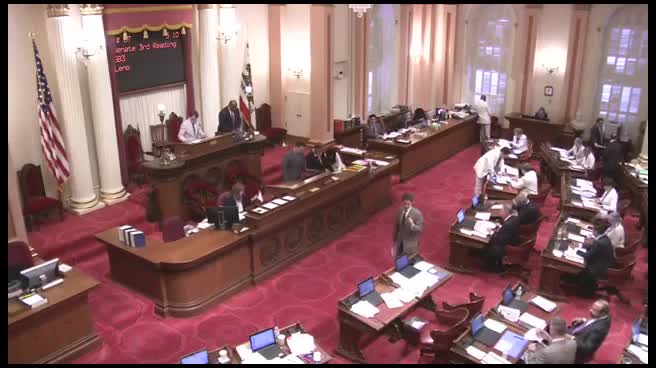
Bill Author

Bill Co-Author(s):