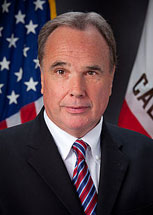
SB 736: Escrow agents.
- Session Year: 2015-2016
- House: Senate
- Latest Version Date: 2015-05-05
The Escrow Law requires the licensing of escrow agents by the Commissioner of Business Oversight, and further requires licensees to participate as members of the Escrow Agents Fidelity Corporation, a nonprofit corporation established to pay members for loss of trust fund obligations, as specified. The law requires a licensed escrow agent to maintain a bond based on the previous years average annual trust fund obligations, as specified.
This bill would authorize the commissioner to increase the minimum bond required of an escrow agent by up to 100% of its face value if the commissioner reasonably believes, based on an examination, that conservation or liquidation of that escrow agent may become necessary for the protection of the public. This bill would make findings and declarations regarding the role of Fidelity Corporation to support and enhance preservation of the publics trust in licensed escrow agents, and specify that Fidelity Corporation is required to indemnify a member escrow agent against loss is in accordance with the Escrow Law. This The bill would also state the intent of the Legislature for the commissioner to utilize the services of private 3rd parties parties, with prior escrow or escrow conservation, liquidation, or receivership experience, who are independent of the department to perform conservation, liquidation, and receiver functions, and would require the full amount of any penalty revenue, up to $125,000 at any one time, as specified, to be available for use by the commissioner to compensate a an appointed conservator, liquidator, or receiver. The bill would also authorize the commissioner to utilize all or a portion of the bond or other required obligations, and all or a portion of a licensees assets remaining following conservation, liquidation, or receivership to compensate an appointed conservator, liquidator, or receiver. By making this penalty revenue and other revenue available to the commissioner in this regard, this bill would make an appropriation.
The Escrow Law requires the licensing of escrow agents by the Commissioner of Business Oversight, and further requires licensees to participate as members of the Escrow Agents Fidelity Corporation, a nonprofit corporation established to pay members for loss of trust fund obligations, as specified. The law requires a licensed escrow agent to maintain a bond based on the previous years average annual trust fund obligations, as specified.
This bill would authorize the commissioner to increase the minimum bond required of an escrow agent by up to 100% of its face value if the commissioner reasonably believes, based on an examination, that conservation or liquidation of that escrow agent may become necessary for the protection of the public. This bill would make findings and declarations regarding the role of Fidelity Corporation to support and enhance preservation of the publics trust in licensed escrow agents, and specify that Fidelity Corporation is required to indemnify a member escrow agent against loss is accordance with the Escrow Law. This bill would also state the intent of the Legislature for the commissioner to utilize the services of 3rd parties who are independent of the department to perform conservation, liquidation, and receiver functions, and would require the full amount of any penalty revenue, as specified, to be available for use by the commissioner to compensate a conservator, liquidator, or receiver. By making this penalty revenue available to the commissioner in this regard, this bill would make an appropriation.
At the time of filing an application for an escrow agents license, the applicant shall deposit with the commissioner a bond satisfactory to the commissioner in the amount of at least twenty-five thousand dollars ($25,000). Thereafter, a licensee shall maintain a bond satisfactory to the commissioner in the amount of: (1) twenty-five thousand dollars ($25,000) if 150 percent of the previous years average annual trust fund obligations, as calculated under Section 17348, equals two hundred fifty thousand dollars ($250,000) or less; (2) thirty-five thousand dollars ($35,000) if 150 percent of the previous years average annual trust fund obligations, as calculated under Section 17348, equals at least two hundred fifty thousand one dollars ($250,001) but not more than five hundred thousand dollars ($500,000); or (3) fifty thousand dollars ($50,000) if 150 percent of the previous years average annual trust fund obligations, as calculated under Section 17348, equals five hundred thousand one dollars ($500,001) or more. The commissioner may increase the minimum bond required of an escrow agent by up to 100 percent of its face value if the commissioner reasonably believes, based on an examination conducted pursuant to Section 17405, that conservation or liquidation of that escrow agent may become necessary for the protection of the public. The bond shall run to the state for the use of the state and for any person who has cause against the obligor of the bond under the provision of this division. A deposit given instead of the bond required by this section shall not be deemed an asset of the applicant or licensee for the purpose of complying with Section 17210. An applicant or licensee may obtain an irrevocable letter of credit approved by the commissioner in lieu of the bond.
SEC. 2.SECTION 1.Section 17310 of the Financial Code is amended to read:17310.(a)The Legislature finds and declares that persons who entrust their money to escrow agents licensed under this division are entitled to full compensation for any loss of trust fund moneys they experience due to loss, theft, or misappropriation by a licensed escrow agent. It is the intent of the Legislature that Fidelity Corporation undertake its responsibilities under this division in a manner that supports and enhances preservation of the publics trust in licensed escrow agents.
(b)Fidelity Corporation shall indemnify a member within the State of California against loss, subject to the limitations set forth in this chapter.
(c)Fidelity Corporation shall not be liable for any consequential damages sustained by a member, or by any other person, nor for any punitive damages whatsoever.
(d)The indemnification shall be provided by any of the following:
(1)A fund established by Fidelity Corporation pursuant to Section 17320.
(2)A fidelity bond or insurance policy to be approved by the commissioner.
(3)A combination of paragraphs (1) and (2) subject, however, to the maximum coverage specified in subdivision (b) of Section 17314.
(e)Fidelity Corporation shall provide a copy to all of its members and the commissioner of the fidelity bond or insurance policy as it is acquired or renewed, and Fidelity Corporation shall promptly provide a copy to any member or successor in interest, upon request.
SEC. 2.Section 17630 of the Financial Code is amended to read:17630.(a)If any facts occur which that would entitle the commissioner under Section 17621 to take possession of the property, business business, and assets of a licensee licensee, the commissioner may appoint a conservator of a licensee and require of him such or her a bond as the commissioner deems proper. The commissioner may also, upon the request of the board of directors of a licensee, appoint a conservator of such the licensee and require of him such or her a bond as the commissioner deems proper. The conservator, under the direction of the commissioner, shall take possession of the property, business business, and assets of the licensee and take such the action as he or she may deem necessary to conserve the assets of such the licensee pending further disposition of its business. The conservator shall retain such the possession until the property, business business, and assets of the licensee are returned to the licensee or until further order of the commissioner.
(b)Whenever possible, the commissioner shall utilize the services of one or more qualified private individuals with prior escrow or escrow conservation experience to act as conservator.
SEC. 3.Section 17635 of the Financial Code is amended to read:17635.(a)If at any time after taking possession of the property and business of a licensee it shall appear to the commissioner that it would be futile to proceed as conservator with the conduct of the business of such the person he or she may apply to the superior court of the county in which is located the principal office of such the person in this State state for an order to liquidate and wind up the business of said that person. Upon a full hearing of such an application, the court may make an order directing the winding up and liquidation of the business of such the person by the commissioner, as liquidator.
(b)If the commissioner appoints a representative to act on his or her behalf as a liquidator, the commissioner shall, whenever possible, utilize the services of one or more qualified private individuals with prior escrow or escrow liquidation experience to act in this capacity.
SEC. 4.Section 17636 of the Financial Code is amended to read:17636.(a)Whenever the commissioner has taken possession of the property and business of a licensee he or she may petition the superior court for the appointment of a receiver to liquidate the affairs of the licensee.
(b)Whenever possible, the commissioner shall utilize the services of one or more qualified private individuals with prior escrow or escrow receivership experience to act as receiver.
SEC. 3.SEC. 5.Section 17665 is added to the Financial Code, to read:17665.(a)The Except as provided in subdivision (b), the full amount of any penalty revenue collected from persons who are found to have violated any provision of this division shall be available for use by the commissioner to compensate a conservator appointed pursuant to Section 17630, a liquidator appointed pursuant to Section 17635, or a receiver appointed pursuant to Section 17636.
(b)The maximum amount of penalty revenue available for use by the commissioner at any one time to compensate conservators, liquidators, or receivers shall not exceed one hundred twenty-five thousand dollars ($125,000). Any amounts above one hundred twenty-five thousand dollars ($125,000) shall revert to the General Fund.
(c)The commissioner may utilize all or a portion of the bond or other obligations required pursuant to Section 17202, and all or a portion of a licensees assets remaining following conservation, liquidation, or receivership to compensate conservators, liquidators, or receivers.
(b)
(d)It is the intent of the Legislature that the commissioner utilize the services of private third parties with prior escrow or escrow conservation, liquidation, or receivership experience, who are independent of the department to perform conservation, liquidation, and receiver functions, when whenever possible.
(a)At the time of filing an application for an escrow agents license, the applicant shall deposit with the commissioner a bond satisfactory to the commissioner in the amount of at least twenty-five thousand dollars ($25,000). Thereafter, a licensee shall maintain a bond satisfactory to the commissioner in the amount of: (1) twenty-five thousand dollars ($25,000) if 150 percent of the previous years average annual trust fund obligations, as calculated under Section 17348, equals two hundred fifty thousand dollars ($250,000) or less; (2) thirty-five thousand dollars ($35,000) if 150 percent of the previous years average annual trust fund obligations, as calculated under Section 17348, equals at least two hundred fifty thousand one dollars ($250,001) but not more than five hundred thousand dollars ($500,000); or (3) fifty thousand dollars ($50,000) if 150 percent of the previous years average annual trust fund obligations, as calculated under Section 17348, equals five hundred thousand one dollars ($500,001) or more. The commissioner may increase the minimum bond required of an escrow agent by up to 100 percent of its face value if the commissioner reasonably believes, based on an examination conducted pursuant to Section 17405, that conservation or liquidation of that escrow agent may become necessary for the protection of the public. The bond shall run to the state for the use of the state and for any person who has cause against the obligor of the bond under the provision of this division. A deposit given instead of the bond required by this section shall not be deemed an asset of the applicant or licensee for the purpose of complying with Section 17210. An applicant or licensee may obtain an irrevocable letter of credit approved by the commissioner in lieu of the bond.
(b)Escrow agents licensed prior to January 1, 1986, shall comply with the requirements of subdivision (a) on or before July 1, 1986.
SEC. 2.Section 17310 of the Financial Code is amended to read:17310.(a)It shall be the purpose of Fidelity The Legislature finds and declares that persons who entrust their money to escrow agents licensed under this division are entitled to full compensation for any loss of trust fund moneys they experience due to loss, theft, or misappropriation by a licensed escrow agent. It is the intent of the Legislature that Fidelity Corporation undertake its responsibilities under this division in a manner that supports and enhances preservation of the publics trust in licensed escrow agents.
(b)Fidelity Corporation to shall indemnify a member within the State of California against loss, subject to the limitations set forth in this chapter.
(b)
(c)Fidelity Corporation shall not be liable for any consequential damages sustained by a member, or by any other person, nor for any punitive damages whatsoever.
(c)
(d)The indemnification shall be provided by any of the following:
(1)A fund established by Fidelity Corporation pursuant to Section 17320.
(2)A fidelity bond or insurance policy to be approved by the commissioner.
(3)A combination of paragraphs (1) and (2) subject, however, to the maximum coverage specified in subdivision (b) of Section 17314.
(d)
(e)Fidelity Corporation shall provide a copy to all of its members and the commissioner of the fidelity bond or insurance policy as it is acquired or renewed, and Fidelity Corporation shall promptly provide a copy to any member or successor in interest, upon request.
SEC. 3.Section 17665 is added to the Financial Code, to read:17665.(a)The full amount of any penalty revenue collected from persons who are found to have violated any provision of this division shall be available for use by the commissioner to compensate a conservator appointed pursuant to Section 17630, a liquidator appointed pursuant to Section 17635, or a receiver pursuant to Section 17636.
(b)It is the intent of the Legislature that the commissioner utilize the services of third parties who are independent of the department to perform conservation, liquidation, and receiver functions, when possible.
|
Date
|
Status
|
|---|---|
| May 23, 2015 | Set for hearing May 28. |
| Aug 27, 2015 | August 27 hearing: Held in committee and under submission. |
| Jul 15, 2015 | July 15 set for first hearing. Placed on APPR. suspense file. |
| Jul 7, 2015 | From committee: Do pass and re-refer to Com. on APPR. (Ayes 11. Noes 0.) (July 6). Re-referred to Com. on APPR. |
| Jun 18, 2015 | Referred to Com. on B. & F. |
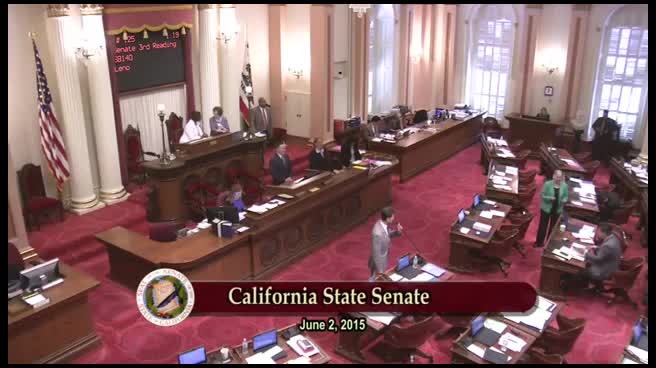
| Jun 2, 2015 | Read third time. Passed. (Ayes 40. Noes 0. Page 1248.) Ordered to the Assembly. |
| Jun 2, 2015 | In Assembly. Read first time. Held at Desk. |
| May 28, 2015 | Read second time. Ordered to third reading. |
| May 28, 2015 | From committee: Do pass. (Ayes 7. Noes 0.) (May 28). |
| May 28, 2015 | From committee: Do pass. (Ayes 7. Noes 0. Page 1159.) (May 28). |
| Feb 27, 2015 | Introduced. To Com. on RLS. for assignment. To print. |
| May 18, 2015 | May 18 hearing: Placed on APPR. suspense file. |
| May 8, 2015 | Set for hearing May 18. |
| May 5, 2015 | Read second time and amended. Re-referred to Com. on APPR. |
| May 4, 2015 | From committee: Do pass as amended and re-refer to Com. on APPR. (Ayes 6. Noes 0. Page 813.) (April 29). |
| Mar 24, 2015 | Set for hearing April 29. |
| Mar 19, 2015 | Referred to Com. on B. & F.I. |
| Mar 2, 2015 | Read first time. |
| Mar 2, 2015 | From printer. May be acted upon on or after April 1. |
|
Date
|
Description
|
Location
|
Votes
|
|
|---|---|---|---|---|
| Jul 6, 2015 | Do pass and be re-referred to the Committee on [Appropriations] | Assembly 1st Extraordinary Session on Finance |
Passed |
|
| Jun 2, 2015 | Senate 3rd Reading SB736 Vidak | Senate Floor |
Passed |
|
| May 28, 2015 | Do pass | Senate Standing Committee on Appropriations |
Passed |
|
| May 18, 2015 | Placed on suspense file | Senate Standing Committee on Appropriations |
Passed |
|
| Apr 29, 2015 | Do pass as amended, but first amend, and re-refer to the Committee on [Appropriations] | Senate Standing Committee on Banking and Financial Institutions |
Passed |
This list shows positions taken on this bill by organizations on the date displayed, which is linked to the original source.
Positions by individuals are not included.
Date of Hearing: July 15, 2015
ASSEMBLY COMMITTEE ON APPROPRIATIONS
Jimmy Gomez, Chair
SB 736
(Vidak) – As Amended May 5, 2015
Policy Committee: |
Banking and Finance |
Vote: |
11 - 0 |
Urgency: No State Mandated Local Program: No Reimbursable: No
SUMMARY:
This bill requires that, whenever possible, the Commissioner of the Department of Business Oversight (DBO) use the services of private individuals with prior escrow experience to act as conservator, receiver, or liquidator for instances in which the commissioner must take possession of the assets and business of an escrow agent following that agent's insolvency. The bill authorizes the commissioner to use all or a portion of the insolvent escrow agent's surety bond and assets following conversion, as well as redirect up to $125,000 in penalty revenue at any one time, to compensate private conservators, liquidators, and receivers.
FISCAL EFFECT:
Potential GF revenue decrease of up to $125,000 per event, from redirection of penalty revenue, additional GF cost to DBO if private conservator, liquidator, or receiver fees exceed $125,000 in a limited period.
The redirection of penalty revenue is unlikely to generate $125,000 in any given year as total penalty revenue has averaged approximately $48,000 annually during the last four fiscal years. Total costs for private conservators, liquidators, and receivers would very likely exceed $150,000 in a year if more than one escrow agent were to fail, or, if a single failed agency were place in receivership.
COMMENTS:
1) Purpose. According to the author, this bill is a response to a case in which a couple sold their home yet was unable to collect the profit from sale because their escrow agent failed. An employee of the DBO was appointed conservator for the failed escrow agent but the employee neglected to submit a proof of loss claim within the statutory deadline. As a result, the sellers were unable to collect the full value of their profit from sale.
2) Public v. Private Administration. DBO indicates there have been 20 cases of escrow agents conserved, liquidated, or placed into receivership during the past 10 years. Private individuals handled 15 of those cases, while DBO employees handled 5. However, escrow agent failures tend to group together as a result of broader market dynamics. DBO experienced multiple escrow agent failures in a single year twice in the past 5 years, with 4 agents failing in one of those years.
Unlike private conservators, DBO employees must continue to perform their regular duties as escrow examiners while also administering failed agents. DBO estimates average fees for private conservators are approximately $145,000, though these fees can be significantly higher if the failed escrow agency is placed in receivership. This bill is intended to provide additional resources to allow the commissioner to increase the use of private parties to carry out those duties, but the $125,000 in penalty revenue may not fully cover the cost of a single private conservator.
3) Escrow Insolvency. Existing law authorizes DBO to wind-down and liquidate failed escrow agents, petition the court to place agents in receivership, and appoint conservators in order to prevent the loss of escrow trust funds. Every licensed escrow agent is required to obtain a surety bond between $25,000 and $50,000 (depending on prior year trust obligations) to compensate DBO and its representatives in the event of insolvency; however such funds may be inadequate to fund the administration in certain cases.
Analysis Prepared by: Joel Tashjian / APPR. / (916) 319-2081
SB 736
Page 3
Date of Hearing: July 6, 2015
ASSEMBLY COMMITTEE ON BANKING AND FINANCE
Matthew Dababneh, Chair
SB 736
(Vidak) – As Amended May 5, 2015
SENATE VOTE: 40-0
SUBJECT: Escrow agents
SUMMARY: States that, whenever possible, the Commissioner of the Department of Business Oversight (commissioner) shall utilize the services of private individuals with prior escrow experience to act as conservator, receiver or liquidator in cases in which the Commissioner must take possession of the property and business of an escrow agent due to insolvent conditions of escrow law violations. Specifically, this bill:
Allows the Commissioner to redirect up to $125,000 in penalty revenue to compensate conservators, liquidators or receivers.
Provides authority for the Commissioner to utilize all or a portion of an escrow agents surety bond and any assets remaining following conservation, liquidation or receivership of that escrow agent to compensate the agent's conservator, liquidator or receiver.
Makes various technical changes.
EXISTING LAW:
Requires each escrow agent to maintain a surety bond equal to $25,000, $35,000, or $50,000, depending on the size of its prior year’s average annual trust fund obligations (Financial Code Section 17202).
Authorizes the commissioner to take possession of the property and business of an escrow agent, as specified, when it appears to the commissioner that an escrow agent is in an insolvent condition; is conducting escrow business in an unsafe or unauthorized manner; has violated its charter or any law of the State of California; refuses to submit its books, papers and affairs for inspection by an examiner; neglects or refuses to observe any order of the commissioner made pursuant to the Escrow Law or its regulations, as specified; or any officer, director, stockholder, trustee, or attorney of an escrow agent has embezzled, sequestered, or willfully diverted the assets or trust funds of such escrow agent, has permitted its tangible net worth to be lower than the minimum required by law, or has failed to comply with the bonding requirements of the Escrow Law (Financial Code Section 17621).
Establishes the Escrow Agents’ Fidelity Corporation (EAFC; Fidelity Corporation; Financial Code Section 17300), establishes the purpose of EAFC as indemnifying its members against loss, as specified (Financial Code Section 17310), and requires each licensed escrow agent to participate as a member in EAFC (Financial Code Section 17312). Requires EAFC to provide fidelity coverage to its members based on their monthly average escrow liability per licensed location. The minimum coverage that must be provided by EAFC for each licensed location is $1,000,000, and the maximum coverage for each licensed location is $5,000,000 (Financial Code Section 17314).
Provides that the General Fund consists of money received into the Treasury and not required by law to be credited to any other fund (Government Code Section 16300). Because of this rule, penalty revenue collected by the Department of Business Oversight (DBO) and other state departments and agencies reverts to the General Fund, if not otherwise redirected to a specific use.
FISCAL EFFECT: According to the Senate Appropriations Committee, redirection of penalty revenue up to $125,000 annually.
COMMENTS:
Existing law specifies the procedures required to respond to the failure of an escrow agent in order to prevent the loss of escrow trust funds. These authorities allow:
DBO to wind-down and liquidate a failed escrow company.
DBO to petition a court to place a filed escrow company into receivership.
DBO to appoint a conservator, liquidator, or receiver.
In addition to the authorities mentioned above, the Escrow Law requires that every licensed company must obtain a surety bond to ensure that DBO and its representatives are compensated in the event the company is placed into conservatorship or receivership. Finally, every company licensed under the Escrow Law must obtain a fidelity bond that provides insurance against theft of trust funds.
SB
736 is a response to a problem that was brought to the Legislature’s
attention during the fall of 2014, when a real estate broker
contacted several legislative offices, expressing great
dissatisfaction with the way in which DBO and EAFC had handled a
matter involving two of his former real estate clients. The real
estate broker's clients were an older couple that placed their home
on the market in October of 2010 and entered into a sales agreement
that would have netted them $154,000 in profit – money they planned
to use in their retirement. Unbeknownst to the broker or his
clients, the company selected to handle the real estate escrow by the
purchaser of his clients’ home was about to fail, and the owners of
that company were about to flee the country with an unknown amount of
client money. The first indication that the clients had that
anything was amiss was when the check for $154,000 that they had
received from First Southwestern Escrow (FSE) bounced due to
insufficient funds in the escrow company’s account.
Unfortunately, EAFC rejected the claim claiming that the
conservator appointed by DBO failed to submit the proof of loss claim
within the statutorily prescribed deadline. DBO prepared to appeal
the rejection, believing that its submission was timely, but
ultimately opted to settle with EAFC in lieu of challenging the
rejected claim before an administrative law judge. The settlement
netted those with claims against the roughly $700,000 in trust funds
with which FSE’s owners absconded, $0.41 on the dollar.
After
selling their home in October of 2010, the real estate broker's
clients received their 41% payout in October of 2014. Although a
criminal case alleging 11 felony counts against FSE’s principals
was opened in the matter by the Alameda County Real Estate Fraud Unit
within the Alameda County District Attorney’s Office, prosecution
of FSE’s owners will be impossible, unless those individuals can be
compelled to return to the United States to face the charges against
them.
Private conservators/liquidators/receivers
Private conservators/liquidators/receivers do not have to juggle multiple jobs when serving in that capacity (DBO employees appointed as conservator/liquidator/receiver have to continue to do their regular DBO jobs as escrow examiners while also acting as conservators/liquidators/receivers); private conservators/liquidators/receivers may have specialized expertise in winding down failed entities; and money paid out by EAFC to private conservators/liquidators/receivers can be paid out to claimants far faster than it can if a DBO employee is appointed as conservator/liquidator/receiver (a function of State Administrative Manual rules which apply to the payment of money by state departments and agencies to private individuals).
On the basis of information provided by DBO, there were 20 instances during the past 10 years in which an escrow agent was conserved, liquidated, or placed into receivership. Private individuals handled 15 of those cases; DBO employees handled five. By increasing the amount that can be paid to private conservators/liquidators/receivers may lead to an increase in the use of private parties carrying out these duties rather than DBO employees.
The items contained within SB 736 would add efficiency to the process of handling failed escrow companies, but it is unclear whether these changes would have changed the outcome in the FSE case.
Prior Legislation
AB 1679 (Harkey, 2014) would have eliminated the commissioner’s ability to rule on an appeal of an EAFC claim denial filed by a successor in interest following a conservation or liquidation proceeding involving a failed escrow agent, when a DBO employee acted as that successor in interest.
REGISTERED SUPPORT / OPPOSITION:
Support
None on file.
Opposition
None on file.
Analysis Prepared by: Mark Farouk / B. & F. / (916) 319-3081
SB 736
Page 7
|
Office of Senate Floor Analyses (916) 651-1520 Fax: (916) 327-4478 |
THIRD READING
Bill No: SB 736
Author: Vidak (R) and Block (D), et al.
Amended: 5/5/15
SENATE BANKING & F.I. COMMITTEE: 6-0, 4/29/15
AYES: Block, Galgiani, Hall, Hueso, Lara, Morrell
NO VOTE RECORDED: Vidak
SENATE APPROPRIATIONS COMMITTEE: 7-0, 5/28/15
AYES: Lara, Bates, Beall, Hill, Leyva, Mendoza, Nielsen
DIGEST: This bill directs Escrow Law penalty revenue to the Commissioner of Business Oversight (commissioner) for use in compensating persons appointed to act as conservators, liquidators, or receivers of failed Escrow Law licensees (escrow agents) and clarifies additional sources of revenue that can be used by the commissioner for this purpose.
Existing law:
Requires each escrow agent to maintain a surety bond equal to $25,000, $35,000, or $50,000, depending on the size of its prior year’s average annual trust fund obligations (Financial Code Section 17202).
Authorizes the commissioner to take possession of the property and business of an escrow agent, as specified, when it appears to the commissioner that an escrow agent is in an insolvent condition; is conducting escrow business in an unsafe or unauthorized manner; has violated its charter or any law of the State of California; refuses to submit its books, papers and affairs for inspection by an examiner; neglects or refuses to observe any order of the commissioner made pursuant to the Escrow Law or its regulations, as specified; or any officer, director, stockholder, trustee, or attorney of an escrow agent has embezzled, sequestered, or willfully diverted the assets or trust funds of such escrow agent, has permitted its tangible net worth to be lower than the minimum required by law, or has failed to comply with the bonding requirements of the Escrow Law (Financial Code Section 17621).
Establishes the Escrow Agents’ Fidelity Corporation (EAFC; Fidelity Corporation; Financial Code Section 17300), establishes the purpose of EAFC as indemnifying its members against loss, as specified (Financial Code Section 17310), and requires each licensed escrow agent to participate as a member in EAFC (Financial Code Section 17312). Requires EAFC to provide fidelity coverage to its members based on their monthly average escrow liability per licensed location. The minimum coverage that must be provided by EAFC for each licensed location is $1,000,000, and the maximum coverage for each licensed location is $5,000,000 (Financial Code Section 17314).
Provides that the General Fund consists of money received into the Treasury and not required by law to be credited to any other fund (Government Code Section 16300). Because of this rule, penalty revenue collected by the Department of Business Oversight (DBO) and other state departments and agencies reverts to the General Fund, if not otherwise redirected to a specific use.
This bill:
States the intent of the Legislature that Fidelity Corporation undertake its responsibilities in a manner that supports and enhances trust in licensed escrow agents.
States that, whenever possible, the commissioner shall utilize the services of one or more qualified private individuals with relevant prior experience, as specified, to act as conservator, liquidator, or receiver of a failed escrow agent.
Allocates Escrow Law penalty revenue to the commissioner to compensate conservators, liquidators, or receivers of failed escrow agents, caps the maximum amount of penalty revenue available at any one time for this purpose at $125,000, and allocates any penalty revenue above this amount to the General Fund.
Clarifies that the commissioner may use all or a portion of an escrow agent’s surety bond and any assets remaining following conservation, liquidation, or receivership of that escrow agent to compensate the agent’s conservator, liquidator, or receiver.
Background
SB
736 is a response to a problem that was brought to the Legislature’s
attention during the fall of 2014, when a real estate broker named
David Lawrence contacted several legislative offices, expressing
great dissatisfaction with the way in which DBO and EAFC had handled
a matter involving two of his former real estate clients. Mr.
Lawrence’s clients were an older couple that placed their home on
the market in October of 2010 and entered into a sales agreement that
would have netted them $154,000 in profit – money they planned to
use in their retirement. Unbeknownst to Mr. Lawrence or his clients,
the company selected to handle the real estate escrow by the
purchaser of his clients’ home was about to fail, and the owners of
that company were about to flee the country with an unknown amount of
client money. The first indication Mr. Lawrence’s clients had that
anything was amiss was when the check for $154,000 that they had
received from First Southwestern Escrow (FSE) bounced due to
insufficient funds in the escrow company’s account.
Existing
California law contains a number of provisions, which are intended to
help prevent the loss of escrow trust funds following the failure of
an escrow agent. Among these provisions: authority for DBO to
conserve (wind down) and liquidate a failed escrow company; authority
for DBO to petition a court to place a failed escrow company into
receivership; authority for DBO to appoint a conservator, liquidator,
or receiver; a requirement that every company licensed under the
Escrow Law obtain a surety bond, to ensure that money is available
with which to compensate DBO and its conservator/liquidator/receiver
in the event the commissioner must place an escrow company into
conservatorship or receivership; a requirement that every company
licensed under the Escrow Law obtain a fidelity bond, to provide
insurance against theft of trust funds; and language establishing
EAFC, a private entity created by the Legislature to serve as the
fidelity insurer for escrow agents.
Unfortunately, all
of these protections failed to work as designed in the FSE case. The
conservator appointed by DBO (a DBO employee who worked as an
examiner within the Escrow Law program) failed to submit a proof of
loss claim to EAFC within the statutorily prescribed deadline for
submitting such claims. EAFC rejected the claim. DBO prepared to
appeal the rejection, believing that its submission was timely, but
ultimately opted to settle with EAFC in lieu of challenging the
rejected claim before an administrative law judge. The settlement
netted Mr. Lawrence’s clients, and all others with claims against
the roughly $700,000 in trust funds with which FSE’s owners
absconded, $0.41 on the dollar. To add insult to injury, not only
did the claimants receive less than half of the money they lost, but
they had to wait nearly a year to receive their payouts after the
settlement, due to rules which must be followed when a state
department or agency (in this case DBO) makes payments to private
individuals.
After selling their home in October of
2010, Mr. Lawrence’s clients received their 41% payout in October
of 2014. Although a criminal case alleging 11 felony counts against
FSE’s principals was opened in the matter by the Alameda County
Real Estate Fraud Unit within the Alameda County District Attorney’s
Office, prosecution of FSE’s owners will be impossible, unless
those individuals can be compelled to return to the United States to
face the charges against them.
Comments
Although
DBO and EAFC disagree on a great many things involved in the FSE
case, they do agree on one key point: namely that the conservation,
liquidation, and receivership process works more smoothly if a
private individual is appointed as conservator, liquidator, or
receiver, rather than a DBO employee. Private
conservators/liquidators/receivers do not have to juggle multiple
jobs when serving in that capacity (DBO employees appointed as
conservator/liquidator/receiver have to continue to do their regular
DBO jobs as escrow examiners while also acting as
conservators/liquidators/receivers); private
conservators/liquidators/receivers may have specialized expertise in
winding down failed entities; and money paid out by EAFC to private
conservators/liquidators/receivers can be paid out to claimants far
faster than it can if a DBO employee is appointed as
conservator/liquidator/receiver (a function of State Administrative
Manual rules which apply to the payment of money by state departments
and agencies to private individuals).
According to DBO
staff, the commissioner always tries to hire a private
conservator/receiver for failed escrow agents when possible.
However, if there are insufficient funds available with which to
compensate a qualified private individual, the commissioner appoints
one of her own employees to perform this function. As a matter of
practice (though not as a matter of statute), money to compensate
conservators, liquidators, and receivers comes from the surety bonds
that escrow agents must maintain, as well as from any money remaining
in the escrow company after all creditors and claimants have been
paid. Sometimes the sum of these amounts is insufficient to
attract a qualified private individual to take a case.
This
bill codifies the existing practice of using surety bond revenue and
any money remaining in an escrow agent’s business after all
creditors and claimants have been paid to compensate
conservators/liquidators/receivers. It also increases the amount of
money available to the commissioner to compensate private
conservators/liquidators/receivers by authorizing the commissioner to
utilize penalty revenue collected from escrow agents that have
violated the law for the purpose of hiring private
conservators/liquidators/receivers.
On
the basis of information provided by DBO, there were 20 instances
during the past 10 years in which an escrow agent was conserved,
liquidated, or placed into receivership. Private individuals handled
15 of those cases; DBO employees handled five.
Calendar Year |
Number of Conservatorships, Liquidations, and Receiverships (Private Individual/DBO Employee) |
2005 |
0 (0/0) |
2006 |
0 (0/0) |
2007 |
2 (1/1) |
2008 |
1 (1/0) |
2009 |
4 (2/2) |
2010 |
3 (2/1) |
2011 |
4 (4/0) |
2012 |
2 (2/0) |
2013 |
3 (2/1) |
2014 |
1 (1/0) |
Revenue
obtained from escrow-related penalties is quite variable, as shown
below. However, it appears that if penalty revenue had been
available for use by the commissioner to compensate private
conservators/liquidators/receivers in the five instances where DBO
employees were used in lieu of private individuals, an additional
$444,000 would have been available to the commissioner with which to
attract qualified private individuals to perform the conservation,
liquidation, or receivership activities (approximately $90,000 per
case).
Fiscal Year |
Escrow Penalties Collected |
2008-09 |
$133,311 |
2009-10 |
$119,386 |
2010-11 |
$ 67,523 |
2011-12 |
$ 99,863 |
2012-13 |
$ 5,731 |
2013-14 |
$ 17,943 |
Total |
$443,757 |
Prior Legislation
AB
1679 (Harkey, 2014) would have eliminated the commissioner’s
ability to rule on an appeal of an EAFC claim denial filed by a
successor in interest following a conservation or liquidation
proceeding involving a failed escrow agent, when a DBO employee acted
as that successor in interest.
FISCAL EFFECT: Appropriation: Yes Fiscal Com.: Yes Local: No
According to the Senate Appropriations Committee:
Redirection of penalty revenue up to $125,000 annually (General)
SB 736 allows DBO to use up to $125,000 of penalty revenue that would otherwise be deposited into the General Fund. This redirection will unlikely be as high as $125,000 each year because the penalty revenue varies greatly every year and has ranged between $5,731 and $133,311 during the last six fiscal years. The intent is to create a reserve of $125,000 that can be used in years when the DBO needs to compensate a conservator, liquidator, or receiver. Additionally, SB 736 authorizes the commissioner to use all or a portion of an escrow agents bond and assets to compensate conservators, liquidators, or receivers. This bill does not cap the amount of money that can be used from this source.
None received
OPPOSITION: (Verified 5/26/15)
None received
Prepared by: Eileen Newhall / B. & F.I. / (916) 651-4102
5/28/15 14:16:51
**** END ****
SB 736 (Vidak) Page 3 of 3
SENATE COMMITTEE ON APPROPRIATIONS
Senator Ricardo Lara, Chair
2015 - 2016 Regular Session
SB 736 (Vidak) - Escrow agents
|
|
Version: May 5, 2015 |
Policy Vote: B. & F.I. 6 - 0 |
Urgency: No |
Mandate: No |
Hearing Date: May 28, 2015 |
Consultant: Maureen Ortiz |
SUSPENSE FILE.
Bill Summary:
SB 736 provides the Department of Business Oversight (DBO) with two forms of revenue to hire conservators, liquidators, or receivers in cases of a failed escrow agent.
Fiscal Impact:
Redirection of penalty revenue up to $125,000 annually (General)
SB 736 will allow the department to use up to $125,000 of penalty revenue that would otherwise be deposited into the General Fund. This redirection will unlikely be as high as $125,000 each year because the penalty revenue varies greatly every year and has ranged between $5,731 and $133,311 during the last six fiscal years. The intent is to create a reserve of $125,000 that can be used in years when the DBO needs to compensate a conservator, liquidator, or receiver. Additionally, SB 736 authorizes the commissioner to use all or a portion of an escrow agents bond and assets to compensate conservators, liquidators, or receivers. The bill does not cap the amount of money that can be used from this source.
Background:
The Escrow Law is administered by the Department of Business Oversight, and requires each licensee to maintain a surety bond equal to $25,000, $35,000, or $50,000 depending on the size of its prior year’s average annual trust fund obligations. The bond must be taken out in the name of the state and be available for use by the state or any person who has cause against the licensee.
Current law authorizes the commissioner to take possession of the
property and business of an escrow agent, as specified, when it
appears to the commissioner that an escrow agent is in an insolvent
condition; is conducting escrow business in an unsafe or unauthorized
manner; has violated its charter or any law of the State of
California; refuses to submit its books, papers and affairs for
inspection by an examiner; neglects or refuses to observe any order
of the commissioner made pursuant to the Escrow Law or its
regulations, as specified; or any officer, director, stockholder,
trustee, or attorney of an escrow agent has embezzled, sequestered,
or willfully diverted the assets or trust funds of such escrow agent,
has permitted its tangible net worth to be lower than the minimum
required by law, or has failed to comply with the bonding
requirements of the Escrow Law.
Additionally,
escrow agents are required to maintain a tangible net worth of at
least fifty thousand dollars ($50,000), including liquid assets of at
least twenty-five thousand dollars ($25,000) in excess of current
liabilities.
Existing law establishes the Escrow Agents’ Fidelity Corporation (EAFC) for the purpose of indemnifying its members against loss, and requires each person licensed as an escrow agent to participate as a member in Fidelity Corporation. The EAFC provides fidelity coverage to its members based on their monthly average escrow liability per licensed location of between $1 million and $5 million.
Proposed Law: SB 736 does the following:
Authorizes the commissioner to redirect up to $125,000 in penalty revenue to use to compensate conservators, liquidators, or receivers.
Authorizes the commissioner to use all or a portion of a licensee’s bond or other assets that remain following conservation, liquidation, or receivership to compensate conservators, liquidators, or receivers.
Provides that the commissioner, whenever possible, shall utilize the services of one or more qualified private individuals with prior escrow or escrow liquidation experience when appointing a representative to act on his or her behalf as a conservator, liquidator, or receiver.
Staff Comments:
SB 736 authorizes the Department of Business Oversight Commissioner to use up to $125,000 of penalty revenue that would otherwise be deposited into the state’s General Fund for the purpose of compensating a conservator, a liquidator, or a receiver to liquidate the assets of a failed escrow agent.
Additionally, SB 736 authorizes the commissioner to use all or a portion of the bond or a portion of the licensee’s assets that remain after conservation, liquidation, or receivership to compensate conservators, liquidators, or receivers.
Existing
California law contains a number of provisions which are intended to
help prevent the loss of escrow trust funds following the failure of
an Escrow Law licensee. Among these provisions: authority for DBO
to conserve (wind down) and liquidate a failed escrow company;
authority for DBO to petition a court to place a failed escrow
company into receivership; authority for DBO to appoint a
conservator, liquidator, or receiver; a requirement that every
company licensed under the Escrow Law obtain a surety bond, to ensure
that money is available with which to compensate DBO and its
conservator/liquidator/receiver in the event it must place an escrow
company into conservatorship or receivership; a requirement that
every company licensed under the Escrow Law obtain a fidelity bond,
to provide insurance against theft of trust funds; and language
creating and establishing the rules EAFC, a private entity created by
the Legislature, which serves as the fidelity insurer for Escrow Law
licensees.
During the last ten years, there have been between 0-4 conservatorships and receiverships each year, while penalties collected have been as follows:
Fiscal Year |
Escrow Penalties Collected |
2008-09 |
$133,311 |
2009-10 |
$119,386 |
2010-11 |
$ 67,523 |
2011-12 |
$ 99,863 |
2012-13 |
$ 5,731 |
2013-14 |
$ 17,943 |
Total |
$443,757 |
The author’s intent is that the revenue each year will be redirected from the General Fund and deposited into the Escrow Agents account until the total amount collected is no more than $125,000. At that time, any penalty revenue will go to the state’s General Fund.
Under existing law, escrow agents buy a surety bond in amounts of $25,000, $35,000 or $50,000. The bond is taken out in the name of the state and can be used for actions against the licensee. SB 736 will authorize the surety bond money and other assets to be used to compensate conservators, liquidators, or receivers.
Recommended Amendments:
Staff recommends placing the Legislative Intent from Sections 17310 (a) and 17665 (d) into an uncodified section of SB 736 in order to provide code clarity and consistency.
-- END --
SB 736 (Vidak) Page 3 of 3
SENATE COMMITTEE ON APPROPRIATIONS
Senator Ricardo Lara, Chair
2015 - 2016 Regular Session
SB 736 (Vidak) - Escrow agents
|
|
Version: May 5, 2015 |
Policy Vote: B. & F.I. 6 - 0 |
Urgency: No |
Mandate: No |
Hearing Date: May 18, 2015 |
Consultant: Maureen Ortiz |
This bill meets the criteria for referral to the Suspense File.
Bill Summary:
SB 736 provides the Department of Business Oversight (DBO) with two forms of revenue to hire conservators, liquidators, or receivers in cases of a failed escrow agent.
Fiscal Impact:
Redirection of penalty revenue up to $125,000 annually (General)
SB 736 will allow the department to use up to $125,000 of penalty revenue that would otherwise be deposited into the General Fund. This redirection will unlikely be as high as $125,000 each year because the penalty revenue varies greatly every year and has ranged between $5,731 and $133,311 during the last six fiscal years. The intent is to create a reserve of $125,000 that can be used in years when the DBO needs to compensate a conservator, liquidator, or receiver. Additionally, SB 736 authorizes the commissioner to use all or a portion of an escrow agents bond and assets to compensate conservators, liquidators, or receivers. The bill does not cap the amount of money that can be used from this source.
Background:
The Escrow Law is administered by the Department of Business Oversight, and requires each licensee to maintain a surety bond equal to $25,000, $35,000, or $50,000 depending on the size of its prior year’s average annual trust fund obligations. The bond must be taken out in the name of the state and be available for use by the state or any person who has cause against the licensee.
Current law authorizes the commissioner to take possession of the
property and business of an escrow agent, as specified, when it
appears to the commissioner that an escrow agent is in an insolvent
condition; is conducting escrow business in an unsafe or unauthorized
manner; has violated its charter or any law of the State of
California; refuses to submit its books, papers and affairs for
inspection by an examiner; neglects or refuses to observe any order
of the commissioner made pursuant to the Escrow Law or its
regulations, as specified; or any officer, director, stockholder,
trustee, or attorney of an escrow agent has embezzled, sequestered,
or willfully diverted the assets or trust funds of such escrow agent,
has permitted its tangible net worth to be lower than the minimum
required by law, or has failed to comply with the bonding
requirements of the Escrow Law.
Additionally,
escrow agents are required to maintain a tangible net worth of at
least fifty thousand dollars ($50,000), including liquid assets of at
least twenty-five thousand dollars ($25,000) in excess of current
liabilities.
Existing law establishes the Escrow Agents’ Fidelity Corporation (EAFC) for the purpose of indemnifying its members against loss, and requires each person licensed as an escrow agent to participate as a member in Fidelity Corporation. The EAFC provides fidelity coverage to its members based on their monthly average escrow liability per licensed location of between $1 million and $5 million.
Proposed Law: SB 736 does the following:
Authorizes the commissioner to redirect up to $125,000 in penalty revenue to use to compensate conservators, liquidators, or receivers.
Authorizes the commissioner to use all or a portion of a licensee’s bond or other assets that remain following conservation, liquidation, or receivership to compensate conservators, liquidators, or receivers.
Provides that the commissioner, whenever possible, shall utilize the services of one or more qualified private individuals with prior escrow or escrow liquidation experience when appointing a representative to act on his or her behalf as a conservator, liquidator, or receiver.
Staff Comments:
SB 736 authorizes the Department of Business Oversight Commissioner to use up to $125,000 of penalty revenue that would otherwise be deposited into the state’s General Fund for the purpose of compensating a conservator, a liquidator, or a receiver to liquidate the assets of a failed escrow agent.
Additionally, SB 736 authorizes the commissioner to use all or a portion of the bond or a portion of the licensee’s assets that remain after conservation, liquidation, or receivership to compensate conservators, liquidators, or receivers.
Existing
California law contains a number of provisions which are intended to
help prevent the loss of escrow trust funds following the failure of
an Escrow Law licensee. Among these provisions: authority for DBO
to conserve (wind down) and liquidate a failed escrow company;
authority for DBO to petition a court to place a failed escrow
company into receivership; authority for DBO to appoint a
conservator, liquidator, or receiver; a requirement that every
company licensed under the Escrow Law obtain a surety bond, to ensure
that money is available with which to compensate DBO and its
conservator/liquidator/receiver in the event it must place an escrow
company into conservatorship or receivership; a requirement that
every company licensed under the Escrow Law obtain a fidelity bond,
to provide insurance against theft of trust funds; and language
creating and establishing the rules EAFC, a private entity created by
the Legislature, which serves as the fidelity insurer for Escrow Law
licensees.
During the last ten years, there have been between 0-4 conservatorships and receiverships each year, while penalties collected have been as follows:
Fiscal Year |
Escrow Penalties Collected |
2008-09 |
$133,311 |
2009-10 |
$119,386 |
2010-11 |
$ 67,523 |
2011-12 |
$ 99,863 |
2012-13 |
$ 5,731 |
2013-14 |
$ 17,943 |
Total |
$443,757 |
The author’s intent is that the revenue each year will be redirected from the General Fund and deposited into the Escrow Agents account until the total amount collected is no more than $125,000. At that time, any penalty revenue will go to the state’s General Fund.
Under existing law, escrow agents buy a surety bond in amounts of $25,000, $35,000 or $50,000. The bond is taken out in the name of the state and can be used for actions against the licensee. SB 736 will authorize the surety bond money and other assets to be used to compensate conservators, liquidators, or receivers.
Recommended Amendments:
Staff recommends placing the Legislative Intent from Sections 17310 (a) and 17665 (d) into an uncodified section of SB 736 in order to provide code clarity and consistency.
-- END --
SB 736 (Vidak) Page 8 of 8
SENATE COMMITTEE ON
BANKING AND FINANCIAL INSTITUTIONS
Senator Marty Block, Chair
2015 - 2016 Regular
Bill No: SB 736 Hearing Date: April 29, 2015
Author: |
Vidak |
||
Version: |
February 27, 2015 |
||
Urgency: |
No |
Fiscal: |
Yes |
Consultant: |
Eileen Newhall |
||
Subject: Escrow agents: loss of trust fund obligations
SUMMARY
Provides two additional sources of money for use by the Commissioner of Business Oversight to hire private individuals to conserve or liquidate failed escrow agents or act as receivers for failed escrow agents placed into receivership, and adds a statement of Legislative intent to the section of California law that establishes the Escrow Agents’ Fidelity Corporation.
DESCRIPTION
States the intent of the Legislature that:
Persons who entrust their money to escrow agents licensed by the Department of Business Oversight (DBO) are entitled to full compensation for any loss of trust fund moneys they experience due to loss, theft, or misappropriation by a licensed escrow agent; and
Escrow Agents’ Fidelity Corporation (EAFC) undertake its responsibilities under the California Escrow Law in a manner that supports and enhances preservation of the public’s trust in licensed escrow agents.
Authorizes the Commissioner of Business Oversight (commissioner) to increase the minimum bond required of an escrow agent by up to 100 percent of its face value, if the commissioner reasonably believes, based on an examination of that escrow agent, that conservation or liquidation of that agent may become necessary for the protection of the public.
Makes the full amount of any penalty revenue collected by DBO from persons who are found to have violated the Escrow Law available to the commissioner to compensate a person hired to conserve or liquidate a failed escrow agent or act as a receiver for a failed escrow agent placed into receivership.
EXISTING LAW
Provides for the Escrow Law (Financial Code Section 17000 et seq.), administered by DBO.
Requires each Escrow Law licensee (i.e., escrow agent) to maintain a surety bond equal to $25,000, $35,000, or $50,000, depending on the size of its prior year’s average annual trust fund obligations. The surety bond must be taken out in the name of the state and be available for use by the state or any person who has cause against the licensee. Licensees are authorized to obtain an irrevocable letter of credit or place a deposit with DBO in lieu of obtaining a bond (Section 17202).
Authorizes the commissioner to take possession of the property and business of an escrow agent, as specified, when it appears to the commissioner that an escrow agent is in an insolvent condition; is conducting escrow business in an unsafe or unauthorized manner; has violated its charter or any law of the State of California; refuses to submit its books, papers and affairs for inspection by an examiner; neglects or refuses to observe any order of the commissioner made pursuant to the Escrow Law or its regulations, as specified; or any officer, director, stockholder, trustee, or attorney of an escrow agent has embezzled, sequestered, or willfully diverted the assets or trust funds of such escrow agent, has permitted its tangible net worth to be lower than the minimum required by law, or has failed to comply with the bonding requirements of the Escrow Law (Section 17621).
Requires escrow agents to maintain a tangible net worth of at least fifty thousand dollars ($50,000), including liquid assets of at least twenty-five thousand dollars ($25,000) in excess of current liabilities (Section 17210).
Establishes the Escrow Agents’ Fidelity Corporation (EAFC; Fidelity Corporation; Section 17300), establishes the purpose of EAFC as indemnifying its members against loss, as specified (Section 17310), and requires each person licensed as an escrow agent to participate as a member in Fidelity Corporation (Section 17312). Requires EAFC to provide fidelity coverage to its members based on their monthly average escrow liability per licensed location. The minimum coverage that must be provided by EAFC for each licensed location is $1,000,000, and the maximum coverage for each licensed location is $5,000,000 (Section 17314).
Provides that the General Fund consists of money received into the Treasury and not required by law to be credited to any other fund (Government Code Section 16300). Because of this rule, penalty revenue collected by DBO and other state departments and agencies reverts to the General Fund, if not otherwise redirected to a specific use.
COMMENTS
Purpose: SB 736 is sponsored by its joint authors to improve the outcomes for individuals who unknowingly place their trust and money with DBO-regulated escrow companies that ultimately fail. Two of this bill’s changes are intended to increase the likelihood that DBO can afford to hire private individuals as conservators, liquidators, and receivers of failed escrow companies, rather than having to rely on its own employees to perform these functions. The third change clarifies the role of EAFC, the entity which was created by the Legislature to ensure that escrowed trust fund monies are insured against theft or loss due to malfeasance.
Background: SB 736 is a response to a problem that was brought to the Legislature’s attention during the fall of 2014, when a real estate broker named David Lawrence contacted several legislative offices, expressing great dissatisfaction with the way in which DBO and EAFC had handled a matter involving two of his former real estate clients. Mr. Lawrence’s clients were an older couple that placed their home on the market in October of 2010 and entered into a sales agreement that would have netted them $154,000 in profit – money they planned to use in their retirement. Unbeknownst to Mr. Lawrence or his clients, the company selected to handle the real estate escrow by the purchaser of his clients’ home was about to fail, and the owners of that company were about to flee the country with an unknown amount of client money. The first indication Mr. Lawrence’s clients had that anything was amiss was when the check for $154,000 that they had received from First Southwestern Escrow (FSE) bounced due to insufficient funds in the escrow company’s account.
Existing California law contains a number of provisions, which are intended to help prevent the loss of escrow trust funds following the failure of an Escrow Law licensee. Among these provisions: authority for DBO to conserve (wind down) and liquidate a failed escrow company; authority for DBO to petition a court to place a failed escrow company into receivership; authority for DBO to appoint a conservator, liquidator, or receiver; a requirement that every company licensed under the Escrow Law obtain a surety bond, to ensure that money is available with which to compensate DBO and its conservator/liquidator/receiver in the event it must place an escrow company into conservatorship or receivership; a requirement that every company licensed under the Escrow Law obtain a fidelity bond, to provide insurance against theft of trust funds; and language creating and establishing the rules EAFC, a private entity created by the Legislature, which serves as the fidelity insurer for Escrow Law licensees.
Unfortunately, all of these protections failed to work as designed in the FSE case. The conservator appointed by DBO (a DBO employee who worked as an examiner within the Escrow Law program) failed to submit a proof of loss claim to EAFC within the statutorily prescribed deadline for submitting such claims. EAFC rejected the claim. DBO prepared to appeal the rejection, believing that its submission was timely, but ultimately opted to settle with EAFC in lieu of challenging the rejected claim before an administrative law judge. The settlement netted Mr. Lawrence’s clients, and all others with claims against the roughly $700,000 in trust funds with which FSE’s owners absconded, $0.41 on the dollar. To add insult to injury, not only did the claimants receive less than half of the money they lost, but they had to wait nearly a year to receive their payouts after the settlement, due to rules which must be followed when a state department or agency (in this case DBO) makes payments to private individuals.
After selling their home in October of 2010, Mr. Lawrence’s clients received their 41% payout in October of 2014. Although a criminal case alleging eleven felony counts against FSE’s principals was opened in the matter by the Alameda County Real Estate Fraud Unit within the Alameda County District Attorney’s Office, prosecution of FSE’s owners will be impossible, unless those individuals can be compelled to return to the United States to face the charges against them.
When contacted by legislative offices, both DBO and EAFC insisted that they had each followed the law in the FSE case, and explained away the FSE case as a one-time event that was unlikely to re-occur. Both entities also suggested that existing law was sufficient to protect individuals who place their money with Escrow Law licensees. This bill is premised on the assertion that existing law is insufficient to protect individuals who place their trust and money with Escrow Law licensees. If existing law was followed in the FSE case, yet several hundred thousand dollars of stolen escrow trust funds were never returned to their rightful owners, this bill’s authors assert that existing law requires change.
Areas of Agreement: Much of the fault in the FSE case traces back to lack of effective communication between DBO and EAFC and a general lack of agreement over the procedures that must be followed when filing a proof of loss claim. Although both organizations disagree on a great many things involved in the FSE case, they do agree on one key point: namely that the conservation and receivership process works more smoothly if a private individual is appointed as conservator or receiver, rather than a DBO employee.
Private conservators/receivers do not have to juggle multiple jobs when serving as conservator/receiver (DBO employees appointed as conservator/receiver have to continue to do their regular DBO jobs as escrow examiners while also acting as conservators/receivers); private conservators/receivers may have specialized expertise in winding down failed entities; and money paid out by EAFC to private conservators/receivers can be paid out to claimants far faster than it can if a DBO employee is appointed as conservator/receiver (a function of State Administrative Manual rules which apply to the payment of money by state departments and agencies to private individuals).
DBO staff has informed Committee staff that the Department always tries to hire a private conservator/receiver for failed Escrow Law licensees when possible. However, if there are insufficient funds available with which to compensate a qualified private individual, DBO appoints one of its own employees to perform these tasks. Money to compensate conservators and receivers comes from the surety bonds that Escrow Law licensees must maintain, as well as from any money remaining in the escrow company after all creditors and claimants have been paid. Sometimes the sum of these amounts is insufficient to attract a qualified private individual to take a case.
This bill would increase the amount of money available to DBO to compensate private conservators/liquidators/receivers. It does so by authorizing DBO to utilize penalty revenue collected from Escrow Law licensees who have violated the law for the purpose of hiring private conservators/liquidators/receivers. It also authorizes DBO to increase the surety bond required to be posted by an Escrow Law licensee, if DBO concludes, following an examination of that licensee, that the licensee may require conservation or liquidation in the future. These changes do not impact Escrow Law licensees in good standing; they are focused on Escrow Law licensees that are failing to uphold their duties to the public.
The bill also adds legislative findings and declarations to the provisions of law governing EAFC. While EAFC may have followed the strict letter of the law in the FSE case, it appeared to give no weight to the consequences of its denial of DBO’s claim on the private individuals who lost money at the hands of FSE. This bill contains findings and declarations that persons who entrust their money to escrow agents are entitled to full compensation for any loss of trust fund moneys they experience due to loss, theft, or misappropriation by a licensed escrow agent. It also states the intent of the Legislature that EAFC undertake its responsibilities in a manner that supports and enhances preservation of the public’s trust in licensed escrow agents.
How Large Is the Gap, and Will This Bill Fill It? The following table summarizes the total number of Escrow Law conservatorships and receiverships during each of the last ten calendar years, together with how many of those conservatorships or receiverships were handled by private individuals, and how many were handled by DBO employees. As shown below, there were twenty instances during the past ten years in which an Escrow Law licensee was conserved or placed into receivership. Private individuals handled fifteen of those cases; DBO employees handled five.
Calendar Year |
Number of Conservatorships and Receiverships (Private Individual/DBO Employee) |
2005 |
0 (0/0) |
2006 |
0 (0/0) |
2007 |
2 (1/1) |
2008 |
1 (1/0) |
2009 |
4 (2/2) |
2010 |
3 (2/1) |
2011 |
4 (4/0) |
2012 |
2 (2/0) |
2013 |
3 (2/1) |
2014 |
1 (1/0) |
Revenue obtained from escrow-related penalties is quite
variable, as shown below: However, it appears that if penalty
revenue had been available for use by DBO to compensate private
conservators in the five instances where DBO employees were used in
lieu of private individuals, an additional $444,000 would have been
available to DBO with which to attract qualified private individuals
to perform the conservation or receivership activities (approximately
$90,000 per case).
Fiscal Year |
Escrow Penalties Collected |
2008-09 |
$133,311 |
2009-10 |
$119,386 |
2010-11 |
$ 67,523 |
2011-12 |
$ 99,863 |
2012-13 |
$ 5,731 |
2013-14 |
$ 17,943 |
Total |
$443,757 |
Summary of Arguments in Support: None received.
Summary of Arguments in Opposition: None received.
Amendments: The authors of this bill have engaged in extensive discussions with the Escrow Institute of California and the Escrow Agents’ Fidelity Corporation regarding the bill’s provisions. The authors plan to offer the following amendments in Committee to address concerns of both organizations. Although neither organization is expected to take a formal position on the amendments prior to the Committee hearing, representatives of both organizations have expressed support in concept for the amendments below.
Delete Section 1 of the bill, relating to surety bond requirements.
Modify Section 2 of the bill, relating to the intent of the Legislature around EAFC, as follows:
Section 17310. (a)The Legislature finds and declares that persons who entrust their money to escrow agents licensed under this division are entitled to full compensation for any loss of trust fund moneys they experience due to loss, theft, or misappropriation by a licensed escrow agent. It is the intent of the Legislature that Fidelity Corporation undertake its responsibilities under this division in a manner that supports and enhancespreservation of the public’strust in licensed escrow agents.
Add new language to the bill, as follows:
Section 17630. (a) If any facts occur which would entitle the commissioner under Section 17621 to take possession of the property, business, and assets of a licensee, the commissioner may appoint a conservator of a licensee and require of him such bond as the commissioner deems proper. The commissioner may also, upon the request of the board of directors of a licensee, appoint a conservator of such licensee and require of him such bond as the commissioner deems proper. The conservator, under the direction of the commissioner, shall take possession of the property, business and assets of the licensee and take such action as he may deem necessary to conserve the assets of such licensee pending further disposition of its business. The conservator shall retain such possession until the property, business and assets of the licensee are returned to the licensee or until further order of the commissioner.
(b) Whenever possible, the commissioner shall utilize the services of one or more qualified private individuals with prior escrow or escrow conservation experience to act as conservator.
Section 17635. (a) If at any time after taking possession of the property and business of a licensee it shall appear to the commissioner that it would be futile to proceed as conservator with the conduct of the business of such person, he may apply to the superior court of the county in which is located the principal office of such person in this State for an order to liquidate and wind up the business of said person. Upon a full hearing of such application, the court may make an order directing the winding up and liquidation of the business of such person by the commissioner, as liquidator.
(b) If the commissioner appoints a representative to act on his behalf as liquidator, he shall, whenever possible, utilize the services of one or more qualified private individuals with prior escrow or escrow liquidation experience to act in this capacity.
Section 17636. (a) Whenever the commissioner has taken possession of the property and business of a licensee, he may petition the superior court for the appointment of a receiver to liquidate the affairs of the licensee.
(b) Whenever possible, the commissioner shall utilize the services of one or more qualified private individuals with prior escrow or escrow receivership experience to act as receiver.
Amend Section 3 of the bill, as follows:
17665. (a) Except as provided in subdivision (b), theThefull amount of any penalty revenue collected from persons who are found to have violated any provision of this division shall be available for use by the commissioner to compensate a conservator appointed pursuant to Section 17630, a liquidator appointed pursuant to Section 17635, or a receiver appointed pursuant to Section 17636.
(b) The maximum amount of penalty revenue available for use by the commissioner at any one time to compensate conservators, liquidators, or receivers pursuant to subdivision (a) shall not exceed $125,000. Any amounts above $125,000 shall revert to the General Fund.
(c) The commissioner may utilize all or a portion of the bond or other obligations required pursuant to Section 17202, and all or a portion of a licensee’s assets remaining following conservation, liquidation, or receivership to compensate conservators, liquidators, or receivers.
(d) It is the intent of the Legislature that the commissioner utilize the services of private third parties with prior escrow or escrow conservation, liquidation, or receivership experience, who are independent of the department, to perform conservation, liquidation, and receiver functions, whenever possible.
Prior and Related Legislation:
AB 1679 (Harkey), 2013-14 Legislative Session: Sponsored by EAFC. Would have applied when a DBO employee was appointed as an escrow agent’s successor in interest following a conservation or liquidation proceeding, and when EAFC denied a proof of loss claim submitted by that successor in interest. In these instances, the bill would have eliminated the commissioner’s ability to rule on the appeal by the successor in interest, and would have instead required the appeal to be decided by a superior court. Never taken up by the author in the Senate Banking and Financial Institutions Committee.
LIST OF REGISTERED SUPPORT/OPPOSITION
Support
None received
Opposition
None received
-- END --

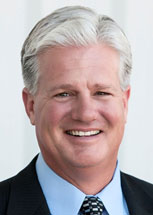
Bill Co-Author(s):