SB 788: California Coastal Protection Act of 2015.
- Session Year: 2015-2016
- House: Senate
- Latest Version Date: 2015-06-02
The California Coastal Sanctuary Act of 1994 authorizes the State Lands Commission to enter into a lease for the extraction of oil or gas from state-owned tide and submerged lands in the California Coastal Sanctuary if the commission determines that the oil or gas deposits are being drained by means of producing wells upon adjacent federal lands and the lease is in the best interest of the state.
This bill would enact the California Coastal Protection Act of 2015, which would delete this authorization. The bill would make related legislative findings and declarations.
(a)The Legislature finds and declares all of the following:
(1)Californias coast is 840 miles long. Californias coastal economies contribute $40 billion annually to the states economy, and nearly half a million jobs. Commercial fisheries in California are valued at more than $7 billion annually. Ocean dependent tourism is valued at over $10 billion annually. Recreational fishing along Californias coast is valued at over $2 billion annually along Californias coast. annually.
(2)The California coastal current system hosts a wide variety of marine mammals, seabirds, sea turtles, marine fishes, and invertebrates, including many threatened and endangered animals. The ocean off of Californias coast also supports rare, deep-water coral habitats that provide habitat for abundant marine life.
(3)The California coastline provides habitat for many threatened or endangered species.
(4)The coast of California is home to numerous protected areas, including national marine sanctuaries, a national park, and a national seashore.
(5)Outdoor coastal recreation is a crucial part of Californias business and recreation, including boating, wildlife viewing, hiking, beach visitation, swimming, surfing, and diving. Additionally, many of Californias indigenous populations rely on fisheries for subsistence, business, and recreation.
(6)The California Coastal Sanctuary Act of 1994 passed with bipartisan support. The act prohibits any extraction of oil or gas in certain state waters under a new lease, but it also provides an exception that authorizes the extraction of oil or gas from state-owned tide and submerged lands in certain circumstances. Because of this exception, the act falls short of providing a complete ban on new leases for offshore oil drilling in state waters.
(7)California has established a network of marine protected areas. The exception for new state leases for offshore oil drilling in the California Coastal Sanctuary Act of 1994 threatens that network of marine protected areas.
(8)Pursuant to an agreement with the federal government, California receives a portion of the royalties on oil and gas produced in federal waters.
(9)California has not issued new offshore oil leases for over 50 years and has intentionally foregone any revenue from any new leases and the associated offshore oil development in state waters and federal waters. The Legislature, Governor, and State Lands Commission have repeatedly called upon the federal government to prohibit any new offshore oil development leases in federal waters off the California coast.
(10)The federal and state government, as well as the people of California, have consistently expressed support for an energy policy that transitions our use from fossil fuel to more renewable energy, greater fuel efficiency, and conservation.
(11)The Governor of California, along with the governors of Oregon and Washington, have repeatedly expressed their strong opposition to any offshore oil development off of the west coast. In a July 2014 letter to the President of the United States, they wrote: While new technology reduces the risk of a catastrophic event such as the 1969 Santa Barbara oil spill, a sizeable spill anywhere along our shared coast would have a devastating impact on our population, recreation, natural resources, and our ocean and coastal dependent economies. They further wrote that: Oil and gas leasing may be appropriate for regions where there is state support for such development and the impacts can be mitigated. However, along the west coast, our states stand ready to work with the Obama Administration to help craft a comprehensive and science-based national energy policy that aligns with the actions we are taking to invest in energy efficiency, alternative renewable energy sources, and pricing carbon.
(b)This act shall be known, and may be cited, as the California Coastal Protection Act of 2015.
SEC. 2.Section 6244 of the Public Resources Code is repealed.(a)The Legislature finds and declares all of the following:
(1)Californias coast is 840 miles long. Californias coastal economies contribute $40 billion annually to the states economy, and nearly half a million jobs. Commercial fisheries in California are valued at more than $7 billion annually. Ocean dependent tourism is valued at over $10 billion annually. Recreational fishing is valued at over $2 billion annually along Californias coast.
(2)The California coastal current system hosts a wide variety of marine mammals, seabirds, sea turtles, marine fishes, and invertebrates, including many threatened and endangered animals. The ocean off of Californias coast also supports rare, deep-water coral habitats that provide habitat for abundant marine life.
(3)The California coastline provides habitat for many threatened or endangered species.
(4)The coast of California is home to numerous protected areas, including national marine sanctuaries, a national park, and a national seashore.
(5)Outdoor coastal recreation is a crucial part of Californias business and recreation, including boating, wildlife viewing, hiking, beach visitation, swimming, surfing, and diving. Additionally, many of Californias indigenous populations rely on fisheries for subsistence, business, and recreation.
(6)The California Coastal Sanctuary Act of 1994 passed with bipartisan support. The act prohibits any extraction of oil or gas in certain state waters under a new lease, but it also provides an exception that authorizes the extraction of oil or gas from state-owned tide and submerged lands in certain circumstances. Because of this exception, the act falls short of providing a complete ban on new leases for offshore oil drilling in state waters.
(7)California has established a network of marine protected areas. The exception for new state leases for offshore oil drilling in the California Coastal Sanctuary Act of 1994 threatens that network of marine protected areas.
(8)Pursuant to an agreement with the federal government, California receives a portion of the royalties on oil and gas produced in federal waters.
(9)California has not issued new offshore oil permits leases for over 50 years and has intentionally foregone any revenue from any new leases and the associated offshore oil development in state waters and federal waters. The Legislature, Governor, and State Lands Commission have repeatedly called upon the federal government to prohibit any new offshore oil drilling development leases in federal waters off the California coast.
(10)The federal and state government, as well as the people of California, have consistently expressed support for an energy policy that transitions our use from fossil fuel to more renewable energy, greater fuel efficiency, and conservation.
(11)The Governor of California, along with the governors of Oregon and Washington, have repeatedly expressed their strong opposition to any offshore oil development off of the West Coast. In a July 2014 letter to the President of the United States, they wrote: While new technology reduces the risk of a catastrophic event such as the 1969 Santa Barbara oil spill, a sizeable spill anywhere along our shared coast would have a devastating impact on our population, recreation, natural resources, and our ocean and coastal dependent economies. They further wrote that: Oil and gas leasing may be appropriate for regions where there is state support for such development and the impacts can be mitigated. However, along the West Coast, our states stand ready to work with the Obama Administration to help craft a comprehensive and science-based national energy policy that aligns with the actions we are taking to invest in energy efficiency, alternative renewable energy sources, and pricing carbon.
(b)This act shall be known, and may be cited, as the California Coastal Protection Act of 2015.
SEC. 2.Section 6244 of the Public Resources Code is repealed.(a)The Legislature finds and declares all of the following:
(1)Californias coast is 840 miles long. Californias coastal economies contribute $40 billion annually to the states economy, and nearly half a million jobs. Commercial fisheries in California are valued at more than $7 billion annually. Ocean dependent tourism is valued at over $10 billion annually. Recreational fishing is valued at over $2 billion annually along Californias coast.
(2)The California coastal current system hosts a wide variety of marine mammals, seabirds, sea turtles, marine fishes, and invertebrates, including many threatened and endangered animals. The ocean off of Californias coast also supports rare, deep-water coral habitats that provide habitat for abundant marine life.
(3)The California coastline provides habitat for many threatened or endangered species.
(4)The coast of California is home to numerous protected areas, including national marine sanctuaries, a national park, and a national seashore.
(5)Outdoor coastal recreation is a crucial part of Californias business and recreation, including boating, wildlife viewing, hiking, beach visitation, swimming, surfing, and diving. Additionally, many of Californias indigenous populations rely on fisheries for subsistence, business, and recreation.
(6)The California Coastal Sanctuary Act of 1994 passed with bipartisan support. The act prohibits any extraction of oil or gas in certain state waters under a new lease, but it also provides an exception that authorizes the extraction of oil or gas from state-owned tide and submerged lands in certain circumstances. Because of this exception, the act falls short of providing a complete ban on new offshore oil drilling.
(7)California has established a network of marine protected areas. The exception for offshore oil drilling in the California Coastal Sanctuary Act of 1994 threatens that network of marine protected areas.
(8)Pursuant to an agreement with the federal government, California receives a portion of the royalties on oil and gas produced in federal waters.
(9)California has not issued new offshore oil permits for over 50 years and has intentionally foregone any revenue from new offshore oil development in state waters and federal waters. The Legislature, Governor, and State Lands Commission have repeatedly called upon the federal government to prohibit any offshore oil drilling in federal waters off the California coast.
(10)The federal and state government, as well as the people of California, have consistently expressed support for an energy policy that transitions our use from fossil fuel to more renewable energy, greater fuel efficiency, and conservation.
(11)The Governor of California, along with the governors of Oregon and Washington, have repeatedly expressed their strong opposition to any offshore oil development off of the West Coast. In a letter to the President of the United States, they wrote: While new technology reduces the risk of a catastrophic event such as the 1969 Santa Barbara oil spill, a sizeable spill anywhere along our shared coast would have a devastating impact on our population, recreation, natural resources, and our ocean and coastal dependent economies. They further wrote that: Oil and gas leasing may be appropriate for regions where there is state support for such development and the impacts can be mitigated. However, along the West Coast, our states stand ready to work with the Obama Administration to help craft a comprehensive and science-based national energy policy that aligns with the actions we are taking to invest in energy efficiency, alternative renewable energy sources, and pricing carbon.
(b)This act shall be known, and may be cited, as the California Coastal Protection Act of 2015.
SEC. 2.Section 6244 of the Public Resources Code is repealed.6244.The commission may enter into any lease for the extraction of oil or gas from state-owned tide and submerged lands in the California Coastal Sanctuary if the commission determines that those oil or gas deposits are being drained by means of producing wells upon adjacent federal lands and the lease is in the best interests of the state.
|
Date
|
Status
|
|---|---|
| May 23, 2015 | Set for hearing May 28. |
| Aug 27, 2015 | August 27 hearing: Held in committee and under submission. |
| Jul 15, 2015 | July 15 set for first hearing. Placed on APPR. suspense file. |
| Jun 30, 2015 | From committee: Do pass and re-refer to Com. on APPR. (Ayes 7. Noes 2.) (June 29). Re-referred to Com. on APPR. |
| Jun 15, 2015 | Referred to Com. on NAT. RES. |
| Jun 4, 2015 | In Assembly. Read first time. Held at Desk. |
| Jun 3, 2015 | Read third time. Passed. (Ayes 23. Noes 14.) Ordered to the Assembly. |
| Jun 3, 2015 | Read third time. Passed. (Ayes 23. Noes 14. Page 1290.) Ordered to the Assembly. |
| Jun 2, 2015 | Read second time and amended. Ordered to third reading. |
| Jun 1, 2015 | From committee: Do pass as amended. (Ayes 5. Noes 2.) (May 28). |
| Jun 1, 2015 | From committee: Do pass as amended. (Ayes 5. Noes 2. Page 1160.) (May 28). |
| Feb 27, 2015 | Introduced. To Com. on RLS. for assignment. To print. |
| May 18, 2015 | May 18 hearing: Placed on APPR. suspense file. |
| May 8, 2015 | Set for hearing May 18. |
| May 4, 2015 | Read second time and amended. Re-referred to Com. on APPR. |
| Apr 30, 2015 | From committee: Do pass as amended and re-refer to Com. on APPR. (Ayes 7. Noes 1.) (April 28). |
| Apr 30, 2015 | From committee: Do pass as amended and re-refer to Com. on APPR. (Ayes 7. Noes 1. Page 821.) (April 28). |
| Apr 9, 2015 | Set for hearing April 28. |
| Mar 19, 2015 | Referred to Com. on N.R. & W. |
| Mar 2, 2015 | Read first time. |
| Mar 2, 2015 | From printer. May be acted upon on or after April 1. |
|
Date
|
Description
|
Location
|
Votes
|
|
|---|---|---|---|---|
| Jun 29, 2015 | Do pass and be re-referred to the Committee on [Appropriations] | Assembly Standing Committee on Natural Resources |
Passed |
|
| Jun 3, 2015 | Senate 3rd Reading SB788 McGuire | Senate Floor |
Passed |
|
| May 28, 2015 | Do pass as amended | Senate Standing Committee on Appropriations |
Passed |
|
| May 18, 2015 | Placed on suspense file | Senate Standing Committee on Appropriations |
Passed |
|
| Apr 28, 2015 | Do pass as amended, but first amend, and re-refer to the Committee on [Appropriations] | Senate Standing Committee on Natural Resources and Water |
Passed |
This list shows positions taken on this bill by organizations on the date displayed, which is linked to the original source.
Positions by individuals are not included.
|
Organization
|
Position
|
Date
|
|---|---|---|
| Absolute Board Company | ** Support | Jun 29, 2015 |
| Action Expo | ** Support | Jun 29, 2015 |
| Agency Glow | ** Support | Jun 29, 2015 |
| Agenda | ** Support | Jun 29, 2015 |
| Ambsn | ** Support | Jun 29, 2015 |
| Anarchy Eyewear | ** Support | Jun 29, 2015 |
| Angel | ** Support | Jun 29, 2015 |
| ARC Sustainability | ** Support | Jun 29, 2015 |
| Arnette | ** Support | Jun 29, 2015 |
| Asian Pacific Environmental Network | ** Support | Jun 29, 2015 |
| Audubon California | ** Support | Jun 29, 2015 |
| Azul | ** Support | Jun 29, 2015 |
| Beach Riot | ** Support | Jun 29, 2015 |
| Billabong USA | ** Support | Jun 29, 2015 |
| Black Surfers Collective | ** Support | Jun 29, 2015 |
| Blue Business Council | * Support | Jun 29, 2015 |
| Boardworks | ** Support | Jun 29, 2015 |
| Body Glove International | ** Support | Jun 29, 2015 |
| Braven | ** Support | Jun 29, 2015 |
| Brewer Surfboards | ** Support | Jun 29, 2015 |
| Brightline Defense | ** Support | Jun 29, 2015 |
| California Chamber Of Commerce | ** Against | Jun 29, 2015 |
| California Coastal Alliance | ** Support | Jun 29, 2015 |
| California Coastal Protection Network | ** Support | Jun 29, 2015 |
| California Coastkeeper Alliance | * Support | Jun 29, 2015 |
| California Environmental Justice Alliance | ** Support | Jun 29, 2015 |
| California Independent Petroleum Association | ** Against | Jun 29, 2015 |
| California League Of Conservation Voters | ** Support | Jun 29, 2015 |
| California Manufacturers And Technology Association | * Against | Jun 29, 2015 |
| California Sea Urchin Commission | ** Support | Jun 29, 2015 |
| California Sport Fishing League | ** Support | Jun 29, 2015 |
| California Trout | ** Support | Jun 29, 2015 |
| Captain Fin | ** Support | Jun 29, 2015 |
| Carpenteria Valley Association | ** Support | Jun 29, 2015 |
| Carve Sports, Inc. | ** Support | Jun 29, 2015 |
| Catch Surf | ** Support | Jun 29, 2015 |
| Center For Biological Diversity, Inc. | ** Support | Jun 29, 2015 |
| Center for Climate Protection | ** Support | Jun 29, 2015 |
| Channel Island Surfboards | ** Support | Jun 29, 2015 |
| Channel Islands Outfitters | ** Support | Jun 29, 2015 |
| CIT Commercial Services | ** Support | Jun 29, 2015 |
| Citizens Planning Association | ** Support | Jun 29, 2015 |
| Citizens Planning Association of Santa Barbara County | ** Support | Jun 29, 2015 |
| City of Arcata | ** Support | Jun 29, 2015 |
| Clean Water Action | ** Support | Jun 29, 2015 |
| Coast Seafoods Company | ** Support | Jun 29, 2015 |
| Coastal Environmental Rights Foundation | ** Support | Jun 29, 2015 |
| Coastal Playground | ** Support | Jun 29, 2015 |
| Community Environmental Council | ** Support | Jun 29, 2015 |
| Creatures of Leisure | ** Support | Jun 29, 2015 |
| D'BLANC | ** Support | Jun 29, 2015 |
| Dakine | ** Support | Jun 29, 2015 |
| DC Shoes | ** Support | Jun 29, 2015 |
| Defenders Of Wildlife | ** Support | Jun 29, 2015 |
| DEPACTUS | ** Support | Jun 29, 2015 |
| Dewey Weber Surfboards | ** Support | Jun 29, 2015 |
| Dragon | ** Support | Jun 29, 2015 |
| Duvin Design Company | ** Support | Jun 29, 2015 |
| E-Tech Boards | ** Support | Jun 29, 2015 |
| Eastern Surf Magazine | ** Support | Jun 29, 2015 |
| Electric | ** Support | Jun 29, 2015 |
| Environment California | * Support | Jun 29, 2015 |
| Environment in the Public Interest | ** Support | Jun 29, 2015 |
| Environmental Action Committee of West Marin | * Support | Jun 29, 2015 |
| Environmental Defense Center | ** Support | Jun 29, 2015 |
| Environmental Defense Fund | ** Support | Jun 29, 2015 |
| Erin Feinblatt Photography | ** Support | Jun 29, 2015 |
| Ethika | ** Support | Jun 29, 2015 |
| Ezekiel | ** Support | Jun 29, 2015 |
| Fair Oaks, CA | * Support | Jun 29, 2015 |
| Fillirate | ** Support | Jun 29, 2015 |
| Fins Unlimited | ** Support | Jun 29, 2015 |
| FireWire Surfboards | ** Support | Jun 29, 2015 |
| Fish Sniffer | * Support | Apr 28, 2015 |
| Fishing Vessel Corregidor | ** Support | Jun 29, 2015 |
| Foam Magazine | ** Support | Jun 29, 2015 |
| Former Superintendent of Public Instruction, Jack O'Connell | ** Support | Jun 29, 2015 |
| Freestyle Watch Col | ** Support | Jun 29, 2015 |
| Friedmann & Friedmann | ** Support | Jun 29, 2015 |
| Friends Of The Earth | ** Support | Jun 29, 2015 |
| FUEL TV | ** Support | Jun 29, 2015 |
| Futures | ** Support | Jun 29, 2015 |
| Get Oil Out! | ** Support | Jun 29, 2015 |
| Global Surf Industries | ** Support | Jun 29, 2015 |
| Globe Shoes | ** Support | Jun 29, 2015 |
| Golden Gate Salmon Association | ** Support | Jun 29, 2015 |
| Graffy, Inc. | ** Support | Jun 29, 2015 |
| Greater Santa Barbara Lodging and Restaurant Association | ** Support | Jun 3, 2015 |
| Greater Santa Barbara Restaurant and Lodging Association | * Support | Jun 29, 2015 |
| Guy Takayama Surfboards | ** Support | Jun 29, 2015 |
| Habematelel Pomo of Upper Lake | ** Support | Jun 29, 2015 |
| Hayden Surfboards, Inc. | ** Support | Jun 29, 2015 |
| Heal The Bay | * Support | Jun 29, 2015 |
| Hippy Tree | ** Support | Jun 29, 2015 |
| Hog Island Oyster Company | ** Support | Jun 29, 2015 |
| Holt Building Group, Inc. | ** Support | Jun 29, 2015 |
| Hooklit | ** Support | Jun 29, 2015 |
| Howler Brothers | ** Support | Jun 29, 2015 |
| Humboldt Bay Harbor, Recreation, and Conservation District | ** Support | Jun 29, 2015 |
| Humboldt Bay Tourism Center & Oyster Tours | ** Support | Jun 29, 2015 |
| Humboldt Baykeeper | ** Support | Jun 29, 2015 |
| Humboldt County Board of Supervisors | ** Support | Jun 29, 2015 |
| Huntington Glassworks | ** Support | Jun 29, 2015 |
| Hydroflex Technology | ** Support | Jun 29, 2015 |
| Imperial Capital | ** Support | Jun 29, 2015 |
| Insight | ** Support | Jun 29, 2015 |
| Iron & Resin | ** Support | Jun 29, 2015 |
| Jelly Handboards & Skateboards | ** Support | Jun 29, 2015 |
| Jetty Life | ** Support | Jun 29, 2015 |
| Judicci, Inc. | ** Support | Jun 29, 2015 |
| Kameleonz | ** Support | Jun 29, 2015 |
| Karuk Tribe | ** Support | Jun 29, 2015 |
| Kayak Zak's | ** Support | Jun 29, 2015 |
| Kid Creature | ** Support | Jun 29, 2015 |
| Klean Kanteen | ** Support | Jun 29, 2015 |
| Land Trust Of Santa Cruz County | ** Support | Jun 29, 2015 |
| League Of Women Voters Of California | ** Support | Jun 29, 2015 |
| Lib Tech | ** Support | Jun 29, 2015 |
| Liquid Tribe | ** Support | Jun 29, 2015 |
| Lira Clothing | ** Support | Jun 29, 2015 |
| Los Angeles Waterkeeper | ** Support | Jun 29, 2015 |
| Lost International | ** Support | Jun 29, 2015 |
| Luv Surf | ** Support | Jun 29, 2015 |
| Mad River Alliance | ** Support | Jun 29, 2015 |
| Malibu Chapter | ** Support | Jun 29, 2015 |
| Manhattan Beachwear | ** Support | Jun 29, 2015 |
| MapCargo | ** Support | Jun 29, 2015 |
| MasterCraft Boat Company | ** Support | Jun 29, 2015 |
| Matix | ** Support | Jun 29, 2015 |
| Mizu, Inc. | ** Support | Jun 29, 2015 |
| Monterey Bay Aquarium | ** Support | Jun 29, 2015 |
| Moss Adams | ** Support | Jun 29, 2015 |
| Naples Coalition | ** Support | Jun 29, 2015 |
| National Parks Conservation Association | ** Support | Jun 3, 2015 |
| Natural Resources Defense Council | ** Support | Jun 29, 2015 |
| New Era Cap Company | ** Support | Jun 29, 2015 |
| Nixon, Inc. | ** Support | Jun 29, 2015 |
| Noll Surfboards | ** Support | Jun 29, 2015 |
| Northcoast Environmental Center | ** Support | Jun 3, 2015 |
| NRI Distribution | ** Support | Jun 29, 2015 |
| NRI USA | ** Support | Jun 29, 2015 |
| O'Neill Clothing and Wetsuits | ** Support | Jun 29, 2015 |
| Oakley | ** Support | Jun 29, 2015 |
| Ocean Foundation | * Support | Apr 28, 2015 |
| Ocean Outfall Group | ** Support | Jun 29, 2015 |
| Olukai, Inc. | ** Support | Jun 29, 2015 |
| Orange County Coastkeeper | ** Support | Jun 29, 2015 |
| Orange County SEO | ** Support | Jun 29, 2015 |
| Otis | ** Support | Jun 29, 2015 |
| OurCaste | ** Support | Jun 29, 2015 |
| Pacific Coast Federation of Fishermen's Association | ** Support | Jun 29, 2015 |
| Patagonia | * Support | Jun 29, 2015 |
| Patagonia Surf | ** Support | Jun 29, 2015 |
| Planning And Conservation League | ** Support | Jun 29, 2015 |
| prAna | ** Support | Jun 29, 2015 |
| Pro-Llite | ** Support | Jun 29, 2015 |
| QuickSilver | ** Support | Jun 29, 2015 |
| Raen Optics | ** Support | Jun 29, 2015 |
| Reef | ** Support | Jun 29, 2015 |
| Richer Poorer | ** Support | Jun 29, 2015 |
| Rip Curl | ** Support | Jun 29, 2015 |
| Roark | ** Support | Jun 29, 2015 |
| Roxy | ** Support | Jun 29, 2015 |
| Rusty North America | ** Support | Jun 29, 2015 |
| Rusty Surfboards | ** Support | Jun 29, 2015 |
| RVCA | ** Support | Jun 29, 2015 |
| Salt Life | ** Support | Jun 29, 2015 |
| San Diego Coastkeeper | ** Support | Jun 29, 2015 |
| San Francisco Baykeeper | ** Support | Jun 29, 2015 |
| San Luis Obispo Coastkeeper | ** Support | Jun 29, 2015 |
| Santa Barbara Adventure Co. | ** Support | Jun 29, 2015 |
| Santa Barbara Board of Supervisors | ** Support | Jun 29, 2015 |
| Santa Barbara Channelkeeper | ** Support | Jun 29, 2015 |
| Santa Barbara County Action Network | ** Support | Jun 29, 2015 |
| Santa Barbara Lodging & Restaurant Association | ** Support | Jun 29, 2015 |
| Santa Cruz Surfboards | ** Support | Jun 29, 2015 |
| Santa Monica, City Of | ** Support | Jun 29, 2015 |
| Santa Ynez Vacation | ** Support | Jun 29, 2015 |
| Santa Ynez Valley Alliance | ** Support | Jun 29, 2015 |
| Sanuk | ** Support | Jun 29, 2015 |
| Save The Bay | ** Support | Jun 29, 2015 |
| Savenaples.org | ** Support | Jun 29, 2015 |
| Scott Guinto Surfboards | ** Support | Jun 29, 2015 |
| Sector 9 | ** Support | Jun 29, 2015 |
| Seea | ** Support | Jun 29, 2015 |
| Shaper Studios | ** Support | Jun 29, 2015 |
| Sherwood Valley Band of Pomo Indians | ** Support | Jun 29, 2015 |
| Shout Public Relations | ** Support | Jun 29, 2015 |
| Sierra Club | * Support | Jun 29, 2015 |
| Sierra Club California | * Support | Jun 29, 2015 |
| Skullcandy | ** Support | Jun 29, 2015 |
| Slyde Handboards | ** Support | Jun 29, 2015 |
| Smiley's Schooner Saloon | ** Support | Jun 29, 2015 |
| Smith River Rancheria | ** Support | Jun 29, 2015 |
| Smith Sport Optics | ** Support | Jun 29, 2015 |
| So. Cal Industries, Inc. | ** Support | Jun 29, 2015 |
| Sojourner Cafxe9 | ** Support | Jun 29, 2015 |
| Solforce Energy | ** Support | Jun 29, 2015 |
| Southern California Trawlers Association | ** Support | Jun 29, 2015 |
| Spy Optics | ** Support | Jun 29, 2015 |
| Stance Steele Distribution | ** Support | Jun 29, 2015 |
| Steel Distribution | ** Support | Jun 29, 2015 |
| Sun Bum | ** Support | Jun 29, 2015 |
| SuperBrand | ** Support | Jun 29, 2015 |
| Suplove | ** Support | Jun 29, 2015 |
| Surf Diva | ** Support | Jun 29, 2015 |
| Surf DNA Graphite Master | ** Support | Jun 29, 2015 |
| Surf Expo | ** Support | Jun 29, 2015 |
| Surf Hardware Int'l | ** Support | Jun 29, 2015 |
| Surf Industry Manufacturers Association | ** Support | Jun 29, 2015 |
| Surf Right Project | ** Support | Jun 29, 2015 |
| Surfer | ** Support | Jun 29, 2015 |
| SURFFit | ** Support | Jun 29, 2015 |
| Surfing | ** Support | Jun 29, 2015 |
| Surfline | ** Support | Jun 29, 2015 |
| Surfrider Foundation | ** Support | Jun 29, 2015 |
| Surfrider Foundation, Santa Barbara Chapter | ** Support | Jun 29, 2015 |
| Surfrider Foundation, South Bay Chapter | ** Support | Jun 29, 2015 |
| Surfrider Foundation, West LA | ** Support | Jun 29, 2015 |
| Surftech | ** Support | Jun 29, 2015 |
| Swappow LLC | ** Support | Jun 29, 2015 |
| T&C Surfboards | ** Support | Jun 29, 2015 |
| Tavik | ** Support | Jun 29, 2015 |
| The ActivEmpire | ** Support | Jun 29, 2015 |
| The Ocean Conservancy | ** Support | Jun 29, 2015 |
| The People's Movement | ** Support | Jun 29, 2015 |
| The Surfer's Journal | ** Support | Jun 29, 2015 |
| The Wheat Group | ** Support | Jun 29, 2015 |
| The Wildlands Conservancy | ** Support | Jun 29, 2015 |
| Trust For Public Land, The | ** Support | Jun 29, 2015 |
| Under Armour | ** Support | Jun 29, 2015 |
| Union Of Concerned Scientists | ** Support | Jun 29, 2015 |
| Vans | ** Support | Jun 29, 2015 |
| Ventura Coastkeeper | ** Support | Jun 29, 2015 |
| Verde Brand Communications | ** Support | Jun 29, 2015 |
| Vertra | ** Support | Jun 29, 2015 |
| Vestal Watch, Inc. | ** Support | Jun 29, 2015 |
| Vissla | ** Support | Jun 29, 2015 |
| Volcom | ** Support | Jun 29, 2015 |
| VonZipper | ** Support | Jun 29, 2015 |
| Wave Zone, Inc. | ** Support | Jun 29, 2015 |
| Wells Fargo Capital Finance | ** Support | Jun 29, 2015 |
| West Marin Environmental Action Committee | * Support | Jun 29, 2015 |
| Western States Petroleum Association | ** Against | Jun 29, 2015 |
| Wholly H2O | ** Support | Jun 29, 2015 |
| Wildcoast | ** Support | Jun 29, 2015 |
| Wishtoyou Foundation | ** Support | Jun 29, 2015 |
| Xcel Wetsuits | ** Support | Jun 29, 2015 |
| Yolo Climate Action | * Support | Jun 29, 2015 |
| Yolo Move On | * Support | Jun 29, 2015 |
| Yulex | ** Support | Jun 29, 2015 |
Date of Hearing: July 15, 2015
ASSEMBLY COMMITTEE ON APPROPRIATIONS
Jimmy Gomez, Chair
SB 788
(McGuire) – As Amended June 2, 2015
Policy Committee: |
Natural Resources |
Vote: |
7 - 2 |
|
|
|
|
|
|
|
|
Urgency: No State Mandated Local Program: No Reimbursable: No
SUMMARY:
This bill deletes the provision allowing the State Lands Commission (SLC) to enter into leases for the extraction of oil or gas from state-owned tide and submerged lands in the California Coastal Sanctuary if SLC determines the oil and gas deposits are being drained by producing wells on adjacent federal lands and the lease is in the best interest of the state. Additionally, this bill makes various legislative declarations and findings.
FISCAL EFFECT
Potential forgone offshore oil revenues (GF) estimated to range between $48 million and $173 million per year (based on a per barrel oil price of $50) for 30 to 35 years if SLC entered into a lease off of the Vandenberg Air Force Base into the Tranquillion Ridge. The variability in the estimated cost depends on the royalty rate, life of the project, and the per barrel rate.
Given past and current SLC policies, it is uncertain how many, if any leases would be offered.
COMMENTS
Purpose. This bill repeals the remaining provision in state law that allows SLC to enter into new offshore oil and gas leases.
Background. The California Coastal Sanctuary Act was established in 1994 (AB 2444, O'Connell) and placed the entire coast from the Mexican border north to the California-Oregon border in permanent sanctuary, except for existing offshore oil and gas leases in effect on January 1, 1995, in Santa Barbara, Ventura, Los Angeles, and Orange Counties and waters in the Sacramento/San Joaquin Delta east of the Carquinez bridges. This exception no longer applied if the lease was deeded or otherwise reverted to the state.
AB 2444 also repealed an existing provision of law that authorized SLC to lease offshore lands, under certain conditions, to prevent state oil and gas from being drained by wells on adjacent lands and instead recast the provision to limit its application to leases in which state resources are drained from adjacent "federal" lands. This bill repeals that provision, which has never been used to issue state leases.
Federal Drainage of State Resources. According to SLC staff, there are potentially 10 fields, with an estimated 600 million barrels of oil that cross the state-federal boundary line. Of those, only 5 have existing federal infrastructure. Of those five, only one has confirmed drainage (Tranquillion Ridge from Platform Irene) and two have a potential for drainage (Rocky Point and Jalama). Under the existing law this bill repeals, only the Tranquillion Ridge could be leased.
2009 Offshore Lease Proposal. In 2009, SLC considered a proposal to approve an offshore oil and gas lease that would have involved the Tranquillon Ridge oil and gas field located within the state's jurisdiction off the Santa Barbara County coast.
The project proposal called for up to 17 wells from Platform Irene (approximately 4.5 miles off the coast in federal waters) into two new state leases, with all the drilling and production to cease on or before December 31, 2022. According to the SLC staff report, total production from this project would have been in the range of 40 to 90 million barrels of oil. The produced oil and gas would have been piped onshore through an existing pipeline to be processed and shipped to a refinery.
SLC considered this proposal because an independent study showed that an existing well (Well A-28) drilled from Platform Irene into the OCS drains a relatively low amount of natural gas from the state side of the Tranquillon Ridge field. SLC ultimately rejected the lease proposal concluding that it was not in the best interest of the state.
After SLC rejected the Platform Irene-Tranquillon Ridge lease proposal, there were several failed legislative attempts to bypass the Commission's offshore oil and gas leasing authority: AB 1536 (Blakeslee, 2009), ABX4 23 (DeVore, 2009), AB 2719 (DeVore, 2010), and Governor Schwarzenegger's 2010-11 Proposed Budget.
Proposal to Drill Tranquillon Ridge from the Coast. Around the same time the Commission was processing the Platform Irene-Tranquillon Ridge lease application, a different party, Sunset Exploration, submitted an offshore lease application that proposed to drill into Tranquillon Ridge from the Vandenberg Air Force Base lands using land-based extended reach technology.
SLC did not consider this proposal viable due to the lack of the surface owner's (U.S. Air Force) approval for a surface location for the project. However, according to news reports last year, the U.S. Air Force is more seriously considering allowing the base to be used for the drilling project.
Refugio Oil Spill. On May 19, 2015, a pipeline, known as Line 901, ruptured, spilling up to 101,000 gallons of heavy crude oil along the Gaviota coast in Santa Barbara County. Line 901, is a common carrier pipeline that transports oil produced on platforms offshore in both state and federal waters to be refined in Santa Maria or Kern County. Many offshore platforms have halted production because of the spill from Line 901 and the denial of an emergency permit to truck the oil produced.
Support and Opposition. This bill is supported by a broad coalition of environmental and coastal tourism and protection organizations who argue this bill closes the final loophole allowing new offshore drilling leases, and as such, will prevent future oil spills.
It is opposed by business and taxpayer organizations and oil companies and associations who argue that if state resources are being drained by federally approved leases, the state should be compensated. Sunset Explorer further argues that a state lease allowing land-based infrastructure provides the state with an opportunity to limit resource opportunities available to federal marine platforms, such as platform Irene.
Prior Legislation. Last year, SB 1096 (Jackson) was amended in the Assembly to delete its contents and instead contain provisions functionally identical to this bill. SB 1096 failed passage on the Assembly Floor.
Analysis Prepared by: Jennifer Galehouse / APPR. / (916) 319-2081
SB 788
Page 10
Date of Hearing: June 29, 2015
ASSEMBLY COMMITTEE ON NATURAL RESOURCES
Das Williams, Chair
SB 788
(McGuire) – As Amended June 2, 2015
SENATE VOTE: 23-14
SUBJECT: California Coastal Protection Act of 2015
SUMMARY: Eliminates the exception in the California Coastal Sanctuary Act of 1994 (AB 2444, O’Connell) (CCSA) that allows the State Lands Commission (Commission) to issue an offshore oil lease if state oil or gas deposits are being drained by wells on federal lands and the lease is in the best interests of the state.
EXISTING LAW:
Pursuant to the CCSA,
Makes findings and declarations that offshore oil and gas production in certain areas of state waters poses an unacceptably high risk of damage and disruption to the marine environment of the state. (State waters generally extend out three nautical miles from the shore.)
Establishes the California Coastal Sanctuary (Sanctuary), which includes all state waters subject to tidal influence west of the Carquinez Bridge, except oil or gas leases in effect on January 1, 1995, unless the lease is deeded or otherwise reverts to the state after that date.
Generally prohibits a state agency or state officer from entering into any new lease for the extraction of oil or gas from the Sanctuary.
Authorizes the Commission to enter into any lease for the extraction of oil or gas from state-owned tide and submerged lands in the Sanctuary if the Commission determines that those oil or gas deposits are being drained by means of producing wells upon adjacent federal lands and the lease is in the best interest of the state.
Authorizes the Commission to adjust the boundaries of an existing offshore oil and gas lease to encompass all of an oil and gas field partially contained in the lease.
Pursuant to the federal Outer Continental Shelf Lands Act (OCS Lands Act),
Defines the ‘‘Outer Continental Shelf’’ (OCS) as all submerged lands lying between the seaward extent of the states' jurisdiction and the seaward extent of federal jurisdiction.
Declares, among other things, that it is the U.S. Policy that the OCS is a vital national resource reserve held by the federal government for the public, which should be made available for expeditious and orderly development, subject to environmental safeguards, in a manner that is consistent with the maintenance of competition and other national needs.
Requires the Department of the Interior (Interior) to prepare, periodically revise, and maintain an oil and gas leasing program that consists of a schedule of proposed lease sales indicating, as precisely as possible, the size, timing, and location of leasing activity that the Interior determines will best meet national energy needs for the five-year period following its approval or reapproval. Gives priority leasing consideration to areas where the combination of previous experience; local, state, and national laws and policies; and expressions of industry interest indicate that potential leasing and development activities could be expected to proceed in an orderly manner.
FISCAL EFFECT: According the Senate Appropriations Committee, this bill has unknown costs, estimated between $48 million and $173 million per year based on a per barrel oil price of $50, to the General Fund for foregone offshore oil lease revenue that could have been received if the State Lands Commission (SLC) entered into a lease off the Vandenberg Air Force Base into the Tranquillon Ridge. The variability in the estimated cost depends on the royalty rate, life of the project, and the price of oil.
COMMENTS:
Author’s statement.
California’s coast acts as a meeting point for the warm waters from the South and the cold waters of the North. As a result, California’s coast is recognized as one of only five locations in the world that produces such diverse sea life, marine ecology and vegetation.
Allowing for new offshore oil drilling, at the same time stating it poses too great of a risk, is a contradiction within the Coastal Sanctuary Act. This glaring inconsistency is compounded as a result of the subsequent passage of the MLPA, which provided stringent new marine protection guidelines in the same coastal regions that remain open to new offshore oil drilling that is authorized under the Coastal Sanctuary Act.
As a result, the Coastal Sanctuary Act and Marine Life Protection Act have conflicting mandates, which allow for offshore drilling in areas that were subsequently designated to protect and conserve marine life.
Strengthening the CCSA. This bill would repeal the exception to the CCSA that allows for the Commission to issue a new offshore drilling lease based on the CCSA's drainage provision. By doing this, the state would be bringing in a large portion of the Pacific Ocean off the coast of Santa Barbara County, where the exemption has been proposed to be used, into the full protection of the CCSA.
The Legislature and Offshore Oil. The Legislature has a long history of excluding areas from leasing for offshore oil and gas development. Beginning in 1921, and many times since, the Legislature has enacted laws that set aside offshore areas where oil and gas leasing is generally prohibited. The 1921 Leasing Act prohibited the issuance of any prospecting permits or leases within one mile of any municipality. The 1921 Act was amended in 1929 to prohibit the issuance of any new lease in offshore state waters. Between 1938 and 1955, leases could only be issued by the Commission if drainage of the state’s oil and gas could be shown. In 1955, the Legislature authorized new oil and gas leases in state offshore waters but has steadily increased the area that is closed to these leases. Finally, in 1994, the CCSA removed all state lands underlying the Pacific Ocean from the Commission’s oil and gas general leasing authority. The CCSA contains two limited exceptions that allow the Commission to approve new offshore oil and gas production in state waters. One exception is if the Commission determines that state oil or gas deposits are being drained by means of producing wells upon adjacent federal lands and a new oil and gas lease is in the best interests of the state. The other exception allows the Commission to adjust the boundaries of an existing offshore oil and gas lease to encompass all of an oil and gas field partially contained in the lease.
The Commission and Offshore Oil. Since 1938, the Commission has had jurisdiction over the leasing of oil and gas from offshore state lands. Between 1938 and 1968, over 50 offshore oil and gas leases were issued by the Commission. In a manner common to most oil and gas leases, the leases that the Commission issued were either devoid of a fixed end date or were subsequently amended to remove an end date. The lease terms typically provide that the leases last as long as oil and gas is being produced in paying or commercial quantities. Once production ceases, the leases are to be quitclaimed back to the Commission.
Two August 1968 leases, one to Continental Oil Company and the other to Standard Oil Company, were the last new offshore oil and gas leases that the Commission entered into prior to the January 1969 Santa Barbara oil spill. The spill was the result of a well drilling blow-out at an offshore platform located in the federal OCS off the coast of Santa Barbara County. The cause was inadequate protective wellpipe casing. The event lasted 11 days and spilled between 80,000 and 100,000 barrels of crude oil. Two hundred square miles of ocean and 35 miles of California coastline were oiled and thousands of animals were killed.
At its February 1969 meeting, the Commission deferred the acceptance of outstanding bids for new leases and subsequently deferred deadlines for additional drilling from existing leases. Since then, the Commission has not entered into any new offshore oil and gas leases. Since 2001, the Commission adopted several resolutions opposing the resumption or expansion of federal offshore oil and gas lease sales in the OCS. The foundation for each resolution was the same: that the danger of an oil spill like the 1969 Santa Barbara oil spill was too high and that oil development and potential spills would adversely affect fishing, tourism, and environmental, recreational, economic, scenic, and other values. The resolutions are also based on and expressive of the state’s policy and practice of not issuing new offshore leases. Further, the Commission’s staff has been proactive in obtaining quitclaims of existing offshore oil and gas leases from oil companies back to the state.
2009 Offshore Lease Proposal. On January 29, 2009, the Commission considered a proposal to approve an offshore oil and gas lease that would have involved the Tranquillon Ridge oil and gas field located within the state's jurisdiction off the Santa Barbara County coast. The project proposal called for up to 17 wells from Platform Irene (approximately four and a half miles off the coast in federal waters) into two new state leases, with all the drilling and production to cease on or before December 31, 2022. According to the Commission’s staff report, total production from this project would have been in the range of 40 to 90 million barrels of oil. The produced oil and gas would have been piped onshore through an existing pipeline to be processed and shipped to a refinery. (It is worth noting that this pipeline experienced a rupture on September 28, 1997, spilling crude oil into the ocean about two and a half miles from the shore. The oil spread approximately four miles, oiling wildlife and killing hundreds of seabirds. Studies concluded that the leak was caused by a faulty weld.)
The Commission was authorized to consider this proposal under the CCSA because an independent study showed that an existing well (Well A-28) drilled from Platform Irene into the OCS drains a relatively low amount of natural gas from the state side of the Tranquillon Ridge field. (The state is compensated for production from Well A-28 even though it occurs on federal property. Pursuant to a 1997 agreement between the state and federal government, the state receives a royalty share of 50% of all hydrocarbons produced from Well A-28 originating within 500 feet of the state/federal boundary. In addition, pursuant to the OCS Land Act, because Well A-28 is located within three nautical miles of the state/federal boundary, the state receives payment of 27% from the federal royalty production of the well.)
The Commission ultimately rejected the lease proposal concluding that it was not in the best interest of the state. The Commission's decision was based, in part, on a determination that "environmental, tourism, recreational, economic, fishing, scenic, and other values are threatened by offshore oil development and that these values were more important [than the benefits of the lease]." Additionally, the Commission was concerned about the message the lease would send to Washington, D.C. As indicated above, the Commission and the Legislature have opposed new offshore oil drilling for decades. The state relied on this history when calling on the President and Congress to continue its moratorium on new offshore federal leases off the California coast. In 2008, President George W. Bush lifted the presidential moratorium on federal offshore leases and Congress refused to re-enact its own moratorium. On January 16, 2009, the Interior announced plans to conduct lease sales in different parts of the country, including three off of the California coast. The Commission was concerned about "the impact a new lease would have on the potential for new federal leasing off of California…."
After the Commission rejected the Platform Irene-Tranquillon Ridge lease proposal, there were several failed legislative attempts to bypass the Commission's offshore oil and gas leasing authority: AB 1536 (Blakeslee, 2009), ABX4 23 (DeVore, 2009), AB 2719 (DeVore, 2010), and Governor Schwarzenegger's 2010-11 Proposed Budget. Governor Schwarzenegger's proposal came as a surprise to many since, in 2006, he entered into the "West Coast Governors’ Agreement on Ocean Health," in which he agreed to "[s]end a joint message to the President and Congress reinforcing [California, Oregon, and Washington's] opposition to oil and gas leasing, exploration, and development off our coasts."
Proposal to Drill Tranquillon Ridge from the Coast. Around the same time the Commission was processing the Platform Irene-Tranquillon Ridge lease application, Sunset Exploration submitted an offshore lease application that proposed to drill into Tranquillon Ridge from the Vandenberg Air Force Base. The Commission did not consider this proposal viable due to the lack of the surface owner's (U.S. Air Force) approval for a surface location for the project. However, according to news reports last year, the U.S. Air Force is more seriously considering allowing the base to be used for the drilling project. U.S. law authorizes military services to lease non-excess land for nonfederal development if the use does not conflict with mission requirements and is beneficial to the military service leasing the property. As such, the Commission again could be faced with deciding whether to approve its first offshore oil lease since 1968.
Refugio Oil Spill. On May 19, 2015, a pipeline owned by Houston-based Plains All American Pipeline ruptured, spilling up to 101,000 gallons of heavy crude oil along the Gaviota coast in Santa Barbara County. It is estimated that as much as 21,000 gallons of the oil went down a storm culvert onto cliffs and into the Pacific Ocean. The immediate oil spill area stretched over nine miles of California coastline, and tar balls have washed up as far as one hundred miles from the spill site. The pipeline that ruptured, known as Line 901, is a common carrier pipeline that transports oil that was produced on platforms offshore in both state and federal waters to be refined in Santa Maria or Kern County. Many offshore platforms, including operations at Heritage, Harmony, Hondo, and Holly have halted production because of the spill from Line 901 and denial of an emergency permit to truck the oil produced. In a July 30, 2014 letter sent by the Governors of Washington, Oregon, and California to the Secretary of the Interior opposing new federal leases off the pacific coast stated, “while new technology reduces the risk of a catastrophic event such as the 1969 Santa Barbara oil spill, a sizable spill anywhere along our shared coast would have a devastating impact on our population, recreation, natural resources, and our ocean and coastal dependent economies.” The Refugio oil spill shows, despite new technology, the risk remains with existing oil production and any potential new production.
Prior Legislation. SB 1096 (Jackson, 2014) was almost identical to this bill. SB 1096 failed passage on the Assembly Floor.
REGISTERED SUPPORT / OPPOSITION:
Support
Absolute Board Company
Action Expo
Agency Glow
Agenda
Ambsn
Angel/Anarchy Eyewear (Quantum Optics)
ARC Sustainability
Arnette
Asian Pacific Environmental Network
Audubon California
Azul
Beach Riot
Billabong USA
Black Surfers Collective
Blue Business Council
Boardworks
Body Glove International
Braven
Brewer Surfboards
Brightline Defense
California Coastal Alliance
California Coastal Protection Network
California Coastkeeper Alliance
California Environmental Justice Alliance
California League of Conservation Voters
California Sea Urchin Commission
California Sport Fishing League
California Trout
Captain Fin
Carpenteria Valley Association
Catch Surf
Center for Biological Diversity
Center for Climate Protection
Channel Island Surfboards
Channel Islands Outfitters
CIT Commercial Services
Citizens Planning Association
Citizens Planning Association of Santa Barbara County
City of Arcata
City of Santa Monica
Clean Water Action
Coast Seafoods Company
Coastal Playground
Community Environmental Council
Coastal Environmental Rights Foundation
Creatures of Leisure
D’BLANC
Dakine
DC Shoes
Defenders of Wildlife
DEPACTUS
Dewey Weber Surfboards
Dragon
Duvin Design Company
Eastern Surf Magazine
Electric
Environment California
Environment in the Public Interest
Environmental Action Committee of West Marin
Environmental Defense Center
Environmental Defense Fund
Erin Feinblatt Photography
E-Tech Boards
Ethika
Ezekiel
FCS/Surf Hardware Int’l
Fillirate
Fins Unlimited
FireWire Surfboards
Fishing Vessel Corregidor
Foam Magazine
Former Superintendent of Public Instruction, Jack O’Connell
Fox
Freestyle Watch Col
Friedmann & Friedmann
Friends of the Earth
FUEL TV
Futures
Get Oil Out!
Global Surf Industries
Globe Shoes (OSATA)
Golden Gate Salmon Association
GoPro
Graffy, Inc.
Guy Takayama Surfboards/Carve Sports, Inc.
Habematelel Pomo of Upper Lake
Hayden Surfboards, Inc.
Heal the Bay
Hippy Tree
Hog Island Oyster Company
Holt Building Group, Inc.
Hooklit
Howler Brothers
Humboldt Bay Harbor, Recreation, and Conservation District
Humboldt Bay Tourism Center & Oyster Tours
Humboldt Baykeeper
Humboldt County Board of Supervisors
Huntington Glassworks
Hydroflex Technology
Imperial Capital
Insight
Iron & Resin
Jelly Handboards & Skateboards
Jetty Life
Judicci, Inc.
Kameleonz
Karuk Tribe
Kayak Zak’s
Kid Creature
Klean Kanteen
L*Space
Land Trust of Santa Cruz County
League of Women Voters of California
Lib Tech
Liquid Tribe
Lira Clothing
Los Angeles Waterkeeper
Lost International
Luv Surf
Mad River Alliance
Manhattan Beachwear
MapCargo
MasterCraft Boat Company
Matix
Mizu, Inc.
Monterey Bay Aquarium
Moss Adams
Naples Coalition
Natural Resources Defense Council
New Era Cap Company
Nixon, Inc.
Noll Surfboards
NRI Distribution/NRI USA
O’Neill Clothing and Wetsuits
Oakley
Ocean Conservancy
Ocean Outfall Group
Olukai, Inc.
Orange County Coastkeeper
Orange County SEO
Otis
OurCaste
Pacific Coast Federation of Fishermen’s Association
Patagonia
Patagonia Surf
Planning and Conservation League
Prana
Pro-Llite
QuickSilver
Raen Optics
Reef
Richer Poorer
Rip Curl
Roark
Roxy
Rusty North America
Rusty Surfboards
RVCA
Salt Life
San Diego Coastkeeper
San Francisco Baykeeper
San Luis Obispo Coastkeeper
Santa Barbara Adventure Co.
Santa Barbara Board of Supervisors
Santa Barbara Channelkeeper
Santa Barbara County Action Network
Santa Barbara Lodging & Restaurant Association
Santa Cruz Surfboards
Santa Ynez Vacation
Santa Ynez Valley Alliance
Sanuk
Save The Bay
Savenaples.org
Scott Guinto Surfboards
Sector 9
Seea
Shaper Studios
Sherwood Valley Band of Pomo Indians
Shout Public Relations
Sierra Club California
Skullcandy
Slyde Handboards
SME
Smiley’s Schooner Saloon
Smith River Rancheria
Smith Sport Optics
So. Cal Industries, Inc.
Sojourner Café
Solforce Energy
Southern California Trawlers Association
Spy Optics
Stance Steele Distribution
Sun Bum
SuperBrand
Suplove
SURFFit
Surf Diva
Surf DNA Graphite Master
Surf Expo
Surf Industry Manufacturers Association
Surf Right Project
Surfer / Surfing
Surfline
Surfrider Foundation
Surfrider Foundation, Santa Barbara Chapter
Surfrider Foundation, South Bay Chapter
Surfrider Foundation, West LA/Malibu Chapter
Surftech
Steel Distribution
Swappow LLC
T&C Surfboards
Tavik
The ActivEmpire
The Fund For Santa Barbara
The Northcoast Environmental Center
The People’s Movement
The Surfer’s Journal
The Trust for Public Land
The Wheat Group
The Wildlands Conservancy
Under Armour
Union of Concerned Scientists
Vans
Ventura Coastkeeper
Verde Brand Communications
Vertra
Vestal Watch, Inc.
Vissla
Volcom
VonZipper
Wave Zone, Inc.
Wells Fargo Capital Finance
West Marin Environmental Action Committee
Wholly H2O
Wildcoast
Wishtoyou Foundation
Xcel Wetsuits
Yulex
Opposition
California Chamber of Commerce
California Independent Petroleum Association
California Manufacturers & Technology Association
Sunset Exploration
Western States Petroleum Association
Analysis Prepared by: Michael Jarred / NAT. RES. / (916) 319-2092
SB 788
Page 7
|
Office of Senate Floor Analyses (916) 651-1520 Fax: (916) 327-4478 |
THIRD READING
Bill No: SB 788
Amended: 6/2/15
SENATE NATURAL RES. & WATER COMMITTEE: 7-1, 4/28/15
AYES: Pavley, Allen, Hertzberg, Hueso, Jackson, Monning, Wolk
NOES: Stone
NO VOTE RECORDED: Vidak
SENATE APPROPRIATIONS COMMITTEE: 5-2, 5/28/15
AYES: Lara, Beall, Hill, Leyva, Mendoza
NOES: Bates, Nielsen
SUBJECT: California Coastal Protection Act of 2015
DIGEST: This bill deletes the exception to the California Coastal Sanctuary Act that allows for a new oil and gas lease if such a lease is in the state’s interest and the state’s oil and gas deposits are being drained from adjacent federal lands.
Existing federal law under the federal Outer Continental Shelf Lands Act (43 U.S.C. §1337(g)(2)), provides that California is entitled to 27% of the federal royalty for production from oil and gas wells within three nautical miles of the state/federal boundary. The state may also receive additional royalties. For example, under separate agreement, the state’s royalty share in the federal well known to drain the state’s Tranquillon Ridge field (described below) is 50% as it is within 500 feet of the state/federal boundary. There is no current federal law, ongoing federal appropriations moratoria or executive order banning new oil and gas leasing off of California. There are 43 existing active leases under the federal Outer Continental Shelf Lands Act in federal waters offshore California.
Existing state law:
Provides and has provided the State Lands Commission (commission) exclusive jurisdiction over the leasing of offshore state lands for oil and gas production since 1938. According to the commission, it issued over fifty offshore oil and gas leases between 1938 and 1968. In general, lease terms provide for the leases to remain in effect so long as oil and gas production continues in paying or commercial quantities.
Extends, through the California Coastal Sanctuary Act of 1994 (act) (Public Resources Code (PRC) §§6240 et seq.) the California coastal sanctuary which removed the authority of the commission to issue new oil and gas leases for unleased tide and submerged lands underlying the Pacific Ocean with limited exceptions. The Legislature had, beginning in 1921 and repeatedly since, passed laws that excluded offshore areas of the state from oil and gas leasing. Legislative findings stated that “offshore oil and gas production in certain areas of state waters poses an unacceptably high risk of damage and disruption to the marine environment of the state.” (PRC §6241).
Allows, pursuant to PRC §6244, the commission to consider issuing a new oil and gas lease if the commission determines that (1) state oil and gas resources are being drained by production on adjacent federal lands, and (2) the lease is in the state’s interest.
Specifies state-level marine protected areas under the Marine Life Protection Act (Fish and Game Code §§2850 et seq.) are designed to protect or conserve marine life and habitat. In and around the Santa Barbara Channel there are a variety of protected federal and state marine areas, including the Channel Islands National Marine Sanctuary and several protected locations near the Tranquillon Ridge field.
This bill:
Deletes the exception to the act that allows for a new oil and gas lease if such a lease is in the state’s best interest and the state’s oil and gas deposits are being drained from adjacent federal lands.
Makes numerous uncodified legislative findings to support the removal of this exception.
Comments
Deliberate government actions have foregone offshore oil and gas revenue. As noted herein, the policy of various levels of state government over many years has been to purposefully limit or seek to limit oil and gas revenue to the state from offshore sources in both state and federal waters.
The Tranquillon Ridge oil field. There is one known offshore oil field that meets the existing criteria established by PRC §6244 – the Tranquillon Ridge field located to the west of Points Pedernales and Arguello in Santa Barbara County. Studies have shown that production from federal platform Irene is draining the hydrocarbon resources in the state’s portion of this oil and gas field. Reservoir pressure on the state side is also being reduced, which may ultimately decrease the recoverable hydrocarbon reserves from the field. The amount of economically recoverable oil in the state’s portion of the Tranquillon Ridge field is uncertain, and a recent estimate places it in the range of 40 to 150 million barrels.
Development of the state portion of Tranquillon Ridge was first proposed in 1999. In 2008, the Santa Barbara Board of Supervisors approved a highly controversial subsequent proposal which utilized drilling into state waters from a federal platform. However, the commission voted in January 2009 against issuing a new oil and gas lease pursuant to the exception to the act provided by PRC §6244. Additionally there has been at least one proposal made to access the state portion of Tranquillon Ridge field by slant or extended reach drilling from Vandenberg Air Force Base. If certain criteria are met, the military may allow non-military activities on its property. Recently a potential on-base site was identified. (See the Senate Natural Resources and Water Committee analysis for further information.)
It remains unknown, but possible, that other oil and gas pools in state waters within the coastal sanctuary extend into federal waters and could potentially meet the PRC §6244 criteria to be considered for a new state oil and gas lease. No definitive information is available, however.
The commission’s leasing history and related activities. The commission has not issued any new oil and gas leases since the January 1969 oil spill in Santa Barbara where a well blowout from one of the federal platforms resulted in a spill of approximately 80,000 – 100,000 barrels of crude oil. This spill oiled two hundred square miles of ocean and thirty-five miles of state coastline, and killed thousands of animals. In addition, the commission has repeatedly passed resolutions in recent years opposed to the resumption or expansion of federal offshore oil development and production. According to the commission, the risks associated with oil development and potential spills were too high and both could negatively affect fishing, tourism, and environmental, recreational, economic, scenic and other values.
Federal offshore leasing plans. There are no locations offshore California in the current five-year federal leasing schedule/plan, and none are proposed for the 2017 – 2022 federal leasing schedule/plan. Last year, the Governors of Oregon, California and Washington wrote a joint letter to the federal government opposing new oil and gas leasing in federal waters off the entire West Coast for the 2017 – 2022 period.
The act contains additional exceptions to the coastal sanctuary. In the event of certain presidential and gubernatorial findings and actions related to an energy shortage, and legislative action, new oil and gas leasing in state waters could occur.
Existing offshore leases can have new drilling. Both state and federal regulators continue to approve new oil and gas well drilling permits in existing active state and federal offshore oil and gas leases.
Online petition support. The author’s office reports over 15,000 individuals signed an on-line petition in support of this bill.
Recent related legislation
SB 1096 (Jackson, 2014) would have removed the provision in the act allowing new state oil and gas leasing in the event federal activity was draining a state field. This bill failed on the Assembly floor.
FISCAL EFFECT: Appropriation: No Fiscal Com.: Yes Local: No
According to the Senate Appropriations Committee, this bill has unknown costs, estimated between $48 million and $173 million per year based on a per barrel oil price of $50, to the General Fund for forgone offshore oil lease revenue that could have been received if the State Lands Commission entered into a lease off the Vandenberg Air Force Base into the Tranquillon Ridge. The variability in the estimated cost depends on the royalty rate, life of the project, and the price of oil.
Audobon California
Azul
Black Surfers Collective
Brightline Defense Project
California Coastal Protection Network
California Coastkeeper Alliance
California League of Conservation Voters
California Sea Urchin Commission
California Sportfishing League
California Trout
Center for Biological Diversity
Center for Climate Protection
Clean Water Action
Coast Seafoods Company
Coastal Environmental Rights Foundation
Community Environmental Council
Defenders of Wildlife
Environmental Action Committee of West Marin
Environmental Defense Center
Environmental Defense Fund
Environment California
Doreen Farr, Supervisor, Santa Barbara County Board of Supervisors
Fishing Vessel Corregidor
Get Oil Out!
Golden Gate Salmon Association
Greater Santa Barbara Lodging and Restaurant Association
Habematolel Pomo of Upper Lake
Heal the Bay
Hog Island Oyster Company, Inc.
Humboldt Bay, Harbor, Recreation, and Conservation District
Humboldt Baykeeper
The Karuk Tribe
Kayak Zak’s
Land Trust of Santa Cruz County
The League of Women Voters of California
Mad River Alliance
National Parks Conservation Association
Natural Resources Defense Council
Northcoast Environmental Center
Ocean Conservancy
Ocean Outfall Group
Pacific Coast Federation of Fishermen’s Associations
Planning and Conservation League
City of Santa Monica
Santa Ynez Valley Alliance
Sherwood Valley Band of Pomo Indians
Sierra Club California
Smith River Rancheria
Southern California Trawlers Association
Surfrider Foundation
The Trust for Public Land
Union of Concerned Scientists
Wildcoast
The Wildlands Conservancy
2 individuals
OPPOSITION: (Verified 5/29/15)
California Chamber of Commerce
California Independent Petroleum Association
California Manufacturers & Technology Association
Western States Petroleum Association
ARGUMENTS IN SUPPORT: According to the author, “California’s coast is extraordinarily diverse. Its natural splendor attracts over 150 million visitors annually from all around the world seeking to witness its unparalleled beauty. […] Coastal communities contributed $40 billion annually to the state’s economy and provide nearly half a million important jobs.” The author further notes the multi-billion dollar annual revenue from commercial fisheries, ocean-dependent tourism and recreational fishing.
“In 1969, Santa Barbara experienced one of the nation’s worst oil spills. […] As a result, California has taken a position to intentionally forgo any revenue from new offshore oil development due to the unacceptably high risk, and has instead focused on developing clean renewable energy.” The author characterizes PRC §6244 as a “loophole” in the act and continues “… the [act] and the Marine Life Protection Act have conflicting mandates, which allow for offshore drilling in areas that were subsequently designated to protect and conserve marine life.”
“Protecting our coastal resources, which act as a major economic engine, benefits all Californians and will help the state achieve its greenhouse gas reduction targets and the Governor’s vision of reducing petroleum use by up to 50 percent. SB 788 repeals PRC 6244 to ensure that the [act] and the Marine Life Protection Act are able to provide their intended protections.”
The Pacific Coast Federation of Fishermen’s Associations adds, “[s]ustainable seafood production and the family fishing way of life are threatened by the presence of offshore oil facilities in California’s coastal waters. Unfortunately, that destruction lasts long after removal of surface oil [in the event of an oil spill]. The National Oceanic and Atmospheric Administration recently stated that the effects of the [Deepwater Horizon] spill are likely to last ‘generations.’ PCFFA stands vigorously opposed to any infrastructure projects that could literally suck the ocean’s wealth into a few corporate coffers at the expense of marine life, productive fisheries, and our cultural heritage.”
ARGUMENTS IN OPPOSITION: Writing in opposition, the Western States Petroleum Association characterizes PRC §6244 as a “narrow exemption in the best interest of the state” to the act and further states that “if the [commission] makes a finding […] that drainage of state resources is occurring from oil and gas operations in federal waters and that the loss of valuable state resources is occurring and will continue to occur, the [commission] may enter into a lease for the development of those resources in state waters if it determines that it is in the state’s best interest. Additionally, any state tideland oil and gas lease granted by the [commission] under these federal drainage conditions must be formally approved by multiple government agencies, including 1) land use permitting by local government, and 2) coastal plan amendment by the California Coastal Commission. At each step, detailed environmental review must be conducted by the relevant agencies, which include extensive public review and comment. SB 788 would not impact the ongoing drainage of state resources from oil and gas operations in federal lands. Instead SB 788 would only prohibit the state from capturing oil and gas resources that otherwise will continue to be drained by adjacent wells outside of the state’s purview.”
Prepared by: Katharine Moore / N.R. & W. / (916) 651-4116
6/2/15 18:36:03
**** END ****
SB 788 (McGuire) Page 2 of 2
SENATE COMMITTEE ON APPROPRIATIONS
Senator Ricardo Lara, Chair
2015 - 2016 Regular Session
SB 788 (McGuire) - California Coastal Protection Act of 2015.
|
|
Version: May 4, 2015 |
Policy Vote: N.R. & W. 7 - 1 |
Urgency: No |
Mandate: No |
Hearing Date: May 28, 2015 |
Consultant: Marie Liu |
SUSPENSE FILE. AS AMENDED.
Bill Summary:
SB 788 would delete the exception to the California Coastal Sanctuary Act that allows for a new oil and gas lease if such a lease is in the state’s interest and the oil and gas deposits are being drained from adjacent federal lands.
Fiscal Impact (as approved on May 28, 2015): Unknown costs, estimated between $48 million and $173 million per year based on a per barrel oil price of $50, to the General Fund for forgone offshore oil lease revenue that could have been received if the State Lands Commission (SLC) entered into a lease off the Vandenberg Air Force Base into the Tranquillon Ridge. The variability in the estimated cost depends on the royalty rate, life of the project, and the price of oil.
Background:
The California Coastal Sanctuary Act of 1994 (PRC §6240 et seq.) removed the authority of the SLC to issue new oil and gas leases for unleased tide and submerged lands underlying the Pacific Ocean with limited exceptions by placing those lands into permanent sanctuary. One of the exceptions allowed the SLC to consider a new lease if the state oil and gas resources were being drained by production on adjacent federal lands and the lease is in the state’s interest.
To the west of Vandenberg Air Force Base and Points Pedernales and Arguello in Santa Barbara County, there is an oil and gas field called Tranquillon Ridge that is under both state and federal waters. Studies have shown that production from federal Platform Irene is draining the hydrocarbon resources in the state’s portion of this field. Reservoir pressure on the state side is also being reduced, which may ultimately decrease the recoverable hydrocarbon reserves from the field. The amount of economically recoverable oil in the state’s portion of the Tranquillon Ridge field is uncertain, and a recent estimate places it in the range of 40 to 120 million barrels.
Proposed Law:
This bill would delete the ability for the State Lands Commission (SLC) to enter into a lease for the extraction of oil and gas from state-owned tide and submerged lands in the California Coastal Sanctuary if the SLC determines that the oil or gas deposits are being drained by producing wells on adjacent federal lands and the lease in the best interest of the state.
Related Legislation:
SB 1096 (Jackson, 2014) was functionally identical to this bill. SB 1096 failed passage on the Assembly Floor.
Staff Comments:
Drilling into state waters would require a lease from the State Lands Commission (among numerous other permits). By deleting the ability for the SLC to approve a new lease for an oil or gas well, the bill prevents the collection of potential future lease revenue. The only definitive situation that could be affected by this bill is Tranquillon Ridge. The SLC estimates that should Tranquillon Ridge be developed today, the state would receive between $48 million and $173 million per year to the General Fund for the next 30-35 years based on the per barrel oil price of $50. This projection is highly volatile along with the price of oil and may also vary based on the life of the project and the royalty rate. A few years ago, the SLC identified two possible fields that do or may cross the federal-state boundary and could be reached by existing federal infrastructure.
The potential loss lease revenues are partially offset by two types of royalties that the state receives. First, for oil and gas production in an area that extends within three miles from the state’s seaward boundary, the state receives a royalty based on the portion of the oil field that occurs within the state’s boundaries. In the case of Platform Irene, the state’s share is 3.35% of production (27% of the federal royalty of 12.5%). These revenues are meant to compensate the state for bearing the risk of offshore oil and gas development.
Second, the federal government can share additional royalties with the state for leases on the state-federal boundary to compensate the state for drainage of its resources in a side-agreement. There may only be one well with such a side-agreement, well A-28 on Platform Irene. For well A-28, the state receives 50% of the federal royalties (i.e. 6.25% of the total production value) from that well to compensate the state for drainage. Staff notes that the production from well A-28 has been low and so there has been minimal revenues from this agreement.
Committee amendments (as adopted on May 28, 2015): Amend to make a technical change to the findings and declarations. Add Senator Jackson as a joint author.
-- END --
SB 788 (McGuire) Page 2 of 2
SENATE COMMITTEE ON APPROPRIATIONS
Senator Ricardo Lara, Chair
2015 - 2016 Regular Session
SB 788 (McGuire) - California Coastal Protection Act of 2015.
|
|
Version: May 4, 2015 |
Policy Vote: N.R. & W. 7 - 1 |
Urgency: No |
Mandate: No |
Hearing Date: May 18, 2015 |
Consultant: Marie Liu |
This bill meets the criteria for referral to the Suspense File.
Bill Summary:
SB 788 would delete the exception to the California Coastal Sanctuary Act that allows for a new oil and gas lease if such a lease is in the state’s interest and the oil and gas deposits are being drained from adjacent federal lands.
Fiscal Impact:
Unknown costs, estimated between $48 million and $173 million per year based on a per barrel oil price of $50, to the General Fund for forgone offshore oil lease revenue that could have been received if the State Lands Commission (SLC) entered into a lease off the Vandenberg Air Force Base into the Tranquillon Ridge. The variability in the estimated cost depends on the royalty rate, life of the project, and the price of oil.
Background:
The California Coastal Sanctuary Act of 1994 (PRC §6240 et seq.) removed the authority of the SLC to issue new oil and gas leases for unleased tide and submerged lands underlying the Pacific Ocean with limited exceptions by placing those lands into permanent sanctuary. One of the exceptions allowed the SLC to consider a new lease if the state oil and gas resources were being drained by production on adjacent federal lands and the lease is in the state’s interest.
To the west of Vandenberg Air Force Base and Points Pedernales and Arguello in Santa Barbara County, there is an oil and gas field called Tranquillon Ridge that is under both state and federal waters. Studies have shown that production from federal Platform Irene is draining the hydrocarbon resources in the state’s portion of this field. Reservoir pressure on the state side is also being reduced, which may ultimately decrease the recoverable hydrocarbon reserves from the field. The amount of economically recoverable oil in the state’s portion of the Tranquillon Ridge field is uncertain, and a recent estimate places it in the range of 40 to 120 million barrels.
Proposed Law:
This bill would delete the ability for the State Lands Commission (SLC) to enter into a lease for the extraction of oil and gas from state-owned tide and submerged lands in the California Coastal Sanctuary if the SLC determines that the oil or gas deposits are being drained by producing wells on adjacent federal lands and the lease in the best interest of the state.
Related Legislation:
SB 1096 (Jackson, 2014) was functionally identical to this bill. SB 1096 failed passage on the Assembly Floor.
Staff Comments:
Drilling into state waters would require a lease from the State Lands Commission (among numerous other permits). By deleting the ability for the SLC to approve a new lease for an oil or gas well, the bill prevents the collection of potential future lease revenue. The only definitive situation that could be affected by this bill is Tranquillon Ridge. The SLC estimates that should Tranquillon Ridge be developed today, the state would receive between $48 million and $173 million per year to the General Fund for the next 30-35 years based on the per barrel oil price of $50. This projection is highly volatile along with the price of oil and may also vary based on the life of the project and the royalty rate. A few years ago, the SLC identified two possible fields that do or may cross the federal-state boundary and could be reached by existing federal infrastructure.
The potential loss lease revenues are partially offset by two types of royalties that the state receives. First, for oil and gas production in an area that extends within three miles from the state’s seaward boundary, the state receives a royalty based on the portion of the oil field that occurs within the state’s boundaries. In the case of Platform Irene, the state’s share is 3.35% of production (27% of the federal royalty of 12.5%). These revenues are meant to compensate the state for bearing the risk of offshore oil and gas development.
Second, the federal government can share additional royalties with the state for leases on the state-federal boundary to compensate the state for drainage of its resources in a side-agreement. There may only be one well with such a side-agreement, well A-28 on Platform Irene. For well A-28, the state receives 50% of the federal royalties (i.e. 6.25% of the total production value) from that well to compensate the state for drainage. Staff notes that the production from well A-28 has been low and so there has been minimal revenues from this agreement.
-- END --
SB 788 (McGuire) Page 6 of 6
SENATE COMMITTEE ON NATURAL RESOURCES AND WATER
Senator Fran Pavley, Chair
2015 - 2016 Regular
Bill No: SB 788 Hearing Date: April 28, 2015
Author: |
McGuire |
|
|
Version: |
February 27, 2015 |
||
Urgency: |
No |
Fiscal: |
Yes |
Consultant: |
Katharine Moore |
||
Subject: California Coastal Protection Act of 2015
BACKGROUND AND EXISTING LAW
California is a major oil and gas producing state from both onshore fields and offshore fields under its jurisdiction. California recently ranked third for oil (2013) and thirteenth for natural gas (2012) among the 50 states. In 2013, offshore oil production from state waters was about 14 million barrels (about 7% of the 200 million barrel state total), and an additional 18.5 million barrels were produced from federal waters.
The Legislature, beginning in 1921 and repeatedly since, has passed laws that exclude offshore areas of the state from oil and gas leasing. The State Lands Commission (commission) has had exclusive jurisdiction over the leasing of offshore state lands for oil and gas production since 1938.
According to the commission, it issued over fifty offshore oil and gas leases between 1938 and 1968. In general, lease terms provide for the leases to remain in effect so long as oil and gas production continues in paying or commercial quantities. When production ceases, a lease should be quitclaimed back to the commission.
In January 1969 a blowout occurred on a well drilled from one of the platforms in federal waters off of Santa Barbara which resulted in a spill of approximately 80,000 – 100,000 barrels of crude oil. This spill oiled two hundred square miles of ocean and thirty-five miles of state coastline, and killed thousands of animals. The commission has not issued any new oil and gas leases since.
The California Coastal Sanctuary Act of 1994 (act)(Public Resources Code (PRC) §§6240 et seq.) extended the California coastal sanctuary which removed the authority of the commission to issue new oil and gas leases for unleased tide and submerged lands underlying the Pacific Ocean with limited exceptions. Legislative findings stated that “offshore oil and gas production in certain areas of state waters poses an unacceptably high risk of damage and disruption to the marine environment of the state.” (PRC §6241)
Pursuant to PRC §6244, the act allows the commission to consider issuing a new oil and gas lease if the commission determines that (1) state oil and gas resources are being drained by production on adjacent federal lands, and (2) the lease is in the state’s interest.
To the west of Vandenberg Air Force Base (VAFB) and Points Pedernales and Arguello in Santa Barbara County, there is an oil and gas field that is under both state and federal waters – Tranquillon Ridge. Studies have shown that production from federal platform Irene is draining the hydrocarbon resources in the state’s portion of this oil and gas field. Reservoir pressure on the state side is also being reduced, which may ultimately decrease the recoverable hydrocarbon reserves from the field. The amount of economically recoverable oil in the state’s portion of the Tranquillon Ridge field is uncertain, and a recent estimate places it in the range of 40 to 150 million barrels.
Development of the state portion of Tranquillon Ridge was first proposed in 1999. In 2008, the Santa Barbara Board of Supervisors approved a highly controversial subsequent proposal which utilized drilling into state waters from a federal platform. However, the commission voted in January 2009 against issuing a new oil and gas lease pursuant to the exception to the act provided by PRC §6244.
There has also been at least one proposal made to access the state portion of the Tranquillon Ridge field by slant or extended reach drilling from onshore – specifically from VAFB.
Under the federal Outer Continental Shelf Lands Act (43 U.S.C. §1337(g)(2)), California is entitled to 27% of the federal royalty for production from oil and gas wells within three nautical miles of the state/federal boundary. The state may also receive additional royalties. For example, under separate agreement, the state’s royalty share in the federal well known to drain Tranquillon Ridge is 50% as it is within 500 feet of the state/federal boundary.
There are 43 existing active leases under the federal Outer Continental Shelf Lands Act in federal waters offshore California. There is no current federal law, ongoing federal appropriations moratoria or executive order banning new oil and gas leasing. There are no locations offshore California in the current five-year federal leasing schedule/plan, and none are proposed for the 2017 – 2022 federal leasing schedule/plan. Last year, the Governors of Oregon, California and Washington wrote a joint letter to the federal government opposing new oil and gas leasing in federal waters off the entire West Coast for the 2017 – 2022 period. In addition, the commission has repeatedly passed resolutions in recent years opposed to the resumption or expansion of federal offshore oil development and production. According to the commission, the risks associated with oil development and potential spills were too high and both could negatively affect fishing, tourism, and environmental, recreational, economic, scenic and other values.
In and around the Santa Barbara Channel there are a variety of protected federal and state marine areas, including the Channel Islands National Marine Sanctuary and several protected locations near the Tranquillon Ridge field. State-level marine protected areas under the Marine Life Protection Act (Fish and Game Code §§2850 et seq.) are designed to protect or conserve marine life and habitat. The Vandenberg State Marine Reserve is located to the west of VAFB. A state marine reserve is a marine protected area designation that prohibits damage or take of all marine resources (living, geologic, or cultural) including recreational and commercial take.
PROPOSED LAW
This bill would remove the exception from the act described above in Point 6. Specifically the bill would no longer allow the commission to issue a new oil and gas lease for state-owned tide and submerged lands within the coastal sanctuary if it is shown that producing well or wells drilled from federal leases is or are draining a state-owned oil and gas pool, and the commission determines that the new lease is in the best interests of the state. The bill would also make numerous uncodified legislative findings to support the removal of the act’s exception.
ARGUMENTS IN SUPPORT
According to the author, “California’s coast is extraordinarily diverse. Its natural splendor attracts over 150 million visitors annually from all around the world seeking to witness its unparalleled beauty. […] Coastal communities contributed $40 billion annually to the state’s economy and provide nearly half a million important jobs.” The author further notes the multi-billion dollar annual revenue from commercial fisheries, ocean-dependent tourism and recreational fishing.
“In 1969, Santa Barbara experienced one of the nation’s worst oil spills. […] As a result, California has taken a position to intentionally forgo any revenue from new offshore oil development due to the unacceptably high risk, and has instead focused on developing clean renewable energy.” The author characterizes PRC §6244 as a “loophole” in the act and continues “… the [act] and the Marine Life Protection Act have conflicting mandates, which allow for offshore drilling in areas that were subsequently designated to protect and conserve marine life.”
“Protecting our coastal resources, which act as a major economic engine, benefits all Californians and will help the state achieve its greenhouse gas reduction targets and the Governor’s vision of reducing petroleum use by up to 50 percent. SB 788 repeals PRC 6244 to ensure that the [act] and the Marine Life Protection Act are able to provide their intended protections.”
The Pacific Coast Federation of Fishermen’s Associations adds, “[s]ustainable seafood production and the family fishing way of life are threatened by the presence of offshore oil facilities in California’s coastal waters. Unfortunately, that destruction lasts long after removal of surface oil [in the event of an oil spill]. The National Oceanic and Atmospheric Administration recently stated that the effects of the [Deepwater Horizon] spill are likely to last ‘generations.’ PCFFA stands vigorously opposed to any infrastructure projects that could literally suck the ocean’s wealth into a few corporate coffers at the expense of marine life, productive fisheries, and our cultural heritage.”
ARGUMENTS IN OPPOSITION
Writing in opposition, the Western States Petroleum Association characterizes PRC §6244 as a “narrow exemption” to the act and further states that “if the [commission] makes a finding […] that drainage of state resources is occurring from oil and gas operations in federal waters and that the loss of valuable state resources is occurring and will continue to occur, the [commission] may enter into a lease for the development of those resources in state waters if it determines that it is in the state’s best interest. Additionally, and state tideland oil and gas lease granted by the [commission] under these federal drainage conditions must be formally approved by multiple government agencies, including 1) land use permitting by local government, and 2) coastal plan amendment by the California Coastal Commission. At each step, detailed environmental review must be conducted by the relevant agencies, which include extensive public review and comment. SB 788 would not impact the ongoing drainage of state resources from oil and gas operations in federal lands. Instead SB 788 would only prohibit the state from capturing oil and gas resources that otherwise will continue to be drained by adjacent wells outside of the state’s purview.”
COMMENTS
Technical changes to the findings. The Committee may choose to make a few technical and clarifying changes to the findings in order, primarily, to distinguish between offshore drilling and leasing [Amendment 1].
Deliberate government actions have foregone offshore oil and gas revenue. As noted above, the policy of various levels of state government over many years has been to purposefully limit or seek to limit oil and gas revenue to the state from offshore sources in both state and federal waters.
How unique is Tranquillon Ridge? This bill would bar the future development of the Tranquillon Ridge project, as most recently proposed, or the development of the same field from onshore. It remains unknown, but possible, that other oil and gas pools in state waters within the coastal sanctuary extend into federal waters and could potentially have met the PRC §6244 criteria to be considered for a new state oil and gas lease. The commission identified two possible fields a few years ago (Rocky Point and Jalama/Sudden) that do or may cross the federal-state boundary and could be reached by existing federal infrastructure. Definitive information is not available, however.
The act contains additional exceptions to the coastal sanctuary. In the event of certain presidential and gubernatorial findings and actions related to an energy shortage, and legislative action, new oil and gas leasing in state waters could occur.
An oil and gas lease for state waters from the commission is not sufficient to start drilling. Approval from several other regulators and public authorities are or likely to be required. These would include, in general, the local land use authority, local air district, the Department of Fish and Wildlife, the California Coastal Commission, and the Division of Oil, Gas and Geothermal Resources, among others. Additionally, mineral rights would have to be obtained.
Possible oil development at VAFB. US law authorizes the military to lease non-excess lands for nonfederal development if the use does not conflict with mission’s requirements and the use is beneficial to the military service leasing the property. In late 2013, a contractor for VAFB released an “Opportunity Assessment” study which evaluated the feasibility of extended reach drilling from VAFB to exploit the Tranquillon Ridge field. Although the public copy was heavily-redacted, the assessment determined that there was a potential onshore surface location at VAFB of about 25 – 30 acres where up to 30 extended reach wells could be drilled from. Certain benefits and environmental, mission and safety risks – including to the state marine reserve – were identified in the assessment.
Onshore vs. offshore development of Tranquillon Ridge. The approved 2008 Environmental Impact Report (EIR) for the offshore development of the Tranquillon Ridge field considered onshore development from the VAFB as an alternative. (While the “no project alternative” had the fewest environmental impacts, CEQA Guidelines require evaluating an alternative the meets the goals of the project (in this case oil and gas development of the Tranquillon Ridge field).) While the VAFB onshore alternative was only conceptual in nature, numerous “Class I” impacts – a significant impact that cannot be mitigated to insignificance – were identified in the EIR for both onshore and offshore development. The VAFB onshore alternative was found to be environmentally disadvantageous compared to offshore development for onshore biology, onshore water resources and cultural resources. Overall, over a dozen Class I impacts for an onshore facility were identified.
Existing offshore leases can have new drilling. Both state and federal regulators continue to approve new oil and gas well drilling permits in existing active state and federal offshore oil and gas leases.
Recent related legislation
SB 1096 (Jackson, 2014) would have removed the provision in the act allowing new state oil and gas leasing in the event federal activity was draining a state field (failed on the Assembly floor).
SUGGESTED AMENDMENTS
AMENDMENT 1
On page 2, line 28 after “new” insert “leases for”
On page 2, line 28: after “drilling” insert “in state waters”
On page 2, line 30, after “for” insert “new state leases for”
On page 2, line 36, delete “permits” and insert “leases”
On page 2, line 37, after “from” insert “any”
On page 2, line 37, after “new” insert “lease and the associated”
On page 3, line 2, before “offshore” insert “new”
On page 3, line 2, delete “drilling” and insert “development leases”
On page 3, line 10, after “a” insert “July 2014”
SUPPORT
California Coastal Protection Network
California Coastkeeper Alliance
California League of Conservation Voters
California Sea Urchin Commission
California Sportfishing League
California Trout
Center for Biological Diversity
Clean Water Action
Coast Seafoods Company
Community Environmental Council
Defenders of Wildlife
Environmental Action Committee of West Marin
Environmental Defense Center
Environmental Defense Fund
Environment California
Fishing Vessel Corregidor
Golden Gate Salmon Association
Habematolel Pomo of Upper Lake
Heal the Bay
Hog Island Oyster Company, Inc.
Humboldt Baykeeper
Kayak Zak’s
Land Trust of Santa Cruz County
The League of Women Voters of California
Mad River Alliance
Natural Resources Defense Council
Northcoast Environmental Center
Ocean Outfall Group
Pacific Coast Federation of Fishermen’s Associations
Sherwood Valley Band of Pomo Indians
Sierra Club California
Smith River Rancheria
Surfrider Foundation
Union of Concerned Scientists
The Wildlands Conservancy
2 individuals
OPPOSITION
California Independent Petroleum Association
Western States Petroleum Association
-- END --
Discussed in Hearing
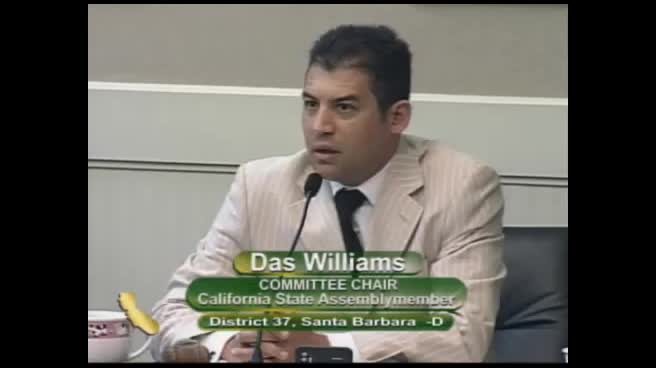 37MIN
Assembly Standing Committee on Natural Resources
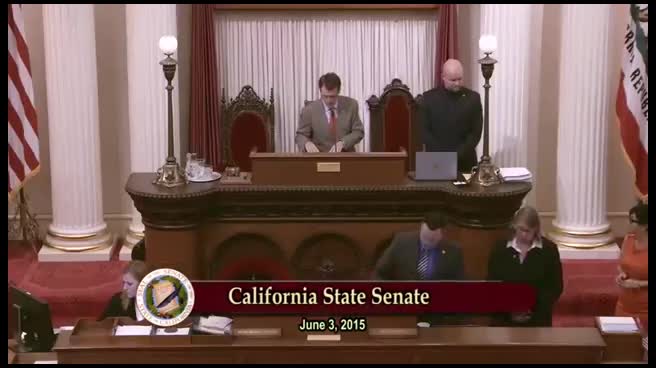
Senate Floor
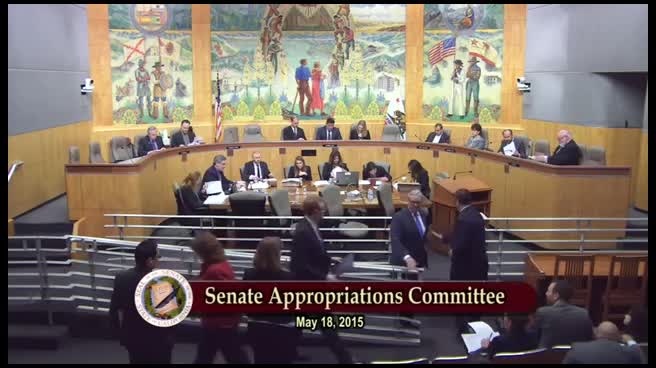 5MIN
Senate Standing Committee on Appropriations
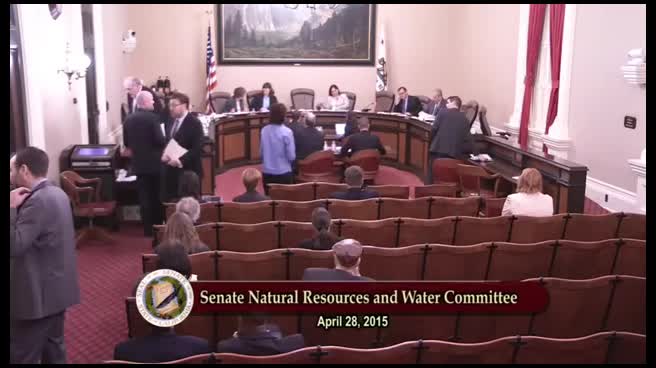 18MIN