AB 1781: Corporations: annual statement.
- Session Year: 2017-2018
- House: Assembly
- Latest Version Date: 2018-03-08
Existing law requires corporations to file an annual statement with the Secretary of State containing specified information. Existing law requires that the statement be available and open to the public for inspection and requires the Secretary of State to provide access to all information contained in the statement by means of an online database.
This bill would require the Secretary of State State, no later than December 31, 2019, to exclude personal information contained in the statement from the online database as described. provide access to all information contained in the statement by means of an online database, except for residence addresses and personal signatures.
Existing law requires corporations to file an annual statement with the Secretary of State containing specified information. Existing law requires that the statement be available and open to the public for inspection and requires the Secretary of State to provide access to all information contained in the statement by means of an online database.
This bill would require the Secretary of State to exclude personal information contained in the statement from the online database as described.
(a)Every corporation shall file, within 90 days after the filing of its original articles and annually thereafter during the applicable filing period, on a form prescribed by the Secretary of State, a statement containing all of the following:
(1)The name of the corporation and the Secretary of States file number.
(2)The names and complete business or residence addresses of its incumbent directors.
(3)The number of vacancies on the board, if any.
(4)The names and complete business or residence addresses of its chief executive officer, secretary, and chief financial officer.
(5)The street address of its principal executive office.
(6)The mailing address of the corporation, if different from the street address of its principal executive office.
(7)If the address of its principal executive office is not in this state, the street address of its principal business office in this state, if any.
(8)If the corporation chooses to receive renewal notices and any other notifications from the Secretary of State by electronic mail instead of by United States mail, the corporation shall include a valid electronic mail address for the corporation or for the corporations designee to receive those notices.
(9)A statement of the general type of business that constitutes the principal business activity of the corporation (for example, manufacturer of aircraft; wholesale liquor distributor; or retail department store).
(b)The statement required by subdivision (a) shall also designate, as the agent of the corporation for the purpose of service of process, a natural person residing in this state or a corporation that has complied with Section 1505 and whose capacity to act as an agent has not terminated. If a natural person is designated, the statement shall set forth that persons complete business or residence street address. If a corporate agent is designated, no address for it shall be set forth.
(c)If there has been no change in the information in the last filed statement of the corporation on file in the Secretary of States office, the corporation may, in lieu of filing the statement required by subdivisions (a) and (b), advise the Secretary of State, on a form prescribed by the Secretary of State, that no changes in the required information have occurred during the applicable filing period.
(d)For the purposes of this section, the applicable filing period for a corporation shall be the calendar month during which its original articles were filed and the immediately preceding five calendar months. The Secretary of State shall provide a notice to each corporation to comply with this section approximately three months prior to the close of the applicable filing period. The notice shall state the due date for compliance and shall be sent to the last address of the corporation according to the records of the Secretary of State or to the last electronic mail address according to the records of the Secretary of State if the corporation has elected to receive notices from the Secretary of State by electronic mail. The failure of the corporation to receive the notice is not an excuse for failure to comply with this section.
(e)Whenever any of the information required by subdivision (a) is changed, the corporation may file a current statement containing all the information required by subdivisions (a) and (b). In order to change its agent for service of process or the address of the agent, the corporation must file a current statement containing all the information required by subdivisions (a) and (b). Whenever any statement is filed pursuant to this section, it supersedes any previously filed statement and the statement in the articles as to the agent for service of process and the address of the agent.
(f)The Secretary of State may destroy or otherwise dispose of any statement filed pursuant to this section after it has been superseded by the filing of a new statement.
(g)This section shall not be construed to place any person dealing with the corporation on notice of, or under any duty to inquire about, the existence or content of a statement filed pursuant to this section.
(h)The statement required by subdivision (a) shall be available and open to the public for inspection. The Secretary of State shall State, no later than December 31, 2019, shall provide access to the information contained in the statement by means of an online database. However, the Secretary of State shall exclude personal information contained in the statement, including, but not limited to, home addresses and personal signatures, from the online database. database, except for both of the following:
(1)Residence addresses.
(2)Personal signatures.
(i)In addition to any other fees required, a corporation shall pay a five-dollar ($5) disclosure fee when filing the statement required by subdivision (a). One-half of the fee shall, notwithstanding Section 12176 of the Government Code, be deposited into the Business Programs Modernization Fund established in subdivision (k), and one-half shall be deposited into the Victims of Corporate Fraud Compensation Fund established in Section 2280.
(j)A corporation shall certify that the information it provides pursuant to subdivisions (a) and (b) is true and correct. No claim may be made against the state for inaccurate information contained in the statements.
(k)There is hereby established the Business Programs Modernization Fund in the State Treasury. Moneys deposited into the fund shall, upon appropriation by the Legislature, be available to the Secretary of State to further the purposes of this section, including the development and maintenance of the online database required by subdivision (h), and by subdivision (c) of Section 2117.
(a)Every corporation shall file, within 90 days after the filing of its original articles and annually thereafter during the applicable filing period, on a form prescribed by the Secretary of State, a statement containing all of the following:
(1)The name of the corporation and the Secretary of States file number.
(2)The names and complete business or residence addresses of its incumbent directors.
(3)The number of vacancies on the board, if any.
(4)The names and complete business or residence addresses of its chief executive officer, secretary, and chief financial officer.
(5)The street address of its principal executive office.
(6)The mailing address of the corporation, if different from the street address of its principal executive office.
(7)If the address of its principal executive office is not in this state, the street address of its principal business office in this state, if any.
(8)If the corporation chooses to receive renewal notices and any other notifications from the Secretary of State by electronic mail instead of by United States mail, the corporation shall include a valid electronic mail address for the corporation or for the corporations designee to receive those notices.
(9)A statement of the general type of business that constitutes the principal business activity of the corporation (for example, manufacturer of aircraft; wholesale liquor distributor; or retail department store).
(b)The statement required by subdivision (a) shall also designate, as the agent of the corporation for the purpose of service of process, a natural person residing in this state or a corporation that has complied with Section 1505 and whose capacity to act as an agent has not terminated. If a natural person is designated, the statement shall set forth that persons complete business or residence street address. If a corporate agent is designated, no address for it shall be set forth.
(c)If there has been no change in the information in the last filed statement of the corporation on file in the Secretary of States office, the corporation may, in lieu of filing the statement required by subdivisions (a) and (b), advise the Secretary of State, on a form prescribed by the Secretary of State, that no changes in the required information have occurred during the applicable filing period.
(d)For the purposes of this section, the applicable filing period for a corporation shall be the calendar month during which its original articles were filed and the immediately preceding five calendar months. The Secretary of State shall provide a notice to each corporation to comply with this section approximately three months prior to the close of the applicable filing period. The notice shall state the due date for compliance and shall be sent to the last address of the corporation according to the records of the Secretary of State or to the last electronic mail address according to the records of the Secretary of State if the corporation has elected to receive notices from the Secretary of State by electronic mail. The failure of the corporation to receive the notice is not an excuse for failure to comply with this section.
(e)Whenever any of the information required by subdivision (a) is changed, the corporation may file a current statement containing all the information required by subdivisions (a) and (b). In order to change its agent for service of process or the address of the agent, the corporation must file a current statement containing all the information required by subdivisions (a) and (b). Whenever any statement is filed pursuant to this section, it supersedes any previously filed statement and the statement in the articles as to the agent for service of process and the address of the agent.
(f)The Secretary of State may destroy or otherwise dispose of any statement filed pursuant to this section after it has been superseded by the filing of a new statement.
(g)This section shall not be construed to place any person dealing with the corporation on notice of, or under any duty to inquire about, the existence or content of a statement filed pursuant to this section.
(h)The statement required by subdivision (a) shall be available and open to the public for inspection. The Secretary of State shall provide access to all the information contained in this the statement by means of an online database. However, the Secretary of State shall exclude personal information contained in the statement, including, but not limited to, home addresses and personal signatures, from the online database.
(i)In addition to any other fees required, a corporation shall pay a five-dollar ($5) disclosure fee when filing the statement required by subdivision (a). One-half of the fee shall, notwithstanding Section 12176 of the Government Code, be deposited into the Business Programs Modernization Fund established in subdivision (k), and one-half shall be deposited into the Victims of Corporate Fraud Compensation Fund established in Section 2280.
(j)A corporation shall certify that the information it provides pursuant to subdivisions (a) and (b) is true and correct. No claim may be made against the state for inaccurate information contained in the statements.
(k)There is hereby established the Business Programs Modernization Fund in the State Treasury. Moneys deposited into the fund shall, upon appropriation by the Legislature, be available to the Secretary of State to further the purposes of this section, including the development and maintenance of the online database required by subdivision (h), and by subdivision (c) of Section 2117.
|
Date
|
Status
|
|---|---|
| May 25, 2018 | In committee: Held under submission. |
| Apr 25, 2018 | In committee: Set, first hearing. Referred to APPR. suspense file. |
| Apr 18, 2018 | From committee: Do pass and re-refer to Com. on APPR. (Ayes 10. Noes 0.) (April 17). Re-referred to Com. on APPR. |
| Apr 5, 2018 | Re-referred to Com. on P. & C.P. pursuant to Assembly Rule 96. |
| Apr 3, 2018 | From committee: Do pass and re-refer to Com. on APPR. (Ayes 9. Noes 1.) (April 2). Re-referred to Com. on APPR. |
| Mar 12, 2018 | Re-referred to Com. on B. & F. |
| Mar 8, 2018 | From committee chair, with author's amendments: Amend, and re-refer to Com. on B. & F. Read second time and amended. |
| Feb 5, 2018 | Referred to Com. on B. & F. |
| Jan 9, 2018 | From printer. May be heard in committee February 8. |
| Jan 8, 2018 | Read first time. To print. |
|
Date
|
Description
|
Location
|
Votes
|
|
|---|---|---|---|---|
| Apr 17, 2018 | Do pass and be re-referred to the Committee on [Appropriations] | Assembly Standing Committee on Privacy and Consumer Protection |
Passed |
|
| Apr 2, 2018 | Do pass and be re-referred to the Committee on [Appropriations] | Assembly Standing Committee on Banking and Finance |
Passed |
This list shows positions taken on this bill by organizations on the date displayed, which is linked to the original source.
Positions by individuals are not included.
|
Organization
|
Position
|
Date
|
|---|---|---|
| Cal Chamber | * Support | Apr 17, 2018 |
Date of Hearing: April 25, 2018
ASSEMBLY COMMITTEE ON APPROPRIATIONS
Lorena Gonzalez Fletcher, Chair
ABPCA Bill Id:AB 1781
Author:(Steinorth) – As Amended Ver:March 8, 2018
Policy Committee: | Banking and Finance | Vote: | 9 - 1 |
Privacy and Consumer Protection | 10 - 0 | ||
|
|
Urgency: No State Mandated Local Program: No Reimbursable: No
SUMMARY:
This bill requires the Secretary of State (SOS), by January 1, 2019, to exempt resident addresses and personal signatures contained within certain online corporate annual statements from being available and open to the public for inspection.
FISCAL EFFECT:
One-time costs to SOS of approximately $2.1 million General Fund (GF) to manually redact the signatures and addresses of approximately 1.2 million annual statements, and ongoing GF costs of $150,000 to redact signatures and addresses from an estimated 85,000 statements.
COMMENTS:
- Background and purpose. Every corporation must annually submit an information form to SOS that contains a range of corporate information, including its name and the names and addresses of its incumbent directors. This form specifies that these addresses can be business or residential addresses. Under current law, the information in this form must be made available and open to the public, and the SOS maintains an online database for the public to look up and access this information.
According to the author, this information that is posted online can be easily misused and exploited. The author argues that the personal signatures in the forms can be copied and fraudulently used on other documents, and the addresses provided on the forms can be used to locate the personal addresses of some corporate officers. AB 1781 aims to curb this risk by requiring signatures and address information be removed from this posted information.
- Retroactivity. AB 1781, as drafted, requires SOS to revisit 1.2 million annual statements currently in the online database and manually redact their signatures and addresses. This is the primary cost driver of this bill. Restricting the bill’s provisions to future filings only and providing a mechanism for filers to have certain information remain private would significantly reduce the bill’s costs.
Analysis Prepared by: Luke Reidenbach / APPR. / (916) 319-2081
Date of Hearing: April 17, 2018
ASSEMBLY COMMITTEE ON PRIVACY AND CONSUMER PROTECTION
Ed Chau, Chair
ABPCA Bill Id:AB 1781 (
Author:Steinorth) – As Amended Ver:March 8, 2018
SUBJECT: Corporations: annual statement
SUMMARY: This bill would exempt residence addresses and personal signatures from an existing database run by the Secretary of State’s (SOS) office, which makes corporations’ annual statement information available and open to the public for inspection online. This bill would require the SOS to make the database available, except for this specific information, by no later than December 31, 2019.
EXISTING LAW:
- Requires every corporation to file, within 90 days after filing its original articles and annually thereafter, on a form prescribed by the SOS, a statement containing specified information, such as:
- The name of the corporation and the SOS’s file number.
- The names and complete business or residence addresses of its incumbent directors.
- The names and complete business or residence addresses of its chief executive officer, secretary, and chief financial officer.
- The street address of its principal executive office.
- The corporation’s mailing address, if different from the street address of its principal executive office.
- If the address of its principal executive office is not in this state, the street address of its principal business office in this state, if any.
- A statement of the general type of business that constitutes the principal business activity of the corporation (e.g., manufacturer of aircraft; wholesale liquor distributor; or retail department store). (Corp. Code Sec. 1502(a).)
- Requires that the annual statement, above, be available and open to the public for inspection. Requires the SOS to provide access to all information contained in this statement by means of an online database. (Corp. Code Sec. 1502(h).)
- Generally requires, pursuant to the California Public Records Act (CPRA), that public agencies disclose a government record to the public upon request, unless there is a specific reason to withhold it or if a public agency can establish that the public interest in nondisclosure clearly outweighs the public interest in disclosure. (Gov. Code Sec. 6250 et seq.)
FISCAL EFFECT: Unknown
COMMENTS:
- Purpose of this bill: This bill seeks to exempt home addresses and personal signatures from the SOS’s online database of corporations’ annual statements, which are otherwise intended to be made available and open to the public for inspection under existing law. This is an author-sponsored bill.
- Author’s statement: “According to CNN Money, ‘every two seconds, another American becomes a victim of identity theft.’ With more and more documents and forms moving onto the internet, which is accessible all over the world, we must be vigilant in protecting individuals[’] sensitive and private information. When business owners complete their annual Statement of Information, they deserve to know that their home addresses and personal signatures will not be available to internet users all over the world.
AB 1781 would provide a modest solution by simply redacting residential addresses and personal signatures from all future business filings posted on the Secretary of State’s online database. Business filings would still be available to the public online, but personal and sensitive information would be redacted. The information provided on the redacted filing would still be sufficient to find a business’s physical location, if available, and contact the business with any legal matters. Furthermore, the full, unaltered filings would still be available upon request. This bill balances protecting business owner’s personal information while still providing necessary disclosure to the public.”
- The California Corporate Disclosure Act: In 2002, AB 55 (Shelley and Matthews, Ch. 1015, Stats. 2002) enacted that California Corporate Disclosure Act, requiring both domestic and foreign corporations to file certain information with the SOS annually (instead of biennially), and that the information be made open and available to the public for inspection. AB 55 also required that the SOS make the information available in an online database for the first time. In 2004, the Legislature amended that Act, and in doing so stated the Legislature’s intent “to provide for the timely and accurate disclosure of information to the public regarding key relationships and activities of public corporations doing business in California.” That bill also set forth the Legislature’s intent that the Corporate Disclosure Act “provide critical items of information about a corporation in one centralized location where consumers, investors, and taxpayers can locate the information quickly and efficiently. While much of the information required under the act is provided to the federal government through regular filings to the Securities and Exchange Commission, the reports filed with the Securities and Exchange Commission are not readily searchable or understood by the average consumer or investor.” (See AB 1000 (Dutra, Ch. 819, Stats. 2004).) Subsequently, SB 998 (Cox, Ch. 101, Stats. 2007) added further to the list of information that corporations must include on those annual statements—specifically, the mailing address of the corporation in certain circumstances. Most recently, AB 657 (Gordon, Ch. 204, Stats. 2011) amended the Act to allow for a corporation to receive its annual renewal notice provided by the SOS by electronic mail and made conforming changes to the statement of information, including with regard to mailing and street addresses. Still, the annual statement requires mailing addresses for various purposes. This bill seeks to now exempt home addresses and personal signatures from the online database required to be made available by the SOS under the Corporate Disclosure Act.
- Competing public policies of protecting public’s right to transparency in public records and individuals’ right to privacy reduce chances of identity theft: As noted above, the public has a right to obtain certain information about corporations through an online database created by the SOS under the Corporate Disclosure Act passed by this Legislature in 2002, codified at Section 1502 of the Corporations Code. Separately, the CPRA makes public records available for public viewing and copying upon request, even when they are not electronically available under the Government Code. This bill now seeks to exempt certain information from those corporate records—namely, home addresses and personal signatures—from the online database created by the Corporate Disclosure Act in an effort to protect individuals from identity theft. Notably, while this bill seeks to exempt home addresses and personal signatures provided in corporate annual statements from the online database that the SOS must make avialable to the public for inspection under the Corporate Disclosure Act, it does not preclude the public from obtaining that same information under the CPRA.
Thus, this bill arguably strikes a tentative balance between competing public policies by reducing the ease with which this information may be misused by bad actors, while still allowing the public to obtain this information that the Corporate Disclosure Act deems important records for the SOS to hold, and the public to have access to, under the CPRA. As a matter of public policy, there may be some question as to whether certain items should be protected from disclosure altogether if the risk of identity theft outweighs the public interest in that same information. That being said, the CPRA also provides for the ability of an agency to withhold certain records, on a case by case basis, where on the facts of a particular case the public interest served by nondisclosure clearly outweighs the public interest served by disclosure of the record. (Gov. Code Sec. 6255(a).) Moreover, under this provision, the whole record does not necessarily have to be withheld; rather, parts of the record could be redacted to protect material exempted under this balancing test.
It is also worth noting, however, that to the extent that the SOS may have previously fulfilled its obligations to respond to CPRA requests for corporate statements by directing individuals to this online database (per Government Code Section 6253.9, the CPRA allows public agencies to make available public records, not otherwise exempt from disclosure, in an electronic format, if the information or record is kept in electronic format by a public agency), it may not be able to do so as easily moving forward, as the information would no longer be complete and some individuals specifically seeking that database-redacted information would have to follow up with a traditional CPRA request for it.
- SOS efforts to protect privacy: Staff notes that individuals—at least those sufficiently vigilant about their personal privacy to conduct research on how to avoid adding their home address to these filings—may already be able to protect against the sharing of their home address on their annual statements. Currently, the SOS provides the following privacy reminder on the Forms Samples and Fees webpage (see <http://www.sos.ca.gov/business-programs/business-entities/forms>), along with links to Frequently Asked Questions (FAQs) (see <http://www.sos.ca.gov/business-programs/pi-faqs>) about personal information in public filings and Guidelines for Access to Public Records:
Reminder: All Filings and Contents are Available to the Public
Filings and information contained in filings you submit to the Secretary of State are public record, including names, phone numbers, email addresses, and mailing and street
addresses, except as provided in statutes. To avoid issues related to identity theft you should avoid using and submitting confidential information in public filings unless specifically required by statute. The public can view information and download documents contained in the Secretary of State’s electronic records using digital search tools and information posted on the Secretary of State’s website. Also, please note that individuals and private companies use this public information to create third party access to these records.
For more information about privacy, please consult our FAQs Personal Information in Public Filings. More information on accessing public records is available through the Secretary of State’s Guidelines for Access to Public Records.
In the FAQs, the SOS website provides:
How can I prevent my personal information from being placed on the Secretary of State’s website?
Each person providing the information contained in public filings, as well as each person submitting the documents for filing with the Secretary of State, is responsible for ensuring that any confidential information is not included. Any information a person wishes to keep out of the public record should not be included in an initial filing or in any subsequent filing submitted to the Secretary of State, unless that information is required by statute to be provided. If a person is concerned with providing a residential street address, there are private companies that for a fee provide office space, street and mailing addresses, and other business services. However, the statutory minimum content requirements for filings with the Secretary of State must be met. Also, a P.O. Box number may be provided for a mailing address.
- Prior legislation: AB 657 (Gordon, Ch. 204, Stats. 2011) See Comment 3.
SB 998 (Cox, Ch. 101, Stats. 2007) See Comment 3.
AB 1000 (Dutra, Ch. 819, Stats. 2004) See Comment 3.
AB 55 (Shelley and Matthews, Ch. 1015, Stats. 2002) See Comment 3.
- Double-referral: This bill was double-referred to the Assembly Banking and Finance Committee where it was heard on April 2, 2018, and passed out on a 9-1 vote.
REGISTERED SUPPORT / OPPOSITION:
Support
California Chamber of Commerce
Opposition
None on file
Analysis Prepared by: Ronak Daylami / P. & C.P. / (916) 319-2200
Date of Hearing: April 2, 2018
ASSEMBLY COMMITTEE ON BANKING AND FINANCE
Monique Limón, Chair
ABPCA Bill Id:AB 1781 (
Author:Steinorth) – As Amended Ver:March 8, 2018
SUBJECT: Corporations: annual statement
SUMMARY: Requires the Secretary of State (SOS) to exempt residence addresses and personal signatures contained within online corporate annual statements, as specified, from being available and open to the public for inspection.
EXISTING LAW: Requires every corporation to file with the SOS within 90 days of filing its original articles, and annually thereafter, a form containing the following:
- The name of the corporation and the SOS’s file number.
- The names and complete business or residence addresses of its incumbent directors.
- The number of vacancies on the board, if any.
- The names and complete business or residence addresses of its chief executive officer, secretary, and chief financial officer.
- The street address of its principal executive office.
- The mailing address of the corporation, if different from the street address of its principal executive office.
- If the address of its principal executive office is not in this state, the street address of its principal business office in this state, if any.
- If the corporation chooses to receive renewal notices and any other notifications from the SOS by electronic mail instead of by United States mail, the corporation shall include a valid electronic mail address for the corporation or for the corporation’s designee to receive those notices.
- A statement of the general type of business that constitutes the principal business activity of the corporation (for example, manufacturer of aircraft; wholesale liquor distributor; or retail department store).
This information shall be made available and open to the public for inspection (Corporations Code Section 1502).
Portions of the California Public Records Act provide that:
(a) Public records are open to inspection at all times during the office hours of the state or local agency.
(f) In addition to maintaining public records for public inspection during the office hours of the public agency, a public agency may comply with subdivision (a) by posting any public record on its Internet Web site and, in response to a request for a public record posted on the Internet Web site, directing a member of the public to the location on the Internet Web site where the public record is posted… (Government Code Section 6253).
FISCAL EFFECT: Unknown
COMMENTS: Identity theft and the illegal hacking of data containing personal consumer information is a problem that continues to challenge both the private and public sectors as well. As noted in the above existing law section, the SOS requires information on the names and addresses of corporate directors and officers on the annual corporate statement. This information is public and as such must be made available to the public for inspection. Information which contains personal signatures and home addresses of corporate officers can be used in illegal ways including identity theft. According to the author:
“Although allowing the public to review these business filings online does improve government transparency and efficiency, some of the information provided in the filings can be substantially and easily misused. The personal signatures provided on the filings can quickly be pulled from the document and used to fraudulently sign other documents, including checks. The residential addresses provided by some business owners can be used to find images and the exact location of an owner’s personal home. Currently, both of these very sensitive pieces of personal information are readily available to everyone with internet access whereas previously they were only available upon request from the SOS’s office.”
The SOS’s office is still in the process of reviewing AB 1781 and does not have a position at this time. However, conversations with the author’s office, SOS’s office and interested parties have yielded the following concerns:
- Use of residential addresses is discouraged. Residence addresses are not required to submit a corporate statement of information filing. The SOS’s office actively discourages the use of residence addresses and provides corporations with alternatives for use on these forms.
- Which addresses are residential is not easily determined. The corporate statement of information forms request a street or mailing address and do not have a specific section for a residence address. The SOS’s office has no way of knowing if a residence address is listed on a corporate statement of information.
- Restricting online public access to this information may impact customer service. Passage of the bill could extend processing times and delay business registrations by requiring changes to business document processing systems and staff activities.
Transparency and public access are important goals when considering restricting access to public information. Individual Californians, government agencies and law enforcement, to name a few, benefit from direct access to the minimal contact information included on corporate statement of information filings. However, most if not all of the concerns listed above could be addressed with additional resources to revamp and retool the way the SOS maintains this information.
Should this bill pass the Assembly Banking and Finance Committee it will be heard in the Assembly Appropriations Committee where the cost of implementation will be analyzed.
REGISTERED SUPPORT / OPPOSITION:
Support
None on file
Opposition
None on file
Analysis Prepared by: William Herms / B. & F. / (916) 319-3081
Discussed in Hearing
 5MIN
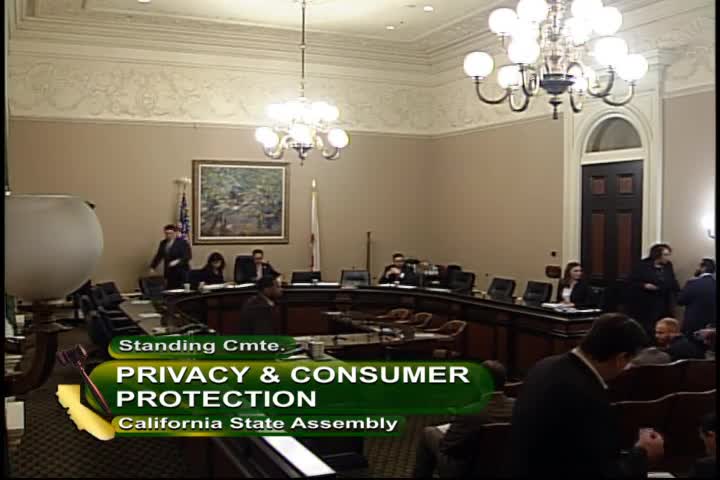
Assembly Standing Committee on Privacy and Consumer Protection
 10MIN
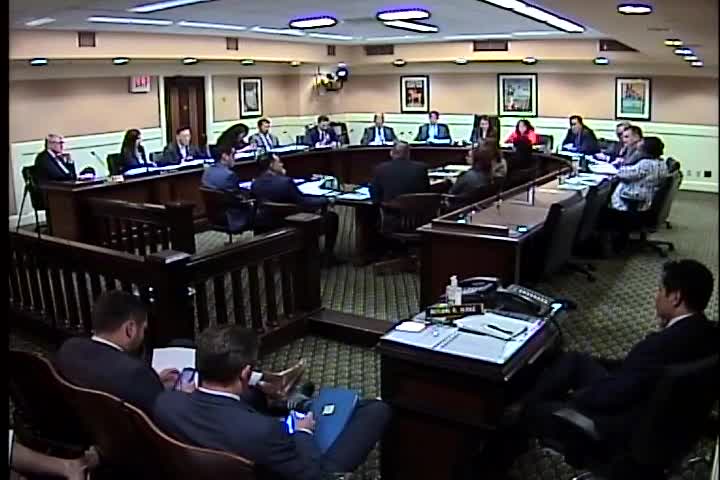
Assembly Standing Committee on Banking and Finance
Bill Author

Bill Co-Author(s):