SB 1146: Prisoners: rights.
- Session Year: 2017-2018
- House: Senate
- Latest Version Date: 2018-04-26
Existing law provides for certain enumerates the civil rights that are retained by prisoners, including the right to purchase, receive, and read any and all newspapers, periodicals, and books accepted for distribution by the United States Post Office. correspond, confidentially, with any member of the State Bar or holder of public office, except that prison authorities are authorized to open and inspect incoming mail to search for contraband. Existing law also provides that prison authorities may exclude obscene publications or writings and open and inspect any and all packages received by an inmate.
Existing law authorizes a court to issue a restraining order or protective order enjoining the restrained party from contacting the protected party, as specified. Under existing law, violation of the terms of a restraining order is punishable as a misdemeanor and subsequent violations are punishable as a misdemeanor or felony.
This bill would authorize prison authorities to open and inspect outgoing mail for purposes of enforcing a restraining order or protective order against an inmate. inmate, but would prohibit prison authorities from opening or inspecting outgoing confidential correspondence between a prisoner and his or her attorney.
Existing law provides for certain civil rights that are retained by prisoners, including the right to purchase, receive, and read any and all newspapers, periodicals, and books accepted for distribution by the United States Post Office. Existing law also provides that prison authorities may exclude obscene publications or writings and open and inspect any and all packages received by an inmate.
Existing law authorizes a court to issue a restraining order or protective order enjoining the restrained party from contacting the protected party, as specified. Under existing law, violation of the terms of a restraining order is punishable as a misdemeanor and subsequent violations are punishable as a misdemeanor or felony.
This bill would authorize prison authorities to open and inspect outgoing mail for purposes of enforcing a restraining order or protective order against an inmate.
Existing law makes it a crime to commit an assault upon the person of another with a deadly weapon or instrument other than a firearm. Existing law makes it a crime to commit an assault upon the person of another by any means of force likely to produce great bodily injury.This bill would make technical, nonsubstantive changes to those provisions.Existing law makes it a crime to commit an assault upon the person of another with a deadly weapon or instrument other than a firearm. Existing law makes it a crime to commit an assault upon the person of another by any means of force likely to produce great bodily injury.
This bill would make technical, nonsubstantive changes to those provisions.
Subject only to the provisions of that section, each person described in Section 2600 shall have the following civil rights:
(a)Except as provided in Section 2225 of the Civil Code, to inherit, own, sell, or convey real or personal property, including all written and artistic material produced or created by the person during the period of imprisonment. However, to the extent authorized in Section 2600, the Department of Corrections may restrict or prohibit sales or conveyances that are made for business purposes.
(b)To correspond, confidentially, with any member of the State Bar or holder of public office, provided that the prison authorities may open and inspect incoming mail to search for contraband.
(c)(1)To purchase, receive, and read any and all newspapers, periodicals, and books accepted for distribution by the United States Post Office. Pursuant to this section, prison authorities may exclude any of the following matter:
(A)Obscene publications or writings, and mail containing information concerning where, how, or from whom this matter may be obtained.
(B)Any matter of a character tending to incite murder, arson, riot, violent racism, or any other form of violence.
(C)Any matter concerning gambling or a lottery.
(2)This section does not limit the right of prison authorities to do the following:
(A)Open and inspect any and all packages received by an inmate.
(B)Establish reasonable restrictions as to the number of newspapers, magazines, and books that the inmate may have in his or her cell or elsewhere in the prison at one time.
(C)Open and inspect outgoing mail for purposes of enforcing a restraining order or protective order against an inmate. inmate. Prison authorities shall not open or inspect outgoing confidential correspondence between a person described in Section 2600 and his or her attorney.
(d)To initiate civil actions, subject to a three dollar ($3) filing fee to be collected by the Department of Corrections, in addition to any other filing fee authorized by law, and subject to Title 3a (commencing with Section 391) of the Code of Civil Procedure.
(e)To marry.
(f)To create a power of appointment.
(g)To make a will.
(h)To receive all benefits provided for in Sections 3370 and 3371 of the Labor Code and in Section 5069.
Subject only to the provisions of that section, each person described in Section 2600 shall have the following civil rights:
(a)Except as provided in Section 2225 of the Civil Code, to inherit, own, sell, or convey real or personal property, including all written and artistic material produced or created by the person during the period of imprisonment. However, to the extent authorized in Section 2600, the Department of Corrections may restrict or prohibit sales or conveyances that are made for business purposes.
(b)To correspond, confidentially, with any member of the State Bar or holder of public office, provided that the prison authorities may open and inspect incoming mail to search for contraband.
(c)(1)To purchase, receive, and read any and all newspapers, periodicals, and books accepted for distribution by the United States Post Office. Pursuant to this section, prison authorities may exclude any of the following matter:
(A)Obscene publications or writings, and mail containing information concerning where, how, or from whom this matter may be obtained.
(B)Any matter of a character tending to incite murder, arson, riot, violent racism, or any other form of violence.
(C)Any matter concerning gambling or a lottery.
(2)Nothing in this section shall be construed as limiting This section does not limit the right of prison authorities to do the following:
(A)Open and inspect any and all packages received by an inmate.
(B)Establish reasonable restrictions as to the number of newspapers, magazines, and books that the inmate may have in his or her cell or elsewhere in the prison at one time.
(C)Open and inspect outgoing mail for purposes of enforcing a restraining order or protective order against an inmate.
(d)To initiate civil actions, subject to a three dollar ($3) filing fee to be collected by the Department of Corrections, in addition to any other filing fee authorized by law, and subject to Title 3a (commencing with Section 391) of the Code of Civil Procedure.
(e)To marry.
(f)To create a power of appointment.
(g)To make a will.
(h)To receive all benefits provided for in Sections 3370 and 3371 of the Labor Code and in Section 5069.
SECTION 1.Section 245 of the Penal Code is amended to read:245.(a)(1)A person who commits an assault upon the person of another with a deadly weapon or instrument other than a firearm shall be punished by imprisonment in the state prison for two, three, or four years, or in a county jail for not exceeding one year, or by a fine not exceeding ten thousand dollars ($10,000), or by both the fine and imprisonment.(2)A person who commits an assault upon the person of another with a firearm shall be punished by imprisonment in the state prison for two, three, or four years, or in a county jail for not less than six months and not exceeding one year, or by both a fine not exceeding ten thousand dollars ($10,000) and imprisonment.(3)A person who commits an assault upon the person of another with a machinegun, as defined in Section 16880, or an assault weapon, as defined in Section 30510 or 30515, or a .50 BMG rifle, as defined in Section 30530, shall be punished by imprisonment in the state prison for 4, 8, or 12 years.(4)A person who commits an assault upon the person of another by any means of force likely to produce great bodily injury shall be punished by imprisonment in the state prison for two, three, or four years, or in a county jail for not exceeding one year, or by a fine not exceeding ten thousand dollars ($10,000), or by both the fine and imprisonment.(b)A person who commits an assault upon the person of another with a semiautomatic firearm shall be punished by imprisonment in the state prison for three, six, or nine years.(c)A person who commits an assault with a deadly weapon or instrument, other than a firearm, or by any means likely to produce great bodily injury upon the person of a peace officer or firefighter, and who knows or reasonably should know that the victim is a peace officer or firefighter engaged in the performance of his or her duties, when the peace officer or firefighter is engaged in the performance of his or her duties, shall be punished by imprisonment in the state prison for three, four, or five years.(d)(1)A person who commits an assault with a firearm upon the person of a peace officer or firefighter, and who knows or reasonably should know that the victim is a peace officer or firefighter engaged in the performance of his or her duties, when the peace officer or firefighter is engaged in the performance of his or her duties, shall be punished by imprisonment in the state prison for four, six, or eight years.(2)A person who commits an assault upon the person of a peace officer or firefighter with a semiautomatic firearm and who knows or reasonably should know that the victim is a peace officer or firefighter engaged in the performance of his or her duties, when the peace officer or firefighter is engaged in the performance of his or her duties, shall be punished by imprisonment in the state prison for five, seven, or nine years.(3)A person who commits an assault with a machinegun, as defined in Section 16880, or an assault weapon, as defined in Section 30510 or 30515, or a .50 BMG rifle, as defined in Section 30530, upon the person of a peace officer or firefighter, and who knows or reasonably should know that the victim is a peace officer or firefighter engaged in the performance of his or her duties, shall be punished by imprisonment in the state prison for 6, 9, or 12 years.(e)If a person is convicted of a violation of this section in a case involving use of a deadly weapon or instrument or firearm, and the weapon or instrument or firearm is owned by that person, the court shall order that the weapon or instrument or firearm be deemed a nuisance, and it shall be confiscated and disposed of in the manner provided by Sections 18000 and 18005.(f)As used in this section, peace officer refers to a person designated as a peace officer in Chapter 4.5 (commencing with Section 830) of Title 3 of Part 2.(a)(1)Any A person who commits an assault upon the person of another with a deadly weapon or instrument other than a firearm shall be punished by imprisonment in the state prison for two, three, or four years, or in a county jail for not exceeding one year, or by a fine not exceeding ten thousand dollars ($10,000), or by both the fine and imprisonment.
(2)Any A person who commits an assault upon the person of another with a firearm shall be punished by imprisonment in the state prison for two, three, or four years, or in a county jail for not less than six months and not exceeding one year, or by both a fine not exceeding ten thousand dollars ($10,000) and imprisonment.
(3)Any A person who commits an assault upon the person of another with a machinegun, as defined in Section 16880, or an assault weapon, as defined in Section 30510 or 30515, or a .50 BMG rifle, as defined in Section 30530, shall be punished by imprisonment in the state prison for 4, 8, or 12 years.
(4)Any A person who commits an assault upon the person of another by any means of force likely to produce great bodily injury shall be punished by imprisonment in the state prison for two, three, or four years, or in a county jail for not exceeding one year, or by a fine not exceeding ten thousand dollars ($10,000), or by both the fine and imprisonment.
(b)Any A person who commits an assault upon the person of another with a semiautomatic firearm shall be punished by imprisonment in the state prison for three, six, or nine years.
(c)Any A person who commits an assault with a deadly weapon or instrument, other than a firearm, or by any means likely to produce great bodily injury upon the person of a peace officer or firefighter, and who knows or reasonably should know that the victim is a peace officer or firefighter engaged in the performance of his or her duties, when the peace officer or firefighter is engaged in the performance of his or her duties, shall be punished by imprisonment in the state prison for three, four, or five years.
(d)(1)Any A person who commits an assault with a firearm upon the person of a peace officer or firefighter, and who knows or reasonably should know that the victim is a peace officer or firefighter engaged in the performance of his or her duties, when the peace officer or firefighter is engaged in the performance of his or her duties, shall be punished by imprisonment in the state prison for four, six, or eight years.
(2)Any A person who commits an assault upon the person of a peace officer or firefighter with a semiautomatic firearm and who knows or reasonably should know that the victim is a peace officer or firefighter engaged in the performance of his or her duties, when the peace officer or firefighter is engaged in the performance of his or her duties, shall be punished by imprisonment in the state prison for five, seven, or nine years.
(3)Any A person who commits an assault with a machinegun, as defined in Section 16880, or an assault weapon, as defined in Section 30510 or 30515, or a .50 BMG rifle, as defined in Section 30530, upon the person of a peace officer or firefighter, and who knows or reasonably should know that the victim is a peace officer or firefighter engaged in the performance of his or her duties, shall be punished by imprisonment in the state prison for 6, 9, or 12 years.
(e)When If a person is convicted of a violation of this section in a case involving use of a deadly weapon or instrument or firearm, and the weapon or instrument or firearm is owned by that person, the court shall order that the weapon or instrument or firearm be deemed a nuisance, and it shall be confiscated and disposed of in the manner provided by Sections 18000 and 18005.
(f)As used in this section, peace officer refers to any a person designated as a peace officer in Chapter 4.5 (commencing with Section 830) of Title 3 of Part 2.
|
Date
|
Status
|
|---|---|
| Jun 26, 2018 | June 26 set for second hearing canceled at the request of author. |
| Jun 12, 2018 | June 12 set for first hearing. Failed passage in committee. (Ayes 2. Noes 5.) Reconsideration granted. |
| May 10, 2018 | Referred to Com. on PUB. S. |
| May 3, 2018 | In Assembly. Read first time. Held at Desk. |
| May 3, 2018 | Read third time. Passed. (Ayes 38. Noes 0.) Ordered to the Assembly. |
| Apr 26, 2018 | Read second time and amended. Ordered to third reading. |
| Apr 25, 2018 | From committee: Do pass as amended. (Ayes 7. Noes 0.) (April 24). |
| Apr 18, 2018 | Set for hearing April 24. |
| Apr 17, 2018 | April 17 set for first hearing canceled at the request of author. |
| Apr 6, 2018 | Set for hearing April 17. |
| Apr 4, 2018 | Re-referred to Com. on PUB. S. |
| Mar 19, 2018 | From committee with author's amendments. Read second time and amended. Re-referred to Com. on RLS. |
| Feb 22, 2018 | Referred to Com. on RLS. |
| Feb 15, 2018 | From printer. May be acted upon on or after March 17. |
| Feb 14, 2018 | Introduced. Read first time. To Com. on RLS. for assignment. To print. |
|
Date
|
Description
|
Location
|
Votes
|
|
|---|---|---|---|---|
| Jun 12, 2018 | Reconsideration. | Assembly Standing Committee on Public Safety |
Passed |
|
| Jun 12, 2018 | Do pass. | Assembly Standing Committee on Public Safety |
Failed |
|
| May 3, 2018 | Senate 3rd Reading SB1146 Stone | Senate Floor |
Passed |
|
| Apr 24, 2018 | Do pass as amended | Senate Standing Committee on Public Safety |
Passed |
This list shows positions taken on this bill by organizations on the date displayed, which is linked to the original source.
Positions by individuals are not included.
|
Organization
|
Position
|
Date
|
|---|---|---|
| Crime Victims Action Alliance | * Support | Jun 12, 2018 |
| Crime Victims United Of California | ** Support | Jun 25, 2018 |
| Riverside Sheriffs' Association | ** Support | Jun 25, 2018 |
Date of Hearing: June 26, 2018
Counsel: Liah Burnley
ASSEMBLY COMMITTEE ON PUBLIC SAFETY
Reginald Byron Jones-Sawyer, Sr., Chair
SBPCA Bill Id:SB 1146
Author:(Stone) – As Amended Ver:April 26, 2018
VOTE ONLY
SUMMARY: Authorizes prison authorities to open and inspect outgoing inmate mail for the purpose of enforcing restraining and protective orders and provides that prison authorities shall not open or inspect outgoing confidential correspondence between an inmate and his or her attorney.
EXISTING LAW:
- Defines a “protective order” as an order enjoining specific acts of abuse, excluding a person from a dwelling, or enjoying other specified behavior. (Fam. Code, § 6281.)
- Authorizes the trial court in a criminal case to issue protective orders when there is a good cause belief that harm to, or intimidation or dissuasion of a victim or witness has occurred or is reasonably likely to occur. (Pen. Code, § 136.2, subd. (a).)
- Allows a court to issue a protective order for up to 10 years to protect the victim of the crime when a defendant is convicted of a domestic violence offense, rape, spousal rape, statutory rape, a gang offense, any offense requiring sex-offender registration, including pimping and pandering of a minor, stalking, and elder and dependent adult abuse cases. (Pen. Code, §§ 136.2, subd. (i)(1), 646.9, subd. (k), 368, subd. (l).)
- Allows the court to issue civil harassment protective orders and workplace violence protective orders for up to three years upon a showing of clear and convincing evidence. (Civ. Pro. Code, §§ 527.6, 527.8.)
- States that the prosecuting agency of each county shall have the primary responsibility for the enforcement of protective orders. (Pen. Code § 273.6 subd. (f).)
- Provides that a person violating a protective order may be punished for any offense related to intimidation of witnesses or victims or for contempt of court. (Pen. Code, § 136.2, subd. (b).)
- Provides that any intentional and knowing violation of a protective order is a misdemeanor punishable by a fine of not more than $1,000, imprisonment in county jail for not more than one year, or both. (Pen. Code § 273.6 subd. (a).)
- States that a subsequent conviction for a violation of a protective order, occurring within seven years of a prior conviction for a violation of a protective order, and involving an act or threat of violence, is a misdemeanor punishable by imprisonment in a county jail not to exceed one year, or a felony punishable by a term of imprisonment in a county jail for 16 months, or two or three years. (Pen. Code § 273.6 subd. (d).)
- Provides that a subsequent conviction for a violation of a protective order within one year of a prior conviction for a violation of a protective order that results in physical injury to a victim, is a misdemeanor punishable by a fine of not more than $2,000 or imprisonment in county jail for not less than six months or more than one year, or as a felony punishable by a term of imprisonment in a county jail for 16 months, or two or three years. (Pen. Code § 273.6 subd. (e).)
- Enumerates specific civil rights of prisoners including, to own, sell, and convey property; correspond confidentially with any member of the State Bar and holder of public office; purchase, receive, and read newspapers, periodicals, and books; initiate civil actions; marry; create power of appointment, create a will; and to receive certain benefits. (Pen Code § 2601.)
- Clarifies that the statutory provision of law giving state prisoners the right to receive periodicals does not limit the ability of prison officials to open and inspect all incoming packages received by an inmate. (Pen. Code § 2601 subd. (c)(2)(A).)
- States that a person sentenced to imprisonment in a state prison may be deprived of rights that are reasonably related to legitimate penological interests. (Pen. Code § 2600.)
FISCAL EFFECT: Unknown.
COMMENTS:
- Author's Statement: According to the author, “Senator Stone seeks to add an extra layer of protection for victims from the emotional trauma of receiving communications from an incarcerated individual. The laws exist to protect victims both physically and emotionally, and these victims expect just that, protection. While the prison or jail authorities are searching the outgoing mail, as per current law and procedure, these harmful letters can be stopped before they can inflict the emotional damage on the victim. SB 1146 does just that, giving the prison or jail staff the authorization to enforce restraining orders and protection orders while conducting their outgoing mail searches. All victims deserve this simple act of protection.”
- Inspecting Inmate Mail: The question of whether prison officials can monitor inmates’ non-confidential communications, including their outgoing mail, has long been settled. “Except where the communication is a confidential one addressed to an attorney, court or public official, a prisoner has no expectation of privacy with respect to letters posted by him.” (People v. Harris (2000) 83 Cal. App. 4th 371, 375, 99.)
Indeed, Penal Code § 2601 states that prison officials may deprive inmates rights that are reasonably related to penological interests, such as opening and inspecting and disallowing outgoing mail that violates the law. Moreover, the rules regulating California’s prisons clearly state that “[n]on-confidential correspondence may be disallowed if the text of such correspondence presents a danger, or a threat of danger, to any person.” (Cal. Code Regs. tit. 15 § 3135.) Certain correspondence including mail tending to incite murder, violence, or physical harm to any person, mail that threatens blackmail or extortion, mail concerning plans to escape, or for activities that violate the law is specifically disallowed. (Id.) Prison officials may open and inspect outgoing inmate mail and restrict mail of this nature from being delivered. (Id.)
Additionally, the receiver of inmate mail can ask prison officials for a reasonable remedy including disallowing mail that appears to perpetuate the problem, or disallowing all mail from the inmate to the individual. (Ibid.) A person who receives mail in violation of a restraining or protective order may choose to simply ignore the mail, ask CDCR to disallow the mail, initiate civil contempt proceedings, or file a complaint with local law enforcement. (Id.) The district attorney may initiate criminal proceedings against any individual, including a prison inmate, who violates a protective order, and if found guilty, the individual can receive an additional term of imprisonment. (Pen. Code § 273.6 subd. (a).)
- Restraining Orders: As a general matter, the court can issue a protective order in several circumstances. The court is authorized to issue no-contact orders for up to 10 years when a defendant has been convicted of willful infliction of corporal injury to a spouse, former spouse, cohabitant, former cohabitant, or the mother or father of the defendant’s child. The court can also issue no-contact orders lasting up to 10 years in cases involving a domestic-violence-related offense, rape, spousal rape, statutory rape, gang cases, or any crime requiring sex offender registration. (Pen. Code, § 136.2, subd. (i)(1).) The same is true of stalking cases (Pen. Code, §646.9, subd. (k)). Similarly, in cases involving a criminal conviction or juvenile adjudication for a sex offense in which the victim was a minor, the court may issue an order “that would prohibit … harassing, intimidating, or threatening the victim or the victim’s family members or spouse.” (Pen. Code, § 1201.3, subd. (a).) Lastly, the court has authority to issue no-contact orders lasting up to 10 years in cases involving the abuse of an elder or dependent adult. (Pen. Code, § 368, subd. (l).)
A person can violate a protective order in a number of ways, for example by contacting the victim via telephone, text, email, or mail. The consequences of having the court issue a restraining order against a person can be very severe. Disobedience of a court order, including restraining and protective orders, may be punished as criminal contempt. The criminal contempt power is vested in the prosecution and, as such, the prosecution has the ability to enforce a restraining order. (Pen. Code § 273.6 subd. (f).) Contempt is proven by showing that the defendant willfully intended to disobey the order, and disregard of the duty to obey the order. (In re Karpf (1970) 10 Cal.App.3d 355, 372.) Criminal contempt is a misdemeanor and criminal contempt proceedings conducted like any other misdemeanor offense. (In re McKinney (1968) 70 Cal.2d 8, 10; In re Kreitman (1995) 40 Cal.App.4th 750, 755.)
- Unintended Consequences of this Bill:
- Transforms the Responsibilities of Prison Authorities: This bill would increase the responsibilities of CDCR officials by requiring them to enforce restraining and protective orders. This is problematic for several reasons. First, and most important, CDCR does not have a system or mechanism for tracking restraining orders and protective orders. This bill would require CDCR to create and implement a monitoring system for restraining orders, and collect the required information from each and every person in its custody. This would be a significant cost to the state.
Second, this bill would permit prison authorities to open and inspect outgoing mail for the “purposes of enforcing a restraining order or protective order.” It is unclear what “enforcing a restraining order or protective order” entails. Notably, this bill does not state whether such mail is disallowed or deliverable, nor does it give prison authorities any direction about how to “enforce” protective orders. Does “enforce” mean that prison authorities can simply refuse to send mail that they determine to be a violation of protective order? Must prison officials enforce protective orders by requesting local law enforcement or district attorney to review the conduct and initiate misdemeanor or felony proceedings, something that victims are already empowered to do? Or must prison officials use their internal disciplinary process to “enforce” violations of protective orders? Importantly, not all CDCR mailroom officials are peace officers and therefore, they are not the appropriate staff members to “enforce” the law. As such, this bill would require additional staffing that are sworn peace officers to review outgoing mail and enforce the provisions of this bill. Moreover, should this new responsibility of enforcing protective orders extend to all inmate communications, such as telephone calls and inmate visits?
Third, this bill would require prison officials to inspect each and every item of outgoing mail to determine whether it violates a restraining or protective order. These officials would be tasked with determining whether the inmate has a valid protective or restraining order against the recipient of the mail, interpreting the order to determine whether mail contact is allowed or prohibited by the order, reading the mail to determine whether the communication is directed at the person in the order, making a decision whether or not the mail violates the order, notifying the inmate that his or her mail was not sent because it violated a protective order, and possibly notifying law enforcement of the inmate’s attempt to violate the order. This bill would require CDCR mailroom staff to undergo training on how to interpret a protective order and understand when a particular item of mail is in violation of the order.
Lastly, to avoid constitutional due process issues, CDCR would expectantly be tasked with creating an administrative appeal process for inmates who believe that prison authorities wrongfully determined that their outgoing mail violated a restraining or protective order.
The Legislature should consider whether the existing process— which empowers the recipient of inmate mail to request CDCR to disallow all mail to him or her, initiate civil enforcement proceedings, report the conduct to law enforcement, or simply toss the unwanted mail in the recycle bin—is more efficient.
- Disempowers the Victim: Though this bill is well intentioned to help and empower victims, it actually robs victims of their own personal autonomy and power. For example, there may be instances where the victim desires, or even initiates, contact with the inmate. Some restraining orders are issued for a lengthy period of time, up to 10 years. During that time, the victim may want to contact with the inmate, to make amends, discuss the passing of a relative, or figure out joint finances, for example. This bill would prohibit such communication—even if the victim does not find it to be harassing. Ultimately, the victim, not CDCR mailroom staff, should have the authority to determine whether he or she desires to receive communications from the inmate.
- Expressio Unius Est Exclusio Alterisus: This bill has the opposite of its intended effect and limits the ability of prison officials to open and inspect outgoing mail. Under the statutory construction rule expressio unius est exclusio alterius, the express mention of one thing of a type necessarily excludes others of that type. (U.S. v. Vonn (2002) 535 U.S. 55, 64; Black’s Law Dictionary.) For example, a statute that expressly grants authority in one particular circumstance implies that the authority is prohibited in other circumstances. The expression-exclusion rule has been repeatedly applied by the United States Supreme Court and the Supreme Court of California to statutes, ordinances, wills, and private contracts.
This bill states that prison officials may open and inspect outgoing inmate mail for the purpose of enforcing a restraining or protective order. This bill expressly gives prison authorities authorization to open and inspect outgoing mail in one circumstance, and does not mention any other circumstance that prison authorities may be authorized to to open and inspect mail. Thus, in applying the expression-exclusion rule, this bill means that prison authorities may only open and inspect outgoing inmate mail to enforce a restraining or protective order, and excludes any and all other reasons to open and inspect outgoing inmate mail. This is especially true in light of the statutory scheme in which this bill is placed, which enumerates inmates’ statutory civil rights. (Pen. Code §§ 2600, 2601.) Read in conjunction with these statutory provisions, this bill implies that inmates have a statutory right to send outgoing mail and that prison authorities can only infringe that right for the narrow purpose of enforcing a protective or restraining order. (Leatherman v. Tarrant County Narcotics Intelligence and Coordination Unit (1993) 507 U.S. 163, 168; Dyna-Med, Inc. v. Fair Employment & Housing Com., (1987) 43 Cal. 3d 1379, 1391.)
Prison officials have numerous reasons for inspecting outgoing inmate mail including their confidential correspondence with members of the State Bar. Indeed, officers often inspect outgoing packages for contraband, weapons, and evidence of gang affiliation, criminal activity, and rules violations. This bill would limit their ability to do so, which would endanger the safety and security of the institution, and of recipients of inmate mail.
- Inconsistency within the Statutory Scheme: Penal Code Section 2601, commonly known as the Prisoners’ Bill of Rights, enumerates specific civil rights of inmates in state prison. Section 2601 does not include provisions about inmate’s right to send or receive non-confidential mail, and is silent about whether prison officials may inspect non-confidential incoming and outgoing mail. Such provisions are not necessary because it is clear that inmates have no expectation of privacy in their communications and prison officials are constitutionally permitted to monitor prisoners’ communications and inspect incoming and outgoing mail. (People v. Loyd (2002) 27 Cal.4th 997, 119.)
This bill would add a provision to subdivision (c) of Section 2601, which outlines inmates’ rights to purchase, receive, and read newspapers, periodicals, and books. (Pen. Code § 2601 subd. (c).) Subdivision (c) specifically limits the right of inmates to receive publications that are obscene, incite violence, and concern gabling. Subdivision (c) also clarifies that and the right of prisoners to receive periodicals does not limit the authority of prison officials to open and inspect packages received by an inmate and establish reasonable restrictions on the amount of publications an inmate may have in his or her cell at one time. (Id.) This bill would add a provision to subdivision (c) about opening and inspecting outgoing mail for the purposes of enforcing a restraining or protective order against an inmate. This bears no logical relationship to an inmate’s right to receive periodicals. Otherwise put, this bill would add a provision relating to protective orders to subdivision (c), which concerns periodicals. Thus, this bill is incongruent with the statutory scheme and purpose of Section 2601 subdivision (c).
- Argument in Support: According to the Riverside Sheriffs’ Association, “SB 1146 was introduced in response to complaints raised by Riverside residents who consistently receive harassing letters in the mail from incarcerated individuals, in violation of existing restraining orders in place.
“Existing law prohibits a restrained person from communicating with a protected individual, but provides no mechanism to prevent these types of illicit communications. Additionally, current law is also silent on whether jail and prison officials may lawfully intercept these illegal and harassing letters. This results in these victims being forced to endure constant emotional trauma with no hope of relief.
“SB 1146 establishes a simple, yet effective means to facilitate the enforcement of a court ordered restraining or protective order against the inmate by granting corrections officials the authority to inspect outgoing mail from incarcerated and restrained persons.
- Related Legislation:
- AB 2533 (Stone) would deem an inmate indigent if the inmate has maintained a trust account with twenty-five dollars or less for 30 consecutive days and states that the indigent inmate shall be provided with sufficient resources to communicate with and access the courts, including, but not limited to, stamps, writing materials, envelopes, and paper. AB 2533 is pending referral in Senate Rules.
- AB 1735 (Cunningham) would require the court to consider issuing a protective order in all cases in which a criminal defendant has been convicted of human trafficking with the intent to obtain forced labor or services, and pimping or pandering . AB 1735 is pending referral in Senate Rules.
- SB 1089 (Jackson), would clarify that all protective orders subject to transmittal to the California Law Enforcement Telecommunications are required to be so transmitted. SB 1089 is pending in Assembly Judiciary Committee.
- AB 2533 (Stone) would deem an inmate indigent if the inmate has maintained a trust account with twenty-five dollars or less for 30 consecutive days and states that the indigent inmate shall be provided with sufficient resources to communicate with and access the courts, including, but not limited to, stamps, writing materials, envelopes, and paper. AB 2533 is pending referral in Senate Rules.
REGISTERED SUPPORT / OPPOSITION:
Support
Crime Victims United of California
Riverside Sheriffs’ Association
Opposition
None
Analysis Prepared by: Liah Burnley / PUB. S. / (916) 319-3744
Date of Hearing: June 12, 2018
Counsel: Liah Burnley
ASSEMBLY COMMITTEE ON PUBLIC SAFETY
Reginald Byron Jones-Sawyer, Sr., Chair
SBPCA Bill Id:SB 1146
Author:(Stone) – As Amended Ver:April 26, 2018
SUMMARY: Authorizes prison authorities to open and inspect outgoing inmate mail for the purpose of enforcing restraining and protective orders and provides that prison authorities shall not open or inspect outgoing confidential correspondence between an inmate and his or her attorney.
EXISTING LAW:
- Defines a “protective order” as an order enjoining specific acts of abuse, excluding a person from a dwelling, or enjoying other specified behavior. (Fam. Code, § 6281.)
- Authorizes the trial court in a criminal case to issue protective orders when there is a good cause belief that harm to, or intimidation or dissuasion of a victim or witness has occurred or is reasonably likely to occur. (Pen. Code, § 136.2, subd. (a).)
- Allows a court to issue a protective order for up to 10 years to protect the victim of the crime when a defendant is convicted of a domestic violence offense, rape, spousal rape, statutory rape, a gang offense, any offense requiring sex-offender registration, including pimping and pandering of a minor, stalking, and elder and dependent adult abuse cases. (Pen. Code, §§ 136.2, subd. (i)(1), 646.9, subd. (k), 368, subd. (l).)
- Allows the court to issue civil harassment protective orders and workplace violence protective orders for up to three years upon a showing of clear and convincing evidence. (Civ. Pro. Code, §§ 527.6, 527.8.)
- States that the prosecuting agency of each county shall have the primary responsibility for the enforcement of protective orders. (Pen. Code § 273.6 subd. (f).)
- Provides that a person violating a protective order may be punished for any offense related to intimidation of witnesses or victims or for contempt of court. (Pen. Code, § 136.2, subd. (b).)
- Provides that any intentional and knowing violation of a protective order is a misdemeanor punishable by a fine of not more than $1,000, imprisonment in county jail for not more than one year, or both. (Pen. Code § 273.6 subd. (a).)
- States that a subsequent conviction for a violation of a protective order, occurring within seven years of a prior conviction for a violation of a protective order, and involving an act or threat of violence, is a misdemeanor punishable by imprisonment in a county jail not to exceed one year, or a felony punishable by a term of imprisonment in a county jail for 16 months, or two or three years. (Pen. Code § 273.6 subd. (d).)
- Provides that a subsequent conviction for a violation of a protective order within one year of a prior conviction for a violation of a protective order that results in physical injury to a victim, is a misdemeanor punishable by a fine of not more than $2,000 or imprisonment in county jail for not less than six months or more than one year, or as a felony punishable by a term of imprisonment in a county jail for 16 months, or two or three years. (Pen. Code § 273.6 subd. (e).)
- Enumerates specific civil rights of prisoners including, to own, sell, and convey property; correspond confidentially with any member of the State Bar and holder of public office; purchase, receive, and read newspapers, periodicals, and books; initiate civil actions; marry; create power of appointment, create a will; and to receive certain benefits. (Pen Code § 2601.)
- Clarifies that the statutory provision of law giving state prisoners the right to receive periodicals does not limit the ability of prison officials to open and inspect all incoming packages received by an inmate. (Pen. Code § 2601 subd. (c)(2)(A).)
- States that a person sentenced to imprisonment in a state prison may be deprived of rights that are reasonably related to legitimate penological interests. (Pen. Code § 2600.)
FISCAL EFFECT: Unknown.
COMMENTS:
- Author's Statement: According to the author, “Senator Stone seeks to add an extra layer of protection for victims from the emotional trauma of receiving communications from an incarcerated individual. The laws exist to protect victims both physically and emotionally, and these victims expect just that, protection. While the prison or jail authorities are searching the outgoing mail, as per current law and procedure, these harmful letters can be stopped before they can inflict the emotional damage on the victim. SB 1146 does just that, giving the prison or jail staff the authorization to enforce restraining orders and protection orders while conducting their outgoing mail searches. All victims deserve this simple act of protection.”
- Inspecting Inmate Mail: The question of whether prison officials can monitor inmates’ non-confidential communications, including their outgoing mail, has long been settled. “Except where the communication is a confidential one addressed to an attorney, court or public official, a prisoner has no expectation of privacy with respect to letters posted by him.” (People v. Harris (2000) 83 Cal. App. 4th 371, 375, 99.)
Indeed, Penal Code § 2601 states that prison officials may deprive inmates rights that are reasonably related to penological interests, such as opening and inspecting and disallowing outgoing mail that violates the law. Moreover, the rules regulating California’s prisons clearly state that “[n]on-confidential correspondence may be disallowed if the text of such correspondence presents a danger, or a threat of danger, to any person.” (Cal. Code Regs. tit. 15 § 3135.) Certain correspondence including mail tending to incite murder, violence, or physical harm to any person, mail that threatens blackmail or extortion, mail concerning plans to escape, or for activities that violate the law is specifically disallowed. (Id.) Prison officials may open and inspect outgoing inmate mail and restrict mail of this nature from being delivered. (Id.)
Additionally, the receiver of inmate mail can ask prison officials for a reasonable remedy including disallowing mail that appears to perpetuate the problem, or disallowing all mail from the inmate to the individual. (Ibid.) A person who receives mail in violation of a restraining or protective order may choose to simply ignore the mail, ask CDCR to disallow the mail, initiate civil contempt proceedings, or file a complaint with local law enforcement. (Id.) The district attorney may initiate criminal proceedings against any individual, including a prison inmate, who violates a protective order, and if found guilty, the individual can receive an additional term of imprisonment. (Pen. Code § 273.6 subd. (a).)
- Restraining Orders: As a general matter, the court can issue a protective order in several circumstances. The court is authorized to issue no-contact orders for up to 10 years when a defendant has been convicted of willful infliction of corporal injury to a spouse, former spouse, cohabitant, former cohabitant, or the mother or father of the defendant’s child. The court can also issue no-contact orders lasting up to 10 years in cases involving a domestic-violence-related offense, rape, spousal rape, statutory rape, gang cases, or any crime requiring sex offender registration. (Pen. Code, § 136.2, subd. (i)(1).) The same is true of stalking cases (Pen. Code, §646.9, subd. (k)). Similarly, in cases involving a criminal conviction or juvenile adjudication for a sex offense in which the victim was a minor, the court may issue an order “that would prohibit … harassing, intimidating, or threatening the victim or the victim’s family members or spouse.” (Pen. Code, § 1201.3, subd. (a).) Lastly, the court has authority to issue no-contact orders lasting up to 10 years in cases involving the abuse of an elder or dependent adult. (Pen. Code, § 368, subd. (l).)
A person can violate a protective order in a number of ways, for example by contacting the victim via telephone, text, email, or mail. The consequences of having the court issue a restraining order against a person can be very severe. Disobedience of a court order, including restraining and protective orders, may be punished as criminal contempt. The criminal contempt power is vested in the prosecution and, as such, the prosecution has the ability to enforce a restraining order. (Pen. Code § 273.6 subd. (f).) Contempt is proven by showing that the defendant willfully intended to disobey the order, and disregard of the duty to obey the order. (In re Karpf (1970) 10 Cal.App.3d 355, 372.) Criminal contempt is a misdemeanor and criminal contempt proceedings conducted like any other misdemeanor offense. (In re McKinney (1968) 70 Cal.2d 8, 10; In re Kreitman (1995) 40 Cal.App.4th 750, 755.)
- Unintended Consequences of this Bill:
- Transforms the Responsibilities of Prison Authorities: This bill would increase the responsibilities of CDCR officials by requiring them to enforce restraining and protective orders. This is problematic for several reasons. First, and most important, CDCR does not have a system or mechanism for tracking restraining orders and protective orders. This bill would require CDCR to create and implement a monitoring system for restraining orders, and collect the required information from each and every person in its custody. This would be a significant cost to the state.
Second, this bill would permit prison authorities to open and inspect outgoing mail for the “purposes of enforcing a restraining order or protective order.” It is unclear what “enforcing a restraining order or protective order” entails. Notably, this bill does not state whether such mail is disallowed or deliverable, nor does it give prison authorities any direction about how to “enforce” protective orders. Does “enforce” mean that prison authorities can simply refuse to send mail that they determine to be a violation of protective order? Must prison officials enforce protective orders by requesting local law enforcement or district attorney to review the conduct and initiate misdemeanor or felony proceedings, something that victims are already empowered to do? Or must prison officials use their internal disciplinary process to “enforce” violations of protective orders? Importantly, not all CDCR mailroom officials are peace officers and therefore, they are not the appropriate staff members to “enforce” the law. As such, this bill would require additional staffing that are sworn peace officers to review outgoing mail and enforce the provisions of this bill. Moreover, should this new responsibility of enforcing protective orders extend to all inmate communications, such as telephone calls and inmate visits?
Third, this bill would require prison officials to inspect each and every item of outgoing mail to determine whether it violates a restraining or protective order. These officials would be tasked with determining whether the inmate has a valid protective or restraining order against the recipient of the mail, interpreting the order to determine whether mail contact is allowed or prohibited by the order, reading the mail to determine whether the communication is directed at the person in the order, making a decision whether or not the mail violates the order, notifying the inmate that his or her mail was not sent because it violated a protective order, and possibly notifying law enforcement of the inmate’s attempt to violate the order. This bill would require CDCR mailroom staff to undergo training on how to interpret a protective order and understand when a particular item of mail is in violation of the order.
Lastly, to avoid constitutional due process issues, CDCR would expectantly be tasked with creating an administrative appeal process for inmates who believe that prison authorities wrongfully determined that their outgoing mail violated a restraining or protective order.
The Legislature should consider whether the existing process— which empowers the recipient of inmate mail to request CDCR to disallow all mail to him or her, initiate civil enforcement proceedings, report the conduct to law enforcement, or simply toss the unwanted mail in the recycle bin—is more efficient.
- Disempowers the Victim: Though this bill is well intentioned to help and empower victims, it actually robs victims of their own personal autonomy and power. For example, there may be instances where the victim desires, or even initiates, contact with the inmate. Some restraining orders are issued for a lengthy period of time, up to 10 years. During that time, the victim may want to contact with the inmate, to make amends, discuss the passing of a relative, or figure out joint finances, for example. This bill would prohibit such communication—even if the victim does not find it to be harassing. Ultimately, the victim, not CDCR mailroom staff, should have the authority to determine whether he or she desires to receive communications from the inmate.
- Expressio Unius Est Exclusio Alterisus: This bill has the opposite of its intended effect and limits the ability of prison officials to open and inspect outgoing mail. Under the statutory construction rule expressio unius est exclusio alterius, the express mention of one thing of a type necessarily excludes others of that type. (U.S. v. Vonn (2002) 535 U.S. 55, 64; Black’s Law Dictionary.) For example, a statute that expressly grants authority in one particular circumstance implies that the authority is prohibited in other circumstances. The expression-exclusion rule has been repeatedly applied by the United States Supreme Court and the Supreme Court of California to statutes, ordinances, wills, and private contracts.
This bill states that prison officials may open and inspect outgoing inmate mail for the purpose of enforcing a restraining or protective order. This bill expressly gives prison authorities authorization to open and inspect outgoing mail in one circumstance, and does not mention any other circumstance that prison authorities may be authorized to to open and inspect mail. Thus, in applying the expression-exclusion rule, this bill means that prison authorities may only open and inspect outgoing inmate mail to enforce a restraining or protective order, and excludes any and all other reasons to open and inspect outgoing inmate mail. This is especially true in light of the statutory scheme in which this bill is placed, which enumerates inmates’ statutory civil rights. (Pen. Code §§ 2600, 2601.) Read in conjunction with these statutory provisions, this bill implies that inmates have a statutory right to send outgoing mail and that prison authorities can only infringe that right for the narrow purpose of enforcing a protective or restraining order. (Leatherman v. Tarrant County Narcotics Intelligence and Coordination Unit (1993) 507 U.S. 163, 168; Dyna-Med, Inc. v. Fair Employment & Housing Com., (1987) 43 Cal. 3d 1379, 1391.)
Prison officials have numerous reasons for inspecting outgoing inmate mail including their confidential correspondence with members of the State Bar. Indeed, officers often inspect outgoing packages for contraband, weapons, and evidence of gang affiliation, criminal activity, and rules violations. This bill would limit their ability to do so, which would endanger the safety and security of the institution, and of recipients of inmate mail.
- Inconsistency within the Statutory Scheme: Penal Code Section 2601, commonly known as the Prisoners’ Bill of Rights, enumerates specific civil rights of inmates in state prison. Section 2601 does not include provisions about inmate’s right to send or receive non-confidential mail, and is silent about whether prison officials may inspect non-confidential incoming and outgoing mail. Such provisions are not necessary because it is clear that inmates have no expectation of privacy in their communications and prison officials are constitutionally permitted to monitor prisoners’ communications and inspect incoming and outgoing mail. (People v. Loyd (2002) 27 Cal.4th 997, 119.)
This bill would add a provision to subdivision (c) of Section 2601, which outlines inmates’ rights to purchase, receive, and read newspapers, periodicals, and books. (Pen. Code § 2601 subd. (c).) Subdivision (c) specifically limits the right of inmates to receive publications that are obscene, incite violence, and concern gabling. Subdivision (c) also clarifies that and the right of prisoners to receive periodicals does not limit the authority of prison officials to open and inspect packages received by an inmate and establish reasonable restrictions on the amount of publications an inmate may have in his or her cell at one time. (Id.) This bill would add a provision to subdivision (c) about opening and inspecting outgoing mail for the purposes of enforcing a restraining or protective order against an inmate. This bears no logical relationship to an inmate’s right to receive periodicals. Otherwise put, this bill would add a provision relating to protective orders to subdivision (c), which concerns periodicals. Thus, this bill is incongruent with the statutory scheme and purpose of Section 2601 subdivision (c).
- Argument in Support: According to the Riverside Sheriffs’ Association, “SB 1146 was introduced in response to complaints raised by Riverside residents who consistently receive harassing letters in the mail from incarcerated individuals, in violation of existing restraining orders in place.
“Existing law prohibits a restrained person from communicating with a protected individual, but provides no mechanism to prevent these types of illicit communications. Additionally, current law is also silent on whether jail and prison officials may lawfully intercept these illegal and harassing letters. This results in these victims being forced to endure constant emotional trauma with no hope of relief.
“SB 1146 establishes a simple, yet effective means to facilitate the enforcement of a court ordered restraining or protective order against the inmate by granting corrections officials the authority to inspect outgoing mail from incarcerated and restrained persons.
- Related Legislation:
- AB 2533 (Stone) would deem an inmate indigent if the inmate has maintained a trust account with twenty-five dollars or less for 30 consecutive days and states that the indigent inmate shall be provided with sufficient resources to communicate with and access the courts, including, but not limited to, stamps, writing materials, envelopes, and paper. AB 2533 is pending referral in Senate Rules.
- AB 1735 (Cunningham) would require the court to consider issuing a protective order in all cases in which a criminal defendant has been convicted of human trafficking with the intent to obtain forced labor or services, and pimping or pandering . AB 1735 is pending referral in Senate Rules.
- SB 1089 (Jackson), would clarify that all protective orders subject to transmittal to the California Law Enforcement Telecommunications are required to be so transmitted. SB 1089 is pending in Assembly Judiciary Committee.
- AB 2533 (Stone) would deem an inmate indigent if the inmate has maintained a trust account with twenty-five dollars or less for 30 consecutive days and states that the indigent inmate shall be provided with sufficient resources to communicate with and access the courts, including, but not limited to, stamps, writing materials, envelopes, and paper. AB 2533 is pending referral in Senate Rules.
REGISTERED SUPPORT / OPPOSITION:
Support
Crime Victims United of California
Riverside Sheriffs’ Association
Opposition
None
Analysis Prepared by: Liah Burnley / PUB. S. / (916) 319-3744
Office of Senate Floor Analyses (916) 651-1520 Fax: (916) 327-4478 | SB |
THIRD READING
Bill No: SB 1146
:
SENATE PUBLIC SAFETY COMMITTEE: 7-0, 4/24/18
AYES: Skinner, Anderson, Bradford, Jackson, Mitchell, Stone, Wiener
DIGEST:
This bill authorizes the staff at the California Department of Corrections and Rehabilitation (CDCR) to open and inspect outgoing mail for purposes of enforcing a restraining order or protective order against an inmate.
Existing law:
- Provides that a person sentenced to imprisonment in a state prison or to imprisonment pursuant to Section 1170 subdivision (h) may during that period of confinement be deprived of such rights, and only such rights, as is reasonably related to legitimate penological interests. (Pen. Code, § 2600, subd. (a).)
- Provides that each person sentenced to imprisonment in a state prison or to imprisonment pursuant to Section 1170 (h) shall have the following civil rights:
- To inherit, own, sell, or convey real or personal property, including all written and artistic material produced or created by the person during the period of imprisonment, except as provided. However, CDCR may restrict or prohibit sales or conveyances that are made for business purposes, to the extent authorized under the law.
- To correspond, confidentially, with any member of the State Bar or holder of public office, provided that the prison authorities may open and inspect incoming mail to search for contraband.
- To purchase, receive, and read any and all newspapers, periodicals, and books accepted for distribution by the United States Post Office, except as specified.
- To initiate civil actions, as specified.
- To marry.
- To create a power of appointment.
- To make a will.
- To receive specified benefits. (Pen. Code, § 2601, subd. (a)-(h).)
This bill:
- Authorizes CDCR staff to open and inspect outgoing mail for purposes of enforcing a restraining order or protective order against an inmate.
- Specifies that CDCR’s authority to inspect outgoing inmate mail does not supersede an inmate’s right to confidential correspondence.
Background
CDCR Policies on Inmate Mail
CDCR’s regulations requires that inmates and parolees obey all laws, regulations, and local procedures, and refrain from behavior which might lead to violence or disorder, or otherwise endangers facility, outside community or another person. (Cal. Code of Regs., tit. 15, § 3005, subd. (a).) The regulations provide that the sending and receiving of mail by inmates shall be uninhibited except as specifically provided. (Cal. Code of Regs., tit. 15, § 3130.)
Under the existing regulations, correspondents are personally responsible for the content of each item of mail they send into or out of a correctional facility. (Cal. Code of Regs., tit. 15, § 3132, subd. (a).) A violation of the laws governing mail will be referred to postal authorities and to appropriate criminal authorities. (Id.) Violations of law, CDCR policies and regulations, or of approved facility mail procedures may result in the temporary suspension or denial of correspondence between the persons involved. (Id.)
All non-confidential incoming and outgoing inmate mail is subject to being read in its entirety by designated staff. (Cal. Code of Regs., tit. 15, § 3133, subd. (b)(1).) Non-confidential correspondence may be disallowed if the text of the correspondence presents a danger, or a threat of danger, to any person. (Cal. Code of Regs., tit. 15, § 3135, subd. (a).) Certain correspondence is disallowed in order to ensure the safety and security of the institution or facility. This includes but is not limited to:
- Any mail of a character tending to incite murder, arson, a riot, or any form of violence or physical harm to any person, or any ethnic, gender, racial, religious, or other group.
- Threats of blackmail or extortion.
- Contraband, or sending or receiving contraband.
- Plans to escape or assist in an escape.
- Plans to disrupt the order, or breach the security, of any institution or facility.
- Plans for activities which violate the law, these regulations or local procedures.
- Correspondence that contains coded messages.
- Correspondence that describes the making of any weapon, explosive, poison, or destructive device.
- Illustrations, explanations, and/or descriptions of how to sabotage or disrupt computers, communications, or electronics.
- Maps depicting any area within a 10-mile radius of an institution/facility.
- Gambling or lottery information or paraphernalia.
- Material that is obscene in nature.
- Correspondence that contains human or animal hair, substances, or fluids.
- Correspondence that contains written materials or photographs that indicate an association with validated Security Threat Group members or associates, as described. (Cal. Code of Regs., tit. 15, § 3135, subd. (c).)
Disapproval of inmate mail that is in clear violation of CDCR regulations must be referred to staff not below the level of Captain for determination and appropriate action. (Cal. Code of Regs., tit. 15, § 3136, subd. (a).) Disapproval of inmate mail that is not in clear violation of the regulations must be referred to the Warden or Chief Deputy Warden for determination and appropriate action. (Id.) When inmate mail is disapproved, the supporting documentation must be retained by each facility for a minimum of seven years. (Cal. Code of Regs., tit. 15, § 3136, subd. (b).) Inmates are permitted to use the established inmate appeal procedures to challenge a decision disallowing the sending or receipt of mail. (Cal. Code of Regs., tit. 15, § 3137, subd. (b).)
Inmates have the right “to correspond confidentially with any member of the State Bar or holder of public office, provided that the prison authorities may open and inspect incoming mail to search for contraband.” (Pen. Code, § 2601, subd. (b).) Using confidential correspondence for personal non-business correspondence, the transmission of contraband items, or the smuggling of letters and other communications to be forwarded to persons not approved for confidential correspondence is an abuse of this right and may be subject to disciplinary action. (Cal. Code of Regs., tit. 15, § 3141, subd. (a).)
The regulations further specify the individuals with whom an inmate may correspond confidentially and from whom inmates may receive confidential correspondence. (Cal. Code of Regs., tit. 15, § 3141, subd. (c).) Regulations also specify the requirements for inmate mail to be accepted and processed as confidential correspondence. (Cal. Code of Regs., tit. 15, § 3142.) Confidential mail will be opened and inspected for contraband in the presence of the inmate. (Cal. Code of Regs., tit. 15, § 3144.) If prohibited material is found in confidential mail, and indicates a violation of the law or intent to violate the law, the matter may be referred to the appropriate authorities for possible prosecution. (Cal. Code of Regs., tit. 15, § 3142, subd. (e).) Administrative or disciplinary action, or both, is also required be taken against all parties involved. (Id.)
Although confidential mail is inspected for contraband, inspecting staff may not read any of the contents of confidential mail. (Cal. Code of Regs., tit. 15, § 3144.) Confidential mail may be further inspected, for cause only. (Id.) Cause may include, but is not limited to, the reasonable belief by correctional officials that the letter is not addressed to or is not from one of the persons specifically permitted to correspond confidentially with inmates, or when other means of inspection indicate the presence of physical contraband in the envelope. (Cal. Code of Regs., tit. 15, § 3144, subd. (a).) In such instances the mail will be opened in the presence of the inmate for determination. (Id.) Upon determining that the envelope contains prohibited material or that there is a misrepresentation of the sender’s or the addressee’s identity, the letter and any enclosures may be examined and read in its entirety to determine the most appropriate action, including referral to the appropriate criminal authorities for possible prosecution or disciplinary action, or both. (Cal. Code of Regs., tit. 15, § 3144, subd. (c).)
Complaints Against Inmates
If the receiver of any mail, confidential or nonconfidential, directs a written complaint to CDCR administrative staff or to facility officials, consideration will be given to any reasonable remedy sought by the individual. (Cal. Code of Regs., tit. 15, § 3135, subd. (e).) Available remedies include discussion of the complaint with the inmate in an attempt to resolve the matter, reading of all mail, including confidential mail, addressed to the individual, and either disallowing only that correspondence which appears to perpetuate the problem, or disallowing all mail to the individual. (Id.) Other remedies include complaints and requests for actions which would, if approved, restrict an inmate’s correspondence. (Id.) Any action taken in response to such complaints or requests must be fully documented on the specified CDCR form and placed in the inmate’s central file, and the inmate must be given a copy of the completed form. (Id.)
Protective Orders
As a general matter, the court can issue a protective order in any criminal proceeding pursuant to Penal Code Section 136.2 where it finds good cause belief that harm to, or intimidation or dissuasion of, a victim or witness has occurred or is reasonably likely to occur. Protective orders issued under this statute are valid only during the pendency of the criminal proceedings. (People v. Ponce (2009) 173 Cal.App.4th 378, 382.)
When criminal proceedings have concluded, the court has the authority to issue protective orders, in specified cases, regardless of whether the defendant has been sentenced to state prison or county jail, is subject to mandatory supervision, or is placed on probation. (Pen. Code, § 136.2, subd. (i)(1).) For example, the court is authorized to issue no-contact orders lasting up to 10 years in cases involving a domestic violence-related offense, a gang-related offense, rape, spousal rape, statutory rape, or any crime requiring sex offender registration. (Pen. Code, § 136.2, subd. (i)(1).) The same is true in stalking cases and cases involving the abuse of an elder or dependent adult. (Pen. Code, §§ 646.9, subd. (k ) & 368, subd. (l) .) Similarly, in cases involving a criminal conviction or juvenile adjudication for a sex offense in which the victim was a minor, the court may issue an order “that would prohibit … harassing, intimidating, or threatening the victim or the victim’s family members or spouse.” (Pen. Code, § 1201.3, subd. (a).)
A willful and knowing violation of a protective order constitutes contempt of court, a misdemeanor, and is punishable by imprisonment in a county jail for not more than one year, by a fine of not more than $1,000, or both. (Pen. Code, § 166, subd. (c).) In addition to being prosecuted for contempt, a person violating a protective order may be punished for any substantive offense, as described. (Pen. Code, § 166, subd. (e)(5).) Further, a person who is guilty of contempt of a court order by willfully contacting a victim by telephone or mail, or directly, and who has been previously convicted of a stalking is subject to imprisonment in a county jail for not more than one year, by a fine of $5,000, or both. (Pen. Code, § 166, subd. (b)(1).) Each contact constitutes a separate offense and can be charged as such.
FISCAL EFFECT: Appropriation: Fiscal Com.: Local:
Riverside Sheriffs’ Association
OPPOSITION: (Verified 4/25/18)
None received
4/27/18 11:50:22
**** END ****
SENATE COMMITTEE ON PUBLIC SAFETY
Senator Nancy Skinner, Chair
2017 - 2018 Regular
Bill No: SB 1146 Hearing Date: April 24, 2018
Author: | Stone | ||
Version: | March 19, 2018 | ||
Urgency: | No | Fiscal: | No |
Consultant: | SJ | ||
Subject: Prisoners: Rights
HISTORY
Source: Author
Prior Legislation: None
Support: Riverside Sheriffs’ Association
Opposition: None known
PURPOSE
The purpose of this bill is to authorize the staff at the California Department of Corrections and Rehabilitation (CDCR) to open and inspect outgoing mail for purposes of enforcing a restraining order or protective order against an inmate.
Existing law provides that a person sentenced to imprisonment in a state prison or to imprisonment pursuant to Section 1170 subdivision (h) may during that period of confinement be deprived of such rights, and only such rights, as is reasonably related to legitimate penological interests. (Pen. Code, § 2600, subd. (a).)
Existing law provides that each person sentenced to imprisonment in a state prison or to imprisonment pursuant to Section 1170 (h) shall have the following civil rights:
- To inherit, own, sell, or convey real or personal property, including all written and artistic material produced or created by the person during the period of imprisonment, except as provided. However, CDCR may restrict or prohibit sales or conveyances that are made for business purposes, to the extent authorized under the law.
- To correspond, confidentially, with any member of the State Bar or holder of public office, provided that the prison authorities may open and inspect incoming mail to search for contraband.
- To purchase, receive, and read any and all newspapers, periodicals, and books accepted for distribution by the United States Post Office, except as specified.
- To initiate civil actions, as specified.
- To marry.
- To create a power of appointment.
- To make a will.
- To receive specified benefits. (Pen. Code, § 2601, subd. (a)-(h).)
Existing law authorizes a court with jurisdiction over a criminal matter to issue a protective order upon a good cause belief that harm to, or intimidation or dissuasion of, a victim or witness has occurred or is reasonably likely to occur. (Pen. Code, § 136.1, subd. (a).)
Existing law authorizes a court, in all cases in which a defendant has been convicted of specified crimes, to issue an order restraining the defendant from any contact with a victim of the crime for up to 10 years. (Pen. Code, § 136.1, subd. (i), § 368, subd. (l), 646.9, subd. (k), § 1201.3, subd. (a).)
This bill authorizes CDCR staff to open and inspect outgoing mail for purposes of enforcing a restraining order or protective order against an inmate.
COMMENTS
- Need for This Bill
According to the author:
Existing California law provides an individual a protection order by the court, to include no contact via mail, verbal, nonverbal, or electronic by another individual. Existing law also provides fines and up to one year in jail for breaking a protective order. Individuals currently incarcerated have little deterrence in the action of harassing an individual who holds a protective order against themselves. While the law does give a penalty for breaking a protective order, the penalty has little to no effect on an incarcerated individual. This slap on the wrist does not detour the incarcerated individual while simultaneously forcing the protected individual, sometimes the victim of domestic assault, to endure the emotional trauma of the communication. SB 1146 seeks to give a protected individual that protection from the emotional trauma of receiving letters or communications from incarcerated individuals by giving the prison authorities the authority to enforce these restraining orders in inspecting inmates outgoing mail.
- CDCR Policies on Inmate Mail Generally
CDCR’s regulations requires that inmates and parolees obey all laws, regulations, and local procedures, and refrain from behavior which might lead to violence or disorder, or otherwise endangers facility, outside community or another person. (Cal. Code of Regs., tit. 15, § 3005, subd. (a).) The regulations provide that the sending and receiving of mail by inmates shall be uninhibited except as specifically provided. (Cal. Code of Regs., tit. 15, § 3130.) Each warden or head of a correctional facility must prepare and maintain a plan of operation for the sending and receiving of mail for all inmates housed in the facility. (Cal. Code of Regs., tit. 15, § 3131.) Procedures of the correctional facility must conform to the policies, regulations, and provisions of law related to inmate mail, and those procedures apply to all inmates of the facility. (Id.)
Under the existing regulations, correspondents are personally responsible for the content of each item of mail they send into or out of a correctional facility, and all persons corresponding with inmates must comply with existing laws, regulations, and local rules. (Cal. Code of Regs., tit. 15, § 3132, subd. (a).) A violation of the laws governing mail will be referred to postal authorities and to appropriate criminal authorities. (Id.) Violations of law, CDCR policies and regulations, or of approved facility mail procedures may result in the temporary suspension or denial of correspondence between the persons involved. (Id.)
All incoming packages and non-confidential mail addressed to an inmate will be opened and inspected before delivery to the inmate. (Cal. Code of Regs., tit. 15, § 3133, subd. (b)(1).)
Among the stated purposes of inspection is the prevention of the introduction of contraband. (Id.) All non-confidential incoming and outgoing inmate mail is subject to being read in its entirety by designated staff. (Id.) Non-confidential correspondence may be disallowed if the text of the correspondence presents a danger, or a threat of danger, to any person. (Cal. Code of Regs., tit. 15, § 3135, subd. (a).) However, disagreement with the sender’s or receiver’s morals, values, attitudes, veracity, or choice of words is not cause for correctional staff to disallow mail. (Cal. Code of Regs., tit. 15, § 3135, subd. (b).)
Under current regulations, certain correspondence is disallowed in order to ensure the safety and security of the institution or facility. This includes but is not limited to:
- Any mail of a character tending to incite murder, arson, a riot, or any form of violence or physical harm to any person, or any ethnic, gender, racial, religious, or other group.
- Threats of blackmail or extortion.
- Contraband, or sending or receiving contraband.
- Plans to escape or assist in an escape.
- Plans to disrupt the order, or breach the security, of any institution or facility.
- Plans for activities which violate the law, these regulations or local procedures.
- Correspondence that contains coded messages.
- Correspondence that describes the making of any weapon, explosive, poison, or destructive device.
- Illustrations, explanations, and/or descriptions of how to sabotage or disrupt computers, communications, or electronics.
- Maps depicting any area within a ten-mile radius of an institution/facility.
- Gambling or lottery information or paraphernalia.
- Material that is obscene in nature.
- Correspondence that contains human or animal hair, substances, or fluids.
- Correspondence that contains written materials or photographs that indicate an association with validated Security Threat Group members or associates, as described. (Cal. Code of Regs., tit. 15, § 3135, subd. (c).)
Disapproval of inmate mail that is in clear violation of CDCR regulations must be referred to staff not below the level of Captain for determination and appropriate action. (Cal. Code of Regs., tit. 15, § 3136, subd. (a).) Disapproval of inmate mail that is not in clear violation of the regulations must be referred to the Warden or Chief Deputy Warden for determination and appropriate action. (Id.) An inmate must be informed when incoming or outgoing mail, packages, or publications addressed to or being sent by the inmate are withheld or disallowed, including the reason and disposition. (Id.) When inmate mail is disapproved, the supporting documentation must be retained by each facility for a minimum of seven years. (Cal. Code of Regs., tit. 15, § 3136, subd. (b).) Inmates are permitted to use the established inmate appeal procedures to challenge a decision disallowing the sending or receipt of mail. There are three levels of appeal; a denial at the third appeal level will result in the item of mail being disposed of. (Cal. Code of Regs., tit. 15, § 3137, subd. (b).) The regulations also provide procedures for someone other than an inmate to appeal CDCR policies and regulations and specific facility procedures or practices. (Cal. Code of Regs., tit. 15, § 3137, subd. (c).)
- CDCR Policies on Confidential Mail
Inmates have the right “to correspond confidentially with any member of the State Bar or holder of public office, provided that the prison authorities may open and inspect incoming mail to search for contraband.” (Pen. Code, § 2601, subd. (b).) Using confidential correspondence for personal non-business correspondence, the transmission of contraband items, or the smuggling of letters and other communications to be forwarded to persons not approved for confidential correspondence is an abuse of this right and may be subject to disciplinary action. (Cal. Code of Regs., tit. 15, § 3141, subd. (a).)
The regulations specify that the following are individuals with whom an inmate may correspond confidentially and from whom inmates may receive confidential correspondence:
- All state and federal elected officials.
- All state and federal officials appointed by the governor or the President of the United States.
- All city, county, state and federal officials having responsibility for the inmate’s present, prior or anticipated custody, parole or probation supervision.
- County agencies regarding child custody proceedings, as clearly identified in the communication and listed on the envelope.
- All state and federal judges and courts.
- An attorney at law, on active status or otherwise eligible to practice law, listed with a state bar association.
- All officials of a foreign consulate.
- The Secretary, Undersecretary, Chief Deputy Secretaries, Executive Director, Assistant Secretaries, Division Directors, Deputy Directors, Associate Directors, the Chief, Inmate Appeals, and the Lead Ombudsman’s Office of the Department.
- A legitimate legal service organization that consists of an established group of attorneys involved in the representation of offenders in judicial proceedings including, but not limited to:
- The American Civil Liberties Union.
- The Prison Law Office.
- The Young Lawyers Section of the American Bar Association.
- The National Association of Criminal Defense Lawyers.
- California Appellate Project.
(Cal. Code of Regs., tit. 15, § 3141, subd. (c).)
Regulations also specify the requirements for inmate mail to be accepted and processed as confidential correspondence. (Cal. Code of Regs., tit. 15, § 3142.) Among the many requirements, inmates must present confidential mail unsealed to designated staff. (Cal. Code of Regs., tit. 15, § 3142, subd. (d).) In the presence of the inmate, the staff must remove the contents of the envelope upside down to prevent reading of the contents, and must remove the pages and shake them to ensure there is no prohibited material. (Id.) The contents must then be returned to the envelope and sealed if no prohibited material is discovered. The staff member is required to place his or her identifying information across the sealed area on the back of the envelope before mailing the envelope. (Id.) If prohibited material is found in the confidential mail, the prohibited material must be confiscated; however, the letter may be returned to the inmate or mailed. If the prohibited material indicates a violation of the law or intent to violate the law, the matter may be referred to the appropriate authorities for possible prosecution. Administrative or disciplinary action, or both, is also required be taken against all parties involved. (Cal. Code of Regs., tit. 15, § 3142, subd. (e).)
CDCR regulations also detail the requirements for processing incoming confidential correspondence. Confidential correspondence must be opened in the presence of the inmate to whom the mail is addressed at a designated time and place, and staff is prohibited from reading any of the enclosed material. (Cal. Code of Regs., tit. 15, § 3143.) In order to check for the presence of prohibited material, staff must remove the pages and shake them. Inmates must sign for all confidential mail at the time of delivery which is kept in a log. (Id.)
As stated above, confidential mail will be opened and inspected for contraband in the presence of the inmate. Inspecting correctional officials may not read any of the contents of the confidential mail. Confidential mail may be further inspected, for cause only. Cause may include, but is not limited to, the reasonable belief by correctional officials that the letter is not addressed to or is not from one of the persons specifically permitted to correspond confidentially with inmates, or when other means of inspection indicate the presence of physical contraband in the envelope. (Cal. Code of Regs., tit. 15, § 3144, subd. (a).) In such instances the mail will be opened in the presence of the inmate for determination. Administrative action may be taken to restrict, for cause, the confidential mail privileges afforded to an attorney. (Cal. Code of Regs., tit. 15, § 3144, subd. (b).) For repeated or serious mail rule violations, including conduct that could be charged as a felony that jeopardizes the safety of persons or the security of the facility, CDCR confidential mail privileges may be suspended from one year up to an indefinite period of time. (Id.) Upon determining that the envelope contains prohibited material or that there is a misrepresentation of the sender’s or the addressee’s identity, the letter and any enclosures may be examined and read in its entirety to determine the most appropriate action, including referral to the appropriate criminal authorities for possible prosecution or disciplinary action, or both. (Cal. Code of Regs., tit. 15, § 3144, subd. (c).)
- Protective Orders
As a general matter, the court can issue a protective order in any criminal proceeding pursuant to Penal Code section 136.2 where it finds good cause belief that harm to, or intimidation or dissuasion of, a victim or witness has occurred or is reasonably likely to occur. Protective orders issued under this statute are valid only during the pendency of the criminal proceedings. (People v. Ponce (2009) 173 Cal.App.4th 378, 382.)
When criminal proceedings have concluded, the court has the authority to issue protective orders, in specified cases, regardless of whether the defendant has been sentenced to state prison or county jail, is subject to mandatory supervision, or is placed on probation. (Pen. Code, § 136.2, subd. (i)(1).) For example, the court is authorized to issue no-contact orders lasting up to 10 years in cases involving a domestic violence-related offense, a gang-related offense, rape, spousal rape, statutory rape, or any crime requiring sex offender registration. (Pen. Code, § 136.2, subd. (i)(1).) The same is true in stalking cases and cases involving the abuse of an elder or dependent adult. (Pen. Code, §§ 646.9, subd. (k ) & 368, subd. (l) .) Similarly, in cases involving a criminal conviction or juvenile adjudication for a sex offense in which the victim was a minor, the court may issue an order “that would prohibit … harassing, intimidating, or threatening the victim or the victim’s family members or spouse.” (Pen. Code, § 1201.3, subd. (a).)
A willful and knowing violation of a protective order constitutes contempt of court, a misdemeanor, and is punishable by imprisonment in a county jail for not more than one year, by a fine of not more than $1,000, or both. (Pen. Code, § 166, subd. (c).) In addition to being prosecuted for contempt, a person violating a protective order may be punished for any substantive offense, as described. (Pen. Code, § 166, subd. (e)(5).) Further, a person who is guilty of contempt of a court order by willfully contacting a victim by telephone or mail, or directly, and who has been previously convicted of a stalking is subject to imprisonment in a county jail for not more than one year, by a fine of $5,000, or both. (Pen. Code, § 166, subd. (b)(1).) Each contact constitutes a separate offense and can be charged as such.
- Complaints Regarding Mail Received from an Inmate
CDCR regulations provide that if the receiver of any mail, confidential or nonconfidential, directs a written complaint to CDCR administrative staff or to facility officials, consideration will be given to any reasonable remedy sought by the individual. Available remedies include discussion of the complaint with the inmate in an attempt to resolve the matter, reading of all mail, including confidential mail, addressed to the individual, and either disallowing only that correspondence which appears to perpetuate the problem, or disallowing all mail to the individual. (Cal. Code of Regs., tit. 15, § 3135, subd. (e).) Other remedies include complaints and requests for actions which would, if approved, restrict an inmate’s correspondence. Any action taken in response to such complaints or requests must be fully documented on the specified CDCR form and placed in the inmate’s central file, and the inmate must be given a copy of the completed form. (Id.)
- Amendment
The author plans to amend this bill to clarify that language in this bill authorizing CDCR staff to inspect outgoing inmate mail for purposes of enforcing a restraining order or protective order against an inmate will not supersede the inmate’s right to confidential correspondence.
- Effect of This Legislation
Inmates are required to follow all laws, as well as all CDCR regulations. An inmate subject to a protective order is required to comply with the terms of the order. Willfully violating a court order could result in prosecution for contempt which carries a punishment of up to one year in county jail, or a fine of $1000, or both. In addition, depending on the nature of the conduct, the inmate’s behavior may constitute new criminal behavior. For example, if an inmate writes a letter to an individual—whom the inmate is prohibited from contacting pursuant to a protective order—threatening to have the inmate’s friends attack the individual, the inmate may be charged with a new crime.
In addition, CDCR regulations prohibit correspondence that tends to incite any form of violence or physical harm to any person, as well as correspondence that include threats of blackmail or extortion, or plans to commit any crime. Violations of CDCR regulations are subject to disciplinary action, including placement in segregated housing, loss of credits, and loss of privileges. Furthermore, misconduct, including violations of protective orders or engaging in threatening or other criminal behavior, can be considered by the Board of Parole Hearings during parole suitability hearings for inmates subject to release by the board, and an inmate who has engaged in misconduct that is criminal may be referred for prosecution.
This bill would codify a specific circumstance under which correctional staff may read outgoing inmate mail. The existing department regulations authorize correctional staff to read all incoming and outgoing inmate non-confidential mail. Even confidential correspondence is subject to inspection for cause. All violations of laws and CDCR regulations are subject to punishment, and in some cases referral for prosecution.
-- END --
SENATE COMMITTEE ON PUBLIC SAFETY
Senator Nancy Skinner, Chair
2017 - 2018 Regular
Bill No: SB 1146 Hearing Date: April 17, 2018
Author: | Stone | ||
Version: | March 19, 2018 | ||
Urgency: | No | Fiscal: | No |
Consultant: | SJ | ||
Subject: Prisoners: Rights
HISTORY
Source: Author
Prior Legislation: None
Support: Unknown
Opposition: None known
PURPOSE
The purpose of this bill is to authorize the staff at the California Department of Corrections and Rehabilitation (CDCR) to open and inspect outgoing mail for purposes of enforcing a restraining order or protective order against an inmate.
Existing law provides that a person sentenced to imprisonment in a state prison or to imprisonment pursuant to Section 1170 subdivision (h) may during that period of confinement be deprived of such rights, and only such rights, as is reasonably related to legitimate penological interests. (Pen. Code, § 2600, subd. (a).)
Existing law provides that each person sentenced to imprisonment in a state prison or to imprisonment pursuant to Section 1170 (h) shall have the following civil rights:
- To inherit, own, sell, or convey real or personal property, including all written and artistic material produced or created by the person during the period of imprisonment, except as provided. However, CDCR may restrict or prohibit sales or conveyances that are made for business purposes, to the extent authorized under the law.
- To correspond, confidentially, with any member of the State Bar or holder of public office, provided that the prison authorities may open and inspect incoming mail to search for contraband.
- To purchase, receive, and read any and all newspapers, periodicals, and books accepted for distribution by the United States Post Office, except as specified.
- To initiate civil actions, as specified.
- To marry.
- To create a power of appointment.
- To make a will.
- To receive specified benefits. (Pen. Code, § 2601, subd. (a)-(h).)
Existing law authorizes a court with jurisdiction over a criminal matter to issue a protective order upon a good cause belief that harm to, or intimidation or dissuasion of, a victim or witness has occurred or is reasonably likely to occur. (Pen. Code, § 136.1, subd. (a).)
Existing law authorizes a court, in all cases in which a defendant has been convicted of specified crimes, to issue an order restraining the defendant from any contact with a victim of the crime for up to 10 years. (Pen. Code, § 136.1, subd. (i), § 368, subd. (l), 646.9, subd. (k), § 1201.3, subd. (a).)
COMMENTS
- Need for This Bill
According to the author:
Existing California law provides an individual a protection order by the court, to include no contact via mail, verbal, nonverbal, or electronic by another individual. Existing law also provides fines and up to one year in jail for breaking a protective order. Individuals currently incarcerated have little deterrence in the action of harassing an individual who holds a protective order against themselves. While the law does give a penalty for breaking a protective order, the penalty has little to no effect on an incarcerated individual. This slap on the wrist does not detour the incarcerated individual while simultaneously forcing the protected individual, sometimes the victim of domestic assault, to endure the emotional trauma of the communication. SB 1146 seeks to give a protected individual that protection from the emotional trauma of receiving letters or communications from incarcerated individuals by giving the prison authorities the authority to enforce these restraining orders in inspecting inmates outgoing mail.
- CDCR Policies on Inmate Mail Generally
CDCR’s regulations requires that inmates and parolees obey all laws, regulations, and local procedures, and refrain from behavior which might lead to violence or disorder, or otherwise endangers facility, outside community or another person. (Cal. Code of Regs., tit. 15, § 3005, subd. (a).) The regulations provide that the sending and receiving of mail by inmates shall be uninhibited except as specifically provided. (Cal. Code of Regs., tit. 15, § 3130.) Each warden or head of a correctional facility must prepare and maintain a plan of operation for the sending and receiving of mail for all inmates housed in the facility. (Cal. Code of Regs., tit. 15, § 3131.) Procedures of the correctional facility must conform to the policies, regulations, and provisions of law related to inmate mail, and those procedures apply to all inmates of the facility. (Id.)
Under the existing regulations, correspondents are personally responsible for the content of each item of mail they send into or out of a correctional facility, and all persons corresponding with inmates must comply with existing laws, regulations, and local rules. (Cal. Code of Regs., tit. 15, § 3132, subd. (a).) A violation of the laws governing mail will be referred to postal authorities and to appropriate criminal authorities. (Id.) Violations of law, CDCR policies and regulations, or of approved facility mail procedures may result in the temporary suspension or denial of correspondence between the persons involved. (Id.)
All incoming packages and non-confidential mail addressed to an inmate will be opened and inspected before delivery to the inmate. (Cal. Code of Regs., tit. 15, § 3133, subd. (b)(1).)
Among the stated purposes of inspection is the prevention of the introduction of contraband. (Id.) All non-confidential incoming and outgoing inmate mail is subject to being read in its entirety by designated staff. (Id.) Non-confidential correspondence may be disallowed if the text of the correspondence presents a danger, or a threat of danger, to any person. (Cal. Code of Regs., tit. 15, § 3135, subd. (a).) However, disagreement with the sender’s or receiver’s morals, values, attitudes, veracity, or choice of words is not cause for correctional staff to disallow mail. (Cal. Code of Regs., tit. 15, § 3135, subd. (b).)
Under current regulations, certain correspondence is disallowed in order to ensure the safety and security of the institution or facility. This includes but is not limited to:
- Any mail of a character tending to incite murder, arson, a riot, or any form of violence or physical harm to any person, or any ethnic, gender, racial, religious, or other group.
- Threats of blackmail or extortion.
- Contraband, or sending or receiving contraband.
- Plans to escape or assist in an escape.
- Plans to disrupt the order, or breach the security, of any institution or facility.
- Plans for activities which violate the law, these regulations or local procedures.
- Correspondence that contains coded messages.
- Correspondence that describes the making of any weapon, explosive, poison, or destructive device.
- Illustrations, explanations, and/or descriptions of how to sabotage or disrupt computers, communications, or electronics.
- Maps depicting any area within a ten-mile radius of an institution/facility.
- Gambling or lottery information or paraphernalia.
- Material that is obscene in nature.
- Correspondence that contains human or animal hair, substances, or fluids.
- Correspondence that contains written materials or photographs that indicate an association with validated Security Threat Group members or associates, as described. (Cal. Code of Regs., tit. 15, § 3135, subd. (c).)
Disapproval of inmate mail that is in clear violation of CDCR regulations must be referred to staff not below the level of Captain for determination and appropriate action. (Cal. Code of Regs., tit. 15, § 3136, subd. (a).) Disapproval of inmate mail that is not in clear violation of the regulations must be referred to the Warden or Chief Deputy Warden for determination and appropriate action. (Id.) An inmate must be informed when incoming or outgoing mail, packages, or publications addressed to or being sent by the inmate are withheld or disallowed, including the reason and disposition. (Id.) When inmate mail is disapproved, the supporting documentation must be retained by each facility for a minimum of seven years. (Cal. Code of Regs., tit. 15, § 3136, subd. (b).) Inmates are permitted to use the established inmate appeal procedures to challenge a decision disallowing the sending or receipt of mail. There are three levels of appeal; a denial at the third appeal level will result in the item of mail being disposed of. (Cal. Code of Regs., tit. 15, § 3137, subd. (b).) The regulations also provide procedures for someone other than an inmate to appeal CDCR policies and regulations and specific facility procedures or practices. (Cal. Code of Regs., tit. 15, § 3137, subd. (c).)
- CDCR Policies on Confidential Mail
Inmates have the right “to correspond confidentially with any member of the State Bar or holder of public office, provided that the prison authorities may open and inspect incoming mail to search for contraband.” (Pen. Code, § 2601, subd. (b).) Using confidential correspondence for personal non-business correspondence, the transmission of contraband items, or the smuggling of letters and other communications to be forwarded to persons not approved for confidential correspondence is an abuse of this right and may be subject to disciplinary action. (Cal. Code of Regs., tit. 15, § 3141, subd. (a).)
The regulations specify that the following are individuals with whom an inmate may correspond confidentially and from whom inmates may receive confidential correspondence:
- All state and federal elected officials.
- All state and federal officials appointed by the governor or the President of the United States.
- All city, county, state and federal officials having responsibility for the inmate’s present, prior or anticipated custody, parole or probation supervision.
- County agencies regarding child custody proceedings, as clearly identified in the communication and listed on the envelope.
- All state and federal judges and courts.
- An attorney at law, on active status or otherwise eligible to practice law, listed with a state bar association.
- All officials of a foreign consulate.
- The Secretary, Undersecretary, Chief Deputy Secretaries, Executive Director, Assistant Secretaries, Division Directors, Deputy Directors, Associate Directors, the Chief, Inmate Appeals, and the Lead Ombudsman’s Office of the Department.
- A legitimate legal service organization that consists of an established group of attorneys involved in the representation of offenders in judicial proceedings including, but not limited to:
- The American Civil Liberties Union.
- The Prison Law Office.
- The Young Lawyers Section of the American Bar Association.
- The National Association of Criminal Defense Lawyers.
- California Appellate Project.
(Cal. Code of Regs., tit. 15, § 3141, subd. (c).)
Regulations also specify the requirements for inmate mail to be accepted and processed as confidential correspondence. (Cal. Code of Regs., tit. 15, § 3142.) Among the many requirements, inmates must present confidential mail unsealed to designated staff. (Cal. Code of Regs., tit. 15, § 3142, subd. (d).) In the presence of the inmate, the staff must remove the contents of the envelope upside down to prevent reading of the contents, and must remove the pages and shake them to ensure there is no prohibited material. (Id.) The contents must then be returned to the envelope and sealed if no prohibited material is discovered. The staff member is required to place his or her identifying information across the sealed area on the back of the envelope before mailing the envelope. (Id.) If prohibited material is found in the confidential mail, the prohibited material must be confiscated; however, the letter may be returned to the inmate or mailed. If the prohibited material indicates a violation of the law or intent to violate the law, the matter may be referred to the appropriate authorities for possible prosecution. Administrative or disciplinary action, or both, is also required be taken against all parties involved. (Cal. Code of Regs., tit. 15, § 3142, subd. (e).)
CDCR regulations also detail the requirements for processing incoming confidential correspondence. Confidential correspondence must be opened in the presence of the inmate to whom the mail is addressed at a designated time and place, and staff is prohibited from reading any of the enclosed material. (Cal. Code of Regs., tit. 15, § 3143.) In order to check for the presence of prohibited material, staff must remove the pages and shake them. Inmates must sign for all confidential mail at the time of delivery which is kept in a log. (Id.)
As stated above, confidential mail will be opened and inspected for contraband in the presence of the inmate. Inspecting correctional officials may not read any of the contents of the confidential mail. Confidential mail may be further inspected, for cause only. Cause may include, but is not limited to, the reasonable belief by correctional officials that the letter is not addressed to or is not from one of the persons specifically permitted to correspond confidentially with inmates, or when other means of inspection indicate the presence of physical contraband in the envelope. (Cal. Code of Regs., tit. 15, § 3144, subd. (a).) In such instances the mail will be opened in the presence of the inmate for determination. Administrative action may be taken to restrict, for cause, the confidential mail privileges afforded to an attorney. (Cal. Code of Regs., tit. 15, § 3144, subd. (b).) For repeated or serious mail rule violations, including conduct that could be charged as a felony that jeopardizes the safety of persons or the security of the facility, CDCR confidential mail privileges may be suspended from one year up to an indefinite period of time. (Id.) Upon determining that the envelope contains prohibited material or that there is a misrepresentation of the sender’s or the addressee’s identity, the letter and any enclosures may be examined and read in its entirety to determine the most appropriate action, including referral to the appropriate criminal authorities for possible prosecution or disciplinary action, or both. (Cal. Code of Regs., tit. 15, § 3144, subd. (c).)
- Protective Orders
As a general matter, the court can issue a protective order in any criminal proceeding pursuant to Penal Code section 136.2 where it finds good cause belief that harm to, or intimidation or dissuasion of, a victim or witness has occurred or is reasonably likely to occur. Protective orders issued under this statute are valid only during the pendency of the criminal proceedings. (People v. Ponce (2009) 173 Cal.App.4th 378, 382.)
When criminal proceedings have concluded, the court has the authority to issue protective orders, in specified cases, regardless of whether the defendant has been sentenced to state prison or county jail, is subject to mandatory supervision, or is placed on probation. (Pen. Code, § 136.2, subd. (i)(1).) For example, the court is authorized to issue no-contact orders lasting up to 10 years in cases involving a domestic violence-related offense, a gang-related offense, rape, spousal rape, statutory rape, or any crime requiring sex offender registration. (Pen. Code, § 136.2, subd. (i)(1).) The same is true in stalking cases and cases involving the abuse of an elder or dependent adult. (Pen. Code, §§ 646.9, subd. (k ) & 368, subd. (l) .) Similarly, in cases involving a criminal conviction or juvenile adjudication for a sex offense in which the victim was a minor, the court may issue an order “that would prohibit … harassing, intimidating, or threatening the victim or the victim’s family members or spouse.” (Pen. Code, § 1201.3, subd. (a).)
A willful and knowing violation of a protective order constitutes contempt of court, a misdemeanor, and is punishable by imprisonment in a county jail for not more than one year, by a fine of not more than $1,000, or both. (Pen. Code, § 166, subd. (c).) In addition to being prosecuted for contempt, a person violating a protective order may be punished for any substantive offense, as described. (Pen. Code, § 166, subd. (e)(5).) Further, a person who is guilty of contempt of a court order by willfully contacting a victim by telephone or mail, or directly, and who has been previously convicted of a stalking is subject to imprisonment in a county jail for not more than one year, by a fine of $5,000, or both. (Pen. Code, § 166, subd. (b)(1).) Each contact constitutes a separate offense and can be charged as such.
- Complaints Regarding Mail Received from an Inmate
CDCR regulations provide that if the receiver of any mail, confidential or nonconfidential, directs a written complaint to CDCR administrative staff or to facility officials, consideration will be given to any reasonable remedy sought by the individual. Available remedies include discussion of the complaint with the inmate in an attempt to resolve the matter, reading of all mail, including confidential mail, addressed to the individual, and either disallowing only that correspondence which appears to perpetuate the problem, or disallowing all mail to the individual. (Cal. Code of Regs., tit. 15, § 3135, subd. (e).) Other remedies include complaints and requests for actions which would, if approved, restrict an inmate’s correspondence. Any action taken in response to such complaints or requests must be fully documented on the specified CDCR form and placed in the inmate’s central file, and the inmate must be given a copy of the completed form. (Id.)
- Effect of This Legislation
Inmates are required to follow all laws, as well as all CDCR regulations. An inmate subject to a protective order is required to comply with the terms of the order. Willfully violating a court order could result in prosecution for contempt which carries a punishment of up to one year in county jail, or a fine of $1000, or both. In addition, depending on the nature of the conduct, the inmate’s behavior may constitute new criminal behavior. For example, if an inmate writes a letter to an individual—whom the inmate is prohibited from contacting pursuant to a protective order—threatening to have the inmate’s friends attack the individual, the inmate may be charged with a new crime.
In addition, CDCR regulations prohibit correspondence that tends to incite any form of violence or physical harm to any person, as well as correspondence that include threats of blackmail or extortion, or plans to commit any crime. Violations of CDCR regulations are subject to disciplinary action, including placement in segregated housing, loss of credits, and loss of privileges. Furthermore, misconduct, including violations of protective orders or engaging in threatening or other criminal behavior, can be considered by the Board of Parole Hearings during parole suitability hearings for inmates subject to release by the board, and an inmate who has engaged in misconduct that is criminal may be referred for prosecution.
This bill would codify a specific circumstance under which correctional staff may read outgoing inmate mail. The existing department regulations authorize correctional staff to read all incoming and outgoing inmate non-confidential mail. Even confidential correspondence is subject to inspection for cause. All violations of laws and CDCR regulations are subject to punishment, and in some cases referral for prosecution.
-- END --
Discussed in Hearing
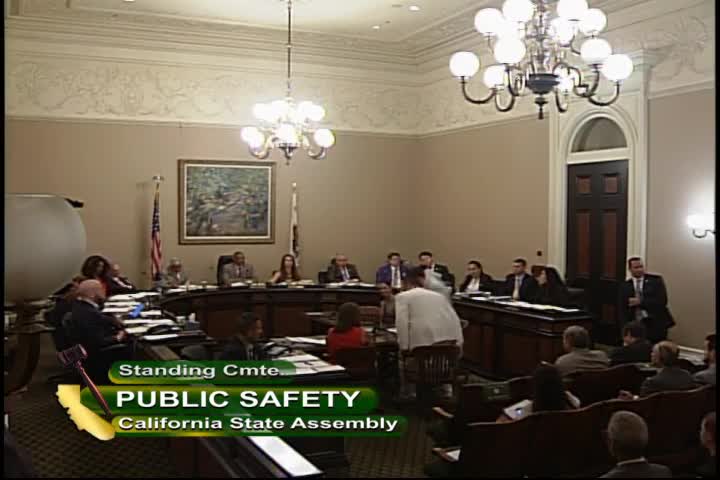 6MIN
Assembly Standing Committee on Public Safety
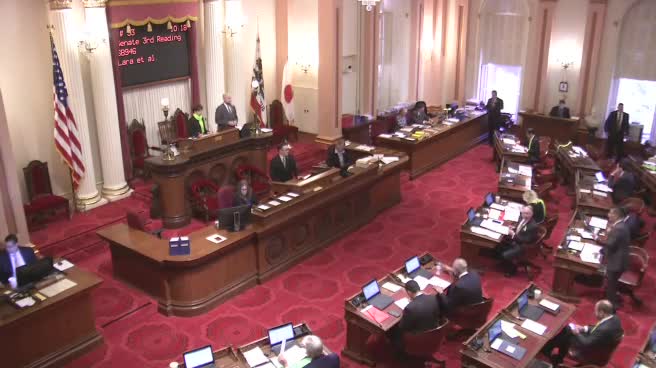 1MIN
Senate Floor
 4MIN
Senate Standing Committee on Public Safety
Bill Author

Bill Co-Author(s):