SB 262: Climate change: climate adaptation: advisory council.
- Session Year: 2017-2018
- House: Senate
- Latest Version Date: 2018-06-14
Existing law requires the Director of the Office of Planning and Research to establish the Integrated Climate Adaptation and Resiliency Program to coordinate regional and local efforts with state climate adaptation strategies to adapt to the impacts of climate change. Existing law requires the Office of Planning and Research to administer the program. Existing law requires the office, in coordination with appropriate entities, to establish a clearinghouse for climate adaptation information for use by state, regional, and local entities. Existing law requires the office to establish an advisory council, comprised of members for a range of disciplines, to support the offices goals to facilitate coordination among state, regional, and local agency efforts to adapt to the impacts of climate change.
This bill would recast the advisory council as the California Council for Adaptation and Resiliency. The bill would transfer the offices functions, regarding the program and the clearinghouse, to the council. The bill would require the council to take certain actions related to climate adaptation, as specified. The bill would require the council to make publicly available certain information on its Internet Web site. The bill would specify that the members on the council serve staggered terms of 4 years. The bill would require the director of the office, or his or her designee, to serve as the chair of the council.
Existing law requires the Director of the Office of Planning and Research to establish the Integrated Climate Adaptation and Resiliency Program to coordinate regional and local efforts with state climate adaptation strategies to adapt to the impacts of climate change. Existing law requires the Office of Planning and Research to administer the program. Existing law requires the office, in coordination with appropriate entities, to establish a clearinghouse for climate adaptation information for use by state, regional, and local entities. Existing law requires the Office of Planning and Research office to establish an advisory council, comprised of members for a range of disciplines, to support the offices goals to facilitate coordination among state, regional, and local agency efforts to adapt to the impacts of climate change.
This bill would recast the advisory council as the California Council for Adaptation and Resiliency. The bill would transfer the offices functions, regarding the program and the clearinghouse, to the council. The bill would require the council to take certain actions related to climate adaptation, as specified. The bill would specify that the members on the advisory council serve staggered terms of 4 years. The bill would require the members of the advisory council to select a chairperson from their members. director of the office, or his or her designee, to serve as the chair of the council.
Existing law requires the Office of Planning and Research to establish an advisory council, comprised of members for a range of disciplines, to support the offices goals to facilitate coordination among state, regional, and local agency efforts to adapt to the impacts of climate change.
This bill would specify that the members on the advisory council serve staggered terms of 4 years. The bill would require the members of the advisory council to select a chairperson from their members.
(a)The Legislature finds and declares all of the following:
(1)The state has been a leader in climate mitigation efforts to reduce greenhouse gas emissions. Now, and in the coming years, it is critical for California and the global community to continue and intensify those efforts in order to avoid the most severe impacts from a changing climate. However, because the global climate system changes slowly, impacts are ongoing and will inevitably worsen. In order to address the challenges posed by a changing climate, the state must invest in building resiliency and strengthening adaptation efforts at the state, regional, and local levels using the best available science and scale those investments using the best available policy, financial, and regulatory tools and mechanisms.
(2)In order to have a cohesive and comprehensive response to climate change impacts, the state must have integrated planning with coordinated strategies across state, regional, and local governments and agencies designed to reduce the costs of future climate disaster and protect local, state, and regional infrastructure assets, including natural infrastructure systems.
(3)The Office of Planning and Research is established as the comprehensive state planning agency that shall engage in the formulation, evaluation, and updating of long-range goals for factors that shape statewide development patterns and significantly influence the quality of the states environment, in addition to assisting state, regional, and local agencies in a variety of research and planning efforts, pursuant to Section 65040 of the Government Code. Therefore, the office is well positioned to work with regional and local entities across the state, coordinating with state climate adaptation strategies.
(4)Over the last two years, the office has diligently implemented the Integrated Climate Adaptation and Resiliency Program.
(5)Given a predicted shortfall of at least one trillion dollars ($1,000,000,000,000) for needed infrastructure by 2080 at the state and local levels, new state incentives that encourage and promote the use of life-cycle asset management, resilience best practices, and innovative partnerships at the local level are critical.
(b)It is the intent of the Legislature, therefore, that adaptation strategies to build resiliency against the risks and impacts of climate change be integrated across government into all state, regional, and local policies, projects, and permitting processes to ensure a resilient California.
SEC. 2.Section 71350 of the Public Resources Code is amended to read:71350.For purposes of this part, the following definitions apply:
(a)Council means the California Council for Adaptation and Resiliency.
(b)Office means the Office of Planning and Research.
SEC. 3.Section 71354 of the Public Resources Code is amended to read:71354.The Integrated Climate Adaptation and Resiliency Program is hereby established to be administered by the council. No later than January 1, 2017, the Director of the Office of Planning and Research shall establish the program to coordinate regional and local efforts with state climate adaptation strategies to adapt to the impacts of climate change with, to the extent feasible, an emphasis on climate equity considerations across sectors and regions and strategies that benefit both greenhouse gas emissions reductions and adaptation efforts, in order to facilitate the development of holistic, complimentary strategies for adapting to climate change impacts. In order to achieve these goals, the program shall include, but not be limited to, all of the following:
(a)Working with and coordinating local and regional efforts for climate adaptation and resilience, including, but not limited to, the following:
(1)Developing tools and guidance.
(2)Promoting and coordinating state agency support for local and regional efforts.
(3)Informing state-led programs, including state planning processes, grant programs, and guideline development, to better reflect the goals, efforts, and challenges faced by local and regional entities pursuing adaptation, preparedness, and resilience. This should occur through regular coordination between the council, the Climate Action Team, which was established by Executive Order S-3-05, the Strategic Growth Council, and other state agencies, including, but not limited to, the Office of Emergency Services, the California Environmental Protection Agency, the Natural Resources Agency, the Transportation Agency, the State Department of Public Health, and the Department of Food and Agriculture. Agriculture, and relevant subdivisions of these state entities working on adaptation.
(b)Assisting the Office of Emergency Services and other relevant state agencies with coordinating regular reviews and updates, as needed, to the Adaptation Planning Guide, pursuant to Section 71356, and maintaining a copy of the guide, or an electronic link to a copy of the guide posted, at a minimum, on the states Climate Change Portal and the offices Internet Web site.
(c)Coordinating and maintaining the states clearinghouse for climate adaptation information, pursuant to Section 71360.
(d)Conducting regular meetings meetings that are made remotely accessible, to the extent feasible, in order to have technical support, as well as expertise and advice from regional and local experts working in climate adaptation throughout the research and planning processes, as described in this section.
SEC. 4.Section 71356 of the Public Resources Code is amended to read:71356.(a)Within one year of an update to the Safeguarding California Plan, the Office of Emergency Services, in coordination with the Natural Resources Agency and the California Council for Adaptation and Resiliency, shall review and update, as necessary, the Adaptation Planning Guide to provide tools and guidance to regional and local governments and agencies in creating and implementing climate adaptation and community resiliency plans and projects. An Adaptation Planning Guide update shall be informed by the climate adaptation clearinghouse established pursuant to Section 71360 and the scientific assessments and recommendations in the most recent update of the Safeguarding California Plan. An Adaptation Planning Guide update shall consider the nexus between climate adaptation, community resiliency, public safety, and security, provide information and planning support for assessing climate vulnerabilities across impact sectors and regions and developing adaptation strategies that can be tailored to meet local needs, and include, at a minimum, all of the following:
(1)Guidance for coordinating adaptation planning activities among state and local governments and regional collaboratives.
(2)Adaptation planning guidance and strategies for natural hazards exacerbated by climate change.
(3)Guidance for conducting vulnerability assessments and identifying risk reduction strategies for communities.
(4)Identification of climate impact regions and descriptions of climate impacts to be considered for each region.
(5)Assistance with the interpretation of climate science as it relates to local and regional impacts.
(b)As part of updating the Adaptation Planning Guide, the Office of Emergency Services, in consultation with the office and, as needed, with the advisory council created pursuant to Section 71358, shall hold public meetings meetings that are made remotely accessible, to the extent feasible, in the northern, southern, and central regions of the state to obtain input from the public and leaders in local and regional climate preparedness.
SEC. 5.Section 71358 of the Public Resources Code is amended to read:71358.(a)The California Council for Adaptation and Resiliency within the office is hereby established. The council shall be comprised of the director of the office, or his or her designee, and members from a range of disciplines, in order to provide scientific and technical support, and from regional and local governments and entities. The council members and staff shall facilitate coordination among state, regional, and local agency efforts to adapt to the impacts of climate change.
(b)Members of the council shall have expertise in the intersection of climate change or climate science and areas that include, but need not be limited to, any of the following:
(1)Public health.
(2)Environmental quality.
(3)Environmental justice.
(4)Agriculture.
(5)Transportation and housing.
(6)Energy.
(7)Natural resources and water.
(8)Planning.
(9)Recycling and waste management.
(10)Local or regional government.
(11)Tribal issues.
(12)Emergency services and public safety.
(13)Procurement.
(14)Innovative finance and life-cycle asset management.
(c)The director of the office, or his or her designee, shall serve as chair.
(d)Beginning January 1, 2019, members of the council shall serve staggered terms of four years.
(e)The council shall meet with the office as needed, but not less than three times a year.
(f)Staff of the council shall have relevant expertise in the areas specified in subdivision (b) to facilitate the responsibilities of the council.
(g)(1)The council shall be charged with all of the following:
(A)Develop guidance documents for the integration of adaptation and resiliency into the states sustainability roadmap and into local general plans updates to provide guidance for state and local agencies to plan for changing climate.
(B)Coordinate with the Natural Resources Agency and the State Energy Resources Conservation and Development Commission on the California climate change assessment.
(C)Develop and track metrics to measure the efficacy of adaptation and resiliency at the state level.
(D)Develop and make available tools through the clearinghouse to evaluate local adaptation and resiliency efforts.
(E)Develop and mobilize strategies to build partnerships between all levels of government and the private sector, where appropriate.
(F)Identify, in consultation with the Office of Environmental Health Hazard Assessment, vulnerable communities and regions, publish and develop, as needed, tools for vulnerability assessments, and publish tools for addressing those vulnerabilities. vulnerabilities, and provide state, regional, and local agencies with guidance implementing these analytical approaches as related to planning, investment, and decisionmaking, as applicable.
(G)Publish the relevant state policies related to climate change and adaptation in the clearinghouse. clearinghouse established pursuant to Section 71360.
(H)Develop strategies for new financing mechanisms.
(I)Communicate with state agencies on ongoing efforts related to adaptation and resiliency in order to update the clearinghouse pursuant to subdivision (b) of Section 71360 and to prevent duplication of efforts.
(2)The council shall review, on a biennial basis, and update, as needed, the information specified in paragraph (1).
(3)The council shall make publicly available on its Internet Web site the meeting notes of the councils meetings following each meeting.
(4)By January 1, 2020, and by January 1 of each subsequent year, the council shall make publicly available on its Internet Web site a summary of its activities during the preceding calendar year and the outcomes of those activities.
SEC. 6.Section 71360 of the Public Resources Code is amended to read:71360.(a)(1)The council shall coordinate with appropriate entities, including state, regional, or local agencies, to establish a clearinghouse for climate adaptation information for use by state, regional, and local entities.
(2)The clearinghouse shall be a centralized source of information that provides available climate data to guide decisionmakers at state, regional, and local levels when planning for and implementing climate adaptation projects to promote resiliency to climate change. The clearinghouse may include, but is not limited to, any of the following:
(A)A collection of the best-available resources that may include projections and models, vulnerability assessments, and downscaled data for climate change impacts throughout the state, when available, at statewide, regional, and local levels for both near-term and longer term timescales, including year 2050 and year 2100 projections. Climate change impacts may include, but are not limited to, impacts to public health, natural resources, environmental quality, and infrastructure.
(B)Tools that allow for the visualization or identification of regional and local impacts across the state and that integrate best-available data on vulnerable populations and infrastructure.
(C)A library of relevant white papers, case studies, research articles, and climate adaptation best practices that are searchable by relevance to region, locality, and sector.
(D)Information concerning funding opportunities for adaptation research, planning, and projects.
(E)Regionally prioritized best-practice adaptation projects that, as appropriate, integrate efforts to reduce greenhouse gas emissions across the state.
(b)The clearinghouse shall be regularly updated.
(a)The Legislature finds and declares all of the following:
(1)The state has been a leader in climate mitigation efforts to reduce greenhouse gas emissions. Now, and in the coming years, it is critical for California and the global community to continue and intensify those efforts in order to avoid the most severe impacts from a changing climate. However, because the global climate system changes slowly, impacts are ongoing and will inevitably worsen. In order to address the challenges posed by a changing climate, the state must invest in building resiliency and strengthening adaptation efforts at the state, regional, and local levels using the best available science and scale those investments using the best available policy, financial, and regulatory tools and mechanisms.
(2)In order to have a cohesive and comprehensive response to climate change impacts, the state must have integrated planning with coordinated strategies across state, regional, and local governments and agencies designed to reduce the costs of future climate disaster and protect local, state, and regional infrastructure assets, including natural infrastructure systems.
(3)The Office of Planning and Research is established as the comprehensive state planning agency that shall engage in the formulation, evaluation, and updating of long-range goals for factors that shape statewide development patterns and significantly influence the quality of the states environment, in addition to assisting state, regional, and local agencies in a variety of research and planning efforts, pursuant to Section 65040 of the Government Code. Therefore, the office is well positioned to work with regional and local entities across the state, coordinating with state climate adaptation strategies.
(4)Over the last two years, the office has diligently implemented the Integrated Climate Adaptation and Resiliency Program.
(5)Given a predicted shortfall of at least one trillion dollars ($1,000,000,000,000) for needed infrastructure by 2080 at the state and local levels, new state incentives that encourage and promote the use of life-cycle asset management, resilience best practices, and innovative partnerships at the local level are critical.
(b)It is the intent of the Legislature, therefore, that adaptation strategies to build resiliency against the risks and impacts of climate change be integrated across government into all state, regional, and local policies, projects, and permitting processes to ensure a resilient California.
SEC. 2.Section 71350 of the Public Resources Code is amended to read:71350.For purposes of this part, office the following definitions apply:
(a)Council means the California Council for Adaptation and Resiliency.
(b)Office means the Office of Planning and Research.
SEC. 3.Section 71354 of the Public Resources Code is amended to read:71354.The Integrated Climate Adaptation and Resiliency Program is hereby established to be administered by the office. council. No later than January 1, 2017, the Director of State the Office of Planning and Research shall establish the program to coordinate regional and local efforts with state climate adaptation strategies to adapt to the impacts of climate change with, to the extent feasible, an emphasis on climate equity considerations across sectors and regions and strategies that benefit both greenhouse gas emissions reductions and adaptation efforts, in order to facilitate the development of holistic, complimentary strategies for adapting to climate change impacts. In order to achieve these goals, the program shall include, but not be limited to, all of the following:
(a)Working with and coordinating local and regional efforts for climate adaptation and resilience, including, but not limited to, the following:
(1)Developing tools and guidance.
(2)Promoting and coordinating state agency support for local and regional efforts.
(3)Informing state-led programs, including state planning processes, grant programs, and guideline development, to better reflect the goals, efforts, and challenges faced by local and regional entities pursuing adaptation, preparedness, and resilience. This should occur through regular coordination between the office, council, the Climate Action Team, which was established by Executive Order S-3-05, the Strategic Growth Council, and other state agencies, including, but not limited to, the Office of Emergency Services, the California Environmental Protection Agency, the Natural Resources Agency, the Transportation Agency, the State Department of Public Health, and the Department of Food and Agriculture.
(b)Assisting the Office of Emergency Services and other relevant state agencies with coordinating regular reviews and updates, as needed, to the Adaptation Planning Guide, pursuant to Section 71356, and maintaining a copy of the guide, or an electronic link to a copy of the guide posted, at a minimum, on the states Climate Change Portal and the offices Internet Web site.
(c)Coordinating and maintaining the states clearinghouse for climate adaptation information, pursuant to Section 71360.
(d)Conducting regular meetings with the advisory council established pursuant to Section 71358 in order to have technical support, as well as expertise and advice from regional and local experts working in climate adaptation throughout the research and planning processes, as described in this section.
SEC. 4.Section 71356 of the Public Resources Code is amended to read:71356.(a)Within one year of an update to the Safeguarding California Plan, the Office of Emergency Services, in coordination with the Natural Resources Agency, the office, and relevant public and private entities, Agency and the California Council for Adaptation and Resiliency, shall review and update, as necessary, the Adaptation Planning Guide to provide tools and guidance to regional and local governments and agencies in creating and implementing climate adaptation and community resiliency plans and projects. An Adaptation Planning Guide update shall be informed by the climate adaptation clearinghouse established pursuant to Section 71360 and the scientific assessments and recommendations in the most recent update of the Safeguarding California Plan. An Adaptation Planning Guide update shall consider the nexus between climate adaptation, community resiliency, public safety, and security, provide information and planning support for assessing climate vulnerabilities across impact sectors and regions and developing adaptation strategies that can be tailored to meet local needs, and include, at a minimum, all of the following:
(1)Guidance for coordinating adaptation planning activities among state and local governments and regional collaboratives.
(2)Adaptation planning guidance and strategies for natural hazards exacerbated by climate change.
(3)Guidance for conducting vulnerability assessments and identifying risk reduction strategies for communities.
(4)Identification of climate impact regions and descriptions of climate impacts to be considered for each region.
(5)Assistance with the interpretation of climate science as it relates to local and regional impacts.
(b)As part of updating the Adaptation Planning Guide, the Office of Emergency Services, in consultation with the office and, as needed, with the advisory council created pursuant to Section 71358, shall hold public meetings in the northern, southern, and central regions of the state to obtain input from the public and leaders in local and regional climate preparedness.
SECTION 1.SEC. 5.Section 71358 of the Public Resources Code is amended to read:71358.(a)An advisory council to The California Council for Adaptation and Resiliency within the office is hereby established. The advisory council shall be comprised of the director of the office, or his or her designee, and members from a range of disciplines, in order to provide scientific and technical support, and from regional and local governments and entities. The advisory council shall support the offices goals, as identified in this part, to facilitate coordination among state, regional, and local agency efforts to adapt to the impacts of climate change.
(b)Members of the advisory council shall have expertise in the intersection of climate change and areas that include, but need not be limited to, any of the following:
(1)Public health.
(2)Environmental quality.
(3)Environmental justice.
(4)Agriculture.
(5)Transportation and housing.
(6)Energy.
(7)Natural resources and water.
(8)Planning.
(9)Recycling and waste management.
(10)Local or regional government.
(11)Tribal issues.
(12)Emergency services and public safety.
(c)The members of the advisory council shall select a chairperson from their members, who shall serve for not more than four years in that capacity.(13)Procurement.
(14)Innovative finance and life-cycle asset management.
(c)The director of the office, or his or her designee, shall serve as chair.
(d)(1)Beginning January 1, 2018, 2019, members of the advisory council shall serve staggered terms of four years.
(2)One-half of the members shall be chosen by lot to serve an initial two-year term beginning January 1, 2018.(e)The advisory council shall meet with the office as needed, but not less than three times a year.
(f)Staff of the council shall have expertise in the areas specified in subdivision (b) to facilitate the responsibilities of the council.
(g)(1)The council shall be charged with all of the following:
(A)Develop guidance documents for the integration of adaptation and resiliency into the states sustainability roadmap and into local general plans updates to provide guidance for state and local agencies to plan for changing climate.
(B)Coordinate with the Natural Resources Agency and the State Energy Resources Conservation and Development Commission on the California climate assessment.
(C)Develop and track metrics to measure the efficacy of adaptation and resiliency at the state level.
(D)Develop and make available tools through the clearinghouse to evaluate local adaptation and resiliency efforts.
(E)Develop and mobilize strategies to build partnerships between all levels of government and the private sector, where appropriate.
(F)Identify, in consultation with the Office of Environmental Health Hazard Assessment, vulnerable communities and regions, publish and develop, as needed, tools for vulnerability assessments, and publish tools for addressing those vulnerabilities.
(G)Publish the policies in the clearinghouse.
(H)Develop strategies for new financing mechanisms.
(2)The council shall review, on a biennial basis, and update, as needed, the information specified in paragraph (1).
SEC. 6.Section 71360 of the Public Resources Code is amended to read:71360.(a)(1)The office council shall coordinate with appropriate entities, including state, regional, or local agencies, to establish a clearinghouse for climate adaptation information for use by state, regional, and local entities.
(2)The clearinghouse shall be a centralized source of information that provides available climate data to guide decisionmakers at state, regional, and local levels when planning for and implementing climate adaptation projects to promote resiliency to climate change. The clearinghouse may include, but is not limited to, any of the following:
(A)A collection of the best-available resources that may include projections and models, vulnerability assessments, and downscaled data for climate change impacts throughout the state, when available, at statewide, regional, and local levels for both near-term and longer term timescales, including year 2050 and year 2100 projections. Climate change impacts may include, but are not limited to, impacts to public health, natural resources, environmental quality, and infrastructure.
(B)Tools that allow for the visualization or identification of regional and local impacts across the state and that integrate best-available data on vulnerable populations and infrastructure.
(C)A library of relevant white papers, case studies, research articles, and climate adaptation best practices that are searchable by relevance to region, locality, and sector.
(D)Information concerning funding opportunities for adaptation research, planning, and projects.
(E)Regionally prioritized best-practice adaptation projects that, as appropriate, integrate efforts to reduce greenhouse gas emissions across the state.
(b)The clearinghouse shall be regularly updated.
(a)An advisory council to the office is hereby established. The advisory council shall be comprised of members from a range of disciplines, in order to provide scientific and technical support, and from regional and local governments and entities. The advisory council shall support the offices goals, as identified in this part, to facilitate coordination among state, regional, and local agency efforts to adapt to the impacts of climate change.
(b)Members of the advisory council shall have expertise in the intersection of climate change and areas that include, but need not be limited to, any of the following:
(1)Public health.
(2)Environmental quality.
(3)Environmental justice.
(4)Agriculture.
(5)Transportation and housing.
(6)Energy.
(7)Natural resources and water.
(8)Planning.
(9)Recycling and waste management.
(10)Local or regional government.
(11)Tribal issues.
(12)Emergency services and public safety.
(c)The members of the advisory council shall select a chairperson from their members, who shall serve for not more than four years in that capacity.
(d)(1)Beginning January 1, 2018, members of the advisory council shall serve staggered terms of four years.
(2)One-half of the members shall be chosen by lot to serve an initial two-year term beginning January 1, 2018.
(c)(e)The advisory council shall meet with the office as needed, but not less than three times a year.
|
Date
|
Status
|
|---|---|
| Aug 16, 2018 | August 16 hearing: Held in committee and under submission. |
| Jun 27, 2018 | June 27 set for first hearing. Placed on APPR. suspense file. |
| Jun 14, 2018 | Read second time and amended. Re-referred to Com. on APPR. |
| Jun 13, 2018 | From committee: Do pass as amended and re-refer to Com. on APPR. (Ayes 9. Noes 1.) (June 11). |
| May 17, 2018 | From committee with author's amendments. Read second time and amended. Re-referred to Com. on NAT. RES. |
| May 18, 2017 | Referred to Com. on NAT. RES. |
| Apr 20, 2017 | In Assembly. Read first time. Held at Desk. |
| Apr 20, 2017 | Read third time. Passed. (Ayes 36. Noes 0. Page 768.) Ordered to the Assembly. |
| Apr 18, 2017 | Read second time. Ordered to consent calendar. |
| Apr 17, 2017 | From committee: Be ordered to second reading pursuant to Senate Rule 28.8 and ordered to consent calendar. |
| Apr 5, 2017 | Set for hearing April 17. |
| Mar 29, 2017 | From committee: Do pass and re-refer to Com. on APPR. with recommendation: To consent calendar. (Ayes 7. Noes 0. Page 537.) (March 29). Re-referred to Com. on APPR. |
| Mar 9, 2017 | Set for hearing March 29. |
| Feb 16, 2017 | Referred to Com. on EQ. |
| Feb 9, 2017 | From printer. May be acted upon on or after March 11. |
| Feb 8, 2017 | Introduced. Read first time. To Com. on RLS. for assignment. To print. |
|
Date
|
Description
|
Location
|
Votes
|
|
|---|---|---|---|---|
| Jun 11, 2018 | Do pass as amended and be re-referred to the Committee on [Appropriations] | Assembly Standing Committee on Natural Resources |
Passed |
|
| Apr 20, 2017 | Consent Calendar 2nd SB262 | Senate Floor |
Passed |
|
| Mar 29, 2017 | Do pass, but first be re-referred to the Committee on [Appropriations] with the recommendation: To Consent Calendar | Senate Standing Committee on Environmental Quality |
Passed |
This list shows positions taken on this bill by organizations on the date displayed, which is linked to the original source.
Positions by individuals are not included.
|
Organization
|
Position
|
Date
|
|---|---|---|
| Arroyos & Foothills Conservancy | * Support | Jun 11, 2018 |
| East Bay Regional Park District | ** Support | Jun 8, 2018 |
| Friends Of The La River | * Support | Jun 11, 2018 |
| Midpeninsula Regional Open Space District | * Support | Jun 11, 2018 |
| Nature Conservacy | * Support | Jun 11, 2018 |
| Southern California Edison | * Support | Jun 11, 2018 |
| The Trust For Public Land | ** Support | Jun 8, 2018 |
| U.S. Resiliency Council | ** Support | Jun 8, 2018 |
| Union Of Concerned Scientists | * Support | Jun 11, 2018 |
Date of Hearing: June 27, 2018
ASSEMBLY COMMITTEE ON APPROPRIATIONS
Lorena Gonzalez Fletcher, Chair
SBPCA Bill Id:SB 262
Author:(Wieckowski) – As Amended Ver:June 14, 2018
Policy Committee: | Natural Resources | Vote: | 9 - 1 |
|
| ||
|
|
Urgency: No State Mandated Local Program: No Reimbursable: No
SUMMARY:
This bill creates the California Council for Adaptation and Resiliency (Council) at the Office of Planning and Research (OPR). Specifically, this bill:
- Recasts an existing technical advisory council to the Integrated Climate Adaptation and Resiliency Program (Climate Program) at OPR as the Council and tasks the Council with overseeing the Climate Program. Creates staggered, four-year terms for Council members.
- Adds procurement and innovative finance and life-cycle asset management to the non-exhaustive list of areas of expertise members of the Council shall have.
- Requires staff of the council to have relevant expertise to facilitate responsibilities of the council.
- Requires the Council to:
- Develop guidance documents for state and local planning as specified.
- Coordinate with the Natural Resources Agency (NRA) and the California Energy
Commission (CEC) on the California climate assessment. - Develop and track metrics to measure the efficacy of adaptation and resiliency at the state level and develop tools to evaluate adaptation and resiliency at the local level.
- Develop and implement strategies to build partnerships between levels of government and the private sector, where appropriate.
- Work with the Office of Environmental Health Hazard Assessment (OEHHA) to identify vulnerable communities and regions, and publish and develop tools for assessing and addressing vulnerabilities.
- Publish the policies in the clearinghouse and communicate with state agencies regarding ongoing efforts to update the clearinghouse to prevent the duplication of efforts.
- Develop strategies for new financing mechanisms.
- Publish meeting notes on its internet website and report by January 1, 2020, and every year after a summary of its activities on its website.
FISCAL EFFECT:
- Increased ongoing personnel costs of $570,000 GF (4 PY) for an executive director, two senior project analysts to review grant guidelines, coordinate with state agencies, and provide technical assistance, and an intergovernmental program analyst to provide administrative support for the members of the council.
- One-time costs of $300,000 GF to update the adaptation clearinghouse and develop new vulnerability tools to meet the new duties required by the bill.
COMMENTS:
- Background. The Climate Program was established in OPR by SB 246 (Wieckowski), Chapter 606, Statutes of 2015, to facilitate coordination around adaptation between state, regional and local groups. The bill also required the formation of a technical advisory council, which is comprised of members with expertise in the intersection between climate change and a range of fields including public health, environmental quality, environmental justice, agriculture, transportation and housing, energy, natural resources, water, planning, recycling and waste management, local or regional government, tribal issues, emergency services, procurement, finance and life-cycle asset management, and public safety.
The technical advisory council is currently comprised of 23 members with expertise in the fields listed above, and is staffed by two full-time employees in OPR.
The Climate Program maintains an information clearinghouse including, but not limited to, documents, reports, and data related to adaptation.
- Purpose. According to the author:
The work now being done at the Office of Planning and Research as a result of SB 246 is critical to the state’s climate adaptation efforts. Because staffing and work at OPR is dependent on the administration, this bill seeks to codify the work being done under SB 246—including formalizing the technical advisory committee as the California Council for Adaptation and Resiliency, and giving it the responsibility to maintain the climate adaption clearinghouse, oversee the Integrated Climate Adaptation and Resiliency Program, and handle various climate adaptation resiliency and financing documents—so that it will continue across future administrations.
- Existing Adaptation Efforts. The NRA is tasked with developing and updating the state’s adaptation strategy, known as the “Safeguarding California Plan” every three years and coordinating adaptation activities among lead state agencies in various sectors
.
The Strategic Growth Council, a multi-agency council chaired by the director of OPR, identifies and reviews the activities and funding programs of the state agencies and administers numerous grant programs.
The existing Climate Program at OPR coordinates regional, local and state efforts to adapt to climate change. It is unclear why an additional council is necessary to continue state and local efforts.
Analysis Prepared by: Jennifer Galehouse / APPR. / (916) 319-2081
Date of Hearing: June 11, 2018
ASSEMBLY COMMITTEE ON NATURAL RESOURCES
Al Muratsuchi, Acting Chair
SBPCA Bill Id:SB 262
Author:(Wieckowski) – As Amended Ver:May 17, 2018
SENATE VOTE: 36-0
SUBJECT: Climate change: climate adaptation: advisory council
SUMMARY: Creates the California Council for Adaptation and Resiliency (CCAR) in the Governor’s Office of Planning and Research (OPR) to oversee the Integrated Climate Adaptation and Resiliency Program (ICARP), requires staggered four-year terms for council members, and specifies the duties of the CCAR.
EXISTING LAW:
- Pursuant to Executive Order S-13-08 (Schwarzenegger), requires Natural Resources Agency (NRA), through the Climate Action Team (CAT), to coordinate with local, regional, state, federal, and private entities to develop a state climate adaptation strategy (Strategy). Requires the Strategy to summarize the best known science on climate change impacts to California, assess California's vulnerability to the identified impacts, and outline solutions that can be implemented within and across state agencies to promote resiliency.
- Pursuant to Executive Order B-30-15 (Brown), in addition to establishing a 40% greenhouse gas (GHG) emission reduction goal by 2030, requires several actions on adaptation including:
- Requires the NRA to update the state’s Strategy, now known as the Safeguarding California Plan (Plan), by July 1, 2017, and every three years thereafter, by coordinating adaptation activities among lead state agencies in each sector. Requires the Plan to:
- Identify vulnerabilities to climate change by sector and region, including, at a minimum, the following sectors: water, energy, transportation, public health, agriculture, emergency services, forestry, biodiversity and habitat, and ocean and coastal resources;
- Outline primary risks to residents, property, communities, and natural systems from these vulnerabilities, and identify priority actions needed to reduce these risks; and,
- Identify a lead agency or group of agencies to lead adaptation efforts in each sector.
- Identify vulnerabilities to climate change by sector and region, including, at a minimum, the following sectors: water, energy, transportation, public health, agriculture, emergency services, forestry, biodiversity and habitat, and ocean and coastal resources;
- Requires each sector lead to prepare an implementation roadmap by September 2015 to outline the actions that will be taken as identified in the Plan, and report back on those actions to the NRA.
- Requires state agencies' planning and investment to be guided by the principles of climate preparedness, flexibility and adaptive approaches for uncertain climate impacts, protection of vulnerable populations, and prioritization of natural infrastructure solutions.
- Requires the Governor’s Office of Planning and Research (OPR) to establish a technical advisory group to help state agencies incorporate climate change impacts into planning and investment decisions.
- Requires the state to continue its rigorous climate change research program focused on understanding the impacts of climate change and how best to prepare and adapt to such impacts.
- Requires the NRA to update the state’s Strategy, now known as the Safeguarding California Plan (Plan), by July 1, 2017, and every three years thereafter, by coordinating adaptation activities among lead state agencies in each sector. Requires the Plan to:
- Establishes the Strategic Growth Council (SGC) consisting of the Director of OPR, the Secretary of NRA, the Secretary for Environmental Protection, the Secretary of Transportation, the Secretary of California Health and Human Services, the Secretary of Business, Consumer Services, and Housing, the Secretary of Food and Agriculture, three members of the public selected independently by the Speaker of the Assembly, the Senate Committee on Rules, and the Governor. Specifies the following requirements for the SGC:
- Requires the public members to have a background in land use planning, local government, resource protection and management, or community development or revitalization.
- Requires that SGC staffing be reflective of the member organizations.
- Specifies NRA as the lead agency.
- Requires SGC to identify and review activities and funding programs of state agencies that may be coordinated to improve air and water quality, improve natural resources protection, increase the availability of affordable housing, improve transportation, meet the goals of the California Global Warming Solutions Act [AB 32 (Nuñez), Chapter 488, Statutes of 2006] and the strategies and priorities developed in the Plan, encourage sustainable land use planning, and revitalize urban and community centers in a sustainable manner.
- Requires local jurisdictions to include climate adaptation and resiliency strategies in the safety elements of their general plans.
- Establishes ICARP to coordinate regional, local and state efforts to adapt to climate change. Requires ICARP to:
- Pursue an emphasis on climate equity across sectors and strategies that benefit both GHG emissions reductions and adaptation efforts;
- Requires program efforts including, but not limited to, working with and coordinating local and regional efforts for climate adaptation and resilience; and,
- Maintain a continued data clearinghouse (clearinghouse) on climate change and climate adaptation for the purposes of facilitating educated state and local policy decisions.
- Directs state agencies to pursue the following objectives:
- Educate the public about climate change;
- Promote the use of the Plan to inform planning decisions, and promote the use of natural systems, natural infrastructure and natural processes to address adaptation needs;
- Encourage regional collaborative planning;
- Promote drought resiliency;
- Build resilient communities;
- Protect and enhance habitat; and,
- Promote healthy soils and sustainable agriculture.
FISCAL EFFECT: According to Senate Appropriations Committee, pursuant to Senate Rule 28.8, this bill has negligible state costs.
THIS BILL:
- Creates the CCAR in OPR by formalizing the ICARP Technical Advisory Council (TAC).
- Tasks CCAR with overseeing ICARP.
- Creates staggered, four-year terms for CCAR members.
- Requires CCAR to select a chairperson by majority vote who will serve for no more than four years.
- Charges CCAR with the following duties:
- Developing guidance documents to help integrate adaptation and resiliency into the state’s sustainability roadmap and local general plans to assist in climate change planning;
- Coordinating with the NRA and State Energy Resources Conservation and Development Commission on the California climate assessment;
- Developing and tracking metrics to measure the efficacy of adaptation and resiliency at the state level;
- Developing and making available tools to evaluate adaptation and resiliency at the local level;
- Developing and mobilizing strategies to build partnerships between levels of government and the private sector, where appropriate;
- Working with OEHHA to identify vulnerable communities and regions, and publish and develop tools for assessing and addressing vulnerabilities;
- Publishing the policies in the clearinghouse; and,
- Developing strategies for new financing mechanisms.
COMMENTS:
- Author’s Statement:
While California has been a leader in climate mitigation efforts, the state alone cannot prevent global climate change and must prepare for the inevitable impacts through planning and implementing adaptation strategies in addition to continuing mitigation efforts. Although regional collaboratives and local governments have been at the forefront of efforts to plan and implement adaptation projects, many lack the scientific expertise, knowledge on adaptation best-practices, funding opportunities, and metrics to evaluate their progress with adaptation. Coordination and communication under state leadership is key to developing and implementing comprehensive, successful statewide adaptation efforts.
As noted in the ‘Governing California Through Climate Change’ report by the Little Hoover Commission, as well as multiple hearings on state and regional climate adaptation by the State Senate Environmental Quality Committee over the years, there is a need for improved communication and coordination in climate adaptation efforts among levels of government in California, as well as for a centralized source of information and tools for planning and implementing adaptation efforts. Senate Bill 246 (Wieckowski, Chapter 606, Statutes of 2015) was the first step California took to implementing a coordinated, comprehensive approach for adapting to the impacts of climate change.
The work now being done at the Office of Planning and Research as a result of SB 246 is critical to the state’s climate adaptation efforts. Because staffing and work at OPR is dependent on the administration, this bill seeks to codify the work being done under SB 246—including formalizing the TAC as the CCAR, and giving CCAR the responsibility to maintain the climate adaption clearinghouse, oversee the Integrated Climate Adaptation and Resiliency Program, and handle various climate adaptation resiliency and financing documents—so that it will continue across future administrations.”
- Climate change impacts. In coming years, California’s climate is generally expected to become hotter, drier, and more variable. This is expected to impact the state in a variety of ways, including rising sea levels, increasing fire risk, increasing water supply uncertainty, increasing public health risks, and increasing uncertainty in the agricultural sector. To synthesize the latest research around climate change in the state, the NRA and other agencies produce a range of products, including, the Indicators of Climate Change in California (ICCC) report (released in 2009 with updates in 2013 and 2018), and the Cal-Adapt online data visualization tool (released in 2011 and updated in 2017).
The 2018 update to the ICCC investigates 36 indicators grouped into the following categories: human influenced drivers of climate change; changes in the state’s climate impacts of climate change on physical systems; and, impacts of climate change on biological systems. The report shows that global concentrations of CO2, the biggest contributor to climate change, continue to increase in both the atmosphere and the world’s oceans. Average temperatures have increased since 1895, with the fastest relative increase beginning in the 1980’s. 2014 was the warmest year on record, followed by 2015, 2017, and 2016. Increased temperatures effect human health, species’ habitat, freshwater supplies, and increase the risk of severe weather events. The state has also become drier over time, with the most extreme drought since 1895 recorded between 2012 and 2016. Taken together, these conditions have led to decreased snow pack and shrinking glaciers, which impacts water availability for human and environmental issues. Hotter, drier conditions have also increased wildfire frequency and intensity. The fire season has also expanded, with the largest fire in recorded history (the Thomas Fire) occurring in December of 2017. Since 1900, mean sea level has generally increased statewide, with an increase of seven inches in San Francisco and six inches at La Jolla. A 2018 study by researchers at UC Berkeley and the University of Arizona updated sea level rise projections to include loss of land surface elevation due to subsidence for the first time, demonstrating that flood risk due to rising seas is likely to be higher than originally expected. The study estimates that between 48 to 166 square miles in the San Francisco Bay area will flood under average conditions, and the authors expect substantially more land area to be affected during storm and king tide events. Further, ice sheets in Greenland and West Antarctica are melting more rapidly than initially expected, which underscores the need to proactively undertake adaptation efforts to protect communities and ecosystems from catastrophic flooding.
Because departments within agencies may be more involved with climate change response at the local level, for example the Coastal Commission with sea level rise and the Department of Forestry and Fire Protection with increased wildfire risk, the committee may wish to adopt amendments to specify that, in addition to coordinating with the agencies listed, ICARP shall also coordinate directly with departments within agencies working on issues related to climate adaptation.
- Adaptation. In 2009, NRA described adaptation as a relatively new concept in California policy and stated the term means, “efforts that respond to the impacts of climate change – adjustments in natural or human systems to actual or expected climate changes to minimize harm or take advantage of beneficial opportunities.” California’s adaptation efforts can be traced back to 2008, when Governor Schwarzenegger ordered the NRA, through the CAT, to coordinate with local, regional, state, federal, public, and private entities to develop, by 2009, the state’s Strategy. Governor Schwarzenegger’s Executive Order required the Strategy to summarize the best known science on climate change impacts for California, assess California's vulnerability to the identified impacts, and outline solutions that can be implemented within and across state agencies to promote resiliency. As a result, NRA drafted The 2009 California Climate Adaptation Strategy. The state’s Strategy represents the work of seven sector-specific working groups led by twelve state agencies, boards, commissions, and numerous stakeholders. The Strategy proposes a comprehensive set of recommendations designed to inform and guide California’s decision makers as they begin to develop policies that will protect the state, its residents, and its resources from a range of climate change impacts. In July of 2014, NRA released an update to the 2009 Strategy, Safeguarding California: Reducing Climate Risk. In May of 2017, as required by AB 1482 (Gordon) Chapter 603, Statutes of 2016, the SGC submitted a subsequent update to the Plan, the first in a series of updates required every three years.
AB 2800 (Quirk, Chapter 580, Statutes of 2015) requires the state agencies to take the current and future impacts of climate change into consideration when planning, designing, building, operating, maintaining, and investing in state infrastructure. The bill required the NRA to establish a Climate-Safe Infrastructure Working Group (group) to examine how best to integrate scientific data concerning projected climate change impacts into state infrastructure engineering. The group currently has 14 members and includes representatives from state agencies, academia, and local government. In 2018, the group has hosted 14 webinars and meetings to date on a range of topics related to infrastructure and adaptation.
ICARP was established in OPR by SB 246 (Wieckowski, Chapter 606, Statutes of 2015) to facilitate coordination around adaptation between state, regional and local groups. The bill also required the formation of a Technical Advisory Council (TAC), which is comprised of members with expertise in the intersection between climate change and a range of fields including public health, environmental quality, environmental justice, agriculture, transportation and housing, energy, natural resources, water, planning, recycling and waste management, local or regional government, tribal issues, emergency services, procurement, finance and life-cycle asset management, and public safety. The TAC is currently comprised of 23 members with expertise in the fields listed above, and is staffed by two full-time employees in OPR. The TAC is required to convene no less than three times per year, and its votes do not hold regulatory authority. In its current form, the bill recasts the TAC as the CCAR and requires CCAR staff to have expertise in the fourteen specified topic areas. Since the creation of the CCAR is not expected to significantly increase staffing from current ICARP levels, it is unlikely that it will be possible for the staff to have expertise in all fourteen areas. Thus, the committee may wish to adopt amendments specifying that council staff should have expertise relevant to the activities of the committee. To ensure that up-to-date climate science and data interpretation is available through the CCAR, the committee may wish to adopt amendments that include climate science, in addition to climate change, in the section specifying the requirements for CCAR member expertise.
To provide support to these groups and the public, ICARP maintains an information clearinghouse including, but not limited to, documents, reports, and data related to adaptation. According to ICARP, regular outreach with local and state governments on a variety of topics is currently an essential part of their activities. To ensure that the outreach is as broad as possible, the committee may wish to adopt amendments to add language requiring that these activities are made remotely available to the extent possible. To clarify that CCAR will assist agencies in implementing tools they develop the committee may wish to adopt amendments to specify this. Further, while the climate adaptation clearinghouse provides a helpful avenue to accessing information relevant to adaptation, ICARP does not currently comprehensively report its activities and their outcomes, or information on state, regional, or local adaptation efforts. The committee may wish to adopt amendments requiring the CCAR to include notes from its meetings and an annual summary on its activities and their outcomes on its website.
By creating the CCAR as a discrete council within OPR to facilitate coordination on adaptation, the bill may be construed as precluding OPR or state agencies from engaging in activities related to adaptation. Since CCAR is required to convene a minimum of three times per year and it is important to clarify that the entire CCAR is not required to convene to engage in activities related to adaptation, the committee may wish to adopt amendments specifying that council staff and members shall facilitate coordination among state, regional, and local agency efforts to adapt to the impacts of climate change.
Given the multiple groups, publications, and outreach activities related to adaptation in the state, there appears to be the risk of duplication of efforts, the committee may wish to adopt amendments that require ongoing collaboration between CCAR and other state efforts related to adaptation and resiliency to integrate products from state efforts into the clearinghouse and prevent overlap.
Many state agencies have ongoing efforts related to climate adaptation, and it is important to highlight that the establishment of CCAR does not impact the ability of agencies to undertake efforts related to adaptation.
REGISTERED SUPPORT / OPPOSITION:
Support
East Bay Regional Park District
Midpeninsula Regional Open Space District
Southern California Edison
The Trust for Public Land
Union of Concerned Scientists
U.S. Resiliency Council
Opposition
None on file.
Analysis Prepared by: Dylan Chapple / NAT. RES. /
Office of Senate Floor Analyses (916) 651-1520 Fax: (916) 327-4478 | SB 262 |
CONSENT
Bill No: SB 262
Introduced: 2/8/17
SENATE ENVIRONMENTAL QUAL. COMMITTEE: 7-0, 3/29/17
AYES: Wieckowski, Stone, Bates, Hill, Lara, Skinner, Stern
SENATE APPROPRIATIONS COMMITTEE: Senate Rule 28.8
SUBJECT: Climate change: climate adaptation: advisory council
DIGEST: This bill creates staggered, four-year terms for members of the advisory council within the Office of Planning and Research (OPR) and requires the advisory council to select a chairperson by majority vote to serve in that capacity for no more than four years.
Existing law:
- Establishes the Strategic Growth Council (SGC). (Public Resources Code (PRC) §75121)
- Requires the OPR to serve the Governor and Cabinet as staff for long-range planning and research, constituting the comprehensive state planning agency, with a focus on factors influencing the quality of the state’s environment. (Government Code §65040)
- Requires the Director of OPR to coordinate regional and local efforts with state climate adaptation strategies with, to the extent feasible, an emphasis on climate equity and strategies that benefit both Greenhouse Gas (GHG) emissions reductions and adaptation efforts. (PRC §71354). Requires the Integrated Climate Adaptation and Resiliency Program to include:
- Working with and coordinating local and regional adaptation efforts, including developing tools and guidance, promoting and coordinating state agency support, and informing state-led programs, planning processes, grant programs, and guidelines development through regular coordination among state agencies, the Climate Action Team (CAT) established by Executive Order S-3-05, and the SGC.
- Assisting the Office of Emergency Services (OES) and other relevant agencies with coordinating regular reviews and updates to the Adaptation Planning Guide (APG).
- Coordinating and maintaining the state’s clearinghouse for climate adaptation information.
- Conducting regular meetings with the advisory council as established.
- Establishes an advisory council to support OPR by providing scientific and technical support and to facilitate coordination among state, regional, and local agency efforts to adapt to the impacts of climate change. (PRC §71358)
This bill creates staggered, four-year terms for members of the advisory council within the OPR and requires the advisory council to select a chairperson by majority vote to serve in that capacity for no more than four years.
Background
- The Strategic Growth Council (SGC)
The SGC was established in 2008 by SB 732 (Steinberg, Chapter 729, Statutes of 2008) and is responsible for coordinating a variety of state programs and activities related to sustainable communities and the environment. The Council is comprised of ten members:
- The Director of OPR,
- The Secretary of the Natural Resources Agency (CNRA),
- The Secretary of Environmental Protection Agency (CalEPA),
- The Secretary of Transportation,
- The Secretary of Health and Human Services,
- The Secretary of Business, Consumer Services, and Housing,
- The Secretary of Department of Food and Agriculture,
- Three public members, one each being appointed by the Speaker of the Assembly, the Senate Committee on Rules, and the Governor.
- Office of Planning and Research
OPR serves the Governor and the administration as staff for long-range planning, research, policy development and legislative analysis. The Office formulates plans regarding land use, climate change, urban expansion, infrastructure development and resource protection while acting as a liaison to local governments, small businesses and the military.
- Mitigation vs. Adaptation
There are many state and local policies designed to reduce GHG emissions because deep and severe cuts in global GHG emissions are needed to avoid the most severe consequences of a changing climate. While these efforts are crucial, they will not be enough to stave off climate change entirely. Even if all GHG emissions ceased today, many impacts of climate change would still be unavoidable because the climate system changes slowly. Not only has climate change already occurred, it will continue to happen for generations to come, even under the best of circumstances.
Adapting to the irreversibly changing climate is crucial for public health, environmental quality, natural resources protection, food stability, infrastructure maintenance, and withstanding severe weather events like heavier rains, heat waves, and drought.
- Executive Orders Relating to State Agencies and Adaptation
In 2005, Governor Schwarzenegger issued Executive Order S-3-05, which established GHG emission reduction targets, created the CAT, and directed the Secretary of CalEPA to coordinate efforts to meet the targets with the heads of other state agencies. The Order required the Secretary to report back to the Governor and Legislature biannually on progress toward meeting the GHG targets, GHG impacts to California, as well as mitigation and adaptation plans.
In 2008, Governor Schwarzenegger issued Executive Order S-13-08, which directed state agencies to plan for climate impacts specifically from sea level rise. It further directed the CNRA, through the CAT, to coordinate the California Climate Adaptation Strategy by June 2009, noting “California must begin now to adapt and build our resiliency to coming climate changes through a thoughtful and sensible approach with local, regional, state and federal government using the best available science.”
In 2015, Governor Brown issued Executive Order B-30-15, which, in addition to setting GHG-related goals, directed the CNRA to update the Climate Change Scoping Plan every three years and include vulnerabilities to climate change by sector and region, as specified, outline primary risks and priority actions regarding climate change impacts, and identification of lead agencies for each sector, which then report back to the CNRA on their actions taken. The Order further directed state agencies to take climate change into account in planning and investment decisions, guided by specified principles, and directs OPR to establish a technical, advisory group to help state agencies in their efforts.
- California’s Adaptation Documents
The 2009 California Climate Adaptation Strategy is a statewide strategy that includes a summary of impacts from climate change, provides recommendations for adaptation strategies in seven sectors, and provides guidance for establishing adaptation and resiliency actions for the state.
The 2014 Safeguarding California Plan is an update that augments adaptation strategies based on new climate science and risk management options.
The 2012 California APG, prepared and promoted by OPR, the CNRA, and OES, was designed to provide guidance and support for local governments and regional collaborations in addressing the impacts of climate change. The Guide consists of an overview document and three companion documents for use in defining local and regional impacts, understanding regional characteristics, and identifying adaptation strategies. The Guide is meant to allow for flexibility in time, money, and effort available for adaptation across communities.
- Environmental Quality and Public Health Impacts of a Changing Climate
- Higher Temperatures and Air Quality
Climate change is already causing higher temperatures state-wide, and more frequent and hotter days will lead to worse air quality through increased amounts of ground-level pollutants such as ozone. An analysis of power plants in California showed a 3% increase in NOx emissions per degree Fahrenheit increase in daily temperature (Drechsler et al., 2006). This is due to a variety of factors, including increased energy use to run indoor air conditioning systems.
Higher temperatures and heat waves also increase heat-related illness and death, including 650 deaths in California during heat wave in 2006. Heat waves also directly lead to immediate public health concerns, particularly for those people without either access to air conditioning or enough money to pay for running an air conditioner even if they have access to one.
Extreme events, such as wildfires, can affect air quality by leading to increased concentrations of Particulate Matter (PM), which has been linked to premature death in people with heart and lung disease, as well as aggravating asthma and respiratory symptoms. Scientific modeling has predicted 12-53% increase in large California wildfires by 2100 (Westerling and Bryant, 2006).
- Water Quality
In many regions, hydrological systems are being altered by changes in precipitation and snow pack. Reductions in the Sierra Nevada snowpack are expected from higher temperatures, leading to diminished water reserves. Because of these dwindling water reserves, groundwater pumping may continue to increase and result in an increased concentration of pollutants in drinking water.
For example, nitrate contamination of drinking water, already an acute problem in many areas in the Central Valley, may be further exacerbated, resulting in a much higher fraction of residents who are not able to drink water safely from their tap.
Though overall rain amounts will be reduced, rainfall events are expected to be more extreme, which can overwhelm sewage and water treatment facilities, resulting in decreased water quality.
In coastal areas, rising sea levels can lead to increased salinity in coastal aquifers. Higher salinity of water has reduced usability for both drinking water and agricultural purposes, and desalination procedures are energy-intensive and costly.
- Infectious and Vector-borne Diseases and Public Health Impacts
Climate change can further lead to public health impacts by facilitating disease spread and exacerbating chronic health conditions. Already, California has seen an increase in the length of the growing season and pollen production amounts of ragweed, a common cause of severe seasonal allergies.
Increased temperatures can promote bacterial contamination in foods and lead to increases in harmful algal blooms that have been tied to skin, gastrointestinal, respiratory, and neurological signs and symptoms.
Reductions in the number and sizes of recreational bodies of water due to decreased rainfall can further lead to increased concentration of pollutants and bacterial contaminants from more users in fewer and smaller areas.
There is concern about the spread of vector-borne diseases, as the distribution of vectors (e.g. ticks, mosquitoes) carrying pathogens spread into new habitats as regional climates change. Droughts, which will increase with climate change, can also favor mosquito breeding because streams that would normally be flowing become a series of stagnant pools in which mosquitoes breed. For example, previous research has shown that human outbreaks of the mosquito-transmitted Saint Louis encephalitis are correlated with periods of several days when the temperature exceeds 30°C (95°F), as has been the case in previous California epidemics (Githeko et al. 2000).
In addition to expanding habitats, hot temperatures also facilitate the spread of West Nile Virus (WNV) by speeding up both the replication of the virus and the development of the mosquito that carries it. Mosquitoes digest blood meals more rapidly at higher temperatures, leading them to feed more often.
- Impacts on Agriculture
In addition to the effects of drought and severe weather events, climate change can further threaten food production and quality by facilitating diseases spreading to crops from vectors and pests. Combating these threats to food security will likely require increased use of pesticides and fertilizers, which leads to increased GHG emissions and concerns about human health and water quality from runoff and drift. In times of food insecurity and rising prices, people turn to nutrient-poor, calorie-rich foods with health impacts including malnutrition and obesity.
- Adapting to the Environmental Quality and Public Health Impacts of a Changing Climate
In order to address the environmental quality and public health impacts and challenges of climate change, Senator Wieckowski authored SB 246 (Chapter 606, Statutes of 2015). The bill established a framework for adaptation coordination among state agencies by creating a program within the state’s OPR to bring together state, regional, and local entities. The bill also created a central hub, or clearinghouse, of information and tools to help stakeholders efficiently address adaptation.
The bill also formed an advisory council to provide scientific and technical expertise, and regional and local perspectives, to assist state agencies. The advisory council was just established and consists of 17 non state-affiliated and five agency-affiliated scientific and technical experts. The first meeting of the advisory council is scheduled for March 27, 2017.
Comments
- Purpose of bill. According to the author, “among other things, my Senate Bill 246 from 2015 established an advisory council to the Office of Planning and Research in order to provide scientific and technical support—as well as regional and local perspectives—from experts with a range of disciplines on matters relating to climate adaptation. This was particularly important at the time because climate adaptation efforts were largely focused on natural resources issues, such as protecting coastal communities from sea-level rise, and ignored the environmental quality and public health impacts of our changing climate, such as diminished air quality and increased incidences of vector-borne illnesses.
“OPR has a lot of leeway to determine the size and membership of the advisory council, including the vetting process for membership. The advisory council was just established, but there is no certainty in the duration or continuity of their service. Staggered terms will help ensure that the advisory council retains institutional knowledge. To further ensure continuity of the council, SB 262 requires the council to select a chairperson by majority vote who will serve in that capacity for four years.”
FISCAL EFFECT: Appropriation: No Fiscal Com.: Yes Local: No
None received
OPPOSITION: (Verified 4/17/17)
None received
Prepared by: David Ernest García / E.Q. /
4/19/17 10:26:34
**** END ****
SENATE COMMITTEE ON ENVIRONMENTAL QUALITY
Senator Wieckowski, Chair
2017 - 2018 Regular
Bill No: SB 262
Author: | Wieckowski | ||
Version: | 2/8/2017 | Hearing Date: | 3/29/2017 |
Urgency: | No | Fiscal: | Yes |
Consultant: | David Ernest García | ||
SUBJECT: Climate change: climate adaptation: advisory council.
ANALYSIS:
Existing law:
- Establishes the Strategic Growth Council (SGC). (Public Resources Code (PRC) §75121)
- Requires the Office of Planning and Research (OPR) to serve the Governor and Cabinet as staff for long-range planning and research, constituting the comprehensive state planning agency, with a focus on factors influencing the quality of the state’s environment. (Government Code (GOV) §65040)
- Requires the Director of OPR to coordinate regional and local efforts with state climate adaptation strategies with, to the extent feasible, an emphasis on climate equity and strategies that benefit both Greenhouse Gas (GHG) emissions reductions and adaptation efforts. (PRC §71354). Requires the Program to include:
- Working with and coordinating local and regional adaptation efforts, including developing tools and guidance, promoting and coordinating state agency support, and informing state-led programs, planning processes, grant programs, and guidelines development through regular coordination among state agencies, the Climate Action Team (CAT) established by Executive Order S-3-05, and the SGC.
- Assisting the Office of Emergency Services (OES) and other relevant agencies with coordinating regular reviews and updates to the Adaptation Planning Guide (APG).
- Coordinating and maintaining the state’s clearinghouse for climate adaptation information.
- Conducting regular meetings with the advisory council as established.
- Working with and coordinating local and regional adaptation efforts, including developing tools and guidance, promoting and coordinating state agency support, and informing state-led programs, planning processes, grant programs, and guidelines development through regular coordination among state agencies, the Climate Action Team (CAT) established by Executive Order S-3-05, and the SGC.
- Establishes an advisory council to support OPR by providing scientific and technical support and to facilitate coordination among state, regional, and local agency efforts to adapt to the impacts of climate change. (PRC §71358)
This bill:
- Creates staggered, four-year terms for members of the advisory council within OPR and requires the council to select a chairperson by majority vote to serve in that capacity for no more than four years.
Background
- The Strategic Growth Council (SGC).
The SGC was established in 2008 by SB 732 (Steinberg, Chapter 729, Statutes of 2008) and is responsible for coordinating a variety of state programs and activities related to sustainable communities and the environment. The Council is comprised of ten members:- The Director of OPR,
- The Secretary of the Natural Resources Agency (CNRA),
- The Secretary of Environmental Protection Agency (CalEPA),
- The Secretary of Transportation,
- The Secretary of Health and Human Services,
- The Secretary of Business, Consumer Services, and Housing,
- The Secretary of Department of Food and Agriculture,
- Three public members, one each being appointed by the Speaker of the Assembly, the Senate Committee on Rules, and the Governor.
- Office of Planning and Research (OPR).
OPR serves the governor and the administration as staff for long-range planning, research, policy development and legislative analysis. The office formulates plans regarding land use, climate change, urban expansion, infrastructure development and resource protection while acting as a liaison to local governments, small businesses and the military. - Mitigation vs. Adaptation.
There are many state and local policies designed to reduce GHG emissions because deep and severe cuts in global GHG emissions are needed to avoid the most severe consequences of a changing climate. While these efforts are crucial, they will not be enough to stave off climate change entirely. Even if all GHG emissions ceased today, many impacts of climate change would still be unavoidable because the climate system changes slowly. Not only has climate change already occurred, it will continue to happen for generations to come, even under the best of circumstances.
Adapting to the irreversibly changing climate is crucial for public health, environmental quality, natural resources protection, food stability, infrastructure maintenance, and withstanding severe weather events like heavier rains, heat waves, and drought. - Executive Orders Relating to State Agencies and Adaptation.
In 2005, Governor Schwarzenegger issued Executive Order S-3-05, which established GHG emission reduction targets, created the CAT, and directed the Secretary of CalEPA to coordinate efforts to meet the targets with the heads of other state agencies. The Order required the Secretary to report back to the Governor and Legislature biannually on progress toward meeting the GHG targets, GHG impacts to California, as well as mitigation and adaptation plans.
In 2008, Governor Schwarzenegger issued Executive Order S-13-08, which directed state agencies to plan for climate impacts specifically from sea level rise. It further directed the CNRA, through the CAT, to coordinate the California Climate Adaptation Strategy by June 2009, noting “California must begin now to adapt and build our resiliency to coming climate changes through a thoughtful and sensible approach with local, regional, state and federal government using the best available science.”
In 2015, Governor Brown issued Executive Order B-30-15, which, in addition to setting GHG-related goals, directed the CNRA to update the Plan every three years and include vulnerabilities to climate change by sector and region, as specified, outline primary risks and priority actions regarding climate change impacts, and identification of lead agencies for each sector, which then report back to the CNRA on their actions taken. The Order further directed state agencies to take climate change into account in planning and investment decisions, guided by specified principles, and directs OPR to establish a technical, advisory group to help state agencies in their efforts. - California’s Adaptation Documents.
The 2009 California Climate Adaptation Strategy is a statewide strategy that includes a summary of impacts from climate change, provides recommendations for adaptation strategies in seven sectors, and provides guidance for establishing adaptation and resiliency actions for the state.
The 2014 Safeguarding California Plan is an update that augments adaptation strategies based on new climate science and risk management options.
The 2012 California APG, prepared and promoted by OPR, the CNRA, and OES, was designed to provide guidance and support for local governments and regional collaborations in addressing the impacts of climate change. The guide consists of an overview document and three companion documents for use in defining local and regional impacts, understanding regional characteristics, and identifying adaptation strategies. The guide is meant to allow for flexibility in time, money, and effort available for adaptation across communities. - Legislative Hearings on Climate Adaptation.
In 2015, the Senate Environmental Quality Committee conducted four informational and oversight hearings on climate adaptation in California. The first hearing was focused mainly on state efforts to adapt to climate change impacts. Subsequent hearings focused on regional climate adaptation efforts, with hearings being held in the bay area, central valley, and southern California.
Testimony also underscored the current and worsening impacts from climate change and the need for coordinating knowledge, tools, and funding so that adaptation is approached efficiently and holistically across government levels and regions.
Taken together, these hearings highlighted the broad, cross-sector nature of climate change, which has been called a “threat multiplier,” exacerbating existing public health and environmental quality concerns, particularly for already socially and economically disadvantaged communities. Prior to this, policy conversations about climate adaptation were largely limited to natural resources and infrastructure issues rather than environmental quality or public health issues. - Environmental Quality and Public Health Impacts of a Changing Climate.
- Higher Temperatures and Air Quality.
Climate change is already causing higher temperatures state-wide, and more frequent and hotter days will lead to worse air quality through increased amounts of ground-level pollutants such as ozone. An analysis of power plants in California showed a 3% increase in NOx emissions per degree Fahrenheit increase in daily temperature (Drechsler et al., 2006). This is due to a variety of factors, including increased energy use to run indoor air conditioning systems.
Higher temperatures and heat waves also increase heat-related illness and death, including 650 deaths in California during heat wave in 2006. Heat waves also directly lead to immediate public health concerns, particularly for those people without either access to air conditioning or enough money to pay for running an air conditioner even if they have access to one.
Extreme events, such as wildfires, can affect air quality by leading to increased concentrations of Particulate Matter (PM), which has been linked to premature death in people with heart and lung disease, as well as aggravating asthma and respiratory symptoms. Scientific modeling has predicted 12-53% increase in large California wildfires by 2100 (Westerling and Bryant, 2006). - Water Quality.
In many regions, hydrological systems are being altered by changes in precipitation and snow pack. Reductions in the Sierra Nevada snowpack are expected from higher temperatures, leading to diminished water reserves. Because of these dwindling water reserves, groundwater pumping may continue to increase and result in an increased concentration of pollutants in drinking water.
For example, nitrate contamination of drinking water, already an acute problem in many areas in the Central Valley, may be further exacerbated, resulting in a much higher fraction of residents who are not able to drink water safely from their tap.
Though overall rain amounts will be reduced, rainfall events are expected to be more extreme, which can overwhelm sewage and water treatment facilities, resulting in decreased water quality.
In coastal areas, rising sea levels can lead to increased salinity in coastal aquifers. Higher salinity of water has reduced usability for both drinking water and agricultural purposes, and desalination procedures are energy-intensive and costly. - Infectious and Vector-borne Diseases and Public Health Impacts.
Climate change can further lead to public health impacts by facilitating disease spread and exacerbating chronic health conditions. Already, California has seen an increase in the length of the growing season and pollen production amounts of ragweed, a common cause of severe seasonal allergies.
Increased temperatures can promote bacterial contamination in foods and lead to increases in harmful algal blooms that have been tied to skin, gastrointestinal, respiratory, and neurological signs and symptoms.
Reductions in the number and sizes of recreational bodies of water due to decreased rainfall can further lead to increased concentration of pollutants and bacterial contaminants from more users in fewer and smaller areas.
There is concern about the spread of vector-borne diseases, as the distribution of vectors (e.g. ticks, mosquitoes) carrying pathogens spread into new habitats as regional climates change. Droughts, which will increase with climate change, can also favor mosquito breeding because streams that would normally be flowing become a series of stagnant pools in which mosquitoes breed. For example, previous research has shown that human outbreaks of the mosquito-transmitted Saint Louis encephalitis are correlated with periods of several days when the temperature exceeds 30°C (95°F), as has been the case in previous California epidemics (Githeko et al. 2000).
In addition to expanding habitats, hot temperatures also facilitate the spread of West Nile Virus (WNV) by speeding up both the replication of the virus and the development of the mosquito that carries it. Mosquitoes digest blood meals more rapidly at higher temperatures, leading them to feed more often. - Impacts on Agriculture.
In addition to the effects of drought and severe weather events, climate change can further threaten food production and quality by facilitating diseases spreading to crops from vectors and pests. Combating these threats to food security will likely require increased use of pesticides and fertilizers, which leads to increased GHG emissions and concerns about human health and water quality from runoff and drift. In times of food insecurity and rising prices, people turn to nutrient-poor, calorie-rich foods with health impacts including malnutrition and obesity.
- Higher Temperatures and Air Quality.
- Adapting to the Environmental Quality and Public Health Impacts of a Changing Climate.
In order to address the environmental quality and public health impacts and challenges of climate change, Senator Wieckowski authored SB 246 (Wieckowski, Chapter 606, Statutes of 2015). This legislation established a framework for adaptation coordination among state agencies by creating a program within the state’s Office of Planning and Research to bring together state, regional, and local entities. The bill also created a central hub, or clearinghouse, of information and tools to help stakeholders efficiently address adaptation.
The bill also formed an advisory council to provide scientific and technical expertise, and regional and local perspectives, to assist state agencies. The advisory council was just established and consists of 17 non state-affiliated and five agency-affiliated scientific and technical experts. The first meeting of the advisory council is scheduled for March 27, 2017.
Comments
- Purpose of Bill.
According to the author, “among other things, my Senate Bill 246 from 2015 established an advisory council to the Office of Planning and Research in order to provide scientific and technical support—as well as regional and local perspectives—from experts with a range of disciplines on matters relating to climate adaptation. This was particularly important at the time because climate adaptation efforts were largely focused on natural resources issues, such as protecting coastal communities from sea-level rise, and ignored the environmental quality and public health impacts of our changing climate, such as diminished air quality and increased incidences of vector-borne illnesses.
“OPR has a lot of leeway to determine the size and membership of the advisory council, including the vetting process for membership. The advisory council was just established, but there is no certainty in the duration or continuity of their service. Staggered terms will help ensure that the advisory council retains institutional knowledge. To further ensure continuity of the council, SB 262 requires the council to select a chairperson by majority vote who will serve in that capacity for four years.” - Stability and Institutional Knowledge.
The purpose in establishing the advisory council was to provide OPR with scientific and technical expertise on climate adaptation. By also requiring that the advisory council had broad geographic representation, local and regional perspectives could also be included.
Staggered terms is one way to ensure that the advisory council retains institutional knowledge and ensure that members understand the extent and duration of their commitment to serve. While it is not necessary for future council members to understand why certain decisions were made, having easy access to such information will likely make the advisory council more efficient.
Related/Prior Legislation
SB 246 (Wieckowski, Chapter 606, Statutes of 2015) established the Climate Advisory Council, with a range of experience, to support OPR by providing scientific and technical support and to facilitate coordination among state, regional, and local agency efforts to adapt to the impacts of climate change.
AB 1482 (Gordon, Chapter 603, Statutes of 2015) requires the CNRA to regularly update the Safeguarding California Plan, requires state agencies to maximize specified objectives across sector vulnerabilities, and requires the SGC review activities and funding to meet the priorities of the Plan.
SB 379 (Jackson, Chapter 608, Statutes of 2015) requires local jurisdictions to include climate vulnerability and adaptation considerations in their general plan updates.
SB 1217 (Leno, 2014) would have required the CNRA and SGC to prepare a climate risk assessment and strategy evaluating California’s vulnerability and risk for climate change impacts and to identify and prioritize climate resiliency projects. SB 1217 died in the Assembly Appropriations Committee.
AB 2329 (Ruskin/Chesbro, 2010) would have enacted the CAT Act of 2010 to coordinate oversight of state agency efforts to meet GHG reduction targets, including development and implementation of mitigation and adaptation plans. AB 2329 failed on the Senate Floor.
SB 721 (Steinberg, 2009) was a reintroduction of SB 1760 (Perata, 2008), which was vetoed. SB 721 would also have required the CAT to biennially prepare and adopt a climate change impact mitigation and adaptation plan including specified information. SB 721 died in the Senate Appropriations Committee.
SOURCE:
Author
SUPPORT:
None on file
OPPOSITION:
None on file
-- END --
Discussed in Hearing
 1H
Assembly Standing Committee on Appropriations
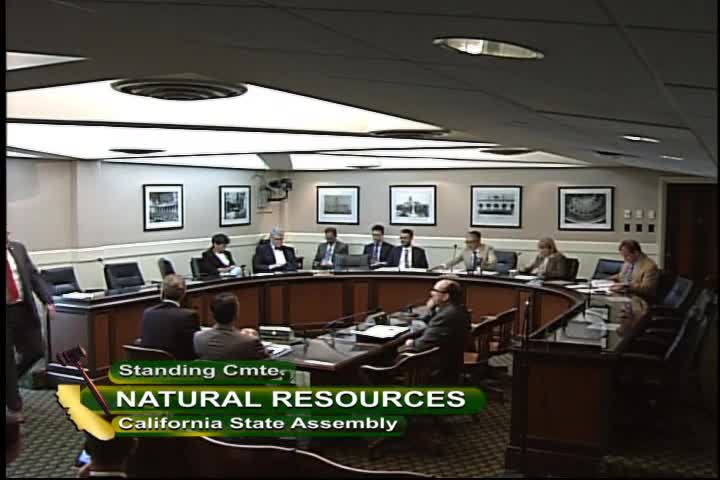 4MIN
Assembly Standing Committee on Natural Resources
Bill Author
Bill Co-Author(s):