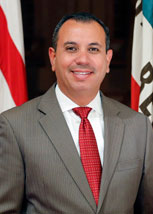
SB 292: Counties: contract legal counsel: auditor-controller.
- Session Year: 2017-2018
- House: Senate
- Latest Version Date: 2017-04-05
Existing law requires a county board of supervisors, upon request of the county assessor or sheriff, to contract with legal counsel to assist the assessor or sheriff with duties for which the district attorney or county counsel would have a conflict of interest in representing the assessor or sheriff. In the event the board of supervisors does not concur with the assessor or sheriff that a conflict of interests exists, existing law authorizes the county assessor or sheriff to initiate an ex parte proceeding before the presiding judge of the superior court, as provided.
This bill would extend these provisions to additionally require the board of supervisors to contract with legal counsel to assist the auditor-controller, as described above. By adding to the duties of county boards of supervisors with respect to contracts for legal counsel, this bill would impose a state-mandated local program.
The California Constitution requires the state to reimburse local agencies and school districts for certain costs mandated by the state. Statutory provisions establish procedures for making that reimbursement.
This bill would provide that, if the Commission on State Mandates determines that the bill contains costs mandated by the state, reimbursement for those costs shall be made pursuant to the statutory provisions noted above.
(1)Existing law holds any officer who authorizes the illegal payment of any claim or demand upon or against the treasury of any county personally liable to the person damaged by that illegal action, as specified.This bill would provide that this provision does not apply to any person holding the position of elected auditor-controller who has made a decision related to a claim or charge in the course and scope of his or her duties.(2)Existing law enumerates the officers of a county, including the office of the auditor, prescribes their duties, and permits a county board of supervisors to consolidate, separate, and reconsolidate their duties, as specified. Existing law generally prescribes the duties of the county auditor and requires the county auditor or auditor-controller, as specified, to be the chief accounting officer of the county.This bill would prohibit the county auditor-controller from drawing a warrant for an illegal claim or charge, including transfers, as specified. This bill would require the county auditor-controller to draw a warrant if a court has ordered payment pursuant to an order that has become effective, as specified.The bill would authorize an elected county auditor to retain legal counsel to provide advice upon any matter upon which the elected county auditor is required to act or that falls within the duties of the elected county auditor. The bill would additionally authorize an elected county auditor to hire one or more executive assistants, as specified.(3)Existing law provides that the necessary expenses incurred by the auditor and treasurer in the defense and prosecution of any action brought by or against them to test the validity or constitutionality of any act of the Legislature or of the board of supervisors or of any order providing for the payment of any funds held in the county treasury are county charges.This bill would provide that the necessary expenses incurred by the auditor or treasurer in the defense and prosecution of any action brought by or against them, based upon any decision to pay or not pay a claim or charge, are also county charges.(4)Existing law provides for imprisonment in the state prison for a person responsible for public moneys who, among other offenses, willfully refuses or omits to pay over or transfer public money, as specified. Existing law further provides that a person convicted for any of these offenses is prohibited from holding office in this state.This bill would, for certain of these offenses, provide that those offenses are not punishable under current law by imprisonment and disqualification from holding any office in this state unless an order has been issued and is effective pursuant to a civil finding that the officer or other person had a duty to perform a specified action, and the officer or other person has refused to perform that action.(1)Existing law holds any officer who authorizes the illegal payment of any claim or demand upon or against the treasury of any county personally liable to the person damaged by that illegal action, as specified.
This bill would provide that this provision does not apply to any person holding the position of elected auditor-controller who has made a decision related to a claim or charge in the course and scope of his or her duties.
(2)Existing law enumerates the officers of a county, including the office of the auditor, prescribes their duties, and permits a county board of supervisors to consolidate, separate, and reconsolidate their duties, as specified. Existing law generally prescribes the duties of the county auditor and requires the county auditor or auditor-controller, as specified, to be the chief accounting officer of the county.
This bill would prohibit the county auditor-controller from drawing a warrant for an illegal claim or charge, including transfers, as specified. This bill would require the county auditor-controller to draw a warrant if a court has ordered payment pursuant to an order that has become effective, as specified.
The bill would authorize an elected county auditor to retain legal counsel to provide advice upon any matter upon which the elected county auditor is required to act or that falls within the duties of the elected county auditor. The bill would additionally authorize an elected county auditor to hire one or more executive assistants, as specified.
(3)Existing law provides that the necessary expenses incurred by the auditor and treasurer in the defense and prosecution of any action brought by or against them to test the validity or constitutionality of any act of the Legislature or of the board of supervisors or of any order providing for the payment of any funds held in the county treasury are county charges.
This bill would provide that the necessary expenses incurred by the auditor or treasurer in the defense and prosecution of any action brought by or against them, based upon any decision to pay or not pay a claim or charge, are also county charges.
(4)Existing law provides for imprisonment in the state prison for a person responsible for public moneys who, among other offenses, willfully refuses or omits to pay over or transfer public money, as specified. Existing law further provides that a person convicted for any of these offenses is prohibited from holding office in this state.
This bill would, for certain of these offenses, provide that those offenses are not punishable under current law by imprisonment and disqualification from holding any office in this state unless an order has been issued and is effective pursuant to a civil finding that the officer or other person had a duty to perform a specified action, and the officer or other person has refused to perform that action.
(a)Upon request of the assessor or assessor, auditor-controller, or the sheriff of the county, the board of supervisors shall contract with and employ legal counsel to assist the assessor or assessor, auditor-controller, or the sheriff in the performance of his or her duties in any case where the county counsel or the district attorney would have a conflict of interest in representing the assessor or assessor, auditor-controller, or the sheriff.
(b)In the event that the board of supervisors does not concur with the assessor or assessor, auditor-controller, or the sheriff that a conflict of interest exists, the assessor or assessor, auditor-controller, or the sheriff, after giving notice to the county counsel or the district attorney, may initiate an ex parte proceeding before the presiding judge of the superior court. The county counsel or district attorney may file an affidavit in the proceeding in opposition to, or in support of, the assessors or assessors, auditor-controllers, or the sheriffs position.
(c)The presiding superior court judge that determines in any ex parte proceeding that a conflict actually exists, must, if requested by one of the parties, also rule whether representation by the county counsel or district attorney through the creation of an ethical wall is appropriate. The factors to be considered in this determination of whether an ethical wall should be created are: (1) equal representation, (2) level of support, (3) access to resources, (4) zealous representation, or (5) any other consideration that relates to proper representation.
(d)If a court determines that the action brought by the assessor or assessor, auditor-controller, or sheriff is frivolous and in bad faith, the assessors office or office, auditor-controllers office, or sheriffs office shall pay their own legal costs and all costs incurred in the action by the opposing party. As used in this section, bad faith and frivolous have the meaning given in Section 128.5 of the Code of Civil Procedure.
(e)If the presiding judge determines that a conflict of interest does exist, and that representation by the county counsel or district attorney through the creation of an ethical wall is inappropriate, the board of supervisors shall immediately employ legal counsel to assist the assessor or assessor, the auditor-controller, or the sheriff.
(f)As used in this section, conflict of interest means a conflict of interest as defined in Rule 3-310 of the Rules of Professional Conduct of the State Bar of California, as construed for public attorneys.
(g)This section shall also apply to any matter brought after an assessor or assessor, auditor-controller, or sheriff leaves office if the matter giving rise to the need for independent legal counsel was within the scope of the duties of the assessor or assessor, auditor-controller, or sheriff while in office, and the assessor or assessor, auditor-controller, or sheriff would have been authorized under this section to request the appointment of independent legal counsel.
SEC. 2.If the Commission on State Mandates determines that this act contains costs mandated by the state, reimbursement to local agencies and school districts for those costs shall be made pursuant to Part 7 (commencing with Section 17500) of Division 4 of Title 2 of the Government Code.
SECTION 1.Section 24054 of the Government Code is amended to read:24054.(a)Except as provided in subdivision (b), any officer authorizing, aiding to authorize, auditing, allowing, or paying any claim or demand upon or against the treasury of any county, or any fund thereof, in violation of law or of the constitution is liable personally and upon his official bond to the person damaged by that illegal action, to the extent of his or her loss by reason of the nonpayment of his or her claim.(b)This section does not apply to any person holding the position of elected county auditor-controller who has made a decision related to a claim or charge in the course and scope of his or her duties.SEC. 2.Section 26881.5 is added to the Government Code, to read:26881.5.(a)If an illegal claim or charge is made, the county auditor-controller shall not draw a warrant for that claim or charge. This section shall apply to a transfer, including, but not limited to, a transfer pursuant to Section 31582.(b)This section shall apply regardless of whether the position of county auditor-controller is defined in that county as ministerial or discretionary.(c)The county auditor-controller shall draw a warrant if a court has ordered payment pursuant to an order that has become effective as either a final order or pursuant to Section 1110b of the Code of Civil Procedure.SEC. 3.Article 5 (commencing with Section 26950) is added to Chapter 4 of Part 3 of Division 2 of Title 3 of the Government Code, to read:5.Personnel of the Auditor26950.Notwithstanding Article 2 (commencing with Section 26520) of Chapter 1, an elected county auditor may retain legal counsel to provide advice upon any matter upon which the elected county auditor is required to act or that falls within the duties of the elected county auditor.26951.An elected county auditor may hire one or more executive assistants, pursuant to the procedures specified in Section 24102, who shall serve at the pleasure of the elected county auditor. Selection of any executive assistant shall not be subject to approval by the board of supervisors. An executive assistant shall be compensated at no more than the maximum amount authorized for executive assistants of the board of supervisors.SEC. 4.Section 29611 of the Government Code is amended to read:29611.The necessary expenses incurred by the auditor and treasurer in the defense and prosecution of any action brought by or against them to test the validity or constitutionality of any act of the Legislature or of the board of supervisors, of any order providing for the payment of any funds held in the county treasury, or based upon any decision to pay or not pay a claim or charge are county charges.SEC. 5.Section 424 of the Penal Code is amended to read:424.(a)(1)Except as provided in paragraph (2), each officer of this state, or of any county, city, town, or district of this state, and every other person charged with the receipt, safekeeping, transfer, or disbursement of public moneys, who does any of the following is punishable by imprisonment in the state prison for two, three, or four years, and is disqualified from holding any office in this state:(A)Without authority of law, appropriates the same, or any portion thereof, to his or her own use, or to the use of another.(B)Loans the same or any portion thereof; makes any profit out of, or uses the same for any purpose not authorized by law.(C)Knowingly keeps any false account, or makes any false entry or erasure in any account of or relating to the same.(D)Fraudulently alters, falsifies, conceals, destroys, or obliterates any account.(E)Willfully refuses or omits to pay over, on demand, any public moneys in his or her hands, upon the presentation of a draft, order, or warrant drawn upon these moneys by competent authority.(F)Willfully omits to transfer the same, when transfer is required by law.(G)Willfully omits or refuses to pay over to any officer or person authorized by law to receive the same, any money received by him or her under any duty imposed by law so to pay over the same.(2)An offense described in subparagraph (E), (F), or (G) of paragraph (1) shall only be punishable by imprisonment in state prison and disqualification from holding any office in this state pursuant to that paragraph if both of the following have occurred:(A)A court has first filed an order in a civil proceeding finding that the officer or other person had a duty to act as specified in subparagraph (E), (F), or (G) of paragraph (1) and that order has become effective as either a final order or pursuant to Section 1110b of the Code of Civil Procedure.(B)That officer or other person has refused to perform the act specified in subparagraph (E), (F), or (G) of paragraph (1), after the order has become effective as either a final order or pursuant to Section 1110b of the Code of Civil Procedure.(b)As used in this section, public moneys includes the proceeds derived from the sale of bonds or other evidence or indebtedness authorized by the legislative body of any city, county, district, or public agency.(c)This section does not apply to the incidental and minimal use of public resources authorized by Section 8314 of the Government Code.Any (a)Except as provided in subdivision (b), any officer authorizing, aiding to authorize, auditing, allowing, or paying any claim or demand upon or against the treasury of any county, or any fund thereof, in violation of law or of the constitution is liable personally and upon his official bond to the person damaged by such that illegal action, to the extent of his or her loss by reason of the nonpayment of his or her claim.
(b)This section does not apply to any person holding the position of elected county auditor-controller who has made a decision related to a claim or charge in the course and scope of his or her duties.
SEC. 2.Section 26881.5 is added to the Government Code, to read:26881.5.(a)If an illegal claim or charge is made, the county auditor-controller shall not draw a warrant for that claim or charge. This section shall apply to a transfer, including, but not limited to, a transfer pursuant to Section 31582.
(b)This section shall apply regardless of whether the position of county auditor-controller is defined in that county as ministerial or discretionary.
(c)The county auditor-controller shall draw a warrant if a court has ordered payment pursuant to an order that has become effective as either a final order or pursuant to Section 1110b of the Code of Civil Procedure.
SEC. 3.Article 5 (commencing with Section 26950) is added to Chapter 4 of Part 3 of Division 2 of Title 3 of the Government Code, to read:5.Personnel of the Auditor26950.Notwithstanding Article 2 (commencing with Section 26520) of Chapter 1, an elected county auditor may retain legal counsel to provide advice upon any matter upon which the elected county auditor is required to act or that falls within the duties of the elected county auditor.
26951.An elected county auditor may hire one or more executive assistants, pursuant to the procedures specified in Section 24102, who shall serve at the pleasure of the elected county auditor. Selection of any executive assistant shall not be subject to approval by the board of supervisors. An executive assistant shall be compensated at no more than the maximum amount authorized for executive assistants of the board of supervisors.
SEC. 4.Section 29611 of the Government Code is amended to read:29611.The necessary expenses, expenses incurred by the auditor and treasurer in the defense and prosecution of any action brought by or against them to test the validity or constitutionality of any act of the Legislature or of the board of supervisors or supervisors, of any order providing for the payment of any funds held in the county treasury treasury, or based upon any decision to pay or not pay a claim or charge are county charges.
SEC. 5.Section 424 of the Penal Code is amended to read:424.(a)Each (a)(1)Except as provided in paragraph (2), each officer of this state, or of any county, city, town, or district of this state, and every other person charged with the receipt, safekeeping, transfer, or disbursement of public moneys, who either: does any of the following is punishable by imprisonment in the state prison for two, three, or four years, and is disqualified from holding any office in this state:
1.(A)Without authority of law, appropriates the same, or any portion thereof, to his or her own use, or to the use of another; or, another.
2.(B)Loans the same or any portion thereof; makes any profit out of, or uses the same for any purpose not authorized by law; or, law.
3.(C)Knowingly keeps any false account, or makes any false entry or erasure in any account of or relating to the same; or, same.
4.(D)Fraudulently alters, falsifies, conceals, destroys, or obliterates any account; or, account.
5.(E)Willfully refuses or omits to pay over, on demand, any public moneys in his or her hands, upon the presentation of a draft, order, or warrant drawn upon these moneys by competent authority; or, authority.
6.(F)Willfully omits to transfer the same, when transfer is required by law; or, law.
7.(G)Willfully omits or refuses to pay over to any officer or person authorized by law to receive the same, any money received by him or her under any duty imposed by law so to pay over the same; same.
Is punishable by imprisonment in the state prison for two, three, or four years, and is disqualified from holding any office in this state.(2)An offense described in subparagraph (E), (F), or (G) of paragraph (1) shall only be punishable by imprisonment in state prison and disqualification from holding any office in this state pursuant to that paragraph if both of the following have occurred:
(A)A court has first filed an order in a civil proceeding finding that the officer or other person had a duty to act as specified in subparagraph (E), (F), or (G) of paragraph (1) and that order has become effective as either a final order or pursuant to Section 1110b of the Code of Civil Procedure.
(B)That officer or other person has refused to perform the act specified in subparagraph (E), (F), or (G) of paragraph (1), after the order has become effective as either a final order or pursuant to Section 1110b of the Code of Civil Procedure.
(b)As used in this section, public moneys includes the proceeds derived from the sale of bonds or other evidence or indebtedness authorized by the legislative body of any city, county, district, or public agency.
(c)This section does not apply to the incidental and minimal use of public resources authorized by Section 8314 of the Government Code.
|
Date
|
Status
|
|---|---|
| Sep 1, 2017 | September 1 hearing: Held in committee and under submission. |
| Aug 23, 2017 | August 23 set for first hearing. Placed on suspense file. |
| Jun 29, 2017 | From committee: Do pass and re-refer to Com. on APPR. with recommendation: To consent calendar. (Ayes 9. Noes 0.) (June 28). Re-referred to Com. on APPR. |
| Jun 12, 2017 | Referred to Com. on L. GOV. |
| Jun 1, 2017 | In Assembly. Read first time. Held at Desk. |
| May 31, 2017 | Read third time. Passed. (Ayes 40. Noes 0. Page 1355.) Ordered to the Assembly. |
| May 26, 2017 | Ordered to special consent calendar. |
| May 26, 2017 | Read second time. Ordered to third reading. |
| May 25, 2017 | From committee: Do pass. (Ayes 7. Noes 0. Page 1181.) (May 25). |
| May 19, 2017 | Set for hearing May 25. |
| May 15, 2017 | May 15 hearing: Placed on APPR. suspense file. |
| May 4, 2017 | Set for hearing May 15. |
| Apr 26, 2017 | From committee: Do pass and re-refer to Com. on APPR. with recommendation: To consent calendar. (Ayes 7. Noes 0. Page 852.) (April 25). Re-referred to Com. on APPR. |
| Apr 21, 2017 | Set for hearing April 25. |
| Apr 19, 2017 | Re-referred to Com. on JUD. |
| Apr 6, 2017 | Withdrawn from committee. |
| Apr 5, 2017 | Read second time and amended. Re-referred to Com. on PUB. S. |
| Apr 4, 2017 | From committee: Do pass as amended and re-refer to Com. on PUB. S. (Ayes 6. Noes 0. Page 538.) (March 29). |
| Mar 16, 2017 | Set for hearing March 29. |
| Mar 15, 2017 | March 22 hearing postponed by committee. |
| Mar 7, 2017 | Set for hearing March 22. |
| Feb 23, 2017 | Referred to Coms. on GOV. & F. and PUB. S. |
| Feb 10, 2017 | From printer. May be acted upon on or after March 12. |
| Feb 9, 2017 | Introduced. Read first time. To Com. on RLS. for assignment. To print. |
|
Date
|
Description
|
Location
|
Votes
|
|
|---|---|---|---|---|
| Jun 28, 2017 | Do pass and be re-referred to the Committee on [Appropriations] with recommendation: To Consent Calendar | Assembly Standing Committee on Local Government |
Passed |
|
| May 31, 2017 | Special Consent Calendar # SB292 | Senate Floor |
Passed |
|
| May 25, 2017 | Do pass | Senate Standing Committee on Appropriations |
Passed |
|
| May 15, 2017 | Placed on suspense file | Senate Standing Committee on Appropriations |
Passed |
|
| Apr 25, 2017 | Do pass, but first be re-referred to the Committee on [Appropriations] with the recommendation: To Consent Calendar | Senate Standing Committee on Judiciary |
Passed |
|
| Mar 29, 2017 | Do pass as amended, but first amend, and re-refer to the Committee on [Public Safety] | Senate Standing Committee on Governance and Finance |
Passed |
This list shows positions taken on this bill by organizations on the date displayed, which is linked to the original source.
Positions by individuals are not included.
|
Organization
|
Position
|
Date
|
|---|---|---|
| auditor-controller of amador county | ** Support | May 27, 2017 |
| auditor-controller of calaveras county | ** Support | May 27, 2017 |
| auditor-controller of colusa county | ** Support | May 27, 2017 |
| auditor-controller of del norte county | ** Support | May 27, 2017 |
| auditor-controller of el dorado county | ** Support | May 27, 2017 |
| auditor-controller of humboldt county | ** Support | May 27, 2017 |
| auditor-controller of imperial county | ** Support | May 27, 2017 |
| auditor-controller of kern county | ** Support | May 27, 2017 |
| auditor-controller of lassen county | ** Support | May 27, 2017 |
| auditor-controller of mariposa county | ** Support | May 27, 2017 |
| auditor-controller of mendocino county | ** Support | May 27, 2017 |
| auditor-controller of merced county | ** Support | May 27, 2017 |
| auditor-controller of monterey county | ** Support | May 27, 2017 |
| auditor-controller of nevada county | ** Support | May 27, 2017 |
| auditor-controller of orange county | ** Support | May 27, 2017 |
| auditor-controller of riverside county | ** Support | May 27, 2017 |
| auditor-controller of santa barbara county | ** Support | May 27, 2017 |
| auditor-controller of sierra county | ** Support | May 27, 2017 |
| auditor-controller of solano county | ** Support | May 27, 2017 |
| auditor-controller of stanislaus county | ** Support | May 27, 2017 |
| auditor-controller of tehama county | ** Support | May 27, 2017 |
| auditor-controller of trinity county | ** Support | May 27, 2017 |
| auditor-controller of tulare county | ** Support | May 27, 2017 |
| auditor-controller of tuolumne county | ** Support | May 27, 2017 |
| auditor-controller of ventura county | ** Support | May 27, 2017 |
| auditor-controller of yuba county | ** Support | May 27, 2017 |
| auditor-controllers of the following counties: | ** Support | Jun 27, 2017 |
| One individual | ** Support | May 27, 2017 |
| orange county auditor-controller [sponsor] | ** Support | Jun 27, 2017 |
| State Association Of County Auditors | ** Support | Jun 27, 2017 |
Date of Hearing: August 23, 2017
ASSEMBLY COMMITTEE ON APPROPRIATIONS
Lorena Gonzalez Fletcher, Chair
SBPCA Bill Id:SB 292
Author:(Bates) – As Amended Ver:April 5, 2017
Policy Committee: |
| Vote: |
|
Urgency: No State Mandated Local Program: Yes Reimbursable: Yes
SUMMARY:
This bill requires a county board of supervisors to obtain independent legal counsel to assist the county auditor-controller with duties for which the county counsel or district attorney would have a conflict of interest in representing the auditor-controller.
FISCAL EFFECT:
Unknown, potentially significant reimbursable costs (GF/local funds) to counties to provide outside counsel to the auditor-controller to the extent that the Commission on State Mandates determines that this measure imposes a state-mandated local program. The extent to which this requirement would be triggered is unknown, but if there were two to three cases statewide annually, the costs could surpass $150,000 depending on the complexity of the issues, the length of the services required, and whether the matters include litigation.
COMMENTS:
- Purpose. According to the author, "There have been instances in recent years where conflicts have arisen between auditor-controllers and the board of supervisors of their respective counties regarding questionable payments the board requests the auditor-controller (to) execute.
"The Orange County Auditor-Controller, the sponsor of SB 292, has experienced two major instances where he questioned whether payments requested by his board were legal, ….. but did not have access to an outside legal opinion.
"These instances demonstrate the need for legislation that will allow auditor-controllers to have access to outside legal counsel in limited circumstances where county counsel has been deemed to have a conflict of interest. SB 292 attempts to solve this problem by adding auditor-controllers to an existing list of county officials that may seek the advice of outside counsel if an authorizing body deems there to be a legitimate conflict of interest."
- Background. Existing law requires a county board of supervisors, upon request of the county assessor or sheriff, to contract with legal counsel to assist the assessor or sheriff with duties for which the district attorney or county counsel would have a conflict of interest in representing the assessor or sheriff. In the event the board of supervisors does not concur with the assessor or sheriff that a conflict of interests exists, existing law authorizes the county assessor or sheriff to initiate an ex parte proceeding before the presiding judge of the superior court, as provided.
This bill extends these provisions to include a county auditor-controller.
- Prior Legislation. AB 783 (Daly) of 2015 would have given responsibility for internal audits in Orange County to the auditor-controller rather than the board of supervisors. This bill was held on the Senate Floor.
AB 2715 (Runner), Chapter 423, Statutes of 2006, expanded the requirement for independent counsel to include assistance to former sheriffs and assessors, as specified.
AB 1579 (Kehoe), Chapter 41, Statutes of 2001, expanded the requirement for independent counsel to include assistance to sheriffs.
Analysis Prepared by: Jennifer Swenson / APPR. / (916) 319-2081
Date of Hearing: June 28, 2017
ASSEMBLY COMMITTEE ON LOCAL GOVERNMENT
Cecilia Aguiar-Curry, Chair
SBPCA Bill Id:SB 292
Author:(Bates) – As Amended Ver:April 5, 2017
SENATE VOTE: 40-0
SUBJECT: Counties: contract legal counsel: auditor-controller.
SUMMARY: Requires county boards of supervisors to obtain independent legal counsel to assist a county auditor-controller who requests such assistance, if a county counsel or district attorney would have a conflict of interest in representing the auditor-controller. Specifically, this bill:
- Expands existing law that governs instances in which a county counsel or district attorney would have a conflict of interest in representing a county assessor or a county sheriff, by requiring, upon request of a county auditor-controller, a board of supervisors to contract with and employ legal counsel to assist the auditor-controller in the performance of his or her duties in any case where the county counsel or the district attorney would have a conflict of interest in representing the auditor-controller.
- Allows a county auditor-controller to initiate an ex parte proceeding before the presiding judge of the superior court, after giving notice to the county counsel or the district attorney, in the event that the board of supervisors does not concur with the auditor-controller that a conflict of interest exists. The county counsel or district attorney may file an affidavit in the proceeding in opposition to, or in support of, the auditor-controller's position.
- Requires a presiding superior court judge that determines in any ex parte proceeding that a conflict actually exists to also rule whether representation by the county counsel or district attorney through the creation of an "ethical wall" is appropriate, if requested by one of the parties. The factors to be considered in this determination of whether an "ethical wall" should be created are: equal representation; level of support; access to resources; zealous representation; or, any other consideration that relates to proper representation.
- Requires the auditor-controller's office to pay its own legal costs and all costs incurred in the action by the opposing party if a court determines that the action brought by the auditor-controller is frivolous and in bad faith, as specified.
- Requires a board of supervisors to immediately employ legal counsel to assist the auditor-controller if the presiding judge determines that a conflict of interest does exist, and that representation by the county counsel or district attorney through the creation of an ethical wall is inappropriate.
- Defines "conflict of interest" to mean a conflict of interest as defined in Rule 3-310 of the Rules of Professional Conduct of the State Bar of California, as construed for public attorneys.
- Provides that these provisions also apply to any matter brought after an auditor-controller leaves office if the matter giving rise to the need for independent legal counsel was within the scope of the duties of the auditor-controller while in office, and the auditor-controller would have been authorized under this bill to request the appointment of independent legal counsel.
- Provides that, if the Commission on State Mandates determines that this bill contains costs mandated by the state, reimbursement to local agencies and school districts for those costs shall be made pursuant to current law governing state mandated local costs
EXISTING LAW requires a county board of supervisors, at the request of the county assessor or county sheriff, to obtain outside counsel if the county counsel or the district attorney would have a conflict of interest in representing the sheriff or assessor, pursuant to the provisions that this bill would extend to such situations with auditor-controllers.
FISCAL EFFECT: According to the Senate Appropriations Committee, "Unknown, potentially significant reimbursable costs (local funds/General Fund) to counties to provide outside counsel to the auditor-controller to the extent that the Commission on State Mandates determines that this measure imposes a state-mandated local program. The extent to which this requirement would be triggered is unknown, but the costs for one instance could surpass $50,000 depending on the complexity of the issue, the length of the services required, and if the matter includes litigation."
COMMENTS:
- Bill Summary. This bill requires county boards of supervisors to obtain independent legal counsel to assist a county auditor-controller who requests such assistance, if a county counsel or district attorney would have a conflict of interest in representing the auditor-controller. This bill is sponsored by Orange County Auditor-Controller Eric Woolery.
- Author's Statement. According to the author, "There have been instances in recent years where conflicts have arisen between auditor-controllers and the board of supervisors of their respective counties regarding questionable payments the board requests the auditor-controller (to) execute.
"The Orange County Auditor-Controller, the sponsor of SB 292, has experienced two major instances where he questioned whether payments requested by his board were legal. The first questionable payment requested of Mr. Woolery occurred when a member of the Orange County Board of Supervisors who had previously signed an agreement not to take a pension requested the county make his pension payments retroactively. When Mr. Woolery questioned the legality of the payments, the county counsel, who had been appointed by the board of supervisors, recommended that Mr. Woolery make the payments or face criminal charges. Under current law, Mr. Woolery had no way to seek outside legal counsel for an opinion as to whether a payment for which he could be held liable was in fact legal.
"On a second occasion, Mr. Woolery discovered multiple members of the Board of Supervisors had spent hundreds of thousands of dollars of county money on mass mailers that appeared political in nature. The mailers featured individual supervisors and appeared to violate mass mailing law. Mr. Woolery once again did not have access to an outside legal opinion on whether making the payment for the seemingly illegal campaign material was legal.
"These instances demonstrate the need for legislation that will allow auditor-controllers to have access to outside legal counsel in limited circumstances where county counsel has been deemed to have a conflict of interest. SB 292 attempts to solve this problem by adding auditor-controllers to an existing list of county officials that may seek the advice of outside counsel if an authorizing body deems there to be a legitimate conflict of interest."
- Background. Existing law provides for county powers and governance, including an elected county board of supervisors, an elected county sheriff, an elected district attorney, and an elected assessor. The powers of a county can only be exercised by the board of supervisors or through officers acting under the authority of the board or authority conferred by law. The board supervises the official conduct of all county officers, particularly as their activities pertain to the management and disbursement of public funds. The board of supervisors is also vested with the constitutional authority to provide for the number, compensation, tenure, and appointment of employees.
State law creates additional county officers, including a county auditor and a county counsel. The county auditor can be elected or appointed. The county counsel is appointed by the board of supervisors and is the chief legal advisor to the county. A county counsel may only be removed by a grand jury or the board of supervisors for cause, such as for misconduct, malfeasance, or failing to perform his or her duty.
Under the State Bar of California's Rules of Professional Conduct, a county counsel must represent the interests of the entire county, and state law specifically requires a county counsel to prosecute or defend any action brought by or against the auditor-controller contesting the validity of a payment if the interest of the county is not adverse. If a county counsel has a conflict of interest because he or she cannot ethically represent both sides in a disagreement between the board and county officers that have authority to act independently of the board, the county counsel acts as the legal advisor to the board of supervisors.
In addition, existing law specifically requires a board of supervisors, at the request of its sheriff or assessor, to hire outside counsel when the county counsel or district attorney would have a conflict representing the sheriff or the assessor. The board may ask a court to rule on: (1) if a conflict actually exists, (2) if an "ethical wall" may instead be established, and (3) if the request by the sheriff or assessor was brought frivolously. If the request was frivolous, the sheriff or assessor must pay their own legal costs.
- Illegal charges. Existing law penalizes a government official who pays an illegal claim in violation of the law by holding that officer personally liable to the person damaged by that illegal action. Existing law also penalizes an officer of the state or local government or any other person charged with overseeing public moneys with imprisonment in state prison, and disqualifies that person from holding any public office if he or she makes fraudulent charges, embezzles public funds, or willfully refuses or omits to pay over or transfer public money, among other prohibited activities.
- Office of County Auditor-Controller. County auditors serve as the chief accounting officers for counties, allocating property tax revenues and performing audits on county departments, special districts, and joint powers authorities. Counties may also create the office of county controller, who is responsible for the county’s bookkeeping and check writing. Absent a designation to the contrary, the office of county controller is held by the county auditor. State law permits counties to consolidate the two offices into the office of the county auditor-controller. County auditor-controllers must perform specified audits under state law, and county boards of supervisors can also request other audits.
Most county auditor-controllers are elected officials, but county supervisors can convert the position to an appointed one with majority voter approval. The county auditor-controller is appointed in 11 counties. General law counties may consolidate the auditor-controller's duties with those of the tax collector and treasurer, within the elective or appointive office of the director of finance. Charter counties have constitutional authority to assign the auditor-controller’s statutory duties to other officers or structures.
- Orange County Auditor-Controller. Orange County’s auditor-controller is elected. The combined auditor-controller office came into being in 1982, when the board of supervisors consolidated the formerly independent functions into a single Office of Auditor-Controller. Today, the county’s Auditor-Controller is responsible for conducting independent audits of county departments, as well as basic bookkeeping and check writing.
In 1994, Orange County became the largest municipality in U.S. history to file for bankruptcy as a result of the mismanagement of county investments. In the wake of the bankruptcy, investigators concluded that county auditors were too close to their colleagues at the county Treasurer-Tax Collector’s office, and had failed to oversee the latter’s questionable investments.
In recent years, press reports have documented disputes between the Orange County Auditor-Controller and the board of supervisors, including:
- Whether internal audits should be assigned to the Auditor-Controller or the county’s Internal Audit Department;
- A decision by the Auditor-Controller to withhold pension payments for a county supervisor that the Auditor-Controller deemed illegal; and,
- A 2016 decision by the Auditor-Controller to halt payment for mailers that the Auditor-Controller deemed in violation of Fair Political Practices Commission rules.
Existing law requires a county board of supervisors, upon request of the county assessor or sheriff, to contract with legal counsel to assist the assessor or sheriff with duties for which the district attorney or county counsel would have a conflict of interest in representing the assessor or sheriff. Existing law provides for the county assessor or sheriff to initiate an ex parte proceeding before the presiding judge of the superior court in the event the board of supervisors does not concur with the assessor or sheriff that a conflict of interests exists. This bill would expand these provisions to apply to the county auditor-controller.
- Previous Legislation. AB 783 (Daly) of 2015 would have given responsibility for internal audits in Orange County to the auditor-controller rather than the board of supervisors.
AB 783 was held on the Senate Floor. - State Mandate. This bill is keyed a state mandate, which means the state could be required to reimburse local agencies and school districts for implementing the bill's provisions if the Commission on State Mandates determines that the bill contains costs mandated by the state.
- Arguments in Support. Orange County Auditor-Controller Eric Woolery, sponsor of this bill, writes, "Under current law, if a county auditor-controller is presented with an illegal charge or claim from another government agency or elected official, the county auditor-controller is subject to criminal liability if he or she refuses to pay the illegal charge or claim. If the county auditor-controller pays the illegal charge or claim, the county auditor-controller is then personally liable.
"Existing law explicitly declares the county counsel to be the legal advisor of the board of supervisors, but the county auditor-controller cannot retain outside counsel without approval of the board of supervisors. This produces an inherent conflict of interest when the board of supervisors presents a potentially illegal charge or claim to the county auditor-controller.
SB 292 resolves this conflict of interest by allowing the county auditor-controller to utilize the existing process that county assessors and county sheriffs use to seek independent counsel."
- Arguments in Opposition. None on file.
REGISTERED SUPPORT / OPPOSITION:
Support
Orange County Auditor-Controller [SPONSOR]
State Association of County Auditors
Auditor-Controllers of the following counties:
Alpine, Amador, Butte, Calaveras, Colusa, Del Norte, El Dorado, Fresno, Glenn, Humboldt, Imperial, Kern, Lake, Lassen, Madera, Mariposa, Mendocino, Merced, Modoc, Mono, Monterey, Napa, Nevada, Placer, Plumas, Riverside, San Benito, San Luis Obispo, San Mateo, Santa Barbara, Santa Cruz, Shasta, Sierra, Siskiyou, Solano, Stanislaus, Sutter, Tehama, Trinity, Tulare, Tuolumne, Ventura, Yolo, and Yuba
Opposition
None on file
Analysis Prepared by: Angela Mapp / L. GOV. / (916) 319-3958
Office of Senate Floor Analyses (916) 651-1520 Fax: (916) 327-4478 | SB |
THIRD READING
Bill No: SB 292
:
SENATE GOVERNANCE & FIN. COMMITTEE: 6-0, 3/29/17
AYES: McGuire, Nguyen, Beall, Hernandez, Hertzberg, Lara
NO VOTE RECORDED: Moorlach
SENATE JUDICIARY COMMITTEE: 7-0, 4/25/17
AYES: Jackson, Moorlach, Anderson, Hertzberg, Monning, Stern, Wieckowski
SENATE APPROPRIATIONS COMMITTEE: 7-0, 5/25/17
AYES: Lara, Bates, Beall, Bradford, Hill, Nielsen, Wiener
SOURCE: Auditor-Controller of Orange County
DIGEST:
This bill allows an auditor-controller to hire outside legal representation where the county counsel has a conflict of interest.
Existing law:
- Provides for the following under the California Constitution:
- Divides the state into 58 counties.
- Tasks the Legislature with developing uniform procedures for their formation, consolidation, and boundary changes.
- Requires the Legislature to establish general laws providing for county powers, an elected county sheriff, an elected district attorney, an elected assessor, and an elected governing body in each county.
- Provides that each general law county is governed by a five-member board of supervisors, in which is vested the exercise of the county’s powers.
- Creates additional county officers, including a county auditor, and, if appointed by the board of supervisors, a county counsel that serves as the chief legal advisor to the county and is appointed by the board of supervisors for a four year term.
- Requires a county board of supervisors, at the request of the sheriff or assessor, to hire outside counsel where a conflict of interest exists for the county counsel.
- Allows the board of supervisors to ask a court to rule on:
- If a conflict actually exists,
- If an “ethical wall” may instead be established, and
- If the request by the sheriff or assessor was brought frivolously.
- Requires, if the request was frivolous, the sheriff or assessor to pay their own legal costs.
This bill:
- Adds auditor-controllers to the process established for sheriffs and assessors.
- Provides that if the Commission on State Mandates determines that the bill contains a reimbursable mandate, reimbursement shall be made pursuant to existing procedures in law.
Background
Board of Supervisors. The board of supervisors controls the exercise of the county’s powers and the conduct of its officers. Under state law, the powers of a county can only be exercised by the board of supervisors or through officers acting under the authority of the board or authority conferred by law, and the board supervises the official conduct of all county officers, particularly as their activities pertain to the management and disbursement of public funds.
Auditor-controller. County auditors serve as the chief accounting officers for counties, allocating property tax revenues and performing audits on county departments, special districts, and joint powers authorities. Counties may also create the office of county controller, who is responsible for the county’s bookkeeping and check writing. Absent a designation to the contrary, the office of county controller is held by the county auditor. State law permits counties to consolidate the two offices into the office of the county auditor-controller. County auditor-controllers must perform specified audits under state law, and the county boards of supervisors can also request other audits. Most county auditor-controllers are elected officials, but county supervisors can convert the position to an appointed one with majority voter approval.
Conflict of Interest. Under the Rules of Professional Conduct, a county counsel must represent the interests of the entire county, and state law specifically requires county counsel to prosecute or defend any action brought by or against the auditor-controller contesting the validity of a payment if the interest of the county is not adverse. Where the county counsel has an actual conflict of interest because he or she cannot ethically represent both sides in a disagreement between the board and county officers that have authority to act independently of the board—typically the constitutionally-created offices of sheriff and assessor—the county counsel acts as the legal advisor to the board of supervisors.
Orange County. Orange County’s auditor-controller is elected. The combined auditor-controller office came into being in 1982, when the Board of Supervisors consolidated the formerly independent functions into a single Office of Auditor-Controller. Today, the county’s Auditor-Controller is responsible for conducting independent audits of county departments, as well as basic bookkeeping and check writing.
In recent years, press reports have documented disputes between the Orange County Auditor-Controller and the board of supervisors, including:
- Whether internal audits should be assigned to the Auditor-Controller or the county’s Internal Audit Department.
- A decision by the Auditor-Controller to withhold pension payments for a county supervisor that the Auditor-Controller deemed illegal.
- A 2016 decision by the Auditor-Controller to halt payment for mailers that the Auditor-Controller deemed in violation of Fair Political Practices Commission rules.
Comments
- Purpose of the bill. Elected auditor-controllers are the financial watchdogs of the county. In their auditor role, they investigate financial malfeasance and identify improper or inefficient expenditures. These activities can put an elected-auditor controller at odds with county supervisors, as illustrated by recent events in Orange County. However, the auditor-controller may not hire outside counsel without the approval of the board of supervisors, even though county counsel is the legal advisor to the board of supervisors under state law and thus may not be able to fairly represent the auditor-controller. SB 292 addresses these conflicts in existing law by allowing auditor-controllers to mount an appropriate legal defense where necessary, by using an existing statutory framework for procuring outside counsel that currently only applies to assessors and sheriffs. SB 292 enables elected auditor-controllers to more effectively carry out their responsibilities and protects the fiscal health of counties.
- Home rule. SB 292 emerges from a series of disputes within Orange County, but modifies the authority for auditor-controllers statewide. Yet local avenues exist for resolving these conflicts. County charters provide the voters in an individual county the opportunity to modify the powers and duties of their county officers, and the board of supervisors is ultimately accountable to local voters for their actions. Moreover, the particular conflicts giving rise to this bill appear to have been resolved because the disputed charges were ultimately paid. Accordingly, the issues raised by this bill may be best resolved at the local level instead of through a statewide bill.
FISCAL EFFECT: Appropriation: Fiscal Com.: Local:
According to the Senate Appropriations Committee, unknown, potentially significant reimbursable costs (local funds/General Fund) to counties to provide outside counsel to the auditor-controller to the extent that the Commission on State Mandates determines that this measure imposes a state-mandated local program. The extent to which this requirement would be triggered is unknown, but the costs for one instance could surpass $50,000 depending on the complexity of the issue, the length of the services required, and if the matter includes litigation.
Auditor-Controller of Orange County (source)
Auditor-Controller of Amador County
Auditor-Controller of Calaveras County
Auditor-Controller of Colusa County
Auditor-Controller of Del Norte County
Auditor-Controller of El Dorado County
Auditor-Controller of Humboldt County
Auditor-Controller of Imperial County
Auditor-Controller of Kern County
Auditor-Controller of Lassen County
Auditor-Controller of Mariposa County
Auditor-Controller of Mendocino County
Auditor-Controller of Merced County
Auditor-Controller of Monterey County
Auditor-Controller of Nevada County
Auditor-Controller of Riverside County
Auditor-Controller of Santa Barbara County
Auditor-Controller of Sierra County
Auditor-Controller of Solano County
Auditor-Controller of Stanislaus County
Auditor-Controller of Tehama County
Auditor-Controller of Trinity County
Auditor-Controller of Tulare County
Auditor-Controller of Tuolumne County
Auditor-Controller of Ventura County
Auditor-Controller of Yuba County
Elected members of the State Association of County Auditors
One individual
OPPOSITION: (Verified 5/26/17)
None received
5/27/17 18:48:47
**** END ****
SENATE COMMITTEE ON APPROPRIATIONS
Senator Ricardo Lara, Chair
2017 - 2018 Regular Session
SB 292 (Bates) - Counties: contract legal counsel: auditor-controller
Version: April 5, 2017 | Policy Vote: GOV. & F. 6 - 0, JUD. 7 - 0 |
Urgency: No | Mandate: Yes |
Hearing Date: May 15, 2017 | Consultant: Shaun Naidu |
This bill meets the criteria for referral to the Suspense File.
Bill Summary:
SB 292 would require a county board of supervisors to contract with legal counsel to assist the auditor-controller with duties for which the district attorney or county counsel would have a conflict of interest in representing the auditor-controller.
Fiscal Impact:
Unknown, potentially significant reimbursable costs (local funds/General Fund) to counties to provide outside counsel to the auditor-controller to the extent that the Commission on State Mandates determines that this measure imposes a state-mandated local program. The extent to which this requirement would be triggered is unknown, but the costs for one instance could surpass $50,000 depending on the complexity of the issue, the length of the services required, and if the matter includes litigation.
Background:
Existing law requires a county board of supervisors, upon request of the county assessor or sheriff, to contract with legal counsel to assist the assessor or sheriff with duties for which the district attorney or county counsel would have a conflict of interest in representing the assessor or sheriff. In the event the board of supervisors does not concur with the assessor or sheriff that a conflict of interests exists, existing law authorizes the county assessor or sheriff to initiate an ex parte proceeding before the presiding judge of the superior court, as provided.
Proposed Law:
This bill would require a county board of supervisors to contract with legal counsel to assist the auditor-controller with duties for which the district attorney or county counsel would have a conflict of interest in representing the auditor-controller.
Prior Legislation:
AB 783 (Daly, 2015) would have given responsibility for internal audits, in Orange County, to the independently-elected auditor-controller, rather than the county board of supervisors. AB 783 failed passage on the Senate Floor.
AB 2715 (Runner, Ch. 423, Stats. 2006) expanded the requirement for independent counsel to include assistance to former sheriffs and assessors, as specified.
AB 1579 (Kehoe, Ch. 41, Stats. 2001) expanded the requirement for independent counsel to include assistance to sheriffs.
-- END --
Senator Hannah-Beth Jackson, Chair
2017-2018 Regular Session
Bill No: SB 292 (Author:Bates)
Version: April 5, 2017
Hearing Date: April 25, 2017
Fiscal: Yes
Urgency: No
Consultant: MS
SUBJECT
Counties: contract legal counsel: auditor-controller
DESCRIPTION
Existing law requires a county board of supervisors, upon request of the county assessor or sheriff, to contract with legal counsel to assist the assessor or sheriff with duties for which the district attorney or county counsel would have a conflict of interest in representing the assessor or sheriff. Existing law provides for the county assessor or sheriff to initiate an ex parte proceeding before the presiding judge of the superior court in the event the board of supervisors does not concur with the assessor or sheriff that a conflict of interests exists. This bill would expand these provisions to apply to the county auditor-controller.
BACKGROUND
The California Constitution divides the state into counties and tasks the Legislature with developing uniform procedures for their formation, consolidation, and boundary changes. Additionally, it requires the Legislature to establish general laws providing for county powers, an elected county sheriff, an elected district attorney, an elected assessor, and an elected governing body in each county. (Cal. Const., art. XI, Sec. 1.) State law provides that each county is governed by a five-member board of supervisors, with each county then being able to adopt their own charters that may increase the number of supervisors, create additional officers, and assign different powers to those officers. (Gov. Code Sec. 2500 et. seq.)
State law also creates additional county officers, including a county auditor-controller, and, if appointed by the board of supervisors, a county counsel. The county counsel is the chief legal advisor to the county and is appointed by the board of supervisors for a four year term. A county counsel may only be removed by a grand jury or the board of supervisors for cause, such as for misconduct, malfeasance, or failing to perform his or her duty. (Gov. Code Sec. 26529.)
In addition, the Government Code specifically requires the board of supervisors, at the request of the sheriff or assessor, to hire outside counsel where a conflict of interest exists. The board may ask a court to rule on: (1) if a conflict actually exists, (2) if an “ethical wall” may instead be established, and (3) if the request by the sheriff or assessor was brought frivolously. If the request was frivolous, the sheriff or assessor must pay their own legal costs. (Gov. Code Sec. 31000.6.)
This bill would add the county auditor-controller to this existing provision that requires the board of supervisors, at the request of the auditor-controller, to hire outside counsel where a conflict of interest exists.
CHANGES TO EXISTING LAW
Existing law provides that upon the request of the assessor or the sheriff of the county, the board of supervisors shall contract with and employ legal counsel to assist the assessor or the sheriff in the performance of his or her duties in any case where the county counsel or the district attorney would have a conflict of interest in representing the assessor or the sheriff. (Gov. Code Sec. 31000.6(a).)
Existing law provides that in the event that the board of supervisors does not concur with the assessor or the sheriff that a conflict of interest exists, the assessor or the sheriff, after giving notice to the county counsel or the district attorney, may initiate an ex parte proceeding before the presiding judge of the superior court. The county counsel or district attorney may file an affidavit in the proceeding in opposition to, or in support of, the assessor’s or the sheriff’s position. (Gov. Code Sec. 31000.6(b).)
Existing law provides that the presiding superior court judge that determines in any ex parte proceeding that a conflict actually exists, must, if requested by one of the parties, also rule whether representation by the county counsel or district attorney through the creation of an “ethical wall” is appropriate. The factors to be considered in this determination of whether an “ethical wall” should be created are:
- equal representation;
- level of support;
- access to resources;
- zealous representation; or
- any other consideration that relates to proper representation. (Gov. Code Sec. 31000.6(c).)
Existing law provides that if a court determines that the action brought by the assessor or sheriff is frivolous and in bad faith, the assessor’s office or sheriff’s office shall pay their own legal costs and all costs incurred in the action by the opposing party. (Gov. Code Sec. 31000.6(d).)
Existing law defines frivolous, for this purpose, as meaning totally and completely without merit or for the sole purpose of harassing an opposing party. (Civ. Proc. Code Sec. 128.5(b)(2).)
Existing law provides that if the presiding judge determines that a conflict of interest does exist, and that representation by the county counsel or district attorney through the creation of an ethical wall is inappropriate, the board of supervisors shall immediately employ legal counsel to assist the assessor or the sheriff. (Gov. Code Sec. 31000.6(e).)
Existing law provides, as used in this section, means conflict of interest as defined in Rule 3-310 of the Rules of Professional Conduct of the State Bar of California, as construed for public attorneys. (Gov. Code Sec. 31000.6(f).)
Existing law provides that this section shall also apply to any matter brought after an assessor or sheriff leaves office if the matter giving rise to the need for independent legal counsel was within the scope of the duties of the assessor or sheriff while in office, and the assessor or sheriff would have been authorized under this section to request the appointment of independent legal counsel. (Gov. Code Sec. 31000.6(g).)
This bill would add a county’s auditor-controller to the above code section, enabling an auditor-controller to have the same access to outside legal counsel as the assessor or sheriff of the county.
COMMENT
- Stated need for this bill
According to the Author:
There have been instances in recent years where conflicts have arisen between auditor-controllers and the board of supervisors of their respective counties regarding questionable payments the board requests the auditor-controller execute.
The Orange County Auditor-Controller, the sponsor of SB 292, has experienced two major instances where he felt payments requested by his Board may have been illegal. These instances demonstrate the need for legislation that will allow auditor-controllers to have access to outside legal counsel in limited circumstances where county counsel has been deemed to have a conflict of interest.
SB 292 attempts to solve this problem by adding auditor-controllers to an existing list of county officials that may seek the advice of outside counsel if an authorizing body deems there to be a legitimate conflict of interest. SB 292 also protects against the potential for abuse of this statute by holding auditor-controller’s personally liable for requests brought in bad faith.
- Role of the Auditor-Controller
County auditors serve as the chief accounting officers for counties, allocating property tax revenues and performing audits on county departments, special districts, and joint powers authorities. Counties may also create the office of county controller, who is responsible for the county’s bookkeeping and check writing. Absent a designation to the contrary, the office of county controller is held by the county auditor. State law permits counties to consolidate the two offices into the office of the county auditor-controller. County auditor-controllers must perform specified audits under state law and the county boards of supervisors can also request other audits.
Arguably, a county’s auditor-controller acts as a watchdog for how the taxpayer’s money is spent. This at times puts the auditor-controller at odds with other county officials. In 2013, the Territorial Dispatch reported on an instance where the Sutter County District Attorney brought charges against the Sutter County Auditor-Controller seemingly in an effort to make the auditor-controller, in this instance an elected official, step down. The Territorial Dispatch reported that the charges were dropped as soon as the Sutter County Auditor-Controller announced his plans to retire; such charges would arguably be deemed frivolous. The Sutter County Auditor-Controller had no option but to hire his own defense counsel, to defend against accusations that stemmed from his role as the auditor-controller. (Binninger, Carl Adams vs. Robert Stark, Territorial Dispatch (Dec. 18, 2013) p. 1.) This bill seeks to address instances of local misconduct, ensuring a county’s auditor-controller has the tools they need to fulfill their public role.
The Orange County Auditor-Controller, sponsor, writes in support:
Like many county auditor-controllers, my office has had its independence threatened while we lacked non-conflicted legal counsel. During my first year as Orange County Auditor-Controller, when I was out of the office for several days for a medical procedure, the county counsel refused to provide my staff with any advice when they were threatened with criminal prosecution for attempting to withhold payment for a four-year retroactive pension payment for a member of the board of supervisors. Last year, the county counsel threatened my office for trying to scrutinize payments on two county supervisors’ mailers that were to be sent shortly before an election. My effort to hire independent counsel was even deleted from a meeting agenda of the board of supervisors preventing the board from having a public discussion or vote on the issue. SB 292 is a bipartisan, bicameral solution that uses an existing process to solve a statewide problem.
Support: Amador County Auditor-Controller, Tacy Oneto Rouen; Calaveras County Auditor-Controller, Rebecca Callen; California State Association of County Auditors
Colusa County Auditor-Controller, Peggy Scroggins; El Dorado County Auditor-Controller, Joe Harn; Humboldt County Auditor-Controller, Joseph Mellett; Imperial County Auditor-Controller, Douglas Newland; Kern County Auditor-Controller, Mary Bedard; Lassen County Auditor-Controller, Diana Wemple; Mariposa County Auditor-Controller, Debora Isaacs; Merced County Auditor-Controller, Lisa Cardella-Presto; Monterey County Auditor-Controller, Michael Miller; Nevada County Auditor-Controller, Marcia Salter; Riverside County Auditor-Controller, Paul Angulo; Santa Barbara County Auditor-Controller, Theodore Fallati; Sierra County Auditor-Controller, Van Maddox; Solano County Auditor-Controller, Simona Padilla-Scholtens; Stanislaus County Auditor-Controller, Laura Klein; Tehama County Auditor-Controller, LeRoy Anderson; Trinity County Auditor-Controller, Angela Bickle; Tulare County Auditor-Controller, Rita Woodard; Tuolumne County Auditor-Controller, Deborah Bautista; Ventura County Auditor-Controller, Jeffery Burgh; Yuba County Auditor-Controller, Richard Eberle
Opposition: None Known
HISTORY
Source: Orange County Auditor Controller, Eric Woolery
Related Pending Legislation: None Known
Prior Legislation: AB 783 (Daly, 2015) would have given responsibility for internal audits, in Orange County, to the independently-elected auditor-controller, rather than the county board of supervisors. The Senate Governance and Finance Committee approved AB 783 on a 5-1 vote. AB 783 died on the Senate Floor.
Prior Vote: Senate Governance and Finance Committee (Ayes 6, Noes 0)
**************
SENATE COMMITTEE ON GOVERNANCE AND FINANCE
Senator Mike McGuire, Chair
2017 - 2018 Regular
Bill No: | SB 292 | Hearing Date: | 3/29/17 |
Author: | Bates | Tax Levy: | No |
Version: | 2/9/17 | Fiscal: | No |
Consultant: | Favorini-Csorba | ||
Counties: officers: auditor
Modifies the powers and liabilities of elected auditor-controllers.
Background
County governance. The California Constitution divides the state into counties and tasks the Legislature with developing uniform procedures for their formation, consolidation, and boundary changes. It also requires the Legislature to establish general laws providing for county powers, an elected county sheriff, an elected district attorney, an elected assessor, and an elected governing body in each county. State law provides that each general law county is governed by a five-member board of supervisors. Counties that adopt their own charters may increase the number of supervisors on the board, create additional officers, and assign different powers to those officers.
The board of supervisors controls the exercise of the county’s powers and the conduct of its officers. Under state law, the powers of a county can only be exercised by the board of supervisors or through officers acting under the authority of the board or authority conferred by law, and the board supervises the official conduct of all county officers, particularly as their activities pertain to the management and disbursement of public funds. The board of supervisors is also vested with the constitutional authority to provide for the number, compensation, tenure, and appointment of employees (Article XI, Section 1).
County counsel. State law creates additional county officers, including a county auditor, and, if appointed by the board of supervisors, a county counsel. The county counsel is the chief legal advisor to the county and is appointed by the board of supervisors for a four year term. A county counsel may only be removed by a grand jury or the board of supervisors for cause, such as for misconduct, malfeasance, or failing to perform his or her duty.
Under the Rules of Professional Conduct, a county counsel must represent the interests of the entire county, and state law specifically requires county counsel to prosecute or defend any action brought by or against the auditor-controller contesting the validity of a payment if the interest of the county is not adverse. Where the county counsel has an actual conflict of interest because he or she cannot ethically represent both sides in a disagreement between the board and county officers that have authority to act independently of the board—typically the constitutionally-created offices of sheriff and assessor—the county counsel acts as the legal advisor to the board of supervisors.
In addition, the Government Code specifically requires the board of supervisors, at the request of the sheriff or assessor, to hire outside counsel where a conflict of interest exists. The board may ask a court to rule on: (1) if a conflict actually exists, (2) if an “ethical wall” may instead be established, and (3) if the request by the sheriff or assessor was brought frivolously. If the request was frivolous, the sheriff or assessor must pay their own legal costs.
Auditor-controller. County auditors serve as the chief accounting officers for counties, allocating property tax revenues and performing audits on county departments, special districts, and joint powers authorities. Counties may also create the office of county controller, who is responsible for the county’s bookkeeping and check writing. Absent a designation to the contrary, the office of county controller is held by the county auditor. State law permits counties to consolidate the two offices into the office of the county auditor-controller. County auditor-controllers must perform specified audits under state law, and the county boards of supervisors can also request other audits.
Most county auditor-controllers are elected officials, but county supervisors can convert the position to an appointed one with majority voter approval. The county auditor-controller is appointed in 11 counties. General law counties may consolidate the auditor-controller's duties with those of the tax collector and treasurer, within the elective or appointive office of the director of finance. Charter counties have constitutional authority to assign the auditor-controller’s statutory duties to other officers or structures (Article XI, Section 4).
Orange County. Orange County’s auditor-controller is elected. The combined auditor-controller office came into being in 1982, when the Board of Supervisors consolidated the formerly independent functions into a single Office of Auditor-Controller. Today, the county’s Auditor-Controller is responsible for conducting independent audits of county departments, as well as basic bookkeeping and check writing.
In 1994, Orange County became the largest municipality in U.S. history to file for bankruptcy as a result of the mismanagement of county investments. In the wake of the bankruptcy, investigators concluded that county auditors were too close to their colleagues at the county Treasurer-Tax Collector’s office, and had failed to oversee the latter’s questionable investments.
In recent years, press reports have documented disputes between the Orange County Auditor-Controller and the board of supervisors, including:
- Whether internal audits should be assigned to the Auditor-Controller or the county’s Internal Audit Department.
- A decision by the Auditor-Controller to withhold pension payments for a county supervisor that the Auditor-Controller deemed illegal.
- A 2016 decision by the Auditor-Controller to halt payment for mailers that the Auditor-Controller deemed in violation of Fair Political Practices Commission rules.
Illegal charges. State law provides penalizes an officer that pays, assists in paying, or audits an illegal claim in violation of the law by holding that officer personally liable to the person damaged by that illegal action. The Penal Code further penalizes an officer of the state or local government or any other person charged with overseeing public moneys with imprisonment in state prison and disqualifies them from holding any public office if that person, among other offenses, makes fraudulent charges, embezzles public funds, or willfully refuses or omits to pay over or transfer public money.
The Orange County Auditor-Controller asserts that these liabilities and the statutory role of county counsel prevent an auditor-controller from effectively carrying out his or her responsibilities. He wants the Legislature to provide greater protections and authority to elected auditor-controllers.
Proposed Law
Senate Bill 292 modifies the powers and liabilities of elected auditor-controllers in several ways. SB 292 exempts an elected auditor-controller from personal liability for participating in the payment of illegal claims if he or she has made a decision related to a claim in the course and scope of his or her duties. SB 292 also prohibits a county-auditor-controller from drawing a warrant for an illegal claim or charge, regardless of whether the position of auditor-controller is defined in that county as ministerial or discretionary, unless a court has ordered the payment to be made. This prohibition applies to a transfer, including a transfer for the purposes of paying a county’s contribution to a retirement system.
SB 292 allows, notwithstanding the provisions of law describing the duties of district attorneys and county counsels, an elected county auditor to retain legal counsel to provide advice on any matter where the elected county auditor is required to act or that falls within the duties of the elected county auditor. The bill specifies that the necessary expenses incurred by the auditor and treasurer to defend against tests of validity or constitutionality of any decision to pay or not pay a claim or charge are county charges.
SB 292 allows an elected county auditor to hire one or more executive assistants, pursuant to the procedures for hiring a deputy, without approval of the board of supervisors. An executive assistant can be compensated up to the maximum amount authorized for executive assistants of the board of supervisors and serves at the pleasure of the elected county auditor.
SB 292 provides that an officer who willfully refuses or omits certain payments and transfers is only subject to the penalties provided under law if a court finds that the officer had a duty to act and the order has become effective, and the officer has refused to perform the act after the order is effective.
State Revenue Impact
No estimate.
Comments
1. Purpose of the bill. Elected auditor-controllers are the financial watchdogs of the county. In their auditor role, they investigate financial malfeasance and identify improper or inefficient expenditures. These activities can put an elected-auditor controller at odds with county supervisors, as illustrated by recent events in Orange County. Because state law subjects auditor-controllers to criminal liability for refusing to pay a charge that may be illegal, the board has leverage over the auditor-controller in such disputes. At the same time, an auditor-controller may be found personally liable if they pay a charge that is illegal, putting the auditor-controller in an impossible position. Furthermore, the auditor-controller may not hire outside counsel without the approval of the board of supervisors, even though county counsel is the legal advisor to the board of supervisors under state law and thus may not be able to fairly represent the auditor-controller. SB 292 addresses these conflicts in existing law by eliminating these conflicting liabilities for elected auditor-controllers while explicitly prohibiting them from making illegal charges. It also allows auditor-controllers to mount an appropriate legal defense where necessary. By addressing these issues, SB 292 enables elected auditor-controllers to more effectively carry out their responsibilities and protects the fiscal health of counties.
2. Home rule. SB 292 emerges from a series of disputes within Orange County, but modifies the authority for elected auditor-controllers statewide. Yet local avenues exist for resolving these conflicts. County charters provide the voters in an individual county the opportunity to modify the powers and duties of their county officers, and the board of supervisors is ultimately accountable to local voters for their actions. Moreover, the particular conflicts giving rise to this bill appear to have been resolved because the disputed charges were ultimately paid. Accordingly, the issues raised by this bill may be best resolved at the local level instead of through a statewide bill.
3. Law of unintended consequences. All local officials are subject to the laws providing personal liability for participating in an illegal transaction. These laws ensure that local officials faithfully perform their duties. Lessening the penalties as provided by SB 292 may have unintended consequences, such as enabling auditor-controllers to look the other way when processing illegal charges or to withhold the timely payment of legitimate charges. To avoid these potential consequences, the Committee may wish to consider amending the bill to retain these penalties as they exist in current law.
4. Supervisors supervising. The California Constitution and state law gives the board of supervisors final say—and ultimate responsibility—over nearly all actions by county officers, including county auditor-controllers. SB 292 upends this relationship by granting auditor-controllers special authority that isn’t provided to other county officers, such as the ability to hire assistants without approval by the board of supervisors and make independent legal judgments that circumvent the legal advice of county counsel. By doing so, SB 292 may abridge the constitutional right of the board of supervisors to control the employment of county employees. The Committee may wish to consider amending SB 292 to eliminate these special authorities.
5. Conflicts of interest. State law already provides a process that includes safeguards to ensure that the board of supervisors doesn’t unfairly block these officers from retaining outside counsel where warranted, while at the same time ensuring that these officers can’t abuse this authority by alleging frivolous conflicts. But SB 292 creates a new process by which an elected auditor-controller may hire outside counsel that includes none of these safeguards. The Committee may wish to consider amending SB 292 to instead incorporate auditor-controllers into the existing process for retaining outside counsel.
6. Same difference. County auditor-controllers are responsible for carrying out the same functions regardless of whether they are appointed or elected. However, SB 292 only provides expanded powers and liability protection to elected auditor-controllers. Such a dichotomy could set up artificial incentives for a board of supervisors to move towards an appointed auditor-controller or, conversely, for voters to reject such a transition. The Committee may wish to consider amending SB 292 to apply uniformly to all auditor-controllers.
7. Double-referred. The Senate Rules Committee has ordered a double-referral of SB 292—first to the Senate Governance & Finance Committee, which has jurisdiction over bills relating to the powers and duties of county auditors, and then to the Senate Public Safety Committee, which has jurisdiction over bills relating to criminal penalties.
8. Related legislation. AB 783 (Daly, 2015) would have given responsibility for internal audits, in Orange County, to the independently-elected auditor-controller, rather than the county board of supervisors. The Senate Governance and Committee approved AB 783 on a 5-1 vote. AB 783 died on the Senate Floor.
Support and Opposition
(3/23/17)
Support: Auditor-Controller of Orange County (sponsor); Auditor-Controller of Amador County; Auditor-Controller of Calaveras County; Auditor-Controller of Colusa County; Auditor-Controller of Del Norte County; Auditor-Controller of El Dorado County; Auditor-Controller of Humboldt County; Auditor-Controller of Imperial County; Auditor-Controller of Kern County; Auditor-Controller of Lassen County; Auditor-Controller of Mariposa County; Auditor-Controller of Mendocino County; Auditor-Controller of Merced County; Auditor-Controller of Monterey County; Auditor-Controller of Nevada County; Auditor-Controller of Riverside County; Auditor-Controller of Santa Barbara County; Auditor-Controller of Sierra County; Auditor-Controller of Solano County; Auditor-Controller of Stanislaus County; Auditor-Controller of Tehama County; Auditor-Controller of Trinity County; Auditor-Controller of Tulare County; Auditor-Controller of Tuolumne County; Auditor-Controller of Ventura County; Auditor-Controller of Yuba County; Elected members of the State Association of County Auditors; Robert Stark, retired Auditor-Controller of Sutter County.
Opposition: California State Association of Counties; Rural County Representatives of California; Urban Counties of California.
-- END --
Discussed in Hearing
 48MIN
Senate Standing Committee on Appropriations
Bill Author