SB 307: Postsecondary education: task force: study of student housing insecurity and homelessness.
- Session Year: 2017-2018
- House: Senate
- Latest Version Date: 2017-05-03
Existing law establishes the University of California, under the administration of the Regents of the University of California, the California State University, under the administration of the Trustees of the California State University, the California Community Colleges, under the administration of the Board of Governors of the California Community Colleges, independent institutions of higher education, and private postsecondary educational institutions as the segments of postsecondary education in this state.
This bill would request the Regents of the University of California to convene a task force, consisting of 3 representatives of the University of California selected by the regents, University of California, 3 representatives of the California State University selected by the trustees, California State University, and 3 representatives of the California Community Colleges selected by the board of governors. California Community Colleges. The bill would require one of the representatives selected by each segment to be a student who is currently enrolled at a campus of that segment.
The bill would require the members of the task force to be selected, and the task force to have its first meeting, no later than April 1, 2018. The bill would provide for the task force to be convened by the trustees if the regents decline to participate in the task force. The bill would require the task force to conduct a study to determine the extent, causes, and effects of housing insecurity and homelessness of current postsecondary students in this state and prospective applicants to postsecondary educational institutions in this state. The bill would require the study to be submitted to the Legislature on or before December 31, 2018.
Existing law establishes the University of California, under the administration of the Regents of the University of California, the California State University, under the administration of the Trustees of the California State University, the California Community Colleges, under the administration of the Board of Governors of the California Community Colleges, independent institutions of higher education, and private postsecondary educational institutions as the segments of postsecondary education in this state.
This bill would require the Legislative Analysts Office, in consultation with request the Regents of the University of California, California to convene a task force, consisting of 3 representatives of the University of California selected by the regents, 3 representatives of the California State University, University selected by the trustees, and 3 representatives of the California Community Colleges, Colleges selected by the board of governors. The bill would require one of the representatives selected by each segment to be a student who is currently enrolled at a campus of that segment.
The bill would require the members of the task force to be selected, and the task force to have its first meeting, no later than April 1, 2018. The bill would provide for the task force to be convened by the trustees if the regents decline to participate in the task force. The bill would require the task force to conduct a study to determine the extent, causes, and effects of housing insecurity and homelessness of current postsecondary students in this state and prospective applicants to postsecondary educational institutions in this state. The bill would require the study to be submitted to the Legislature on or before December 31, 2018.
The bill would also declare the intent of the Legislature to enact legislation to create a task force to implement guidelines to create a postsecondary student housing insecurity framework for use in legislative bill analysis.Existing law establishes the University of California, under the administration of the Regents of the University of California, the California State University, under the administration of the Trustees of the California State University, the California Community Colleges, under the administration of the Board of Governors of the California Community Colleges, independent institutions of higher education, and private postsecondary educational institutions as the segments of postsecondary education in this state.
This bill would require the Legislative Analysts Office, in consultation with the University of California, the California State University, and the California Community Colleges, to conduct a study to determine the extent, causes, and effects of housing insecurity and homelessness of current postsecondary students in this state and prospective applicants to postsecondary educational institutions in this state. The bill would require the study to be submitted to the Legislature on or before December 31, 2018.
The bill would also declare the intent of the Legislature to enact legislation to create a task force to implement guidelines to create a postsecondary student housing insecurity framework for use in legislative bill analysis.
(a)The Regents of the University of California are is requested to convene a task force, consisting of three representatives of the University of California selected by the regents, University of California, three representatives of the California State University, selected by the Trustees of the California State University, and three representatives of the California Community Colleges, selected by the Board of Governors of the California Community Colleges. One of the three representatives selected by each of the segments shall be a student who is currently enrolled at a campus of that segment.
(b)The members of the task force shall be selected, and the task force shall have its first meeting, no later than April 1, 2018. The task force shall elect one of its members as its chairperson. If the regents decline to participate in the task force, the task force shall be convened by the trustees.
(c)The task force shall conduct a study to determine the extent, causes, and effects of housing insecurity and homelessness of current postsecondary students in this state and prospective applicants to postsecondary educational institutions in this state. The data included in the study shall include, but not be limited to, an aggregation of the data between graduate and professional students and undergraduate students, to provide further context as to the resources and support services that are needed for each population of students.
(d)The task force shall submit the study, which shall include its findings and recommendations, to the Legislature on or before December 31, 2018.
(e)The study required by this section shall be submitted in compliance with Section 9795 of the Government Code.
(a)The Legislative Analysts Office (LAO), in consultation with the University of California, the Regents of the University of California are requested to convene a task force, consisting of three representatives of the University of California selected by the regents, three representatives of the California State University, selected by the Trustees of the California State University, and three representatives of the California Community Colleges, shall selected by the Board of Governors of the California Community Colleges. One of the three representatives selected by each of the segments shall be a student who is currently enrolled at a campus of that segment.
(b)The members of the task force shall be selected, and the task force shall have its first meeting, no later than April 1, 2018. The task force shall elect one of its members as its chairperson. If the regents decline to participate in the task force, the task force shall be convened by the trustees.
(c)The task force shall conduct a study to determine the extent, causes, and effects of housing insecurity and homelessness of current postsecondary students in this state and prospective applicants to postsecondary educational institutions in this state. The LAO data included in the study shall include, but not be limited to, an aggregation of the data between graduate and professional students and undergraduate students, to provide further context as to the resources and support services that are needed for each population of students.
(d)The task force shall submit the study, which shall include its findings and recommendations, to the Legislature on or before December 31, 2018.
(b)(e)The study required by subdivision (a) this section shall be submitted in compliance with Section 9795 of the Government Code.
SEC. 2.It is the intent of the Legislature to enact legislation to create a task force to implement guidelines to create a postsecondary student housing insecurity framework for use in legislative bill analysis.(a)The Legislative Analysts Office (LAO), in consultation with the University of California, the California State University, and the California Community Colleges, shall conduct a study to determine the extent, causes, and effects of housing insecurity and homelessness of current postsecondary students in this state and prospective applicants to postsecondary educational institutions in this state. The LAO shall submit the study, which shall include its findings and recommendations, to the Legislature on or before December 31, 2018.
(b)The study required by subdivision (a) shall be submitted in compliance with Section 9795 of the Government Code.
SEC. 2.It is the intent of the Legislature to enact legislation to create a task force to implement guidelines to create a postsecondary student housing insecurity framework for use in legislative bill analysis.
|
Date
|
Status
|
|---|---|
| Sep 1, 2017 | September 1 hearing: Held in committee and under submission. |
| Jul 19, 2017 | July 19 set for first hearing. Placed on APPR. suspense file. |
| Jul 12, 2017 | From committee: Do pass and re-refer to Com. on APPR. (Ayes 13. Noes 0.) (July 11). Re-referred to Com. on APPR. |
| Jun 12, 2017 | Referred to Com. on HIGHER ED. |
| Jun 1, 2017 | In Assembly. Read first time. Held at Desk. |
| May 31, 2017 | Read third time. Passed. (Ayes 40. Noes 0. Page 1355.) Ordered to the Assembly. |
| May 26, 2017 | Ordered to special consent calendar. |
| May 26, 2017 | Read second time. Ordered to third reading. |
| May 25, 2017 | From committee: Do pass. (Ayes 7. Noes 0. Page 1181.) (May 25). |
| May 19, 2017 | Set for hearing May 25. |
| May 15, 2017 | May 15 hearing: Placed on APPR. suspense file. |
| May 5, 2017 | Set for hearing May 15. |
| May 3, 2017 | Read second time and amended. Re-referred to Com. on APPR. |
| May 2, 2017 | From committee: Do pass as amended and re-refer to Com. on APPR. with recommendation: To consent calendar. (Ayes 7. Noes 0. Page 847.) (April 26). |
| Apr 7, 2017 | Set for hearing April 26. |
| Apr 5, 2017 | Re-referred to Com. on ED. |
| Mar 28, 2017 | From committee with author's amendments. Read second time and amended. Re-referred to Com. on RLS. |
| Feb 23, 2017 | Referred to Com. on RLS. |
| Feb 14, 2017 | From printer. May be acted upon on or after March 16. |
| Feb 13, 2017 | Introduced. Read first time. To Com. on RLS. for assignment. To print. |
|
Date
|
Description
|
Location
|
Votes
|
|
|---|---|---|---|---|
| Jul 11, 2017 | Do pass and be re-referred to the Committee on [Appropriations] | Assembly Standing Committee on Higher Education |
Passed |
|
| May 31, 2017 | Special Consent Calendar # SB307 | Senate Floor |
Passed |
|
| May 25, 2017 | Do pass | Senate Standing Committee on Appropriations |
Passed |
|
| May 15, 2017 | Placed on suspense file | Senate Standing Committee on Appropriations |
Passed |
|
| Apr 26, 2017 | Do pass as amended, but first amend, and re-refer to the Committee on [Appropriations] with the recommendation: To Consent Calendar | Senate Standing Committee on Education |
Passed |
This list shows positions taken on this bill by organizations on the date displayed, which is linked to the original source.
Positions by individuals are not included.
|
Organization
|
Position
|
Date
|
|---|---|---|
| California State Student Association | ** Support | Jul 10, 2017 |
| National Association of Social Workers | ** Support | May 27, 2017 |
Date of Hearing: July 19, 2017
ASSEMBLY COMMITTEE ON APPROPRIATIONS
Lorena Gonzalez Fletcher, Chair
SBPCA Bill Id:SB 307
Author:(Nguyen) – As Amended Ver:May 3, 2017
Policy Committee: | Higher Education | Vote: | 13-0 |
|
| ||
|
|
Urgency: No State Mandated Local Program: No Reimbursable: No
SUMMARY:
This bill requests the University of California (UC) to convene a task force, consisting of three representatives from the UC, the California State University (CSU), and the California Community Colleges (CCC), selected by the governing boards of each segment, for the purpose of conducting a study to determine the extent, causes, and effects of housing insecurity and homelessness of current and future students.
FISCAL EFFECT:
- Minor and absorbable costs to the UC to convene a task force to conduct the study on issues of housing insecurity and homelessness. Representatives from the CSU and the CCC are requested to participate in the task force.
- Unknown, but potentially significant General Fund cost pressures to provide additional resources and support services for students depending on the task force’s findings and recommendations.
COMMENTS:
- Purpose and Background. According to the author, "There is no comprehensive understanding of how the student homelessness/housing insecurity has impacted California students nor its causes." Existing law requests the UC Regents and the CSU Trustees to explore methods of using the admissions-by-exemption category to assist the transition of students who are homeless youth or foster youth into four-year public institutions of higher education. State law also ensures that current and former foster youth who are students at the campuses of the CCC, CSU and UC are given priority, including housing facilities open for occupation during school breaks, or on a year-round basis.
All three segments have initiatives, policies, and programs that attempt to address the needs of their respective homeless student population. UC campuses work with current and former homeless students by providing them with emergency financial support, temporary housing, food, and connecting them with community resources. Each campus has case managers or social workers in place to work with these students and assist in their transition. Under existing law CCC campuses are required to grant access to shower facilities for enrolled homeless youth. - Related Legislation. AB 1018 (Reyes), which is pending a hearing in the Senate Appropriations Committee, requires the governing board of each CCC district to add homeless students to the categories of students required to be addressed in their student equity plans.
AB 1076 (Medina), of the current legislative session, was held in this Committee on Suspense, requires the Legislative Analyst’s Office, in consultation with the UC, the CSU, and the CCC, to conduct a study on the implementation of existing law to ensure homeless students have housing when school is not in session.
AB 801 (Bloom), Chapter 432, Statutes of 2016, extended priority enrollment to homeless youth at the CSU and the CCC, and requested that the UC make the same extension; and, required the designation of a Homeless and Foster Student Liaison at each postsecondary educational institution participating in the Cal Grant program.
AB 1995 (Williams), Chapter 407, Statutes of 2016, required CCC campuses to grant enrolled homeless students access and usage of campus shower facilities.
AB 1228 (Gipson), Chapter 571, Statutes of 2015, extended priority for housing at the UC, CSU, and the CCC to homeless youth, and requested campuses to develop plans to ensure that homeless youth have housing during breaks.
Analysis Prepared by: Daisy Gonzales / APPR. / (916) 319-2081
Date of Hearing: July 11, 2017
ASSEMBLY COMMITTEE ON HIGHER EDUCATION
Jose Medina, Chair
SBPCA Bill Id:SB 307
Author:(Nguyen) – As Amended Ver:May 3, 2017
SENATE VOTE: 40-0
SUBJECT: Postsecondary education: task force: study of student housing insecurity and homelessness.
SUMMARY: Requests the University of California (UC) to convene a task force, consisting of three representatives from the UC, the California State University (CSU), and the California Community Colleges (CCC), selected by the governing boards of each segment, for the purpose of conducting a study to determine the extent, causes, and effects of housing insecurity and homelessness of current and future students. Specifically, this bill:
- Requests the UC to convene a task force, consisting of three representatives from the UC, CSU, and CCC, selected by the governing boards of each segment.
- Requires that one of the three representatives selected by each of the segments be a student who is currently enrolled at a campus of that segment.
- Provides for the task force to be convened by the CSU, if the UC Regents decline to participate in the task force.
- Requires the task force to do all of the following:
- Select its members and have its first meeting by April 1, 2018;
- Elect one of its members as its chairperson;
- Conduct a study to determine the extent, causes, and effects of housing insecurity and homelessness of current postsecondary students and prospective applicants to postsecondary educational institutions in this state; and,
- Submit the study to the Legislature by December 31, 2018, that includes, but is not limited to, all of the following:
- An aggregation of the data between graduate and professional students and undergraduate students, to provide further context as to the resources and support services that are needed for each population of students; and,
- Findings and recommendations.
EXISTING LAW:
- Establishes in federal law the McKinney-Vento Homeless Education Assistance Improvements Act of 2001 to ensure educational rights and protections for youth experiencing homelessness (42 United States Code (U.S.C.) 11431, et seq.).
- Defines in federal law "homeless children and youth" to mean individuals who lack a fixed, regular and adequate nighttime residence, as specified, including children and youth who are:
- Sharing the housing of other persons due to loss of housing, economic hardship, or similar reason;
- Living in motels, hotels, trailer parks, or camping grounds due to the lack of alternative adequate accommodations;
- Living in emergency or transitional shelters;
- Abandoned in hospitals;
- Awaiting foster care placement;
- Inhabiting a primary nighttime residence that is a public or private place not designed for or ordinarily used as a regular sleeping accommodation, as specified;
- Living in cars, parks, public spaces, abandoned buildings, substandard housing, bus or train stations, or similar settings; and,
- Migratory, as defined, and who otherwise qualify as homeless per this definition (42 U.S.C. 11434(a)(2)).
- Requests the UC Regents and the CSU Trustees to explore methods of using the admissions-by-exemption category to assist the transition of students who are homeless youth or foster youth into four-year public institutions of higher education (Education Code (EC) Section 66019.3).
- Ensures that current and former foster youth who are students at the campuses of the CCC have stable housing, by requesting a CCC campus to give priority for housing to current and former foster youth. Additionally, requests a CCC campus that maintains student housing facilities open for occupation during school breaks, or on a year-round basis, to give first priority to current and former foster youth for residence in the housing facilities that are open for uninterrupted year-round occupation, and next give priority to current and former foster youth for housing that is open for occupation during the most days in the calendar year (EC Section 76010).
- Ensures that current and former foster youth who are students at campuses of the CSU and UC have stable housing, by requiring a CSU and UC campus that maintains student housing facilities to give priority to current and former foster youth. Additionally, a CSU or UC campus that maintains student housing facilities open for occupation during school breaks, or on a year-round basis, shall first give priority to current or former foster youth for residence in the housing facilities that are open for uninterrupted year-round occupation, and next give priority to current or former foster youth for housing that is open for occupation during the most days in the calendar year. Specifies that the UC shall adhere to said requirements to the extent that the UC Regents approve to do so by an appropriate resolution (EC Sections 90001.5 and 92660).
FISCAL EFFECT: According to the Senate Appropriations Committee:
- The bill’s requirement for a task force to conduct the study on issues of housing insecurity and homelessness could result in one-time General Fund (GF) costs of at least $250,000. This estimate is based on the cost of a similar effort currently underway by the CSU. Presumably, these costs would be shared equally among the UC, CSU, and the CCCs.
- Unknown but potentially significant GF cost pressure to provide additional resources and support services for these students depending on the task force’s findings and recommendations.
COMMENTS: Background. According to the National Association for the Education of Homeless Children and Youth (NAEHCY), college homelessness is a serious issue that is often overlooked; there exists an assumption that if someone is homeless, he/she is so focused on basic needs like food and shelter that school is not a concern. However, NAEHCY contends that for homeless youth, education is the answer to providing a means to be able to enter the work force, earn a living, and no longer be homeless.
To note, there is no concrete estimate for the number of homeless college students nationwide, but based on recent financial aid data, it is estimated that there are at least 57,000. NAEHCY argues that the number is likely understated, since some students may be staying in a car, relatives' or fellow classmates' couches, or motels, and do not realize they are technically homeless, or do not want to admit to it. Additionally, California has the highest rate of homeless youth in the nation and twice the rate of homeless students as the national average (four percent in CA vs. two percent nationally).
Additionally, according to a March 2017 report by Wisconsin HOPE Lab, entitled, "Hungry and Homeless in College", while several studies of students' basic needs have taken place in California, the focus has been on California's four-year institutions. The report contends that there has not yet been a systemwide examination of housing or food insecurity at the CCCs. However, according to the Community College Equity Assessment Lab's 2017 report, "Struggling to Survive – Striving to Succeed – Food and Housing Insecurities in the Community College," data derived from a subsample of 3,647 students from various CCC campuses, found that 12.2 percent of students experienced food insecurity and 32.8 percent housing insecurity.
Lastly, according to a 2016 CSU study, "Serving Displaced and Food Insecure Students in the CSU", 24 percent of CSU students experience hunger and 12 percent experience homelessness.
Purpose of this measure. According to the author, "There is no comprehensive understanding of how the student homelessness/housing insecurity has impacted California students nor its causes."
This bill seeks to create a task force comprised of representation from all three public segments (i. e. the UC, CSU, and CCC) in order to study and determine the extent, causes, and effects of housing insecurity and homelessness of current and future students.
Segments responses to addressing the needs of homeless students. As noted in the "existing law" section of this analysis, current and former homeless youth have priority in receiving campus housing at the UC, CSU, and CCC. All three segments have initiatives, policies, and programs that attempt to address the needs of their respective homeless student population.
UC campuses work with current and former homeless students by providing them with emergency financial support, temporary housing, food, and connecting them with community resources. Each campus has case managers or social workers in place to work with these students and assist in their transition. To note, the University of California at Los Angeles (UCLA) administers a program focused on assisting current and former homeless youth that has received nationwide attention. UCLA's program provides food vouchers and free stays in vacant dormitory rooms to its homeless students.
Many CSU campuses have community partnerships with local entities in order to provide necessary services and needs for current and former homeless students.
Under existing law CCC campuses are required to grant access to shower facilities for enrolled homeless youth.
Legislative efforts to address homeless students. The number of homeless postsecondary students continues to grow. During the course of the past few years, the Legislature has sought to address the unique needs of these students. Legislative efforts include, but are not limited to, the following:
- AB 1018 (Reyes), which is pending a hearing in the Senate Appropriations Committee, in part, requires the governing board of each CCC district to add homeless students to the categories of students required to be addressed in their student equity plans;
- AB 1076 (Medina), which was held on the Suspense File in the Assembly Appropriations Committee, in part, required the Legislative Analyst’s Office, in consultation with the UC, the CSU, and the CCC, to conduct a study on the implementation of existing law to ensure homeless students have housing when school is not in session;
- AB 801 (Bloom), Chapter 432, Statutes of 2016, in part, extended priority enrollment to homeless youth, as defined, at the CSU and the CCC, and requested that the UC make the same extension; and, required the designation of a Homeless and Foster Student Liaison at each postsecondary educational institution participating in the Cal Grant program;
- AB 1995 (Williams), Chapter 407, Statutes of 2016, in part, required CCC campuses to grant enrolled homeless students access and usage of campus shower facilities; and,
- AB 1228 (Gipson), Chapter 571, Statutes of 2015, in part, extended priority for housing at the UC, CSU, and the CCC to homeless youth, and requested campuses to develop plans to ensure that homeless youth have housing during breaks.
REGISTERED SUPPORT / OPPOSITION:
Support
California State Student Association
Opposition
None on file
Analysis Prepared by: Jeanice Warden / HIGHER ED. / (916) 319-3960
Office of Senate Floor Analyses (916) 651-1520 Fax: (916) 327-4478 | SB |
THIRD READING
Bill No: SB 307
:
SENATE EDUCATION COMMITTEE: 7-0, 4/26/17
AYES: Allen, Wilk, Galgiani, Leyva, Mendoza, Pan, Vidak
SENATE APPROPRIATIONS COMMITTEE: 7-0, 5/25/17
AYES: Lara, Bates, Beall, Bradford, Hill, Nielsen, Wiener
DIGEST:
This bill requests the University of California (UC) to convene a task force, consisting of three representatives from the UC, California State University (CSU) and California Community Colleges (CCC), selected by the governing boards of each segment for the purpose of conducting a study to determine the extent, causes, and effects of housing insecurity and homelessness of current and future students.
Existing law:
- Defines, under federal law, the McKinney-Vento Homeless Assistance Act, homeless individuals as an individual or family:
- Who lacks a fixed, regular, and adequate nighttime residence.
- With a primary nighttime residence that is a public or private place not designed for or ordinarily used as a regular sleeping accommodation for human beings, including a car, park, abandoned building, bus or train station, airport, or camping ground.
- Living in a supervised publicly or privately operated shelter designated to provide temporary living arrangements (including hotels and motels paid for by federal, state, or local government programs for low-income individuals or by charitable organizations, congregate shelters, and transitional housing).
- Will imminently lose their housing, including housing they own, rent, or live in without paying rent, are sharing with others, and rooms in hotels or motels not paid for by federal, state, or local government programs for low-income individuals or by charitable organizations; has no subsequent residence identified; and lacks the resources or support networks needed to obtain other permanent housing.
- Defines unaccompanied youth and homeless families with children and youth as homeless under other federal statutes. (United States Code, Title 42, § 11302)
- Requires campuses of the CSU and UC, to the extent the Regents of the UC adopt a resolution making this requirement applicable, and requests campuses of the CCC, in order to ensure current and former homeless youth and current and former foster youth have stable housing, to give priority for housing these students. (Education Code § 76010, § 90001.5, and § 92660)
- Requires campuses of the CSU and UC, and requests campuses of the CCC, that maintain student housing facilities open for occupation during school breaks, or on a year-round basis, to give first priority to current and former homeless youth current and former foster youth for residence in the housing facilities that are open for uninterrupted year-round occupation. (EC § 76010, § 90001.5, and § 92660)
- Requests the UC Regents and the CSU Trustees to explore methods of using the admissions-by-exemption category to assist the transition of students who are homeless youth or foster youth into four-year public institutions of higher education. (EC § 66019.3)
This bill:
- Requests the UC to convene a task force, consisting of three representatives from the UC, CSU and CCC, selected by the governing boards of each segment.
- Requires that one of the three representatives selected by each of the segments be a student who is currently enrolled at a campus of that segment.
- Provides for the task force to be convened by the CSU, if the regents decline to participate in the task force.
- Requires the task force to do all of the following:
- Select its members and have its first meeting by April 1, 2018.
- Elect one of its members as its chairperson.
- Conduct a study to determine the extent, causes, and effects of housing insecurity and homelessness of current postsecondary students and prospective applicants to postsecondary educational institutions in this state.
- Submit the study to the Legislature by December 31, 2018, that includes, but is not limited to, all of the following:
- An aggregation of the data between graduate and professional students and undergraduate students, to provide further context as to the resources and support services that are needed for each population of students.
- Findings and recommendations.
- Requires that the study be submitted in compliance with existing law.
Comments
- Need for the bill. According to the author, recent assessment by both the UC and the CSU identified significant homeless and housing insecure populations of students in each respective institution. However, these studies were conducted by imprecise means including a handful of on –campus focus groups, online questionnaires and self-reporting student surveys. These methods can lead to imprecise measurements and gaps in critical data. Student homelessness and housing insecurity in the UC and CSU are not mutually exclusive and deserve a unified assessment and solution. Without a comprehensive, scientific approach to analyzing all three public postsecondary institutions, policy makers are left with an incomplete picture of the true scope of student homelessness and housing insecurity.
The bill seeks to convene the UC, CSU and CCC for purposes assessing the effects and causes of housing insecurity and identifying resources and support services to help address the needs of students who are homeless.
- Related CSU study. In February 2015, CSU Chancellor Timothy P. White commissioned a study to shed light on housing displaced and food insecure students. According to the CSU, students who experience food insecurity and housing displacement are invisible, and there is very little research on this student population. The report notes that about 10,000 students in California identified themselves as independent homeless youth on their Free Application for Federal Student Aid (FAFSA) in 2013-2014. However, it is perceived to be a low count as many students are unaware of the status designation, are unwilling to designate themselves as homeless, or become homeless after the FAFSA is completed. Findings and recommendations from the first phase of the CSU study were published in January 2016. Finding related to housing insecurity are as follows:
Findings:
- Staff, faculty, and administrators estimated displaced students at 8.7 percent and preliminary student survey results from one school showed a higher population at 12 percent.
- Only one of the 23 CSU campus system had a program directed at displacement.
- Students who experienced food and/or housing instability reported high levels of stress and the need for single points of contact.
CSU notes that funding for further research and piloting of programs is needed. Nonetheless, CSU is poised to continue this work as faculty at CSU Long Beach and Humboldt are currently working collaboratively to develop and implement an in-depth study of these issues at rural and urban campuses. Findings from a second study will be released in 2017.
- Existing resources for students who are homeless. In addition to ensuring current and former homeless youth have priority in receiving campus housing, the three segments have initiatives, policies, and programs that attempt to address the needs of their respective homeless student population. UC campuses works with current and former homeless students by providing them with emergency financial support, temporary housing, food, and connecting them with community resources. Each campus has case managers or social workers in place to work with these students and assist in their transition. For example, University of California at Los Angeles (UCLA) administers a program focused on assisting current and former homeless youth that has received nationwide attention. UCLA's program provides food vouchers and free stays in vacant dormitory rooms to its homeless students. Many CSU campuses have community partnerships with local entities in order to provide necessary services and needs for current and former homeless students. Under existing law CCC campuses are required to grant access to shower facilities for enrolled homeless youth. Currently, there is no known integrated effort among the UC, CSU or CCC to address housing insecurity for California’s student population.
FISCAL EFFECT: Appropriation: No Fiscal Com.: Yes Local: No
According to the Senate Appropriations Committee:
- The bill’s requirement for a task force to conduct the study on issues of housing insecurity and homelessness could result in one-time General Fund costs of at least $250,000. This estimate is based on the cost of a similar effort currently underway by the CSU. Presumably, these costs would be shared equally among the UC, CSU, and the CCCs.
- Unknown but potentially significant General Fund cost pressure to provide additional resources and support services for these students depending on the task force’s findings and recommendations.
National Association of Social Workers
OPPOSITION: (Verified 5/25/17)
None received
5/27/17 18:56:55
SENATE COMMITTEE ON APPROPRIATIONS
Senator Ricardo Lara, Chair
2017 - 2018 Regular Session
SB 307 (Nguyen) - Postsecondary education: task force: study of student housing insecurity and homelessness
Version: May 3, 2017 | Policy Vote: ED. 7 - 0 |
Urgency: No | Mandate: No |
Hearing Date: May 15, 2017 | Consultant: Lenin Del Castillo |
This bill meets the criteria for referral to the Suspense File.
Bill Summary:
This bill requests the University of California (UC) to convene a task force consisting of three representatives from the UC, three representatives from the California State University (CSU), and three representatives from the California Community Colleges (CCC) for the purpose of conducting a study to determine the extent, causes, and effects of housing insecurity and homelessness of current and future postsecondary students in the state. If the UC declines to participate, the CSU would be required to convene the task force.
Fiscal Impact:
- The bill’s requirement for a task force to conduct the study on issues of housing insecurity and homelessness could result in one-time General Fund costs of at least $250,000. This estimate is based on the cost of a similar effort currently underway by the CSU. Presumably, these costs would be shared equally among the UC, CSU, and the CCCs.
- Unknown but potentially significant General Fund cost pressure to provide additional resources and support services for these students depending on the task force’s findings and recommendations
Background:
Existing law requires campuses of the CSU and UC, to the extent the Regents of the UC adopt a resolution making this requirement applicable, and requests campuses of the CCCs, in order to ensure current and former homeless youth and current and former foster youth have stable housing, to give priority for housing these students. Further, existing law requires campuses of the CSU and UC, and requests campuses of the CCC, that maintain student housing facilities open for occupation during school breaks, or on a year-round basis, to give first priority to current and former homeless youth current and former foster youth for residence in the housing facilities that are open for uninterrupted year-round occupation. Existing law also requests the UC Regents and the CSU Trustees to explore methods of using the admissions-by-exemption category to assist the transition of students who are homeless youth or foster youth into four-year public institutions of higher education.
Proposed Law:
This bill requests the UC to convene a task force, consisting three representatives each from the UC, CSU and CCC, selected by each of the segments, respectively. One of the three representatives selected by each of the segments is to be a student who is currently enrolled at a campus of that segment.
The bill requires that the task force shall be selected and have its first meeting no later than April 1, 2018. Further, the task force is required to select one of its members as its chairperson. If the UC declines to participate in the task force, then the task force shall be convened by the CSU.
The bill provides that the task force shall conduct a study to determine the extent, causes, and effects of housing insecurity and homelessness of current postsecondary students and prospective applicants to postsecondary educational institutions in this state. The data shall include an aggregation of the data between graduate and professional students and undergraduate students, to provide further context as to the resources and support services that are needed for each population of students. The task force shall submit the study, which shall include its findings and recommendations, to the Legislature on or before December 31, 2018.
Related Legislation:
AB 1018 (Reyes) would add homeless students to the categories of students required to be addressed in the student equity plans. AB 1018 is pending in the Assembly Appropriations Committee.
AB 1076 (Medina) would require the Legislative Analyst’s Office, in consultation with the CCC, the CSU, and the UC, to conduct a study relative current and former homeless youth by January 1, 2020. AB 1076 is pending in the Assembly Appropriations Committee.
-- END --
SENATE COMMITTEE ON EDUCATION
Senator Benjamin Allen, Chair
2017 - 2018 Regular
Bill No: SB 307 Hearing Date: April 26, 2017
Author: | |||
Version: | March 28, 2017 | ||
Urgency: | No | Fiscal: | Yes |
Consultant: | Olgalilia Ramirez | ||
Subject: Postsecondary education: task force: study of student housing insecurity and homelessness
SUMMARY
This bill requests the Regents of the University of California (UC) to convene a task force, consisting of three representatives from the UC, California State University (CSU) and California Community Colleges (CCC), selected by the governing boards of each segment for the purpose of conducting a study to determine the extent, causes, and effects of housing insecurity and homelessness of current and future students.
BACKGROUND
Existing law:
- Under federal law, the McKinney-Vento Homeless Assistance Act, defines homeless individuals as an individual or family:
- Who lacks a fixed, regular, and adequate nighttime residence.
- With a primary nighttime residence that is a public or private place not designed for or ordinarily used as a regular sleeping accommodation for human beings, including a car, park, abandoned building, bus or train station, airport, or camping ground.
- Living in a supervised publicly or privately operated shelter designated to provide temporary living arrangements (including hotels and motels paid for by Federal, State, or local government programs for low-income individuals or by charitable organizations, congregate shelters, and transitional housing).
- Will imminently lose their housing, including housing they own, rent, or live in without paying rent, are sharing with others, and rooms in hotels or motels not paid for by Federal, State, or local government programs for low-income individuals or by charitable organizations; has no subsequent residence identified; and lacks the resources or support networks needed to obtain other permanent housing.
Unaccompanied youth and homeless families with children and youth defined as homeless under other Federal statutes. (United States Code, Title 42, § 11302)
- Requires campuses of the California State University (CSU) and University of California (UC), to the extent the Regents of the UC adopt a resolution making this requirement applicable, and requests campuses of the California Community Colleges (CCC), in order to ensure current and former homeless youth and current and former foster youth have stable housing, to give priority for housing these students. (Education Code § 76010, § 90001.5, and § 92660)
- Requires campuses of the CSU and UC, and requests campuses of the CCC, that maintain student housing facilities open for occupation during school breaks, or on a year-round basis, to give first priority to current and former homeless youth current and former foster youth for residence in the housing facilities that are open for uninterrupted year-round occupation. (EC § 76010, § 90001.5, and § 92660)
- Requests the UC Regents and the CSU Trustees to explore methods of using the admissions-by-exemption category to assist the transition of students who are homeless youth or foster youth into four-year public institutions of higher education. (EC § 66019.3)
ANALYSIS
This bill:
- Requests the Regents of the UC to convene a task force, consisting three representatives from the UC, CSU and CCC, selected by the governing boards of each segment.
- Requires that one of the three representatives selected by each of the segments be a student who is currently enrolled at a campus of that segment.
- Provides for the task force to be convened by the CSU, Trustees if the regents decline to participate in the task force.
- Requires the task force to do all of the following:
- Select its members and have its first meeting by April 1, 2018.
- Elect one of its members as its chairperson.
- Conduct a study to determine the extent, causes, and effects of housing
insecurity and homelessness of current postsecondary students and prospective applicants to postsecondary educational institutions in this state.
- Submit the study to the Legislature by December 31, 2018, that includes,
but not limited to, all of the following:
- An aggregation of the data between graduate and professional
students and undergraduate students, to provide further context as to the resources and support services that are needed for each population of students.
- Findings and recommendations.
- Requires that the study be submitted in compliance with existing law.
STAFF COMMENTS
- Need for the bill. According to the author, “recent assessment by both the University of California (UC) and the California State University (CSU) identified significant homeless and housing insecure populations of students in each respective institution. However, these studies were conducted by imprecise means including a handful of on –campus focus groups, online questionnaires and self-reporting student surveys. These methods can lead to imprecise measurements and gaps in critical data. Student homelessness and housing insecurity in the UC and CSU are not mutually exclusive and deserve a unified assessment and solution. Without a comprehensive, scientific approach to analyzing all three public postsecondary institutions, policy makers are left with an incomplete picture of the true scope of student homelessness and housing insecurity.
The bill seeks to convene the UC, CSU and California Community Colleges for purposes assessing the effects and causes of housing insecurity and identifying resources and support services to help address the needs of students who are homeless.
- Related CSU study. In February 2015, CSU Chancellor Timothy P. White commissioned a study to shed light on housing displaced and food insecure students. According to the CSU, students who experience food insecurity and housing displacement are invisible, and there is very little research on this student population. The report notes that about 10,000 students in California identified themselves as independent homeless youth on their Free Application for Federal Student Aid (FAFSA) in 2013-2014. However, it is perceived to be a low count as many students are unaware of the status designation, are unwilling to designate themselves as homeless, or become homeless after the FAFSA is completed. Findings and recommendations from the first phase of the CSU study were published in January 2016. Finding and recommendations related to housing insecurity are as follows:
Findings:
- Staff, faculty, and administrators estimated displaced students at 8.7 percent and preliminary student survey results from one school showed a higher population at 12 percent.
- Only one of the 23 CSU campus system had a program directed at displacement.
- Students who experienced food and/or housing instability reported high levels of stress and the need for single points of contact.
Recommendations for California State University (CSU) System Policy and Practice:
- Ensure system-wide policy, institutional leadership, and sustainable financial support for training and support services for students experiencing housing insecurity.
- Further research on student experience and implementation of practice models.
- Advocacy participation by supporting federal legislation proposing to correct the policy shortcomings for students who experience housing displacement and by at system level support improvement of CalFresh enrollment policy for students, which can be prohibitive.
Recommendations for Campus Policy and Practice:
- Provide access to food and housing for students who are food insecure.
- Develop single points of contact to provide services on campus and off campus.
- Make financial aid administrators and housing staff and administrators critical partners in collaborative student affairs work.
- Develop linkages with Associated Students Incorporated (student government) and academic programs by including students in the development, implementation, and evaluation of programs.
- Peer support from students with similar experiences to provide resources and social solidarity.
CSU notes that funding for further research and piloting of programs is needed. Nonetheless, CSU is poised to continue this work as faculty at CSU Long Beach and Humboldt are currently working collaboratively to develop and implement an in-depth study of these issues at rural and urban campuses. Findings from a second study will be released in 2017.
- Existing resources for students who are homeless. In addition to ensuring
current and former homeless youth have priority in receiving campus housing, the three segments have initiatives, policies, and programs that attempt to address the needs of their respective homeless student population. University of California campuses work with current and former homeless students by providing them with emergency financial support, temporary housing, food, and connecting them with community resources. Each campus has case managers or social workers in place to work with these students and assist in their transition. For example, University of California (UC) at Los Angeles (UCLA) administers a program focused on assisting current and former homeless youth that has received nationwide attention. UCLA's program provides food vouchers and free stays in vacant dormitory rooms to its homeless students. Many California State University (CSU) campuses have community partnerships with local entities in order to provide necessary services and needs for current and former homeless students. Under existing law California Community College (CCC) campuses are required to grant access to shower facilities for enrolled homeless youth. Currently, there is no known integrated effort among the UC, CSU or CCC to address housing insecurity for California’s student population.
- Technical amendment. Staff recommends technical amendments as follows:
- On page 2, line 2 delete, “Regents of.”
- On page 2, line 5 delete, “regents,” and insert University of California.
- On page 2, line 6 delete, “Trustees of.”
- On page 2, line 8 delete, “Board of Governors of,” and insert Chancellor’s Office of.
- Related legislation.
AB 1018 (Reyes) would add homeless students to the categories of students required to be addressed in the student equity plans. AB 1018 is pending hearing in the Assembly Higher Education Committee.
AB 1076 (Medina) would require the Legislative Analyst’s Office, in consultation with the CCC, the CSU, and the UC, to conduct a study relative current and former homeless youth by January 1, 2020. AB 1076 is pending in the Assembly Higher Education Committee.
SUPPORT
National Association of Social Workers
OPPOSITION
None received.
-- END --
Discussed in Hearing
 48MIN
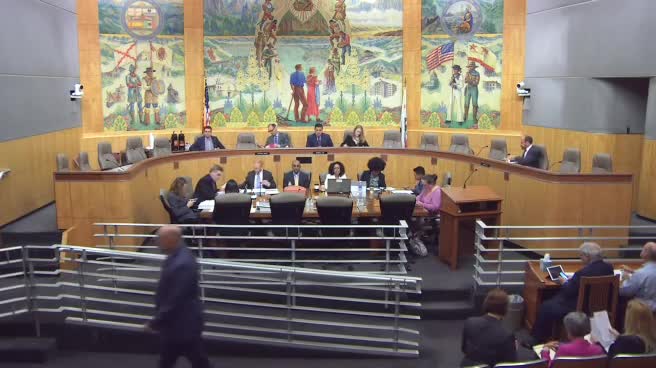
Senate Standing Committee on Appropriations
 1MIN
Senate Standing Committee on Appropriations
Bill Author