SB 592: Public postsecondary education: admissions data.
- Session Year: 2017-2018
- House: Senate
- Latest Version Date: 2017-05-03
Existing law establishes the California State University, under the administration of the Trustees of the California State University, and the University of California, under the administration of the Regents of the University of California, as 2 of the segments of public postsecondary education in this state.
This bill would require the trustees, California State University, no later than July 1, 2018, and no later than July 1 of each year thereafter, to publish on their its Internet Web site, or to report using a successor technology, uniform application, admission, and freshman class profiles including, but not necessarily limited to, all standardized test scores and grade-point averages presented in the same statistical format employed pursuant to the Common Data Set Initiative or a successor database.
The bill would also require the regents, University of California, no later than July 1, 2018, and no later than July 1 of each year thereafter, to submit a report to the Legislature that includes, but is not necessarily limited to, uniform application, admission, and freshman class profiles including, but not necessarily limited to, all standardized test scores and grade-point averages presented in the same statistical format employed pursuant to the Common Data Set Initiative or a successor database, with the data presented in a prescribed manner. The bill would require the regents university to post this report on their its Internet Web site.
Existing law establishes the California State University, under the administration of the Trustees of the California State University, and the University of California, under the administration of the Regents of the University of California, as 2 of the segments of public postsecondary education in this state.
This bill would require the trustees, no later than July 1, 2018, and no later than July 1 of each year thereafter, to publish on their Internet Web site, or to report using a successor technology, uniform application, admission, and freshman class profiles including, but not necessarily limited to, all standardized test scores and grade-point averages presented in the same statistical format employed pursuant to the Common Data Set Initiative or a successor database.
The bill would also require the regents, no later than July 1, 2018, and no later than July 1 of each year thereafter, to submit a report to the Legislature that includes, but is not necessarily limited to, uniform application, admission, and freshman class profiles including, but not necessarily limited to, all standardized test scores and grade-point averages presented in the same statistical format employed pursuant to the Common Data Set Initiative or a successor database. database, with the data presented in a prescribed manner. The bill would require the regents to post this report on their Internet Web site.
Existing law establishes the California State University, under the administration of the Trustees of the California State University, and the University of California, under the administration of the Regents of the University of California, as 2 of the segments of public postsecondary education in this state.
This bill would require the trustees, no later than July 1, 2018, and no later than July 1 of each year thereafter, to publish on their Internet Web site, or to report using a successor technology, uniform application, admission, and freshman class profiles including, but not necessarily limited to, all standardized test scores and grade-point averages presented in the same statistical format employed pursuant to the Common Data Set Initiative or a successor database.
The bill would also require the regents, no later than July 1, 2018, and no later than July 1 of each year thereafter, to submit a report to the Legislature that includes, but is not necessarily limited to, uniform application, admission, and freshman class profiles including, but not necessarily limited to, all standardized test scores and grade-point averages presented in the same statistical format employed pursuant to the Common Data Set Initiative or a successor database. The bill would require the regents to post this report on their Internet Web site.
(a)The Trustees of the California State University, no later than July 1, 2018, and no later than July 1 of each year thereafter, shall publish on their its Internet Web site, or shall report using a successor technology, uniform application, admission, and freshman class profiles including, but not necessarily limited to, all standardized test scores and grade-point averages presented in the same statistical format employed pursuant to the Common Data Set Initiative or a successor database. The data published pursuant to this subdivision shall be presented in composite form as well as in subcategories representing in-state, out-of-state, and international students.
(b)The Regents of the University of California, no later than July 1, 2018, and no later than July 1 of each year thereafter, shall submit a report to the Legislature that includes, but is not necessarily limited to, uniform application, admission, and freshman class profiles including, but not necessarily limited to, all standardized test scores and grade-point averages presented in the same statistical format employed pursuant to the Common Data Set Initiative or a successor database. The report shall comply with Section 9795 of the Government Code. The regents university shall also post this report on their its Internet Web site. The data published pursuant to this subdivision shall be presented in composite form as well as in subcategories representing in-state, out-of-state, and international students.
(c)For purposes of this section, in-state students shall include all students who qualify for in-state tuition.
(a)The Trustees of the California State University, no later than July 1, 2018, and no later than July 1 of each year thereafter, shall publish on their Internet Web site, or shall report using a successor technology, uniform application, admission, and freshman class profiles including, but not necessarily limited to, all standardized test scores and grade-point averages presented in the same statistical format employed pursuant to the Common Data Set Initiative or a successor database. The data published pursuant to this subdivision shall be presented in composite form as well as in subcategories representing in-state, out-of-state, and international students.
(b)The Regents of the University of California, no later than July 1, 2018, and no later than July 1 of each year thereafter, shall submit a report to the Legislature that includes, but is not necessarily limited to, uniform application, admission, and freshman class profiles including, but not necessarily limited to, all standardized test scores and grade-point averages presented in the same statistical format employed pursuant to the Common Data Set Initiative or a successor database. The report shall comply with Section 9795 of the Government Code. The regents shall also post this report on their Internet Web site. The data published pursuant to this subdivision shall be presented in composite form as well as in subcategories representing in-state, out-of-state, and international students.
(c)For purposes of this section, in-state students shall include all students who qualify for in-state tuition.
(a)The Trustees of the California State University, no later than July 1, 2018, and no later than July 1 of each year thereafter, shall publish on their Internet Web site, or shall report using a successor technology, uniform application, admission, and freshman class profiles including, but not necessarily limited to, all standardized test scores and grade-point averages presented in the same statistical format employed pursuant to the Common Data Set Initiative or a successor database.
(b)The Regents of the University of California, no later than July 1, 2018, and no later than July 1 of each year thereafter, shall submit a report to the Legislature that includes, but is not necessarily limited to, uniform application, admission, and freshman class profiles including, but not necessarily limited to, all standardized test scores and grade-point averages presented in the same statistical format employed pursuant to the Common Data Set Initiative or a successor database. The report shall comply with Section 9795 of the Government Code. The regents shall also post this report on their Internet Web site.
|
Date
|
Status
|
|---|---|
| Sep 1, 2017 | September 1 hearing: Held in committee and under submission. |
| Jun 28, 2017 | June 28 set for first hearing. Placed on suspense file. |
| Jun 21, 2017 | From committee: Do pass and re-refer to Com. on APPR. (Ayes 13. Noes 0.) (June 20). Re-referred to Com. on APPR. |
| Jun 1, 2017 | Referred to Com. on HIGHER ED. |
| May 23, 2017 | In Assembly. Read first time. Held at Desk. |
| May 22, 2017 | Read third time. Passed. (Ayes 37. Noes 0. Page 1135.) Ordered to the Assembly. |
| May 16, 2017 | Read second time. Ordered to third reading. |
| May 15, 2017 | From committee: Be ordered to second reading pursuant to Senate Rule 28.8. |
| May 5, 2017 | Set for hearing May 15. |
| May 3, 2017 | Read second time and amended. Re-referred to Com. on APPR. |
| May 2, 2017 | From committee: Do pass as amended and re-refer to Com. on APPR. (Ayes 7. Noes 0. Page 848.) (April 26). |
| Apr 17, 2017 | From committee with author's amendments. Read second time and amended. Re-referred to Com. on ED. |
| Apr 4, 2017 | Set for hearing April 26. |
| Apr 3, 2017 | April 5 set for first hearing canceled at the request of author. |
| Mar 21, 2017 | Set for hearing April 5. |
| Mar 2, 2017 | Referred to Com. on ED. |
| Feb 21, 2017 | From printer. May be acted upon on or after March 23. |
| Feb 17, 2017 | Introduced. Read first time. To Com. on RLS. for assignment. To print. |
|
Date
|
Description
|
Location
|
Votes
|
|
|---|---|---|---|---|
| Jun 20, 2017 | Do pass and be re-referred to the Committee on [Appropriations] | Assembly Standing Committee on Higher Education |
Passed |
|
| May 22, 2017 | Senate 3rd Reading SB592 Nielsen | Senate Floor |
Passed |
|
| Apr 26, 2017 | Do pass as amended, but first amend, and re-refer to the Committee on [Appropriations] | Senate Standing Committee on Education |
Passed |
This list shows positions taken on this bill by organizations on the date displayed, which is linked to the original source.
Positions by individuals are not included.
Date of Hearing: June 28, 2017
ASSEMBLY COMMITTEE ON APPROPRIATIONS
Lorena Gonzalez Fletcher, Chair
SBPCA Bill Id:SB 592
Author:(Nielsen) – As Amended Ver:May 3, 2017
Policy Committee: | Higher Education | Vote: | 13 - 0 |
|
| ||
|
|
Urgency: No State Mandated Local Program: No Reimbursable: No
SUMMARY:
This bill requires, by July 1, 2018 and each year thereafter, the Trustees of the California State University (CSU) and the University of California (UC) to post on their respective Internet Web site uniform application, admission and freshman class profiles and additionally requires the UC to submit a report with specified information to the Legislature.
FISCAL EFFECT:
- Minor and absorbable costs to the UC to make the data available and submit a report to the Legislature.
- Minor and absorbable costs to the CSU.
COMMENTS:
Purpose and Background. On March 29, 2016, the California State Auditor released a report, The University of California, Its Admissions and Financial Decisions have Disadvantaged California Resident Students. The report lists as its key findings that the university has undermined its commitment to residents in an effort to increase its revenue by recruiting and enrolling nonresidents. Specifically, the UC lowered the admission standard for non-residents and admitted nearly 16,000 nonresidents over the past three years with academic scores that fell below the median of admitted residents.
According to the author, there has been a growing trend in the UC to enroll less qualified out-of-state and international students at the expense of California students. On March 2016, a report by the State Auditor found that UC’s admission policies have disadvantaged and undermined their commitment to California students in favor of nonresidents. This bill seeks to create a profile of the incoming freshman class at each of the UC and California State University campuses for the purpose of informing Californians of the admissions process and standards of their public universities.
Analysis Prepared by: Daisy Gonzales / APPR. / (916) 319-2081
Date of Hearing: June 20, 2017
ASSEMBLY COMMITTEE ON HIGHER EDUCATION
Jose Medina, Chair
SBPCA Bill Id:SB 592
Author:(Nielsen) – As Amended Ver:May 3, 2017
SENATE VOTE: 37-0
SUBJECT: Public postsecondary education: admissions data
SUMMARY: Requires, by July 1, 2018 and each year thereafter, the California State University (CSU) and the University of California (UC) to post on their respective Internet Web site uniform application, admission and freshman class profiles and additionally requires the UC to submit a report with specified information to the Legislature. Specifically, this bill:
1) Requires by July 1, 2018 and each year thereafter, the CSU to:
- Publish on its Internet Web site, or to report using a successor technology, uniform application, admission, and freshman class profiles including, but not necessarily limited to, all standardized test scores and grade point averages; and,
- Present the above information in the same statistical format employed in accordance with the Common Data Set Initiative or a successor database. This bill requires that the data published be presented in composite form as well as in subcategories representing instate, out-of-state, and international students.
2) Requires by July 1, 2018 and each year thereafter, the UC to:
- Submit a report to the Legislature that includes, but not necessarily limited to, uniform application, admission and freshman class profiles including, but necessarily limited to, all standardized test scores and grade-point averages; and,
- Present the above information in the same statistical format employed in accordance with the Common Data set initiative or a successor database. This bill requires that the data published be presented in composite form as well as in subcategories representing instate, out-of-state, and international students; and,
- Post the report on its Internet Web site.
3) Specifies that for purposes of this bill in-state students include all students who qualify for in-state tuition.
EXISTING LAW:
- Establishes the CSU administered by a board designated as the Trustees of the CSU. (Education Code (EC) Section 66602)
- Establishes the UC under the California Constitution as a public trust to be administered by the Regents of the UC and grants the Regents full powers of organization and government, subject only to such legislative control as may be necessary to insure security of its funds, compliance with the terms of its endowments, statutory requirements around competitive bidding and contracts, sales of property and the purchase of materials, goods and services. (Article IX, Section (9)(a) of the California Constitution)
FISCAL EFFECT: Pursuant to Senate Rule 28.8, the Senate Appropriations Committee determined that the cost of SB 592 was not substantial enough to meet the suspense threshold.
COMMENTS: Need for the bill. According to the author, “In recent years there has been mounting concern that the explosive growth in non-resident students attending California’s public universities has come at a cost to California high school students. Increasingly California students, parents and the press have raised concerns that nonresident applicants have been granted priority over California students. Last year the State Auditor issued a report that added credibility to these concerns. The report concluded that the University of California has strategically sought to admit less qualified out of state and international students in order to reap millions of dollar in additional fees paid by nonresidents.
“At some campuses more qualified California students have been denied admission or were not assigned to their school of choice. The report revealed that very few of the nonresident applicants (out of state and international) granted admission to the University of California were underrepresented minorities. While irregularities in non-resident admission practices have not been as pervasive within the California State University system two popular campuses, San Diego State and Cal Poly, have admitted a disproportionately high percentage of nonresident applicants.”
Background. The California State Auditor issued a report, The UC, Its Admissions and Financial Decisions have Disadvantaged California Resident Students on March 29, 2016. The report noted that, “…over the past several years, the university has failed to put the needs of residents first. In response to reduced state funding, it has made substantial efforts to enroll more nonresident students, who pay significantly more annual tuition and mandatory fees than resident students—$37,000 compared to $12,240 in academic year 2014–15. The results are stark: From academic years 2010–11 through 2014–15, total nonresident enrollment at the university increased by 82 percent, or 18,000 students, while resident enrollment decreased by 2,200 students, or 1 percent.”
The report specifically found that:
- Despite a 52 percent increase in resident applicants, resident enrollment increased by only 10 percent over the last 10 years while nonresident enrollment increased by 432 percent.
- The UC lowered the admission standard for non-residents and admitted nearly 16,000 nonresidents over the past three years with academic scores that fell below the median of admitted residents.
- Admitted residents were increasingly denied their campus of choice, yet admitted nonresidents were always admitted to one of their campuses of choice.
- Mandatory fees doubled for residents while they increased for nonresidents at a much lower rate.
The UC challenged the Auditor’s report findings, writing that “…UC's eligibility criteria arguably capture a larger pool than required under the Master Plan. Nonetheless, even in the leanest of budget years--and in years when other California institutions turned away tens of thousands of eligible Californians--UC has continued to offer admission to every California applicant who meets our criteria.”
The UC also noted in their dissent that non-resident students pay substantially more than resident students - and that a portion of the non-resident’s tuition goes towards funding enrollment for in-state students. According to UC, California residents paid $12,294 dollars in tuition and fees in 2016-2017, while non-resident students paid $38,976 dollars in tuition and fees.
Current status of resident admissions. According to the UC, over 6,400 California undergraduate residents were enrolled between fall 2015 and fall 2016. This fall, UC anticipates enrolling an additional 2,500 resident students as part of their state goal to add 10,000 more resident students by 2018.
According to CSU, California residents are prioritized in the admission process and notes that it has consistently enrolled 94 percent California resident students for the last decade. The Legislative Analyst’s Office (LAO) details elements of CSU’s resident enrollment management in their 2015 report, Implementation Update: Reforming Transfer From CCC to CSU. Specifically, “campus impaction” and “program impaction” are ways for CSU campuses to increase their base enrollment standards.
Campus impaction. An impacted campus may establish admission criteria for all nonlocal applicants that are stricter than systemwide minimum eligibility. Campuses may declare impaction at the freshman or transfer level, or both. Seventeen campuses are currently impacted for incoming freshmen, and 16 of those campuses also are impacted for transfers. According to the CSU, impacted campuses guarantee admission to all local applicants who meet systemwide eligibility requirements.
Program Impaction. Impacted programs may establish supplemental admission criteria for all applicants—local and nonlocal. As a result, CSU–eligible local students are not guaranteed admission to impacted programs, although campuses may award extra points or other consideration to help make them more competitive. While most CSU campuses have some impacted programs, six of the 23 campuses have now declared all of their majors impacted (Fullerton, Fresno, Long Beach, San Diego, San Jose, and San Luis Obispo).
Current status of out-of-state admissions. The UC reports that for the 2015-16 academic year, 15.5 percent of its undergraduates systemwide were nonresidents. According to the UC, nonresident enrollment for 2015-16 was capped at those campuses that had seen the largest growth. Berkeley (25 percent), Los Angeles (19 percent) and San Diego (17 percent) were directed to cap their enrollment of nonresidents at 20 percent.
According to the CSU, for the fall 2016 enrollment five percent of its undergraduates systemwide were nonresidents. Only two campuses exceed 10 percent, San Diego (12 percent) and San Luis Obispo (15 percent). As noted above, both of these campuses have declared program impaction on all their undergraduate majors, eliminating any benefit for students living in the campuses’ local service area. Additionally, CSU reports that the proportion of undergraduate non-resident students has been stable and there is no intent to grow non-resident admissions.
Staff comments. This bill does not impose a cap on non-resident enrollment nor require changes to UC or CSU admission policies. This bill requires CSU and UC to share freshman class profile information including standardized test scores and grade point averages disaggregated by in-state, out-of-state, and international students. Committee staff understands that at least one UC campus currently provides this data in the format proposed by this bill.
REGISTERED SUPPORT / OPPOSITION:
Support
None on file.
Opposition
None on file.
Analysis Prepared by: Kevin J. Powers / HIGHER ED. / (916) 319-3960
Office of Senate Floor Analyses (916) 651-1520 Fax: (916) 327-4478 | SB |
THIRD READING
Bill No: SB 592
:
SENATE EDUCATION COMMITTEE: 7-0, 4/26/17
AYES: Allen, Wilk, Galgiani, Leyva, Mendoza, Pan, Vidak
SENATE APPROPRIATIONS COMMITTEE: Senate Rule 28.8
DIGEST:
This bill requires, by July 1, 2018 and each year thereafter, the California State University (CSU) and the University of California (UC) to post on their respective Internet Web site uniform application, admission and freshman class profiles and additionally requires the UC to submit a report with specified information to the Legislature.
Existing law:
- Establishes the CSU administered by a board designated as the Trustees of the CSU. (Education Code § 66602)
- Establishes the UC under the California Constitution as a public trust to be administered by the Regents of the UC and grants the Regents full powers of organization and government, subject only to such legislative control as may be necessary to insure security of its funds, compliance with the terms of its endowments, statutory requirements around competitive bidding and contracts, sales of property and the purchase of materials, goods and services. (Article IX, § (9)(a) of the California Constitution)
This bill:
- Requires by July 1, 2018 and each year thereafter, the CSU to:
- Publish on its Internet Web site, or to report using a successor technology, uniform application, admission, and freshman class profiles including, but not necessarily limited to all standardized test scores and grade point averages.
- Present the above information in a) in the same statistical format employed in accordance with the Common Data Set Initiative or a successor database. This bill requires that the data published be presented in composite form as well as in subcategories representing instate, out-of-state, and international students.
- Requires by July 1, 2018 and each year thereafter, the UC to:
- Submit a report to the Legislature that includes, but not necessarily limited to, uniform application, admission and freshman class profiles including, but necessarily limited to, all standardized test scores and grade-point averages.
- Present the above information in a) in the same statistical format employed in accordance with the Common Data set initiative or a successor database. This bill requires that the data published be presented in composite form as well as in subcategories representing instate, out-of-state, and international students.
- Post the report on its Internet Web site.
- Specifies that for purposes of this bill in-state students include all students who qualify for instate tuition.
Comments
- Need for the bill. According to the author, there has been a growing trend in the UC to enroll less qualified out-of-state and international students at the expense of California students. On March 2016, a report by the State Auditor found that UC’s admission policies have disadvantaged and undermined their commitment to California students in favor of nonresidents. This bill seeks to create a profile of the incoming freshman class at each of the UC and CSU campuses for the purpose of informing Californians of the admissions process and standards of their public universities.
- BSA Audit. On March 29, 2016, the California State Auditor released a report, The UC, Its Admissions and Financial Decisions have Disadvantaged California Resident Students. The report lists as its key findings that the UC has undermined its commitment to residents in an effort to increase its revenue by recruiting and enrolling nonresidents. The report specifically cites that:
- Despite a 52 percent increase in resident applicants, resident enrollment increased by only 10 percent over the last 10 years while nonresident enrollment increased by 432 percent.
- The UC lowered the admission standard for non-residents and admitted nearly 16,000 nonresidents over the past three years with academic scores that fell below the median of admitted residents.
- Admitted residents were increasingly denied their campus of choice, yet admitted nonresidents were always admitted to one of their campuses of choice.
- Mandatory fees doubled for residents while they increased for nonresidents at a much lower rate.
Among other things the Bureau of State Audits recommended that the UC revise its admission standard for nonresidents to require campuses to admit only nonresidents with admissions credentials that place them in the upper half of the residents it admits.
In response, the UC asserts that its admissions policies overwhelmingly favor Californians, and that state funding determines how many California residents the UC enrolls.
- Current status of resident admissions. According the UC, as a result of state funding support provided for enrollment, between fall 2015 and fall 2016, over 6,400 California undergraduate residents were enrolled. This fall, UC anticipates enrolling an additional 2,500 resident students. According to CSU, California residents are prioritized in the admission process. For example, Cal Poly San Luis Obispo provides California applicants a preference for a variety of factors in the admission process, while nonresidents are assessed solely on academic scores. The CSU reports that it has consistently enrolled 94 percent California resident students for the last decade.
- Current status of out-of-state admissions. The UC reports that for the 2015-16 academic year, 15.5 percent of its undergraduates systemwide were nonresidents. According to the UC, nonresident enrollment for 2015-16 was capped at those campuses that had seen the largest growth were Berkeley (25 percent), Los Angeles (19 percent) and San Diego (17 percent) was directed to cap their enrollment of nonresidents at 20 percent.
According to the CSU, for the fall 2016 enrollment five percent of its undergraduates systemwide were nonresidents. Only two campuses exceed 10 percent, San Diego (12 percent) and San Luis Obispo (15 percent). Additionally, CSU reports that the proportion of undergraduate non-resident students has been stable and there is no intent to grow non-resident admissions.
This bill does not impose a cap on non-resident enrollment nor requires changes to UC or CSU admission policies. This bill requires CSU and UC to share freshman class profile information including standardized test scores and grade point averages disaggregated by in-state, out-of-state, and international students. It appears that at least one UC campus currently provides this data in the format proposed by this bill.
FISCAL EFFECT: Appropriation: Fiscal Com.: Local:
None received
None received
5/17/17 16:54:44
**** END ****
SENATE COMMITTEE ON EDUCATION
Senator Benjamin Allen, Chair
2017 - 2018 Regular
Bill No: Hearing Date: April 26, 2017
Author: | Nielsen | ||
Version: |
| ||
Urgency: | Fiscal: | ||
Consultant: | |||
Subject:
SUMMARY
Requires, by July 1, 2018 and each year thereafter, the Trustees of the California State University (CSU) and the Regents of University of California (UC) to post on their respective Internet Web site uniform application, admission and freshman class profiles and additionally requires the Regents of the (UC) to submit a report with specified information to the Legislature.
BACKGROUND
Existing law:
- Establishes the CSU administered by a board designated as the Trustees of the CSU. (Education Code § 66602)
- Under the California Constitution establishes the UC, a public trust to be administered by the Regents of the UC and grants the Regents full powers of organization and government, subject only to such legislative control as may be necessary to insure security of its funds, compliance with the terms of its endowments, statutory requirements around competitive bidding and contracts, sales of property and the purchase of materials, goods and services. (Article IX, § (9)(a) of the California Constitution)
ANALYSIS
This bill:
- Requires by July 1, 2018 and each year thereafter, the Trustees of the CSU to:
- Publish on their Internet Web site, or to report using a successor
technology, uniform application, admission, and freshman class profiles including, but not necessarily limited to all standardized test scores and grade point averages.
- Present the above information in a) in the same statistical format
employed in accordance with the Common Data Set Initiative or a successor database. This bill requires that the data published be presented in composite form as well as in subcategories representing instate, out-of-state, and international students.
- Requires by July 1, 2018 and each year thereafter, the Regents of the University of California (UC) to:
- Submit a report to the Legislature that includes , but not necessarily
limited to, uniform application, admission and freshman class profiles including, but necessarily limited to, all standardized test scores and grade-point averages.
- Present the above information in a) in the same statistical format
employed in accordance with the Common Data set initiative or a successor database. This bill requires that the data published be presented in composite form as well as in subcategories representing instate, out-of-state, and international students.
- Post the report on their Internet Web site.
- Specifies that for purposes of this bill instate students include all students who qualify for instate tuition.
STAFF COMMENTS
- Need for the bill. According to the author, there has been a growing trend in the UC to enroll less qualified out-of-state and international students at the expense of California students. On March 2016, a report by the State Auditor found that UC’s admission policies have disadvantaged and undermined their commitment to California students in favor of nonresidents. This bill seeks to create a profile of the incoming freshman class at each of the UC and California State University campuses for the purpose of informing Californians of the admissions process and standards of their public universities.
- BSA Audit. On March 29, 2016, the California State Auditor released a report, The University of California, Its Admissions and Financial Decisions have Disadvantaged California Resident Students. The report lists as its key findings that the university has undermined its commitment to residents in an effort to increase its revenue by recruiting and enrolling nonresidents. The report specifically cites that:
- Despite a 52 percent increase in resident applicants, resident enrollment increased by only 10 percent over the last 10 years while nonresident enrollment increased by 432 percent.
- The University lowered the admission standard for non-residents and admitted nearly 16,000 nonresidents over the past three years with academic scores that fell below the median of admitted residents.
- Admitted residents were increasingly denied their campus of choice, yet admitted nonresidents were always admitted to one of their campuses of choice.
- Mandatory fees doubled for residents while they increased for nonresidents at a much lower rate.
Among other things the Bureau of State Audits recommended that the University of California (UC) revise its admission standard for nonresidents to require campuses to admit only nonresidents with admissions credentials that place them in the upper half of the residents it admits.
In response, the UC asserts that its admissions policies overwhelmingly favor Californians, and that state funding determines how many California residents the UC enrolls.
- Current status of resident admissions. According the UC, as a result of state funding support provided for enrollment, between fall 2015 and fall 2016, over 6,400 California undergraduate residents were enrolled. This fall, UC anticipates enrolling an additional 2,500 resident students. According to California State University (CSU), California residents are prioritized in the admission process. For example, Cal Poly San Luis Obispo provides California applicants a preference for a variety of factors in the admission process, while nonresidents are assessed solely on academic scores. The CSU reports that it has consistently enrolled 94 percent California resident students for the last decade.
- Current status of out-of-state admissions. The UC reports that for the 2015-16 academic year, 15.5 percent of its undergraduates systemwide were nonresidents. According to the UC, nonresident enrollment for 2015-16 was capped at those campuses that had seen the largest growth were Berkeley (25 percent), Los Angeles (19 percent) and San Diego (17 percent) was directed to cap their enrollment of nonresidents at 20 percent.
According to the CSU, for the fall 2016 enrollment 5 percent of its undergraduates systemwide were nonresidents. Only two campuses exceed 10 percent, San Diego (12 percent) and San Luis Obispo (15 percent). Additionally, CSU reports that the proportion of undergraduate non-resident students has been stable and there is no intent to grow non-resident admissions.
This bill does not impose a cap on non-resident enrollment nor requires changes to UC or CSU admission policies. This bill would require CSU and UC to share freshman class profile information including standardized test scores and grade point averages disaggregated by instate, out-of-state, and international students. It appears that at least one UC campus currently provides this data in the format proposed by this bill.
- Technical amendments. Staff recommends technical amendments as follows:
- On page 2 line 3 strike “Trustees of the.”
- On page 2 line 14 strike “Regents of the.”
SUPPORT
None received.
OPPOSITION
None received.
-- END --
Discussed in Hearing
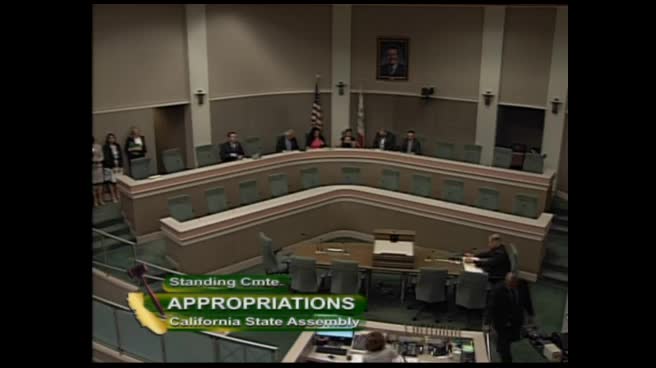 3MIN
Assembly Standing Committee on Appropriations
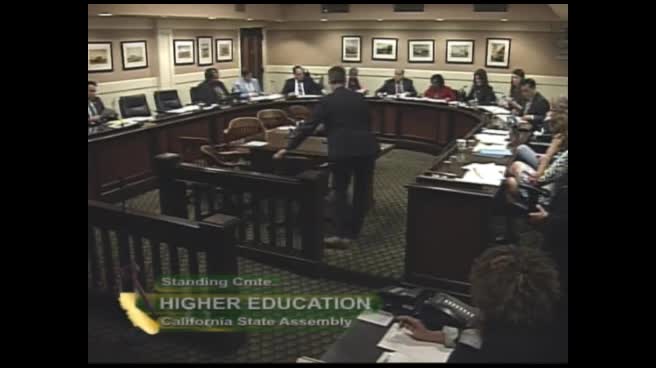 4MIN
Assembly Standing Committee on Higher Education
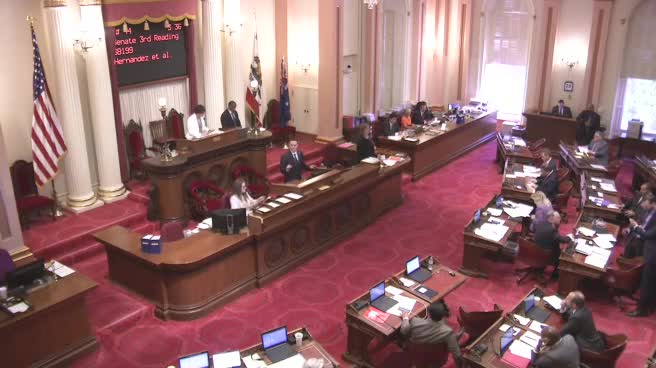 4MIN
Senate Floor
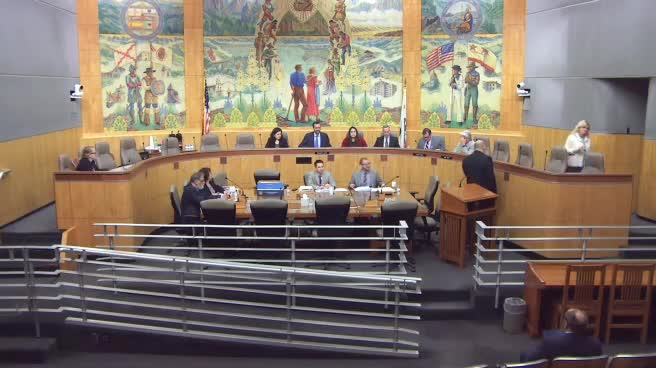 6MIN
Senate Standing Committee on Education
Bill Author

Bill Co-Author(s):