SB 716: California State Board of Pharmacy: pharmacy technician member.
- Session Year: 2017-2018
- House: Senate
- Latest Version Date: 2017-04-26
The Pharmacy Law establishes the California State Board of Pharmacy within the Department of Consumer Affairs for the licensure and regulation of pharmacists and pharmacies. Under that law, the board is comprised of 13 members, including 7 competent pharmacists appointed by the Governor and 6 public members appointed as specified.
This bill would increase the number of members of the board to 14 15 by adding one pharmacy technician appointed by the Governor and one additional public member appointed by the Governor. The bill would require this the pharmacy technician board member to have at least 5 years of experience and to continue to work in California as a pharmacy technician. The bill would require the pharmacy technician board member to have specified work experience as a pharmacy technician and to have documented work experience in a variety of pharmacy procedures and practices, as specified.
The Pharmacy Law establishes the California State Board of Pharmacy within the Department of Consumer Affairs for the licensure and regulation of pharmacists and pharmacies. Under that law, the board is comprised of 13 members, including 7 competent pharmacists appointed by the Governor and 6 public members appointed as specified.
This bill would increase the number of members of the board to 14 by adding one pharmacy technician appointed by the Governor. The bill would require this pharmacy technician board member to have at least 5 years of experience and to continue to work in California as a pharmacy technician. The bill would require the pharmacy technician board member to have specified work experience as a pharmacy technician and to have documented work experience in a variety of pharmacy procedures and practices, as specified.
The Knox-Keene Health Care Service Plan Act of 1975 provides for the licensure and regulation of health care service plans by the Department of Managed Health Care and makes a willful violation of the act a crime. Existing law also provides for regulation of health insurers by the Department of Insurance. The California Continuation Benefits Replacement Act (Cal-COBRA) requires health care service plans and health insurers providing coverage under a group benefit plan to employers of 2 to 19 eligible employees to offer a continuation of that coverage for a specified period of time to certain qualified beneficiaries, as specified.Existing law requires plans and insurers to make certain disclosures to covered employees of group benefit plans subject to Cal-COBRA, including that a qualified beneficiary who wishes to continue coverage under the group benefit plan is required to request the continuation in writing and deliver the written request by mail or personal delivery. Existing law requires the qualified beneficiarys first premium payment required to establish a premium payment to be delivered by mail or other reliable means of delivery, including personal delivery.This bill would also include electronic mail or electronic submission as permitted methods of delivery.The Knox-Keene Health Care Service Plan Act of 1975 provides for the licensure and regulation of health care service plans by the Department of Managed Health Care and makes a willful violation of the act a crime. Existing law also provides for regulation of health insurers by the Department of Insurance. The California Continuation Benefits Replacement Act (Cal-COBRA) requires health care service plans and health insurers providing coverage under a group benefit plan to employers of 2 to 19 eligible employees to offer a continuation of that coverage for a specified period of time to certain qualified beneficiaries, as specified.
Existing law requires plans and insurers to make certain disclosures to covered employees of group benefit plans subject to Cal-COBRA, including that a qualified beneficiary who wishes to continue coverage under the group benefit plan is required to request the continuation in writing and deliver the written request by mail or personal delivery. Existing law requires the qualified beneficiarys first premium payment required to establish a premium payment to be delivered by mail or other reliable means of delivery, including personal delivery.
This bill would also include electronic mail or electronic submission as permitted methods of delivery.
(a)There is in the Department of Consumer Affairs a California State Board of Pharmacy in which the administration and enforcement of this chapter is vested. The board consists of 14 15 members.
(b)The Governor shall appoint seven competent pharmacists who reside in different parts of the state to serve as members of the board. The Governor shall appoint one pharmacy technician as a member of the board. The Governor shall appoint four five public members, and the Senate Committee on Rules and the Speaker of the Assembly shall each appoint a public member who shall not be a licensee of the board, any other board under this division, or any board referred to in Section 1000 or 3600.
(c)(1)At least five of the seven pharmacist appointees to the board shall be pharmacists who are actively engaged in the practice of pharmacy. Additionally, the membership of the board shall include at least one pharmacist representative from each of the following practice settings: an acute care hospital, an independent community pharmacy, a chain community pharmacy, and a long-term health care or skilled nursing facility. The pharmacist appointees shall also include a pharmacist who is a member of a labor union that represents pharmacists. For the purposes of this subdivision, a chain community pharmacy means a chain of 75 or more stores in California under the same ownership, and an independent community pharmacy means a pharmacy owned by a person or entity who owns no more than four pharmacies in California.
(2)(A)The pharmacy technician board member shall have at least five years of experience and shall continue to work in California as a pharmacy technician.
(B)The pharmacy technician board member shall have work experience as a pharmacy technician in at least two of the following health care settings:
(i)Acute care hospital.
(ii)Outpatient care clinic. pharmacy.
(iii)Long-term care facility. pharmacy.
(iv)Primary care clinic.(iv)Community pharmacy.
(C)The pharmacy technician board member shall have documented work experience in a variety of pharmacy procedures and practices, including, but not limited to, procedures and practices related to sterile compounding, medication reconciliation, medication history, and automated drug delivery devices.
(d)Members of the board shall be appointed for a term of four years. No person shall serve as a member of the board for more than two consecutive terms. Each member shall hold office until the appointment and qualification of his or her successor or until one year shall have elapsed since the expiration of the term for which the member was appointed, whichever first occurs. Vacancies occurring shall be filled by appointment for the unexpired term.
(e)Each member of the board shall receive a per diem and expenses as provided in Section 103.
(f)This section shall remain in effect only until January 1, 2021, and as of that date is repealed. Notwithstanding any other law, the repeal of this section renders the board subject to review by the appropriate policy committees of the Legislature.
(a)There is in the Department of Consumer Affairs a California State Board of Pharmacy in which the administration and enforcement of this chapter is vested. The board consists of 13 14 members.
(b)The Governor shall appoint seven competent pharmacists who reside in different parts of the state to serve as members of the board. The Governor shall appoint one pharmacy technician as a member of the board. The Governor shall appoint four public members, and the Senate Committee on Rules and the Speaker of the Assembly shall each appoint a public member who shall not be a licensee of the board, any other board under this division, or any board referred to in Section 1000 or 3600.
(c)(1)At least five of the seven pharmacist appointees to the board shall be pharmacists who are actively engaged in the practice of pharmacy. Additionally, the membership of the board shall include at least one pharmacist representative from each of the following practice settings: an acute care hospital, an independent community pharmacy, a chain community pharmacy, and a long-term health care or skilled nursing facility. The pharmacist appointees shall also include a pharmacist who is a member of a labor union that represents pharmacists. For the purposes of this subdivision, a chain community pharmacy means a chain of 75 or more stores in California under the same ownership, and an independent community pharmacy means a pharmacy owned by a person or entity who owns no more than four pharmacies in California.
(2)(A)The pharmacy technician board member shall have at least five years of experience and shall continue to work in California as a pharmacy technician.
(B)The pharmacy technician board member shall have work experience as a pharmacy technician in at least two of the following health care settings:
(i)Acute care hospital.
(ii)Outpatient care clinic.
(iii)Long-term care facility.
(iv)Primary care clinic.
(C)The pharmacy technician board member shall have documented work experience in a variety of pharmacy procedures and practices, including, but not limited to, procedures and practices related to sterile compounding, medication reconciliation, medication history, and automated drug delivery devices.
(d)Members of the board shall be appointed for a term of four years. No person shall serve as a member of the board for more than two consecutive terms. Each member shall hold office until the appointment and qualification of his or her successor or until one year shall have elapsed since the expiration of the term for which the member was appointed, whichever first occurs. Vacancies occurring shall be filled by appointment for the unexpired term.
(e)Each member of the board shall receive a per diem and expenses as provided in Section 103.
(f)This section shall remain in effect only until January 1, 2021, and as of that date is repealed. Notwithstanding any other law, the repeal of this section renders the board subject to review by the appropriate policy committees of the Legislature.
All matter omitted in this version of the bill appears in the bill as introduced in the Senate, February 17, 2017. (JR11)(a)Every health care service plan evidence of coverage, provided for group benefit plans subject to this article, that is issued, amended, or renewed on or after January 1, 1999, shall disclose to covered employees of group benefit plans subject to this article the ability to continue coverage pursuant to this article, as required by this section.
(b)This disclosure shall state that all enrollees who are eligible to be qualified beneficiaries, as defined in subdivision (c) of Section 1366.21, shall be required, as a condition of receiving benefits pursuant to this article, to notify, in writing, the health care service plan, or the employer if the employer contracts to perform the administrative services as provided for in Section 1366.25, of all qualifying events as specified in paragraphs (1), (3), (4), and (5) of subdivision (d) of Section 1366.21 within 60 days of the date of the qualifying event. This disclosure shall inform enrollees that failure to make the notification to the health care service plan, or to the employer when under contract to provide the administrative services, within the required 60 days will disqualify the qualified beneficiary from receiving continuation coverage pursuant to this article. The disclosure shall further state that a qualified beneficiary who wishes to continue coverage under the group benefit plan pursuant to this article must shall request the continuation in writing and deliver the written request, by first-class mail, or other reliable means of delivery, including personal delivery, express mail, electronic mail, or private courier company, to the health care service plan, or to the employer if the plan has contracted with the employer for administrative services pursuant to subdivision (d) of Section 1366.25, within the 60-day period following the later of (1) the date that the enrollees coverage under the group benefit plan terminated or will terminate by reason of a qualifying event, or (2) the date the enrollee was sent notice pursuant to subdivision (e) of Section 1366.25 of the ability to continue coverage under the group benefit plan. The disclosure required by this section shall also state that a qualified beneficiary electing continuation shall pay to the health care service plan, in accordance with the terms and conditions of the plan contract, which shall be set forth in the notice to the qualified beneficiary pursuant to subdivision (d) of Section 1366.25, the amount of the required premium payment, as set forth in Section 1366.26. The disclosure shall further require that the qualified beneficiarys first premium payment required to establish premium payment be delivered by first-class mail, certified mail, or other reliable means of delivery, including electronic submission, personal delivery, express mail, or private courier company, to the health care service plan, or to the employer if the employer has contracted with the plan to perform the administrative services pursuant to subdivision (d) of Section 1366.25, within 45 days of the date the qualified beneficiary provided written notice to the health care service plan or the employer, if the employer has contracted to perform the administrative services, of the election to continue coverage in order for coverage to be continued under this article. This disclosure shall also state that the first premium payment must equal an amount sufficient to pay any required premiums and all premiums due, and that failure to submit the correct premium amount within the 45-day period will disqualify the qualified beneficiary from receiving continuation coverage pursuant to this article.
(c)The disclosure required by this section shall also describe separately how qualified beneficiaries whose continuation coverage terminates under a prior group benefit plan pursuant to subdivision (b) of Section 1366.27 may continue their coverage for the balance of the period that the qualified beneficiary would have remained covered under the prior group benefit plan, including the requirements for election and payment. The disclosure shall clearly state that continuation coverage shall terminate if the qualified beneficiary fails to comply with the requirements pertaining to enrollment in, and payment of premiums to, the new group benefit plan within 30 days of receiving notice of the termination of the prior group benefit plan.
(d)Prior to August 1, 1998, every health care service plan shall provide to all covered employees of employers subject to this article a written notice containing the disclosures required by this section, or shall provide to all covered employees of employers subject to this section a new or amended evidence of coverage that includes the disclosures required by this section. Any specialized health care service plan that, in the ordinary course of business, maintains only the addresses of employer group purchasers of benefits and does not maintain addresses of covered employees, may comply with the notice requirements of this section through the provision of the notices to its employer group purchasers of benefits.
(e)Every plan disclosure form issued, amended, or renewed on and after January 1, 1999, for a group benefit plan subject to this article shall provide a notice that, under state law, an enrollee may be entitled to continuation of group coverage and that additional information regarding eligibility for this coverage may be found in the plans evidence of coverage.
(f)Every disclosure issued, amended, or renewed on and after July 1, 2006, for a group benefit plan subject to this article shall include the following notice:
Please examine your options carefully before declining this coverage. You should be aware that companies selling individual health insurance typically require a review of your medical history that could result in a higher premium or you could be denied coverage entirely.
SEC. 2.Section 10128.54 of the Insurance Code is amended to read:10128.54.(a)Every insurers evidence of coverage for group benefit plans subject to this article, that is issued, amended, or renewed on or after January 1, 1999, shall disclose to covered employees of group benefit plans subject to this article the ability to continue coverage pursuant to this article, as required by this section.
(b)This disclosure shall state that all insureds who are eligible to be qualified beneficiaries, as defined in subdivision (c) of Section 10128.51, shall be required, as a condition of receiving benefits pursuant to this article, to notify, in writing, the insurer, or the employer if the employer contracts to perform the administrative services as provided for in Section 10128.55, of all qualifying events as specified in paragraphs (1), (3), (4), and (5) of subdivision (d) of Section 10128.51 within 60 days of the date of the qualifying event. This disclosure shall inform insureds that failure to make the notification to the insurer, or to the employer when under contract to provide the administrative services, within the required 60 days will disqualify the qualified beneficiary from receiving continuation coverage pursuant to this article. The disclosure shall further state that a qualified beneficiary who wishes to continue coverage under the group benefit plan pursuant to this article must shall request the continuation in writing and deliver the written request, by first-class mail, or other reliable means of delivery, including personal delivery, express mail, electronic mail, or private courier company, to the disability insurer, or to the employer if the plan has contracted with the employer for administrative services pursuant to subdivision (d) of Section 10128.55, within the 60-day period following the later of (1) the date that the insureds coverage under the group benefit plan terminated or will terminate by reason of a qualifying event, or (2) the date the insured was sent notice pursuant to subdivision (e) of Section 10128.55 of the ability to continue coverage under the group benefit plan. The disclosure required by this section shall also state that a qualified beneficiary electing continuation shall pay to the disability insurer, in accordance with the terms and conditions of the policy or contract, which shall be set forth in the notice to the qualified beneficiary pursuant to subdivision (d) of Section 10128.55, the amount of the required premium payment, as set forth in Section 10128.56. The disclosure shall further require that the qualified beneficiarys first premium payment required to establish premium payment be delivered by first-class mail, certified mail, or other reliable means of delivery, including electronic submission, personal delivery, express mail, or private courier company, to the disability insurer, or to the employer if the employer has contracted with the insurer to perform the administrative services pursuant to subdivision (d) of Section 10128.55, within 45 days of the date the qualified beneficiary provided written notice to the insurer or the employer, if the employer has contracted to perform the administrative services, of the election to continue coverage in order for coverage to be continued under this article. This disclosure shall also state that the first premium payment must shall equal an amount sufficient to pay all required premiums and all premiums due, and that failure to submit the correct premium amount within the 45-day period will disqualify the qualified beneficiary from receiving continuation coverage pursuant to this article.
(c)The disclosure required by this section shall also describe separately how qualified beneficiaries whose continuation coverage terminates under a prior group benefit plan pursuant to Section 10128.57 may continue their coverage for the balance of the period that the qualified beneficiary would have remained covered under the prior group benefit plan, including the requirements for election and payment. The disclosure shall clearly state that continuation coverage shall terminate if the qualified beneficiary fails to comply with the requirements pertaining to enrollment in, and payment of premiums to, the new group benefit plan within 30 days of receiving notice of the termination of the prior group benefit plan.
(d)Prior to August 1, 1998, every insurer shall provide to all covered employees of employers subject to this article written notice containing the disclosures required by this section, or shall provide to all covered employees of employers subject to this article a new or amended evidence of coverage that includes the disclosures required by this section. Any insurer that, in the ordinary course of business, maintains only the addresses of employer group purchasers of benefits, and does not maintain addresses of covered employees, may comply with the notice requirements of this section through the provision of the notices to its employer group purchases of benefits.
(e)Every disclosure form issued, amended, or renewed on and after January 1, 1999, for a group benefit plan subject to this article shall provide a notice that, under state law, an insured may be entitled to continuation of group coverage and that additional information regarding eligibility for this coverage may be found in the evidence of coverage.
(f)Every disclosure form issued, amended, or renewed on and after July 1, 2006, for a group benefit plan subject to this article shall include the following notice:
Please examine your options carefully before declining this coverage. You should be aware that companies selling individual health insurance typically require a review of your medical history that could result in a higher premium or you could be denied coverage entirely.
|
Date
|
Status
|
|---|---|
| Aug 30, 2017 | August 30 set for first hearing canceled at the request of author. |
| Jul 19, 2017 | July 19 hearing postponed by committee. |
| Jul 11, 2017 | From committee: Do pass and re-refer to Com. on APPR. (Ayes 15. Noes 0.) (July 11). Re-referred to Com. on APPR. |
| Jun 1, 2017 | Referred to Com. on B. & P. |
| May 16, 2017 | In Assembly. Read first time. Held at Desk. |
| May 15, 2017 | Read third time. Passed. (Ayes 39. Noes 0. Page 1069.) Ordered to the Assembly. |
| May 9, 2017 | Read second time. Ordered to third reading. |
| May 8, 2017 | From committee: Be ordered to second reading pursuant to Senate Rule 28.8. |
| May 4, 2017 | Set for hearing May 15. |
| May 3, 2017 | May 8 hearing postponed by committee. |
| May 1, 2017 | Set for hearing May 8. |
| Apr 26, 2017 | Read second time and amended. Re-referred to Com. on APPR. |
| Apr 25, 2017 | From committee: Do pass as amended and re-refer to Com. on APPR. (Ayes 8. Noes 0. Page 825.) (April 24). |
| Apr 13, 2017 | Set for hearing April 24. |
| Apr 13, 2017 | April 17 set for first hearing canceled at the request of author. |
| Mar 29, 2017 | Re-referred to Com. on B., P. & E.D. |
| Mar 27, 2017 | Withdrawn from committee. |
| Mar 23, 2017 | From committee with author's amendments. Read second time and amended. Re-referred to Com. on HEALTH. |
| Mar 9, 2017 | Referred to Coms. on HEALTH and JUD. |
| Feb 21, 2017 | From printer. May be acted upon on or after March 23. |
| Feb 17, 2017 | Introduced. Read first time. To Com. on RLS. for assignment. To print. |
|
Date
|
Description
|
Location
|
Votes
|
|
|---|---|---|---|---|
| Jul 11, 2017 | Do pass and be re-referred to the Committee on [Appropriations] | Assembly Standing Committee on Business and Professions |
Passed |
|
| May 15, 2017 | Senate 3rd Reading SB716 Hernandez et al. | Senate Floor |
Passed |
|
| Apr 24, 2017 | Do pass as amended, but first amend, and re-refer to the Committee on [Appropriations] | Senate Standing Committee on Business, Professions and Economic Development |
Passed |
This list shows positions taken on this bill by organizations on the date displayed, which is linked to the original source.
Positions by individuals are not included.
|
Organization
|
Position
|
Date
|
|---|---|---|
| California Council For The Advancement Of Pharmacy | ** Support | May 10, 2017 |
| California Department of Corrections | * Support | Apr 24, 2017 |
| California Hospital Association | ** Support | May 10, 2017 |
| California Pharmacists Association | ** Support | Apr 20, 2017 |
| California Society of Health System Pharmacists | ** Support | May 10, 2017 |
| CHSP | * Support | Apr 24, 2017 |
| Pharmacy Technician Certification Board | ** Support | May 10, 2017 |
| Service Employees International Union SEIU Local 1000 | ** Support | May 10, 2017 |
| Sutter Health | * Support | Apr 24, 2017 |
| University of California San Diego | * Support | Apr 24, 2017 |
Date of Hearing: July 11, 2017
ASSEMBLY COMMITTEE ON BUSINESS AND PROFESSIONS
Evan Low, Chair
SBPCA Bill Id:SB 716
Author:(Hernandez) – As Amended Ver:April 26, 2017
SENATE VOTE: 39-0
SUBJECT: California State Board of Pharmacy: pharmacy technician member
SUMMARY: Adds two additional members to the Board of Pharmacy, a pharmacy technician and an additional public member.
EXISTING LAW:
- Establishes the Board of Pharmacy in the Department of Consumer Affairs (DCA) to administer and enforce the Pharmacy Law, which licenses and regulates pharmacists and pharmacy technicians (PTs), among other licensees.
(Business and Professions Code (BPC) Section 4001 (a)) - Requires the BOP to have 13 members, as follows:
- Seven pharmacists appointed by the Governor. At least five of the seven shall be actively engaged in the practice of pharmacy. Additionally, there should be at least one pharmacist representative from each of the following practice settings: an acute care hospital, an independent community pharmacy, a chain community pharmacy, and a long-term health care or skilled nursing facility. The pharmacist appointees shall also include a pharmacist who is a member of a labor union that represents pharmacists.
- The Governor shall appoint four public members, and the Senate Committee on Rules and the Speaker of the Assembly shall each appoint a public member, as specified. (BPC Section 4001 (b)(c))
- Establishes an appointment term of four years for members of the BOP and prohibits members from serving more than two consecutive terms. Each member shall hold office until the appointment and qualification of his or her successor or until one year shall have elapsed since the expiration of the term for which the member was appointed, whichever first occurs. Vacancies occurring shall be filled by appointment for the unexpired term. (BPC Section 4001 (d))
- Requires that each member of the BOP receive a per diem and expenses, as specified. (BOP Section 4001 (e))
- Establishes the Board of Optometry, consisting of 11 members: five optometrists, five public members, and one of the following: a registered dispensing optician, a spectacle lens dispenser, or a contact lens dispenser. (BPC Section 3010.5)
- Establishes the Board of Vocational Nursing and Psychiatric Technicians, consisting of 11 members: two licensed vocational nurses, two licensed psychiatric technicians, either a licensed vocational nurse or a registered nurse, and six public members. (BPC Section 2841, 2842)
- Authorizes a PT to perform packaging, manipulative, repetitive, or other nondiscretionary tasks only while assisting, and while under the direct supervision and control of, a pharmacist. The pharmacist shall be responsible for the duties performed under his or her supervision by a PT. (BPC Section 4115)
- Prohibits a PT from performing any act requiring the exercise of professional judgment by a pharmacist. (BPC Section 4115)
- Authorizes a PT working in a general acute care hospital to do the following:
- Package emergency supplies for use in the health care facility and the hospital’s emergency medical system.
- Seal emergency containers for use in the health care facility.
- Package emergency supplies for use in the health care facility and the hospital’s emergency medical system.
- Perform monthly checks of the drug supplies stored throughout the health care facility. Irregularities shall be reported within 24 hours to the pharmacist in charge and the director or chief executive officer of the health care facility in accordance with the health care facility’s policies and procedures. (BPC Section 4115)
THIS BILL:
- Adds a pharmacy technician and an additional public member to the Board of Pharmacy.
- Increases the number of board members to 15.
FISCAL EFFECT: According to the Senate Appropriations Committee, pursuant to Senate Rule 28.8, negligible state costs.
COMMENTS:
Purpose. This bill is sponsored by the California Society of Health-System Pharmacists. According to the Author’s office, “The nature of the pharmacy technician profession has changed significantly over the years in response to changes in health care delivery and pharmacy practice. Despite their increasingly important role in the health care delivery system, pharmacy technicians currently do not have direct representation on the California State Board of Pharmacy, which regulates pharmacies and pharmacy professionals. Given the large numbers of these professionals practicing in California and the increasingly complex procedures they are being asked to perform, patient safety would be greatly improved by ensuring the Board of Pharmacy has representatives that clearly understands the practice demands for this profession.”
Background. The Board of Pharmacy is comprised of 13 members who are appointed to four-year terms. Of these 13, seven are registered pharmacists appointed by the governor and four public members. The Senate Rules Committee and Speaker of the Assembly each appoint one public member to the Board. BOP is fully self-funded and survives generally off of licensing fees. The board does not currently include a pharmacy technician.
Pharmacy technicians work alongside pharmacists to perform certain tasks under direct supervision. A pharmacy technician must have a high school diploma or an equivalent, and have completed a BOP specified training program or obtained an associate degree in pharmacy technology. The BOP licenses over 72,000 pharmacy technicians.
ARGUMENTS IN SUPPORT:
The California Society of Health-System Pharmacists write in support of this bill that it is important that PTs have a voice on the BOP in order to facilitate practice updates. “California lags behind many states when it comes to pharmacy technician laws. For example, despite their increasingly important role in the health care delivery system, pharmacy technicians currently do not have direct representation on the California Board of Pharmacy, which provides regulatory oversight of both the pharmacist and pharmacy technician professions to ensure patient safety. Several other states recognize the need to include pharmacy technicians in regulatory oversight proceedings and have already passed bills that include pharmacy technicians on their respective governing boards. These states include Oregon, Washington, Arizona and Texas.”
ARGUMENTS IN OPPOSITION:
The California Pharmacists Association, California Retailers Association, and the National Association of Chain Drug Stores write: “While SB 716, as introduced, was simply to add one pharmacy technician to the Board of Pharmacy, recent amendments to the bill by the sponsor move the policy discussion into a direction that we cannot support.”
REGISTERED SUPPORT:
California Society of Health-System Pharmacists (Sponsor)
REGISTERED OPPOSITION:
California Pharmacists Association
California Retailers Association
National Association of Chain Drug Stores
Analysis Prepared by: Jimmy Fremgen / B. & P. / (916) 319-3301
Office of Senate Floor Analyses (916) 651-1520 Fax: (916) 327-4478 | SB |
THIRD READING
Bill No: SB 716
:
SENATE BUS., PROF. & ECON. DEV. COMMITTEE: 8-0, 4/24/17
AYES: Hill, Fuller, Galgiani, Glazer, Hernandez, Newman, Pan, Wilk
NO VOTE RECORDED: Dodd
SENATE APPROPRIATIONS COMMITTEE: Senate Rule 28.8
SOURCE: California Society of Health-System Pharmacists
DIGEST:
This bill adds a pharmacy technician and a public representative to the Board of Pharmacy.
Existing law:
- Establishes the Board of Pharmacy (BOP) in the Department of Consumer Affairs (DCA) to administer and enforce the Pharmacy Law, which licenses and regulates pharmacists and pharmacy technicians (PTs), among other licensees.
(Business and Professions Code (BPC) § 4001 (a)) - Requires the BOP to have 13 members, as follows:
- Seven pharmacists appointed by the Governor. At least five of the seven shall be actively engaged in the practice of pharmacy. Additionally, there should be at least one pharmacist representative from each of the following practice settings: an acute care hospital, an independent community pharmacy, a chain community pharmacy, and a long-term health care or skilled nursing facility. The pharmacist appointees shall also include a pharmacist who is a member of a labor union that represents pharmacists.
- Four members of the public appointed by the Governor, one public member appointed the Senate Committee on Rules and one public member appointed by the Speaker of the Assembly. (BPC § 4001 (b)(c))
- Establishes an appointment term of four years for members of the BOP and prohibits members from serving more than two consecutive terms. Each member shall hold office until the appointment and qualification of his or her successor or until one year shall have elapsed since the expiration of the term for which the member was appointed, whichever first occurs. Vacancies occurring shall be filled by appointment for the unexpired term. (BPC § 4001 (d))
- Requires that each member of the BOP receive a per diem and expenses, as specified. (BOP § 4001 (e))
- Establishes the Board of Optometry, consisting of 11 members: five optometrists, five public members, and one of the following: a registered dispensing optician, a spectacle lens dispenser, or a contact lens dispenser. (BPC § 3010.5)
- Establishes the Board of Vocational Nursing and Psychiatric Technicians, consisting of 11 members: two licensed vocational nurses, two licensed psychiatric technicians, either a licensed vocational nurse or a registered nurse, and six public members. (BPC §§ 2841, 2842)
- Authorizes a PT to perform packaging, manipulative, repetitive, or other nondiscretionary tasks only while assisting, and while under the direct supervision and control of, a pharmacist. The pharmacist shall be responsible for the duties performed under his or her supervision by a PT. (BPC § 4115)
- Prohibits a PT from performing any act requiring the exercise of professional judgment by a pharmacist. (BPC § 4115)
- Authorizes a PT working in a general acute care hospital to do the following:
- Package emergency supplies for use in the health care facility and the hospital’s emergency medical system.
- Seal emergency containers for use in the health care facility.
- Perform monthly checks of the drug supplies stored throughout the health care facility. Irregularities shall be reported within 24 hours to the pharmacist in charge and the director or chief executive officer of the health care facility in accordance with the health care facility’s policies and procedures. (BPC § 4115)
- Package emergency supplies for use in the health care facility and the hospital’s emergency medical system.
This bill:
- Increases the BOP to 15 members by requiring the Governor to appoint a PT and an additional public member.
- Requires the PT board member to:
- Have at least five years of experience and to continue to work in California as a PT;
- Have work experience as a pharmacy technician in at least two of the following health care settings:
- Acute care hospital;
- Outpatient pharmacy;
- Long-term care pharmacy;
- Community pharmacy;
- Have documented work experience in a variety of pharmacy procedures and practices, including, but not limited to, procedures and practices related to sterile compounding, medication reconciliation, medication history, and automated drug delivery devices.
Background
This bill is sponsored by the California Society of Health-System Pharmacists. According to the Author’s office, “The nature of the pharmacy technician profession has changed significantly over the years in response to changes in health care delivery and pharmacy practice. Despite their increasingly important role in the health care delivery system, pharmacy technicians currently do not have direct representation on the California State Board of Pharmacy, which regulates pharmacies and pharmacy professionals. Given the large numbers of these professionals practicing in California and the increasingly complex procedures they are being asked to perform, patient safety would be greatly improved by ensuring the Board of Pharmacy has representatives that clearly understands the practice demands for this profession.”
PTs are licensed by the BOP to perform nondiscretionary tasks under the direct supervision of a pharmacist; there is no independent scope of practice, and these duties have been largely unchanged since 2002. A PT must have at least a high school degree or equivalent and have completed one of several specified training programs or obtained an associate degree in pharmacy technology. BOP currently licenses over 72,000 PTs.
North Carolina Board of Dental Examiners v. Federal Trade Commission. In 2010, the Federal Trade Commission (FTC) brought an administrative complaint against the North Carolina State Board of Dental Examiners (Board) for excluding non-dentists from the practice of teeth whitening. The FTC alleged that the Board’s decision was an uncompetitive and unfair method of competition under the FTC Act. This opened the Board to lawsuits and substantial damages from affected parties.
The Board was composed of 6 licensed, practicing dentists and 2 public members. The practice of teeth whitening was not addressed in the statutes comprising the Dental Practice Act. Instead of initiating a rulemaking effort to clarify the appropriate practice of teeth whitening, the Board sent cease-and-desist letters to non-dentists in the state offering teeth whitening services. The Board argued that the FTC’s complaint was invalid because the Board was acting as an agent of North Carolina, and according to state-action immunity, one cannot sue the state acting in its sovereign capacity for anticompetitive conduct. A federal appeals court sided with the FTC, and the Board appealed to the United States Supreme Court (Court).
In February 2015, the Court agreed with the FTC and determined that the Board was not acting as a state agent and could be sued for its actions. The Court ruled, “Because a controlling number of the Board’s decision-makers are active participants in the occupation the Board regulates, the Board can invoke state-action antitrust immunity only if it was subject to active supervision by the State, and here that requirement is not met.”
The North Carolina State Board of Dental Examiners v. FTC case placed limitations on the immunity of regulatory boards controlled by active market participants. This is because individuals who are directly affected by their own rulemaking may not be able to detect their biases, purposefully or inadvertently placing their benefit over those of the public. Or, as the Supreme Court stated, “Dual allegiances are not always apparent to an actor.”
This bill would maintain the present bare professional majority of professional BOP members by appointing both a PT and a public member.
FISCAL EFFECT: Appropriation: Fiscal Com.: Local:
California Society of Health System Pharmacists (source)
California Council for the Advancement of Pharmacy
California Hospital Association
Pharmacy Technician Certification Board
Service Employees International Union SEIU Local 1000
OPPOSITION: (Verified 5/10/17)
None received
ARGUMENTS IN SUPPORT: The California Society of Health-System Pharmacists (Source) write that it is important that PTs have a voice on the BOP in order to facilitate practice updates. “California lags behind many states when it comes to pharmacy technician laws. For example, despite their increasingly important role in the health care delivery system, pharmacy technicians currently do not have direct representation on the California Board of Pharmacy, which provides regulatory oversight of both the pharmacist and pharmacy technician professions to ensure patient safety. Several other states recognize the need to
include pharmacy technicians in regulatory oversight proceedings and have already passed bills that include pharmacy technicians on their respective governing boards. These states include Oregon, Washington, Arizona and Texas.”
5/10/17 14:51:21
**** END ****
SENATE COMMITTEE ON
BUSINESS, PROFESSIONS AND ECONOMIC DEVELOPMENT
Senator Jerry Hill, Chair
2017 - 2018 Regular
Bill No: Hearing Date: April 24, 2017
Author: | |||
Version: | March 23, 2017 | ||
Urgency: | No | Fiscal: | Yes |
Consultant: | Sarah Huchel | ||
Subject:
SUMMARY:
Adds a pharmacy technician representative to the Board of Pharmacy.
Existing law:
- Establishes the Board of Pharmacy in the Department of Consumer Affairs (DCA) to administer and enforce the Pharmacy Law, which licenses and regulates pharmacists and pharmacy technicians (PTs), among other licensees.
(Business and Professions Code (BPC) § 4001 (a)) - Requires the BOP to have 13 members, as follows:
- Seven pharmacists appointed by the Governor. At least five of the seven shall be actively engaged in the practice of pharmacy. Additionally, there should be at least one pharmacist representative from each of the following practice settings: an acute care hospital, an independent community pharmacy, a chain community pharmacy, and a long-term health care or skilled nursing facility. The pharmacist appointees shall also include a pharmacist who is a member of a labor union that represents pharmacists.
- The Governor shall appoint four public members, and the Senate Committee on Rules and the Speaker of the Assembly shall each appoint a public member, as specified. (BPC § 4001 (b)(c))
- Establishes an appointment term of four years for members of the BOP and prohibits members from serving more than two consecutive terms. Each member shall hold office until the appointment and qualification of his or her successor or until one year shall have elapsed since the expiration of the term for which the member was appointed, whichever first occurs. Vacancies occurring shall be filled by appointment for the unexpired term. (BPC § 4001 (d))
- Requires that each member of the BOP receive a per diem and expenses, as specified. (BOP § 4001 (e))
- Establishes the Board of Optometry, consisting of 11 members: five optometrists, five public members, and one of the following: a registered dispensing optician, a spectacle lens dispenser, or a contact lens dispenser. (BPC § 3010.5)
- Establishes the Board of Vocational Nursing and Psychiatric Technicians, consisting of 11 members: two licensed vocational nurses, two licensed psychiatric technicians, either a licensed vocational nurse or a registered nurse, and six public members. (BPC §§ 2841, 2842)
- Authorizes a PT to perform packaging, manipulative, repetitive, or other nondiscretionary tasks only while assisting, and while under the direct supervision and control of, a pharmacist. The pharmacist shall be responsible for the duties performed under his or her supervision by a PT. (BPC § 4115)
- Prohibits a PT from performing any act requiring the exercise of professional judgment by a pharmacist. (BPC § 4115)
- Authorizes a PT working in a general acute care hospital to do the following:
- Package emergency supplies for use in the health care facility and the hospital’s emergency medical system.
- Seal emergency containers for use in the health care facility.
- Perform monthly checks of the drug supplies stored throughout the health care facility. Irregularities shall be reported within 24 hours to the pharmacist in charge and the director or chief executive officer of the health care facility in accordance with the health care facility’s policies and procedures. (BPC § 4115)
- Package emergency supplies for use in the health care facility and the hospital’s emergency medical system.
This bill:
- Increases the BOP to 14 members by requiring the Governor to appoint a PT.
- Requires the PT board member to:
- Have at least five years of experience and to continue to work in California as a PT;
- Have work experience as a pharmacy technician in at least two of the following health care settings:
- Acute care hospital;
- Outpatient care clinic;
- Long-term care facility;
- Primary care clinic;
- Have documented work experience in a variety of pharmacy procedures and practices, including, but not limited to, procedures and practices related to sterile compounding, medication reconciliation, medication history, and automated drug delivery devices.
FISCAL EFFECT:
Unknown. This bill is keyed “fiscal” by the Legislative Counsel.
COMMENTS:
- Purpose. This bill is sponsored by the California Society of Health-System Pharmacists. According to the Author’s office, “The nature of the pharmacy technician profession has changed significantly over the years in response to changes in health care delivery and pharmacy practice. Despite their increasingly important role in the health care delivery system, pharmacy technicians currently do not have direct representation on the California State Board of Pharmacy, which regulates pharmacies and pharmacy professionals. Given the large numbers of these professionals practicing in California and the increasingly complex procedures they are being asked to perform, patient safety would be greatly improved by ensuring the Board of Pharmacy has representatives that clearly understands the practice demands for this profession.”
- Pharmacy Technicians. PTs are licensed by the BOP to perform nondiscretionary tasks under the direct supervision of a pharmacist; there is no independent scope of practice, and these duties have been largely unchanged since 2002. A PT must have at least a high school degree or equivalent and have completed one of several specified training programs or obtained an associate degree in pharmacy technology. BOP currently licenses over 72,000 PTs.
- North Carolina Board of Dental Examiners v. Federal Trade Commission. In 2010, the Federal Trade Commission (FTC) brought an administrative complaint against the North Carolina State Board of Dental Examiners (Board) for excluding non-dentists from the practice of teeth whitening. The FTC alleged that the Board’s decision was an uncompetitive and unfair method of competition under the FTC Act. This opened the Board to lawsuits and substantial damages from affected parties.
The Board was composed of 6 licensed, practicing dentists and 2 public members. The practice of teeth whitening was not addressed in the statutes comprising the Dental Practice Act. Instead of initiating a rulemaking effort to clarify the appropriate practice of teeth whitening, the Board sent cease-and-desist letters to non-dentists in the state offering teeth whitening services. The Board argued that the FTC’s complaint was invalid because the Board was acting as an agent of North Carolina, and according to state-action immunity, one cannot sue the state acting in its sovereign capacity for anticompetitive conduct. A federal appeals court sided with the FTC, and the Board appealed to the United States Supreme Court (Court).
In February 2015, the Court agreed with the FTC and determined that the Board was not acting as a state agent and could be sued for its actions. The Court ruled, “Because a controlling number of the Board’s decision-makers are active participants in the occupation the Board regulates, the Board can invoke state-action antitrust immunity only if it was subject to active supervision by the State, and here that requirement is not met.”
North Carolina State Board of Dental Examiners v. FTC placed limitations on the immunity of regulatory boards controlled by active market participants. This is because individuals who are directly affected by their own rulemaking may not be able to detect their biases, purposefully or inadvertently placing their benefit over those of the public. Or, as the Supreme Court stated, “Dual allegiances are not always apparent to an actor.”
This bill would create a larger majority of professional BOP members, in opposition to FTC’s concerns about active market participants.
- Prior Related Legislation. SB 836 (Budget, Chapter 31, Statutes of 2016) amended the composition of the California Board of Optometry (CBO) to allow the Governor to appoint a spectacle lens dispenser or contact lens dispenser in the registered dispensing optician (RDO) slot.
SB 952 (Anderson, Chapter 150, Statutes of 2016) expanded the number of pharmacy technician certification programs that may be recognized toward pharmacy technician licensure by the BOP.
AB 684 (Alejo, Chapter 405, Statutes of 2015) required one of the optometrist CBO members to be a RDO, and established a dispensing optician committee to advise and make recommendations to the board regarding the regulation of dispensing opticians, as provided.
- Arguments in Support. California Society of Health-System Pharmacists write in support of this bill that it is important that PTs have a voice on the BOP in order to facilitate practice updates. “California lags behind many states when it comes to pharmacy technician laws. For example, despite their increasingly important role in the health care delivery system, pharmacy technicians currently do not have direct representation on the California Board of Pharmacy, which provides regulatory oversight of both the pharmacist and pharmacy technician professions to ensure patient safety. Several other states recognize the need to include pharmacy technicians in regulatory oversight proceedings and have already passed bills that include pharmacy technicians on their respective governing boards. These states include Oregon, Washington, Arizona and Texas.”
- Author’s Amendments. In order to address concerns raised by North Carolina State Board of Dental Examiners v. FTC and maintain the BOP’s professional/public ratio status quo, the Author is proposing to add a public member to the board, as well, increasing the number to 15. The Author is also proposing to make technical amendments and change the work experience sites from a primary care clinic to a community pharmacy, because PTs do not technically work in an outpatient care clinic, long-term care facility, or primary care clinic. Amends are as follows:
On page 2, line 6, delete “14” and add “15”
On page 2, line 10, delete “four” and add “five”
On page 3, line 17, delete “care clinic” and add “pharmacy”
On page 3, line 18, delete “facility” and add “pharmacy”
On page 3, line 19, delete “Primary care clinic” and add “community pharmacy”
SUPPORT AND OPPOSITION:
Support:
California Society of Health-System Pharmacists (Sponsor)
California Pharmacists Association
Service Employees International Union Local 1000
Opposition:
None on file as of April 18, 2017
-- END --
Discussed in Hearing
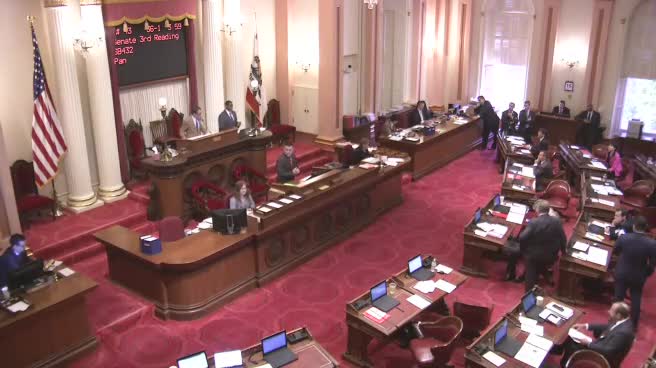 57SEC
Senate Floor
 10MIN
Senate Standing Committee on Business, Professions and Economic Development
Bill Author

Bill Co-Author(s):