SB 794: Fireworks: fireworks stewardship program.
- Session Year: 2017-2018
- House: Senate
- Latest Version Date: 2018-06-07
Existing law requires various entities, including the State Fire Marshal, to seize certain prohibited fireworks. Existing law requires the Office of the State Fire Marshal to consult with public safety agencies and other stakeholders and develop a model ordinance that permits local jurisdictions to adopt streamlined enforcement and administrative fine procedures related to possession of 25 pounds or less of dangerous fireworks.
This bill would repeal the provisions relating to a model ordinance governing enforcement and administrative fine procedures. The bill would authorize and encourage local jurisdictions to adopt by ordinance a streamlined enforcement and administrative fine procedure related to the possession of 25 pounds or less of dangerous fireworks, as provided.
Existing law authorizes the State Fire Marshal to issue licenses related to fireworks and pyrotechnic devices, including a wholesalers license. Existing law provides that a wholesalers license allows the sale and transportation of all types of fireworks, as provided.
This bill would, commencing January 1, 2019, prohibit the State Fire Marshal from issuing or renewing wholesalers licenses for the sale of safe and sane fireworks unless the applicant is a member of the fireworks stewardship organization, as defined. The bill would, until January 1, 2024, establish the Fireworks Stewardship Program, which would, among other things, prescribe procedures for entities that are authorized to seize fireworks to provide for the transfer, storage, transportation, and repurposing of seized fireworks, in accordance with specified requirements, including that the fireworks are managed and transported in accordance with all applicable state and federal hazardous waste laws and regulations. The bill would authorize the State Fire Marshal to transfer any commercially viable fireworks to the fireworks stewardship organization after the fireworks stewardship organization submits a fireworks stewardship plan to the State Fire Marshal, as provided.
The bill would require a charge to be collected at the point of retail sale of safe and sane fireworks, to be remitted to the fireworks stewardship organization. The bill would require the fireworks stewardship organization to determine the rules and procedures that would be necessary and proper to implement the collection of the charge in a fair, efficient, and lawful manner. The bill would require, on or before November 1, 2019, and on or before November 1 annually thereafter, the fireworks stewardship organization to reimburse the Department of Forestry and Fire Protection for the costs necessary to implement this program and would require the charge described above to be sufficient to fund this reimbursement. The bill would prescribe procedures for the conduct of audits and would impose recordkeeping and reporting requirements on the fireworks stewardship organization. The bill would authorize the State Fire Marshal to impose administrative civil penalties on the fireworks stewardship organization for violations of program requirements, and would require that all revenues collected from those administrative civil penalties be deposited in the State Fire Marshal Fireworks Enforcement and Disposal Fund, as provided. The bill would require the State Fire Marshal to convene a task force to investigate the issue of illegal fireworks sales in the state and would require, on or before January 1, 2021, the task force to present a report with recommendations to specified committees of the Legislature on reducing the volume of illegal fireworks being sold in the state. The bill would require the department to establish a local grant program for illegal fireworks enforcement and interdiction operations, as provided.
Existing law requires the State Fire Marshal to examine and classify all fireworks or pyrotechnic devices intended for sale in the state that are products of nonlicensed manufacturers, upon application and a fee. Existing law provides that the fee shall be $10 for each label of an item of identical size and design of a given lot or batch, as provided.
This bill would delete the $10 fee provision and instead authorize the State Fire Marshal to determine the fee amount. The bill would require each lot or batch to include, among other things, 10 samples of the fireworks or pyrotechnic device.
Existing law provides that if dangerous fireworks are seized pursuant to a local ordinance that provides for administrative fines or penalties and these fines or penalties are collected, the local governmental entity collecting the fines or penalties shall forward 65% of that money to the Controller for deposit in the State Fire Marshal Fireworks Enforcement and Disposal Fund.
This bill would instead require the local government entity to forward 25% of that money, among other changes.
This bill would also make conforming and nonsubstantive changes.
Existing constitutional provisions require that a statute that limits the right of access to the meetings of public bodies or the writings of public officials and agencies be adopted with findings demonstrating the interest protected by the limitation and the need for protecting that interest.
This bill would make legislative findings to that effect.
This bill would include a change in state statute that would result in a taxpayer paying a higher tax within the meaning of Section 3 of Article XIIIA of the California Constitution, and thus would require for passage the approval of 2/3 of the membership of each house of the Legislature.
Existing law, the Control, Regulate and Tax Adult Use of Marijuana Act (AUMA), enacted as an initiative statute at the November 8, 2016, statewide general election, regulates the cultivation, distribution, and use of marijuana for nonmedical purposes by individuals 21 years of age and older, including edible marijuana products. Existing law requires an edible marijuana product that is in solid form to be delineated or scored into standardized serving sizes if the marijuana product contains more than one serving.This bill would additionally require each single serving of an edible marijuana product to be stamped, marked, or otherwise imprinted directly on the product with a universal symbol that is designed by the Bureau of Marijuana Control. The bill would specify the required size and visibility of the universal symbol.The bill would require edible marijuana products to be sold in packaging that is tamperproof, child resistant, and, if the product contains more than one serving, resealable.AUMA authorizes the Legislature to amend, by a 2/3 vote, certain provisions of the act, provided that the amendments are consistent with, and further the purposes and intent of, the act.This bill would declare that its provisions further specified purposes and the intent of the act.Existing law, the Control, Regulate and Tax Adult Use of Marijuana Act (AUMA), enacted as an initiative statute at the November 8, 2016, statewide general election, regulates the cultivation, distribution, and use of marijuana for nonmedical purposes by individuals 21 years of age and older, including edible marijuana products. Existing law requires an edible marijuana product that is in solid form to be delineated or scored into standardized serving sizes if the marijuana product contains more than one serving.
This bill would additionally require each single serving of an edible marijuana product to be stamped, marked, or otherwise imprinted directly on the product with a universal symbol that is designed by the Bureau of Marijuana Control. The bill would specify the required size and visibility of the universal symbol.
The bill would require edible marijuana products to be sold in packaging that is tamperproof, child resistant, and, if the product contains more than one serving, resealable.
AUMA authorizes the Legislature to amend, by a 2/3 vote, certain provisions of the act, provided that the amendments are consistent with, and further the purposes and intent of, the act.
This bill would declare that its provisions further specified purposes and the intent of the act.
Existing law requires county assessors to supply to the State Board of Equalization information from homeowners property tax exemption claims and county records necessary to fully identify all homeowners property tax exemption claims allowed by the assessors.This bill would make a nonsubstantive change to those provisions.Existing law requires county assessors to supply to the State Board of Equalization information from homeowners property tax exemption claims and county records necessary to fully identify all homeowners property tax exemption claims allowed by the assessors.
This bill would make a nonsubstantive change to those provisions.
Dangerous fireworks includes all of the following:
(a)Any fireworks which that contain any of the following:
(1)Arsenic sulfide, arsenates, or arsenites.
(2)Boron.
(3)Chlorates, except:
(A)In colored smoke mixture in which an equal or greater amount of sodium bicarbonate is included.
(B)In caps and party poppers.
(C)In those small items (such items, such as ground spinners) spinners, wherein the total powder content does not exceed 4 grams of which not greater than 15 percent (or percent, or 600 milligrams) milligrams, is potassium, sodium, or barium chlorate.
(4)Gallates or Gallic acid.
(5)Magnesium (magnesium-aluminum Magnesium, except that magnesium-aluminum alloys, called magnalium, are permitted). permitted.
(6)Mercury salts.
(7)Phosphorous (red that is red or white white, except that red phosphorus is permissible in caps and party poppers). poppers.
(8)Picrates or picric acid.
(9)Thiocyanates.
(10)Titanium, except in particle size greater than 100-mesh.
(11)Zirconium.
(b)Firecrackers.
(c)Skyrockets and rockets, including all devices which that employ any a combustible or explosive material and which that rise in the air during discharge.
(d)Roman candles, including all devices which that discharge balls of fire into the air.
(e)Chasers, including all devices which that dart or travel about the surface of the ground during discharge.
(f)Sparklers more than 10 inches in length or one-fourth of one inch in diameter.
(g)All fireworks designed and intended by the manufacturer to create the element of surprise upon the user. These items include, but are not limited to, auto-foolers, cigarette loads, exploding golf balls, and trick matches.
(h)Fireworks known as devil-on-the-walk, or any other firework which that explodes through means of friction, unless otherwise classified by the State Fire Marshal pursuant to this part.
(i)Torpedoes of all kinds which that explode on impact.
(j)Fireworks kits.
(k)Such otherOther fireworks examined and tested by the State Fire Marshal and determined by him, him or her, with the advice of the State Board of Fire Services, to possess characteristics of design or construction which that make such the fireworks unsafe for use by any a person not specially qualified or trained in the use of fireworks.
SEC. 2.Section 12509 of the Health and Safety Code is repealed.12509.Exporter means any person who sells, consigns, or delivers fireworks located within this state for delivery, use, or sale out of this state.SEC. 3.Section 12513 of the Health and Safety Code is amended to read:12513.Importer Importer-exporter or importer and exporter means any person who for any purpose does any of the following:
(a) Brings fireworks into this state or causes fireworks to be brought into this state.
(b) Procures the delivery or receives shipments of any fireworks into this state.
(c) Buys or contracts to buy fireworks for shipment into this state.
(d)Sells, consigns, or delivers fireworks located within this state for delivery, use, or sale out of the state.
SEC. 4.Section 12555 of the Health and Safety Code is amended to read:12555.The State Fire Marshal or his or her salaried deputies may make an examination of the books and records of any a licensee or permittee relative to fireworks, and may visit and inspect any a building or other premises subject to the control of, or used by, the licensee or permittee for any purpose related to fireworks of any a licensee or permittee at any time he or she may deem necessary for the purpose of enforcing the provisions of this part.
SEC. 5.Section 12556 of the Health and Safety Code is amended to read:12556.In addition to the obligations described in Section 13110.5, on or before July 1, 2008, December 31, 2019, the State Fire Marshal shall identify and evaluate methods to capture more detailed data relating to fires, damages, and injuries caused by both dangerous fireworks and safe and sane fireworks. These evaluation methods shall include a cost analysis related to capturing and reporting the data and shall meet or exceed the specificity, detail, and reliability of the data captured under the former California Fire All Incident Reporting System (CFIRS). (CAIRS). The State Fire Marshal shall furnish a copy of these evaluation methods to any an interested person upon request.
SEC. 6.Section 12557 of the Health and Safety Code is repealed.12557.(a)The Office of the State Fire Marshal shall consult with public safety agencies and other stakeholders as deemed necessary by the State Fire Marshal and develop a model ordinance that permits local jurisdictions to adopt a streamlined enforcement and administrative fine procedures related to the possession of 25 pounds or less of dangerous fireworks. These procedures shall be limited to civil fines and as authorized pursuant to Section 53069.4 of the Government Code, and provide that the fines collected pursuant to this section shall not be subject to Section 12706. The model ordinance shall include provisions for reimbursing the Office of the State Fire Marshal for the costs associated with the disposal of seized fireworks and collecting these disposal costs as part of an administrative fine as described in subdivision (c).(b)An ordinance of a local jurisdiction in effect on or after January 1, 2008, that is related to dangerous fireworks and is not the model ordinance described in subdivision (a) shall, as soon as practicable, comply with all of the following:(1)The ordinance shall be amended or adopted to include provisions for cost reimbursement to the Office of the State Fire Marshal and the collection of disposal costs as part of an administrative fine as described in subdivision (c).(2)The ordinance shall be amended or adopted to provide that the ordinance shall be limited to a person who possesses or the seizure of 25 pounds or less of dangerous fireworks.(3)The ordinance shall be amended or adopted to provide that the fines collected pursuant to the ordinance shall not be subject to Section 12706.(c)The State Fire Marshal shall, in consultation with local jurisdictions, develop regulations to specify a procedure on how to cover the cost to the Office of the State Fire Marshal for the transportation and disposal of dangerous fireworks that are seized by local jurisdictions. The regulations shall include, but are not limited to, all of the following:(1)A cost recovery procedure to collect, as part of an administrative fine, the actual cost for transportation and disposal of dangerous fireworks from any person who violates a local ordinance related to dangerous fireworks.(2)The method by which the actual cost for transportation and disposal by the Office of the State Fire Marshal will be calculated.(3)The method, manner, and procedure the local jurisdiction is required to follow to forward the amounts collected pursuant to paragraph (1) to the State Fire Marshal.SEC. 7.Section 12557 is added to the Health and Safety Code, to read:12557.(a)A local jurisdiction may, and is encouraged to, adopt by ordinance a streamlined enforcement and administrative fine procedure related to the possession of 25 pounds or less of dangerous fireworks. These procedures shall be limited to civil fines and as authorized pursuant to Section 53069.4 of the Government Code.
(b)The ordinance may include provisions for cost reimbursement to the local jurisdiction, the Office of the State Fire Marshal, or both, including the collection and disposal costs of the dangerous fireworks in addition to any administrative fines.
(c)The ordinance shall be limited to a person who possesses, or the seizure of, 25 pounds or less of dangerous fireworks.
(d)The ordinance may provide for social host liability in order to make owners, renters, and lessees and those that have possession of residence or other property responsible for dangerous illegal fireworks possession and use on that property.
SEC. 8.Section 12558 of the Health and Safety Code is amended to read:12558.The licensee or permittee shall permit the chief of the issuing authority, or his or her authorized representatives, as qualified in Section 12721, to enter and inspect any a building or other premises subject to the control of of, or used by by, the licensee or permittee for any a purpose related to fireworks at any time for the purpose of enforcing the provisions of this part.
SEC. 9.Section 12561 of the Health and Safety Code is amended to read:12561.All fireworks examined by the State Fire Marshal and determined by him or her to come within the definition of dangerous fireworks in Section 12505 shall be classified as dangerous fireworks.
SEC. 10.Section 12562 of the Health and Safety Code is amended to read:12562.All fireworks examined by the State Fire Marshal and determined by him or her to come within the definition of safe and sane fireworks in Section 12529 shall be classified as safe and sane fireworks.
SEC. 11.Section 12563 of the Health and Safety Code is amended to read:12563.All fireworks examined by the State Fire Marshal and determined by him or her to come within the definition of agricultural and wildlife fireworks in Section 12503 shall be classified as agricultural and wildlife fireworks.
SEC. 12.Section 12564 of the Health and Safety Code is amended to read:12564.All fireworks examined by the State Fire Marshal and determined by him or her to come within the definition of exempt fireworks in Section 12508 shall be classified as exempt fireworks.
SEC. 13.Section 12565 of the Health and Safety Code is amended to read:12565.All fireworks or toy propellent propellant devices containing pyrotechnic compositions examined by the State Fire Marshal and found by him or her to come within the definition of model rocket or model rocket motor in Section 12519 or 12520, respectively, shall be classified as model rocket motors.
SEC. 14.Section 12566 of the Health and Safety Code is amended to read:12566.All pyrotechnic devices examined by the State Fire Marshal and found by him or her to come within the definition of emergency signaling devices in Section 12506 shall be classified by the State Fire Marshal as emergency signaling devices.
SEC. 15.Section 12570 of the Health and Safety Code is amended to read:12570.The State Fire Marshal may issue any a license described in this part, subject to the regulations which that he or she may adopt that are not inconsistent with the provisions of this part.
SEC. 16.Section 12572 of the Health and Safety Code is amended to read:12572.(a)A wholesalers license allows the sale and transportation of all types of fireworks to licensed retailers, or retailers operating under a permit, licensed public display operators, and other licensed wholesalers in California only and sale to special effects pyrotechnic operators holding a valid permit and sale of exempt fireworks to those industrial and commercial concerns that possess a valid permit from the local agency having jurisdiction in the area where such the fireworks are to be used or stored.
(b)Commencing on January 1, 2019, the State Fire Marshal shall only issue or renew wholesalers licenses for the sale of safe and sane fireworks if the applicant for a license is a member of the fireworks stewardship organization.
SEC. 17.Section 12581 of the Health and Safety Code is amended to read:12581.Any A person who desires to manufacture, import, export, sell sell, or use fireworks, fireworks shall first make a written application for a license to the State Fire Marshal on forms provided by him. Such him or her. The application shall be accompanied by the annual license fee as prescribed in this chapter.
SEC. 18.Section 12585 of the Health and Safety Code is amended to read:12585.Any An applicant may withdraw his or her application for a license or renewal of a license and the State Fire Marshal may allow the withdrawal when he or she has determined that it is in the best interest of public safety or the administration of this part.
SEC. 19.Section 12586 of the Health and Safety Code is amended to read:12586.The suspension, expiration, or forfeiture by operation of law of a license issued by the State Fire Marshal, or its suspension, forfeiture, or cancellation by order of the State Fire Marshal or by a court of law, or its surrender to the State Fire Marshal shall not, during any period in which it may be renewed, restored, reissued, or reinstated, deprive the State Fire Marshal of his or her authority to institute or continue disciplinary action against the licensee upon any ground provided by law, or to enter an order suspending or revoking a license or otherwise taking disciplinary action against the licensee on any such ground.
SEC. 20.Section 12587 of the Health and Safety Code is amended to read:12587.A written report by the State Fire Marshal, any of his his or her deputies, or salaried assistants, or by the chief of any a city or county fire department or fire protection district or their his or her authorized representatives, disclosing that the applicant for a license or for renewal of a license does not meet, or the premises for which the license is required do not meet, the qualifications or conditions for such the license as required by this part or regulations adopted pursuant to this part, may constitute grounds for denial of any an application for the license or renewal of the license.
SEC. 21.Section 12590 of the Health and Safety Code is amended to read:12590.The State Fire Marshal may deny or revoke any a license issued pursuant to this part if the State Fire Marshal finds any of the following conditions has occurred:
(a) The licensee has failed to pay the annual renewal license fee provided in this chapter.
(b) The licensee or license applicant has violated any provisions of this part or any regulations adopted by the State Fire Marshal pursuant to this part.
(c) The licensee or license applicant has created or caused a fire nuisance.
(d) The licensee has failed to keep full, complete, and accurate records or failed to file any required reports.
(e) Any A fact or condition exists which, that, if it had existed at the time of the original application for the license license, reasonably would have warranted the State Fire Marshal in refusing originally to issue the license.
(f) The permit issued under Section 12640 has been rescinded or revoked by the issuing authority.
(g) Any A licensee or license applicant has refused to make available to the State Fire Marshal full, complete, and accurate records.
(h)The licensee does not participate in a fireworks stewardship program.
SEC. 22.Section 12604 of the Health and Safety Code is amended to read:12604.Following the revocation or voluntary surrender of a license, or failure to renew his or her license, any a person in lawful possession of lawfully acquired fireworks for which a license is required may sell or otherwise dispose of such the fireworks only under supervision of the State Fire Marshal and in such a manner as he the State Fire Marshal shall provide by regulations and solely to persons who are authorized to buy, possess, sell, or use such those fireworks. Such That disposal shall be accomplished not later than 90 days from the legal revocation, voluntary surrender, or day that expiration of the license expires. Any license. A person possessing fireworks pursuant to this section shall report the disposition of such the fireworks to the local authority who issued the storage permit within the time period specified by this section.
SEC. 23.Section 12605 of the Health and Safety Code is amended to read:12605.Any A person found guilty of violating any of the provisions of this part is not eligible to apply for a new license, apply for a renewal of a license, or take an examination for any a license for a period of one year from the date of any a conviction. The State Fire Marshal may waive the provisions of this section when he or she finds the granting of a license will not endanger public safety.
SEC. 24.Section 12637 of the Health and Safety Code is amended to read:12637.(a)All fireworks or pyrotechnic devices intended for sale in this state, which that are products of nonlicensed manufacturers, shall be examined and classified by the State Fire Marshal upon written application on forms provided by him. Such him or her. The application shall be accompanied by a fee as follows: fee, in an amount determined by the State Fire Marshal.
(a)Ten dollars ($10)(b)The fee shall be assessed for each label of an item of identical size and design of a given lot or batch, provided that the lot or batch is identifiable by a code, serial number, shipment lot, case cargo number, etc. or other similar methods.
(c)Each lot or batch shall include 10 samples of the firework or pyrotechnic device, with the proper label, name of the item, EX or FC number, how it should be classified, such as safe and sane, snap cap, or party popper, and a copy of the EX or FC application with chemical analysis and a drawing of the item.
(d)A separate application and fee shall be submitted for each lot or batch.
A separate application and fee shall be submitted for each lot or batch.The(e)The State Fire Marshal seal and the wholesalers or importers registration number shall not be imprinted on the label until the lot or batch has been examined and classified.
SEC. 25.Section 12643 of the Health and Safety Code is amended to read:12643.Any A licensee desiring to do any an act specified in Section 12640 shall first make a written application for a permit to the chief of the fire department or the chief fire prevention officer of the city or county, or to such other another issuing authority which that may be designated by the governing body of the city or county. In the event there is no such not an officer or person appointed within the area, an application shall be made to the State Fire Marshal or his or her deputy. Applications for permits shall be made in writing at least 10 days prior to before the proposed act.
SEC. 26.Section 12645 of the Health and Safety Code is amended to read:12645.The officer to whom the application for a permit is made shall undertake an investigation and submit a report of his or her findings and his or her recommendation concerning the issuance of the permit, together with his or her reasons therefor, to the governing body of the city or county. The applicant for a permit to conduct a public display shall file a certificate evidencing the possession of a valid public display license with the officer making the investigation.
SEC. 27.Section 12648 of the Health and Safety Code is amended to read:12648.The officer to whom the application for a permit for a public display of fireworks is made shall make an investigation investigate to determine whether such a the display as proposed will be of such a character or so located such that it may be hazardous to property or dangerous to any person. He or she shall, in the exercise of reasonable discretion, recommend granting or denying the permit, subject to such those conditions as he or she may prescribe.
SEC. 28.Section 12649 of the Health and Safety Code is amended to read:12649.The applicant for a permit for any a public display of fireworks shall, at the time of application, submit his or her license for inspection and furnish proof that he or she carries compensation insurance for his or her employees as provided by the laws of this state.
SEC. 29.Chapter 6.5 (commencing with Section 12655) is added to Part 2 of Division 11 of the Health and Safety Code, to read:6.5.Fireworks Stewardship Program12655.(a)This chapter shall be known, and may be referred to, as the Fireworks Stewardship Program.
(b)It is the intent of the Legislature to create a uniform statewide policy regarding a state, county, special district, and local government entitys safe seizure, storage, repurposing, destruction, or disposal of 1.4G federally approved dangerous fireworks and 1.4G California, classified safe and sane fireworks.
12656.For purposes of this chapter, the following definitions apply:
(a)Collection site means a site recognized by the Office of the State Fire Marshal where seizing entities shall deposit fireworks for collection by the State Fire Marshal or his or her designee.
(b)Dangerous fireworks has the same meaning as in Section 12505.
(c)Commercially viable means federally approved dangerous consumer fireworks or California safe and sane fireworks that have been determined by the fireworks stewardship organization and the State Fire Marshal to be in physical condition to be repurposed or resold in states that are noncontiguous to California.
(d)Federally approved dangerous consumer fireworks means dangerous fireworks, as defined in Section 12505, that are approved by the United States Consumer Product Safety Commission and comply with Part 1507 (commencing with Section 1507.1) of Subchapter C of Chapter II of Title 16 of the Code of Federal Regulations and the United States Department of Transportation requirements set forth in Title 49 of the Code of Federal Regulations.
(e)Fireworks has the same meaning as in Section 12511.
(f)Fireworks management charge or charge means the charge imposed on the sale of safe and sane fireworks and collected at the retail point of sale.
(g)Fireworks stewardship plan or fireworks plan means a plan submitted to the State Fire Marshal pursuant to Section 12659.
(h)Fireworks stewardship organization means the nonprofit organization established by the wholesalers of safe and sane fireworks, as defined in subdivision (k), in order to implement the Fireworks Stewardship Program.
(i)Management or manage means a uniform statewide policy regarding the states policy on seizure, storage, repurposing, disposal, or destruction of 1.4G federally approved dangerous fireworks or 1.4G safe and sane fireworks held in trust for the State Fire Marshal, or seized by the State Fire Marshal.
(j)Retailer has the same meaning as Section in 12528.
(k)Safe and sane fireworks has the same meaning as Section 12529.
(l)Seizing entity means an entity authorized to seize fireworks pursuant to Section 12721 and any local or state fire or law enforcement agency that stores fireworks on that entitys behalf.
(m)Wholesaler means a wholesaler, as that term is used in Section 12533, who has a license to sell safe and sane fireworks in the state and participates in the fireworks stewardship organization.
12657.(a)A seizing entity shall separate fireworks from items listed in subdivision (f) that are not legal for sale to consumers in California or any other state, and ensure that this material is stored in accordance with all applicable state and federal hazardous waste laws and regulations until the time when these fireworks can be disposed of by the appropriate local bomb squad.
(b)A seizing entity shall notify the State Fire Marshal or his or her designee within three days of the determination that the seized product may be transferred. The notification shall include the amount of federally approved dangerous consumer fireworks and safe and sane fireworks that have been seized, and a general description of the condition of the packaging of the fireworks.
(c)The State Fire Marshal or his or her designee shall coordinate with the seizing entity on the transportation of all seized consumer fireworks to a collection site determined by the State Fire Marshal. Only the State Fire Marshal or his or her designee shall sort the seized consumer fireworks for purposes of determining what is commercially viable fireworks and what is hazardous waste. Any waste shall be managed by the State Fire Marshal in compliance with state and federal laws.
(d)The State Fire Marshal or his or her designee shall have discretion to transfer any commercially viable fireworks to the fireworks stewardship organization. Any commercially viable fireworks shall be given to the fireworks stewardship organization after the organization complies with Section 12659. Seized fireworks shall not be accepted by the State Fire Marshal, his or her designee, or the fireworks stewardship organization without an accompanying completed State Fire Marshal fireworks seizure form.
(e)The fireworks stewardship organization may, to the extent allowed by any applicable state and federal laws, repurpose and retain any seized federally approved dangerous consumer fireworks within the state for a period not exceeding 90 days. Before the expiration of the 90-day period, the fireworks stewardship organization shall ship those fireworks to a site operated by the fireworks stewardship organization or one of its members wholesalers it has authorized, or another entity in another state that is authorized to accept the shipment.
(f)The State Fire Marshal, his or her designee, or the fireworks stewardship organization shall not be required to accept any of the following materials:
(1)Military ordinance.
(2)Explosives, as defined by Section 12000.
(3)Blasting caps.
(4)Explosive precursor chemicals.
(5)Loose pyrotechnic powder.
(6)Black powder.
(7)Smokeless powder.
(8)Destructive devices.
(9)Improvised explosive devices.
(10)Homemade fireworks.
(11)Emergency signaling devices.
(12)Agricultural and wildlife devices.
(13)Road flares.
(14)Fuzees.
(15)Electric matches.
(16)Hobby fuses.
(17)Butane lighters.
(18)Matches.
(19)1.3G fireworks.
(20)Wet fireworks.
(g)The fireworks stewardship organization shall only be required to accept legal transfers of commercially viable fireworks in their useable condition, which have been tested by the American Fireworks Standards Laboratory or other organization accepted by the United States Consumer Product Safety Commission. These fireworks shall be identifiable with legitimate and active EX numbers issued by the federal Pipeline and Hazardous Materials Safety Administration or an FC number authorized by the federal Pipeline and Hazardous Materials Safety Administration.
(h)In the event of intentional destruction, damage, or conscious and voluntary disregard of the need to use reasonable care by the seizing entity, as determined by the State Fire Marshal, the seizing entity shall be exclusively responsible for the management or disposal of those fireworks. If the seizing entity desires a hearing to contest the determination by the State Fire Marshal, the entity, or one of its controlling persons, shall request a hearing by written notice to the State Fire Marshal within 30 days of the date of issuance of the determination. The hearing shall be held pursuant to Chapter 5 (commencing with Section 11500) of Part 1 of Division 3 of Title 2 of the Government Code.
(i)On a quarterly basis, each seizing entity shall notify the State Fire Marshal of all administrative, civil, or criminal fines or penalties levied or collected pursuant to Section 12700, 12702, or 12703 or for any violations of subdivision (b) of Section 12700, any regulation adopted pursuant to subdivision (b) of Section 12700, or any fireworks-related ordinance adopted by a local jurisdiction.
(j)On or before January 31, 2019, and annually thereafter, the State Fire Marshal shall provide advice to each seizing entity on both of the following:
(1)The total poundage of all seized fireworks the seizing entity delivered during the last calendar year.
(2)The total poundage of all seized fireworks delivered by the seizing entity in the last calendar year that could not be repurposed and the cost of disposing of those fireworks.
12657.5.On or before January 1, 2019, and biennially thereafter, the State Fire Marshal, in consultation with the fireworks stewardship organization and representatives of local fire and law enforcement agencies, shall develop and approve a list of geographically disbursed collection sites. There shall be no additional collection sites other than those used by the State Fire Marshal in 2015, and by January 30, 2020, the number of collections sites shall not exceed 13.
12658.(a)On or before November 1, 2019, and on or before November 1 annually thereafter, the fireworks stewardship organization shall reimburse the Department of Forestry and Fire Protection the costs necessary to implement this chapter. Funds shall be deposited into the State Fire Marshal Fireworks Enforcement and Disposal Fund, established pursuant to Section 12728, for the implementation of this chapter and for state enforcement efforts to curtail the illegal sales and use of federally approved dangerous consumer fireworks in the state.
(b)The amount reimbursed to the state shall not exceed 3 percent of the annual gross retail sales of safe and sane fireworks as sold by the wholesalers that are members of the fireworks stewardship organization.
12658.5.(a)On or before July 1, 2019, the Department of Forestry and Fire Protection shall establish a local grant program for illegal fireworks enforcement and interdiction operations. Groups eligible for grants shall include local agencies, including cities, counties, and special districts.
(b)The Director of Forestry and Fire Protection may authorize advance payments from a grant awarded pursuant to this section. The advance shall not exceed 25 percent of the total grant award.
12659.Before it may legally take possession of seized fireworks from the State Fire Marshal, the fireworks stewardship organization shall, not later than January 30, 2019, submit a fireworks stewardship plan to the State Fire Marshal that meets the requirements of this section and includes all of the following:
(a)A process for collaborating with the State Fire Marshal with regard to the establishment of program goals and methods of measuring program outcomes.
(b)A description of education and outreach efforts to nonprofit organizations, charities, and others who sell safe and sane fireworks regarding fire protection and prevention, the responsible use of safe and sane fireworks, and the hazards of illegal fireworks.
(c)The names of licensees and brands of fireworks, exclusive and generic, covered under the plan.
(d)A methodology and audit plan for ensuring that any seized fireworks that are legal under federal law are shipped to a state where they are legal and, to the extent possible, to a state that is not contiguous to the State of California. The methodology and audit plan shall also document how the fireworks stewardship organization will meet the requirement for the fireworks to be shipped out of state within 90 days of the fireworks stewardship organization taking possession of them from the seizing entity.
12660.(a)(1)On or before August 31, 2019, and before August 31 each year thereafter, each wholesaler that is a fireworks stewardship organization member shall provide the California Department of Tax and Fee Administration a list of all retailers to whom that wholesaler distributed or sold safe and sane fireworks for the current calendar year. The list shall include the appropriate name and address for each retailer and that retailers sellers permit account number.
(2)Any and all information submitted to the California Department of Tax and Fee Administration under this subdivision shall be subject to Section 55381 of the Revenue and Taxation Code. Notwithstanding Section 55381 of the Revenue and Taxation Code, the California Department of Tax and Fee Administration shall provide any and all information obtained under this subdivision to the State Fire Marshal.
(b)(1)On or before March 31, 2020, and before March 31 each year thereafter, the California Department of Tax and Fee Administration shall provide to the State Fire Marshal, with regard to retailers specified in subdivision (a), the total gross sales reported by retailers on returns filed with the California Department of Tax and Fee Administration for reporting periods that include June and July.
(2)Any data submitted to or shared by the California Department of Tax and Fee Administration with the State Fire Marshal, pursuant to this section, is not public record for purposes of the California Public Records Act (Chapter 3.5 (commencing with Section 6250) of Division 7 of Title 1 of the Government Code) and shall not be open to public inspection.
(c)For purposes of this section, gross sales shall have the same meaning as defined in Section 6012 of the Revenue and Taxation Code.
12661.(a)A charge, also known as a fireworks management charge, shall be collected by a licensee at the point of retail sale of safe and sane fireworks, to be remitted to the fireworks stewardship organization. The charge shall not be subject to the states sales tax.
(b)The fireworks stewardship organization shall determine the rules and procedures that are necessary and proper to implement the collection of the charge in a fair, efficient, and lawful manner.
(c)The amount of the charge shall be sufficient to fund the reimbursement required pursuant to Section 12658.
(d)The fireworks stewardship organization may conduct an audit of those parties that are required to remit the charge to the fireworks stewardship organization to verify that a fireworks management charge is paid and collected correctly and accurately, and to ensure that charges are paid and collected pursuant to this chapter in the correct amount.
(e)An audit conducted pursuant to this section shall be carried out in accordance with generally accepted auditing practices and shall be limited in scope to confirming whether the fireworks management charge has been properly collected on all sales of safe and sane fireworks sold to consumers in the state.
(f)For purposes of conducting audits pursuant to this section, the fireworks stewardship organization shall hire an independent, third-party auditor.
(g)If the fireworks stewardship organization conducts an audit pursuant to this section, the fireworks stewardship organization shall provide a copy of the audit to the State Fire Marshal.
12662.The fireworks stewardship organization shall submit an annual report to the State Fire Marshal documenting the prior years revenues from the resale of the commercially viable fireworks, the locations of the resales, and any administrative costs incurred by the organization, including the implementation costs of the plan pursuant to Section 12659.
12663.(a)The fireworks stewardship organization shall keep minutes, books, and records that clearly reflect the activities and transactions of the fireworks stewardship organization conducted pursuant to this chapter.
(b)Upon a showing of good cause by the State Fire Marshal, the accounting books of the fireworks stewardship organization may be audited at the fireworks stewardship organizations expense by an independent certified public accountant retained by the fireworks stewardship organization, but at least one audit shall be conducted in the 202122 fiscal year.
(c)The fireworks stewardship organization shall arrange for the audit to be delivered to the State Fire Marshal. The State Fire Marshal shall review the audit to evaluate the fireworks stewardship organizations compliance with this chapter and consistency with the plan created pursuant to Section 12659. The State Fire Marshal shall notify the fireworks stewardship organization of any compliance issues or inconsistencies. The State Fire Marshal shall not disclose any confidential proprietary information in the audit.
(d)The State Fire Marshal may conduct his or her own audit if he or she determines that an audit is necessary to enforce the requirements of this chapter and that the audit conducted pursuant to subdivision (b) is not adequate for this purpose.
12664.In the 202122 fiscal year, the Office of State Audits and Evaluations within the Department of Finance shall conduct an audit of the Office of the State Fire Marshals fireworks program, including the activities conducted pursuant to this chapter.
12665.(a)The State Fire Marshal may impose an administrative civil penalty on the fireworks stewardship organization for actions that are in violation of this chapter. The amount of the administrative civil penalty shall not exceed five hundred dollars ($500) per day, but if the violation is determined to be intentional, knowing, or reckless, the State Fire Marshal may impose an administrative civil penalty of not more than five thousand dollars ($5,000) per day.
(b)The State Fire Marshal may impose the administrative civil penalties pursuant to this section in accordance with Chapter 5 (commencing with Section 11500) of Part 1 of Division 3 of Title 2 of the Government Code.
(c)The State Fire Marshal shall not impose a penalty upon the fireworks stewardship organization pursuant to this section for a failure to comply with this chapter as a result of submitting false or misleading information if the fireworks stewardship organization demonstrates that it received false or misleading information from a wholesaler or retailer that was the direct cause of its failure to comply with this chapter.
(d)The State Fire Marshal shall deposit all penalties collected pursuant to this section into the State Fire Marshal Fireworks Enforcement and Disposal Fund, established pursuant to Section 12728.
12666.Section 12700 shall not apply to violations of this chapter.
12667.In the event that the retail sale of safe and sane fireworks pursuant to Section 12599 is suspended through legislative or executive action by the state, the fireworks stewardship organization shall suspend operations and the State Fire Marshal shall assume responsibility for the management of seized fireworks in accordance with Section 12657.
12668.(a)The State Fire Marshal shall convene a task force to investigate the issue of illegal fireworks sales in California. The task force shall include representatives of the office of the Attorney General and the Department of the California Highway Patrol. The task force shall also include representatives of local fire and law enforcement agencies, local district attorneys, appropriate federal agencies, and the fireworks industry. The task force shall consider methods by which the volume of illegal fireworks entering California can be reduced, including illegal fireworks being imported through the California ports as well as those being imported from neighboring states. The task force shall consider recommendations for potential license actions against wholesalers and other importers responsible for illegal fireworks importation.
(b)On or before January 1, 2021, the task force shall present a report with recommendations on reducing the volume of illegal fireworks being sold in California to the Joint Legislative Budget Committee and the appropriate policy and fiscal committees of the Legislature.
(c)This section shall remain in effect only until January 1, 2022, and as of that date is repealed, unless a later enacted statute that is enacted before January 1, 2022, deletes or extends that date.
12669.This chapter shall remain in effect only until January 1, 2024, and as of that date is repealed, unless a later enacted statute that is enacted before January 1, 2024, deletes or extends that date.
SEC. 30.Section 12670 of the Health and Safety Code is amended to read:12670.It is unlawful for any a person to advertise that he or she is in any a business or venture involving fireworks or pyrotechnic devices or shall to cause his or her name or business name style to be included in any a classified advertisement or directory under a classification which that includes the word fireworks, unless he or she is licensed pursuant to this part.
SEC. 31.Section 12673 of the Health and Safety Code is amended to read:12673.It is unlawful for any a person to store any fireworks without having in his or her possession a valid permit as required by this part.
SEC. 32.Section 12686 of the Health and Safety Code is amended to read:12686.It is unlawful for any a person to use any special effects fireworks unless he or she possesses a pyrotechnic operator license.
SEC. 33.Section 12723 of the Health and Safety Code is amended to read:12723.(a)The authority seizing fireworks under the provisions of this chapter shall notify the State Fire Marshal not more than three days following the date of seizure and shall state the reason for the seizure and the quantity, type, and location of the fireworks. Fireworks, with the exception of dangerous fireworks, seized pursuant to Section 12721 shall be disposed of by the State Fire Marshal in the manner prescribed by the State Fire Marshal at any time subsequent to 60 days from the seizure or 10 days from the final termination of proceedings under the provisions of Section 12593 or 12724, whichever is later. Dangerous fireworks shall be disposed of according to procedures in Sections 12724 and 12726. Fireworks seized by any authority as defined in this chapter, other than the State Fire Marshal or his or her salaried assistants, shall be held in trust for the State Fire Marshal by that authority.
(b)This section shall become operative on January 1, 2016. SEC. 34.Section 12725 of the Health and Safety Code is amended to read:12725.The State Fire Marshal, his or her salaried deputies, or any chief or his or her authorized representatives as qualified in this chapter may prevent, stop, or cause to be stopped, any a public display in progress, or any a proposed public display, when the location, discharge, or firing of such that public display is determined by him or her to be hazardous to property or dangerous to the public.
SEC. 35.Section 12726 of the Health and Safety Code is amended to read:12726.(a)The dangerous fireworks seized pursuant to this part shall may be disposed of managed by the State Fire Marshal in the manner prescribed by the State Fire Marshal at any time after the final determination of proceedings under Section 12724, or upon final termination of proceedings under Section 12593, whichever is later. If no proceedings are commenced pursuant to Section 12724, the State Fire Marshal may dispose of manage the fireworks after all of the following requirements are satisfied:
(1)A random sampling of the dangerous fireworks has been taken, as defined by regulations adopted by the State Fire Marshal pursuant to Section 12552.
(2)The analysis of the random sampling has been completed.
(3)Photographs have been taken of the dangerous fireworks to be destroyed. managed.
(4)The State Fire Marshal has given written approval for the destruction management of the dangerous fireworks. This approval shall specify the total weight of the dangerous fireworks seized, the total weight of the dangerous fireworks to be destroyed, managed, and the total weight of the dangerous fireworks not to be destroyed. managed.
(b)To carry out the purposes of this section, the State Fire Marshal shall acquire and use statewide mobile dangerous fireworks destruction units to collect and destroy seized dangerous fireworks from local and state agencies. (c)(b)If dangerous fireworks are seized pursuant to a local ordinance that provides for administrative fines or penalties and these fines or penalties are collected, the local government entity collecting the fines or penalties shall forward 65 25 percent of the collected moneys to the Controller for deposit in the State Fire Marshal Fireworks Enforcement and Disposal Fund, as described in Section 12728.
(d)This section shall become operative on January 1, 2016. SEC. 36.Section 12728 of the Health and Safety Code is amended to read:12728.(a)The State Fire Marshal Fireworks Enforcement and Disposal Fund is hereby established in the State Treasury.
(b)All of the moneys collected pursuant to Section Sections 12658 and 12706 shall be deposited in the fund and shall be available, upon appropriation by the Legislature, to the State Fire Marshal for the exclusive use in statewide programs for the enforcement, prosecution related to, disposal, and management of seized dangerous fireworks, and for the education of public safety agencies in the proper handling and management of dangerous fireworks.
(c)All of the moneys collected pursuant to Section 12727 shall be deposited in the fund and shall be available, upon appropriation by the Legislature, to the State Fire Marshal for the exclusive use in statewide programs for all of the following:
(1)To further assist in statewide programs for the enforcement, prosecution related to, disposal, and management of seized dangerous fireworks.
(2)The education of public safety agencies in the proper handling and management of dangerous fireworks as well as safety issues involving all fireworks and explosives.
(3)Assist the State Fire Marshal in identifying and evaluating methods to capture more detailed data relating to fires, damages, and injuries caused by both dangerous and safe and sane fireworks, and to assist with funding the eventual development and implementation of those methods.
(4)To further assist in public safety and education efforts within the general public as well as public safety agencies on the proper and responsible use of safe and sane fireworks.
SEC. 37.The Legislature finds and declares that Section 29 of this act, which adds Section 12660 to the Health and Safety Code, imposes a limitation on the publics right of access to the meetings of public bodies or the writings of public officials and agencies within the meaning of Section 3 of Article I of the California Constitution. Pursuant to that constitutional provision, the Legislature makes the following findings to demonstrate the interest protected by this limitation and the need for protecting that interest:
In order to protect the private, confidential, or proprietary information of a person subject to this act, it is necessary that this act limit the publics right of access to that information
SECTION 1.Section 26130 of the Business and Professions Code is amended to read:26130.(a)Marijuana products shall be:(1)Not designed to be appealing to children or easily confused with commercially sold candy or foods that do not contain marijuana.(2)Produced and sold with a standardized dosage of cannabinoids not to exceed ten (10) milligrams tetrahydrocannabinol (THC) per serving.(3)Delineated or scored into standardized serving sizes if the marijuana product contains more than one serving and is an edible marijuana product in solid form.(4)(A)Stamped, marked, or otherwise imprinted on each single serving with a universal symbol, which shall be designed by the bureau. The symbol shall be placed directly on at least one side of each edible marijuana product serving so as to be distinguishable and easily recognizable.(B)The universal symbol shall be centered either horizontally or vertically on the single serving. If centered horizontally, the height and width of the symbol shall be at least 25 percent of the servings width, but not less than one-quarter inch square. If centered vertically, the height and width of the symbol shall be at least 25 percent of the servings height, but not less than one-quarter inch square.(5)Homogenized to ensure uniform disbursement of cannabinoids throughout the product.(6)Manufactured and sold under sanitation standards established by the State Department of Public Health, in consultation with the bureau, for preparation, storage, handling, and sale of food products.(7)Sold in packaging that is tamperproof, child resistant, and, if the product contains more than one serving, resealable.(8)Provided to customers with sufficient information to enable the informed consumption of such product, including the potential effects of the marijuana product and directions as to how to consume the marijuana product, as necessary.(b)Marijuana, including concentrated cannabis, included in a marijuana product manufactured in compliance with law is not considered an adulterant under state law.SEC. 2.The Legislature finds and declares that this act is consistent with, and furthers the purposes of, the Control, Regulate and Tax Adult Use of Marijuana Act.(a)Marijuana products shall be:
(1)Not designed to be appealing to children or easily confused with commercially sold candy or foods that do not contain marijuana.
(2)Produced and sold with a standardized dosage of cannabinoids not to exceed ten (10) milligrams tetrahydrocannabinol (THC) per serving.
(3)Delineated or scored into standardized serving sizes if the marijuana product contains more than one serving and is an edible marijuana product in solid form.
(4)(A)Stamped, marked, or otherwise imprinted on each single serving with a universal symbol, which shall be designed by the bureau. The symbol shall be placed directly on at least one side of each edible marijuana product serving so as to be distinguishable and easily recognizable.
(B)The universal symbol shall be centered either horizontally or vertically on the single serving. If centered horizontally, the height and width of the symbol shall be at least 25 percent of the servings width, but not less than one-quarter inch square. If centered vertically, the height and width of the symbol shall be at least 25 percent of the servings height, but not less than one-quarter inch square.
(4)(5)Homogenized to ensure uniform disbursement of cannabinoids throughout the product.
(5)(6)Manufactured and sold under sanitation standards established by the State Department of Public Health, in consultation with the bureau, for preparation, storage, handling handling, and sale of food products.
(7)Sold in packaging that is tamperproof, child resistant, and, if the product contains more than one serving, resealable.
(6)(8)Provided to customers with sufficient information to enable the informed consumption of such product, including the potential effects of the marijuana product and directions as to how to consume the marijuana product, as necessary.
(b)Marijuana, including concentrated cannabis, included in a marijuana product manufactured in compliance with law is not considered an adulterant under state law.
SEC. 2.The Legislature finds and declares that this act is consistent with, and furthers the purposes of, the Control, Regulate and Tax Adult Use of Marijuana Act.
SECTION 1.Section 218.5 of the Revenue and Taxation Code is amended to read:218.5.In order to assure the accuracy of the states reimbursements for the homeowners property tax exemption and to prevent duplications of the exemptions within the state and improper overlapping with other benefits provided by law, county assessors shall supply information from homeowners property tax exemption claims and county records as is specified by written request of the board, and with the concurrence of the Controller, necessary to fully identify all homeowners property tax exemption claims allowed by the assessors. The board may specify that the information include all or a part of the names and social security numbers of claimants and spouses and the identity and location of the dwelling to which the exemption applies. The information may be required in the form of data processing media or other media and in a format that is compatible with the recordkeeping processes of the counties and the auditing procedures of the state.In order to assure the accuracy of the states reimbursements for the homeowners property tax exemption and to prevent duplications of the exemptions within the state and improper overlapping with other benefits provided by law, county assessors shall supply information from homeowners property tax exemption claims and county records as is specified by written request of the board, and with the concurrence of the Controller, necessary to fully identify all homeowners property tax exemption claims allowed by the assessors. The board may specify that the information include all or a part of the names and social security numbers of claimants and spouses and the identity and location of the dwelling to which the exemption applies. The information may be required in the form of data processing media or other media and in such format as a format that is compatible with the recordkeeping processes of the counties and the auditing procedures of the state.
|
Date
|
Status
|
|---|---|
| Jun 28, 2018 | June 28 set for first hearing canceled at the request of author. |
| Jun 14, 2018 | From committee: Be re-referred to Com. on G.O. (Ayes 7. Noes 0.) (June 14). Re-referred to Com. on G.O. |
| Jun 11, 2018 | Re-referred to Com. on RLS. pursuant to Assembly Rule 96. |
| Jun 7, 2018 | From committee with author's amendments. Read second time and amended. Re-referred to Com. on HEALTH. |
| Jun 27, 2017 | June 27 set for first hearing canceled at the request of author. |
| Jun 15, 2017 | Referred to Coms. on HEALTH and B. & P. |
| May 16, 2017 | In Assembly. Read first time. Held at Desk. |
| May 15, 2017 | Read third time. Passed. (Ayes 37. Noes 0. Page 1070.) Ordered to the Assembly. |
| May 9, 2017 | Read second time. Ordered to third reading. |
| May 8, 2017 | From committee: Be ordered to second reading pursuant to Senate Rule 28.8. |
| May 4, 2017 | Set for hearing May 15. |
| May 3, 2017 | May 8 hearing postponed by committee. |
| May 1, 2017 | Set for hearing May 8. |
| Apr 25, 2017 | From committee: Do pass and re-refer to Com. on APPR. (Ayes 8. Noes 0. Page 825.) (April 24). Re-referred to Com. on APPR. |
| Apr 7, 2017 | Set for hearing April 24. |
| Apr 5, 2017 | Re-referred to Com. on B., P. & E.D. |
| Mar 29, 2017 | From committee with author's amendments. Read second time and amended. Re-referred to Com. on RLS. |
| Mar 9, 2017 | Referred to Com. on RLS. |
| Feb 21, 2017 | From printer. May be acted upon on or after March 23. |
| Feb 17, 2017 | Introduced. Read first time. To Com. on RLS. for assignment. To print. |
|
Date
|
Description
|
Location
|
Votes
|
|
|---|---|---|---|---|
| Jun 14, 2018 | Be re-referred to the Committee on [Governmental Organization] | Assembly Standing Committee on Rules |
Passed |
|
| May 15, 2017 | Senate 3rd Reading SB794 Stern | Senate Floor |
Passed |
|
| Apr 24, 2017 | Do pass, but first be re-referred to the Committee on [Appropriations] | Senate Standing Committee on Business, Professions and Economic Development |
Passed |
This list shows positions taken on this bill by organizations on the date displayed, which is linked to the original source.
Positions by individuals are not included.
|
Organization
|
Position
|
Date
|
|---|---|---|
| American Academy of Pediatrics | ** Support | May 10, 2017 |
| American Promotional Events, Inc. | ** Support | Jun 27, 2018 |
| California Association Of Nonprofits | ** Support | Jun 27, 2018 |
| California Fire Chiefs Association | ** Support | Jun 27, 2018 |
| California Police Chiefs Association | ** Support | May 10, 2017 |
| California Teamsters Public Affairs Council | ** Support | May 10, 2017 |
| City Of Folsom Fire Department | ** Support | Jun 27, 2018 |
| Fire Districts Association Of California | ** Support | Jun 27, 2018 |
| Howard Jarvis Taxpayers Association | ** Against | Jun 27, 2018 |
| Sacramento Metropolitan Fire District | ** Support | Jun 27, 2018 |
Date of Hearing: June 28, 2018
ASSEMBLY COMMITTEE ON GOVERNMENTAL ORGANIZATION
Adam Gray, Chair
SBPCA Bill Id:SB 794
Author:(Stern) – As Amended Ver:June 7, 2018
SENATE VOTE: Not relevant
SUBJECT: Fireworks: fireworks stewardship program
SUMMARY: The bill would, until January 1, 2024, establish the Fireworks Stewardship Program (FSP) to create a uniform statewide policy regarding a state, county, special district, and local government entity’s safe seizure, storage, repurposing, destruction, or disposal of 1.4G federally approved dangerous fireworks and 1.4G California, classified safe and sane fireworks. Specifically, this bill:
1) Provides on or before December 31, 2019, the State Fire Marshal (SFM) shall identify and evaluate methods to capture more detailed data relating to fires, damages, and injuries caused by both dangerous fireworks and safe and sane fireworks, as described.
2) Provides a local jurisdiction may, and is encouraged to, adopt by ordinance a streamlined enforcement and administrative fine procedure related to the possession of 25 pounds or less of dangerous fireworks. These procedures shall be limited to civil fines, as defined.
3) Provides the ordinance may include provisions for cost reimbursement to the local jurisdiction, SFM, or both, including the collection and disposal costs of the dangerous fireworks in addition to any administrative fines. The ordinance shall be limited to a person, who possesses, or the seizure of, 25 pounds or less of dangerous fireworks. The ordinance may provide for social host liability in order to make owners, renters, and lessees and those that have possession of residence or other property responsible for dangerous illegal fireworks possession and use on that property.
4) Establishes the FSP to create a uniform statewide policy regarding a state, county, special district, and local government entity’s safe seizure, storage, repurposing, destruction, or disposal of 1.4G federally approved dangerous fireworks and 1.4G California, classified safe and sane fireworks.
5) Provides commencing on January 1, 2019, the SFM shall only issue or renew wholesaler’s licenses for the sale of safe and sane fireworks if the applicant for a license is a member of the fireworks stewardship organization (FSO). Provides the SFM may deny or revoke a license issued if the licensee does not participate in the FSP.
6) Provides all fireworks or pyrotechnic devices intended for sale in this state, which are products of non-licensed manufacturers, shall be examined and classified by the SFM upon written application on forms provided by him or her. A fee, in an amount determined by the SFM, shall accompany the application.
7) Provides definitions for various terms associated with the FSP, including but limited to:
(a) “Commercially viable” means federally approved dangerous consumer fireworks or California safe and sane fireworks that have been determined by the fireworks stewardship organization and the SFM to be in physical condition to be repurposed or resold in states that are noncontiguous to California.
(b) “Fireworks management charge” or “charge” means the charge imposed on the sale of safe and sane fireworks and collected at the retail point of sale.
(c) “Fireworks stewardship organization” means the nonprofit organization established by the wholesalers of safe and sane fireworks, as defined.
(d) “Wholesaler” means a wholesaler, who has a license to sell safe and sane fireworks in the state and participates in the fireworks stewardship organization.
(e) “Seizing entity” means an entity authorized to seize fireworks, as defined, and any local or state fire or law enforcement agency that stores fireworks on that entity’s behalf.
8) Provides a seizing entity shall separate fireworks from items, as defined, that are not legal for sale to consumers in California or any other state, and ensure that this material is stored in accordance with all applicable state and federal hazardous waste laws and regulations until the time when these fireworks can be disposed of by the appropriate local bomb squad.
9) Specifies that a seizing entity shall notify the SFM or his or her designee within three days of the determination that the seized product may be transferred. The notification shall include the amount of federally approved dangerous consumer fireworks and safe and sane fireworks that have been seized, and a general description of the condition of the packaging of the fireworks.
10) Provides the SFM or his or her designee shall coordinate with the seizing entity on the transportation of all seized consumer fireworks to a collection site determined by the SFM. Only the SFM or his or her designee shall sort the seized consumer fireworks for purposes of determining what are commercially viable fireworks and what is hazardous waste. Any waste shall be managed by the SFM in compliance with state and federal laws.
11) States the SFM or his or her designee shall have discretion to transfer any commercially viable fireworks to the fireworks stewardship organization, as provided.
12) Provides the fireworks stewardship organization may, to the extent allowed by any applicable state and federal laws, repurpose and retain any seized federally approved dangerous consumer fireworks within the state for a period not exceeding 90 days. Before the expiration of the 90-day period, the fireworks stewardship organization shall ship those fireworks to a site operated by the fireworks stewardship organization or one of its members wholesalers it has authorized, or another entity in another state that is authorized to accept the shipment.
13) States the SFM, his or her designee, or the fireworks stewardship organization shall not be required to accept materials, as defined.
14) Provides the fireworks stewardship organization shall only be required to accept legal transfers of commercially viable fireworks in their useable condition, which have been tested by the American Fireworks Standards Laboratory or other organization accepted by the United States Consumer Product Safety Commission, as specified. States In the event of intentional destruction, damage, or conscious and voluntary disregard of the need to use reasonable care by the seizing entity, as determined by the SFM, the seizing entity shall be exclusively responsible for the management or disposal of those fireworks, as provided.
15) Provides that on a quarterly basis, each seizing entity shall notify the SFM of all administrative, civil, or criminal fines or penalties levied or collected, as specified
16) Provides that on or before January 31, 2019, and annually thereafter, the SFM shall provide advice to each seizing entity on both of the following: (1) The total poundage of all seized fireworks the seizing entity delivered during the last calendar year. (2) The total poundage of all seized fireworks delivered by the seizing entity in the last calendar year that could not be repurposed and the cost of disposing of those fireworks.
17) Provides that on or before January 1, 2019, and biennially thereafter, SFM, in consultation with the fireworks stewardship organization and representatives of local fire and law enforcement agencies, shall develop and approve a list of geographically disbursed collection sites, as specified.
18) Provides that on or before November 1, 2019, and on or before November 1 annually thereafter, the fireworks stewardship organization shall reimburse the Department of Forestry and Fire Protection (DFFP) the costs necessary to implement FSP. Funds shall be deposited into the SFM Fireworks Enforcement and Disposal Fund, as defined, for the implementation of the FSP and for state enforcement efforts to curtail the illegal sales and use of federally approved dangerous consumer fireworks in the state. Provides the amount reimbursed to the state shall not exceed 3 percent of the annual gross retail sales of safe and sane fireworks as sold by the wholesalers that are members of the fireworks stewardship organization.
19) Provides that on or before July 1, 2019, DFFP shall establish a local grant program for illegal fireworks enforcement and interdiction operations. Groups eligible for grants shall include local agencies, including cities, counties, and special districts.
20) Provides before it may legally take possession of seized fireworks from the SFM, the fireworks stewardship organization shall, not later than January 30, 2019, submit a fireworks stewardship plan to the SFM that meets the requirements of this bill and includes all of the following:
(a) A process for collaborating with the SFM with regard to the establishment of program goals and methods of measuring program outcomes.
(b) A description of education and outreach efforts to nonprofit organizations, charities, and others who sell safe and sane fireworks regarding fire protection and prevention, the responsible use of safe and sane fireworks, and the hazards of illegal fireworks.
(c) The names of licensees and brands of fireworks, exclusive and generic, as defined.
(d) A methodology and audit plan for ensuring that any seized fireworks that are legal under federal law are shipped to a state where they are legal and, to the extent possible, to a state that is not contiguous to the State of California. The methodology and audit plan shall also document how the fireworks stewardship organization will meet the requirement for the fireworks to be shipped out of state within 90 days of the fireworks stewardship organization taking possession of them from the seizing entity.
21) States that on or before August 31, 2019, and before August 31 each year thereafter, each wholesaler that is a fireworks stewardship organization member shall provide the California Department of Tax and Fee Administration (CDTFA) a list of all retailers to whom that wholesaler distributed or sold safe and sane fireworks for the current calendar year. The list shall include the appropriate name and address for each retailer and that retailer’s seller’s permit account number, as defined.
22) Provides that on or before March 31, 2020, and before March 31 each year thereafter, CDTFA shall provide to the SFM, with regard to retailers, as defined, the total gross sales reported by retailers on returns filed with CDTFA for reporting periods that include June and July.
23) Specifies that a charge, also known as a fireworks management charge, shall be collected by a licensee at the point of retail sale of safe and sane fireworks, to be remitted to the fireworks stewardship organization. The charge shall not be subject to the state’s sales tax, as specified.
24) Prescribes procedures for the conduct of audits and would impose recordkeeping and reporting requirements on the fireworks stewardship organization. The FSO shall submit an annual report to the SFM documenting the prior year’s revenues from the resale of the commercially viable fireworks, the locations of the resales, and any administrative costs, as defined.
25) Provides the SFM may impose an administrative civil penalty on the fireworks stewardship organization for actions that are in violation of the FSP, as specified. The SFM shall deposit all penalties collected pursuant to this section into the SFM Fireworks Enforcement and Disposal Fund, as defined.
26) Provides that in the event that the retail sale of safe and sane fireworks, as defined, is suspended through legislative or executive action by the state, the fireworks stewardship organization shall suspend operations and the SFM shall assume responsibility for the management of seized fireworks, as specified.
27) Requires the SFM to convene a task force to investigate the issue of illegal fireworks sales in the state and would require, on or before January 1, 2021, the task force to present a report with recommendations to specified committees of the Legislature on reducing the volume of illegal fireworks being sold in the state.
28) Provides the SFP shall remain in effect only until January 1, 2024, and as of that date is repealed, unless a later enacted statute that is enacted before January 1, 2024, deletes or extends that date.
29) Provides it is unlawful for a person to store any fireworks without having in his or her possession a valid permit as required by this part.
30) States the authority seizing fireworks, as provided, shall notify the SFM not more than three days following the date of seizure and shall state the reason for the seizure and the quantity, type, and location of the fireworks.
31) Provides that if dangerous fireworks are seized pursuant to a local ordinance that provides for administrative fines or penalties and these fines or penalties are collected, the local government entity collecting the fines or penalties shall forward 25 percent of the collected moneys to the Controller for deposit in the SFM Fireworks Enforcement and Disposal Fund, as specified.
32) Makes legislative findings.
EXISTING LAW:
- Authorizes the retail sale of safe and sane fireworks from June 28 to July 6, annually, pursuant to a license issued by the SFM, unless otherwise prohibited or regulated by law or ordinance.
- Requires various entities, including the SFM, to seize certain prohibited fireworks.
- Requires an authority that seizes fireworks to notify the SFM of the seizure and provide specified information.
- Requires the SFM to dispose of the fireworks and requires dangerous fireworks to be disposed of according to specified procedures.
- Establishes the SFM Fireworks Enforcement and Disposal Fund in the State Treasury. Requires monies in the Fund to be used by the SFM for various purposes, including for the education of public safety agencies in the proper handling and management of dangerous fireworks and to further assist in public safety and education efforts within the general public as well as public safety agencies on the proper and responsible use of safe and sane fireworks.
- Provides that if dangerous fireworks are seized pursuant to a local ordinance that provides for administrative fines or penalties and these fines or penalties are collected, the local government entity collecting the fines or penalties shall forward 65% of the collected moneys to the State Controller for deposit in the SFM Fireworks Enforcement and Disposal Fund.
- Requires the Department of Motor Vehicles (DMV) to suspend the commercial license of a person transporting dangerous fireworks as specified.
- Defines "Exempt fireworks" as any special item containing pyrotechnic compositions that the SFM, with the advice of the State Fire Advisory Board, has investigated and determined to be limited to industrial, commercial, agricultural use, or religious ceremonies when authorized by a permit granted by the authority having jurisdiction.
- Defines "Safe and sane fireworks" as any fireworks that do not come within the definition of "dangerous fireworks" or "exempt fireworks."
- Makes a violation of the law and regulations relating to fireworks a crime.
FISCAL EFFECT: Unknown
COMMENTS:
Purpose of the bill. According to the author, "SB 794 is an essential piece of legislation that will increase public safety and prevent dangerous wildfires by removing illegal fireworks from our communities. With the July Fourth holiday upon us, we must be vigilant and create a safe process for the management and disposal of illegal fireworks. This bill is comprehensive policy solution that has support from our fire agencies, first responders, local law enforcement, industry representatives, and cities and counties."
According to the author, SB 794 would require wholesalers of “Safe and Sane” fireworks to form a stewardship entity and create a stewardship plan as a condition of receiving their license. The stewardship entity will do the following:
- Reduce the amount of illegal fireworks entering California;
- Provide a stable funding source for illegal fireworks disposal;
- Support local fire and law enforcement agencies in their efforts of enforcement; and,
- Provide a cohesive statewide effort addressing illegal fireworks.
According to the author's office, this bill will help to resolve the long-standing issue of disposal of illegal and dangerous fireworks that are seized and stockpiled throughout the state and provide a stable, long-term funding source to support the increasing demands for fireworks education, enforcement, and disposal.
Seized Fireworks in California. Any fireworks not designated “safe and sane” are considered to be illegal in the State of California. As a result, there are fireworks seized in California that are legal to be sold in other states per federal regulations. The SFM requires the licensing of all pyrotechnic operators, fireworks manufacturers, importer-exporters, wholesalers, retailers, and public display companies.
The California Health and Safety Code requires the SFM to dispose of "dangerous fireworks" within 60 days upon receiving notification from the local jurisdictions that seized them. These seized fireworks range from unpackaged improvised devices, to fireworks that are legal to be sold in other states, as well as safe and sane fireworks that have been seized in any part of the state that does not permit the sale. According to the SFM the seizures of these fireworks have been increasing each year and begin to occur around March with an uptick in interdictions moving towards the 4th of July period of the year.
Each year, the State seizes on average over 220,000 pounds of fireworks that will need to be disposed. Over the years, the focus has been to properly disposing of the stockpiles leaving few resources, if any, for enforcement. In addition, a federally approved waste hauler must transport all seized fireworks to an approved out-of-state hazardous waste facility.
With rapid population growth in the state and the commensurate growth of the sale of state-approved "safe and sane" fireworks, along with illegal and dangerous fireworks that continue to flow into California, additional pressures are being placed on CAL FIRE/SMF to provide enforcement, education, and disposal of seized illegal and dangerous fireworks. The lack of enforcement of illegal fireworks has been a continued issue for California. In addition, the accumulation of seized fireworks creates a significant hazard to the environment. It also presents fire and life safety risks, which in turn creates an increased liability to both SFM and the state.
For instance, in June 2018, CALFIRE announced seizure of 50,000 pounds of illegal fireworks and arrested seven people following a three-year long investigation into an illegal fireworks ring operating through the state.
Currently, the only funding source is fines and penalties assessed by local jurisdictions on those persons found to be in possession of illegal fireworks. However, this has not yielded a sufficient amount of funding for dispersal costs. CALFIRE/SMF received a one-time $1.5 million appropriation from the Toxic Substance Control Account (TSCA) in 2014-15 and then another one-time $5 million appropriation from the TSCA in 2015-16 to fund the disposal of illegal, seized fireworks to address the insufficient revenue stream. Without disposal funding beyond these one-time appropriations, a stockpile of illegal, seized fireworks has accumulated over time.
Firework Sales. Current law authorizes the retail sale of safe and sane fireworks from June 28 to July 6 annually pursuant to a license issued by the SFM, unless otherwise prohibited or regulated by law or ordinance. Currently, there were 295 communities in California that permitted the sale and use of state-approved fireworks each July Fourth.
Sellers are first required to obtain a license, good for one year, from the SFM and pay associated fees to the state. Local jurisdictions may include an administrative fee related to the processing of permits and a percentage of gross sales collected by the jurisdiction. This is generally used for education, over-time staffing, enforcement duties and other fireworks related additional activities.
Fireworks stands are generally run by non-profit groups such as battered women's shelters, service clubs (such as Rotary), Boy Scout and Girl Scout troops, PTAs, Little Leagues, and other local organizations. If an organization is selling safe and sane fireworks without a permit the individual or organization could face a significant fine and possible criminal charges.
City requirements for fireworks sale permits vary slightly from city to city, but each applicant generally has to comply with the same basic requirements. The non-profit organization must obtain designation as a certified, legal non-profit from the State of California; pay a city permit fee and a sales booth inspection fee for building and safety, and SFM compliance; pay an additional annual SFM fee; show proof of insurance with various amounts of coverage in case of property damage or injury in the vicinity of the sales booth; obtain a sales site, usually in a strip mall or other commercial location; take delivery of the sales booth; attend a meeting with city officials to learn of any annual municipal code updates or city council policy changes relating to the sale of legal fireworks; obtain a Seller’s Permit from the Board of Equalization (BOE) for required sales tax collection; and take delivery of the product, supply a sales staff to sell the product and determine the price they will charge for the product.
The SFM determines which fireworks are legal. The “safe and sane” varieties carry an official SFM seal. Everything else is classified dangerous and illegal. It has been reported, that law enforcement agencies confiscate an average of about 40,000 pounds of illegal fireworks every year. The SFM is responsible for collecting and disposing of unsafe fireworks. Because these fireworks contain perchlorates, they must be disposed in a manner that meets environmental regulations.
Fireworks Related Injuries. In 2010 the National Fire Protection Association released a study titled, "Fireworks-Related Injuries, Deaths and Fires," which found that in 2010, 8,600 fireworks-related injuries were treated in U.S. hospital emergency rooms. In addition, the study found that in 2010, an estimated 15,500 fires were started by fireworks in the United States. These fires resulted in an estimated eight civilian deaths, 60 civilian injuries and $36 million in direct property damage.
According to the study, "the risk of fire death relative to usage shows fireworks to be more risky per hour of usage than cigarettes. On Independence Day in a typical year, more than twice as many U.S. fires are reported than on any other day. Fireworks account for two out of five of those fires, more than any other cause of fires. The trend in fireworks-related injuries has been mostly in the range of 8,300 to 9,800 per year since 1996, except for spikes in 2000, primarily due to celebrations around the advent of a new millennium." In addition, the study found that 83% of emergency room fireworks injuries involved fireworks that Federal regulations permit consumers to use. Sparklers, fountains, and novelties alone accounted for 43% of emergency room fireworks injuries.
Budget actions 2018. The 2018-19 Budget Act provides funding to SFM, contingent upon the Legislature passing a policy bill (SB 794) that adopts an extended producer responsibility program for fireworks management and disposal. The first year of the program ($3.6 million) would be funded through the California Environmental License Plate Fund. The budget allocation would allow the SFM to dispose of stockpiled fireworks from past years. In 2019-20 and thereafter, $2.1 million will be reimbursed by the proposed FSP to the SFM Fireworks Enforcement and Disposal Fund.
In support. The California Fire Chiefs Association states, "SB 794 is an important bill to upgrade the enforcement and disposal of illegal fireworks in California. After extensive discussions in the Governor’s office between police, fire, cities and fireworks manufacturers, SB 794 has been developed to reduce the number of illegal fireworks entering the state, provide a stable funding source for fireworks disposal, support local agencies in their enforcement activities and provide a statewide action plan to curtail illegal firework sales."
The Fire Districts Association of California writes, "SB 794 creates a “Fireworks Stewardship Program” for the “safe and sane” fireworks manufacturers to work in concert with CalFire and the Office of State Fire Marshal to seize, manage and repurpose commercially viable fireworks and thereby reduce the volume of illegal fireworks in California. Additionally, CalFire will coordinate with local police and fire enforcement efforts, fund educational programs to reduce the use of illegal fireworks, and to expediently dispose of seized illegal fireworks.
American Promotional Events, Inc. writes, this bill represents an initial and presumably serious effort by the fireworks industry to help fund statewide as well as local government efforts to stop the influx of illegal fireworks into California. With only 5 to 15% of the "Fireworks Management Fee" having to be spent on disposal and destruction of illegal fireworks that are not "commercially viable", the balance of the revenue can be spent for controlled expenditures by state and local fire and law enforcement agencies to stem the tide of importation of the massive illegal aerial fireworks displays we are witnessing in every community."
Policy consideration. The 2018-19 Budget Act provides funding to SFM to combat illegal fireworks, contingent upon the Legislature passing a policy bill (SB 794). If legislation is not passed and chaptered implementing the provisions of this bill during the 2017-18 Legislative Session, does the SFM and/or the administration, have an alternative plan for the management and disposal of seized illegal fireworks?
Is it good public policy to allow for resale in another state an illegal product that has been seized by regulatory or law enforcement agencies in California? This bill does not provide a mechanism to track the movement of the seized product as it leaves the state nor to detect the product if it reappears in California at a later date. Should some type of seal or permanent sticker be attached to each individual product for further detection by fire and law enforcement agencies?
Can this newly created Fireworks Stewardship Program exist without the provision that allows the SFM to transfer any commercially viable fireworks to the fireworks stewardship organization for shipment to another entity in another state where it can be repurposed or resold?
The bill provides that the fireworks stewardship organization shall reimburse the DFFP for the costs necessary to implement the FSP. The bill states, "the amount reimbursed to the state shall not exceed 3 percent of the annual gross retail sales of safe and sane fireworks as sold by the wholesalers that are members of the fireworks stewardship organization." Can the goals of this bill be achieved without a fee/charge on retail sales of "safe and sane" fireworks?
Before this year, the last two budget cycles did not include an appropriation for the disposal and enforcement of illegal fireworks in California by the SFM. What has created the belief that the only way to address this on-going issue is through the implementation of a Fireworks Stewardship Program, in-lieu of a General Fund allocation? When legal fireworks are sold in California, it generates sales tax revenue to the General Fund.
The SFM has estimated that approximately 80 percent of all fireworks seized are commercially viable or even “Safe and Sane” fireworks. If the SFM is making a determination that certain 1.4G federally approved dangerous fireworks (safe and sane) are acceptable for shipment via the Fireworks Stewardship Program to another state where they are legal for sale, should those same "safe and sane" products be eligible to be reclassified for sale in California?
Prior legislation. SB 677 (Mendoza), 2015-2016 Legislative Session. The bill would have authorized, beginning January 1, 2017, the sale of safe and sane fireworks during the week preceding New Year’s Day and makes numerous changes to the state laws governing fireworks sales and disposals. (Failed passage in Senate G.O. Committee)
SB 777 (Calderon), 2013-2014 Legislative Session. The bill would have created a fireworks sellback program administered by the SFM and would have authorized the state to issue licenses for retail sales of fireworks during the week before New Year’s Day. (The bill was amended to deal with an unrelated issue area)
SB 1468 (Calderon), 2011-2012 Legislative Session. The bill would have authorized the sale of specified fireworks between Christmas and New Year’s Day in 2014-15 and 2015-16. Also would have permitted limited recovery of specified costs by local governments, and provided for two-year fireworks data collection effort to be funded by voluntary contributions from the fireworks industry. (Held in Assembly Appropriations Committee)
AB 1295 (Bermudez), 2005-2006 Legislative Session. The bill would have allowed New Year’s fireworks sales and used fee revenues to pay for disposal costs associated with seized fireworks. (Held in Assembly Appropriations Committee)
AB 1371 (V. Manuel Perez), 2011-2012 Legislative Session. The bill would have allowed New Year’s fireworks sales and authorized local governments to impose permit fees. (Held in Assembly Governmental Organization Committee)
SB 839 (R. Calderon), Chapter 563, Statutes of 2007. Established the SFM Fireworks Enforcement and Disposal Fund. The bill created a mechanism for fireworks enforcement and disposal through new and increased fines and penalties with a revenue sharing component for local jurisdictions as an incentive for increased enforcement of illegal fireworks.
AB 476 (De La Torre), 2007-08 Legislative Session. The bill would have iincreased the fines for violating state fireworks laws from $1,000 to not less than $2,000 and not more than $5,000, and authorized the impounding of vehicles used to transport "dangerous fireworks" by SFM. (Held in Assembly Appropriations)
AB 2310 (Torrico), 2005-06 Legislative Session. The bill would have reduced the penalty for personal use of prohibited fireworks, as defined, from a misdemeanor to an infraction, subject to a citation and a $200 civil penalty, a portion of that penalty to be transferred to the SFM for disposal of fireworks and a portion to remain with the local fire protection agency for administrative costs. (Failed on the Senate Floor)
AB 1295 (Bermudez), 2005-006 Legislative Session. The bill would have authorized the sale of fireworks from December 26 through January 1 each year and established the SFM Dangerous Fireworks Management Fund. (Held in Assembly Appropriations Committee)
AB 923 (Chavez), 2005-06 Legislative Session. The bill would have authorized the sale of fireworks from December 26 to January 1 and creates the SFM Dangerous Fireworks Management Fund for the deposit of surcharges assessed on the sale of fireworks to pay for the disposal costs of seized fireworks. (Never heard in Assembly Governmental Organization Committee)
AB 2090 (Miller), Chapter 363, Statutes of 1998. Authorized the SFM to license the sale of fireworks from December 26, 1999 through January 1, 2000 in order to celebrate the millennium.
REGISTERED SUPPORT / OPPOSITION:
Support
American Promotional Events, Inc.
California Association of Nonprofits
California Fire Chiefs Association
City of Folsom Fire Department
Fire Districts Association of California
Sacramento Metropolitan Fire District
Opposition
Howard Jarvis Taxpayers Association
Analysis Prepared by: Eric Johnson / G.O. / (916) 319-2531
Office of Senate Floor Analyses (916) 651-1520 Fax: (916) 327-4478 | SB |
THIRD READING
Bill No: SB 794
:
SENATE BUS., PROF. & ECON. DEV. COMMITTEE: 8-0, 4/24/17
AYES: Hill, Fuller, Galgiani, Glazer, Hernandez, Newman, Pan, Wilk
NO VOTE RECORDED: Dodd
SENATE APPROPRIATIONS COMMITTEE: Senate Rule 28.8
DIGEST:
This bill requires recreational marijuana products to be stamped with a universal symbol and sold in packaging that is tamperproof, and, if the product contains more than one serving, resealable.
Existing law:
- Establishes the Bureau of Marijuana Control (Bureau) under the Department of Consumer Affairs (DCA) to regulate the medical and recreational cannabis industry. (Business and Professions Code (BPC) § 26010)
- Requires marijuana and marijuana products to be labeled and placed in child resistant package. (BPC §§ 19347, 26120 (a))
- Prohibits marijuana and marijuana product packages and labels from being made to be attractive to children. (BPC §§ 19347, 26120 (b))
- Prohibits marijuana products from being designed to be appealing to children or from being easily confused with commercially sold candy or foods that do not contain marijuana. (BPC § 26130 (a)(1))
- Authorizes the Bureau or Department of Public Health to establish other requirements for marijuana and marijuana product labels. (BPC § 26120)
- Requires marijuana products to be:
- Produced and sold with a standardized dosage of cannabinoids not to exceed 10 milligrams tetrahydrocannabinol (THC) per serving.
- Delineated or scored into standardized serving sizes if the marijuana product contains more than one serving and is an edible marijuana product in solid form.
- Homogenized to ensure uniform disbursement of cannabinoids throughout the product.
- Manufactured and sold under sanitation standards established by the State Department of Public Health, in consultation with the Bureau, for preparation, storage, handling and sale of food products.
- Provided to customers with sufficient information to enable the informed consumption of such product, including the potential effects of the marijuana product and directions as to how to consume the marijuana product, as necessary. (BPC § 26130)
This bill:
- Requires recreational marijuana products to be stamped, marked, or otherwise imprinted on each single serving with a universal symbol, which shall be designed by the Bureau. The symbol shall be placed directly on at least one side of each edible marijuana product serving so as to be distinguishable and easily recognizable.
- Requires the universal symbol to be centered either horizontally or vertically on the single serving. If centered horizontally, the height and width of the symbol shall be at least 25 percent of the serving’s width, but not less than one-quarter inch square. If centered vertically, the height and width of the symbol shall be at least 25 percent of the serving’s height, but not less than one-quarter inch square.
- Requires recreational marijuana products to be sold in packaging that is tamperproof, child resistant, and, if the product contains more than one serving, resealable.
- Makes legislative findings and declarations that this bill is consistent with, and furthers the purposes of, the Control, Regulate and Tax Adult Use of Marijuana Act (AUMA).
Background
Existing law, the AUMA, regulates the cultivation, distribution, and use of marijuana for nonmedical purposes by individuals 21 years of age and older, including edible marijuana products. While it establishes some parameters for labeling and packaging, it does not address labeling the actual marijuana products themselves.
Colorado is presently the only other state with legalized cannabis that requires marijuana products themselves to be marked. Other states, such as Oregon, require a universal symbol on the product label or packaging, but have not directly addressed the individual products.
Colorado’s laws also anticipate that edibles may be placed on display at dispensaries, but that such products must be placed in an opaque, resealable, and child-resistant package upon sale.
Colorado limits the categories of products that must be directly labeled, however, to the following categories:
- Chocolate
- Soft confections
- Hard confections or lozenges
- Consolidated baked goods (e.g. cookie, brownie, cupcake, granola bar)
- Pressed pills and capsules
Topical products, tinctures, and other marijuana-infused products that are liquids, loose bulk goods (e.g. granola, cereals, popcorn), or powders, are exempt from the marking requirements, as long as they comply with other packaging requirements.
This bill does not specifically identify “edibles,” so “single servings” may apply to a range of marijuana products, including topical creams, tinctures, etc. This bill also does not address how to deal with marking liquids, such as infused oils, or smaller edibles, like popcorn or granola. The author’s office indicates they plan to further refine this bill.
FISCAL EFFECT: Appropriation: Fiscal Com.: Local:
American Academy of Pediatrics
California Police Chiefs Association
California Teamsters Public Affairs Council
OPPOSITION: (Verified 5/10/17)
None received
ARGUMENTS IN SUPPORT: The California Teamsters Public Affairs Council writes, “It is imperative that edible marijuana products not fall into the hands of children or others who are not aware that they are consuming a drug rather than candy, baked goods, or other normal food products. Marijuana is a powerful drug and should only be consumed by people who are aware of its effects.”
5/10/17 15:33:57
**** END ****
SENATE COMMITTEE ON
BUSINESS, PROFESSIONS AND ECONOMIC DEVELOPMENT
Senator Jerry Hill, Chair
2017 - 2018 Regular
Bill No: Hearing Date: April 24, 2017
Author: | |||
Version: | March 29, 2017 | ||
Urgency: | No | Fiscal: | Yes |
Consultant: | Sarah Huchel | ||
Subject:
SUMMARY:
Requires recreational marijuana products to be stamped with a universal symbol and sold in packaging that is tamperproof, and, if the product contains more than one serving, resealable.
Existing law:
- Establishes the Bureau of Marijuana Control (Bureau) under the Department of Consumer Affairs (DCA) to regulate the medical and recreational cannabis industry. (Business and Professions Code (BPC) § 26010)
- Requires marijuana and marijuana products to be labeled and placed in child resistant package. (BPC §§ 19347, 26120 (a))
- Prohibits marijuana and marijuana product packages and labels from being made to be attractive to children. (BPC §§ 19347, 26120 (b))
- Prohibits marijuana products from being designed to be appealing to children or from being easily confused with commercially sold candy or foods that do not contain marijuana. (BPC § 26130 (a)(1))
- Authorizes the Bureau or Department of Public Health to establish other requirements for marijuana and marijuana product labels. (BPC § 26120)
- Requires marijuana products to be:
- Produced and sold with a standardized dosage of cannabinoids not to exceed ten milligrams tetrahydrocannabinol (THC) per serving.
- Delineated or scored into standardized serving sizes if the marijuana product contains more than one serving and is an edible marijuana product in solid form.
- Homogenized to ensure uniform disbursement of cannabinoids throughout the product.
- Manufactured and sold under sanitation standards established by the State Department of Public Health, in consultation with the Bureau, for preparation, storage, handling and sale of food products.
- Provided to customers with sufficient information to enable the informed consumption of such product, including the potential effects of the marijuana product and directions as to how to consume the marijuana product, as necessary. (BPC § 26130)
This bill:
- Requires recreational marijuana products to be stamped, marked, or otherwise imprinted on each single serving with a universal symbol, which shall be designed by the Bureau. The symbol shall be placed directly on at least one side of each edible marijuana product serving so as to be distinguishable and easily recognizable.
- Requires the universal symbol to be centered either horizontally or vertically on the single serving. If centered horizontally, the height and width of the symbol shall be at least 25 percent of the serving’s width, but not less than one-quarter inch square. If centered vertically, the height and width of the symbol shall be at least 25 percent of the serving’s height, but not less than one-quarter inch square.
- Requires recreational marijuana products to be sold in packaging that is tamperproof, child resistant, and, if the product contains more than one serving, resealable.
- Makes Legislative findings and declarations that this bill is consistent with, and furthers the purposes of, the Control, Regulate and Tax Adult Use of Marijuana Act.
FISCAL EFFECT:
Unknown. This bill is keyed “fiscal” by the Legislative Counsel.
COMMENTS:
- Purpose. This bill is sponsored by the Author. According to the Author’s office, “In 2016 Proposition 64 legalized the use of recreational adult use marijuana; however the proposition did not address a host of issues impacting consumer safety.”
- Background. Existing law, the Control, Regulate and Tax Adult Use of Marijuana Act (AUMA), regulates the cultivation, distribution, and use of marijuana for nonmedical purposes by individuals 21 years of age and older, including edible marijuana products. While it establishes some parameters for labeling and packaging, it does not address labeling the actual marijuana products themselves.
- Colorado. Colorado is presently the only other state with legalized cannabis that requires marijuana products themselves to be marked. Other states, such as Oregon, require a universal symbol on the product label or packaging, but have not directly addressed the individual products.
Colorado’s laws also anticipate that edibles may be placed on display at dispensaries, but that such products must be placed in an opaque, resealable, and child-resistant package upon sale.
Colorado limits the categories of products that must be directly labeled, however, to the following categories:
- Chocolate
- Soft confections
- Hard confections or lozenges
- Consolidated baked goods (e.g. cookie, brownie, cupcake, granola bar)
- Pressed pills and capsules
Topical products, tinctures, and other marijuana-infused products that are liquids, loose bulk goods (e.g. granola, cereals, popcorn), or powders, are exempt from the marking requirements, as long as they comply with other packaging requirements.
- Related Legislation. AB 350 (Salas) would specify that a marijuana product is deemed to be appealing to children or easily confused with commercially sold candy if it is in the shape of a person, animal, insect, fruit, or in another shape normally associated with candy, but would not prohibit a licensee from making an edible marijuana product in the shape of the licensee’s logo. (Status: This bill is currently pending in the Assembly Health Committee.)
AB 420 (Wood) would require an advertisement for the sale of nonmedical marijuana or nonmedical marijuana products to include, at a minimum, the license number of the AUMA licensee responsible for its content. (Status: This bill is currently pending in the Assembly Business and Professions Committee.)
AB 823 (Chau) contains the same provisions as this bill, less the requirements that recreational marijuana products be sold in tamperproof, resealable packaging. (Status: This bill is currently pending in Assembly Health Committee)
AB 1143 (Gray) would prohibit advertising marijuana adjacent to and within specified distances of certain highways. (Status: This bill is currently pending in the Assembly Governmental Organization Committee.)
SB 663 (Nielsen) establishes criteria for packaging that shall be considered “attractive to children.” (Status: This bill is currently pending in the Senate Appropriations Committee.)
SB 162 (Allen) prohibits the advertising and selling of medical and recreational cannabis products on the Internet and restricts the use of branded merchandise for medical and recreational cannabis products. (Status: This bill is currently pending in the Senate Appropriations Committee.)
SB 175 (McGuire) expands marijuana appellation of origin protections to advertising and prohibits the use of names that sound similar to a California county in advertising, labeling, marketing, or packaging of marijuana products if it is likely to mislead consumers as to the product’s appellation of origin. (Status: This bill is currently pending in the Senate Appropriations Committee.)
- Prior Related Legislation. SB 837 (Budget, Chapter 32, Statutes of 2016) defined “misbranding” of a cannabis product to include false or misleading labeling, and makes it unlawful to manufacture, sell, deliver, hold, or offer for sale a misbranded medical cannabis product.
AB 243 (Wood, Chapter 688, Statutes of 2015) requires CDFA, DPR, the State Department of Public Health, the Department of Fish and Wildlife, and the State Water Resources Control Board to promulgate regulations or standards relating to medical cannabis and its cultivation, as specified. This bill also establishes licensing fees, fines, and penalties.
AB 266 (Bonta et al., Chapter 689, Statutes of 2015) established the Act for the licensure and regulation of medical cannabis and establishes the Bureau of Medical Cannabis Regulation within the DCA.
SB 643 (McGuire, Chapter 719, Statutes of 2015) set standards for the licensed cultivation and physician prescription of medical cannabis; establishes a track and trace program for the transportation of medical cannabis; and authorizes counties to impose a tax on medical cannabis.
- Other Possible Clarifications to be Considered. This bill does not specifically identify “edibles,” so “single servings” may apply to a range of marijuana products, including topical creams, tinctures, etc. This bill also does not address how to deal with marking liquids, such as infused oils, or smaller edibles, like popcorn or granola. The Author’s office indicates they plan to further refine this measure.
SUPPORT AND OPPOSITION:
Support:
None on file as of April 18, 2017.
Opposition:
None on file as of April 18, 2017.
-- END --
Discussed in Hearing
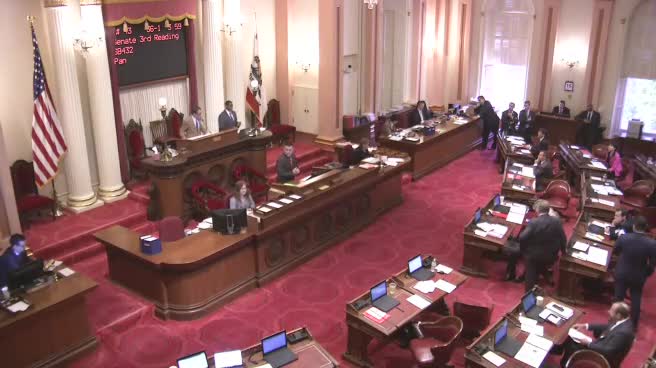 3MIN
Senate Floor
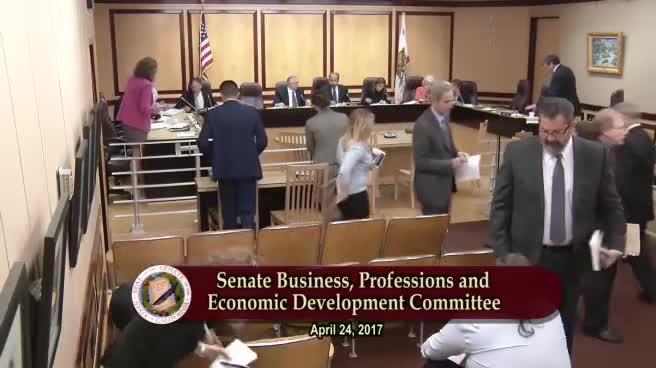 9MIN
Senate Standing Committee on Business, Professions and Economic Development
Bill Author

Bill Co-Author(s):